

The DOI matches its Crossref record; 36 of the 37 references it cites were found in a registry or an index.
Functional assessment of human enhancer activities using whole-genome STARR-sequencing
Open accessAbstract
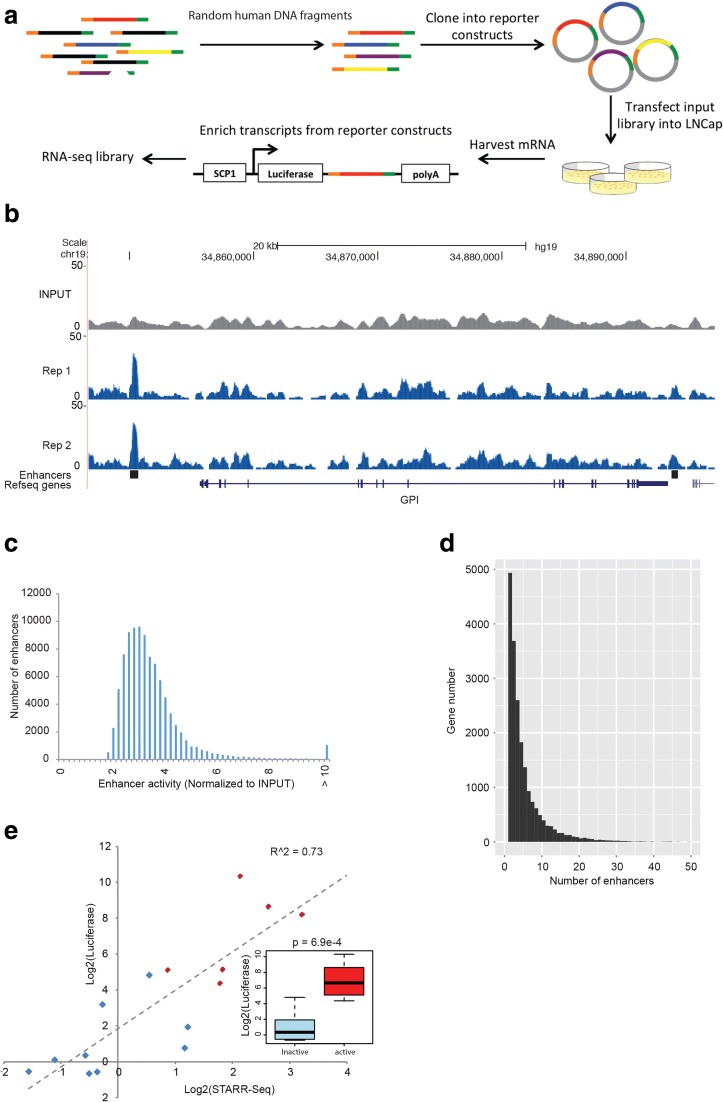
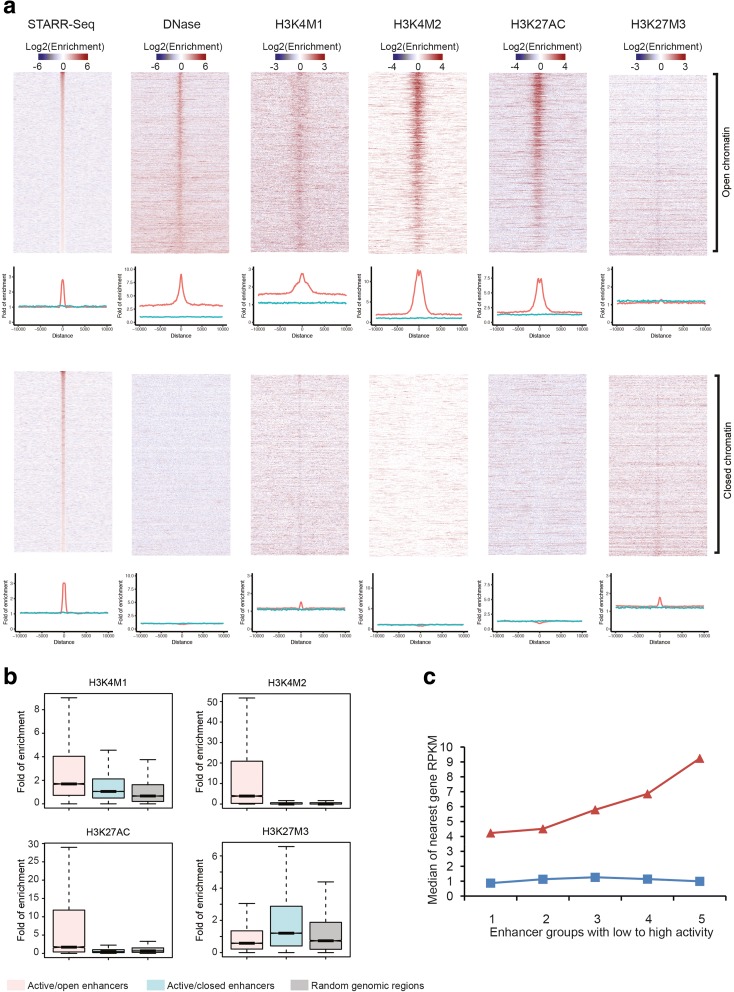
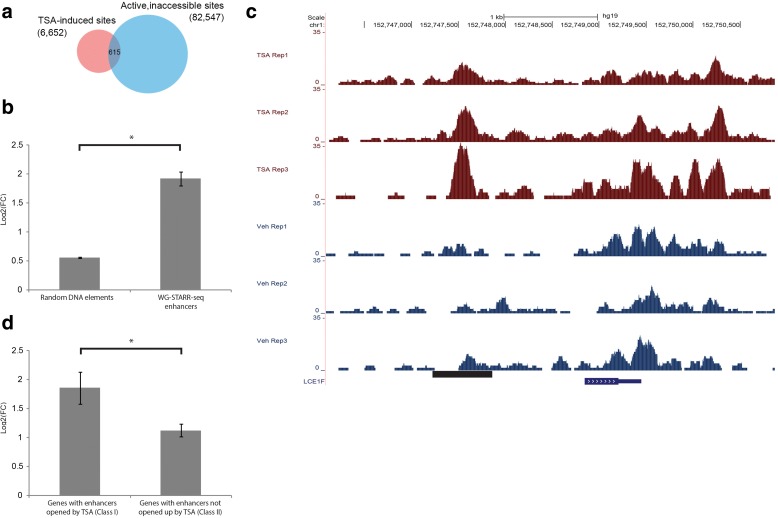
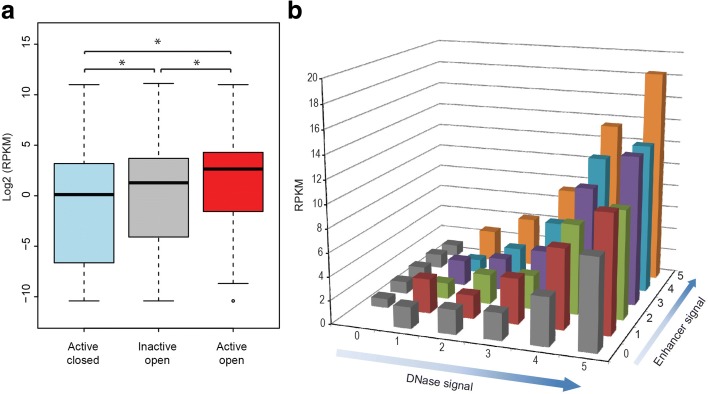
BACKGROUND: Genome-wide quantification of enhancer activity in the human genome has proven to be a challenging problem. Recent efforts have led to the development of powerful tools for enhancer quantification. However, because of genome size and complexity, these tools have yet to be applied to the whole human genome. RESULTS: In the current study, we use a human prostate cancer cell line, LNCaP as a model to perform whole human genome STARR-seq (WHG-STARR-seq) to reliably obtain an assessment of enhancer activity. This approach builds upon previously developed STARR-seq in the fly genome and CapSTARR-seq techniques in targeted human genomic regions. With an improved library preparation strategy, our approach greatly increases the library complexity per unit of starting material, which makes it feasible and cost-effective to explore the landscape of regulatory activity in the much larger human genome. In addition to our ability to identify active, accessible enhancers located in open chromatin regions, we can also detect sequences with the potential for enhancer activity that are located in inaccessible, closed chromatin regions. When treated with the histone deacetylase inhibitor, Trichostatin A, genes nearby this latter class of enhancers are up-regulated, demonstrating the potential for endogenous functionality of these regulatory elements. CONCLUSION: WHG-STARR-seq provides an improved approach to current pipelines for analysis of high complexity genomes to gain a better understanding of the intricacies of transcriptional regulation.
Overview
The claims and statistics of this paper haven’t been checked yet.
Run the check — free, no account needed. It reads the open-access text and checks the sources it cites.
Integrity signals
Registry
Cites
Statistics
Figures
Verification
Claims the paper makes
The claims and statistics of this paper haven’t been checked yet.
Run the check — free, no account needed. It reads the open-access text and checks the sources it cites.
Claims other papers make about this one
Each is checked against this paper’s own text: does it say what the citing paper says it does?
The cited source says what the claim attributes to it.
In the citing paper
“In contrast with MPRAs relying on re-synthesis of candidate sequences, genome-wide ‘shotgun MPRAs’108,174,183,188 nicely avoid a priori assumptions about which sequences to test.”
From Towards a comprehensive catalogue of validated and target-linked human enhancers (2020) · cites this paper as [183]
The cited source says what the claim attributes to it.
In the citing paper
“MPRAs have been applied to assess biochemically annotated candidate enhancers77,176-178, candidate enhancers harbouring variants that potentially mediate eQTLs179-182, and even scans of the entire human genome108,183.”
From Towards a comprehensive catalogue of validated and target-linked human enhancers (2020) · cites this paper as [183]
Self-check
Percentages, sums and reported differences re-computed from the paper’s own numbers.
The self-check needs the paper’s full text.
Citations
Cites
Fast gapped-read alignment with Bowtie 2
Langmead, B., & Salzberg, S. L. (2012) · Nature Methods · doi:10.1038/nmeth.1923 · Cited by 56,400
Robinson, M. D., McCarthy, D. J., & Smyth, G. K. (2010) · Bioinformatics · doi:10.1093/bioinformatics/btp616 · Cited by 41,364
Cutadapt removes adapter sequences from high-throughput sequencing reads
Martin, M. (2011) · EMBnet.journal · doi:10.14806/ej.17.1.200 · Cited by 33,889
Ultrafast and memory-efficient alignment of short DNA sequences to the human genome.
Langmead, B., Trapnell, C., Pop, M., & Salzberg, S. L. (2009) · Genome Biology · doi:10.1186/gb-2009-10-3-r25 · Cited by 21,849
Model-based Analysis of ChIP-Seq (MACS)
Zhang, Y., Liu, T., Meyer, C. A., Eeckhoute, J., Johnson, D. S., Bernstein, B. E., Nusbaum, C., Myers, R. M., Brown, M., Li, W., et al. (2008) · Genome Biology · doi:10.1186/gb-2008-9-9-r137 · Cited by 18,386
An integrated encyclopedia of DNA elements in the human genome
The ENCODE Project Consortium (2012) · Nature · doi:10.1038/nature11247 · Cited by 18,072
Heinz, S., Benner, C., Spann, N., Bertolino, E., Lin, Y. C., Laslo, P., Cheng, J. X., Murre, C., Singh, H., & Glass, C. K. (2010) · Molecular Cell · doi:10.1016/j.molcel.2010.05.004 · Cited by 13,382
Trapnell, C., Roberts, A., Goff, L. A., Pertea, G. M., Kim, D., Kelley, D. R., Pimentel, H., Salzberg, S. L., Rinn, J. L., & Pachter, L. S. (2012) · Nature Protocols · doi:10.1038/nprot.2012.016 · Cited by 12,145
Buenrostro, J. D., Giresi, P. G., Zaba, L. C., Chang, H. Y., & Greenleaf, W. J. (2013) · Nature Methods · doi:10.1038/nmeth.2688 · Cited by 6,422
Integrative analysis of 111 reference human epigenomes
Roadmap Epigenomics Consortium, Kundaje, A., Meuleman, W., Ernst, J., Bilenky, M., Yen, A., Heravi-Moussavi, A., Kheradpour, P., Zhang, Z., Wang, J., et al. (2015) · Nature · doi:10.1038/nature14248 · Cited by 6,368
Self-citation
Research works printed but not linked: 1
- Liu Y, Yu S, Dhiman V, Brunetti T, Scott H, White K. Genome-wide functional assessment of enhancer activities in the human genome. Gene Expression Omnibus. 2017. https://www.ncbi.nlm.nih.gov/geo/query/acc.cgi?acc=GSE82204 .
Cited by
Sorted by citations
Comprehensive functional genomic resource and integrative model for the human brain
Wang, D., Liu, S., Warrell, J., Won, H., Shi, X., Navarro, F. C. P., Clarke, D., Gu, M., Emani, P., Yang, Y. T., et al. (2018) · Science · doi:10.1126/science.aat8464 · Cited by 965
Self-citationDefining the genetic, genomic, cellular, and diagnostic architectures of psychiatric disorders
Sullivan, P. F., & Geschwind, D. H. (2019) · Cell · doi:10.1016/j.cell.2019.01.015 · Cited by 452
“Techniques such as self-transcribing active-regulatory-region sequencing (STARR-seq) permit large-scale validation (which suggests enhancer functionality) (Arnold et al., 2013; Liu et al., 2017b), while analysis in an appropriate cell type with epigenome-editing technologies can confirm target identity (de la Torre-Ub…”
MethodTowards a comprehensive catalogue of validated and target-linked human enhancers
Gasperini, M., Tome, J. M., & Shendure, J. (2020) · Nature Reviews Genetics · doi:10.1038/s41576-019-0209-0 · Cited by 396
Sequence determinants of human gene regulatory elements
Sahu, B., Hartonen, T., Pihlajamaa, P., Wei, B., Dave, K., Zhu, F., Kaasinen, E., Lidschreiber, K., Lidschreiber, M., Daub, C. O., et al. (2022) · Nature Genetics · doi:10.1038/s41588-021-01009-4 · Cited by 198
Wang, X., He, L., Goggin, S. M., Saadat, A., Wang, L., Sinnott-Armstrong, N., Claussnitzer, M., & Kellis, M. (2018) · Nature Communications · doi:10.1038/s41467-018-07746-1 · Cited by 159
Compatibility rules of human enhancer and promoter sequences
Bergman, D. T., Jones, T. R., Liu, V., Ray, J., Jagoda, E., Siraj, L., Kang, H. Y., Nasser, J., Kane, M., Rios, A., et al. (2022) · Nature · doi:10.1038/s41586-022-04877-w · Cited by 169
Massively parallel characterization of transcriptional regulatory elements
Agarwal, V., Inoue, F., Schubach, M., Penzar, D., Martin, B. K., Dash, P. M., Keukeleire, P., Zhang, Z., Sohota, A., Zhao, J., et al. (2025) · Nature · doi:10.1038/s41586-024-08430-9 · Cited by 146
Machine-guided design of cell-type-targeting cis-regulatory elements
Gosai, S. J., Castro, R. I., Fuentes, N., Butts, J. C., Mouri, K., Alasoadura, M., Kales, S., Nguyen, T. T. L., Noche, R. R., Rao, A. S., et al. (2024) · Nature · doi:10.1038/s41586-024-08070-z · Cited by 142
Supervised enhancer prediction with epigenetic pattern recognition and targeted validation
Sethi, A., Gu, M., Gumusgoz, E., Chan, L., Yan, K.-K., Rozowsky, J., Barozzi, I., Afzal, V., Akiyama, J. A., Plajzer-Frick, I., et al. (2020) · Nature Methods · doi:10.1038/s41592-020-0907-8 · Cited by 109
Identification of Plant Enhancers and Their Constituent Elements by STARR-seq in Tobacco Leaves
Jores, T., Tonnies, J., Dorrity, M. W., Cuperus, J. T., Fields, S., & Queitsch, C. (2020) · The Plant Cell · doi:10.1105/tpc.20.00155 · Cited by 102
Movva, R., Greenside, P., Marinov, G. K., Nair, S., Shrikumar, A., & Kundaje, A. B. (2019) · PLoS ONE · doi:10.1371/journal.pone.0218073 · Cited by 90
Peng, T., Zhai, Y., Atlasi, Y., ter Huurne, M., Marks, H., Stunnenberg, H. G., & Megchelenbrink, W. (2020) · Genome Biology · doi:10.1186/s13059-020-02156-3 · Cited by 83
Predicting gene expression from DNA sequence using deep learning models
Barbadilla-Martínez, L., Klaassen, N. H. M., van Steensel, B., & de Ridder, J. (2025) · Nature Reviews Genetics · doi:10.1038/s41576-025-00841-2 · Cited by 89
Widespread Enhancer Activity from Core Promoters
Medina-Rivera, A., Santiago-Algarra, D., Puthier, D., & Spicuglia, S. (2018) · Trends in Biochemical Sciences · doi:10.1016/j.tibs.2018.03.004 · Cited by 78
Transcriptional Regulation of INSR, the Insulin Receptor Gene
Payankaulam, S., Raicu, A., & Arnosti, D. N. (2019) · Genes · doi:10.3390/genes10120984 · Cited by 75
Global discovery of lupus genetic risk variant allelic enhancer activity
Lu, X., Chen, X., Forney, C. R., Donmez, O. A., Miller, D., Parameswaran, S., Hong, T., Huang, Y., Pujato, M. A., Cazares, T. A., et al. (2021) · Nature Communications · doi:10.1038/s41467-021-21854-5 · Cited by 77
Primate optogenetics: Progress and prognosis
El-Shamayleh, Y., & Horwitz, G. D. (2019) · Proceedings of the National Academy of Sciences · doi:10.1073/pnas.1902284116 · Cited by 78
Global Quantitative Mapping of Enhancers in Rice by STARR-Seq
Sun, J., He, N., Niu, L., Huang, Y., Shen, W., Zhang, Y., Li, L., & Hou, C. (2019) · Genomics Proteomics & Bioinformatics · doi:10.1016/j.gpb.2018.11.003 · Cited by 69
Transcriptional regulation by promoters with enhancer function
Dao, L. T. M., & Spicuglia, S. (2018) · Transcription · doi:10.1080/21541264.2018.1486150 · Cited by 69
Wang, B., Li, N., Huang, S., Hu, J., Wang, Q., Tang, Y., Yang, T., Asmutola, P., Wang, J., & Yu, Q. (2021) · PeerJ · doi:10.7717/peerj.12478 · Cited by 62
Omics Approaches to Study Formation and Function of Human Placental Syncytiotrophoblast
Jaremek, A., Jeyarajah, M. J., Bhattad, G. J., & Renaud, S. J. (2021) · Frontiers in Cell and Developmental Biology · doi:10.3389/fcell.2021.674162 · Cited by 64
STARRPeaker: uniform processing and accurate identification of STARR-seq active regions
Lee, D., Shi, M., Moran, J. R., Wall, M., Zhang, J., Liu, J. J., Fitzgerald, D., Kyono, Y., Ma, L., White, K. P., et al. (2020) · Genome biology · doi:10.1186/s13059-020-02194-x · Cited by 59
Self-citationHuman genome-wide measurement of drug-responsive regulatory activity
Johnson, G. D., Barrera, A., McDowell, I. C., D’Ippolito, A. M., Majoros, W. H., Vockley, C. M., Wang, X., Allen, A. S., & Reddy, T. E. (2018) · Nature Communications · doi:10.1038/s41467-018-07607-x · Cited by 54
Androgen Receptor-Mediated Transcription in Prostate Cancer
Özturan, D., Morova, T., & Lack, N. A. (2022) · Cells · doi:10.3390/cells11050898 · Cited by 51
Functional dissection of complex trait variants at single-nucleotide resolution
Siraj, L., Castro, R. I., Dewey, H. B., Kales, S., Butts, J. C., Nguyen, T. T. L., Kanai, M., Berenzy, D., Mouri, K., Wang, Q. S., et al. (2026) · Nature · doi:10.1038/s41586-026-10121-6 · Cited by 56
Identification of cis-regulatory elements by chromatin structure
Lu, Z., Ricci, W. A., Schmitz, R. J., & Zhang, X. (2018) · Current Opinion in Plant Biology · doi:10.1016/j.pbi.2018.04.004 · Cited by 51
Liu, Y., Fu, Y., Yang, Y., Yi, G., Lian, J., Xie, B., Yao, Y., Chen, M., Niu, Y., Liu, L., et al. (2022) · Genetics Selection Evolution · doi:10.1186/s12711-022-00754-2 · Cited by 45
Self-citationMulvey, B., Lagunas, T., & Dougherty, J. D. (2020) · Biological Psychiatry · doi:10.1016/j.biopsych.2020.06.011 · Cited by 41
Functional mapping of androgen receptor enhancer activity
Huang, C.-C. F., Lingadahalli, S., Morova, T., Özturan, D., Hu, E., Yu, I. P. L., Linder, S., Hoogstraat, M., Stelloo, S., Sar, F., et al. (2021) · Genome biology · doi:10.1186/s13059-021-02339-6 · Cited by 36
Fully interpretable deep learning model of transcriptional control
Liu, Y., Barr, K., & Reinitz, J. (2020) · Bioinformatics · doi:10.1093/bioinformatics/btaa506 · Cited by 34
Self-citationClassification of non-coding variants with high pathogenic impact
Moyon, L., Berthelot, C., Louis, A., Nguyen, N. T. T., & Crollius, H. R. (2022) · PLoS Genetics · doi:10.1371/journal.pgen.1010191 · Cited by 34
A massively parallel reporter assay library to screen short synthetic promoters in mammalian cells
Zahm, A. M., Owens, W. S., Himes, S. R., Fallon, B. S., Rondem, K. E., Gormick, A. N., Bloom, J. S., Kosuri, S., Chan, H., & English, J. G. (2024) · Nature Communications · doi:10.1038/s41467-024-54502-9 · Cited by 29
Chromatin Interactions and Regulatory Elements in Cancer: From Bench to Bedside
See, Y. X., Wang, B. Z., & Fullwood, M. J. (2018) · Trends in Genetics · doi:10.1016/j.tig.2018.11.007 · Cited by 29
Synthetic STARR-seq reveals how DNA shape and sequence modulate transcriptional output and noise
Schöne, S., Bothe, M., Einfeldt, E., Borschiwer, M., Benner, P., Vingron, M., Thomas‐Chollier, M., & Meijsing, S. H. (2018) · PLoS Genetics · doi:10.1371/journal.pgen.1007793 · Cited by 27
Sheng, T., Ho, S. W. T., Ooi, W. F., Xu, C., Xing, M., Padmanabhan, N., Huang, K. K., Ma, L., Ray, M., Guo, Y. A., et al. (2021) · Genome Medicine · doi:10.1186/s13073-021-00970-3 · Cited by 27
Self-citationAnalysis of long and short enhancers in melanoma cell states
Mauduit, D., Minnoye, L., Taskiran, I. I., Waegeneer, M. D., Christiaens, V., Hulselmans, G., Demeulemeester, J., Wouters, J., & Aerts, S. (2021) · eLife · doi:10.7554/elife.71735 · Cited by 28
Genome‐wide enhancer identification by massively parallel reporter assay in Arabidopsis
Tan, Y., Yan, X., Sun, J., Wan, J., Li, X., Huang, Y., Li, L., Niu, L., & Hou, C. (2023) · The Plant Journal · doi:10.1111/tpj.16373 · Cited by 22
Chan, Y.-C., Kienle, E., Oti, M., Liddo, A. D., Méndez-Lago, M., Aschauer, D. F., Peter, M., Pagani, M., Arnold, C. D., Vonderheit, A., et al. (2023) · Scientific Reports · doi:10.1038/s41598-023-33448-w · Cited by 21
Transcriptional enhancers: from prediction to functional assessment on a genome-wide scale
Tobias, I. C., Abatti, L. E., Moorthy, S. D., Mullany, S., Taylor, T., Khader, N., Filice, M., & Mitchell, J. A. (2020) · Genome · doi:10.1139/gen-2020-0104 · Cited by 25
Kublanovsky, M., Ulu, G. T., Weirich, S., Levy, N., Feldman, M., Jeltsch, A., & Levy, D. (2023) · Journal of Biological Chemistry · doi:10.1016/j.jbc.2023.105236 · Cited by 18
Emerging insights into enhancer biology and function
Arnold, M., & Stengel, K. R. (2023) · Transcription · doi:10.1080/21541264.2023.2222032 · Cited by 20
Challenges and considerations for reproducibility of STARR-seq assaysPreprint
Das, M., Hossain, A., Banerjee, D., Praul, C. A., & Girirajan, S. (2023) · Genome Research · doi:10.1101/gr.277204.122 · Cited by 18
Cis-regulatory elements: systematic identification and horticultural applications
Li, T., Zeng, W., Zhu, F., & Lü, P. (2025) · aBIOTECH · doi:10.1007/s42994-025-00237-0 · Cited by 17
Ni, P., Moe, J., & Su, Z. (2022) · BMC Biology · doi:10.1186/s12915-022-01426-9 · Cited by 18
Morova, T., Ding, Y., Huang, C.-C. F., Sar, F., Schwarz, T., Giambartolomei, C., Baca, S. C., Grishin, D., Hach, F., Gusev, A., et al. (2022) · Nucleic Acids Research · doi:10.1093/nar/gkac1198 · Cited by 17
Novel Approaches for Identifying the Molecular Background of Schizophrenia
Golov, A. K., Kondratyev, N. V., Kostyuk, G. P., & Golimbet, A. V. E. (2020) · Cells · doi:10.3390/cells9010246 · Cited by 15
Epromoters are new players in the regulatory landscape with potential pleiotropic roles
Malfait, J., Wan, J., & Spicuglia, S. (2023) · BioEssays · doi:10.1002/bies.202300012 · Cited by 19
Li, H., Wang, Z., Han, K., Guo, M., Zou, Y., Zhang, W., Ma, W., & Hua, H. (2020) · Pest Management Science · doi:10.1002/ps.5872 · Cited by 13
Genome-wide identification of enhancer elements in the placenta
Abdulghani, M., Jain, A., & Tuteja, G. (2018) · Placenta · doi:10.1016/j.placenta.2018.09.003 · Cited by 13
Active enhancers: recent research advances and insights into disease
Zhang, J., Wang, Q., Liu, J., Duan, Y., Liu, Z., Zhang, Z., & Li, C. (2024) · Biology Direct · doi:10.1186/s13062-024-00559-x · Cited by 18
Uncovering the whole genome silencers of human cells via Ss-STARR-seq
Zhu, X., Huang, L., Wang, C., Li, G., Deng, B., Kong, D., Wang, X., Chang, R., Gu, Y., Wen, Q., et al. (2025) · Nature Communications · doi:10.1038/s41467-025-55852-8 · Cited by 12
Self-citationeRNAs and Superenhancer lncRNAs Are Functional in Human Prostate Cancer
Zhang, X., Pang, P., Jiang, M., Cao, Q., Li, H., Xu, Y., Li, Y., Chen, X., & Han, J. (2020) · Disease Markers · doi:10.1155/2020/8847986 · Cited by 12
Zhang, S., Wang, C., Qin, S., Chen, C., Bao, Y., Zhang, Y., Xu, L., Liu, Q., Zhao, Y., Li, K., et al. (2024) · Genome Research · doi:10.1101/gr.278344.123 · Cited by 13
Self-citationMPRAbase a Massively Parallel Reporter Assay databasePreprint
Zhao, J., Baltoumas, F. A., Konnaris, M. A., Mouratidis, I., Liu, Z., Sims, J., Agarwal, V., Pavlopoulos, G. A., Georgakopoulos‐Soares, I., & Ahituv, N. (2025) · Genome Research · doi:10.1101/gr.280387.124 · Cited by 12
Genome-wide identification of functional enhancers and their potential roles in pig breeding
Wu, Y.-Q., Zhang, Y.-D., Liu, H., Gao, Y., Liu, Y.-Y., Chen, L., Liu, L., Irwin, D., Hou, C., Zhou, Z., et al. (2022) · Journal of Animal Science and Biotechnology · doi:10.1186/s40104-022-00726-y · Cited by 10
Self-citationStrategies for activity analysis of single nucleotide polymorphisms associated with human diseases
Ren, N., Dai, S., Ma, S., & Yang, F. (2022) · Clinical Genetics · doi:10.1111/cge.14282 · Cited by 12
Phan, L. T., Oh, C., He, T., & Manavalan, B. (2023) · PROTEOMICS · doi:10.1002/pmic.202200409 · Cited by 11
STARRPeaker: Uniform processing and accurate identification of STARR-seq active regionsPreprint
Lee, D., Shi, M., Moran, J., Wall, M., Zhang, J., Liu, J. J., Fitzgerald, D., Kyono, Y., Ma, L., White, K. P., et al. (2019) · bioRxiv (Cold Spring Harbor Laboratory) · doi:10.1101/694869 · Cited by 11
Self-citationZhou, W., Shi, H., Wang, Z., Huang, Y., Ni, L., Chen, X., Liu, Y., Li, C., Liu, Y., & Liu, Y. (2024) · Genomics Proteomics & Bioinformatics · doi:10.1093/gpbjnl/qzae012 · Cited by 10
Self-citationIdentification, Design, and Application of Noncoding Cis-Regulatory Elements
Xu, L., & Liu, Y. (2024) · Biomolecules · doi:10.3390/biom14080945 · Cited by 9
Self-citationZhu, X., Huang, L., Li, G., Deng, B., Wang, X., Hu, Y., Zhang, Y., Wen, Q., Wang, C., Zhang, J., et al. (2025) · Advanced Science · doi:10.1002/advs.202408839 · Cited by 9
Self-citationFrom Genotype to Phenotype: How Enhancers Control Gene Expression and Cell Identity in Hematopoiesis
Mulet‐Lazaro, R., & Delwel, R. (2023) · HemaSphere · doi:10.1097/hs9.0000000000000969 · Cited by 11
Enhancers as potential targets for engineering salinity stress tolerance in crop plants
Jain, M., & Garg, R. (2021) · Physiologia Plantarum · doi:10.1111/ppl.13421 · Cited by 9
MAE-seq refines regulatory elements across the genome
Zhu, X., Huang, Q., Huang, L., Luo, J., Li, Q., Kong, D., Deng, B., Gu, Y., Wang, X., Li, C., et al. (2023) · Nucleic Acids Research · doi:10.1093/nar/gkad1129 · Cited by 8
STARR-seq for high-throughput identification of plant enhancers
Zhang, L., Yung, W., & Huang, M. (2022) · Trends in Plant Science · doi:10.1016/j.tplants.2022.08.008 · Cited by 8
Zhang, J., Leung, A. K.-Y., Zhu, Y., Yao, L., Willis, A., Pan, X., Ozer, A., Zhou, Z., Siklenka, K., Barrera, A., et al. (2025) · Genome biology · doi:10.1186/s13059-025-03828-8 · Cited by 7
Wang, S. K., Li, J., Nair, S., Kosaraju, R., Chen, Y., Zhang, Y., Kundaje, A. B., Liu, Y., Wang, N., & Chang, H. Y. (2026) · Cell Reports · doi:10.1016/j.celrep.2025.116814 · Cited by 7
Self-citationWang, C., Chen, C., Lei, B., Qin, S., Zhang, Y., Li, K., Zhang, S., & Liu, Y. (2024) · Genetics Selection Evolution · doi:10.1186/s12711-024-00897-4 · Cited by 8
Self-citationHigh‐throughput quantitative assessment of ABA‐responsive elements at single‐nucleotide resolution
Sun, F., Deng, Y., Zhao, W., Xiong, Y., Zhao, L., & Zhang, L. (2025) · Quantitative Biology · doi:10.1002/qub2.87 · Cited by 6
Cappelletti, L., Petrini, A., Gliozzo, J., Casiraghi, E., Schubach, M., Kircher, M., & Valentini, G. (2022) · BMC Bioinformatics · doi:10.1186/s12859-022-04582-5 · Cited by 6
Underlying causes for prevalent false positives and false negatives in STARR-seq data
Ni, P., Wu, S., & Su, Z. (2023) · NAR Genomics and Bioinformatics · doi:10.1093/nargab/lqad085 · Cited by 8
Wang, H. V., & Chekanova, J. A. (2019) · RNA · doi:10.1261/rna.071209.119 · Cited by 6
Genome-wide strand asymmetry in massively parallel reporter activity favors genic strandsPreprint
Roberts, B. S., Partridge, E. C., Moyers, B. A., Agarwal, V., Newberry, K. M., Martin, B., Shendure, J., Myers, R., & Cooper, G. M. (2021) · Genome Research · doi:10.1101/gr.270751.120 · Cited by 6
The untold story between enhancers and skeletal muscle development
Zhang, Y., Lü, D., Yu-wen, L. I. U., Yi, G., & Tang, Z. (2020) · Journal of Integrative Agriculture · doi:10.1016/s2095-3119(20)63235-x · Cited by 4
Self-citationPrevalent use and evolution of exonic regulatory sequences in the human genome
Chen, J., Ni, P., Wu, S., Niu, M., Guo, J., & Su, Z. (2023) · Natural Sciences · doi:10.1002/ntls.20220058 · Cited by 4
Approches haut débit pour l’étude des séquences cis-régulatrices
España, A. P., Santiago‐Algarra, D., Pradel, L. C., & Spicuglia, S. (2017) · Biologie Aujourd hui · doi:10.1051/jbio/2018015 · Cited by 4
Pratt, H., & Weng, Z. (2018) · Current Opinion in Systems Biology · doi:10.1016/j.coisb.2018.09.002 · Cited by 4
Shaping the nebulous enhancer in the era of high-throughput assays and genome editing
Ho, E. Y.-K., Cao, Q., Gu, M., Chan, R. W.-L., Wu, Q., Gerstein, M., & Yip, K. Y.-L. (2019) · Briefings in Bioinformatics · doi:10.1093/bib/bbz030 · Cited by 4
Genome-wide discovery of SLE genetic risk variant allelic enhancer activityPreprint
Lu, X., Chen, X., Forney, C., Donmez, O. A., Miller, D., Parameswaran, S., Hong, T., Huang, Y., Pujato, M., Cazares, T., et al. (2020) · bioRxiv (Cold Spring Harbor Laboratory) · doi:10.1101/2020.01.20.906701 · Cited by 4
A map of enhancer regions in primary human neural progenitor cells using capture STARR-seqPreprint
Gaynor-Gillett, S. C., Cheng, L., Shi, M., Liu, J. J., Wang, G., Spector, M., Guo, Q., Qi, L., Flaherty, M., Wall, M., et al. (2025) · Genome Research · doi:10.1101/gr.279584.124 · Cited by 4
Self-citationMoeckel, C. M., Mouratidis, I., Chantzi, N., Uzun, Y., & Georgakopoulos‐Soares, I. (2024) · BioEssays · doi:10.1002/bies.202300210 · Cited by 4
Resolving a Systematic Error in STARR-seq for Quantitative Enhancer Activity MappingPreprint
Niu, L., Wan, J., Sun, J., Huang, Y., He, N., Li, L., & Hou, C. (2020) · bioRxiv (Cold Spring Harbor Laboratory) · doi:10.1101/2020.10.20.346908 · Cited by 3
A universal framework for detecting cis -regulatory diversity in DNA regionsPreprint
Biswas, A., & Narlikar, L. (2021) · Genome Research · doi:10.1101/gr.274563.120 · Cited by 3
Capped nascent RNA sequencing reveals novel therapy-responsive enhancers in prostate cancerPreprint
Cotter, K. A., Shah, S. R., Paramo, M. I., Lou, S., Li, Y., Rubin, P. D., Chen, Y., Gerstein, M., Rubin, M. A., & Yu, H. (2022) · bioRxiv (Cold Spring Harbor Laboratory) · doi:10.1101/2022.04.08.487666 · Cited by 2
Yuan, S., Ni, P., & Su, Z. (2024) · bioRxiv (Cold Spring Harbor Laboratory) · doi:10.1101/2024.05.07.592879 · Cited by 2
Becker, R., Choudhury, P., Oti, M., Fouani, Y., Strobel, B., Ketterer, S., Rumpel, S., Park, J., Kreuz, S., Maier, U., et al. (2026) · iScience · doi:10.1016/j.isci.2026.115469 · Cited by 1
Jiang, Y., Ye, Y., Zhang, X., Yu, Y., Huang, L., Bao, X., & Xu, X. (2024) · Biochemical and Biophysical Research Communications · doi:10.1016/j.bbrc.2024.149555 · Cited by 1
Variational infinite heterogeneous mixture model for semi-supervised clustering of heart enhancers
Mehdi, T., Singh, G., Mitchell, J. A., & Moses, A. M. (2019) · Bioinformatics · doi:10.1093/bioinformatics/btz064 · Cited by 1
Genome-wide Analyses of Histone Modifications in the Mammalian Genome
Tian, S., Slager, S. L., Klee, E. W., & Yan, H. (2022) · Elsevier eBooks · doi:10.1016/b978-0-323-91909-8.00021-9 · Cited by 2
Using Synthetic DNA Libraries to Investigate Chromatin and Gene Regulation
Kleinschmidt, H., Xu, C., & Bai, L. (2023) · Chromosoma · doi:10.1007/s00412-023-00796-5 · Cited by 2
Start from Scratch: Precisely Identify Massive Active Enhancers by SequencingPreprint
Zhu, X., Huang, L., Li, Q., & Zhang, Y. (2019) · bioRxiv (Cold Spring Harbor Laboratory) · doi:10.1101/604686 · Cited by 1
A universal framework for detecting cis-regulatory diversity in DNA regulatory regionsPreprint
Biswas, A., & Narlikar, L. (2020) · bioRxiv (Cold Spring Harbor Laboratory) · doi:10.1101/2020.10.26.354522 · Cited by 1
Genome-wide identification of silencers in human cellsPreprint
Zhu, X., Wang, C., Kong, D., Luo, J., Deng, B., Gu, Y., Kong, S., Huang, L., Liu, Y., & Zhang, Y. (2023) · bioRxiv (Cold Spring Harbor Laboratory) · doi:10.1101/2023.06.20.545673 · Cited by 1
Self-citationValidation of Enhancer Regions in Primary Human Neural Progenitor Cells using Capture STARR-seqPreprint
Gaynor-Gillett, S. C., Cheng, L., Shi, M., Liu, J. J., Wang, G., Spector, M., Flaherty, M., Wall, M., Hwang, A., Gu, M., et al. (2024) · bioRxiv (Cold Spring Harbor Laboratory) · doi:10.1101/2024.03.14.585066 · Cited by 1
Self-citationTiusanen, V., Patel, D., Xia, J., Xu, C., Datta, S., Yun, J. W., Cancellieri, S., Fei, L., Yilmaz, M., Pitkänen, E., et al. (2026) · bioRxiv (Cold Spring Harbor Laboratory) · doi:10.64898/2026.01.23.701252 · Cited by 1
Unbiased genome-scale identification of cis -regulatory modules in the human genome by GRAMcPreprint
Guay, C. L., & Nam, J. (2018) · bioRxiv (Cold Spring Harbor Laboratory) · doi:10.1101/468405
The intersectional genetics landscape for humans
Macedo, A., & Gontijo, A. M. (2020) · GigaScience · doi:10.1093/gigascience/giaa083
Author response: Analysis of long and short enhancers in melanoma cell states
Mauduit, D., Taskiran, I. I., Minnoye, L., Waegeneer, M. D., Christiaens, V., Hulselmans, G. J., Demeulemeester, J., Wouters, J., & Aerts, S. (2021) · eLife · doi:10.7554/elife.71735.sa2
Nürnberger, J. I. (2019) · Faculty Opinions – Post-Publication Peer Review of the Biomedical Literature · doi:10.3410/f.734622872.793563012
Lee, D., Shi, M., Moran, J. R., Wall, M., Zhang, J., Liu, J. J., Fitzgerald, D., Kyono, Y., Ma, L., White, K. P., et al. (2020) · Figshare · doi:10.6084/m9.figshare.13352114
Self-citation
Metadata
- Authors
- Liu, Y., Yu, S., Dhiman, V. K., Brunetti, T., Eckart, H., & White, K. P.
- Affiliations
- Argonne National Laboratory (US)
- University of Chicago (US)
- Corresponding author
- White, Kevin P.
- Venue
- Genome Biology
- Published
- 2017-11-20
- Volume
- 18
- Issue
- 1
- Pages
- 219-219
- ISSN
- 1465-6906 (ISSN-L)
- 1474-760X
- PMC
- PMC5694901
- OpenAlex
- W2769418303
- Cited by
- 136
- References
- 37
- Citations by year
- 2026: 6 · 2025: 18 · 2024: 21 · 2023: 15 · 2022: 17 · 2021: 15 · 2020: 19 · 2019: 13 · 2018: 11 · 2017: 1
- FWCI
- 5.67
- Type
- journal article
- Language
- en
- Open access
- gold
- doi.org
- Locations
- Genome biology (publishedVersion, cc-by)
- PubMed Central (publishedVersion, cc-by)
- PubMed (publishedVersion)
- OSTI OAI (U.S. Department of Energy Office of Scientific and Technical Information) (submittedVersion)
- DOAJ (DOAJ: Directory of Open Access Journals) (submittedVersion, cc-by-sa)
- Funders
- National Institutes of Health (U54HG006996)
- Topics
- Life Sciences › Biochemistry, Genetics and Molecular Biology › Molecular Biology › Genomics and Chromatin Dynamics
- Life Sciences › Biochemistry, Genetics and Molecular Biology › Molecular Biology › Chromatin Remodeling and Cancer
- Life Sciences › Biochemistry, Genetics and Molecular Biology › Molecular Biology › Epigenetics and DNA Methylation
- Keywords
- enhancer activity, STARR-seq, LNCaP cells, open chromatin, closed chromatin, histone deacetylase inhibition, trichostatin A, transcriptional regulation, library preparation, prostate cancer
- MeSH terms
- Whole Genome Sequencing, Cell Line, Chromatin, Enhancer Elements, Genetic, Humans, Genomic Library, Genome, Human, Genomics, Chromatin Immunoprecipitation, High-Throughput Nucleotide Sequencing
About these checks
Registry, retraction, Cites and statistics results are computed, not judged, with one exception: a printed reference that no index lists is read once by a model before it counts as a citation error. Claims are extracted by a model and kept only when their quote appears verbatim in the text; each cited source is then checked, with a model’s help, for whether it says what the claim relies on. Those verdicts can be wrong — read the claim’s quote and the cited source before relying on one.
Statistics and arithmetic are recomputed, not judged.
Confidence bands are shown only for fields calibrated on our annotated test set. None is calibrated yet, so no band is shown.
What counts as a claim ›How we measure confidence ›How we check this ›
Are you an author, or do you see a problem with this page? Request a review
