

MUON: multimodal omics analysis framework
Open accessPublished version of a preprint
The DOI matches its Crossref record; 60 of the 60 references it cites were found in a registry or an index.
Abstract
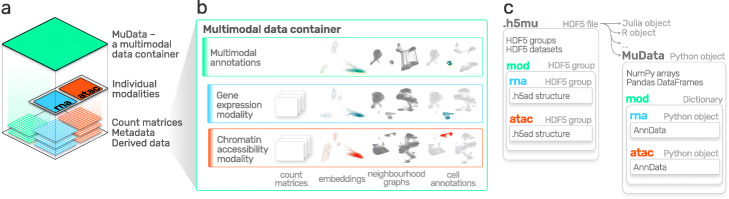
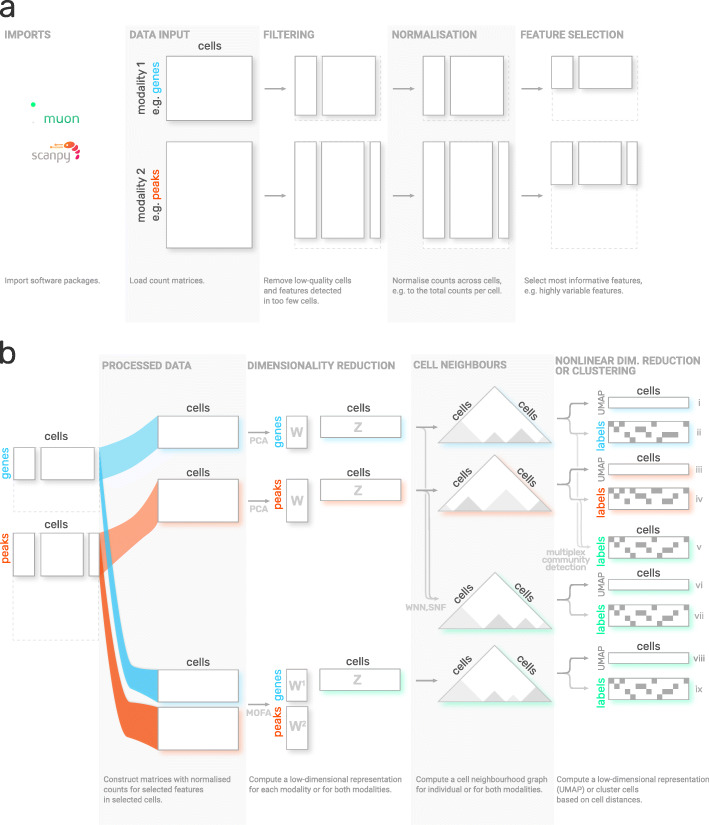
Advances in multi-omics have led to an explosion of multimodal datasets to address questions from basic biology to translation. While these data provide novel opportunities for discovery, they also pose management and analysis challenges, thus motivating the development of tailored computational solutions. Here, we present a data standard and an analysis framework for multi-omics, MUON, designed to organise, analyse, visualise, and exchange multimodal data. MUON stores multimodal data in an efficient yet flexible and interoperable data structure. MUON enables a versatile range of analyses, from data preprocessing to flexible multi-omics alignment.
Overview
The claims and statistics of this paper haven’t been checked yet.
Free: it reads the open-access text and checks the first 5 claims that cite a source we can check. Create a free account to check every claim.
Integrity signals
Registry
Cites
Statistics
Figures
Verification
Claims the paper makes
The claims and statistics of this paper haven’t been checked yet.
Free: it reads the open-access text and checks the first 5 claims that cite a source we can check. Create a free account to check every claim.
Claims other papers make about this one
Each is checked against this paper’s own text: does it say what the citing paper says it does?
In the citing paper
“The sharing of spatial data is hampered by large file sizes and non-standardized analysis pipelines58.”
From scPerturb: harmonized single-cell perturbation data (2024) · cites this paper as [58]
In the citing paper
“This can be achieved by summing up counts within genes and a certain distance upstream of the TSS136,143,150.”
From Best practices for single-cell analysis across modalities (2023) · cites this paper as [150]
Self-check
Percentages, sums and reported differences re-computed from the paper’s own numbers.
The self-check needs the paper’s full text.
Citations
Cites
R: A Language and Environment for Statistical Computing
R Core Team (2025) · doi:10.32614/r.manuals · Cited by 352,181
Scikit-learn: Machine Learning in Python
Pedregosa, F., Varoquaux, G., Gramfort, A., Michel, V., Thirion, B., Grisel, O., Blondel, M., Müller, A., Nothman, J., Louppe, G., et al. (2012) · arXiv · doi:10.48550/arxiv.1201.0490 · Cited by 71,016
Matplotlib: a 2D graphics environment
Hunter, J. D. (2007) · Computing in Science & Engineering · doi:10.1109/mcse.2007.55 · Cited by 39,249 · cited 1×
“As a multi-modal framework, MUON addresses the need for multi-omics analysis workflows that are well integrated into the existing Python ecosystem, in particular with tools for omics analysis such as Scanpy [9].”
MethodSciPy 1.0: fundamental algorithms for scientific computing in Python
Virtanen, P., Gommers, R., Oliphant, T. E., Haberland, M., Reddy, T., Cournapeau, D., Burovski, E., Peterson, P., Weckesser, W., Bright, J., et al. (2020) · Nature Methods · doi:10.1038/s41592-019-0686-2 · Cited by 38,430 · cited 1×
“…the Python programming language and builds on a number of existing numerical and scientific open-source libraries, in particular, NumPy [53], Scipy [54], Sklearn [55], Pandas [56], h5py [57], AnnData [17], and Scanpy [9] for omics data handling, MOFA+ [30] for multimodal data integration and…”
BackgroundHarris, C. R., Millman, K. J., van der Walt, S. J., Gommers, R., Virtanen, P., Cournapeau, D., Wieser, E., Taylor, J., Berg, S., Smith, N. J., et al. (2020) · Nature · doi:10.1038/s41586-020-2649-2 · Cited by 23,826 · cited 1×
“…in the Python programming language and builds on a number of existing numerical and scientific open-source libraries, in particular, NumPy [53], Scipy [54], Sklearn [55], Pandas [56], h5py [57], AnnData [17], and Scanpy [9] for omics data handling, MOFA+ [30] for multimodal data…”
BackgroundThe FAIR Guiding Principles for scientific data management and stewardship
Wilkinson, M. D., Dumontier, M., Aalbersberg, I. J., Appleton, G., Axton, M., Baak, A., Blomberg, N., Boiten, J.-W., da Silva Santos, L. B., Bourne, P. E., et al. (2016) · Scientific Data · doi:10.1038/sdata.2016.18 · Cited by 18,423
Harris, C., Millman, K., van der Walt, S., Gommers, R., Virtanen, P., Cournapeau, D., Wieser, E., Taylor, J., Berg, S., Smith, N., et al. (2020) · RePEc: Research Papers in Economics · Cited by 17,844
Integrated analysis of multimodal single-cell data
Hao, Y., Hao, S., Andersen-Nissen, E., Mauck, W. M., Zheng, S., Butler, A., Lee, M. J., Wilk, A. J., Darby, C., Zagar, M., et al. (2020) · doi:10.1101/2020.10.12.335331 · Cited by 15,508 · cited 3×
“Additionally, MUON comes with interfaces to multi-omics analysis methods that jointly process multiple modalities, including multi-omics factor analysis [29, 30] (MOFA) to obtain lower-dimensional representations, and weighted nearest neighbours [31] (WNN) to calculate multimodal neighbours.”
MethodSciPy 1.0: fundamental algorithms for scientific computing in Python
Virtanen, P., Gommers, R., Oliphant, T. E., Haberland, M., Reddy, T., Cournapeau, D., Burovski, E., Peterson, P., Weckesser, W., Bright, J., et al. (2019) · Apollo - University of Cambridge Repository · doi:10.17863/cam.64134 · Cited by 10,460
SCANPY: large-scale single-cell gene expression data analysis
Wolf, F. A., Angerer, P., & Theis, F. J. (2018) · Genome Biology · doi:10.1186/s13059-017-1382-0 · Cited by 8,881 · cited 8×
“At the core of the framework is MuData , an open data structure standard, which is compatible with and extends previous data formats for single omics [9, 17].”
BackgroundMethodInfluential
Research works printed but not linked: 4
- Van Rossum G Drake FL Jr Python tutorial 1995 Centrum voor Wiskunde en Informatica Amsterdam
- McKinney W Others. pandas: a foundational Python library for data analysis and statistics Python High Perform Sci Comput 2011 14 1 9
- Collette A. Python and HDF5: unlocking scientific data. "O'Reilly Media, Inc."; 2013.
- Bredikhin D, Kats I, Stegle O. muon: multimodal omics Python framework. Github. https://github.com/scverse/muon. PMC8805324 35105358
Cited by
Methods and applications for single-cell and spatial multi-omics
Vandereyken, K., Sifrim, A., Thienpont, B., & Voet, T. (2023) · Nature Reviews Genetics · doi:10.1038/s41576-023-00580-2 · Cited by 1,244
“The expansion of these models to integrate paired, unpaired and multimodal spatial assays will require robust data standards 160,161 for scalable analysis of multimodal data in addition to well-established benchmarks to evaluate their efficacy.”
BackgroundBest practices for single-cell analysis across modalities
Heumos, L., Schaar, A. C., Lance, C., Litinetskaya, A., Drost, F., Zappia, L., Lücken, M. D., Strobl, D. C., Henao, J., Curion, F., et al. (2023) · Nature Reviews Genetics · doi:10.1038/s41576-023-00586-w · Cited by 1,051
anndata: Access and store annotated data matrices
Virshup, I., Rybakov, S., Theis, F. J., Angerer, P., & Wolf, F. A. (2024) · Journal of Open Source Software · doi:10.21105/joss.04371 · Cited by 485
“Formalizing this further, the muon package (Bredikhin et al., 2021) offers a container-like object MuData for a collection of AnnData objects, one for each modality.”
BackgroundThe scverse project provides a computational ecosystem for single-cell omics data analysis
Virshup, I., Bredikhin, D., Heumos, L., Palla, G., Sturm, G., Gayoso, A., Kats, I., Koutrouli, M., Community, S., Angerer, P., et al. (2023) · Nature Biotechnology · doi:10.1038/s41587-023-01733-8 · Cited by 341
Self-citationAutonomous biomedical research with an artificial intelligence agent
Huang, K., Zhang, S., Wang, H., Qu, Y., Lu, Y., Li, R., Roohani, Y., Qiu, L., Cao, S., Li, G. L., et al. (2026) · Science · doi:10.1126/science.adz4351 · Cited by 359
LIANA+ Provides an All-in-One Framework for Cell–Cell Communication Inference
Dimitrov, D., Schäfer, P. S. L., Farr, E., Rodriguez-Mier, P., Lobentanzer, S., Badia-i-Mompel, P., Dugourd, A., Tanevski, J., Ramirez Flores, R. O., & Saez-Rodriguez, J. (2024) · Nature Cell Biology · doi:10.1038/s41556-024-01469-w · Cited by 263
“In LIANA+, multi-view objects are represented as subclasses of MuData 77 , modified to ensure the correct format of the views and corresponding spatial connectivities.”
InfluentialMapping cells through time and space with moscot
Klein, D., Palla, G., Lange, M., Klein, M., Piran, Z., Gander, M., Meng-Papaxanthos, L., Sterr, M., Saber, L., Jing, C., et al. (2025) · Nature · doi:10.1038/s41586-024-08453-2 · Cited by 279
“Having computed respective embeddings for GEX and ATAC, we constructed a weighted nearest neighbour graph using MUON 125 and used it for multimodal, unsupervised clustering.”
Identifying temporal and spatial patterns of variation from multimodal data using MEFISTO
Velten, B., Braunger, J. M., Argelaguet, R., Arnol, D., Wirbel, J., Bredikhin, D., Zeller, G., & Stegle, O. (2022) · Nature Methods · doi:10.1038/s41592-021-01343-9 · Cited by 186
Self-citationscPerturb: harmonized single-cell perturbation data
Peidli, S., Green, T. D., Shen, C., Gross, T., Min, J., Garda, S., Yuan, B., Schumacher, L. J., Taylor-King, J. P., Marks, D. S., et al. (2024) · Nature Methods · doi:10.1038/s41592-023-02144-y · Cited by 194
“The sharing of spatial data is hampered by large file sizes and non-standardized analysis pipelines 58 .”
A fast, scalable and versatile tool for analysis of single-cell omics data
Zhang, K., Zemke, N. R., Armand, E. J., & Ren, B. (2024) · Nature Methods · doi:10.1038/s41592-023-02139-9 · Cited by 185
Liu, Z., Kong, X., Long, Y., Liu, S., Zhang, H., Jia, J., Cui, W., Zhang, Z., Song, X., Qiu, L., et al. (2023) · Nature Plants · doi:10.1038/s41477-023-01387-z · Cited by 169
Spatial omics technologies at multimodal and single cell/subcellular level
Park, J., Kim, J., Lewy, T., Rice, C. M., Elemento, O., Rendeiro, A. F., & Mason, C. E. (2022) · Genome biology · doi:10.1186/s13059-022-02824-6 · Cited by 142
“Multimodal omics analysis framework (MUON), which introduces the MuData format compatible across Python, R, and Julia programming languages, provides a shared interface for commonly used methodologies such as MOFA, WNN, and similarity network fusion (SNF) [112].”
MethodA multi-omic atlas of human embryonic skeletal development
To, K., Fei, L., Pett, J. P., Roberts, K., Blain, R., Polański, K., Li, T., Yayon, N., He, P., Xu, C., et al. (2024) · Nature · doi:10.1038/s41586-024-08189-z · Cited by 138
From Omics to Multi-Omics: A Review of Advantages and Tradeoffs
Hayes, C. N., Nakahara, H., Ono, A., Tsuge, M., & Oka, S. (2024) · Genes · doi:10.3390/genes15121551 · Cited by 119
“MUON [168] is intended for single-cell data, while MEFISTO [169] and JIVE [170] support spatial and time-series data.”
Ghosh, S., Zhao, X., Alim, M., Brudno, M., & Bhat, M. (2024) · Gut · doi:10.1136/gutjnl-2023-331740 · Cited by 129
“16 20–23 The Cancer Genome Atlas (TCGA) network used unsupervised clustering methods on multiplatform data to identify molecular subtypes in breast cancer samples.”
Vitessce: integrative visualization of multimodal and spatially resolved single-cell data
Keller, M. S., Gold, I., McCallum, C., Manz, T., Kharchenko, P. V., & Gehlenborg, N. (2024) · Nature Methods · doi:10.1038/s41592-024-02436-x · Cited by 122
“Vitessce can access files stored on static web servers and cloud object storage, supporting AnnData 19,20 , MuData 21 , SpatialData 9 , single-cell data in a wide range of contexts and compute infrastructures, including in static websites, web applications, data portals, Jupyter Notebooks, RStudio and R Shiny apps.”
InfluentialAn immunophenotype-coupled transcriptomic atlas of human hematopoietic progenitors
Zhang, X., Song, B., Carlino, M. J., Li, G., Ferchen, K., Chen, M., Thompson, E. N., Kain, B. N., Schnell, D. J., Thakkar, K., et al. (2024) · Nature Immunology · doi:10.1038/s41590-024-01782-4 · Cited by 112
Pertpy: an end-to-end framework for perturbation analysis
Heumos, L., Ji, Y., May, L. T., Green, T. D., Peidli, S., Zhang, X., Wu, X., Ostner, J., Schumacher, A., Hrovatin, K., et al. (2025) · Nature Methods · doi:10.1038/s41592-025-02909-7 · Cited by 112
“We additionally provide a dataset module with more than 30 public loadable perturbational single-cell datasets in AnnData and MuData format, building upon and extending scPerturb 43 to kickstart analysis, development and benchmarking with pertpy.”
InfluentialArieta, C. M., Xie, Y. J., Rothenberg, D. A., Diao, H., Harjanto, D., Meda, S., Marquart, K., Koenitzer, B., Sciuto, T. E., Lobo, A., et al. (2023) · Cell · doi:10.1016/j.cell.2023.04.007 · Cited by 91
Fang, S., Xu, M., Cao, L., Liu, X., Bezulj, M., Tan, L., Yuan, Z., Li, Y., Xia, T., Guo, L., et al. (2025) · Nature Communications · doi:10.1038/s41467-025-58079-9 · Cited by 81
Liu, Z., Zhang, S., James, B. T., Galani, K., Mangan, R. J., Fass, S. B., Liang, C., Wagle, M. M., Boix, C. A., Tanigawa, Y., et al. (2025) · Cell · doi:10.1016/j.cell.2025.06.031 · Cited by 86
Modeling fragment counts improves single-cell ATAC-seq analysis
Martens, L. D., Fischer, D. S., Yépez, V. A., Theis, F. J., & Gagneur, J. (2023) · Nature Methods · doi:10.1038/s41592-023-02112-6 · Cited by 75
Single-cell immune repertoire analysis
Irac, S. E., Soon, M. S. F., Borcherding, N. C., & Tuong, Z. K. (2024) · Nature Methods · doi:10.1038/s41592-024-02243-4 · Cited by 67
“There are also emerging efforts in creating tools meant for multi-omics representation, for example, muon 50 .”
Paired single-cell multi-omics data integration with Mowgli
Huizing, G.-J., Deutschmann, I. M., Peyré, G., & Cantini, L. (2023) · Nature Communications · doi:10.1038/s41467-023-43019-2 · Cited by 69
Saeki, K., Pan, R., Lee, E., Kurotaki, D., & Ozato, K. (2024) · Nature Immunology · doi:10.1038/s41590-024-01962-2 · Cited by 55
Low-avidity T cells drive endogenous tumor immunity in mice and humans
Singhaviranon, S., Dempsey, J. P., Hagymasi, A. T., Măndoiu, I., & Srivastava, P. K. (2025) · Nature Immunology · doi:10.1038/s41590-024-02044-z · Cited by 60
“Normalization of the CITE-seq antibody counts was conducted using DSB 61 , as implemented in the MUON package in Python.”
Personalized, autologous neoantigen-specific T cell therapy in metastatic melanoma: a phase 1 trial
Borgers, J. S. W., Lenkala, D., Kohler, V. L., Jackson, E. K., Linssen, M. D., Hymson, S., McCarthy, B. J., Cosgrove, E., Balogh, K. N., Esaulova, E., et al. (2025) · Nature Medicine · doi:10.1038/s41591-024-03418-4 · Cited by 59
“Principal component analysis (PCA) was performed with the sc.tl.pca function, and dimensionality reduction was performed using multi-omics factor analysis (MOFA) using the function mu.tl.mofa with 10 factors after restricting to highly variable genes as defined above 85,86 .”
A single-cell multi-omic atlas spanning the adult rhesus macaque brain
Chiou, K. L., Huang, X., Bohlen, M. O., Tremblay, S., DeCasien, A. R., O’Day, D. R., Spurrell, C. H., Gogate, A. A., Zintel, T. M., Andrews, M. G., et al. (2023) · Science Advances · doi:10.1126/sciadv.adh1914 · Cited by 50
From morphology to single-cell molecules: high-resolution 3D histology in biomedicine
Xu, X., Su, J., Zhu, R., Li, K., Zhao, X., Fan, J., & Mao, F. (2025) · Molecular Cancer · doi:10.1186/s12943-025-02240-x · Cited by 51
“Within the broader field of omics, a significant emphasis lies on integrating data from diverse modalities to create a holistic, multi-modal perspective of cellular states [306, 307].”
Lac, L., Leung, C. K.-S., & Hu, P. (2024) · Journal of Biomedical Informatics · doi:10.1016/j.jbi.2024.104629 · Cited by 49
Chinese Immune Multi-Omics Atlas
Yin, J., Zheng, Y., Huang, Z., Zhou, W., Yuan, Y., Cai, P., Bai, Y., Yang, S., Gao, Y., Duan, S., et al. (2026) · Science · doi:10.1126/science.adt3130 · Cited by 54
Delineating the effective use of self-supervised learning in single-cell genomics
Richter, T., Bahrami, M., Xia, Y., Fischer, D. S., & Theis, F. J. (2024) · Nature Machine Intelligence · doi:10.1038/s42256-024-00934-3 · Cited by 56
von Locquenghien, M., Zwicky, P., Xie, K., Jaitin, D. A., Sheban, F., Yalin, A., Uhlitz, F., Gur, C., Sharet-Eshed, R., David, E., et al. (2025) · Cell · doi:10.1016/j.cell.2025.10.030 · Cited by 46
He, J., Hou, X., Wu, J., Wang, K., Qi, X., Wei, Z., Sun, Y., Wang, C., Yao, H., & Liu, K. (2024) · International Journal of Biological Sciences · doi:10.7150/ijbs.84494 · Cited by 44
“Recently, the integration of transcriptomic and proteomic data has been used to determine the molecular signatures involved in many diseases, including cancer, inflammatory diseases and diabetes [9-12] .”
Maintenance and functional regulation of immune memory to COVID-19 vaccines in tissues
Davis‐Porada, J., George, A. B., Lam, N., Caron, D. P., Gray, J. I., Huang, J., Hwu, J., Wells, S. B., Matsumoto, R., Kubota, M., et al. (2024) · Immunity · doi:10.1016/j.immuni.2024.10.003 · Cited by 44
He, Z., Glass, M. C., Venkatesan, P., Feser, M. L., Lazaro, L., Okada, L. Y., Tran, N. T. T., He, Y. D., Zaim, S. R., Bennett, C., et al. (2025) · Science Translational Medicine · doi:10.1126/scitranslmed.adt7214 · Cited by 49
Cruz Tleugabulova, M., Melo, S. P., Wong, A., Arlantico, A., Liu, M., Webster, J. D., Lau, J., Lechner, A., Corak, B., Hodgins, J. J., et al. (2024) · Nature Communications · doi:10.1038/s41467-024-53700-9 · Cited by 38
Schweizer, L., Kenny, H. A., Krishnan, R., Kelliher, L., Bilecz, A. J., Heide, J., Donle, L., Shimizu, A., Metousis, A., Mendoza, R., et al. (2023) · Cancer Cell · doi:10.1016/j.ccell.2025.06.004 · Cited by 41
Caron, D. P., Specht, W. L., Chen, D., Wells, S. B., Szabo, P. A., Jensen, I. J., Färber, D. L., & Sims, P. A. (2025) · Cell Reports Methods · doi:10.1016/j.crmeth.2024.100938 · Cited by 40
Spatial transcriptomics maps host–gut microbiome biogeography at high resolution
Ntekas, I., Takayasu, L., McKellar, D. W., Grodner, B., Holdener, C., Schweitzer, P. A., Park, Y. S., Sauthoff, M., Shi, Q., Brito, I., et al. (2026) · Nature Microbiology · doi:10.1038/s41564-026-02286-7 · Cited by 38
“Scanpy 59 , mudata 60,61 and muon 60 were used to construct multimodal objects separately for the microbial maps (in the taxonomic levels of phylum, family, genus and species).”
Panpipes: a pipeline for multiomic single-cell and spatial transcriptomic data analysis
Curion, F., Rich‐Griffin, C., Agarwal, D., Ouologuem, S., Rue-Albrecht, K., May, L., Garcia, G. E. L., Heumos, L., Thomas, T. R., Lason, W., et al. (2024) · Genome biology · doi:10.1186/s13059-024-03322-7 · Cited by 30
“Finally, the data are concatenated and saved to disk as a MuData (h5mu) file, a multimodal container [14].”
MethodMonocyte Single-Cell Multimodal Profiling in Cardiovascular Disease Risk States
Bashore, A. C., Xue, C., Kim, E., Yan, H., Zhu, L. Y., Pan, H., Kissner, M. D., Ross, L. S., Zhang, H., Li, M., et al. (2024) · Circulation Research · doi:10.1161/circresaha.124.324457 · Cited by 29
Scvi-hub: an actionable repository for model-driven single-cell analysis
Ergen, C., Amiri, V. V. P., Kim, M., Kronfeld, O., Streets, A., Gayoso, A., & Yosef, N. (2025) · Nature Methods · doi:10.1038/s41592-025-02799-9 · Cited by 30
“For this purpose, we used the flexible MuData structure, which stores each modality separately 21,27 .”
The Hydractinia cell atlas reveals cellular and molecular principles of cnidarian coloniality
Salamanca-Díaz, D. A., Horkan, H. R., García-Castro, H., Emili, E., Salinas‐Saavedra, M., Pérez-Posada, A., Rossi, M. E., Álvarez‐Presas, M., Gabhann, R. M., Hillenbrand, P., et al. (2025) · Nature Communications · doi:10.1038/s41467-025-57168-z · Cited by 27
“We used Muon 36 to build a mul-timodalmatrixwithuniquelymappedreadsandwithreadsmappingto many loci, but used the matrix containing only singly mapping reads for the subsequent single-cell analysis.”
Miao, J., Li, J., Xin, J., Tu, J.-J., Ge, M., Qi, J., Zhou, X., Zhu, Y., Yang, C., & Lin, Z. (2025) · Nature Communications · doi:10.1038/s41467-025-63418-x · Cited by 29
SpatialLeiden: spatially aware Leiden clustering
Müller‐Bötticher, N., Sahay, S., Eils, R., & Ishaque, N. (2025) · Genome biology · doi:10.1186/s13059-025-03489-7 · Cited by 28
Predictive analyses of regulatory sequences with EUGENe
Klie, A., Laub, D., Talwar, J. V., Stites, H., Jores, T., Solvason, J. J., Farley, E. K., & Carter, H. K. (2023) · Nature Computational Science · doi:10.1038/s43588-023-00544-w · Cited by 24
SHARE-Topic: Bayesian interpretable modeling of single-cell multi-omic data
Kazwini, N. E., & Sanguinetti, G. (2024) · Genome biology · doi:10.1186/s13059-024-03180-3 · Cited by 20
“We used the implementation within the muon platform (25); due to a technical problem, related to memory usage, we couldn’t run MOFA+ on the whole mouse skin and lymphoma datasets and therefore subsampled that data set retaining approximately only 25k chromatin regions for the ATAC component.”
MethodA multimodal cross-species comparison of pancreas development
Yang, K., Spitzer, H., Sterr, M., Hrovatin, K., Sean de la, O., Zhang, X., Setyono, E. S. A., Ud‐Dean, M., Walzthoeni, T., Flisikowski, K., et al. (2025) · Nature Communications · doi:10.1038/s41467-025-64774-4 · Cited by 22
Yuan, H., Linder, J., & Kelley, D. R. (2026) · Genome biology · doi:10.1186/s13059-026-03935-0 · Cited by 19
“We followed the muon tutorial for preprocessing and cell type annotation using the scRNA modality https:// muon-tutor ials. readt hedocs. io/ en/ latest/ single- cell- rna-atac/ pbmc1 0k/3-Multi modal- Omics- Data-Integ ration. html [36].”
A primer on correlation-based dimension reduction methods for multi-omics analysis
Downing, T., & Angelopoulos, N. (2023) · Journal of The Royal Society Interface · doi:10.1098/rsif.2023.0344 · Cited by 19
MetaQ: fast, scalable and accurate metacell inference via single-cell quantization
Li, Y., Li, H., Lin, Y., Zhang, D., Peng, D., Liu, X., Xie, J., Hu, P., Chen, L., Luo, H., et al. (2025) · Nature Communications · doi:10.1038/s41467-025-56424-6 · Cited by 21
Sarfraz, I., Wang, Y., Shastry, A., Teh, W. K., Sokolov, A., Herb, B. R., Creasy, H. H., Virshup, I., Dries, R., Degatano, K., et al. (2024) · Genome biology · doi:10.1186/s13059-024-03349-w · Cited by 15
“Several packages also exist that can capture relationships between matrices and annotations include AnnData and MUON in Python [12, 13], the Seurat object in R [14, 15], and the SingleCellExperiment and related packages in R/Bioconductor [16–18].”
MethodBadia-i-Mompel, P., Casals-Franch, R., Wessels, L., Müller‐Dott, S., Trimbour, R., Yang, Y., Flores, R. O. R., & Sáez-Rodríguez, J. (2024) · bioRxiv (Cold Spring Harbor Laboratory) · doi:10.1101/2024.12.20.629764 · Cited by 15
Fouché, A., & Zinovyev, A. Y. (2023) · Frontiers in Bioinformatics · doi:10.3389/fbinf.2023.1191961 · Cited by 16
“We can cite MUON (Bredikhin et al., 2022), which facilitates the handling of data consisting of different modalities, Polyphony (Cheng et al., 2022), which carries out transfer learning across datasets by leveraging data integration algorithms, or SinCast (Deng et al., 2022) which is specialized in cell type inference…”
MethodIncreasing resolution in stress neurobiology: from single cells to complex group behaviors
Miranda, L., Bordes, J., Gasperoni, S., & López, J. P. (2023) · Stress · doi:10.1080/10253890.2023.2186141 · Cited by 14
“The recently published MUON package (Bredikhin et al., 2022), for example, aims at providing accessible and scalable storage and manipulation of multiple omics layers, where different modalities can be organized and analyzed with ease.”
MethodCouckuyt, A., Rombaut, B., Saeys, Y., & Gassen, S. V. (2024) · Bioinformatics · doi:10.1093/bioinformatics/btae179 · Cited by 13
“The clustering outcomes are stored in a mudata object which supports cross-language HDF5 functionality and consists of two distinct anndata objects representing two different modalities: the cell data and the cluster data (Bredikhin et al. 2022).”
MethodSingle-cell multiomics data integration and generation with scPairing
Niu, J., Vasquez-Rios, C., & Ding, J. (2025) · Cell Reports Methods · doi:10.1016/j.crmeth.2025.101211 · Cited by 18
Maitra, C., Seal, D. B., Das, V., & De, R. K. (2023) · Frontiers in Molecular Biosciences · doi:10.3389/fmolb.2023.1184748 · Cited by 13
“This pbmc 10 k dataset has been fi rst preprocessed via MUON (Bredikhin et al., 2022) and reduced to highly variable features only.”
MethodInfluentialLazySlide: accessible and interoperable whole-slide image analysis
Zheng, Y., Abila, E., Chrenková, E., Buljan, I., Winkler, J., & Rendeiro, A. F. (2026) · Nature Methods · doi:10.1038/s41592-026-03044-7 · Cited by 15
“This pattern is also captured via multi-omics factor analysis (MOFA) 13 integration using Muon 14 , the scverse multi-omics framework (Fig.”
Mateos, M. A., Adiconis, X., Li, J.-K., Marchese, D., Caratù, G., Hon, C.-C., Tiwari, P., Kojima, M., Vieth, B., Murphy, M. A., et al. (2026) · Genome biology · doi:10.1186/s13059-026-04002-4 · Cited by 12
Twin study dissects CXCR3+ memory B cells as non-heritable feature in multiple sclerosis
Ingelfinger, F., Kuiper, K. L., Ulutekin, C., Rindlisbacher, L., Mundt, S., Gerdes, L. A., Smolders, J., van Luijn, M. M., & Becher, B. (2024) · Med · doi:10.1016/j.medj.2024.02.013 · Cited by 10
Spatial metabolomics in tissue injury and regeneration
Rietjens, R. G. J., Wang, G., van den Berg, B. M., & Rabelink, T. J. (2024) · Current Opinion in Genetics & Development · doi:10.1016/j.gde.2024.102223 · Cited by 11
Isolation of Nuclei from Flash-frozen Liver Tissue for Single-cell Multiomics
Strzelecki, M., Yin, K., Talavera-López, C. N., & Martinez‐Jimenez, C. P. (2022) · Journal of Visualized Experiments · doi:10.3791/64792-v · Cited by 11
hadge: a comprehensive pipeline for donor deconvolution in single-cell studies
Curion, F., Wu, X., Heumos, L., André, M. M. G., Halle, L., Ozols, M., Grant‐Peters, M., Rich‐Griffin, C., Yeung, H., Dendrou, C. A., et al. (2024) · Genome biology · doi:10.1186/s13059-024-03249-z · Cited by 10
SIGNAL-seq: Multimodal Single-cell Inter- and Intra-cellular Signalling AnalysisPreprint
Opzoomer, J. W., O’Sullivan, R., Sufi, J., Madsen, R. R., Qin, X., Basiarz, E., & Tape, C. J. (2024) · bioRxiv (Cold Spring Harbor Laboratory) · doi:10.1101/2024.02.23.581433 · Cited by 11
“1.5) [33].”
InfluentialPalade, J., Alsop, E. B., Tang, N., Antone, J., Paredes, D. M., Ghosh, T., Soldi, R., Bargenquast, T., Schwartz, G., Finholt, J. P., et al. (2025) · Frontiers in Immunology · doi:10.3389/fimmu.2025.1633010 · Cited by 10
“Filtered feature matrices were loaded into python (v. 3.9.7) using muon (31).”
InfluentialAtherosclerosis Profiling Reveals BHLHE40 as a Candidate Modulator of VSMC
Ibikunle, C., Garcia, E. J., Xue, C., Kim, E., Yan, H., Coronel, J., Zhu, L. Y., Cui, J., Chung, A. Y., Fries, L. E., et al. (2026) · Circulation Research · doi:10.1161/circresaha.125.326821 · Cited by 10
Single cell multiomics systems biology for molecular toxicity
Diamante, G., Ha, S. M., Wijaya, D., & Yang, X. (2024) · Current Opinion in Toxicology · doi:10.1016/j.cotox.2024.100477 · Cited by 11
Deconer: An Evaluation Toolkit for Reference-based Deconvolution Methods Using Gene Expression Data
Zhang, W., Zhang, X., Liu, Q., Wei, L., Xu, Q., Gao, R., Liu, Z., & Wang, X. (2025) · Genomics Proteomics & Bioinformatics · doi:10.1093/gpbjnl/qzaf009 · Cited by 9
“For this dataset, we employed multimodal omics analysis (MUON) to annotate 13 reliable cell types of 11,094 cells (Figure S1) [54].”
HIPSD&R-seq enables scalable genomic copy number and transcriptome profiling
Otoničar, J., Lazareva, O., Mallm, J., Simovic-Lorenz, M., Philippos, G., Sant, P., Parekh, U., Hammann, L., Li, A., Yildiz, U., et al. (2024) · Genome biology · doi:10.1186/s13059-024-03450-0 · Cited by 8
“We used Muon (version 0.1.6) [107] for the downstream analysis as well as filtering out nuclei with fragment count under 20,000 and TSS enrichment score under 3.”
InfluentialSelf-citationTranscriptional regulation of disease-relevant microglial activation programs
McQuade, A., Mishra, R., Hagan, V., Liang, W., Colias, P. J., Castillo, V. C., Gonzalez, B., Lubin, J. P., Haage, V. C., Marshe, V. S., et al. (2026) · Neuron · doi:10.1016/j.neuron.2026.07.001 · Cited by 9
Prostate cancer cells converge to an inflammatory-like state upon metastatic dissemination
Keshavarzian, T., Furlano, K., Grillo, G., Mout, L., Arlidge, C., Hasan, F., Nand, A., Mikutenaite, M., Karadoulama, E., Goyal, A., et al. (2025) · Nature Communications · doi:10.1038/s41467-025-67856-5 · Cited by 8
Catching, A., Weller, C. A., Hu, F., Bromberek, S., Abbas, S., Daida, K., Malik, L., Baker, B., Auluck, P. K., Screven, L. A., et al. (2026) · Cell Reports · doi:10.1016/j.celrep.2026.117110 · Cited by 9
Single-cell classification, analysis, and its application using deep learning techniques
Premkumar, R., Srinivasan, A., Devi, K., Deepika, M., Gaayathry, E., Jadhav, P., Futane, A., & Narayanamurthy, V. (2024) · Biosystems · doi:10.1016/j.biosystems.2024.105142 · Cited by 9
Chen, Z., Chen, S., Ning, Y., Zhang, Q., Wang, B., Yu, B., Li, Y., Liao, Z., Wei, C., Lu, Z., et al. (2024) · arXiv · doi:10.48550/arxiv.2410.05080 · Cited by 7
Galaxy single-cell & spatial omics community update: Navigating new frontiers in 2025
Loach, M., Nilchi, A. N., Chiang, D., Howells, M., Heyl, F., Rasche, H., Jakiela, J., Tekman, M., Gamal, M., Moreno, P. A., et al. (2025) · Cell Genomics · doi:10.1016/j.xgen.2025.101005 · Cited by 7
Li, Y., Zhang, Y., Zhang, Y., Wang, Q., Ji, B., Yang, H., & Li, X. (2026) · Precision Clinical Medicine · doi:10.1093/pcmedi/pbaf040 · Cited by 9
“True multi-omics experiments that measure multiple modalities in the same cells remain rare [ 66 ].”
Assessing the multimodal tradeoffPreprint
Booeshaghi, A. S., Gao, F., & Pachter, L. S. (2021) · bioRxiv (Cold Spring Harbor Laboratory) · doi:10.1101/2021.12.08.471788 · Cited by 9
Capraz, T., Vöhringer, H. S., Serrano, K. S. A. K., Flores, R. O. R., Sáez-Rodríguez, J., & Huber, W. (2024) · bioRxiv (Cold Spring Harbor Laboratory) · doi:10.1101/2024.10.10.617527 · Cited by 7
A Map of the Lipid–Metabolite–Protein Network to Aid Multi-Omics Integration
Anyaegbunam, U. A., Vagiona, A.-C., ten Cate, V., Bauer, K., Schmidlin, T., Distler, U., Tenzer, S., Araldi, E., Bîndilă, L., Wild, P. S., et al. (2025) · Biomolecules · doi:10.3390/biom15040484 · Cited by 6
Roseth, I. A., Hatscher, L., Schiller, C., Johnstuen, H. S. S., Slørdahl, T. S., Hov, H., Schapiro, D., & Standal, T. (2026) · Blood Cancer Discovery · doi:10.1158/2643-3230.bcd-25-0334 · Cited by 9
“For downstream analysis, each cell in each sample was normalized using muon’s centered log ratio (CLR) for proteomics (52) based on the total protein abundance per cell and then combined, as also described before (50).”
Facilitate integrated analysis of single cell multiomic data by binarizing gene expression values
Misra, R., Ferrena, A., & Zheng, D. (2025) · Nature Communications · doi:10.1038/s41467-025-60899-8 · Cited by 6
Siu, J. H. Y., Coelho, S., Palomeras, A., Belij‐Rammerstorfer, S., Barman, N., Lee, C. H.-J., Ströbel, T., Thorpe, C. J., Kaur, C., Cole, T., et al. (2025) · EBioMedicine · doi:10.1016/j.ebiom.2025.106036 · Cited by 6
“Other single-cell analysis figures were produced using R packages including ggplot2 (RRID: SCR_014601), ggpubr (RRID: SCR_021139), ComplexHeatmap (RRID: SCR_ 017270) 38 ; Python packages including muon (RRID: SCR_022804) 39 ; and the Panpipes workflow.”
Szabo, P. A., Levitin, H. M., Nargund, S., Connors, T. J., Chen, D., Jin, J., Thapa, P., Guyer, R. S., Caron, D. P., Gray, J. I., et al. (2026) · Nature Immunology · doi:10.1038/s41590-026-02535-1 · Cited by 6
MuMCyp_Net: A multimodal neural network for the prediction of Cyp450 inhibition
Njimbouom, S. N., & Kim, J. (2024) · Expert Systems with Applications · doi:10.1016/j.eswa.2024.124703 · Cited by 9
Principled PCA separates signal from noise in omics count dataPreprint
Stanley, J. S., Yang, J., Li, R., Lindenbaum, O., Kobak, D., Landa, B., & Kluger, Y. (2025) · bioRxiv (Cold Spring Harbor Laboratory) · doi:10.1101/2025.02.03.636129 · Cited by 6
“While normalizations such as log1p and TF-IDF are widely adopted for scATAC-seq preprocessing [60, 47], the e ↵ ect of library depths still manifests strongly in the leading components of normalized data [60].”
Guo, J., Zhang, W., Chen, X., Yen, A., Chen, L. L., Shively, C. A., Li, D., Wang, T., Dougherty, J. D., & Mitra, R. D. (2024) · Bioinformatics · doi:10.1093/bioinformatics/btae070 · Cited by 6
“The CC Anndata and RNAseq Anndata objects are then merged into one Mudata object in order to share data and conduct additional analyses (Bredikhin et al. 2022).”
MethodOuologuem, S., Martens, L. D., Schaar, A. C., Shulman, M., Gagneur, J., & Theis, F. J. (2025) · Bioinformatics · doi:10.1093/bioinformatics/btaf268 · Cited by 5
“The data was obtained from the cellxgene census (Abdulla et al. 2025) and stored as a MuData object (Bredikhin et al. 2022, Virshup et al. 2023).”
Natural Methods of Unsupervised Topological Alignment
Kukushkin, M. V., Arbatskiy, M. S., Balandin, D. E., & Churov, A. V. (2025) · Mathematics · doi:10.3390/math13243968 · Cited by 5
“The MUON method [6] represents a multimodal analytical platform for omics data, developed for organizing, analyzing, visualizing, and sharing multimodal biological data.”
anndataR improves interoperability between R and Python in single-cell transcriptomics
Deconinck, L., Zappia, L., Cannoodt, R., Morgan, M. T., core, S., Virshup, I., Sang-aram, C., Bredikhin, D., Schilder, B., Seurinck, R., et al. (2026) · Bioinformatics · doi:10.1093/bioinformatics/btag288 · Cited by 5
“To address this, two other core data structures within the scverse ecosystem have some cross-language in-1 [20], designed for multimodal data, provides R and Julia implementations, and Spa-tialData [21] maintains active collaboration with R developers [22].”
Self-citationHow is Big Data reshaping preclinical aging research?
Fernández, M. E., Martínez-Romero, J., Aon, M. A., Bernier, M., Price, N. L., & de Cabo, R. (2023) · Lab Animal · doi:10.1038/s41684-023-01286-y · Cited by 5
Resolving human α versus β cell fate allocation for the generation of stem cell-derived islets
Canan, M. A., Cozzitorto, C., Sterr, M., Saber, L., Setyono, E. S. A., Dema, A., Kozawa, K., Wang, X., Merl‐Pham, J., Greisle, T., et al. (2026) · Nature Communications · doi:10.1038/s41467-026-75255-7 · Cited by 5
Extracellular matrix regulates lineage plasticity in prostate cancer through YAP/TEADPreprint
Han, T., Sun, Z., Lange, M., Cho, Y. Z., McGillivray, P. D., Büttner, M., Kastan, N. R., Nandakumar, S., Zhao, H., Salataj, E., et al. (2025) · bioRxiv (Cold Spring Harbor Laboratory) · doi:10.64898/2025.12.30.697072 · Cited by 7
Osório, N. S., & Garma, L. D. (2025) · FEBS Open Bio · doi:10.1002/2211-5463.70097 · Cited by 5
Srivastava, A., Shaik, N., Lu, Y., Chan, M., Diallo, A., Zavras, J. P., Han, S., Punshon, T., Jackson, B. P., Vahdat, L. T., et al. (2025) · Metallomics · doi:10.1093/mtomcs/mfaf034 · Cited by 5
“Elemental pixel values were aggregated within spot, combining elemental and transcriptomic data onto a unified frame using SpatialData (interoperable with Anndata and Muon) data formats for in-depth analysis [ 106 ].”
SC-framework: A robust and FAIR semi-interactive environment for single-cell resolution datasets
Schultheis, H., Detleffsen, J., Wiegandt, R., Bentsen, M. S., Alayoubi, Y., Valente, G. T., Keßler, M. F., Bruns, B., Mirza, D., Usanayo, A., et al. (2026) · iScience · doi:10.1016/j.isci.2026.116631 · Cited by 5
“Toolkits provide individual analysis steps, offering versatility and flexibility, but often provide minimal guidance for designing a complete SC analysis (Seurat, 18 Scanpy, 19 EpiScanpy, 20 Muon, 21 squidpy, 22 SnapATAC2, 23 scvi-tools 24 ).”
Yu, Z., Yang, D., Chen, Q., Zhang, Y., Li, Z., Wang, Y., Wang, C., & Zhang, Y. (2026) · Cell Genomics · doi:10.1016/j.xgen.2025.101130 · Cited by 6
Lu, Y., Han, S., Srivastava, A., Shaik, N., Chan, M., Diallo, A., Kumar, N., Paruchuri, N., Deosthali, H., Ravikumar, V., et al. (2024) · Bioinformatics Advances · doi:10.1093/bioadv/vbaf001 · Cited by 4
A Commentary on Multi-omics Data Integration in Systems Vaccinology
Shannon, C. P., Lee, A. H., Tebbutt, S. J., & Singh, A. (2024) · Journal of Molecular Biology · doi:10.1016/j.jmb.2024.168522 · Cited by 4
Metadata
- Authors
- Bredikhin, D., Kats, I., & Stegle, O.
- Affiliations
- German Cancer Research Center (DE)
- Corresponding author
- Bredikhin, Danila
- Stegle, Oliver
- Venue
- Genome Biology
- Published
- 2022-02-01
- Volume
- 23
- Issue
- 1
- Pages
- 42-42
- ISSN
- 1465-6906 (ISSN-L)
- 1474-760X
- PMC
- PMC8805324
- OpenAlex
- W4210607772
- Cited by
- 216
- References
- 58
- Citations by year
- 2026: 65 · 2025: 59 · 2024: 54 · 2023: 30 · 2022: 7
- FWCI
- 12.32
- Type
- journal article
- Language
- en
- Open access
- gold
- doi.org
- Licence
- cc-by
- creativecommons.org/licenses/by/4.0 (tdm)
- creativecommons.org/licenses/by/4.0 (vor)
- Locations
- Genome biology (publishedVersion, cc-by)
- bioRxiv (Cold Spring Harbor Laboratory) (acceptedVersion, cc-by-nd)
- PubMed Central (publishedVersion, cc-by)
- PubMed (publishedVersion)
- DOAJ (DOAJ: Directory of Open Access Journals) (submittedVersion, cc-by-sa)
- Funders
- darwin trust (Darwin Trust Fellowship)
- European Molecular Biology Laboratory (EMBL)
- Topics
- Life Sciences › Biochemistry, Genetics and Molecular Biology › Molecular Biology › Bioinformatics and Genomic Networks
- Life Sciences › Biochemistry, Genetics and Molecular Biology › Molecular Biology › Genomics and Phylogenetic Studies
- Social Sciences › Decision Sciences › Information Systems and Management › Scientific Computing and Data Management
- Keywords
- multi-omics, multimodal data, data standards, data interoperability, data structures, data exchange, data preprocessing, data visualization, muons
- MeSH terms
- Mesons, Computational Biology
About these checks
Registry, retraction, Cites and statistics results are computed, not judged, with one exception: a printed reference that no index lists is read once by a model before it counts as a citation error. Claims are extracted by a model and kept only when their quote appears verbatim in the text; each cited source is then checked, with a model’s help, for whether it says what the claim relies on. Those verdicts can be wrong — read the claim’s quote and the cited source before relying on one.
Statistics and arithmetic are recomputed, not judged.
Confidence bands are shown only for fields calibrated on our annotated test set. None is calibrated yet, so no band is shown.
What counts as a claim ›How we measure confidence ›How we check this ›
Are you an author, or do you see a problem with this page? Request a review
Data sources
Bibliographic data: Semantic Scholar, OpenAlex, Crossref.
Contains information from the Semantic Scholar Academic Graph Datasets, made available under the ODC Attribution License (ODC-BY 1.0).
Semantic Scholar’s data is described in: Kinney, R., et al. (2023). The Semantic Scholar Open Data Platform. arXiv:2301.10140.
