

MUON: multimodal omics analysis framework
Open accessPublished version of a preprint
The DOI matches its Crossref record; 60 of the 60 references it cites were found in a registry or an index.
Abstract
Advances in multi-omics have led to an explosion of multimodal datasets to address questions from basic biology to translation. While these data provide novel opportunities for discovery, they also pose management and analysis challenges, thus motivating the development of tailored computational solutions. Here, we present a data standard and an analysis framework for multi-omics, MUON, designed to organise, analyse, visualise, and exchange multimodal data. MUON stores multimodal data in an efficient yet flexible and interoperable data structure. MUON enables a versatile range of analyses, from data preprocessing to flexible multi-omics alignment.
Overview
The claims and statistics of this paper haven’t been checked yet.
Free: it reads the open-access text and checks the first 5 claims that cite a source we can check. Create a free account to check every claim.
Integrity signals
Registry
Cites
Statistics
Figures
Verification
Claims the paper makes
The claims and statistics of this paper haven’t been checked yet.
Free: it reads the open-access text and checks the first 5 claims that cite a source we can check. Create a free account to check every claim.
Claims other papers make about this one
Each is checked against this paper’s own text: does it say what the citing paper says it does?
In the citing paper
“The sharing of spatial data is hampered by large file sizes and non-standardized analysis pipelines58.”
From scPerturb: harmonized single-cell perturbation data (2024) · cites this paper as [58]
In the citing paper
“This can be achieved by summing up counts within genes and a certain distance upstream of the TSS136,143,150.”
From Best practices for single-cell analysis across modalities (2023) · cites this paper as [150]
Self-check
Percentages, sums and reported differences re-computed from the paper’s own numbers.
The self-check needs the paper’s full text.
Citations
Cites
R: A Language and Environment for Statistical Computing
R Core Team (2025) · doi:10.32614/r.manuals · Cited by 352,181
Scikit-learn: Machine Learning in Python
Pedregosa, F., Varoquaux, G., Gramfort, A., Michel, V., Thirion, B., Grisel, O., Blondel, M., Müller, A., Nothman, J., Louppe, G., et al. (2012) · arXiv · doi:10.48550/arxiv.1201.0490 · Cited by 71,016
Matplotlib: a 2D graphics environment
Hunter, J. D. (2007) · Computing in Science & Engineering · doi:10.1109/mcse.2007.55 · Cited by 39,249 · cited 1×
“As a multi-modal framework, MUON addresses the need for multi-omics analysis workflows that are well integrated into the existing Python ecosystem, in particular with tools for omics analysis such as Scanpy [9].”
MethodSciPy 1.0: fundamental algorithms for scientific computing in Python
Virtanen, P., Gommers, R., Oliphant, T. E., Haberland, M., Reddy, T., Cournapeau, D., Burovski, E., Peterson, P., Weckesser, W., Bright, J., et al. (2020) · Nature Methods · doi:10.1038/s41592-019-0686-2 · Cited by 38,430 · cited 1×
“…the Python programming language and builds on a number of existing numerical and scientific open-source libraries, in particular, NumPy [53], Scipy [54], Sklearn [55], Pandas [56], h5py [57], AnnData [17], and Scanpy [9] for omics data handling, MOFA+ [30] for multimodal data integration and…”
BackgroundHarris, C. R., Millman, K. J., van der Walt, S. J., Gommers, R., Virtanen, P., Cournapeau, D., Wieser, E., Taylor, J., Berg, S., Smith, N. J., et al. (2020) · Nature · doi:10.1038/s41586-020-2649-2 · Cited by 23,826 · cited 1×
“…in the Python programming language and builds on a number of existing numerical and scientific open-source libraries, in particular, NumPy [53], Scipy [54], Sklearn [55], Pandas [56], h5py [57], AnnData [17], and Scanpy [9] for omics data handling, MOFA+ [30] for multimodal data…”
BackgroundThe FAIR Guiding Principles for scientific data management and stewardship
Wilkinson, M. D., Dumontier, M., Aalbersberg, I. J., Appleton, G., Axton, M., Baak, A., Blomberg, N., Boiten, J.-W., da Silva Santos, L. B., Bourne, P. E., et al. (2016) · Scientific Data · doi:10.1038/sdata.2016.18 · Cited by 18,423
Harris, C., Millman, K., van der Walt, S., Gommers, R., Virtanen, P., Cournapeau, D., Wieser, E., Taylor, J., Berg, S., Smith, N., et al. (2020) · RePEc: Research Papers in Economics · Cited by 17,844
Integrated analysis of multimodal single-cell data
Hao, Y., Hao, S., Andersen-Nissen, E., Mauck, W. M., Zheng, S., Butler, A., Lee, M. J., Wilk, A. J., Darby, C., Zagar, M., et al. (2020) · doi:10.1101/2020.10.12.335331 · Cited by 15,508 · cited 3×
“Additionally, MUON comes with interfaces to multi-omics analysis methods that jointly process multiple modalities, including multi-omics factor analysis [29, 30] (MOFA) to obtain lower-dimensional representations, and weighted nearest neighbours [31] (WNN) to calculate multimodal neighbours.”
MethodSciPy 1.0: fundamental algorithms for scientific computing in Python
Virtanen, P., Gommers, R., Oliphant, T. E., Haberland, M., Reddy, T., Cournapeau, D., Burovski, E., Peterson, P., Weckesser, W., Bright, J., et al. (2019) · Apollo - University of Cambridge Repository · doi:10.17863/cam.64134 · Cited by 10,460
SCANPY: large-scale single-cell gene expression data analysis
Wolf, F. A., Angerer, P., & Theis, F. J. (2018) · Genome Biology · doi:10.1186/s13059-017-1382-0 · Cited by 8,881 · cited 8×
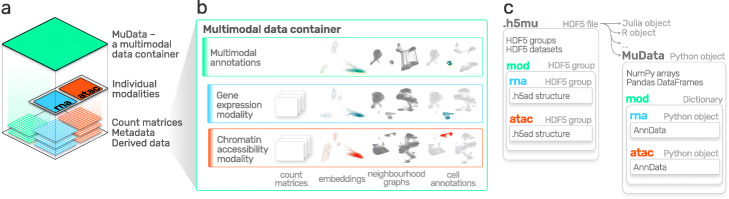
“At the core of the framework is MuData , an open data structure standard, which is compatible with and extends previous data formats for single omics [9, 17].”
BackgroundMethodInfluentialseaborn: statistical data visualization
Waskom, M. (2021) · Journal of Open Source Software · doi:10.21105/joss.03021 · Cited by 7,310
Spatial reconstruction of single-cell gene expression data
Satija, R., Farrell, J. A., Gennert, D., Schier, A. F., & Regev, A. (2015) · Nature Biotechnology · doi:10.1038/nbt.3192 · Cited by 7,055 · cited 4×
“The currently existing solutions for multi-omics data (Seurat [8], MultiAssayExperiment [14]) are confined to the R programming language”
MethodInfluentialJulia: A Fresh Approach to Numerical Computing
Bezanson, J., Edelman, A., Karpinski, S., & Shah, V. B. (2017) · SIAM Review · doi:10.1137/141000671 · Cited by 5,440
Dimensionality reduction for visualizing single-cell data using UMAP
Becht, E., McInnes, L., Healy, J., Dutertre, C.-A., Kwok, I. W. H., Ng, L. G., Ginhoux, F., & Newell, E. W. (2019) · Nature Biotechnology · doi:10.1038/nbt.4314 · Cited by 5,358 · cited 1×
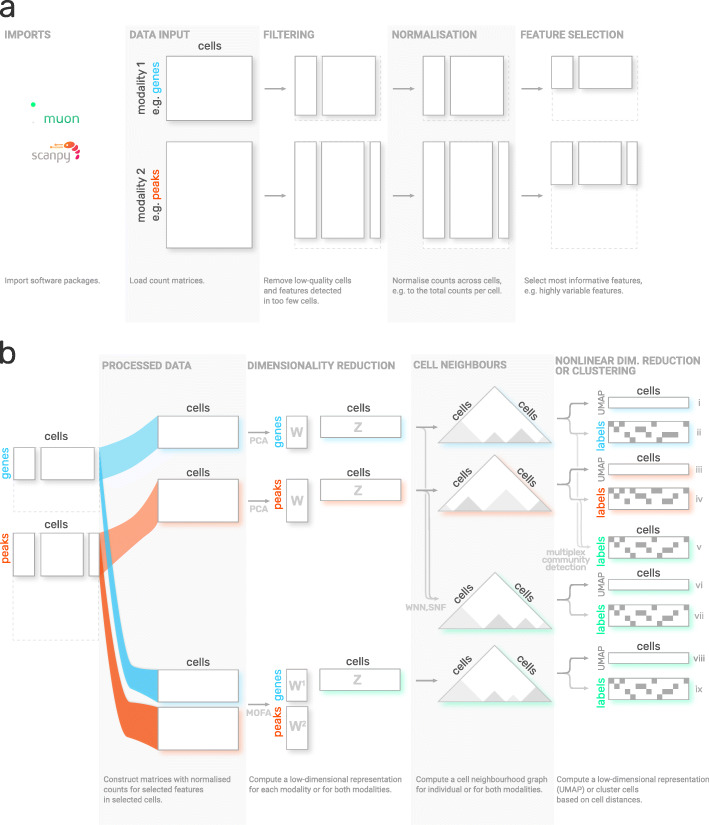
“For example, uniform manifold approximation and projection (UMAP) [33] can be directly applied to cell neighbourhood graphs to generate nonlinear embeddings of cells.”
BackgroundOrchestrating high-throughput genomic analysis with Bioconductor
Huber, W., Carey, V. J., Gentleman, R., Anders, S., Carlson, M., Carvalho, B. S., Bravo, H. C., Davis, S., Gatto, L., Girke, T., et al. (2015) · Nature Methods · doi:10.1038/nmeth.3252 · Cited by 3,608 · cited 1×
“In fact, the software incorporates ideas and extends it in a modular fashion, similar to the existing practice in the Bioconductor community [60].”
MethodSimultaneous epitope and transcriptome measurement in single cells
Stoeckius, M., Hafemeister, C., Stephenson, W., Houck-Loomis, B., Chattopadhyay, P. K., Swerdlow, H., Satija, R., & Smibert, P. (2017) · Nature Methods · doi:10.1038/nmeth.4380 · Cited by 3,098 · cited 2×
“For example, mRNA and proteins can be assayed together not only with CITE-seq [37] but also with QuRIE-seq [44] or INs-seq [45].”
BackgroundMethodMulti-omics approaches to disease
Hasin, Y., Seldin, M., & Lusis, A. (2017) · Genome Biology · doi:10.1186/s13059-017-1215-1 · Cited by 2,953 · cited 1×
“Multi-omics approaches have been applied to enable new insights in basic biology and translational research [1, 2].”
MethodCurrent best practices in single-cell RNA-seq analysis: a tutorial
Luecken, M. D., & Theis, F. J. (2019) · Molecular Systems Biology · doi:10.15252/msb.20188746 · Cited by 2,231 · cited 1×
“MuData also provides a coherent structure for storing associated metadata and other side information, both at the level of samples (e.g. cells or individuals) and features (e.g. genes or genomics locations).”
BackgroundCommunity Structure in Time-Dependent, Multiscale, and Multiplex Networks
Mucha, P. J., Richardson, T., Macon, K., Porter, M. A., & Onnela, J.-P. (2010) · Science · doi:10.1126/science.1184819 · Cited by 2,123 · cited 1×
“Similarly, the alternative cell neighbourhood graphs can be used as input for identifying connected components and thereby putative cell types (e.g. using multiplex community detection techniques [34]).”
BackgroundSimilarity network fusion for aggregating data types on a genomic scale
Wang, B., Mezlini, A. M., Demir, F., Fiume, M., Tu, Z., Brudno, M., Haibe-Kains, B., & Goldenberg, A. (2014) · Nature Methods · doi:10.1038/nmeth.2810 · Cited by 2,036 · cited 1×
“This graph can be either estimated from individual omics modalities, from a multi-omics representation (e.g. as obtained from MOFA), or by fusing two single-omics neighbour representations (e.g. using methods such as similarity network fusion, SNF [32], or WNN [31]).”
MethodCapturing Heterogeneity in Gene Expression Studies by Surrogate Variable Analysis
Leek, J. T., & Storey, J. D. (2007) · PLoS Genetics · doi:10.1371/journal.pgen.0030161 · Cited by 1,930 · cited 1×
“For example, single-omics dimensionality reduction methods such as principal component analysis or factor analysis [25 – 28] can be used to separately process RNA-seq and ATAC-seq count matrices.”
MethodMcCarthy, D. J., Campbell, K. R., Lun, A. T. L., & Wills, Q. F. (2017) · Bioinformatics · doi:10.1093/bioinformatics/btw777 · Cited by 1,852
Single-cell chromatin state analysis with Signac
Stuart, T., Srivastava, A., Madad, S., Lareau, C. A., & Satija, R. (2021) · Nature Methods · doi:10.1038/s41592-021-01282-5 · Cited by 1,769
A step-by-step workflow for low-level analysis of single-cell RNA-seq data with Bioconductor
Lun, A. T. L., McCarthy, D. J., & Marioni, J. C. (2016) · F1000Research · doi:10.12688/f1000research.9501.2 · Cited by 1,574 · cited 4×
“While specialised frameworks for the analysis of different omics data types have been proposed, including for bulk and single-cell RNA-seq [6 – 9] or epigenetic variation data [10 – 13], there is a lack of comprehensive solutions that specifically address multi-omics designs.”
BackgroundInfluentialMulti-Omics Factor Analysis—a framework for unsupervised integration of multi-omics data sets
Argelaguet, R., Velten, B., Arnol, D., Dietrich, S., Zenz, T., Marioni, J. C., Buettner, F., Huber, W., & Stegle, O. (2018) · Molecular Systems Biology · doi:10.15252/msb.20178124 · Cited by 1,510 · cited 1×
“Additionally, MUON comes with interfaces to multi-omics analysis methods that jointly process multiple modalities, including multi-omics factor analysis [29, 30] (MOFA) to obtain lower-dimensional representations, and weighted nearest neighbours [31] (WNN) to calculate multimodal neighbours.”
MethodSelf-citationArchR is a scalable software package for integrative single-cell chromatin accessibility analysis
Granja, J. M., Corces, M. R., Pierce, S. E., Bagdatli, S. T., Choudhry, H., Chang, H. Y., & Greenleaf, W. J. (2021) · Nature Genetics · doi:10.1038/s41588-021-00790-6 · Cited by 1,392
MOFA+: a statistical framework for comprehensive integration of multi-modal single-cell data
Argelaguet, R., Arnol, D., Bredikhin, D., Deloro, Y., Velten, B., Marioni, J. C., & Stegle, O. (2020) · Genome Biology · doi:10.1186/s13059-020-02015-1 · Cited by 1,091
Self-citationThe T Cell Receptor/Cd3 Complex: A Dynamic Protein Ensemble
Clevers, H. (1988) · Annual Review of Immunology · doi:10.1146/annurev.immunol.6.1.629 · Cited by 791 · cited 1×
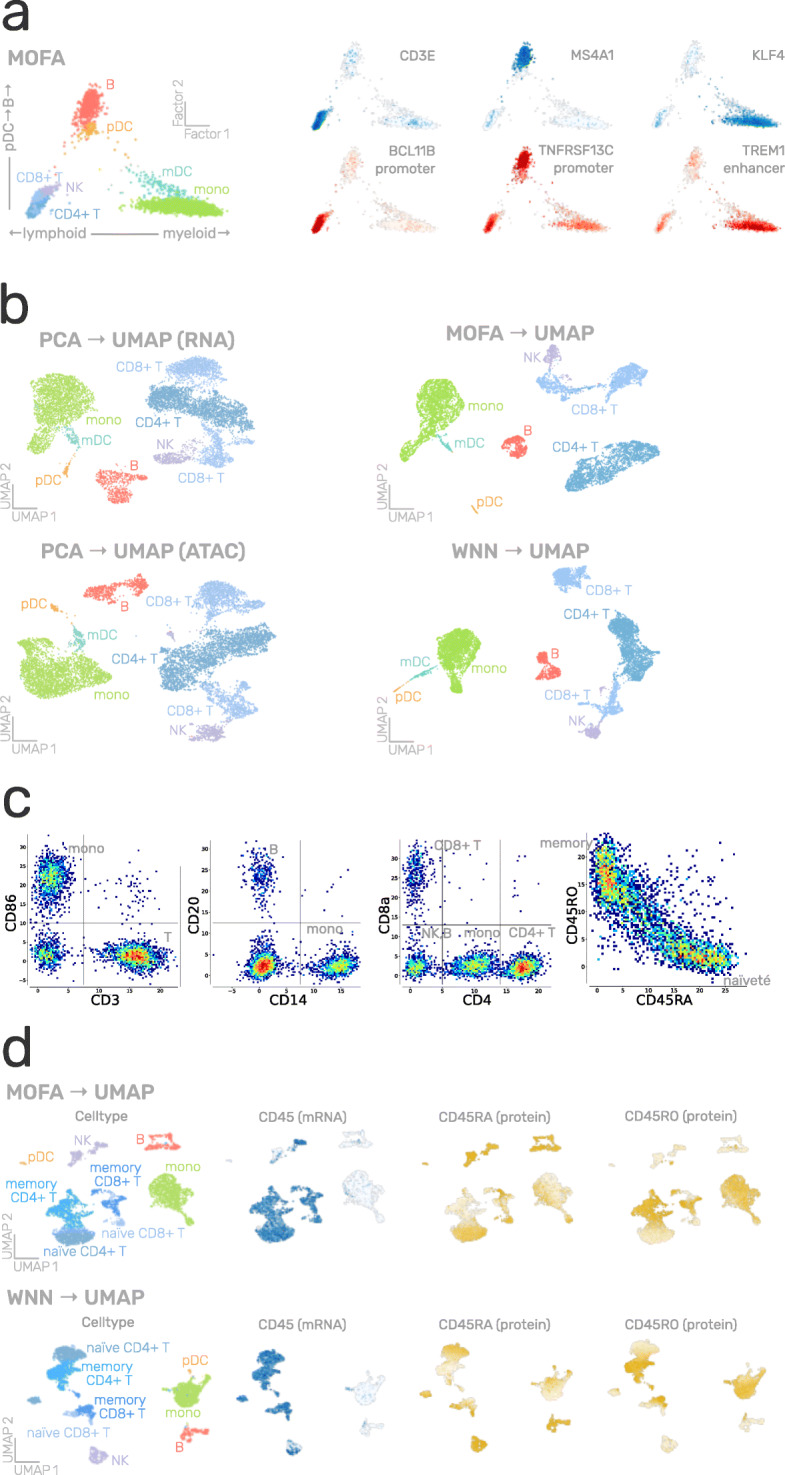
“These factors capture both variation in mRNA abundance and chromatin accessibility, e.g. as CD3E expression and BCL11B promoter accessibility, which are characteristic for T cells [35, 36] (Fig.”
BackgroundA general and flexible method for signal extraction from single-cell RNA-seq data
Risso, D., Perraudeau, F., Gribkova, S., Dudoit, S., & Vert, J.-P. (2018) · Nature Communications · doi:10.1038/s41467-017-02554-5 · Cited by 718 · cited 1×
“For example, single-omics dimensionality reduction methods such as principal component analysis or factor analysis [25 – 28] can be used to separately process RNA-seq and ATAC-seq count matrices.”
MethodClark, S. J., Argelaguet, R., Kapourani, C.-A., Stubbs, T. M., Lee, H. J., Alda-Catalinas, C., Krueger, F., Sanguinetti, G., Kelsey, G., Marioni, J. C., et al. (2018) · Nature Communications · doi:10.1038/s41467-018-03149-4 · Cited by 657 · cited 1×
“Moreover, trimodal assays such as scNMT-seq [48] or TEA-seq [49] allow to generate data beyond just two modalities and can be handled with MUON, which is designed to manage an arbitrary number of modalities.”
MethodSelf-citationSingle-cell multiomics: technologies and data analysis methods
Lee, J., Hyeon, D. Y., & Hwang, D. (2020) · Experimental & Molecular Medicine · doi:10.1038/s12276-020-0420-2 · Cited by 524 · cited 1×
“At the same time, the software facilitates combining single-omics analysis methods with a growing spectrum of multi-omics integration strategies [42, 43] to define novel multi-omics workflows.”
MethodKatzenelenbogen, Y., Sheban, F., Yalin, A., Yofe, I., Svetlichnyy, D., Jaitin, D. A., Bornstein, C., Moshe, A., Keren-Shaul, H., Cohen, M., et al. (2020) · Cell · doi:10.1016/j.cell.2020.06.032 · Cited by 498
anndata: Access and store annotated data matrices
Virshup, I., Rybakov, S., Theis, F. J., Angerer, P., & Wolf, F. A. (2024) · Journal of Open Source Software · doi:10.21105/joss.04371 · Cited by 485
From reads to insight: a hitchhiker’s guide to ATAC-seq data analysis
Yan, F., Powell, D. R., Curtis, D. J., & Wong, N. C. (2020) · Genome Biology · doi:10.1186/s13059-020-1929-3 · Cited by 473 · cited 1×
“For example, individual modalities of the simultaneous gene expression and chromatin accessibility profiling [22] can be processed using existing RNA [23] and ATAC [24] workflows.”
MethodComputational principles and challenges in single-cell data integration
Argelaguet, R., Cuomo, A. S. E., Stegle, O., & Marioni, J. C. (2021) · Nature Biotechnology · doi:10.1038/s41587-021-00895-7 · Cited by 472 · cited 2×
“methylation, chromatin accessibility, and protein abundance [3, 40, 41].”
BackgroundSelf-citationComprehensive analysis of single cell ATAC-seq data with SnapATAC
Fang, R., Preissl, S., Li, Y., Hou, X., Lucero, J., Wang, X., Motamedi, A., Shiau, A. K., Zhou, X., Xie, F., et al. (2021) · Nature Communications · doi:10.1038/s41467-021-21583-9 · Cited by 455 · cited 1×
“While specialised frameworks for the analysis of different omics data types have been proposed, including for bulk and single-cell RNA-seq [6 – 9] or epigenetic variation data [10 – 13], there is a lack of comprehensive solutions that specifically address multi-omics designs.”
BackgroundSingle-cell epigenomics: Recording the past and predicting the future
Kelsey, G., Stegle, O., & Reik, W. (2017) · Science · doi:10.1126/science.aan6826 · Cited by 415 · cited 1×
“Multimodal omics designs are increasingly accessible, allowing for characterising and integrating different dimensions of cellular variation, including gene expression, DNA methylation, chromatin accessibility, and protein abundance [3, 40, 41].”
BackgroundSelf-citationSingle-cell multimodal omics: the power of many
Zhu, C., Preissl, S., & Ren, B. (2020) · Nature Methods · doi:10.1038/s41592-019-0691-5 · Cited by 386
Swanson, E., Lord, C., Reading, J., Heubeck, A. T., Genge, P. C., Thomson, Z., Weiss, M. D., Li, X.-J., Savage, A. K., Green, R. R., et al. (2021) · eLife · doi:10.7554/elife.63632 · Cited by 267 · cited 3×
“Moreover, trimodal assays such as scNMT-seq [42] or TEA-seq [43] allow to generate data beyond just two modalities and can be handled with MUON, which is designed to manage an arbitrary number of modalities.”
MethodMulti-omics integration in the age of million single-cell data
Miao, Z., Humphreys, B. D., McMahon, A. P., & Kim, J. (2021) · Nature Reviews Nephrology · doi:10.1038/s41581-021-00463-x · Cited by 246 · cited 1×
“At the same time, the software facilitates combining single-omics analysis methods with a growing spectrum of multi-omics integration strategies [42, 43] to define novel multi-omics workflows.”
Methodanndata: Annotated dataPreprint
Virshup, I., Rybakov, S., Theis, F. J., Angerer, P., & Wolf, F. (2021) · bioRxiv · doi:10.1101/2021.12.16.473007 · Cited by 236
Computational methods for single-cell omics across modalities
Efremova, M., & Teichmann, S. A. (2020) · Nature Methods · doi:10.1038/s41592-019-0692-4 · Cited by 201
Normalizing and denoising protein expression data from droplet-based single cell profiling
(2020) · doi:10.1101/2020.02.24.963603 · Cited by 197
Normalizing and denoising protein expression data from droplet-based single cell profiling
Mulè, M. P., Martins, A. J., & Tsang, J. S. (2022) · Nature Communications · doi:10.1038/s41467-022-29356-8 · Cited by 197 · cited 2×
“Log-normalisation was used for gene counts, and dsb [38] was used to denoise and scale protein counts.”
MethodIdentifying temporal and spatial patterns of variation from multimodal data using MEFISTO
Velten, B., Braunger, J. M., Argelaguet, R., Arnol, D., Wirbel, J., Bredikhin, D., Zeller, G., & Stegle, O. (2022) · Nature Methods · doi:10.1038/s41592-021-01343-9 · Cited by 186 · cited 1×
“Already, MUON can take additional covariates into account during multimodal integration, for example, to perform temporally aware factor analysis [52].”
MethodSelf-citationMaking multi-omics data accessible to researchers
Conesa, A., & Beck, S. (2019) · Scientific Data · doi:10.1038/s41597-019-0258-4 · Cited by 173
Applications of cell sorting in biotechnology
Mattanovich, D., & Borth, N. (2006) · Microbial Cell Factories · doi:10.1186/1475-2859-5-12 · Cited by 157
Multimodal single-cell chromatin analysis with Signac
Stuart, T., Srivastava, A., Lareau, C., & Satija, R. (2020) · bioRxiv (Cold Spring Harbor Laboratory) · doi:10.1101/2020.11.09.373613 · Cited by 148
EpiScanpy: integrated single-cell epigenomic analysis
Danese, A., Richter, M. L., Chaichoompu, K., Fischer, D. S., Theis, F. J., & Colomé-Tatché, M. (2021) · Nature Communications · doi:10.1038/s41467-021-25131-3 · Cited by 142 · cited 1×
“While specialised frameworks for the analysis of different omics data types have been proposed, including for bulk and single-cell RNA-seq [6 – 9] or epigenetic variation data [10 – 13], there is a lack of comprehensive solutions that specifically address multi-omics designs.”
Backgroundf-scLVM: scalable and versatile factor analysis for single-cell RNA-seq
Buettner, F., Pratanwanich, N., McCarthy, D. J., Marioni, J. C., & Stegle, O. (2017) · Genome Biology · doi:10.1186/s13059-017-1334-8 · Cited by 135
Self-citationCritical roles of Bcl11b in T‐cell development and maintenance of T‐cell identity
Liu, P., Li, P., & Burke, S. (2010) · Immunological Reviews · doi:10.1111/j.1600-065x.2010.00953.x · Cited by 120 · cited 1×
“as CD3E expression and BCL11B promoter accessibility, which are characteristic for T cells [33,34] (Figure 3a, right).”
BackgroundToward a Common Coordinate Framework for the Human Body
Rood, J. E., Stuart, T., Ghazanfar, S., Biancalani, T., Fisher, E., Butler, A., Hupalowska, A., Gaffney, L., Mauck, W., Eraslan, G., et al. (2019) · Cell · doi:10.1016/j.cell.2019.11.019 · Cited by 119
Software for the Integration of Multiomics Experiments in Bioconductor
Ramos, M., Schiffer, L., Re, A., Azhar, R., Basunia, A., Rodriguez, C., Chan, T., Chapman, P., Davis, S. R., Gomez-Cabrero, D., et al. (2017) · Cancer Research · doi:10.1158/0008-5472.can-17-0344 · Cited by 106
PyRanges: efficient comparison of genomic intervals in Python
Stovner, E. B., & Sætrom, P. (2020) · Bioinformatics · doi:10.1093/bioinformatics/btz615 · Cited by 94
Building a high-quality Human Cell Atlas
Human Cell Atlas Standards and Technology Working Group, Rozenblatt–Rosen, O., Shin, J. W., Rood, J., Hupalowska, A., Regev, A., & Heyn, H. (2021) · Nature Biotechnology · doi:10.1038/s41587-020-00812-4 · Cited by 72
Squidpy: a scalable framework for spatial single cell analysis
Palla, G., Spitzer, H., Klein, M., Fischer, D., Schaar, A. C., Kuemmerle, L. B., Rybakov, S., Ibarra, I. L., Holmberg, O., Virshup, I., et al. (2021) · bioRxiv (Cold Spring Harbor Laboratory) · doi:10.1101/2021.02.19.431994 · Cited by 60
Single-cell intracellular epitope and transcript detection reveals signal transduction dynamics
Rivello, F., van Buijtenen, E., Matuła, K., van Buggenum, J. A. G. L., Vink, P., van Eenennaam, H., Mulder, K. W., & Huck, W. T. S. (2021) · Cell Reports Methods · doi:10.1016/j.crmeth.2021.100070 · Cited by 46 · cited 1×
“For example, mRNA and proteins can be assayed together not only with CITE-seq [37] but also with QuRIE-seq [44] or INs-seq [45].”
BackgroundIdentifying temporal and spatial patterns of variation from multi-modal data using MEFISTOPreprint
Velten, B., Braunger, J. M., Arnol, D., et al. (2020) · bioRxiv (Cold Spring Harbor Laboratory) · doi:10.1101/2020.11.03.366674 · Cited by 27 · cited 1×
“Already, MUON can take additional covariates into account during multimodal integration, for example, to perform temporally aware factor analysis [52].”
MethodLee, D., Cheng, A. Y., Lawlor, N. T., Bolisetty, M. T., & Ucar, D. (2018) · Scientific Reports · doi:10.1038/s41598-018-35365-9 · Cited by 11
Muon: multimodal omics analysis framework
Bredikhin, D., Kats, I., & Stegle, O. (2021) · Zenodo (CERN European Organization for Nuclear Research) · doi:10.5281/zenodo.5557542 · Cited by 1
Self-citation
Research works printed but not linked: 4
- Van Rossum G Drake FL Jr Python tutorial 1995 Centrum voor Wiskunde en Informatica Amsterdam
- McKinney W Others. pandas: a foundational Python library for data analysis and statistics Python High Perform Sci Comput 2011 14 1 9
- Collette A. Python and HDF5: unlocking scientific data. "O'Reilly Media, Inc."; 2013.
- Bredikhin D, Kats I, Stegle O. muon: multimodal omics Python framework. Github. https://github.com/scverse/muon. PMC8805324 35105358
Cited by
Methods and applications for single-cell and spatial multi-omics
Vandereyken, K., Sifrim, A., Thienpont, B., & Voet, T. (2023) · Nature Reviews Genetics · doi:10.1038/s41576-023-00580-2 · Cited by 1,244
“The expansion of these models to integrate paired, unpaired and multimodal spatial assays will require robust data standards 160,161 for scalable analysis of multimodal data in addition to well-established benchmarks to evaluate their efficacy.”
BackgroundBest practices for single-cell analysis across modalities
Heumos, L., Schaar, A. C., Lance, C., Litinetskaya, A., Drost, F., Zappia, L., Lücken, M. D., Strobl, D. C., Henao, J., Curion, F., et al. (2023) · Nature Reviews Genetics · doi:10.1038/s41576-023-00586-w · Cited by 1,051
anndata: Access and store annotated data matrices
Virshup, I., Rybakov, S., Theis, F. J., Angerer, P., & Wolf, F. A. (2024) · Journal of Open Source Software · doi:10.21105/joss.04371 · Cited by 485
“Formalizing this further, the muon package (Bredikhin et al., 2021) offers a container-like object MuData for a collection of AnnData objects, one for each modality.”
BackgroundThe scverse project provides a computational ecosystem for single-cell omics data analysis
Virshup, I., Bredikhin, D., Heumos, L., Palla, G., Sturm, G., Gayoso, A., Kats, I., Koutrouli, M., Community, S., Angerer, P., et al. (2023) · Nature Biotechnology · doi:10.1038/s41587-023-01733-8 · Cited by 341
Self-citationAutonomous biomedical research with an artificial intelligence agent
Huang, K., Zhang, S., Wang, H., Qu, Y., Lu, Y., Li, R., Roohani, Y., Qiu, L., Cao, S., Li, G. L., et al. (2026) · Science · doi:10.1126/science.adz4351 · Cited by 359
Metadata
- Authors
- Bredikhin, D., Kats, I., & Stegle, O.
- Affiliations
- German Cancer Research Center (DE)
- Corresponding author
- Bredikhin, Danila
- Stegle, Oliver
- Venue
- Genome Biology
- Published
- 2022-02-01
- Volume
- 23
- Issue
- 1
- Pages
- 42-42
- ISSN
- 1465-6906 (ISSN-L)
- 1474-760X
- PMC
- PMC8805324
- OpenAlex
- W4210607772
- Cited by
- 216
- References
- 58
- Citations by year
- 2026: 65 · 2025: 59 · 2024: 54 · 2023: 30 · 2022: 7
- FWCI
- 12.32
- Type
- journal article
- Language
- en
- Open access
- gold
- doi.org
- Licence
- cc-by
- creativecommons.org/licenses/by/4.0 (tdm)
- creativecommons.org/licenses/by/4.0 (vor)
- Locations
- Genome biology (publishedVersion, cc-by)
- bioRxiv (Cold Spring Harbor Laboratory) (acceptedVersion, cc-by-nd)
- PubMed Central (publishedVersion, cc-by)
- PubMed (publishedVersion)
- DOAJ (DOAJ: Directory of Open Access Journals) (submittedVersion, cc-by-sa)
- Funders
- darwin trust (Darwin Trust Fellowship)
- European Molecular Biology Laboratory (EMBL)
- Topics
- Life Sciences › Biochemistry, Genetics and Molecular Biology › Molecular Biology › Bioinformatics and Genomic Networks
- Life Sciences › Biochemistry, Genetics and Molecular Biology › Molecular Biology › Genomics and Phylogenetic Studies
- Social Sciences › Decision Sciences › Information Systems and Management › Scientific Computing and Data Management
- Keywords
- multi-omics, multimodal data, data standards, data interoperability, data structures, data exchange, data preprocessing, data visualization, muons
- MeSH terms
- Mesons, Computational Biology
About these checks
Registry, retraction, Cites and statistics results are computed, not judged, with one exception: a printed reference that no index lists is read once by a model before it counts as a citation error. Claims are extracted by a model and kept only when their quote appears verbatim in the text; each cited source is then checked, with a model’s help, for whether it says what the claim relies on. Those verdicts can be wrong — read the claim’s quote and the cited source before relying on one.
Statistics and arithmetic are recomputed, not judged.
Confidence bands are shown only for fields calibrated on our annotated test set. None is calibrated yet, so no band is shown.
What counts as a claim ›How we measure confidence ›How we check this ›
Are you an author, or do you see a problem with this page? Request a review
Data sources
Bibliographic data: Semantic Scholar, OpenAlex, Crossref.
Contains information from the Semantic Scholar Academic Graph Datasets, made available under the ODC Attribution License (ODC-BY 1.0).
Semantic Scholar’s data is described in: Kinney, R., et al. (2023). The Semantic Scholar Open Data Platform. arXiv:2301.10140.
