

MUON: multimodal omics analysis framework
Open accessPublished version of a preprint
The DOI matches its Crossref record; 60 of the 60 references it cites were found in a registry or an index.
Abstract
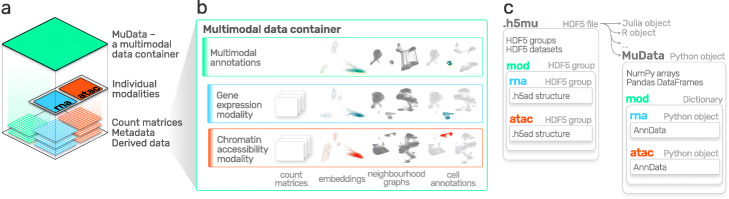
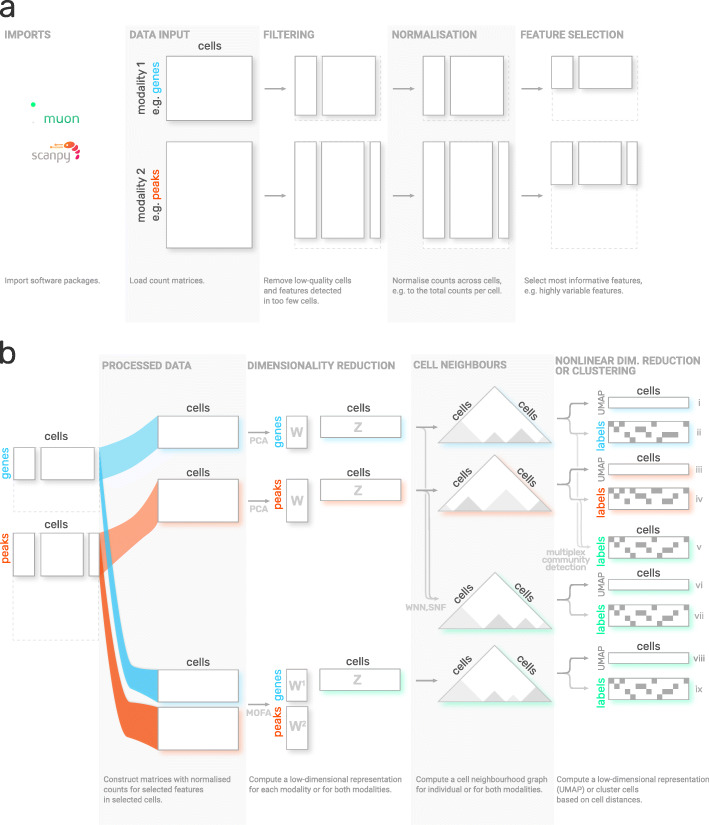
Advances in multi-omics have led to an explosion of multimodal datasets to address questions from basic biology to translation. While these data provide novel opportunities for discovery, they also pose management and analysis challenges, thus motivating the development of tailored computational solutions. Here, we present a data standard and an analysis framework for multi-omics, MUON, designed to organise, analyse, visualise, and exchange multimodal data. MUON stores multimodal data in an efficient yet flexible and interoperable data structure. MUON enables a versatile range of analyses, from data preprocessing to flexible multi-omics alignment.
Overview
The claims and statistics of this paper haven’t been checked yet.
Free: it reads the open-access text and checks the first 5 claims that cite a source we can check. Create a free account to check every claim.
Integrity signals
Registry
Cites
Statistics
Figures
Verification
Claims the paper makes
The claims and statistics of this paper haven’t been checked yet.
Free: it reads the open-access text and checks the first 5 claims that cite a source we can check. Create a free account to check every claim.
Claims other papers make about this one
Each is checked against this paper’s own text: does it say what the citing paper says it does?
In the citing paper
“The sharing of spatial data is hampered by large file sizes and non-standardized analysis pipelines58.”
From scPerturb: harmonized single-cell perturbation data (2024) · cites this paper as [58]
In the citing paper
“This can be achieved by summing up counts within genes and a certain distance upstream of the TSS136,143,150.”
From Best practices for single-cell analysis across modalities (2023) · cites this paper as [150]
Self-check
Percentages, sums and reported differences re-computed from the paper’s own numbers.
The self-check needs the paper’s full text.
Citations
Cites
R: A Language and Environment for Statistical Computing
R Core Team (2025) · doi:10.32614/r.manuals · Cited by 352,181
Scikit-learn: Machine Learning in Python
Pedregosa, F., Varoquaux, G., Gramfort, A., Michel, V., Thirion, B., Grisel, O., Blondel, M., Müller, A., Nothman, J., Louppe, G., et al. (2012) · arXiv · doi:10.48550/arxiv.1201.0490 · Cited by 71,016
Matplotlib: a 2D graphics environment
Hunter, J. D. (2007) · Computing in Science & Engineering · doi:10.1109/mcse.2007.55 · Cited by 39,249 · cited 1×
“As a multi-modal framework, MUON addresses the need for multi-omics analysis workflows that are well integrated into the existing Python ecosystem, in particular with tools for omics analysis such as Scanpy [9].”
MethodSciPy 1.0: fundamental algorithms for scientific computing in Python
Virtanen, P., Gommers, R., Oliphant, T. E., Haberland, M., Reddy, T., Cournapeau, D., Burovski, E., Peterson, P., Weckesser, W., Bright, J., et al. (2020) · Nature Methods · doi:10.1038/s41592-019-0686-2 · Cited by 38,430 · cited 1×
“…the Python programming language and builds on a number of existing numerical and scientific open-source libraries, in particular, NumPy [53], Scipy [54], Sklearn [55], Pandas [56], h5py [57], AnnData [17], and Scanpy [9] for omics data handling, MOFA+ [30] for multimodal data integration and…”
BackgroundHarris, C. R., Millman, K. J., van der Walt, S. J., Gommers, R., Virtanen, P., Cournapeau, D., Wieser, E., Taylor, J., Berg, S., Smith, N. J., et al. (2020) · Nature · doi:10.1038/s41586-020-2649-2 · Cited by 23,826 · cited 1×
“…in the Python programming language and builds on a number of existing numerical and scientific open-source libraries, in particular, NumPy [53], Scipy [54], Sklearn [55], Pandas [56], h5py [57], AnnData [17], and Scanpy [9] for omics data handling, MOFA+ [30] for multimodal data…”
BackgroundThe FAIR Guiding Principles for scientific data management and stewardship
Wilkinson, M. D., Dumontier, M., Aalbersberg, I. J., Appleton, G., Axton, M., Baak, A., Blomberg, N., Boiten, J.-W., da Silva Santos, L. B., Bourne, P. E., et al. (2016) · Scientific Data · doi:10.1038/sdata.2016.18 · Cited by 18,423
Harris, C., Millman, K., van der Walt, S., Gommers, R., Virtanen, P., Cournapeau, D., Wieser, E., Taylor, J., Berg, S., Smith, N., et al. (2020) · RePEc: Research Papers in Economics · Cited by 17,844
Integrated analysis of multimodal single-cell data
Hao, Y., Hao, S., Andersen-Nissen, E., Mauck, W. M., Zheng, S., Butler, A., Lee, M. J., Wilk, A. J., Darby, C., Zagar, M., et al. (2020) · doi:10.1101/2020.10.12.335331 · Cited by 15,508 · cited 3×
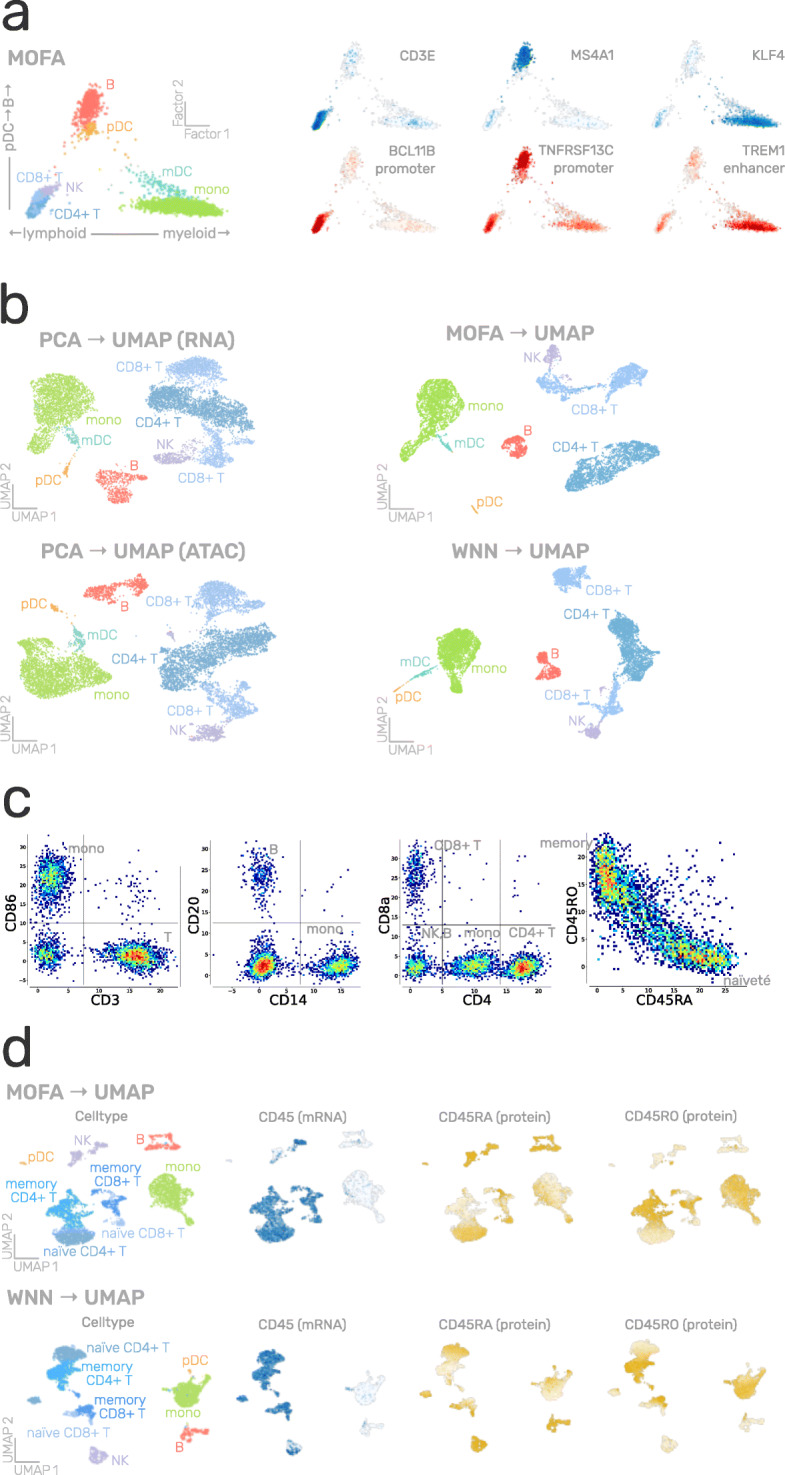
“Additionally, MUON comes with interfaces to multi-omics analysis methods that jointly process multiple modalities, including multi-omics factor analysis [29, 30] (MOFA) to obtain lower-dimensional representations, and weighted nearest neighbours [31] (WNN) to calculate multimodal neighbours.”
MethodSciPy 1.0: fundamental algorithms for scientific computing in Python
Virtanen, P., Gommers, R., Oliphant, T. E., Haberland, M., Reddy, T., Cournapeau, D., Burovski, E., Peterson, P., Weckesser, W., Bright, J., et al. (2019) · Apollo - University of Cambridge Repository · doi:10.17863/cam.64134 · Cited by 10,460
SCANPY: large-scale single-cell gene expression data analysis
Wolf, F. A., Angerer, P., & Theis, F. J. (2018) · Genome Biology · doi:10.1186/s13059-017-1382-0 · Cited by 8,881 · cited 8×
“At the core of the framework is MuData , an open data structure standard, which is compatible with and extends previous data formats for single omics [9, 17].”
BackgroundMethodInfluential
Research works printed but not linked: 4
- Van Rossum G Drake FL Jr Python tutorial 1995 Centrum voor Wiskunde en Informatica Amsterdam
- McKinney W Others. pandas: a foundational Python library for data analysis and statistics Python High Perform Sci Comput 2011 14 1 9
- Collette A. Python and HDF5: unlocking scientific data. "O'Reilly Media, Inc."; 2013.
- Bredikhin D, Kats I, Stegle O. muon: multimodal omics Python framework. Github. https://github.com/scverse/muon. PMC8805324 35105358
Cited by
Items 101–200 of 213
STAN, a computational framework for inferring spatially informed transcription factor activity
Zhang, L., Sagan, A., Qin, B., Wang, H., Kim, E. S., Hu, B., & Osmanbeyoglu, H. U. (2026) · Nucleic Acids Research · doi:10.1093/nar/gkaf1473 · Cited by 4
“For the Visium CytAssist tonsil and breast cancer samples, which have also included paired protein expression data, we used MUON (version 0.1.6) [ 26 ] to analyze the additional protein expression count matrix, which was normalized via the centered log ratio transformation.”
InfluentialOmix: A Multi-Omics Integration PipelinePreprint
Schneegans, E., Fancy, N. N., Thomas, M., Willumsen, N., Matthews, P., & Jackson, J. (2023) · bioRxiv (Cold Spring Harbor Laboratory) · doi:10.1101/2023.08.30.555486 · Cited by 5
Biologically Informed Variational Inference Enables Interpretable Cell Phenotyping and DiscoveryPreprint
Arnoldt, L., zu Belzen, J. U., Herrmann, L., Nguyen, K., Ishaque, N., Theis, F. J., Wild, B., & Eils, R. (2025) · bioRxiv (Cold Spring Harbor Laboratory) · doi:10.1101/2025.06.10.657924 · Cited by 4
“For the preprocessing of the epitope modality, muon (Bredikhin et al. 2022) was used to apply centered log ratio normalization.”
Zhang, S., Xu, N., Lu, Y., Nie, Y., Li, Z., de Gennaro, L., Fu, L., Zhang, Z., Chen, J., Ma, K., et al. (2025) · bioRxiv (Cold Spring Harbor Laboratory) · doi:10.1101/2025.08.04.668424 · Cited by 4
Xia, T., Sun, J., Luo, Y., Guo, H., Mao, Y., Xu, L., Lü, F., & Wang, Y. (2025) · Cell Genomics · doi:10.1016/j.xgen.2025.100848 · Cited by 3
NEO-STIM advances personalized neoantigen-specific adoptive T cell therapy
Lenkala, D., Kohler, J., McCarthy, B. J., Nelson, M. S., Bakker, N. A. M., de Boer, R., Jackson, E. K., Sheen, J. H., Hannes, S. K., Esaulova, E., et al. (2026) · Nature Communications · doi:10.1038/s41467-026-68680-1 · Cited by 3
Wang, J., Zhu, H., Xu, J., Fu, J., Liu, L.-Y., Chen, X.-Y., Chen, Z.-S., Zhou, H.-Y., Zhe, L., Lin, H., et al. (2026) · Current Molecular Pharmacology · doi:10.1016/j.cmp.2026.04.001 · Cited by 3
Complex subtelomeric architectures in a complete rhesus macaque reference genome
Zhang, S., Xu, N., Lu, Y., Nie, Y., Li, Z., de Gennaro, L., Torraca, A. L., Fu, L., Zhang, Z., Chen, J., et al. (2026) · Cell · doi:10.1016/j.cell.2026.02.018 · Cited by 4
Mindt, B. C., Kim, J. S., Warren, T., Song, Y., & DiGiandomenico, A. (2023) · Frontiers in Immunology · doi:10.3389/fimmu.2023.1227175 · Cited by 3
PEAKQC: periodicity evaluation in single-cell ATAC-seq data for quality assessment
Detleffsen, J., Bruns, B., Bentsen, M. S., Kuenne, C. T., & Looso, M. (2025) · Briefings in Bioinformatics · doi:10.1093/bib/bbaf465 · Cited by 3
“PEAKQC utilizes the widely adopted AnnData [29] class object, ensuring compatibility with popular Python-based ecosystems such as Scanpy [30], Episcanpy [24], and Muon [21].”
Faure, L., Prach, T., & Hadjab, S. (2022) · Current Opinion in Cell Biology · doi:10.1016/j.ceb.2022.102133 · Cited by 4
Ma, X., Lijing Lin, A., Zhao, Q., & Iqbal, M. (2024) · Briefings in Bioinformatics · doi:10.1093/bib/bbae615 · Cited by 3
Clonal embeddings allow exploratory analysis of lineage-resolved single-cell dataPreprint
Isaev, S., Erickson, A. G., Adameyko, I., & Kharchenko, P. V. (2026) · bioRxiv (Cold Spring Harbor Laboratory) · doi:10.64898/2026.04.30.720820 · Cited by 3
In the same cell, the proteome defines cellular state and the transcriptome marks transitionsPreprint
Thielert, M., Ugur, E., Zwiebel, M., Oeller, M., Diekmann, C., Eikmeier, N., Suppinger, S., Diedrich, L., Steigerwald, S., Sinha, A., et al. (2026) · bioRxiv (Cold Spring Harbor Laboratory) · doi:10.64898/2026.08.25.746940 · Cited by 4
“Paired measurements were integrated using a computational pipeline built on our in-house AlphaPeptTools framework, which imports single-cell modalities into AnnData 29 and MuData 30 objects within the scverse ecosystem 31 (see Material and Methods).”
Single-cell data combined with phenotypes improves variant interpretation
Chapman, T. R., & Lassmann, T. (2025) · BMC Genomics · doi:10.1186/s12864-025-11711-w · Cited by 2
“We downloaded 29 tissue-specific and one combined single-cell dataset as h5ad files, and used Muon.jl [29] to extract the DecontX [30] processed 10X count data.”
Characterization of human CMV-specific CD8+ T cells using multi-layer single-cell omics
Gemünd, I. D., Bonaguro, L., Becker, M., Müller, S. M., Joos, C., Domenico, E. D., Aschenbrenner, A. C., Schultze, J. L., Moosmann, A., & Beyer, M. (2025) · Cell Reports Methods · doi:10.1016/j.crmeth.2025.101085 · Cited by 2
Denoising spatial epigenomic data via deep matrix factorization
Wang, S. S., Xu, H., Wang, J., Xiao, Y., Dai, S., Lu, J., Cao, R., Chen, X., & Qu, K. (2026) · Nature Computational Science · doi:10.1038/s43588-025-00941-3 · Cited by 2
“In addition, for the simulated data before denoising, we used the ‘muon.atac.pp.tfidf’ and ‘muon. atac.tl.lsi’ functions in the muon package 47 to derive spot embeddings based on the peak matrix.”
Multifaceted B cell response to transient HIV viremia in elite controllers
Muir, L., Suchánek, O., Thomas, P., Griffith, S. A., Touizer, E., Rees-Spear, C., Krause, R., Yoshida, M., Pinder, C. L., Patil, R., et al. (2026) · PLoS Pathogens · doi:10.1371/journal.ppat.1013817 · Cited by 2
“1.5 [86].”
InfluentialTakehara, K. K., Monell, A., Luna, V., Melisso, B., Mempel, K. M., Cheung, K. P., Zane, N., Challita, P. P., Ferry, A., Xu, E. C., et al. (2026) · Immunity · doi:10.1016/j.immuni.2026.03.003 · Cited by 2
Malagoli, G., Hanel, P., Danese, A., Wolf, G., & Colomé‐Tatché, M. (2026) · Genome biology · doi:10.1186/s13059-026-04066-2 · Cited by 2
Probabilistic modelling of single-cell bisulfite sequencing data with MethylVI
Weinberger, E., Qiu, W., Tian, W., Zeng, Q., Ergen, C., Kronfeld, O., Kim, M., Yosef, N., Ecker, J. R., & Lee, S. (2026) · Nature Machine Intelligence · doi:10.1038/s42256-026-01225-9 · Cited by 2
Liu, Z. X., Wu, Y. W., Han, S., Lu, T., Pan, L., Dong, R., Huang, Y., Zheng, Y., Cai, X., Ji, Y., et al. (2026) · Journal of Allergy and Clinical Immunology · doi:10.1016/j.jaci.2026.06.020 · Cited by 2
Thoms, J. A. I., Hampton, H. R., Boon, P. L. S., Stonehouse, O. J., Zou, X., Chung, K., Koch, F. C., Yan, A., Joshi, S. M., Nguyen, M. T. H. D., et al. (2026) · Experimental Hematology · doi:10.1016/j.exphem.2026.105759 · Cited by 2
SCUBA implements a storage format-agnostic API for single-cell data access in R
Showers, W. M., Desai, J., Engel, K. L., Smith, C. A., Jordan, C. T., & Gillen, A. E. (2024) · F1000Research · doi:10.12688/f1000research.154675.2 · Cited by 3
“Support for MuData 21,22 will be added in the future, as this Python object class is especially useful for storing data from multimodal single-cell sequencing experiments.”
Combining single-cell ATAC and RNA sequencing for supervised cell annotation
Gill, J., Dasgupta, A., Manry, B., & Markuzon, N. (2025) · BMC Bioinformatics · doi:10.1186/s12859-025-06084-6 · Cited by 2
“Then, the WNN method for calculating cell-cell distances [19] was implemented using the ’neighbours’ function in Muon [50].”
Morgans, W. G., Sharrocks, A. D., & Iqbal, M. (2026) · NAR Genomics and Bioinformatics · doi:10.1093/nargab/lqag104 · Cited by 2
Metousis, A., Kenny, H. A., Shimizu, A., Schweizer, L., Ben‐Moshe, S., Bilecz, A. J., Krishnan, R., Zhang, J., Alcazar, I. N., Kelliher, L., et al. (2025) · medRxiv · doi:10.1101/2025.08.25.25333715 · Cited by 3
“The multimodal analysis was conducted separately for epithelial and stromal tissues using the Muon Python framework, a specialized tool for multimodal omics data integration 74 .”
Robust Integration of Sparse Single-Cell Alternative Splicing and Gene Expression Data with SpliceVIPreprint
Vaidyanathan, S., Isaev, K., Zweig, A., & Knowles, D. A. (2025) · bioRxiv (Cold Spring Harbor Laboratory) · doi:10.1101/2025.11.26.690853 · Cited by 2
AlphaPeptTools: scverse-native analysis of mass spectrometry-based proteomicsPreprint
Brennsteiner, V., Diedrich, L., Ben‐Moshe, S., Schwörer, M., Wallmann, G., Zeng, W., Theis, F. J., & Mann, M. (2026) · bioRxiv (Cold Spring Harbor Laboratory) · doi:10.64898/2026.09.11.750886 · Cited by 2
Evaluating integrative strategies for incorporating phenotypic features in spatial transcriptomics
Moser, L. M., Hamid, A. K., Miglietta, E. A., Gogoberidze, N., & Cimini, B. A. (2026) · Journal of Microscopy · doi:10.1111/jmi.70129 · Cited by 1
“Using various tools from the scverse Python ecosystem 43 , all individual datasets–TC, CP-derived, and LSs–were structured as AnnData objects 44 and handled as modalities in MuData objects 45 .”
Capraz, T., Vöhringer, H. S., Serrano, K. S. K., Flores, R. O. R., Sáez-Rodríguez, J., & Huber, W. (2026) · Nature Communications · doi:10.1038/s41467-026-74694-6 · Cited by 2
Celli, L., Manessi, S., Barcella, M., & Merelli, I. (2026) · Frontiers in Genetics · doi:10.3389/fgene.2025.1604484 · Cited by 1
“We benchmarked scVAR against three representative integration methods implemented in MUON: PCA concatenation, WNN and MOFA (Hao et al., 2021; Argelaguet et al., 2018; Argelaguet et al., 2020).”
Tsai, W.-L., Giesbertz, P., Breimann, S., Lichtenthaler, S. F., & Frishman, D. (2026) · Briefings in Bioinformatics · doi:10.1093/bib/bbag012 · Cited by 1
“We integrated two modalities—proteomics and clinical data—using multi-modal data containers as implemented in the muon package [31].”
Wang, W., Xie, H., Yan, C., Xu, Y., Chen, L., Huang, S., & Hu, P. (2026) · Aquaculture · doi:10.1016/j.aquaculture.2026.743810 · Cited by 1
Dose-dependent IFN programs in myeloid cells after mRNA and adenovirus COVID-19 vaccination
Eryilmaz, G. N., Yazıcı, Y. Y., Marcheş, R., Mimitou, E. P., Kenyon‐Pesce, L., Handrejk, K., Jangra, S., Schotsaert, M., García‐Sastre, A., Kuchel, G. A., et al. (2026) · JCI Insight · doi:10.1172/jci.insight.199245 · Cited by 1
NeuroMDAVIS: Visualization of Single-Cell Multi-Omics Data under Deep Learning Framework
Maitra, C., Seal, D. B., Das, V., & De, R. K. (2026) · Journal of Computational Biology · doi:10.1177/15578666261423965 · Cited by 2
Kukushkin, M. V., Arbatskiy, M. S., Balandin, D. E., & Churov, A. V. (2026) · Mathematics · doi:10.3390/math14132390 · Cited by 1
“…represents a method for integrating single-cell chromatin accessibility and gene expression data using cycle-consistent adversarial networks, Pamona [5] represents a modification of the manifold alignment method based on the Gromov–Wasserstein distance and others, such as MUON [6], MOFA [7], etc.”
Ruesch, M. A., Koenigs, N. T., Troy, E. C., Eisele, C. D., Broughton, M. J., Elmer, I., Yamaguchi, K., Sara, K., Nalin, A. P., Horowitz, A., et al. (2026) · Cell Reports · doi:10.1016/j.celrep.2026.117999 · Cited by 1
Cellenium—a scalable and interactive visual analytics app for exploring multimodal single-cell data
Jahn, C., Ibrahim, M. M., Busch, J., Lin, Q., Manchanda, H., Mohr, H., Plischke, D., Roider, H. G., & Steffen, A. (2023) · Bioinformatics · doi:10.1093/bioinformatics/btad349 · Cited by 1
UMINT-FS: UMINT-guided Feature Selection for multi-omics datasets
Maitra, C., Seal, D. B., Das, V., Vorobeychik, Y., & De, R. K. (2023) · IEEE International Conference on Bioinformatics and Biomedicine (BIBM) · doi:10.1109/bibm58861.2023.10385731 · Cited by 1
“On the other hand, the differential expression analysis feature available in Seuratv4 [8] or MUON [9] (which eventually uses MOFA+ to integrate multi-omics datasets) also enable selection of features with respect to a cellular condition.”
MethodMUFFIN: a suite of tools for the analysis of functional sequencing data
de Langen, P., & Ballester, B. (2024) · NAR Genomics and Bioinformatics · doi:10.1093/nargab/lqae051 · Cited by 1
Computational modeling of metabolism in oncology
Fong, L. E., Jin, M., Kharbanda, S., Creixell, M., Wu, X., Zhang, D., Dubrot, J., Yates, K. B., Manguso, R. T., Kaufmann-Malaga, B., et al. (2025) · Elsevier eBooks · doi:10.1016/b978-0-443-15447-8.00005-2 · Cited by 1
Non-centromeric CENP-A regulates epithelial-mesenchymal plasticity and heterogeneity in human cells
Renaud-Pageot, C., Capocefalo, D., Lemaire, S., Forest, A., Cantini, L., & Almouzni, G. (2026) · Cell Reports · doi:10.1016/j.celrep.2026.117405 · Cited by 4
scGREAT: Graph-based regulatory element analysis tool for single-cell multi-omics dataPreprint
Liu, C., Wang, L., & Liu, Z. (2023) · bioRxiv (Cold Spring Harbor Laboratory) · doi:10.1101/2023.01.27.525916 · Cited by 1
Niktab, E., Atkinson, P. H., Walterfang, M., Winship, I., Sturley, S. L., & Munkacsi, A. B. (2023) · bioRxiv (Cold Spring Harbor Laboratory) · doi:10.1101/2023.05.18.540731 · Cited by 1
Liu, Y., Zou, Q., Su, R., & Wei, L. (2026) · Nature Communications · doi:10.1101/2025.08.04.668374 · Cited by 1
msmu: a computational framework for provenance-aware mass spectrometry-based proteomics analysisPreprint
Choi, H.-W., Lee, B., Kang, U., & Huh, S. (2026) · bioRxiv (Cold Spring Harbor Laboratory) · doi:10.64898/2026.01.07.698308 · Cited by 1
Fallegger, R., Gómez‐Ochoa, S. A., Boys, C., Flores, R. O. R., Tanevski, J., Pashos, E. E., Féliers, D., Piper, M. E., Schaub, J. A., Zhou, Z., et al. (2026) · medRxiv · doi:10.64898/2026.03.05.26347522 · Cited by 4
Zaidi, S., Büttner, M., Feng, W., Baxter, C., Kates, D. H., Prudente, T. P., Zakharova, D., Mehta, S., Nandakumar, S., Wong, C. K., et al. (2026) · bioRxiv (Cold Spring Harbor Laboratory) · doi:10.64898/2026.05.07.723570 · Cited by 1
OmicOS: A Comprehensive Omics Ecosystem Infrastructure and Agent System for the AI EraPreprint
Zeng, Z., Meng, X., Hu, L., Li, C., Liu, P., Shi, Y., Ma, X., Gao, L., Wang, X., Luo, Z., et al. (2026) · bioRxiv (Cold Spring Harbor Laboratory) · doi:10.64898/2026.06.11.731775 · Cited by 1
Venturelli, L., Jacobs, J., & Sifrim, A. (2026) · bioRxiv (Cold Spring Harbor Laboratory) · doi:10.64898/2026.08.04.742705 · Cited by 1
“When the reference modality is spot-based, the aligned and resolution-matched modality files are assembled into a single MuData .h5mu object [13] in which every modality shares the reference observation index and spatial coordinates.”
InfluentialMultimodal feature learning framework for disease biomarker discovery
Ghandikota, S. K., Yella, J., & Jegga, A. G. (2022) · IEEE International Conference on Bioinformatics and Biomedicine (BIBM) · doi:10.1109/bibm55620.2022.9995233
Graph Neural Networks to Identify Genetic Modifiers of Rare Complex Inheritable Diseases
Niktab, E. (2023) · Open Access Victoria University of Wellington | Te Herenga Waka (Figshare) · doi:10.26686/wgtn.22714963 · Cited by 1
Identifying Cell Types in Single-Cell Multimodal Omics Data via Joint Embedding Learning
Do, V. H., & Canzar, S. (2023) · International Conference on Knowledge and Systems Engineering/Proceedings · doi:10.1109/kse59128.2023.10299517
“A common solution to multimodal data is to first normalize/standardize the features across modalities and collapse all modalities into a single modality [14], [15].”
BackgroundMethodLiu, C., Wang, L., & Liu, Z. (2024) · NAR Genomics and Bioinformatics · doi:10.1093/nargab/lqae007
Sserwadda, H., Lee, J. H., Lee, B. H., Jung, S.-Y., Bang, Y. J., Cho, B. K., Nam, H. J., Choi, S., Gong, J., Choi, H. S., et al. (2025) · Immunological Investigations · doi:10.1080/08820139.2025.2457039
“The adata objects and their TCR-filtered contig annotation data were concatenated and merged into a single multimodal data (MuData (Bredikhin et al., 2022)) object.”
Analysis of single-cell TCR repertoires and gene expression from multi-modal scRNA-seq data
Plattner, C., Sturm, G., & Rieder, D. (2025) · Methods in cell biology · doi:10.1016/bs.mcb.2025.03.007
Yu, Z., & Zhu, J. (2025) · Journal of Surgical Research · doi:10.1016/j.jss.2025.02.045
Multi-Omic Profiling for Molecular Diagnosis of Erythrodermic Skin Diseases
Stadler, P., Mueller-Reif, J. B., Kerl-French, K., Wallmann, G., Diedrich, L., Eicher, L., Zwiebel, M., Helbig, D., Kempf, W., Stadler, R., et al. (2026) · British Journal of Dermatology · doi:10.1101/2025.09.12.25335624 · Cited by 1
GUANACO: A Unified Web-Based Platform for Single-Cell Multi-Omics Data VisualizationPreprint
Zhang, X., Kuddus, M. B. M. M., Xia, Q., Hu, Y., & Chen, P. (2025) · bioRxiv (Cold Spring Harbor Laboratory) · doi:10.1101/2025.09.18.677070
“Here, we introduce GUANACO ( G raphical U nified A nalysis and Navigation of C ellular O mics), a Python-based platform designed for biologists to explore processed single-cell multiomics data (scRNA-seq and scATAC-seq), with support for both AnnData [3] and MuData [11] input formats.”
An integrated platform for high-throughput phenospace learning of 3D multilineage organoid systemsPreprint
Okuda, R., Harmel, C., Xu, Q., Mary, H., Schulz, P., Steinacher, L., D’Arcangelo, E., Gjeta, B., Signer, M., Cubela, I., et al. (2025) · bioRxiv (Cold Spring Harbor Laboratory) · doi:10.1101/2025.11.27.690952
Additional file 3 of hadge: a comprehensive pipeline for donor deconvolution in single-cell studies
Curion, F., Wu, X., Heumos, L., André, M. M. G., Halle, L., Ozols, M., Grant‐Peters, M., Rich‐Griffin, C., Yeung, H.-Y., Dendrou, C. A., et al. (2024) · Figshare · doi:10.6084/m9.figshare.26713097
Additional file 2 of SHARE-Topic: Bayesian interpretable modeling of single-cell multi-omic data
Kazwini, N. E., & Sanguinetti, G. (2024) · Figshare · doi:10.6084/m9.figshare.26684835
Additional file 3 of SHARE-Topic: Bayesian interpretable modeling of single-cell multi-omic data
Kazwini, N. E., & Sanguinetti, G. (2024) · Figshare · doi:10.6084/m9.figshare.26684838
Additional file 1 of hadge: a comprehensive pipeline for donor deconvolution in single-cell studies
Curion, F., Wu, X., Heumos, L., André, M. M. G., Halle, L., Ozols, M., Grant‐Peters, M., Rich‐Griffin, C., Yeung, H.-Y., Dendrou, C. A., et al. (2024) · Figshare · doi:10.6084/m9.figshare.26713091
Additional file 5 of SHARE-Topic: Bayesian interpretable modeling of single-cell multi-omic data
Kazwini, N. E., & Sanguinetti, G. (2024) · Figshare · doi:10.6084/m9.figshare.26684844
Curion, F., Rich‐Griffin, C., Agarwal, D., Ouologuem, S., Rue-Albrecht, K., May, L., Garcia, G. E. L., Heumos, L., Thomas, T. R., Lason, W., et al. (2024) · Figshare · doi:10.6084/m9.figshare.26211618
Additional file 4 of SHARE-Topic: Bayesian interpretable modeling of single-cell multi-omic data
Kazwini, N. E., & Sanguinetti, G. (2024) · Figshare · doi:10.6084/m9.figshare.26684841
Curion, F., Rich‐Griffin, C., Agarwal, D., Ouologuem, S., Rue-Albrecht, K., May, L., Garcia, G. E. L., Heumos, L., Thomas, T. R., Lason, W., et al. (2024) · Figshare · doi:10.6084/m9.figshare.26211351
Additional file 6 of SHARE-Topic: Bayesian interpretable modeling of single-cell multi-omic data
Kazwini, N. E., & Sanguinetti, G. (2024) · Figshare · doi:10.6084/m9.figshare.26684847
Additional file 1 of Spatial omics technologies at multimodal and single cell/subcellular level
Park, J., Kim, J., Lewy, T., Rice, C. M., Elemento, O., Rendeiro, A. F., & Mason, C. E. (2023) · Figshare · doi:10.6084/m9.figshare.22608698
Additional file 4 of hadge: a comprehensive pipeline for donor deconvolution in single-cell studies
Curion, F., Wu, X., Heumos, L., André, M. M. G., Halle, L., Ozols, M., Grant‐Peters, M., Rich‐Griffin, C., Yeung, H.-Y., Dendrou, C. A., et al. (2024) · Figshare · doi:10.6084/m9.figshare.26713103
Additional file 2 of hadge: a comprehensive pipeline for donor deconvolution in single-cell studies
Curion, F., Wu, X., Heumos, L., André, M. M. G., Halle, L., Ozols, M., Grant‐Peters, M., Rich‐Griffin, C., Yeung, H.-Y., Dendrou, C. A., et al. (2024) · Figshare · doi:10.6084/m9.figshare.26713094
Additional file 1 of SHARE-Topic: Bayesian interpretable modeling of single-cell multi-omic data
Kazwini, N. E., & Sanguinetti, G. (2024) · Figshare · doi:10.6084/m9.figshare.26684832
Natural methods of unsupervised topological alignmentPreprint
Arbatskiy, M. S., Kukushkin, M. V., Balandin, D. E., & Churov, A. V. (2025) · arXiv (Cornell University) · doi:10.48550/arxiv.2510.26631
“The MUON method [6] represents a multimodal analytical platform for omics data, developed for organizing, analyzing, visualizing, and sharing multimodal biological data.”
Identifying multimodal molecular programs with mTopicPreprint
Rutkowski, P., Ochocka, N., Panas, D., & Tabaka, M. (2025) · bioRxiv (Cold Spring Harbor Laboratory) · doi:10.64898/2025.12.21.695756
“It uses the MuData structure [39] to organize multimodal data, enabling seamless integration with existing single-cell analysis workflows.”
Nan, M., Ren, Q., Fu, Y., Chen, X., Qi, G., Wang, L., & Gao, J. (2025) · BMC Bioinformatics · doi:10.1186/s12859-025-06301-2
Lance, C., Shitov, V. A., Wen, H., Ji, Y., Holderrieth, P., Wu, Y., Liu, R., Cannoodt, R., Tang, W., Waldrant, K., et al. (2026) · bioRxiv (Cold Spring Harbor Laboratory) · doi:10.64898/2026.02.24.707614
Interactive analysis of single-cell trajectories in 3D space with Cell Journey
Panas, D., & Tabaka, M. (2026) · GigaScience · doi:10.1093/gigascience/giag021
“The platform also integrates MuData [ 53 ] for handling multimodal datasets, with NumPy and Pandas managing array operations and data frames, respectively.”
MESSI: Multimodal Experiments with SyStematic Interrogation using nextflowPreprint
Liang, C. (., Grewal, T. S., Singh, A., & Singh, A. (2026) · bioRxiv (Cold Spring Harbor Laboratory) · doi:10.64898/2026.03.09.710452
Liu, X., Singh, R., & Ramachandran, S. (2026) · bioRxiv (Cold Spring Harbor Laboratory) · doi:10.64898/2026.03.09.710668 · Cited by 1
Explainable graph learning for multimodal single-cell data integration
Koca, M. B., & Sevilgen, F. E. (2026) · BMC Bioinformatics · doi:10.1186/s12859-026-06413-3
“The datasets were converted into MuData format, an extended version of annData for handling multi-omic datasets [43].”
Martini, L., Bardini, R., Savino, A., & Carlo, S. D. (2026) · International Joint Conference on Biomedical Engineering Systems and Technologies (BIOSTEC) · doi:10.5220/0014631000004070
Obwegs, D., Oschwald, A., Koetter, L. M., Crisand, C., Doerr, S., Bruder, K., Runge, S., Ghanem, N., Fuchs, V., Eckert, M., et al. (2026) · bioRxiv (Cold Spring Harbor Laboratory) · doi:10.64898/2026.04.05.716534
Modelling the geometry of high-dimensional omics data : dimensionality, subspaces, trajectories
Bac, J. (2022) · theses.fr (ABES) · doi:10.70675/3c682a3dz1b61z4109z9dbdz18ac2365aed0
Vijay, G. K. M., Ramaswami, B., Gierlack, S., Pease, N. A., Gerges, P., Chen, D., Thakkar, K., Hernandez, L. M., Keshari, S., Xu, H., et al. (2026) · Nature Immunology · doi:10.1038/s41590-026-02495-6
Zeng, H., Zhao, F., Chen, L., Xu, H., Gao, H., & Alkhamees, B. F. (2026) · ACM Transactions on Multimedia Computing Communications and Applications · doi:10.1145/3812544
CHAMPOLLION: Robust Multi-Omics Integration via Inverse Optimal Transport Using Paired CellsPreprint
Samaran, J., Peyré, G., & Cantini, L. (2026) · bioRxiv (Cold Spring Harbor Laboratory) · doi:10.64898/2026.04.28.721317 · Cited by 1
Spatially resolved, multimodal in vivo Perturb-seq using antibody-based cell hashingPreprint
Nevue, A. A., Hartoularos, G. C., del Valle, C., Ramachandran, K., Barron, J. J., Cervantes, M. E. C., Lee, H., Bowness, J. S., Velten, L., Ricci-Tam, C., et al. (2026) · bioRxiv (Cold Spring Harbor Laboratory) · doi:10.64898/2026.05.25.727765 · Cited by 1
ATLAS: a package for multi-omic single-cell trajectory inferencePreprint
Leclercq, A., Martini, L., Bardini, R., Savino, A., & Carlo, S. D. (2026) · bioRxiv (Cold Spring Harbor Laboratory) · doi:10.64898/2026.05.23.727175
Circadian misalignment underlies immune escape in breast cancerPreprint
Liang, C., Liu, Z., Xu, X., Xu, Z., Zhang, Q., Zhang, T., Mangan, R. J., Xiu, B., Wu, G., Akhshi, T. K., et al. (2026) · bioRxiv (Cold Spring Harbor Laboratory) · doi:10.64898/2026.05.26.726543
Spatially resolved, multimodal in vivo Perturb-seq using antibody-based cell hashingPreprint
Lara‐Astiaso, D., Nevue, A. A., Hartolarus, G., Averbuch, I., del Valle, C., Ramachandran, K., Barron, J., Cervantes, M. E. C., Lee, H., Bowness, J. S., et al. (2026) · Research Square · doi:10.21203/rs.3.rs-9857654/v1
Cranley, J. J., Mach, L., Jimba, T., Kanemaru, K., Zhao, J., Perera, S., Zurke, Y.-X., Koplev, S., Barnett, S. N., Wang, L., et al. (2026) · bioRxiv (Cold Spring Harbor Laboratory) · doi:10.64898/2026.06.16.732617 · Cited by 1
Сергеевна, Ч. Е., Shcherbakova, L. N., Vigovskiy, M. A., Ильдарович, Т. А., Logunov, D. Y., Tychinin, D. I., Svetlichnyy, D. V., Kulebyakin, K. Y., Tkachuk, V., & Chechekhin, V. I. (2026) · Nucleic Acids Research · doi:10.1093/nar/gkag612
“We used the scanpy and muon packages for downstream analysis [ 9 , 10 ].”
InfluentialMahajan, A. S., Ravichandran, S., Marcheş, R., Yazıcı, Y. Y., Nelson, S., Aydillo, T., Kshitija, K., Rojo-Fernandez, A., Nehar-Belaid, D., Kenyon‐Pesce, L., et al. (2026) · medRxiv · doi:10.64898/2026.07.02.26357118
pylimma: a faithful, AnnData-native Python port of R limma for differential expression analysisPreprint
Mulvey, J. F. (2026) · bioRxiv (Cold Spring Harbor Laboratory) · doi:10.64898/2026.07.06.736732
Gur, C., Ravkaie, L., Sharet-Eshed, R., Shalita, R., Avellino, R., Rauchbach, E., Xie, K., David, E., Yagel, G., Zada, M., et al. (2026) · bioRxiv (Cold Spring Harbor Laboratory) · doi:10.64898/2026.07.09.737520 · Cited by 1
Reliable Decomposition of Binary and Continuous Correlations in scRNA-seq
Luo, W., Wang, C., 毛冲霄, Yang, Y., Lian, Q., & Xin, H. (2026) · ACM International Conference on Bioinformatics, Computational Biology, and Health Informatics (ACM-BCB) · doi:10.1145/3807503.3819484
Obwegs, D., Oschwald, A., Koetter, L. M., Crisand, C., Doerr, S., Bruder, K., Runge, S., Ghanem, N., Fuchs, V., Eckert, M., et al. (2026) · Science Advances · doi:10.1126/sciadv.aec9180
MOFTy: Multimodal Gaussian Process Factor Analysis with Numerical Information Field TheoryPreprint
Neumann, M., Arras, P., Kaster, A., & Ott, A. (2026) · bioRxiv (Cold Spring Harbor Laboratory) · doi:10.64898/2026.08.12.744240
“Preprocessing was performed using the MOFA2 R package and its Python interface mofax [11–13], together with muon [31], scanpy [36], and squidpy [81].”
Metadata
- Authors
- Bredikhin, D., Kats, I., & Stegle, O.
- Affiliations
- German Cancer Research Center (DE)
- Corresponding author
- Bredikhin, Danila
- Stegle, Oliver
- Venue
- Genome Biology
- Published
- 2022-02-01
- Volume
- 23
- Issue
- 1
- Pages
- 42-42
- ISSN
- 1465-6906 (ISSN-L)
- 1474-760X
- PMC
- PMC8805324
- OpenAlex
- W4210607772
- Cited by
- 216
- References
- 58
- Citations by year
- 2026: 65 · 2025: 59 · 2024: 54 · 2023: 30 · 2022: 7
- FWCI
- 12.32
- Type
- journal article
- Language
- en
- Open access
- gold
- doi.org
- Licence
- cc-by
- creativecommons.org/licenses/by/4.0 (tdm)
- creativecommons.org/licenses/by/4.0 (vor)
- Locations
- Genome biology (publishedVersion, cc-by)
- bioRxiv (Cold Spring Harbor Laboratory) (acceptedVersion, cc-by-nd)
- PubMed Central (publishedVersion, cc-by)
- PubMed (publishedVersion)
- DOAJ (DOAJ: Directory of Open Access Journals) (submittedVersion, cc-by-sa)
- Funders
- darwin trust (Darwin Trust Fellowship)
- European Molecular Biology Laboratory (EMBL)
- Topics
- Life Sciences › Biochemistry, Genetics and Molecular Biology › Molecular Biology › Bioinformatics and Genomic Networks
- Life Sciences › Biochemistry, Genetics and Molecular Biology › Molecular Biology › Genomics and Phylogenetic Studies
- Social Sciences › Decision Sciences › Information Systems and Management › Scientific Computing and Data Management
- Keywords
- multi-omics, multimodal data, data standards, data interoperability, data structures, data exchange, data preprocessing, data visualization, muons
- MeSH terms
- Mesons, Computational Biology
About these checks
Registry, retraction, Cites and statistics results are computed, not judged, with one exception: a printed reference that no index lists is read once by a model before it counts as a citation error. Claims are extracted by a model and kept only when their quote appears verbatim in the text; each cited source is then checked, with a model’s help, for whether it says what the claim relies on. Those verdicts can be wrong — read the claim’s quote and the cited source before relying on one.
Statistics and arithmetic are recomputed, not judged.
Confidence bands are shown only for fields calibrated on our annotated test set. None is calibrated yet, so no band is shown.
What counts as a claim ›How we measure confidence ›How we check this ›
Are you an author, or do you see a problem with this page? Request a review
Data sources
Bibliographic data: Semantic Scholar, OpenAlex, Crossref.
Contains information from the Semantic Scholar Academic Graph Datasets, made available under the ODC Attribution License (ODC-BY 1.0).
Semantic Scholar’s data is described in: Kinney, R., et al. (2023). The Semantic Scholar Open Data Platform. arXiv:2301.10140.
