

Statistical and machine learning methods for spatially resolved transcriptomics data analysis
Open accessThe DOI matches its Crossref record; 117 of the 117 references it cites were found in a registry or an index.
Abstract
The recent advancement in spatial transcriptomics technology has enabled multiplexed profiling of cellular transcriptomes and spatial locations. As the capacity and efficiency of the experimental technologies continue to improve, there is an emerging need for the development of analytical approaches. Furthermore, with the continuous evolution of sequencing protocols, the underlying assumptions of current analytical methods need to be re-evaluated and adjusted to harness the increasing data complexity. To motivate and aid future model development, we herein review the recent development of statistical and machine learning methods in spatial transcriptomics, summarize useful resources, and highlight the challenges and opportunities ahead.
Overview
The claims and statistics of this paper haven’t been checked yet.
Free: it reads the open-access text and checks the first 5 claims that cite a source we can check. Create a free account to check every claim.
Integrity signals
Registry
Cites
Statistics
Figures
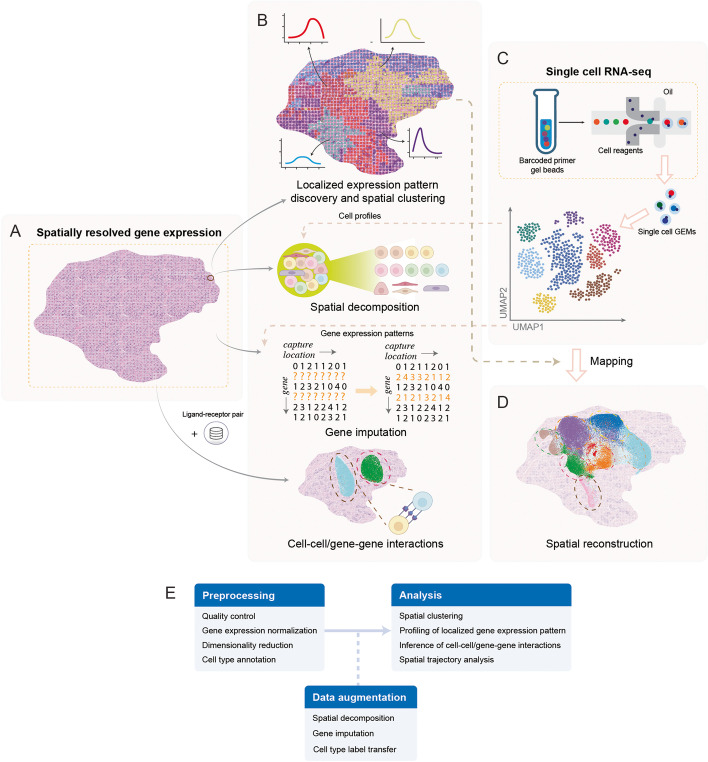
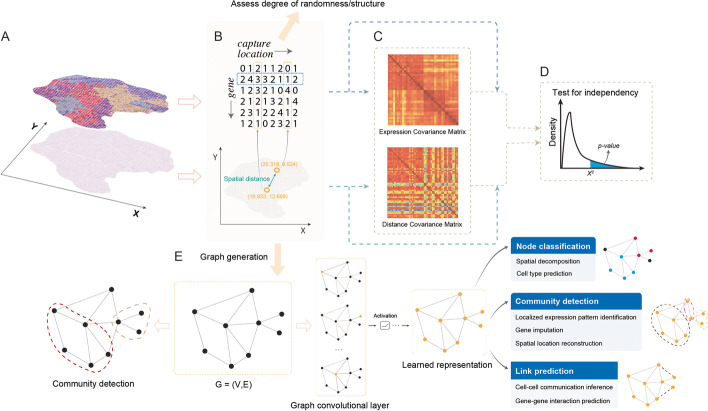
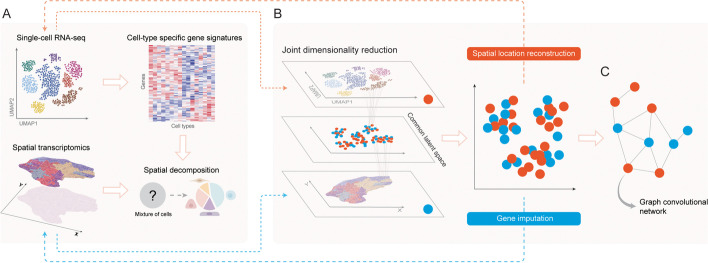
Verification
Claims the paper makes
The claims and statistics of this paper haven’t been checked yet.
Free: it reads the open-access text and checks the first 5 claims that cite a source we can check. Create a free account to check every claim.
Claims other papers make about this one
Each is checked against this paper’s own text: does it say what the citing paper says it does?
The cited source says what the claim attributes to it.
In the citing paper
“Deep learning methods have been applied to extract the interactions between cellular location and molecular phenotypes [125].”
From Challenges in AI-driven Biomedical Multimodal Data Fusion and Analysis (2025) · cites this paper as [125]
Self-check
Percentages, sums and reported differences re-computed from the paper’s own numbers.
The self-check needs the paper’s full text.
Citations
Cites
Comprehensive Integration of Single-Cell Data
Stuart, T., Butler, A., Hoffman, P., Hafemeister, C., Papalexi, E., Mauck, W. M., Hao, Y., Stoeckius, M., Smibert, P., & Satija, R. (2019) · Cell · doi:10.1016/j.cell.2019.05.031 · Cited by 15,453
Fast, sensitive and accurate integration of single-cell data with Harmony
Korsunsky, I., Millard, N., Fan, J., Slowikowski, K., Zhang, F., Wei, K., Baglaenko, Y., Brenner, M., Loh, P.-R., & Raychaudhuri, S. (2019) · Nature Methods · doi:10.1038/s41592-019-0619-0 · Cited by 10,488
Spatial reconstruction of single-cell gene expression data
Satija, R., Farrell, J. A., Gennert, D., Schier, A. F., & Regev, A. (2015) · Nature Biotechnology · doi:10.1038/nbt.3192 · Cited by 7,055 · cited 6×
“Based on this reference map, Seurat [50] projects scRNA-seq cells to spatial locations with a probabilistic score using a bimodal mixture model (Fig.”
BackgroundMethodInfluentialWeiss, K., Khoshgoftaar, T. M., & Wang, D. (2016) · Journal of Big Data · doi:10.1186/s40537-016-0043-6 · Cited by 6,260 · cited 1×
“To solve this problem, we may adapt the idea of transfer learning, which utilizes knowledge learned from similar domains where data is more accessible or better labeled [21].”
MethodVisualization and analysis of gene expression in tissue sections by spatial transcriptomics
Ståhl, P. L., Salmén, F., Vickovic, S., Lundmark, A., Navarro, J. F., Magnusson, J., Giacomello, S., Asp, M., Westholm, J. O., Huss, M., et al. (2016) · Science · doi:10.1126/science.aaf2403 · Cited by 3,834 · cited 1×
“In the past decade, the rapid development of spatial transcriptomics technology has facilitated biological discoveries in different domains [4, 13–15].”
BackgroundSpatially resolved, highly multiplexed RNA profiling in single cells
Chen, K. H., Boettiger, A. N., Moffitt, J. R., Wang, S., & Zhuang, X. (2015) · Science · doi:10.1126/science.aaa6090 · Cited by 2,969 · cited 2×
“It assumes a zero-inflated negative binomial (ZINB) distribution for scRNA-seq measurements, a Poisson distribution for single-molecule fluorescence in situ hybridization (smFISH) [3] measurements, and a negative binomial distribution for spatially resolved transcript amplicon readout mapping (starMAP) [76] measuremen…”
MethodDeep generative modeling for single-cell transcriptomics
Lopez, R., Regier, J., Cole, M. B., Jordan, M. I., & Yosef, N. (2018) · Nature Methods · doi:10.1038/s41592-018-0229-2 · Cited by 2,530 · cited 3×
“In terms of aggregating scRNA-seq data and spatial transcriptomics data, gimVI [37] and scVI [75] differ from other methods in their non-linearity, as many other methods are dependent”
BackgroundMethodSlide-seq: A scalable technology for measuring genome-wide expression at high spatial resolution
Rodriques, S. G., Stickels, R. R., Goeva, A., Martin, C. A., Murray, E., Vanderburg, C. R., Welch, J., Chen, L. M., Chen, F., & Macosko, E. Z. (2019) · Science · doi:10.1126/science.aaw1219 · Cited by 2,424 · cited 1×
“To analyze Slide-seq data, Rodriques et al. [6] propose to utilize non-negative matrix factorization (NMF) to derive metagenes from the scRNA-seq data.”
MethodStatistical Analysis and Modelling of Spatial Point Patterns
Illian, J., Penttinen, A., Stoyan, H., & Stoyan, D. (2007) · Wiley eBooks · doi:10.1002/9780470725160 · Cited by 1,848 · cited 1×
“Trendsceek [40] utilizes the marked point process theory [65], in which spatial locations are represented as points and expression levels as marks.”
MethodTranscriptome-scale super-resolved imaging in tissues by RNA seqFISH
Eng, C.-H. L., Lawson, M., Zhu, Q., Dries, R., Koulena, N., Takei, Y., Yun, J., Cronin, C., Karp, C., Yuan, G.-C., et al. (2019) · Nature · doi:10.1038/s41586-019-1049-y · Cited by 1,754
Cited by
Multimodal machine learning in precision health: A scoping review
Kline, A., Wang, H., Li, Y., Dennis, S., Hutch, M., Xu, Z., Wang, F., Cheng, F., & Luo, Y. (2022) · npj Digital Medicine · doi:10.1038/s41746-022-00712-8 · Cited by 528
Self-citationApplications of single-cell RNA sequencing in drug discovery and development
Van de Sande, B., Lee, J. S., Mutasa-Gottgens, E., Naughton, B., Bacon, W., Manning, J., Wang, Y., Pollard, J., Mendez, M., Hill, J., et al. (2023) · Nature Reviews Drug Discovery · doi:10.1038/s41573-023-00688-4 · Cited by 437
An Unsupervised Machine Learning Algorithms: Comprehensive Review
Naeem, S., Ali, A., Anam, S., & Ahmed, M. M. (2023) · International Journal of Computing and Digital Systems · doi:10.12785/ijcds/130172 · Cited by 289
“Develop models that detect trends in historical data and utilize those models to make forecasts to generate data-driven predictions [1], [2], [3].”
MethodClinical and translational values of spatial transcriptomics
Zhang, L., Chen, D., Song, D., Liu, X., Zhang, Y., Xu, X., & Wang, X. (2022) · Signal Transduction and Targeted Therapy · doi:10.1038/s41392-022-00960-w · Cited by 213
Spatial transcriptomics in health and disease
Jain, S. R., & Eadon, M. T. (2024) · Nature Reviews Nephrology · doi:10.1038/s41581-024-00841-1 · Cited by 186
“Each of these techniques has different underlying mathematical properties, which can lead to considerable variability in how cells or spots are defined 40–42 .”
Spatial omics technologies at multimodal and single cell/subcellular level
Park, J., Kim, J., Lewy, T., Rice, C. M., Elemento, O., Rendeiro, A. F., & Mason, C. E. (2022) · Genome biology · doi:10.1186/s13059-022-02824-6 · Cited by 142
Computational solutions for spatial transcriptomics
Kleino, I., Frolovaitė, P., Suomi, T., & Elo, L. L. (2022) · Computational and Structural Biotechnology Journal · doi:10.1016/j.csbj.2022.08.043 · Cited by 130
Annotation of spatially resolved single-cell data with STELLAR
Brbić, M., Cao, K., Hickey, J. W., Tan, Y., Snyder, M. P., Nolan, G. P., & Leskovec, J. (2022) · Nature Methods · doi:10.1038/s41592-022-01651-8 · Cited by 121
“Recently, methods that take into account spatial organization of cells have been developed for annotating spatial transcriptomics data [11–15].”
MethodSODB facilitates comprehensive exploration of spatial omics data
Yuan, Z., Pan, W., Zhao, X., Zhao, F., Xu, Z., Li, X., Zhao, Y. C., Zhang, M. Q., & Yao, J. (2023) · Nature Methods · doi:10.1038/s41592-023-01773-7 · Cited by 124
“For this, we collected mainstream computational methods covered in six recent review articles 12,20,87–90 (Supplementary Table 4), including a total of 68 methods in 11 types (Fig.”
MethodWang, J., Kang, Z., Liu, Y., Li, Z., Liu, Y., & Liu, J. (2022) · Frontiers in Immunology · doi:10.3389/fimmu.2022.956078 · Cited by 141
“Several machine learning algorithms have been proposed to integrate spatial transcriptomics data and other data (39).”
BackgroundInforming immunotherapy with multi-omics driven machine learning
Li, Y., Xin, W., Fang, D., & Luo, Y. (2024) · npj Digital Medicine · doi:10.1038/s41746-024-01043-6 · Cited by 135
“…reduction algorithms such as negative matrix factorization (NMF), PCA, singular value decomposition (SVD), canonical correlation analysis (CCA), have emerged as powerful tools for encoding data from diverse platforms into a shared latent space, thereby enabling effectivebatcheffectremoval 135 .”
MethodSelf-citationA review of cancer data fusion methods based on deep learning
Zhao, Y., Li, X., Zhou, C., Peng, H., Zheng, Z., Chen, J., & Ding, W. (2024) · Information Fusion · doi:10.1016/j.inffus.2024.102361 · Cited by 95
A guidebook of spatial transcriptomic technologies, data resources and analysis approaches
Yue, L., Liu, F., Hu, J., Yang, P., Wang, Y., Dong, J., Shu, W., Huang, X., & Wang, S. (2023) · Computational and Structural Biotechnology Journal · doi:10.1016/j.csbj.2023.01.016 · Cited by 96
“A series of available third-party software packages have been developed to facilitate the data analysis process, which is usually goal-oriented [11,32,45,51].”
BackgroundMethodRen, P., Zhang, R., Wang, Y., Zhang, P., Luo, C., Wang, S., Li, X., Zhang, Z., Zhao, Y., He, Y., et al. (2025) · Nature Communications · doi:10.1038/s41467-025-64292-3 · Cited by 146
“Detailed timelines for sample collection, fi xation, embedding, sectioning, and transcriptomic pro fi ling were documented (Supplementary Data 2).”
InfluentialSelf-citationGuo, T., Yuan, Z., Pan, Y., Wang, J., Chen, F., Zhang, M. Q., & Li, X. (2023) · Genome biology · doi:10.1186/s13059-023-03078-6 · Cited by 80
“These results demonstrated clusters identified by methods missing spatial relationships could not represent spatial domains, which were defined as having high spatial coherence in both gene expression and histology [39, 40].”
ResultChallenges in AI-driven Biomedical Multimodal Data Fusion and Analysis
Liu, J., Cen, X., Yi, C., Wang, F.-A., Ding, J., Cheng, J., Wu, Q., Gai, B., Zhou, Y., He, R., et al. (2025) · Genomics, Proteomics & Bioinformatics · doi:10.1093/gpbjnl/qzaf011 · Cited by 75
“Deep learning meth-ods have been applied to extract the interactions between cellular location and molecular phenotypes [125].”
Self-citationAdvances and applications in single-cell and spatial genomics
Wang, J., Ye, F., Chai, H., Jiang, Y., Wang, T., Ran, X., Xia, Q., Xu, Z., Fu, Y., Zhang, G., et al. (2024) · Science China Life Sciences · doi:10.1007/s11427-024-2770-x · Cited by 79
Deep learning in spatially resolved transcriptomics: a comprehensive technical view
Zahedi, R., Ghamsari, M. R. E., Argha, A., MacPhillamy, C., Beheshti, A., Alizadehsani, R., Lovell, N. H., Lotfollahi, M., & Alinejad‐Rokny, H. (2024) · Briefings in Bioinformatics · doi:10.1093/bib/bbae082 · Cited by 94
“Results: StLearn examined twelve human and mouse brain datasets and achieved a greater Adjusted Rand Index (ARI) value compared to the SpatialLIBD (a graph-based clustering method) [4] and detected two more tissue layers than Seurat.”
Multi-View Adaptive Fusion Network for Spatially Resolved Transcriptomics Data Clustering
Zhu, Y., He, X., Tang, C., Liu, X., Liu, Y., & He, K. (2024) · IEEE Transactions on Knowledge and Data Engineering · doi:10.1109/tkde.2024.3450333 · Cited by 76
Sopa: a technology-invariant pipeline for analyses of image-based spatial omics
Blampey, Q., Mulder, K., Gardet, M., Christodoulidis, S., Dutertre, C., André, F., Ginhoux, F., & Cournède, P.-H. (2024) · Nature Communications · doi:10.1038/s41467-024-48981-z · Cited by 73
Emerging artificial intelligence applications in Spatial Transcriptomics analysis
Li, Y., Stanojevic, S., & Garmire, L. X. (2022) · Computational and Structural Biotechnology Journal · doi:10.1016/j.csbj.2022.05.056 · Cited by 56
Self-citationMulti-Omics Techniques for Soybean Molecular Breeding
Cao, P., Zhao, Y., Wu, F., Xin, D., Liu, C., Wu, X., Lv, J. C., Chen, Q., & Qi, Z. (2022) · International Journal of Molecular Sciences · doi:10.3390/ijms23094994 · Cited by 80
“In addition, with the continuous development of sequencing technology, the current analysis methods and basic assumptions need to be reevaluated and adjusted in order to better cope with the large amount of omics data in the future [24].”
BackgroundSPASCER: spatial transcriptomics annotation at single-cell resolution
Fan, Z., Luo, Y., Lu, H., Wang, T., Feng, Y., Zhao, W., Kim, P., & Zhou, X. (2022) · Nucleic Acids Research · doi:10.1093/nar/gkac889 · Cited by 57
“Increasing evidence shows that the heterogeneity of those highly variable genes across tissue locations is closely associated with tissue organizations, cell states and microenvironment changes (8,11,19,43,66), providing opportunities to elucidate certain biological processes, and enhance our understanding of gene fun…”
BackgroundSelf-citationMENDER: fast and scalable tissue structure identification in spatial omics data
Yuan, Z. (2024) · Nature Communications · doi:10.1038/s41467-023-44367-9 · Cited by 58
Morphological profiling for drug discovery in the era of deep learning
Tang, Q., Ratnayake, R., Seabra, G. D. M., Jiang, Z., Fang, R., Cui, L., Ding, Y., Kahveci, T., Bian, J., Li, C., et al. (2024) · Briefings in Bioinformatics · doi:10.1093/bib/bbae284 · Cited by 66
“…Integrating Morphological Data in Multimodal Learning for Drug Discovery), compared to bulk transcriptomic read-outs, single-cell transcriptomics, spatial transcriptomics and translatomics offer a wealth of gene expression information at individual cellular and subcellular levels [154–157].”
BackgroundSelf-citationLiu, T., Fang, Z., Zhang, Z., Yu, Y., Li, M., & Yin, M. (2023) · Computational and Structural Biotechnology Journal · doi:10.1016/j.csbj.2023.11.055 · Cited by 55
“[34] highlighted various problems in research on spatial transcriptomes, including data pre-processing, spatial clustering, spot deconvolution, gene imputation, the reconstruction of spatial location, and cell – cell interaction.”
BackgroundLatent feature extraction with a prior-based self-attention framework for spatial transcriptomics
Li, Z., Chen, X., Zhang, X., Chen, S., & Jiang, R. (2023) · Genome Research · doi:10.1101/gr.277891.123 · Cited by 47
Peng, L., He, X., Peng, X., Li, Z., & Zhang, L. (2023) · Computers in Biology and Medicine · doi:10.1016/j.compbiomed.2023.107440 · Cited by 40
Spatially resolved transcriptomics: advances and applications
Duan, H., Cheng, T., & Cheng, H. (2022) · Blood Science · doi:10.1097/bs9.0000000000000141 · Cited by 39
A practical guide to spatial transcriptomics
Valihrach, L., Žucha, D., Abaffy, P., & Kubista, M. (2024) · Molecular Aspects of Medicine · doi:10.1016/j.mam.2024.101276 · Cited by 38
Yuan, X., Ma, Y., Gao, R., Cui, S., Wang, Y., Fa, B., Ma, S., Wei, T., Ma, S., & Yu, Z. (2024) · Nature Communications · doi:10.1038/s41467-024-49846-1 · Cited by 39
“Identifying SVGs promotes characterizing spatial patterns within tissues and predicting spatial domains 7,10,13,14 .”
Spatial transcriptomics data and analytical methods: An updated perspective
Danishuddin, M., Khan, S., & Kim, J.-J. (2024) · Drug Discovery Today · doi:10.1016/j.drudis.2024.103889 · Cited by 41
The role of machine learning in advancing precision medicine with feedback control
Zlobina, K., Jafari, M., Rolandi, M., & Gomez, M. M. (2022) · Cell Reports Physical Science · doi:10.1016/j.xcrp.2022.101149 · Cited by 38
The Implementation of Machine Learning in The Insurance Industry with Big Data Analytics
Jones, K. I., & Sah, S. (2023) · International Journal of Data Informatics and Intelligent Computing · doi:10.59461/ijdiic.v2i2.47 · Cited by 32
“Machine learning has an edge for data analysis and the ability to analyze various datasets when compared to classic statistical methods[3].”
MethodSINFONIA: Scalable Identification of Spatially Variable Genes for Deciphering Spatial Domains
Jiang, R., Li, Z., Jia, Y., Li, S., & Chen, S. (2023) · Cells · doi:10.3390/cells12040604 · Cited by 33
“To calculate the spatial autocorrelation statistics, we construct a spatial neighbor graph (SNG), considering that aggregating information from each spot’s neighbors can improve the characterization of spatial patterns and, consequently, SVGs [16].”
MethodKang, L., Zhang, Q., Qian, F., Liang, J., & Wu, X. (2025) · Nucleic Acids Research · doi:10.1093/nar/gkaf303 · Cited by 42
“Advances in SRT have generated vast and complex data, leading to the emergence of numerous computational meth-ods for analyzing SR T data [ 12 ].”
Drug Discovery in the Age of Artificial Intelligence: Transformative Target-Based Approaches
Patne, A. Y., Dhulipala, S. M., Lawless, W., Prakash, S., Mohapatra, S. S., & Mohapatra, S. (2024) · International Journal of Molecular Sciences · doi:10.3390/ijms252212233 · Cited by 33
Framework for Testing Robustness of Machine Learning-Based Classifiers
Chuah, J., Krüger, U., Wang, G., Yan, P., & Hahn, J. (2022) · Journal of Personalized Medicine · doi:10.3390/jpm12081314 · Cited by 35
“The developed method is generally intended for use on biological datasets such as RNA expressions, metabolite concentrations, or protein concentration data because these types of datasets involve similar noise characteristics to the ones investigated here [43–45].”
MethodCharitakis, N., Salim, A., Piers, A. T., Watt, K. I., Porrello, E. R., Elliott, D. A., & Ramialison, M. (2023) · Genome biology · doi:10.1186/s13059-023-03045-1 · Cited by 24
Dissecting mammalian reproduction with spatial transcriptomics
Zhang, X., Cao, Q., Rajachandran, S., Grow, E. J., Evans, M., & Chen, H. (2023) · Human Reproduction Update · doi:10.1093/humupd/dmad017 · Cited by 26
“For readers who are interested in learning about computational approaches to analyze ST data, we recommend these excellent reviews (Dries et al. , 2021; Longo et al. , 2021; Zeng et al. , 2022).”
MethodGraph deep learning enabled spatial domains identification for spatial transcriptomics
Liu, T., Fang, Z., Li, X., Zhang, L., Cao, D., & Yin, M. (2023) · Briefings in Bioinformatics · doi:10.1093/bib/bbad146 · Cited by 34
“It could provide conveniences for spatial deconvolution, gene imputation, spatial trajectory inference and spatially variable gene appreciation [9, 10].”
BackgroundDindaroğlu, T., Kılıç, M., Günal, E., et al. (2022) · Earth Science Informatics · doi:10.1007/s12145-022-00876-7 · Cited by 21
“Machine learning is a broader definition and is rapidly replacing conventional statistical models in the artificial intelligence universe (Li et al. 2021; Zeng et al. 2022).”
BackgroundMachine learning-driven interface engineering for enhanced microwave absorption in MXene films
Zhou, H., Xi, Z., Xi, Z., Li, M., Zhang, J., Liu, Z., Liu, Z., Darwish, M. A., Zhou, D., & Zhou, D. (2024) · Materials Today Physics · doi:10.1016/j.mtphys.2024.101640 · Cited by 28
Rahimi, A., Vale-Silva, L. A., Savitski, M. F., Tanevski, J., & Sáez-Rodríguez, J. (2024) · Nature Communications · doi:10.1038/s41467-024-48868-z · Cited by 25
“We establish the connections between our formulation and OT formulations in Supplementary Methods, and highlight the distinct features of our model that make it more suitable for the task of transferring annotations from the reference cell populations to high-or low-resolution spatial data.”
InfluentialBenchmarking algorithms for spatially variable gene identification in spatial transcriptomics
Chen, X., Ran, Q., Tang, J., Chen, Z., Huang, S., Shi, X., & Xi, R. (2025) · Bioinformatics · doi:10.1093/bioinformatics/btaf131 · Cited by 30
“Furthermore, when integrating a large number of spatially resolved transcriptomic (SRT) datasets (Zeng et al. 2022, Long et al. 2023), computational efficiency becomes an important consideration.”
New discoveries in the field of metabolism by applying single-cell and spatial omics
Xie, B., Gao, D., Zhou, B., Chen, S., & Wang, L. (2023) · Journal of Pharmaceutical Analysis · doi:10.1016/j.jpha.2023.06.002 · Cited by 26
Computational methods for alignment and integration of spatially resolved transcriptomics data
Liu, Y., & Yang, C. (2024) · Computational and Structural Biotechnology Journal · doi:10.1016/j.csbj.2024.03.002 · Cited by 21
Profiling immune cell tissue niches in the spatial -omics era
Lee, C. Y. C., McCaffrey, J., McGovern, D., & Clatworthy, M. R. (2024) · Journal of Allergy and Clinical Immunology · doi:10.1016/j.jaci.2024.11.001 · Cited by 26
“76,77 From our experience, deconvolution using broad cell-type annotations is relatively consistent across methods, but for fine-grained cell states, irregularities increase.”
Guo, X., Ning, J., Chen, Y., Liu, G., Zhao, L., Fan, Y., & Sun, S. (2023) · Briefings in Functional Genomics · doi:10.1093/bfgp/elad011 · Cited by 20
Zhang, Y., Lü, Z., Guo, J., Wáng, Q., Zhang, X., Yang, H., & Li, X. (2025) · Advanced Healthcare Materials · doi:10.1002/adhm.202403698 · Cited by 21
SiFT: uncovering hidden biological processes by probabilistic filtering of single-cell data
Piran, Z., & Nitzan, M. (2024) · Nature Communications · doi:10.1038/s41467-024-44757-7 · Cited by 18
“While these reconstruction methods were proven successful for the recovery of diverse signals, including spatial 2 – 4 and temporal 5,6 signals, most of these methods focus on reconstructing a single signal in the data, relying either on its dominance or based on suf fi cient prior knowledge (such…”
Artificial Intelligence and Breast Cancer Management: From Data to the Clinic
Feng, K., Yi, Z., & Xu, B. (2025) · Cancer Innovation · doi:10.1002/cai2.159 · Cited by 22
“This must also be done within a reasonable time frame to assist in clinical decision ‐ making [42, 43].”
Spatial omics: An innovative frontier in aging research
Chen, Y., Yang, S., Yu, K., Zhang, J., Wu, M., Zheng, Y., Zhu, Y., Dai, J., Wang, C., Zhu, X., et al. (2023) · Ageing Research Reviews · doi:10.1016/j.arr.2023.102158 · Cited by 17
Navigating the landscapes of spatial transcriptomics: How computational methods guide the way
Li, R., Chen, X., & Yang, X. (2024) · Wiley Interdisciplinary Reviews - RNA · doi:10.1002/wrna.1839 · Cited by 16
“…multi-modality, and nonlinearity) and nonideality of spatial data (high noise level, low and uneven coverage, and high dropout rates; Moses & Pachter, 2022; Zeng et al., 2022), which require substantial computational advances to fully exploit the potential of this transformative technology.”
BackgroundLi, X., Huang, W., Xu, X., Zhang, H., & Shi, Q. (2023) · Frontiers in Genetics · doi:10.3389/fgene.2023.1202409 · Cited by 19
“Their generated data (i.e., gene expression in tissue locations [spots] and spatial locational information) can be used to decipher the spatially functional regions and cellular architectures in tissues (Maniatis et al., 2021; Marx, 2021; Zeng et al., 2022).”
Complete spatially resolved gene expression is not necessary for identifying spatial domains
Lin, S., Cui, Y., Zhao, F., Yang, Z., Song, J., Yao, J., Zhao, Y. S., Qian, B., Zhao, Y. C., & Yuan, Z. (2024) · Cell Genomics · doi:10.1016/j.xgen.2024.100565 · Cited by 15
“To elaborate, irrespective of whether one uses the KNN or the radius-based method, for the 10 x Visium dataset, it is advisable to keep the number of neighbors for each spot be-tween 5 and 8.”
Zhang, L., Badai, J., Wang, G., Ru, X., Song, W., You, Y., He, J., Huang, S., Feng, H., Chen, R., et al. (2023) · Frontiers in Immunology · doi:10.3389/fimmu.2023.1123652 · Cited by 19
Learning tissue representation by identification of persistent local patterns in spatial omics data
Tanevski, J., Vulliard, L., Ibarra-Arellano, M. A., Schapiro, D., Hartmann, F. J., & Sáez-Rodríguez, J. (2025) · Nature Communications · doi:10.1038/s41467-025-59448-0 · Cited by 21
“Subse-quently, it motivates the development of computational approaches aimed at facilitating the discovery of biological insights from complex and spatially resolved data 7 – 9 .”
Sun, S., Liu, J., Li, G., & Liu, B. (2025) · Genome biology · doi:10.1186/s13059-025-03631-5 · Cited by 18
Restraint of cancer cell plasticity by spatial homotypic clustering
Migliozzi, S., Adabbo, B., Garofano, L., Wu, F., Davila, P., Komotar, R. J., Ivan, M. E., Shah, A. H., Currall, B., Williams, S. L., et al. (2025) · Cancer Cell · doi:10.1016/j.ccell.2025.08.009 · Cited by 27
Mou, L., Wang, T. B., Chen, Y., Luo, Z., Wang, X., & Pu, Z. (2025) · Frontiers in Immunology · doi:10.3389/fimmu.2025.1554876 · Cited by 17
Wang, R., Dai, Q., Duan, X., & Zou, Q. (2024) · Briefings in Bioinformatics · doi:10.1093/bib/bbae666 · Cited by 16
“The accurate identification of spatial domains, which involves segmenting tissue regions based on distinct gene expression patterns and spatial locations [6], is crucial for exploring biological tissue development, uncovering disease mechanisms, and guiding drug developments [7–9].”
Elmetwalli, A. (2025) · Drug Resistance Updates · doi:10.1016/j.drup.2025.101326 · Cited by 21
Luo, Y., Mao, C., Sanchez-Pinto, L. N., Ahmad, F. S., Naidech, A. M., Rasmussen, L. V., Pacheco, J. A., Schneider, D., Mithal, L. B., Dresden, S. M., et al. (2024) · Learning Health Systems · doi:10.1002/lrh2.10417 · Cited by 21
“62 Recognizing the lack of a shared, systematically processed database for this data, we created the Spatial transcriptOmics Analysis Resource (SOAR).”
MethodSelf-citationSingle‐Cell and Spatial Omics: Methods and Applications
Cen, X., Huang, X., Deng, E., Gong, X., Tan, N., Ye, J. T., Wang, Y., Eils, R., Luo, Q., Li, Y., et al. (2026) · MedComm · doi:10.1002/mco2.70713 · Cited by 18
“Significantly, machine learning and deep learning approaches, ranging from matrix factorization and graph neural networks to variational autoencoders and transformer-based architectures, have improved robustness to noise and enhanced cross-modality inference [ 12, 13 ].”
Self-citationChadokiya, J., Chang, K., Sharma, S., Hu, J., Lill, J. R., Dionne, J. A., & Kirane, A. (2025) · Frontiers in Immunology · doi:10.3389/fimmu.2024.1520860 · Cited by 16
Shireman, J. M., Cheng, L., Goel, A., Garcia, D. P. M., Partha, S., Quiñones‐Hinojosa, A., Kendziorski, C. M., & Dey, M. (2023) · Frontiers in Oncology · doi:10.3389/fonc.2023.1266397 · Cited by 14
“We brie fl y discuss each of these steps below, fi rst for Visium and then for GeoMx data [detailed reviews of multiple ST technologies and computational methods are provided in (43, 46, 47)].”
MethodTechnical Advances and Applications of Spatial Transcriptomics
Liang, G., Yin, H. Z., & Ding, F. (2023) · GEN Biotechnology · doi:10.1089/genbio.2023.0032 · Cited by 16
“126,127 In summary, spatial transcriptomics techniques have empowered investigations in diverse areas of biology and biomedicine.”
Recognition and reconstruction of cell differentiation patterns with deep learning
Dirk, R., Fischer, J. L., Schardt, S., Ankenbrand, M. J., & Fischer, S. (2023) · PLoS Computational Biology · doi:10.1371/journal.pcbi.1011582 · Cited by 12
SRT-Server: powering the analysis of spatial transcriptomic data
Yang, S., & Zhou, X. (2024) · Genome Medicine · doi:10.1186/s13073-024-01288-6 · Cited by 11
Duan, Z., Riffle, D., Li, R., Liu, J., Min, M. R., & Zhang, J. (2024) · Bioinformatics · doi:10.1093/bioinformatics/btae339 · Cited by 17
“Second, even with matched data, there can be significant gene expression distribution shifts due to sequencing protocol differences (e.g. single nuclei RNA-seq versus whole cell spatial transcriptomics) (Zeng et al. 2022).”
BackgroundSOAR elucidates biological insights and empowers drug discovery through spatial transcriptomics
Li, Y., Ding, Y., Dennis, S., Hutch, M. R., Zhou, J., Zhou, Y., Li, Y., Pillai, M., Ghotbaldini, S., Garcia, M., et al. (2025) · Science Advances · doi:10.1126/sciadv.adt7450 · Cited by 36
Self-citationPickard, K., Stephenson, E., Mitchell, A., Jardine, L., & Bacon, C. M. (2023) · Frontiers in Oncology · doi:10.3389/fonc.2023.1258245 · Cited by 15
SpatialRef: a reference of spatial omics with known spot annotation
Cui, T., Li, Y., Li, B., Zhang, H., Yu, T., Zhang, J., Qian, F., Yin, M., Fang, Q.-L., Hu, Z.-H., et al. (2024) · Nucleic Acids Research · doi:10.1093/nar/gkae892 · Cited by 12
Self-citationWang, X., Li, Y., Lin, Z., Plá, I., Gajjela, R., Mattamana, B. B., Joshi, M., Liu, Y., Wang, H., Zun, A. B., et al. (2025) · Nature Communications · doi:10.1038/s41467-025-60760-y · Cited by 12
“ST represents a powerful tool to investigate the cellular environment and tissue organization by providing a detailed map of gene expression within the native tissue context 41 .”
Self-citationYu, N., Zhang, D., Zhang, W., Liu, Z., Qiao, X., Wang, C., Zhao, M., 晁宝婷, Li, W., Marinis, Y. Z. D., et al. (2026) · Genome biology · doi:10.1186/s13059-025-03896-w · Cited by 17
Chrysalis: decoding tissue compartments in spatial transcriptomics with archetypal analysis
Túrós, D., Vasiljević, J., Hahn, K., Rottenberg, S., & Valdeolivas, A. (2024) · Communications Biology · doi:10.1038/s42003-024-07165-7 · Cited by 9
Application of Spatial Transcriptomics in Digestive System Tumors
Huang, B., Chen, Y., & Yuan, S. (2024) · Biomolecules · doi:10.3390/biom15010021 · Cited by 10
“[71]”
InfluentialSpaSEG: unsupervised deep learning for multi-task analysis of spatially resolved transcriptomics
Bai, Y., Guo, X., Liu, K., Zheng, B., Wei, Y., Wang, Y., Zhang, W. H., Luo, Q., Yin, J., Wu, L. L., et al. (2025) · Genome biology · doi:10.1186/s13059-025-03697-1 · Cited by 13
Self-citationAdvancing single-cell omics and cell-based therapeutics with quantum computing
Bose, A., Rhrissorrakrai, K., Utro, F., Parida, L., Basu, S., Born, J., Capponi, S., Chalkia, D., Chan, T. A.-T., Doğa, H., et al. (2026) · Nature Reviews Molecular Cell Biology · doi:10.1038/s41580-025-00918-0 · Cited by 23
Next‐generation spatial transcriptomics: unleashing the power to gear up translational oncology
Wang, N., Hong, W., Wu, Y., Chen, Z., Bai, M., Wang, W., & Zhu, J. Y. (2024) · MedComm · doi:10.1002/mco2.765 · Cited by 14
Predicting climate-driven shift of the East Mediterranean endemic Cynara cornigera Lindl
Bedair, H., Hazzazi, Y., Hatab, A. S. A., Halmy, M. W. A., Dakhil, M. A., Alghariani, M. S., Sumayli, M., El-Shabasy, A. E., & El-Khalafy, M. M. (2025) · Frontiers in Plant Science · doi:10.3389/fpls.2025.1461639 · Cited by 10
Liu, L., & Xiao-dong, F. (2022) · BioMed Research International · doi:10.1155/2022/5989819 · Cited by 9
RetractedUncovering spatially resolved functional genomics with CRISPR screen sequencing
Zhang, H., Zhang, Z., Wang, P., Xu, T., Chen, X., Zhao, Y., Lin, S., Cai, W., Ren, P., Luo, C., et al. (2026) · Cell · doi:10.1016/j.cell.2026.04.049 · Cited by 13
Self-citationZeng, L., Chen, X., Cui, J., Zhang, L., Li, L., Yin, C., Chen, X., & Sun, J. (2024) · Journal of Thoracic Disease · doi:10.21037/jtd-23-1164 · Cited by 9
“Single-cell RNA (scRNA) analysis has recently been utilized to clarify high-resolution tumor microenvironment (TME) profiles (3,4).”
Liu, X., & Ren, X. (2024) · Genomics Proteomics & Bioinformatics · doi:10.1093/gpbjnl/qzae057 · Cited by 9
Applications and Challenges of Human Computer Interaction and AI Interfaces for Health Care
Hutch, M. R., & Luo, Y. (2024) · Cognitive informatics in biomedicine and healthcare · doi:10.1007/978-3-031-69947-4_4 · Cited by 11
Self-citationMapping molecular landscapes in triple-negative breast cancer: insights from spatial transcriptomics
Al-Mansour, F. S. H., Almasoudi, H. H., & Albarrati, A. (2025) · Naunyn-Schmiedeberg s Archives of Pharmacology · doi:10.1007/s00210-025-04057-3 · Cited by 8
“Propelled by high-dimensional data, sophisticated computational methods can deconvolute complex signals and unearth their significant patterns (Nie et al. 2020; Zeng et al. 2022; Saini et al. 2024).”
Agrawal, S., Gupta, G. K., Gopalakrishna, P. K., Balasubramaniam, V. S., Goel, L., & Mahadik, S. (2024) · International Conference on Contemporary Computing and Informatics (IC3I) · doi:10.1109/ic3i61595.2024.10829140 · Cited by 9
-Omics approaches to study and model cell-cell interactions in engineered tissues
Stark, C., Jenison, S. E., & Ngo, M. T. (2025) · Frontiers in Chemical Engineering · doi:10.3389/fceng.2025.1629455 · Cited by 7
Multiscale Cell–Cell Interactive Spatial Transcriptomics Analysis
Cottrell, S., & Wei, G. (2025) · Advanced Science · doi:10.1002/advs.202508358 · Cited by 12
Liu, T., Fang, Z., Li, X., Zhang, L., Cao, D., Li, M., & Yin, M. (2024) · Bioinformatics · doi:10.1093/bioinformatics/btae023 · Cited by 10
“Spatial clustering constitutes a foundational and indispensable procedure within spatial omics research (Zeng et al. 2022).”
BackgroundRepresentation learning for multi-modal spatially resolved transcriptomics data
Nonchev, K., Andani, S., Ficek, J., Nowak, M., Sobottka, B., Aebersold, R. H., Ak, M., Alquaddoomi, F., Albert, S. I., Albinus, J. B., et al. (2026) · Bioinformatics · doi:10.1093/bioinformatics/btag316 · Cited by 11
“Most existing methods either fall short in effectively integrating all modalities, especially those adapted from single-cell analysis or are computationally expensive (Zeng et al. 2022).”
Accurate and Flexible Single Cell to Spatial Transcriptome Mapping with Celloc
Yin, W., Wu, X., Chen, L., Wan, Y., & Zhou, Y. (2024) · Small Science · doi:10.1002/smsc.202400139 · Cited by 8
WEST is an ensemble method for spatial transcriptomics analysis
Cai, J., Cheng, H., Wu, S., Zhong, W., Yuan, G., & Ma, P. (2024) · Cell Reports Methods · doi:10.1016/j.crmeth.2024.100886 · Cited by 6
Routray, S. P., Mahapatra, S., Nayak, D. S. K., Sahoo, S., Das, B. S., Subudhi, E., Panigrahy, R., & Swarnkar, T. (2024) · Engineering Applications of Artificial Intelligence · doi:10.1016/j.engappai.2024.109773 · Cited by 6
Spider: a flexible and unified framework for simulating spatial transcriptomics data
Yang, J., Wei, N., Qu, Y., Hu, C., Zhang, W., Liu, L., Wu, H., & Zheng, X. (2025) · Bioinformatics · doi:10.1093/bioinformatics/btaf562 · Cited by 9
“Based on ST data generated from the above techniques, researchers have proposed hundreds of downstream analysis tools (Zeng et al. 2022) to discover novel biological knowledge in plants (Lieben 2017), animals (Liao et al. 2021), and microbes (Dar et al. 2021) during the past few years.”
A Unified Probabilistic Framework for Modeling and Inferring Spatial Transcriptomic Data
Huang, Z., Luo, S., Zhang, Z., Wang, Z., Zhou, T., & Zhang, J. (2023) · Current Bioinformatics · doi:10.2174/1574893618666230529145130 · Cited by 6
Azher, Z., Fatemi, M., Lu, Y., Srinivasan, G., Diallo, A., Christensen, B. C., Salas, L. A., Kolling, F., Perreard, L., Palisoul, S. M., et al. (2023) · Pacific Symposium on Biocomputing (PSB) · doi:10.1142/9789811286421_0036 · Cited by 6
Mujawar, T., Tare, H. L., Deshmukh, N., et al. (2023) · International Journal of Drug Delivery Technology · doi:10.25258/ijddt.13.4.08 · Cited by 6
Metadata
- Authors
- Zeng, Z., Li, Y., Li, Y., & Luo, Y.
- Affiliations
- Peking University (CN)
- Northwestern University (US)
- Corresponding author
- Luo, Yuan
- Venue
- Genome Biology
- Published
- 2022-03-25
- Volume
- 23
- Issue
- 1
- Pages
- 83-83
- ISSN
- 1465-6906 (ISSN-L)
- 1474-760X
- PMC
- PMC8951701
- OpenAlex
- W4221095552
- Semantic Scholar
- ad1c1fc6d1ee5ef416501317dbfd24045bc8b136
- Cited by
- 186
- References
- 113
- Citations by year
- 2026: 28 · 2025: 41 · 2024: 59 · 2023: 41 · 2022: 17
- FWCI
- 4.26
- Type
- journal article
- Language
- en
- Open access
- gold
- doi.org
- Licence
- cc-by
- creativecommons.org/licenses/by/4.0 (tdm)
- creativecommons.org/licenses/by/4.0 (vor)
- Locations
- Genome biology (publishedVersion, cc-by)
- PubMed Central (publishedVersion, cc-by)
- PubMed (publishedVersion)
- DOAJ (DOAJ: Directory of Open Access Journals) (submittedVersion)
- Funders
- National Institutes of Health (R01LM013337, 5UL1TR001422)
- Topics
- Life Sciences › Biochemistry, Genetics and Molecular Biology › Molecular Biology › Single-cell and spatial transcriptomics
- Life Sciences › Biochemistry, Genetics and Molecular Biology › Molecular Biology › Gene expression and cancer classification
- Social Sciences › Economics, Econometrics and Finance › Economics and Econometrics › Spatial and Panel Data Analysis
- Keywords
- spatial transcriptomics, statistical analysis, machine learning, single-cell transcriptomics, spatial location, data complexity
- MeSH terms
- Machine Learning, Data Analysis, Sequence Analysis, Single-Cell Analysis, Transcriptome
About these checks
Registry, retraction, Cites and statistics results are computed, not judged, with one exception: a printed reference that no index lists is read once by a model before it counts as a citation error. Claims are extracted by a model and kept only when their quote appears verbatim in the text; each cited source is then checked, with a model’s help, for whether it says what the claim relies on. Those verdicts can be wrong — read the claim’s quote and the cited source before relying on one.
Statistics and arithmetic are recomputed, not judged.
Confidence bands are shown only for fields calibrated on our annotated test set. None is calibrated yet, so no band is shown.
What counts as a claim ›How we measure confidence ›How we check this ›
Are you an author, or do you see a problem with this page? Request a review
Data sources
Bibliographic data: Semantic Scholar, OpenAlex, Crossref.
Contains information from the Semantic Scholar Academic Graph Datasets, made available under the ODC Attribution License (ODC-BY 1.0).
Semantic Scholar’s data is described in: Kinney, R., et al. (2023). The Semantic Scholar Open Data Platform. arXiv:2301.10140.
