

Statistical and machine learning methods for spatially resolved transcriptomics data analysis
Open accessThe DOI matches its Crossref record; 117 of the 117 references it cites were found in a registry or an index.
Abstract
The recent advancement in spatial transcriptomics technology has enabled multiplexed profiling of cellular transcriptomes and spatial locations. As the capacity and efficiency of the experimental technologies continue to improve, there is an emerging need for the development of analytical approaches. Furthermore, with the continuous evolution of sequencing protocols, the underlying assumptions of current analytical methods need to be re-evaluated and adjusted to harness the increasing data complexity. To motivate and aid future model development, we herein review the recent development of statistical and machine learning methods in spatial transcriptomics, summarize useful resources, and highlight the challenges and opportunities ahead.
Overview
The claims and statistics of this paper haven’t been checked yet.
Free: it reads the open-access text and checks the first 5 claims that cite a source we can check. Create a free account to check every claim.
Integrity signals
Registry
Cites
Statistics
Figures
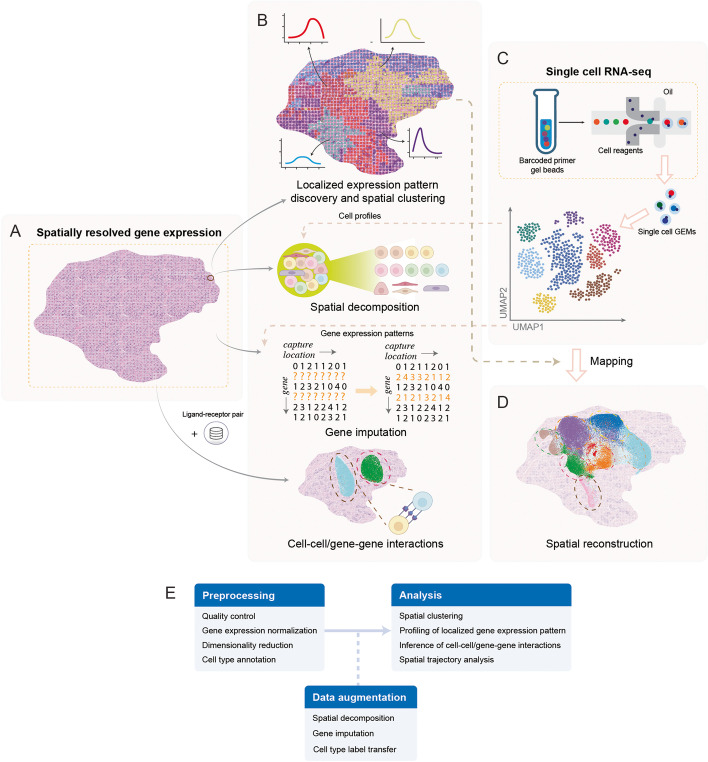
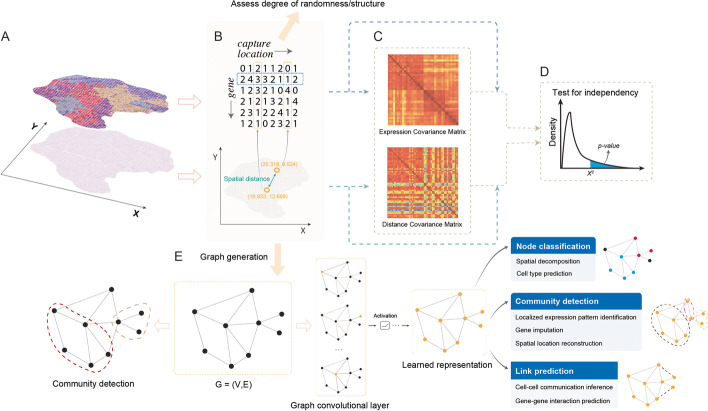
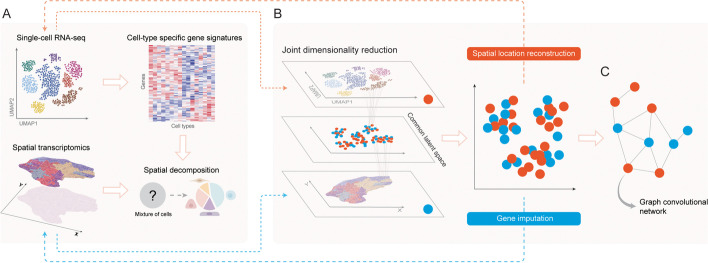
Verification
Claims the paper makes
The claims and statistics of this paper haven’t been checked yet.
Free: it reads the open-access text and checks the first 5 claims that cite a source we can check. Create a free account to check every claim.
Claims other papers make about this one
Each is checked against this paper’s own text: does it say what the citing paper says it does?
The cited source says what the claim attributes to it.
In the citing paper
“Deep learning methods have been applied to extract the interactions between cellular location and molecular phenotypes [125].”
From Challenges in AI-driven Biomedical Multimodal Data Fusion and Analysis (2025) · cites this paper as [125]
Self-check
Percentages, sums and reported differences re-computed from the paper’s own numbers.
The self-check needs the paper’s full text.
Citations
Cites
Comprehensive Integration of Single-Cell Data
Stuart, T., Butler, A., Hoffman, P., Hafemeister, C., Papalexi, E., Mauck, W. M., Hao, Y., Stoeckius, M., Smibert, P., & Satija, R. (2019) · Cell · doi:10.1016/j.cell.2019.05.031 · Cited by 15,453
Fast, sensitive and accurate integration of single-cell data with Harmony
Korsunsky, I., Millard, N., Fan, J., Slowikowski, K., Zhang, F., Wei, K., Baglaenko, Y., Brenner, M., Loh, P.-R., & Raychaudhuri, S. (2019) · Nature Methods · doi:10.1038/s41592-019-0619-0 · Cited by 10,488
Spatial reconstruction of single-cell gene expression data
Satija, R., Farrell, J. A., Gennert, D., Schier, A. F., & Regev, A. (2015) · Nature Biotechnology · doi:10.1038/nbt.3192 · Cited by 7,055 · cited 6×
“Based on this reference map, Seurat [50] projects scRNA-seq cells to spatial locations with a probabilistic score using a bimodal mixture model (Fig.”
BackgroundMethodInfluentialWeiss, K., Khoshgoftaar, T. M., & Wang, D. (2016) · Journal of Big Data · doi:10.1186/s40537-016-0043-6 · Cited by 6,260 · cited 1×
“To solve this problem, we may adapt the idea of transfer learning, which utilizes knowledge learned from similar domains where data is more accessible or better labeled [21].”
MethodVisualization and analysis of gene expression in tissue sections by spatial transcriptomics
Ståhl, P. L., Salmén, F., Vickovic, S., Lundmark, A., Navarro, J. F., Magnusson, J., Giacomello, S., Asp, M., Westholm, J. O., Huss, M., et al. (2016) · Science · doi:10.1126/science.aaf2403 · Cited by 3,834 · cited 1×
“In the past decade, the rapid development of spatial transcriptomics technology has facilitated biological discoveries in different domains [4, 13–15].”
BackgroundSpatially resolved, highly multiplexed RNA profiling in single cells
Chen, K. H., Boettiger, A. N., Moffitt, J. R., Wang, S., & Zhuang, X. (2015) · Science · doi:10.1126/science.aaa6090 · Cited by 2,969 · cited 2×
“It assumes a zero-inflated negative binomial (ZINB) distribution for scRNA-seq measurements, a Poisson distribution for single-molecule fluorescence in situ hybridization (smFISH) [3] measurements, and a negative binomial distribution for spatially resolved transcript amplicon readout mapping (starMAP) [76] measuremen…”
MethodDeep generative modeling for single-cell transcriptomics
Lopez, R., Regier, J., Cole, M. B., Jordan, M. I., & Yosef, N. (2018) · Nature Methods · doi:10.1038/s41592-018-0229-2 · Cited by 2,530 · cited 3×
“In terms of aggregating scRNA-seq data and spatial transcriptomics data, gimVI [37] and scVI [75] differ from other methods in their non-linearity, as many other methods are dependent”
BackgroundMethodSlide-seq: A scalable technology for measuring genome-wide expression at high spatial resolution
Rodriques, S. G., Stickels, R. R., Goeva, A., Martin, C. A., Murray, E., Vanderburg, C. R., Welch, J., Chen, L. M., Chen, F., & Macosko, E. Z. (2019) · Science · doi:10.1126/science.aaw1219 · Cited by 2,424 · cited 1×
“To analyze Slide-seq data, Rodriques et al. [6] propose to utilize non-negative matrix factorization (NMF) to derive metagenes from the scRNA-seq data.”
MethodStatistical Analysis and Modelling of Spatial Point Patterns
Illian, J., Penttinen, A., Stoyan, H., & Stoyan, D. (2007) · Wiley eBooks · doi:10.1002/9780470725160 · Cited by 1,848 · cited 1×
“Trendsceek [40] utilizes the marked point process theory [65], in which spatial locations are represented as points and expression levels as marks.”
MethodTranscriptome-scale super-resolved imaging in tissues by RNA seqFISH
Eng, C.-H. L., Lawson, M., Zhu, Q., Dries, R., Koulena, N., Takei, Y., Yun, J., Cronin, C., Karp, C., Yuan, G.-C., et al. (2019) · Nature · doi:10.1038/s41586-019-1049-y · Cited by 1,754
Cited by
Items 101–192 of 192
Schmidt, M., Avagyan, S., Reiche, K., Binder, H., & Loeffler‐Wirth, H. (2024) · Current Issues in Molecular Biology · doi:10.3390/cimb46050284 · Cited by 9
“Recent reviews provide a wide overview of the state of the art of the field (see [8,32–34] and references cited therein).”
BackgroundSiGra: Single-cell spatial elucidation through image-augmented graph transformerPreprint
Tang, Z., Zhang, T., Yang, B., Su, J., & Song, Q. (2022) · bioRxiv (Cold Spring Harbor Laboratory) · doi:10.1101/2022.08.18.504464 · Cited by 6
Yao, J., Yu, J., Caffo, B. S., Page, S. C., Martinowich, K., & Hicks, S. C. (2025) · Genome Research · doi:10.1101/gr.279380.124 · Cited by 12
“Therefore, most existing tools used in practice today identify discrete spatial domains with either unsupervised or self-supervised learning approaches (Hu et al. 2021b; Li et al. 2022b; Zeng et al. 2022; Long et al. 2023).”
Artificial Intelligence and Omics in Health and Diseases
Sabha, S. U. (2025) · Springer eBooks · doi:10.1007/978-981-96-8176-1_5 · Cited by 8
Gingerich, I. K., Goods, B. A., & Frost, H. R. (2025) · PLoS Computational Biology · doi:10.1371/journal.pcbi.1013759 · Cited by 6
Shui, L., Maitra, A., Yuan, Y., Lau, K. S., Kaur, H., Li, L., & Li, Z. (2025) · PLoS Computational Biology · doi:10.1371/journal.pcbi.1013293 · Cited by 6
Huang, Y., Yu, G., & Yang, Y. (2023) · PLoS Computational Biology · doi:10.1371/journal.pcbi.1011623 · Cited by 8
Adjustment of scRNA-seq data to improve cell-type decomposition of spatial transcriptomics
Wang, L., Hu, Y., & Gao, L. (2024) · Briefings in Bioinformatics · doi:10.1093/bib/bbae063 · Cited by 8
“The emergence of spatial transcriptomics (ST) technology has enabled simultaneous measurement of gene expression and spatial location within tissue contexts [1,2] and provide opportunities for deeper analysis of spatial atlases.”
BackgroundIkram, M., Farhan, M., Derakhshani, B., Kumar, S., Khan, N., Gupta, R., Usman, B., & Liu, P. (2025) · Physiologia Plantarum · doi:10.1111/ppl.70714 · Cited by 6
“Recently, ML models have been incorporated for trait classification, stress response detection, and gene function prediction (Su et al. 2020; Wang et al. 2020; Ochoteco Asensio et al. 2022; Zeng et al. 2022; Yan and Wang 2023; Farhan, Ikram, Sun, et al. 2025).”
Multi‐scale learning for fine‐grained traffic flow‐based travel time estimation prediction
Abideen, Z. U., Sun, X., & Sun, C. M. (2024) · Computational Intelligence · doi:10.1111/coin.12693 · Cited by 4
“36 Reference 32 devised a novel deep neural network capable of capturing both spatial dependencies (including those at both proximate and distant locations) and temporal dynamics at multiple scales (such as closeness, periodicity, and trend) for accurate prediction of crowd flow across an entire city.”
InfluentialElansari, T., Ouanan, M., & Bourray, H. (2024) · Journal of Ambient Intelligence and Humanized Computing · doi:10.1007/s12652-024-04840-9 · Cited by 4
STAN, a computational framework for inferring spatially informed transcription factor activity
Zhang, L., Sagan, A., Qin, B., Wang, H., Kim, E. S., Hu, B., & Osmanbeyoglu, H. U. (2026) · Nucleic Acids Research · doi:10.1093/nar/gkaf1473 · Cited by 4
“Several computational methods have been developed to address these challenges, including approaches to characterize spatial gene expression patterns, identify differentially expressed genes in a spatial context, and model spatial cell-to-cell communication [ 15 ].”
Sopa: a technology-invariant pipeline for analyses of image-based spatial-omicsPreprint
Blampey, Q., Mulder, K., Dutertre, C., Gardet, M., André, F., Ginhoux, F., & Cournède, P.-H. (2023) · bioRxiv (Cold Spring Harbor Laboratory) · doi:10.1101/2023.12.22.571863 · Cited by 4
Sun, T., Wang, P., Liu, J.-J., An, Z., Zhao, J.-R., & Liu, J. (2025) · European Journal of Clinical Microbiology & Infectious Diseases · doi:10.1007/s10096-025-05152-2 · Cited by 4
Roadmap for spatial transcriptomics of HIV in tissues
Guan, Q., Eshetu, A., & Ho, Y. (2025) · Current Opinion in HIV and AIDS · doi:10.1097/coh.0000000000000961 · Cited by 5
Decrypting cancer's spatial code: from single cells to tissue niches
Celik, C., Shi, P., Withnell, E., Lam, H. W., & Secrier, M. (2025) · Molecular Oncology · doi:10.1002/1878-0261.70100 · Cited by 5
“Numerous methods have already been developed to describe cell populations, cell-to-cell relationships and domains of interest in cancer spatial data [6 – 8], but several challenges remain.”
Decoding disease and therapy through multiomics integration and systems analysis
Mathew, M. J., Mathew, J., Chacko, R. M., Bayry, J., & Zagury, J. (2026) · Briefings in Bioinformatics · doi:10.1093/bib/bbag311 · Cited by 6
“Similarly, transcriptomic data may show variations in gene activity but does not consider the influence of post-transcriptional regulation, protein degradation, or changes in enzymatic activity [ 11, 12].”
Retracted: The Enhanced Optimization on Deep Learning Technologies for Data Science Practices
Dhabliya, D., Reddy, B., Rajarajeswari, S., Ranganathaswamy, M. K., Nivesh, Rajarajeswari, S., & Pandey, M. (2023) · International Conference on Smart Generation Computing, Communication and Networking (SMART GENCON) · doi:10.1109/smartgencon60755.2023.10442871 · Cited by 3
“Eventually, Bayesian optimization has been used to improve deep studying networks [8].”
MethodRetractedDu, Z., Chen, Q., Huang, W., Zhou, Y., Wen, H., Wang, D., Chen, Y., Cheng, L., & Zheng, X. (2025) · iScience · doi:10.1016/j.isci.2025.113329 · Cited by 4
Furxhi, I., Kalapus, M., Costa, A. L., et al. (2023) · Nanotoxicology · doi:10.1080/17435390.2023.2268163 · Cited by 3
“Unlike other augmentation methods that rely on predefined transformations or generative models, UMAP allows for the generation of new instances based on the existing data’s intrinsic properties (Zeng et al. 2022).”
MethodJia, F., Zhang, B., Li, C., Yu, W., Li, Z., & Wang, Z. (2023) · Egyptian Journal of Medical Human Genetics · doi:10.1186/s43042-023-00457-3 · Cited by 3
Decoding spatial transcriptomics: Current trends and future prospects in data analysis methodologies
Li, R., Chen, X., & Yang, X. (2024) · Chinese Science Bulletin (Chinese Version) · doi:10.1360/tb-2024-0332 · Cited by 3
Cahill, R., Wang, Y., Xian, R. P., Lee, A. J., Zeng, H., Yu, B., Tasic, B., & Abbasi-Asl, R. (2024) · Proceedings of the National Academy of Sciences · doi:10.1073/pnas.2319804121 · Cited by 6
Dimensionality reduction for visualizing spatially resolved profiling data using SpaSNE
Zhou, Y., Tang, C., Xiao, X., Zhan, X., Wang, T., Xiao, G., & Xu, L. (2025) · GigaScience · doi:10.1093/gigascience/giaf002 · Cited by 5
Comparison and optimization of cellular neighbor preference methods for quantitative tissue analysis
Schiller, C., Ibarra-Arellano, M. A., Bestak, K., Tanevski, J., & Schapiro, D. (2026) · Nature Communications · doi:10.1038/s41467-026-71699-z · Cited by 11
“It might be interesting to illustrate this on the myocardial infarction or the breast cancer example, with a graph with only close neighbors and another with some more distant neighbors.”
SpatialDiffusion: Predicting Spatial Transcriptomics with Denoising Diffusion Probabilistic ModelsPreprint
Khan, S. A., Lagani, V., Lehmann, R., Kiani, N. A., Gómez-Cabrero, D., & Tegner, J. N. (2024) · bioRxiv (Cold Spring Harbor Laboratory) · doi:10.1101/2024.05.21.595094 · Cited by 4
“This includes improving data quality, normalization, deconvolution of cell types, clustering, spatial gradients, and efforts to extract a hierarchical organization from 2D spatial transcriptomics data 2–4 .”
BackgroundMethodLiang, X., Shang, J., Liu, J., Zheng, C.-H., & Wang, J. (2024) · IEEE Transactions on Computational Biology and Bioinformatics · doi:10.1109/tcbb.2024.3469164 · Cited by 4
Wang, K., Shi, L., Li, X., Li, W., Wang, B., Zhou, S., Cao, B., & Zheng, P. (2026) · Journal of Biomedical Informatics · doi:10.1016/j.jbi.2026.105003 · Cited by 4
Ghosh, C., Singh, V., Bera, B., et al. (2026) · Flavour and Fragrance Journal · doi:10.1002/ffj.70082 · Cited by 2
Asha, R., Viswanathan, S., Mariappan, C., et al. (2026) · Proceedings of the National Academy of Sciences India Section A Physical Sciences · doi:10.1007/s40010-026-01045-x · Cited by 2
Integrating cytological images and spatial transcriptomics for cell segmentation with DISSECT
He, Y., ZHAO, Y., Zhang, R., Yang, H., Zhang, Z., Ren, P., Luo, C., Zhang, P., Zhang, Z. K., Hou, S., et al. (2026) · Nature Computational Science · doi:10.1038/s43588-026-01020-x · Cited by 3
“Detecting cellular boundaries in spatial context to aggregate subcellular transcripts into individual cells has become a crucial task 14 .”
Self-citationVariational Clustering and Denoising of Spatial Transcriptomics
Li, C., Hu, K., Zhang, F., & Cui, X. (2023) · IEEE International Conference on Bioinformatics and Biomedicine (BIBM) · doi:10.1109/bibm58861.2023.10385692 · Cited by 2
“Using spatial transcriptomics (ST), we can concurrently capture gene expression profiles and spatial information to achieve greater insights into both healthy and diseased tissues [2] [5] [9].”
BackgroundBiran, H., Hashimshony, T., Lahav, T., Efrat, O., Mandel‐Gutfreund, Y., & Yakhini, Z. (2024) · Scientific Reports · doi:10.1038/s41598-024-75314-3 · Cited by 4
“The computational biology community has developed a wide variety of analysis techniques and algorithms for scRNA-seq and spatial transcriptomics data 37,38 .”
BackgroundFast and reliable confidence intervals for a variance component
Zhang, Y., Ekvall, K. O., & Molstad, A. J. (2025) · Biometrika · doi:10.1093/biomet/asaf010 · Cited by 6
“…of Y are a gene’s expression at n distinct two-or three-dimensional spatial positions in a tissue sample and K is a matrix encoding distances between positions, h 2 is known as the fraction of spatial variance (Svensson et al., 2018; Kats et al., 2021; Weber et al., 2022; Zeng et al., 2022).”
BackgroundCahill, R., Wang, Y., Xian, R. P., Lee, A. J., Zeng, H., Yu, B., Tasic, B., & Abbasi-Asl, R. (2023) · bioRxiv (Cold Spring Harbor Laboratory) · doi:10.1101/2023.03.10.531984 · Cited by 2
SANNO: A Graph-Transformer Enhanced Optimal Transport Tool for Spatial Transcriptomic Annotation
Zeng, Y., Chen, Y., Shangguan, N., Li, W., Cai, X., Zhang, H., Wang, Z., & Zhao, H. (2025) · Interdisciplinary Sciences Computational Life Sciences · doi:10.1007/s12539-025-00752-0 · Cited by 1
Le, A. T. H., Shvekher, T., Nguyen, L., & Krylov, S. N. (2025) · ChemBioChem · doi:10.1002/cbic.202500678 · Cited by 3
Distance-Preserving Representations for Genomic Spatial Reconstruction
Zhou, W., & Du, J. (2025) · IEEE Transactions on Computational Biology and Bioinformatics · doi:10.1109/tcbbio.2025.3628794 · Cited by 5
SpatialESD: Spatial Ensemble Domain Detection in Spatial Transcriptomics
Cao, H., Liu, G., Xia, J., Chen, R., Wang, T., Yang, X., Fang, R., Luo, Y., Zeng, P., Yu, H., et al. (2026) · Advanced Science · doi:10.1002/advs.202520912 · Cited by 2
“However, the additional dimension of spatial information, which increases data volume and complexity, presents significant challenges for spatial domain detection [ 5 ].”
Self-citationIkram, M., Farhan, M., Derakhshani, B., Kumar, S., Ayaz, A., Khan, N., Mackon, E., Usman, B., Chengcheng, S., & Liu, P. (2026) · Plant Cell Reports · doi:10.1007/s00299-026-03776-y · Cited by 2
Benchmarking tools for deciphering cellular crosstalk in spatially-resolved transcriptomics
Ku, L.-T., Bernard, V., Min, J., Yuan, Y., Koay, E. J., Maitra, A., Li, L., & Li, Z. Y. (2026) · Genome biology · doi:10.1186/s13059-026-04063-5 · Cited by 2
“Zeng et al. reviewed statistical and machine learning methods for spatially resolved transcriptomics data analysis more broadly, with an emphasis on spatial gene expression patterns rather than benchmarking spatial CCI inference tools [28].”
Computational analysis in spatial transcriptomics: methods and perspectives
Zhou, Q., Jiang, Y., Ruan, P., Xiao, G., & Xie, Y. (2026) · Briefings in Bioinformatics · doi:10.1093/bib/bbag417 · Cited by 2
Peng, L., He, X., Zhang, L., Peng, X., Lu, Y., Li, Z., & Chen, X. (2022) · IEEE International Conference on Bioinformatics and Biomedicine (BIBM) · doi:10.1109/bibm55620.2022.9995207 · Cited by 2
“…clustering methods can comprehensively and directly elucidate gene expression information across different tissue by combining microscopic imaging and sequencing technologies [8]–[12], while retaining the spatial location information of test samples, which improves the accuracy of clustering [13].”
BackgroundStatistical Methods for Spatially Re-solved Transcriptomic Data Analysis
王, 琳. (2023) · Bioprocess · doi:10.12677/bp.2023.131008 · Cited by 1
Robust reconstruction of single-cell RNA-seq data with iterative gene weight updates
Sheng, Y., Barak, B., & Nitzan, M. (2023) · Bioinformatics · doi:10.1093/bioinformatics/btad253 · Cited by 1
“While multiple computational methods have been developed to reconstruct spatial cellular context (Mages et al. 2023; Nitzan et al. 2019; Satija et al. 2015; Teves and Won 2020; Zeng et al. 2022), this task is challenging, partially because the cells simultaneously encode multiple spatiotemporal processes, and due to t…”
MethodPractical Considerations for Machine Learning-Enabled Discoveries in Spatial Transcriptomics
Lee, A. J., Cahill, R., & Abbasi-Asl, R. (2024) · GEN Biotechnology · doi:10.1089/genbio.2023.0050 · Cited by 4
Retracted: Exploring the Benefits of Deep Learning for Data Science Practices
Sharma, M. K., Kumar, R. M., Sinha, D. K., Senthilkumar, K. K., Dhabliya, D., & Ahluwalia, G. (2024) · International Conference on Computing, Communication and Networking Technologies (ICCCNT) · doi:10.1109/icccnt61001.2024.10724226 · Cited by 1
“This sort of evaluation can give corporations a part in the more aggressive marketplace, letting them make clever decisions and stay ahead of the curve[3].”
BackgroundRetractedSingle-Cell RNA Sequencing (sc-RNAseq) in the Development of Biomedical Therapeutics
Saw, P. E., & Song, E. (2025) · Springer eBooks · doi:10.1007/978-981-96-3041-7_17 · Cited by 1
Graph Neural Operators for Learning on Spatial Transcriptomics DataPreprint
Yasin, A. S., & Ahmed, J. (2023) · Research Square · doi:10.21203/rs.3.rs-2912958/v1 · Cited by 1
Spatially Resolved Gene Expression is Not Necessary for Identifying Spatial DomainsPreprint
Lin, S., Zhao, Y. C., & Yuan, Z. (2023) · bioRxiv (Cold Spring Harbor Laboratory) · doi:10.1101/2023.10.15.562443 · Cited by 1
Accurate and Flexible Single Cell to Spatial Transcriptome Mapping with CellocPreprint
Zhou, Y., Yin, W., Wu, X., Chen, L., & Wan, Y. (2023) · Research Square · doi:10.21203/rs.3.rs-3642141/v1 · Cited by 1
Zmap: an intelligent region-allocation method to map single-cell into spatial dataPreprint
Cai, Q., Lin, L., Liu, X., & Chen, J. (2025) · bioRxiv (Cold Spring Harbor Laboratory) · doi:10.1101/2025.01.27.635178 · Cited by 1
Zeng, Z., Wang, X., Luo, Z., Zheng, Y., Hu, L., Xing, C., & Du, H. (2026) · bioRxiv (Cold Spring Harbor Laboratory) · doi:10.64898/2026.03.13.711464 · Cited by 2
Self-citationSpatial Transcriptomics Thrives on New Approaches
May, M. J. (2022) · Inside Precision Medicine · doi:10.1089/ipm.09.03.07
Uncovering hidden biological processes by probabilistic filtering of single-cell dataPreprint
Piran, Z., & Nitzan, M. (2023) · bioRxiv (Cold Spring Harbor Laboratory) · doi:10.1101/2023.01.18.524512
WEST: An Ensemble Method for Spatial Transcriptomics AnalysisPreprint
Cai, J., Cheng, H., Zhong, W., et al. (2024) · SSRN Electronic Journal · doi:10.2139/ssrn.4682266
Applications of Artificial Intelligence and Machine Learning in Contemporary Quality Engineering
Pradeep, A. (2023) · International Conference on Computing Communication Control and automation · doi:10.1109/iccubea58933.2023.10391976 · Cited by 1
“Data analytics uses statistical and machine learning techniques to examine data and identify patterns and trends [3].”
Cyberbullying Detection in Twitter Using Deep Learning Model Techniques
Seetharaman, A. R., & Jahankhani, H. (2024) · Advanced sciences and technologies for security applications · doi:10.1007/978-3-031-47594-8_7
Graph Neural Operators for Learning on Spatial Transcriptomics DataPreprint
Ahmed, J., & Yasin, A. S. (2024) · doi:10.36227/techrxiv.171177384.48923467/v1
Jia, F., Zhang, B., Li, C., Yu, W., Li, Z., & Wang, Z. (2023) · Figshare · doi:10.6084/m9.figshare.24670019
Spatial transcriptomics in transpathology
Zhou, H., & Qian, B. (2024) · Elsevier eBooks · doi:10.1016/b978-0-323-95223-1.00027-8
Luo, M., Zeng, Y., Chen, J., Shangguan, N., Zhou, W., & Yang, Y. (2024) · Lecture notes in computer science · doi:10.1007/978-981-97-5131-0_10
Supervised Learning: Classification
Castelli, M., Pietropolli, G., & Manzoni, L. (2024) · Elsevier eBooks · doi:10.1016/b978-0-323-95502-7.00116-0
Xu, S., Yu, Z., & Ming, J. (2024) · The Annals of Applied Statistics · doi:10.1214/24-aoas1954 · Cited by 1
Evaluation of Spatially Variable Genes as Biomarkers in Tumor Initiation and Progression
Uzunoğlu, A. S., Uzunoğlu, M. S., Çapuk, S., & Taş, S. K. (2024) · Advances in medical diagnosis, treatment, and care (AMDTC) book series · doi:10.4018/979-8-3693-7728-4.ch003
Review of statistical methods in genetics
Bu, D., Zheng-bang, L., Dongdong, P., Baoxue, Z., & Li, Q. (2025) · Scientia Sinica Mathematica · doi:10.1360/ssm-2024-0309
Multi-attribute graph learning for geoscience applications
Soni, S. S., & Babu, P. (2025) · Signal Processing · doi:10.1016/j.sigpro.2025.110335
geneSCOPE: gene spatial co-occurrence of pairwise expression
Zhang, S., Saeki, K., & Haeno, H. (2026) · Briefings in Bioinformatics · doi:10.1093/bib/bbag302 · Cited by 1
“Several computational frameworks have been developed to jointly analyze gene expression and spatial position in transcriptomic data [ 19].”
Wang, Z., Li, J., Xie, L., Wang, Y., Wang, T., Chen, J., Shang, X., Li, X., Liu, Z., & Hu, J. (2026) · Briefings in Bioinformatics · doi:10.1093/bib/bbag371 · Cited by 1
“Over the past decade, diverse SRT technologies have emerged, differing in resolution, sensitivity, and transcriptome coverage [ 5– 7].”
Jia, F., Zhang, B., Li, C., Weijie, Y., Li, Z., & Wang, Z. (2024) · Figshare · doi:10.6084/m9.figshare.26647095
Additional file 3 of SRT-Server: powering the analysis of spatial transcriptomic data
Yang, S., & Zhou, X. (2024) · Figshare · doi:10.6084/m9.figshare.26673429
Jia, F., Zhang, B., Li, C., Weijie, Y., Li, Z., & Wang, Z. (2024) · Figshare · doi:10.6084/m9.figshare.26647092
Jia, F., Zhang, B., Li, C., Weijie, Y., Li, Z., & Wang, Z. (2024) · Figshare · doi:10.6084/m9.figshare.24670346
Guo, T., Yuan, Z., Pan, Y., Wang, J., Chen, F., Zhang, M. Q., & Li, X. (2023) · Figshare · doi:10.6084/m9.figshare.24416157
Guo, T., Yuan, Z., Pan, Y., Wang, J., Chen, F., Zhang, M. Q., & Li, X. (2024) · Figshare · doi:10.6084/m9.figshare.24416288
Additional file 1 of Spatial omics technologies at multimodal and single cell/subcellular level
Park, J., Kim, J., Lewy, T., Rice, C. M., Elemento, O., Rendeiro, A. F., & Mason, C. E. (2023) · Figshare · doi:10.6084/m9.figshare.22608698
Additional file 1 of SRT-Server: powering the analysis of spatial transcriptomic data
Yang, S., & Zhou, X. (2024) · Figshare · doi:10.6084/m9.figshare.25092534
Jia, F., Zhang, B., Li, C., Weijie, Y., Li, Z., & Wang, Z. (2024) · Figshare · doi:10.6084/m9.figshare.26647101
Jia, F., Zhang, B., Li, C., Weijie, Y., Li, Z., & Wang, Z. (2024) · Figshare · doi:10.6084/m9.figshare.26647098
Additional file 2 of SRT-Server: powering the analysis of spatial transcriptomic data
Yang, S., & Zhou, X. (2024) · Figshare · doi:10.6084/m9.figshare.25092584
Multi-task spatial omics analytics for high-precision modeling of tissue architecture with STAXPreprint
Guo, Z.-H., HUANG, D.-S., & Zhang, S. (2025) · bioRxiv (Cold Spring Harbor Laboratory) · doi:10.64898/2025.12.30.697018 · Cited by 1
“As spatial omics technologies continue to advance and their applications expand into three-dimensional tissue modeling, these challenges have become increasingly critical, demanding innovative computational solutions to unlock the full potential of spatial biology [21].”
Chen, X., Yang, H., Lu, J., Zhang, Y., Li, Y., & Wang, B. (2025) · IEEE International Conference on Bioinformatics and Biomedicine (BIBM) · doi:10.1109/bibm66473.2025.11356365
“Although deep learning models have shown improved performance in certain scenarios, their e ff ectiveness is often constrained by the inherent distributional discrepancies be-tween scRNA-seq data and ST data [7].”
Self-citationCEMUSA: a graph-based integrative metric for evaluating clusters in spatial transcriptomics
Hu, J., Du, Y., Hou, S., Ding, Y., Li, J., Wu, H., & Sun, X. (2026) · Bioinformatics · doi:10.1093/bioinformatics/btag056 · Cited by 1
“Spatial clustering, a critical ST-based analytical task, aims to delineate tissue space into biologically distinct domains (Zeng et al. 2022).”
Reconstructing multi-scale tissue spatial architecture from single-cell RNA-seq with REMAPPreprint
Jiang, S., Coleman, K., Chen, Z., Jin, K., Liu, Y., Lee, D. H., Hwang, T. H., Xiao, R., Jin, J., Walsh, C. A., et al. (2026) · bioRxiv (Cold Spring Harbor Laboratory) · doi:10.64898/2026.02.21.707167 · Cited by 1
Kojima, Y., Tanaka, Y., Hirose, H., Chiwaki, F., Nishimura, K., Hayashi, S., Itahashi, K., Ishikawa, M., Shimamura, T., & Mano, H. (2026) · bioRxiv (Cold Spring Harbor Laboratory) · doi:10.64898/2026.04.21.719876
Zhang, S., Wang, H., Wang, B., Chi, N., He, Q., Sun, Y. M., & Zhang, H. (2026) · Frontiers in Oncology · doi:10.3389/fonc.2026.1793961 · Cited by 1
Logistic regression for estimating functional effects with spatial transcriptomics
Barkasi, M., Pham, C.-T., Neophytou, D., & Oviedo, H. V. (2026) · Nucleic Acids Research · doi:10.1093/nar/gkag466
“New methods for ST data analysis [ 28 , 29 ], designed to test for spatially variable genes (SVGs, Fig.”
Munipalle, M., Dang, A., Celiz, A. D., Li, J., & Li‐Jessen, N. Y. K. (2026) · Tissue Engineering Part B Reviews · doi:10.1177/19373368261449957 · Cited by 2
Transcriptional Bursting in Pluripotent Stem Cells
Lin, R., Liu, Y., & Wu, Q. (2026) · Biology · doi:10.3390/biology15120951
“Sequencing-based platforms capture counts per spatial spot, which can be deconvolved and analyzed with statistical and machine-learning tools to identify spatial domains of high or low burst activity and mean–variance relationships indicative of burst size and frequency [35,36].”
Spatial multiomics to inform immunocytokine engineering: knowledge base, gaps, and QC solutions
Patel, P., Batty, L. D., Bleck, M., & Nathan, S. (2026) · Frontiers in Immunology · doi:10.3389/fimmu.2026.1852790
Li, Y., Peng, X., Ding, W., Zhou, Y., & Zhang, X. (2026) · Journal of Computational Science · doi:10.1016/j.jocs.2026.103026
Self-citationArtificial intelligence in spatial transcriptomics: a review of methods, datasets, and directions
Sharma, N., Şen, R., & Erdem, C. (2026) · Briefings in Bioinformatics · doi:10.1093/bib/bbag569
“Various software packages have been developed to streamline the workflow, with numerous reviews highlighting the methods and their functionalities [ 31, 32, 99– 102].”
Metadata
- Authors
- Zeng, Z., Li, Y., Li, Y., & Luo, Y.
- Affiliations
- Peking University (CN)
- Northwestern University (US)
- Corresponding author
- Luo, Yuan
- Venue
- Genome Biology
- Published
- 2022-03-25
- Volume
- 23
- Issue
- 1
- Pages
- 83-83
- ISSN
- 1465-6906 (ISSN-L)
- 1474-760X
- PMC
- PMC8951701
- OpenAlex
- W4221095552
- Semantic Scholar
- ad1c1fc6d1ee5ef416501317dbfd24045bc8b136
- Cited by
- 186
- References
- 113
- Citations by year
- 2026: 28 · 2025: 41 · 2024: 59 · 2023: 41 · 2022: 17
- FWCI
- 4.26
- Type
- journal article
- Language
- en
- Open access
- gold
- doi.org
- Licence
- cc-by
- creativecommons.org/licenses/by/4.0 (tdm)
- creativecommons.org/licenses/by/4.0 (vor)
- Locations
- Genome biology (publishedVersion, cc-by)
- PubMed Central (publishedVersion, cc-by)
- PubMed (publishedVersion)
- DOAJ (DOAJ: Directory of Open Access Journals) (submittedVersion)
- Funders
- National Institutes of Health (R01LM013337, 5UL1TR001422)
- Topics
- Life Sciences › Biochemistry, Genetics and Molecular Biology › Molecular Biology › Single-cell and spatial transcriptomics
- Life Sciences › Biochemistry, Genetics and Molecular Biology › Molecular Biology › Gene expression and cancer classification
- Social Sciences › Economics, Econometrics and Finance › Economics and Econometrics › Spatial and Panel Data Analysis
- Keywords
- spatial transcriptomics, statistical analysis, machine learning, single-cell transcriptomics, spatial location, data complexity
- MeSH terms
- Machine Learning, Data Analysis, Sequence Analysis, Single-Cell Analysis, Transcriptome
About these checks
Registry, retraction, Cites and statistics results are computed, not judged, with one exception: a printed reference that no index lists is read once by a model before it counts as a citation error. Claims are extracted by a model and kept only when their quote appears verbatim in the text; each cited source is then checked, with a model’s help, for whether it says what the claim relies on. Those verdicts can be wrong — read the claim’s quote and the cited source before relying on one.
Statistics and arithmetic are recomputed, not judged.
Confidence bands are shown only for fields calibrated on our annotated test set. None is calibrated yet, so no band is shown.
What counts as a claim ›How we measure confidence ›How we check this ›
Are you an author, or do you see a problem with this page? Request a review
Data sources
Bibliographic data: Semantic Scholar, OpenAlex, Crossref.
Contains information from the Semantic Scholar Academic Graph Datasets, made available under the ODC Attribution License (ODC-BY 1.0).
Semantic Scholar’s data is described in: Kinney, R., et al. (2023). The Semantic Scholar Open Data Platform. arXiv:2301.10140.
