

The DOI matches its Crossref record; 32 of the 32 references it cites were found in a registry or an index.
Predicting RNA splicing from DNA sequence using Pangolin
Open accessPublished version of a preprint
Abstract
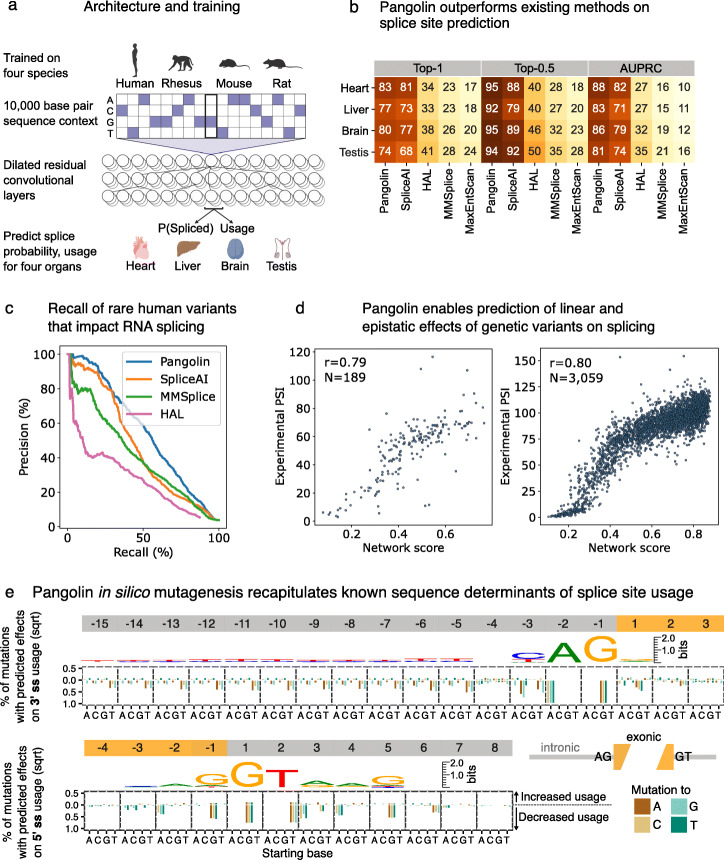
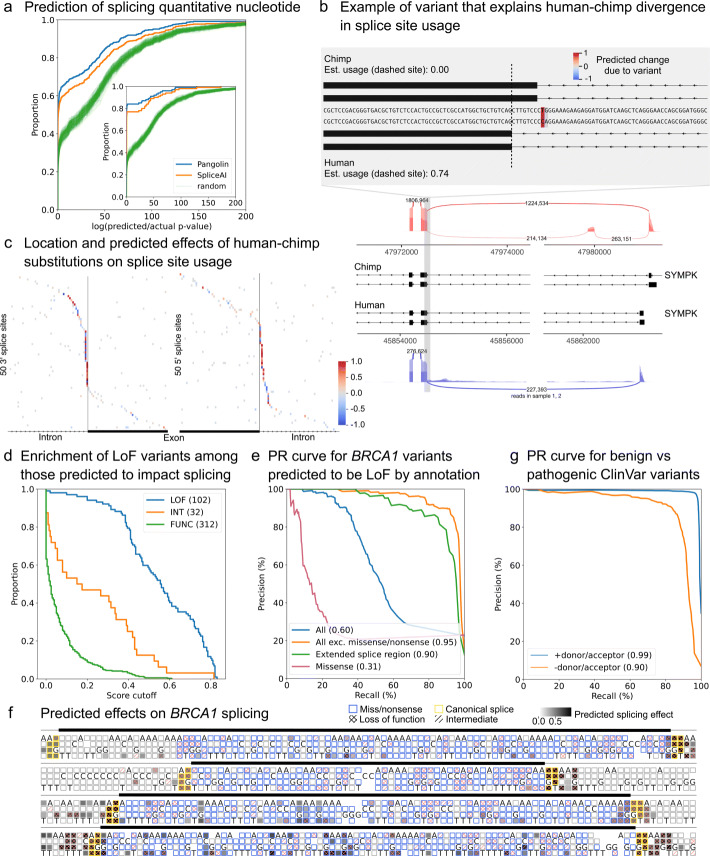
Recent progress in deep learning has greatly improved the prediction of RNA splicing from DNA sequence. Here, we present Pangolin, a deep learning model to predict splice site strength in multiple tissues. Pangolin outperforms state-of-the-art methods for predicting RNA splicing on a variety of prediction tasks. Pangolin improves prediction of the impact of genetic variants on RNA splicing, including common, rare, and lineage-specific genetic variation. In addition, Pangolin identifies loss-of-function mutations with high accuracy and recall, particularly for mutations that are not missense or nonsense, demonstrating remarkable potential for identifying pathogenic variants.
Overview
The claims and statistics of this paper haven’t been checked yet.
Run the check — free, no account needed. It reads the open-access text and checks the sources it cites.
Integrity signals
Registry
Cites
Statistics
Figures
Verification
Claims the paper makes
The claims and statistics of this paper haven’t been checked yet.
Run the check — free, no account needed. It reads the open-access text and checks the sources it cites.
Claims other papers make about this one
Each is checked against this paper’s own text: does it say what the citing paper says it does?
The source backs part of the claim, not all of it — or backs it for a different population, condition or comparison.
In the citing paper
“Similarly, sequence-based models of post-transcriptional regulation rely on genome annotations and transformed measurements extracted from RNA-seq to isolate each regulatory mechanism (for example, percent spliced-in for splicing)14–23.”
From Predicting RNA-seq coverage from DNA sequence as a unifying model of gene regulation (2025) · cites this paper as [16]
Experimental — accuracy not yet measuredThe cited source says what the claim attributes to it.
In the citing paper
“When comparing Borzoi to Pangolin16 for the task of classifying the causal sQTLs from matched negatives, Pangolin has a slight advantage (Fig. 7d–e and Supplementary Fig. 12c; dAUPRC = 0.01, evaluated on all SNPs within distances of ≤10,000 bp from an annotated splice site).”
From Predicting RNA-seq coverage from DNA sequence as a unifying model of gene regulation (2025) · cites this paper as [16]
The cited source says what the claim attributes to it.
In the citing paper
“Identifying splice sites in DNA sequences has formed the basis for a successful approach to interpreting the splicing code and prioritizing pathogenic splicing variants15,16.”
From Predicting RNA-seq coverage from DNA sequence as a unifying model of gene regulation (2025) · cites this paper as [16]
Self-check
Percentages, sums and reported differences re-computed from the paper’s own numbers.
The self-check needs the paper’s full text.
Citations
Cites
STAR: ultrafast universal RNA-seq aligner
Dobin, A., Davis, C. A., Schlesinger, F., Drenkow, J., Zaleski, C., Jha, S., Batut, P., Chaisson, M., & Gingeras, T. R. (2013) · Bioinformatics · doi:10.1093/bioinformatics/bts635 · Cited by 51,709
RSEM: accurate transcript quantification from RNA-Seq data with or without a reference genome
Li, B., & Dewey, C. N. (2011) · BMC Bioinformatics · doi:10.1186/1471-2105-12-323 · Cited by 22,179
Decoupled Weight Decay Regularization
Loshchilov, I., & Hutter, F. (2017) · arXiv · doi:10.48550/arxiv.1711.05101 · Cited by 12,522
The GTEx Consortium atlas of genetic regulatory effects across human tissues
The GTEx Consortium, Aguet, F., Anand, S., Ardlie, K. G., Gabriel, S., Getz, G. A., Graubert, A., Hadley, K., Handsaker, R. E., Huang, K. H., et al. (2020) · Science · doi:10.1126/science.aaz1776 · Cited by 5,547
ClinVar: improving access to variant interpretations and supporting evidence
Landrum, M. J., Lee, J. M., Benson, M., Brown, G. R., Chao, C., Chitipiralla, S., Gu, B., Hart, J., Hoffman, D., Jang, W., et al. (2018) · Nucleic Acids Research · doi:10.1093/nar/gkx1153 · Cited by 4,196
Predicting splicing from primary sequence with deep learning
Jaganathan, K., Kyriazopoulou Panagiotopoulou, S., McRae, J. F., Darbandi, S. F., Knowles, D., Li, Y. I., Kosmicki, J. A., Arbelaez, J., Cui, W., Schwartz, G. B., et al. (2019) · Cell · doi:10.1016/j.cell.2018.12.015 · Cited by 2,853
Self-citationMaximum Entropy Modeling of Short Sequence Motifs with Applications to RNA Splicing Signals
Yeo, G. W.-M., & Burge, C. B. (2004) · Journal of Computational Biology · doi:10.1089/1066527041410418 · Cited by 2,042
Liftoff: accurate mapping of gene annotations
Shumate, A., & Salzberg, S. L. (2020) · Bioinformatics · doi:10.1093/bioinformatics/btaa1016 · Cited by 991
Accurate classification of BRCA1 variants with saturation genome editing
Findlay, G. M., Daza, R. M., Martin, B., Zhang, M. D., Leith, A. P., Gasperini, M., Janizek, J. D., Huang, X., Starita, L. M., & Shendure, J. (2018) · Nature · doi:10.1038/s41586-018-0461-z · Cited by 843
Gene expression across mammalian organ development
Cardoso-Moreira, M., Halbert, J., Valloton, D., Velten, B., Chen, C., Shao, Y., Liechti, A., Ascenção, K., Rummel, C., Ovchinnikova, S., et al. (2019) · Nature · doi:10.1038/s41586-019-1338-5 · Cited by 838
Cited by
Sorted by citations
Items 101–200 of 285
Szumutku, F., Szabó, L., Liptai, Z., Varga, E., Seszták, T., Barsi, P., Goschler, Á., Szarvas, G., Horváth, K., Nagy, S. P., et al. (2025) · Frontiers in Immunology · doi:10.3389/fimmu.2025.1586288 · Cited by 3
The global prevalence and genetic spectrum of primary carnitine deficiency
Sun, L., Yao, K., & Wu, H. (2025) · BMC Genomic Data · doi:10.1186/s12863-025-01336-z · Cited by 3
Wang, D., Gazzara, M. R., Jewell, S., Wales-McGrath, B. D., Yang, K., Brown, C. D., Choi, P. S., & Barash, Y. (2025) · The American Journal of Human Genetics · doi:10.1016/j.ajhg.2025.10.012 · Cited by 3
Farooq, M., Bruun, G. H., Sarusie, M. V., Kessel, L., Akhtar, H., Abdullah, U., Ali, Z., Shah, S. A., Ali, N., Anjum, I., et al. (2026) · European Journal of Human Genetics · doi:10.1038/s41431-026-02070-5 · Cited by 3
RNA splicing and cardiovascular disease: a guide for cardiologists
Hunt, D. R., Chatterjee, S., Leinwand, L. A., & Thum, T. (2026) · European Heart Journal · doi:10.1093/eurheartj/ehag374 · Cited by 4
Advances and challenges of splicing prediction with AI
Shen, N., You, N., & Liu, C. (2026) · Nature Genetics · doi:10.1038/s41588-026-02629-4 · Cited by 4
Toward generalizable and interpretable AI in regulatory genomics
NAGAI, M., Murphy, A. E., Rizzo, K., & Koo, P. K. (2026) · Nature Genetics · doi:10.1038/s41588-026-02670-3 · Cited by 11
Rare and common genetic variants shape single-cell immune gene expression
Cuomo, A. S. E., Spenceley, E., Tanudisastro, H. A., Bowen, B., Henry, A., Huang, H. L., Xue, A., Zhou, W., Welland, M. J., Bryen, S. J., et al. (2026) · Nature · doi:10.1101/2025.03.20.25324352 · Cited by 34
Genetic Landscape of SH3TC2 variants in Russian patients with Charcot–Marie–Tooth disease
Shchagina, O., Murtazina, A. F., Chausova, P. A., Orlova, M., Леонидовна, Д. Е., Kurbatov, S., Kutsev, S. I., & Polyakov, A. V. (2024) · Frontiers in Genetics · doi:10.3389/fgene.2024.1381915 · Cited by 3
Generative modeling for RNA splicing prediction and design
Wu, D., Maus, N., Jha, A., Yang, K., Wales-McGrath, B. D., Jewell, S., Tangiyan, A., Choi, P. S., Gardner, J. R., & Barash, Y. (2026) · eLife · doi:10.7554/elife.106043.3 · Cited by 3
Das, A., Lakhani, C. M., Terwagne, C., Lin, J.-S. T., Naito, T., Raj, T., & Knowles, D. A. (2025) · The American Journal of Human Genetics · doi:10.1016/j.ajhg.2025.07.016 · Cited by 5
Detection of alternative splicing: deep sequencing or deep learning?
Hackl, L. M., Neuhaus, F., Ameling, S., Völker, U., Baumbach, J., & Tsoy, O. V. (2025) · Briefings in Bioinformatics · doi:10.1093/bib/bbaf705 · Cited by 2
A cis -regulatory element regulates ERAP2 expression through autoimmune disease risk SNPsPreprint
Venema, W. J., Hiddingh, S., van Loosdregt, J., Bowes, J., Balliu, B., de Boer, J. H., Norel, J. O.-V., Thompson, S. D., Langefeld, C. D., van der Veken, L. T., et al. (2023) · bioRxiv (Cold Spring Harbor Laboratory) · doi:10.1101/2023.03.03.530973 · Cited by 3
Generative modeling for RNA splicing predictions and designPreprint
Wu, D., Maus, N., Jha, A., Yang, K., Wales-McGrath, B. D., Jewell, S., Tangiyan, A., Choi, P. S., Gardner, J. R., & Barash, Y. (2025) · eLife · doi:10.7554/elife.106043.1 · Cited by 4
Guan, D., Bruscadin, J. J., Yang, W., Prowse-Wilkins, C., Wang, J., Petry, B., Li, H., Zhang, H., Xu, X., Wang, Y., et al. (2025) · bioRxiv (Cold Spring Harbor Laboratory) · doi:10.1101/2025.08.21.671512 · Cited by 4
authors:, L., Cheng, J., Taylor, K. R., Nicolaisen, L., Pan, J., Bycroft, C., Perino, M., Ward, T., Hawkes, G., Covill, L., et al. (2026) · medRxiv · doi:10.64898/2026.09.16.26363192 · Cited by 12
SLC37A3-associated retinitis pigmentosa: a case report of clinical features and three-year follow up
Kong, M. D., Bailey, J. A., Exinor, A., Piamjitchol, C., Demirkol, A., & Tsang, S. H. (2025) · Documenta Ophthalmologica · doi:10.1007/s10633-025-10013-6 · Cited by 2
Huang, X., Deng, X., Deng, X., Xu, H., Deng, H., & Yuan, L. (2025) · PLoS ONE · doi:10.1371/journal.pone.0322137 · Cited by 2
Genetic analysis of leukodystrophies in children: towards improved diagnostic yield
Saitsu, H., & Miyamoto, S. (2025) · Brain and Development · doi:10.1016/j.braindev.2025.104378 · Cited by 2
A rare variant in TRIOBP linked to occupational noise exposure in Meniere disease
Cruz‐Granados, P., Bortoletto, G. B., Zhang, Y., Nadar‐Ponniah, P. T., Bagheri-Loftabad, K., Sartorato, E. L., Sánchez‐Sellero, I., Soto-Varela, A., & Lopez-Escamez, J. A. (2025) · Genes & Diseases · doi:10.1016/j.gendis.2025.101993 · Cited by 2
Srinivasan, S., Subramanian, S., Zhou, H., Hoppmann, A., Metzger, P., Boerries, M., & Ramamoorthy, S. (2025) · BMC Genomics · doi:10.1186/s12864-025-12466-0 · Cited by 2
Variant-resolved prediction of context-specific isoform variation with a graph-based attention model
Litman, A., Pan, Z., Sokolova, K., Fang, J., Marvin, T. A., Sauerwald, N., Park, C. Y., Theesfeld, C. L., & Troyanskaya, O. G. (2026) · Cell Genomics · doi:10.1016/j.xgen.2025.101126 · Cited by 2
Diksha, Kumar, A., Saha, S., Gaurav, V., Mathuria, Y. P., Ranjan, A., Gupta, S. K., & Ghosh, D. K. (2026) · ACS Chemical Neuroscience · doi:10.1021/acschemneuro.5c00742 · Cited by 2
Quach, A., King, J. R., Putty, T., Gold, M., Quinn, P., & Ferrante, A. (2026) · Journal of Clinical Immunology · doi:10.1007/s10875-026-02002-4 · Cited by 2
Rodriguez-Garcia, M., Salvador‐Martín, S., Piedra, M. R., Bravo, A. P., Vidal, M. J., Figueras, C., Maurel, J.-M., López-Fernández, L. A., & Brunet, M. (2026) · Pharmaceuticals · doi:10.3390/ph19030460 · Cited by 2
Rare missense variants in MYO7A and OTOP2 genes in a South Korean Meniere’s disease cohort
Pham, M. T., Cruz‐Granados, P., Nadar‐Ponniah, P. T., Chua, H. C., Jang, S. H., Gee, H. Y., Jung, J., Choi, J. Y., Kim, S. H., & Lopez-Escamez, J. A. (2026) · Journal of Medical Genetics · doi:10.1136/jmg-2025-111426 · Cited by 2
Cruz‐Granados, P., de Jesús, V. R., Soto-Varela, A., Aguado, R. G., & Lopez-Escamez, J. A. (2026) · Frontiers in Immunology · doi:10.3389/fimmu.2026.1789753 · Cited by 2
Ngo, K., Amini, H., VOROBYOV, I., & Clancy, C. E. (2026) · Nucleic Acids Research · doi:10.1093/nar/gkag518 · Cited by 2
Vecchio, D., Macchiaiolo, M., Gonfiantini, M. V., Panfili, F. M., Petrizzelli, F., Liorni, N., Cortellessa, F., Sinibaldi, L., Rana, I., Agolini, E., et al. (2024) · Frontiers in Genetics · doi:10.3389/fgene.2024.1477940 · Cited by 2
Ratnangganajati, E., Faatih, M., & Ulhaq, Z. S. (2025) · DNA repair · doi:10.1016/j.dnarep.2025.103837 · Cited by 2
Jia, S., Sun, M., Bénech, C., Richard, G., Ji, Y., & Fichou, Y. (2025) · Transfusion · doi:10.1111/trf.18316 · Cited by 2
Chang, Y.-H., Bresnahan, S. T., Head, S. T., Harrison, T. A., Yu, Y., Huff, C. D., Paşaniuc, B., Lindström, S., & Bhattacharya, A. (2025) · British Journal of Cancer · doi:10.1038/s41416-025-03141-y · Cited by 2
Benchmarking splice variant prediction algorithms using massively parallel splicing assaysPreprint
Smith, C., & Kitzman, J. O. (2023) · bioRxiv (Cold Spring Harbor Laboratory) · doi:10.1101/2023.05.04.539398 · Cited by 2
Revisiting Evidence for Epigenetic Control of Alternative SplicingPreprint
Manz, Q., & List, M. (2024) · bioRxiv (Cold Spring Harbor Laboratory) · doi:10.1101/2024.08.30.610315 · Cited by 2
Copy number-independent allelic imbalance in mRNA is selected in cancer and has prognostic relevancePreprint
Palou-Márquez, G., Pericot-Masdevall, P., & Supek, F. (2024) · bioRxiv (Cold Spring Harbor Laboratory) · doi:10.1101/2024.09.07.611780 · Cited by 3
Generative modeling for RNA splicing prediction and designPreprint
Wu, D., Maus, N., Jha, A., Yang, K., Wales-McGrath, B. D., Jewell, S., Tangiyan, A., Choi, P. S., Gardner, J. R., & Barash, Y. (2025) · eLife · doi:10.7554/elife.106043 · Cited by 3
Aberrant splicing prediction during human organ developmentPreprint
Wagner, N., Неверов, А., Martin-Geary, A. C., Londhe, S., Schröder, C., Yépez, V. A., Whiffin, N., & Gagneur, J. (2025) · bioRxiv (Cold Spring Harbor Laboratory) · doi:10.1101/2025.07.16.665183 · Cited by 3
Liu, S., Zhang, W., & Regev, O. (2025) · bioRxiv (Cold Spring Harbor Laboratory) · doi:10.1101/2025.11.28.691252 · Cited by 2
Exome and genome sequencing for diagnosing patients with suspected rare genetic disease
Seo, G. H., & Lee, H. (2023) · Journal of genetic medicine · doi:10.5734/jgm.2023.20.2.31 · Cited by 2
Hazelett, D. J. (2025) · Bioinformatics · doi:10.1093/bioinformatics/btaf153 · Cited by 1
Meyer, A. P., Yousfi, S., Nicolau, S., Rashnonejad, A., Zhu, J., Sahenk, Z., Frair, E. C., Lin, H., Ramadesikan, S., Koboldt, D. C., et al. (2025) · Neuromuscular Disorders · doi:10.1016/j.nmd.2025.105416 · Cited by 1
2OM-Pred: prediction of 2-O-methylation sites in ribonucleic acid using diverse classifiers
Bilal, A., Suleman, M. T., Almohammadi, K., Alzahrani, A., & Liu, X. (2025) · Briefings in Bioinformatics · doi:10.1093/bib/bbaf282 · Cited by 1
Sistla, H. C., Seshachalam, A., Rathnam, K. K., Rajagopal, T., Talluri, S., & Dunna, N. R. (2025) · Molecular Biology Reports · doi:10.1007/s11033-025-10978-2 · Cited by 1
CEP76 impairment at the centrosome-cilium interface contributes to a spectrum of ciliopathies
Khan, K., Tavares, E. S., Bishara, K., Ozantürk, A., Qebibo, L., Frangakis, S. G., Calame, D. G., Meunier, I., Bocquet, B., Płoski, R., et al. (2025) · Science Advances · doi:10.1126/sciadv.adw3717 · Cited by 1
Charoenngam, N., Kansuttiviwat, C., & Chinsawangwatanakul, P. (2025) · Orphanet Journal of Rare Diseases · doi:10.1186/s13023-025-04160-x · Cited by 1
A practical framework for predicting splicing single nucleotide variants in exome sequencing
Utsuno, Y., Hamanaka, K., Sakamoto, M., Tsuchida, N., Uchiyama, Y., Koshimizu, E., Fujita, A., Miyatake, S., Mizuguchi, T., & Matsumoto, N. (2025) · NAR Genomics and Bioinformatics · doi:10.1093/nargab/lqaf180 · Cited by 1
Improving spliced alignment by modeling splice sites with deep learning
Yang, S., Huang, N., & Li, H. (2026) · Algorithms for Molecular Biology · doi:10.1186/s13015-025-00293-7 · Cited by 3
Dai, Y. (2025) · International Conference on Software, Systems and Information Technology (SSITCON) · doi:10.1109/ssitcon66133.2025.11341939 · Cited by 1
Xu, J., Li, T., Hu, Y., Li, M., Hu, J., Cai, Y., Zhang, M., Lu, G., Chan, W., Chen, Z., et al. (2026) · Andrology · doi:10.1111/andr.70185 · Cited by 1
Assessing the effect of bovine MSTN variants on pre‐m RNA splicing
Gaïani, N., Rocha, D., & Boulling, A. (2026) · Animal Genetics · doi:10.1002/age.70073 · Cited by 1
Utility of Targeted RNA Analysis in Neurogenetic Disorders
Ichikawa, S., Yergert, K., Gasser, B., Towne, M. C., & Burow, D. A. (2026) · Neurology Genetics · doi:10.1212/nxg.0000000000200341 · Cited by 1
Nosrati, M. S. S., Romano, F., Dostmohammadi, A., Traverso, M., Nemati, A. H., Madia, F., Marco, P. D., Doustmohammadi, M., Iacomino, M., Tavassol, Z. H., et al. (2026) · European Journal of Medical Genetics · doi:10.1016/j.ejmg.2026.105075 · Cited by 1
Genetic analysis of neurodegenerative diseases
Grassano, M., Schindler, A. B., Traynor, B. J., & Scholz, S. W. (2026) · Journal of Clinical Investigation · doi:10.1172/jci199840 · Cited by 1
Alroqi, F. J., AlJaber, A. N., Althubaiti, N., Tuwaijri, A. A., Alzaaqi, S. M., Barhoumi, T., Almutairi, A., Almuzzaini, B., Alsayegh, L., Nogoud, M., et al. (2026) · Journal of Clinical Immunology · doi:10.1007/s10875-026-02019-9 · Cited by 1
Nagy, S. P., Dobner, S., Szumutku, F., Schmidt, A., Sunder–Plassmann, G., Aigner, C., Rudnicki, M., Sedivy, M., Prohászka, Z., & Szilágyi, Á. (2026) · Kidney International Reports · doi:10.1016/j.ekir.2026.106562 · Cited by 1
D’Onofrio, V., Esposito, F. M., Marra, R., Rosato, B. E., Nostroso, A., Perrotta, A., Matsell, E., Manno, M., Iscaro, A., Dionisi, M., et al. (2026) · Blood Advances · doi:10.1182/bloodadvances.2025019161 · Cited by 1
Zhou, Z., Wu, B., Zheng, X., Song, L., Zhang, S., Han, D., Liu, Z., & Gao, Y. (2026) · Nature Computational Science · doi:10.1038/s43588-026-00988-w · Cited by 2
Liu, S., Zhang, W., & Regev, O. (2026) · Genome biology · doi:10.1186/s13059-026-04124-9 · Cited by 1
Remmelzwaal, P. C., Mulder, R., de Boer-Bergsma, J. J., Vinke, A., Kooistra, H., Veeger, N. J. G. M., Wierenga, A. T. J., Schuringa, J. J., Lukens, M. V., & Meijer, K. (2026) · Journal of Thrombosis and Haemostasis · doi:10.1016/j.jtha.2026.05.020 · Cited by 1
Komatsu, K., Sugie, A., Nitta, Y., Osaka, J., Hussain, U. H. M., Kubota, M., Shimozawa, N., Carter, M. T., Zwijnenburg, P. J. G., Waisfisz, Q., et al. (2026) · European Journal of Human Genetics · doi:10.1038/s41431-026-02151-5 · Cited by 1
Hersent, C., Larrieu, L., Fergelot, P., Miro, J., Benkirane, M., Angelini, C., Ramond, F., Marelli, C., Sabatier, I., Lesca, G., et al. (2026) · European Journal of Human Genetics · doi:10.1038/s41431-026-02162-2 · Cited by 1
AtLASS: A Scheme for End-to-End Prediction of Splice Sites Using Attention-based Bi-LSTM
Harada, R., Kume, K., Horie, K., Nakayama, T., Inagaki, Y., & Amagasa, T. (2023) · IPSJ Transactions on Bioinformatics · doi:10.2197/ipsjtbio.16.20 · Cited by 1
Shiozawa, Y., Fujita, S., Nannya, Y., Ogawa, S., Nomura, N., Kiguchi, T., Sezaki, N., Kudo, H., & Toyama, T. (2024) · International Journal of Hematology · doi:10.1007/s12185-024-03724-0 · Cited by 1
Gregersen, P. A., Hammarsjö, A., Graversen, L., Brix, N., Lindelöf, H., Jensen, U. B., Farholt, S., Rubak, S., Bjerre, J. V., Piticchio, S. G., et al. (2024) · Clinical Genetics · doi:10.1111/cge.14616 · Cited by 1
Rubio‐Guerra, S., Bernal, S., Almenta, D., Pérez‐Blanco, J., Camacho, V., Sala, I., Sánchez‐Saudinós, M. B., Castro, J. G., Selma‐González, J., Santos‐Santos, M., et al. (2025) · Annals of Clinical and Translational Neurology · doi:10.1002/acn3.70023 · Cited by 1
Case Report: Inflammatory CADASIL phenotype associated with a rare cysteine-sparing NOTCH3 variant
Madjidov, A., Abbott, M., Mullen, K. M., Hicks, R., & Gottfried Schlaug, A. (2025) · Frontiers in Human Neuroscience · doi:10.3389/fnhum.2025.1568937 · Cited by 1
Meyer, A. P., Koboldt, D. C., Ramadesikan, S., Zajo, K. N., Gonzalez, M. E. H., Miller, A. R., Depoorter, D., Comer, C. P., Geller, J. I., Somers, K. M., et al. (2025) · Molecular Genetics & Genomic Medicine · doi:10.1002/mgg3.70124 · Cited by 1
Characterization of the Subclinical Perilesional Zone in the Macula of Early-Stage ABCA4 Disease
Zee, A., Lee, W., Su, P.-Y., Zernant, J., Tsang, S. H., & Allikmets, R. L. (2025) · Translational Vision Science & Technology · doi:10.1167/tvst.14.12.23 · Cited by 2
Sangermano, R., Fujinami, K., Byeon, S. H., Place, E., Navarro, J., Valensi, J., Khateb, S., Banin, E., Condroyer, C., DiTroia, S. P., et al. (2026) · npj Genomic Medicine · doi:10.1038/s41525-026-00566-z · Cited by 1
PDIVAS: Pathogenicity predictor for Deep-Intronic Variants causing Aberrant SplicingPreprint
Kurosawa, R., Iida, K., Ajiro, M., Awaya, T., Yamada, M., Kosaki, K., & Hagiwara, M. (2023) · medRxiv · doi:10.1101/2023.03.20.23287464 · Cited by 1
Wang, Y., van Dijk, C., Timpanaro, I. S., Hop, P. J., Kenna, B., Kooyman, M., Aronica, E., Pasterkamp, R. J., van den Berg, L. H., Cooper‐Knock, J., et al. (2023) · bioRxiv (Cold Spring Harbor Laboratory) · doi:10.1101/2023.05.30.542855 · Cited by 1
Improved modeling of RNA-binding protein motifs in an interpretable neural model of RNA splicingPreprint
Gupta, K., Yang, C., McCue, K., Bastani, O., Sharp, P. A., Burge, C. B., & Solar-Lezama, A. (2023) · bioRxiv (Cold Spring Harbor Laboratory) · doi:10.1101/2023.08.20.553608 · Cited by 1
A basic framework governing splice-site choice in eukaryotesPreprint
Dent, C., Prodic, S., Balakrishnan, A., Georges, J., Chhabra, A., Mukherjee, S., Coutts, J., Gitonobel, M., Sarwade, R. D., Rosenbluh, J., et al. (2024) · bioRxiv (Cold Spring Harbor Laboratory) · doi:10.1101/2024.03.21.586179 · Cited by 1
Gaziano, L., Allara, E., Giambartolomei, C., Stacey, D., Zhao, J. H., Dashti, H., Jiang, T., Ritchie, S. C., Ferolito, B. R., Rasooly, D., et al. (2024) · medRxiv · doi:10.1101/2024.06.27.24309406 · Cited by 1
Das, A., Lakhani, C. M., Terwagne, C., Lin, J.-S. T., Naito, T., Raj, T., & Knowles, D. A. (2024) · medRxiv · doi:10.1101/2024.12.06.24318577 · Cited by 1
Bioinformatic Analysis of Alternative Splicing
Acharya, K. K., Medini, R., Thakur, T., Agrawal, K., Das, A., Balagannavar, G. C., & Chitturi, N. (2024) · Elsevier eBooks · doi:10.1016/b978-0-323-95502-7.00204-9 · Cited by 1
Spliformer-V2 enables multi-tissue prediction and interpretation of splice-altering genetic variantsPreprint
Xuelin, T., Shao, M., Lei, H., Ma, X., Guo, J., Shen, Y., Wu, Q., Dong, Y., Zeng, Y., Gitler, A. D., et al. (2025) · bioRxiv (Cold Spring Harbor Laboratory) · doi:10.1101/2025.06.28.662167 · Cited by 1
Arnaudi, M., Krzesińska, K., Beltrame, L., Besora, P. S.-I., Tiberti, M., Nilbert, M. C., Rohlin, A., & Papaleo, E. (2025) · bioRxiv (Cold Spring Harbor Laboratory) · doi:10.1101/2025.08.04.653638 · Cited by 1
Sensitivity to TDP-43 Loss and Degradation Resistance Determine Cryptic Exon Biomarker PotentialPreprint
Brown, A., Zanovello, M., Mikheenko, A., Dattilo, D., Pellegrini, F., Bryce-Smith, S., Mattedi, F., Mehta, P. R., Vargas, J. N. S., Humphrey, J., et al. (2025) · SSRN Electronic Journal · doi:10.1101/2025.11.23.689722 · Cited by 4
The ten year evolution of Sherloc, a points-based framework for genetic variant classificationPreprint
Kobayashi, Y., Westbrook, M. J., Tan, C. A., Márquez‐Luna, C., Wahl, A., Swartzlander, D. B., Ouyang, K., & Daber, R. D. (2025) · medRxiv · doi:10.1101/2025.11.24.25340888 · Cited by 1
Enigma: An Efficient Model for Deciphering Regulatory GenomicsPreprint
Jung, A., Zhu, H., Li, R., Gao, A. J., Lau, T., Chu, V. S., Lim, D., Cole, C. B., Lee, L. J., Celaj, A., et al. (2025) · bioRxiv (Cold Spring Harbor Laboratory) · doi:10.64898/2025.12.18.694875 · Cited by 2
Sequence models conditioned on splicing factor expression predict splicing in unseen tissuesPreprint
Reddy, A. J., Sudmant, P. H., & Ioannidis, N. M. (2026) · bioRxiv (Cold Spring Harbor Laboratory) · doi:10.64898/2026.01.20.700496 · Cited by 1
Genome sequencing boosts diagnostic yield for the developmental and epileptic encephalopathiesPreprint
Munro, J. E., Thiyagarajah, H., Bennett, M. F., Chiu, A. T. G., Schneider, A., Bennett, C. A., Lieffering, N., Allan, T. J., Witkowski, T., Harris, R. V., et al. (2026) · medRxiv · doi:10.64898/2026.04.24.26351703 · Cited by 1
OpenSplice: the impact of half a million mutations on the alternative splicing of 600 human exonsPreprint
Quarantani, G., Clarke, J., Thompson, M. J., Sang, F., Valcárcel, J., & Lehner, B. (2026) · bioRxiv (Cold Spring Harbor Laboratory) · doi:10.64898/2026.05.22.727141 · Cited by 3
Gangaram, B., Lee, V., & Slavotinek, A. M. (2024) · American Journal of Medical Genetics Part A · doi:10.1002/ajmg.a.63567
Gene Regulation via RNA Isoform Variations
Zhang, B., & Xu, C. (2024) · Genetics. · doi:10.5772/intechopen.1005044
Semantically Rich Local Dataset Generation for Explainable AI in Genomics
Barbosa, P., Savisaar, R., & Fonseca, A. (2024) · Genetic and Evolutionary Computation Conference (GECCO) · doi:10.1145/3638529.3653990
Keefer-Jacques, E., Valente, N., Jacko, A. M., Matwijec, G., Reese, A., Tekriwal, A., Loomes, K. M., Spinner, N. B., & Gilbert, M. A. (2024) · Human Genetics and Genomics Advances · doi:10.1016/j.xhgg.2024.100351
Case Report: PROS1 (c.76+2_76+3del) pathogenic mutation causes pulmonary embolism
Ding, P., Zhou, Y., Yang, M., Li, S., Zhang, S., & Zhi, L. (2024) · Frontiers in Cardiovascular Medicine · doi:10.3389/fcvm.2024.1459579
Rico-Méndez, M. A., López-Ceballos, A. G., Moreno-Ortíz, J. M., Ayala‐Madrigal, M. D. L. L., Angulo, M. G., Ramírez-Ramírez, R., González-Mercado, M. G., & González‐Mercado, A. (2024) · Genes · doi:10.3390/genes15111380
Investigating a possible role of R3HCC1L in embryonic development and ocular diseasePreprint
Fischer, M. C., Reis, L. M., Muheisen, S., Seese, S. E., & Semina, E. V. (2024) · bioRxiv (Cold Spring Harbor Laboratory) · doi:10.1101/2024.10.29.620958
Integrated Biochemical and Computational Methods for Deciphering RNA ‐Processing Codes
Du, C., Fan, W., & Zhou, Y. (2024) · Wiley Interdisciplinary Reviews - RNA · doi:10.1002/wrna.1875
Two de novo UBR1 variants in trans as a cause of Johanson-Blizzard syndrome
Strych, L., Zavoral, T., Komrsková, P., Vaněček, T., & Šubrt, I. (2025) · Biomedical Papers · doi:10.5507/bp.2025.005
Deep learning-based prediction of tissue-specific splice sites in the human neural retinaPreprint
Riepe, T., de Bruijn, S. E., Roosing, S., Cremers, F. P. M., & Hoen, P. A. C. ’. (2025) · bioRxiv (Cold Spring Harbor Laboratory) · doi:10.1101/2025.02.10.637427
The nature and pathological impact of the c.1748A > G variant of the neurofibromin 1 gene
Lee, J., Kim, E. S., Kim, S. Y., Cho, Y., Jo, K. H., Han, J. H., & Moon, S. D. (2025) · Gene · doi:10.1016/j.gene.2025.149381
Elevated lactate dehydrogenase in a patient with late-infantile GM1-gangliosidosis
Kobayashi, K., Suito, T., Hinokuma, N., Narita, A., & Kato, M. (2025) · Brain and Development Case Reports · doi:10.1016/j.bdcasr.2025.100077
Lethal neonatal acidosis: Multiomic investigation of a novel HIBCH variant as the underlying cause
Patel, S. S., Zain-Ul-Abideen, M., Guyol, G. G., Rodan, L. H., Genetti, C. A., Ren, A. Z., Connors, P. D., Davenport, P. E., Bartolome, R., Sahai, I., et al. (2025) · Molecular Genetics and Metabolism Reports · doi:10.1016/j.ymgmr.2025.101223
Jeon, H., Lee, J. L., Shim, H., Joe, S., Byeon, I., Kim, C. W., Lim, S., Park, I. J., Yoon, Y. S., Chu, H. B. K., et al. (2025) · PLoS ONE · doi:10.1371/journal.pone.0323302
Rare Missense Variants in MYO7A and OTOP2 Genes in a South Korean Meniere Disease CohortPreprint
Pham, M. T., Cruz‐Granados, P., Jang, S. H., Gee, H. Y., Jung, J., Choi, J. Y., Kim, S. H., & Lopez-Escamez, J. A. (2025) · medRxiv · doi:10.1101/2025.06.16.25329383
Splicing variants in DEPDC5 ‐related epilepsies: From functional characterization to correction
Osipova, E., Bychkov, I. O., Filatova, A. Y., Borovikov, A. O., Sharkov, A. A., Sharkova, S. M., Saushev, D., Lozier, E., Tabakov, V. Y., & Skoblov, M. Y. (2025) · Epilepsia · doi:10.1111/epi.18506
Metadata
- Authors
- Zeng, T., & Li, Y. I.
- Affiliations
- University of Chicago (US)
- Corresponding author
- Li, Yang I
- ORCID
- Venue
- Genome Biology
- Published
- 2022-04-21
- Volume
- 23
- Issue
- 1
- Pages
- 103-103
- ISSN
- 1465-6906 (ISSN-L)
- 1474-760X
- PMC
- PMC9022248
- OpenAlex
- W4226065462
- Cited by
- 283
- References
- 32
- Citations by year
- 2026: 100 · 2025: 96 · 2024: 56 · 2023: 27 · 2022: 4
- FWCI
- 14.94
- Type
- journal article
- Language
- en
- Open access
- gold
- doi.org
- Locations
- Genome biology (publishedVersion, cc-by)
- bioRxiv (Cold Spring Harbor Laboratory) (acceptedVersion, cc-by-nc)
- PubMed Central (publishedVersion, cc-by)
- PubMed (publishedVersion)
- DOAJ (DOAJ: Directory of Open Access Journals) (submittedVersion, cc-by-sa)
- Funders
- national institute of general medical sciences (R01GM130738)
- Topics
- Life Sciences › Biochemistry, Genetics and Molecular Biology › Molecular Biology › RNA Research and Splicing
- Life Sciences › Biochemistry, Genetics and Molecular Biology › Genetics › Genomics and Rare Diseases
- Life Sciences › Biochemistry, Genetics and Molecular Biology › Molecular Biology › Genomics and Phylogenetic Studies
- Keywords
- splice site strength, pangolins, deep learning, genetic variants, variant effect prediction, loss-of-function mutations, pathogenic variant identification, tissue-specific splicing
- MeSH terms
- Pangolins, Animals, Base Sequence, Mutation, RNA Splicing, RNA Splice Sites
About these checks
Registry, retraction, Cites and statistics results are computed, not judged, with one exception: a printed reference that no index lists is read once by a model before it counts as a citation error. Claims are extracted by a model and kept only when their quote appears verbatim in the text; each cited source is then checked, with a model’s help, for whether it says what the claim relies on. Those verdicts can be wrong — read the claim’s quote and the cited source before relying on one.
Statistics and arithmetic are recomputed, not judged.
Confidence bands are shown only for fields calibrated on our annotated test set. None is calibrated yet, so no band is shown.
What counts as a claim ›How we measure confidence ›How we check this ›
Are you an author, or do you see a problem with this page? Request a review
