

The DOI matches its Crossref record; 32 of the 32 references it cites were found in a registry or an index.
Predicting RNA splicing from DNA sequence using Pangolin
Open accessPublished version of a preprint
Abstract
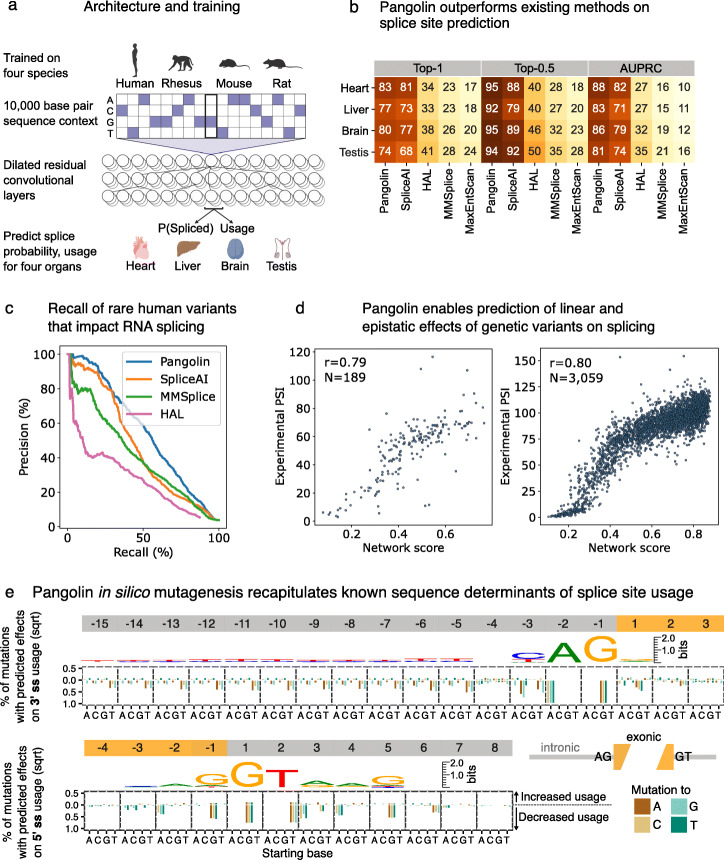
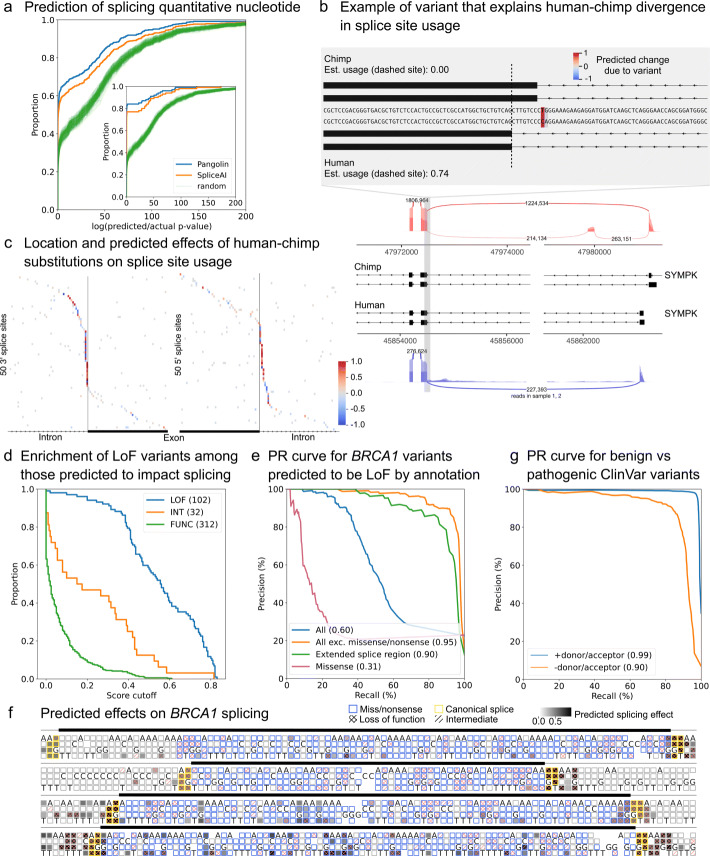
Recent progress in deep learning has greatly improved the prediction of RNA splicing from DNA sequence. Here, we present Pangolin, a deep learning model to predict splice site strength in multiple tissues. Pangolin outperforms state-of-the-art methods for predicting RNA splicing on a variety of prediction tasks. Pangolin improves prediction of the impact of genetic variants on RNA splicing, including common, rare, and lineage-specific genetic variation. In addition, Pangolin identifies loss-of-function mutations with high accuracy and recall, particularly for mutations that are not missense or nonsense, demonstrating remarkable potential for identifying pathogenic variants.
Overview
The claims and statistics of this paper haven’t been checked yet.
Run the check — free, no account needed. It reads the open-access text and checks the sources it cites.
Integrity signals
Registry
Cites
Statistics
Figures
Verification
Claims the paper makes
The claims and statistics of this paper haven’t been checked yet.
Run the check — free, no account needed. It reads the open-access text and checks the sources it cites.
Claims other papers make about this one
Each is checked against this paper’s own text: does it say what the citing paper says it does?
The source backs part of the claim, not all of it — or backs it for a different population, condition or comparison.
In the citing paper
“Similarly, sequence-based models of post-transcriptional regulation rely on genome annotations and transformed measurements extracted from RNA-seq to isolate each regulatory mechanism (for example, percent spliced-in for splicing)14–23.”
From Predicting RNA-seq coverage from DNA sequence as a unifying model of gene regulation (2025) · cites this paper as [16]
Experimental — accuracy not yet measuredThe cited source says what the claim attributes to it.
In the citing paper
“When comparing Borzoi to Pangolin16 for the task of classifying the causal sQTLs from matched negatives, Pangolin has a slight advantage (Fig. 7d–e and Supplementary Fig. 12c; dAUPRC = 0.01, evaluated on all SNPs within distances of ≤10,000 bp from an annotated splice site).”
From Predicting RNA-seq coverage from DNA sequence as a unifying model of gene regulation (2025) · cites this paper as [16]
The cited source says what the claim attributes to it.
In the citing paper
“Identifying splice sites in DNA sequences has formed the basis for a successful approach to interpreting the splicing code and prioritizing pathogenic splicing variants15,16.”
From Predicting RNA-seq coverage from DNA sequence as a unifying model of gene regulation (2025) · cites this paper as [16]
Self-check
Percentages, sums and reported differences re-computed from the paper’s own numbers.
The self-check needs the paper’s full text.
Citations
Cites
STAR: ultrafast universal RNA-seq aligner
Dobin, A., Davis, C. A., Schlesinger, F., Drenkow, J., Zaleski, C., Jha, S., Batut, P., Chaisson, M., & Gingeras, T. R. (2013) · Bioinformatics · doi:10.1093/bioinformatics/bts635 · Cited by 51,709
RSEM: accurate transcript quantification from RNA-Seq data with or without a reference genome
Li, B., & Dewey, C. N. (2011) · BMC Bioinformatics · doi:10.1186/1471-2105-12-323 · Cited by 22,179
Decoupled Weight Decay Regularization
Loshchilov, I., & Hutter, F. (2017) · arXiv · doi:10.48550/arxiv.1711.05101 · Cited by 12,522
The GTEx Consortium atlas of genetic regulatory effects across human tissues
The GTEx Consortium, Aguet, F., Anand, S., Ardlie, K. G., Gabriel, S., Getz, G. A., Graubert, A., Hadley, K., Handsaker, R. E., Huang, K. H., et al. (2020) · Science · doi:10.1126/science.aaz1776 · Cited by 5,547
ClinVar: improving access to variant interpretations and supporting evidence
Landrum, M. J., Lee, J. M., Benson, M., Brown, G. R., Chao, C., Chitipiralla, S., Gu, B., Hart, J., Hoffman, D., Jang, W., et al. (2018) · Nucleic Acids Research · doi:10.1093/nar/gkx1153 · Cited by 4,196
Predicting splicing from primary sequence with deep learning
Jaganathan, K., Kyriazopoulou Panagiotopoulou, S., McRae, J. F., Darbandi, S. F., Knowles, D., Li, Y. I., Kosmicki, J. A., Arbelaez, J., Cui, W., Schwartz, G. B., et al. (2019) · Cell · doi:10.1016/j.cell.2018.12.015 · Cited by 2,853
Self-citationMaximum Entropy Modeling of Short Sequence Motifs with Applications to RNA Splicing Signals
Yeo, G. W.-M., & Burge, C. B. (2004) · Journal of Computational Biology · doi:10.1089/1066527041410418 · Cited by 2,042
Liftoff: accurate mapping of gene annotations
Shumate, A., & Salzberg, S. L. (2020) · Bioinformatics · doi:10.1093/bioinformatics/btaa1016 · Cited by 991
Accurate classification of BRCA1 variants with saturation genome editing
Findlay, G. M., Daza, R. M., Martin, B., Zhang, M. D., Leith, A. P., Gasperini, M., Janizek, J. D., Huang, X., Starita, L. M., & Shendure, J. (2018) · Nature · doi:10.1038/s41586-018-0461-z · Cited by 843
Gene expression across mammalian organ development
Cardoso-Moreira, M., Halbert, J., Valloton, D., Velten, B., Chen, C., Shao, Y., Liechti, A., Ascenção, K., Rummel, C., Ovchinnikova, S., et al. (2019) · Nature · doi:10.1038/s41586-019-1338-5 · Cited by 838
Cited by
Sorted by citations
Items 201–285 of 285
Messaoud‐Khelifi, M., Boulariah‐Hadjou, R., Kediha, M. I., Guillot‐Noël, L., Guillaud-Bataille, M., Durand, C. M., Alipacha, L., Khedoud, W. A. E., Mochel, F., Agathe, J. D. S., et al. (2025) · Neurogenetics · doi:10.1007/s10048-025-00833-8
Afrasiyabi, A., Kovalic, J., Liu, C., Castro, E., Weinreb, A., Varol, E., Miller, D. M., Hammarlund, M., & Krishnaswamy, S. (2025) · bioRxiv (Cold Spring Harbor Laboratory) · doi:10.1101/2025.06.22.660966
Thompson, M., & Lehner, B. (2025) · bioRxiv (Cold Spring Harbor Laboratory) · doi:10.1101/2025.07.25.666754 · Cited by 1
Chang, J. C., Rabenn, R., Parikh, A. S., & Wu, C. W. (2025) · Cancer Genetics · doi:10.1016/j.cancergen.2025.07.013
Familial MEN1 Syndrome with Atypical Renal Features and a Coexisting CLDN16 Variant: A Case Series
Petrakis, I., Drosataki, E., Lygerou, D., Antonakis, A., Kydonaki, K., Mitrakos, M., Pleros, C., Sfakiotaki, M., Xekouki, P., & Stylianou, K. (2025) · Journal of Clinical Medicine · doi:10.3390/jcm14155447
Ahmed, S., Cesarato, N., Li, Y., Xiong, X., Ullah, K., Khan, H., Khan, M. J., Thiele, H., Ahmad, W., Hasni, M. S., et al. (2025) · The Journal of Dermatology · doi:10.1111/1346-8138.17911
Self-citationDauyey, K., Abdikerim, S., Yergali, К., Gassanov, Z., Zhunussova, A., Skvortsova, L., & Zhunussova, G. (2025) · Journal of Clinical Medicine of Kazakhstan · doi:10.23950/jcmk/16588
Evaluating the contribution of genome 3D folding to variation in human height using machine learningPreprint
Gu, W., Gilbertson, E. N., Baranzini, S. E., Salem, R. S., & Capra, J. A. (2025) · bioRxiv (Cold Spring Harbor Laboratory) · doi:10.1101/2025.09.09.675195
Wang, Y., van Dijk, C., Timpanaro, I. S., Hop, P. J., Kenna, B., Kooyman, M., Aronica, E., Pasterkamp, R. J., van den Berg, L. H., Cooper‐Knock, J., et al. (2025) · Cell Reports Methods · doi:10.1016/j.crmeth.2025.101176
Case Report: Evaluation of COL4A5 non-canonical splicing variants in two families
Koh, C. T., Lim, T. S. T., Loh, A. H. L., Ng, Y. F., Kwek, J. L., Lau, P. Y. W., Chin, H.-L. L., Ng, J. L., Than, M., Mok, I. Y. J., et al. (2025) · Frontiers in Medicine · doi:10.3389/fmed.2025.1611334
The use of whole genome sequencing to study young patients with 100+ adenomas of the colon
Цуканов, А. С., Иванович, А. С., Loginova, A. N., Шубин, В. П., Pikunov, D. Y., Chekanov, N., Salomatina, A. S., & Severinov, K. (2025) · Frontiers in Oncology · doi:10.3389/fonc.2025.1616441
Kim, F., Borgeaud, M., Vito, C. D., Tsantoulis, P. K., & Addeo, A. (2025) · Frontiers in Oncology · doi:10.3389/fonc.2025.1481284
Jezela‐Stanek, A., Skalski, T., & Chwiałkowska, K. (2025) · Research Square · doi:10.21203/rs.3.rs-7635804/v1
Splicing and frameshift variants in QSER1 may be involved in developmental phenotypes
Fischer, M. C., Reis, L. M., Lenberg, J. L., Friedman, J., Seese, S. E., Muheisen, S., Writzl, K., Golob, B., Peterlin, B., & Semina, E. V. (2025) · Human Genetics and Genomics Advances · doi:10.1016/j.xhgg.2025.100539
Reis, L. M., Bellingham, J., Motta, F. L., Jurkutė, N., Raskin, S., Ramos, F. V., Mahroo, O. A., Moosajee, M., Arno, G., & Semina, E. V. (2025) · Investigative Ophthalmology & Visual Science · doi:10.1167/iovs.66.14.28
PETRA: Prime editing of transcribed regulatory elements to assay expressionPreprint
Armas, M., Herger, M., Cubitt, L., & Findlay, G. M. (2025) · bioRxiv (Cold Spring Harbor Laboratory) · doi:10.1101/2025.11.18.689114
Seese, S. E., Reis, L. M., Schneider, A. S., Bardakjian, T., & Semina, E. V. (2025) · Journal of Medical Genetics · doi:10.1136/jmg-2025-111125
GUANinE v1.1 reveals complementarity of supervised and genomic language models
Robson, E. S., & Ioannidis, N. M. (2026) · Bioinformatics · doi:10.1093/bioinformatics/btag427 · Cited by 1
Zoller, T., Righetti, M., Cont, R., Lanzafame, R., Ambrosetti, I., Guzzo, A., Pietrobelli, A., & Antoniazzi, F. (2025) · International Journal of Molecular Sciences · doi:10.3390/ijms262412169
Kurosawa, R., Iida, K., Ajiro, M., Awaya, T., Yamada, M., Kosaki, K., & Hagiwara, M. (2023) · Figshare · doi:10.6084/m9.figshare.24286583
Chao, K.-H., Mao, A., Salzberg, S. L., & Pertea, M. (2024) · Figshare · doi:10.6084/m9.figshare.27042506
Gupta, K., Yang, C., McCue, K., Bastani, O., Sharp, P. A., Burge, C. B., & Solar-Lezama, A. (2024) · Figshare · doi:10.6084/m9.figshare.25010470
Agathe, J. D. S., Filser, M., Isidor, B., Besnard, T., Gueguen, P., Perrin, A., Goethem, C. V., Verebi, C., Masingue, M., Rendu, J., et al. (2024) · Figshare · doi:10.6084/m9.figshare.26567603
Gupta, K., Yang, C., McCue, K., Bastani, O., Sharp, P. A., Burge, C. B., & Solar-Lezama, A. (2024) · Figshare · doi:10.6084/m9.figshare.25010550
Chao, K.-H., Mao, A., Salzberg, S. L., & Pertea, M. (2024) · Figshare · doi:10.6084/m9.figshare.27042503
Functional study of a novel SCN4A variant c.611C>T identified in a Japanese patient with myasthenia
Kira, N., Yoshida, K., Takahashi, S., Yamanaka, A., Kimura, T., Homma, K., Takahashi, M. P., & Kubota, T. (2026) · Frontiers in Biophysics · doi:10.3389/frbis.2025.1710099
Semcesen, L. N., Taylor, L. S., Frajman, L. E., Friederich, M. W., Frey, A. M., Siira, S. J., Hock, D. H., Stait, T. L., Hopton, S., Kishita, Y., et al. (2026) · medRxiv · doi:10.64898/2026.01.08.26343555
Podvalnyi, A., Kucherenko, V. V., Doroschuk, N., Sarygina, E. V., Sagaydak, O. V., Mityaeva, O. N., Bogdanov, V. P., Krupinova, J., Woroncow, M. V., Volchkov, P., et al. (2026) · bioRxiv (Cold Spring Harbor Laboratory) · doi:10.64898/2026.01.15.699685
Blažytė, A., Lee, H., Yoon, C., Jeon, S., Lee, J., Bayarsaikhan, D., Kim, J., Park, S., Cho, J., Baek, S. A., et al. (2026) · International Journal of Molecular Sciences · doi:10.3390/ijms27031177
Bi-allelic variants in FSD1L cause retinitis pigmentosa with or without neurological involvement
Lin, S., Cancellieri, F., Cao, Y., Lotery, A. J., Moye, A. R., Vaclavik, V., Perren, F., Poplawski, A. B., Schiff, E., Ullah, M., et al. (2026) · The American Journal of Human Genetics · doi:10.1016/j.ajhg.2026.01.015
Self-citationBi-allelic variants in FSD1L cause a neurodevelopmental disorder overlapping with L1 syndrome
Serpieri, V., Vézain, M., Orsi, A., Lecointre, M., Mazzotta, C., Marguet, F., Garbelli, A., Marcorelles, P., Celli, L., Goldenberg, A., et al. (2026) · The American Journal of Human Genetics · doi:10.1016/j.ajhg.2026.01.014
CLADES — Contrastive Learning Augmented DifferEntial Splicing with Orthologous Positive PairsPreprint
Talukder, A., Keung, N., Pe'er, I., & Knowles, D. A. (2026) · bioRxiv (Cold Spring Harbor Laboratory) · doi:10.64898/2026.02.20.707118
Pathogenic SGMS2 variants are not a common cause of early-onset osteoporosis among Finnish patients
Loid, P., Richardt, S., Niinimäki, T., Pekkinen, M., Mäkitie, O., & Mäkitie, R. E. (2026) · Frontiers in Endocrinology · doi:10.3389/fendo.2026.1719375
Michielsen, L., Hsu, J., Joglekar, A., Belchikov, N., Reinders, M. J. T., Tilgner, H., & Mahfouz, A. E. (2026) · Genome biology · doi:10.1186/s13059-026-04015-z · Cited by 3
Splice-site mutations in POU2AF1 are associated with B-cell lymphomagenesis and therapeutic response
Yanguas‐Casás, N., Pedrosa, L., Horcajo, B., Gómez, S., García‐Grande, A., Muñoz‐Viana, R., Fernández‐Miranda, I., Perez-Aguilera, M., Torres-Ruiz, R., Rodríguez, S., et al. (2026) · Scientific Reports · doi:10.1038/s41598-026-43710-6
Shi, T., Huang, Y., Su, X., Yu, L., Zhao, Y., & Cheng, J. (2026) · The Journal of Pathology · doi:10.1002/path.70048
Audo, I. S., Navarro, J., Bianco, L., Antropoli, A., Condroyer, C., Antonio, A., Andrieu, C., Mohand‐Saïd, S., Coriat, C., Atia, R., et al. (2026) · Research Square · doi:10.21203/rs.3.rs-9032551/v1
de Laffolie, J., & Weber, A. (2026) · Die Gastroenterologie · doi:10.1007/s11377-026-00969-5
Genetic influences on haematopoiesis
Poeschla, M., & Sankaran, V. G. (2026) · Nature Reviews Genetics · doi:10.1038/s41576-026-00947-1 · Cited by 1
Inducible, split base editors for in vivo cancer functional genomics
Ren, D., Wang, S., Yamada, K., Liu, Y., Hapke, R., Alpsoy, A., Ho, Y., Zhang, C., Lan, Y., Zhang, S., et al. (2026) · Nature Biotechnology · doi:10.1038/s41587-026-03077-5 · Cited by 1
Self-citationAhmed, M., Volkening, K., McLellan, C., Shoesmith, C. L., Balci, T. B., & Strong, M. J. (2026) · Amyotrophic Lateral Sclerosis and Frontotemporal Degeneration · doi:10.1080/21678421.2026.2655734 · Cited by 1
Chen, J., Cai, G., Wong-Pack, A., Garkaby, J., & Brager, R. (2026) · LymphoSign Journal · doi:10.14785/lymphosign-2026-0002
Yang, J., Ogunsola, S. S., Wong, J., Wang, A., Joehanes, R., Levy, D. A., Sharma, S., Liu, C., & Xie, J. (2026) · Genome biology · doi:10.1186/s13059-026-04094-y · Cited by 1
Evolving computational paradigms for noncoding variant pathogenicity prediction
Wang, B., Song, S., Cheng, S. O. N. G., Lin, Y., Yu, L., Li, Y., & Chen, X. (2026) · Frontiers in Molecular Biosciences · doi:10.3389/fmolb.2026.1761673
Self-citationSilverstein, S., Nguyen, A. D., Orbach, R., Donkervoort, S. C., Cassini, T. A., Koziura, M. E., Bolduc, V., Winkelsas, A. M., Masati, E., Nandi, S., et al. (2026) · medRxiv · doi:10.64898/2026.04.20.26351111
Self-citationMalki, E. G., Adawi, A., Idkedek, M., Ashhab, Y., Damseh, N., & Sultan, M. (2026) · Frontiers in Pediatrics · doi:10.3389/fped.2026.1829390
Turco, E. C., Pisanò, G., Caiazza, L., Carestiato, S., Piccolo, B., Fecarotta, S., Pochiero, F., Ricci, F., Brusco, A., Ferrero, G. B., et al. (2026) · International Journal of Molecular Sciences · doi:10.3390/ijms27104389
Charoenngam, N., & Wannachalee, T. (2026) · Journal of Endocrinological Investigation · doi:10.1007/s40618-026-02920-5
Interpreting the effects of DNA polymerase variants at the structural level
Arnaudi, M., Krzesińska, K., Beltrame, L., Besora, P. S.-I., Tiberti, M., Nilbert, M. C., Rohlin, A., & Papaleo, E. (2026) · Molecular Oncology · doi:10.1002/1878-0261.70255
Li, X., Peng, Z., Zhao, Y., Wang, S., Zhou, X., Luo, X., Su, Y., Zheng, C., & Xia, J. (2026) · Briefings in Bioinformatics · doi:10.1093/bib/bbag291
Gehring, M. (2026) · Zenodo (CERN European Organization for Nuclear Research) · doi:10.5281/zenodo.20566358
Improving splice site usage prediction with SPLAIREPreprint
Runyan, M., Gupta, S., Leshaem, Y., Geller-McGrath, D., Liu, C., Saferali, A., Dy, J., Predrag Radivojac, A., Tesfaigzi, Y., Castaldi, P. J., et al. (2026) · bioRxiv (Cold Spring Harbor Laboratory) · doi:10.64898/2026.06.08.731019
Meyer, S., Kinnersley, B., Kedzierska, K., Soriano, I., Lakatos, E., Arnedo-Pac, C., Culliford, R., Tapinos, A., Knight, L., Comoglio, Y., et al. (2026) · bioRxiv (Cold Spring Harbor Laboratory) · doi:10.64898/2026.06.15.730391
Long-Read Nanopore Sequencing Enhances BRCA1/2 Variant Detection Compared with Ion Torrent Analysis
Makhzen, N. E., Hejjioui, B. E., Elmakhzen, B., Bouramtane, A., Bennis, S., Bouguenouch, L., & Abriel, H. (2026) · Journal of Molecular Diagnostics · doi:10.1016/j.jmoldx.2026.06.001
Sun, Y., Wang, X., Jia, Y., Imoto, S., Li, F., Li, C., & Song, J. (2026) · Briefings in Bioinformatics · doi:10.1093/bib/bbag329
Wisteria: A unified multi-scale feature learning framework for DNA language model
Wang, W. Y., Li, H., Bao, F., Yang, L., & Gao, G. (2026) · Pattern Recognition · doi:10.1016/j.patcog.2026.114289 · Cited by 1
Hertstein, E., Bertrand, M., Kopp, J., Sczakiel, H. L., Küchler, O., von Kügelgen, N., Fischer‐Zirnsak, B., Hildebrand, G., Leubner, J., Horn, D., et al. (2026) · Journal of Medical Genetics · doi:10.1136/jmg-2026-111501
Biallelic variants in consanguineous families causing neurodevelopmental disorders
Froukh, T. J., & Albsoul, E. (2026) · Exploration of Neuroprotective Therapy · doi:10.37349/ent.2026.1004161
Loss of Function of AFG3L2 Leading to Developmental and Epileptic Encephalopathy
Pan, Z., Yang, L., Tang, H., Chen, C., Yang, Q., 巫腾辉, He, F. P., Zhang, Z., Liu, F., & Peng, J. (2026) · CNS Neuroscience & Therapeutics · doi:10.1002/cns.71013
Hayeck, T. J., Sottolano, C. J., Blair, J. J., Xenakis, M. N., Spinner, N. B., & Gilbert, M. A. (2026) · The American Journal of Human Genetics · doi:10.1016/j.ajhg.2026.06.016
Martino, S., Doimo, M., Iacoviello, M., Giovine, C., Stella, A., Forleo, C., Bagnulo, R., Lenato, G. M., Guaricci, A. I., Trevisson, E., et al. (2026) · Human Mutation · doi:10.1155/humu/2079958
Wang, L., Connelly, G. G., Dalapati, T., Jones, A. G., Schott, B. H., Trimarco, J. D., Heaton, N. S., & Ko, D. C. (2026) · Genome biology · doi:10.1186/s13059-026-04205-9
Chen, J., Zhao, Q., Zhang, X., Wu, N., Xi, X., Zeng, Y., Wu, S., Yuan, K., Liu, Z., Wu, X., et al. (2026) · Molecular Genetics & Genomic Medicine · doi:10.1002/mgg3.70246
Liu, X. (2026) · bioRxiv (Cold Spring Harbor Laboratory) · doi:10.64898/2026.07.23.740393
Large language models in bioinformatics: a comprehensive survey
Meng, Z., Yang, Z., Zhu, M., & Xu, J. (2026) · Frontiers in Genetics · doi:10.3389/fgene.2026.1797863
Rozhkova, A. V., Esibov, A. A., Borkovskaia, A., Rutkovskaya, E. A., Groznova, O. S., Sagaydak, O. V., Александровна, Д. Н., Krupinova, J. A., Mityaeva, O. N., Woroncow, M. V., et al. (2026) · International Journal of Molecular Sciences · doi:10.3390/ijms27177555
Onat, U. İ., Bülbül, A., Sigli, D., Sever, E. A., Ugurlu, S., Ozdogan, A. H., & Turanlı, E. T. (2026) · Genes · doi:10.3390/genes17090997
A rhesus macaque model of α‐dystroglycanopathy caused by a POMT1 splice altering variant
Nordlund, A., LaMendola, B., Crilly, N. P., Kittle, S., Ferguson, B. M., Lewis, A. D., Wall, J., & Peterson, S. M. (2026) · Animal Models and Experimental Medicine · doi:10.1002/ame2.70277
AI-Guided Systems Neurogenomics in Neurodevelopmental Disorders
Goel, H., Dudding‐Byth, T., & Kamien, B. (2026) · Genes · doi:10.3390/genes17091026
Eisenberg, R., Rahamim, E., Kopel, E., Danan-Gotthold, M., Levanon, E. Y., & Lindenbaum, O. (2026) · PLoS Computational Biology · doi:10.1371/journal.pcbi.1014725
Hack, J., Watkins, J. C., & Hammer, M. F. (2026) · bioRxiv (Cold Spring Harbor Laboratory) · doi:10.64898/2026.09.22.753542
Zhang, N. (2026) · bioRxiv (Cold Spring Harbor Laboratory) · doi:10.64898/2026.09.14.751496
The 10-Year Evolution of Sherloc, a Points-Based Framework for Genetic Variant Classification
Kobayashi, Y., Westbrook, M. J., Tan, C. A., Márquez‐Luna, C., Wahl, A., Swartzlander, D. B., Ouyang, K., & Daber, R. D. (2026) · Journal of Molecular Diagnostics · doi:10.1016/j.jmoldx.2026.08.005
Loss‐Of‐Function CCM Gene Variants in Japanese Patients With Cerebral Cavernous Malformations
Hori, T., Tsutsumi, S., Hashimoto, K., Ishiguro, T., Ohbuchi, H., Yamamoto, Y., Nomura, E., Azuma, K., Kubota, Y., & Akagawa, H. (2026) · Clinical Genetics · doi:10.1111/cge.70253
Functional Identification of Multiple Aberrant Splicing Events Linked to Intronic PKD1 Variant
Caux, A., Kachmar, J., Bengoa, J., Saei, H., Mautret‐Godefroy, M., Planté‐Bordeneuve, P., Morinière, V., Heidet, L., & Dorval, G. (2026) · Kidney Medicine · doi:10.1016/j.xkme.2026.101549
Maghembe, R. S. (2026) · PLoS ONE · doi:10.1371/journal.pone.0358222
Gowda, N. B., & Harish, S. (2026) · Neurogenetics · doi:10.1007/s10048-026-00947-7
Mensdorff-Pouilly, A., Schmidt, I., Wiesenhofer, A., Rappold, M., Bittner, R. E., Bernert, G., & Schmidt, W. M. (2026) · European Journal of Paediatric Neurology · doi:10.1016/j.ejpn.2026.09.009
Rintari, M. R., Chundru, V. K., Oquendo, C. J., Leslie, J. S., Pagnamenta, A. T., Baralle, D., & Wright, C. F. (2026) · medRxiv · doi:10.64898/2026.10.09.26365070
Treccarichi, S., Vinci, M., Musumeci, A., Rando, R. G., Fallea, A., Brancato, D., Bruno, F., Federico, C., Saccone, S., Elia, M., et al. (2026) · Genes · doi:10.3390/genes17101276
A microexon regulatory code reveals autism-linked genetic variation
Parada, G. E., Bretschneider, H., Li, J. D., Fine, J. L., Dupas, S. J., Ellis, J. D., Braunschweig, U., Bonnal, S., Dalal, T., Engchuan, W., et al. (2026) · Nature · doi:10.1038/s41586-026-11119-w
X-linked novel hemizygous ADGRG2 variants associated with male factor infertility
Yuan, Y., Li, Y., Lu, W., Peng, Z., Deng, L., Lin, X., Liu, L., Meng, L., Tan, C., Lin, G., et al. (2026) · Journal of Assisted Reproduction and Genetics · doi:10.1007/s10815-026-04062-2
Self-citationAkbaba, E., Sezgi̇n, B., Demirtaş, A., Özdemir, Ç., & Edgünlü, T. (2026) · International Journal of Molecular Sciences · doi:10.3390/ijms27219625
alphagenome-pt: Flexible Training of AlphaGenome Models in PyTorch
Weaver, R., Lakshmanan, G., & Lagergren, J. H. (2026) · Proceedings of the Python in Science Conferences · doi:10.25080/ycyj7495
Metadata
- Authors
- Zeng, T., & Li, Y. I.
- Affiliations
- University of Chicago (US)
- Corresponding author
- Li, Yang I
- ORCID
- Venue
- Genome Biology
- Published
- 2022-04-21
- Volume
- 23
- Issue
- 1
- Pages
- 103-103
- ISSN
- 1465-6906 (ISSN-L)
- 1474-760X
- PMC
- PMC9022248
- OpenAlex
- W4226065462
- Cited by
- 283
- References
- 32
- Citations by year
- 2026: 100 · 2025: 96 · 2024: 56 · 2023: 27 · 2022: 4
- FWCI
- 14.94
- Type
- journal article
- Language
- en
- Open access
- gold
- doi.org
- Locations
- Genome biology (publishedVersion, cc-by)
- bioRxiv (Cold Spring Harbor Laboratory) (acceptedVersion, cc-by-nc)
- PubMed Central (publishedVersion, cc-by)
- PubMed (publishedVersion)
- DOAJ (DOAJ: Directory of Open Access Journals) (submittedVersion, cc-by-sa)
- Funders
- national institute of general medical sciences (R01GM130738)
- Topics
- Life Sciences › Biochemistry, Genetics and Molecular Biology › Molecular Biology › RNA Research and Splicing
- Life Sciences › Biochemistry, Genetics and Molecular Biology › Genetics › Genomics and Rare Diseases
- Life Sciences › Biochemistry, Genetics and Molecular Biology › Molecular Biology › Genomics and Phylogenetic Studies
- Keywords
- splice site strength, pangolins, deep learning, genetic variants, variant effect prediction, loss-of-function mutations, pathogenic variant identification, tissue-specific splicing
- MeSH terms
- Pangolins, Animals, Base Sequence, Mutation, RNA Splicing, RNA Splice Sites
About these checks
Registry, retraction, Cites and statistics results are computed, not judged, with one exception: a printed reference that no index lists is read once by a model before it counts as a citation error. Claims are extracted by a model and kept only when their quote appears verbatim in the text; each cited source is then checked, with a model’s help, for whether it says what the claim relies on. Those verdicts can be wrong — read the claim’s quote and the cited source before relying on one.
Statistics and arithmetic are recomputed, not judged.
Confidence bands are shown only for fields calibrated on our annotated test set. None is calibrated yet, so no band is shown.
What counts as a claim ›How we measure confidence ›How we check this ›
Are you an author, or do you see a problem with this page? Request a review
