

The DOI matches its Crossref record; 32 of the 32 references it cites were found in a registry or an index.
Predicting RNA splicing from DNA sequence using Pangolin
Open accessPublished version of a preprint
Abstract
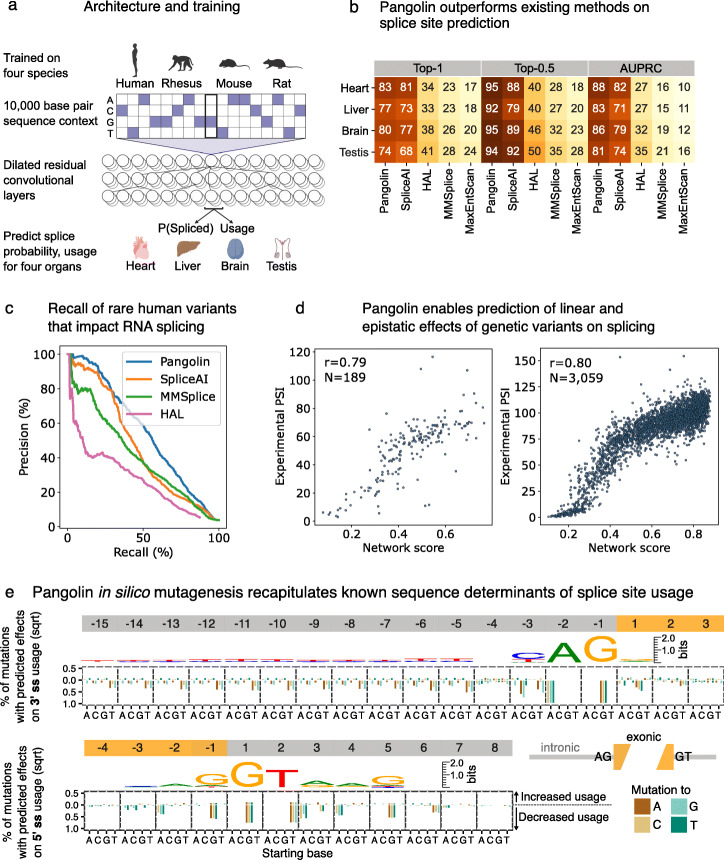
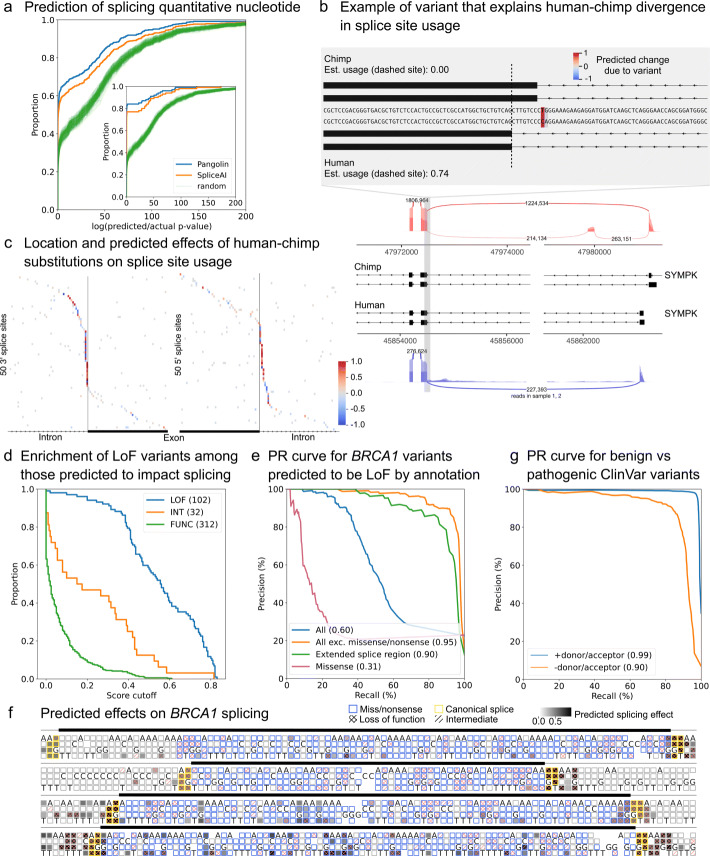
Recent progress in deep learning has greatly improved the prediction of RNA splicing from DNA sequence. Here, we present Pangolin, a deep learning model to predict splice site strength in multiple tissues. Pangolin outperforms state-of-the-art methods for predicting RNA splicing on a variety of prediction tasks. Pangolin improves prediction of the impact of genetic variants on RNA splicing, including common, rare, and lineage-specific genetic variation. In addition, Pangolin identifies loss-of-function mutations with high accuracy and recall, particularly for mutations that are not missense or nonsense, demonstrating remarkable potential for identifying pathogenic variants.
Overview
The claims and statistics of this paper haven’t been checked yet.
Run the check — free, no account needed. It reads the open-access text and checks the sources it cites.
Integrity signals
Registry
Cites
Statistics
Figures
Verification
Claims the paper makes
The claims and statistics of this paper haven’t been checked yet.
Run the check — free, no account needed. It reads the open-access text and checks the sources it cites.
Claims other papers make about this one
Each is checked against this paper’s own text: does it say what the citing paper says it does?
The source backs part of the claim, not all of it — or backs it for a different population, condition or comparison.
In the citing paper
“Similarly, sequence-based models of post-transcriptional regulation rely on genome annotations and transformed measurements extracted from RNA-seq to isolate each regulatory mechanism (for example, percent spliced-in for splicing)14–23.”
From Predicting RNA-seq coverage from DNA sequence as a unifying model of gene regulation (2025) · cites this paper as [16]
Experimental — accuracy not yet measuredThe cited source says what the claim attributes to it.
In the citing paper
“When comparing Borzoi to Pangolin16 for the task of classifying the causal sQTLs from matched negatives, Pangolin has a slight advantage (Fig. 7d–e and Supplementary Fig. 12c; dAUPRC = 0.01, evaluated on all SNPs within distances of ≤10,000 bp from an annotated splice site).”
From Predicting RNA-seq coverage from DNA sequence as a unifying model of gene regulation (2025) · cites this paper as [16]
The cited source says what the claim attributes to it.
In the citing paper
“Identifying splice sites in DNA sequences has formed the basis for a successful approach to interpreting the splicing code and prioritizing pathogenic splicing variants15,16.”
From Predicting RNA-seq coverage from DNA sequence as a unifying model of gene regulation (2025) · cites this paper as [16]
Self-check
Percentages, sums and reported differences re-computed from the paper’s own numbers.
The self-check needs the paper’s full text.
Citations
Cites
STAR: ultrafast universal RNA-seq aligner
Dobin, A., Davis, C. A., Schlesinger, F., Drenkow, J., Zaleski, C., Jha, S., Batut, P., Chaisson, M., & Gingeras, T. R. (2013) · Bioinformatics · doi:10.1093/bioinformatics/bts635 · Cited by 51,709
RSEM: accurate transcript quantification from RNA-Seq data with or without a reference genome
Li, B., & Dewey, C. N. (2011) · BMC Bioinformatics · doi:10.1186/1471-2105-12-323 · Cited by 22,179
Decoupled Weight Decay Regularization
Loshchilov, I., & Hutter, F. (2017) · arXiv · doi:10.48550/arxiv.1711.05101 · Cited by 12,522
The GTEx Consortium atlas of genetic regulatory effects across human tissues
The GTEx Consortium, Aguet, F., Anand, S., Ardlie, K. G., Gabriel, S., Getz, G. A., Graubert, A., Hadley, K., Handsaker, R. E., Huang, K. H., et al. (2020) · Science · doi:10.1126/science.aaz1776 · Cited by 5,547
ClinVar: improving access to variant interpretations and supporting evidence
Landrum, M. J., Lee, J. M., Benson, M., Brown, G. R., Chao, C., Chitipiralla, S., Gu, B., Hart, J., Hoffman, D., Jang, W., et al. (2018) · Nucleic Acids Research · doi:10.1093/nar/gkx1153 · Cited by 4,196
Predicting splicing from primary sequence with deep learning
Jaganathan, K., Kyriazopoulou Panagiotopoulou, S., McRae, J. F., Darbandi, S. F., Knowles, D., Li, Y. I., Kosmicki, J. A., Arbelaez, J., Cui, W., Schwartz, G. B., et al. (2019) · Cell · doi:10.1016/j.cell.2018.12.015 · Cited by 2,853
Self-citationMaximum Entropy Modeling of Short Sequence Motifs with Applications to RNA Splicing Signals
Yeo, G. W.-M., & Burge, C. B. (2004) · Journal of Computational Biology · doi:10.1089/1066527041410418 · Cited by 2,042
Liftoff: accurate mapping of gene annotations
Shumate, A., & Salzberg, S. L. (2020) · Bioinformatics · doi:10.1093/bioinformatics/btaa1016 · Cited by 991
Accurate classification of BRCA1 variants with saturation genome editing
Findlay, G. M., Daza, R. M., Martin, B., Zhang, M. D., Leith, A. P., Gasperini, M., Janizek, J. D., Huang, X., Starita, L. M., & Shendure, J. (2018) · Nature · doi:10.1038/s41586-018-0461-z · Cited by 843
Gene expression across mammalian organ development
Cardoso-Moreira, M., Halbert, J., Valloton, D., Velten, B., Chen, C., Shao, Y., Liechti, A., Ascenção, K., Rummel, C., Ovchinnikova, S., et al. (2019) · Nature · doi:10.1038/s41586-019-1338-5 · Cited by 838
Cited by
Sorted by citations
AlphaGenome: advancing regulatory variant effect prediction with a unified DNA sequence model
Avsec, Ž., Latysheva, N., Cheng, J., Novati, G., Taylor, K. R., Ward, T., Bycroft, C., Nicolaisen, L., Arvaniti, E., Pan, J., et al. (2025) · doi:10.1101/2025.06.25.661532 · Cited by 395
Advancing regulatory variant effect prediction with AlphaGenome
Avsec, Ž., Latysheva, N., Cheng, J., Novati, G., Taylor, K. R., Ward, T., Bycroft, C., Nicolaisen, L., Arvaniti, E., Pan, J., et al. (2026) · Nature · doi:10.1038/s41586-025-10014-0 · Cited by 373
“…outcomes can be modelled at three levels: the probability that any given nucleotide acts as a splice donor or acceptor (splice site prediction) 4,11,16 , competitive selection among potential splice sites (splice site usage prediction) 11,16 and prediction of specific introns (splice junction…”
Regulation of pre-mRNA splicing: roles in physiology and disease, and therapeutic prospects
Rogalska, M. E., Vivori, C., & Valcárcel, J. (2022) · Nature Reviews Genetics · doi:10.1038/s41576-022-00556-8 · Cited by 284
Predicting RNA-seq coverage from DNA sequence as a unifying model of gene regulation
Linder, J., Srivastava, D., Yuan, H., Agarwal, V., & Kelley, D. R. (2025) · Nature Genetics · doi:10.1038/s41588-024-02053-6 · Cited by 265
SpliceAI-visual: a free online tool to improve SpliceAI splicing variant interpretation
Agathe, J. D. S., Filser, M., Isidor, B., Besnard, T., Guéguen, P., Perrin, A., Goethem, C. V., Verebi, C., Masingue, M., Rendu, J., et al. (2023) · Human Genomics · doi:10.1186/s40246-023-00451-1 · Cited by 201
A deep catalogue of protein-coding variation in 983,578 individuals
Sun, K. Y., Bai, X., Chen, S., Bao, S., Zhang, C., Kapoor, M., Backman, J., Joseph, T., Maxwell, E., Mitra, G., et al. (2024) · Nature · doi:10.1038/s41586-024-07556-0 · Cited by 127
Genomic language models: opportunities and challenges
Benegas, G., Ye, C., Albors, C., Li, J. C., & Song, Y. S. (2025) · Trends in Genetics · doi:10.1016/j.tig.2024.11.013 · Cited by 157
Germline variants associated with toxicity to immune checkpoint blockade
Groha, S., Alaiwi, S. A., Xu, W. V., Naranbhai, V., Nassar, A. H., Bakouny, Z., Zarif, T. E., Saliby, R. M., Wan, G., Rajeh, A. A., et al. (2022) · Nature Medicine · doi:10.1038/s41591-022-02094-6 · Cited by 121
Genetic and molecular architecture of complex traits
Lappalainen, T., Li, Y., Ramachandran, S., & Gusev, A. (2024) · Cell · doi:10.1016/j.cell.2024.01.023 · Cited by 125
Self-citationChen, K., Zhou, Y., Ding, M., Wang, Y., Ren, Z., & Yang, Y. (2024) · Briefings in Bioinformatics · doi:10.1093/bib/bbae163 · Cited by 84
Applications of deep learning in understanding gene regulation
Li, Z., Gao, E., Zhou, J., Han, W., Xu, X., & Gao, X. (2023) · Cell Reports Methods · doi:10.1016/j.crmeth.2022.100384 · Cited by 73
Big data and deep learning for RNA biology
Hwang, H., Jeon, H., Yeo, N., & Baek, D. (2024) · Experimental & Molecular Medicine · doi:10.1038/s12276-024-01243-w · Cited by 64
Kerimov, N., Tambets, R., Hayhurst, J. D., Rahu, I., Kolberg, P., Raudvere, U., Kuzmin, I., Chowdhary, A., Vija, A., Teras, H., et al. (2023) · PLoS Genetics · doi:10.1371/journal.pgen.1010932 · Cited by 57
Applications of artificial intelligence in clinical laboratory genomics
Aradhya, S., Facio, F. M., Metz, H. C., Manders, T. R., Colavin, A., Kobayashi, Y., Nykamp, K., Johnson, B. A., & Nussbaum, R. L. (2023) · American Journal of Medical Genetics Part C Seminars in Medical Genetics · doi:10.1002/ajmg.c.32057 · Cited by 62
Predicting RNA structures and functions by artificial intelligence.
Zhang, J., Lang, M., Zhou, Y., & Zhang, Y. (2024) · Trends in Genetics · doi:10.1016/j.tig.2023.10.001 · Cited by 48
SpliceTransformer predicts tissue-specific splicing linked to human diseases
You, N., Liu, C., Gu, Y., Wang, R., Jia, H., Zhang, T., Jiang, S., Shi, J., Chen, M., Guan, M., et al. (2024) · Nature Communications · doi:10.1038/s41467-024-53088-6 · Cited by 48
Wang, R., Helbig, I., Edmondson, A. C., Lin, L., & Xing, Y. (2023) · Briefings in Bioinformatics · doi:10.1093/bib/bbad284 · Cited by 42
From computational models of the splicing code to regulatory mechanisms and therapeutic implications
Capitanchik, C., Wilkins, O. G., Wagner, N., Gagneur, J., & Ule, J. (2024) · Nature Reviews Genetics · doi:10.1038/s41576-024-00774-2 · Cited by 45
Benchmarking splice variant prediction algorithms using massively parallel splicing assays
Smith, C., & Kitzman, J. O. (2023) · Genome biology · doi:10.1186/s13059-023-03144-z · Cited by 50
Humphrey, J., Brophy, E., Kosoy, R., Zeng, B., Coccia, E., Mattei, D., Ravi, A., Naito, T., Efthymiou, A. G., Navarro, E., et al. (2025) · Nature Genetics · doi:10.1038/s41588-025-02099-0 · Cited by 37
RNA Sequencing in Disease Diagnosis
Smail, C., & Montgomery, S. B. (2024) · Annual Review of Genomics and Human Genetics · doi:10.1146/annurev-genom-021623-121812 · Cited by 35
Deep Learning Sequence Models for Transcriptional Regulation
Sokolova, K., Chen, K., Hao, Y., Zhou, J., & Troyanskaya, O. G. (2024) · Annual Review of Genomics and Human Genetics · doi:10.1146/annurev-genom-021623-024727 · Cited by 39
The role of machine learning in advancing precision medicine with feedback control
Zlobina, K., Jafari, M., Rolandi, M., & Gomez, M. M. (2022) · Cell Reports Physical Science · doi:10.1016/j.xcrp.2022.101149 · Cited by 33
Chen, K., Zhou, Y., Ding, M., Wang, Y., Ren, Z., & Yang, Y. (2023) · bioRxiv (Cold Spring Harbor Laboratory) · doi:10.1101/2023.01.31.526427 · Cited by 37
Annotating the genome at single-nucleotide resolution with DNA foundation models
de Almeida, B. P., Dalla-Torre, H., Richard, G., Blum, C. F., Hexemer, L., Gélard, M., Mendoza‐Revilla, J., Tang, Z., Marin, F. I., Emms, D., et al. (2025) · Nature Methods · doi:10.1038/s41592-025-02881-2 · Cited by 39
Computational prediction of human deep intronic variation
Barbosa, P., Savisaar, R., Carmo‐Fonseca, M., & Fonseca, A. (2022) · GigaScience · doi:10.1093/gigascience/giad085 · Cited by 36
Splam: a deep-learning-based splice site predictor that improves spliced alignments
Chao, K.-H., Mao, A., Salzberg, S. L., & Pertea, M. (2024) · Genome biology · doi:10.1186/s13059-024-03379-4 · Cited by 34
SpliceVarDB: A comprehensive database of experimentally validated human splicing variants
Sullivan, P. J., Quinn, J. M. W., Wu, W., Pinese, M., & Cowley, M. J. (2024) · The American Journal of Human Genetics · doi:10.1016/j.ajhg.2024.08.002 · Cited by 27
Rong, S., Neil, C. R., Welch, A., Duan, C., Maguire, S., Meremikwu, I. C., Meyerson, M., Evans, B. J., & Fairbrother, W. G. (2023) · Proceedings of the National Academy of Sciences · doi:10.1073/pnas.2218308120 · Cited by 25
Grätz, C., Schuster, M., Brandes, F., Meidert, A. S., Kirchner, B., Reithmair, M., Schelling, G., & Pfaffl, M. W. (2024) · Molecular Aspects of Medicine · doi:10.1016/j.mam.2024.101269 · Cited by 26
PDIVAS: Pathogenicity predictor for Deep-Intronic Variants causing Aberrant Splicing
Kurosawa, R., Iida, K., Ajiro, M., Awaya, T., Yamada, M., Kosaki, K., & Hagiwara, M. (2023) · BMC Genomics · doi:10.1186/s12864-023-09645-2 · Cited by 27
Rare disease genomics and precision medicine
Hong, J., Lee, D., Hwang, A., Kim, T., Ryu, H., & Choi, J. (2024) · Genomics & Informatics · doi:10.1186/s44342-024-00032-1 · Cited by 31
Ullah, F., Jabeen, S., Salton, M., Reddy, A. S. N., & Ben‐Hur, A. (2023) · Genome biology · doi:10.1186/s13059-023-02885-1 · Cited by 22
Majeres, L. E., Dilger, A. C., Shike, D. W. W., McCann, J. C., & Beever, J. E. (2024) · Genes · doi:10.3390/genes15050576 · Cited by 19
Genome-wide association study for circulating metabolic traits in 619,372 individualsPreprint
Tambets, R., Kronberg, J., van der Graaf, A., Jesse, M., Abner, E., Võsa, U., Rahu, I., Taba, N., Kolde, A., Yarish, D., et al. (2024) · medRxiv · doi:10.1101/2024.10.15.24315557 · Cited by 19
Alternative Splicing Variation: Accessing and Exploiting in Crop Improvement Programs
Dwivedi, S. L., Quiroz, L. F., Reddy, A. S. N., Spillane, C., & Ortiz, R. O. (2023) · International Journal of Molecular Sciences · doi:10.3390/ijms242015205 · Cited by 16
O’Neill, M. J., Yang, T., Laudeman, J. A., Calandranis, M. E., Harvey, M. L., Solus, J. F., Roden, D. M., & Glazer, A. M. (2024) · Nature Communications · doi:10.1038/s41467-024-52474-4 · Cited by 18
Gülsüner, S., Rayyan, A. A., Mandell, J. B., Lee, M. K., Bernier, G. V., Norquist, B. M., Pierce, S. B., King, M., & Walsh, T. (2024) · Genome Research · doi:10.1101/gr.279158.124 · Cited by 17
Tibben, B. M., Gaedigk, A., Gong, L., Sangkuhl, K., Whirl‐Carrillo, M., Relling, M. V., Donnelly, R. S., Klein, T. E., & Caudle, K. E. (2025) · The American Journal of Human Genetics · doi:10.1016/j.ajhg.2025.10.004 · Cited by 16
Tangermeme: a toolkit for understanding cis-regulatory logic using deep learning models
Schreiber, J. M. (2026) · Nature Methods · doi:10.1038/s41592-026-03254-z · Cited by 16
Improved modeling of RNA-binding protein motifs in an interpretable neural model of RNA splicing
Gupta, K., Yang, C., McCue, K., Bastani, O., Sharp, P. A., Burge, C. B., & Solar-Lezama, A. (2024) · Genome biology · doi:10.1186/s13059-023-03162-x · Cited by 17
Maggi, J., Koller, S., Feil, S., Bachmann‐Gagescu, R., Gerth‐Kahlert, C., & Berger, W. (2024) · International Journal of Molecular Sciences · doi:10.3390/ijms25126540 · Cited by 16
Rahim, F., Tao, L., Khan, K., Ali, I., Zeb, A., Khan, I. A., Dil, S., Abbas, T., Hussain, A., Zubair, M., et al. (2024) · Clinical Genetics · doi:10.1111/cge.14575 · Cited by 15
Data-driven insights to inform splice-altering variant assessment
Sullivan, P. J., Quinn, J. M. W., Ajuyah, P., Pinese, M., Davis, R. L., & Cowley, M. J. (2025) · The American Journal of Human Genetics · doi:10.1016/j.ajhg.2025.02.012 · Cited by 15
Alternative splicing across the C. elegans nervous system
Weinreb, A., Varol, E., Barrett, A., McWhirter, R. M., Taylor, S. R., Courtney, I. G., Basavaraju, M., Poff, A., Tipps, J. A., Collings, B., et al. (2025) · Nature Communications · doi:10.1038/s41467-025-58293-5 · Cited by 18
Reference-informed prediction of alternative splicing and splicing-altering mutations from sequencesPreprint
Xu, C., Bao, S., Wang, Y., Li, W., Chen, H., Shen, Y., Jiang, T., & Zhang, C. (2024) · Genome Research · doi:10.1101/gr.279044.124 · Cited by 17
Variants in UBAP1L lead to autosomal recessive rod-cone and cone-rod dystrophy
Zeitz, C., Navarro, J., Pormehr, L. A., Méjécase, C., Neves, L. M., Letellier, C., Condroyer, C., Albadri, S., Amprou, A., Antonio, A., et al. (2024) · Genetics in Medicine · doi:10.1016/j.gim.2024.101081 · Cited by 14
Calame, D. G., Wong, J. H., Panda, P., Nguyen, D., Leong, N. C. P., Sangermano, R., Patankar, S. G., Abdel‐Hamid, M. S., AlAbdi, L., Safwat, S., et al. (2024) · Genetics in Medicine · doi:10.1016/j.gim.2024.101273 · Cited by 19
Resurrecting the alternative splicing landscape of archaic hominins using machine learning
Brand, C. M., Colbran, L. L., & Capra, J. A. (2023) · Nature Ecology & Evolution · doi:10.1038/s41559-023-02053-5 · Cited by 14
A cis-regulatory element regulates ERAP2 expression through autoimmune disease risk SNPs
Venema, W. J., Hiddingh, S., van Loosdregt, J., Bowes, J., Balliu, B., de Boer, J. H., Norel, J. O., Thompson, S. D., Langefeld, C. D., de Ligt, A., et al. (2023) · Cell Genomics · doi:10.1016/j.xgen.2023.100460 · Cited by 14
Kawakami, R., Hiraide, T., Watanabe, K., Miyamoto, S., Hira, K., Komatsu, K., Ishigaki, H., Sakaguchi, K., Maekawa, M., Yamashita, K., et al. (2023) · Journal of Human Genetics · doi:10.1038/s10038-023-01211-8 · Cited by 13
Defects in meiosis I contribute to the genesis of androgenetic hydatidiform moles
Rezaei, M., Liang, M., Yalcin, Z., Martin, J. H., Kazemi, P., Bareke, E., Ge, Z., Fardaei, M., Benadiva, C. A., Hemida, R., et al. (2024) · Journal of Clinical Investigation · doi:10.1172/jci170669 · Cited by 11
Genome sequencing reveals the impact of pseudoexons in rare genetic disease
Pitsava, G., Hawley, M. H., Auriga, L., Dios, I. D., Ko, A., Marmolejos, S., Almalvez, M., Chen, I., Scozzaro, K., Zhao, J., et al. (2025) · Genetics in Medicine · doi:10.1016/j.gim.2025.101574 · Cited by 11
Hiraide, T., Shimizu, K., Okumura, Y., Miyamoto, S., Nakashima, M., Ogata, T., & Saitsu, H. (2023) · Journal of Human Genetics · doi:10.1038/s10038-023-01143-3 · Cited by 11
Maggi, J., Feil, S., Gloggnitzer, J., Maggi, K., Bachmann‐Gagescu, R., Gerth‐Kahlert, C., Koller, S., & Berger, W. (2024) · International Journal of Molecular Sciences · doi:10.3390/ijms25179569 · Cited by 10
D’Abrusco, F., Serpieri, V., Taccagni, C. M., Garau, J., Cattaneo, L., Boggioni, M., Gana, S., Battini, R., Bertini, E., Zanni, G., et al. (2024) · European Journal of Human Genetics · doi:10.1038/s41431-024-01703-x · Cited by 10
An ultra-rare missense variant in the KIF1B gene linked to autoinflammatory Menière’s disease
Cruz‐Granados, P., Bortoletto, G. B., Arán, I., de Jesús, V. R., & Lopez-Escamez, J. A. (2025) · npj Genomic Medicine · doi:10.1038/s41525-025-00503-6 · Cited by 10
Functional genomics and small molecules in mitochondrial neurodevelopmental disorders
Calame, D. G., & Emrick, L. (2024) · Neurotherapeutics · doi:10.1016/j.neurot.2024.e00316 · Cited by 11
Transformers significantly improve splice site prediction
Jónsson, B. A., Halldorsson, G. H., Árdal, S., Rögnvaldsson, S., Einarsson, E., Sulem, P., Gudbjartsson, D. F., Melsted, P., Stefánsson, K., & Ulfarsson, M. O. (2024) · Communications Biology · doi:10.1038/s42003-024-07298-9 · Cited by 13
Xuelin, T., Chen, Y., Ren, Y., Yang, W., Yu, W., Zhou, Y., Guo, J., Hu, J., Chen, X., Gu, Y., et al. (2025) · Brain · doi:10.1093/brain/awaf025 · Cited by 9
Awaya, T., Kurosawa, R., & Hagiwara, M. (2025) · Journal of Human Genetics · doi:10.1038/s10038-025-01424-z · Cited by 10
Laine, É., & Freiberger, M. I. (2025) · Current Opinion in Structural Biology · doi:10.1016/j.sbi.2024.102979 · Cited by 9
Leveraging Deep Learning for Genomics Analysis
Gandhewar, N., Pimpalkar, A. P., Jadhav, A. R., Shelke, N. M., & Jain, R. (2024) · Wiley eBooks · doi:10.1002/9781394268832.ch9 · Cited by 10
Applying artificial intelligence to uncover the genetic landscape of coagulation factors
Soldà, G., & Asselta, R. (2025) · Journal of Thrombosis and Haemostasis · doi:10.1016/j.jtha.2024.12.030 · Cited by 8
Hou, H., Yuki, K. E., Costain, G., Szuto, A., Barnes, S., Ramani, A. K., Celik, A., Braga, M., Gloven-Brown, M., Stavropoulos, D. J., et al. (2025) · npj Genomic Medicine · doi:10.1038/s41525-025-00505-4 · Cited by 8
Hidden splice variants in inborn errors of immunity: Uncovering diagnoses and therapeutic targets
Ochoa, S., Oler, A. J., Chinn, I. K., & Lionakis, M. S. (2025) · Journal of Allergy and Clinical Immunology · doi:10.1016/j.jaci.2025.07.017 · Cited by 8
U-rich elements drive pervasive cryptic splicing in 3’ UTR massively parallel reporter assays
Dao, K., Jungers, C. F., Djuranović, S., & Mustoe, A. M. (2025) · Nature Communications · doi:10.1038/s41467-025-62000-9 · Cited by 11
Kobren, S. N., Moldovan, M. A., Reimers, R., Traviglia, D., Li, X., Barnum, D., Veit, A. D., Corona, R. I., Neto, G. D. V. C., Willett, J., et al. (2025) · Nature Communications · doi:10.1038/s41467-025-61712-2 · Cited by 10
Annotating genomes at increased scale and resolution
Ji, H. J., Pertea, M., & Salzberg, S. L. (2026) · Nature Reviews Genetics · doi:10.1038/s41576-026-00937-3 · Cited by 9
Baeza-Centurión, P., Miñana, B., Faure, A. J., Thompson, M., Bonnal, S., Quarantani, G., Clarke, J., Lehner, B., & Valcárcel, J. (2025) · Nature Communications · doi:10.1038/s41467-025-62957-7 · Cited by 8
Murdock, D. R., Guo, D., DePaolo, J. S., Schwarze, U., Duan, X., Cecchi, A. C., Marin, I. C., Tang, Y., Chong, J. X., Bamshad, M. J., et al. (2025) · npj Genomic Medicine · doi:10.1038/s41525-025-00472-w · Cited by 7
Deep learning for regulatory genomics: a survey of models, challenges, and applications
Ismail, F. N., Sengupta, A., & Amarasoma, S. (2025) · Bioinformatics Advances · doi:10.1093/bioadv/vbaf271 · Cited by 8
Machine learning-optimized targeted detection of alternative splicing
Yang, K., Islas, N., Jewell, S., Wu, D., Jha, A., Radens, C. M., Pleiss, J. A., Lynch, K. W., Barash, Y., & Choi, P. S. (2024) · Nucleic Acids Research · doi:10.1093/nar/gkae1260 · Cited by 10
Patterns and drivers of 43,617 mosaic chromosomal alterations in blood
Tang, D. S.-H., Kamitaki, N., Mukamel, R. E., Rubinacci, S., & Loh, P. (2026) · Nature Genetics · doi:10.1038/s41588-026-02592-0 · Cited by 7
Lyu, P., Agarwal, G., Guo, C., Sychla, A., Bourgeois, W., Ye, T., Weng, C., Antoszewski, M., Joubran, S., Caulier, A., et al. (2026) · Cell · doi:10.1016/j.cell.2026.04.014 · Cited by 6
Intronic branchpoint-to-acceptor variants underlying inborn errors of immunity
Alioua, N., Lambert, N., Puel, M., Hanein, S., Bastard, P., Fusaro, M., Jaffray, M., Medel, B., Khellaf, L., Seeleuthner, Y., et al. (2025) · Journal of Human Immunity · doi:10.70962/jhi.20250041 · Cited by 6
Daoud, A., & Ben‐Hur, A. (2025) · PLoS Computational Biology · doi:10.1371/journal.pcbi.1012755 · Cited by 10
Li, K., Chen, Y., Sheng, Y., Tang, D., Cao, Y., & He, X. (2025) · Human Reproduction Update · doi:10.1093/humupd/dmae037 · Cited by 6
Hwang, S., Jeon, S., Yoon, J. M., Woo, S. J., Joo, K., Choi, Y. J., Yoon, C. K., Kim, M.-J., Lee, H. J., Byeon, S. H., et al. (2025) · American Journal of Ophthalmology · doi:10.1016/j.ajo.2025.03.001 · Cited by 6
Functional impact of splicing variants in the elaboration of complex traits in cattle
Charles, M., Gaïani, N., Sanchez, M.-P., Boussaha, M., Hozé, C., Boichard, D., Rocha, D., & Boulling, A. (2025) · Nature Communications · doi:10.1038/s41467-025-58970-5 · Cited by 9
Why variant effect predictors and multiplexed assays agree and disagree
Livesey, B., & Marsh, J. A. (2026) · Nature Communications · doi:10.1038/s41467-026-77211-x · Cited by 8
Valencia, J. D., & Hendrix, D. A. (2023) · PLOS Computational Biology · doi:10.1371/journal.pcbi.1011526 · Cited by 6
‘Missing’ disease-causing variants in Alport syndrome
Savige, J., Bournazos, A., Horinouchi, T., Thompson, B. A., Zhang, Y., Hoefele, J., & Huang, M. (2026) · Nature Reviews Nephrology · doi:10.1038/s41581-026-01061-5 · Cited by 5
Analysis of 173,303 exomes and genomes in the Pakistan Genome Resource
Koch, C., Khalid, S., Khan, M. Z., Bandyadka, S., Doyon, B., Denning, D. P., Jahanzaib, M., Mian, M. R., Gul, W., Liaqat, M. B., et al. (2026) · Nature · doi:10.1038/s41586-026-10667-5 · Cited by 6
Duman, E. T., Sitte, M., Conrads, K., Danieli‐Mackay, A., Ludewig, F., Ströbel, P., Ellenrieder, V., Heßmann, E., Papantonis, A., & Salinas, G. (2024) · NAR Genomics and Bioinformatics · doi:10.1093/nargab/lqae057 · Cited by 4
Further delineation of the SCAF4-associated neurodevelopmental disorder
Schmid, C. M., Gregor, A., Ruiz, A., Bazús, C. M., Herman, I., Ammouri, F., Kotzaeridou, U., McNiven, V., Dupuis, L., Steindl, K., et al. (2024) · European Journal of Human Genetics · doi:10.1038/s41431-024-01760-2 · Cited by 5
Bouvet, D., Blondel, A., Agathe, J. D. S., Leroy, G., Saint‐Martin, C., & Bellanné‐Chantelot, C. (2023) · Human Mutation · doi:10.1155/2023/6661013 · Cited by 5
Humphrey, J., Brophy, E., Kosoy, R., Zeng, B., Coccia, E., Mattei, D., Ravi, A., Efthymiou, A. G., Navarro, E., Muller, B. Z., et al. (2023) · medRxiv · doi:10.1101/2023.12.01.23299073 · Cited by 5
Taniguchi, K., Hasegawa, F., Okazaki, Y., Hori, A., Ogata‐Kawata, H., Aoto, S., Migita, O., Kawai, T., Nakabayashi, K., Okamura, K., et al. (2025) · Molecular Genetics & Genomic Medicine · doi:10.1002/mgg3.70092 · Cited by 4
RNA sequencing driven diagnosis expands the phenotypic spectrum of NBAS deficiency
Silverstein, S., Cassini, T. A., Fu, J., Pusey, B. N., Macnamara, E. F., Frost, F. G., Williams, C., Huang, Y., Tifft, C. J., Gahl, W. A., et al. (2025) · Molecular Genetics and Metabolism · doi:10.1016/j.ymgme.2025.109105 · Cited by 4
Genotype–phenotype correlations and clinical outcomes of genetic TRPC6 podocytopathies
McAnallen, S. M., Elhassan, E. A. E., Stoneman, S., Vairo, F. P. E., Hogan, M. C., Hoefele, J., Clince, M., Mekraksakit, P., Titan, S., Jorge, S. C., et al. (2025) · Nephrology Dialysis Transplantation · doi:10.1093/ndt/gfaf086 · Cited by 4
Charoenngam, N., & Wannachalee, T. (2025) · European Journal of Endocrinology · doi:10.1093/ejendo/lvaf191 · Cited by 4
A basic framework to explain splice-site choice in eukaryotes
Dent, C., Prodic, S., Balakrishnan, A., Chhabra, A., Georges, J. D. G., Mukherjee, S., Coutts, J., Gitonobel, M., Sarwade, R. D., Rosenbluh, J., et al. (2025) · Nature Communications · doi:10.1038/s41467-025-63622-9 · Cited by 5
Overcoming Barriers to Genomic Medicine Implementation
Rehm, H. L. (2025) · Clinical Chemistry · doi:10.1093/clinchem/hvae147 · Cited by 4
Zambon, M., Mantica, F., Dias, M., Frazer, J., & Irimia, M. (2025) · Current Opinion in Genetics & Development · doi:10.1016/j.gde.2025.102387 · Cited by 4
Michielsen, L., Hsu, J., Joglekar, A., Belchikov, N., Reinders, M. J. T., Tilgner, H., & Mahfouz, A. E. (2024) · bioRxiv (Cold Spring Harbor Laboratory) · doi:10.1101/2024.03.18.585465 · Cited by 4
Alternative splicing across the C. elegans nervous systemPreprint
Weinreb, A., Varol, E., Barrett, A., McWhirter, R. M., Taylor, S. R., Courtney, I. G., Basavaraju, M., Poff, A., Tipps, J. A., Collings, B., et al. (2024) · bioRxiv (Cold Spring Harbor Laboratory) · doi:10.1101/2024.05.16.594567 · Cited by 4
Generative Design of Cell Type-Specific RNA Splicing Elements for Programmable Gene RegulationPreprint
Chen, X. D., Jim, M., Vallurupalli, M., Cao, K., Torres, A. N., Leong, W., Zhang, Y., Wollensak, D., Gong, Q., Sun, J., et al. (2025) · bioRxiv (Cold Spring Harbor Laboratory) · doi:10.1101/2025.11.05.686847 · Cited by 5
Generative modeling for RNA splicing prediction and designPreprint
Wu, D., Maus, N., Jha, A., Yang, K., Wales-McGrath, B. D., Jewell, S., Tangiyan, A., Choi, P. S., Gardner, J. R., & Barash, Y. (2025) · eLife · doi:10.7554/elife.106043.2 · Cited by 4
Metadata
- Authors
- Zeng, T., & Li, Y. I.
- Affiliations
- University of Chicago (US)
- Corresponding author
- Li, Yang I
- ORCID
- Venue
- Genome Biology
- Published
- 2022-04-21
- Volume
- 23
- Issue
- 1
- Pages
- 103-103
- ISSN
- 1465-6906 (ISSN-L)
- 1474-760X
- PMC
- PMC9022248
- OpenAlex
- W4226065462
- Cited by
- 283
- References
- 32
- Citations by year
- 2026: 100 · 2025: 96 · 2024: 56 · 2023: 27 · 2022: 4
- FWCI
- 14.94
- Type
- journal article
- Language
- en
- Open access
- gold
- doi.org
- Locations
- Genome biology (publishedVersion, cc-by)
- bioRxiv (Cold Spring Harbor Laboratory) (acceptedVersion, cc-by-nc)
- PubMed Central (publishedVersion, cc-by)
- PubMed (publishedVersion)
- DOAJ (DOAJ: Directory of Open Access Journals) (submittedVersion, cc-by-sa)
- Funders
- national institute of general medical sciences (R01GM130738)
- Topics
- Life Sciences › Biochemistry, Genetics and Molecular Biology › Molecular Biology › RNA Research and Splicing
- Life Sciences › Biochemistry, Genetics and Molecular Biology › Genetics › Genomics and Rare Diseases
- Life Sciences › Biochemistry, Genetics and Molecular Biology › Molecular Biology › Genomics and Phylogenetic Studies
- Keywords
- splice site strength, pangolins, deep learning, genetic variants, variant effect prediction, loss-of-function mutations, pathogenic variant identification, tissue-specific splicing
- MeSH terms
- Pangolins, Animals, Base Sequence, Mutation, RNA Splicing, RNA Splice Sites
About these checks
Registry, retraction, Cites and statistics results are computed, not judged, with one exception: a printed reference that no index lists is read once by a model before it counts as a citation error. Claims are extracted by a model and kept only when their quote appears verbatim in the text; each cited source is then checked, with a model’s help, for whether it says what the claim relies on. Those verdicts can be wrong — read the claim’s quote and the cited source before relying on one.
Statistics and arithmetic are recomputed, not judged.
Confidence bands are shown only for fields calibrated on our annotated test set. None is calibrated yet, so no band is shown.
What counts as a claim ›How we measure confidence ›How we check this ›
Are you an author, or do you see a problem with this page? Request a review
