

Why clinical trial outcomes fail to translate into benefits for patients
Open accessThe DOI matches its Crossref record; 67 of the 67 references it cites were found in a registry or an index.
Abstract
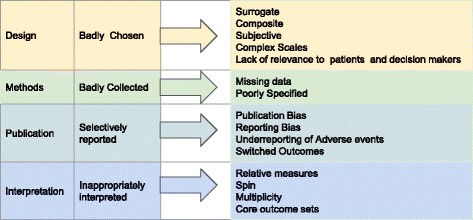
Clinical research should ultimately improve patient care. For this to be possible, trials must evaluate outcomes that genuinely reflect real-world settings and concerns. However, many trials continue to measure and report outcomes that fall short of this clear requirement. We highlight problems with trial outcomes that make evidence difficult or impossible to interpret and that undermine the translation of research into practice and policy. These complex issues include the use of surrogate, composite and subjective endpoints; a failure to take account of patients' perspectives when designing research outcomes; publication and other outcome reporting biases, including the under-reporting of adverse events; the reporting of relative measures at the expense of more informative absolute outcomes; misleading reporting; multiplicity of outcomes; and a lack of core outcome sets. Trial outcomes can be developed with patients in mind, however, and can be reported completely, transparently and competently. Clinicians, patients, researchers and those who pay for health services are entitled to demand reliable evidence demonstrating whether interventions improve patient-relevant clinical outcomes.
Overview
The claims and statistics of this paper haven’t been checked yet.
Free: it reads the open-access text and checks the first 5 claims that cite a source we can check. Create a free account to check every claim.
Integrity signals
Registry
Cites
Statistics
Figures
Verification
Claims the paper makes
The claims and statistics of this paper haven’t been checked yet.
Free: it reads the open-access text and checks the first 5 claims that cite a source we can check. Create a free account to check every claim.
Claims other papers make about this one
Each is checked against this paper’s own text: does it say what the citing paper says it does?
The source backs part of the claim, not all of it — or backs it for a different population, condition or comparison.
In the citing paper
“However, despite increasing attention to the quality of clinical trial reporting [19–21] and generics use in science [15,17,18], it remains unclear to what extent medical researchers produce hasty generalizations, how impactful articles with such generalizations are, and whether the generalizations in primary research articles differ in their scope (e.g., generics use) from those found in research”
From Hasty generalizations and generics in medical research: A systematic review (2024) · cites this paper as [19]
Experimental — accuracy not yet measuredThe source backs part of the claim, not all of it — or backs it for a different population, condition or comparison.
In the citing paper
“An unfortunate consequence of group studies such as the Evans et al. (2017) trial is that mean outcome scores on nomothetic measures obscures both the responsivity (or not) of individuals and also whether the idiosyncratic problems brought by patients to therapy actually change (Heneghan et al., 2017).”
From Effectiveness of cognitive analytic therapy for bipolar affective disorder: A co‐produced single subject cumulative treatment design with extended follow‐up (A 1 /B/A 2 /C‐FU) (2022) · cites this paper as Heneghan et al., 2017
Experimental — accuracy not yet measuredThe check wasn’t confident either way, so it gives no verdict — never disputed.
In the citing paper
“Firstly, in the pursuit of optimal treatment outcomes, clinical exercise trials often invest a level of resources, such as staff time, facilities and other support, that can facilitate patient engagement and overcome key barriers to patient adherence.”
From Identifying the factors affecting ‘patient engagement’ in exercise rehabilitation (2022) · cites this paper as [11]
Experimental — accuracy not yet measuredIn the citing paper
“If medical researchers make claims that are broader than warranted by the evidence or that mask variations, and if articles with such claims are impactful and summarized for practitioners without adjustments in generalization scope, this may contribute to regulatory approval or clinical use of treatments that are ineffective or harmful for people [3,19].”
From Hasty generalizations and generics in medical research: A systematic review (2024) · cites this paper as [19]
In the citing paper
“Secondly, the volunteers for clinical trials are likely to have a vested interest in the exercise activity, a belief in its efficacy, and be positively motivated to engage, as well as the time and resources to commit to the programme/clinical trial—characteristics that are not universal in the wider patient population.”
From Identifying the factors affecting ‘patient engagement’ in exercise rehabilitation (2022) · cites this paper as [11]
1 more claim about this paper
Create a free account to see every claim other papers make about this one.
Self-check
Percentages, sums and reported differences re-computed from the paper’s own numbers.
The self-check needs the paper’s full text.
Citations
Cites
CONSORT 2010 Statement: updated guidelines for reporting parallel group randomised trials
the CONSORT Group, Schulz, K. F., Altman, D. G., & Moher, D. (2010) · BMC Medicine · doi:10.1186/1741-7015-8-18 · Cited by 13,371
CONSORT 2010 Statement: updated guidelines for reporting parallel group randomised trials
Schulz, K. F., Altman, D. G., Moher, D., & for the CONSORT Group (2010) · BMJ · doi:10.1136/bmj.c332 · Cited by 9,329
Wood, L., Egger, M., Gluud, L. L., Schulz, K. F., Jüni, P., Altman, D. G., Gluud, C., Martin, R. M., Wood, A. J. G., & Sterne, J. A. C. (2008) · BMJ · doi:10.1136/bmj.39465.451748.ad · Cited by 2,538 · cited 1×
“, when outcome assessors are not blinded) [17, 18].”
BackgroundThe prevention and handling of the missing data
Kang, H. (2013) · Korean Journal of Anesthesiology · doi:10.4097/kjae.2013.64.5.402 · Cited by 1,728 · cited 1×
“Despite the development of a number of different ways of handling missing data, the only real solution is to prevent it from happening in the first place [36].”
BackgroundDeveloping core outcome sets for clinical trials: issues to consider
Williamson, P. R., Altman, D. G., Blazeby, J. M., Clarke, M., Devane, D., Gargon, E., & Tugwell, P. (2012) · Trials · doi:10.1186/1745-6215-13-132 · Cited by 1,661 · cited 1×
“Standardised core outcome sets take account of patient preferences that should be measured and reported in all trials for a specific therapeutic area [65].”
BackgroundKirkham, J. J., Dwan, K. M., Altman, D. G., Gamble, C., Dodd, S., Smyth, R., & Williamson, P. R. (2010) · BMJ · doi:10.1136/bmj.c365 · Cited by 1,133 · cited 1×
“Authors of a review of 283 Cochrane reviews found that more than half did not include data on the primary outcome [43].”
BackgroundDissemination and publication of research findings: an updated review of related biases
Song, F., Parekh, Hooper, L., Loke, Y., Ryder, J., Sutton, A., Hing, C., Kwok, C., Pang, C., & Harvey, I. (2010) · Health Technology Assessment · doi:10.3310/hta14080 · Cited by 1,039 · cited 1×
“approved trials, half go unpublished [38], and trials with positive outcomes are twice as likely to be published, and published faster, compared with trials with negative outcomes [39, 40].”
BackgroundPublication bias in clinical trials due to statistical significance or direction of trial results
Hopewell, S., Loudon, K., Clarke, M. J., Oxman, A. D., & Dickersin, K. (2009) · Cochrane Database of Systematic Reviews · doi:10.1002/14651858.mr000006.pub3 · Cited by 898 · cited 1×
“approved trials, half go unpublished [38], and trials with positive outcomes are twice as likely to be published, and published faster, compared with trials with negative outcomes [39, 40].”
BackgroundMarshall, M., Lockwood, A., Bradley, C., Adams, C., Joy, C., & Fenton, M. (2000) · British Journal of Psychiatry · doi:10.1192/bjp.176.3.249 · Cited by 870
Cited by
Fogel, D. B. (2018) · Contemporary Clinical Trials Communications · doi:10.1016/j.conctc.2018.08.001 · Cited by 1,035
Long-term (10-year) dental implant survival: A systematic review and sensitivity meta-analysis
Howe, M.-S., Keys, W., & Richards, D. (2019) · Journal of Dentistry · doi:10.1016/j.jdent.2019.03.008 · Cited by 555
Pound, P., & Ritskes-Hoitinga, M. (2018) · Journal of Translational Medicine · doi:10.1186/s12967-018-1678-1 · Cited by 419
Brennan, N. A., Toubouti, Y. M., Cheng, X., & Bullimore, M. A. (2021) · Progress in Retinal and Eye Research · doi:10.1016/j.preteyeres.2020.100923 · Cited by 355
“Numerous authors in other fields emphasise pitfalls in reporting treatment data as a relative effect (Faraone, 2008; King et al., 2012; Agarwal et al., 2017; Heneghan et al., 2017).”
BackgroundRecent clinical trends in Toll‐like receptor targeting therapeutics
Anwar, M. A., Shah, M., Kim, J., & Choi, S. (2019) · Medicinal Research Reviews · doi:10.1002/med.21553 · Cited by 275
“It is hard to give a single reason for any failure and failures may encompass complex issues, such as the use of subjective, composite, or surrogate endpoints.(165) Moreover, biases in outcome reporting and publications; underreporting of adverse events; failure to select an appropriate patient group; preference for r…”
BackgroundThe reproducibility of research and the misinterpretation of p -values
Colquhoun, D. (2017) · Royal Society Open Science · doi:10.1098/rsos.171085 · Cited by 256
Core outcomes in neonatology: development of a core outcome set for neonatal research
Webbe, J. W. H., Duffy, J. M. N., Afonso, E., Al-Muzaffar, I., Brunton, G., Greenough, A., Hall, N. J., Knight, M., Latour, J. M., Lee-Davey, C., et al. (2020) · Archives of Disease in Childhood - Fetal and Neonatal Edition · doi:10.1136/archdischild-2019-317501 · Cited by 235
“Heterogeneity of measures and time points is a known barrier to evidence synthesis (12).”
BackgroundMadden, M., & Speed, E. (2017) · Frontiers in Sociology · doi:10.3389/fsoc.2017.00007 · Cited by 204
“If the aim of clinical research is to improve patient care, clinical trials should evaluate the outcomes that most relect real-world settings and concerns (Heneghan et al., 2017).”
BackgroundMorel, T., & Cano, S. J. (2017) · Orphanet Journal of Rare Diseases · doi:10.1186/s13023-017-0718-x · Cited by 194
“laboratory measures, organ size) that may not reflect treatment benefits that patients value [1].”
BackgroundMethodPressler, R., Abend, N. S., Auvin, S., Boylan, G. B., Brigo, F., Cilio, M. R., de Vries, L. S., Elia, M., Espeche, A., Hahn, C. D., et al. (2023) · Epilepsia · doi:10.1111/epi.17745 · Cited by 227
“92,93 It is well established that the accuracy and validity of seizure outcome measures in drug trials are questionable if EEG is not used, including treating nonseizure events, underestimating total electrographic seizure burden, and lack of ability to assess whether electrographic-only seizures…”
Routinely collected data for randomized trials: promises, barriers, and implications
Mc Cord, K. A., Al-Shahi Salman, R., Treweek, S., Gardner, H., Strech, D., Whiteley, W., Ioannidis, J. P. A., & Hemkens, L. G. (2018) · Trials · doi:10.1186/s13063-017-2394-5 · Cited by 148
“Such RCTs could provide insight in situations where surrogate or combined outcomes are often used for convenience or safety reasons but are considered subpar [22, 23].”
BackgroundA systematic review finds Core Outcome Set uptake varies widely across different areas of health
Hughes, K. L., Clarke, M., & Williamson, P. R. (2021) · Journal of Clinical Epidemiology · doi:10.1016/j.jclinepi.2020.09.029 · Cited by 125
Bioactive Peptides: From Basic Research to Clinical Trials and Commercialization
Duffuler, P., Bhullar, K. S., Zani, S. C. D. C., & Wu, J. (2022) · Journal of Agricultural and Food Chemistry · doi:10.1021/acs.jafc.1c06289 · Cited by 121
Mortality trends in multiple myeloma after the introduction of novel therapies in the United States
Binder, M., Nandakumar, B. N., Rajkumar, S. V., Kapoor, P., Buadi, F. K., Dingli, D., Lacy, M. Q., Gertz, M. A., Hayman, S. R., Leung, N., et al. (2021) · Leukemia · doi:10.1038/s41375-021-01453-5 · Cited by 111
Identifying the factors affecting ‘patient engagement’ in exercise rehabilitation
Teo, J. L., Zheng, Z., & Bird, S. R. (2022) · BMC Sports Science, Medicine and Rehabilitation · doi:10.1186/s13102-022-00407-3 · Cited by 96
“The importance of applying an understanding of the factors affecting patient engagement are evident from the discrepancies between the benefits of exercise programs reported from clinical trials as compared to those attained when such programs are delivered in mainstream healthcare settings [11].”
ResultReal-world effectiveness and tolerability of erenumab: A retrospective cohort study
Kanaan, S., Hettie, G., Loder, E., & Burch, R. C. (2020) · Cephalalgia · doi:10.1177/0333102420946725 · Cited by 100
“This difference can be due to many factors that apply to clinical trials but not to day-to-day practice, including the vigilant tracking of headache days in clinical trials, small sample size, study design and outcomes reported, short duration of treatment, and the strict patient selection criteria, which may lead to…”
BackgroundVink, M., & Vink-Niese, A. (2020) · Healthcare · doi:10.3390/healthcare8040552 · Cited by 87
“refer to this type of reporting as a typical example of “outcome reporting bias,” which “occurs when a study has been published, but some of the outcomes measured and analysed have not been reported,” which “significantly affects the validity” of a study [46].”
BackgroundIneichen, B. V., Furrer, E., Grüninger, S., Zürrer, W. E., & Macleod, M. R. (2024) · PLoS Biology · doi:10.1371/journal.pbio.3002667 · Cited by 127
Use of core outcome sets was low in clinical trials published in major medical journals
Matvienko‐Sikar, K., AVERY, K. N. L., Blazeby, J. M., Devane, D., Dodd, S. R., Egan, A. M., Gorst, S. L., Hughes, K., Jacobsen, P. C., Kirkham, J. J., et al. (2021) · Journal of Clinical Epidemiology · doi:10.1016/j.jclinepi.2021.10.012 · Cited by 88
Allosteric TYK2 inhibition: redefining autoimmune disease therapy beyond JAK1-3 inhibitors
Jensen, L. T., Attfield, K. E., Feldmann, M., & Fugger, L. H. (2023) · EBioMedicine · doi:10.1016/j.ebiom.2023.104840 · Cited by 92
Davis, K., Minckas, N., Bond, V., Clark, C. J., Colbourn, T., Drabble, S. J., Hesketh, T., Hill, Z., Morrison, J., Mweemba, O., et al. (2019) · Trials · doi:10.1186/s13063-019-3439-8 · Cited by 80
Hellwig, K., Tokic, M. C., Thiel, S., Esters, N., Spicher, C., Timmesfeld, N., Ciplea, A. I., Gold, R., & Langer-Gould, A. M. (2022) · JAMA Network Open · doi:10.1001/jamanetworkopen.2021.44750 · Cited by 75
Randomized clinical trials with run-in periods: frequency, characteristics and reporting
Laursen, D. R. T., Paludan-Müller, A. S., & Hróbjartsson, A. (2019) · Clinical Epidemiology · doi:10.2147/clep.s188752 · Cited by 66
“A previous review has studied the impact of the placebo run-in Table 1 General characteristics of randomized clinical trials with and without run-in periodsa Characteristic Trials reporting a run-in period (n=25) Trials not reporting a run-in period (n=100) P-value Number of randomized patientsb 217 (133-502) 90 (46-3…”
MethodBishop, K. I., Isquith, P. K., Gioia, G. A., Gammaitoni, A. R., Farfel, G., Galer, B. S., Nabbout, R., Wirrell, E. C., Polster, T., & Sullivan, J. (2021) · Epilepsy & Behavior · doi:10.1016/j.yebeh.2021.108024 · Cited by 62
“Limitations of the present study include lack of a matching control group and inclusion of multiple exploratory analyses (increasing the chance of false-positive results or Type 1 errors) [60].”
McKeen, D. M., Banfield, J. C., McIsaac, D. I., McVicar, J. A., McGavin, C., Earle, M. A., Ward, C., Burns, K. K., Penner, D., Blaise, G. A., et al. (2020) · Canadian Journal of Anesthesia/Journal canadien d anesthésie · doi:10.1007/s12630-020-01607-6 · Cited by 58
Butcher, N. J., Monsour, A., Mew, E. J., Szatmari, P., Pierro, A., Kelly, L. E., Farid-Kapadia, M., Chee-a-tow, A., Saeed, L., Monga, S., et al. (2019) · Trials · doi:10.1186/s13063-019-3248-0 · Cited by 57
Predictors of response to erenumab after 12 months of treatment
Baraldi, C., Castro, F. L., Cainazzo, M. M., Pani, L., & Guérzoni, S. (2021) · Brain and Behavior · doi:10.1002/brb3.2260 · Cited by 50
“Additionally, the long-term safety of erenumab among CM sufferers was primarily explored in randomized controlled trials (RCTs) (Tepper et al., 2020) with restrictive inclusion criteria, thus risking to not “mirror” the population treated in reallife settings (Heneghan et al., 2017).”
BackgroundAjakwe, S. O., Nwakanma, C. I., Kim, D., & Lee, J. (2022) · IEEE Access · doi:10.1109/access.2022.3173643 · Cited by 68
Mental Health Apps in Psychiatric Treatment: A Patient Perspective on Real World Technology Usage
Chiauzzi, E., & Newell, A. (2019) · JMIR Mental Health · doi:10.2196/12292 · Cited by 46
“Crowdsourced sites like PatientsLikeMe [58] and Iodine (Table 1 then supplement the medical view with real-world reports from patients, which is important, because clinical trials often fail to take into account patients’viewpoints when designing research outcomes [59].”
Crudgington, H., Rogers, M., Bray, L., Carter, B., Currier, J., Dunkley, C., Gibbon, F. M., Hughes, D. A., Lyle, S., Roberts, D., et al. (2019) · Epilepsia · doi:10.1111/epi.14735 · Cited by 50
Jain, A. B., Kanters, S., Khurana, R., Kissock, J., Severin, N., & Stafford, S. G. (2021) · Diabetes Therapy · doi:10.1007/s13300-020-00984-x · Cited by 47
Treweek, S. P., Miyakoda, V., Burke, D., & Shiely, F. (2022) · Trials · doi:10.1186/s13063-022-06348-z · Cited by 47
“Too often, medical research falls short of this modest ideal [3].”
BackgroundWebbe, J., Brunton, G., Ali, S., Tibor, L. N., Modi, N., & Gale, C. P. (2018) · BMJ Paediatrics Open · doi:10.1136/bmjpo-2018-000343 · Cited by 49
“Neonatal care, and the underpinning research, should focus on outcomes important to those it affects most: former neonatal patients, parents and healthcare professionals.(9) 10 Identifying these outcomes is crucial to ensure research is relevant and efficient.”
Gorst, S. L., Young, B., Williamson, P. R., Wilding, J. P. H., & Harman, N. (2018) · BMJ Open Diabetes Research & Care · doi:10.1136/bmjdrc-2018-000615 · Cited by 49
Kapelios, C. J., Lainščak, M., Savarese, G., Laroche, C., Seferovic, P. M., Ruschitzka, F. T., Coats, A. J. S., Anker, S. D., Crespo-Leiro, M. G., Filippatos, G. S., et al. (2019) · European Journal of Heart Failure · doi:10.1002/ejhf.1532 · Cited by 50
Inconsistent outcome reporting in large neonatal trials: a systematic review
Webbe, J., Ali, S., Sakonidou, S., Webbe, T., Duffy, J. M., Brunton, G., Modi, N., & Gale, C. P. (2019) · Archives of Disease in Childhood Fetal & Neonatal · doi:10.1136/archdischild-2019-316823 · Cited by 44
“43”
Increasing value and reducing waste in stroke research
Berge, E., Salman, R. A.-S., van der Worp, H. B., Stapf, C., Sandercock, P., Sprigg, N., Macleod, M. R., Kelly, P. J., Nederkoorn, P. J., Ford, G. A., et al. (2017) · The Lancet Neurology · doi:10.1016/s1474-4422(17)30078-9 · Cited by 41
Beta-blockers for suspected or diagnosed acute myocardial infarction
Safi, S., Sethi, N. J., Nielsen, E. E., Feinberg, J. B., Gluud, C. N., & Jakobsen, J. C. (2019) · Cochrane Database of Systematic Reviews · doi:10.1002/14651858.cd012484.pub2 · Cited by 49
Kam, N., Perera, K., Zomer, E., Liew, D., & Ademi, Z. (2020) · PharmacoEconomics · doi:10.1007/s40273-020-00948-w · Cited by 46
Cacciatore, G., Ugolini, A., Sforza, C., Gbinigie, O. A., & Plüddemann, A. (2019) · PLoS ONE · doi:10.1371/journal.pone.0221624 · Cited by 47
Sautenet, B., Tong, A., Chapman, J. R., Warrens, A. Ν., Rosenbloom, D., Wong, G., Gill, J., Budde, K., Rostaing, L. P. E., Marson, L., et al. (2018) · Transplantation · doi:10.1097/tp.0000000000002278 · Cited by 45
Contesse, M. G., Valentine, J. E., Wall, T. E., & Leffler, M. G. (2019) · Advances in Therapy · doi:10.1007/s12325-019-00920-x · Cited by 39
“In addition to the potential lack of sensitivity, borrowed outcome measures may not reflect the most relevant or important patient experiences during the trial [12, 13] or take into account other comorbidities that can confound the assessment of the disease [14, 15].”
BackgroundVink, M., & Vink-Niese, A. (2018) · Health Psychology Open · doi:10.1177/2055102918805187 · Cited by 52
“Not publishing results jeopardises the validity of a study (Heneghan et al., 2017).”
BackgroundAsmar, M. L. E., Dharmayat, K., Vallejo‐Vaz, A. J., Irwin, R., & Mastellos, N. (2021) · BMJ Open · doi:10.1136/bmjopen-2021-054659 · Cited by 42
“Nine common chronic diseases were included in the syntax.”
BackgroundMeasurement of patient-reported outcomes. 2: Are current measures failing us?
McKenna, S. P., Heaney, A., & Wilburn, J. N. (2018) · Journal of Medical Economics · doi:10.1080/13696998.2018.1560304 · Cited by 37
Acetyl-L-carnitine for patients with hepatic encephalopathy
Martí-Carvajal, A. J., Gluud, C. N., Arévalo-Rodríguez, I., & Martí-Amarista, C. E. (2019) · Cochrane Database of Systematic Reviews · doi:10.1002/14651858.cd011451.pub2 · Cited by 43
Levin, L. A., Patrick, C., Choudry, N. B., Sharif, N. A., & Goldberg, J. L. (2022) · Frontiers in Neurology · doi:10.3389/fneur.2022.964197 · Cited by 41
Krittanawong, C., Johnson, K. W., & Tang, W. H. W. (2019) · Personalized Medicine · doi:10.2217/pme-2018-0130 · Cited by 43
Gaps and priorities in advancing methods for health behaviour change research
Byrne, M. (2020) · Health Psychology Review · doi:10.1080/17437199.2019.1707106 · Cited by 36
Payne, J. M., Walsh, K. S., Pride, N. A., Haebich, K. M., Maier, A., Chisholm, A. K., Glad, D. M., Casnar, C. L., Rouel, M., Lorenzo, J., et al. (2020) · Developmental Medicine & Child Neurology · doi:10.1111/dmcn.14517 · Cited by 38
“capturing a high base rate of deficits), and be able to capture meaningful clinical improvement that genuinely reflect real-world problems and concerns.(15) These issues are especially relevant for cognitive and behavioural outcomes in clinical samples such as NF1, where study measures may be particularly unreliable,(…”
BackgroundAramburú, A., Alvarado‐Gamarra, G., Cornejo, R., Curi-Quinto, K., Díaz-Parra, C. D. P., Rojas-Limache, G., & Lanata, C. F. (2024) · Frontiers in Nutrition · doi:10.3389/fnut.2024.1421728 · Cited by 48
Leake, H. B., Mardon, A. K., Stanton, T. R., Harvie, D. S., Butler, D. S., Karran, E. L., Wilson, D., Booth, J., Barker, T., Wood, P., et al. (2022) · Journal of Pain · doi:10.1016/j.jpain.2022.07.008 · Cited by 35
Stein, D. J., Kazdin, A. E., Ruscio, A. M., Chiu, W. T., Sampson, N. A., Ziobrowski, H. N., Aguilar-Gaxiola, S., Al-Hamzawi, A., Alonso, J., Altwaijri, Y., et al. (2021) · BMC Psychiatry · doi:10.1186/s12888-021-03363-3 · Cited by 31
Beyond Participation: Evaluating the Role of Patients in Designing Oncology Clinical Trials
Farah, E., Kenney, M., Kica, A., Haddad, P., Stewart, D. J., & Bradford, J. (2023) · Current Oncology · doi:10.3390/curroncol30090603 · Cited by 32
“Their findings accelerate the discovery and validation of novel interventions, thereby directly influencing the health outcomes and quality of life of countless patients worldwide [2].”
BackgroundIncome level and inequality as complement to geographical differences in cardiovascular trials
Ferreira, J. P., Rossignol, P., Dewan, P., Lamiral, Z., White, W. B., Pitt, B., McMurray, J. J. V., & Zannad, F. M. (2019) · American Heart Journal · doi:10.1016/j.ahj.2019.08.019 · Cited by 32
Vink, M., & Vink-Niese, F. (2020) · Work · doi:10.3233/wor-203174 · Cited by 35
“The FINE trial’s only objective (secondary) outcome measure (step test) was omitted from the 2010 paper, even though not publishing results jeopardizes the validity of a study [32].”
Fish, R., MacLennan, S., Alkhaffaf, B. H., & Williamson, P. R. (2020) · Journal of Clinical Epidemiology · doi:10.1016/j.jclinepi.2020.09.028 · Cited by 32
Karumbi, J., Gorst, S. L., Gathara, D., Gargon, E., Young, B., & Williamson, P. R. (2021) · BMJ Open · doi:10.1136/bmjopen-2021-049981 · Cited by 27
Patient-Centered Core Impact Sets: What They are and Why We Need Them
Perfetto, E. M., Oehrlein, E. M., Love, T. R., Schoch, S. C., Kennedy, A., & Bright, J. L. (2022) · Patient · doi:10.1007/s40271-022-00583-x · Cited by 28
Herrera‐Gómez, F., del Aguila, W., Pedregosa, A. T., Adler, M., Padilla-Berdugo, R., Maurtua-Briseño-Meiggs, Á., Pascual, J., Pascual, M. A., Segundo, D. S., Heidt, S., et al. (2018) · International Immunopharmacology · doi:10.1016/j.intimp.2018.10.028 · Cited by 35
Vink, M., & Vink-Niese, A. (2019) · Health Psychology Open · doi:10.1177/2055102919840614 · Cited by 37
“The only objective secondary outcome measure (step test) was omitted from the 2010 paper even though not publishing results jeopardises the validity of a study (Heneghan et al., 2017).”
BackgroundHessl, D. R., Harvey, D. J., Sansone, S. M., Crestodina, C., Chin, J. A., Joshi, R., Hagerman, R. J., & Berry‐Kravis, E. (2019) · PLoS ONE · doi:10.1371/journal.pone.0209984 · Cited by 27
Patients’ access to rare neuromuscular disease therapies varies across US private insurers
Margaretos, N. M., Bawa, K., Engmann, N. J., & Chambers, J. D. (2022) · Orphanet Journal of Rare Diseases · doi:10.1186/s13023-022-02182-3 · Cited by 26
“However, reflecting these inclusion criteria in a product’s coverage policy can be problematic [23].”
BackgroundHall, D. A., Ray, J., Watson, J., Sharman, A., Hutchison, J., Harris, P. A., Daniel, M., Millar, B., & Large, C. H. (2019) · Hearing Research · doi:10.1016/j.heares.2019.03.018 · Cited by 28
“Indeed, it has been claimed that relatively few trials make a meaningful contribution to patient care, often as a result of the way that the trial outcomes are chosen, collected and reported (Heneghan et al., 2017).”
BackgroundElliott, M. H., Skydel, J. J., Dhruva, S. S., Ross, J. S., & Wallach, J. D. (2020) · JAMA Internal Medicine · doi:10.1001/jamainternmed.2020.4799 · Cited by 28
The Social Value Misconception in Clinical Research
Earl, J., Dawson, L., & Rid, A. (2024) · The American Journal of Bioethics · doi:10.1080/15265161.2024.2371119 · Cited by 27
“For instance, another participant in the statin trial might have realistic beliefs about the drug’s potential benefits, but falsely believe the trial will collect enough follow-up data from participants to provide clinically meaningful results (Heneghan, Goldacre, and Mahtani 2017).”
Wang, H., Jin, H., Cheng, W., Qin, X., Luo, Y., Liu, X., Fu, Y., Jiang, G., Lu, W., Jin, C., et al. (2021) · Annals of Translational Medicine · doi:10.21037/atm-21-1100 · Cited by 26
“is a retrospective cohort study whilst the HD/HP trial is a randomized trial, and it has been reported that patients participating in trials experienced better outcomes compared with those outside trials (36,37).”
ResultKyriazakos, S. A., Pnevmatikakis, A., Cesario, A., Kostopoulou, K., Boldrini, L., Valentini, V., & Scambia, G. (2021) · Frontiers in Digital Health · doi:10.3389/fdgth.2021.648190 · Cited by 25
Vanderhout, S. M., Nevins, P., Nicholls, S. G., Macarthur, C., Brehaut, J. C., Potter, B. K., Gillies, K., Goulão, B., Smith, M., Hilderley, A. J., et al. (2023) · CMAJ Open · doi:10.9778/cmajo.20220198 · Cited by 24
“27 Given that PPI aligns with the intention of pragmatic trials to produce patient-relevant evidence, 7,8 it is not surprising that trials self-identifying as pragmatic (i.e., trials in which authors were so confident about the degree of pragmatism in their trial that they were willing to…”
Fish, R., Sanders, C., Ryan, N. A. J., van der Veer, S. N., Renehan, A. G., & Williamson, P. R. (2018) · Colorectal Disease · doi:10.1111/codi.14103 · Cited by 24
Li, G., Walter, S. D., & Thabane, L. (2021) · Journal of Clinical Epidemiology · doi:10.1016/j.jclinepi.2021.03.033 · Cited by 25
Cimiano, P., Collins, B., Vuono, M. C. D., Escudier, T., Gottowik, J., Härtung, M., Leddin, M., Neupane, B., Rodriguez‐Esteban, R., Schmidt, A. L., et al. (2024) · Frontiers in Medicine · doi:10.3389/fmed.2024.1274688 · Cited by 25
“…of systematic inclusion of patient voices in drug development is a missed opportunity with respect to the goal of developing treatments that truly improve patients’ lives, based on a systematic understanding of the challenges they face in their daily lives and the tradeoffs they are willing to…”
Saldanha, I. J., Lê, J. T., Solomon, S. D., Repka, M. X., Akpek, E. K., Li, T., Afshari, N. A., Ambrus, A., Asbell, P. A., Baudoin, C., et al. (2018) · Ophthalmology · doi:10.1016/j.ophtha.2018.09.008 · Cited by 24
Gerstein, M. T., Markus, A. R., Gianattasio, K. Z., Mons, C. L., Bartos, J., Stevens, D. M., & Mew, N. A. (2019) · Journal of Inherited Metabolic Disease · doi:10.1002/jimd.12209 · Cited by 22
Bridger, K., Këllezi, B., Kendrick, D., Radford, K., Timmons, S., Rennoldson, M., Jones, T. M., Kettlewell, J., & on behalf of the ROWTATE Team (2021) · International Journal of Environmental Research and Public Health · doi:10.3390/ijerph18042035 · Cited by 28
Jolles, S. R. A., Giralt, S., Kerre, T. C. C., Lazarus, H. M., Mustafa, S. S., Ria, R., & Vinh, D. C. (2023) · Frontiers in Oncology · doi:10.3389/fonc.2023.1098326 · Cited by 28
on behalf of the SCORE-IT study team, Harman, N., James, R., Wilding, J. P. H., & Williamson, P. R. (2017) · Trials · doi:10.1186/s13063-017-2317-5 · Cited by 23
“The heterogeneity in the outcomes used may impact on the translatability of trials into benefits for patients [9, 10].”
BackgroundPathak, S., Main, B., Blencowe, N., Rees, J. R. E., Robertson, H., Abbadi, R. A.-G., & Blazeby, J. M. (2020) · Annals of Surgery · doi:10.1097/sla.0000000000003748 · Cited by 22
“In addition, surgeons may under-report adverse events and are overly optimistic about innovation.(16) The complexity of surgery (eg, surgeon and team expertise, variations in pre- and postoperative management, and variations in outcome reporting) poses challenges for rigorously evaluating new procedures.”
BackgroundPragmatic Patient Engagement in Designing Pragmatic Oncology Clinical Trials
Davies-Teye, B. B. K., Medeiros, M., Chauhan, C., Baquet, C. R., & Mullins, C. D. (2021) · Future Oncology · doi:10.2217/fon-2021-0556 · Cited by 25
Dawson, M., & Fletcher‐Watson, S. (2021) · Journal of Child Psychology and Psychiatry · doi:10.1111/jcpp.13315 · Cited by 21
Vanderhout, S. M., Smith, M., Pallone, N., Tingley, K., Pugliese, M., Chakraborty, P. K., Stöckler, S., Offringa, M., Butcher, N. J., Nicholls, S. G., et al. (2021) · Research Involvement and Engagement · doi:10.1186/s40900-021-00304-y · Cited by 22
“COS have value for research on rare diseases due to limited patient populations and replication in research [4, 5].”
BackgroundMaking the leap: From experimental psychopathology to clinical trials
Blackwell, S. E., & Woud, M. L. (2022) · Journal of Experimental Psychopathology · doi:10.1177/20438087221080075 · Cited by 21
“Heneghan et al., 2017). That is, observing an effect on the intermediate or surrogate outcome does not allow the conclusion that the intervention does in fact have an impact on the ultimate clinical outcome. However, if the results of initial trials on such intermediate outcomes look promising, this may then justify (…”
BackgroundBeck, A., Hamel, C., Thuku, M., Esmaeilisaraji, L., Bennett, A., Shaver, N., Skidmore, B., Colman, I., Grigoriadis, S., Nicholls, S. G., et al. (2022) · Systematic Reviews · doi:10.1186/s13643-022-02022-2 · Cited by 27
“Lastly, outcome switching, the failure to report pre-specified outcomes without justification, was commonly observed among research articles [66, 67] and can present problems in interpreting results.”
BackgroundKowalski, C. P., Kawentel, L. M., Kyriakides, T. C., Davis, L. L., Bowersox, N. W., Kilbourne, A. M., Huang, G. D., & Nevedal, A. (2022) · Journal of Clinical and Translational Science · doi:10.1017/cts.2022.467 · Cited by 23
Anti-seizure medications for neonates with seizures
Abiramalatha, T., Thanigainathan, S., Ramaswamy, V. V., Pressler, R., Brigo, F., & Hartmann, H. (2023) · Cochrane Database of Systematic Reviews · doi:10.1002/14651858.cd014967.pub2 · Cited by 31
Elhage, A., Cohen, S., Cummings, J. L., van der Flier, W. M., Aisen, P. S. S., Cho, M., Bell, J., & Hampel, H. J. (2024) · Alzheimer s & Dementia · doi:10.1002/alz.14425 · Cited by 23
“68 MCID approaches are particularly difficult to apply to DMTs where treatment/no treatment differences are increasing over time, and where patients who do not meet the MCID at one time point may meet or exceed the MCID later.”
Melas, M., Subbiah, S. P., Saadat, S., Rajurkar, S. P., & McDonnell, K. (2020) · Journal of Clinical Medicine · doi:10.3390/jcm9072125 · Cited by 27
Study designs in medical research and their key characteristics
Nowak, J. (2024) · Journal of Medical Science · doi:10.20883/medical.e928 · Cited by 32
MacEwan, J. P., Doctor, J. N., Mulligan, K., May, S. G., Batt, K., Zacker, C., Lakdawalla, D., & Goldman, D. P. (2019) · MDM Policy & Practice · doi:10.1177/2381468319855386 · Cited by 23
“Clinical trials that focus only on prolonged longevity will likely fail to capture attributes of treatment that are important to these populations.(50)”
BackgroundAwenat, Y. F., Peters, S., Gooding, P. A., Pratt, D., Huggett, C., Harris, K., Armitage, C. J., & Haddock, G. (2019) · PLoS ONE · doi:10.1371/journal.pone.0222482 · Cited by 22
“For example, research samples may be too homogenous [25]; manualised protocols used in trials may not be applicable to everyday settings [26]; and statistical significance may not equate to clinical significance [27].”
BackgroundOlson, N. L., & Albensi, B. C. (2020) · Journal of Alzheimer s Disease Reports · doi:10.3233/adr-200214 · Cited by 21
“stated that there is a “lack of relevance to patients and decision-makers” and that in 57 drug trials for AD, less than half (46%) discussed the clinical significance of the results [52].”
BackgroundBleakley, C., Matthews, M., & Smoliga, J. M. (2020) · Journal of sport and health science/Journal of Sport and Health Science · doi:10.1016/j.jshs.2020.11.002 · Cited by 20
“Having access to high volumes of experimental research should improve the quality of healthcare, but there is much concern that many clinical trial outcomes are either false(17,18) or they fail to translate into clinical benefits for patients.(19) False discovery in science (e.”
BackgroundMorris, C., Dunkley, C., Gibbon, F. M., Currier, J., Roberts, D., Rogers, M., Crudgington, H., Bray, L., Carter, B., Hughes, D. A., et al. (2017) · Trials · doi:10.1186/s13063-017-2323-7 · Cited by 18
“The variety of outcomes assessed and different ways outcomes are measured, as well as the variable quality of outcome measures, are a barrier to integrating findings from studies, hence we need to ascertain a core set of more important outcomes that matter to families [11].”
BackgroundMaissan, F., Pool, J. J. M., de Raaij, E. J., Mollema, J., Ostelo, R., & Wittink, H. M. (2018) · Musculoskeletal Science and Practice · doi:10.1016/j.msksp.2018.01.011 · Cited by 26
Eos and OMOCL: Towards a seamless integration of openEHR records into the OMOP Common Data Model
Kohler, S., Boscá, D., Kärcher, F., Haarbrandt, B., Prinz, M., Marschollek, M., & Eils, R. (2023) · Journal of Biomedical Informatics · doi:10.1016/j.jbi.2023.104437 · Cited by 24
Millar, J. D., van Wijck, F., Pollock, A., & Ali, M. (2021) · European Journal of Physical and Rehabilitation Medicine · doi:10.23736/s1973-9087.20.06575-2 · Cited by 26
Validation of Scratching Severity as an Objective Assessment for Itch
Udkoff, J., & Silverberg, J. I. (2017) · Journal of Investigative Dermatology · doi:10.1016/j.jid.2017.11.028 · Cited by 17
“Journal of Investigative Dermatology (2018), Volume 138 a 2017 The A particularly sensitive to biases (Heneghan et al., 2017).”
BackgroundDeveloping an integrated strategy for evidence generation
Olson, M. S. (2017) · Journal of Comparative Effectiveness Research · doi:10.2217/cer-2017-0073 · Cited by 17
Better science for safer medicines: the human imperative
Archibald, K., Tsaioun, K., Kenna, J. G., & Pound, P. (2018) · Journal of the Royal Society of Medicine · doi:10.1177/0141076818812783 · Cited by 20
“Clinical trials also need to be longer, larger and more diverse in order to pick up rare adverse drug reactions (which animal studies cannot predict(46)), and adverse drug reactions and deaths need to be properly reported.(47,48) Human-relevant technologies can address some of these issues through the use of human-der…”
BackgroundLee, K., Liu, Z. Z., Mai, Y., Jun, T. W., Ma, M., Wang, T., Ai, L., Calay, E. S., Oh, W. K., Stolovitzky, G. A., et al. (2024) · JMIR AI · doi:10.2196/50800 · Cited by 21
Metadata
- Authors
- Heneghan, C., Goldacre, B., & Mahtani, K. R.
- Affiliations
- University of Oxford (GB)
- Corresponding author
- Heneghan, Carl
- Venue
- Trials
- Published
- 2017-03-14
- Volume
- 18
- Issue
- 1
- Pages
- 122-122
- ISSN
- 1745-6215 (ISSN-L)
- PMC
- PMC5348914
- OpenAlex
- W2597385103
- Cited by
- 404
- References
- 67
- Citations by year
- 2026: 34 · 2025: 27 · 2024: 59 · 2023: 51 · 2022: 54 · 2021: 50 · 2020: 50 · 2019: 38 · 2018: 27 · 2017: 13
- FWCI
- 24.34
- Type
- journal article
- Language
- en
- Open access
- gold
- doi.org
- Licence
- cc-by
- Locations
- Trials (publishedVersion, cc-by)
- PubMed Central (publishedVersion, cc-by)
- PubMed (publishedVersion)
- Funders
- National Institute for Health and Care Research (CL-2011-13-006)
- Topics
- Physical Sciences › Mathematics › Statistics and Probability › Statistical Methods in Clinical Trials
- Social Sciences › Decision Sciences › Statistics, Probability and Uncertainty › Meta-analysis and systematic reviews
- Social Sciences › Sociology and Political Science › Delphi Technique in Research
- Keywords
- clinical trial results, outcome measurement, clinical translation, surrogate endpoints, composite endpoints, patient perspectives, selective reporting, core outcome set, clinical trial transparency, patient-relevant outcomes
- MeSH terms
- Clinical Trials as Topic, Data Interpretation, Statistical, Humans, Patient Participation, Research Design, Bias, Treatment Outcome, Publication Bias, Endpoint Determination
About these checks
Registry, retraction, Cites and statistics results are computed, not judged, with one exception: a printed reference that no index lists is read once by a model before it counts as a citation error. Claims are extracted by a model and kept only when their quote appears verbatim in the text; each cited source is then checked, with a model’s help, for whether it says what the claim relies on. Those verdicts can be wrong — read the claim’s quote and the cited source before relying on one.
Statistics and arithmetic are recomputed, not judged.
Confidence bands are shown only for fields calibrated on our annotated test set. None is calibrated yet, so no band is shown.
What counts as a claim ›How we measure confidence ›How we check this ›
Are you an author, or do you see a problem with this page? Request a review
Data sources
Bibliographic data: Semantic Scholar, OpenAlex, Crossref.
Contains information from the Semantic Scholar Academic Graph Datasets, made available under the ODC Attribution License (ODC-BY 1.0).
Semantic Scholar’s data is described in: Kinney, R., et al. (2023). The Semantic Scholar Open Data Platform. arXiv:2301.10140.
