

The Sweden Cancerome Analysis Network - Breast (SCAN-B) Initiative: a large-scale multicenter infrastructure towards implementation of breast cancer genomic analyses in the clinical routine
Open accessThe DOI matches its Crossref record; 46 of the 46 references it cites were found in a registry or an index.
Abstract
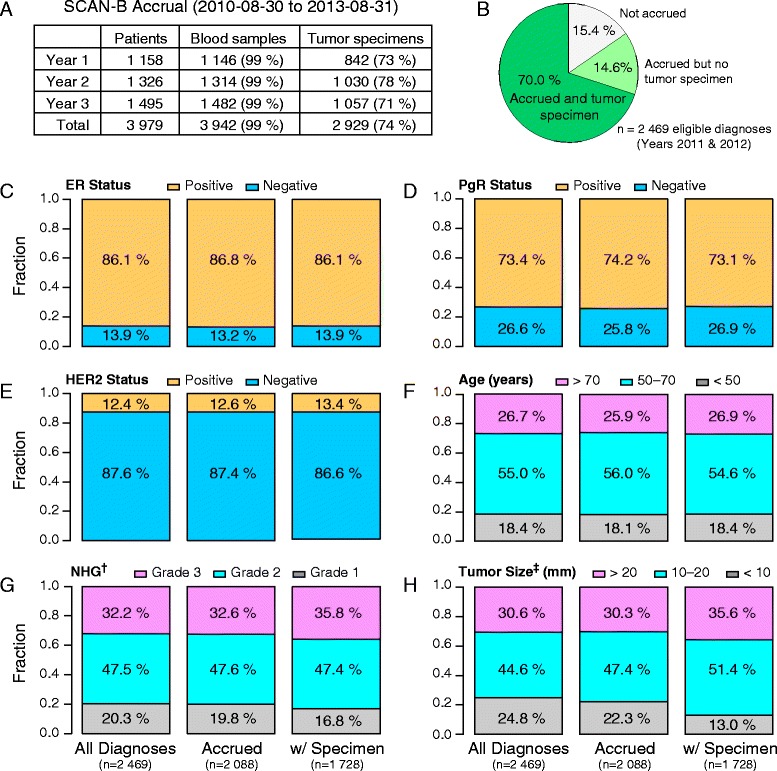
Background: Breast cancer exhibits significant molecular, pathological, and clinical heterogeneity. Current clinicopathological evaluation is imperfect for predicting outcome, which results in overtreatment for many patients, and for others, leads to death from recurrent disease. Therefore, additional criteria are needed to better personalize care and maximize treatment effectiveness and survival. Methods: To address these challenges, the Sweden Cancerome Analysis Network - Breast (SCAN-B) consortium was initiated in 2010 as a multicenter prospective study with longsighted aims to analyze breast cancers with next-generation genomic technologies for translational research in a population-based manner and integrated with healthcare; decipher fundamental tumor biology from these analyses; utilize genomic data to develop and validate new clinically-actionable biomarker assays; and establish real-time clinical implementation of molecular diagnostic, prognostic, and predictive tests. In the first phase, we focus on molecular profiling by next-generation RNA-sequencing on the Illumina platform. Results: In the first 3 years from 30 August 2010 through 31 August 2013, we have consented and enrolled 3,979 patients with primary breast cancer at the seven hospital sites in South Sweden, representing approximately 85% of eligible patients in the catchment area. Preoperative blood samples have been collected for 3,942 (99%) patients and primary tumor specimens collected for 2,929 (74%) patients. Herein we describe the study infrastructure and protocols and present initial proof of concept results from prospective RNA sequencing including tumor molecular subtyping and detection of driver gene mutations. Prospective patient enrollment is ongoing. Conclusions: We demonstrate that large-scale population-based collection and RNA-sequencing analysis of breast cancer is feasible. The SCAN-B Initiative should significantly reduce the time to discovery, validation, and clinical implementation of novel molecular diagnostic and predictive tests. We welcome the participation of additional comprehensive cancer treatment centers. Trial registration: ClinicalTrials.gov identifier NCT02306096.
Overview
The claims and statistics of this paper haven’t been checked yet.
Free: it reads the open-access text and checks the first 5 claims that cite a source we can check. Create a free account to check every claim.
Integrity signals
Registry
Cites
Statistics
Figures
Verification
Claims the paper makes
The claims and statistics of this paper haven’t been checked yet.
Free: it reads the open-access text and checks the first 5 claims that cite a source we can check. Create a free account to check every claim.
Claims other papers make about this one
Each is checked against this paper’s own text: does it say what the citing paper says it does?
The cited source says what the claim attributes to it.
In the citing paper
“SCAN-B fresh-tissue procurement is fully-integrated into routine clinical diagnostics across participating healthcare institutions5.”
From Whole-genome sequencing of triple-negative breast cancers in a population-based clinical study (2019) · cites this paper as [5]
The cited source says what the claim attributes to it.
In the citing paper
“340 of these patients were enrolled in the SCAN-B study5,33,34 (ClinicalTrials.gov ID NCT02306096), which is a prospective, observational, population-based cohort study, from which 254 with concurrent RNAseq were selected for extensive clinical review and WGS.”
From Whole-genome sequencing of triple-negative breast cancers in a population-based clinical study (2019) · cites this paper as [5]
In the citing paper
“The Sweden Cancerome Analysis Network – Breast (SCAN-B; ClinicalTrials.gov identifier NCT02306096)5 is an on-going population-based observational study currently involving nine hospitals in the South of Sweden serving nearly two million inhabitants or ~20% of the Swedish population.”
From Whole-genome sequencing of triple-negative breast cancers in a population-based clinical study (2019) · cites this paper as [5]
Self-check
Percentages, sums and reported differences re-computed from the paper’s own numbers.
The self-check needs the paper’s full text.
Citations
Cites
Fast gapped-read alignment with Bowtie 2
Langmead, B., & Salzberg, S. L. (2012) · Nature Methods · doi:10.1038/nmeth.1923 · Cited by 56,400 · cited 1×
“Each data set is filtered to remove reads that align (using Bowtie 2 [26] with default parameters except -k 1 –phred33 –local) to ribosomal RNA/DNA (GenBank loci NR_023363.”
PD-1 and PD-L1 Immune Checkpoint Blockade to Treat Breast Cancer
Hartkopf, A. D., Taran, F.-A., Wallwiener, M., Walter, C. B., Krämer, B., Grischke, E.-M., & Brucker, S. Y. (2016) · Breast Care · doi:10.1159/000453569 · Cited by 30,845
BEDTools: a flexible suite of utilities for comparing genomic features
Quinlan, A. R., & Hall, I. M. (2010) · Bioinformatics · doi:10.1093/bioinformatics/btq033 · Cited by 27,437
ANNOVAR: functional annotation of genetic variants from high-throughput sequencing data
Wang, K., Li, M., & Hakonarson, H. (2010) · Nucleic Acids Research · doi:10.1093/nar/gkq603 · Cited by 14,621 · cited 1×
“Variant calls were annotated using ANNOVAR [41] with the databases refGene, snp137NonFlagged, and cosmic65 from the ANNOVAR website; additional databases of SNVs and indels were created, tcgaBreast using data from the Level 2.”
Nishimura, R., Osako, T., Nishiyama, Y., Tashima, R., Nakano, M., Fujisue, M., Toyozumi, Y., & Arima, N. (2013) · Oncology · doi:10.1159/000353099 · Cited by 13,166
Kim, D., Pertea, G., Trapnell, C., Pimentel, H., Kelley, R., & Salzberg, S. L. (2013) · Genome Biology · doi:10.1186/gb-2013-14-4-r36 · Cited by 12,668 · cited 2×
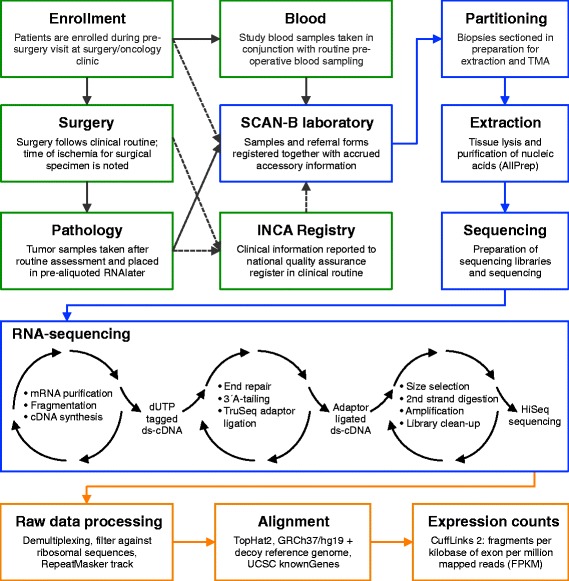
“The remaining reads are aligned using TopHat2 [27] to the human genome reference GRCh37/ hg19 (with b37 masked chromosome Y and hs37d5 decoy sequences) together with 80,884 transcript annotations from the UCSC knownGenes table (downloaded 10 September 2012).”
Comprehensive molecular portraits of human breast tumours
The Cancer Genome Atlas Network (2012) · Nature · doi:10.1038/nature11412 · Cited by 12,129
Trapnell, C., Roberts, A., Goff, L., Pertea, G., Kim, D., Kelley, D. R., Pimentel, H., Salzberg, S. L., Rinn, J. L., & Pachter, L. (2012) · Nature Protocols · doi:10.1038/nprot.2012.016 · Cited by 12,116 · cited 1×
“1 [28] is used to calculate expression levels, fragments per kilobase of exon per million mapped reads (FPKM), using default settings except –frag-biascorrect –multi-read-correct –library-type fr-firststrand –compatible-hits-norm.”
Gene expression profiling predicts clinical outcome of breast cancer
van 't Veer, L. J., Dai, H., van de Vijver, M. J., He, Y. D., Hart, A. A. M., Mao, M., Peterse, H. L., van der Kooy, K., Marton, M. J., Witteveen, A. T., et al. (2002) · Nature · doi:10.1038/415530a · Cited by 9,536 · cited 1×
“However, these assays are expensive (approximately €3,000 per test), and due to the fact that they were developed based on relatively small study populations (MammaPrint: 78 patients) [8] or only one subgroup of the disease (OncotypeDX: patients with estrogen-receptor-positive tumors with no involved lymph nodes and t…”
A Multigene Assay to Predict Recurrence of Tamoxifen-Treated, Node-Negative Breast Cancer
Paik, S., Shak, S., Tang, G., Kim, C., Baker, J., Cronin, M., Baehner, F. L., Walker, M. G., Watson, D., Park, T., et al. (2004) · New England Journal of Medicine · doi:10.1056/nejmoa041588 · Cited by 6,277 · cited 1×
“However, these assays are expensive (approximately €3,000 per test), and due to the fact that they were developed based on relatively small study populations (MammaPrint: 78 patients) [8] or only one subgroup of the disease (OncotypeDX: patients with estrogen-receptor-positive tumors with no involved lymph nodes and t…”
Repeated observation of breast tumor subtypes in independent gene expression data sets
Sørlie, T., Tibshirani, R., Parker, J., Hastie, T., Marron, J. S., Nobel, A., Deng, S., Johnsen, H., Pesich, R., Geisler, S., et al. (2003) · Proceedings of the National Academy of Sciences · doi:10.1073/pnas.0932692100 · Cited by 5,429 · cited 6×
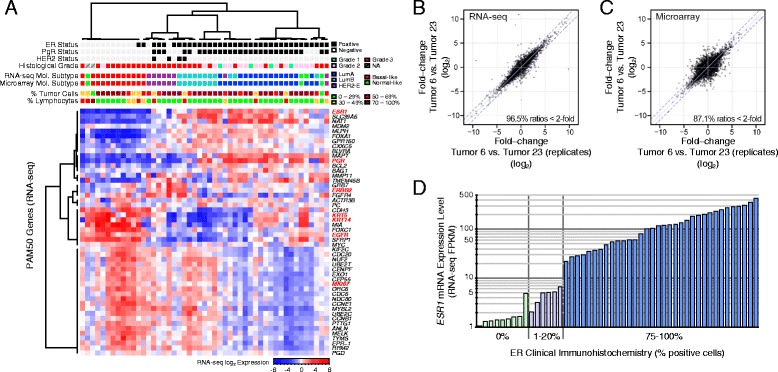
“(Figure 3A and Additional file 2: Figure S2) [31-33].”
InfluentialVarScan 2: Somatic mutation and copy number alteration discovery in cancer by exome sequencing
Koboldt, D. C., Zhang, Q., Larson, D. E., Shen, D., McLellan, M. D., Lin, L., Miller, C. A., Mardis, E. R., Ding, L., & Wilson, R. K. (2012) · Genome Research · doi:10.1101/gr.129684.111 · Cited by 4,905 · cited 1×
“5 [39] was used to call single nucleotide variants (SNVs) and indels using the following settings: –min-coverage 2 –min-reads2 2 –minavg-qual 10 –min-var-freq 0.”
Supervised Risk Predictor of Breast Cancer Based on Intrinsic Subtypes
Parker, J. S., Mullins, M., Cheang, M. C. U., Leung, S., Voduc, D., Vickery, T., Davies, S., Fauron, C., He, X., Hu, Z., et al. (2009) · Journal of Clinical Oncology · doi:10.1200/jco.2008.18.1370 · Cited by 4,721 · cited 6×
“(Figure 3A and Additional file 2: Figure S2) [31-33].”
InfluentialA census of human cancer genes
Futreal, P. A., Coin, L., Marshall, M., Down, T., Hubbard, T., Wooster, R., Rahman, N., & Stratton, M. R. (2004) · Nature Reviews Cancer · doi:10.1038/nrc1299 · Cited by 3,184 · cited 1×
“A list of candidate driver genes of interest was compiled based on the union of genes identified in several large studies: the TCGA breast cancer study (supplementary table 2 in [35]); the Sanger 100 breast cancer exome study (supplementary table 4 in [36]); the Cancer Gene Census of breast cancer drivers [37]; and ad…”
The clonal and mutational evolution spectrum of primary triple-negative breast cancers
Shah, S. P., Roth, A., Goya, R., Oloumi, A., Ha, G., Zhao, Y., Turashvili, G., Ding, J., Tse, K., Haffari, G., et al. (2012) · Nature · doi:10.1038/nature10933 · Cited by 1,967 · cited 1×
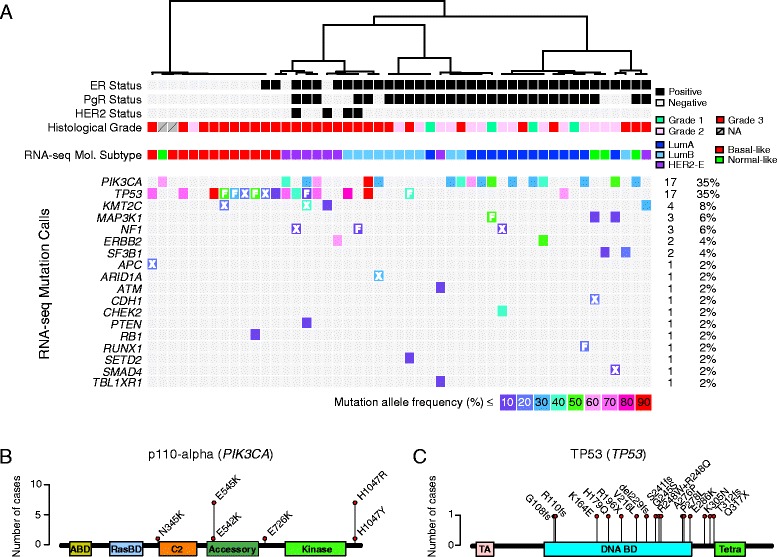
“Based on our early experiences as well as the work of others, we posit that mutations of oncogenes should be efficiently detectable by RNA-seq, but that some mutations in tumor suppressor genes may be more difficult to detect due to lowered expression levels, loss of heterozygosity, and/or nonsense mediated decay [49-…”
Gene-Expression Profiles in Hereditary Breast Cancer
Hedenfalk, I., Duggan, D., Chen, Y., Radmacher, M., Bittner, M., Simon, R., Meltzer, P., Gusterson, B., Esteller, M., Raffeld, M., et al. (2001) · New England Journal of Medicine · doi:10.1056/nejm200102223440801 · Cited by 1,733
Self-citationThe landscape of cancer genes and mutational processes in breast cancer
The Oslo Breast Cancer Consortium (OSBREAC), Stephens, P. J., Tarpey, P. S., Davies, H., Van Loo, P., Greenman, C., Wedge, D. C., Nik-Zainal, S., Martin, S., Varela, I., et al. (2012) · Nature · doi:10.1038/nature11017 · Cited by 1,698 · cited 2×
“0 MAF file from the TCGA Data Portal [42], and stephens2012 using data from supplementary table 4 in reference [36].”
The molecular portraits of breast tumors are conserved across microarray platforms
Hu, Z., Fan, C., Oh, D. S., Marron, J., He, X., Qaqish, B. F., Livasy, C., Carey, L. A., Reynolds, E., Dressler, L., et al. (2006) · BMC Genomics · doi:10.1186/1471-2164-7-96 · Cited by 1,491
Advances in understanding cancer genomes through second-generation sequencing
Meyerson, M., Gabriel, S., & Getz, G. (2010) · Nature Reviews Genetics · doi:10.1038/nrg2841 · Cited by 1,116 · cited 1×
“One of the most significant of these new technologies is massively-parallel sequencing, also called next-generation sequencing or deep sequencing [7].”
Coleman, M., Forman, D., Bryant, H., Butler, J., Rachet, B., Maringe, C., Nur, U., Tracey, E., Coory, M., Hatcher, J., et al. (2011) · The Lancet · doi:10.1016/s0140-6736(10)62231-3 · Cited by 1,114
Transcriptome analysis by strand-specific sequencing of complementary DNA
Parkhomchuk, D., Borodina, T., Amstislavskiy, V., Banaru, M., Hallen, L., Krobitsch, S., Lehrach, H., & Soldatov, A. (2009) · Nucleic Acids Research · doi:10.1093/nar/gkp596 · Cited by 938 · cited 2×
“The sequencing library generation protocol is a modification of the dUTP method, which importantly retains the directionality (stranded-ness) of the sequenced RNA molecules [23,24].”
Saal, L. H., Holm, K., Maurer, M., Memeo, L., Su, T., Wang, X., Yu, J. S., Malmström, P.-O., Mansukhani, M., Enoksson, J., et al. (2005) · Cancer Research · doi:10.1158/0008-5472-can-04-3913 · Cited by 875 · cited 1×
“Typical mutations were detected in these breast cancers with the expected frequencies and association to clinicopathological characteristics: for example, 17/49 (35%) cases were determined to harbor mutations in the oncogene PIK3CA and these occurred most frequently in luminal A (8/14), HER2-enriched (3/8), and normal…”
Self-citationBudhu, A., Forgues, M., Ye, Q.-H., Jia, H.-L., He, P., Zanetti, K. A., Kammula, U. S., Chen, Y., Qin, L.-X., Tang, Z.-Y., et al. (2006) · Cancer Cell · doi:10.1016/j.ccr.2006.06.016 · Cited by 846 · cited 1×
“For example, it has been shown that immune response signatures can be predictive of outcome across a wide range of cancer forms [45-48].”
Gruvberger-Saal, S. K., Ringnér, M., Chen, Y., Panavally, S., Saal, L. H., Borg, Å., Fernö, M., Peterson, C., & Meltzer, P. S. (2001) · PubMed · Cited by 748
Self-citationNORDCAN – a Nordic tool for cancer information, planning, quality control and research
Engholm, G., Ferlay, J., Christensen, N., Bray, F., Gjerstorff, M. L., Klint, Å., Køtlum, J. E., Ólafsdóttir, E., Pukkala, E., & Storm, H. H. (2010) · Acta Oncologica · doi:10.3109/02841861003782017 · Cited by 537 · cited 1×
“Approximately one in nine women will be diagnosed with breast cancer during their lifetime, and in Sweden it accounted for 7,087 new diagnoses and 1,401 deaths in 2011 alone [1].”
Saal, L. H., Johansson, P., Holm, K., Gruvberger-Saal, S. K., She, Q.-B., Maurer, M., Koujak, S., Ferrando, A. A., Malmström, P., Memeo, L., et al. (2007) · Proceedings of the National Academy of Sciences · doi:10.1073/pnas.0702507104 · Cited by 520 · cited 1×
“To address these clinical and practical challenges and to continue our efforts to develop improved clinical biomarker tests for breast cancer [12-16], we initiated the multicenter and multidisciplinary consortium, Sweden Cancerome Analysis Network - Breast (SCAN-B) [17] (ClinicalTrials.”
Self-citationSaal, L. H., Troein, C., Vallon-Christersson, J., Gruvberger, S., Borg, Å., & Peterson, C. (2002) · Genome Biology · doi:10.1186/gb-2002-3-8-software0003 · Cited by 462 · cited 3×
“Enrollment statistics are based on study records in our relational data management system BASE.”
Self-citationStaaf, J., Ringnér, M., Vallon-Christersson, J., Jönsson, G., Bendahl, P.-O., Holm, K., Arason, A., Gunnarsson, H., Hegardt, C., Agnarsson, B. A., et al. (2010) · Journal of Clinical Oncology · doi:10.1200/jco.2009.22.8775 · Cited by 175 · cited 1×
“To address these clinical and practical challenges and to continue our efforts to develop improved clinical biomarker tests for breast cancer [12-16], we initiated the multicenter and multidisciplinary consortium, Sweden Cancerome Analysis Network - Breast (SCAN-B) [17] (ClinicalTrials.”
Self-citationUnderstanding the biology of triple-negative breast cancer
Criscitiello, C., Azim, H. A., Schouten, P. C., Linn, S. C., & Sotiriou, C. (2012) · Annals of Oncology · doi:10.1093/annonc/mds188 · Cited by 162 · cited 1×
“For example, it has been shown that immune response signatures can be predictive of outcome across a wide range of cancer forms [45-48].”
Large Scale Library Generation for High Throughput Sequencing
Borgström, E., Lundin, S., & Lundeberg, J. (2011) · PLoS ONE · doi:10.1371/journal.pone.0019119 · Cited by 160 · cited 1×
“Adapter-ligated cDNA is then size-selected to remove short oligonucleotides using carboxylic acid (CA) paramagnetic beads (Invitrogen) and polyethylene glycol (PEG), similar to the previously described methods [25], and automated on the KingFisher Flex.”
The impact of expression profiling on prognostic and predictive testing in breast cancer
Reis-Filho, J. S., Westbury, C., & Pierga, J. (2006) · Journal of Clinical Pathology · doi:10.1136/jcp.2005.028324 · Cited by 153 · cited 1×
“However, these assays are expensive (approximately €3,000 per test), and due to the fact that they were developed based on relatively small study populations (MammaPrint: 78 patients) [8] or only one subgroup of the disease (OncotypeDX: patients with estrogen-receptor-positive tumors with no involved lymph nodes and t…”
An Immune Response Enriched 72-Gene Prognostic Profile for Early-Stage Non–Small-Cell Lung Cancer
Roepman, P., Jassem, J., Smit, E. F., Muley, T., Niklinski, J., van de Velde, T., Witteveen, A. T., Rzyman, W., Floore, A., Burgers, S., et al. (2009) · Clinical Cancer Research · doi:10.1158/1078-0432.ccr-08-1258 · Cited by 147 · cited 1×
“For example, it has been shown that immune response signatures can be predictive of outcome across a wide range of cancer forms [45-48].”
Exploring the economic impact of breast cancers during the 18 months following diagnosis
Gordon, L. G., Scuffham, P., Hayes, S. C., & Newman, B. M. (2007) · Psycho-Oncology · doi:10.1002/pon.1182 · Cited by 130 · cited 1×
“Our inability to reliably identify such patients has a significant impact on patient quality of life, and adds significantly to the direct economic costs of treating breast cancer as well as the indirect effects on societal productivity [5,6].”
Jaïs, J., Haïoun, C., Molina, T. J., Rickman, D. S., de Reyniès, A., Berger, F., Gisselbrecht, C., Brière, J., Reyes, F., Gaulard, P., et al. (2008) · Leukemia · doi:10.1038/leu.2008.188 · Cited by 112 · cited 1×
“For example, it has been shown that immune response signatures can be predictive of outcome across a wide range of cancer forms [45-48].”
Integrated RNA and DNA sequencing improves mutation detection in low purity tumors
Wilkerson, M. D., Cabanski, C. R., Sun, W., Hoadley, K. A., Walter, V., Mose, L. E., Troester, M. A., Hammerman, P. S., Parker, J. S., Perou, C. M., et al. (2014) · Nucleic Acids Research · doi:10.1093/nar/gku489 · Cited by 87 · cited 1×
“Based on our early experiences as well as the work of others, we posit that mutations of oncogenes should be efficiently detectable by RNA-seq, but that some mutations in tumor suppressor genes may be more difficult to detect due to lowered expression levels, loss of heterozygosity, and/or nonsense mediated decay [49-…”
Nalpas, N., Park, S. D. E., Magee, D. A., Taraktsoglou, M., Browne, J. A., Conlon, K. M., Rue-Albrecht, K., Killick, K. E., Hokamp, K., Lohan, A. J., et al. (2013) · BMC Genomics · doi:10.1186/1471-2164-14-230 · Cited by 63 · cited 1×
“The sequencing library generation protocol is a modification of the dUTP method, which importantly retains the directionality (stranded-ness) of the sequenced RNA molecules [23,24].”
BASE - 2nd generation software for microarray data management and analysis
Vallon-Christersson, J., Nordborg, N., Svensson, M., & Häkkinen, J. (2009) · BMC Bioinformatics · doi:10.1186/1471-2105-10-330 · Cited by 59 · cited 3×
“Enrollment statistics are based on study records in our relational data management system BASE.”
Self-citationThe Retinoblastoma Gene Undergoes Rearrangements in BRCA1 -Deficient Basal-like Breast Cancer
Jönsson, G., Staaf, J., Vallon-Christersson, J., Ringnér, M., Gruvberger-Saal, S. K., Saal, L. H., Holm, K., Hegardt, C., Arason, A., Fagerholm, R., et al. (2012) · Cancer Research · doi:10.1158/0008-5472.can-12-0097 · Cited by 49
Self-citationTang, X., Baheti, S., Shameer, K., Thompson, K. J., Wills, Q., Niu, N., Holcomb, I. N., Boutet, S. C., Ramakrishnan, R., Kachergus, J. M., et al. (2014) · Nucleic Acids Research · doi:10.1093/nar/gku1005 · Cited by 41
Prediction of outcome after diagnosis of metachronous contralateral breast cancer
Alkner, S., Bendahl, P., Fernö, M., Manjer, J., & Rydén, L. (2011) · BMC Cancer · doi:10.1186/1471-2407-11-114 · Cited by 39 · cited 1×
“SCAN-B involves researchers, clinicians, and healthcare professionals at Lund University Hospital, Division of Oncology and Pathology, the South Sweden Breast Cancer Group [18], the Regional Cancer Center South, and all seven hospital centers treating breast cancer patients in the Southern Healthcare Region (Malmö, Lu…”
Self-citationProbe mapping across multiple microarray platforms
Allen, J. D., Wang, S., Chen, M., Girard, L., Minna, J. D., Xie, Y., & Xiao, G. (2011) · Briefings in Bioinformatics · doi:10.1093/bib/bbr076 · Cited by 35 · cited 1×
“Mapping of genes be-tween data sets was performed using the probemapper 1.0.0 R package [34].”
InfluentialVery-Long-Term Survival Rates of Patients With Cancer
Brenner, H., & Hakulinen, T. R. (2002) · Journal of Clinical Oncology · doi:10.1200/jco.2002.99.060 · Cited by 31 · cited 1×
“Unfortunately, approximately 25% of women who survive 5 years will, within the subsequent 15 years, die from recurrent disease [3].”
Can Genomics Bend the Cost Curve?
Armstrong, K. (2012) · JAMA · doi:10.1001/jama.2012.261 · Cited by 29 · cited 1×
“Our inability to reliably identify such patients has a significant impact on patient quality of life, and adds significantly to the direct economic costs of treating breast cancer as well as the indirect effects on societal productivity [5,6].”
Microarrays and breast cancer clinical studies: forgetting what we have not yet learnt
Ahmed, A. A., & Brenton, J. D. (2005) · Breast Cancer Research · doi:10.1186/bcr1017 · Cited by 29 · cited 1×
“However, these assays are expensive (approximately €3,000 per test), and due to the fact that they were developed based on relatively small study populations (MammaPrint: 78 patients) [8] or only one subgroup of the disease (OncotypeDX: patients with estrogen-receptor-positive tumors with no involved lymph nodes and t…”
[7] An Introduction to BioArray Software Environment
Troein, C., Vallon‐Christersson, J., & Saal, L. H. (2006) · Methods in enzymology on CD-ROM/Methods in enzymology · doi:10.1016/s0076-6879(06)11007-1 · Cited by 14 · cited 3×
“Enrollment statistics are based on study records in our relational data management system BASE.”
Self-citationRefining systemic therapy for early breast cancer: difficulties with subtraction
Dodwell, D. J., Thorpe, H. C., & Coleman, R. E. (2009) · The Lancet Oncology · doi:10.1016/s1470-2045(09)70203-7 · Cited by 5 · cited 1×
“On the other hand, it is also recognized that a significant proportion of breast cancer patients are being overtreated: many patients are likely cured by locoregional therapy alone, but are enduring the side effects of unnecessary additional systemic therapies [4].”
Research works printed but not linked: 1
- Gene Expression Omnibus. Available at: http://www.ncbi.nlm.nih.gov/geo/.
Cited by
Bartoschek, M., Oskolkov, N., Bocci, M., Lövrot, J., Larsson, C., Sommarin, M., Madsen, C. D., Lindgren, D., Pekar, G., Karlsson, G., et al. (2018) · Nature Communications · doi:10.1038/s41467-018-07582-3 · Cited by 826
Self-citationLauss, M., Donia, M., Harbst, K., Andersen, R., Mitra, S., Rosengren, F., Salim, M., Vallon-Christersson, J., Törngren, T., Kvist, A., et al. (2017) · Nature Communications · doi:10.1038/s41467-017-01460-0 · Cited by 470
Self-citationWhole-genome sequencing of triple-negative breast cancers in a population-based clinical study
Staaf, J., Glodzik, D., Bosch, A., Vallon-Christersson, J., Reuterswärd, C., Häkkinen, J., Degasperi, A., Amarante, T. D., Saal, L. H., Hegardt, C., et al. (2019) · Nature Medicine · doi:10.1038/s41591-019-0582-4 · Cited by 307
Self-citationBrueffer, C., Vallon-Christersson, J., Grabau, D., Ehinger, A., Häkkinen, J., Hegardt, C., Malina, J., Chen, Y., Bendahl, P.-O., Manjer, J., et al. (2018) · JCO Precision Oncology · doi:10.1200/po.17.00135 · Cited by 218
Self-citationbc-GenExMiner 4.5: new mining module computes breast cancer differential gene expression analyses
Jézéquel, P., Gouraud, W., Ben Azzouz, F., Guérin-Charbonnel, C., Juin, P. P., Lasla, H., & Campone, M. (2021) · Database · doi:10.1093/database/baab007 · Cited by 209
“In addition, we collected the log2(FPKM+0.1) data set provided by authors and available from the NCBI Gene Expression Omnibus (GSE81538 and GSE96058) (16).”
Influential
Metadata
- Authors
- Saal, L. H., Vallon-Christersson, J., Häkkinen, J., Hegardt, C., Grabau, D., Winter, C., Brueffer, C., Tang, M.-H. E., Reuterswärd, C., Schulz, R., Karlsson, A., Ehinger, A., Malina, J., Manjer, J., Malmberg, M., Larsson, C., Rydén, L., Loman, N., & Borg, Å.
- Affiliations
- Lund University (SE)
- Skåne University Hospital (SE)
- Corresponding author
- Borg, Åke
- ORCID
- Venue
- Genome Medicine
- Published
- 2015-02-02
- Volume
- 7
- Issue
- 1
- Pages
- 20-20
- ISSN
- 1756-994X (ISSN-L)
- PMC
- PMC4341872
- OpenAlex
- W2115528316
- Cited by
- 255
- References
- 46
- Citations by year
- 2026: 28 · 2025: 39 · 2024: 54 · 2023: 36 · 2022: 18 · 2021: 28 · 2020: 16 · 2019: 8 · 2018: 7 · 2017: 8 · 2016: 12 · 2015: 1
- FWCI
- 3.09
- Type
- journal article
- Language
- en
- Open access
- gold
- doi.org
- Licence
- cc-by
- creativecommons.org/licenses/by/4.0 (tdm)
- creativecommons.org/licenses/by/4.0 (vor)
- Locations
- Genome Medicine (publishedVersion, cc-by)
- PubMed Central (publishedVersion, cc-by)
- PubMed (publishedVersion)
- Lund University Publications (Lund University) (submittedVersion, other-oa)
- mediaTUM – the media and publications repository of the Technical University Munich (Technical University Munich) (submittedVersion)
- Funders
- Stiftelsen för Strategisk Forskning
- VINNOVA
- Cancerfonden
- Lunds Universitet
- Gunnar Nilssons Cancerstiftelse
- Knut och Alice Wallenbergs Stiftelse
- Vetenskapsrådet
- Fru Berta Kamprads Stiftelse
- Institut National Du Cancer
- Centralsjukhuset Kristianstad
- Region Skåne
- Skånes universitetssjukhus
- Topics
- Life Sciences › Biochemistry, Genetics and Molecular Biology › Cancer Research › Breast Cancer Treatment Studies
- Life Sciences › Biochemistry, Genetics and Molecular Biology › Cancer Research › Cancer Genomics and Diagnostics
- Life Sciences › Biochemistry, Genetics and Molecular Biology › Genetics › BRCA gene mutations in cancer
- Keywords
- breast cancer, driver mutations, RNA sequencing, prognostic and predictive biomarkers, precision oncology
About these checks
Registry, retraction, Cites and statistics results are computed, not judged, with one exception: a printed reference that no index lists is read once by a model before it counts as a citation error. Claims are extracted by a model and kept only when their quote appears verbatim in the text; each cited source is then checked, with a model’s help, for whether it says what the claim relies on. Those verdicts can be wrong — read the claim’s quote and the cited source before relying on one.
Statistics and arithmetic are recomputed, not judged.
Confidence bands are shown only for fields calibrated on our annotated test set. None is calibrated yet, so no band is shown.
What counts as a claim ›How we measure confidence ›How we check this ›
Are you an author, or do you see a problem with this page? Request a review
Data sources
Bibliographic data: Semantic Scholar, OpenAlex, Crossref.
Contains information from the Semantic Scholar Academic Graph Datasets, made available under the ODC Attribution License (ODC-BY 1.0).
Semantic Scholar’s data is described in: Kinney, R., et al. (2023). The Semantic Scholar Open Data Platform. arXiv:2301.10140.
