

The DOI matches its Crossref record; 88 of the 89 references it cites were found in a registry or an index, and 1 are not checked yet.
A bioinformatic framework for immune repertoire diversity profiling enables detection of immunological status
Open accessAbstract
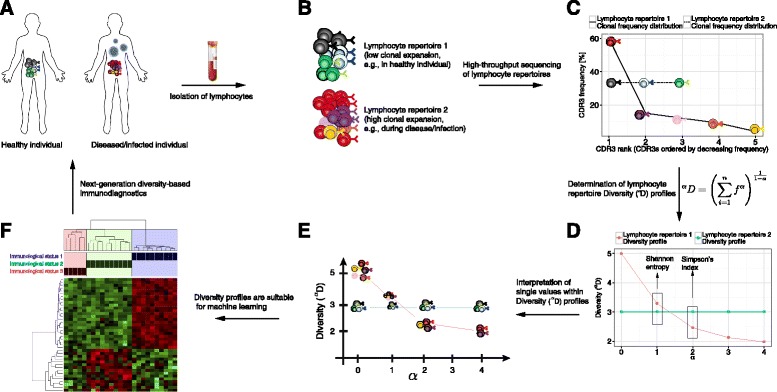
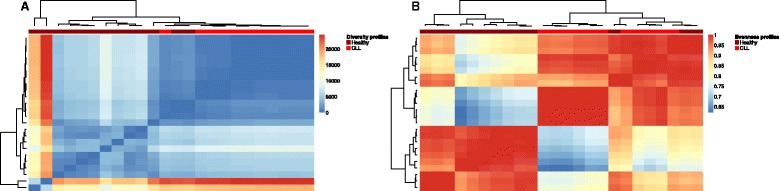
BACKGROUND: Lymphocyte receptor repertoires are continually shaped throughout the lifetime of an individual in response to environmental and pathogenic exposure. Thus, they may serve as a fingerprint of an individual's ongoing immunological status (e.g., healthy, infected, vaccinated), with far-reaching implications for immunodiagnostics applications. The advent of high-throughput immune repertoire sequencing now enables the interrogation of immune repertoire diversity in an unprecedented and quantitative manner. However, steadily increasing sequencing depth has revealed that immune repertoires vary greatly among individuals in their composition; correspondingly, it has been reported that there are few shared sequences indicative of immunological status ('public clones'). Disconcertingly, this means that the wealth of information gained from repertoire sequencing remains largely unused for determining the current status of immune responses, thereby hampering the implementation of immune-repertoire-based diagnostics. METHODS: Here, we introduce a bioinformatics repertoire-profiling framework that possesses the advantage of capturing the diversity and distribution of entire immune repertoires, as opposed to singular public clones. The framework relies on Hill-based diversity profiles composed of a continuum of single diversity indices, which enable the quantification of the extent of immunological information contained in immune repertoires. RESULTS: We coupled diversity profiles with unsupervised (hierarchical clustering) and supervised (support vector machine and feature selection) machine learning approaches in order to correlate patients' immunological statuses with their B- and T-cell repertoire data. We could predict with high accuracy (greater than or equal to 80 %) a wide range of immunological statuses such as healthy, transplantation recipient, and lymphoid cancer, suggesting as a proof of principle that diversity profiling can recover a large amount of immunodiagnostic fingerprints from immune repertoire data. Our framework is highly scalable as it easily allowed for the analysis of 1000 simulated immune repertoires; this exceeds the size of published immune repertoire datasets by one to two orders of magnitude. CONCLUSIONS: Our framework offers the possibility to advance immune-repertoire-based fingerprinting, which may in the future enable a systems immunogenomics approach for vaccine profiling and the accurate and early detection of disease and infection.
Overview
The claims and statistics of this paper haven’t been checked yet.
Run the check — free, no account needed. It reads the open-access text and checks the sources it cites.
Integrity signals
Registry
Cites
Statistics
Figures
Verification
Claims the paper makes
The claims and statistics of this paper haven’t been checked yet.
Run the check — free, no account needed. It reads the open-access text and checks the sources it cites.
Claims other papers make about this one
Each is checked against this paper’s own text: does it say what the citing paper says it does?
In the citing paper
“It was demonstrated that statistical classifiers can identify immune profiles of patients with chronic lymphocytic leukemia [220], multiple sclerosis [221] or influenza [222] from NGS data alone.”
From Computational approaches to therapeutic antibody design: established methods and emerging trends (2020) · cites this paper as [220]
Self-check
Percentages, sums and reported differences re-computed from the paper’s own numbers.
The self-check needs the paper’s full text.
Citations
Cites
R: A Language and Environment for Statistical Computing
R Core Team (2000) · doi:10.32614/r.manuals · Cited by 355,893
A Mathematical Theory of Communication
Shannon, C. E. (1948) · Bell System Technical Journal · doi:10.1002/j.1538-7305.1948.tb01338.x · Cited by 88,486
A Mathematical Theory of Communication
Shannon, C. E. (1948) · The MIT Press eBooks · doi:10.1002/j.1538-7305.1948.tb00917.x · Cited by 50,387
A mathematical theory of communication
Hockett, C. F., Shannon, C., & Weaver, W. (1948) · MOCO · doi:10.1145/584091.584093 · Cited by 30,543
Simpson, E. (1949) · Nature · doi:10.1038/163688a0 · Cited by 14,809
Gotelli, N., & Colwell, R. K. (2001) · Ecology Letters · doi:10.1046/j.1461-0248.2001.00230.x · Cited by 6,529
Diversity and Evenness: A Unifying Notation and Its Consequences
Hill, M. (1973) · Ecology · doi:10.2307/1934352 · Cited by 6,486
Jost, L. (2006) · Oikos · doi:10.1111/j.2006.0030-1299.14714.x · Cited by 4,669
On Measures of Entropy and Information
Rényi, A. (1961) · Project Euclid (Cornell University) · Cited by 4,031
Cellular and Molecular Immunology
Abbas, A. K., Lichtman, A. H., & Pillai, S. S. (1994) · Cited by 3,571
Chimeric Antigen Receptor–Modified T Cells for Acute Lymphoid Leukemia
Grupp, S. A., Kalos, M., Barrett, D., Aplenc, R., Porter, D. L., Rheingold, S. R., Teachey, D. T., Chew, A., Hauck, B., Wright, J. F., et al. (2013) · New England Journal of Medicine · doi:10.1056/nejmoa1215134 · Cited by 3,509
Proceedings of the Fifth Berkeley Symposium on Mathematical Statistics and Probability; Vol. IV
Roy, H. L. L., LeCam, L. M., & Neyman, J. (1969) · Revue de l Institut International de Statistique / Review of the International Statistical Institute · doi:10.2307/1402306 · Cited by 2,878
Cellular and Molecular Immunology
Denman, A. M. (1992) · Postgraduate Medical Journal · doi:10.1136/pgmj.68.798.305 · Cited by 2,807
PANDAseq: paired-end assembler for Illumina sequences
Masella, A. P., Bartram, A. K., Truszkowski, J. M., Brown, D. G., & Neufeld, J. D. (2012) · BMC Bioinformatics · doi:10.1186/1471-2105-13-31 · Cited by 2,132
THE COMPARISON OF DENDROGRAMS BY OBJECTIVE METHODS
Sokal, R. R., & Rohlf, F. J. (1962) · Taxon · doi:10.2307/1217208 · Cited by 1,789
A flexible R package for nonnegative matrix factorization
Gaujoux, R., & Seoighe, C. (2010) · BMC Bioinformatics · doi:10.1186/1471-2105-11-367 · Cited by 1,516
gplots: Various R Programming Tools for Plotting Data
Warnes, G. R., Bolker, B. M., Bonebakker, L., Gentleman, R. C., Huber, W., Liaw, A., Lumley, T., Maechler, M., Magnússon, Á., Moeller, S., et al. (2005) · doi:10.32614/cran.package.gplots · Cited by 1,230
Diversity of Planktonic Foraminifera in Deep-Sea Sediments
Berger, W., & Parker, F. L. (1970) · Science · doi:10.1126/science.168.3937.1345 · Cited by 1,056
SEQC/MAQC-III Consortium (2014) · Nature Biotechnology · doi:10.1038/nbt.2957 · Cited by 983 · cited 1×
“Technologically, standardization [72, 73] will be needed to increase comparability of repertoire datasets originating from different sources (Additional file 8; batch variance) as currently different experimental approaches (single cell sequencing [74] and heavy/light-chain-pairing [75], unique molecular identifier ta…”
BackgroundIMGT, the international ImMunoGeneTics database
Ruiz, M. (2000) · Nucleic Acids Research · doi:10.1093/nar/28.1.219 · Cited by 859
Nonparametric estimation of Shannon’s index of diversity when there are unseen species in sample
Chao, A., & Shen, T. (2003) · Environmental and Ecological Statistics · doi:10.1023/a:1026096204727 · Cited by 810
Diversity in the CDR3 Region of VH Is Sufficient for Most Antibody Specificities
Xu, J. L., & Davis, M. M. (2000) · Immunity · doi:10.1016/s1074-7613(00)00006-6 · Cited by 779
Diversity and clonal selection in the human T-cell repertoire
Qi, Q., Liu, Y., Cheng, Y., Glanville, J., Zhang, D., Lee, J.-Y., Olshen, R. A., Weyand, C. M., Boyd, S. D., & Goronzy, J. J. (2014) · Proceedings of the National Academy of Sciences · doi:10.1073/pnas.1409155111 · Cited by 755
Insight into biases and sequencing errors for amplicon sequencing with the Illumina MiSeq platform
Schirmer, M., Ijaz, U. Z., D'Amore, R., Hall, N., Sloan, W. T., & Quince, C. (2015) · Nucleic Acids Research · doi:10.1093/nar/gku1341 · Cited by 743
The promise and challenge of high-throughput sequencing of the antibody repertoire
Georgiou, G., Ippolito, G. C., Beausang, J., Busse, C. E., Wardemann, H., & Quake, S. R. (2014) · Nature Biotechnology · doi:10.1038/nbt.2782 · Cited by 652 · cited 1×
“Thereby, our work represents a proof of principle for the successful utilization of immunogenomic lymphocyte repertoire fingerprinting and the development of diversity-based immunodiagnostics for early detection of disease and infection [4, 5, 20, 38].”
BackgroundThe statistics of word cooccurrences : word pairs and collocations
Evert, S. (2005) · OPUS Publication Server of the University of Stuttgart (University of Stuttgart) · doi:10.18419/opus-2556 · Cited by 648
The Relation between Evenness and Diversity
Jost, L. (2010) · Diversity · doi:10.3390/d2020207 · Cited by 574
Comparison of different methods for diversity ordering
Tóthmérész, B. (1995) · Journal of Vegetation Science · doi:10.2307/3236223 · Cited by 545
Morgan, M. T., Anders, S., Lawrence, M. F., Aboyoun, P., Pagès, H., & Gentleman, R. C. (2009) · Bioinformatics · doi:10.1093/bioinformatics/btp450 · Cited by 545
Measuring diversity: the importance of species similarity
Leinster, T., & Cobbold, C. A. (2011) · Ecology · doi:10.1890/10-2402.1 · Cited by 489
Britanova, O. V., Putintseva, E. V., Shugay, M., Merzlyak, E. M., Turchaninova, M. A., Staroverov, D. B., Bolotin, D. A., Lukyanov, S., Bogdanova, E. A., Mamedov, I. Z., et al. (2014) · The Journal of Immunology · doi:10.4049/jimmunol.1302064 · Cited by 465
Towards error-free profiling of immune repertoires
Shugay, M., Britanova, O. V., Merzlyak, E. M., Turchaninova, M. A., Mamedov, I. Z., Tuganbaev, T., Bolotin, D. A., Staroverov, D. B., Putintseva, E. V., Plevová, K., et al. (2014) · Nature Methods · doi:10.1038/nmeth.2960 · Cited by 428
High-throughput sequencing of the paired human immunoglobulin heavy and light chain repertoire
DeKosky, B. J., Ippolito, G. C., Deschner, R. P., Lavinder, J. J., Wine, Y., Rawlings, B. M., Varadarajan, N., Giesecke, C., Dörner, T., Andrews, S. F., et al. (2013) · Nature Biotechnology · doi:10.1038/nbt.2492 · Cited by 410 · cited 1×
“Technologically, standardization [72, 73] will be needed to increase comparability of repertoire datasets originating from different sources (Additional file 8; batch variance) as currently different experimental approaches (single cell sequencing [74] and heavy/light-chain-pairing [75], unique molecular identifier ta…”
BackgroundOverlap and Effective Size of the Human CD8 + T Cell Receptor Repertoire
Robins, H. S., Srivastava, S. K., Campregher, P. V., Turtle, C. J., Andriesen, J. G., Riddell, S. R., Carlson, C. S., & Warren, E. H. (2010) · Science Translational Medicine · doi:10.1126/scitranslmed.3001442 · Cited by 383
IMGT, the international ImMunoGeneTics database
Lefranc, M., Giudicelli, V., Ginestoux, C., Bodmer, J. G., Müller, W., Bontrop, R. E., Lemaitre, M. M., Malik, A., Barbié, V., & Chaume, D. (1999) · Nucleic Acids Research · doi:10.1093/nar/27.1.209 · Cited by 358
Accurate sampling and deep sequencing of the HIV-1 protease gene using a Primer ID
Jabara, C. B., Jones, C. D., Roach, J. M., Anderson, J. A., & Swanstrom, R. I. (2011) · Proceedings of the National Academy of Sciences · doi:10.1073/pnas.1110064108 · Cited by 357
Diversity-dependence brings molecular phylogenies closer to agreement with the fossil record
Etienne, R. S., Haegeman, B., Stadler, T., Aze, T. L., Pearson, P. N., Purvis, A., & Phillimore, A. B. (2011) · Proceedings of the Royal Society B Biological Sciences · doi:10.1098/rspb.2011.1439 · Cited by 348
Maximum entropy models for antibody diversity
Mora, T., Walczak, A. M., Bialek, W., & Callan, C. G. (2010) · Proceedings of the National Academy of Sciences · doi:10.1073/pnas.1001705107 · Cited by 328
Functional heterogeneity of human memory CD4 + T cell clones primed by pathogens or vaccines
Becattini, S., Latorre, D., Mele, F., Foglierini, M., Gregorio, C. D., Cassotta, A., Fernandez, B., Kelderman, S., Schumacher, T. N., Corti, D., et al. (2014) · Science · doi:10.1126/science.1260668 · Cited by 323
Giudicelli, V., Chaume, D., & Lefranc, M. (2004) · Nucleic Acids Research · doi:10.1093/nar/gkh412 · Cited by 304
Reddy, S. T., Ge, X., Miklos, A. E., Hughes, R. A., Kang, S. H., Hoi, K. H., Chrysostomou, C., Hunicke-Smith, S. P., Iverson, B. L., Tucker, P. W., et al. (2010) · Nature Biotechnology · doi:10.1038/nbt.1673 · Cited by 292
Self-citationConvergent Antibody Signatures in Human Dengue
Parameswaran, P., Liu, Y., Roskin, K. M., Jackson, K., Dixit, V. P., Lee, J.-Y., Artiles, K. L., Zompì, S., Vargas, M. J., Simen, B. B., et al. (2013) · Cell Host & Microbe · doi:10.1016/j.chom.2013.05.008 · Cited by 261
T cell repertoire following autologous stem cell transplantation for multiple sclerosis
Muraro, P. A., Robins, H. S., Malhotra, S., Howell, M., Phippard, D., Desmarais, C., Sousa, A. D. P. A., Griffith, L. M., Lim, N., Nash, R. A., et al. (2014) · Journal of Clinical Investigation · doi:10.1172/jci71691 · Cited by 256
Jackson, K., Liu, Y., Roskin, K. M., Glanville, J., Hoh, R. A., Seo, K., Marshall, E. L., Gurley, T. C., Moody, M. A., Haynes, B. F., et al. (2014) · Cell Host & Microbe · doi:10.1016/j.chom.2014.05.013 · Cited by 251
Wang, G. C., Dash, P., McCullers, J. A., Doherty, P. C., & Thomas, P. G. (2012) · Science Translational Medicine · doi:10.1126/scitranslmed.3003647 · Cited by 238
High-Throughput Sequencing Detects Minimal Residual Disease in Acute T Lymphoblastic Leukemia
Wu, D., Sherwood, A., Fromm, J. R., Winter, S. S., Dunsmore, K. P., Loh, M. L., Greisman, H. A., Sabath, D. E., Wood, B. L., & Robins, H. S. (2012) · Science Translational Medicine · doi:10.1126/scitranslmed.3003656 · Cited by 237
Rep‐Seq: uncovering the immunological repertoire through next‐generation sequencing
Benichou, J. I. C., Ben‐Hamo, R., Louzoun, Y., & Efroni, S. (2011) · Immunology · doi:10.1111/j.1365-2567.2011.03527.x · Cited by 233
Li, S., Lefranc, M., Miles, J. J., Alamyar, E., Giudicelli, V., Duroux, P., Freeman, J., Corbin, V., Scheerlinck, J. Y., Frohman, M. A., et al. (2013) · Nature Communications · doi:10.1038/ncomms3333 · Cited by 225
Genetic measurement of memory B-cell recall using antibody repertoire sequencing
Vollmers, C., Sit, R. V., Weinstein, J. A., Dekker, C. L., & Quake, S. R. (2013) · Proceedings of the National Academy of Sciences · doi:10.1073/pnas.1312146110 · Cited by 222
Immunosequencing: applications of immune repertoire deep sequencing
Robins, H. S. (2013) · Current Opinion in Immunology · doi:10.1016/j.coi.2013.09.017 · Cited by 198
Characterizing immune repertoires by high throughput sequencing: strategies and applications
Calis, J. J. A., & Rosenberg, B. R. (2014) · Trends in Immunology · doi:10.1016/j.it.2014.09.004 · Cited by 190
Methods for comparing the diversity of samples of the T cell receptor repertoire
Venturi, V., Kedzierska, K., Turner, S. J., Doherty, P. C., & Davenport, M. P. (2007) · Journal of Immunological Methods · doi:10.1016/j.jim.2007.01.019 · Cited by 185
Effects of Aging, Cytomegalovirus Infection, and EBV Infection on Human B Cell Repertoires
Wang, C., Liu, Y., Xu, L. T., Jackson, K., Roskin, K. M., Pham, T. D., Laserson, J., Marshall, E. L., Seo, K., Lee, J.-Y., et al. (2013) · The Journal of Immunology · doi:10.4049/jimmunol.1301384 · Cited by 179
Sequencing the functional antibody repertoire—diagnostic and therapeutic discovery
Robinson, W. H. (2014) · Nature Reviews Rheumatology · doi:10.1038/nrrheum.2014.220 · Cited by 178
Detecting and correcting systematic variation in large-scale RNA sequencing data
Li, S., Łabaj, P. P., Zumbo, P., Sykacek, P., Shi, W., Shi, L., Phan, J., Wu, P.-Y., Wang, M., Wang, C., et al. (2014) · Nature Biotechnology · doi:10.1038/nbt.3000 · Cited by 175
Gullapalli, R. R., Desai, K., Santana‐Santos, L., Kant, J. A., & Becich, M. J. (2012) · Journal of Pathology Informatics · doi:10.4103/2153-3539.103013 · Cited by 169
How a well-adapted immune system is organized
Mayer, A., Balasubramanian, V., Mora, T., & Walczak, A. M. (2015) · Proceedings of the National Academy of Sciences · doi:10.1073/pnas.1421827112 · Cited by 154
Bolotin, D. A., Mamedov, I. Z., Britanova, O. V., Zvyagin, I. V., Shagin, D. A., Ustyugova, S. V., Turchaninova, M. A., Lukyanov, S., Lebedev, Y. B., & Chudakov, D. M. (2012) · European Journal of Immunology · doi:10.1002/eji.201242517 · Cited by 147
Quantifying selection in immune receptor repertoires
Elhanati, Y., Murugan, A., Callan, C. G., Mora, T., & Walczak, A. M. (2014) · Proceedings of the National Academy of Sciences · doi:10.1073/pnas.1409572111 · Cited by 145
Bashford-Rogers, R. J. M., Palser, A. L., Huntly, B. J. P., Rance, R., Vassiliou, G. S., Follows, G., & Kellam, P. (2013) · Genome Research · doi:10.1101/gr.154815.113 · Cited by 142
Dziubianau, M., Hecht, J., Kuchenbecker, L., Sattler, A., Stervbo, U., Rödelsperger, C., Nickel, P., Neumann, A. U., Robinson, P. N., Mundlos, S., et al. (2013) · American Journal of Transplantation · doi:10.1111/ajt.12431 · Cited by 139
Beyond model antigens: high-dimensional methods for the analysis of antigen-specific T cells
Newell, E. W., & Davis, M. M. (2014) · Nature Biotechnology · doi:10.1038/nbt.2783 · Cited by 129
IMGT, the international ImMunoGeneTics database
Giudicelli, V., Chaume, D., Lefranc, G., Bodmer, J. G., Müller, W., Busin, C., Marsh, S. G. E., Bontrop, R. E., Lemaitre, M. M., Malik, A., et al. (1997) · Immunology Letters · doi:10.1016/s0165-2478(97)86576-5 · Cited by 126
Busse, C. E., Czogiel, I., Braun, P., Arndt, P. F., & Wardemann, H. (2014) · European Journal of Immunology · doi:10.1002/eji.201343917 · Cited by 121
Identification of Antigen-Specific B Cell Receptor Sequences Using Public Repertoire Analysis
Trück, J., Ramasamy, M., Galson, J. D., Rance, R., Parkhill, J., Lunter, G. A., Pollard, A. J., & Kelly, D. F. (2014) · The Journal of Immunology · doi:10.4049/jimmunol.1401405 · Cited by 119
Methods for diversity and overlap analysis in T-cell receptor populations
Rempała, G. A., & Seweryn, M. T. (2012) · Journal of Mathematical Biology · doi:10.1007/s00285-012-0589-7 · Cited by 117
Assessment of immune status using blood transcriptomics and potential implications for global health
Chaussabel, D. (2015) · Seminars in Immunology · doi:10.1016/j.smim.2015.03.002 · Cited by 114
The Shape of the Lymphocyte Receptor Repertoire: Lessons from the B Cell Receptor
Jackson, K., Kidd, M. J., Wang, Y., & Collins, A. M. (2013) · Frontiers in Immunology · doi:10.3389/fimmu.2013.00263 · Cited by 114
Hyaluronan – magic glue for the regulation of the immune response?
Termeer, C., Sleeman, J. P., & Simon, J. C. (2003) · Trends in Immunology · doi:10.1016/s1471-4906(03)00029-2 · Cited by 112
Zipf’s Law and Criticality in Multivariate Data without Fine-Tuning
Schwab, D. J., Nemenman, I. M., & Mehta, P. (2014) · Physical Review Letters · doi:10.1103/physrevlett.113.068102 · Cited by 104
Studying the antibody repertoire after vaccination: practical applications
Galson, J. D., Pollard, A. J., Trück, J., & Kelly, D. F. (2014) · Trends in Immunology · doi:10.1016/j.it.2014.04.005 · Cited by 94
Support Vector Machines for Dyadic Data
Hochreiter, S., & Obermayer, K. (2006) · Neural Computation · doi:10.1162/neco.2006.18.6.1472 · Cited by 86
Quantification of HTLV-1 Clonality and TCR Diversity
Laydon, D. J., Melamed, A., Sim, A., Gillet, N. A., Sim, K., Darko, S. W., Kroll, J. S., Douek, D. C., Price, D. A., Bangham, C. R. M., et al. (2014) · PLoS Computational Biology · doi:10.1371/journal.pcbi.1003646 · Cited by 79
Systematic Characterization and Comparative Analysis of the Rabbit Immunoglobulin Repertoire
Lavinder, J. J., Hoi, K. H., Reddy, S. T., Wine, Y., & Georgiou, G. (2014) · PLoS ONE · doi:10.1371/journal.pone.0101322 · Cited by 76
Greiff, V., Menzel, U., Haessler, U., Cook, S. C., Friedensohn, S., Khan, T. A., Pogson, M., Hellmann, I., & Reddy, S. T. (2014) · BMC Immunology · doi:10.1186/s12865-014-0040-5 · Cited by 64
Evert, S., & Baroni, M. (2007) · doi:10.3115/1557769.1557780 · Cited by 63
Menzel, U., Greiff, V., Khan, T. A., Haessler, U., Hellmann, I., Friedensohn, S., Cook, S. C., Pogson, M., & Reddy, S. T. (2014) · PLoS ONE · doi:10.1371/journal.pone.0096727 · Cited by 51
Baum, P. D., Venturi, V., & Price, D. A. (2012) · European Journal of Immunology · doi:10.1002/eji.201242999 · Cited by 50
Mehr, R., Sternberg‐Simon, M., Michaeli, M., & Pickman, Y. (2012) · Immunology Letters · doi:10.1016/j.imlet.2012.08.002 · Cited by 35
Deakin, C. T., Deakin, J. J., Ginn, S. L., Young, P. E., Humphreys, D. T., Suter, C. M., Alexander, I. E., & Hallwirth, C. V. (2014) · Nucleic Acids Research · doi:10.1093/nar/gku607 · Cited by 34
Estimation of T-cell repertoire diversity and clonal size distribution by Poisson abundance models
Sepúlveda, N., Paulino, C. D., & Carneiro, J. (2009) · Journal of Immunological Methods · doi:10.1016/j.jim.2009.11.009 · Cited by 31
Estorninho, M., Gibson, V. B., Kronenberg‐Versteeg, D., Liu, Y., Ni, C., Cerosaletti, K. M., & Peakman, M. (2013) · The Journal of Immunology · doi:10.4049/jimmunol.1300622 · Cited by 26
A minimal model of peptide binding predicts ensemble properties of serum antibodies
Greiff, V., Redestig, H., Lück, J., Bruni, N., Valai, A., Hartmann, S., Rausch, S., Schuchhardt, J., & Or‐Guil, M. (2012) · BMC Genomics · doi:10.1186/1471-2164-13-79 · Cited by 14
Berger, C. T., Greiff, V., Mehling, M., Fritz, S., Meier, M. A., Höenger, G., Conen, A., Recher, M., Battegay, M., Reddy, S. T., et al. (2015) · Human Vaccines & Immunotherapeutics · doi:10.1080/21645515.2015.1008930 · Cited by 13
Profiling the IgOme: Meeting the challenge
Weiss-Ottolenghi, Y., & Gershoni, J. M. (2013) · FEBS Letters · doi:10.1016/j.febslet.2013.11.005 · Cited by 11
Boyd, S. D., Galli, S. J., Schrijver, I., Zehnder, J. L., Ashley, E. A., & Merker, J. D. (2014) · Genes · doi:10.3390/genes5030748 · Cited by 10
Functional heterogeneity of human memory CD4+ T cell clones primed by pathogens or vaccines
Becattini, S., Latorre, D., Mele, F., Foglierini, M., Gregorio, C. D., Cassotta, A., Fernandez, B. S., Kelderman, S., Schumacher, T. N., Corti, D., et al. (2018) · immuneACCESS · doi:10.21417/b76p4v · Cited by 9
Foreword: inverse problems in biology
Lassas, M. J., & Siltanen, S. (2013) · Journal of Mathematical Biology · doi:10.1007/s00285-013-0700-8 · Cited by 5
Exploring the genesis and specificity of serum antibody binding
Greiff, V. (2013) · edoc Publication server (Humboldt University of Berlin) · doi:10.18452/16655 · Cited by 1
Research works printed but not linked: 4
- Janeway C, Shlomchik MJ, Walport M. Immunobiology. 6th ed. New York: Garland Science; 2004.
- Evert S, Baroni M. zipfR: Word frequency distributions in R. In: Proceedings of the 45th Annual Meeting of the Association for Computational Linguistics, Posters and Demonstrations Sessions. Prague, Czech Republic: Association for Computational Linguistics; 2007. p. 29–32.
- de Vries A, Ripley BD. Ggdendro: tools for extracting dendrogram and tree diagram plot data for use with ggplot. 2013.
- Galili T. Dendextend: extending R’s dendrogram functionality. 2014.
Cited by
Sorted by citations
Intratumoral plasma cells predict outcomes to PD-L1 blockade in non-small cell lung cancer
Patil, N. S., Nabet, B. Y., Müller, S., Koeppen, H., Zou, W., Giltnane, J. M., Au‐Yeung, A., Srivats, S., Cheng, J. H., Takahashi, C., et al. (2022) · Cancer Cell · doi:10.1016/j.ccell.2022.02.002 · Cited by 423
Overview of methodologies for T-cell receptor repertoire analysis
Rosati, E., Dowds, C. M., Liaskou, E., Henriksen, E. K. K., Karlsen, T. H., & Franke, A. (2017) · BMC Biotechnology · doi:10.1186/s12896-017-0379-9 · Cited by 322
Kovaltsuk, A., Leem, J., Kelm, S., Snowden, J., Deane, C. M., & Krawczyk, K. (2018) · The Journal of Immunology · doi:10.4049/jimmunol.1800708 · Cited by 247
Methods and Applications of CRISPR-Mediated Base Editing in Eukaryotic Genomes
Hess, G. T., Tycko, J., Yao, D., & Bassik, M. C. (2017) · Molecular Cell · doi:10.1016/j.molcel.2017.09.029 · Cited by 234
Practical guidelines for B-cell receptor repertoire sequencing analysis
Yaari, G., & Kleinstein, S. H. (2015) · Genome Medicine · doi:10.1186/s13073-015-0243-2 · Cited by 224
Metadata
- Authors
- Greiff, V., Bhat, P., Cook, S. C., Menzel, U., Kang, W., & Reddy, S. T.
- Affiliations
- ETH Zurich (CH)
- Corresponding author
- Reddy, Sai T.
- Venue
- Genome Medicine
- Published
- 2015-05-28
- Volume
- 7
- Issue
- 1
- Pages
- 49-49
- ISSN
- 1756-994X (ISSN-L)
- PMC
- PMC4489130
- OpenAlex
- W1483854882
- Cited by
- 181
- References
- 89
- Citations by year
- 2026: 14 · 2025: 14 · 2024: 25 · 2023: 11 · 2022: 23 · 2021: 15 · 2020: 21 · 2019: 15 · 2018: 18 · 2017: 13 · 2016: 8 · 2015: 3
- FWCI
- 7.07
- Type
- journal article
- Language
- en
- Open access
- gold
- doi.org
- Locations
- Genome Medicine (publishedVersion, cc-by)
- Europe PMC (PubMed Central) (publishedVersion, cc-by)
- PubMed Central (publishedVersion, cc-by)
- PubMed (publishedVersion)
- Repository for Publications and Research Data (ETH Zurich) (submittedVersion, cc-by)
- ETH Zürich Research Collection (cc-by)
- Funders
- National Science Foundation
- Schweizerischer Nationalfonds zur Förderung der Wissenschaftlichen Forschung
- Eidgenössische Technische Hochschule Zürich
- SystemsX.ch
- Topics
- Life Sciences › Immunology and Microbiology › Immunology › T-cell and B-cell Immunology
- Life Sciences › Biochemistry, Genetics and Molecular Biology › Molecular Biology › vaccines and immunoinformatics approaches
- Physical Sciences › Computer Science › Artificial Intelligence › Artificial Immune Systems Applications
- Keywords
- immune repertoire diversity, immune status, immunodiagnosis, B cell receptor repertoire, T cell receptor repertoire, disease detection
About these checks
Registry, retraction, Cites and statistics results are computed, not judged, with one exception: a printed reference that no index lists is read once by a model before it counts as a citation error. Claims are extracted by a model and kept only when their quote appears verbatim in the text; each cited source is then checked, with a model’s help, for whether it says what the claim relies on. Those verdicts can be wrong — read the claim’s quote and the cited source before relying on one.
Statistics and arithmetic are recomputed, not judged.
Confidence bands are shown only for fields calibrated on our annotated test set. None is calibrated yet, so no band is shown.
What counts as a claim ›How we measure confidence ›How we check this ›
Are you an author, or do you see a problem with this page? Request a review
