

Linkage, whole genome sequence, and biological data implicate variants in RAB10 in Alzheimer’s disease resilience
Open accessThe DOI matches its Crossref record; 60 of the 60 references it cites were found in a registry or an index; 32 of the 40 sources its claims cite were checked for support.
Abstract
BACKGROUND: While age and the APOE ε4 allele are major risk factors for Alzheimer's disease (AD), a small percentage of individuals with these risk factors exhibit AD resilience by living well beyond 75 years of age without any clinical symptoms of cognitive decline. METHODS: We used over 200 "AD resilient" individuals and an innovative, pedigree-based approach to identify genetic variants that segregate with AD resilience. First, we performed linkage analyses in pedigrees with resilient individuals and a statistical excess of AD deaths. Second, we used whole genome sequences to identify candidate SNPs in significant linkage regions. Third, we replicated SNPs from the linkage peaks that reduced risk for AD in an independent dataset and in a gene-based test. Finally, we experimentally characterized replicated SNPs. RESULTS: Rs142787485 in RAB10 confers significant protection against AD (p value = 0.0184, odds ratio = 0.5853). Moreover, we replicated this association in an independent series of unrelated individuals (p value = 0.028, odds ratio = 0.69) and used a gene-based test to confirm a role for RAB10 variants in modifying AD risk (p value = 0.002). Experimentally, we demonstrated that knockdown of RAB10 resulted in a significant decrease in Aβ42 (p value = 0.0003) and in the Aβ42/Aβ40 ratio (p value = 0.0001) in neuroblastoma cells. We also found that RAB10 expression is significantly elevated in human AD brains (p value = 0.04). CONCLUSIONS: Our results suggest that RAB10 could be a promising therapeutic target for AD prevention. In addition, our gene discovery approach can be expanded and adapted to other phenotypes, thus serving as a model for future efforts to identify rare variants for AD and other complex human diseases.
Overview
CoChat Summary
TL;DR
This study used AD-resilient pedigrees, linkage, whole-genome sequencing, replication, and in vitro experiments to implicate rare RAB10 variation in protection against Alzheimer’s disease. The strongest evidence centered on rs142787485, which was associated with reduced AD risk and with lower Aβ42/Aβ40 after RAB10 knockdown.
Key findings
- Rs142787485 in RAB10 was associated with significant protection against AD (p = 0.0184, OR = 0.5853) and replicated in an independent unrelated series (p = 0.028, OR = 0.69); a gene-based test also supported RAB10 variants modifying AD risk (p = 0.002).
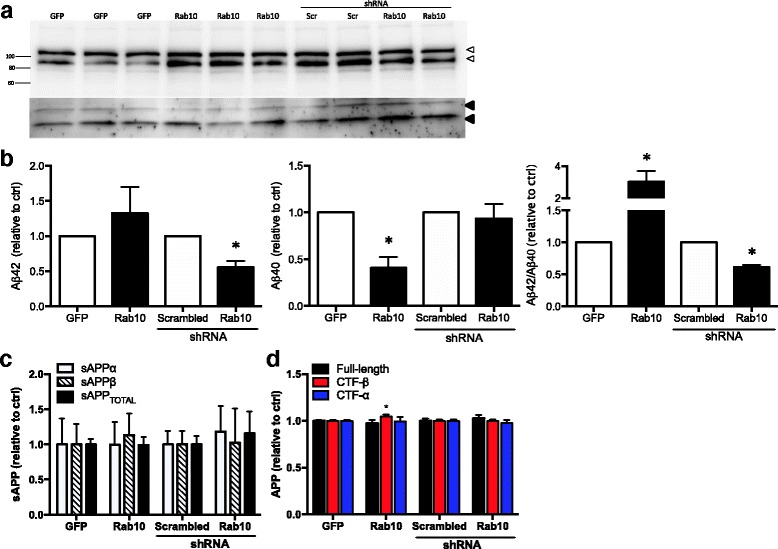
- Knockdown of RAB10 significantly decreased Aβ42 (p = 0.0003) and the Aβ42/Aβ40 ratio (p = 0.0001) in neuroblastoma cells, while RAB10 overexpression increased the Aβ42/Aβ40 ratio (p = 0.0133).
- RAB10 expression was significantly elevated in human AD brains (p = 0.04 in the abstract; Mayo Clinic temporal cortex Simple Model p = 6.96E-09, q = 1.50E-06).
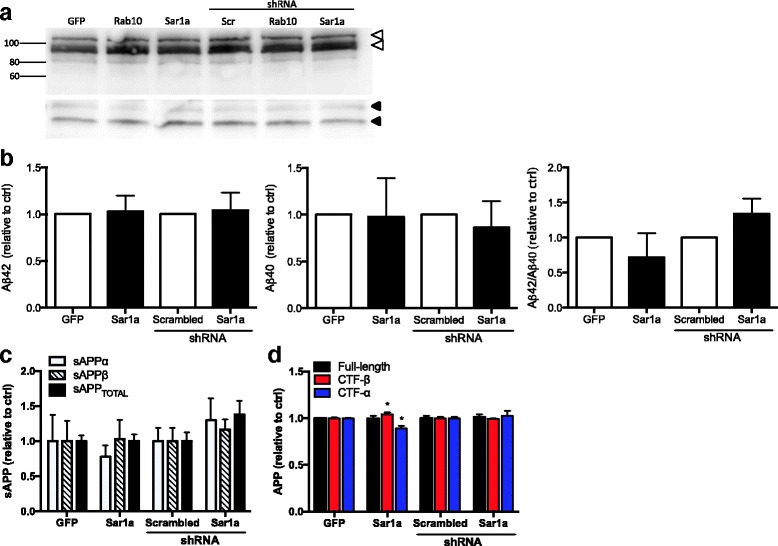
- SAR1A did not replicate in the CCS (p = 0.26, OR = 0.87) and its gene-based test was not significant (p = 1.00); SAR1A functional results were inconclusive.
Methods
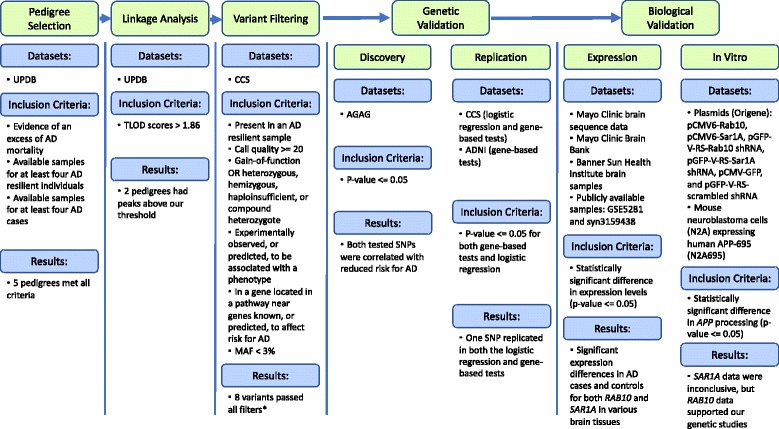
- Pedigree-based discovery: Utah Population Database pedigrees with excess AD mortality plus at least four AD-resilient individuals and four AD cases; linkage analysis with MCLINK identified suggestive peaks on chromosome 2 (TLOD 2.21) and chromosome 10 (TLOD 2.10).
- Samples and sequencing: 232 AD-resilient individuals from the Cache County Study (≥75 years, cognitively normal, ≥1 APOE ε4 allele; 135 females, 97 males, mean age 81), WGS for 212 at ~40×, plus 581 AD cases; validation used the Alzheimer’s Genetic Analysis Group, CCS, and ADNI, with SNP association and SKAT-O gene-based tests.
- Functional and expression work: RAB10 and SAR1A overexpression/knockdown in N2A695 cells with ELISA and immunoblotting; RNAseq expression analyses in 80 AD vs 76 control Mayo Clinic brains and public AD brain datasets.
Limitations
- The paper states that pedigree selection and rarity of AD-resilient samples made significant LOD scores difficult; only suggestive LOD scores were obtained in two of five pedigrees, with no significant LOD scores in any pedigree.
- The paper states that AD affection status relied on ICD9/ICD10 codes on Utah death certificates, which likely undercounts AD deaths and makes estimates conservative; genealogy data may include non-biological or censored relationships, and Utah European-descent results may not generalize.
- The paper states that SAR1A knockdown was only modest and its functional data were inconclusive; evident from the text, the discovery approach selected only one candidate SNP from each linkage peak for further analysis, and the SAR1A variant did not replicate.
Model-written summary. Check it against the paper before relying on it.
Integrity signals
Registry
Cites
Statistics
Figures
Verification
Claims the paper makes
15 Valid · 9 Not valid · 3 Not checked · 76 Own results and interpretations
The cited sources that could be checked couldn’t confirm or dispute this claim.
In the paper
“In neurons, RAB10 is involved in axonogenesis through the regulation of vesicular membrane trafficking toward the axonal plasma membrane [60].”
§ Linkage, whole genome sequence, and biological data implicate variants in RAB10 in Alzheimer’s disease resilience > Discussion
What the sources say
- Could not verifycites [60] English AR Voeltz GK Rab10 GTPase regulates ER dynamics and morphology Nat Cell Biol 2013 15 2 169 78 10.1038/ncb2647 23263280 PMC3582403 sourceExperimental — accuracy not yet measured
The Abstract and Results describe Rab10 regulating ER tubule extension and fusion, including in Cos-7 cells, not axon formation in neurons. Searches for axonogenesis, neurons, and trafficking toward the axonal plasma membrane found no passage addressing the attributed claim. (LLM, conf=0.75)
plainstates a cause- Asserted: passes — The authors put it forward as true.
- Checkable: passes — It can be checked against evidence.
- Load-bearing: unclear — It is unclear whether the paper’s conclusions depend on it.
- Based: passes — The paper gives a reason why it holds.
- Could not verify
Every source the paper cites for this claim was checked and supports it.
In the paper
“the majority of genetic variance is not explained by known AD markers [6]”
§ Linkage, whole genome sequence, and biological data implicate variants in RAB10 in Alzheimer’s disease resilience > Background
What the sources say
- Supportedcites [6] Ridge PG Hoyt KB Boehme K Mukherjee S Crane PK Haines JL Mayeux R Farrer LA Pericak-Vance MA Schellenberg GD Assessment of the genetic variance of late-onset Alzheimer’s disease Neurobiol Aging 2016 41 200 10.1016/j.neurobiolaging.2016.02.024 27036079 PMC4948179 source
The Discussion’s conclusions state that 69% of genetic variance remains unexplained by known AD risk variants. This directly supports the claim that the majority is not explained by known AD markers. (LLM, conf=0.95)
plain- Asserted: passes — The authors put it forward as true.
- Checkable: passes — It can be checked against evidence.
- Load-bearing: passes — The paper’s conclusions depend on it.
- Based: passes — The paper gives a reason why it holds.
- Supported
The cited sources that could be checked couldn’t confirm or dispute this claim.
In the paper
“and SAR1A expression is lower in neurons isolated from AD brains compared to controls [55].”
§ Linkage, whole genome sequence, and biological data implicate variants in RAB10 in Alzheimer’s disease resilience > Discussion
What the sources say
- Could not verifycites [55] Liang WS Dunckley T Beach TG Grover A Mastroeni D Ramsey K Caselli RJ Kukull WA McKeel D Morris JC Altered neuronal gene expression in brain regions differentially affected by Alzheimer’s disease: a reference data set Physiol Genomics 2008 33 2 240 56 10.1152/physiolgenomics.00242.2007 18270320 PMC2826117 sourceExperimental — accuracy not yet measured
The Results and Discussion section reports lower expression of several genes in AD neurons than in controls, but the passages found do not identify SAR1A among them. Searches for “SAR1A” and its gene description found no passage establishing the claimed decrease; the general AD-versus-control comparison does not verify this gene-specific claim. (LLM, conf=0.72)
plainstates an association- Asserted: passes — The authors put it forward as true.
- Checkable: passes — It can be checked against evidence.
- Load-bearing: unclear — It is unclear whether the paper’s conclusions depend on it.
- Based: passes — The paper gives a reason why it holds.
- Could not verify
The cited sources that could be checked couldn’t confirm or dispute this claim.
In the paper
“SAR1A binds APP [51]”
§ Linkage, whole genome sequence, and biological data implicate variants in RAB10 in Alzheimer’s disease resilience > Discussion
What the sources say
- Could not verifycites [51] Olah J Vincze O Virok D Simon D Bozso Z Tokesi N Horvath I Hlavanda E Kovacs J Magyar A Interactions of pathological hallmark proteins: tubulin polymerization promoting protein/p25, beta-amyloid, and alpha-synuclein J Biol Chem 2011 286 39 34088 100 10.1074/jbc.M111.243907 21832049 PMC3190826 sourceExperimental — accuracy not yet measured
The Discussion describes binding between TPPP/p25 and Aβ42, not between SAR1A and APP. Searches for “SAR1A binds APP” and “SAR1A Sar1 amyloid precursor protein interaction” found no passage in our copy addressing the claimed binding. (LLM, conf=0.75)
plainstates an association- Asserted: passes — The authors put it forward as true.
- Checkable: passes — It can be checked against evidence.
- Load-bearing: unclear — It is unclear whether the paper’s conclusions depend on it.
- Based: passes — The paper gives a reason why it holds.
- Could not verify
The cited sources support only part of this claim — read each source’s verdict below.
In the paper
“a majority of remaining AD variants are likely to be rare [6, 8]”
§ Linkage, whole genome sequence, and biological data implicate variants in RAB10 in Alzheimer’s disease resilience > Background
What the sources say
- Partly supportedcites [6] Ridge PG Hoyt KB Boehme K Mukherjee S Crane PK Haines JL Mayeux R Farrer LA Pericak-Vance MA Schellenberg GD Assessment of the genetic variance of late-onset Alzheimer’s disease Neurobiol Aging 2016 41 200 10.1016/j.neurobiolaging.2016.02.024 27036079 PMC4948179 sourceExperimental — accuracy not yet measured
The Conclusions (section 4.1; page not provided) say that variants yet to be discovered are likely to be rare. They also say that a majority (69%) of genetic variance remains unexplained, but do not establish that a majority of the remaining variants, by number, are rare. (LLM, conf=0.83)
- Partly supportedcites [8] Ridge PG Mukherjee S Crane PK Kauwe JS Alzheimer’s Disease Genetics C Alzheimer’s disease: analyzing the missing heritability PLoS One 2013 8 11 e79771 10.1371/journal.pone.0079771 24244562 PMC3820606 sourceExperimental — accuracy not yet measured
The Discussion says that remaining AD variants with large effects are likely to be very rare. It also anticipates additional common variants with small effects, and does not say that rare variants will constitute a majority of all remaining AD variants. Page numbers are not available in our copy. (LLM, conf=0.84)
hedged- Asserted: passes — The authors put it forward as true.
- Checkable: passes — It can be checked against evidence.
- Load-bearing: passes — The paper’s conclusions depend on it.
- Based: passes — The paper gives a reason why it holds.
- Partly supported
48 more claims · 1 with their cited sources checked
Create a free account to see all 103 claims and every source verdict.
- It may state two separate claims as one. 20
- Probably not a substantial claim. 38
Claims other papers make about this one
Each is checked against this paper’s own text: does it say what the citing paper says it does?
The source backs part of the claim, not all of it — or backs it for a different population, condition or comparison.
In the citing paper
“Rab10 and its phosphorylated form, pRab10 likely play a role in neurodegenerative diseases including Parkinson’s and Alzheimer’s diseases [64, 79, 94].”
From Cellular and subcellular localization of Rab10 and phospho-T73 Rab10 in the mouse and human brain (2023) · cites this paper as [64]
Experimental — accuracy not yet measuredThe source backs part of the claim, not all of it — or backs it for a different population, condition or comparison.
In the citing paper
“Rab10 and its phosphorylated form, pRab10 likely play a role in neurodegenerative diseases including Parkinson’s and Alzheimer’s diseases [64, 79, 94].”
From Cellular and subcellular localization of Rab10 and phospho-T73 Rab10 in the mouse and human brain (2023) · cites this paper as [64]
Experimental — accuracy not yet measuredThe cited source says what the claim attributes to it.
In the citing paper
“Furthermore, a variant of Rab10 was identified as potentially protective in Alzheimer’s disease [64].”
From Cellular and subcellular localization of Rab10 and phospho-T73 Rab10 in the mouse and human brain (2023) · cites this paper as [64]
The cited source says what the claim attributes to it.
In the citing paper
“Ridge et al identified a rare variant (rs142787485) in the 3′-UTR of RAB10 that confers resilience to AD.10”
From RAB10: an Alzheimer’s disease resilience locus and potential drug target (2018) · cites this paper as [10]
In the citing paper
“More recently, iPSCs were successfully obtain from post-mortem human brain tissue, specifically dura mater fibroblasts91.”
From CRISPR-based functional genomics for neurological disease (2020) · cites this paper as [91]
2 more claims about this paper
Create a free account to see every claim other papers make about this one.
Self-check
Percentages, sums and reported differences re-computed from the paper’s own numbers.
Each contradiction between two passages listed here was confirmed by an independent check.
Rated major: it would touch a result — a value a result rests on, reported and recomputed p-values on opposite sides of the significance level, two passages that conflict with no sign which is right, or a cited work retracted before this paper was published.
In the paper
§ Linkage, whole genome sequence, and biological data implicate variants in RAB10 in Alzheimer’s disease resilience > Results > Association with AD risk
“Both SNPs are rare, with 1000 Genomes minor allele frequencies of 0.0136 and 0.0168, for rs142787485 and rs7653, respectively.”
§ Linkage, whole genome sequence, and biological data implicate variants in RAB10 in Alzheimer’s disease resilience > Results > Association with AD risk
“| rs142787485 | 2 | 26358156 | RAB10 | 3′ UTR | 0.041/0.028 | 0.0152/NA | | rs77747916 | 2 | 29405333 | CLIP4 | 3′ UTR | 0.0099/0.0069 | 0.0087/NA | | rs41291171 | 2 | 33623713 | LTBP1 | 3′ UTR | 0.049/0.049 | 0.0243/NA | | rs7653 | 10 | 71910316 | SAR1A | 3′ UTR | 0.03/0.0092 | 0.0175/NA |”
Rated major: it would touch a result — a value a result rests on, reported and recomputed p-values on opposite sides of the significance level, two passages that conflict with no sign which is right, or a cited work retracted before this paper was published.
In the paper
§ Linkage, whole genome sequence, and biological data implicate variants in RAB10 in Alzheimer’s disease resilience > Results > Over-expression and knockdown of RAB10 and SAR1A
“Rab10 expression does not significantly alter sAPP levels.”
§ Linkage, whole genome sequence, and biological data implicate variants in RAB10 in Alzheimer’s disease resilience > Results > Over-expression and knockdown of RAB10 and SAR1A
“| RAB10 over-expression | sAPPbeta | 0.0187 | 0.1466 ± 0.04776 |”
Rated minor: it would not touch a result — a value no result rests on, a p-value that stays on the same side of the significance level, or a conflict that is clerical, resolved elsewhere in the paper, or outside its own findings.
In the paper
§ Linkage, whole genome sequence, and biological data implicate variants in RAB10 in Alzheimer’s disease resilience > Abstract > Methods
“Second, we used whole genome sequences to identify candidate SNPs in significant linkage regions.”
§ Linkage, whole genome sequence, and biological data implicate variants in RAB10 in Alzheimer’s disease resilience > Discussion
“As a result, we obtained suggestive LOD scores in two of the five pedigrees, but no significant LOD scores in any of the pedigrees.”
Rated minor: it would not touch a result — a value no result rests on, a p-value that stays on the same side of the significance level, or a conflict that is clerical, resolved elsewhere in the paper, or outside its own findings.
In the paper
§ Linkage, whole genome sequence, and biological data implicate variants in RAB10 in Alzheimer’s disease resilience > Discussion
“Approximately 50% knockdown of RAB10 resulted in a 45% reduction in Aβ42 levels (p value = 0.0003) and a 61% reduction in the Aβ42/Aβ40 (p value = 0.0001) ratio.”
§ Linkage, whole genome sequence, and biological data implicate variants in RAB10 in Alzheimer’s disease resilience > Results > Over-expression and knockdown of RAB10 and SAR1A
“| RAB10 knockdown | Aβ42/Aβ40 | 0.0001 | −0.3876 ± 0.02243 |”
Citations
Cites
Cleavage of Structural Proteins during the Assembly of the Head of Bacteriophage T4
LAEMMLI, U. K. (1970) · Nature · doi:10.1038/227680a0 · Cited by 249,961 · cited 1×
“Samples were boiled in Laemmli sample buffer prior to electrophoresis [50].”
MethodThe Sequence Alignment/Map format and SAMtools
Li, H., Handsaker, B., Wysoker, A., Fennell, T., Ruan, J., Homer, N., Marth, G., Abecasis, G., Durbin, R., & 1000 Genome Project Data Processing Subgroup (2009) · Bioinformatics · doi:10.1093/bioinformatics/btp352 · Cited by 62,041
Fast and accurate short read alignment with Burrows-Wheeler transform
Li, H., & Durbin, R. (2009) · Bioinformatics · doi:10.1093/bioinformatics/btp324 · Cited by 58,607
PLINK: a tool set for whole-genome association and population-based linkage analyses.
Purcell, S., Neale, B., Todd-Brown, K., Thomas, L., Ferreira, M. A. R., Bender, D., Maller, J., Sklar, P., de Bakker, P. I. W., Daly, M. J., et al. (2007) · The American Journal of Human Genetics · doi:10.1086/519795 · Cited by 34,089 · cited 2×
“Purcell S, Neale B, Todd-Brown K, Thomas L, Ferreira MA, Bender D, Maller J, Sklar P, de Bakker PI, Daly MJ, et al. PLINK: a tool set for whole-genome association and population-based linkage analyses.”
MethodThe Genome Analysis Toolkit: A MapReduce framework for analyzing next-generation DNA sequencing data
McKenna, A., Hanna, M., Banks, E., Sivachenko, A., Cibulskis, K., Kernytsky, A., Garimella, K., Altshuler, D., Gabriel, S., Daly, M., et al. (2010) · Genome Research · doi:10.1101/gr.107524.110 · Cited by 27,895
A global reference for human genetic variation
The 1000 Genomes Project Consortium, authors, C., Auton, A., Abecasis, G. R., Steering committee, Altshuler, D. M., Durbin, R. M., Abecasis, G. R., Bentley, D. R., Chakravarti, A., et al. (2015) · Nature · doi:10.1038/nature15393 · Cited by 18,247
A method and server for predicting damaging missense mutations.
Adzhubei, I. A., Schmidt, S., Peshkin, L., Ramensky, V. E., Gerasimova, A., Bork, P., Kondrashov, A. S., & Sunyaev, S. R. (2010) · Nature Methods · doi:10.1038/nmeth0410-248 · Cited by 13,194 · cited 1×
“(01/2013) [37], BSIFT (01/2013), The Cancer Genome Atlas (09/05/2013), PolyPhen-2 (HumVar Training set 2011_12) [38], Clinvar (02/11/2014).”
Predicting effective microRNA target sites in mammalian mRNAs
Agarwal, V., Bell, G. W., Nam, J.-W., & Bartel, D. P. (2015) · eLife · doi:10.7554/elife.05005 · Cited by 7,318
Kumar, P., Henikoff, S., & Ng, P. C. (2009) · Nature Protocols · doi:10.1038/nprot.2009.86 · Cited by 6,521
Genetic dissection of complex traits: guidelines for interpreting and reporting linkage results
Lander, E., & Kruglyak, L. (1995) · Nature Genetics · doi:10.1038/ng1195-241 · Cited by 5,239 · cited 3×
“30 as significant, as defined by Lander and Kruglyak [30].”
BackgroundInfluential
Research works printed but not linked: 2
- Skolnick M Cairns J Lyons J Skolnick M The Utah Geneological database: a resource for genetic epidemiology Banbury Report No 4: Cancer incidence in defined populations 1980 New York Cold Spring Harbor Laboratory Press 285 97
- Murray C U.S. Patterns of mortality by county and race: 1965-1994 1998 Cambridge Harvard Center for Population and Development Studies
Cited by
The multiplex model of the genetics of Alzheimer's disease
Sims, R., Hill, M., & Williams, J. (2020) · Nature Neuroscience · doi:10.1038/s41593-020-0599-5 · Cited by 466
Dhekne, H. S., Yanatori, I., Gomez, R. C., Tonelli, F., Diez, F., Schüle, B., Steger, M., Alessi, D. R., & Pfeffer, S. R. (2018) · eLife · doi:10.7554/elife.40202 · Cited by 240
Genetics of Alzheimer’s disease: where we are, and where we are going
Bellenguez, C., Grenier-Boley, B., & Lambert, J.-C. (2020) · Current Opinion in Neurobiology · doi:10.1016/j.conb.2019.11.024 · Cited by 215
Novikova, G., Kapoor, M., TCW, J., Abud, E. M., Efthymiou, A. G., Chen, S. X., Cheng, H., Fullard, J. F., Bendl, J., Liu, Y., et al. (2021) · Nature Communications · doi:10.1038/s41467-021-21823-y · Cited by 214
Self-citationMicroglial Phagocytosis: A Disease-Associated Process Emerging from Alzheimer’s Disease Genetics
Podleśny-Drabiniok, A., Marcora, E., & Goate, A. M. (2020) · Trends in Neurosciences · doi:10.1016/j.tins.2020.10.002 · Cited by 211
Self-citationEbbert, M. T. W., Jensen, T. D., Jansen-West, K., Sens, J. P., Reddy, J. S., Ridge, P. G., Kauwe, J. S. K., Belzil, V., Pregent, L., Carrasquillo, M. M., et al. (2019) · Genome Biology · doi:10.1186/s13059-019-1707-2 · Cited by 195
Self-citationGene-environment interactions in Alzheimer's disease: A potential path to precision medicine
Eid, A., Mhatre, I., & Richardson, J. R. (2019) · Pharmacology & Therapeutics · doi:10.1016/j.pharmthera.2019.03.005 · Cited by 164
CRISPR-based functional genomics for neurological disease
Kampmann, M. (2020) · Nature Reviews Neurology · doi:10.1038/s41582-020-0373-z · Cited by 163
Jeong, A., Suazo, K. F., Wood, W. G., Distefano, M. D., & Li, L. (2018) · Critical Reviews in Biochemistry and Molecular Biology · doi:10.1080/10409238.2018.1458070 · Cited by 146
“Recent genome-wide association studies (GWASs) and an epigenome-wide association study have identified 30 putative risk susceptibility genes (Lambert 2013; Rosenthal and Kamboh 2014; Ridge et al. 2017; Sims et al. 2017).”
BackgroundInfluentialProtective genes and pathways in Alzheimer’s disease: moving towards precision interventions
Seto, M., Weiner, R. L., Dumitrescu, L., & Hohman, T. J. (2021) · Molecular Neurodegeneration · doi:10.1186/s13024-021-00452-5 · Cited by 135
Microglial efferocytosis: Diving into the Alzheimer’s disease gene pool
Romero-Molina, C., Garretti, F., Andrews, S. J., Marcora, E., & Goate, A. M. (2022) · Neuron · doi:10.1016/j.neuron.2022.10.015 · Cited by 111
Self-citationDesale, S. E., Chidambaram, H., & Chinnathambi, S. (2021) · Molecular Biomedicine · doi:10.1186/s43556-021-00036-1 · Cited by 99
Rab GTPases: Switching to Human Diseases
Guadagno, N. A., & Progida, C. (2019) · Cells · doi:10.3390/cells8080909 · Cited by 106
Alzheimer’s disease – the journey of a healthy brain into organ failure
Golde, T. E. (2022) · Molecular Neurodegeneration · doi:10.1186/s13024-022-00523-1 · Cited by 88
Self-citationGenomics of Alzheimer’s disease implicates the innate and adaptive immune systems
Li, Y., Laws, S. M., Miles, L. A., Wiley, J. S., Huang, X., Masters, C. L., & Gu, B. J. (2021) · Cellular and Molecular Life Sciences · doi:10.1007/s00018-021-03986-5 · Cited by 111
LRRK2 and Rab10 coordinate macropinocytosis to mediate immunological responses in phagocytes
Liu, Z., Xu, E., Zhao, H. T., Cole, T., & West, A. B. (2020) · The EMBO Journal · doi:10.15252/embj.2020104862 · Cited by 90
“Genetic variants in Rab10 associate with resilience to AD, and a phosphorylation site in the Rab10 switch II domain is upregulated by PD-associated mutations in the LRRK2 protein kinase (Ridge et al , 2017).”
Dendritic Spines: Mediators of Cognitive Resilience in Aging and Alzheimer’s Disease
Walker, C. K., & Herskowitz, J. H. (2021) · The Neuroscientist · doi:10.1177/1073858420945964 · Cited by 86
de Vries, L. E., Huitinga, I., Kessels, H. W., Swaab, D. F., & Verhaagen, J. (2024) · Molecular Neurodegeneration · doi:10.1186/s13024-024-00719-7 · Cited by 72
“For example, variants in KLOHTO or RAB10 are associated with enhanced cognition [273, 274] or intact cognition in individuals with a high genetic risk of AD [275].”
BackgroundThe Ras Superfamily of Small GTPases in Non-neoplastic Cerebral Diseases
Qu, L., Pan, C., He, S.-M., Lang, B., Gao, G.-D., Wang, X.-L., & Wang, Y. (2019) · Frontiers in Molecular Neuroscience · doi:10.3389/fnmol.2019.00121 · Cited by 80
“Rab GTPases are implicated in multiple pathological mechanisms, including Aβ production and accumulation in AD (Li, 2011; Ridge et al., 2017; Rodriguez et al., 2017; Yan et al., 2018).”
BackgroundSelf-citationRAB10: an Alzheimer’s disease resilience locus and potential drug target
Tavana, J., Rosene, M., Jensen, N., Ridge, P. G., Kauwe, J. S. K., & Karch, C. M. (2018) · Clinical Interventions in Aging · doi:10.2147/cia.s159148 · Cited by 62
“10 In a cell model of APP metabolism, silencing of Rab10 expression leads to a significant decrease in A β 42 and the A β 42/40 ratio, consistent with prior reports.”
InfluentialSelf-citationDissecting Alzheimer's disease pathogenesis in human 2D and 3D models
Cenini, G., Hebisch, M., Iefremova, V., Flitsch, L. J., Breitkreuz, Y., Tanzi, R. E., Kim, D. Y., Peitz, M., & Brüstle, O. (2021) · Molecular and Cellular Neuroscience · doi:10.1016/j.mcn.2020.103568 · Cited by 56
Mitochondria and Alzheimer’s Disease: the Role of Mitochondrial Genetic Variation
Ridge, P. G., & Kauwe, J. S. K. (2018) · Current Genetic Medicine Reports · doi:10.1007/s40142-018-0132-2 · Cited by 58
Self-citationGenetic Variants Associated With Resilience in Human and Animal Studies
Cahill, S., Chandola, T., & Hager, R. (2022) · Frontiers in Psychiatry · doi:10.3389/fpsyt.2022.840120 · Cited by 55
Genetic risk factors for Alzheimer disease: emerging roles of microglia in disease pathomechanisms
Takatori, S., Wang, W., Iguchi, A., & Tomita, T. (2019) · Advances in Experimental Medicine and Biology · doi:10.1007/978-3-030-05542-4_5 · Cited by 44
Rab10 Phosphorylation is a Prominent Pathological Feature in Alzheimer’s Disease
Yan, T., Wang, L., Gao, J., Siedlak, S. L., Huntley, M. L., Termsarasab, P., Perry, G., Chen, S. G., & Wang, X. (2018) · Journal of Alzheimer's Disease · doi:10.3233/jad-180023 · Cited by 42
“This, together with the reported increased expression of Rab10 mRNA in the temporal cortex of AD brains [6] and the in vitro studies showing overexpression of Rab10 increases Aβ production in cultured neuroblastoma cells [6], provide compelling evidence for an important role of Rab10 in AD.”
InfluentialSelf-citation(ADNI), F. T. A. D. N. I., Ramanan, V. K., Lesnick, T. G., Przybelski, S. A., Heckman, M. G., Knopman, D. S., Graff-Radford, J., Lowe, V. J., Machulda, M. M., Mielke, M. M., et al. (2021) · Acta Neuropathologica Communications · doi:10.1186/s40478-021-01154-1 · Cited by 41
Role of Rab GTPases in Alzheimer’s Disease
Zhang, X., Huang, T. Y., Yancey, J., Luo, H., & Zhang, Y. (2018) · ACS Chemical Neuroscience · doi:10.1021/acschemneuro.8b00387 · Cited by 46
A novel age-informed approach for genetic association analysis in Alzheimer’s disease
Initiative, F. T. A. D. N., Le Guen, Y., Belloy, M. E., Napolioni, V., Eger, S. J., Kennedy, G., Tao, R., He, Z., & Greicius, M. D. (2021) · Alzheimer's Research & Therapy · doi:10.1186/s13195-021-00808-5 · Cited by 35
Resilience to Stress and Resilience to Pain: Lessons from Molecular Neurobiology and Genetics
Nestler, E. J., & Waxman, S. G. (2020) · Trends in Molecular Medicine · doi:10.1016/j.molmed.2020.03.007 · Cited by 35
Therapeutic Targeting of Rab GTPases: Relevance for Alzheimer’s Disease
Jordan, K. L., Koss, D. J., Outeiro, T. F., & Giorgini, F. (2022) · Biomedicines · doi:10.3390/biomedicines10051141 · Cited by 33
Novikova, G., Kapoor, M., TCW, J., Abud, E. M., Efthymiou, A. G., Cheng, H., Fullard, J. F., Bendl, J., Roussos, P., Poon, W. W., et al. (2019) · doi:10.1101/694281 · Cited by 27
Self-citationNovikova, G., Marcora, E., Kapoor, M., TCW, J., Renton, A. E., Efthymiou, A. M., Abud, E. M., Bendl, J. M., Cheng, H. M., Fullard, J. F., et al. (2020) · Alzheimer's & Dementia · doi:10.1002/alz.043897 · Cited by 27
“; https://doi.org/10.1101/694281 doi: bioRxiv preprint vesicular transport, confers resilience to AD 58 .”
BackgroundInfluentialSelf-citationPolygenic resilience scores capture protective genetic effects for Alzheimer’s disease
Hou, J., Hess, J., Armstrong, N. J., Bis, J. C., Grenier‐Boley, B., Karlsson, I., Leonenko, G., Numbers, K. T., O’Brien, E. K., Shadrin, A. A., et al. (2022) · Translational Psychiatry · doi:10.1038/s41398-022-02055-0 · Cited by 27
Jeong, A., Auger, S. A., Maity, S., Fredriksen, K., Zhong, R., Li, L., & Distefano, M. D. (2022) · ACS Chemical Biology · doi:10.1021/acschembio.2c00486 · Cited by 26
Protective Variants in Alzheimer’s Disease
Andrews, S. J., Fulton‐Howard, B., & Goate, A. (2019) · Current Genetic Medicine Reports · doi:10.1007/s40142-019-0156-2 · Cited by 28
Self-citationMamais, A., Sanyal, A., Fajfer, A., Zykoski, C. G., Guldin, M., Riley-DiPaolo, A., Subrahmanian, N., Gibbs, W. S., Lin, S., & LaVoie, M. J. (2024) · Stem Cell Reports · doi:10.1016/j.stemcr.2024.01.001 · Cited by 24
“…and AD brains with colocalization between pRAB10 and phosphorylated tau in neurons bearing tau-positive neurofibrillary tangles (Yan et al., 2018) and that RAB10 has been genetically linked to altered risk for AD (Andrews et al., 2019; Le Guen et al., 2021; Ridge et al., 2017; Tavana et al., 2018).”
BackgroundMurcia, J. D. G., Weinert, A., Freitas, C. M. T., Arens, D. K., Ferrel, M., Grose, J. H., Ridge, P. G., Wilson, E., Kauwe, J. S. K., & Weber, K. S. (2020) · Scientific Reports · doi:10.1038/s41598-020-64755-1 · Cited by 17
Self-citationEndosomal trafficking and related genetic underpinnings as a hub in Alzheimer's disease
Limone, A., Veneruso, I., D’Argenio, V., & Sarnataro, D. (2022) · Journal of Cellular Physiology · doi:10.1002/jcp.30864 · Cited by 18
“For instance, a protective variant, rs142787485, identified in the 3′ untranslated region of RAB10 has been associated with an AD risk reduction of 1.7 (Ridge et al., 2017).”
BackgroundInfluentialAnalysis of high‐risk pedigrees identifies 11 candidate variants for Alzheimer's disease
Teerlink, C. C., Miller, J. B., Vance, E. L., Staley, L. A., Stevens, J., Tavana, J. P., Cloward, M. E., Page, M. L., Dayton, L., Cannon‐Albright, L., et al. (2021) · Alzheimer s & Dementia · doi:10.1002/alz.12397 · Cited by 18
Self-citationCrosstalk between the Rho and Rab family of small GTPases in neurodegenerative disorders
Akhtar, S. N., Bunner, W., Brennan, E., Lu, Q., & Szatmari, E. M. (2023) · Frontiers in Cellular Neuroscience · doi:10.3389/fncel.2023.1084769 · Cited by 18
Buck, S. A., Malankhanova, T. B., Strader, S., Eileen, B., Yim, S., Pratt, H. W., Ervin, J. F., Lee, E. B., Wang, S. J., Cohen, T. J., et al. (2025) · Acta Neuropathologica · doi:10.1007/s00401-025-02951-x · Cited by 16
“Further, single nucleotide polymorphisms in the gene encoding Rab10 are associated with risk and resilience to AD development [66, 94].”
Miller, J. B., Ward, E., Staley, L. A., Stevens, J., Teerlink, C. C., Tavana, J. P., Cloward, M. E., Page, M. L., Dayton, L., Cannon‐Albright, L., et al. (2020) · Neurobiology of Disease · doi:10.1016/j.nbd.2020.104972 · Cited by 13
Self-citationToward an Information Theory of Quantitative Genetics
Galas, D. J., Kunert-Graf, J. M., Uechi, L., & Sakhanenko, N. A. (2021) · Journal of Computational Biology · doi:10.1089/cmb.2020.0032 · Cited by 11
“…present the basic discrete function expression of genetics, gene/phenotype tables, assuming full genetic dependence (with no ‘‘noise’’), and then review the basics of the information measures previously introduced (Galas et al., 2014, 2017; Sakhanenko and Galas, 2015; Sakhanenko et al., 2017).”
BackgroundMethodCellular and subcellular localization of Rab10 and phospho-T73 Rab10 in the mouse and human brain
Singh, V., Menard, M. A., Serrano, G. E., Beach, T. G., Zhao, H. T., Riley-DiPaolo, A., Subrahmanian, N., LaVoie, M. J., & Volpicelli-Daley, L. A. (2023) · Acta Neuropathologica Communications · doi:10.1186/s40478-023-01704-9 · Cited by 9
“…of Rab10 are higher in the brains of AD patients compared to healthy controls, and reduced expression of Rab10 decreases levels of Aβ42 in animal models of AD [64]. pRab10 localizes to neurofibrillary tangles in the hippocampus of AD, Down syndrome, and Progressive Supranuclear Palsy [64, 94].”
BackgroundAn intronic variant in the CELF4 gene is associated with risk for colorectal cancer
Teerlink, C. C., Stevens, J., Trapero, R. H., Facelli, J. C., & Cannon‐Albright, L. (2021) · Cancer Epidemiology · doi:10.1016/j.canep.2021.101941 · Cited by 11
Self-citationmiR-409-3p inhibits the proliferation and migration of human ovarian cancer cells by targeting Rab10
Li, Y., Chen, L., Zhang, B., Ohno, Y., & Hu, H. (2020) · Cellular and Molecular Biology · doi:10.14715/cmb/2020.66.7.30 · Cited by 9
Benefits and Challenges of Rare Genetic Variation in Alzheimer’s Disease
Grozeva, D., Saad, S., Menzies, G. E., & Sims, R. (2019) · Current Genetic Medicine Reports · doi:10.1007/s40142-019-0161-5 · Cited by 11
GenoRisk: A polygenic risk score for Alzheimer's disease
Dickson, S. P., Hendrix, S. B., Brown, B. L., Ridge, P. G., Nicodemus‐Johnson, J., Hardy, M. L., McKeany, A. M., Booth, S. B., Fortna, R. R., Kauwe, J. S. K., et al. (2021) · Alzheimer s & Dementia Translational Research & Clinical Interventions · doi:10.1002/trc2.12211 · Cited by 12
Self-citationMain, L. R., Song, Y. E., Lynn, A., Laux, R. A., Miskimen, K. L. S., Osterman, M. D., Cuccaro, M. L., Ogrocki, P. K., Lerner, A. J., Vance, J. M., et al. (2024) · Alzheimer s & Dementia · doi:10.1002/alz.14045 · Cited by 8
Davis, G. H., Zaya, A., & Pearce, M. M. P. (2024) · Journal of Neuroscience · doi:10.1523/jneurosci.1256-23.2024 · Cited by 7
Perdaens, O., Bottemanne, P., & Pesch, V. V. (2024) · Frontiers in Cellular Neuroscience · doi:10.3389/fncel.2024.1336439 · Cited by 8
Resilience mechanisms underlying Alzheimer’s disease
Chew, C. S., Jy, L., Ng, K. Y., Koh, R. Y., & Chye, S. M. (2025) · Metabolic Brain Disease · doi:10.1007/s11011-024-01507-4 · Cited by 7
“Additionally, RAB10 has been shown to influence APP processing, by directly interacting with APP and modulating γ-secretase clevage (Ridge et al. 2017).”
InfluentialBehavioral and Transcriptome Profiling of Heterozygous Rab10 Knock-Out Mice
Bunner, W., Wang, J., Cohen, S. J., Bashtovyy, D., Perry, R., Shookster, D., Landry, T., Harris, E., Stackman, R. W., Tran, T. D., et al. (2023) · eNeuro · doi:10.1523/eneuro.0459-22.2023 · Cited by 6
Zhang, J., Li, J., You, P., Jiang, H., Liu, Y., Han, D., Liu, M., Yu, H., & Su, B. (2023) · Biochimica et Biophysica Acta (BBA) - Molecular Basis of Disease · doi:10.1016/j.bbadis.2023.166641 · Cited by 4
Fang, S., Wang, J., Liu, T., Jiang, Y., & Hua, Q. (2024) · Biomedicines · doi:10.3390/biomedicines12112477 · Cited by 4
Biotechnology and Bioinformatics Applications in Alzheimer’s Disease
ALI, M. A. M., Alexiou, A. T., & Ashraf, G. M. (2019) · Springer eBooks · doi:10.1007/978-981-13-9636-6_12 · Cited by 4
Initiative, A. D. N., Ridge, P. G., Karch, C. M. M., Hsu, S., Arano, I., Teerlink, C. C., Ebbert, M., Murcia, J. D. G., Farnham, J. M., Damato, A. R., et al. (2018) · Genome Medicine · doi:10.1186/s13073-018-0516-7 · Cited by 4
“The original version of this article [1] unfortunately contained a typographical error.”
BackgroundSelf-citationAlves, L. B., Ordoñez, W. O. C., & Giuliatti, S. (2022) · Journal of Biomolecular Structure and Dynamics · doi:10.1080/07391102.2022.2112079 · Cited by 5
“…have shown that the Rab10 enzyme has a relevant role in Alzheimer’s pathology, as it helps in the amyloidogenic processing of APP through its role as a key regulator in several aspects of intracellular vesicle traffic (Ridge et al., 2017; Tavana et al., 2019; Yan et al., 2018; Zhao et al., 2016).”
BackgroundMamais, A., Sanyal, A., Fajfer, A., Zykoski, C. G., Guldin, M., Riley-DiPaolo, A., Subrahmanian, N., Gibbs, W., Lin, S., & LaVoie, M. J. (2023) · doi:10.1101/2023.04.30.538317 · Cited by 3
Li, R., Needham, S. R., Kraev, I., Hristova, M., & Lange, S. (2025) · Frontiers in Medical Technology · doi:10.3389/fmedt.2025.1715676 · Cited by 2
Akkentli, F., Jang, I. K., Choi, Y., Min, Y., Park, J., Jo, H., Kim, L., Mendpara, A., Bains, B., Yoo, D., et al. (2024) · Frontiers in dementia · doi:10.3389/frdem.2024.1477986 · Cited by 2
The neuron navigator 2 gene and Alzheimer's disease
Xu, C. D., Su, B., Lozano, S., & Wang, K. (2020) · Elsevier eBooks · doi:10.1016/b978-0-12-815868-5.00001-3 · Cited by 2
Translating neurogenomics: deconvoluting complex brain disorders
Begum, R. (2018) · Genome Medicine · doi:10.1186/s13073-018-0517-6 · Cited by 2
Yu, Z., Fu, Q., Qiu, T., Yang, C., Lu, M., Peng, Q., Yang, J., & Hu, Z. (2024) · Frontiers in Pharmacology · doi:10.3389/fphar.2024.1496657 · Cited by 1
Genomic Tools Used in Molecular Clinical Aging Research
García-Venzor, A., & Mandujano-Tinoco, E. A. (2020) · Springer eBooks · doi:10.1007/978-3-030-40955-5_5 · Cited by 1
Evidence for an Inherited Contribution to Sepsis Susceptibility Among a Cohort of U.S. Veterans
Kempker, J. A., Martin, G. S., Rondina, M. T., & Cannon-Albright, L. A. (2022) · Critical Care Explorations · doi:10.1097/cce.0000000000000603 · Cited by 1
Self-citationRab10 inactivation promotes AMPAR trafficking and spine enlargement during long-term potentiationPreprint
Wang, J., Nishiyama, J., Parra-Bueno, P., Okaz, E., Oz, G., Liu, X., Watabe, T., Suponitsky-Kroyter, I., McGraw, T. E., Szatmari, E. M., et al. (2025) · eLife · doi:10.7554/elife.103879.2 · Cited by 1
Colossal family tree reveals environment’s influence on lifespan
Hayden, E. C. (2018) · Nature · doi:10.1038/d41586-018-02596-9
Analyzing Switch Regions of Human Rab10 by Molecular Dynamics Simulations
Alves, L. B., Ordoñez, W. O. C., & Giuliatti, S. (2020) · Lecture notes in computer science · doi:10.1007/978-3-030-65775-8_20
Westlake, C. J. (2021) · Faculty Opinions – Post-Publication Peer Review of the Biomedical Literature · doi:10.3410/f.734368088.793582062
Rab10 inactivation promotes AMPAR trafficking and spine enlargement during long-term potentiation
Wang, J., Nishiyama, J., Parra-Bueno, P., Okaz, E., Oz, G., Liu, X., Watabe, T., Suponitsky-Kroyter, I., McGraw, T. E., Szatmari, E. M., et al. (2025) · eLife · doi:10.7554/elife.103879.3
Disinhibition of Rab10 gates AMPAR insertion and spine enlargement during long-term potentiationPreprint
Wang, J., Nishiyama, J., Parra-Bueno, P., Okaz, E., Oz, G., Liu, X., Suponitsky-Kroyter, I., McGraw, T. E., Szatmari, E. M., & Yasuda, R. (2022) · Research Square · doi:10.21203/rs.3.rs-1691042/v1
Busca de pequenas moléculas naturais inibidoras da Rab10 para o tratamento da doença de Alzheimer
Alves, L. B. (2022) · Digital Library of Theses and Dissertations (Universidade de São Paulo) · doi:10.11606/d.17.2022.tde-08082022-110212
Akkentli, F., Jang, I. K., Choi, Y., Yoo, D., Oh, E. J.-H., Na, C., Ha, S., & Kang, S.-U. (2022) · bioRxiv · doi:10.1101/2022.10.10.511662
“…diseases, where all four genes displaying association with not only Parkinson’s (Simunovic et al., 2009; Zhang et al., 2014; Olah et al., 2020; Fellgett et al., 2021), but also with Alzheimer’s (Kong et al., 2009; Ghosh and Giese, 2015; Ridge et al., 2017; Singh et al., 2022) disease.”
BackgroundBadesso, S. (2024) · Depósito Académico Digital Universidad de Navarra (University of Navarra) · doi:10.15581/10171/70194
Rab10 inactivation promotes AMPAR trafficking and spine enlargement during long-term potentiationPreprint
Wang, J., Nishiyama, J., Parra-Bueno, P., Okaz, E., Oz, G., Liu, X., Watabe, T., Suponitsky-Kroyter, I., McGraw, T. E., Szatmari, E. M., et al. (2025) · eLife · doi:10.7554/elife.103879
“Notably, Rab10 is expressed in dendrites ( Taylor et al., 2015 ; Liu et al., 2013 ; Wang et al., 2011 ; Zou et al., 2015 ) and has been implicated in Alzheimer’s disease resilience ( Tavana et al., 2019 ; Ridge et al., 2017 ).”
Rab10 inactivation promotes AMPAR insertion and spine enlargement during long-term potentiationPreprint
Wang, J., Nishiyama, J., Parra-Bueno, P., Okaz, E., Oz, G., Liu, X., Watabe, T., Suponitsky-Kroyter, I., McGraw, T. E., Szatmari, E. M., et al. (2024) · eLife · doi:10.7554/elife.103879.1
Neurological aging and neurodegenerative disease in humans and great apes
Edler, M. K., Hearn, C. J., Guevara, E. E., Mhatre‐Winters, I., Varghese, M., Freire‐Cobo, C., Sherwood, C. C., Richardson, J. R., Raghanti, M. A., & Hof, P. R. (2025) · Elsevier eBooks · doi:10.1016/b978-0-443-27380-3.00074-9 · Cited by 1
Guen, Y. L., Belloy, M. E., Napolioni, V., Eger, S. J., Kennedy, G., Tao, R., He, Z., & Greicius, M. D. (2021) · Figshare · doi:10.6084/m9.figshare.14361681
Singh, V., Menard, M. A., Serrano, G. E., Beach, T. G., Zhao, H. T., Riley-DiPaolo, A., Subrahmanian, N., LaVoie, M. J., & Volpicelli‐Daley, L. A. (2024) · Figshare · doi:10.6084/m9.figshare.26655616
Singh, V., Menard, M. A., Serrano, G. E., Beach, T. G., Zhao, H. T., Riley-DiPaolo, A., Subrahmanian, N., LaVoie, M. J., & Volpicelli‐Daley, L. A. (2024) · Figshare · doi:10.6084/m9.figshare.26655619
Singh, V., Menard, M. A., Serrano, G. E., Beach, T. G., Zhao, H. T., Riley-DiPaolo, A., Subrahmanian, N., LaVoie, M. J., & Volpicelli‐Daley, L. A. (2024) · Figshare · doi:10.6084/m9.figshare.26655613
Vicars, C. (2022) · Murdoch University Research Portal
Sex-specific genetic drivers of memory, executive functioning and language in older adults
Eissman, J. M., Regelson, A. N., Walters, S., Archer, D. B., Durant, A., Mukherjee, S., Lee, M. L., Choi, S., Scollard, P., Trittschuh, E. H., et al. (2026) · Brain · doi:10.1093/brain/awag134 · Cited by 1
Self-citationYeganeh, P. N., Matai, L., Adewale, Q., Castanho, I., Rodrigues, A., Mavrikaki, M., Vlachos, I. S., Slack, F. J., & Hide, W. (2026) · bioRxiv (Cold Spring Harbor Laboratory) · doi:10.64898/2026.08.04.737285 · Cited by 1
Alzheimer’s disease: genetic background in the era of next-generation sequencing technologies
Lukyova, L., Zaťková, A., Minařík, J., Holesova, Z., Budiš, J., Kucharík, M., Beneš, V., Gazdarica, J., & Szemes, T. (2026) · Brain Communications · doi:10.1093/braincomms/fcag332
“158 Some studies also demonstrate that the rs3851179-A variant in the PICALM locus is protective against Alzheimer’s disease; however, it appears to be restricted to individuals who do not carry the APOE ɛ 4 isoform.”
Molecular mechanisms underpinning cognitive reserve and resilience
Chen, A., Bhuvaneshwaran, S., Akkara, Y., Burke, T., Perneczky, R., & Sastre, M. (2026) · Frontiers in Aging Neuroscience · doi:10.3389/fnagi.2026.1957901
Malasala, S., Cox, N., Sellman, G., Chen, Y.-H., & Lu, Q. (2026) · bioRxiv (Cold Spring Harbor Laboratory) · doi:10.64898/2026.10.30.763175
Metadata
- Authors
- Initiative, F. T. A. D. N., Ridge, P. G., Karch, C. M., Hsu, S., Arano, I., Teerlink, C. C., Ebbert, M. T. W., Gonzalez Murcia, J. D., Farnham, J. M., Damato, A. R., Allen, M., Wang, X., Harari, O., Fernandez, V. M., Guerreiro, R., Bras, J., Hardy, J., Munger, R., Norton, M., Sassi, C., Singleton, A., Younkin, S. G., Dickson, D. W., Golde, T. E., Price, N. D., Ertekin-Taner, N., Cruchaga, C., Goate, A. M., Corcoran, C., Tschanz, J., Cannon-Albright, L. A., & Kauwe, J. S. K.
- Affiliations
- Brigham Young University (US)
- Washington University in St. Louis (US)
- Mayo Clinic (US)
- UCL Queen Square Institute of Neurology (GB)
- Utah State University (US)
- National Institutes of Health (US)
- Institute for Systems Biology (US)
- Corresponding author
- Kauwe, John S. K.
- ORCID
- Ridge, Perry G.
- Karch, Celeste M.
- Hsu, Simon
- Teerlink, Craig C.
- Ebbert, Mark T. W.
- Farnham, James M.
- Damato, Anna R.
- Allen, Mariet
- Wang, Xue
- Harari, Oscar
- Guerreiro, Rita
- Hardy, John
- Munger, Ronald
- Norton, Maria
- Sassi, Celeste
- Singleton, Andrew
- Dickson, Dennis W.
- Golde, Todd E.
- Price, Nathan D.
- Cruchaga, Carlos
- Goate, Alison M.
- Tschanz, JoAnn
- Venue
- Genome Medicine
- Published
- 2017-11-29
- Volume
- 9
- Issue
- 1
- Pages
- 100-100
- ISSN
- 1756-994X (ISSN-L)
- PMC
- PMC5706401
- OpenAlex
- W2768955389
- Cited by
- 83
- References
- 60
- Citations by year
- 2026: 3 · 2025: 7 · 2024: 13 · 2023: 4 · 2022: 12 · 2021: 12 · 2020: 14 · 2019: 9 · 2018: 9
- FWCI
- 6.48
- Type
- journal article
- Language
- en
- Update notices
- correction (2018-01-12)
- Open access
- gold
- doi.org
- Licence
- cc-by
- creativecommons.org/licenses/by/4.0/ (tdm)
- creativecommons.org/licenses/by/4.0/ (vor)
- Locations
- Genome Medicine (publishedVersion, cc-by)
- Europe PMC (PubMed Central) (publishedVersion, cc-by)
- PubMed Central (publishedVersion, cc-by)
- PubMed (publishedVersion)
- Digital Commons@Becker (Washington University School of Medicine) (submittedVersion, other-oa)
- University of Florida Digital Collections (University of Florida) (submittedVersion, other-oa)
- Digital Commons - USU (Utah State University) (submittedVersion)
- DOAJ (DOAJ: Directory of Open Access Journals) (submittedVersion, cc-by-sa)
- UCL Discovery (University College London) (submittedVersion)
- Funders
- National Institute on Aging (RF1AG054052, U01AG052411)
- National Institute of Neurological Disorders and Stroke (R01NS080820)
- Topics
- Life Sciences › Neuroscience › Cellular and Molecular Neuroscience › Alzheimer's disease research and treatments
- Health Sciences › Medicine › Psychiatry and Mental health › Dementia and Cognitive Impairment Research
- Life Sciences › Biochemistry, Genetics and Molecular Biology › Genetics › Genetic Associations and Epidemiology
- Keywords
- Alzheimer's disease, Rab10, genetic linkage, rare variants, APOE ε4, amyloid-beta 42, Aβ42/Aβ40 ratio, neuroblastoma cells, gene knockdown, therapeutic target
- MeSH terms
- Aged, 80 and over, Alzheimer Disease, Animals, Brain, Female, Humans, Male, Gene Expression, Genetic Predisposition to Disease, Monomeric GTP-Binding Proteins, Polymorphism, Single Nucleotide, rab GTP-Binding Proteins, Cell Line, Tumor, Mice
About these checks
Registry, retraction, Cites and statistics results are computed, not judged, with one exception: a printed reference that no index lists is read once by a model before it counts as a citation error. Claims are extracted by a model and kept only when their quote appears verbatim in the text; each cited source is then checked, with a model’s help, for whether it says what the claim relies on. Those verdicts can be wrong — read the claim’s quote and the cited source before relying on one.
The claim verdicts this report counts are experimental: their accuracy is not yet measured.
A language model drew the claims from the paper on 2026-11-08, under version 3 of the claim definition (model deepseek-v4.1-flash, prompt extract-v3).
A second model labelled each claim on 2026-11-08 (model jev-1.13-20260917, definition revision gold-guideline-v0.2).
Cited sources are checked with a language model’s help (gpt-6-sol).
Statistics and arithmetic are recomputed, not judged.
Confidence bands are shown only for fields calibrated on our annotated test set. None is calibrated yet, so no band is shown.
What counts as a claim ›How we measure confidence ›How we check this ›
Are you an author, or do you see a problem with this page? Request a review
Data sources
Bibliographic data: Semantic Scholar, OpenAlex, Crossref.
Contains information from the Semantic Scholar Academic Graph Datasets, made available under the ODC Attribution License (ODC-BY 1.0).
Semantic Scholar’s data is described in: Kinney, R., et al. (2023). The Semantic Scholar Open Data Platform. arXiv:2301.10140.
