

Linkage, whole genome sequence, and biological data implicate variants in RAB10 in Alzheimer’s disease resilience
Open accessThe DOI matches its Crossref record; 60 of the 60 references it cites were found in a registry or an index; 32 of the 40 sources its claims cite were checked for support.
Abstract
BACKGROUND: While age and the APOE ε4 allele are major risk factors for Alzheimer's disease (AD), a small percentage of individuals with these risk factors exhibit AD resilience by living well beyond 75 years of age without any clinical symptoms of cognitive decline. METHODS: We used over 200 "AD resilient" individuals and an innovative, pedigree-based approach to identify genetic variants that segregate with AD resilience. First, we performed linkage analyses in pedigrees with resilient individuals and a statistical excess of AD deaths. Second, we used whole genome sequences to identify candidate SNPs in significant linkage regions. Third, we replicated SNPs from the linkage peaks that reduced risk for AD in an independent dataset and in a gene-based test. Finally, we experimentally characterized replicated SNPs. RESULTS: Rs142787485 in RAB10 confers significant protection against AD (p value = 0.0184, odds ratio = 0.5853). Moreover, we replicated this association in an independent series of unrelated individuals (p value = 0.028, odds ratio = 0.69) and used a gene-based test to confirm a role for RAB10 variants in modifying AD risk (p value = 0.002). Experimentally, we demonstrated that knockdown of RAB10 resulted in a significant decrease in Aβ42 (p value = 0.0003) and in the Aβ42/Aβ40 ratio (p value = 0.0001) in neuroblastoma cells. We also found that RAB10 expression is significantly elevated in human AD brains (p value = 0.04). CONCLUSIONS: Our results suggest that RAB10 could be a promising therapeutic target for AD prevention. In addition, our gene discovery approach can be expanded and adapted to other phenotypes, thus serving as a model for future efforts to identify rare variants for AD and other complex human diseases.
Overview
CoChat Summary
TL;DR
This study used AD-resilient pedigrees, linkage, whole-genome sequencing, replication, and in vitro experiments to implicate rare RAB10 variation in protection against Alzheimer’s disease. The strongest evidence centered on rs142787485, which was associated with reduced AD risk and with lower Aβ42/Aβ40 after RAB10 knockdown.
Key findings
- Rs142787485 in RAB10 was associated with significant protection against AD (p = 0.0184, OR = 0.5853) and replicated in an independent unrelated series (p = 0.028, OR = 0.69); a gene-based test also supported RAB10 variants modifying AD risk (p = 0.002).
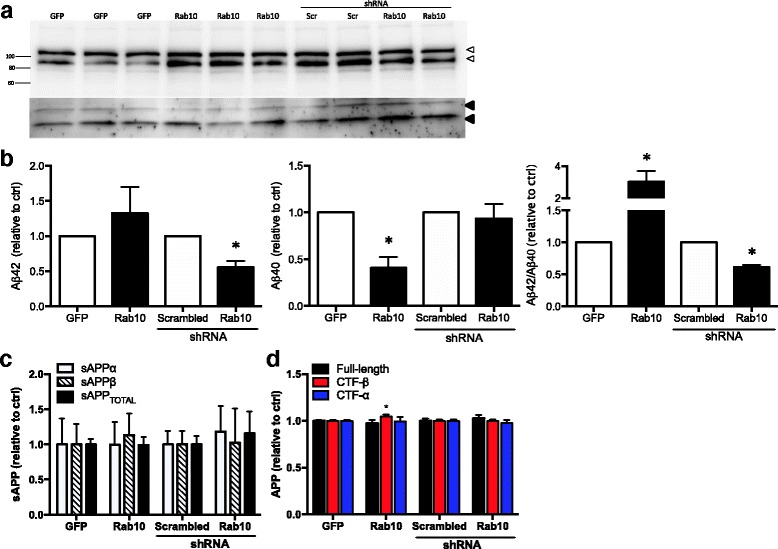
- Knockdown of RAB10 significantly decreased Aβ42 (p = 0.0003) and the Aβ42/Aβ40 ratio (p = 0.0001) in neuroblastoma cells, while RAB10 overexpression increased the Aβ42/Aβ40 ratio (p = 0.0133).
- RAB10 expression was significantly elevated in human AD brains (p = 0.04 in the abstract; Mayo Clinic temporal cortex Simple Model p = 6.96E-09, q = 1.50E-06).
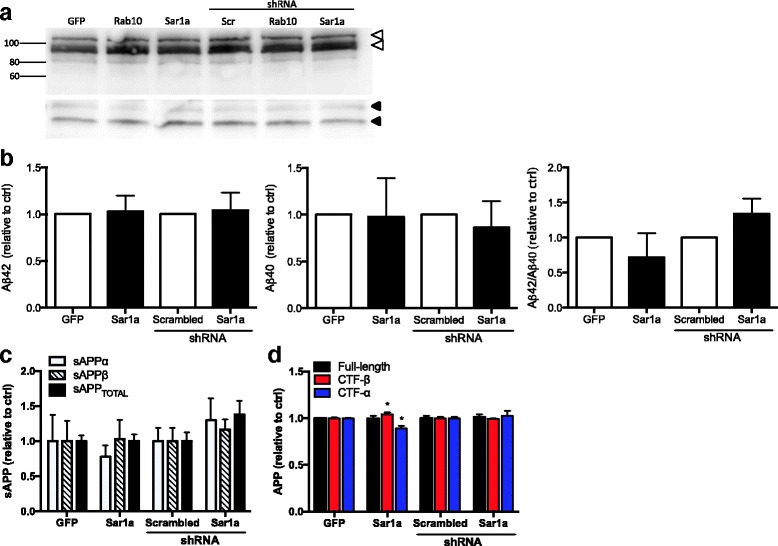
- SAR1A did not replicate in the CCS (p = 0.26, OR = 0.87) and its gene-based test was not significant (p = 1.00); SAR1A functional results were inconclusive.
Methods
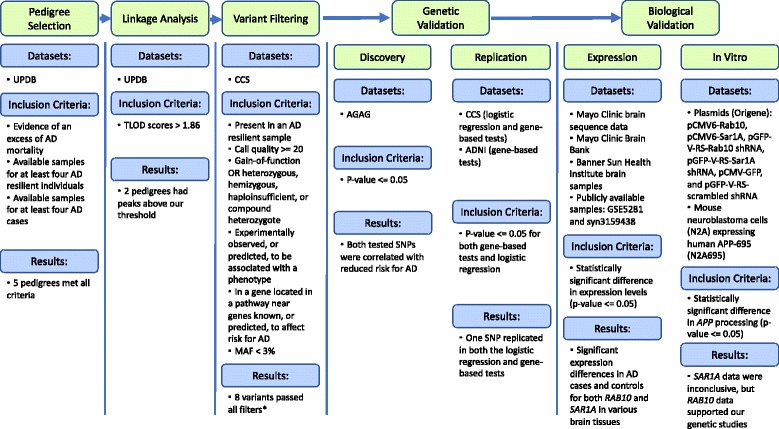
- Pedigree-based discovery: Utah Population Database pedigrees with excess AD mortality plus at least four AD-resilient individuals and four AD cases; linkage analysis with MCLINK identified suggestive peaks on chromosome 2 (TLOD 2.21) and chromosome 10 (TLOD 2.10).
- Samples and sequencing: 232 AD-resilient individuals from the Cache County Study (≥75 years, cognitively normal, ≥1 APOE ε4 allele; 135 females, 97 males, mean age 81), WGS for 212 at ~40×, plus 581 AD cases; validation used the Alzheimer’s Genetic Analysis Group, CCS, and ADNI, with SNP association and SKAT-O gene-based tests.
- Functional and expression work: RAB10 and SAR1A overexpression/knockdown in N2A695 cells with ELISA and immunoblotting; RNAseq expression analyses in 80 AD vs 76 control Mayo Clinic brains and public AD brain datasets.
Limitations
- The paper states that pedigree selection and rarity of AD-resilient samples made significant LOD scores difficult; only suggestive LOD scores were obtained in two of five pedigrees, with no significant LOD scores in any pedigree.
- The paper states that AD affection status relied on ICD9/ICD10 codes on Utah death certificates, which likely undercounts AD deaths and makes estimates conservative; genealogy data may include non-biological or censored relationships, and Utah European-descent results may not generalize.
- The paper states that SAR1A knockdown was only modest and its functional data were inconclusive; evident from the text, the discovery approach selected only one candidate SNP from each linkage peak for further analysis, and the SAR1A variant did not replicate.
Model-written summary. Check it against the paper before relying on it.
Integrity signals
Registry
Cites
Statistics
Figures
Verification
Claims the paper makes
15 Valid · 9 Not valid · 3 Not checked · 76 Own results and interpretations
The cited sources that could be checked couldn’t confirm or dispute this claim.
In the paper
“In neurons, RAB10 is involved in axonogenesis through the regulation of vesicular membrane trafficking toward the axonal plasma membrane [60].”
§ Linkage, whole genome sequence, and biological data implicate variants in RAB10 in Alzheimer’s disease resilience > Discussion
What the sources say
- Could not verifycites [60] English AR Voeltz GK Rab10 GTPase regulates ER dynamics and morphology Nat Cell Biol 2013 15 2 169 78 10.1038/ncb2647 23263280 PMC3582403 sourceExperimental — accuracy not yet measured
The Abstract and Results describe Rab10 regulating ER tubule extension and fusion, including in Cos-7 cells, not axon formation in neurons. Searches for axonogenesis, neurons, and trafficking toward the axonal plasma membrane found no passage addressing the attributed claim. (LLM, conf=0.75)
plainstates a cause- Asserted: passes — The authors put it forward as true.
- Checkable: passes — It can be checked against evidence.
- Load-bearing: unclear — It is unclear whether the paper’s conclusions depend on it.
- Based: passes — The paper gives a reason why it holds.
- Could not verify
Every source the paper cites for this claim was checked and supports it.
In the paper
“the majority of genetic variance is not explained by known AD markers [6]”
§ Linkage, whole genome sequence, and biological data implicate variants in RAB10 in Alzheimer’s disease resilience > Background
What the sources say
- Supportedcites [6] Ridge PG Hoyt KB Boehme K Mukherjee S Crane PK Haines JL Mayeux R Farrer LA Pericak-Vance MA Schellenberg GD Assessment of the genetic variance of late-onset Alzheimer’s disease Neurobiol Aging 2016 41 200 10.1016/j.neurobiolaging.2016.02.024 27036079 PMC4948179 source
The Discussion’s conclusions state that 69% of genetic variance remains unexplained by known AD risk variants. This directly supports the claim that the majority is not explained by known AD markers. (LLM, conf=0.95)
plain- Asserted: passes — The authors put it forward as true.
- Checkable: passes — It can be checked against evidence.
- Load-bearing: passes — The paper’s conclusions depend on it.
- Based: passes — The paper gives a reason why it holds.
- Supported
The cited sources that could be checked couldn’t confirm or dispute this claim.
In the paper
“and SAR1A expression is lower in neurons isolated from AD brains compared to controls [55].”
§ Linkage, whole genome sequence, and biological data implicate variants in RAB10 in Alzheimer’s disease resilience > Discussion
What the sources say
- Could not verifycites [55] Liang WS Dunckley T Beach TG Grover A Mastroeni D Ramsey K Caselli RJ Kukull WA McKeel D Morris JC Altered neuronal gene expression in brain regions differentially affected by Alzheimer’s disease: a reference data set Physiol Genomics 2008 33 2 240 56 10.1152/physiolgenomics.00242.2007 18270320 PMC2826117 sourceExperimental — accuracy not yet measured
The Results and Discussion section reports lower expression of several genes in AD neurons than in controls, but the passages found do not identify SAR1A among them. Searches for “SAR1A” and its gene description found no passage establishing the claimed decrease; the general AD-versus-control comparison does not verify this gene-specific claim. (LLM, conf=0.72)
plainstates an association- Asserted: passes — The authors put it forward as true.
- Checkable: passes — It can be checked against evidence.
- Load-bearing: unclear — It is unclear whether the paper’s conclusions depend on it.
- Based: passes — The paper gives a reason why it holds.
- Could not verify
The cited sources that could be checked couldn’t confirm or dispute this claim.
In the paper
“SAR1A binds APP [51]”
§ Linkage, whole genome sequence, and biological data implicate variants in RAB10 in Alzheimer’s disease resilience > Discussion
What the sources say
- Could not verifycites [51] Olah J Vincze O Virok D Simon D Bozso Z Tokesi N Horvath I Hlavanda E Kovacs J Magyar A Interactions of pathological hallmark proteins: tubulin polymerization promoting protein/p25, beta-amyloid, and alpha-synuclein J Biol Chem 2011 286 39 34088 100 10.1074/jbc.M111.243907 21832049 PMC3190826 sourceExperimental — accuracy not yet measured
The Discussion describes binding between TPPP/p25 and Aβ42, not between SAR1A and APP. Searches for “SAR1A binds APP” and “SAR1A Sar1 amyloid precursor protein interaction” found no passage in our copy addressing the claimed binding. (LLM, conf=0.75)
plainstates an association- Asserted: passes — The authors put it forward as true.
- Checkable: passes — It can be checked against evidence.
- Load-bearing: unclear — It is unclear whether the paper’s conclusions depend on it.
- Based: passes — The paper gives a reason why it holds.
- Could not verify
The cited sources support only part of this claim — read each source’s verdict below.
In the paper
“a majority of remaining AD variants are likely to be rare [6, 8]”
§ Linkage, whole genome sequence, and biological data implicate variants in RAB10 in Alzheimer’s disease resilience > Background
What the sources say
- Partly supportedcites [6] Ridge PG Hoyt KB Boehme K Mukherjee S Crane PK Haines JL Mayeux R Farrer LA Pericak-Vance MA Schellenberg GD Assessment of the genetic variance of late-onset Alzheimer’s disease Neurobiol Aging 2016 41 200 10.1016/j.neurobiolaging.2016.02.024 27036079 PMC4948179 sourceExperimental — accuracy not yet measured
The Conclusions (section 4.1; page not provided) say that variants yet to be discovered are likely to be rare. They also say that a majority (69%) of genetic variance remains unexplained, but do not establish that a majority of the remaining variants, by number, are rare. (LLM, conf=0.83)
- Partly supportedcites [8] Ridge PG Mukherjee S Crane PK Kauwe JS Alzheimer’s Disease Genetics C Alzheimer’s disease: analyzing the missing heritability PLoS One 2013 8 11 e79771 10.1371/journal.pone.0079771 24244562 PMC3820606 sourceExperimental — accuracy not yet measured
The Discussion says that remaining AD variants with large effects are likely to be very rare. It also anticipates additional common variants with small effects, and does not say that rare variants will constitute a majority of all remaining AD variants. Page numbers are not available in our copy. (LLM, conf=0.84)
hedged- Asserted: passes — The authors put it forward as true.
- Checkable: passes — It can be checked against evidence.
- Load-bearing: passes — The paper’s conclusions depend on it.
- Based: passes — The paper gives a reason why it holds.
- Partly supported
48 more claims · 1 with their cited sources checked
Create a free account to see all 103 claims and every source verdict.
- It may state two separate claims as one. 20
- Probably not a substantial claim. 38
Claims other papers make about this one
Each is checked against this paper’s own text: does it say what the citing paper says it does?
The source backs part of the claim, not all of it — or backs it for a different population, condition or comparison.
In the citing paper
“Rab10 and its phosphorylated form, pRab10 likely play a role in neurodegenerative diseases including Parkinson’s and Alzheimer’s diseases [64, 79, 94].”
From Cellular and subcellular localization of Rab10 and phospho-T73 Rab10 in the mouse and human brain (2023) · cites this paper as [64]
Experimental — accuracy not yet measuredThe source backs part of the claim, not all of it — or backs it for a different population, condition or comparison.
In the citing paper
“Rab10 and its phosphorylated form, pRab10 likely play a role in neurodegenerative diseases including Parkinson’s and Alzheimer’s diseases [64, 79, 94].”
From Cellular and subcellular localization of Rab10 and phospho-T73 Rab10 in the mouse and human brain (2023) · cites this paper as [64]
Experimental — accuracy not yet measuredThe cited source says what the claim attributes to it.
In the citing paper
“Furthermore, a variant of Rab10 was identified as potentially protective in Alzheimer’s disease [64].”
From Cellular and subcellular localization of Rab10 and phospho-T73 Rab10 in the mouse and human brain (2023) · cites this paper as [64]
The cited source says what the claim attributes to it.
In the citing paper
“Ridge et al identified a rare variant (rs142787485) in the 3′-UTR of RAB10 that confers resilience to AD.10”
From RAB10: an Alzheimer’s disease resilience locus and potential drug target (2018) · cites this paper as [10]
In the citing paper
“More recently, iPSCs were successfully obtain from post-mortem human brain tissue, specifically dura mater fibroblasts91.”
From CRISPR-based functional genomics for neurological disease (2020) · cites this paper as [91]
2 more claims about this paper
Create a free account to see every claim other papers make about this one.
Self-check
Percentages, sums and reported differences re-computed from the paper’s own numbers.
Each contradiction between two passages listed here was confirmed by an independent check.
Rated major: it would touch a result — a value a result rests on, reported and recomputed p-values on opposite sides of the significance level, two passages that conflict with no sign which is right, or a cited work retracted before this paper was published.
In the paper
§ Linkage, whole genome sequence, and biological data implicate variants in RAB10 in Alzheimer’s disease resilience > Results > Association with AD risk
“Both SNPs are rare, with 1000 Genomes minor allele frequencies of 0.0136 and 0.0168, for rs142787485 and rs7653, respectively.”
§ Linkage, whole genome sequence, and biological data implicate variants in RAB10 in Alzheimer’s disease resilience > Results > Association with AD risk
“| rs142787485 | 2 | 26358156 | RAB10 | 3′ UTR | 0.041/0.028 | 0.0152/NA | | rs77747916 | 2 | 29405333 | CLIP4 | 3′ UTR | 0.0099/0.0069 | 0.0087/NA | | rs41291171 | 2 | 33623713 | LTBP1 | 3′ UTR | 0.049/0.049 | 0.0243/NA | | rs7653 | 10 | 71910316 | SAR1A | 3′ UTR | 0.03/0.0092 | 0.0175/NA |”
Rated major: it would touch a result — a value a result rests on, reported and recomputed p-values on opposite sides of the significance level, two passages that conflict with no sign which is right, or a cited work retracted before this paper was published.
In the paper
§ Linkage, whole genome sequence, and biological data implicate variants in RAB10 in Alzheimer’s disease resilience > Results > Over-expression and knockdown of RAB10 and SAR1A
“Rab10 expression does not significantly alter sAPP levels.”
§ Linkage, whole genome sequence, and biological data implicate variants in RAB10 in Alzheimer’s disease resilience > Results > Over-expression and knockdown of RAB10 and SAR1A
“| RAB10 over-expression | sAPPbeta | 0.0187 | 0.1466 ± 0.04776 |”
Rated minor: it would not touch a result — a value no result rests on, a p-value that stays on the same side of the significance level, or a conflict that is clerical, resolved elsewhere in the paper, or outside its own findings.
In the paper
§ Linkage, whole genome sequence, and biological data implicate variants in RAB10 in Alzheimer’s disease resilience > Abstract > Methods
“Second, we used whole genome sequences to identify candidate SNPs in significant linkage regions.”
§ Linkage, whole genome sequence, and biological data implicate variants in RAB10 in Alzheimer’s disease resilience > Discussion
“As a result, we obtained suggestive LOD scores in two of the five pedigrees, but no significant LOD scores in any of the pedigrees.”
Rated minor: it would not touch a result — a value no result rests on, a p-value that stays on the same side of the significance level, or a conflict that is clerical, resolved elsewhere in the paper, or outside its own findings.
In the paper
§ Linkage, whole genome sequence, and biological data implicate variants in RAB10 in Alzheimer’s disease resilience > Discussion
“Approximately 50% knockdown of RAB10 resulted in a 45% reduction in Aβ42 levels (p value = 0.0003) and a 61% reduction in the Aβ42/Aβ40 (p value = 0.0001) ratio.”
§ Linkage, whole genome sequence, and biological data implicate variants in RAB10 in Alzheimer’s disease resilience > Results > Over-expression and knockdown of RAB10 and SAR1A
“| RAB10 knockdown | Aβ42/Aβ40 | 0.0001 | −0.3876 ± 0.02243 |”
Citations
Cites
Cleavage of Structural Proteins during the Assembly of the Head of Bacteriophage T4
LAEMMLI, U. K. (1970) · Nature · doi:10.1038/227680a0 · Cited by 249,961 · cited 1×
“Samples were boiled in Laemmli sample buffer prior to electrophoresis [50].”
MethodThe Sequence Alignment/Map format and SAMtools
Li, H., Handsaker, B., Wysoker, A., Fennell, T., Ruan, J., Homer, N., Marth, G., Abecasis, G., Durbin, R., & 1000 Genome Project Data Processing Subgroup (2009) · Bioinformatics · doi:10.1093/bioinformatics/btp352 · Cited by 62,041
Fast and accurate short read alignment with Burrows-Wheeler transform
Li, H., & Durbin, R. (2009) · Bioinformatics · doi:10.1093/bioinformatics/btp324 · Cited by 58,607
PLINK: a tool set for whole-genome association and population-based linkage analyses.
Purcell, S., Neale, B., Todd-Brown, K., Thomas, L., Ferreira, M. A. R., Bender, D., Maller, J., Sklar, P., de Bakker, P. I. W., Daly, M. J., et al. (2007) · The American Journal of Human Genetics · doi:10.1086/519795 · Cited by 34,089 · cited 2×
“Purcell S, Neale B, Todd-Brown K, Thomas L, Ferreira MA, Bender D, Maller J, Sklar P, de Bakker PI, Daly MJ, et al. PLINK: a tool set for whole-genome association and population-based linkage analyses.”
MethodThe Genome Analysis Toolkit: A MapReduce framework for analyzing next-generation DNA sequencing data
McKenna, A., Hanna, M., Banks, E., Sivachenko, A., Cibulskis, K., Kernytsky, A., Garimella, K., Altshuler, D., Gabriel, S., Daly, M., et al. (2010) · Genome Research · doi:10.1101/gr.107524.110 · Cited by 27,895
A global reference for human genetic variation
The 1000 Genomes Project Consortium, authors, C., Auton, A., Abecasis, G. R., Steering committee, Altshuler, D. M., Durbin, R. M., Abecasis, G. R., Bentley, D. R., Chakravarti, A., et al. (2015) · Nature · doi:10.1038/nature15393 · Cited by 18,247
A method and server for predicting damaging missense mutations.
Adzhubei, I. A., Schmidt, S., Peshkin, L., Ramensky, V. E., Gerasimova, A., Bork, P., Kondrashov, A. S., & Sunyaev, S. R. (2010) · Nature Methods · doi:10.1038/nmeth0410-248 · Cited by 13,194 · cited 1×
“(01/2013) [37], BSIFT (01/2013), The Cancer Genome Atlas (09/05/2013), PolyPhen-2 (HumVar Training set 2011_12) [38], Clinvar (02/11/2014).”
Predicting effective microRNA target sites in mammalian mRNAs
Agarwal, V., Bell, G. W., Nam, J.-W., & Bartel, D. P. (2015) · eLife · doi:10.7554/elife.05005 · Cited by 7,318
Kumar, P., Henikoff, S., & Ng, P. C. (2009) · Nature Protocols · doi:10.1038/nprot.2009.86 · Cited by 6,521
Genetic dissection of complex traits: guidelines for interpreting and reporting linkage results
Lander, E., & Kruglyak, L. (1995) · Nature Genetics · doi:10.1038/ng1195-241 · Cited by 5,239 · cited 3×
“30 as significant, as defined by Lander and Kruglyak [30].”
BackgroundInfluentialRomán, G. C., Tatemichi, T. K., Erkinjuntti, T., Cummings, J. L., Masdeu, J. C., Garcia, J. H., Amaducci, L., Orgogozo, J.-M., Brun, A., Hofman, A., et al. (1993) · Neurology · doi:10.1212/wnl.43.2.250 · Cited by 4,921
Zhang, Y., Chen, K., Sloan, S. A., Bennett, M. L., Scholze, A. R., O'Keeffe, S., Phatnani, H. P., Guarnieri, P., Caneda, C., Ruderisch, N., et al. (2014) · The Journal of Neuroscience · doi:10.1523/jneurosci.1860-14.2014 · Cited by 4,875 · cited 2×
“expressed in all regions of both the human and mouse brains [53, 54], and SAR1A expression is lower in neurons isolated from AD brains compared to controls [55].”
BackgroundMeta-Analysis of 74,046 Individuals Identifies 11 New Susceptibility Loci for Alzheimer’s Disease
(EADI), E. A. D. I., Lambert, J.-C., (GERAD), G. A. E. R. I. A. D., Alzheimer's Disease Genetic Consortium (ADGC), (CHARGE), C. F. H. A. A. R. I. G. E., Ibrahim-Verbaas, C. A., Harold, D., Naj, A. C., Sims, R., Bellenguez, C., et al. (2013) · Nature Genetics · doi:10.1038/ng.2802 · Cited by 4,336
Self-citationHarold, D., Abraham, R., Hollingworth, P., Sims, R., Gerrish, A., Hamshere, M. L., Pahwa, J. S., Moskvina, V., Dowzell, K., Williams, A., et al. (2009) · Nature Genetics · doi:10.1038/ng.440 · Cited by 3,326
Self-citationAn anatomically comprehensive atlas of the adult human brain transcriptome
Hawrylycz, M. J., Lein, E. S., Guillozet-Bongaarts, A. L., Shen, E. H., Ng, L., Miller, J. A., van de Lagemaat, L. N., Smith, K. A., Ebbert, A., Riley, Z. L., et al. (2012) · Nature · doi:10.1038/nature11405 · Cited by 3,083 · cited 2×
“expressed in all regions of both the human and mouse brains [53, 54], and SAR1A expression is lower in neurons isolated from AD brains compared to controls [55].”
BackgroundTREM2 Variants in Alzheimer's Disease
Guerreiro, R., Wojtas, A., Bras, J., Carrasquillo, M., Rogaeva, E., Majounie, E., Cruchaga, C., Sassi, C., Kauwe, J. S. K., Younkin, S., et al. (2013) · New England Journal of Medicine · doi:10.1056/nejmoa1211851 · Cited by 3,020 · cited 2×
“The TREM2 variant R47H, for example, was discovered using a study design that preserved statistical power by focusing solely on genetic variants that were likely to affect protein function [11, 12], whereas the PLD3 variant, V232M, was identified using a family-based study design [13].”
BackgroundMethodSelf-citationThe NHGRI GWAS Catalog, a curated resource of SNP-trait associations
Welter, D., MacArthur, J., Morales, J., Burdett, T., Hall, P., Junkins, H., Klemm, A., Flicek, P., Manolio, T., Hindorff, L., et al. (2014) · Nucleic Acids Research · doi:10.1093/nar/gkt1229 · Cited by 2,707 · cited 1×
“NHGRI-EBI GWAS Catalog (accessed 18 September 2017) [62].”
Variant of TREM2 Associated with the Risk of Alzheimer's Disease
Jonsson, T., Stefansson, H., Steinberg, S., Jonsdottir, I., Jonsson, P. V., Snaedal, J., Bjornsson, S., Huttenlocher, J., Levey, A. I., Lah, J. J., et al. (2013) · New England Journal of Medicine · doi:10.1056/nejmoa1211103 · Cited by 2,558 · cited 1×
“The TREM2 variant R47H, for example, was discovered using a study design that preserved statistical power by focusing solely on genetic variants that were likely to affect protein function [11, 12], whereas the PLD3 variant, V232M, was identified using a family-based study design [13].”
BackgroundDetection of nonneutral substitution rates on mammalian phylogenies
Pollard, K. S., Hubisz, M. J., Rosenbloom, K. R., & Siepel, A. (2010) · Genome Research · doi:10.1101/gr.097857.109 · Cited by 2,353 · cited 1×
“21), JASPAR (10/12/2009) [34], PhyloP hg18 (11/2009), PhyloP hg19 (01/2009) [35], Vista Enhancer hg18 (10/27/2007), Vista Enhancer hg19 (12/26/2010) [36], CGI Genomes (11/2011), SIFT Ridge et al.”
COSMIC: exploring the world's knowledge of somatic mutations in human cancer
Forbes, S. A., Beare, D., Gunasekaran, P., Leung, K., Bindal, N., Boutselakis, H., Ding, M., Bamford, S., Cole, C., Ward, S., et al. (2015) · Nucleic Acids Research · doi:10.1093/nar/gku1075 · Cited by 2,283 · cited 1×
“002), COSMIC (v68) [31], dbSNP (build 138 (08/09/2013)), 1000 Genome Frequency (v3) [32], TargetScan (v6.”
Genome-wide association study identifies variants at CLU and CR1 associated with Alzheimer's disease
the European Alzheimer's Disease Initiative Investigators, Lambert, J.-C., Heath, S., Even, G., Campion, D., Sleegers, K., Hiltunen, M., Combarros, O., Zelenika, D., Bullido, M. J., et al. (2009) · Nature Genetics · doi:10.1038/ng.439 · Cited by 2,234
Initiative, T. A. D. N., Hollingworth, P., CHARGE consortium, EADI1 consortium, Harold, D., Sims, R., Gerrish, A., Lambert, J.-C., Carrasquillo, M. M., Abraham, R., et al. (2011) · Nature Genetics · doi:10.1038/ng.803 · Cited by 1,997
Self-citationNaj, A. C., Jun, G., Beecham, G. W., Wang, L.-S., Vardarajan, B. N., Buros, J., Gallins, P. J., Buxbaum, J. D., Jarvik, G. P., Crane, P. K., et al. (2011) · Nature Genetics · doi:10.1038/ng.801 · Cited by 1,901
Self-citationIdentifying differentially expressed genes using false discovery rate controlling procedures
Reiner, A., Yekutieli, D., & Benjamini, Y. (2003) · Bioinformatics · doi:10.1093/bioinformatics/btf877 · Cited by 1,765 · cited 1×
“Significance accounting for multiple testing was assigned using q values which are based on false discovery rates [43].”
MethodA mutation in APP protects against Alzheimer’s disease and age-related cognitive decline
Jonsson, T., Atwal, J. K., Steinberg, S., Snaedal, J., Jonsson, P. V., Bjornsson, S., Stefansson, H., Sulem, P., Gudbjartsson, D., Maloney, J., et al. (2012) · Nature · doi:10.1038/nature11283 · Cited by 1,738 · cited 1×
“Recently, several possibly functional, rare variants with large protective [9, 10] and risk effects [11–13] have been identified for AD in APP, APOE, PLD3, and TREM2 using novel study designs.”
BackgroundIntegrated Systems Approach Identifies Genetic Nodes and Networks in Late-Onset Alzheimer’s Disease
Zhang, B., Gaiteri, C., Bodea, L.-G., Wang, Z., McElwee, J., Podtelezhnikov, A. A., Zhang, C., Xie, T., Tran, L., Dobrin, R., et al. (2013) · Cell · doi:10.1016/j.cell.2013.03.030 · Cited by 1,657 · cited 1×
“The syn3159438 dataset was obtained from anterior prefrontal cortex (APC), superior temporal gyrus (STG), parahippocampal gyrus (PHG), and pars opercularis (PO) [45].”
MethodRole of Rab GTPases in Membrane Traffic and Cell Physiology
Hutagalung, A. H., & Novick, P. J. (2011) · Physiological Reviews · doi:10.1152/physrev.00059.2009 · Cited by 1,460 · cited 1×
“RAB10 plays a role in endocytosis, which has been implicated in AD [56, 57], and is involved in membrane trafficking regulation and moving proteins from the Golgi apparatus to the membrane [58, 59].”
BackgroundProcessing of gene expression data generated by quantitative real-time RT-PCR.
Muller, P. Y., Janovjak, H., Miserez, A. R., & Dobbie, Z. (2002) · PubMed · Cited by 1,394
Alzheimer’s Disease Risk Genes and Mechanisms of Disease Pathogenesis
Karch, C. M., & Goate, A. M. (2015) · Biological Psychiatry · doi:10.1016/j.biopsych.2014.05.006 · Cited by 1,357 · cited 1×
“Identifying functional variants, such as the variants in APP, APOE, PLD3, and TREM2 provide key insights into disease mechanisms [14, 15].”
BackgroundSelf-citationVISTA Enhancer Browser—a database of tissue-specific human enhancers
Visel, A., Minovitsky, S., Dubchak, I., & Pennacchio, L. A. (2007) · Nucleic Acids Research · doi:10.1093/nar/gkl822 · Cited by 1,080 · cited 1×
“21), JASPAR (10/12/2009) [34], PhyloP hg18 (11/2009), PhyloP hg19 (01/2009) [35], Vista Enhancer hg18 (10/27/2007), Vista Enhancer hg19 (12/26/2010) [36], CGI Genomes (11/2011), SIFT Ridge et al.”
Lee, S., Emond, M. J., Bamshad, M. J., Barnes, K. C., Rieder, M. J., Nickerson, D. A., Christiani, D. C., Wurfel, M. M., & Lin, X. (2012) · The American Journal of Human Genetics · doi:10.1016/j.ajhg.2012.06.007 · Cited by 1,066 · cited 1×
“Next, we used the sequence kernel association test (SKAT)-O to perform gene-based association tests in the ADNI samples to test whether each gene was a potential AD resilience gene [41].”
MethodMathelier, A., Fornes, O., Arenillas, D. J., Chen, C.-Y., Denay, G., Lee, J., Shi, W., Shyr, C., Tan, G., Worsley-Hunt, R., et al. (2016) · Nucleic Acids Research · doi:10.1093/nar/gkv1176 · Cited by 937 · cited 1×
“21), JASPAR (10/12/2009) [34], PhyloP hg18 (11/2009), PhyloP hg19 (01/2009) [35], Vista Enhancer hg18 (10/27/2007), Vista Enhancer hg19 (12/26/2010) [36], CGI Genomes (11/2011), SIFT Ridge et al.”
Liang, W. S., Reiman, E. M., Valla, J., Dunckley, T., Beach, T. G., Grover, A., Niedzielko, T. L., Schneider, L. E., Mastroeni, D., Caselli, R., et al. (2008) · Proceedings of the National Academy of Sciences · doi:10.1073/pnas.0709259105 · Cited by 585 · cited 1×
“The GSE5281 dataset was obtained from laser microdissected neurons from AD and control brains [44].”
MethodRare coding variants in the phospholipase D3 gene confer risk for Alzheimer’s disease
Cruchaga, C., Karch, C. M., Jin, S. C., Benitez, B. A., Cai, Y., Guerreiro, R., Harari, O., Norton, J., Budde, J., Bertelsen, S., et al. (2014) · Nature · doi:10.1038/nature12825 · Cited by 461 · cited 1×
“The TREM2 variant R47H, for example, was discovered using a study design that preserved statistical power by focusing solely on genetic variants that were likely to affect protein function [11, 12], whereas the PLD3 variant, V232M, was identified using a family-based study design [13].”
BackgroundSelf-citationAllen, M., Carrasquillo, M. M., Funk, C., Heavner, B. D., Zou, F., Younkin, C. S., Burgess, J. D., Chai, H.-S., Crook, J., Eddy, J. A., et al. (2016) · Scientific Data · doi:10.1038/sdata.2016.89 · Cited by 439 · cited 1×
“These brains were part of the Mayo Clinic RNA sequencing (RNAseq) cohort, described previously [42].”
MethodSelf-citationAPOE -ε4 count predicts age when prevalence of AD increases, then declines: The Cache County Study
Breitner, J. C. S., Wyse, B. W., Anthony, J. C., Welsh-Bohmer, K. A., Steffens, D. C., Norton, M. C., Tschanz, J. T., Plassman, B. L., Meyer, M. R., Skoog, I., et al. (1999) · Neurology · doi:10.1212/wnl.53.2.321 · Cited by 397
Self-citationAlzheimer’s disease: analyzing the missing heritability
Ridge, P. G., Mukherjee, S., Crane, P. K., Kauwe, J. S. K., & Alzheimer’s Disease Genetics Consortium (2013) · PLoS ONE · doi:10.1371/journal.pone.0079771 · Cited by 328 · cited 1×
“remaining AD variants are likely to be rare [6, 8]; 4) and the functional consequences of known AD markers, or surrounding genetic variants, are unknown.”
BackgroundSelf-citationExpression of Novel Alzheimer’s Disease Risk Genes in Control and Alzheimer’s Disease Brains
Karch, C. M., Jeng, A. T., Nowotny, P., Cady, J., Cruchaga, C., & Goate, A. M. (2012) · PLoS ONE · doi:10.1371/journal.pone.0050976 · Cited by 328 · cited 1×
“An analysis of covariance, including age and sex as covariates, was used to determine association with disease status as previously described [46, 47].”
MethodSelf-citationMetabolism of the “Swedish” Amyloid Precursor Protein Variant in Neuro2a (N2a) Cells
Thinakaran, G., Teplow, D. B., Siman, R., Greenberg, B., & Sisodia, S. S. (1996) · Journal of Biological Chemistry · doi:10.1074/jbc.271.16.9390 · Cited by 317
Liang, W. S., Dunckley, T., Beach, T. G., Grover, A., Mastroeni, D., Ramsey, K., Caselli, R. J., Kukull, W. A., McKeel, D., Morris, J. C., et al. (2008) · Physiological Genomics · doi:10.1152/physiolgenomics.00242.2007 · Cited by 309 · cited 2×
“expressed in all regions of both the human and mouse brains [53, 54], and SAR1A expression is lower in neurons isolated from AD brains compared to controls [55].”
BackgroundGenetic insights in Alzheimer's disease
Bettens, K., Sleegers, K., & Van Broeckhoven, C. (2013) · The Lancet Neurology · doi:10.1016/s1474-4422(12)70259-4 · Cited by 290 · cited 1×
“Identifying functional variants, such as the variants in APP, APOE, PLD3, and TREM2 provide key insights into disease mechanisms [14, 15].”
BackgroundGinsberg, S. D., Alldred, M. J., Counts, S. E., Cataldo, A. M., Neve, R. L., Jiang, Y., Wuu, J., Chao, M. V., Mufson, E. J., Nixon, R. A., et al. (2010) · Biological Psychiatry · doi:10.1016/j.biopsych.2010.05.030 · Cited by 243 · cited 1×
“RAB10 plays a role in endocytosis, which has been implicated in AD [56, 57], and is involved in membrane trafficking regulation and moving proteins from the Golgi apparatus to the membrane [58, 59].”
BackgroundAssessment of the genetic variance of late-onset Alzheimer's disease
Ridge, P. G., Hoyt, K. B., Boehme, K., Mukherjee, S., Crane, P. K., Haines, J. L., Mayeux, R., Farrer, L. A., Pericak-Vance, M. A., Schellenberg, G. D., et al. (2016) · Neurobiology of Aging · doi:10.1016/j.neurobiolaging.2016.02.024 · Cited by 236 · cited 2×
“remaining AD variants are likely to be rare [6, 8]; 4) and the functional consequences of known AD markers, or surrounding genetic variants, are unknown.”
BackgroundSelf-citationRab10 GTPase regulates ER dynamics and morphology
English, A. R., & Voeltz, G. K. (2013) · Nature Cell Biology · doi:10.1038/ncb2647 · Cited by 224 · cited 1×
“In neurons, RAB10 is involved in axonogenesis through the regulation of vesicular membrane trafficking toward the axonal plasma membrane [60].”
BackgroundWatson, P., Townley, A. K., Koka, P., Palmer, K. J., & Stephens, D. J. (2006) · Traffic · doi:10.1111/j.1600-0854.2006.00493.x · Cited by 221 · cited 1×
“The exact function of SAR1A, a GTPase, is unknown, but it is believed to be involved in membrane trafficking and is part of the endoplasmic reticulum to Golgi apparatus transport complex [61].”
BackgroundUdayar, V., Buggia-Prévot, V., Guerreiro, R. L., Siegel, G., Rambabu, N., Soohoo, A. L., Ponnusamy, M., Siegenthaler, B., Bali, J., Guerreiro, R., et al. (2013) · Cell Reports · doi:10.1016/j.celrep.2013.12.005 · Cited by 147
Self-citationInteractions of Pathological Hallmark Proteins
Oláh, J., Vincze, O., Virók, D., Simon, D., Bozsó, Z., Tőkési, N., Horváth, I., Hlavanda, E., Kovács, J., Magyar, A., et al. (2011) · Journal of Biological Chemistry · doi:10.1074/jbc.m111.243907 · Cited by 137
Multilocus linkage analysis by blocked Gibbs sampling
Thomas, A., Gutin, A., Abkevich, V., & Bansal, A. T. (2000) · Statistics and Computing · doi:10.1023/a:1008947712763 · Cited by 113
Alzheimer’s disease risk polymorphisms regulate gene expression in the ZCWPW1 and the CELF1 loci
Karch, C. M., Ezerskiy, L. A., Bertelsen, S., Alzheimer’s Disease Genetics Consortium (ADGC), & Goate, A. M. (2016) · PLoS ONE · doi:10.1371/journal.pone.0148717 · Cited by 111
Self-citationApoE variant p.V236E is associated with markedly reduced risk of Alzheimer’s disease
Medway, C. W., Abdul-Hay, S., Mims, T., Ma, L., Bisceglio, G., Zou, F., Pankratz, S., Sando, S. B., Aasly, J. O., Barcikowska, M., et al. (2014) · Molecular Neurodegeneration · doi:10.1186/1750-1326-9-11 · Cited by 82 · cited 1×
“Recently, several possibly functional, rare variants with large protective [9, 10] and risk effects [11–13] have been identified for AD in APP, APOE, PLD3, and TREM2 using novel study designs.”
BackgroundSelf-citationRab GTPases implicated in inherited and acquired disorders
Mitra, S., Cheng, K. W., & Mills, G. B. (2011) · Seminars in Cell & Developmental Biology · doi:10.1016/j.semcdb.2010.12.005 · Cited by 78 · cited 1×
“RAB10 plays a role in endocytosis, which has been implicated in AD [56, 57], and is involved in membrane trafficking regulation and moving proteins from the Golgi apparatus to the membrane [58, 59].”
BackgroundPopulation-based analysis of Alzheimer’s disease risk alleles implicates genetic interactions.
Ebbert, M. T. W., Ridge, P. G., Wilson, A. R., Sharp, A. R., Bailey, M., Norton, M. C., Tschanz, J. T., Munger, R. G., Corcoran, C. D., & Kauwe, J. S. K. (2014) · Biological Psychiatry · doi:10.1016/j.biopsych.2013.07.008 · Cited by 57
Self-citationRoss, C. J. D., Liu, G., Kuivenhoven, J. A., Twisk, J., Rip, J., van Dop, W., Ashbourne Excoffon, K. J. D., Lewis, S. M. E., Kastelein, J. J., & Hayden, M. R. (2005) · Arteriosclerosis, Thrombosis, and Vascular Biology · doi:10.1161/01.atv.0000176971.27302.b0 · Cited by 53
Correcting for multiple analyses in genomewide linkage studies
CAMP, N. J., & FARNHAM, J. M. (2001) · Annals of Human Genetics · doi:10.1046/j.1469-1809.2001.6560577.x · Cited by 50 · cited 1×
“0005, respectively, and we considered different modes of inheritance and corrected for multiple tests [28].”
MethodSelf-citationInfluence of Coding Variability in APP-Aβ Metabolism Genes in Sporadic Alzheimer’s Disease
Sassi, C., Ridge, P. G., Nalls, M. A., Gibbs, R., Ding, J., Lupton, M. K., Troakes, C., Lunnon, K., Al-Sarraj, S., Brown, K. S., et al. (2016) · PLOS ONE · doi:10.1371/journal.pone.0150079 · Cited by 43
Self-citationA Robust Multipoint Linkage Statistic (tlod) for Mapping Complex Trait Loci
Abkevich, V., Camp, N. J., Gutin, A., Farnham, J. M., Cannon‐Albright, L., & Thomas, A. (2001) · Genetic Epidemiology · doi:10.1002/gepi.2001.21.s1.s492 · Cited by 27 · cited 1×
“For parametric analyses, MCLINK calculates robust multi-point linkage scores (theta LODs or TLODs) [29].”
MethodSelf-citationCloning of Rab GTPases Expressed in Human Skeletal Muscle: Studies in Insulin-Resistant Subjects
Bao, S., Zhu, J., & Garvey, W. (1998) · Hormone and Metabolic Research · doi:10.1055/s-2007-978953 · Cited by 21 · cited 1×
“RAB10 plays a role in endocytosis, which has been implicated in AD [56, 57], and is involved in membrane trafficking regulation and moving proteins from the Golgi apparatus to the membrane [58, 59].”
BackgroundKauwe, J. S. K., Ridge, P. G., Foster, N. L., & Cannon‐Albright, L. (2013) · PLoS ONE · doi:10.1371/journal.pone.0077087 · Cited by 18 · cited 1×
“[19] to identify large pedigrees with a statistical excess of AD mortality.”
BackgroundSelf-citationGain-of-Function Mutations and Therapeutic Implications: Lipoprotein Lipase S447X to the Rescue
Rader, D. J. (2005) · Arteriosclerosis, Thrombosis, and Vascular Biology · doi:10.1161/01.atv.0000183606.81315.85 · Cited by 10 · cited 1×
“Since functional variants are more likely to represent tractable drug targets than other types of variants, they should be a major focus of AD genetics research [16, 17].”
BackgroundPopulation substructure in Cache County, Utah: the Cache County study
Sharp, A. R., Ridge, P. G., Bailey, M. H., Boehme, K. L., Norton, M. C., Tschanz, J. T., Munger, R. G., Corcoran, C. D., Kauwe, J. S., & (ADNI), A. D. N. I. (2014) · BMC Bioinformatics · doi:10.1186/1471-2105-15-s7-s8 · Cited by 6 · cited 1×
“Recent analyses confirm that these data are representative of the general European-American population [22].”
Self-citation
Research works printed but not linked: 2
- Skolnick M Cairns J Lyons J Skolnick M The Utah Geneological database: a resource for genetic epidemiology Banbury Report No 4: Cancer incidence in defined populations 1980 New York Cold Spring Harbor Laboratory Press 285 97
- Murray C U.S. Patterns of mortality by county and race: 1965-1994 1998 Cambridge Harvard Center for Population and Development Studies
Cited by
The multiplex model of the genetics of Alzheimer's disease
Sims, R., Hill, M., & Williams, J. (2020) · Nature Neuroscience · doi:10.1038/s41593-020-0599-5 · Cited by 466
Dhekne, H. S., Yanatori, I., Gomez, R. C., Tonelli, F., Diez, F., Schüle, B., Steger, M., Alessi, D. R., & Pfeffer, S. R. (2018) · eLife · doi:10.7554/elife.40202 · Cited by 240
Genetics of Alzheimer’s disease: where we are, and where we are going
Bellenguez, C., Grenier-Boley, B., & Lambert, J.-C. (2020) · Current Opinion in Neurobiology · doi:10.1016/j.conb.2019.11.024 · Cited by 215
Novikova, G., Kapoor, M., TCW, J., Abud, E. M., Efthymiou, A. G., Chen, S. X., Cheng, H., Fullard, J. F., Bendl, J., Liu, Y., et al. (2021) · Nature Communications · doi:10.1038/s41467-021-21823-y · Cited by 214
Self-citationMicroglial Phagocytosis: A Disease-Associated Process Emerging from Alzheimer’s Disease Genetics
Podleśny-Drabiniok, A., Marcora, E., & Goate, A. M. (2020) · Trends in Neurosciences · doi:10.1016/j.tins.2020.10.002 · Cited by 211
Self-citation
Metadata
- Authors
- Initiative, F. T. A. D. N., Ridge, P. G., Karch, C. M., Hsu, S., Arano, I., Teerlink, C. C., Ebbert, M. T. W., Gonzalez Murcia, J. D., Farnham, J. M., Damato, A. R., Allen, M., Wang, X., Harari, O., Fernandez, V. M., Guerreiro, R., Bras, J., Hardy, J., Munger, R., Norton, M., Sassi, C., Singleton, A., Younkin, S. G., Dickson, D. W., Golde, T. E., Price, N. D., Ertekin-Taner, N., Cruchaga, C., Goate, A. M., Corcoran, C., Tschanz, J., Cannon-Albright, L. A., & Kauwe, J. S. K.
- Affiliations
- Brigham Young University (US)
- Washington University in St. Louis (US)
- Mayo Clinic (US)
- UCL Queen Square Institute of Neurology (GB)
- Utah State University (US)
- National Institutes of Health (US)
- Institute for Systems Biology (US)
- Corresponding author
- Kauwe, John S. K.
- ORCID
- Ridge, Perry G.
- Karch, Celeste M.
- Hsu, Simon
- Teerlink, Craig C.
- Ebbert, Mark T. W.
- Farnham, James M.
- Damato, Anna R.
- Allen, Mariet
- Wang, Xue
- Harari, Oscar
- Guerreiro, Rita
- Hardy, John
- Munger, Ronald
- Norton, Maria
- Sassi, Celeste
- Singleton, Andrew
- Dickson, Dennis W.
- Golde, Todd E.
- Price, Nathan D.
- Cruchaga, Carlos
- Goate, Alison M.
- Tschanz, JoAnn
- Venue
- Genome Medicine
- Published
- 2017-11-29
- Volume
- 9
- Issue
- 1
- Pages
- 100-100
- ISSN
- 1756-994X (ISSN-L)
- PMC
- PMC5706401
- OpenAlex
- W2768955389
- Cited by
- 83
- References
- 60
- Citations by year
- 2026: 3 · 2025: 7 · 2024: 13 · 2023: 4 · 2022: 12 · 2021: 12 · 2020: 14 · 2019: 9 · 2018: 9
- FWCI
- 6.48
- Type
- journal article
- Language
- en
- Update notices
- correction (2018-01-12)
- Open access
- gold
- doi.org
- Licence
- cc-by
- creativecommons.org/licenses/by/4.0/ (tdm)
- creativecommons.org/licenses/by/4.0/ (vor)
- Locations
- Genome Medicine (publishedVersion, cc-by)
- Europe PMC (PubMed Central) (publishedVersion, cc-by)
- PubMed Central (publishedVersion, cc-by)
- PubMed (publishedVersion)
- Digital Commons@Becker (Washington University School of Medicine) (submittedVersion, other-oa)
- University of Florida Digital Collections (University of Florida) (submittedVersion, other-oa)
- Digital Commons - USU (Utah State University) (submittedVersion)
- DOAJ (DOAJ: Directory of Open Access Journals) (submittedVersion, cc-by-sa)
- UCL Discovery (University College London) (submittedVersion)
- Funders
- National Institute on Aging (RF1AG054052, U01AG052411)
- National Institute of Neurological Disorders and Stroke (R01NS080820)
- Topics
- Life Sciences › Neuroscience › Cellular and Molecular Neuroscience › Alzheimer's disease research and treatments
- Health Sciences › Medicine › Psychiatry and Mental health › Dementia and Cognitive Impairment Research
- Life Sciences › Biochemistry, Genetics and Molecular Biology › Genetics › Genetic Associations and Epidemiology
- Keywords
- Alzheimer's disease, Rab10, genetic linkage, rare variants, APOE ε4, amyloid-beta 42, Aβ42/Aβ40 ratio, neuroblastoma cells, gene knockdown, therapeutic target
- MeSH terms
- Aged, 80 and over, Alzheimer Disease, Animals, Brain, Female, Humans, Male, Gene Expression, Genetic Predisposition to Disease, Monomeric GTP-Binding Proteins, Polymorphism, Single Nucleotide, rab GTP-Binding Proteins, Cell Line, Tumor, Mice
About these checks
Registry, retraction, Cites and statistics results are computed, not judged, with one exception: a printed reference that no index lists is read once by a model before it counts as a citation error. Claims are extracted by a model and kept only when their quote appears verbatim in the text; each cited source is then checked, with a model’s help, for whether it says what the claim relies on. Those verdicts can be wrong — read the claim’s quote and the cited source before relying on one.
The claim verdicts this report counts are experimental: their accuracy is not yet measured.
A language model drew the claims from the paper on 2026-11-08, under version 3 of the claim definition (model deepseek-v4.1-flash, prompt extract-v3).
A second model labelled each claim on 2026-11-08 (model jev-1.13-20260917, definition revision gold-guideline-v0.2).
Cited sources are checked with a language model’s help (gpt-6-sol).
Statistics and arithmetic are recomputed, not judged.
Confidence bands are shown only for fields calibrated on our annotated test set. None is calibrated yet, so no band is shown.
What counts as a claim ›How we measure confidence ›How we check this ›
Are you an author, or do you see a problem with this page? Request a review
Data sources
Bibliographic data: Semantic Scholar, OpenAlex, Crossref.
Contains information from the Semantic Scholar Academic Graph Datasets, made available under the ODC Attribution License (ODC-BY 1.0).
Semantic Scholar’s data is described in: Kinney, R., et al. (2023). The Semantic Scholar Open Data Platform. arXiv:2301.10140.
