

Host genetic variation and its microbiome interactions within the Human Microbiome Project
Open accessThe DOI matches its Crossref record; 61 of the 62 references it cites were found in a registry or an index.
Abstract
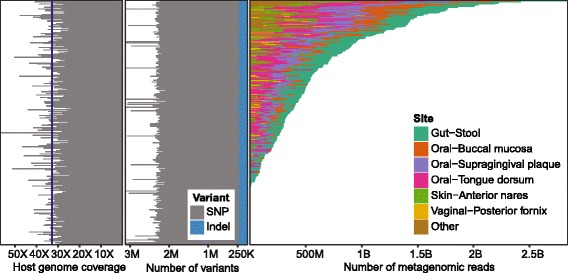
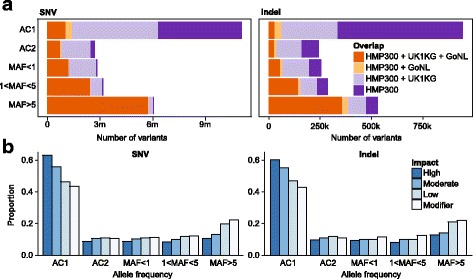
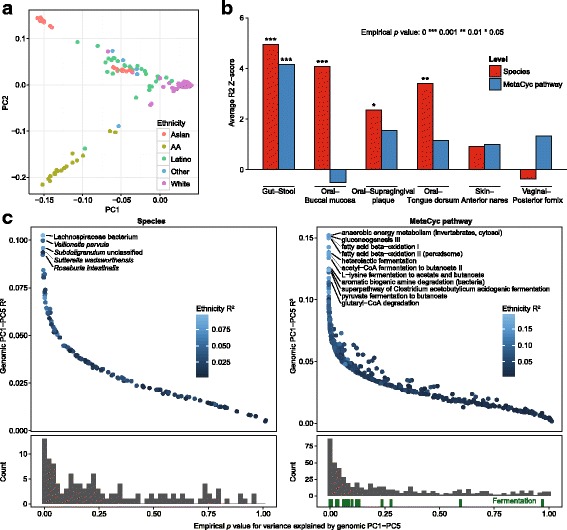
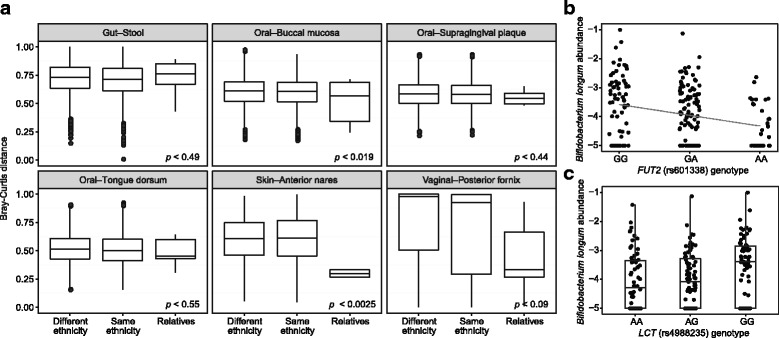
BACKGROUND: Despite the increasing recognition that microbial communities within the human body are linked to health, we have an incomplete understanding of the environmental and molecular interactions that shape the composition of these communities. Although host genetic factors play a role in these interactions, these factors have remained relatively unexplored given the requirement for large population-based cohorts in which both genotyping and microbiome characterization have been performed. METHODS: We performed whole-genome sequencing of 298 donors from the Human Microbiome Project (HMP) healthy cohort study to accompany existing deep characterization of their microbiomes at various body sites. This analysis yielded an average sequencing depth of 32x, with which we identified 27 million (M) single nucleotide variants and 2.3 M insertions-deletions. RESULTS: Taxonomic composition and functional potential of the microbiome covaried significantly with genetic principal components in the gastrointestinal tract and oral communities, but not in the nares or vaginal microbiota. Example associations included validation of known associations between FUT2 secretor status, as well as a variant conferring hypolactasia near the LCT gene, with Bifidobacterium longum abundance in stool. The associations of microbial features with both high-level genetic attributes and single variants were specific to particular body sites, highlighting the opportunity to find unique genetic mechanisms controlling microbiome properties in the microbial communities from multiple body sites. CONCLUSIONS: This study adds deep sequencing of host genomes to the body-wide microbiome sequences already extant from the HMP healthy cohort, creating a unique, versatile, and well-controlled reference for future studies seeking to identify host genetic modulators of the microbiome.
Overview
The claims and statistics of this paper haven’t been checked yet.
Free: it reads the open-access text and checks the first 5 claims that cite a source we can check. Create a free account to check every claim.
Integrity signals
Registry
Cites
Statistics
Figures
Verification
Claims the paper makes
The claims and statistics of this paper haven’t been checked yet.
Free: it reads the open-access text and checks the first 5 claims that cite a source we can check. Create a free account to check every claim.
Claims other papers make about this one
Each is checked against this paper’s own text: does it say what the citing paper says it does?
In the citing paper
“Host genetic influence15,16,1718, 19,20 on the gut microbiome is apparent from studies of monozygotic and dizygotic twin pairs that demonstrate shared community structures between related individuals21 and temporally stable heritable taxa17.”
From The gut Microbiome in adult and pediatric functional gastrointestinal disorders (2019) · cites this paper as [16]
Self-check
Percentages, sums and reported differences re-computed from the paper’s own numbers.
The self-check needs the paper’s full text.
Citations
Cites
Fast and accurate short read alignment with Burrows-Wheeler transform
Li, H., & Durbin, R. (2009) · Bioinformatics · doi:10.1093/bioinformatics/btp324 · Cited by 58,607
A global reference for human genetic variation
The 1000 Genomes Project Consortium, authors, C., Auton, A., Abecasis, G. R., Steering committee, Altshuler, D. M., Durbin, R. M., Abecasis, G. R., Bentley, D. R., Chakravarti, A., et al. (2015) · Nature · doi:10.1038/nature15393 · Cited by 18,247 · cited 10×
“Given that the HMP features broad biogeographic microbial sampling across the body, and the human sequencing data are of high quality and consistent with data from projects such as GoNL and 1000 Genomes, these data are well suited for such purposes.”
MethodResultInfluentialSecond-generation PLINK: rising to the challenge of larger and richer datasets
Chang, C. C., Chow, C. C., Tellier, L. C., Vattikuti, S., Purcell, S. M., & Lee, J. J. (2015) · Gigascience · doi:10.1186/s13742-015-0047-8 · Cited by 12,709
Structure, function and diversity of the healthy human microbiome
The Human Microbiome Project Consortium (2012) · Nature · doi:10.1038/nature11234 · Cited by 11,726
Self-citationThe Genotype-Tissue Expression (GTEx) pilot analysis: Multitissue gene regulation in humans
The GTEx Consortium, Ardlie, K. G., Deluca, D. S., Segrè, A. V., Sullivan, T. J., Young, T. R., Gelfand, E. T., Trowbridge, C. A., Maller, J. B., Tukiainen, T., et al. (2015) · Science · doi:10.1126/science.1262110 · Cited by 5,062
Host–microbe interactions have shaped the genetic architecture of inflammatory bowel disease
The International IBD Genetics Consortium (IIBDGC), Jostins, L., Ripke, S., Weersma, R. K., Duerr, R. H., McGovern, D. P., Hui, K. Y., Lee, J. C., Philip Schumm, L., Sharma, Y., et al. (2012) · Nature · doi:10.1038/nature11582 · Cited by 4,722 · cited 1×
“In addition, the endoplasmic reticulum aminopeptidase 1 (ERAP1) gene, which is involved in antigen presentation and associated with inflammatory bowel disease [54] and a number of other autoimmune diseases [55–57], appeared in two associations.”
BackgroundSelf-citationRobust relationship inference in genome-wide association studies
Manichaikul, A., Mychaleckyj, J. C., Rich, S. S., Daly, K., Sale, M., & Chen, W.-M. (2010) · Bioinformatics · doi:10.1093/bioinformatics/btq559 · Cited by 3,541 · cited 1×
“Kinship analysis was performed using the Kinshipbased INference for Genome-wide association studies (KING) algorithm [37].”
MethodCaspi, R., Billington, R., Ferrer, L., Foerster, H., Fulcher, C. A., Keseler, I. M., Kothari, A., Krummenacker, M., Latendresse, M., Mueller, L. A., et al. (2016) · Nucleic Acids Research · doi:10.1093/nar/gkv1164 · Cited by 3,395
The Treatment-Naive Microbiome in New-Onset Crohn’s Disease
Gevers, D., Kugathasan, S., Denson, L. A., Vázquez-Baeza, Y., Van Treuren, W., Ren, B., Schwager, E., Knights, D., Song, S. J., Yassour, M., et al. (2014) · Cell Host & Microbe · doi:10.1016/j.chom.2014.02.005 · Cited by 3,220
Self-citationHuman Genetics Shape the Gut Microbiome
Goodrich, J. K., Waters, J. L., Poole, A. C., Sutter, J. L., Koren, O., Blekhman, R., Beaumont, M., Van Treuren, W., Knight, R., Bell, J. T., et al. (2014) · Cell · doi:10.1016/j.cell.2014.09.053 · Cited by 3,164 · cited 1×
“Previous comparisons between monozygotic and dizygotic twins [22, 52] have identified a set of microbial taxa with higher than expected heritability coefficients.”
Cited by
Gut Microbiota and Obesity: A Role for Probiotics
Abenavoli, L., Scarpellini, E., Colica, C., Boccuto, L., Salehi, B., Sharifi-Rad, J., Aiello, V., Romano, B., De Lorenzo, A., Izzo, A. A., et al. (2019) · Nutrients · doi:10.3390/nu11112690 · Cited by 615
“HMP follows into the footsteps of the Human Genome Project, being constituted by multiple projects that bring together scientific experts worldwide to explore microbial communities to characterize the composition of the normal microbiome and the relationship with human organism [15].”
BackgroundQin, Y., Havulinna, A. S., Liu, Y., Jousilahti, P., Ritchie, S. C., Tokolyi, A., Sanders, J. G., Valsta, L., Brożyńska, M., Zhu, Q., et al. (2022) · Nature Genetics · doi:10.1038/s41588-021-00991-z · Cited by 586
Advancing functional and translational microbiome research using meta-omics approaches
Zhang, X., Li, L., Butcher, J., Stintzi, A., & Figeys, D. (2019) · Microbiome · doi:10.1186/s40168-019-0767-6 · Cited by 340
Gut microbiota diversity across ethnicities in the United States
Brooks, A. W., Priya, S., Blekhman, R., & Bordenstein, S. R. (2018) · PLOS Biology · doi:10.1371/journal.pbio.2006842 · Cited by 304
The gut microbiota is largely independent of host genetics in regulating fat deposition in chickens
Wen, C., Yan, W., Sun, C., Ji, C., Zhou, Q., Zhang, D., Zheng, J., & Yang, N. (2019) · The ISME Journal · doi:10.1038/s41396-019-0367-2 · Cited by 279
Rapid and accurate nucleobase detection using FnCas9 and its application in COVID-19 diagnosis
Azhar, M., Phutela, R., Kumar, M., Ansari, A. H., Rauthan, R., Gulati, S., Sharma, N., Sinha, D., Sharma, S., Singh, S., et al. (2021) · Biosensors and Bioelectronics · doi:10.1016/j.bios.2021.113207 · Cited by 240
The Milieu Intérieur Consortium, Scepanovic, P., Hodel, F., Mondot, S., Partula, V., Byrd, A., Hammer, C., Alanio, C., Bergstedt, J., Patin, E., et al. (2019) · Microbiome · doi:10.1186/s40168-019-0747-x · Cited by 171
Role of gut microbiota in intestinal wound healing and barrier function
Alam, A., & Neish, A. (2018) · Tissue Barriers · doi:10.1080/21688370.2018.1539595 · Cited by 166
The gut Microbiome in adult and pediatric functional gastrointestinal disorders
Shin, A., Preidis, G. A., Shulman, R., & Kashyap, P. C. (2019) · Clinical Gastroenterology and Hepatology · doi:10.1016/j.cgh.2018.08.054 · Cited by 163
Vemuri, R., Shankar, E. M., Chieppa, M., Eri, R., & Kavanagh, K. (2020) · Microorganisms · doi:10.3390/microorganisms8040483 · Cited by 162
“Recognizing the high abundance of phages in the gut, a Bacteroidetes-infecting phage family was identified and its founding phage alone represented up to 22% of all reads in the human gut metagenome project [42].”
BackgroundBalasubramanian, R., Schneider, E., Gunnigle, E., Cotter, P. D., & Cryan, J. F. (2024) · Neuroscience & Biobehavioral Reviews · doi:10.1016/j.neubiorev.2024.105562 · Cited by 153
“The aforementioned factors influence the gut microbiome to a greater effect than sex in humans (Kolde et al., 2018; Jaggar et al., 2020; Lloyd-Price et al., 2017).”
BackgroundThe microbiome in precision medicine: the way forward
Petrosino, J. F. (2018) · Genome Medicine · doi:10.1186/s13073-018-0525-6 · Cited by 133
“full picture of our health, are just starting to be revealed [10, 11].”
The Gut Microbiome in Pancreatic Disease
Akshintala, V. S., Talukdar, R., Singh, V. K., & Goggins, M. (2019) · Clinical Gastroenterology and Hepatology · doi:10.1016/j.cgh.2018.08.045 · Cited by 131
Axonal Endoplasmic Reticulum Dynamics and Its Roles in Neurodegeneration
Öztürk, Z., O’Kane, C. J., & Pérez-Moreno, J. J. (2020) · Frontiers in Neuroscience · doi:10.3389/fnins.2020.00048 · Cited by 128
A variational algorithm to detect the clonal copy number substructure of tumors from scRNA-seq data
Falco, A. D., Caruso, F. P., Su, X., Iavarone, A., & Ceccarelli, M. (2023) · Nature Communications · doi:10.1038/s41467-023-36790-9 · Cited by 143
Diversity of Vaginal Microbiome in Pregnancy: Deciphering the Obscurity
Gupta, P., Singh, M. P., & Goyal, K. (2020) · Frontiers in Public Health · doi:10.3389/fpubh.2020.00326 · Cited by 115
“Apart from the racial diversity, vaginal microbiome also varies depending on the mode of delivery, sexual partner (53), health, diabetes status of the mother (54), and between monozygotic and dizygotic twins (55).”
BackgroundOelen, R., de Vries, D. H., Brugge, H., Gordon, M. G., Vochteloo, M., single-cell eQTLGen consortium, BIOS Consortium, Ye, C. J., Westra, H.-J., Franke, L., et al. (2022) · Nature Communications · doi:10.1038/s41467-022-30893-5 · Cited by 114
Host and Microbiome Genome-Wide Association Studies: Current State and Challenges
Awany, D., Allali, I., Dalvie, S., Hemmings, S., Mwaikono, K. S., Thomford, N. E., Gomez, A., Mulder, N., & Chimusa, E. R. (2019) · Frontiers in Genetics · doi:10.3389/fgene.2018.00637 · Cited by 109
“…range of complex traits and diseases, including weight gain, obesity, inflammatory bowel disease, diabetes, cardiovascular disease, cancer, major depression, autism spectrum disorder, and asthma (Kostic et al., 2014; Jiang et al., 2015; Hall et al., 2017; Allali et al., 2018; Qiao et al., 2018).”
BackgroundDeterminants of Vaginal Microbiota Composition
Moosa, Y., Kwon, D. S., de Oliveira, T., & Wong, E. B. (2020) · Frontiers in Cellular and Infection Microbiology · doi:10.3389/fcimb.2020.00467 · Cited by 131
“—also a secondary analysis of HMP data—found greater microbial community similarity between first-degree relatives, as suggested by marker genes, and in the absence of collected familial relationship metadata (Kolde et al., 2018).”
BackgroundMunawar, N., Ahsan, K., Muhammad, K., Ahmad, A., Anwar, M. A., Shah, I., Ameri, A. A., & Mughairbi, F. A. (2021) · International Journal of Molecular Sciences · doi:10.3390/ijms22147671 · Cited by 110
Alterations in the Duodenal Fluid Microbiome of Patients With Pancreatic Cancer
Kohi, S., Macgregor‐Das, A. M., Dbouk, M. H., Yoshida, T., Chuidian, M., Abe, T., Borges, M. W., Lennon, A. M., Shin, E. J., Canto, M. I., et al. (2020) · Clinical Gastroenterology and Hepatology · doi:10.1016/j.cgh.2020.11.006 · Cited by 111
Beilsmith, K. R., Thoen, M. P. M., Brachi, B., Gloss, A. D., Khan, M. H., & Bergelson, J. M. (2019) · The Plant Journal · doi:10.1111/tpj.14170 · Cited by 109
Mousavi, S. E., Delgado-Saborit, J. M., Adivi, A., Pauwels, S., & Godderis, L. (2021) · The Science of The Total Environment · doi:10.1016/j.scitotenv.2021.151654 · Cited by 98
The connection between microbiome and schizophrenia
Golofast, B., & Vales, K. (2020) · Neuroscience & Biobehavioral Reviews · doi:10.1016/j.neubiorev.2019.12.011 · Cited by 92
Mohammadkhah, A. I., Simpson, E. B., Patterson, S. G., & Ferguson, J. F. (2018) · Children · doi:10.3390/children5120160 · Cited by 95
Age-Related Changes in the Gut Microbiota Modify Brain Lipid Composition
Albouery, M., Buteau, B., Gregoire, S., Cherbuy, C., de Barros, J.-P. P., Martine, L., Chain, F., Cabaret, S., Berdeaux, O., Bron, A. M., et al. (2020) · Frontiers in Cellular and Infection Microbiology · doi:10.3389/fcimb.2019.00444 · Cited by 99
“The dialogue between host and microbiota is bidirectional and alterations of the host can also shape the gut microbiota (Goodrich et al., 2014; Davenport, 2016; Kolde et al., 2018).”
BackgroundMicrobiome epidemiology and association studies in human health
VanEvery, H., Franzosa, E. A., Nguyen, L. H., & Huttenhower, C. (2022) · Nature Reviews Genetics · doi:10.1038/s41576-022-00529-x · Cited by 94
Self-citationLiu, Z., Mao, X., Dan, Z., Pei, Y., Xu, R., Guo, M., Liu, K., Zhang, F., Chen, J., Su, C., et al. (2021) · Gut Microbes · doi:10.1080/19490976.2020.1854967 · Cited by 73
“A genome-wide host genetics and microbiome association conducted in HMP healthy cohort validated the associations between a loss-of-function variant in the fucosyltransferase 2 (FUT2) and a variant conferring hypolactasia near the lactase (LCT) gene, with Bifidobacterium longum abundance in the stool.(20) Also, our pr…”
BackgroundSeufert, A. L., Hickman, J. W., Traxler, S. K., Peterson, R. M., Waugh, T. A., Lashley, S. J., Shulzhenko, N., Napier, R. J., & Napier, B. A. (2022) · eLife · doi:10.7554/elife.76744 · Cited by 75
Harris, K. G., & Chang, E. B. (2018) · Clinical Science · doi:10.1042/cs20171110 · Cited by 73
Impact of host genetics on gut microbiome: Take‐home lessons from human and mouse studies
Cahana, I., & Iraqi, F. A. (2020) · Animal Models and Experimental Medicine · doi:10.1002/ame2.12134 · Cited by 72
Use of radioiodine in nuclear medicine—A brief overview
Ferris, T. J., Carroll, L. S., Jenner, S., & Aboagye, E. O. (2020) · Journal of Labelled Compounds and Radiopharmaceuticals · doi:10.1002/jlcr.3891 · Cited by 64
Reyes-Castillo, Z., Miramontes, E. H. V., Llamas-Covarrubias, M. A., & Muñóz-Valle, J. F. (2020) · Clinical and Experimental Medicine · doi:10.1007/s10238-020-00647-y · Cited by 76
Gut microbiota profile of Indonesian stunted children and children with normal nutritional status
SURONO, I. S., Widiyanti, D., Kusumo, P. D., & Venema, K. (2021) · PLoS ONE · doi:10.1371/journal.pone.0245399 · Cited by 79
Opportunities and limits of combining microbiome and genome data for complex trait prediction
Pérez-Enciso, M., Zingaretti, L. M., Ramayo‐Caldas, Y., & Campos, G. D. L. (2021) · Genetics Selection Evolution · doi:10.1186/s12711-021-00658-7 · Cited by 64
Whole exome sequencing analyses reveal gene–microbiota interactions in the context of IBD
Hu, S., Vich Vila, A., Gacesa, R., Collij, V., Stevens, C., Fu, J. M., Wong, I., Talkowski, M. E., Rivas, M. A., Imhann, F., et al. (2021) · Gut · doi:10.1136/gutjnl-2019-319706 · Cited by 54
Self-citationMutual Preservation: A Review of Interactions Between Cervicovaginal Mucus and Microbiota
Vagios, S., & Mitchell, C. M. (2021) · Frontiers in Cellular and Infection Microbiology · doi:10.3389/fcimb.2021.676114 · Cited by 59
The gut microbiome as a biomarker of differential susceptibility to SARS-CoV-2
Sarkar, A., Harty, S., Moeller, A. H., Klein, S. L., Erdman, S. E., Friston, K. J., & Carmody, R. N. (2021) · Trends in Molecular Medicine · doi:10.1016/j.molmed.2021.09.009 · Cited by 59
Yang, M., Huang, L., Huang, H., Tang, H., Zhang, N., Yang, H., Wu, J., & Mu, F. (2022) · Nucleic Acids Research · doi:10.1093/nar/gkac326 · Cited by 67
Aziz, R. K., Hegazy, S. M., Yasser, R., Rizkallah, M. R., & ElRakaiby, M. T. (2018) · Expert Opinion on Drug Metabolism & Toxicology · doi:10.1080/17425255.2018.1530216 · Cited by 57
“HMP cohort donors was sequenced [47], the genetic principal”
BackgroundProbiotic-enriched milk and dairy products increase gut microbiota diversity: a comparative study
Aljutaily, T., Huarte, E., Martínez‐Monteagudo, S. I., González-Hernández, J. L., Rovai, M., & Sergeev, I. N. (2020) · Nutrition Research · doi:10.1016/j.nutres.2020.06.017 · Cited by 59
Díez‐Vives, C., Taboada, S., Leiva, C., Busch, K., Hentschel, U., & Riesgo, A. (2020) · Molecular Ecology · doi:10.1111/mec.15635 · Cited by 61
Khachatryan, L., de Leeuw, R. H., Kraakman, M. E. M., Pappas, N., Raa, M. T., Mei, H., de Knijff, P., & Laros, J. F. J. (2020) · Forensic Science International Genetics · doi:10.1016/j.fsigen.2020.102257 · Cited by 54
The effects of microbiota on reproductive health: A review
Wang, N., Chen, L., Yi, K., Zhang, B., Li, C., & Zhou, X. (2022) · Critical Reviews in Food Science and Nutrition · doi:10.1080/10408398.2022.2117784 · Cited by 57
“For example, genes that control cell connections and endothelial growth in the mucosal barrier may have impacts on microbial taxa in areas such as the skin and vagina (Belkaid and Tamoutounour 2016; Kolde et al. 2018).”
BackgroundGrosser, S., Sauer, J., Paijmans, A. J., Caspers, B. A., Forcada, J., Wolf, J. B. W., & Hoffman, J. I. (2019) · Molecular Ecology · doi:10.1111/mec.15070 · Cited by 53
Host Genetic Determinants of the Microbiome Across Animals: From Caenorhabditis elegans to Cattle
Ryu, E. P., & Davenport, E. (2022) · Annual Review of Animal Biosciences · doi:10.1146/annurev-animal-020420-032054 · Cited by 60
Gut Microbiota and Microbial Metabolism in Early Risk of Cardiometabolic Disease
Gabriel, C. L., & Ferguson, J. F. (2023) · Circulation Research · doi:10.1161/circresaha.123.322055 · Cited by 55
Daele, E. V., Knol, J., & Belzer, C. (2019) · Critical Reviews in Microbiology · doi:10.1080/1040841x.2019.1680601 · Cited by 51
“For example, the lactase (LCT) and fucosyltransferase 2 (FUT2) genotypes that increase Bifidobacterium longum abundances in stool (Kolde et al. 2018) and the higher copy number of the salivary amylase gene AMY1 that increases resistant starchdegrading microbes (Poole et al. 2019).”
BackgroundThe influence of host genetics on liver microbiome composition in patients with NAFLD
Pirola, C. J., Salatino, A., Quintanilla, M. F., Castaño, G. O., Garaycoechea, M. E., & Sookoian, S. C. (2022) · EBioMedicine · doi:10.1016/j.ebiom.2022.103858 · Cited by 50
Boulund, U., Bastos, D. M., Ferwerda, B., van den Born, B. H., Pinto‐Sietsma, S., Galenkamp, H., Levin, E., Groen, A. K., Zwinderman, A. H., & Nieuwdorp, M. (2022) · Cell Host & Microbe · doi:10.1016/j.chom.2022.08.013 · Cited by 55
Hedin, K. A., Rees, V. E., Zhang, H., Kruse, V., Vazquez-Uribe, R., & Sommer, M. O. A. (2022) · Scientific Reports · doi:10.1038/s41598-022-12806-0 · Cited by 48
Khoshbakht, S., Başkurt, D., Vural, A., & Vural, S. (2023) · International Journal of Molecular Sciences · doi:10.3390/ijms242216382 · Cited by 54
“Individuals with a non-secretor phenotype exhibit a decrease in Bifidobacterium longum within their microbiome [83].”
BackgroundHost genetics and microbiome associations through the lens of genome wide association studies
Weissbrod, O., Rothschild, D., Barkan, E., & Segal, E. (2018) · Current Opinion in Microbiology · doi:10.1016/j.mib.2018.05.003 · Cited by 54
Of mice and men and women: Sexual dimorphism of the gut microbiome
McGee, J. S., & Huttenhower, C. (2021) · International Journal of Women’s Dermatology · doi:10.1016/j.ijwd.2021.10.007 · Cited by 50
Self-citationBarnes, E. M., Carter, E. L., & Lewis, J. D. (2020) · Frontiers in Microbiology · doi:10.3389/fmicb.2020.00101 · Cited by 45
Ratajczak, A. E., Rychter, A. M., Zawada, A. E., Dobrowolska, A., & Krela‐Kaźmierczak, I. (2020) · Nutrition · doi:10.1016/j.nut.2020.111043 · Cited by 45
Sex-Specific Associations between Gut Prevotellaceae and Host Genetics on Adiposity
Cuevas‐Sierra, A., Riezu‐Boj, J. I., Guruceaga, E., Milagro, F. I., & Martínez, J. A. (2020) · Microorganisms · doi:10.3390/microorganisms8060938 · Cited by 48
“Moreover, the problem with this approach is that the investigations concerning the influence of host genetics on the gut microbiome are difficult because gut microbiome composition can be influenced by environmental aspects such as the type of diet, physical activity or antibiotics consumption [79].”
BackgroundJones, R. E., Andrews, R., Holmans, P., Hill, M., & Taylor, P. R. (2021) · Scientific Reports · doi:10.1038/s41598-021-94324-z · Cited by 39
Microbes and mental health: Can the microbiome help explain clinical heterogeneity in psychiatry?
Hayes, C. L., Peters, B. J., & Foster, J. A. (2020) · Frontiers in Neuroendocrinology · doi:10.1016/j.yfrne.2020.100849 · Cited by 42
“Many of the genes associated with the microbiome are related to immune pathways (Blekhman et al., 2015; Bonder et al., 2016; Kolde et al., 2018).”
Microbial-driven genetic variation in holobionts
Zilber‐Rosenberg, I., & ROSENBERG, E. B. (2021) · FEMS Microbiology Reviews · doi:10.1093/femsre/fuab022 · Cited by 40
Swart, E., Dvořák, J., Hernádi, S., Goodall, T., Kille, P., Spurgeon, D. J., Svendsen, C., & Procházková, P. (2020) · Nanomaterials · doi:10.3390/nano10071337 · Cited by 37
“Host genetics is one of the components shaping the human gut microbiome [107,108], but similar relationships have also been observed in other animals”
BackgroundGut Microbial Metabolism and Nonalcoholic Fatty Liver Disease
Sharpton, S. R., Yong, G. J. M., Terrault, N. A., & Lynch, S. V. (2018) · Hepatology Communications · doi:10.1002/hep4.1284 · Cited by 40
“Although the host genome has been shown to influence the composition of the gut microbiome,(40,41) environmental influences play a more significant role in shaping the human gut microbiome.”
BackgroundMoumne, O., Hampe, M. E., Montoya‐Williams, D., Carson, T. L., Neu, J., Francois, M., Rhoton-Vlasak, A. S., & Lemas, D. J. (2021) · Journal of Perinatal Medicine · doi:10.1515/jpm-2020-0367 · Cited by 54
“However, the study was underpowered for vaginal samples to achieve statistical significance [14].”
BackgroundQuantifying the Impact of Human Leukocyte Antigen on the Human Gut Microbiota
Andeweg, S. P., Keşmir, C., & Dutilh, B. E. (2021) · mSphere · doi:10.1128/msphere.00476-21 · Cited by 36
Host Genetics and Gut Microbiome: Perspectives for Multiple Sclerosis
Maglione, A., Zuccalà, M., Tosi, M., Clerico, M., & Rolla, S. (2021) · Genes · doi:10.3390/genes12081181 · Cited by 35
Exploiting the gut microbiota to predict the origins and quality traits of cultured sea cucumbers
Zhao, Z., Jiang, J., Zheng, J., Pan, Y., Dong, Y., Chen, Z., Gao, S., Xiao, Y., Jiang, P., Wang, X., et al. (2022) · Environmental Microbiology · doi:10.1111/1462-2920.15972 · Cited by 36
Boccuto, L., Tack, J. F., Ianiro, G., Abenavoli, L., & Scarpellini, E. (2023) · Genes · doi:10.3390/genes14040857 · Cited by 38
“, lifestyle changes, diet, use of antibiotics, pre-, probiotics) [61].”
Medina, D. A., Li, T., Thomson, P., Artacho, A., Pérez‐Brocal, V., & Moyá, A. (2019) · Frontiers in Microbiology · doi:10.3389/fmicb.2019.02346 · Cited by 34
Shropshire, W. C., Dinh, A. Q., Earley, M. J., Komarow, L., Panesso, D., Rydell, K., Gomez-Villegas, S. I., Miao, H., Hill, C. B., Chen, L., et al. (2022) · mBio · doi:10.1128/mbio.00497-22 · Cited by 35
Seibert, B., Cáceres, C. J., Garcia, S. C., Carnaccini, S., Geiger, G., Rajão, D. S., Ottesen, E. A., & Perez, D. R. (2021) · Microbiology Spectrum · doi:10.1128/spectrum.00536-21 · Cited by 38
“Further, the human 109 microbiome is highly variable and impacted by diverse environmental conditions (34-37), which 110 complicates analysis of human population studies.”
BackgroundMaracı, Ö., Antonatou-Papaioannou, A., Jünemann, S., Engel, K., Castillo-Gutiérrez, O., Busche, T., Kalinowski, J., & Caspers, B. A. (2022) · Microbiome · doi:10.1186/s40168-022-01401-0 · Cited by 41
Gut-Modulating Agents and Amyotrophic Lateral Sclerosis: Current Evidence and Future Perspectives
Eddin, A. N., Alfuwais, M., Eddin, R. N., AlKattan, K. M., & Yaqinuddin, A. (2024) · Nutrients · doi:10.3390/nu16050590 · Cited by 34
“However, each individual possesses a unique microbiome made up of different species and strains at varying densities likely owing to a number of genetic factors and host–microbe interactions [17,18].”
BackgroundMaracı, Ö., Antonatou-Papaioannou, A., Jünemann, S., Castillo-Gutiérrez, O., Busche, T., Kalinowski, J., & Caspers, B. A. (2021) · Frontiers in Microbiology · doi:10.3389/fmicb.2021.619141 · Cited by 35
Association between Human Genetic Variants and the Vaginal Bacteriome of Pregnant Women
Fan, W. Q., Kan, H., Liu, H.-Y., Wang, T., He, Y., Zhang, M., Li, Y., Li, Y., Meng, W., Li, Q., et al. (2021) · mSystems · doi:10.1128/msystems.00158-21 · Cited by 42
Environmentally sensitive hotspots in the methylome of the early human embryo
Silver, M. J., Saffari, A., Kessler, N. J., Chandak, G. R., Fall, C. H. D., Issarapu, P., Dedaniya, A., Betts, M., Moore, S. E., Routledge, M. N., et al. (2022) · eLife · doi:10.7554/elife.72031 · Cited by 33
Host-genotype-dependent cecal microbes are linked to breast muscle metabolites in Chinese chickens
Feng, Y., Liu, D., Liu, Y., Yang, X., Zhang, M., Wei, F., Li, D., Hu, Y., & Guo, Y. (2022) · iScience · doi:10.1016/j.isci.2022.104469 · Cited by 32
FUT2Genetic Variants and Reported Respiratory and Gastrointestinal Illnesses During Infancy
Barton, S. J., Murray, R. J. S., Lillycrop, K. A., Inskip, H. M., Harvey, N. C., Cooper, C. C., Karnani, N., Zolezzi, I. S., Sprenger, N., Godfrey, K. M., et al. (2018) · The Journal of Infectious Diseases · doi:10.1093/infdis/jiy582 · Cited by 31
Host Genetic Associations with Salivary Microbiome in Oral Cancer
Yang, S., Lin, C., Chuang, C., Lee, Y.-C., Chung, W., Lai, H., Chang, L., & Su, S. (2021) · Journal of Dental Research · doi:10.1177/00220345211051967 · Cited by 32
“Notably, it is found that microbial associations with host genetic variants are body site specific (Blekhman et al. 2015; Kolde et al. 2018).”
BackgroundStankevič, E., Kern, T., Borisevich, D., Poulsen, C. S., Madsen, A. L., Hansen, T. H., Jonsson, A. E., Schubert, M., Nygaard, N., Nielsen, T., et al. (2024) · Scientific Reports · doi:10.1038/s41598-024-65538-8 · Cited by 32
Rodrigues, C., d’Humières, C., Papin, G., Passet, V., Ruppé, É., & Brisse, S. (2020) · Microbial Genomics · doi:10.1099/mgen.0.000419 · Cited by 31
Drug–Microbiota Interaction in Colon Cancer Therapy: Impact of Antibiotics
Mohamed, A. A., Menon, H., Chulkina, M., Yee, N. S., & Pinchuk, I. V. (2021) · Biomedicines · doi:10.3390/biomedicines9030259 · Cited by 27
Wiefels, M. D., Furar, E., Eshraghi, R. S., Mittal, J., Memis, I., Moosa, M., Mittal, R., & Eshraghi, A. A. (2022) · Current Neuropharmacology · doi:10.2174/1570159x20666221003085508 · Cited by 25
“Studies have observed a consistent association between the lactase (LCT) gene, which produces the enzyme lactase that digests lactose, and the relative abundance of Bifidobacterium , a genus of bacteria found to produce several bioactive metabolites [17-19].”
BackgroundImpact of Facultative Bacteria on the Metabolic Function of an Obligate Insect-Bacterial Symbiosis
Blow, F., Ankrah, N. Y. D., Clark, N., Koo, I., Allman, E. L., Liu, Q., Anitha, M., Patterson, A. D., & Douglas, A. E. (2020) · mBio · doi:10.1128/mbio.00402-20 · Cited by 27
Genomics of host–microbiome interactions in humans
Ferretti, P., Johnson, K. E., Priya, S., & Blekhman, R. (2025) · Nature Reviews Genetics · doi:10.1038/s41576-025-00849-8 · Cited by 28
Vaginal microbiome Lactobacillus crispatus is heritable among European American women
Wright, M. L., Fettweis, J. M., Eaves, L. J., Silberg, J. L., Neale, M. C., Serrano, M. G., Jimenez, N. R., Prom‐Wormley, E. C., Girerd, P. H., Borzelleca, J. F., et al. (2021) · Communications Biology · doi:10.1038/s42003-021-02394-6 · Cited by 25
“1155 Hormonal birth control (%) No 162 (75) 61 (77) Yes 54 (25) 18 (23) Missing 28/244 (11) 9/88 (10) 0.”
Do Oral Pathogens Inhabit the Eye and Play a Role in Ocular Diseases?
Arjunan, P., & Swaminathan, R. (2022) · Journal of Clinical Medicine · doi:10.3390/jcm11102938 · Cited by 27
“Notably, environmental factors, dietary habits, age, and genetic make-up strongly influence the microbiota, which, in turn, impacts health through direct or indirect strategies [8].”
BackgroundInsights into the Human Virome Using CRISPR Spacers from Microbiomes
Hidalgo-Cantabrana, C., Sanozky-Dawes, R., & Barrangou, R. (2018) · Viruses · doi:10.3390/v10090479 · Cited by 27
“Lactobacilli seem correlated with a healthy/non-symptomatic status, likely because they are producers of lactic acid, which reduces the pH of the vaginal environment, thereby preventing the survival or growth of acid-sensitive undesirable microorganisms [3,4,56].”
BackgroundSookoian, S. C., & Pirola, C. J. (2021) · HepatoBiliary Surgery and Nutrition · doi:10.21037/hbsn-20-270 · Cited by 25
Koller, A. M., Săsăran, M. O., & Mărginean, C. O. (2025) · Nutrients · doi:10.3390/nu17111883 · Cited by 26
“Microbial cells are estimated to outnumber human cells by a factor of ten, and their collective genome, the microbiome, encodes nearly 100 times more genes than the human genome [5,6].”
Ostadmohammadi, S., Azimirad, M., Houri, H., Naseri, K., Javanmard, E., Mirjalali, H., Yadegar, A., Sadeghi, A., Aghdaei, H. A., & Zali, M. R. (2021) · Molecular Biology Reports · doi:10.1007/s11033-021-06567-8 · Cited by 24
Microbiome-associated human genetic variants impact phenome-wide disease risk
Markowitz, R. H. G., LaBella, A. L., Shi, M., Rokas, A., Capra, J. A., Ferguson, J. F., Mosley, J. D., & Bordenstein, S. R. (2022) · Proceedings of the National Academy of Sciences · doi:10.1073/pnas.2200551119 · Cited by 24
Erdenebileg, S., Kim, M., Nam, Y., Hyun, K., Le, T. T., Jung, S. H., & Nho, C. W. (2024) · Journal of Ethnopharmacology · doi:10.1016/j.jep.2024.118415 · Cited by 23
SURONO, I. S., Popov, I. V., Verbruggen, S. E. L., Verhoeven, J., Kusumo, P. D., & Venema, K. (2024) · PLoS ONE · doi:10.1371/journal.pone.0299349 · Cited by 20
Aguirre, E. G., Million, W. C., Bartels, E., Krediet, C. J., & Kenkel, C. D. (2022) · Coral Reefs · doi:10.1007/s00338-022-02218-x · Cited by 16
Normalization of Microbiome Profiling Data
McMurdie, P. J. (2018) · Methods in molecular biology · doi:10.1007/978-1-4939-8728-3_10 · Cited by 16
Microbiome and epigenetic variation in wild fish with low genetic diversity
Anka, I. Z., Webster, T. M. U., Berbel‐Filho, W. M., Hitchings, M. D., Overland, B., Weller, S., de Leániz, C. G., & Consuegra, S. (2024) · Nature Communications · doi:10.1038/s41467-024-49162-8 · Cited by 15
“Host genetics tends to play a relatively small part in microbiome composition and involves few genes 23 , in fl uencing some tissues more than others 24,25 .”
Nair, P. P., Krishnakumar, V., & Nair, P. G. (2024) · Journal of Ayurveda and Integrative Medicine · doi:10.1016/j.jaim.2024.101016 · Cited by 18
“With this background, validating agni-koshta assessment with metabolic challenge-response test [48 – 51], host-microbiome interactions and microbial relationship alterations [52 – 54]; prakruti with genomic and molecular markers [4 – 13, 55,”
MethodLai, B., Qian, S., Zhang, H., Zhang, S., Kozlova, A., Duan, J., He, X., & Xu, J. (2022) · PLoS Computational Biology · doi:10.1371/journal.pcbi.1010011 · Cited by 14
Micro-coevolution of host genetics with gut microbiome in three Chinese ethnic groups
Cheng, M., Ge, X., Zhong, C., Fu, R., Ning, K., & Xu, S. (2021) · Journal of genetics and genomics/Journal of Genetics and Genomics · doi:10.1016/j.jgg.2021.09.002 · Cited by 14
Plaza‐Díaz, J., Radar, A. M., Baig, A. T., Leyba, M. F., Costabel, M. M., Zavala-Crichton, J. P., Sanchez‐Martinez, J., MacKenzie, A., & Solis‐Urra, P. (2022) · Children · doi:10.3390/children9121834 · Cited by 15
Metadata
- Authors
- Kolde, R., Franzosa, E. A., Rahnavard, G., Hall, A. B., Vlamakis, H., Stevens, C., Daly, M. J., Xavier, R. J., & Huttenhower, C.
- Affiliations
- Massachusetts General Hospital (US)
- Broad Institute (US)
- Corresponding author
- Xavier, Ramnik J.
- Huttenhower, Curtis
- ORCID
- Venue
- Genome Medicine
- Published
- 2018-01-29
- Volume
- 10
- Issue
- 1
- Pages
- 6-6
- ISSN
- 1756-994X (ISSN-L)
- PMC
- PMC5789541
- OpenAlex
- W2791877316
- Semantic Scholar
- 311da3ca2222dbddb49b64e6b921a32f228a75fd
- Cited by
- 182
- References
- 62
- Citations by year
- 2026: 10 · 2025: 17 · 2024: 17 · 2023: 16 · 2022: 25 · 2021: 40 · 2020: 28 · 2019: 14 · 2018: 15
- FWCI
- 8.63
- Type
- journal article
- Language
- en
- Open access
- gold
- doi.org
- Licence
- cc-by
- creativecommons.org/licenses/by/4.0/ (tdm)
- creativecommons.org/licenses/by/4.0/ (vor)
- Locations
- Genome Medicine (publishedVersion, cc-by)
- PubMed Central (publishedVersion, cc-by)
- PubMed (publishedVersion)
- Digital Access to Scholarship at Harvard (DASH) (Harvard University) (submittedVersion, cc-by)
- DOAJ (DOAJ: Directory of Open Access Journals) (submittedVersion)
- Funders
- National Human Genome Research Institute (5U54HG003067-13)
- Topics
- Life Sciences › Biochemistry, Genetics and Molecular Biology › Molecular Biology › Gut microbiota and health
- Life Sciences › Biochemistry, Genetics and Molecular Biology › Genetics › Genetic Associations and Epidemiology
- Health Sciences › Dentistry › Periodontics › Oral microbiology and periodontitis research
- Keywords
- host genetics, human microbiome, host-microbe interactions, single nucleotide variants, indels, LCT gene, lactase deficiency, Bifidobacterium longum, gut microbiota, oral microbiota, vaginal microbiota
- MeSH terms
- Genotype, Humans, Tissue Donors, Genetic Variation, Sequence Analysis, DNA, Principal Component Analysis, Metagenome, Microbiota
About these checks
Registry, retraction, Cites and statistics results are computed, not judged, with one exception: a printed reference that no index lists is read once by a model before it counts as a citation error. Claims are extracted by a model and kept only when their quote appears verbatim in the text; each cited source is then checked, with a model’s help, for whether it says what the claim relies on. Those verdicts can be wrong — read the claim’s quote and the cited source before relying on one.
Statistics and arithmetic are recomputed, not judged.
Confidence bands are shown only for fields calibrated on our annotated test set. None is calibrated yet, so no band is shown.
What counts as a claim ›How we measure confidence ›How we check this ›
Are you an author, or do you see a problem with this page? Request a review
Data sources
Bibliographic data: Semantic Scholar, OpenAlex, Crossref.
Contains information from the Semantic Scholar Academic Graph Datasets, made available under the ODC Attribution License (ODC-BY 1.0).
Semantic Scholar’s data is described in: Kinney, R., et al. (2023). The Semantic Scholar Open Data Platform. arXiv:2301.10140.
