

Genetic risk for Alzheimer’s disease is concentrated in specific macrophage and microglial transcriptional networks
Open accessThe DOI matches its Crossref record; 34 of the 34 references it cites were found in a registry or an index.
Abstract
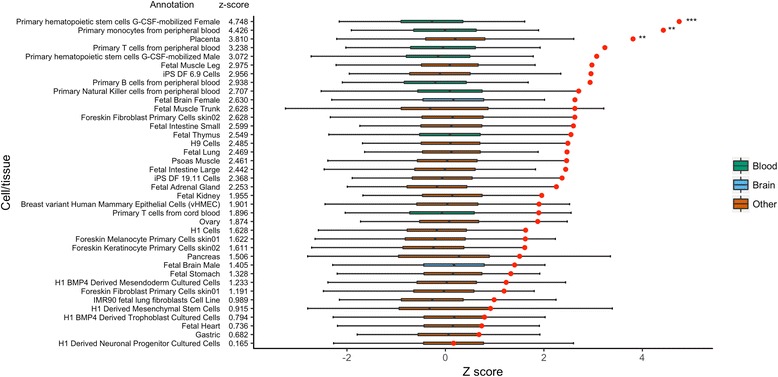
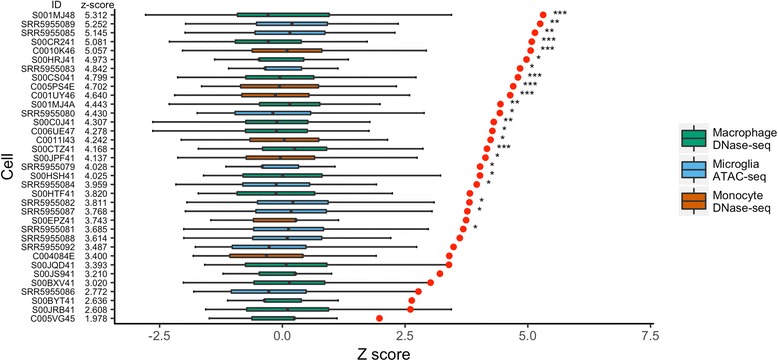
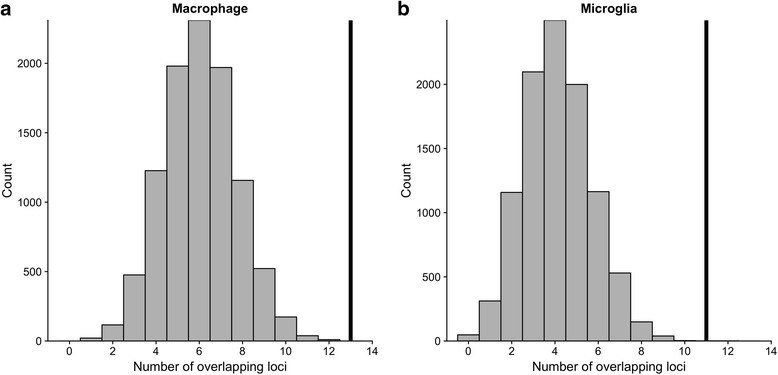
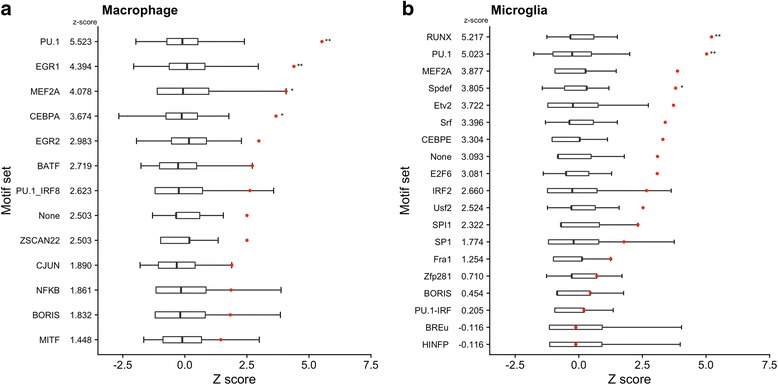
BACKGROUND: Genome-wide association studies of Alzheimer's disease (AD) have identified a number of significant risk loci, the majority of which lie in non-coding regions of the genome. The lack of causal alleles and considerable polygenicity remains a significant barrier to translation into mechanistic understanding. This includes identifying causal variants and the cell/tissue types in which they operate. A fuller understanding of the cell types and transcriptional networks involved in AD genetic risk mechanisms will provide important insights into pathogenesis. METHODS: We assessed the significance of the overlap between genome-wide significant AD risk variants and sites of open chromatin from data sets representing diverse tissue types. We then focussed on macrophages and microglia to investigate the role of open chromatin sites containing motifs for specific transcription factors. Partitioned heritability using LDscore regression was used to investigate the contribution of specific macrophage and microglia transcription factor motif-containing open chromatin sites to the heritability of AD. RESULTS: ) and microglia (z score = 4.34, corrected P = 0.011). In both macrophages and microglia, AD risk variants are enriched at a subset of open chromatin sites that contain DNA binding motifs for specific transcription factors, e.g. SPI1 and MEF2. Genetic variation at many of these motif-containing sites also mediate a substantial proportion of AD heritability, with SPI1-containing sites capturing the majority of the common variant SNP-chip heritability (microglia enrichment = 16.28, corrected enrichment P = 0.0044). CONCLUSIONS: AD risk alleles plausibly operate in immune cells, including microglia, and are concentrated in specific transcriptional networks. Combined with primary genetic association results, the SPI1 and MEF2 transcriptional networks appear central to AD risk mechanisms. Investigation of transcription factors targeting AD risk SNP associated regulatory elements could provide powerful insights into the molecular processes affected by AD polygenic risk. More broadly, our findings support a model of polygenic disease risk that arises from variants located in specific transcriptional networks.
Overview
The claims and statistics of this paper haven’t been checked yet.
Free: it reads the open-access text and checks the first 5 claims that cite a source we can check. Create a free account to check every claim.
Integrity signals
Registry
Cites
Statistics
Figures
Verification
Claims the paper makes
The claims and statistics of this paper haven’t been checked yet.
Free: it reads the open-access text and checks the first 5 claims that cite a source we can check. Create a free account to check every claim.
Claims other papers make about this one
Each is checked against this paper’s own text: does it say what the citing paper says it does?
The source backs part of the claim, not all of it — or backs it for a different population, condition or comparison.
In the citing paper
“Consistent with previous studies,55,56 linked peaks identified in microglia were significantly enriched for heritability of AD across five different studies2,3,4,5,6”
From Single nucleus multiomics identifies ZEB1 and MAFB as candidate regulators of Alzheimer’s disease-specific cis-regulatory elements (2023) · cites this paper as [55]
Experimental — accuracy not yet measuredThe source backs part of the claim, not all of it — or backs it for a different population, condition or comparison.
In the citing paper
“In contrast, AD SNP heritability was most highly enriched in microglia regulatory elements (Fig. 1D), specifically microglia enhancers (18-23).”
From Brain cell type–specific enhancer–promoter interactome maps and disease - risk association (2019) · cites this paper as [23]
Experimental — accuracy not yet measuredThe source backs part of the claim, not all of it — or backs it for a different population, condition or comparison.
In the citing paper
“However, studies investigating PU.1 in human microglia suggest there are shared Spi1/PU.1 dose dependent pathways in microglia.”
From Modest changes in Spi1 dosage reveal the potential for altered microglial function as seen in Alzheimer’s disease (2021) · cites this paper as [8]
Experimental — accuracy not yet measuredThe source backs part of the claim, not all of it — or backs it for a different population, condition or comparison.
In the citing paper
“Additionally, linkage disequilibrium (LD) score regression of LOAD GWAS-associated variants showed greatest enrichment in microglia compared to all other brain cell types, further suggesting that this cell type plays a central role in LOAD pathogenesis12.”
From Variant-to-function mapping of late-onset Alzheimer’s disease GWAS signals in human microglial cell models implicates RTFDC1 at the CASS4 locus (2024) · cites this paper as [12]
Experimental — accuracy not yet measuredThe cited source says what the claim attributes to it.
In the citing paper
“In addition to SPI1 binding sites being located near other AD risk genes or regulatory elements5,7,8, SPI1 risk alleles associated with a higher gene expression have been shown to lower the age of onset in AD7.”
From Modest changes in Spi1 dosage reveal the potential for altered microglial function as seen in Alzheimer’s disease (2021) · cites this paper as [8]
5 more claims about this paper
Create a free account to see every claim other papers make about this one.
Self-check
Percentages, sums and reported differences re-computed from the paper’s own numbers.
The self-check needs the paper’s full text.
Citations
Cites
Controlling the False Discovery Rate: A Practical and Powerful Approach to Multiple Testing
Benjamini, Y., & Hochberg, Y. (1995) · Journal of the Royal Statistical Society Series B: Statistical Methodology · doi:10.1111/j.2517-6161.1995.tb02031.x · Cited by 109,482 · cited 4×
“Benjamini Y, Hochberg Y. Controlling the false discovery rate: a practical and powerful approach to multiple testing.”
InfluentialFast and accurate short read alignment with Burrows-Wheeler transform
Li, H., & Durbin, R. (2009) · Bioinformatics · doi:10.1093/bioinformatics/btp324 · Cited by 58,607
BEDTools: a flexible suite of utilities for comparing genomic features
Quinlan, A. R., & Hall, I. M. (2010) · Bioinformatics · doi:10.1093/bioinformatics/btq033 · Cited by 27,437
An integrated encyclopedia of DNA elements in the human genome
The ENCODE Project Consortium (2012) · Nature · doi:10.1038/nature11247 · Cited by 18,072
Heinz, S., Benner, C., Spann, N., Bertolino, E., Lin, Y. C., Laslo, P., Cheng, J. X., Murre, C., Singh, H., & Glass, C. K. (2010) · Molecular Cell · doi:10.1016/j.molcel.2010.05.004 · Cited by 13,382 · cited 7×
“The resulting motifs were then assigned to OCRs using the HOMER command findMotifs.pl with the ‘-find’ option enabled.”
InfluentialBuenrostro, J. D., Giresi, P. G., Zaba, L. C., Chang, H. Y., & Greenleaf, W. J. (2013) · Nature Methods · doi:10.1038/nmeth.2688 · Cited by 6,422
Integrative analysis of 111 reference human epigenomes
Roadmap Epigenomics Consortium, Kundaje, A., Meuleman, W., Ernst, J., Bilenky, M., Yen, A., Heravi-Moussavi, A., Kheradpour, P., Zhang, Z., Wang, J., et al. (2015) · Nature · doi:10.1038/nature14248 · Cited by 6,368 · cited 3×
“DNase hypersensitivity sites (DHSs) and histone ChIP-seq peaks (H3K4me3, H3K4me1 and H3K27ac) were generated by the Roadmap Epigenomics Project [7].”
LD Score regression distinguishes confounding from polygenicity in genome-wide association studies
Schizophrenia Working Group of the Psychiatric Genomics Consortium, Bulik-Sullivan, B. K., Loh, P.-R., Finucane, H. K., Ripke, S., Yang, J., Patterson, N., Daly, M. J., Price, A. L., & Neale, B. M. (2015) · Nature Genetics · doi:10.1038/ng.3211 · Cited by 5,559 · cited 2×
“LDscore regression [11, 12] was used to partition AD gen-”
Common SNPs explain a large proportion of the heritability for human height
Yang, J., Benyamin, B., McEvoy, B. P., Gordon, S., Henders, A. K., Nyholt, D. R., Madden, P. A., Heath, A. C., Martin, N. G., Montgomery, G. W., et al. (2010) · Nature Genetics · doi:10.1038/ng.608 · Cited by 4,446 · cited 1×
“While risk alleles at genome-wide significant loci represent robust findings suitable for biological characterisation, it is now known that thousands of variants throughout the genome contribute to disease heritability [10].”
Meta-Analysis of 74,046 Individuals Identifies 11 New Susceptibility Loci for Alzheimer’s Disease
(EADI), E. A. D. I., Lambert, J.-C., (GERAD), G. A. E. R. I. A. D., Alzheimer's Disease Genetic Consortium (ADGC), (CHARGE), C. F. H. A. A. R. I. G. E., Ibrahim-Verbaas, C. A., Harold, D., Naj, A. C., Sims, R., Bellenguez, C., et al. (2013) · Nature Genetics · doi:10.1038/ng.2802 · Cited by 4,336 · cited 3×
“94) have been identified as significant AD risk loci [1, 29].”
Systematic Localization of Common Disease-Associated Variation in Regulatory DNA
Maurano, M. T., Humbert, R., Rynes, E., Thurman, R. E., Haugen, E., Wang, H., Reynolds, A. P., Sandstrom, R., Qu, H., Brody, J., et al. (2012) · Science · doi:10.1126/science.1222794 · Cited by 3,716 · cited 2×
“ENCODE [6] and Roadmap Epigenomics [7]) have the potential to identify: (1) causal non-coding risk alleles, (2) the mechanisms by which they operate and (3) the cell types in which they function [8, 9].”
Partitioning heritability by functional annotation using genome-wide association summary statistics
ReproGen Consortium, Finucane, H. K., Schizophrenia Working Group of the Psychiatric Genomics Consortium, The RACI Consortium, Bulik-Sullivan, B., Gusev, A., Trynka, G., Reshef, Y., Loh, P.-R., Anttila, V., et al. (2015) · Nature Genetics · doi:10.1038/ng.3404 · Cited by 2,604 · cited 9×
“LDscore regression [11, 12] was used to partition AD gen-”
InfluentialThe new NHGRI-EBI Catalog of published genome-wide association studies (GWAS Catalog)
MacArthur, J., Bowler, E., Cerezo, M., Gil, L., Hall, P., Hastings, E., Junkins, H., McMahon, A., Milano, A., Morales, J., et al. (2017) · Nucleic Acids Research · doi:10.1093/nar/gkw1133 · Cited by 2,161
Kaser, A., Zeissig, S., & Blumberg, R. S. (2010) · Annual Review of Immunology · doi:10.1146/annurev-immunol-030409-101225 · Cited by 1,806
Integrated Systems Approach Identifies Genetic Nodes and Networks in Late-Onset Alzheimer’s Disease
Zhang, B., Gaiteri, C., Bodea, L.-G., Wang, Z., McElwee, J., Podtelezhnikov, A. A., Zhang, C., Xie, T., Tran, L., Dobrin, R., et al. (2013) · Cell · doi:10.1016/j.cell.2013.03.030 · Cited by 1,657 · cited 16×
“We, therefore, reasoned that the integration of results from GWAS of AD with OCRs from multiple cell types would pinpoint disease relevant cell types and link AD genetic risk variants to specific transcriptional networks active in those cell types.”
InfluentialMicroglia emerge from erythromyeloid precursors via Pu.1- and Irf8-dependent pathways
Kierdorf, K., Erny, D., Goldmann, T., Sander, V., Schulz, C., Perdiguero, E. G., Wieghofer, P., Heinrich, A., Riemke, P., Hölscher, C., et al. (2013) · Nature Neuroscience · doi:10.1038/nn.3318 · Cited by 1,457 · cited 3×
“De novo motif analysis of the microglia ATAC-seq peaks identified 19 motifs (Additional file 9: Table S8), including known lineage-determining factors such as SPI1 and IRF [25].”
High-Resolution Mapping and Characterization of Open Chromatin across the Genome
Boyle, A. P., Davis, S., Shulha, H. P., Meltzer, P., Margulies, E. H., Weng, Z., Furey, T. S., & Crawford, G. E. (2008) · Cell · doi:10.1016/j.cell.2007.12.014 · Cited by 1,415 · cited 2×
“Methods that rely on discriminating local chromatin structure, such as DNaseseq [13] and assay for transposase-accessible chromatin using sequencing (ATAC-seq) [14], can identify potential transcription factor binding sites without the need for performing multiple transcription factor ChIP experiments.”
Gene-Wide Analysis Detects Two New Susceptibility Genes for Alzheimer's Disease
Escott-Price, V., Bellenguez, C., Wang, L.-S., Choi, S.-H., Harold, D., Jones, L., Holmans, P., Gerrish, A., Vedernikov, A., Richards, A., et al. (2014) · PLoS ONE · doi:10.1371/journal.pone.0094661 · Cited by 1,398 · cited 1×
“94) have been identified as significant AD risk loci [1, 29].”
An environment-dependent transcriptional network specifies human microglia identity
Gosselin, D., Skola, D., Coufal, N. G., Holtman, I. R., Schlachetzki, J. C. M., Sajti, E., Jaeger, B. N., O’Connor, C., Fitzpatrick, C., Pasillas, M. P., et al. (2017) · Science · doi:10.1126/science.aal3222 · Cited by 1,220
Targeted disruption of the PU.1 gene results in multiple hematopoietic abnormalities
McKercher, S. R., Torbett, B. E., Anderson, K. L., Henkel, G. W., Vestal, D. J., Baribault, H., Klemsz, M., Feeney, A. J., Wu, G. E., Paige, C. J., et al. (1996) · The EMBO Journal · doi:10.1002/j.1460-2075.1996.tb00949.x · Cited by 1,130 · cited 1×
“for the development and function of haematopoietic cell lineages [33], including microglia [25].”
Chromatin accessibility pre-determines glucocorticoid receptor binding patterns
John, S., Sabo, P. J., Thurman, R. E., Sung, M.-H., Biddie, S. C., Johnson, T. A., Hager, G. L., & Stamatoyannopoulos, J. A. (2011) · Nature Genetics · doi:10.1038/ng.759 · Cited by 954 · cited 1×
“Data were aligned to hg19 (GRCh37) using bwa [19] and peaks were called using hotspot [20], following the protocol described by the Blueprint Consortium.”
Linking disease associations with regulatory information in the human genome
Schaub, M. A., Boyle, A. P., Kundaje, A., Batzoglou, S., & Snyder, M. (2012) · Genome Research · doi:10.1101/gr.136127.111 · Cited by 713 · cited 3×
“Although GWAS have identified thousands of variants that influence diseases and traits, the majority are located in non-coding regions of the genome [2].”
Jones, L., Holmans, P. A., Hamshere, M. L., Harold, D., Moskvina, V., Ivanov, D., Pocklington, A., Abraham, R., Hollingworth, P., Sims, R., et al. (2010) · PLoS ONE · doi:10.1371/journal.pone.0013950 · Cited by 606 · cited 16×
“We, therefore, reasoned that the integration of results from GWAS of AD with OCRs from multiple cell types would pinpoint disease relevant cell types and link AD genetic risk variants to specific transcriptional networks active in those cell types.”
InfluentialConserved epigenomic signals in mice and humans reveal immune basis of Alzheimer's disease
Gjoneska, E., Pfenning, A. R., Mathys, H., Quon, G., Kundaje, A., Tsai, L.-H., & Kellis, M. (2015) · Nature · doi:10.1038/nature14252 · Cited by 576 · cited 2×
“less, analytical approaches, such as pathway analysis [3] and integration with chromatin annotations [4, 5], have”
Olmos-Alonso, A., Schetters, S. T. T., Sri, S., Askew, K., Mancuso, R., Vargas-Caballero, M., Holscher, C., Perry, V. H., & Gomez-Nicola, D. (2016) · Brain · doi:10.1093/brain/awv379 · Cited by 532
Song, L., Zhang, Z., Grasfeder, L. L., Boyle, A. P., Giresi, P. G., Lee, B.-K., Sheffield, N. C., Gräf, S., Huss, M., Keefe, D., et al. (2011) · Genome Research · doi:10.1101/gr.121541.111 · Cited by 505
A common haplotype lowers PU.1 expression in myeloid cells and delays onset of Alzheimer's disease
The International Genomics of Alzheimer's Project, Huang, K.-L., Initiative, T. A. D. N., Marcora, E., Pimenova, A. A., Di Narzo, A. F., Kapoor, M., Jin, S. C., Harari, O., Bertelsen, S., et al. (2017) · Nature Neuroscience · doi:10.1038/nn.4587 · Cited by 423
the DIAbetes Genetics Replication And Meta-analysis (DIAGRAM) Consortium, Gaulton, K. J., Ferreira, T., Lee, Y., Raimondo, A., Mägi, R., Reschen, M. E., Mahajan, A., Locke, A., William Rayner, N., et al. (2015) · Nature Genetics · doi:10.1038/ng.3437 · Cited by 398 · cited 1×
“For other complex disorders such as type 2 diabetes, genome-wide significant risk variants have been shown to localise to specific transcription factor binding sites in islet cells [30, 31], but the extent to which variants in these binding sites contribute to polygenic inheritance was not investigated.”
Genetic regulatory signatures underlying islet gene expression and type 2 diabetes
Varshney, A., Scott, L. J., Welch, R. P., Erdos, M. R., Chines, P. S., Narisu, N., Albanus, R. D., Orchard, P., Wolford, B. N., Kursawe, R., et al. (2017) · Proceedings of the National Academy of Sciences · doi:10.1073/pnas.1621192114 · Cited by 209 · cited 1×
“For other complex disorders such as type 2 diabetes, genome-wide significant risk variants have been shown to localise to specific transcription factor binding sites in islet cells [30, 31], but the extent to which variants in these binding sites contribute to polygenic inheritance was not investigated.”
Convergent genetic and expression data implicate immunity in Alzheimer's disease
International Genomics of Alzheimer's Disease Consortium (IGAP), Jones, L., Lambert, J., Wang, L., Choi, S., Harold, D., Vedernikov, A., Escott‐Price, V., Stone, T., Richards, A., et al. (2015) · Alzheimer's & Dementia · doi:10.1016/j.jalz.2014.05.1757 · Cited by 199
Isolation of neuronal chromatin from brain tissue
Jiang, Y., Matevossian, A., Huang, H.-S., Straubhaar, J., & Akbarian, S. (2008) · BMC Neuroscience · doi:10.1186/1471-2202-9-42 · Cited by 193 · cited 1×
“It is necessary to investigate additional brain data as they become available, particularly those that can resolve cell-type specific information [26].”
SNPsnap: a Web-based tool for identification and annotation of matched SNPs
Pers, T. H., Timshel, P., & Hirschhorn, J. N. (2015) · Bioinformatics · doi:10.1093/bioinformatics/btu655 · Cited by 176 · cited 3×
“LDscore: https://github.com/bulik/ldsc/wiki HOMER: http://homer.ucsd.edu/homer/motif/index.html SNPsnap: https://data.broadinstitute.org/mpg/snpsnap/ BEDTools: http://bedtools.readthedocs.io/en/latest/ Data availability: Data generated by the Roadmap Epigenomics Project were downloaded from http://egg2.wustl.edu/roadm…”
Won, H.-H., Natarajan, P., Dobbyn, A., Jordan, D. M., Roussos, P., Lage, K., Raychaudhuri, S., Stahl, E., & Do, R. (2015) · PLOS Genetics · doi:10.1371/journal.pgen.1005622 · Cited by 90 · cited 1×
“ENCODE [6] and Roadmap Epigenomics [7]) have the potential to identify: (1) causal non-coding risk alleles, (2) the mechanisms by which they operate and (3) the cell types in which they function [8, 9].”
Genomics implicates adaptive and innate immunity in Alzheimer’s and Parkinson’s diseases
Gagliano, S. A., Pouget, J. G., Hardy, J., Knight, J., Barnes, M. R., Ryten, M., & Weale, M. E. (2016) · Annals of Clinical and Translational Neurology · doi:10.1002/acn3.369 · Cited by 85 · cited 2×
“less, analytical approaches, such as pathway analysis [3] and integration with chromatin annotations [4, 5], have”
Cited by
Brain cell type–specific enhancer–promoter interactome maps and disease - risk association
Nott, A., Holtman, I. R., Coufal, N. G., Schlachetzki, J. C. M., Yu, M., Hu, R., Han, C. Z., Pena, M., Xiao, J., Wu, Y., et al. (2019) · Science · doi:10.1126/science.aay0793 · Cited by 699
A brief history of human disease genetics
Claussnitzer, M., Cho, J. H., Collins, R., Cox, N. J., Dermitzakis, E. T., Hurles, M. E., Kathiresan, S., Kenny, E. E., Lindgren, C. M., MacArthur, D. G., et al. (2020) · Nature · doi:10.1038/s41586-019-1879-7 · Cited by 697
Animal models of neurodegenerative diseases
Dawson, T. M., Golde, T. E., & Lagier-Tourenne, C. (2018) · Nature Neuroscience · doi:10.1038/s41593-018-0236-8 · Cited by 576
“Pathological changes in dopaminergic nerve cells of the substantia nigra and olfactory bulb in mice transgenic for truncated human alpha-synuclein(1-120): implications for Lewy body disorders.”
The multiplex model of the genetics of Alzheimer's disease
Sims, R., Hill, M., & Williams, J. (2020) · Nature Neuroscience · doi:10.1038/s41593-020-0599-5 · Cited by 466
Self-citationA Map of Transcriptional Heterogeneity and Regulatory Variation in Human Microglia
Young, A. M. H., Kumasaka, N., Calvert, F., Hammond, T. R., Knights, A., Panousis, N., Park, J. S., Schwartzentruber, J., Liu, J., Kundu, K., et al. (2021) · Nature Genetics · doi:10.1038/s41588-021-00875-2 · Cited by 213
Metadata
- Authors
- Tansey, K. E., Cameron, D., & Hill, M. J.
- Affiliations
- Cardiff University (GB)
- UK Dementia Research Institute (GB)
- Corresponding author
- Hill, Matthew J.
- Venue
- Genome Medicine
- Published
- 2018-02-26
- Volume
- 10
- Issue
- 1
- Pages
- 14-14
- ISSN
- 1756-994X (ISSN-L)
- PMC
- PMC5828245
- OpenAlex
- W2797937460
- Cited by
- 115
- References
- 34
- Citations by year
- 2026: 6 · 2025: 14 · 2024: 13 · 2023: 15 · 2022: 16 · 2021: 22 · 2020: 14 · 2019: 13 · 2018: 2
- FWCI
- 8.77
- Type
- journal article
- Language
- en
- Open access
- gold
- doi.org
- Licence
- cc-by
- Locations
- Genome Medicine (publishedVersion, cc-by)
- PubMed Central (publishedVersion, cc-by)
- PubMed (publishedVersion)
- ORCA Online Research @Cardiff (Cardiff University) (acceptedVersion)
- DOAJ (DOAJ: Directory of Open Access Journals) (submittedVersion)
- Funders
- Wellcome Trust (FP7/2007–2013, WT105613/Z/14/Z, MR/L010305/1)
- European Commission (282510, 2007–2013, FP7 2007-2013, FP7/2007)
- Cardiff University (MR/L010305/1)
- Medical Research Council (FP7/20072013, MR/L010305/1)
- Topics
- Life Sciences › Neuroscience › Cellular and Molecular Neuroscience › Alzheimer's disease research and treatments
- Life Sciences › Biochemistry, Genetics and Molecular Biology › Genetics › Genetic Associations and Epidemiology
- Life Sciences › Neuroscience › Neurology › Neuroinflammation and Neurodegeneration Mechanisms
- Keywords
- Alzheimer's disease, genetic susceptibility loci, macrophages, microglia, open chromatin, transcription factor binding motifs, PU.1, MEF2, polygenic heritability, causal variants, non-coding regulatory elements, immune cells
- MeSH terms
- Alzheimer Disease, Chromatin, Deoxyribonucleases, Humans, Macrophages, Monocytes, Organ Specificity, Risk Factors, Transcription Factors, Transcription, Genetic, Microglia, Genetic Predisposition to Disease, Polymorphism, Single Nucleotide, Inheritance Patterns, Gene Regulatory Networks, Nucleotide Motifs
About these checks
Registry, retraction, Cites and statistics results are computed, not judged, with one exception: a printed reference that no index lists is read once by a model before it counts as a citation error. Claims are extracted by a model and kept only when their quote appears verbatim in the text; each cited source is then checked, with a model’s help, for whether it says what the claim relies on. Those verdicts can be wrong — read the claim’s quote and the cited source before relying on one.
Statistics and arithmetic are recomputed, not judged.
Confidence bands are shown only for fields calibrated on our annotated test set. None is calibrated yet, so no band is shown.
What counts as a claim ›How we measure confidence ›How we check this ›
Are you an author, or do you see a problem with this page? Request a review
Data sources
Bibliographic data: Semantic Scholar, OpenAlex, Crossref.
Contains information from the Semantic Scholar Academic Graph Datasets, made available under the ODC Attribution License (ODC-BY 1.0).
Semantic Scholar’s data is described in: Kinney, R., et al. (2023). The Semantic Scholar Open Data Platform. arXiv:2301.10140.
