

Mechanism of increased risk of insulin resistance in aging skeletal muscle
Open accessThe DOI matches its Crossref record; 108 of the 108 references it cites were found in a registry or an index.
Abstract
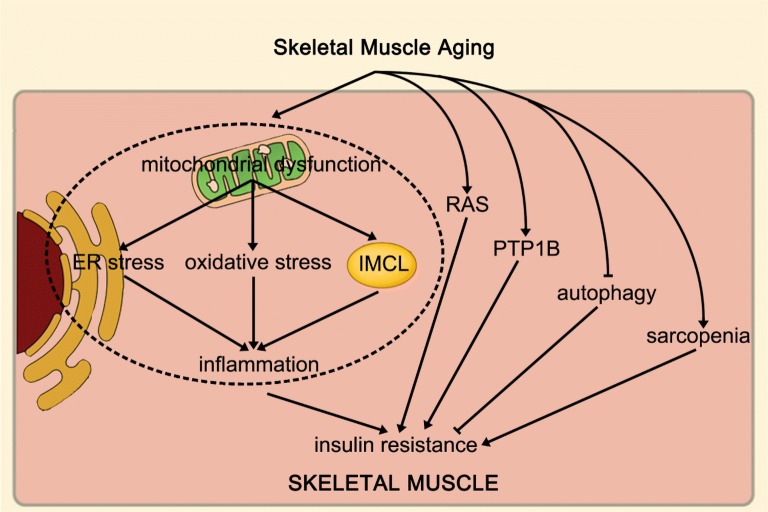
As age increases, the risk of developing type 2 diabetes increases, which is associated with senile skeletal muscle dysfunction. During skeletal muscle aging, mitochondrial dysfunction, intramyocellular lipid accumulation, increased inflammation, oxidative stress, modified activity of insulin sensitivity regulatory enzymes, endoplasmic reticulum stress, decreased autophagy, sarcopenia and over-activated renin-angiotensin system may occur. These changes can impair skeletal muscle insulin sensitivity and increase the risk of insulin resistance and type 2 diabetes during skeletal muscle aging. This review of the mechanism of the increased risk of insulin resistance during skeletal muscle aging will provide a more comprehensive explanation for the increased incidence of type 2 diabetes in elderly individuals, and will also provide a more comprehensive perspective for the prevention and treatment of type 2 diabetes in elderly populations.
Overview
The claims and statistics of this paper haven’t been checked yet.
Free: it reads the open-access text and checks the first 5 claims that cite a source we can check. Create a free account to check every claim.
Integrity signals
Registry
Cites
Statistics
Figures
Verification
Claims the paper makes
The claims and statistics of this paper haven’t been checked yet.
Free: it reads the open-access text and checks the first 5 claims that cite a source we can check. Create a free account to check every claim.
Claims other papers make about this one
Each is checked against this paper’s own text: does it say what the citing paper says it does?
The cited source doesn’t support the claim as written.
In the citing paper
“Reduced insulin signalling or insulin resistance can impair muscle protein metabolism, leading to muscle wasting and sarcopenia58.”
From Sarcopenic obesity in older adults: a clinical overview (2024) · cites this paper as [58]
Checked by a reasoning model — may be wrong.
Experimental — accuracy not yet measuredThe source backs part of the claim, not all of it — or backs it for a different population, condition or comparison.
In the citing paper
“Also, with aging and obesity (especially abdominal obesity), insulin sensitivity gradually decreases in skeletal muscle and adipocytes, increasing serum glucose levels and promoting ER overload and Os [83, 91–95].”
From The critical role of oxidative stress in sarcopenic obesity (2021) · cites this paper as [94]
Experimental — accuracy not yet measuredIn the citing paper
“Excess nutrients (ingesting high fat and/or high glucose), chronic inflammatory state, high adiposity, IR, metabolic syndrome, and aging harm the ER function in the liver, skeletal muscle, and adipose tissue, inducing Os [83, 91–95].”
From The critical role of oxidative stress in sarcopenic obesity (2021) · cites this paper as [94]
In the citing paper
“In the early stages of metabolic dysregulation, insulin secretion is elevated to compensate for increased glycemia (hyperinsulinemia). The high amount of insulin produced by the pancreas requires that the ER guarantee the correct folding of the hormone, which generates an ER overload and dysfunction, an unfolded protein response (UPR) overactivation, Os, and inflammation [83, 91–95].”
From The critical role of oxidative stress in sarcopenic obesity (2021) · cites this paper as [94]
Self-check
Percentages, sums and reported differences re-computed from the paper’s own numbers.
The self-check needs the paper’s full text.
Citations
Cites
Xu, H., Barnes, G. T., Yang, Q., Tan, G., Yang, D., Chou, C. J., Sole, J., Nichols, A., Ross, J. S., Tartaglia, L. A., et al. (2003) · Journal of Clinical Investigation · doi:10.1172/jci200319451 · Cited by 6,760 · cited 1×
“in aging skeletal muscle Inflammation is closely related to skeletal muscle insulin resistance, and increased inflammation promotes skeletal muscle insulin resistance [38].”
BackgroundIncreased oxidative stress in obesity and its impact on metabolic syndrome
Furukawa, S., Fujita, T., Shimabukuro, M., Iwaki, M., Yamada, Y., Nakajima, Y., Nakayama, O., Makishima, M., Matsuda, M., & Shimomura, I. (2004) · Journal of Clinical Investigation · doi:10.1172/jci21625 · Cited by 5,508
Fielding, R. A., Vellas, B., Evans, W. J., Bhasin, S., Morley, J. E., Newman, A. B., Abellan van Kan, G., Andrieu, S., Bauer, J., Breuille, D., et al. (2011) · Journal of the American Medical Directors Association · doi:10.1016/j.jamda.2011.01.003 · Cited by 3,256 · cited 1×
“The proportion of type II muscle fibers is reduced [32], resulting in the muscle mass of type II muscle fibers becoming lower than that of type I muscle fibers.”
BackgroundReactive oxygen species have a causal role in multiple forms of insulin resistance
Houstis, N., Rosen, E. D., & Lander, E. S. (2006) · Nature · doi:10.1038/nature04634 · Cited by 2,525
Elchebly, M., Payette, P., Michaliszyn, E., Cromlish, W., Collins, S., Loy, A. L., Normandin, D., Cheng, A., Himms-Hagen, J., Chan, C.-C., et al. (1999) · Science · doi:10.1126/science.283.5407.1544 · Cited by 2,210
Inflammation: the link between insulin resistance, obesity and diabetes
Dandona, P. (2004) · Trends in Immunology · doi:10.1016/j.it.2003.10.013 · Cited by 2,170 · cited 1×
“Studies have shown that TNF-α, monocyte chemoattractant protein-1 (MCP-1), C-reactive protein (CRP), ILs and other inflammatory factors can promote skeletal muscle insulin resistance [78].”
BackgroundMuscaritoli, M., Anker, S. D., Argilés, J., Aversa, Z., Bauer, J. M., Biolo, G., Boirie, Y., Bosaeus, I., Cederholm, T., Costelli, P., et al. (2010) · Clinical Nutrition · doi:10.1016/j.clnu.2009.12.004 · Cited by 1,732
Autophagosomes form at ER–mitochondria contact sites
Hamasaki, M., Furuta, N., Matsuda, A., Nezu, A., Yamamoto, A., Fujita, N., Oomori, H., Noda, T., Haraguchi, T., Hiraoka, Y., et al. (2013) · Nature · doi:10.1038/nature11910 · Cited by 1,683
The underappreciated role of muscle in health and disease
Wolfe, R. R. (2006) · The American Journal of Clinical Nutrition · doi:10.1093/ajcn/84.3.475 · Cited by 1,537
The compelling link between physical activity and the body's defense system
Nieman, D. C., & Wentz, L. M. (2019) · Journal of Sport and Health Science · doi:10.1016/j.jshs.2018.09.009 · Cited by 1,340
Research works printed but not linked: 1
- Jeannette A Chris P Esther J Anoop M Teresa T Elizabeth BS IDF DIABETES ATLAS eighth edition 2017 2017 Brussels IDF
Cited by
Items 101–200 of 283
Melo, G. M., Capucho, A. M., Sacramento, J. F., Ponce-de-Leão, J., Fernandes, M. V., Almeida, I. F., Martins, F. O., & Conde, S. V. (2023) · Nutrients · doi:10.3390/nu16010067 · Cited by 13
“This stabilization or resolution of metabolic effects over time suggests potential adaptive mechanisms or compensatory changes in response to early-life exposures and a possible contribution of hormonal effects [34].”
BackgroundCisterna, B., Sobolev, A. P., Costanzo, M., Malatesta, M., & Zancanaro, C. (2020) · Microscopy and Microanalysis · doi:10.1017/s143192762002437x · Cited by 13
“Accumulation of intramyocellular lipid droplets, as well as altered glycogen content, are also common features of aged skeletal muscles, likely due to the multifactorial deterioration of biological functions typical of the aging process, among which are decreased autophagic capacity, increased oxidative stress and inf…”
BackgroundVidyadharan, V. A., Betancourt, A., Smith, C., Yallampalli, C., & Blesson, C. S. (2022) · Nutrients · doi:10.3390/nu14061158 · Cited by 12
“Skeletal muscle is the primary site of peripheral insulin resistance, as several steps of insulin-stimulated glucose uptake and utilization take place in this tissue [12].”
BackgroundKwon, E., Nah, E., Kim, S., & Cho, S. (2021) · International Journal of Environmental Research and Public Health · doi:10.3390/ijerph182413186 · Cited by 12
“High skeletal muscle mass might contribute to a stable control over glucose levels due to insulin-induced glucose uptake occurring in skeletal muscle [31,32].”
BackgroundMeng, Q., Li, Y., Xu, Y., & Wang, Y. (2023) · Biochimica et Biophysica Acta (BBA) - Molecular Basis of Disease · doi:10.1016/j.bbadis.2023.166901 · Cited by 14
Kim, H. J., Lee, H., Kang, M., Leem, G. H., Kim, M. H., & Song, T. (2024) · Diabetes & Metabolism Journal · doi:10.4093/dmj.2023.0243 · Cited by 15
“These cytokines interfere with insulin signaling and promote insulin resistance [32].”
Beta-Hydroxybutyrate: A Supplemental Molecule for Various Diseases
Shahtaghi, N. R., Soni, B., Bakrey, H., Bigdelitabar, S., & Jain, S. K. (2024) · Current Drug Targets · doi:10.2174/0113894501312168240821082224 · Cited by 10
Zhang, Y., Gong, M., Feng, X.-M., & Yan, Y. (2025) · Clinical Nutrition ESPEN · doi:10.1016/j.clnesp.2025.02.026 · Cited by 13
Chung, C., Chao, T.-Y., Chen, H., Xie, G.-R., Chiang, W., & Hsieh, S. (2022) · Foods · doi:10.3390/foods11040493 · Cited by 10
“We propose this enhanced effect of EDA in the middle-aged probably comes from the fact that advancing age increases the risk of insulin resistance due to skeletal muscle aging, which is associated with increased oxidative stress and inflammation and promotes hepatic lipogenesis [21].”
BackgroundEpicardial fat and insulin resistance in healthy older adults: a cross-sectional analysis
Kalmpourtzidou, Α., Napoli, I. D., Vincenti, A., Giuseppe, R. D., Casali, P. M., Tomasinelli, C. E., Ferrara, F., Tursi, F., & Cena, H. (2023) · GeroScience · doi:10.1007/s11357-023-00972-6 · Cited by 11
“Older adults are more glucose intolerant and insulin resistant than the younger ones having a higher risk of developing type 2 diabetes mellitus (T2DM) [16, 17].”
BackgroundSupruniuk, E., Mikłosz, A., & Chabowski, A. (2020) · International Journal of Molecular Sciences · doi:10.3390/ijms21218382 · Cited by 13
“In this regard, muscle cells are a consequential cell type for lipid homeostasis disorders [2].”
BackgroundBanack, H. R., LaMonte, M. J., Manson, J. E., Zhu, K., Evans, W. J., Shankaran, M., & Wactawski‐Wende, J. (2022) · PLoS ONE · doi:10.1371/journal.pone.0278723 · Cited by 13
“In rodent models, diabetes exacerbates age-related muscle loss, insulin-dependent activation pathways regulating protein synthesis are blunted in the muscle tissue of diabetic mice, and decreased muscle size may contribute to muscle atrophy before the onset of overt diabetes [34, 35].”
BackgroundPorchia, L. M., Ochoa-Précoma, R., Reyes-Albarracín, Y., González-Mejía, M. E., & López‐Bayghen, E. (2024) · Maturitas · doi:10.1016/j.maturitas.2024.108085 · Cited by 14
A novel treatment strategy targeting cellular pathways with natural products to alleviate sarcopenia
Lee, D. H., Lee, H. J., Yang, G., Kim, D. Y., Kim, J. U., Yook, T. H., Lee, J. H., & Kim, H. J. (2024) · Phytotherapy Research · doi:10.1002/ptr.8301 · Cited by 14
“Increased insulin resistance diminishes glucose uptake by cells and accelerates muscle protein breakdown (Shou et al., 2020), thereby contributing to sarcopenia.”
Putranata, H., Hengky, A., & Hartoko, B. (2025) · Acta Diabetologica · doi:10.1007/s00592-024-02440-9 · Cited by 10
Sweatt, A. J., Reddy, R. M., Rahaghi, F. N., Al‐Naamani, N., & American Thoracic Society Pulmonary Circulation Assembly Early Career Working Group (2021) · Pulmonary Circulation · doi:10.1177/20458940211040713 · Cited by 9
Guo, Y., Zhang, Q., Zheng, L., Shou, J., Zhuang, S., Xiao, W., & Chen, P. (2023) · Frontiers in Physiology · doi:10.3389/fphys.2023.1189528 · Cited by 11
“Obesity and T2DM lead to reduced mitochondrial content, decreased oxidative phosphorylation (OXPHOS) rate and excessive production of reactive oxygen species (Sharma, 2015; Wada and Nakatsuka, 2016; Shou et al., 2020).”
BackgroundSelf-citationRyu, H., Jeong, H. H., Lee, S., Lee, M., Kim, M., & Lee, B. (2023) · Journal of Microbiology and Biotechnology · doi:10.4014/jmb.2309.09037 · Cited by 8
Son, D., Kwon, Y., & Lee, J. (2024) · The journal of nutrition health & aging · doi:10.1016/j.jnha.2024.100270 · Cited by 9
Continuous glucose monitoring as a tool in early-stage type 1 diabetes
Carr, A. L. J., Sutton, H., Agesen, R. M., Bonifacio, E., Bosi, E., Gillard, P., Swaby, R., Vercauteren, J., & Besser, R. E. J. (2026) · Diabetologia · doi:10.1007/s00125-026-06707-4 · Cited by 11
Li, I.-C., Lu, T., Lin, T., Chen, A. Y., Chu, H., Chen, Y., Li, T., & Chen, C. (2023) · Journal of Cachexia Sarcopenia and Muscle · doi:10.1002/jcsm.13307 · Cited by 9
“lack of physical activity, nerve muscle damage, oxidative stress, inflammation and mitochondrial dysfunction.(9) For instance, during the recent outbreak of severe acute respira-”
BackgroundKondo, S., Adachi, S.-I., Komatsu, W., Yoshizawa, F., & Yagasaki, K. (2024) · Current Issues in Molecular Biology · doi:10.3390/cimb46020068 · Cited by 11
“It is known that insulin resistance of skeletal muscle is induced in T2D via increased ROS and inflammatory cytokines (IL-6, TNF α , etc.) [46,47].”
BackgroundBurton, M. A., Antoun, E., Garratt, E. S., Westbury, L. D., Dennison, E. M., Harvey, N. C., Cooper, C. C., Patel, H. P., Godfrey, K. M., & Lillycrop, K. A. (2024) · The FASEB Journal · doi:10.1096/fj.202301089rr · Cited by 7
“69 In this study, HOMA2-IR levels were negatively associated with miR-10b levels. miR-10b has previously been reported to be reduced in muscle from hyperglycemic compared to normoglycemia rats, 70 and in muscle tissue from twins discordant for T2D.”
Lamichhane, G., Lee, D., Franks, R., Olawale, F., Jin, J.-B., Egan, J. M., & Kim, Y. (2024) · Biology · doi:10.3390/biology13070472 · Cited by 14
“Age-associated muscular dysfunction, abdominal obesity, and resulting insulin resistance are considered major risk factors that increase the incidence of type 2 diabetes [23,47,48], and this risk can be lowered by reducing obesity [49,50].”
BackgroundKim, J. A., Lee, J. S., Song, E., Roh, E., Yu, J. H., Kim, N. H., Yoo, H. J., Seo, J. A., Kim, S. G., Kim, N. H., et al. (2021) · The Journal of Clinical Endocrinology & Metabolism · doi:10.1210/clinem/dgab370 · Cited by 9
Trends in diabetic ketoacidosis in Victoria, Australia 2002–2016
Jones, H. C., Kiburg, K., Lee, M. H., O'Neal, D. N., & MacIsaac, R. J. (2024) · BMC Endocrine Disorders · doi:10.1186/s12902-024-01650-0 · Cited by 7
“Contrastingly, for T2D there were more DKA events in older age groups correlating with increased incidence of T2D, increased insulin dependence, a progressive reduction in β-cell function with diabetes duration, and an increase in co-morbidities with older adults [23].”
BackgroundPereira, J. P. D. C., Macêdo, I. F., Barbosa, G. A., Leitão, G. M., de Medeiros, G. O. C., Miranda, A. L., Ferreira, G. M. C., Bezerra, A. D. L., Diniz, A. S., Fayh, A. P. T., et al. (2025) · BMC Cancer · doi:10.1186/s12885-025-15047-2 · Cited by 9
“Higher insulin resistance has been associated with increased breast cancer incidence [31], and given insulin’s role in muscle health [32], even young, functionally intact women with normal SMI and TAT could harbor higher risk factors for adverse prognosis due to the combined effects of…”
Farhana, F., Sultana, M. A., Hia, R. A., & Hegde, V. K. (2025) · Neuroscience & Biobehavioral Reviews · doi:10.1016/j.neubiorev.2025.106501 · Cited by 10
Aging-induced dysfunction of adipose tissue and skeletal muscle and its link to insulin resistance
Sakaguchi, M. (2025) · The Journal of Biochemistry · doi:10.1093/jb/mvaf081 · Cited by 12
What matters in aging is signaling for responsiveness
Park, S. C., Lee, Y., Cho, K. A., Kim, S. Y., Lee, Y., Lee, S.-R., & Lim, I. K. (2023) · Pharmacology & Therapeutics · doi:10.1016/j.pharmthera.2023.108560 · Cited by 8
Ng, A. S. C., Tai, E. S., & Chee, M. W. L. (2024) · SLEEP · doi:10.1093/sleep/zsae224 · Cited by 12
Zhang, W., Su, X., Liu, S., Tong, Y. A., Tu, Z., Zhang, H., Li, C., Yao, H., Wang, J., Zheng, X., et al. (2025) · Acta Diabetologica · doi:10.1007/s00592-025-02447-w · Cited by 7
“The stronger associations observed in middle-aged and elderly adults may reflect the cumulative effects of adverse metabolic changes associated with aging, including reduced insulin sensitivity and altered adipokine profiles [15, 27, 28].”
Shaikh, S., Ahmad, K., Lim, J. H., Ahmad, S. S., Lee, E. J., & Choi, I. (2025) · Pharmaceuticals · doi:10.3390/ph18091407 · Cited by 8
“Furthermore, aged mice have decreased SM insulin sensitivity, which leads to insulin resistance [84].”
Sarcopenia in Aging: Pathogenesis, Diagnosis, and Emerging Therapeutic Frontiers
Jeyaraman, M., Jeyaraman, N., Nallakumarasamy, A., Ramasubramanian, S., Muthu, S., Murugan, S., Rajendran, S. N. S., Rajendran, R. L., Ahn, B., & Gangadaran, P. (2025) · Molecular Imaging and Biology · doi:10.1007/s11307-025-02071-8 · Cited by 10
Zhang, X., Kraus, W. E., Houmard, J. A., Johnson, J. L., & Kraus, V. B. (2025) · American Journal of Physiology-Cell Physiology · doi:10.1152/ajpcell.00816.2025 · Cited by 8
Pikó, P., Werissa, N. A., & Ádány, R. (2022) · Biomedicines · doi:10.3390/biomedicines10071703 · Cited by 7
“The development of IR is strongly influenced by environmental/lifestyle factors [16–18] such as physical (in)activity [19–22], age [23,24], obesity [25,26], smoking [27,28], and lowfiber diet [29], and it is generally accepted that individual risk is also strongly influenced by inheritable genetic factors [30,31], whi…”
BackgroundLiu, C., Cao, Y., Li, L., Wang, Y., & Meng, Q. (2022) · DNA and Cell Biology · doi:10.1089/dna.2022.0247 · Cited by 7
“Insulin resistance mostly occurs in middle-aged and elderly people (Shou et al, 2020), so this study will follow up to verify the role of miR-29 in resisting insulin resistance in adult and elderly mice.”
Predictive Models of Muscle Strength in Older People with Type 2 Diabetes Mellitus
Leite, M. M., Neto, I. V. D. S., Dutra, M. T., Funghetto, S. S., Silva, A. D. O., da Silva, I. C. R., de Lima, L. R., & Stival, M. M. (2023) · Clinical Interventions in Aging · doi:10.2147/cia.s414620 · Cited by 11
“Moreover, some skeletal muscle changes typical of DM2, such as decreased type II fibers and decreased glucose uptake capacity may generate IR, in addition to the accumulation of senescent cells and decreased autophagy capacity and enzyme activity.(10,26,27) Despite these DM2 alterations may contribute to the decline i…”
BackgroundSaadeddine, D., Itani, L., Rossi, A. P., Pellegrini, M., & Ghoch, M. E. (2021) · Diseases · doi:10.3390/diseases9010023 · Cited by 9
“This is in addition to the association between reduced SMM and the increased risk of insulin resistance [25], as well as the higher levels of circulating inflammatory markers [26].”
BackgroundPlant‐Derived Treatments for Different Types of Muscle Atrophy
Wang, X., Tang, X., Wang, Y., Zhao, S., Xu, N., Wang, H., Kuang, M., Han, S., Jiang, Z., & Zhang, W. (2025) · Phytotherapy Research · doi:10.1002/ptr.8420 · Cited by 6
“According to population forecasts, the number of elderly individuals with both sarcopenia and type 2 diabetes may increase (Shou, Chen, and Xiao 2020).”
The Role of S6K1 in Aging and Alzheimer’s Disease: Mechanistic Insights and Therapeutic Potential
Oddo, S., Lanza, M., Casili, G., & Caccamo, A. (2025) · International Journal of Molecular Sciences · doi:10.3390/ijms26135923 · Cited by 6
“Aging is characterized by progressive metabolic decline, which manifests as impaired glucose homeostasis, reduced insulin sensitivity, mitochondrial dysfunction, and increased lipid accumulation [50–52].”
Hormonal changes during aging and their effects on quality of life
Coggins, C., Patel, S., Nigam, S., & Rai, V. (2025) · Exploration of Endocrine and Metabolic Diseases · doi:10.37349/eemd.2025.101447 · Cited by 7
Tarazona‐Santabalbina, F. J., Giorgino, F., Donini, L. M., Ballesteros-Pomar, M. D., Cruz-Jentoft, A. J., Soeters, M. R., Halil, M. G., Cukierman‐Yaffe, T., Aldahash, R., Aldossari, K. K., et al. (2026) · Diabetes Research and Clinical Practice · doi:10.1016/j.diabres.2026.113326 · Cited by 5
Burton, M. A., Garratt, E. S., Hewitt, M., Sharkh, H. Y., Antoun, E., Westbury, L. D., Dennison, E. M., Harvey, N. C., Cooper, C. C., MacIsaac, J. L., et al. (2023) · Skeletal Muscle · doi:10.1186/s13395-023-00326-y · Cited by 5
“…pathways were found to be enriched amongst differentially expressed transcripts in muscle tissue from elderly individuals with insulin resistance [52], suggesting epigenetic processes may consolidate or mediate such changes in gene expression resulting in aberrant insulin and downstream…”
BackgroundFisiología del envejecimiento: Actualización y perspectiva genética
López-Delgado, D. S., Andrade, G. L. C., Narváez, C. A., Santacruz, J. C. Z., & Galindo, C. Y. R. (2025) · Medicina de Familia SEMERGEN · doi:10.1016/j.semerg.2025.102452 · Cited by 6
Yudhani, R. D., Nugrahaningsih, D. A. A., Sholikhah, E. N., & Mustofa, M. (2021) · Open Access Macedonian Journal of Medical Sciences · doi:10.3889/oamjms.2021.6972 · Cited by 8
“Moreover, MDA is a biomarker of oxidative damage in skeletal muscle related to IR [103].”
BackgroundPiro, S., & Purrello, F. (2021) · Journal of Gerontology and Geriatrics · doi:10.36150/2499-6564-n457 · Cited by 8
Role of Fish Oil in Preventing Paternal Obesity and Improving Offspring Skeletal Muscle Health
Xiong, L., Dorus, S., & Ramalingam, L. (2023) · Biomedicines · doi:10.3390/biomedicines11123120 · Cited by 5
Chakraborty, K., Burman, R., Nisar, S., Miller, S., Loschinskey, Z., Wu, S., Li, Y., Bag, A. K., Khan, A., Goodenough, C. G., et al. (2024) · Journal of Magnetic Resonance Imaging · doi:10.1002/jmri.29566 · Cited by 5
Zhang, Q., Chigutsa, F. B., & Chang, A. M. (2022) · Diabetes Therapy · doi:10.1007/s13300-022-01290-4 · Cited by 5
Dietary restriction in senolysis and prevention and treatment of disease
Aminzadeh-Gohari, S., Kofler, B., & Herzog, C. M. S. (2022) · Critical Reviews in Food Science and Nutrition · doi:10.1080/10408398.2022.2153355 · Cited by 6
“Numerous preclinical and clinical studies have identified a link between insulin secretion deficiency, insulin resistance, and hyper-insulinemia, which is a major cause of age-related diseases like cancer and diabetes (Bartke 2019; Shou, Chen, and Xiao 2020; Pak et al. 2021).”
Baumgartner, J. N., Kowtha, B., Riscuta, G., Wali, A., & Gao, Y. (2023) · Stress and Health · doi:10.1002/smi.3258 · Cited by 5
Hsu, W., Tseng, C.-W., Huang, Y.-T., Liang, C., Lee, M., & Chen, S. (2021) · Healthcare · doi:10.3390/healthcare9081010 · Cited by 5
Lowrie, F. J., Rahimi, M. M., Hogan, C. M., Tran, D. L., Marshall, N. S., Phillips, C. L., Gordon, C. J., Yee, B. J., & Machan, E. A. (2025) · Obesity Research & Clinical Practice · doi:10.1016/j.orcp.2025.10.001 · Cited by 6
Elucidating the potential mechanism and therapeutic targets of chronic stress-induced muscle atrophy
Agarwal, V., Gupta, A., Chaudhary, R., & Kumar, A. (2025) · International Immunopharmacology · doi:10.1016/j.intimp.2025.115118 · Cited by 4
Lim, S. H., Lee, T., Oh, J., Hwang, K., Choi, E. H., & Cha, S. (2025) · Journal of Clinical Medicine · doi:10.3390/jcm14227957 · Cited by 8
Chen, J.-H., Chen, J., Chen, Y.-C., & Li, W. (2024) · Frontiers in Endocrinology · doi:10.3389/fendo.2024.1389295 · Cited by 6
Prevalence of female hirsutism and PCOS in the United States: A cross‐sectional study
Chen, M., Nguyen, W., Haq, Z., Guo, W., & Briley, J. (2025) · JDDG Journal der Deutschen Dermatologischen Gesellschaft · doi:10.1111/ddg.15630 · Cited by 6
“32 Alternatively, another study observed higher adrenal and ovarian androgen levels in post-menopausal women with PCOS than in non-PCOS women; 33 this could contribute to the increased prevalence of hirsutism in older women seen in our analysis.”
Grošelj, U., Kafol, J., Šikonja, J., Mlinarič, M., Šket, R., Remec, Ž. I., Kovač, J., Torkar, A. D., Omladič, J. Š., Lampret, B. R., et al. (2025) · American Journal of Preventive Cardiology · doi:10.1016/j.ajpc.2025.101016 · Cited by 5
Hu, X., Yang, Y., Gao, K., Zhang, Z., Guan, G., Zhang, G., Cao, S., Yu, B., Yang, C., & Zhang, Y. (2025) · Scientific Reports · doi:10.1038/s41598-025-09123-7 · Cited by 6
Keshavjee, S., Schwenger, K. J. P., Yadav, J., Pickel, L., Ghorbani, Y., Sung, H., Jung, H. J., Lou, W. Y. W., Fischer, S. E., Jackson, T. D., et al. (2023) · Obesity Surgery · doi:10.1007/s11695-023-06679-z · Cited by 4
“stress, and alteration in lipid metabolism leading to increased fat deposition [19].”
BackgroundOxidative stress and insulin resistance
Fatima, F., & Zakaria, M. (2024) · Elsevier eBooks · doi:10.1016/b978-0-443-18807-7.00008-9 · Cited by 9
Yang, J., Zhong, J., Du, Y., Wang, Z., Jiang, L., Li, Z., & Liu, Y. (2024) · Frontiers in Medicine · doi:10.3389/fmed.2024.1380210 · Cited by 8
Santos, H. O., Nehme, R., Limirio, L. S., Mendonça, M. E. D. F., de Branco, F. M. S., & de Oliveira, E. P. (2025) · Prostaglandins Leukotrienes and Essential Fatty Acids · doi:10.1016/j.plefa.2025.102667 · Cited by 5
Choi, B., Ji, M., Lim, J. Y., Kim, H., Kim, H. W., Chung, H. Y., & Paik, M. (2025) · Journal of Pharmaceutical and Biomedical Analysis · doi:10.1016/j.jpba.2025.116956 · Cited by 3
Evaluation of the Relationship Between Smoking and Insulin Resistance: A Case-Control Study
Kaplan, A. K., & Sezgin, Y. (2023) · Cureus · doi:10.7759/cureus.36684 · Cited by 3
“These modifications have the potential to negatively impact the insulin sensitivity of skeletal muscles and increase the risk of insulin resistance and type-2 diabetes during skeletal muscle aging [17].”
BackgroundAgeing and Insulin: Inter Alia Diabetes, Obesity and Fitness Concerns
Chukwuma, C. (2023) · Middle East Research Journal of Pharmaceutical Sciences · doi:10.36348/merjps.2023.v03i02.005 · Cited by 3
Lima, Y. D. M. M., Martins, F. A., & Ramalho, A. A. (2024) · Diabetology · doi:10.3390/diabetology5020012 · Cited by 6
Zhu, D. Y., Shi, C., Sun, S., Chen, X., Xu, Y., Wang, B., Xu, Z., Zhang, P., & Sun, M. (2024) · Toxicology and Applied Pharmacology · doi:10.1016/j.taap.2024.117019 · Cited by 4
Linking Circulating Irisin and Type 2 Diabetes: A Systematic Review and Meta‐Analysis
Aminov, E., Folan, P., & Pisconti, A. (2025) · JCSM Communications · doi:10.1002/rco2.70000 · Cited by 7
Lin, T., Jin, S., Shen, X., Huang, S., & Mao, H. (2025) · Frontiers in Endocrinology · doi:10.3389/fendo.2025.1525573 · Cited by 7
Meneghini, V., Beltrão, F. E. D. L., Golovko, G., Watson, R. K., Samreen, S., Ettleson, M. D., Benseñor, I. M., & Bianco, A. C. (2025) · The Journal of Clinical Endocrinology & Metabolism · doi:10.1210/clinem/dgaf519 · Cited by 3
Al‐Taie, A., Arueyingho, O., Khoshnaw, J., & Hafeez, A. (2022) · Archives of Physiology and Biochemistry · doi:10.1080/13813455.2022.2086265 · Cited by 3
“T2DM is associated with low-grade chronic systemic inflammation, which can disrupt glucose and muscle homeostasis (Shou et al. 2020).”
BackgroundNitric oxide in modulating oxidative stress mediated skeletal muscle insulin resistance
Anwar, A., Shukla, S., & Pathak, P. (2024) · Molecular Biology Reports · doi:10.1007/s11033-024-09874-y · Cited by 6
“Skeletal muscle dysfunction is involved in the development of type 2 diabetes [13].”
SAHA inhibits lung fibroblast activation by increasing p66Shc expression epigenetically
Dong, Y., Peng, J., Zhang, X., Wang, Q., & Lyu, X. (2024) · Aging Medicine · doi:10.1002/agm2.12385 · Cited by 4
Rajsfus, B. F., Júnior, J. X. D. N., Chichierchio, M. S., Todeschini, A. R., Oliveira, I. D. A., Borges, F. D. S., Barroso, S. P. C., Mohana‐Borges, R., Pereira, J. L., Zancan, P., et al. (2025) · Life Sciences · doi:10.1016/j.lfs.2025.123729 · Cited by 3
Insulin and Ageing: Interventions for Healthier Lifestyle and Prolonged Lifespan
Chrysanthus, C. S. (2023) · Journal of BioMed Research and Reports · doi:10.59657/2837-4681.brs.23.006 · Cited by 5
Feng, Y., Tian, Y., & Huang, A. (2025) · Applied Sciences · doi:10.3390/app15063192 · Cited by 2
Cirino, N. T. D. O., de Aquino, M. P. M., Lima, C. A., Santos, F. C., Ventura, M. D. M., & Perracini, M. R. (2025) · Arquivos de Neuro-Psiquiatria · doi:10.1055/s-0045-1812302 · Cited by 2
“46 Cognitive impairments associated with diabetes may also interfere with self-care behaviors, including medication adherence and physical activity, which are essential to maintain independence in older age.”
Janssen, J. A. (2026) · International Journal of Molecular Sciences · doi:10.3390/ijms27052150 · Cited by 2
“…[16–18] • Nutrient excess [19] • Adiposity related to ectopic fat depositions and overflow from subcutaneous fat stores [20] • Aging [21] • Physical inactivity [22] • Glucose toxicity [23] • Lipotoxicity (from excess circulating free fatty acids) [23] • Stress (due to excess…”
Shi, F., Liu, C., Liu, W., Cai, H., Zhao, Q., Zhang, C., Liu, Q., Wu, N., & Guo, Y. (2026) · Frontiers in Cardiovascular Medicine · doi:10.3389/fcvm.2026.1707899 · Cited by 2
“Additionally, age-related chronic low-grade inflammation plays an important role, not only directly worsening insulin resistance (29) but also accelerating atherosclerosis through sustained activation of pro-inflammatory factors such as IL-6 and TNF-α (30–32).”
Rooker, K. D., Hernandez-Vizcarrondo, G. A., Cheung, S. W., Bhat, S. M., Brown, A. D., Sieck, G. C., & Fogarty, M. J. (2026) · Physiological Reports · doi:10.14814/phy2.71035 · Cited by 3
“…atrophy (Larsson et al., 2019; Lexell et al., 1988; Nilwik et al., 2013) and metabolic dysfunction (Fattoretti et al., 2001; Fogarty, Marin Mathieu, et al., 2020; Grevendonk et al., 2021; Larsson et al., 2019; Proctor et al., 1995; Shou et al., 2020), resulting in reduced muscle mass and function.”
Reyaldi, C. B., Akrom, A., & Candradewi, S. F. (2021) · Jurnal Farmasi Udayana · doi:10.24843/jfu.2021.v10.i02.p04 · Cited by 2
Brener, A., Lorber, D., Reuveny, A., Toledano, H., Porat‐Kuperstein, L., Lebenthal, Y., Weizman, E., Olender, T., & Volk, T. (2023) · Cells · doi:10.3390/cells12192333 · Cited by 2
“The detrimental metabolic effects of a sedentary lifestyle extend beyond the energy imbalance leading to weight gain and obesity, with muscle inactivity playing a significant role in their development [4].”
BackgroundGlucose, glycolysis, and neurodegenerative disorders
Coelho, P., & Rego, A. C. (2023) · Elsevier eBooks · doi:10.1016/b978-0-323-91704-9.00012-4 · Cited by 5
Pak, K., Santavirta, S., Shin, S., Nam, H., Mæyer, S. D., & Nummenmaa, L. (2024) · Clinical Endocrinology · doi:10.1111/cen.15121 · Cited by 2
“28 In this study, all clinical variables except CRP increased during the 5 ‐ year follow ‐ up period: BMI, waist ‐ hip ratio, fat percentage, muscle percentage* − 1, HOMA ‐ IR, blood pressure, fasting plasma glucose and HbA1c, similar to previous longitudinal studies.”
Shang, M., Zhang, J., Chen, M., Chen, X., Liu, C., Zhong, H., Du, P., Li, Q., Cai, W., Li, L., et al. (2024) · BMJ Open · doi:10.1136/bmjopen-2024-085266 · Cited by 3
Lim, S. M., Ng, Y. L., Majeed, A. B. A., Tan, M. P., Khor, H. M., Kamaruzzaman, S. B., & Ramasamy, K. (2024) · GeroScience · doi:10.1007/s11357-024-01462-z · Cited by 4
“This would certainly compromise skeletal muscle function which is associated with insulin sensitivity [67, 68].”
Yang, H., Liu, Y., Huang, Z., & Deng, G. (2025) · Frontiers in Endocrinology · doi:10.3389/fendo.2024.1463650 · Cited by 4
Kawahara, T., Nawa, N., Murakami, K., Tanaka, T., Ohseto, H., Takahashi, I., Narita, A., Obara, T., Ishikuro, M., Orui, M., et al. (2025) · Journal of Human Genetics · doi:10.1038/s10038-025-01330-4 · Cited by 2
Comprehensive Management of Diabetes Mellitus in the Elderly: A Review
Kumar, B., Kant, R., & Bohra, G. K. (2025) · Journal of Cardio-diabetes and metabolic disorders · doi:10.4103/jcdm.jcdm_8_24 · Cited by 3
Carrillo-Larco, R. M., Guzman‐Vilca, W. C., Xu, X., & Bernabé‐Ortiz, A. (2025) · Primary care diabetes · doi:10.1016/j.pcd.2025.06.005 · Cited by 3
Association of handgrip strength with new-onset CKD in Korean adults according to gender
Lee, S., Kim, M., Lee, H.-J., & Kim, J.-K. (2023) · Frontiers in Medicine · doi:10.3389/fmed.2023.1148386 · Cited by 2
“Several sarcopeniaassociated features such as mitochondrial dysfunction, increased inflammation, and increased oxidative stress arise; these factors cause IR (40).”
BackgroundTrans-anethole Suppresses C2C12 Myoblast Differentiation
Lee, M. (2023) · Journal of Experimental & Biomedical Sciences/Biomedical Science Letters · doi:10.15616/bsl.2023.29.3.190 · Cited by 2
Balboa-Vásquez, J., Domínguez-Reyes, A., Martín, Y. E.-S., Pavicic, F., Ehrenfeld, P., & Martínez-Huenchullán, S. (2021) · Revista Española de Geriatría y Gerontología · doi:10.1016/j.regg.2020.11.004 · Cited by 2
Chukwuma, C. (2022) · Mathews Journal of Diabetes & Obesity · doi:10.30654/mjdo.10014 · Cited by 2
“These modifications may tantamount to defective skeletal muscle insulin sensitivity and elevated risk for insulin resistance and type 2 diabetes as skeletal muscle ages [14].”
BackgroundAge matters: Demographic insights into polycystic ovarian syndrome across generations
Mohapatra, I., & Samantaray, S. R. (2024) · Philippine Journal of Obstetrics and Gynecology · doi:10.4103/pjog.pjog_49_24 · Cited by 2
Chung, Y. S., Baek, J. K., Tran, T. M. C., Kim, H., Jung, H. I., Lee, J. K., Choi, E. A., Kim, H., Yun, B. H., & Seo, S. K. (2024) · Menopause The Journal of The North American Menopause Society · doi:10.1097/gme.0000000000002453 · Cited by 1
Impacts of aging on brain metabolism
Rodrigues, B. A., Santiago, T. C., & Silva, J. D. N. (2025) · Progress in brain research · doi:10.1016/bs.pbr.2025.05.009 · Cited by 4
Therapeutic Potential of Mineralocorticoid Receptors in Skeletal Muscle Aging
Nucci, R. A. B., Nóbrega, O. D. T., & Filho, W. J. (2025) · Receptors · doi:10.3390/receptors4030013 · Cited by 2
Metadata
- Authors
- Shou, J., Chen, P.-J., & Xiao, W.-H.
- Affiliations
- Shanghai University of Sport (CN)
- Corresponding author
- Xiao, Wei-Hua
- ORCID
- Xiao, Wei-Hua
- Venue
- Diabetology & Metabolic Syndrome
- Published
- 2020-02-11
- Volume
- 12
- Issue
- 1
- Pages
- 14-14
- ISSN
- 1758-5996 (ISSN-L)
- PMC
- PMC7014712
- OpenAlex
- W3012554094
- Semantic Scholar
- 43335a17dc79bc3a93b51bee4de60e6c40636068
- Cited by
- 283
- References
- 108
- Citations by year
- 2026: 44 · 2025: 56 · 2024: 55 · 2023: 45 · 2022: 36 · 2021: 33 · 2020: 14
- FWCI
- 3.06
- Type
- journal article
- Language
- en
- Open access
- gold
- doi.org
- Licence
- cc-by
- creativecommons.org/licenses/by/4.0/ (tdm)
- creativecommons.org/licenses/by/4.0/ (vor)
- Locations
- Diabetology & Metabolic Syndrome (publishedVersion, cc-by)
- PubMed Central (publishedVersion, cc-by)
- PubMed (publishedVersion)
- DOAJ (DOAJ: Directory of Open Access Journals) (submittedVersion, cc-by-sa)
- Funders
- National Natural Science Foundation of China (31300975)
- Natural Science Foundation of Shanghai (18ZR1437100)
- Topics
- Life Sciences › Biochemistry, Genetics and Molecular Biology › Molecular Biology › Muscle Physiology and Disorders
- Health Sciences › Medicine › Physiology (medical) › Nutrition and Health in Aging
- Life Sciences › Biochemistry, Genetics and Molecular Biology › Molecular Biology › Metabolism, Diabetes, and Cancer
- Keywords
- insulin resistance, skeletal muscle aging, type 2 diabetes, mitochondrial dysfunction, intramyocellular lipid, inflammation, oxidative stress, endoplasmic reticulum stress, autophagy, sarcopenia, renin-angiotensin system, insulin sensitivity
About these checks
Registry, retraction, Cites and statistics results are computed, not judged, with one exception: a printed reference that no index lists is read once by a model before it counts as a citation error. Claims are extracted by a model and kept only when their quote appears verbatim in the text; each cited source is then checked, with a model’s help, for whether it says what the claim relies on. Those verdicts can be wrong — read the claim’s quote and the cited source before relying on one.
Statistics and arithmetic are recomputed, not judged.
Confidence bands are shown only for fields calibrated on our annotated test set. None is calibrated yet, so no band is shown.
What counts as a claim ›How we measure confidence ›How we check this ›
Are you an author, or do you see a problem with this page? Request a review
Data sources
Bibliographic data: Semantic Scholar, OpenAlex, Crossref.
Contains information from the Semantic Scholar Academic Graph Datasets, made available under the ODC Attribution License (ODC-BY 1.0).
Semantic Scholar’s data is described in: Kinney, R., et al. (2023). The Semantic Scholar Open Data Platform. arXiv:2301.10140.
