

Mechanism of increased risk of insulin resistance in aging skeletal muscle
Open accessThe DOI matches its Crossref record; 108 of the 108 references it cites were found in a registry or an index.
Abstract
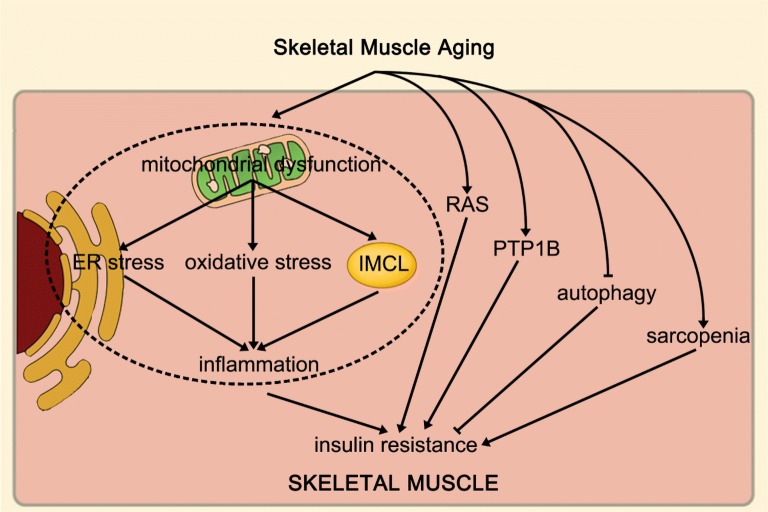
As age increases, the risk of developing type 2 diabetes increases, which is associated with senile skeletal muscle dysfunction. During skeletal muscle aging, mitochondrial dysfunction, intramyocellular lipid accumulation, increased inflammation, oxidative stress, modified activity of insulin sensitivity regulatory enzymes, endoplasmic reticulum stress, decreased autophagy, sarcopenia and over-activated renin-angiotensin system may occur. These changes can impair skeletal muscle insulin sensitivity and increase the risk of insulin resistance and type 2 diabetes during skeletal muscle aging. This review of the mechanism of the increased risk of insulin resistance during skeletal muscle aging will provide a more comprehensive explanation for the increased incidence of type 2 diabetes in elderly individuals, and will also provide a more comprehensive perspective for the prevention and treatment of type 2 diabetes in elderly populations.
Overview
The claims and statistics of this paper haven’t been checked yet.
Free: it reads the open-access text and checks the first 5 claims that cite a source we can check. Create a free account to check every claim.
Integrity signals
Registry
Cites
Statistics
Figures
Verification
Claims the paper makes
The claims and statistics of this paper haven’t been checked yet.
Free: it reads the open-access text and checks the first 5 claims that cite a source we can check. Create a free account to check every claim.
Claims other papers make about this one
Each is checked against this paper’s own text: does it say what the citing paper says it does?
The cited source doesn’t support the claim as written.
In the citing paper
“Reduced insulin signalling or insulin resistance can impair muscle protein metabolism, leading to muscle wasting and sarcopenia58.”
From Sarcopenic obesity in older adults: a clinical overview (2024) · cites this paper as [58]
Checked by a reasoning model — may be wrong.
Experimental — accuracy not yet measuredThe source backs part of the claim, not all of it — or backs it for a different population, condition or comparison.
In the citing paper
“Also, with aging and obesity (especially abdominal obesity), insulin sensitivity gradually decreases in skeletal muscle and adipocytes, increasing serum glucose levels and promoting ER overload and Os [83, 91–95].”
From The critical role of oxidative stress in sarcopenic obesity (2021) · cites this paper as [94]
Experimental — accuracy not yet measuredIn the citing paper
“Excess nutrients (ingesting high fat and/or high glucose), chronic inflammatory state, high adiposity, IR, metabolic syndrome, and aging harm the ER function in the liver, skeletal muscle, and adipose tissue, inducing Os [83, 91–95].”
From The critical role of oxidative stress in sarcopenic obesity (2021) · cites this paper as [94]
In the citing paper
“In the early stages of metabolic dysregulation, insulin secretion is elevated to compensate for increased glycemia (hyperinsulinemia). The high amount of insulin produced by the pancreas requires that the ER guarantee the correct folding of the hormone, which generates an ER overload and dysfunction, an unfolded protein response (UPR) overactivation, Os, and inflammation [83, 91–95].”
From The critical role of oxidative stress in sarcopenic obesity (2021) · cites this paper as [94]
Self-check
Percentages, sums and reported differences re-computed from the paper’s own numbers.
The self-check needs the paper’s full text.
Citations
Cites
Xu, H., Barnes, G. T., Yang, Q., Tan, G., Yang, D., Chou, C. J., Sole, J., Nichols, A., Ross, J. S., Tartaglia, L. A., et al. (2003) · Journal of Clinical Investigation · doi:10.1172/jci200319451 · Cited by 6,760 · cited 1×
“in aging skeletal muscle Inflammation is closely related to skeletal muscle insulin resistance, and increased inflammation promotes skeletal muscle insulin resistance [38].”
BackgroundIncreased oxidative stress in obesity and its impact on metabolic syndrome
Furukawa, S., Fujita, T., Shimabukuro, M., Iwaki, M., Yamada, Y., Nakajima, Y., Nakayama, O., Makishima, M., Matsuda, M., & Shimomura, I. (2004) · Journal of Clinical Investigation · doi:10.1172/jci21625 · Cited by 5,508
Fielding, R. A., Vellas, B., Evans, W. J., Bhasin, S., Morley, J. E., Newman, A. B., Abellan van Kan, G., Andrieu, S., Bauer, J., Breuille, D., et al. (2011) · Journal of the American Medical Directors Association · doi:10.1016/j.jamda.2011.01.003 · Cited by 3,256 · cited 1×
“The proportion of type II muscle fibers is reduced [32], resulting in the muscle mass of type II muscle fibers becoming lower than that of type I muscle fibers.”
BackgroundReactive oxygen species have a causal role in multiple forms of insulin resistance
Houstis, N., Rosen, E. D., & Lander, E. S. (2006) · Nature · doi:10.1038/nature04634 · Cited by 2,525
Elchebly, M., Payette, P., Michaliszyn, E., Cromlish, W., Collins, S., Loy, A. L., Normandin, D., Cheng, A., Himms-Hagen, J., Chan, C.-C., et al. (1999) · Science · doi:10.1126/science.283.5407.1544 · Cited by 2,210
Inflammation: the link between insulin resistance, obesity and diabetes
Dandona, P. (2004) · Trends in Immunology · doi:10.1016/j.it.2003.10.013 · Cited by 2,170 · cited 1×
“Studies have shown that TNF-α, monocyte chemoattractant protein-1 (MCP-1), C-reactive protein (CRP), ILs and other inflammatory factors can promote skeletal muscle insulin resistance [78].”
BackgroundMuscaritoli, M., Anker, S. D., Argilés, J., Aversa, Z., Bauer, J. M., Biolo, G., Boirie, Y., Bosaeus, I., Cederholm, T., Costelli, P., et al. (2010) · Clinical Nutrition · doi:10.1016/j.clnu.2009.12.004 · Cited by 1,732
Autophagosomes form at ER–mitochondria contact sites
Hamasaki, M., Furuta, N., Matsuda, A., Nezu, A., Yamamoto, A., Fujita, N., Oomori, H., Noda, T., Haraguchi, T., Hiraoka, Y., et al. (2013) · Nature · doi:10.1038/nature11910 · Cited by 1,683
The underappreciated role of muscle in health and disease
Wolfe, R. R. (2006) · The American Journal of Clinical Nutrition · doi:10.1093/ajcn/84.3.475 · Cited by 1,537
The compelling link between physical activity and the body's defense system
Nieman, D. C., & Wentz, L. M. (2019) · Journal of Sport and Health Science · doi:10.1016/j.jshs.2018.09.009 · Cited by 1,340
Research works printed but not linked: 1
- Jeannette A Chris P Esther J Anoop M Teresa T Elizabeth BS IDF DIABETES ATLAS eighth edition 2017 2017 Brussels IDF
Cited by
Items 201–283 of 283
Su, S.-Y., Okoli, C. T. C., & Chao, L.-F. (2025) · Osteoporosis and Sarcopenia · doi:10.1016/j.afos.2025.09.001 · Cited by 2
“Given that T2DM patients experience not only muscle loss due to insulin resistance [20] but also potential exacerbation from poor glycemic control [8] and diabetes-related complications, including vascular disorders, a more comprehensive evaluation of sarcopenia screening tools in this population…”
Curiel-Cervantes, V. (2026) · Physiologia · doi:10.3390/physiologia6010005 · Cited by 1
“The interactions among mitochondrial dysfunction, inflammation, oxidative stress, changes in enzyme activity, sarcopenia, reduced autophagy, and excessive activation of the renin–angiotensin system contribute to glucose metabolic alterations in SM [41].”
Taschereau, A., Wong, J., Harnois‐Leblanc, S., Brunet, M. A., Doyon, M., Arguin, M., Rifas‐Shiman, S. L., Oken, E., Perron, P., Jacques, P., et al. (2026) · Diabetes Metabolic Syndrome and Obesity · doi:10.2147/dmso.s590000 · Cited by 2
“39 These changes in pregnancy may promote GDM 40 and contribute to later maternal risk of prediabetes/T2D.”
Yan, Y., Zhang, J., Li, N., Li, J., Wen, Y., Wang, Y., & Huang, Y. (2026) · Frontiers in Immunology · doi:10.3389/fimmu.2026.1782149 · Cited by 2
“Lipotoxicity and insulin resistance can inhibit the activity of anabolic pathways within muscle, such as the IRS-1/PI3K/Akt/mTOR pathway, which may lead to a decreased synthesis rate of myo fi brillar and cytoskeletal proteins (87, 88).”
Wirler, J., Stein, M. J., Baurecht, H., Bohmann, P., Freisling, H., Lendt, C., Sedlmeier, A. M., & Leitzmann, M. F. (2026) · BMC Medicine · doi:10.1186/s12916-026-04907-8 · Cited by 1
Tauroursodeoxycholic acid (TUDCA) ameliorates age‐related skeletal muscle loss
Carvalho, M. U. W. B. D., Barssotti, L., dos Santos, L. M. B., Rosa, L. R. D. O., Gomes‐Marcondes, M. C. C., CARNEIRO, E. M., Barbosa, H. C. L., & Zangerolamo, L. (2026) · The Journal of Physiology · doi:10.1113/jp290683 · Cited by 2
“The increased expression of pro-inflammatory cytokines can impair insulin signalling by reducing IRS-1 activity and inhibiting the PI3K–AKT pathway (Shou et al., 2020).”
Bitirim, C. V., Olğar, Y., Billur, D., Akçalı, K. C., & Turan, B. (2021) · Journal of Ankara University Faculty of Medicine · doi:10.4274/atfm.galenos.2021.43760 · Cited by 1
Tsai, P., Wang, C.-H., Hunt, C. W., Watts, S. O., & Ware, K. (2022) · Topics in Geriatric Rehabilitation · doi:10.1097/tgr.0000000000000358 · Cited by 1
Lezhenko, G. O., Pashkovа, O. Y., & Chudova, N. I. (2022) · Zaporozhye Medical Journal · doi:10.14739/2310-1210.2022.6.261182 · Cited by 1
Role of p-anisaldehyde in the Differentiation of C2C12 Myoblasts
Dal-Ah, K. I. M., Kong, K. H., Cho, H., & Lee, M.-R. (2023) · Korean Journal of Clinical Laboratory Science · doi:10.15324/kjcls.2023.55.3.184 · Cited by 1
Mbatha, N. A., Mushebenge, A. G.-A., & Khathi, A. (2024) · Physiologia · doi:10.3390/physiologia4020009 · Cited by 3
“One of the main causes of aging-related metabolic alterations is deteriorating insulin resistance [239].”
BackgroundCoelho‐Júnior, H. J., Álvarez‐Bustos, A., Picca, A., Calvani, R., Rodríguez‐Mañas, L., Landi, F., & Marzetti, E. (2024) · Nutrients · doi:10.3390/nu16234087 · Cited by 2
Su, W., Wang, X., Wang, Q., Pei, J., & Fang, Z. (2025) · PLoS ONE · doi:10.1371/journal.pone.0323634 · Cited by 1
“Similarly, diabetes also changes the patient’s muscle and fat metabolism, and a protective effect in non-diabetic patients is also expected [26,27].”
Sujon, H., Rahman, M. M., Haque, M. A., Banu, S., Ananta, T. T., & Sarker, M. H. R. (2025) · Cureus · doi:10.7759/cureus.87090 · Cited by 2
Zych, M. (2022) · FARMACIA · doi:10.31925/farmacia.2022.4.5 · Cited by 1
“Among these factors, many authors also mention the age of a patient [3, 25, 28, 40, 59].”
BackgroundLithocholic acid phenocopies rejuvenating and life-extending effects of calorie restrictionPreprint
Qu, Q., Chen, Y., Wang, Y., Long, S., Wang, W., Yang, H.-Y., Li, M., Tian, X., Wei, X., Liu, Y., et al. (2023) · bioRxiv (Cold Spring Harbor Laboratory) · doi:10.1101/2023.12.07.570559 · Cited by 1
Aminov, E., Folan, P., & Pisconti, A. (2024) · bioRxiv · doi:10.1101/2024.06.29.601052 · Cited by 2
“It has been postulated that insulin resistance in skeletal muscle may be the initial cause of increased insulin secretion by β-cells (DeFronzo and Tripothy, 2009; Peterson and Shulman, 2002; Shou et al., 2020; Teng and Huang, 2019).”
BackgroundMolecular Mechanisms of Cardiomyocyte AgingPreprint
Yücel, D., Trembley, M. A., Ke, Q., Wu, Z., Kang, P. M., & Pu, W. T. (2025) · bioRxiv (Cold Spring Harbor Laboratory) · doi:10.1101/2025.07.29.666777 · Cited by 1
“Dysregulation of the transcriptional machinery and altered expression of genes involved in the metabolism, previously associated with aging in other cell types 44–47 , suggest that these pathways and those related to heart contraction contribute to cardiac aging.”
Treating Diabetes in Older Adults – Optimising Glycaemic Targets with Comorbidities in Mind
Khoo, C. M. (2020) · The Singapore Family Physician · doi:10.33591/sfp.46.7.u1
Gissen, A. S. (2020) · Authorea · doi:10.22541/au.158687266.69944648
“This is thought to be partly attributable to defects in autophagy (32).”
BackgroundPrevalencia de resistencia a la insulina según HOMA2-IR. Ciudad Bolívar, Venezuela
Marchán, C., Castro, D., Cedeño, J. G., & Brito-Nuñez, N. J. (2021) · Revista Mexicana de Endocrinología Metabolismo y Nutrición · doi:10.24875/rme.20000086 · Cited by 6
Mujawdiya, P. K., Pandey, P., Singh, R., Sharad, S., & Kapur, S. (2022) · ACTA SCIENTIFIC MICROBIOLOGY · doi:10.31080/asmi.2022.05.1126
Probabilistic prediction of segmental body composition in Iranian children and adolescents
Rahmani, M., Ardalan, A., Ghaderi‐Zefrehei, M., Jeddi, M., Heydari, S. T., & Dabbaghmanesh, M. H. (2022) · BMC Pediatrics · doi:10.1186/s12887-022-03580-z
Nugroho, F. A., Kusumastuty, I., Cempaka, A. R., Latif, A. N. H., & Handayani, D. (2023) · Healthcare in Low-resource Settings · doi:10.4081/hls.2023.11172
Thangrom, W., Roopsawang, I., & Aree‐Ue, S. (2023) · Geriatrics · doi:10.3390/geriatrics8020033
“Participants with frailty are vulnerable to many stressors; thus, exposure to external or internal stressors—hospital admission, surgical procedures, and imbalanced homeostasis—is more likely to increase adverse outcomes [23,24].”
BackgroundIDF2022-0398 Type 2 diabetes mellitus is a risk factor for severe sarcopenia in elderly
Joung, K. H., Kim, J. M., Lee, J. C., Kang, S. M., Kim, H. J., & Ku, B. J. (2023) · Diabetes Research and Clinical Practice · doi:10.1016/j.diabres.2023.110378
ANTHROPOMETRIC STUDY OF POLYCYSTIC OVARY SYNDROME (PCOS) IN WOMEN
Wisam, A., & Al-Jawadi, Z. A. M. (2023) · Maǧallaẗ abḥāṯ kulliyyaẗ al-tarbiyaẗ al-asāsiyyaẗ/Mağallaẗ abḥāṯ kulliyyaẗ al-tarbiyaẗ al-asāsiyyaẗ · doi:10.33899/berj.2023.178151
Brener, A., Lorber, D., Reuveny, A., Toledano, H., Porat‐Kuperstein, L., Lebenthal, Y., Weizman, E., Olender, T., & Volk, T. (2023) · bioRxiv (Cold Spring Harbor Laboratory) · doi:10.1101/2023.08.28.555053
“11 Even in the absence of obesity, young patients with sarcopenia due to muscle atrophy demonstrate early-onset insulin resistance due to muscular atrophy 12 .”
BackgroundKumar, R., Priyadarshini, I., Goyal, A., Swarn, S., & Singh, S. K. (2023) · International Journal of Advances in Medicine · doi:10.18203/2349-3933.ijam20233885
Irvan, Tavianto, D., & Sudjud, R. W. (2024) · Indonesian Journal of Anesthesiology and Reanimation · doi:10.20473/ijar.v6i12024.14-22 · Cited by 1
“Volume 6 (1), January 2024: 14-22 This work is licensed under a Creative Commons Attribution-ShareAlike 4.0 International License category so the increase in perioperative blood sugar levels can be compared (14).”
BackgroundInfluentialPereira, P., Syed, J. M., Chalasani, S. H., Tejeswini, C. J., Avarebeel, S., & Ramesh, K. (2024) · Diabetes Epidemiology and Management · doi:10.1016/j.deman.2024.100207
华, 季., Lu, Y., Liu, G., Zhao, X., Xu, M., & Chen, M. (2024) · Research Square · doi:10.21203/rs.3.rs-3969442/v1
Manejo terapéutico de la diabetes mellitus tipo 2 en personas con edad avanzada o frágiles
Hernández-Negrín, H., Sampalo, A. L., Ricci, M., Velasco, M. Á. P., & Gómez‐Huelgas, R. (2024) · FMC - Formación Médica Continuada en Atención Primaria · doi:10.1016/j.fmc.2023.09.003
Nagai, M., & Kaji, H. (2024) · IntechOpen eBooks · doi:10.5772/intechopen.114834
Insulin therapy for elderly patients with type 2 diabetes mellitus
Petunina, N. A., Кузина, И. А., Эдуардовна, Т. М., Валерьевна, Г. Е., Степановна, М. Н., Олеговна, Щ. А., & Викторович, Х. М. (2024) · Meditsinskiy sovet = Medical Council · doi:10.21518/ms2024-127 · Cited by 1
HUBUNGAN ANTARA KADAR HBA1C DENGAN KOMPLIKASI MAKROVASKULAR PADA PASIEN DIABETES MELLITUS TIPE 2
Mudiarta, K. T. N. (2024) · Surabaya Biomedical Journal · doi:10.30649/sbj.v3i3.83
Risk of Major Cardiovascular Events in Offshore Oil and Gas Industry Workers in Qatar
Mochtar, I., & Modjo, R. (2024) · Malaysian Journal of Medicine and Health Sciences · doi:10.47836/mjmhs.20.2.25
“One of them is that as age increases, tissue degeneration occurs, which raises the risk of insulin resistance and leads to a range of metabolic disorders, including high blood pressure, metabolic syndrome, and dyslipidemia (15).”
Prävalenz von weiblichem Hirsutismus und PCOS in den Vereinigten Staaten: Eine Querschnittsstudie
Chen, M., Nguyen, W., Haq, Z., Guo, W., & Briley, J. (2025) · JDDG Journal der Deutschen Dermatologischen Gesellschaft · doi:10.1111/ddg.15630_g
Novel effects of reverse transcriptase inhibitor supplementation in skeletal muscle of old mice
Osburn, S. C., Smith, M., Wahl, D., & LaRocca, T. J. (2025) · Physiological Genomics · doi:10.1152/physiolgenomics.00115.2024
High glucose induces FABP3-mediated membrane rigidity via downregulation of SIRT1
Lee, S. M., Kwak, J. Y., Ryu, D., Shin, Y. J., Lee, Y., Yang, Y. R., Lee, K., Suh, J. M., & Kwon, K. (2025) · Biochimica et Biophysica Acta (BBA) - General Subjects · doi:10.1016/j.bbagen.2025.130802 · Cited by 1
Getting to the heart of sarcopenia and cardiovascular disease
Nezafati, P., Saxena, P., Raman, J., Hebbard, L., & McFarlane, C. (2025) · Aging · doi:10.18632/aging.206296
“Furthermore, loss of muscle mass, secondary to age and sarcopenia, causes metabolic dysregulation leading to decreased insulin sensitivity, changed oxidative defences, and impaired mitochondrial function [96].”
Nortey, E., Derkyi‐Kwarteng, L., Amoako-Sakyi, D., Bockarie, A. S., Yeboah, S., & Acquah, S. (2025) · PLoS ONE · doi:10.1371/journal.pone.0330068
Diagnosis and Management of Sarcopenic Obesity
(2025) · The Singapore Family Physician · doi:10.33591/sfp.51.3.u2
“2,17 In response to weight gain, this leads to a preferential increase in fat mass with proportionately reduced SMM accrual, favouring the development of SO.”
Younes, N., Ghorayeb, N. E., Barakett-Hamadé, V., & Gannagé‐Yared, M. (2025) · Medicine · doi:10.1097/md.0000000000044729
“[28,29] Inpatients exhibited higher HbA1c values and a greater proportion of values in the diabetes and prediabetes ranges compared to outpatients.”
Effect of Age and Sex on BCAA Metabolism in MicePreprint
Mann, G., Mora, S., & Adegoke, O. A. J. (2025) · bioRxiv (Cold Spring Harbor Laboratory) · doi:10.1101/2025.10.30.685560
“This is interesting, as insulin resistance is more prevalent in older individuals (26) , and BCAA levels are higher in insulin resistance (10,11) .”
Hagi, K., Yoshida, K., Watada, H., Kaku, K., & Ueki, K. (2025) · Journal of Diabetes Investigation · doi:10.1111/jdi.70215
“The positive correlation between older age and greater HbA1c reduction is consistent with evidence suggesting that insulin resistance declines with age 29 , which may make older patients more responsive to imeglimin ’ s dual mechanism of action of improving insulin sensitivity and secretion.”
Burton, M. A., Garratt, E. S., Hewitt, M., Sharkh, H. Y., Antoun, E., Westbury, L. D., Dennison, E. M., Harvey, N. C., Cooper, C. C., MacIsaac, J. L., et al. (2024) · Figshare · doi:10.6084/m9.figshare.26633514
Basil, B., Mba, I. N., Myke-Mbata, B. K., Adebisi, S. A., & Oghagbon, E. K. (2024) · Figshare · doi:10.6084/m9.figshare.25762966
Burton, M. A., Garratt, E. S., Hewitt, M., Sharkh, H. Y., Antoun, E., Westbury, L. D., Dennison, E. M., Harvey, N. C., Cooper, C. C., MacIsaac, J. L., et al. (2024) · Figshare · doi:10.6084/m9.figshare.26633517
How to treat diabetes mellitus in the older patients: being risk averse versus being too progressive
Singh, S., Walgers, J. J., Şimşek, S., Jansen, R. W. M. M., Muller, M., Nieuwdorp, M., & Pinto‐Sietsma, S. (2026) · Expert Review of Endocrinology & Metabolism · doi:10.1080/17446651.2026.2632022
“Collectively, these changes impair skeletal muscle insulin sensitivity and increase insulin resistance, thereby contributing to type 2 diabetes [3].”
Widjaya, C. B., Kristian, K., Handajani, Y. S., & Barus, J. (2026) · Research Square · doi:10.21203/rs.3.rs-8394782/v1
Insulin resistance in the aging population: Mechanisms and consequences
Kumar, R., Rana, D., & Thakur, A. (2026) · Elsevier eBooks · doi:10.1016/b978-0-443-44665-8.00019-5
Zheng, X., Qu, X., Sun, M., Ding, J., & Sun, B. (2026) · Frontiers in Endocrinology · doi:10.3389/fendo.2026.1763664
Ponnusamy, R., Giriraj, K., Dharani, S., & Sowndhararajan, K. (2026) · Springer eBooks · doi:10.1007/978-3-032-17170-2_13
Srivathsan, R., Shetty, G. B., Shetty, P., Gayathri Manohari, B., & Nanjeshgowda, H. L. (2026) · SN Comprehensive Clinical Medicine · doi:10.1007/s42399-026-02367-y
Sarcopenia and physical performance among older adults with increased body mass index and falls
Hashim, N. N. A., Mat, S., Myint, P. K., Delibegović, M., Kioh, S. H., Kamaruzzaman, S. B., Hairi, N. N., Khoo, S., & Tan, M. P. (2026) · Scientific Reports · doi:10.1038/s41598-026-49574-0
“Excess adiposity also triggers insulin resistance, which impair glucose metabolism and suppress muscle anabolism 51,52 .”
Song, P., Huang, L., Gong, T., Zhao, G., Pan, X., Xiong, J., Cheng, S., Song, R., Wang, X., & Li, H. (2026) · International Journal of Biological Macromolecules · doi:10.1016/j.ijbiomac.2026.152127
Metabolic reprogramming for reverse aging
Musa, D. A., & Aremu, H. K. (2026) · Elsevier eBooks · doi:10.1016/b978-0-443-33159-6.00007-2
Zhang, Z., Lei, X., Lin, X., Xie, C., Cai, D., Weng, S., Zhao, L., Chen, M., Hou, X., & Su, K. (2026) · Science Progress · doi:10.1177/00368504261459771 · Cited by 1
“42,43 We also integrated CHG and its derived composite indices into frailty research and systematically compared them with the TyG framework.”
Kpablitey, I. L., Ofori, E. K., Nyarko, E. N. Y., Ateko, R. O., Amponsah, S. K., Issahaku, A., Assan, N. A., Amugi, C. N., Asare‐Anane, H., & Yawson, A. E. (2026) · Sage Open Aging · doi:10.1177/30495334261456207
“Reports suggest that insulin resistance (IR) in skeletal muscle is associated with obesity and type 2 diabetes and aging (Cleasby et al., 2016; Shou et al., 2020).”
da Mota, J. C. N. L., Smaira, F. I., Gualano, B., la Cruz-Mosso, U. D., Campos-López, B., Mora-García, P. E., Pesqueda-Cendejas, K., Meza-Meza, M. R., Vizmanos-Lamotte, B., Higuera‐Gómez, A., et al. (2026) · Nutrition · doi:10.1016/j.nut.2026.113333
Hormonal dimorphism in sarcopenia disease
Menard, R., & Madelaine, R. (2026) · Aging · doi:10.18632/aging.206392 · Cited by 2
Qadhafi, M. F., Wahyuni, A., Aisyah, N., & Hidayaturrahman (2026) · Jurnal Insan Farmasi Indonesia · doi:10.36387/jifi.v9i1.3019
Rissa, M. M., & Arianto, M. E. (2026) · Jurnal Insan Farmasi Indonesia · doi:10.36387/jifi.v9i1.3020
Intermittent Fasting and Fat-Free Mass Outcomes in Middle-Aged and Older Adults: A Scoping Review
Santero, S., Blagojević, B., Merzah, M. A., Celada-Guerrero, J. A., Cena, H., Ordovás, J. M., & Daimiel, L. (2026) · Advances in Nutrition · doi:10.1016/j.advnut.2026.100663 · Cited by 2
“Nevertheless, the regulation of insulin signaling, metabolic flexibility, and endocrine – anabolic responses remains poorly characterized in the context of aging and sarcopenia [66 – 68].”
Rongmuang, D., Tongdee, J., & Nam, T. T. (2026) · Frontiers of Nursing · doi:10.2478/fon-2026-0028
“29,30 These metabolic disorders in turn contribute to increased proteolysis of muscle proteins, impaired muscle protein synthesis, and, ultimately, sarcopenia.”
Do single or clustered body composition parameters predict mortality? A multicenter Italian study
Carnevale, V., Nieddu, L., Merlotti, D., Scillitani, A., Gazzotti, S., Cavati, G., Battista, G., Caffarelli, C., DIPASQUALE, G., Guglielmi, G., et al. (2026) · Nutrition Metabolism and Cardiovascular Diseases · doi:10.1016/j.numecd.2026.104863
Frigerio, F., & Donini, L. M. (2026) · Endocrinology · doi:10.1007/978-3-030-71067-5_23-1
Dietary Protein, DIAAS, Anabolism, and Cardiometabolic Health: A Review and Future Perspectives
Nielsen, R. D., Hodgkinson, S. M., Kruger, R., Montoya, C. A., & ROWLANDS, D. S. (2026) · Nutrition Reviews · doi:10.1093/nutrit/nuag101 · Cited by 1
Chen, Y., Gao, T., Gao, J., & Feng, X. (2026) · Endocrine · doi:10.1007/s12020-026-04734-0
Örsçelik, A. (2026) · Medical Hypotheses · doi:10.1016/j.mehy.2026.112109
Feng, Q., Noordam, R., Hu, D., Albalak, G., van Dijk, K. W., & van Heemst, D. (2026) · Diabetes Obesity and Metabolism · doi:10.1111/dom.71214
“Ageing is associated with declines in insulin sensitivity [32], β-cell function [33] and metabolic flexibility [34], while prediabetes involves impairment in mitochondrial substrate utilization, insulin resistance and lipid-induced cellular toxicity [35], all of which could plausibly attenuate the…”
Nutribióticos y farmabióticos: efectos asociados a la modulación de la composición corporal
Salas-Ramírez, C. A., Moreno‐Jiménez, M. R., Rocha‐Guzmán, N. E., Gallegos‐Infante, J. A., González-Mercado, M. E., González‐Laredo, R. F., & Herrera-Rocha, K. M. (2026) · TIP Revista Especializada en Ciencias Químico-Biológicas · doi:10.22201/fesz.23958723e.2026.828
“…hombres y 5.7 kg/m² en mujeres por bioimpedancia), aunque con valores ligeramente superiores para la baja fuerza muscular, es decir, valores de prensión manual 28 kg en hombres y 18 kg en mujeres, además de un tiempo ≥12 s en la prueba de levantarse de la silla cinco veces (Chen et al ., 2020).”
InfluentialLi, Z., Li, J., Zhu, X., Qin, G., Zheng, Y., Chen, L., Duan, R., & Shi, H. (2026) · Ageing Research Reviews · doi:10.1016/j.arr.2026.103316
Saavedra, J. M., Lefferts, E. C., Downer, B. G., & Lee, D.-C. (2026) · PLOS Aging and Health · doi:10.1371/journal.page.0000027
Hwang, S., & Kim, H. M. (2026) · Journal of Endocrinological Investigation · doi:10.1007/s40618-026-03031-x
Xu, W.-Z., Zhou, Y., Wang, J., Zhang, X.-Y., Lv, H., & Wang, R. (2026) · BMC Public Health · doi:10.1186/s12889-026-29341-6
Liu, Z., & Chen-Ling, S. (2026) · Maturitas · doi:10.1016/j.maturitas.2026.109138
Hyera, H. F., & Munseri, P. (2026) · BMJ Open · doi:10.1136/bmjopen-2026-121251
“As a result, impaired fasting glucose and impaired glucose tolerance are only partially overlapping conditions.”
Koufakis, T., Tentolouris, A., Manthou, E., Teperikidis, L., Mylonas, A., Kotsa, K., & Doumas, M. (2026) · Advances in Therapy · doi:10.1007/s12325-026-03829-4
Zeng, S., & Zheng, W. (2026) · International Conference on Biomedical and Intelligent Systems (IC-BIS) · doi:10.1145/3841905.3842004
“However, in the presence of obesity, elevated body fat exacerbates pathological interactions in individuals with sarcopenia [7].”
Methylglyoxal Impairs Mitochondrial Bioenergetics and Microglial Functions
Taguchi, T., & Maher, P. A. (2026) · Cells · doi:10.3390/cells15211950
“Among the pathophysiological changes that occur during aging are increases in blood glucose levels and the development of insulin resistance [27,28].”
Red Light Therapy and Mitochondrial Rejuvenation in Age-Related Disorders
Iglewska, M., Flis, K. A., Kołakowska, M., Hryniewicz, W. W., & Pluto-Prądzyńska, A. (2026) · Molecular Neurobiology · doi:10.1007/s12035-026-06294-w
“These alterations are accompanied by elevated levels of intramyocellular lipids (IMCL), increased production of inflammatory mediators such as TLR2, TNF-α, and IL-1β, and chronic low-grade inflammation, all of which may promote insulin resistance and metabolic dysfunction [4, 5].”
Metadata
- Authors
- Shou, J., Chen, P.-J., & Xiao, W.-H.
- Affiliations
- Shanghai University of Sport (CN)
- Corresponding author
- Xiao, Wei-Hua
- ORCID
- Xiao, Wei-Hua
- Venue
- Diabetology & Metabolic Syndrome
- Published
- 2020-02-11
- Volume
- 12
- Issue
- 1
- Pages
- 14-14
- ISSN
- 1758-5996 (ISSN-L)
- PMC
- PMC7014712
- OpenAlex
- W3012554094
- Semantic Scholar
- 43335a17dc79bc3a93b51bee4de60e6c40636068
- Cited by
- 283
- References
- 108
- Citations by year
- 2026: 44 · 2025: 56 · 2024: 55 · 2023: 45 · 2022: 36 · 2021: 33 · 2020: 14
- FWCI
- 3.06
- Type
- journal article
- Language
- en
- Open access
- gold
- doi.org
- Licence
- cc-by
- creativecommons.org/licenses/by/4.0/ (tdm)
- creativecommons.org/licenses/by/4.0/ (vor)
- Locations
- Diabetology & Metabolic Syndrome (publishedVersion, cc-by)
- PubMed Central (publishedVersion, cc-by)
- PubMed (publishedVersion)
- DOAJ (DOAJ: Directory of Open Access Journals) (submittedVersion, cc-by-sa)
- Funders
- National Natural Science Foundation of China (31300975)
- Natural Science Foundation of Shanghai (18ZR1437100)
- Topics
- Life Sciences › Biochemistry, Genetics and Molecular Biology › Molecular Biology › Muscle Physiology and Disorders
- Health Sciences › Medicine › Physiology (medical) › Nutrition and Health in Aging
- Life Sciences › Biochemistry, Genetics and Molecular Biology › Molecular Biology › Metabolism, Diabetes, and Cancer
- Keywords
- insulin resistance, skeletal muscle aging, type 2 diabetes, mitochondrial dysfunction, intramyocellular lipid, inflammation, oxidative stress, endoplasmic reticulum stress, autophagy, sarcopenia, renin-angiotensin system, insulin sensitivity
About these checks
Registry, retraction, Cites and statistics results are computed, not judged, with one exception: a printed reference that no index lists is read once by a model before it counts as a citation error. Claims are extracted by a model and kept only when their quote appears verbatim in the text; each cited source is then checked, with a model’s help, for whether it says what the claim relies on. Those verdicts can be wrong — read the claim’s quote and the cited source before relying on one.
Statistics and arithmetic are recomputed, not judged.
Confidence bands are shown only for fields calibrated on our annotated test set. None is calibrated yet, so no band is shown.
What counts as a claim ›How we measure confidence ›How we check this ›
Are you an author, or do you see a problem with this page? Request a review
Data sources
Bibliographic data: Semantic Scholar, OpenAlex, Crossref.
Contains information from the Semantic Scholar Academic Graph Datasets, made available under the ODC Attribution License (ODC-BY 1.0).
Semantic Scholar’s data is described in: Kinney, R., et al. (2023). The Semantic Scholar Open Data Platform. arXiv:2301.10140.
