

Roles for retrotransposon insertions in human disease
Open accessThe DOI matches its Crossref record; 325 of the 325 references it cites were found in a registry or an index.
Abstract
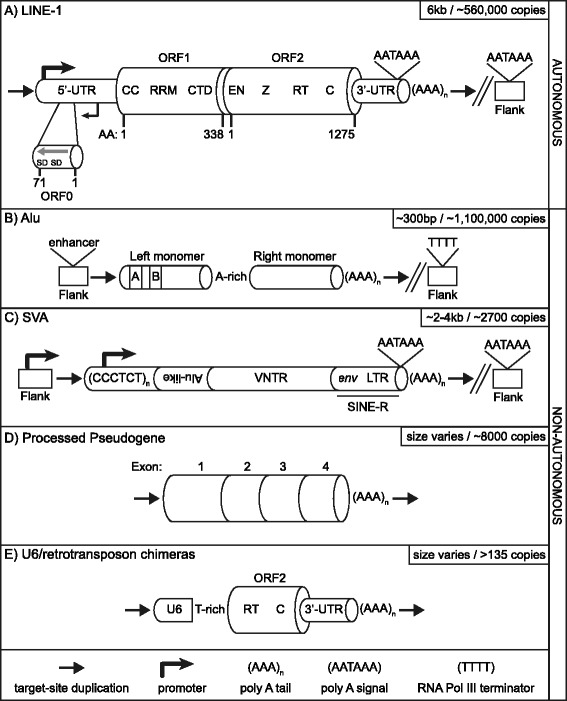
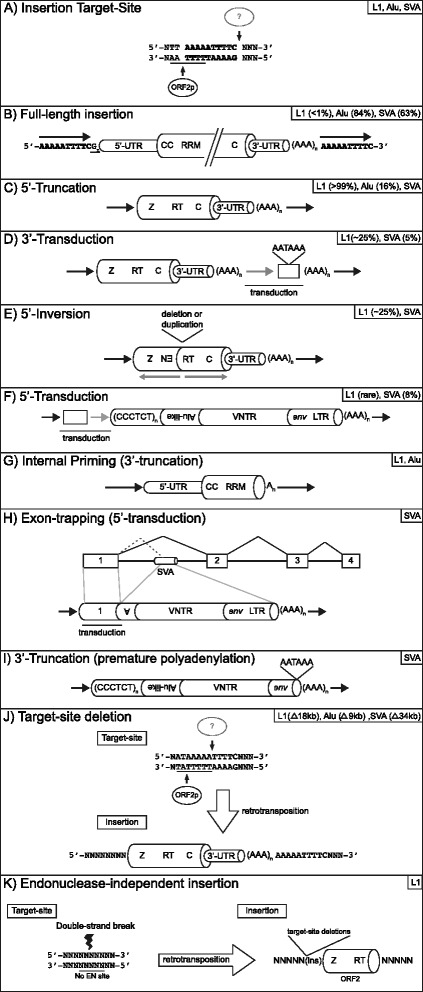
Over evolutionary time, the dynamic nature of a genome is driven, in part, by the activity of transposable elements (TE) such as retrotransposons. On a shorter time scale it has been established that new TE insertions can result in single-gene disease in an individual. In humans, the non-LTR retrotransposon Long INterspersed Element-1 (LINE-1 or L1) is the only active autonomous TE. In addition to mobilizing its own RNA to new genomic locations via a "copy-and-paste" mechanism, LINE-1 is able to retrotranspose other RNAs including Alu, SVA, and occasionally cellular RNAs. To date in humans, 124 LINE-1-mediated insertions which result in genetic diseases have been reported. Disease causing LINE-1 insertions have provided a wealth of insight and the foundation for valuable tools to study these genomic parasites. In this review, we provide an overview of LINE-1 biology followed by highlights from new reports of LINE-1-mediated genetic disease in humans.
Overview
The claims and statistics of this paper haven’t been checked yet.
Free: it reads the open-access text and checks the first 5 claims that cite a source we can check. Create a free account to check every claim.
Integrity signals
Registry
Cites
Statistics
Figures
Verification
Claims the paper makes
The claims and statistics of this paper haven’t been checked yet.
Free: it reads the open-access text and checks the first 5 claims that cite a source we can check. Create a free account to check every claim.
Claims other papers make about this one
Each is checked against this paper’s own text: does it say what the citing paper says it does?
The source backs part of the claim, not all of it — or backs it for a different population, condition or comparison.
In the citing paper
“Over 120 L1-mediated germline insertions have been linked to cases of human genetic diseases78.”
From The role of retrotransposable elements in ageing and age-associated diseases (2021) · cites this paper as [78]
Experimental — accuracy not yet measured
Self-check
Percentages, sums and reported differences re-computed from the paper’s own numbers.
The self-check needs the paper’s full text.
Citations
Cites
Hallmarks of Cancer: The Next Generation
Hanahan, D., & Weinberg, R. A. (2011) · Cell · doi:10.1016/j.cell.2011.02.013 · Cited by 66,590 · cited 1×
“Genomic instability is a hallmark of cancer [199].”
BackgroundInitial sequencing and analysis of the human genome
International Human Genome Sequencing Consortium, Whitehead Institute for Biomedical Research, C. F. G. R., Lander, E. S., Linton, L. M., Birren, B., Nusbaum, C., Zody, M. C., Baldwin, J., Devon, K., Dewar, K., et al. (2001) · Nature · doi:10.1038/35057062 · Cited by 24,216 · cited 10×
“LTR elements, also known as endogenous retroviruses (ERVs), comprise ~8 % of the human genome [6].”
InfluentialAn integrated encyclopedia of DNA elements in the human genome
The ENCODE Project Consortium (2012) · Nature · doi:10.1038/nature11247 · Cited by 18,072 · cited 1×
“Examples include the frequency and location of new insertions and the contribution of TEs to gene regulation genome-wide at an unprecedented resolution [8, 9, 12, 13].”
BackgroundSignatures of mutational processes in human cancer
Initiative, A. P. C. G., Alexandrov, L. B., ICGC Breast Cancer Consortium, ICGC MMML-Seq Consortium, PedBrain, I., Nik-Zainal, S., Wedge, D. C., Aparicio, S. A. J. R., Behjati, S., Biankin, A. V., et al. (2013) · Nature · doi:10.1038/nature12477 · Cited by 9,660 · cited 1×
“Finally, although a bit tenuous, it is worthwhile to note that “kataegis,” the localized hypermutation frequently observed near DNA breakpoint junctions in chromothripsis [188, 189] and cancers [190], is thought to be caused by the LINE-1 restriction factors [94, 191–194]- the APOBEC3 proteins [195].”
BackgroundInitial sequencing and comparative analysis of the mouse genome
Mouse Genome Sequencing Consortium (2002) · Nature · doi:10.1038/nature01262 · Cited by 7,187
Cyclic GMP-AMP Synthase Is a Cytosolic DNA Sensor That Activates the Type I Interferon Pathway
Sun, L., Wu, J., Du, F., Chen, X., & Chen, Z. J. (2013) · Science · doi:10.1126/science.1232458 · Cited by 4,996 · cited 1×
“Notably, cell culture and in vitro studies have shown that cGAS can activate the immune response not only by binding double-stranded DNA [225] but also by binding RNA: DNA hybrids [226].”
BackgroundBritten, R. J., & Kohne, D. E. (1968) · Science · doi:10.1126/science.161.3841.529 · Cited by 2,802 · cited 2×
“Examples include the frequency and location of new insertions and the contribution of TEs to gene regulation genome-wide at an unprecedented resolution [8, 9, 12, 13].”
BackgroundInitial sequence of the chimpanzee genome and comparison with the human genome
The Chimpanzee Sequencing and Analysis Consortium (2005) · Nature · doi:10.1038/nature04072 · Cited by 2,459
Mutational Processes Molding the Genomes of 21 Breast Cancers
Nik-Zainal, S., Alexandrov, L. B., Wedge, D. C., Van Loo, P., Greenman, C. D., Raine, K., Jones, D., Hinton, J., Marshall, J., Stebbings, L. A., et al. (2012) · Cell · doi:10.1016/j.cell.2012.04.024 · Cited by 1,909
The impact of retrotransposons on human genome evolution
Cordaux, R., & Batzer, M. A. (2009) · Nature Reviews Genetics · doi:10.1038/nrg2640 · Cited by 1,703 · cited 2×
“These deletions may be generated via mispairing of two retrotransposon sequences on the same strand usually on homologous chromosomes, while crossing over between two retrotransposon sequences inverted relative to each other may result in an inversion [149, 169].”
Background
Research works printed but not linked: 2
- Lester T McMahon C VanRegemorter N Jones A Genet S X-linked immunodeficiency caused by insertion of Alu repeat sequences J Med Gen Suppl 1997 34 S81
- Divoky V Indrak K Mrug M Brabec V Huisman T Prchal JT A novel mechanism of β thalassemia: the insertion of L1 retrotransposable element into β globin IVS II Blood 1996 88 Suppl 1 148a
Cited by
Items 201–300 of 719
HIV-1 Vpr and p21 restrict LINE-1 mobility
Kawano, K., Doucet, A. J., Ueno, M., Kariya, R., An, W., Marzetta, F., Kuroki, M., Turelli, P., Sukegawa, S., Okada, S., et al. (2018) · Nucleic Acids Research · doi:10.1093/nar/gky688 · Cited by 29
Phase Separation as a Melting Pot for DNA Repeats
Hall, A. C., Ostrowski, L., & Mekhail, K. (2019) · Trends in Genetics · doi:10.1016/j.tig.2019.05.001 · Cited by 29
Wei, K. H.-C., Aldaimalani, R., Mai, D., Zinshteyn, D., Satyaki, P. R. V., Blumenstiel, J. P., Kelleher, E. S., & Brooks, E. C. (2022) · OSF Preprints (OSF Preprints) · doi:10.31219/osf.io/fma57 · Cited by 28
Abdolmaleky, H., Nohesara, S., Zhou, J.-R., & Thiagalingam, S. (2025) · Epigenomics · doi:10.1080/17501911.2025.2464529 · Cited by 22
Szafrański, P., Kośmider, E., Liu, Q., Karolak, J. A., Currie, L. B., Parkash, S., Kahler, S. G., Roeder, E. R., Littlejohn, R. O., DeNapoli, T. S., et al. (2018) · Human Mutation · doi:10.1002/humu.23608 · Cited by 27
Retrotransposons spread potential cis-regulatory elements during mammary gland evolution
Nishihara, H. (2019) · Nucleic Acids Research · doi:10.1093/nar/gkz1003 · Cited by 31
Adney, E. M., Ochmann, M. T., Sil, S., Truong, D. M., Mita, P., Wang, X., Kahler, D. J., Fenyö, D., Holt, L. J., & Boeke, J. D. (2019) · Genetics · doi:10.1534/genetics.119.302601 · Cited by 28
SINE jumping contributes to large-scale polymorphisms in the pig genomes
Chen, C., D’Alessandro, E., Muráni, E., Zheng, Y., Giosa, D., Yang, N., Wang, X., Gao, B., Li, K., Wimmers, K., et al. (2021) · Mobile DNA · doi:10.1186/s13100-021-00246-y · Cited by 28
“Page 10/30 genetic diseases have been reported to be associated with retrotransposon insertions in humans [62].”
BackgroundRoze, D. (2023) · Genetics · doi:10.1093/genetics/iyad058 · Cited by 33
Arsenic toxicity and epimutagenecity: the new LINEage
Paul, S., Bhattacharjee, P., Giri, A. K., & Bhattacharjee, P. (2017) · BioMetals · doi:10.1007/s10534-017-0021-2 · Cited by 27
DNA replication and repair kinetics of Alu, LINE-1 and satellite III genomic repetitive elements
Natale, F., Scholl, A., Rapp, A. W., Yu, W., Rausch, C., & Cardoso, M. C. (2018) · Epigenetics & Chromatin · doi:10.1186/s13072-018-0226-9 · Cited by 27
TRIM28 variants and Wilms' tumour predisposition
Hol, J. A., Diets, I. J., de Krijger, R. R., van den Heuvel‐Eibrink, M. M., Jongmans, M. C. J., & Kuiper, R. P. (2021) · The Journal of Pathology · doi:10.1002/path.5639 · Cited by 27
Boyne, D. J., Friedenreich, C. M., McIntyre, J. B., Stanczyk, F. Z., Courneya, K. S., & King, W. D. (2017) · Cancer Causes & Control · doi:10.1007/s10552-017-0958-z · Cited by 27
Владимирович, М. А., Efimova, I., Mukhina, A. A., Zinchenko, R. A., Balinova, N., Rodina, Y. A., Pershin, D., Рыжкова, О. П., Orlova, A. A., Забненкова, В. В., et al. (2024) · Journal of Clinical Immunology · doi:10.1007/s10875-024-01691-z · Cited by 28
“These mobile element insertions (MEI) are known to cause genetic diseases in humans, pathogenic MEI have been shown to be involved in various conditions and are estimated to account for approximately 0.03–0.1% of pathogenic variants responsible for genetic diseases [25].”
InfluentialHorváth, V., Garza, R., Jönsson, M. E., Johansson, P. A., Adami, A., Christoforidou, G., Karlsson, O., Castilla‐Vallmanya, L., Koutounidou, S., Gerdes, P., et al. (2024) · Nature Structural & Molecular Biology · doi:10.1038/s41594-024-01320-8 · Cited by 27
Asif-Laidin, A., Conesa, C., Bonnet, A., Grison, C., Adhya, I., Menouni, R., Fayol, H., Palmic, N., Acker, J., & Lesage, P. (2020) · The EMBO Journal · doi:10.15252/embj.2019104337 · Cited by 26
“In humans, more than hundred heritable diseases have been assigned to de novo TE insertions (Hancks & Kazazian, 2016).”
Retroelement-derived RNA and its role in the brain
Evans, T. A., & Erwin, J. A. (2020) · Seminars in Cell and Developmental Biology · doi:10.1016/j.semcdb.2020.11.001 · Cited by 28
Cytosolic Self-DNA—A Potential Source of Chronic Inflammation in Aging
Akbari, M., Shanley, D. P., Bohr, V. A., & Rasmussen, L. J. (2021) · Cells · doi:10.3390/cells10123544 · Cited by 27
“Long interspersed nuclear elements (LINEs; L1) are actively replicating retrotransposable elements that use reverse transcription of RNA intermediates to produce double-stranded DNA products to amplify and be inserted into new positions in the genome [79].”
Backgroundde la Morena‐Barrio, B., Stephens, J. C., de la Morena‐Barrio, M. E., Stefanucci, L., Padilla, J., Miñano, A., Gleadall, N., García, J. L., Fernández, M. F. L., Morange, P., et al. (2022) · Thrombosis and Haemostasis · doi:10.1055/s-0042-1749345 · Cited by 30
Luca, C. D., Gupta, A. K., & Bortvin, A. L. (2023) · PLoS Genetics · doi:10.1371/journal.pgen.1010797 · Cited by 27
“For co-immunoprecipitation followed by RNA-seq (Fig 3A–3D), pools of sucrose fractions 5, 6, 7 and 8—obtained from Mael -/- testicular extracts (TOTAL) fractionated in the presence of EDTA—were used as input (INPUT) for either anti-ORF1p immunoprecipitations (IP) or incubations with beads only (BO).”
Wijngaard, R., Demidov, G. M., O’Gorman, L., Corominas, J., Yaldız, B., Steyaert, W., de Boer, E., Vissers, L. E. L. M., Kamsteeg, E., Pfundt, R., et al. (2023) · European Journal of Human Genetics · doi:10.1038/s41431-023-01478-7 · Cited by 31
“Only retrotransposons are thus capable of creating new insertions, known as mobile element insertions (MEIs) [2 – 6].”
InfluentialNicoletto, G., Terreri, M., Maurizio, I., Ruggiero, E., Cernilogar, F. M., Vaine, C. A., Cottini, M. V., Shcherbakova, I., Penney, E. B., Gallina, I., et al. (2024) · Nucleic Acids Research · doi:10.1093/nar/gkae797 · Cited by 26
“The pG4s in HEX had the highest G-score ( 44 ), i.e. the highest propensity to form G4s.”
Examining non-LTR retrotransposons in the context of the evolving primate brain
Linker, S. B., Marchetto, M. C., Narvaiza, I., Denli, A. M., & Gage, F. H. (2017) · BMC Biology · doi:10.1186/s12915-017-0409-z · Cited by 27
“However, disease studies that have been reviewed extensively elsewhere [56, 57] have”
BackgroundMutagenesis of human genomes by endogenous mobile elements on a population scale
Chuang, N. T., Gardner, E. J., Terry, D. M., Crabtree, J., Mahurkar, A., Rivell, G. L., Hong, C. C., Perry, J. A., & Devine, S. E. (2021) · Genome Research · doi:10.1101/gr.275323.121 · Cited by 26
“Since then, MEIs have been implicated in at least 130 diverse cases of human diseases (for review, see Hancks and Kazazian 2016; Kazazian and Moran 2017).”
Hsu, P., Yu, S., Tsai, Y., Chang, J.-Y., Tsai, L., Ye, C.-H., Song, N.-Y., Yau, L.-C., & Lin, S. (2021) · Journal of Biomedical Science · doi:10.1186/s12929-021-00754-2 · Cited by 26
Taming transposable elements in livestock and poultry: a review of their roles and applications
Zhao, P., Peng, C., Fang, L., Wang, Z., & Liu, G. E. (2023) · Genetics Selection Evolution · doi:10.1186/s12711-023-00821-2 · Cited by 27
“structure and generate “exonization” events that are one of the main causes of human diseases [146].”
BackgroundThe Roles of H3K9me3 Writers, Readers, and Erasers in Cancer Immunotherapy
Oleksiewicz, U., Kuciak, M., Jaworska, A. M., Adamczak, D., Bisok, A., Mierzejewska, J., Sadowska, J., Czerwińska, P., & Mackiewicz, A. A. (2024) · International Journal of Molecular Sciences · doi:10.3390/ijms252111466 · Cited by 24
“When activated, they can “jump into” new loci, posing a risk of DNA mutation and genome instability [74,75].”
BackgroundSakuma, C., Sekizuka, T., Kuroda, M., Kasai, F., Saito, K., Ikeda, M., Yamaji, T., Osada, N., & Hanada, K. (2018) · Scientific Reports · doi:10.1038/s41598-017-18934-2 · Cited by 24
Billingsley, K. J., Lättekivi, F., Planken, A., Reimann, E., Kurvits, L., Kadastik‐Eerme, L., Kasterpalu, K. M., Bubb, V. J., Quinn, J. P., Kõks, S., et al. (2019) · Scientific Reports · doi:10.1038/s41598-019-40869-z · Cited by 24
A neurodevelopmental disorder caused by a novel de novo SVA insertion in exon 13 of the SRCAP gene
Zhao, B., Madden, J. A., Lin, J., Berry, G. T., Wojcik, M. H., Zhao, X., Brand, H., Talkowski, M. E., Lee, E. A., & Agrawal, P. B. (2022) · European Journal of Human Genetics · doi:10.1038/s41431-022-01137-3 · Cited by 23
RNA‐mediated heterochromatin formation at repetitive elements in mammals
Stamidis, N., & Żylicz, J. J. (2023) · The EMBO Journal · doi:10.15252/embj.2022111717 · Cited by 28
Dynamic Signatures of the Epigenome: Friend or Foe?
Machnik, M., & Oleksiewicz, U. (2020) · Cells · doi:10.3390/cells9030653 · Cited by 24
“Nevertheless, active TEs may introduce potentially hazardous insertional mutation, as observed in various human diseases [87], while improper control of TE sequences may lead to transcriptional dysregulation of nearby genes [85,86].”
BackgroundShademan, M., Zare, K., Zahedi, M., Mozaffari, H. M., Hosseini, H. B., Ghaffarzadegan, K., Goshayeshi, L., & Dehghani, H. (2020) · Cancer Cell International · doi:10.1186/s12935-020-01511-5 · Cited by 25
Transposable elements that have recently been mobile in the human genome
Autio, M. I., Amin, T. B., Perrin, A., Wong, J. Y., Foo, R., & Prabhakar, S. (2021) · BMC Genomics · doi:10.1186/s12864-021-08085-0 · Cited by 26
“Although some studies have identified a handful of candidate polymorphisms evidently created by very recent HERV-K insertions [38, 56, 57, 73], it is still not universally accepted that HERV-K remains active in human populations [12, 74].”
BackgroundMethodGermline Structural Variations in Cancer Predisposition Genes
Pócza, T., Grolmusz, V. K., Papp, J., Butz, H., Patócs, A., & Bozsik, A. (2021) · Frontiers in Genetics · doi:10.3389/fgene.2021.634217 · Cited by 28
A transcriptome-wide antitermination mechanism sustaining identity of embryonic stem cells
Kainov, Y. A., & Makeyev, E. V. (2020) · Nature Communications · doi:10.1038/s41467-019-14204-z · Cited by 24
The Importance of Satellite Sequence Repression for Genome Stability
Zeller, P. J., & Gasser, S. M. (2017) · Cold Spring Harbor Symposia on Quantitative Biology · doi:10.1101/sqb.2017.82.033662 · Cited by 24
Pfaff, A. L., Lopez, A. I., Iacoangeli, A., Bubb, V. J., Smith, B. N., Troakes, C., Alahmady, N. F., Kõks, S., Schumann, G. G., Al‐Chalabi, A., et al. (2020) · Molecular Brain · doi:10.1186/s13041-020-00694-2 · Cited by 24
Expression of retrotransposons contributes to aging in Drosophila
Schneider, B. K., Sun, S., Lee, M., Li, W., Skvir, N. J., Neretti, N., Vijg, J., & Secombe, J. (2023) · Genetics · doi:10.1093/genetics/iyad073 · Cited by 23
Human LINE-1 retrotransposons: impacts on the genome and regulation by host factors
Luqman-Fatah, A., & Miyoshi, T. (2022) · Genes & Genetic Systems · doi:10.1266/ggs.22-00038 · Cited by 21
Ricci, M., Peona, V., Boattini, A., & Taccioli, C. (2023) · Scientific Reports · doi:10.1038/s41598-023-36006-6 · Cited by 20
Retrotransposon life cycle and its impacts on cellular responses
Luqman-Fatah, A., Nishimori, K., Amano, S., Fumoto, Y., & Miyoshi, T. (2024) · RNA Biology · doi:10.1080/15476286.2024.2409607 · Cited by 23
“Retrotransposition has also been implicated in a plethora of diseases [6].”
Comparative analysis on the expression of L1 loci using various RNA-Seq preparations
Kaul, T. K., Morales, M. E., Sartor, A. O., Belancio, V. P., & Deininger, P. L. (2020) · Mobile DNA · doi:10.1186/s13100-019-0194-z · Cited by 20
Petrozziello, T., Dios, A. M., Mueller, K. A., Vaine, C. A., Hendriks, W. T. J., Glajch, K. E., Mills, A. N., Mangkalaphiban, K., Penney, E. B., Ito, N., et al. (2020) · PLoS ONE · doi:10.1371/journal.pone.0243655 · Cited by 21
“Furthermore, several lines of evidence suggest that while silencing SVA insertions may decrease gene expression, the loss of epigenetic repression at these sites leads to retrotransposon expression [19], and SVAs may indirectly regulate permissive histone marks such as acetylation by promoting silencing [29].”
BackgroundJoubert, P. M., & Krasileva, K. V. (2022) · BMC Biology · doi:10.1186/s12915-022-01457-2 · Cited by 23
Spliced integrated retrotransposed element (SpIRE) formation in the human genome
Larson, P. A., Moldovan, J. B., Jasti, N., Kidd, J. M., Beck, C. R., & Moran, J. V. (2018) · PLoS Biology · doi:10.1371/journal.pbio.2003067 · Cited by 23
RNA Epigenetics in Cancer: Current Knowledge and Therapeutic Implications
Huang, S., Li, Z., Lin, W., Xie, R., & Huang, H. (2025) · MedComm · doi:10.1002/mco2.70322 · Cited by 22
Arroyo, M. D. C. G., Hastert, F. D., Zhadan, A., Schelter, F., Zimbelmann, S., Rausch, C., Ludwig, A. K., Carell, T., & Cardoso, M. C. (2022) · Nature Communications · doi:10.1038/s41467-022-32799-8 · Cited by 20
Hepatitis C virus infection restricts human LINE-1 retrotransposition in hepatoma cells
Schöbel, A., Nguyen-Dinh, V., Schumann, G. G., & Herker, E. (2021) · PLoS Pathogens · doi:10.1371/journal.ppat.1009496 · Cited by 20
“As L1-mediated retrotransposition events can affect genome integrity and host gene expression, and lead to diseasecausing mutations [34], L1 activity is suppressed in most somatic tissues by different cellular”
BackgroundAn update on post‐transcriptional regulation of retrotransposons
Warkocki, Z. (2022) · FEBS Letters · doi:10.1002/1873-3468.14551 · Cited by 24
Advances in understanding the initiation of HIV-1 reverse transcription
Krupkin, M., Jackson, L. N., Ha, B., & Puglisi, E. V. (2020) · Current Opinion in Structural Biology · doi:10.1016/j.sbi.2020.07.005 · Cited by 20
All Quiet on the TE Front? The Role of Chromatin in Transposable Element Silencing
Di Stefano, L. (2022) · Cells · doi:10.3390/cells11162501 · Cited by 18
“TEs can threaten genomic stability through their ability to move around the genome; the insertion of a TE into a coding gene or a gene regulatory element impacts gene structure and expression and can lead to diseases such as cancer, hemophilia or neurodegenerative disorders (Figure 1B) [1,2].”
BackgroundWu, Q., Yu, H., Wei, W., Cheng, Y., Huang, S., Shi, H., Liu, S., Xia, J., Jia, H., & Hao, L. (2018) · Journal of Applied Genetics · doi:10.1007/s13353-018-0430-0 · Cited by 28
Carotti, E., Carducci, F., Barucca, M., Canapa, A., & Biscotti, M. A. (2023) · International Journal of Molecular Sciences · doi:10.3390/ijms241411591 · Cited by 21
“Diseases like hemophilia, cystic fibrosis, or cancer can be caused by disrupting or enhancing tumor oncogene suppressor genes [11,12].”
BackgroundFröhlich, A., Pfaff, A. L., Bubb, V. J., Quinn, J. P., & Kõks, S. (2023) · Scientific Reports · doi:10.1038/s41598-023-41052-1 · Cited by 21
“It is worth mentioning that only six LINE-1 elements had a cis-specific effect, specifically R_L1_60 (16 transcripts), R_L1_155 (9), R_L1_145 (4), R_L1_147 (3), R_L1_63 (3) and R_L1_126 (2).”
BackgroundKim, J. A., Jang, S. H., Joo, S. Y., Kim, S. J., Choi, J. Y., Jung, J., & Gee, H. Y. (2025) · Experimental & Molecular Medicine · doi:10.1038/s12276-025-01428-x · Cited by 20
“TEs have biological signi fi cance by potentially acting as insertional mutagens and perturbing the arrangement of DNA, resulting in the alteration of gene expression or RNA splicing 44,45 .”
Mobile DNA in Endocrinology: LINE-1 Retrotransposon Causing Partial Androgen Insensitivity Syndrome
Batista, R. L., YAMAGUCHI, K., Rodrigues, A. D. S., Nishi, M. Y., Goodier, J. L., Carvalho, L. R. S., Domenice, S., Costa, E. M. F., Kazazian, H. H., & Mendonca, B. B. (2019) · The Journal of Clinical Endocrinology & Metabolism · doi:10.1210/jc.2019-00144 · Cited by 20
Self-citationTypeTE: a tool to genotype mobile element insertions from whole genome resequencing data
Goubert, C., Thomas, J., Payer, L. M., Kidd, J. M., Feusier, J. E., Watkins, W. S., Burns, K. H., Jorde, L. B., & Feschotte, C. (2020) · Nucleic Acids Research · doi:10.1093/nar/gkaa074 · Cited by 18
“Both MEI and ME-mediated rearrangements represent a substantial source of genomic instability, which has been implicated in more than 100 human cases (8).”
BackgroundNon-coding genetic variation shaping mental health
Quinn, J. P., Pfaff, A. L., & Bubb, V. J. (2018) · Current Opinion in Psychology · doi:10.1016/j.copsyc.2018.07.006 · Cited by 21
“The mobilisation or ‘jumping’ of RTEs is proposed to increase both with age within the adult CNS and to comprise one of the key mechanisms underpinning age-related CNS problems [52-54]**; several instances where this variation has been addressed, have associated it with disease [48,55]*.”
BackgroundPfaff, A. L., Bubb, V. J., Quinn, J. P., & Kõks, S. (2023) · International Journal of Molecular Sciences · doi:10.3390/ijms241411548 · Cited by 19
Repetitive element transcript accumulation is associated with inflammaging in humans
Smith, M., Wahl, D., Cavalier, A. N., McWilliams, G. T., Rossman, M. J., Giordano, G., Bryan, A. D., Seals, D. R., & LaRocca, T. J. (2024) · GeroScience · doi:10.1007/s11357-024-01126-y · Cited by 21
“…by which RE transcripts contribute to systemic inflammation could involve: (1) RE-derived cDNA, which can bind to cGAS and trigger the cGAS-STING inflammatory signaling pathway [12, 54]; or (2) RE-derived dsRNA, which can bind to dsRNA sensors [13, 55] that also trigger inflammatory signaling (Fig.”
Genetics and clinical implications of SPINK1 in the pancreatitis continuum and pancreatic cancer
Wang, Q.-W., Zou, W., Masson, E., Férec, C., Liao, Z., & Chen, J. (2025) · Human Genomics · doi:10.1186/s40246-025-00740-x · Cited by 20
Desaulniers, D. M., Cummings‐Lorbetskie, C., Leingartner, K., Xiao, G. ‐., Zhou, G., & Parfett, C. L. J. (2020) · Toxicology in Vitro · doi:10.1016/j.tiv.2020.105036 · Cited by 18
Nohara, K., Nakabayashi, K., Okamura, K., Suzuki, T., Suzuki, S., & Hata, K. (2020) · Epigenetics & Chromatin · doi:10.1186/s13072-020-00375-3 · Cited by 19
“DNA methylomes of retrotransposons are related to many types of cancers and other diseases [62, 63].”
BackgroundMethodComplex Transposon Insertion as a Novel Cause of Pompe Disease
Bychkov, I. O., Baydakova, G., Filatova, A. Y., Migiaev, O., Владимирович, М. А., Pechatnikova, N. L., Pomerantseva, E. A., Konovalov, F. A., Ampleeva, M., Kaimonov, V., et al. (2021) · International Journal of Molecular Sciences · doi:10.3390/ijms221910887 · Cited by 21
Loh, D., & Reiter, R. J. (2022) · International Journal of Molecular Sciences · doi:10.3390/ijms23158122 · Cited by 17
Federico, C., Brancato, D., Bruno, F., Coniglio, E., Sturiale, V., & Saccone, S. (2025) · Genes · doi:10.3390/genes16070780 · Cited by 17
“…LINE-1 (or L1) insertions, can disrupt chromosomal architecture and contribute to disease-causing SVs. L1 insertions may lead to insertional mutagenesis, exon disruption, or structural rearrangements, and have been linked to both germline and somatic structural variants in human disease [46].”
Recognize Yourself—Innate Sensing of Non-LTR Retrotransposons
Lagisquet, J., Zuber, K., & Gramberg, T. (2021) · Viruses · doi:10.3390/v13010094 · Cited by 21
“LINE-1 contains two main ORFs, encoding ORF1p, a structural protein with known RNAbinding activity, and the enzyme ORF2p, which harbors the LINE-1 endonuclease and reverse transcriptase activities [4,7,17].”
BackgroundNeuromuscular disorders: finding the missing genetic diagnoses
Koczwara, K. E., Lake, N. J., DeSimone, A. M., & Lek, M. (2022) · Trends in Genetics · doi:10.1016/j.tig.2022.07.001 · Cited by 19
Fröhlich, A., Pfaff, A. L., Middlehurst, B., Hughes, L. S., Bubb, V. J., Quinn, J. P., & Kõks, S. (2024) · Scientific Reports · doi:10.1038/s41598-024-61753-5 · Cited by 18
“It has been demonstrated that SVAs harbour transcription factor (TF) binding sites and thus can function as transcriptional regulatory domains to modulate gene expression profiles 11–13 .”
BackgroundEvsikov, A. V., & de Evsikova, C. M. (2016) · Europe PMC (PubMed Central) · Cited by 21
Fröhlich, A., Pfaff, A. L., Bubb, V. J., Kõks, S., & Quinn, J. P. (2022) · Frontiers in Molecular Neuroscience · doi:10.3389/fnmol.2022.815695 · Cited by 16
A second look at exome sequencing data: detecting mobile elements insertion in a rare disease cohort
Garret, P., Chevarin, M., Vitobello, A., Verdez, S., Fournier, C., Verloès, A., Tisserant, É., Vabres, P., Prevel, O., Philippe, C., et al. (2022) · European Journal of Human Genetics · doi:10.1038/s41431-022-01250-3 · Cited by 16
“In 2016, a literature review identified 119 cases in which MEs were responsible for human diseases, including 76 L1 insertions, 30 Alu insertions and 13 SVA insertions [10].”
BackgroundTransposable element and host silencing activity in gigantic genomes
Wang, J., Yuan, L., Tang, J., Liu, J., Sun, C., Itgen, M. W., Chen, G., Sessions, S. K., Zhang, G., & Mueller, R. L. (2023) · Frontiers in Cell and Developmental Biology · doi:10.3389/fcell.2023.1124374 · Cited by 18
“For example, at least 120 human diseases have been attributed to the effects of de novo TE insertions, but so have classic adaptive traits including industrial melanism and the mammalian placenta (Hancks and Kazazian, 2016;Hof et al., 2016;Senft and Macfarlan, 2021).”
BackgroundRenner, T. M., Bélanger, K., Goodwin, L. R., Campbell, M., & Langlois, M. (2018) · Virology · doi:10.1016/j.virol.2018.05.015 · Cited by 17
Soundararajan, S., Agrawal, A., Purushottam, M., Anand, S. D., Shankarappa, B. M., Sharma, P., Jain, S., & Murthy, P. (2021) · American Journal of Medical Genetics Part B Neuropsychiatric Genetics · doi:10.1002/ajmg.b.32833 · Cited by 18
Induction of transposable element expression is central to innate sensingPreprint
Rookhuizen, D. C., Bonté, P., Ye, M., Hoyler, T., Gentili, M., Burgdorf, N., Durand, S., Aprahamian, F., Kroemer, G., Manel, N., et al. (2021) · bioRxiv (Cold Spring Harbor Laboratory) · doi:10.1101/2021.09.10.457789 · Cited by 16
LINE-1 cfDNA Methylation as an Emerging Biomarker in Solid Cancers
Deligezer, U., Özgür, E., Yörüker, E. E., Polatoglou, E., Holdenrieder, S., & Bronkhorst, A. J. (2024) · Cancers · doi:10.3390/cancers16223725 · Cited by 15
Discovery of rare, diagnostic AluYb8/9 elements in diverse human populations
Feusier, J. E., Witherspoon, D. J., Watkins, W. S., Goubert, C., Sasani, T. A., & Jorde, L. B. (2017) · Mobile DNA · doi:10.1186/s13100-017-0093-0 · Cited by 17
“Alu insertions inside exons are rare and often deleterious in humans [15, 32, 36], so we investigated nonreference exonic insertions in our dataset.”
BackgroundA high throughput screen for active human transposable elements
Kvikstad, E. M., Piazza, P., Taylor, J. C., & Lunter, G. A. (2018) · BMC Genomics · doi:10.1186/s12864-018-4485-4 · Cited by 16
ZNF582 hypermethylation as a prognostic biomarker for malignant transformation of oral lesions
Juan, Y., Su, Y., Bai, C., Fan, Y., Kuo, T., Ko, H., Peng, H., Chiang, C., Fwu, C., & Cheng, S. (2021) · Oral Diseases · doi:10.1111/odi.13946 · Cited by 17
Yu, L., Li, W., Lv, G., Sun, G., Yang, L., Chen, J., Zhou, L., Ding, Y., Zhang, Z., Tang, X., et al. (2022) · Journal of Clinical Immunology · doi:10.1007/s10875-022-01347-w · Cited by 15
Long sequence insertion via CRISPR/Cas gene-editing with transposase, recombinase, and integrase
Wang, X., Xu, G., Johnson, W. A., Qu, Y., Yin, D., Ramkissoon, N., Xiang, H., & Cong, L. (2023) · Current Opinion in Biomedical Engineering · doi:10.1016/j.cobme.2023.100491 · Cited by 23
Epigenomic drugs and the germline: Collateral damage in the home of heritability?
Western, P. S. (2018) · Molecular and Cellular Endocrinology · doi:10.1016/j.mce.2018.02.008 · Cited by 15
Identification and Genotyping of Transposable Element Insertions From Genome Sequencing Data
Chu, C., Zhao, B., Park, P. J., & Lee, E. A. (2020) · Current Protocols in Human Genetics · doi:10.1002/cphg.102 · Cited by 19
“In addition, more than a hundred TE insertions have been causally linked to Mendelian disorders and hereditary cancers (Hancks & Kazazian, 2016).”
BackgroundLocus-specific chromatin profiling of evolutionarily young transposable elements
Taylor, D., Lowe, R., Philippe, C., Cheng, K. C. L., Grant, O. A., Zabet, N. R., Cristofari, G., & Branco, M. R. (2021) · Nucleic Acids Research · doi:10.1093/nar/gkab1232 · Cited by 18
“On one hand, TE insertions can have deleterious consequences, having been implicated in a large number of genetic diseases (6) and somatic re-arrangements in cancer (7,8).”
BackgroundA Role for Retrotransposons in Chromothripsis
Hancks, D. C. (2018) · Methods in molecular biology · doi:10.1007/978-1-4939-7780-2_11 · Cited by 15
“For example, an Alu insertion was identified in the SERPINC1 gene associated with type 1 antithrombin deficiency only six base pairs long with a 40 bp polyA tail [29, 32].”
BackgroundSelf-citationRepeat‐Associated Non‐ AUG Translation of AGAGGG Repeats that Cause X ‐Linked Dystonia‐Parkinsonism
Reyes, C. J., Asano, K., Todd, P. K., Klein, C., & Raković, A. (2022) · Movement Disorders · doi:10.1002/mds.29183 · Cited by 14
“Consistent with this notion, the TAF1 SVA retrotransposon possessed intrinsic promoter activity,(8) and SVA transcription has been confirmed to initiate from within the hexamer.(21,22) Furthermore, a similar regulatory mechanism was FIG.”
The role of transposable elements in aging and cancer
Mosaddeghi, P., Farahmandnejad, M., & Zarshenas, M. M. (2023) · Biogerontology · doi:10.1007/s10522-023-10028-z · Cited by 16
“Notably, two open reading frames, including ORF1, which encodes for an RNA-binding protein, and ORF2, responsible for reverse transcription activities, make full-length L1 the only autonomous active non-LTR retrotransposon in the human genome (Hancks and Kazazian 2016).”
BackgroundSnowbarger, J. M., Koganti, P., & Spruck, C. (2024) · Biomolecules · doi:10.3390/biom14101250 · Cited by 14
“In addition, the epigenetic modifications associated with TEs can also differentially regulate genes near their sites of insertion [103].”
BackgroundReading LINE s within the cocaine addicted brain
Doyle, G. A. R., Doucet-O’Hare, T. T., Hammond, M. J., Crist, R. C., Ewing, A. D., Ferraro, T. N., Mash, D. C., Kazazian, H. H., & Berrettini, W. H. (2017) · Brain and Behavior · doi:10.1002/brb3.678 · Cited by 14
“Since then, about 125 germline L1 retrotransposition- mediated gene disruptions have been shown to cause Mendelian diseases (Hancks & Kazazian, 2016).”
BackgroundSelf-citationMagrinelli, F., Rocca, C., Simone, R., Chiozzi, R. Z., Jaunmuktane, Z., Mencacci, N. E., Tinazzi, M., Jayawant, S., Nemeth, A. H., Demidov, G. M., et al. (2022) · Movement Disorders · doi:10.1002/mds.29280 · Cited by 15
Salinero, A. C., Knoll, E. R., Zhu, Z., Landsman, D., Curcio, M. J., & Morse, R. H. (2018) · PLoS Genetics · doi:10.1371/journal.pgen.1007232 · Cited by 18
“Research focused on the LTR-retrotransposons in Saccharomyces cerevisiae has been 73 fundamental to our understanding of the mechanism by which LTR-retrotransposons replicate, and how 74 they interact with the host genome [2, 6, 18].”
BackgroundViruses and immunosenescence – more players in the game
Hurme, M. (2019) · Immunity & Ageing · doi:10.1186/s12979-019-0152-0 · Cited by 14
Zheng, Y., Chen, C., Chen, W., Wang, X., Wang, W., Gao, B., Wimmers, K., Mao, J., & Song, C. (2020) · Journal of Integrative Agriculture · doi:10.1016/s2095-3119(20)63255-5 · Cited by 14
Mun, S., Kim, S., Lee, W., Kang, K., Meyer, T. J., Han, B., Han, K., & Kim, H. (2021) · Experimental & Molecular Medicine · doi:10.1038/s12276-021-00586-y · Cited by 15
Siomou, E. C., Mitsioni, A. G., Giapros, V. I., Bouba, I., Noutsopoulos, D., & Georgiou, I. A. (2017) · Molecular Medicine Reports · doi:10.3892/mmr.2017.6462 · Cited by 14
“Such TE-mediated rearrangements can be either active, as a direct result of retrotransposition events, or passive due to their repetitive nature (6,7), causing diseases in some cases (7).”
Rosenkrantz, J. L., Brandorff, J. E., Raghib, S., Kapadia, A., Vaine, C. A., Bragg, D. C., Farmiloe, G., & Jacobs, F. M. J. (2024) · Proceedings of the National Academy of Sciences · doi:10.1073/pnas.2401217121 · Cited by 14
Pereira, B. M. D. S., Montalvão-de-Azevedo, R., de Faria, P. A. S., Silva, N. D. P., Nicolau‐Neto, P., Maschietto, M. C., de Camargo, B., & Soares‐Lima, S. C. (2017) · Clinical Epigenetics · doi:10.1186/s13148-017-0431-6 · Cited by 13
“The long interspersed element-1 (LINE-1) sequences are retrotransposon elements comprising ∼17% of the human genome, and some of them still retain the capacity to retrotranspose themselves to new genomic locations [15].”
Miller, T. L. A., do Rego, F. O. R., Buzzo, J. L., & Galante, P. A. F. (2020) · Bioinformatics · doi:10.1093/bioinformatics/btaa689 · Cited by 13
Metadata
- Authors
- Hancks, D. C., & Kazazian, H. H.
- Affiliations
- University of Utah (US)
- Johns Hopkins University (US)
- Corresponding author
- Hancks, Dustin C.
- Kazazian, Haig H.
- ORCID
- Hancks, Dustin C.
- Venue
- Mobile DNA
- Published
- 2016-05-06
- Volume
- 7
- Issue
- 1
- Pages
- 9-9
- ISSN
- 1759-8753 (ISSN-L)
- PMC
- PMC4859970
- OpenAlex
- W2347011735
- Cited by
- 670
- References
- 325
- Citations by year
- 2026: 39 · 2025: 46 · 2024: 56 · 2023: 81 · 2022: 78 · 2021: 80 · 2020: 92 · 2019: 76 · 2018: 55 · 2017: 51 · 2016: 12
- FWCI
- 6.28
- Type
- journal article
- Language
- en
- Open access
- gold
- doi.org
- Licence
- cc-by
- creativecommons.org/licenses/by/4.0/ (tdm)
- Locations
- Mobile DNA (publishedVersion, cc-by)
- PubMed Central (publishedVersion, cc-by)
- PubMed (publishedVersion)
- Funders
- American Cancer Society (125132-PF-13-371-01-MPC)
- Topics
- Life Sciences › Biochemistry, Genetics and Molecular Biology › Genetics › Chromosomal and Genetic Variations
- Life Sciences › Biochemistry, Genetics and Molecular Biology › Genetics › Genomic variations and chromosomal abnormalities
- Life Sciences › Biochemistry, Genetics and Molecular Biology › Genetics › Genome Rearrangement Algorithms
- Keywords
- LINE-1, retrotransposons, transposable elements, copy number variation, genetic disorders, Alu elements, SVA elements, retrotransposition, human disease genetics, genome evolution
About these checks
Registry, retraction, Cites and statistics results are computed, not judged, with one exception: a printed reference that no index lists is read once by a model before it counts as a citation error. Claims are extracted by a model and kept only when their quote appears verbatim in the text; each cited source is then checked, with a model’s help, for whether it says what the claim relies on. Those verdicts can be wrong — read the claim’s quote and the cited source before relying on one.
Statistics and arithmetic are recomputed, not judged.
Confidence bands are shown only for fields calibrated on our annotated test set. None is calibrated yet, so no band is shown.
What counts as a claim ›How we measure confidence ›How we check this ›
Are you an author, or do you see a problem with this page? Request a review
Data sources
Bibliographic data: Semantic Scholar, OpenAlex, Crossref.
Contains information from the Semantic Scholar Academic Graph Datasets, made available under the ODC Attribution License (ODC-BY 1.0).
Semantic Scholar’s data is described in: Kinney, R., et al. (2023). The Semantic Scholar Open Data Platform. arXiv:2301.10140.
