

Roles for retrotransposon insertions in human disease
Open accessThe DOI matches its Crossref record; 325 of the 325 references it cites were found in a registry or an index.
Abstract
Over evolutionary time, the dynamic nature of a genome is driven, in part, by the activity of transposable elements (TE) such as retrotransposons. On a shorter time scale it has been established that new TE insertions can result in single-gene disease in an individual. In humans, the non-LTR retrotransposon Long INterspersed Element-1 (LINE-1 or L1) is the only active autonomous TE. In addition to mobilizing its own RNA to new genomic locations via a "copy-and-paste" mechanism, LINE-1 is able to retrotranspose other RNAs including Alu, SVA, and occasionally cellular RNAs. To date in humans, 124 LINE-1-mediated insertions which result in genetic diseases have been reported. Disease causing LINE-1 insertions have provided a wealth of insight and the foundation for valuable tools to study these genomic parasites. In this review, we provide an overview of LINE-1 biology followed by highlights from new reports of LINE-1-mediated genetic disease in humans.
Overview
The claims and statistics of this paper haven’t been checked yet.
Free: it reads the open-access text and checks the first 5 claims that cite a source we can check. Create a free account to check every claim.
Integrity signals
Registry
Cites
Statistics
Figures
Verification
Claims the paper makes
The claims and statistics of this paper haven’t been checked yet.
Free: it reads the open-access text and checks the first 5 claims that cite a source we can check. Create a free account to check every claim.
Claims other papers make about this one
Each is checked against this paper’s own text: does it say what the citing paper says it does?
The source backs part of the claim, not all of it — or backs it for a different population, condition or comparison.
In the citing paper
“Over 120 L1-mediated germline insertions have been linked to cases of human genetic diseases78.”
From The role of retrotransposable elements in ageing and age-associated diseases (2021) · cites this paper as [78]
Experimental — accuracy not yet measured
Self-check
Percentages, sums and reported differences re-computed from the paper’s own numbers.
The self-check needs the paper’s full text.
Citations
Cites
Hallmarks of Cancer: The Next Generation
Hanahan, D., & Weinberg, R. A. (2011) · Cell · doi:10.1016/j.cell.2011.02.013 · Cited by 66,590 · cited 1×
“Genomic instability is a hallmark of cancer [199].”
BackgroundInitial sequencing and analysis of the human genome
International Human Genome Sequencing Consortium, Whitehead Institute for Biomedical Research, C. F. G. R., Lander, E. S., Linton, L. M., Birren, B., Nusbaum, C., Zody, M. C., Baldwin, J., Devon, K., Dewar, K., et al. (2001) · Nature · doi:10.1038/35057062 · Cited by 24,216 · cited 10×
“LTR elements, also known as endogenous retroviruses (ERVs), comprise ~8 % of the human genome [6].”
InfluentialAn integrated encyclopedia of DNA elements in the human genome
The ENCODE Project Consortium (2012) · Nature · doi:10.1038/nature11247 · Cited by 18,072 · cited 1×
“Examples include the frequency and location of new insertions and the contribution of TEs to gene regulation genome-wide at an unprecedented resolution [8, 9, 12, 13].”
BackgroundSignatures of mutational processes in human cancer
Initiative, A. P. C. G., Alexandrov, L. B., ICGC Breast Cancer Consortium, ICGC MMML-Seq Consortium, PedBrain, I., Nik-Zainal, S., Wedge, D. C., Aparicio, S. A. J. R., Behjati, S., Biankin, A. V., et al. (2013) · Nature · doi:10.1038/nature12477 · Cited by 9,660 · cited 1×
“Finally, although a bit tenuous, it is worthwhile to note that “kataegis,” the localized hypermutation frequently observed near DNA breakpoint junctions in chromothripsis [188, 189] and cancers [190], is thought to be caused by the LINE-1 restriction factors [94, 191–194]- the APOBEC3 proteins [195].”
BackgroundInitial sequencing and comparative analysis of the mouse genome
Mouse Genome Sequencing Consortium (2002) · Nature · doi:10.1038/nature01262 · Cited by 7,187
Cyclic GMP-AMP Synthase Is a Cytosolic DNA Sensor That Activates the Type I Interferon Pathway
Sun, L., Wu, J., Du, F., Chen, X., & Chen, Z. J. (2013) · Science · doi:10.1126/science.1232458 · Cited by 4,996 · cited 1×
“Notably, cell culture and in vitro studies have shown that cGAS can activate the immune response not only by binding double-stranded DNA [225] but also by binding RNA: DNA hybrids [226].”
BackgroundBritten, R. J., & Kohne, D. E. (1968) · Science · doi:10.1126/science.161.3841.529 · Cited by 2,802 · cited 2×
“Examples include the frequency and location of new insertions and the contribution of TEs to gene regulation genome-wide at an unprecedented resolution [8, 9, 12, 13].”
BackgroundInitial sequence of the chimpanzee genome and comparison with the human genome
The Chimpanzee Sequencing and Analysis Consortium (2005) · Nature · doi:10.1038/nature04072 · Cited by 2,459
Mutational Processes Molding the Genomes of 21 Breast Cancers
Nik-Zainal, S., Alexandrov, L. B., Wedge, D. C., Van Loo, P., Greenman, C. D., Raine, K., Jones, D., Hinton, J., Marshall, J., Stebbings, L. A., et al. (2012) · Cell · doi:10.1016/j.cell.2012.04.024 · Cited by 1,909
The impact of retrotransposons on human genome evolution
Cordaux, R., & Batzer, M. A. (2009) · Nature Reviews Genetics · doi:10.1038/nrg2640 · Cited by 1,703 · cited 2×
“These deletions may be generated via mispairing of two retrotransposon sequences on the same strand usually on homologous chromosomes, while crossing over between two retrotransposon sequences inverted relative to each other may result in an inversion [149, 169].”
Background
Research works printed but not linked: 2
- Lester T McMahon C VanRegemorter N Jones A Genet S X-linked immunodeficiency caused by insertion of Alu repeat sequences J Med Gen Suppl 1997 34 S81
- Divoky V Indrak K Mrug M Brabec V Huisman T Prchal JT A novel mechanism of β thalassemia: the insertion of L1 retrotransposable element into β globin IVS II Blood 1996 88 Suppl 1 148a
Cited by
Items 401–500 of 719
The role of DNA methylation in human pancreatic neuroendocrine tumours
English, K. A., Thakker, R. V., & Lines, K. E. (2023) · Endocrine Oncology · doi:10.1530/eo-23-0003 · Cited by 8
“Multiple copies or fragments of LINE-1 are present throughout the human genome and are usually transcriptionally silenced by either truncating mutations within the 5’UTR and/or promoter region or by methylation (Carnell & Goodman 2003, Hancks & Kazazian 2016, Sanchez-Luque et al.”
BackgroundLong-read genome and RNA sequencing resolve a pathogenic intronic germline LINE-1 insertion in APC
Baumann, A., Knol, L. I., Arlt, M., Hutschenreiter, T., Richter, A., Widmann, T. J., Franke, M., Hackmann, K., Winkler, S., Richter, D., et al. (2025) · npj Genomic Medicine · doi:10.1038/s41525-025-00485-5 · Cited by 7
D’Ignazio, L., Lorenzetti, A. P. R., Penney, E. B., Evans, T. A., Qamar, B., McCord, A. E., Feltrin, A. S., Barbosa, A. R., Sheehan, B. J., Araújo, B. H. S., et al. (2025) · Cell Reports · doi:10.1016/j.celrep.2025.115812 · Cited by 7
Chendeb, M., Schneider, R., Davidson, I., & Fadloun, A. (2017) · Oncotarget · doi:10.18632/oncotarget.16013 · Cited by 6
“Only around 100 members of the L1-Ta and pre-Ta subfamilies remain transposition-competent [6, 7] and are responsible for the bulk of on-going retro-transposition in humans (reviewed in [8-10]).”
BackgroundFrequency of Alu insertions within the ACE and PR loci in Northwestern Mexicans
Navarrete, H. P., Soler, L. H., Mares, R. E., & Ramos, M. A. (2017) · BMC Research Notes · doi:10.1186/s13104-017-2673-y · Cited by 7
A Systematic Review of LINE-1 Methylation Profile in Psychiatric Disorders
Alves, V. R. G., Micali, D., Ota, V., Bugiga, A., Carvalho, C. M., & Belangero, S. I. (2023) · Complex Psychiatry · doi:10.1159/000530641 · Cited by 7
“Long interspersed nuclear elements (LINEs) are endogenous retrotransposable elements, also known as “ jumping or mobile DNA ” [1].”
BackgroundAlu Methylation Patterns in Type 1 Diabetes: A Case-Control Study
Katsanou, A., Kostoulas, C., Liberopoulos, E. N., Tsatsoulis, A. A., Georgiou, I. A., & Tigas, S. K. (2023) · Genes · doi:10.3390/genes14122149 · Cited by 6
Structural features of somatic and germline retrotransposition events in humans
Sulo, P., Cajuso, T., Norri, T., Taira, A., Kuisma, H., Välimäki, N., Lepistö, A., Renkonen‐Sinisalo, L., Koskensalo, S., Seppälä, T. T., et al. (2025) · Mobile DNA · doi:10.1186/s13100-025-00357-w · Cited by 6
Horie, M. (2019) · Genes & Genetic Systems · doi:10.1266/ggs.18-00049 · Cited by 7
Loh, J. W., Ha, H., Lin, T., Sun, N., Burns, K. H., & Xing, J. (2020) · Mobile DNA · doi:10.1186/s13100-020-00207-x · Cited by 6
Wang, W.-X., Chen, C., Wang, X., Zhang, L., Shen, D., Wang, S., Gao, B., Mao, J., & Song, C. (2020) · Russian Journal of Genetics · doi:10.1134/s1022795420020131 · Cited by 6
Subfamily-specific quantification of endogenous mouse L1 retrotransposons by droplet digital PCR
Newkirk, S. J., Kong, L., Jones, M. M., Habben, C. E., Dilts, V. L., Ye, P., & An, W. (2020) · Analytical Biochemistry · doi:10.1016/j.ab.2020.113779 · Cited by 6
“It is noteworthy that L1 contributes to only ~25% of disease-causing heritable insertions but ~98% of somatic (or nonheritable) insertions in cancer patients [6-8].”
BackgroundHIV suppressors against LINE-1: one functions as two
Du, J., & Zhao, K. (2021) · Critical Reviews in Biochemistry and Molecular Biology · doi:10.1080/10409238.2021.1893640 · Cited by 7
Doyle, G. A. R., Reiner, B. C., Crist, R. C., Rao, A. M., Ojeah, N. S., Arauco‐Shapiro, G., Levinson, R. N., Shah, L. D., Sperling, M. R., Ferraro, T. N., et al. (2021) · Epilepsia · doi:10.1111/epi.16897 · Cited by 7
Kaur, R., Frederickson, A., & Wetmore, S. D. (2024) · Physical Chemistry Chemical Physics · doi:10.1039/d3cp06201e · Cited by 6
Nugmanov, G. A., Komkov, A. Y., Saliutina, M. V., Minervina, A. A., Lebedev, Y. B., & Mamedov, I. Z. (2019) · Molecular Biology · doi:10.1134/s0026893319010114 · Cited by 7
Polymorphic SINEC_Cf Retrotransposons in the Genome of the Dog ( Canis familiaris )Preprint
Kalla, S. E., Moghadam, H. K., Tomlinson, M., Seebald, A., Allen, J. J., Whitney, J., Choi, J. D., & Sutter, N. B. (2020) · bioRxiv (Cold Spring Harbor Laboratory) · doi:10.1101/2020.10.27.358119 · Cited by 7
“In humans, retrotransposons cause numerous genetic diseases including cancer, Fukuyama muscular dystrophy, Dent’s disease, and Alström syndrome (Hancks and Kazazian 2016).”
BackgroundA comparative analysis of transposable element diversity and evolution across 75 bee genomes
Cook, H. L., Sproul, J. S., Murray, E. A., & Bossert, S. (2025) · BMC Genomics · doi:10.1186/s12864-025-12190-9 · Cited by 7
“Mutations induced by TEs can result in disruptive, deleterious changes [10, 11] but they may also generate modifications that promote adaptability and diversification [12].”
X-chromosome inactivation draws L1 mutagenesis to the human X chromosome
Barreda, J. D. L. R., Ferreiro, M. E., Jansz, N., Bell, C. C., Botto, J. M., Nguyen, T. V., Pradhan, B., Chen, M., Colomer-Boronat, A., Guevara, D. J. D. C., et al. (2026) · Science · doi:10.1126/science.adz8081 · Cited by 6
Okay, K., Varış, P. Ü., Miral, S., Pavlopoulou, A., Oktay, Y., & Karakülah, G. (2022) · Journal of Autism and Developmental Disorders · doi:10.1007/s10803-022-05636-6 · Cited by 5
“Several studies achieved the goal of creating a broad catalog of pathogenic TEIs (pTEIs) in several genes and conditions (Hancks & Kazazian, 2016; Qian et al., 2017).”
BackgroundInfluentialResearch progress of LINE-1 in the diagnosis, prognosis, and treatment of gynecologic tumors
Fu, J., Qin, T., Li, C., Zhu, J., Ding, Y., Zhou, M., Yang, Q., Liu, X., Zhou, J., & Chen, F. (2023) · Frontiers in Oncology · doi:10.3389/fonc.2023.1201568 · Cited by 8
“The second type is RNA transposons, sometimes referred to as retrotransposons (RT), which take DNA sequences as templates and first produce intermediate forms of mRNA before producing cDNA through the activity of reverse transcriptase and then “paste” the DNA sequence to a new spot (5).”
BackgroundDurak, M. R., & Özkılınç, H. (2025) · Mobile DNA · doi:10.1186/s13100-025-00343-2 · Cited by 5
“…and play a significant role in epigenetic changes in genomes [5], the vast majority of TE activity comes with various costs to the host, including disruption of functional genes [6], cellular cost of replicating [7], and changing the expression profiles in the regions they have been inserted [8].”
The nuclear exosome co-factor MTR4 shapes the transcriptome for meiotic initiation
Zhang, L., Wang, J., Tang, Z., Lin, Z., Su, R., Hu, N., Tang, Y., Ge, G., Fan, J., Tong, M.-H., et al. (2025) · Nature Communications · doi:10.1038/s41467-025-57898-0 · Cited by 4
Laine, P., Rowell, W. J., Paulin, L. G., Kujawa, S., Raterman, D., Mayhew, G. F., Wendt, J., Burgess, D. L., Partonen, T., Paunio, T., et al. (2021) · PLoS ONE · doi:10.1371/journal.pone.0261170 · Cited by 5
“Alu elements are known to be one of the most abundant repetitive elements in the human genome, with >1.3 million copies accounting cumulatively for at least 11% of human genomic DNA [22, 37].”
BackgroundInfluentialRajagopalan, M., Balasubramanian, S., & Ramaswamy, A. (2017) · Journal of Molecular Graphics and Modelling · doi:10.1016/j.jmgm.2017.07.002 · Cited by 5
“The DNA transposons account for approximately 3% of the genomic DNA and are mostly inactive [3].”
BackgroundSelf and Nonself from a Genomic Perspective: Transposable Elements
Fablet, M., Salces-Ortiz, J., Menezes, B. F., Roy, M., & Vieira, C. P. (2017) · Springer eBooks · doi:10.1007/978-3-319-61569-1_6 · Cited by 5
Ametrano, A., Gerdol, M., Vitale, M., Greco, S., Oreste, U., & Coscia, M. R. (2021) · Fish & Shellfish Immunology · doi:10.1016/j.fsi.2021.05.015 · Cited by 5
Kim, Y., Sung, H., Shin, H. S., Kim, M. J., Lee, J.-S., Park, S. S., & Seong, M. (2021) · Journal of Human Genetics · doi:10.1038/s10038-021-00967-1 · Cited by 7
Hiraide, T., Masunaga, Y., Honda, A., Kato, F., Fukuda, T., Fukami, M., Nakashima, M., Saitsu, H., & Ogata, T. (2022) · Journal of Human Genetics · doi:10.1038/s10038-021-01000-1 · Cited by 5
“Furthermore, they can cause genetic diseases, when transposable elements impair diseaserelated genes [4].”
BackgroundTransposable element insertions in 1000 Swedish individuals
Sæther, K. B., Nilsson, D., Thonberg, H., Tham, E., Ameur, A., Eisfeldt, J., & Lindstrand, A. (2023) · PLoS ONE · doi:10.1371/journal.pone.0289346 · Cited by 5
“In contrast, Alu elements, making up 11% of the human genome [11], and SVAs are nonautonomous and utilize the L1 machinery to enable presence at new genomic locations [10], a process called in trans retrotransposition.”
BackgroundResultInfluentialFukuda, K. (2023) · Genes & Genetic Systems · doi:10.1266/ggs.23-00140 · Cited by 5
Revisiting the impact of synthetic ORF sequences on engineered LINE-1 retrotransposition
Chan, D. L.-K., Workman, S., Smits, N., Carleton, A. L., Gerdes, P., Han, J. S., Boeke, J. D., Faulkner, G. J., & Richardson, S. R. (2026) · PLoS Genetics · doi:10.1371/journal.pgen.1012340 · Cited by 6
Barbara McClintock on Defining the Unstable Genome
Halpern, M. E. (2016) · Genetics · doi:10.1534/genetics.116.194092 · Cited by 5
Ashouri, S., Wong, J. H., Nakagawa, H., Shimada, M., Tokunaga, K., & Fujimoto, A. (2021) · Human Genetics · doi:10.1007/s00439-021-02291-2 · Cited by 6
“The abundance, biological roles, and clinical implications of insertions in the human genome (Hancks and Kazazian 2016) make the need for an accurate and efficient way of detecting them inevitable.”
BackgroundBarták, B. K., Nagy, Z. B., Szakállas, N., Kalmár, A., Farkas, E., Bányai, F., Pipek, O., Csabai, I., Sydó, N., Csulak, E., et al. (2025) · Nutrients · doi:10.3390/nu17132133 · Cited by 5
“When the serum folate level is low, global hypomethylation can occur, leading to genome instability [27–29].”
Retrotransposons unplugged: Rewiring the nervous system and wreaking havoc
Whiteley, A. M., & Shepherd, J. D. (2025) · Neuron · doi:10.1016/j.neuron.2025.09.034 · Cited by 7
Generalized nuclear localization of retroelement transcripts
Das, S., Jones, A. E., & Abrams, J. (2022) · Mobile DNA · doi:10.1186/s13100-022-00287-x · Cited by 4
“L1 mobilization is potentially mutagenic and novel L1 insertions have been identified in Hemophilia A, Duchenne Muscular Dystrophy and Neurofibromatosis Type I patients, with approximately 1% of sporadic genetic diseases thought to result from de novo L1 integrations [15].”
BackgroundMiyamoto, S., Nakamura, K., Kato, M., Nakashima, M., & Saitsu, H. (2023) · Annals of Human Genetics · doi:10.1111/ahg.12507 · Cited by 4
“Retrotransposition events are key factors contributing to genetic diversity and cause genetic disorders (Batzer & Deininger, 2002; Hancks & Kazazian, 2016).”
BackgroundRetrotransposons and Diabetes Mellitus
Katsanou, A., Kostoulas, C., Liberopoulos, E. N., Tsatsoulis, A. A., Georgiou, I. A., & Tigas, S. K. (2024) · Epigenomes · doi:10.3390/epigenomes8030035 · Cited by 6
“It is essential to mention that LINE-1s are also able to mobilize protein-coding RNAs [9].”
BackgroundThe role of retroelements in the development of hereditary tumor syndromes
Mustafin, R. N., & Хуснутдинова, Э. К. (2021) · Advances in molecular oncology · doi:10.17650/2313-805x-2021-8-4-42-52 · Cited by 5
“Инактивация ОСГ под влиянием УС П ЕХ И М О Л ЕК УЛ Я РН О Й О Н К О Л О ГИ И / A D VA N CE S IN M O LE CU LA R O N CO LO G Y 4 , 2 0 2 1 49ТОМ 8 / VOL. 8 ОБЗОРНЫЕ СТАТЬИ Ген MEN1/ MEN1 gene Ген VHL / VHL gene Ген MSH2 / MSH2 gene Ген TSC2 / TSC2 gene Ген STK11 / VSTK11 geneГен PTCH1 / PTCH1 gene Ген MLH1 / MLH1 gene Г…”
InfluentialLeoncini, P. P., Vitullo, P., Florio, F. D., Tocco, V., Cefalo, M. G., Pitisci, A., Girardi, K., Niemeyer, C. M., Locatelli, F., & Bertaina, A. (2017) · British Journal of Haematology · doi:10.1111/bjh.14876 · Cited by 4
Insertion of an Alu Element in Thyroglobulin Gene as a Novel Cause of Congenital Hypothyroidism
Bruellman, R., Watanabe, Y., Shareef, R., Abdullah, M. A., Dumitrescu, A. M., Strauss, B. S., Refetoff, S., & Weiss, R. E. (2020) · Thyroid · doi:10.1089/thy.2019.0636 · Cited by 4
“Most documented Alu elements are *300 bp in length, with a wide variety of disease associations including hemophilia, breast cancer, and cystic fibrosis (4).”
BackgroundDeuitch, N. T., Li, S.-T., Courtney, E., Shaw, T., Dent, R. A., Tan, V. K. M., Yackowski, L., Torene, R. I., Berkofsky‐Fessler, W., & Ngeow, J. Y. Y. (2020) · Human Genome Variation · doi:10.1038/s41439-020-00111-z · Cited by 5
Pinter, T. B. J., Ruckthong, L., Stuckey, J. A., Deb, A., Penner‐Hahn, J. E., & Pecoraro, V. L. (2021) · Journal of the American Chemical Society · doi:10.1021/jacs.1c06461 · Cited by 4
Mantziou, S., Markopoulos, G. S., Thrasyvoulou, S., Noutsopoulos, D., Gkartziou, F., Artholomatos, G., & Tzavaras, T. (2021) · Oncology Reports · doi:10.3892/or.2021.8192 · Cited by 4
“Currently, 124 independent retrotransposon insertions have been correlated with 65 human diseases, including cancer (32).”
BackgroundPavlov, S., Gursky, V. V., Samsonova, M. G., Kanapin, A. A., & Samsonova, A. A. (2021) · Life · doi:10.3390/life11111209 · Cited by 4
“Apart from the adaptive function utilized millions of years ago, the site-to-site movements of retroelements within a host genome may perturb its integrity and lead to various genetic disorders associated with a plethora of diseases [6,7].”
BackgroundDisruption of FBN1 by an Alu element insertion: A novel genetic cause of Marfan syndrome
Helm, B. M., Smith, A. M., Schmit, K., Landis, B. J., Vatta, M., & Ware, S. M. (2023) · European Journal of Medical Genetics · doi:10.1016/j.ejmg.2023.104775 · Cited by 4
Rybnikov, S., Hübner, S., & Korol, A. B. (2023) · The American Naturalist · doi:10.1086/728405 · Cited by 4
Recently Mobilised Transposons in the Human Genome
Saha, P. S., & An, W. (2019) · Wiley eBooks · doi:10.1002/9780470015902.a0020837 · Cited by 4
Ongoing endeavors to detect mobilization of transposable elements
Lee, Y., Ha, U., & Moon, S. (2022) · BMB Reports · doi:10.5483/bmbrep.2022.55.7.088 · Cited by 3
“births) and SVA (1 out of 900 births), it is not peculiar to see that 124 cases of disorders are associated with retrotransposition events (5) and that altered gene expression profile by retro-”
BackgroundThe controversy of SARS‐CoV‐2 integration into the human genome
AL-Eitan, L. N., & Mihyar, A. H. (2024) · Reviews in Medical Virology · doi:10.1002/rmv.2511 · Cited by 3
Comprehensive profiling of L1 retrotransposons in mouse
Zhang, X., Celic, I., Mitchell, H., Stuckert, S., Vedula, L., & Han, J. S. (2024) · Nucleic Acids Research · doi:10.1093/nar/gkae273 · Cited by 4
“While L1 insertions have traditionally been considered to occur primarily in the germline, it has been increasingly recognized that somatic L1 insertions can be detected in human and mouse genomes ( 6 , 24–26 , 55 ).”
BackgroundKulakova, A. M., Khrenova, M. G., Zvereva, M. I., & Polyakov, I. V. (2024) · International Journal of Molecular Sciences · doi:10.3390/ijms26010073 · Cited by 3
Retrotransposon Protein L1 ORF1p Expression in Aging Central Nervous System
Vallés‐Saiz, L., Abdelkader-Guillén, A., Ávila, J., & Hernández, F. (2025) · International Journal of Molecular Sciences · doi:10.3390/ijms26094368 · Cited by 3
“Both proteins need to interact with the L1 mRNA, forming the L1 ribonucleoprotein (RNP), for retrotransposition to occur [5].”
Liu, Q., Liu, Y., Mao, Y., Yi, D., Li, Q., Ding, J., Guo, S., Zhang, Y., Wang, J., Zhao, J., et al. (2025) · PLoS Genetics · doi:10.1371/journal.pgen.1011709 · Cited by 3
Zhao, Z., Quinteros, K., & Machado, C. A. (2025) · Genome Biology and Evolution · doi:10.1093/gbe/evaf158 · Cited by 3
“Newly inserted TEs can disrupt coding sequences (Charlesworth and Langley 1989; Hancks and Kazazian 2016), and remnant TE copies can trigger ectopic recombination and chromosomal rearrangement between nonhomologous sequences across chromosomes (Montgomery et al. 1987; Langley et al. 1988),…”
Garza, R., Adami, A., Thiruvalluvan, A., Wijesinghe, S. S., Curle, A. J., Tam, O. H., Forcier, T., Lagka, D. A., Kazakou, N.-L., Atacho, D. A. M., et al. (2026) · Science Advances · doi:10.1126/sciadv.aed2952 · Cited by 6
“These subfamilies have previously been implicated in neurological disorders ( 15 , 25 , 26 , 28 , 29 , 32 ).”
Transposons disrupt genomic stability and trigger cancers
Dong, W., Li, M., Li, P., Hou, X. S., He, F., & Ji, S. (2025) · Frontiers in Cellular and Infection Microbiology · doi:10.3389/fcimb.2025.1704405 · Cited by 5
“Transposon-induced disruption of tumor suppressor genes like TP53 or PTEN can impair their activity to inhibit these signaling pathways, leading to sustained activation of these pathways (Hancks and Kazazian, 2016).”
Soriano‐Sexto, A., Sánchez‐Lijarcio, O., Beccari, L. L., Castejón‐Fernández, N., Leal, F., Alcaide, P., de la Morena‐Barrio, B., Bahillo-Curieses, P., Correcher, P., Tresbach, R. H., et al. (2026) · European Journal of Human Genetics · doi:10.1038/s41431-025-01995-7 · Cited by 3
“The insertion of TE fragments in the genome can lead to disease by exon interruption, alteration of splicing, epigenetic changes, deletion production or even by changing the chromatin conformation [11, 12, 16, 17].”
LINE-1 retrotransposons: Multifaceted functions and regulatory mechanisms in health and disease
Liu, X., Zhong, C., Wang, S., 黄清育, & Li, Z. (2026) · Molecular Therapy — Nucleic Acids · doi:10.1016/j.omtn.2026.102934 · Cited by 3
To Build or To Break: The Dual Impact of Interspersed Transposable Elements in Cancer
Moreira, D. A., de Lanna, C. A., da Cruz, J. G. V., & Boroni, M. (2021) · Springer eBooks · doi:10.1007/978-3-030-73151-9_8 · Cited by 3
Detection of a pathogenic Alu element insertion in PALB2 gene from targeted NGS diagnostic data
Eyries, M., Ariste, O., Legrand, G., Basset, N., Guillerm, E., Perrier, A., Duros, C., Cohen‐Haguenauer, O., de la Grange, P., & Coulet, F. (2022) · European Journal of Human Genetics · doi:10.1038/s41431-022-01064-3 · Cited by 3
“1% of pathogenic variants responsible for genetic diseases [9].”
BackgroundThe Zinc-Finger protein ZCCHC3 inhibits LINE-1 retrotransposition
Zhang, Z., Zhang, N., Guo, S., Liu, Q., Wang, S., Zhang, A., Yi, D., Zhao, J., Li, Q., Wang, J., et al. (2022) · Frontiers in Microbiology · doi:10.3389/fmicb.2022.891852 · Cited by 3
Comprehensive Identification and Characterization of HML-9 Group in Chimpanzee Genome
Chen, M., Yang, C., Zhai, X., Wang, C., Liu, M., Zhang, B., Guo, X., Wang, Y., Li, H., Liu, Y., et al. (2024) · Viruses · doi:10.3390/v16060892 · Cited by 4
Lee, D. H., Park, E. G., Kim, J.-M., Shin, H. J., Lee, Y. J., Jeong, H.-S., Roh, H.-Y., Kim, W. R., Ha, H., Kim, S.-W., et al. (2024) · Genes & Genomics · doi:10.1007/s13258-024-01547-1 · Cited by 3
“Class 1, retrotransposons are inserted into the genome using a "copy-and-paste" mechanism, while Class 2, DNA trans-posons are inserted into the genome using a "cut-and-paste" mechanism (Elbarbary et al. 2016; Hancks and Kazazian 2016).”
RNA-cDNA hybrids mediate transposition via different mechanisms
Todd, L. A., Hall, A. C., Pietrobon, V., Chan, J. N. Y., Laflamme, G., & Mekhail, K. (2020) · Scientific Reports · doi:10.1038/s41598-020-73018-y · Cited by 3
de la Morena‐Barrio, B., Stephens, J. C., de la Morena‐Barrio, M. E., Stefanucci, L., Padilla, J., Miñano, A., Gleadall, N., García, J. L., Fernández, M. F. L., Morange, P., et al. (2020) · bioRxiv (Cold Spring Harbor Laboratory) · doi:10.1101/2020.08.28.271932 · Cited by 5
Somrit: The Somatic Retrotransposon Insertion ToolkitPreprint
D’Costa, A., & Simpson, J. T. (2023) · bioRxiv (Cold Spring Harbor Laboratory) · doi:10.1101/2023.08.06.552193 · Cited by 3
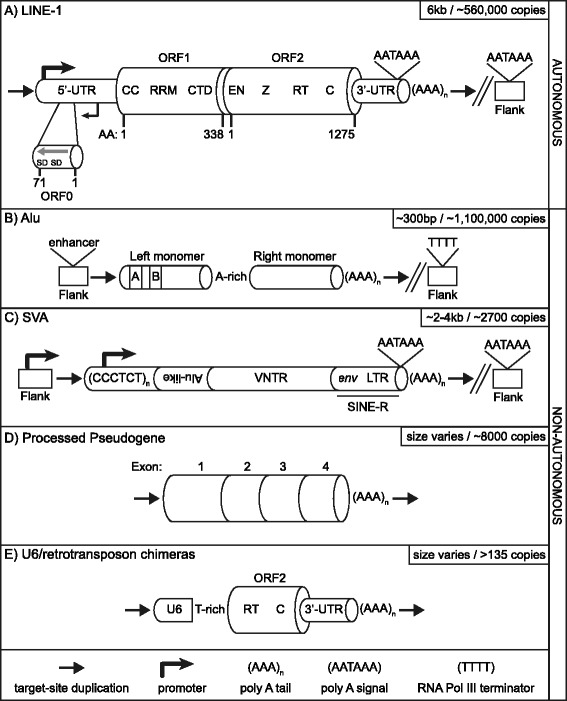
“Retrotransposons are a class of mobile elements that includes LINE-1 (L1), Alu and SVA elements [7, 8, 9].”
BackgroundContribution of de novo retroelements to birth defects and childhood cancersPreprint
Chu, C., Ljungström, V., Tran, A. V., Jin, H., & Park, P. J. (2024) · medRxiv · doi:10.1101/2024.04.15.24305733 · Cited by 3
“Retroelement insertions into genes may disrupt the function of the gene, potentially leading to a wide spectrum of diseases (Hancks and Kazazian 2016; Burns 2017; Chuong et al. 2017).”
BackgroundDynamic dysregulation of retrotransposons in neurodegenerative diseases at the single-cell level
Deng, W., Citu, C., Liu, A., & Zhao, Z. (2024) · Genome Research · doi:10.1101/gr.279363.124 · Cited by 3
“…(Peaston et al. 2004; Fadloun et al. 2013; Göke et al. 2015; Robbez-Masson and Rowe 2015; Rodriguez-Terrones and Torres-Padilla 2018), cancer (Hancks and Kazazian 2016; Burns 2017), neurodegenerative diseases (Li et al. 2013; Guo et al. 2018; Sun et al. 2018), as well as other diseases…”
Implications of Endogenous Retroelements in the Etiopathogenesis of Systemic Lupus Erythematosus
Ukadike, K. C., & Mustelin, T. (2021) · Journal of Clinical Medicine · doi:10.3390/jcm10040856 · Cited by 23
“Besides sporadic genetic diseases [49] caused by new retrotranspositions, this biology is accelerated in malignant cells [50] and is a major contributor to the activation of oncogenes [51], the inactivation of tumor suppressors [52,53], and larger chromosomal abnormalities [47,54-56].”
BackgroundLilue, J., Corvelo, A., Gómez‐Garrido, J., Yang, F., Akagi, K., Green, G., Ng, B. L., Fu, B., Chorostecki, U., Warner, S., et al. (2025) · BMC Biology · doi:10.1186/s12915-025-02316-6 · Cited by 2
“The results demonstrate a high degree of interspecific relatedness when comparing cotton rat vs. these independent rodent species.”
Nishimori, K., Luqman-Fatah, A., Watanabe, Y., Takahashi, M., Ito, T., Ishikawa, F., & Miyoshi, T. (2026) · Nucleic Acids Research · doi:10.1093/nar/gkag334 · Cited by 2
Epigenetic lockdown of type I interferon sensing and signalling in human pluripotent cells
Holt, J. H., Enriquez-Gasca, R., Wilson, R. P., Bochukova, E. G., Maillard, P. V., & Rowe, H. M. (2026) · Nature Communications · doi:10.1038/s41467-026-74147-0 · Cited by 3
“The links between TE activity and disease are well established with particularly strong associations to genetic diseases 9 – 11 and cancer 6,12,13 .”
D’Alessandre, N. D. R., Pessoa, B. S., Guardia, G. D. A., Marques, J. M., Galante, P. A. F., & Batista, R. L. (2025) · Reviews in Endocrine and Metabolic Disorders · doi:10.1007/s11154-025-10008-3 · Cited by 3
Hu, J., Mao, T., Huang, K., Yang, S., Yu, W., Huang, J., Jin, S., Sun, C., Jiapaer, Z., & Wang, X. (2026) · Cell Cycle · doi:10.1080/15384101.2025.2611968 · Cited by 3
The role of retrotransposons at the interface of DNA damage and the innate immune response
Vikraman, P., Davoli, T., & Mita, P. (2026) · Current Opinion in Cell Biology · doi:10.1016/j.ceb.2026.102625 · Cited by 2
Luo, Y. N., Deng, Y., Liang, Y., Wu, W., Wu, W., & Wang, L. (2026) · Nucleic Acids Research · doi:10.1093/nar/gkag146 · Cited by 3
“It has been reported that > 100 genetic diseases were caused by long interspersed nuclear element-1 (LINE-1)- mediated insertions [ 6 , 13 , 19 ].”
Cho, H.-M., Park, S.-J., Choe, S.-H., Lee, J.-R., Kim, S., Jin, Y. B., Kim, J., Lee, S., Kim, Y., & Huh, J. (2019) · BMC Evolutionary Biology · doi:10.1186/s12862-019-1530-0 · Cited by 2
The Methods and Tools for Mobile Genetic Element Detection and their Application to Systems Medicine
Xie, Z. (2020) · Elsevier eBooks · doi:10.1016/b978-0-12-801238-3.11537-5 · Cited by 2
Field, M. J., Kumar, R., Hackett, A., Kayumi, S., Shoubridge, C., Ewans, L., Ivancevic, A. M., Dudding‐Byth, T., Carroll, R., Kroes, T., et al. (2021) · Human Mutation · doi:10.1002/humu.24207 · Cited by 2
“Reports of retrotransposon insertions causing Mendelian dis- ease are extremely rare (Hancks & Kazazian, 2016).”
BackgroundInherited L1 Retrotransposon Insertions Associated With Risk for Schizophrenia and Bipolar Disorder
Reiner, B. C., Doyle, G. A. R., Weller, A. E., Levinson, R. N., Rao, A. M., Perea, E. D., Namoglu, E. C., Pigeon, A., Arauco‐Shapiro, G., Weickert, C. S., et al. (2021) · Schizophrenia Bulletin Open · doi:10.1093/schizbullopen/sgab031 · Cited by 2
Wehbi, S. S., & zu Dohna, H. (2021) · Mobile DNA · doi:10.1186/s13100-021-00255-x · Cited by 2
“Some specific insertions have been linked to diseases such as hemophilia and thalassemia [2].”
BackgroundFan, X., Zhang, B., Fan, L., Chen, J., Su, C., Cao, B., Wei, L., Qin, M., & Gong, C. (2022) · Journal of Personalized Medicine · doi:10.3390/jpm12060872 · Cited by 3
“Previous studies indicated that the insertion of mobile elements into the early embryo can disrupt genes, leading to diseases [23,24].”
BackgroundThe Happy Hopping of Transposons: The Origins of V(D)J Recombination in Adaptive Immunity
Shridharan, R. V., Kalakuntla, N., Chirmule, N. B., & Tiwari, B. (2022) · Frontiers in Ecology and Evolution · doi:10.3389/fevo.2022.836066 · Cited by 2
Kõks, S., Singleton, L. M., Quinn, J. P., Bubb, V. J., & Pfaff, A. L. (2022) · Neuromethods · doi:10.1007/978-1-0716-2357-2_4 · Cited by 2
Yanagi, K., Coker, J. D., Miyana, K., Aso, S., Kobayashi, N., Satou, K., Richman, A., Indupuru, S., Matsubara, Y., & Kaname, T. (2023) · Journal of Human Genetics · doi:10.1038/s10038-023-01130-8 · Cited by 2
“The LINE-1 insertion may result in a frameshift leading to nonsense-mediated RNA decay [20].”
BackgroundGermline HPF1 retrogene insertion in RB1 gene involved in cancer predisposition
Gall, J. L., Dehainault, C., Boutte, M., Petitalot, A., Caputo, S. M., Courtois, L., Vacher, S., Bièche, I., Radvanyi, F., Pacquement, H., et al. (2023) · Journal of Medical Genetics · doi:10.1136/jmg-2022-109105 · Cited by 2
Ma, H., Zhong, C., Sun, H., Chen, D., & Lin, H. X. (2023) · Lecture notes in computer science · doi:10.1007/978-981-99-7074-2_13 · Cited by 2
Potential to use of viral reverse transcriptase inhibitors in oncology
Vlasova, O. A., Antonova, I., Magomedova, K., Usolkina, M. A., Игоревич, К. К., Belitsky, G. A., Valiev, T. T., & Геннадиевна, Я. М. (2024) · Advances in molecular oncology · doi:10.17650/2313-805x-2024-11-2-8-28 · Cited by 2
Impact of prematurity on LINE-1 promoter methylation
dos Santos, P. V. B. E., Brasil, A. D. A., Milone, L. T. V., Chalfun, G., Saide, S. C. A. D. O., Salú, M. D. S., de Oliveira, M. B. G., Robaina, J. R., Lima‐Setta, F., Rodrigues-Santos, G., et al. (2024) · Epigenomics · doi:10.1080/17501911.2024.2397329 · Cited by 2
Analysis of Somatic LINE-1 Insertions in Neurons
Sanchez-Luque, F. J., Richardson, S. R., & Faulkner, G. J. (2017) · Neuromethods · doi:10.1007/978-1-4939-7280-7_12 · Cited by 2
Nugmanov, G. A., Komkov, A. Y., Saliutina, M. V., Minervina, A. A., Lebedev, Y. B., & Mamedov, I. Z. (2019) · Molecular Biology · doi:10.1134/s0026898419010117 · Cited by 3
Preeclampsia as a parental epigenetic disease
Kobayashi, H., Tsunemi, T., Akasaka, J., Koike, N., Ito, A. S. F., Yamada, Y., & Fujii, E. (2018) · Clinical and Experimental Obstetrics & Gynecology · doi:10.12891/ceog4000.2018 · Cited by 2
LINE-1 ORF1p does not determine substrate preference for human/orangutan SVA and gibbon LAVA
Damert, A. (2020) · Mobile DNA · doi:10.1186/s13100-020-00222-y · Cited by 2
Endogenous Retroelements in Cancer: Molecular Roles and Clinical Approach
Lee, K.-H., & Cho, J. (2021) · IntechOpen eBooks · doi:10.5772/intechopen.93370 · Cited by 2
“The most SVs were generated by L1 (99%), followed by SINE VNTR Alu (SVA) and ERV [92].”
BackgroundMethodPattern matching for high precision detection of LINE-1s in human genomes
López, J. O., Seguel, J., Chamorro, A., & Ramos, K. S. (2022) · BMC Bioinformatics · doi:10.1186/s12859-022-04907-4 · Cited by 3
“While most L1s are inactive due to rearrangements, point mutations, and truncation [2, 3], full-length, active L1s can be pathogenic and are the most likely to retrotranspose at significant rates, with at least 124 L1-mediated insertions linked to genetic diseases [3, 4].”
BackgroundChelonus inanitus bracovirus encodes lineage-specific proteins and truncated immune IκB-like factors
de Araujo, A. C., Josse, T., Sibut, V., Urabe, M., Azam, A., Barbe, V., Nakai, M., Huguet, E., Périquet, G., & Drezen, J. (2022) · Journal of General Virology · doi:10.1099/jgv.0.001791 · Cited by 4
“This type of mechanism was reported to be involved in the production of 8000 so-called “processed pseudogenes” in the human genome originating from the integration of reverse transcribed cDNAs by L1 retroelement retrotransposases [97].”
BackgroundLINE-1 Retrotransposition Assays in Embryonic Stem Cells
García-Cañadas, M., Sanchez-Luque, F. J., Sánchez, L., Rojas, J., & Garcia-Perez, J. L. (2022) · Methods in molecular biology · doi:10.1007/978-1-0716-2883-6_13 · Cited by 2
Repetitive Elements and Human Disorders
Kaul, T. K., Morales, M. E., & Deininger, P. L. (2017) · Wiley eBooks · doi:10.1002/9780470015902.a0005493.pub3 · Cited by 2
Metadata
- Authors
- Hancks, D. C., & Kazazian, H. H.
- Affiliations
- University of Utah (US)
- Johns Hopkins University (US)
- Corresponding author
- Hancks, Dustin C.
- Kazazian, Haig H.
- ORCID
- Hancks, Dustin C.
- Venue
- Mobile DNA
- Published
- 2016-05-06
- Volume
- 7
- Issue
- 1
- Pages
- 9-9
- ISSN
- 1759-8753 (ISSN-L)
- PMC
- PMC4859970
- OpenAlex
- W2347011735
- Cited by
- 670
- References
- 325
- Citations by year
- 2026: 39 · 2025: 46 · 2024: 56 · 2023: 81 · 2022: 78 · 2021: 80 · 2020: 92 · 2019: 76 · 2018: 55 · 2017: 51 · 2016: 12
- FWCI
- 6.28
- Type
- journal article
- Language
- en
- Open access
- gold
- doi.org
- Licence
- cc-by
- creativecommons.org/licenses/by/4.0/ (tdm)
- Locations
- Mobile DNA (publishedVersion, cc-by)
- PubMed Central (publishedVersion, cc-by)
- PubMed (publishedVersion)
- Funders
- American Cancer Society (125132-PF-13-371-01-MPC)
- Topics
- Life Sciences › Biochemistry, Genetics and Molecular Biology › Genetics › Chromosomal and Genetic Variations
- Life Sciences › Biochemistry, Genetics and Molecular Biology › Genetics › Genomic variations and chromosomal abnormalities
- Life Sciences › Biochemistry, Genetics and Molecular Biology › Genetics › Genome Rearrangement Algorithms
- Keywords
- LINE-1, retrotransposons, transposable elements, copy number variation, genetic disorders, Alu elements, SVA elements, retrotransposition, human disease genetics, genome evolution
About these checks
Registry, retraction, Cites and statistics results are computed, not judged, with one exception: a printed reference that no index lists is read once by a model before it counts as a citation error. Claims are extracted by a model and kept only when their quote appears verbatim in the text; each cited source is then checked, with a model’s help, for whether it says what the claim relies on. Those verdicts can be wrong — read the claim’s quote and the cited source before relying on one.
Statistics and arithmetic are recomputed, not judged.
Confidence bands are shown only for fields calibrated on our annotated test set. None is calibrated yet, so no band is shown.
What counts as a claim ›How we measure confidence ›How we check this ›
Are you an author, or do you see a problem with this page? Request a review
Data sources
Bibliographic data: Semantic Scholar, OpenAlex, Crossref.
Contains information from the Semantic Scholar Academic Graph Datasets, made available under the ODC Attribution License (ODC-BY 1.0).
Semantic Scholar’s data is described in: Kinney, R., et al. (2023). The Semantic Scholar Open Data Platform. arXiv:2301.10140.
