

Roles for retrotransposon insertions in human disease
Open accessThe DOI matches its Crossref record; 325 of the 325 references it cites were found in a registry or an index.
Abstract
Over evolutionary time, the dynamic nature of a genome is driven, in part, by the activity of transposable elements (TE) such as retrotransposons. On a shorter time scale it has been established that new TE insertions can result in single-gene disease in an individual. In humans, the non-LTR retrotransposon Long INterspersed Element-1 (LINE-1 or L1) is the only active autonomous TE. In addition to mobilizing its own RNA to new genomic locations via a "copy-and-paste" mechanism, LINE-1 is able to retrotranspose other RNAs including Alu, SVA, and occasionally cellular RNAs. To date in humans, 124 LINE-1-mediated insertions which result in genetic diseases have been reported. Disease causing LINE-1 insertions have provided a wealth of insight and the foundation for valuable tools to study these genomic parasites. In this review, we provide an overview of LINE-1 biology followed by highlights from new reports of LINE-1-mediated genetic disease in humans.
Overview
The claims and statistics of this paper haven’t been checked yet.
Free: it reads the open-access text and checks the first 5 claims that cite a source we can check. Create a free account to check every claim.
Integrity signals
Registry
Cites
Statistics
Figures
Verification
Claims the paper makes
The claims and statistics of this paper haven’t been checked yet.
Free: it reads the open-access text and checks the first 5 claims that cite a source we can check. Create a free account to check every claim.
Claims other papers make about this one
Each is checked against this paper’s own text: does it say what the citing paper says it does?
The source backs part of the claim, not all of it — or backs it for a different population, condition or comparison.
In the citing paper
“Over 120 L1-mediated germline insertions have been linked to cases of human genetic diseases78.”
From The role of retrotransposable elements in ageing and age-associated diseases (2021) · cites this paper as [78]
Experimental — accuracy not yet measured
Self-check
Percentages, sums and reported differences re-computed from the paper’s own numbers.
The self-check needs the paper’s full text.
Citations
Cites
Hallmarks of Cancer: The Next Generation
Hanahan, D., & Weinberg, R. A. (2011) · Cell · doi:10.1016/j.cell.2011.02.013 · Cited by 66,590 · cited 1×
“Genomic instability is a hallmark of cancer [199].”
BackgroundInitial sequencing and analysis of the human genome
International Human Genome Sequencing Consortium, Whitehead Institute for Biomedical Research, C. F. G. R., Lander, E. S., Linton, L. M., Birren, B., Nusbaum, C., Zody, M. C., Baldwin, J., Devon, K., Dewar, K., et al. (2001) · Nature · doi:10.1038/35057062 · Cited by 24,216 · cited 10×
“LTR elements, also known as endogenous retroviruses (ERVs), comprise ~8 % of the human genome [6].”
InfluentialAn integrated encyclopedia of DNA elements in the human genome
The ENCODE Project Consortium (2012) · Nature · doi:10.1038/nature11247 · Cited by 18,072 · cited 1×
“Examples include the frequency and location of new insertions and the contribution of TEs to gene regulation genome-wide at an unprecedented resolution [8, 9, 12, 13].”
BackgroundSignatures of mutational processes in human cancer
Initiative, A. P. C. G., Alexandrov, L. B., ICGC Breast Cancer Consortium, ICGC MMML-Seq Consortium, PedBrain, I., Nik-Zainal, S., Wedge, D. C., Aparicio, S. A. J. R., Behjati, S., Biankin, A. V., et al. (2013) · Nature · doi:10.1038/nature12477 · Cited by 9,660 · cited 1×
“Finally, although a bit tenuous, it is worthwhile to note that “kataegis,” the localized hypermutation frequently observed near DNA breakpoint junctions in chromothripsis [188, 189] and cancers [190], is thought to be caused by the LINE-1 restriction factors [94, 191–194]- the APOBEC3 proteins [195].”
BackgroundInitial sequencing and comparative analysis of the mouse genome
Mouse Genome Sequencing Consortium (2002) · Nature · doi:10.1038/nature01262 · Cited by 7,187
Cyclic GMP-AMP Synthase Is a Cytosolic DNA Sensor That Activates the Type I Interferon Pathway
Sun, L., Wu, J., Du, F., Chen, X., & Chen, Z. J. (2013) · Science · doi:10.1126/science.1232458 · Cited by 4,996 · cited 1×
“Notably, cell culture and in vitro studies have shown that cGAS can activate the immune response not only by binding double-stranded DNA [225] but also by binding RNA: DNA hybrids [226].”
BackgroundBritten, R. J., & Kohne, D. E. (1968) · Science · doi:10.1126/science.161.3841.529 · Cited by 2,802 · cited 2×
“Examples include the frequency and location of new insertions and the contribution of TEs to gene regulation genome-wide at an unprecedented resolution [8, 9, 12, 13].”
BackgroundInitial sequence of the chimpanzee genome and comparison with the human genome
The Chimpanzee Sequencing and Analysis Consortium (2005) · Nature · doi:10.1038/nature04072 · Cited by 2,459
Mutational Processes Molding the Genomes of 21 Breast Cancers
Nik-Zainal, S., Alexandrov, L. B., Wedge, D. C., Van Loo, P., Greenman, C. D., Raine, K., Jones, D., Hinton, J., Marshall, J., Stebbings, L. A., et al. (2012) · Cell · doi:10.1016/j.cell.2012.04.024 · Cited by 1,909
The impact of retrotransposons on human genome evolution
Cordaux, R., & Batzer, M. A. (2009) · Nature Reviews Genetics · doi:10.1038/nrg2640 · Cited by 1,703 · cited 2×
“These deletions may be generated via mispairing of two retrotransposon sequences on the same strand usually on homologous chromosomes, while crossing over between two retrotransposon sequences inverted relative to each other may result in an inversion [149, 169].”
BackgroundAlu repeats and human genomic diversity
Batzer, M. A., & Deininger, P. L. (2002) · Nature Reviews Genetics · doi:10.1038/nrg798 · Cited by 1,470 · cited 2×
“Alus are small Pol III transcribed RNAs derived from 7SL RNA [243].”
BackgroundTransposable elements and the evolution of regulatory networks
Feschotte, C. (2008) · Nature Reviews Genetics · doi:10.1038/nrg2337 · Cited by 1,328 · cited 1×
“Examples include the frequency and location of new insertions and the contribution of TEs to gene regulation genome-wide at an unprecedented resolution [8, 9, 12, 13].”
BackgroundTrex1 prevents cell-intrinsic initiation of autoimmunity
Stetson, D. B., Ko, J. S., Heidmann, T., & Medzhitov, R. (2008) · Cell · doi:10.1016/j.cell.2008.06.032 · Cited by 1,280 · cited 1×
“” Some autoimmune disorders such as Aicairdes-Goutieres syndrome are caused by mutations in genes, such as TREX1 or SAM domain and HD domain 1 (SAMHD1), known to inhibit LINE-1 activity [221–223].”
BackgroundlncRNAs transactivate STAU1-mediated mRNA decay by duplexing with 3′ UTRs via Alu elements
Gong, C., & Maquat, L. E. (2011) · Nature · doi:10.1038/nature09701 · Cited by 1,262 · cited 1×
“Also, base-pairing between Alus embedded in mRNA 3′-UTRs and long non-coding RNAs can be involved in directing Staufen-mediated RNA decay [121].”
BackgroundLuan, D. D., Korman, M. H., Jakubczak, J. L., & Eickbush, T. H. (1993) · Cell · doi:10.1016/0092-8674(93)90078-5 · Cited by 1,173 · cited 9×
“LINE-1 insertions occur via a coupled reversetranscription integration mechanism referred to as target-primed reverse-transcription (TPRT) [77, 78].”
BackgroundInfluentialHuman L1 retrotransposon encodes a conserved endonuclease required for retrotransposition
Feng, Q., Moran, J. V., Kazazian, H. H., & Boeke, J. D. (1996) · Cell · doi:10.1016/s0092-8674(00)81997-2 · Cited by 1,139 · cited 6×
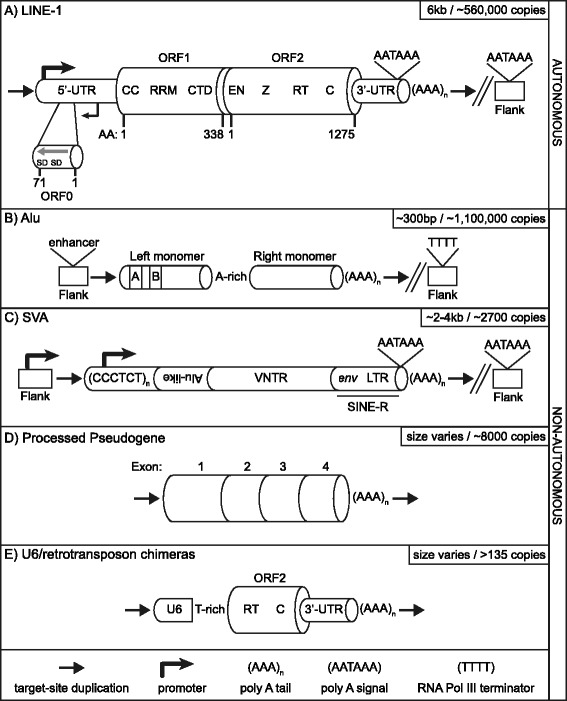
“ORF2p is a 150 kDa protein with endonuclease (EN) [51] and reverse transcriptase (RT) [52] activities.”
BackgroundInfluentialSelf-citationRepetitive Elements May Comprise Over Two-Thirds of the Human Genome
de Koning, A. P. J., Gu, W., Castoe, T. A., Batzer, M. A., & Pollock, D. D. (2011) · PLoS Genetics · doi:10.1371/journal.pgen.1002384 · Cited by 1,112
The Piwi-piRNA Pathway Provides an Adaptive Defense in the Transposon Arms Race
Aravin, A. A., Hannon, G. J., & Brennecke, J. (2007) · Science · doi:10.1126/science.1146484 · Cited by 1,096 · cited 1×
“LINE-1 [170, 171] and SVA DNA [172], in the 5′-UTR and VNTR, respectively, are known to be densely methylated in somatic tissue.”
BackgroundHot L1s account for the bulk of retrotransposition in the human population
Brouha, B., Schustak, J., Badge, R. M., Lutz-Prigge, S., Farley, A. H., Moran, J. V., & Kazazian, H. H. (2003) · Proceedings of the National Academy of Sciences · doi:10.1073/pnas.0831042100 · Cited by 1,073 · cited 1×
“Only a small subset, 80-100 LINE-1 s, are thought to be active in any given individual [38, 39], with each set of active elements differing between individuals [40].”
BackgroundSelf-citationLINE-mediated retrotransposition of marked Alu sequences
Dewannieux, M., Esnault, C., & Heidmann, T. (2003) · Nature Genetics · doi:10.1038/ng1223 · Cited by 1,023 · cited 2×
“Based on trans-mobilization cell culture assays, engineered Alu elements require a polyA tail and appear to only need transfected LINE-1 ORF2 for retrotransposition [71].”
BackgroundHigh frequency retrotransposition in cultured mammalian cells
Moran, J. V., Holmes, S. E., Naas, T. P., DeBerardinis, R. J., Boeke, J. D., & Kazazian, H. H. (1996) · Cell · doi:10.1016/s0092-8674(00)81998-4 · Cited by 1,022 · cited 8×
“2008 [263] Hemophilia A AluYb8 FL N/A N N AS E N/A 12 Alu FIX X Vidaud et al. 1993 [264] Hemophilia B AluYa5a2 244 78 Y/5′TR N S E AAGAATGGCAGATGCGA TCTT/AA Same insertion site as Wulff et al. Alu 13 Alu FIX X Wulff et al. 2000 [265] Hemophilia B AluYa5a2 237 39 Y/5′TR N S E AAGAATGGCAGATGC TCTT/AA Same insertion site…”
BackgroundInfluentialSelf-citationRegulatory evolution of innate immunity through co-option of endogenous retroviruses
Chuong, E. B., Elde, N. C., & Feschotte, C. (2016) · Science · doi:10.1126/science.aad5497 · Cited by 1,008 · cited 1×
“genetic elements may actually be altruistic or even coopted by the host genome [14] along with new insights into mechanisms by which they can cause disease.”
BackgroundInterspersed repeats and other mementos of transposable elements in mammalian genomes
Smit, A. F. (1999) · Current Opinion in Genetics & Development · doi:10.1016/s0959-437x(99)00031-3 · Cited by 949 · cited 2×
“For humans, approximately two-thirds of our genome can be annotated as TE-derived [1–6]; however, it is likely that the actual percentage is greater but due to sequence decay no sequence identity can be assigned.”
BackgroundSomatic mosaicism in neuronal precursor cells mediated by L1 retrotransposition
Muotri, A. R., Chu, V. T., Marchetto, M. C. N., Deng, W., Moran, J. V., & Gage, F. H. (2005) · Nature · doi:10.1038/nature03663 · Cited by 942 · cited 3×
“A little over a decade ago, an interesting observation was made by Muotri, Gage, and colleagues regarding which cells are permissive for LINE-1 retrotransposition [180].”
BackgroundInfluentialEvans, D. C., Schott, R. K., Larson, D. W., Brown, C. M., & Ryan, M. J. (2014) · Nature Communications · doi:10.1038/ncomms4289 · Cited by 940
Kazazian, H. H., Wong, C., Youssoufian, H., Scott, A. F., Phillips, D. G., & Antonarakis, S. E. (1988) · Nature · doi:10.1038/332164a0 · Cited by 929 · cited 3×
“1988 [22] Hemophilia A L1 Ta 3800 54 Y/5′TR N S E AAAGACAAACAAAAC CTTT/AA First report of de novo L1 insertion”
BackgroundInfluentialSelf-citationDeininger, P. L., & Batzer, M. A. (1999) · Molecular Genetics and Metabolism · doi:10.1006/mgme.1999.2864 · Cited by 909 · cited 3×
“ADAR: adenosine deaminase acting on RNA; APC: adenomatous polyposis coli; APOBEC3A: apolipoprotein B mRNA editing enzyme catalytic subunit 3A; ASP: antisense promoter; ATM: ataxia telangiectasia mutated; BCC: basal cell carcinoma; C: cysteine-rich; CASP8: caspase 8; CC: coiled coiled; CENPW: centromere protein W; cGAS…”
BackgroundControlling Elements and the Gene
McClintock, B. (1956) · Cold Spring Harbor Symposia on Quantitative Biology · doi:10.1101/sqb.1956.021.01.017 · Cited by 847 · cited 2×
“Almost 70 years ago, Barbara McClintock laid the foundation for TE research with her initial work and discoveries in maize of what she termed “controlling elements [7].”
BackgroundTy elements transpose through an RNA intermediate
Boeke, J. D., Garfinkel, D. J., Styles, C. A., & Fink, G. R. (1985) · Cell · doi:10.1016/0092-8674(85)90197-7 · Cited by 844 · cited 1×
“Class I TEs, also known as retrotransposons, encompass elements that move via a “copy-and-paste” mechanism involving an RNA intermediate [15, 16], while Class II TEs, referred to as DNA transposons, represent TEs that mobilize by a “cut-and-paste” mechanism.”
BackgroundHuman LINE retrotransposons generate processed pseudogenes
Esnault, C., Maestre, J., & Heidmann, T. (2000) · Nature Genetics · doi:10.1038/74184 · Cited by 830 · cited 20×
“In addition to mobilizing its own RNA to new genomic locations via a “copy-and-paste” mechanism, LINE-1 is able to retrotranspose other RNAs including Alu, SVA, and occasionally cellular RNAs.”
BackgroundInfluentialL1 retrotransposition in human neural progenitor cells
Coufal, N. G., Garcia-Perez, J. L., Peng, G. E., Yeo, G. W., Mu, Y., Lovci, M. T., Morell, M., O’Shea, K. S., Moran, J. V., & Gage, F. H. (2009) · Nature · doi:10.1038/nature08248 · Cited by 814 · cited 1×
“With sensitive methods in place, research over the next 5 years will begin to determine some of the questions research on LINE-1 activity in the brain has generated: [180, 232, 234–238] 1) Are there functional implications for retrotransposition in the brain? 2) Does retrotransposition in the brain contribute to neuro…”
MethodTransposition mediated by RAG1 and RAG2 and its implications for the evolution of the immune system
Agrawal, A., Eastman, Q. M., & Schatz, D. G. (1998) · Nature · doi:10.1038/29457 · Cited by 811
An ancient retrotransposal insertion causes Fukuyama-type congenital muscular dystrophy
Kobayashi, K., Nakahori, Y., Miyake, M., Matsumura, K., Kondo-Iida, E., Nomura, Y., Segawa, M., Yoshioka, M., Saito, K., Osawa, M., et al. (1998) · Nature · doi:10.1038/28653 · Cited by 802 · cited 3×
“1998 [162] FCMD E 3023 32 FL N S 3′UTR/ Splicing AAGAAAAAAAAAATTGT TCTT/AA”
BackgroundRepetitive and Non-Repetitive DNA Sequences and a Speculation on the Origins of Evolutionary Novelty
Britten, R. J., & Davidson, E. H. (1971) · The Quarterly Review of Biology · doi:10.1086/406830 · Cited by 789 · cited 2×
“Examples include the frequency and location of new insertions and the contribution of TEs to gene regulation genome-wide at an unprecedented resolution [8, 9, 12, 13].”
BackgroundReverse Transcriptase Encoded by a Human Transposable Element
Mathias, S. L., Scott, A. F., Kazazian, H. H., Boeke, J. D., & Gabriel, A. (1991) · Science · doi:10.1126/science.1722352 · Cited by 773 · cited 2×
“coiled domain [47], RRM-RNA recognition motif [44], CTD-C-terminal domain, EN-endonuclease [51], Z domain [242], RT-reverse transcriptase [52], C-”
BackgroundSelf-citationBiology of Mammalian L1 Retrotransposons
Ostertag, E. M., & Kazazian Jr, H. H. (2001) · Annual Review of Genetics · doi:10.1146/annurev.genet.35.102401.091032 · Cited by 765 · cited 4×
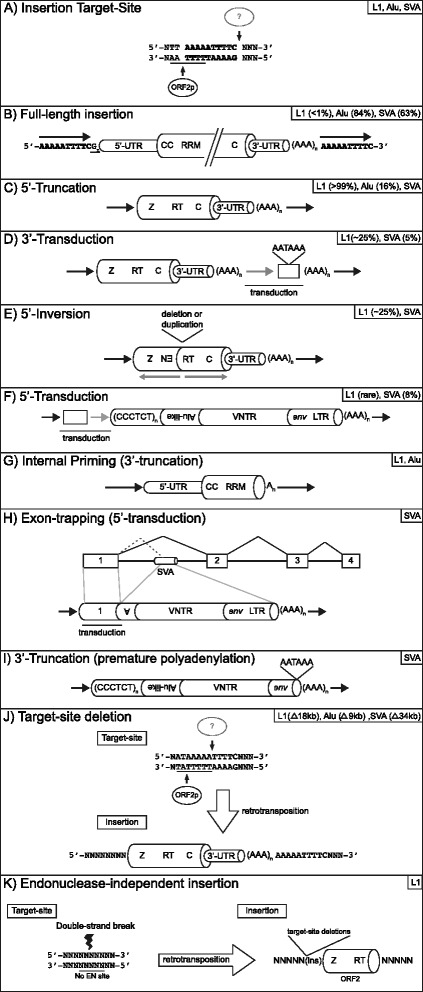
“In addition, most insertions are characterized by flanking target-site duplications (4-20 bp in length, black horizontal arrows) [35].”
BackgroundMethodInfluentialSelf-citationWidespread A-to-I RNA Editing of Alu-Containing mRNAs in the Human Transcriptome
Athanasiadis, A., Rich, A., & Maas, S. (2004) · PLoS Biology · doi:10.1371/journal.pbio.0020391 · Cited by 740
Activation of cyclic GMP-AMP synthase by self-DNA causes autoimmune diseases
Gao, D., Li, T., Li, X.-D., Chen, X., Li, Q.-Z., Wight-Carter, M., & Chen, Z. J. (2015) · Proceedings of the National Academy of Sciences · doi:10.1073/pnas.1516465112 · Cited by 685 · cited 4×
“Some autoimmune disorders such as Aicairdes-Goutieres syndrome are caused by mutations in genes, such as TREX1 or SAM domain and HD domain 1 (SAMHD1), known to inhibit LINE-1 activity [221–223].”
BackgroundInfluentialSomatic retrotransposition alters the genetic landscape of the human brain
Baillie, J. K., Barnett, M. W., Upton, K. R., Gerhardt, D. J., Richmond, T. A., De Sapio, F., Brennan, P. M., Rizzu, P., Smith, S., Fell, M., et al. (2011) · Nature · doi:10.1038/nature10531 · Cited by 684
Chromothripsis and Kataegis Induced by Telomere Crisis
Maciejowski, J., Li, Y., Bosco, N., Campbell, P. J., & de Lange, T. (2015) · Cell · doi:10.1016/j.cell.2015.11.054 · Cited by 675 · cited 2×
“In addition, another study has provided evidence that three prime repair exonuclease 1 (TREX1) may cause rearrangements reminiscent of chromothripsis between dicentric chromosomes formed by telomere fusion [188].”
BackgroundWnt-mediated activation of NeuroD1 and retro-elements during adult neurogenesis
Kuwabara, T., Hsieh, J., Muotri, A., Yeo, G., Warashina, M., Lie, D. C., Moore, L., Nakashima, K., Asashima, M., & Gage, F. H. (2009) · Nature Neuroscience · doi:10.1038/nn.2360 · Cited by 648 · cited 1×
“Several transcription factors have been implicated in LINE-1 transcription including ying yang 1 (YY1) [55], T-cell factor/lymphoid enhancer factor (TCF/LEF) [56], p53 [57], and runt related transcription factor 3 (RUNX3) [58].”
BackgroundHuman L1 Retrotransposition: cis Preference versus trans Complementation
Wei, W., Gilbert, N., Ooi, S. L., Lawler, J. F., Ostertag, E. M., Kazazian, H. H., Boeke, J. D., & Moran, J. V. (2001) · Molecular and Cellular Biology · doi:10.1128/mcb.21.4.1429-1439.2001 · Cited by 635 · cited 21×
“In addition to mobilizing its own RNA to new genomic locations via a “copy-and-paste” mechanism, LINE-1 is able to retrotranspose other RNAs including Alu, SVA, and occasionally cellular RNAs.”
BackgroundInfluentialSelf-citationLINE-1 Retrotransposition Activity in Human Genomes
Beck, C. R., Collier, P., Macfarlane, C., Malig, M., Kidd, J. M., Eichler, E. E., Badge, R. M., & Moran, J. V. (2010) · Cell · doi:10.1016/j.cell.2010.05.021 · Cited by 632 · cited 1×
“Only a small subset, 80-100 LINE-1 s, are thought to be active in any given individual [38, 39], with each set of active elements differing between individuals [40].”
BackgroundL1 retrotransposition in neurons is modulated by MeCP2
Muotri, A. R., Marchetto, M. C. N., Coufal, N. G., Oefner, R., Yeo, G., Nakashima, K., & Gage, F. H. (2010) · Nature · doi:10.1038/nature09544 · Cited by 626 · cited 1×
“With sensitive methods in place, research over the next 5 years will begin to determine some of the questions research on LINE-1 activity in the brain has generated: [180, 232, 234–238] 1) Are there functional implications for retrotransposition in the brain? 2) Does retrotransposition in the brain contribute to neuro…”
MethodExon Shuffling by L1 Retrotransposition
Moran, J. V., DeBerardinis, R. J., & Kazazian, H. H. (1999) · Science · doi:10.1126/science.283.5407.1530 · Cited by 625 · cited 9×
“2008 [263] Hemophilia A AluYb8 FL N/A N N AS E N/A 12 Alu FIX X Vidaud et al. 1993 [264] Hemophilia B AluYa5a2 244 78 Y/5′TR N S E AAGAATGGCAGATGCGA TCTT/AA Same insertion site as Wulff et al. Alu 13 Alu FIX X Wulff et al. 2000 [265] Hemophilia B AluYa5a2 237 39 Y/5′TR N S E AAGAATGGCAGATGC TCTT/AA Same insertion site…”
BackgroundInfluentialSelf-citationThe origin of interspersed repeats in the human genome
Smit, A. F. (1996) · Current Opinion in Genetics & Development · doi:10.1016/s0959-437x(96)80030-x · Cited by 611 · cited 2×
“For humans, approximately two-thirds of our genome can be annotated as TE-derived [1–6]; however, it is likely that the actual percentage is greater but due to sequence decay no sequence identity can be assigned.”
BackgroundAlu sequences are processed 7SL RNA genes
Ullu, E., & Tschudi, C. (1984) · Nature · doi:10.1038/312171a0 · Cited by 608 · cited 2×
“Alu RNAs are primatespecific [97, 98] non-coding RNA Pol III transcripts [98] derived from the 7SL RNA [99, 100], a component of the signal recognition particle.”
BackgroundDICER1 deficit induces Alu RNA toxicity in age-related macular degeneration
Kaneko, H., Dridi, S., Tarallo, V., Gelfand, B. D., Fowler, B. J., Cho, W. G., Kleinman, M. E., Ponicsan, S. L., Hauswirth, W. W., Chiodo, V. A., et al. (2011) · Nature · doi:10.1038/nature09830 · Cited by 601
Active human retrotransposons: variation and disease
Hancks, D. C., & Kazazian, H. H. (2012) · Current Opinion in Genetics & Development · doi:10.1016/j.gde.2012.02.006 · Cited by 592 · cited 5×
“YYYY/YR), the actual site is merely obscured by this activity [85, 86].”
BackgroundInfluentialSelf-citationDICER1 loss and Alu RNA induce age-related macular degeneration via the NLRP3 inflammasome and MyD88
Tarallo, V., Hirano, Y., Gelfand, B. D., Dridi, S., Kerur, N., Kim, Y., Cho, W. G., Kaneko, H., Fowler, B. J., Bogdanovich, S., et al. (2012) · Cell · doi:10.1016/j.cell.2012.03.036 · Cited by 592 · cited 1×
“It is thought that the loss of DICER and an increase in Alu RNA leads to NLRP3 inflammasome activation resulting in cell death via Caspase-1 activation [229].”
BackgroundDisruption of the APC gene by a retrotransposal insertion of L1 sequence in a colon cancer.
Miki, Y., Nishisho, I., Horii, A., Miyoshi, Y., Utsunomiya, J., Kinzler, K. W., Vogelstein, B., & Nakamura, Y. (1992) · PubMed · Cited by 564
Sequence patterns indicate an enzymatic involvement in integration of mammalian retroposons
Jurka, J. (1997) · Proceedings of the National Academy of Sciences · doi:10.1073/pnas.94.5.1872 · Cited by 556 · cited 1×
“2a) is determined by the ORF2p-encoded endonuclease [51, 81].”
BackgroundSingle-Neuron Sequencing Analysis of L1 Retrotransposition and Somatic Mutation in the Human Brain
Evrony, G. D., Cai, X., Lee, E., Hills, L. B., Elhosary, P. C., Lehmann, H. S., Parker, J. J., Atabay, K. D., Gilmore, E. C., Poduri, A., et al. (2012) · Cell · doi:10.1016/j.cell.2012.09.035 · Cited by 548 · cited 1×
“Another study from the Walsh group on single cells outside the hippocampus has found a much lower incidence of somatic LINE-1 retrotransposition [234].”
BackgroundWidespread RNA Editing of Embedded Alu Elements in the Human Transcriptome
Kim, D. D. Y., Kim, T. T. Y., Walsh, T., Kobayashi, Y., Matise, T. C., Buyske, S., & Gabriel, A. (2004) · Genome Research · doi:10.1101/gr.2855504 · Cited by 538 · cited 1×
“Alus are also commonly found in 3′-UTRs where they may serve as small RNA binding sites [116, 117] or serve as substrates for the RNA editing enzyme adenosine deaminase acting on RNA (ADAR) when at least two inverted Alus are present [118–120].”
BackgroundHuman L1 element target‐primed reverse transcription in vitro
Cost, G. J., Feng, Q., Jacquier, A., & Boeke, J. D. (2002) · The EMBO Journal · doi:10.1093/emboj/cdf592 · Cited by 519 · cited 9×
“LINE-1 insertions occur via a coupled reversetranscription integration mechanism referred to as target-primed reverse-transcription (TPRT) [77, 78].”
BackgroundMethodInfluentialWhich transposable elements are active in the human genome?
Mills, R. E., Bennett, E. A., Iskow, R. C., & Devine, S. E. (2007) · Trends in Genetics · doi:10.1016/j.tig.2007.02.006 · Cited by 511 · cited 1×
“It has been predicted that perhaps the SVA RNA is localized to the ribosome [24, 131] via basepairing interactions between the SVA Alu-like domain and Alu RNAs.”
BackgroundAlu -Containing Exons are Alternatively Spliced
Sorek, R., Ast, G., & Graur, D. (2002) · Genome Research · doi:10.1101/gr.229302 · Cited by 505 · cited 2×
“have been reported to contain numerous splice sites and be incorporated into the transcriptome [105, 127, 128, 134, 250].”
BackgroundDNA repair mediated by endonuclease-independent LINE-1 retrotransposition
Morrish, T. A., Gilbert, N., Myers, J. S., Vincent, B. J., Stamato, T. D., Taccioli, G. E., Batzer, M. A., & Moran, J. V. (2002) · Nature Genetics · doi:10.1038/ng898 · Cited by 487 · cited 1×
“In addition, the insertions were typically truncated at both the 5′-and 3′-ends [213].”
BackgroundHuman L1 Retrotransposition Is Associated with Genetic Instability In Vivo
Symer, D. E., Connelly, C., Szak, S. T., Caputo, E. M., Cost, G. J., Parmigiani, G., & Boeke, J. D. (2002) · Cell · doi:10.1016/s0092-8674(02)00839-5 · Cited by 477
Genomic Deletions Created upon LINE-1 Retrotransposition
Gilbert, N., Lutz-Prigge, S., & Moran, J. V. (2002) · Cell · doi:10.1016/s0092-8674(02)00828-0 · Cited by 474 · cited 2×
“associated with new retrotransposition events [82, 83].”
BackgroundMutations in a human homologue of Drosophila crumbs cause retinitis pigmentosa (RP12)
den Hollander, A. I., ten Brink, J. B., de Kok, Y. J. M., van Soest, S., van den Born, L. I., van Driel, M. A., van de Pol, D. J. R., Payne, A. M., Bhattacharya, S. S., Kellner, U., et al. (1999) · Nature Genetics · doi:10.1038/13848 · Cited by 468 · cited 1×
“…ancks and Kazazian M obile D N A (2016) 7:9 Page 7 of 28 Table 1 Retrotransposition events associated with human disease (Continued) 17 Alu CRB1 1 den Hollander et al. 1999 [268] RP AluY 244 70 Y/5′TR N AS E AAGAGTAAAGATGA TCTT/GA 18 Alu SERPINC1 1 Beauchamp et al. 2000 [269] Type 1 ATP Alu 6 40…”
BackgroundVan Meter, M., Kashyap, M., Rezazadeh, S., Geneva, A. J., Morello, T. D., Seluanov, A., & Gorbunova, V. (2014) · Nature Communications · doi:10.1038/ncomms6011 · Cited by 456
Many human L1 elements are capable of retrotransposition
Sassaman, D. M., Dombroski, B. A., Moran, J. V., Kimberland, M. L., Naas, T. P., DeBerardinis, R. J., Gabriel, A., Swergold, G. D., & Kazazian, H. H. (1997) · Nature Genetics · doi:10.1038/ng0597-37 · Cited by 451 · cited 1×
“Only a small subset, 80-100 LINE-1 s, are thought to be active in any given individual [38, 39], with each set of active elements differing between individuals [40].”
BackgroundSelf-citationIsolation of an Active Human Transposable Element
Dombroski, B. A., Mathias, S. L., Nanthakumar, E., Scott, A. F., & Kazazian, H. H. (1991) · Science · doi:10.1126/science.1662412 · Cited by 443 · cited 3×
“A full-length LINE-1 ~ 6 kb in length is shown [36, 41, 239].”
BackgroundSelf-citationA de novo Alu insertion results in neurofibromatosis type 1
Wallace, M. R., Andersen, L. B., Saulino, A. M., Gregory, P. E., Glover, T. W., & Collins, F. S. (1991) · Nature · doi:10.1038/353864a0 · Cited by 442 · cited 1×
“…286 N/A N N S E GAAAAAGAATCTGCTTT TTTC/GA 61 Alu BRCA1 17 Qian et al. 2015 [158] Hereditary Cancer N/A N/A N/A N/A N/A N/A E N/A N/A Pan-cancer panel testing 62 Alu NF1 17 Wallace et al. 1991 [23] NF1 AluYa5 282 40 N N AS I/Splicing AAAAAAAAAAACAT TTTT/AA First report of de novo Alu insertion 63…”
BackgroundIdentification, characterization, and cell specificity of a human LINE-1 promoter.
Swergold, G. D. (1990) · Molecular and Cellular Biology · doi:10.1128/mcb.10.12.6718 · Cited by 439 · cited 2×
“is driven from its own promoter (big black bent arrow) [53, 54] located in the 5′-UTR.”
BackgroundZhang, Z. (2003) · Genome Research · doi:10.1101/gr.1429003 · Cited by 424 · cited 1×
“The reference human genome sequence contains approximately ~8000 processed pseudogenes [147] with the most abundant being sequences encoding ribosomal protein RNAs [148].”
BackgroundAntisense Promoter of Human L1 Retrotransposon Drives Transcription of Adjacent Cellular Genes
Speek, M. (2001) · Molecular and Cellular Biology · doi:10.1128/mcb.21.6.1973-1985.2001 · Cited by 423 · cited 1×
“LINE-1 also contains an antisense promoter in the 5′-UTR [59].”
BackgroundA ubiquitous family of repeated DNA sequences in the human genome
Houck, C. M., Rinehart, F. P., & Schmid, C. W. (1979) · Journal of Molecular Biology · doi:10.1016/0022-2836(79)90261-4 · Cited by 419 · cited 1×
“Its name originates from human DNA renaturation studies which identified an abundant ~300 repetitive nucleotide sequence that contained the AluI restriction endonuclease cleavage site [96].”
BackgroundExtensive transduction of nonrepetitive DNA mediated by L1 retrotransposition in cancer genomes
Tubio, J. M. C., Li, Y., Ju, Y. S., Martincorena, I., Cooke, S. L., Tojo, M., Gundem, G., Pipinikas, C. P., Zamora, J., Raine, K., et al. (2014) · Science · doi:10.1126/science.1251343 · Cited by 412
Endogenous Retrotransposition Activates Oncogenic Pathways in Hepatocellular Carcinoma
Shukla, R., Upton, K. R., Muñoz-Lopez, M., Gerhardt, D. J., Fisher, M. E., Nguyen, T., Brennan, P. M., Baillie, J. K., Collino, A., Ghisletti, S., et al. (2013) · Cell · doi:10.1016/j.cell.2013.02.032 · Cited by 391
Chromothripsis and cancer: causes and consequences of chromosome shattering
Forment, J. V., Kaidi, A., & Jackson, S. P. (2012) · Nature Reviews Cancer · doi:10.1038/nrc3352 · Cited by 388 · cited 2×
“[184–186].”
BackgroundPositional cloning of the gene for X-linked retinitis pigmentosa 2
Schwahn, U., Lenzner, S., Dong, J., Feil, S., Hinzmann, B., van Duijnhoven, G., Kirschner, R., Hemberger, M., Bergen, A. A. B., Rosenberg, T., et al. (1998) · Nature Genetics · doi:10.1038/1214 · Cited by 383 · cited 1×
“…125 Y/5′TR N S E GAAAAATGGATTGT TTTC/AT H ancks and Kazazian M obile D N A (2016) 7:9 Page 11 of 28 Table 1 Retrotransposition events associated with human disease (Continued) 90 L1 RP2 X Schwahn et al. 1998 [304] XLRP L1 Ta 6000 64 FL N S I/Loss of mRNA AAGACTGTAAGGTG TCTT/AA Interrupted…”
BackgroundCellular inhibitors of long interspersed element 1 and Alu retrotransposition
Bogerd, H. P., Wiegand, H. L., Hulme, A. E., Garcia-Perez, J. L., O’Shea, K. S., Moran, J. V., & Cullen, B. R. (2006) · Proceedings of the National Academy of Sciences · doi:10.1073/pnas.0603313103 · Cited by 375 · cited 1×
“Finally, although a bit tenuous, it is worthwhile to note that “kataegis,” the localized hypermutation frequently observed near DNA breakpoint junctions in chromothripsis [188, 189] and cancers [190], is thought to be caused by the LINE-1 restriction factors [94, 191–194]- the APOBEC3 proteins [195].”
BackgroundTaylor, B. J., Nik-Zainal, S., Wu, Y. L., Stebbings, L. A., Raine, K., Campbell, P. J., Rada, C., Stratton, M. R., & Neuberger, M. S. (2013) · eLife · doi:10.7554/elife.00534 · Cited by 375
SVA Elements: A Hominid-specific Retroposon Family
Wang, H., Xing, J., Grover, D., Hedges, D. J., Han, K., Walker, J. A., & Batzer, M. A. (2005) · Journal of Molecular Biology · doi:10.1016/j.jmb.2005.09.085 · Cited by 371 · cited 3×
“SVA elements are ~2 kb hominid-specific non-coding composite elements [24, 122, 123].”
BackgroundL1 retrotransposition occurs mainly in embryogenesis and creates somatic mosaicism
Kano, H., Godoy, I., Courtney, C., Vetter, M. R., Gerton, G. L., Ostertag, E. M., & Kazazian, H. H. (2009) · Genes & Development · doi:10.1101/gad.1803909 · Cited by 370 · cited 2×
“inheritance [178].”
BackgroundSelf-citationMedstrand, P., van de Lagemaat, L. N., & Mager, D. L. (2002) · Genome Research · doi:10.1101/gr.388902 · Cited by 359 · cited 1×
“Over evolutionary time, Alus appear to be more tolerated than LINE-1 in introns [115], which may be due to their decreased effectiveness over evolutionary time in mediating ectopic homologous recombination when compared to LINE-1.”
ResultCytosolic RNA:DNA hybrids activate the cGAS –STING axis
Mankan, A. K., Schmidt, T., Chauhan, D., Goldeck, M., Höning, K., Gaidt, M., Kubarenko, A. V., Andreeva, L., Hopfner, K., & Hornung, V. (2014) · The EMBO Journal · doi:10.15252/embj.201488726 · Cited by 359 · cited 1×
“Notably, cell culture and in vitro studies have shown that cGAS can activate the immune response not only by binding double-stranded DNA [225] but also by binding RNA: DNA hybrids [226].”
BackgroundGibbon genome and the fast karyotype evolution of small apes
Carbone, L., Alan Harris, R., Gnerre, S., Veeramah, K. R., Lorente-Galdos, B., Huddleston, J., Meyer, T. J., Herrero, J., Roos, C., Aken, B., et al. (2014) · Nature · doi:10.1038/nature13679 · Cited by 359
APOBEC3 Proteins Inhibit Human LINE-1 Retrotransposition
Muckenfuss, H., Hamdorf, M., Held, U., Perković, M., Löwer, J., Cichutek, K., Flory, E., Schumann, G. G., & Münk, C. (2006) · Journal of Biological Chemistry · doi:10.1074/jbc.m601716200 · Cited by 356 · cited 1×
“Finally, although a bit tenuous, it is worthwhile to note that “kataegis,” the localized hypermutation frequently observed near DNA breakpoint junctions in chromothripsis [188, 189] and cancers [190], is thought to be caused by the LINE-1 restriction factors [94, 191–194]- the APOBEC3 proteins [195].”
BackgroundNucleic Acid Chaperone Activity of the ORF1 Protein from the Mouse LINE-1 Retrotransposon
Martin, S. L., & Bushman, F. D. (2001) · Molecular and Cellular Biology · doi:10.1128/mcb.21.2.467-475.2001 · Cited by 348 · cited 1×
“ORF1p is a ~40 kDa protein [43] with RNA binding [44, 45] and chaperone activities [46].”
BackgroundSVA Elements Are Nonautonomous Retrotransposons that Cause Disease in Humans
Ostertag, E. M., Goodier, J. L., Zhang, Y., & Kazazian, H. H. (2003) · The American Journal of Human Genetics · doi:10.1086/380207 · Cited by 347 · cited 8×
“its own [127] or a downstream polyA signal [24, 65].”
BackgroundInfluentialSelf-citationTy element transposition: Reverse transcriptase and virus-like particles
Garfinkel, D. J., Boeke, J. D., & Fink, G. R. (1985) · Cell · doi:10.1016/0092-8674(85)90108-4 · Cited by 340 · cited 1×
“Class I TEs, also known as retrotransposons, encompass elements that move via a “copy-and-paste” mechanism involving an RNA intermediate [15, 16], while Class II TEs, referred to as DNA transposons, represent TEs that mobilize by a “cut-and-paste” mechanism.”
BackgroundKobayashi, S.-I. (1998) · Nature · doi:10.1038/28256 · Cited by 335
Alu element‐mediated gene silencing
Chen, L., DeCerbo, J. N., & Carmichael, G. G. (2008) · The EMBO Journal · doi:10.1038/emboj.2008.94 · Cited by 328 · cited 3×
“…associated with human disease (Continued) 33 Alu CFTR 7 Chen et al. 2008 [282] Cystic Fibrosis AluY 46 57 Y/5′TR N AS E AAGAATCCCACCTATAAT TCTT/AA 34 Alu CFTR 7 Chen et al. 2008 [282] Cystic Fibrosis AluYa5 281 56 N N S E AATAGAAATGATTTTTGTC TCTC/AT 3′-Processing of (5′-CTC-3′) 35 Alu EYA1 8…”
BackgroundMammalian non-LTR retrotransposons: For better or worse, in sickness and in health
Belancio, V. P., Hedges, D. J., & Deininger, P. (2008) · Genome Research · doi:10.1101/gr.5558208 · Cited by 322 · cited 2×
“…from the primary references listed and reports prior to 2009 are reviewed in the following: Ostertag and Kazazian 2001 [35], Chen et al. 2006 [150], Belancio et al. 2008 [151], Hancks and Kazazian 2012 [86] A few insertions were left off the list as they were common polymorphisms or did not…”
BackgroundUbiquitous L1 Mosaicism in Hippocampal Neurons
Upton, K. R., Gerhardt, D. J., Jesuadian, J. S., Richardson, S. R., Sánchez-Luque, F. J., Bodea, G. O., Ewing, A. D., Salvador-Palomeque, C., van der Knaap, M. S., Brennan, P. M., et al. (2015) · Cell · doi:10.1016/j.cell.2015.03.026 · Cited by 320
The Influence of LINE-1 and SINE Retrotransposons on Mammalian Genomes
Richardson, S. R., Doucet, A. J., Kopera, H. C., Moldovan, J. B., Garcia-Perez, J. L., & Moran, J. V. (2015) · Microbiology Spectrum · doi:10.1128/microbiolspec.mdna3-0061-2014 · Cited by 315
Origin of the human L1 elements: Proposed progenitor genes deduced from a consensus DNA sequence
Scott, A. F., Schmeckpeper, B. J., Abdelrazik, M., Comey, C. T., O'Hara, B., Rossiter, J. P., Cooley, T., Heath, P., Smith, K. D., & Margolet, L. (1987) · Genomics · doi:10.1016/0888-7543(87)90003-6 · Cited by 315 · cited 2×
“Most LINE-1 s in the human genome are grossly truncated at their 5′-end [6, 36, 37].”
BackgroundWolff, E. M., Byun, H.-M., Han, H. F., Sharma, S., Nichols, P. W., Siegmund, K. D., Yang, A. S., Jones, P. A., & Liang, G. (2010) · PLoS Genetics · doi:10.1371/journal.pgen.1000917 · Cited by 308 · cited 1×
“For example, one report demonstrated that loss of DNA methylation occurs at an intronic LINE-1 insertion near the hepatocyte growth factor receptor (MET) gene which leads to expression of a LINE-1-MET fusion transcript encoding a truncated form of this protein known to be oncogenic [175].”
BackgroundEwing, A. D., & Kazazian, H. H. (2010) · Genome Research · doi:10.1101/gr.106419.110 · Cited by 303 · cited 1×
“1) remain quite active in humans [22–24]; any two human beings differ on average by ~285 different LINE-1 insertions [25].”
BackgroundSelf-citationUnit-length line-1 transcripts in human teratocarcinoma cells.
Skowronski, J., Fanning, T. G., & Singer, M. F. (1988) · Molecular and Cellular Biology · doi:10.1128/mcb.8.4.1385 · Cited by 298 · cited 1×
“A full-length LINE-1 ~ 6 kb in length is shown [36, 41, 239].”
BackgroundCis-preferential LINE-1 reverse transcriptase activity in ribonucleoprotein particles
Kulpa, D. A., & Moran, J. V. (2006) · Nature Structural & Molecular Biology · doi:10.1038/nsmb1107 · Cited by 290 · cited 16×
“Following incorporation into the LINE-1 RNP, Alu inte- gration likely follows in a fashion similar to LINE-1.”
BackgroundMethodInfluentialMutation analysis in the BRCA2 gene in primary breast cancers
Miki, Y., Katagiri, T., Kasumi, F., Yoshimoto, T., & Nakamura, Y. (1996) · Nature Genetics · doi:10.1038/ng0696-245 · Cited by 284 · cited 3×
“…N/A N/A N/A N/A E N/A N/A Pan-cancer panel testing 46 Alu GNPTAB 12 Tappino et al. 2008 [292] ML II AluYa5 279 17 N N AS E AAAAACAACAACTGAG TTTT/GA 47 Alu BRCA2 13 Miki et al. 1996 [293] Breast Cancer AluYc1 281 62 N N S E AATCACAGGC GATT/AT 48 Alu BRCA2 13 Teugels et al. 2005 [294] Breast…”
BackgroundInfluentialMakino, S., Kaji, R., Ando, S., Tomizawa, M., Yasuno, K., Goto, S., Matsumoto, S., Tabuena, M. D., Maranon, E., Dantes, M., et al. (2007) · The American Journal of Human Genetics · doi:10.1086/512129 · Cited by 284 · cited 2×
“2007 [312] XDP F 2627 62 FL N AS I AAAAAAAAAAAATGAAATAG TCCT/AT 3′-Processing 3 nt (5′-CCT-3′)”
BackgroundMultiple Fates of L1 Retrotransposition Intermediates in Cultured Human Cells
Gilbert, N., Lutz, S., Morrish, T. A., & Moran, J. V. (2005) · Molecular and Cellular Biology · doi:10.1128/mcb.25.17.7780-7795.2005 · Cited by 282 · cited 3×
“While sequence-specificity for top-strand cleavage has yet to be defined, sequence distance likely plays a role as the majority of target-site duplications are within 4-20 bp in length [6, 37, 84, 86].”
BackgroundFrequent Human Genomic DNA Transduction Driven by LINE-1 Retrotransposition
Pickeral, O. K., Makałowski, W., Boguski, M. S., & Boeke, J. D. (2000) · Genome Research · doi:10.1101/gr.10.4.411 · Cited by 278 · cited 2×
“Frequently, LINE-1 transcription will read through its polyA signal in favor of a polyA signal located downstream of the genomic LINE-1 [62–64].”
BackgroundDiscovery of unfixed endogenous retrovirus insertions in diverse human populations
Wildschutte, J. H., Williams, Z. H., Montesion, M., Subramanian, R. P., Kidd, J. M., & Coffin, J. M. (2016) · Proceedings of the National Academy of Sciences · doi:10.1073/pnas.1602336113 · Cited by 278 · cited 1×
“Very recently, several unfixed HERV-K elements were identified across human genomes including an intact insertion that still may be infectious [29].”
BackgroundActive Alu retrotransposons in the human genome
Bennett, E. A., Keller, H., Mills, R. E., Schmidt, S., Moran, J. V., Weichenrieder, O., & Devine, S. E. (2008) · Genome Research · doi:10.1101/gr.081737.108 · Cited by 274 · cited 1×
“Cell-culture retrotransposition assays and mutational analysis by Devine and colleagues have shown that Alus with less secondary structure similarity to 7SL have decreased LINE-1-mediated retrotransposition [111].”
BackgroundExtensive somatic L1 retrotransposition in colorectal tumors
Solyom, S., Ewing, A. D., Rahrmann, E. P., Doucet, T., Nelson, H. H., Burns, M. B., Harris, R. S., Sigmon, D. F., Casella, A., Erlanger, B., et al. (2012) · Genome Research · doi:10.1101/gr.145235.112 · Cited by 273 · cited 1×
“Numerous studies by independent labs over the past several years have reported extensive retrotransposition and/or LINE-1 protein expression in a variety of cancer types [201, 204–211].”
BackgroundSelf-citationHuman Gene Mutation Database?A biomedical information and research resource
Krawczak, M., Ball, E. V., Fenton, I., Stenson, P. D., Abeysinghe, S., Thomas, N., & Cooper, D. N. (2000) · Human Mutation · doi:10.1002/(sici)1098-1004(200001)15:1<45::aid-humu10>3.0.co;2-t · Cited by 273
Cell lineage analysis in human brain using endogenous retroelements
Evrony, G. D., Lee, E., Mehta, B. K., Benjamini, Y., Johnson, R. M., Cai, X., Yang, L., Haseley, P., Lehmann, H. S., Park, P. J., et al. (2015) · Neuron · doi:10.1016/j.neuron.2014.12.028 · Cited by 269 · cited 1×
“With sensitive methods in place, research over the next 5 years will begin to determine some of the questions research on LINE-1 activity in the brain has generated: [180, 232, 234–238] 1) Are there functional implications for retrotransposition in the brain? 2) Does retrotransposition in the brain contribute to neuro…”
MethodTransduction of 3'-flanking sequences is common in L1 retrotransposition
Goodier, J. L. (2000) · Human Molecular Genetics · doi:10.1093/hmg/9.4.653 · Cited by 265 · cited 2×
“Frequently, LINE-1 transcription will read through its polyA signal in favor of a polyA signal located downstream of the genomic LINE-1 [62–64].”
BackgroundRNA truncation by premature polyadenylation attenuates human mobile element activity
Perepelitsa-Belancio, V., & Deininger, P. (2003) · Nature Genetics · doi:10.1038/ng1269 · Cited by 264 · cited 1×
“Premature polyadenylation using either canonical or non-canonical polyadenylation sites results in LINE-1 or SVA RNAs lacking 3′-sequence [127, 252].”
MethodTwin Priming: A Proposed Mechanism for the Creation of Inversions in L1 Retrotransposition
Ostertag, E. M., & Kazazian, H. H. (2001) · Genome Research · doi:10.1101/gr.205701 · Cited by 254 · cited 3×
“It has been hypothesized that a phenomenon referred to as twin-priming may account for the frequent inversions associated with LINE-1-mediated retrotransposition events [88].”
BackgroundMethodSelf-citationThe Ro60 autoantigen binds endogenous retroelements and regulates inflammatory gene expression
Hung, T., Pratt, G. A., Sundararaman, B., Townsend, M. J., Chaivorapol, C., Bhangale, T., Graham, R. R., Ortmann, W., Criswell, L. A., Yeo, G. W., et al. (2015) · Science · doi:10.1126/science.aac7442 · Cited by 254 · cited 5×
“Knockdown of Alu RNAs using antisense oligonucleotides halts RPE degeneration driven by DICER knockdown in primary RPE culture.”
BackgroundInfluentialChromothripsis and beyond: rapid genome evolution from complex chromosomal rearrangements
Zhang, C.-Z., Leibowitz, M. L., & Pellman, D. (2013) · Genes & Development · doi:10.1101/gad.229559.113 · Cited by 250 · cited 1×
“More recently, experimental analysis has demonstrated that partitioning of chromosomes into micronuclei can result in chromothripsis and may explain why chromothriptic rearrangements are restricted to a limited number of chromosomes [187].”
BackgroundDe Novo Alu-Element Insertions in FGFR2 Identify a Distinct Pathological Basis for Apert Syndrome
Oldridge, M., Zackai, E. H., McDonald-McGinn, D. M., Iseki, S., Morriss-Kay, G. M., Twigg, S. R. F., Johnson, D., Wall, S. A., Jiang, W., Theda, C., et al. (1999) · The American Journal of Human Genetics · doi:10.1086/302245 · Cited by 250 · cited 5×
“2008 [263] Hemophilia A AluYb8 FL N/A N N AS E N/A 12 Alu FIX X Vidaud et al. 1993 [264] Hemophilia B AluYa5a2 244 78 Y/5′TR N S E AAGAATGGCAGATGCGA TCTT/AA Same insertion site as Wulff et al. Alu 13 Alu FIX X Wulff et al. 2000 [265] Hemophilia B AluYa5a2 237 39 Y/5′TR N S E AAGAATGGCAGATGC TCTT/AA Same insertion site…”
BackgroundInfluentialMalik, H. S., & Eickbush, T. H. (2001) · Genome Research · doi:10.1101/gr.185101 · Cited by 248 · cited 1×
“There is some evidence that endogenous viral elements (EVEs) may have escaped the cell by acquiring a functional envelope gene and that these genetic elements are the ancestors of modern-day retroviruses [33].”
BackgroundSomatic retrotransposition in human cancer revealed by whole-genome and exome sequencing
Helman, E., Lawrence, M. S., Stewart, C., Sougnez, C., Getz, G., & Meyerson, M. (2014) · Genome Research · doi:10.1101/gr.163659.113 · Cited by 240 · cited 3×
“2014 [201] endometrial carcinoma L1 Hs 90 22 Y/5′TR N S E AAAGAATCATCTGGATTATAG CTTT/AA Somatic Insertion”
BackgroundMethodInfluentialAbdelhak, S. (1997) · Human Molecular Genetics · doi:10.1093/hmg/6.13.2247 · Cited by 240 · cited 2×
“…TCTT/AA 34 Alu CFTR 7 Chen et al. 2008 [282] Cystic Fibrosis AluYa5 281 56 N N S E AATAGAAATGATTTTTGTC TCTC/AT 3′-Processing of (5′-CTC-3′) 35 Alu EYA1 8 Abdelhak et al. 1997 [283] BOR syndrome AluYa5 n/a 97,31 N/A N AS E AAAAAATAAATGTGTG TTTT/AA PolyA tail shortening between…”
BackgroundSomatic expression of LINE-1 elements in human tissues
Belancio, V. P., Roy-Engel, A. M., Pochampally, R. R., & Deininger, P. (2010) · Nucleic Acids Research · doi:10.1093/nar/gkq132 · Cited by 238 · cited 1×
“splicing can generate a transcript lacking ORF1 but maintaining a functional ORF2 [251].”
BackgroundTaylor, M. S., LaCava, J., Mita, P., Molloy, K. R., Huang, C. R. L., Li, D., Adney, E. M., Jiang, H., Burns, K. H., Chait, B. T., et al. (2013) · Cell · doi:10.1016/j.cell.2013.10.021 · Cited by 237
The non-autonomous retrotransposon SVA is trans -mobilized by the human LINE-1 protein machinery
Raiz, J., Damert, A., Chira, S., Held, U., Klawitter, S., Hamdorf, M., Löwer, J., Strätling, W. H., Löwer, R., & Schumann, G. G. (2012) · Nucleic Acids Research · doi:10.1093/nar/gkr863 · Cited by 235 · cited 3×
“Another major difference between LINE-1 and SVA insertions, both in the genome [127] and those recovered from cell culture retrotransposition assays [129, 130, 133], is that most SVAs are full-length while less than 5 % of LINE-1 s recovered from cell culture assays are full-length [6, 84].”
BackgroundMethodHolmes, S. E., Dombroski, B. A., Krebs, C. M., Boehm, C. D., & Kazazian, H. H. (1994) · Nature Genetics · doi:10.1038/ng0694-143 · Cited by 231 · cited 16×
“Furthermore, these insertions have confirmed and revealed phenomena, such as 3′-transductions [176], observed in cell culture and genomic studies.”
BackgroundInfluentialSelf-citationMolecular archeology of L1 insertions in the human genome
Szak, S. T., Pickeral, O. K., Makalowski, W., Boguski, M. S., Landsman, D., & Boeke, J. D. (2002) · Genome Biology · doi:10.1186/gb-2002-3-10-research0052 · Cited by 230 · cited 4×
“Most LINE-1 s in the human genome are grossly truncated at their 5′-end [6, 36, 37].”
BackgroundInfluentialMutations in the peripheral myelin genes and associated genes in inherited peripheral neuropathies
Nelis, E., Haites, N., & Van Broeckhoven, C. (1999) · Human Mutation · doi:10.1002/(sici)1098-1004(1999)13:1<11::aid-humu2>3.0.co;2-a · Cited by 230
Chen, J.-M., Stenson, P. D., Cooper, D. N., & Férec, C. (2005) · Human Genetics · doi:10.1007/s00439-005-1321-0 · Cited by 229 · cited 2×
“Most of the 124 diseasecausing insertions [35, 86, 150–161] reported to date inactivate gene function through insertional mutagenesis or aberrant splicing.”
BackgroundCoufal, N. G., Garcia-Perez, J. L., Peng, G. E., Marchetto, M. C. N., Muotri, A. R., Mu, Y., Carson, C. T., Macia, A., Moran, J. V., & Gage, F. H. (2011) · Proceedings of the National Academy of Sciences · doi:10.1073/pnas.1100273108 · Cited by 229 · cited 2×
“Currently, it is speculated that conflict with host factors, that serve as defenders of the genome against LINE-1 parasites [93, 94] such as apolipoprotein B mRNA editing enzyme catalytic subunit 3A (APOBEC3A) or DNA repair factors [44, 45, 95] like”
BackgroundNucleoside reverse transcriptase inhibitors possess intrinsic anti-inflammatory activity
Fowler, B. J., Gelfand, B. D., Kim, Y., Kerur, N., Tarallo, V., Hirano, Y., Amarnath, S., Fowler, D. H., Radwan, M., Young, M. T., et al. (2014) · Science · doi:10.1126/science.1261754 · Cited by 225 · cited 1×
“Interestingly, nucleoside reverse-transcriptase inhibitors known to inhibit LINE-1 activity [230] can block RPE degeneration and inflammasome activation in mice injected sub-retinally with a plasmid expressing Alu [231].”
BackgroundPrimate-Specific ORF0 Contributes to Retrotransposon-Mediated Diversity
Denli, A. M., Narvaiza, I., Kerman, B. E., Pena, M., Benner, C., Marchetto, M. C. N., Diedrich, J. K., Aslanian, A., Ma, J., Moresco, J. J., et al. (2015) · Cell · doi:10.1016/j.cell.2015.09.025 · Cited by 224 · cited 4×
“Interestingly, overexpression of ORF0p in trans results in a 41 % increase in engineered LINE-1 retrotransposition in cell culture [60].”
BackgroundInfluentialMolecular basis of multiple exostoses: mutations in the EXT1 and EXT2 genes
Wuyts, W. A., & Hul, W. V. (2000) · Human Mutation · doi:10.1002/(sici)1098-1004(200003)15:3<209::aid-humu1>3.0.co;2-k · Cited by 220
Belshaw, R., Dawson, A. L. A., Woolven-Allen, J., Redding, J., Burt, A., & Tristem, M. (2005) · Journal of Virology · doi:10.1128/jvi.79.19.12507-12514.2005 · Cited by 219 · cited 1×
“Similar to DNA transposons, LTR elements are thought to be inactive in the human lineage, although rare polymorphic ERVs in the human population indicate that mobilization has occurred following the human-chimpanzee divergence [26–28].”
BackgroundIdentification and Analysis of Over 2000 Ribosomal Protein Pseudogenes in the Human Genome
Zhang, Z., Harrison, P., & Gerstein, M. (2002) · Genome Research · doi:10.1101/gr.331902 · Cited by 213
Tucker, B. A., Scheetz, T. E., Mullins, R. F., DeLuca, A. P., Hoffmann, J. M., Johnston, R. M., Jacobson, S. G., Sheffield, V. C., & Stone, E. M. (2011) · Proceedings of the National Academy of Sciences · doi:10.1073/pnas.1108918108 · Cited by 207 · cited 2×
“…TTTT/AA 1.6 kb intronic deletion 30 Alu APC 5 Qian et al. 2015 [158] Hereditary Cancer N/A N/A N/A N/A N/A N/A E N/A N/A Pan-cancer panel testing 31 Alu MAK 6 Tucker et al. 2011 [280], Edwin Stone, personal communication RP AluYb8 281 57 N N AS E AAAGAAAAAA CTTT/AA Identified by exome…”
BackgroundInfluentialNarita, N., Nishio, H., Kitoh, Y., Ishikawa, Y., Ishikawa, Y., Minami, R., Nakamura, H., & Matsuo, M. (1993) · Journal of Clinical Investigation · doi:10.1172/jci116402 · Cited by 207 · cited 4×
“Deletions associated with de novo LINE-1mediated insertions range from a few basepairs [164] up Hancks and Kazazian Mobile DNA (2016) 7:9 Page 16 of 28”
BackgroundInfluentialChromothripsis: A New Mechanism for Rapid Karyotype Evolution
Leibowitz, M. L., Zhang, C.-Z., & Pellman, D. (2015) · Annual Review of Genetics · doi:10.1146/annurev-genet-120213-092228 · Cited by 205 · cited 2×
“Several hypotheses have been generated to explain chromothripsis [184–186] including: 1) replication fork collapse coupled with template-switching and 2) ionizing radiation followed by DNA repair via the nonhomologous end-joining pathway.”
BackgroundWeiner, A. M. (1980) · Cell · doi:10.1016/0092-8674(80)90169-5 · Cited by 203 · cited 1×
“Alu RNAs are primatespecific [97, 98] non-coding RNA Pol III transcripts [98] derived from the 7SL RNA [99, 100], a component of the signal recognition particle.”
BackgroundA YY1-binding site is required for accurate human LINE-1 transcription initiation
Athanikar, J. N. (2004) · Nucleic Acids Research · doi:10.1093/nar/gkh698 · Cited by 200 · cited 2×
“ADAR: adenosine deaminase acting on RNA; APC: adenomatous polyposis coli; APOBEC3A: apolipoprotein B mRNA editing enzyme catalytic subunit 3A; ASP: antisense promoter; ATM: ataxia telangiectasia mutated; BCC: basal cell carcinoma; C: cysteine-rich; CASP8: caspase 8; CC: coiled coiled; CENPW: centromere protein W; cGAS…”
BackgroundInhibition of endogenous reverse transcriptase antagonizes human tumor growth
Sciamanna, I., Landriscina, M., Pittoggi, C., Quirino, M., Mearelli, C., Beraldi, R., Mattei, E., Serafino, A., Cassano, A., Sinibaldi-Vallebona, P., et al. (2005) · Oncogene · doi:10.1038/sj.onc.1208562 · Cited by 198 · cited 1×
“In addition, ORF2p expression may have important roles in cancer onset and progression through perturbation of regulatory networks [217–220].”
BackgroundShen, L., Wu, L. C., Sanlioglu, S., Chen, R., Mendoza, A. R., Dangel, A. W., Carroll, M. C., Zipf, W. B., & Yu, C. Y. (1994) · Journal of Biological Chemistry · doi:10.1016/s0021-9258(17)37217-4 · Cited by 196 · cited 1×
“1c) [124–126], starting from its 5′-end, is 1) a CCCTCT mostly pure repeat ranging from a few copies up to a hundred (also known as the hexamer), 2) an Alulike domain derived from two Alu antisense fragments, 3) a variable number of very GC-rich tandem repeats (VNTR), 4) a SINE-R domain sharing sequence homology to th…”
BackgroundDefining the beginning and end of KpnI family segments.
Grimaldi, G., Skowronski, J., & Singer, M. F. (1984) · The EMBO Journal · doi:10.1002/j.1460-2075.1984.tb02042.x · Cited by 196 · cited 6×
“2008 [263] Hemophilia A AluYb8 FL N/A N N AS E N/A 12 Alu FIX X Vidaud et al. 1993 [264] Hemophilia B AluYa5a2 244 78 Y/5′TR N S E AAGAATGGCAGATGCGA TCTT/AA Same insertion site as Wulff et al. Alu 13 Alu FIX X Wulff et al. 2000 [265] Hemophilia B AluYa5a2 237 39 Y/5′TR N S E AAGAATGGCAGATGC TCTT/AA Same insertion site…”
BackgroundInfluentialModulation of LINE-1 and Alu/SVA Retrotransposition by Aicardi-Goutières Syndrome-Related SAMHD1
Zhao, K., Du, J., Han, X., Goodier, J. L., Li, P., Zhou, X., Wei, W., Evans, S. L., Li, L., Zhang, W., et al. (2013) · Cell Reports · doi:10.1016/j.celrep.2013.08.019 · Cited by 194 · cited 1×
“” Some autoimmune disorders such as Aicairdes-Goutieres syndrome are caused by mutations in genes, such as TREX1 or SAM domain and HD domain 1 (SAMHD1), known to inhibit LINE-1 activity [221–223].”
BackgroundSelf-citationSVA retrotransposons: Evolution and genetic instability
Hancks, D. C., & Kazazian, H. H. (2010) · Seminars in Cancer Biology · doi:10.1016/j.semcancer.2010.04.001 · Cited by 194
Self-citationL1 retrotransposition can occur early in human embryonic development
van den Hurk, J. A. J. M., Meij, I. C., del Carmen Seleme, M., Kano, H., Nikopoulos, K., Hoefsloot, L. H., Sistermans, E. A., de Wijs, I. J., Mukhopadhyay, A., Plomp, A. S., et al. (2007) · Human Molecular Genetics · doi:10.1093/hmg/ddm108 · Cited by 193 · cited 2×
“2003 [177] Choroideremia L1 Ta 6017 71 FL Y (119/406) AS E AGAAGATCAATTAG TTCT/AA Insertion in Early Development”
BackgroundSelf-citationRetrotransposition of marked SVA elements by human L1s in cultured cells
Hancks, D. C., Goodier, J. L., Mandal, P. K., Cheung, L. E., & Kazazian, H. H. (2011) · Human Molecular Genetics · doi:10.1093/hmg/ddr245 · Cited by 191 · cited 3×
“Furthermore, untemplated guanosines [127, 129, 130] have been identified at the 5′-end of full-length insertions, similar to LINE-1, which likely represent reverse-transcription of the 7mG cap.”
BackgroundSelf-citationUnconventional translation of mammalian LINE-1 retrotransposons
Alisch, R. S., Garcia-Perez, J. L., Muotri, A. R., Gage, F. H., & Moran, J. V. (2006) · Genes & Development · doi:10.1101/gad.1380406 · Cited by 190 · cited 1×
“This work suggests that ORF2p is translated via an unconventional mechanism involving translation termination of ORF1 and reinitiation [66].”
BackgroundStructure and assembly of the Alu domain of the mammalian signal recognition particle
Weichenrieder, O., Wild, K., Strub, K., & Cusack, S. (2000) · Nature · doi:10.1038/35041507 · Cited by 190 · cited 1×
“Structural analysis has revealed Alu in complex with the SRP 9/14 proteins [110, 112].”
BackgroundPathogenic exon-trapping by SVA retrotransposon and rescue in Fukuyama muscular dystrophy
Taniguchi-Ikeda, M., Kobayashi, K., Kanagawa, M., Yu, C.-C., Mori, K., Oda, T., Kuga, A., Kurahashi, H., Akman, H. O., DiMauro, S., et al. (2011) · Nature · doi:10.1038/nature10456 · Cited by 189 · cited 2×
“Here, alternative splicing of the FKTN mRNA into the SVA located in the 3′-UTR generates a protein that is mislocalized from the Golgi to the endoplasmic reticulum [163].”
BackgroundTrimeric structure and flexibility of the L1ORF1 protein in human L1 retrotransposition
Khazina, E., Truffault, V., Büttner, R., Schmidt, S., Coles, M. P., & Weichenrieder, O. (2011) · Nature Structural & Molecular Biology · doi:10.1038/nsmb.2097 · Cited by 188 · cited 2×
“coiled domain [47], RRM-RNA recognition motif [44], CTD-C-terminal domain, EN-endonuclease [51], Z domain [242], RT-reverse transcriptase [52], C-”
BackgroundStrichman-Almashanu, L. Z., Lee, R. S., Onyango, P. O., Perlman, E., Flam, F., Frieman, M. B., & Feinberg, A. P. (2002) · Genome Research · doi:10.1101/gr.224102 · Cited by 188
Selection Against Deleterious LINE-1-Containing Loci in the Human Lineage
Boissinot, S., Entezam, A., & Furano, A. V. (2001) · Molecular Biology and Evolution · doi:10.1093/oxfordjournals.molbev.a003893 · Cited by 179
Endonuclease-independent LINE-1 retrotransposition at mammalian telomeres
Morrish, T. A., Garcia-Perez, J. L., Stamato, T. D., Taccioli, G. E., Sekiguchi, J., & Moran, J. V. (2007) · Nature · doi:10.1038/nature05560 · Cited by 178 · cited 2×
“Although completely speculative, based on LINE-1 endonuclease independent insertions at telomeres in cell culture [216], perhaps on occasion, LINE-1-mediated insertions may aid in telomere elongation in some cancers.”
BackgroundL1 Retrotransposons and Somatic Mosaicism in the Brain
Richardson, S. R., Morell, S., & Faulkner, G. J. (2014) · Annual Review of Genetics · doi:10.1146/annurev-genet-120213-092412 · Cited by 178 · cited 1×
“With sensitive methods in place, research over the next 5 years will begin to determine some of the questions research on LINE-1 activity in the brain has generated: [180, 232, 234–238] 1) Are there functional implications for retrotransposition in the brain? 2) Does retrotransposition in the brain contribute to neuro…”
MethodStoppa-Lyonnet, D., Carter, P. E., Meo, T., & Tosi, M. (1990) · Proceedings of the National Academy of Sciences · doi:10.1073/pnas.87.4.1551 · Cited by 176 · cited 2×
“…AluYk13 214 12 Y/5′TR N AS E AAAAGTTACATTCCG TTTT/GA 42 Alu FAS 10 Tighe et al. 2002 [289] ALPS AluYa5 281 33 N N AS I AGAATATTCTAAATGTG TTCT/AA 43 Alu SERPING1 11 Stoppa-Lyonnet et al. 1990 [290] HAE AluYc1 285 42 N N S I AAAAATACAAAAATTAG TTTT/AG 44 Alu HMBS 11 Mustajoki et al. 1999 [291] AIP…”
BackgroundEpigenetic silencing of engineered L1 retrotransposition events in human embryonic carcinoma cells
Garcia-Perez, J. L., Morell, M., Scheys, J. O., Kulpa, D. A., Morell, S., Carter, C. C., Hammer, G. D., Collins, K. L., O’Shea, K. S., Menendez, P., et al. (2010) · Nature · doi:10.1038/nature09209 · Cited by 175 · cited 1×
“Along the epigenetic spectrum, alterations in local histone modifications following LINE-1 insertion have been described in teratocarcinoma cell lines [173].”
BackgroundAlu elements within human mRNAs are probable microRNA targets
Smalheiser, N. R., & Torvik, V. I. (2006) · Trends in Genetics · doi:10.1016/j.tig.2006.08.007 · Cited by 170 · cited 1×
“Alus are also commonly found in 3′-UTRs where they may serve as small RNA binding sites [116, 117] or serve as substrates for the RNA editing enzyme adenosine deaminase acting on RNA (ADAR) when at least two inverted Alus are present [118–120].”
BackgroundEmergence of primate genes by retrotransposon-mediated sequence transduction
Xing, J., Wang, H., Belancio, V. P., Cordaux, R., Deininger, P. L., & Batzer, M. A. (2006) · Proceedings of the National Academy of Sciences · doi:10.1073/pnas.0603224103 · Cited by 170 · cited 4×
“From element to element within the human genome, these sequences display more structural sequence variation than LINE-1 and Alu [125–127], primarily because of changes in hexamer and VNTR copy number along with 5′- [127, 128] and 3′- transductions [24, 65].”
BackgroundInfluentialMapping the LINE1 ORF1 protein interactome reveals associated inhibitors of human retrotransposition
Goodier, J. L., Cheung, L. E., & Kazazian, H. H. (2013) · Nucleic Acids Research · doi:10.1093/nar/gkt512 · Cited by 169 · cited 1×
“An active area of current research involves determining other components of the LINE-1 RNP, specifically which cellular RNAs [72] and non-LINE-1 proteins [73–76] are present.”
BackgroundSelf-citationAn important role for RUNX3 in human L1 transcription and retrotransposition
Yang, N. (2003) · Nucleic Acids Research · doi:10.1093/nar/gkg663 · Cited by 168 · cited 2×
“ADAR: adenosine deaminase acting on RNA; APC: adenomatous polyposis coli; APOBEC3A: apolipoprotein B mRNA editing enzyme catalytic subunit 3A; ASP: antisense promoter; ATM: ataxia telangiectasia mutated; BCC: basal cell carcinoma; C: cysteine-rich; CASP8: caspase 8; CC: coiled coiled; CENPW: centromere protein W; cGAS…”
BackgroundKondo-Iida, E., Kobayashi, K., Watanabe, M., Sasaki, J., Kumagai, T., Koide, H., Saito, K., Osawa, M., Nakamura, Y., & Toda, T. (1999) · Human Molecular Genetics · doi:10.1093/hmg/8.12.2303 · Cited by 168 · cited 7×
“In contrast, a yet unidentified host-encoded nuclease, such as a factor distantly related to ORF2p with a Hancks and Kazazian Mobile DNA (2016) 7:9 Page 6 of 28 Table 1 Retrotransposition events associated with human disease Insertion Gene CHR Reference Disease Subfamily Size polyA tail length Truncation Transduction…”
BackgroundInfluentialMultiple waves of recent DNA transposon activity in the bat, Myotis lucifugus
Ray, D. A., Feschotte, C., Pagan, H. J. T., Smith, J. D., Pritham, E. J., Arensburger, P., Atkinson, P. W., & Craig, N. L. (2008) · Genome Research · doi:10.1101/gr.071886.107 · Cited by 165
MutPred Splice: machine learning-based prediction of exonic variants that disrupt splicing
Mort, M., Sterne-Weiler, T., Li, B., Ball, E. V., Cooper, D. N., Radivojac, P., Sanford, J. R., & Mooney, S. D. (2014) · Genome Biology · doi:10.1186/gb-2014-15-1-r19 · Cited by 165
Non-LTR retrotransposons encode noncanonical RRM domains in their first open reading frame
Khazina, E., & Weichenrieder, O. (2009) · Proceedings of the National Academy of Sciences · doi:10.1073/pnas.0809964106 · Cited by 162 · cited 3×
“coiled domain [47], RRM-RNA recognition motif [44], CTD-C-terminal domain, EN-endonuclease [51], Z domain [242], RT-reverse transcriptase [52], C-”
BackgroundA 3′ Poly(A) Tract Is Required for LINE-1 Retrotransposition
Doucet, A. J., Wilusz, J. E., Miyoshi, T., Liu, Y., & Moran, J. V. (2015) · Molecular Cell · doi:10.1016/j.molcel.2015.10.012 · Cited by 160
Chromothripsis and Human Disease: Piecing Together the Shattering Process
Maher, C. A., & Wilson, R. K. (2012) · Cell · doi:10.1016/j.cell.2012.01.006 · Cited by 159 · cited 1×
“A new study [155] analyzing a germline chromosome shattering event - a phenomenon referred to as chromothripsis [182, 183] - that can also occur in cancer, which consisted of 7 breakpoints and rearrangements between two chromosomes, identified a 502 bp 5′-truncated SVA element insertion spanning a breakpoint associate…”
Janicic, N., Pausová, Z., Cole, D. E. C., & Hendy, G. N. (1995) · Europe PMC (PubMed Central) · Cited by 155
Muratani, K., Hada, T., Yamamoto, Y., Kaneko, T., Shigeto, Y., Ohue, T., Furuyama, J.-I., & Higashino, K. (1991) · Proceedings of the National Academy of Sciences · doi:10.1073/pnas.88.24.11315 · Cited by 155 · cited 2×
“…N/A N/A N/A N/A E N/A N/A Pan-cancer panel testing 22 Alu ZFHX1B 2 Ishihara et al. 2004 [272] MWS AluYa5 281 93 N N S E AAAATTAAAACA TTTT/AA 23 Alu BCHE 3 Muratani et al. 1991 [273] Cholinesterase deficiency AluYb9 289 38 N N S E AAAAATATTTTTTCC TTTT/AA 24 Alu CASR 3 Janicic et al. 1995 [274]…”
BackgroundTransposable element detection from whole genome sequence data
Ewing, A. D. (2015) · Mobile DNA · doi:10.1186/s13100-015-0055-3 · Cited by 155 · cited 1×
“Next-generation sequencing has empowered researchers to interrogate longstanding and previously intractable questions regarding TE biology [7, 10, 11].”
BackgroundFunctional expression of a sequence-specific endonuclease encoded by the retrotransposon R2Bm
Xiong, Y., & Eickbush, T. H. (1988) · Cell · doi:10.1016/0092-8674(88)90046-3 · Cited by 152 · cited 1×
“Although R2 differs from LINE-1 in that it only encodes one ORF, this ORF contains endonuclease [79] and reverse transcriptase activities [77].”
BackgroundGenomic rearrangements by LINE-1 insertion-mediated deletion in the human and chimpanzee lineages
Han, K. (2005) · Nucleic Acids Research · doi:10.1093/nar/gki718 · Cited by 152 · cited 1×
“LINE-1 [165], Alu [166], and SVA [167] associated target-site deletions have also been identified in the human and primate genomes.”
BackgroundLINE-1 expression and retrotransposition in Barrett’s esophagus and esophageal carcinoma
Doucet-O'Hare, T. T., Rodić, N., Sharma, R., Darbari, I., Abril, G., Choi, J. A., Young Ahn, J., Cheng, Y., Anders, R. A., Burns, K. H., et al. (2015) · Proceedings of the National Academy of Sciences · doi:10.1073/pnas.1502474112 · Cited by 147
Self-citationRetrotransposon insertions in the clonal evolution of pancreatic ductal adenocarcinoma
Rodić, N., Steranka, J. P., Makohon-Moore, A., Moyer, A., Shen, P., Sharma, R., Kohutek, Z. A., Huang, C. R., Ahn, D., Mita, P., et al. (2015) · Nature Medicine · doi:10.1038/nm.3919 · Cited by 146 · cited 1×
“Numerous studies by independent labs over the past several years have reported extensive retrotransposition and/or LINE-1 protein expression in a variety of cancer types [201, 204–211].”
BackgroundOricchio, E., Sciamanna, I., Beraldi, R., Tolstonog, G. V., Schumann, G. G., & Spadafora, C. (2007) · Oncogene · doi:10.1038/sj.onc.1210214 · Cited by 146 · cited 1×
“In addition, ORF2p expression may have important roles in cancer onset and progression through perturbation of regulatory networks [217–220].”
BackgroundFitness cost of LINE-1 (L1) activity in humans
Boissinot, S., Davis, J., Entezam, A., Petrov, D., & Furano, A. V. (2006) · Proceedings of the National Academy of Sciences · doi:10.1073/pnas.0603334103 · Cited by 143 · cited 1×
“Although ~ one-third of the human-specific LINE-1 s are full-length, indicating most full-length elements have been selected against throughout primate evolution [89] and even recently since the human-chimpanzee divergence [90], some LINE-1-containing loci display signatures of positive selection [91].”
BackgroundAlu Retrotransposition-mediated Deletion
Callinan, P. A., Wang, J., Herke, S. W., Garber, R. K., Liang, P., & Batzer, M. A. (2005) · Journal of Molecular Biology · doi:10.1016/j.jmb.2005.02.043 · Cited by 143 · cited 1×
“LINE-1 [165], Alu [166], and SVA [167] associated target-site deletions have also been identified in the human and primate genomes.”
BackgroundReading between the LINEs: Human Genomic Variation Induced by LINE-1 Retrotransposition
Sheen, F.-M., Sherry, S. T., Risch, G. M., Robichaux, M., Nasidze, I., Stoneking, M., Batzer, M. A., & Swergold, G. D. (2000) · Genome Research · doi:10.1101/gr.149400 · Cited by 141
The Zinc-Finger Antiviral Protein ZAP Inhibits LINE and Alu Retrotransposition
Moldovan, J. B., & Moran, J. V. (2015) · PLOS Genetics · doi:10.1371/journal.pgen.1005121 · Cited by 140 · cited 1×
“An active area of current research involves determining other components of the LINE-1 RNP, specifically which cellular RNAs [72] and non-LINE-1 proteins [73–76] are present.”
BackgroundMobile DNA in Old World Monkeys: A Glimpse Through the Rhesus Macaque Genome
Han, K., Konkel, M. K., Xing, J., Wang, H., Lee, J., Meyer, T. J., Huang, C. T., Sandifer, E., Hebert, K. L., Barnes, E. W., et al. (2007) · Science · doi:10.1126/science.1139462 · Cited by 135 · cited 1×
“SVA elements are ~2 kb hominid-specific non-coding composite elements [24, 122, 123].”
BackgroundDai, L., Huang, Q., & Boeke, J. D. (2011) · BMC Biochemistry · doi:10.1186/1471-2091-12-18 · Cited by 131 · cited 1×
“Interestingly, nucleoside reverse-transcriptase inhibitors known to inhibit LINE-1 activity [230] can block RPE degeneration and inflammasome activation in mice injected sub-retinally with a plasmid expressing Alu [231].”
BackgroundAPOBEC3A deaminates transiently exposed single-strand DNA during LINE-1 retrotransposition
Richardson, S. R., Narvaiza, I., Planegger, R. A., Weitzman, M. D., & Moran, J. V. (2014) · eLife · doi:10.7554/elife.02008 · Cited by 131 · cited 2×
“Currently, it is speculated that conflict with host factors, that serve as defenders of the genome against LINE-1 parasites [93, 94] such as apolipoprotein B mRNA editing enzyme catalytic subunit 3A (APOBEC3A) or DNA repair factors [44, 45, 95] like”
BackgroundLINE-1 ORF1 protein enhances Alu SINE retrotransposition
Wallace, N. A., Wagstaff, B. J., Deininger, P. L., & Roy‐Engel, A. M. (2008) · Gene · doi:10.1016/j.gene.2008.04.007 · Cited by 130 · cited 1×
“Subsequently, it was demonstrated that transfecting increasing amounts of an ORF1 plasmid enhances Alu retrotransposition [113].”
BackgroundQuentin, Y. (1992) · Nucleic Acids Research · doi:10.1093/nar/20.13.3397 · Cited by 129 · cited 1×
“Namely, evolution from 7SL RNA [100] followed by monomer duplication [106–108], which increased SRP9/14 binding sites, coupled with increased protein levels of SRP 14 due to triplet repeat expansion seeded by a point mutation in the anthropoid ancestor [109], enhanced localization of this non-coding RNA to the ribosom…”
BackgroundGene-breaking: A new paradigm for human retrotransposon-mediated gene evolution
Wheelan, S. J., Aizawa, Y., Han, J. S., & Boeke, J. D. (2005) · Genome Research · doi:10.1101/gr.3688905 · Cited by 129 · cited 1×
“contribute to new gene formation via a mechanism termed “gene-breaking [240].”
BackgroundWidespread somatic L1 retrotransposition occurs early during gastrointestinal cancer evolution
Ewing, A. D., Gacita, A., Wood, L. D., Ma, F., Xing, D., Kim, M.-S., Manda, S. S., Abril, G., Pereira, G., Makohon-Moore, A., et al. (2015) · Genome Research · doi:10.1101/gr.196238.115 · Cited by 128 · cited 1×
“Our recent studies [205, 207] demonstrate that LINE-1 insertions can occur in somatic gastrointestinal tissues, and that they can be carried forward essentially clonally in the cancers.”
BackgroundSelf-citationKolosha, V. O., & Martin, S. L. (2003) · Journal of Biological Chemistry · doi:10.1074/jbc.m210487200 · Cited by 124 · cited 2×
“Currently, it is speculated that conflict with host factors, that serve as defenders of the genome against LINE-1 parasites [93, 94] such as apolipoprotein B mRNA editing enzyme catalytic subunit 3A (APOBEC3A) or DNA repair factors [44, 45, 95] like”
BackgroundMeischl, C., de Boer, M., Åhlin, A., & Roos, D. (2000) · European Journal of Human Genetics · doi:10.1038/sj.ejhg.5200523 · Cited by 123 · cited 3×
“…AS I AAAAAACAAACAAACA TTTT/GT 77 L1 CYBB X Meischl et al. 1998 [297], Brouha et al. 2002 [181] CGD L1 Ta 1722 101 Y/5′TR Y (280) S E AA TGTT/GA Maternal Meiosis I 78 L1 CYBB X Meischl et al. 2000 [298] CGD L1 Ta 836 69 Y/5′TR/INV N S I/Splicing AGAAATAACTATTTAA TTCT/AA 79 L1 CHM X van den Hurk et…”
BackgroundInfluentialEvidence consistent with human L1 retrotransposition in maternal meiosis I
Brouha, B., Meischl, C., Ostertag, E., de Boer, M., Zhang, Y., Neijens, H., Roos, D., & Kazazian, H. H. (2002) · The American Journal of Human Genetics · doi:10.1086/341722 · Cited by 122
Self-citationSAMHD1 Inhibits LINE-1 Retrotransposition by Promoting Stress Granule Formation
Hu, S., Li, J., Xu, F., Mei, S., Le Duff, Y., Yin, L., Pang, X., Cen, S., Jin, Q., Liang, C., et al. (2015) · PLOS Genetics · doi:10.1371/journal.pgen.1005367 · Cited by 121 · cited 1×
“” Some autoimmune disorders such as Aicairdes-Goutieres syndrome are caused by mutations in genes, such as TREX1 or SAM domain and HD domain 1 (SAMHD1), known to inhibit LINE-1 activity [221–223].”
BackgroundHolmes, S. E., Singer, M. F., & Swergold, G. D. (1992) · Journal of Biological Chemistry · doi:10.1016/s0021-9258(19)88618-0 · Cited by 121
The molecular basis of chronic granulomatous disease
Meischl, C., & Roos, D. (1998) · Springer Seminars in Immunopathology · doi:10.1007/bf00792600 · Cited by 121
Garcia-Perez, J. L., Doucet, A. J., Bucheton, A., Moran, J. V., & Gilbert, N. (2007) · Genome Research · doi:10.1101/gr.5870107 · Cited by 121 · cited 11×
“Specifically most are fused with a LINE-1 or an Alu element at the 3′-end of the U6 sequence [144].”
BackgroundInfluentialFuhrman, S. A., Deininger, P. L., LaPorte, P., Friedmann, T., & Peter Geiduschek, E. (1981) · Nucleic Acids Research · doi:10.1093/nar/9.23.6439 · Cited by 119
Retrotransposition of gene transcripts leads to structural variation in mammalian genomes
Ewing, A. D., Ballinger, T. J., Earl, D., Broad Institute Genome Sequencing and Analysis Program and Platform, Harris, C. C., Ding, L., Wilson, R. K., & Haussler, D. (2013) · Genome Biology · doi:10.1186/gb-2013-14-3-r22 · Cited by 117
5′-Transducing SVA retrotransposon groups spread efficiently throughout the human genome
Damert, A., Raiz, J., Horn, A. V., Löwer, J., Wang, H., Xing, J., Batzer, M. A., Löwer, R., & Schumann, G. G. (2009) · Genome Research · doi:10.1101/gr.093435.109 · Cited by 117 · cited 10×
“its own [127] or a downstream polyA signal [24, 65].”
BackgroundMethodInfluentialVidaud, D., Vidaud, M., Bahnak, B. R., Siguret, V., Sanchez, S., Laurian, Y., Meyer, D., Goossens, M., & Lavergne, J. M. (1993) · European Journal of Human Genetics · doi:10.1159/000472385 · Cited by 116 · cited 2×
“1993 [264] Hemophilia B AluYa5a2 244 78 Y/5′TR N S E AAGAATGGCAGATGCGA TCTT/AA Same insertion site as Wulff et al.”
BackgroundMethodLINE-1 Elements at the Sites of Molecular Rearrangements in Alport Syndrome–Diffuse Leiomyomatosis
Segal, Y., Peissel, B., Renieri, A., Marchi, M., Ballabio, A., Pei, Y., & Zhou, J. (1999) · The American Journal of Human Genetics · doi:10.1086/302213 · Cited by 113 · cited 3×
“…ancks and Kazazian M obile D N A (2016) 7:9 Page 13 of 28 Table 1 Retrotransposition events associated with human disease (Continued) 121 pA COL4A6 X Segal et al. 1999 [317] Alport syndrome N/A N/A 70 N/A N/A AS 13.4 kb Deletion No TSD TTCT/AT 122 pA AGA 4 Jalanko et al. 1995 [318] AGU N/A N/A…”
BackgroundInfluentialMolecular mechanisms of autosomal recessive hypercholesterolemia
Wilund, K. R. (2002) · Human Molecular Genetics · doi:10.1093/hmg/11.24.3019 · Cited by 113
Lavie, L., Maldener, E., Brouha, B., Meese, E. U., & Mayer, J. (2004) · Genome Research · doi:10.1101/gr.2745804 · Cited by 113 · cited 2×
“is driven from its own promoter (big black bent arrow) [53, 54] located in the 5′-UTR.”
BackgroundExon-trapping mediated by the human retrotransposon SVA
Hancks, D. C., Ewing, A. D., Chen, J. E., Tokunaga, K., & Kazazian, H. H. (2009) · Genome Research · doi:10.1101/gr.093153.109 · Cited by 111 · cited 17×
“A notable difference between LINE-1 and SVA is the sequence composition; LINE-1 s are very ATrich while SVAs are very GC-rich.”
BackgroundInfluentialSelf-citationChromothripsis in congenital disorders and cancer: similarities and differences
Kloosterman, W. P., & Cuppen, E. P. J. G. (2013) · Current Opinion in Cell Biology · doi:10.1016/j.ceb.2013.02.008 · Cited by 110 · cited 1×
“A new study [155] analyzing a germline chromosome shattering event - a phenomenon referred to as chromothripsis [182, 183] - that can also occur in cancer, which consisted of 7 breakpoints and rearrangements between two chromosomes, identified a 502 bp 5′-truncated SVA element insertion spanning a breakpoint associate…”
BackgroundThe impact of multiple splice sites in human L1 elements
Belancio, V. P., Roy‐Engel, A. M., & Deininger, P. L. (2008) · Gene · doi:10.1016/j.gene.2007.12.022 · Cited by 109 · cited 2×
“…from the primary references listed and reports prior to 2009 are reviewed in the following: Ostertag and Kazazian 2001 [35], Chen et al. 2006 [150], Belancio et al. 2008 [151], Hancks and Kazazian 2012 [86] A few insertions were left off the list as they were common polymorphisms or did not…”
BackgroundDispersal process associated with the L1 family of interspersed repetitive DNA sequences
Voliva, C. F., Martin, S. L., Hutchison, C. A., & Edgell, M. H. (1984) · Journal of Molecular Biology · doi:10.1016/0022-2836(84)90312-7 · Cited by 109 · cited 1×
“can serve as a “molecular band-aid” [254] at double-stranded DNA breaks [213–215] and that LINE-1 s lacking a functional EN domain may”
BackgroundThe NF1 Gene Contains Hotspots for L1 Endonuclease-Dependent De Novo Insertion
Wimmer, K., Callens, T., Wernstedt, A., & Messiaen, L. (2011) · PLoS Genetics · doi:10.1371/journal.pgen.1002371 · Cited by 107 · cited 29×
“…report of de novo Alu insertion 63 Alu NF1 17 Wimmer et al. 2011 [296] NF1 AluY 280 N/A N N S I AAAAAATTCAG TTTT/AA Same insertion site as Wimmer et al.a 64 Alu NF1 17 Wimmer et al. 2011 [296] NF1 AluY 281 N/A N/A N AS I N/A 65 Alu NF1 17 Wimmer et al. 2011 [296] NF1 AluYa5 282 60 N N S E…”
BackgroundMethodInfluentialBuzdin, A. A., Ustyugova, S. V., Gogvadze, E. V., Vinogradova, T. V., Lebedev, Y. B., & Sverdlov, E. D. (2002) · Genomics · doi:10.1006/geno.2002.6843 · Cited by 106 · cited 1×
“Interestingly, U6 retrotransposition events are often characterized as chimeric insertions [140, 144].”
BackgroundChromosomal Inversions between Human and Chimpanzee Lineages Caused by Retrotransposons
Lee, J., Han, K., Meyer, T. J., Kim, H.-S., & Batzer, M. A. (2008) · PLoS ONE · doi:10.1371/journal.pone.0004047 · Cited by 106 · cited 1×
“These deletions may be generated via mispairing of two retrotransposon sequences on the same strand usually on homologous chromosomes, while crossing over between two retrotransposon sequences inverted relative to each other may result in an inversion [149, 169].”
BackgroundBuzdin, A. (2003) · Nucleic Acids Research · doi:10.1093/nar/gkg496 · Cited by 105 · cited 1×
“1e) [140–144].”
Yohn, C. T., Jiang, Z., McGrath, S. D., Hayden, K. E., Khaitovich, P., Johnson, M. E., Eichler, M. Y., McPherson, J. D., Zhao, S., Pääbo, S., et al. (2005) · PLoS Biology · doi:10.1371/journal.pbio.0030110 · Cited by 104
Genomic DNA transposition induced by human PGBD5
Henssen, A. G., Hénaff, E., Jiang, E., Eisenberg, A., Carson, J., Villasante, C. M., Ray, M., Still, E., Burns, M., Gandara, J. A., et al. (2015) · eLife · doi:10.7554/elife.10565 · Cited by 103
Research works printed but not linked: 2
- Lester T McMahon C VanRegemorter N Jones A Genet S X-linked immunodeficiency caused by insertion of Alu repeat sequences J Med Gen Suppl 1997 34 S81
- Divoky V Indrak K Mrug M Brabec V Huisman T Prchal JT A novel mechanism of β thalassemia: the insertion of L1 retrotransposable element into β globin IVS II Blood 1996 88 Suppl 1 148a
Cited by
Ten things you should know about transposable elements
Bourque, G., Burns, K. H., Gehring, M., Gorbunova, V., Seluanov, A., Hammell, M., Imbeault, M., Izsvák, Z., Levin, H. L., Macfarlan, T. S., et al. (2018) · Genome Biology · doi:10.1186/s13059-018-1577-z · Cited by 1,430
Regulatory activities of transposable elements: from conflicts to benefits
Chuong, E. B., Elde, N. C., & Feschotte, C. (2017) · Nature Reviews Genetics · doi:10.1038/nrg.2016.139 · Cited by 1,489
Haplotype-resolved diverse human genomes and integrated analysis of structural variation
Ebert, P., Audano, P. A., Zhu, Q., Rodriguez-Martin, B., Porubsky, D., Bonder, M. J., Sulovari, A., Ebler, J., Zhou, W., Serra Mari, R., et al. (2021) · Science · doi:10.1126/science.abf7117 · Cited by 702
“Full-length L1 (FL-L1) elements are an especially relevant source of genetic variation because they can mutagenize germline and somatic cells and can lead to gene disruptions that cause human disease ( 29 , 30 ).”
BackgroundA Field Guide to Eukaryotic Transposable Elements
Wells, J. N., & Feschotte, C. (2020) · Annual Review of Genetics · doi:10.1146/annurev-genet-040620-022145 · Cited by 686
Transposable elements in cancer
Burns, K. H. (2017) · Nature Reviews Cancer · doi:10.1038/nrc.2017.35 · Cited by 572
Metadata
- Authors
- Hancks, D. C., & Kazazian, H. H.
- Affiliations
- University of Utah (US)
- Johns Hopkins University (US)
- Corresponding author
- Hancks, Dustin C.
- Kazazian, Haig H.
- ORCID
- Hancks, Dustin C.
- Venue
- Mobile DNA
- Published
- 2016-05-06
- Volume
- 7
- Issue
- 1
- Pages
- 9-9
- ISSN
- 1759-8753 (ISSN-L)
- PMC
- PMC4859970
- OpenAlex
- W2347011735
- Cited by
- 670
- References
- 325
- Citations by year
- 2026: 39 · 2025: 46 · 2024: 56 · 2023: 81 · 2022: 78 · 2021: 80 · 2020: 92 · 2019: 76 · 2018: 55 · 2017: 51 · 2016: 12
- FWCI
- 6.28
- Type
- journal article
- Language
- en
- Open access
- gold
- doi.org
- Licence
- cc-by
- creativecommons.org/licenses/by/4.0/ (tdm)
- Locations
- Mobile DNA (publishedVersion, cc-by)
- PubMed Central (publishedVersion, cc-by)
- PubMed (publishedVersion)
- Funders
- American Cancer Society (125132-PF-13-371-01-MPC)
- Topics
- Life Sciences › Biochemistry, Genetics and Molecular Biology › Genetics › Chromosomal and Genetic Variations
- Life Sciences › Biochemistry, Genetics and Molecular Biology › Genetics › Genomic variations and chromosomal abnormalities
- Life Sciences › Biochemistry, Genetics and Molecular Biology › Genetics › Genome Rearrangement Algorithms
- Keywords
- LINE-1, retrotransposons, transposable elements, copy number variation, genetic disorders, Alu elements, SVA elements, retrotransposition, human disease genetics, genome evolution
About these checks
Registry, retraction, Cites and statistics results are computed, not judged, with one exception: a printed reference that no index lists is read once by a model before it counts as a citation error. Claims are extracted by a model and kept only when their quote appears verbatim in the text; each cited source is then checked, with a model’s help, for whether it says what the claim relies on. Those verdicts can be wrong — read the claim’s quote and the cited source before relying on one.
Statistics and arithmetic are recomputed, not judged.
Confidence bands are shown only for fields calibrated on our annotated test set. None is calibrated yet, so no band is shown.
What counts as a claim ›How we measure confidence ›How we check this ›
Are you an author, or do you see a problem with this page? Request a review
Data sources
Bibliographic data: Semantic Scholar, OpenAlex, Crossref.
Contains information from the Semantic Scholar Academic Graph Datasets, made available under the ODC Attribution License (ODC-BY 1.0).
Semantic Scholar’s data is described in: Kinney, R., et al. (2023). The Semantic Scholar Open Data Platform. arXiv:2301.10140.
