

Roles for retrotransposon insertions in human disease
Open accessThe DOI matches its Crossref record; 325 of the 325 references it cites were found in a registry or an index.
Abstract
Over evolutionary time, the dynamic nature of a genome is driven, in part, by the activity of transposable elements (TE) such as retrotransposons. On a shorter time scale it has been established that new TE insertions can result in single-gene disease in an individual. In humans, the non-LTR retrotransposon Long INterspersed Element-1 (LINE-1 or L1) is the only active autonomous TE. In addition to mobilizing its own RNA to new genomic locations via a "copy-and-paste" mechanism, LINE-1 is able to retrotranspose other RNAs including Alu, SVA, and occasionally cellular RNAs. To date in humans, 124 LINE-1-mediated insertions which result in genetic diseases have been reported. Disease causing LINE-1 insertions have provided a wealth of insight and the foundation for valuable tools to study these genomic parasites. In this review, we provide an overview of LINE-1 biology followed by highlights from new reports of LINE-1-mediated genetic disease in humans.
Overview
The claims and statistics of this paper haven’t been checked yet.
Free: it reads the open-access text and checks the first 5 claims that cite a source we can check. Create a free account to check every claim.
Integrity signals
Registry
Cites
Statistics
Figures
Verification
Claims the paper makes
The claims and statistics of this paper haven’t been checked yet.
Free: it reads the open-access text and checks the first 5 claims that cite a source we can check. Create a free account to check every claim.
Claims other papers make about this one
Each is checked against this paper’s own text: does it say what the citing paper says it does?
The source backs part of the claim, not all of it — or backs it for a different population, condition or comparison.
In the citing paper
“Over 120 L1-mediated germline insertions have been linked to cases of human genetic diseases78.”
From The role of retrotransposable elements in ageing and age-associated diseases (2021) · cites this paper as [78]
Experimental — accuracy not yet measured
Self-check
Percentages, sums and reported differences re-computed from the paper’s own numbers.
The self-check needs the paper’s full text.
Citations
Cites
Hallmarks of Cancer: The Next Generation
Hanahan, D., & Weinberg, R. A. (2011) · Cell · doi:10.1016/j.cell.2011.02.013 · Cited by 66,590 · cited 1×
“Genomic instability is a hallmark of cancer [199].”
BackgroundInitial sequencing and analysis of the human genome
International Human Genome Sequencing Consortium, Whitehead Institute for Biomedical Research, C. F. G. R., Lander, E. S., Linton, L. M., Birren, B., Nusbaum, C., Zody, M. C., Baldwin, J., Devon, K., Dewar, K., et al. (2001) · Nature · doi:10.1038/35057062 · Cited by 24,216 · cited 10×
“LTR elements, also known as endogenous retroviruses (ERVs), comprise ~8 % of the human genome [6].”
InfluentialAn integrated encyclopedia of DNA elements in the human genome
The ENCODE Project Consortium (2012) · Nature · doi:10.1038/nature11247 · Cited by 18,072 · cited 1×
“Examples include the frequency and location of new insertions and the contribution of TEs to gene regulation genome-wide at an unprecedented resolution [8, 9, 12, 13].”
BackgroundSignatures of mutational processes in human cancer
Initiative, A. P. C. G., Alexandrov, L. B., ICGC Breast Cancer Consortium, ICGC MMML-Seq Consortium, PedBrain, I., Nik-Zainal, S., Wedge, D. C., Aparicio, S. A. J. R., Behjati, S., Biankin, A. V., et al. (2013) · Nature · doi:10.1038/nature12477 · Cited by 9,660 · cited 1×
“Finally, although a bit tenuous, it is worthwhile to note that “kataegis,” the localized hypermutation frequently observed near DNA breakpoint junctions in chromothripsis [188, 189] and cancers [190], is thought to be caused by the LINE-1 restriction factors [94, 191–194]- the APOBEC3 proteins [195].”
BackgroundInitial sequencing and comparative analysis of the mouse genome
Mouse Genome Sequencing Consortium (2002) · Nature · doi:10.1038/nature01262 · Cited by 7,187
Cyclic GMP-AMP Synthase Is a Cytosolic DNA Sensor That Activates the Type I Interferon Pathway
Sun, L., Wu, J., Du, F., Chen, X., & Chen, Z. J. (2013) · Science · doi:10.1126/science.1232458 · Cited by 4,996 · cited 1×
“Notably, cell culture and in vitro studies have shown that cGAS can activate the immune response not only by binding double-stranded DNA [225] but also by binding RNA: DNA hybrids [226].”
BackgroundBritten, R. J., & Kohne, D. E. (1968) · Science · doi:10.1126/science.161.3841.529 · Cited by 2,802 · cited 2×
“Examples include the frequency and location of new insertions and the contribution of TEs to gene regulation genome-wide at an unprecedented resolution [8, 9, 12, 13].”
BackgroundInitial sequence of the chimpanzee genome and comparison with the human genome
The Chimpanzee Sequencing and Analysis Consortium (2005) · Nature · doi:10.1038/nature04072 · Cited by 2,459
Mutational Processes Molding the Genomes of 21 Breast Cancers
Nik-Zainal, S., Alexandrov, L. B., Wedge, D. C., Van Loo, P., Greenman, C. D., Raine, K., Jones, D., Hinton, J., Marshall, J., Stebbings, L. A., et al. (2012) · Cell · doi:10.1016/j.cell.2012.04.024 · Cited by 1,909
The impact of retrotransposons on human genome evolution
Cordaux, R., & Batzer, M. A. (2009) · Nature Reviews Genetics · doi:10.1038/nrg2640 · Cited by 1,703 · cited 2×
“These deletions may be generated via mispairing of two retrotransposon sequences on the same strand usually on homologous chromosomes, while crossing over between two retrotransposon sequences inverted relative to each other may result in an inversion [149, 169].”
Background
Research works printed but not linked: 2
- Lester T McMahon C VanRegemorter N Jones A Genet S X-linked immunodeficiency caused by insertion of Alu repeat sequences J Med Gen Suppl 1997 34 S81
- Divoky V Indrak K Mrug M Brabec V Huisman T Prchal JT A novel mechanism of β thalassemia: the insertion of L1 retrotransposable element into β globin IVS II Blood 1996 88 Suppl 1 148a
Cited by
Items 301–400 of 719
Yan, J., Zhao, Y., Du, J., Wang, Y., Wang, S., Wang, Q., Zhao, X., Xu, W., & Zhao, K. (2022) · Mobile DNA · doi:10.1186/s13100-022-00268-0 · Cited by 14
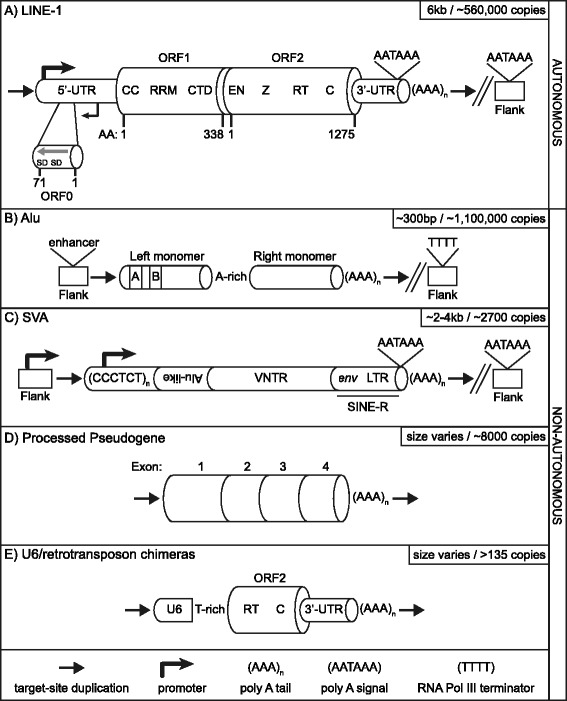
“A full-length LINE-1 element is 6-kb in length, containing two sense open reading frames (ORF1 and ORF2) that are flanked by the 5’-untranslated region (5’-UTR) functioning as the promoter and the 3’UTR containing the poly A signal (15, 16).”
BackgroundOsburn, S. C., Mesquita, P. H. C., Neal, F. K., Rumbley, M. N., Holmes, M. T., Ruple, B. A., Mobley, C. B., Brown, M. D., McCullough, D. J., Kavazis, A. N., et al. (2022) · American Journal of Physiology-Cell Physiology · doi:10.1152/ajpcell.00234.2022 · Cited by 11
Alesi, V., Genovese, S., Lepri, F. R., Catino, G., Loddo, S., Orlando, V., Tommaso, S. D., Morgia, A., Martucci, L., Donato, M. D., et al. (2023) · Biomolecules · doi:10.3390/biom13050725 · Cited by 13
Corradi, C., Vilar, J. B., Buzatto, V. C., de Souza, T. A., Castro, L. P., Munford, V., Vecchi, R. D., Galante, P. A. F., do Rego, F. O. R., Miller, T. L. A., et al. (2023) · Carcinogenesis · doi:10.1093/carcin/bgad030 · Cited by 13
Xu, B., Li, X., Zhang, S., Lian, M., Huang, W., Zhang, Y., Wang, Y., & Huang, Z. (2023) · Mobile DNA · doi:10.1186/s13100-023-00300-x · Cited by 13
“…et al. think many somatic insertions of L1 may be benign, but under the onslaught of cancer priming and other types of mutations (including deletions), these insertions have the potential to optimize different cellular networks, or to seed new adaptations full-length during cancer progression [7].”
BackgroundKawakami, R., Hiraide, T., Watanabe, K., Miyamoto, S., Hira, K., Komatsu, K., Ishigaki, H., Sakaguchi, K., Maekawa, M., Yamashita, K., et al. (2023) · Journal of Human Genetics · doi:10.1038/s10038-023-01211-8 · Cited by 14
“The elements are transcribed itself into RNA, reverse transcripted into cDNA, and reinserted into new genomic locations [34].”
Wang, Z., McSwiggin, H., Newkirk, S. J., Wang, Y., Oliver, D., Tang, C., Lee, S., Wang, S., Yuan, S., Zheng, H., et al. (2019) · Mobile DNA · doi:10.1186/s13100-019-0162-7 · Cited by 15
Simpson, J., Kozak, C. A., & Boso, G. (2022) · PLoS Genetics · doi:10.1371/journal.pgen.1010458 · Cited by 13
“LINE-1 retrotransposons are autonomous non-LTR elements that encode an RNA binding protein and a protein with reverse transcriptase (RTase) and endonuclease function [62].”
BackgroundThe 5′ truncation of retrotransposon L1: a process of genome integrity
Levin, H. L., Lee, S., & Anand, A. (2025) · Genetics · doi:10.1093/genetics/iyaf202 · Cited by 13
Is OLP potentially malignant? A clue from ZNF582 methylation
Chiu, Y., Su, Y., Yang, C., Liu, C., Chen, Y., Cheng, H., Wu, C., Chen, P., Lee, Y., Chen, Y., et al. (2021) · Oral Diseases · doi:10.1111/odi.14120 · Cited by 12
Strand asymmetries across genomic processes
Moeckel, C. M., Zaravinos, A., & Georgakopoulos‐Soares, I. (2023) · Computational and Structural Biotechnology Journal · doi:10.1016/j.csbj.2023.03.007 · Cited by 15
Metastable epialleles in humans
Derakhshan, M., Kessler, N. J., Hellenthal, G., & Silver, M. J. (2023) · Trends in Genetics · doi:10.1016/j.tig.2023.09.007 · Cited by 12
Navigating the brain and aging: exploring the impact of transposable elements from health to disease
Breton, A. L., Bettencourt, M. P., & Gendrel, A.-V. (2024) · Frontiers in Cell and Developmental Biology · doi:10.3389/fcell.2024.1357576 · Cited by 13
“In fact, germline insertions of TEs have been widely linked with genetic diseases (Hancks and Kazazian, 2016).”
BackgroundMasson, E., Maestri, S., Bordeau, V., Cooper, D. N., Férec, C., & Chen, J. (2024) · The American Journal of Human Genetics · doi:10.1016/j.ajhg.2024.08.016 · Cited by 17
Involvement of Conserved Amino Acids in the C-Terminal Region of LINE-1 ORF2p in Retrotransposition
Christian, C. M., Sokolowski, M. J., deHaro, D. L., Kines, K. J., & Belancio, V. P. (2017) · Genetics · doi:10.1534/genetics.116.191403 · Cited by 12
“The less-abundant SVA is also active within the human genome (reviewed in Hancks and Kazazian 2016).”
BackgroundBrett, M., Korovesis, G., Lai, A., Lim, E. C. P., & Tan, E. (2017) · Journal of Human Genetics · doi:10.1038/jhg.2017.32 · Cited by 13
Casanova, M., & Konkel, M. K. (2020) · BioEssays · doi:10.1002/bies.201900173 · Cited by 12
Jump around: transposons in and out of the laboratory
Kumar, A. (2020) · F1000Research · doi:10.12688/f1000research.21018.1 · Cited by 13
SINE Insertion in the Intron of Pig GHR May Decrease Its Expression by Acting as a Repressor
Chen, C., Zheng, Y., Wang, M., Muráni, E., D’Alessandro, E., Moawad, A. S., Wang, X., Wimmers, K., & Song, C. (2021) · Animals · doi:10.3390/ani11071871 · Cited by 12
“More than 100 cases of retrotransposon-mediated insertions causing human genetic diseases have been confirmed [24].”
BackgroundHarper, J. C., Aittomäki, K., Borry, P., Cornel, M. C., de Wert, G. M. W. R., Dondorp, W., Geraedts, J. P. M., Gianaroli, L., Ketterson, K., Liebaers, I., et al. (2017) · Human Reproduction Open · doi:10.1093/hropen/hox015 · Cited by 13
A novel SVA retrotransposon insertion in the CHM gene results in loss of REP-1 causing choroideremia
Webb-Jones, K., Radziwon, A., Birch, D. G., & MacDonald, I. M. (2020) · Ophthalmic Genetics · doi:10.1080/13816810.2020.1768557 · Cited by 12
“This type of loss-of-function mutation is likely a rare event, although pathogenic retrotransposon insertions have been recently reported more frequently (18).”
BackgroundInter-Strain Epigenomic Profiling Reveals a Candidate IAP Master Copy in C3H Mice
Rebollo, R., Ferrarini, M. G., Gagnier, L., Zhang, Y., Ferraj, A., Beck, C. R., Lorincz, M. C., & Mager, D. L. (2020) · Viruses · doi:10.3390/v12070783 · Cited by 12
Muñoz-López, M., Vilar, R., Philippe, C., Rahbari, R., Richardson, S. R., Andrés-Antón, M., Widmann, T. J., Cano, D., Cortés, J. L., Rubio-Roldán, A., et al. (2019) · bioRxiv (Cold Spring Harbor Laboratory) · doi:10.1101/522623 · Cited by 13
Epigenomic differences in the human and chimpanzee genomes are associated with structural variation
Zhuo, X., Du, A. Y., Pehrsson, E. C., Li, D., & Wang, T. (2020) · Genome Research · doi:10.1101/gr.263491.120 · Cited by 15
“SVA proliferated and diverged in the human genome in a similar fashion as the amplification of L1 (Khan et al. 2006; Hancks and Kazazian 2016).”
ResultCRISPR screens in mechanism and target discovery for AML
Tian, L., Liu, D., Guan, Z., Zhao, X., Li, S., Wang, X., Hou, R., Zheng, J., Cao, J., & Shi, M. (2024) · Heliyon · doi:10.1016/j.heliyon.2024.e29382 · Cited by 13
“Interestingly, unlike previous reports [25], this study revealed the tumor suppressor role of L1 retrotransposons for the first time.”
ResultBychkov, I. O., Kuznetsova, A., Baydakova, G., Gorobets, L. V., Kenis, V. M., Dimitrieva, A. J., Filatova, A. Y., Tabakov, V. Y., Skoblov, M. Y., & Zakharova, E. Y. (2022) · npj Genomic Medicine · doi:10.1038/s41525-022-00315-y · Cited by 11
Nguyen, P. Q., Huecas, S., Asif-Laidin, A., Plaza-Pegueroles, A., Capuzzi, B., Palmic, N., Conesa, C., Acker, J., Reguera, J., Lesage, P., et al. (2023) · Nature Communications · doi:10.1038/s41467-023-37109-4 · Cited by 17
“C11-Linker (37-63) C11-Nt (1-36) C160-Jaw C128-Lobe C160 C128”
MethodInfluentialContribution and therapeutic implications of retroelement insertions in ataxia telangiectasia
Zhao, B., Nguyen, M. A., Woo, S., Kim, J., Yu, T. W., & Lee, E. A. (2023) · The American Journal of Human Genetics · doi:10.1016/j.ajhg.2023.09.008 · Cited by 11
Evolutionary insights from profiling LINE-1 activity at allelic resolution in a single human genome
Yang, L., Metzger, G. A., Valle, R. P. D., Rubalcaba, D. D., & McLaughlin, R. N. (2023) · The EMBO Journal · doi:10.1038/s44318-023-00007-y · Cited by 13
“LINE-1s are the only group of autonomous elements with ongoing detectable activity in human genomes (Lander et al, 2001), and as a result of their mutagenic potential, LINE-1s contribute to a slew of human diseases (Hancks and Kazazian, 2016; Payer and Burns, 2019).”
Kaul, T. K., Morales, M. E., Smither, E., Baddoo, M., Belancio, V. P., & Deininger, P. L. (2019) · Journal of Visualized Experiments · doi:10.3791/59771 · Cited by 11
Construction of JRG (Japanese reference genome) with single-molecule real-time sequencing
Nagasaki, M., Kuroki, Y., Shibata, T. F., Katsuoka, F., Mimori, T., Kawai, Y., Minegishi, N., Hozawa, A., Kuriyama, S., Suzuki, Y., et al. (2019) · Human Genome Variation · doi:10.1038/s41439-019-0057-7 · Cited by 11
Tristán-Ramos, P., Morell, S., Sánchez, L., Toledo, B., Garcia-Perez, J. L., & Heras, S. R. (2020) · Philosophical Transactions of the Royal Society B Biological Sciences · doi:10.1098/rstb.2019.0346 · Cited by 11
Bacterial Group II Intron Genomic Neighborhoods Reflect Survival Strategies: Hiding and Hijacking
Waldern, J. M., Schiraldi, N. J., Belfort, M., & Novikova, O. (2020) · Molecular Biology and Evolution · doi:10.1093/molbev/msaa055 · Cited by 11
Zeggar, H. R., How‐Kit, A., Daunay, A., Bettaïeb, I., Sahbatou, M., Rahal, K., Adouni, O., Gammoudi, A., Douik, H., Deleuze, J., et al. (2020) · Oncology Letters · doi:10.3892/ol.2020.11745 · Cited by 11
“A previous study suggests that the hypomethylation of these repeats elements might contribute to a significant portion of the development and progression of cancer by activating them (41).”
BackgroundKuroki, R., Murata, Y., Fuke, S., Nakachi, Y., Nakashima, J., Kujoth, G. C., Prolla, T. A., Bundo, M., Kato, T., & Iwamoto, K. (2020) · Frontiers in Genetics · doi:10.3389/fgene.2020.519206 · Cited by 12
“ORF1 encodes an RNA-binding protein (Holmes et al., 1992; Frontiers in Genetics | www.frontiersin.org 2 September 2020 | Volume 11 | Article 519206 Hohjoh and Singer, 1997), and ORF2 encodes the protein with reverse transcriptase and endonuclease activity (Mathias et al., 1991; Feng et al., 1996).”
BackgroundInsertion of an SVA element in MSH2 as a novel cause of Lynch syndrome
Yang, C., Li, Y., Trottier, M., Farrell, M. P., Rai, V., Salo‐Mullen, E. E., Gallagher, D. J., Stadler, Z. K., van der Klift, H. M., & Zhang, L. (2021) · Genes Chromosomes and Cancer · doi:10.1002/gcc.22950 · Cited by 11
“Approximately 124 retrotransposon insertions associated with human disease have been previously reported.(12) In this study, we report an insertion of an SVA element at c.”
BackgroundFablet, M., Jacquet, A., Rebollo, R., Haudry, A., Rey, C., Salces-Ortiz, J., Bajad, P., Burlet, N., Jantsch, M. F., Guerreiro, M. P. G., et al. (2019) · G3 Genes Genomes Genetics · doi:10.1534/g3.118.200789 · Cited by 12
Approaches for studying epigenetic aspects of the human genome
Harutyunyan, T. A., & Hovhannisyan, G. G. (2021) · Elsevier eBooks · doi:10.1016/b978-0-12-823579-9.00008-4 · Cited by 10
Structure and Methyl-lysine Binding Selectivity of the HUSH Complex Subunit MPP8
Nikolopoulos, N., Oda, S.-I., Prigozhin, D. M., & Modis, Y. (2024) · Journal of Molecular Biology · doi:10.1016/j.jmb.2024.168890 · Cited by 11
“Journal of Molecular Biology 437 (2025) 168890”
Li, Y., Liu, Y., Xie, Y., Wang, Y., Wang, J., Wang, H., Lin, X., & Xie, D. (2025) · BMC Cancer · doi:10.1186/s12885-025-13888-5 · Cited by 13
“Although TEs are generally epigenetically silenced in most tissues, a growing number of studies have shown that TE reactivation and insertion can cause human genetic disease [2].”
Differential expressions of L1-chimeric transcripts in normal and matched-cancer tissues
Kim, S., Shin, W., Lee, Y., Mun, S., & Han, K. (2020) · Analytical Biochemistry · doi:10.1016/j.ab.2020.113769 · Cited by 11
Xin, H., Wang, Y., Zhang, W., Bao, Y., Neumann, P., Ning, Y., Zhang, T., Wu, Y., Jiang, N., Jiang, J., et al. (2024) · PLANT PHYSIOLOGY · doi:10.1093/plphys/kiae214 · Cited by 10
“In contrast, most LINE elements are truncated at the 5 ′ end upon insertion, representing nonautonomous elements ( Hancks and Kazazian 2016).”
BackgroundAdvances in PIWI-piRNA function in female reproduction in mammals
Lv, X., Zhang, H., & Wu, L. (2024) · Acta Biochimica et Biophysica Sinica · doi:10.3724/abbs.2024195 · Cited by 10
“…predominantly comprising rodent - specific intracisternal A particle (IAP) and MYSERV lineage autonomous active retrotransposons that expanded during hamster evolution [24], whereas L1 and Alu lineage retrotransposons are the predominant disease - causing insertion elements in primates [2,87–91].”
Mobile element insertions and associated structural variants in longitudinal breast cancer samples
Steely, C. J., Russell, K. L., Feusier, J. E., Qiao, Y., Tavtigian, S. V., Marth, G., & Jorde, L. B. (2021) · Scientific Reports · doi:10.1038/s41598-021-92444-0 · Cited by 11
Merkerová, M. D., & Krejčík, Z. (2021) · International Journal of Oncology · doi:10.3892/ijo.2021.5285 · Cited by 10
Shen, S. S., Nanda, H. A., Aliferis, C., & Langlois, R. A. (2022) · Scientific Reports · doi:10.1038/s41598-022-06196-6 · Cited by 11
Retrotransposon insertions associated with risk of neurologic and psychiatric diseases
Ahn, H. W., Worman, Z., Lechsinska, A., Payer, L. M., Wang, T., Malik, N., Li, W., Burns, K. H., Nath, A., & Levin, H. L. (2022) · EMBO Reports · doi:10.15252/embr.202255197 · Cited by 10
“These active elements have resulted in more than 124 cases of human disease (Hancks & Kazazian, 2016; Kazazian & Moran, 2017).”
Séquences provenant d’éléments génétiques mobiles, face cachée du génome humain
Médina, J., & Perron, H. (2017) · médecine/sciences · doi:10.1051/medsci/20173302010 · Cited by 10
Human transposon insertion profiling by sequencing (TIPseq) to map LINE-1 insertions in single cells
McKerrow, W., Tang, Z., Steranka, J. P., Payer, L. M., Boeke, J. D., Keefe, D. L., Fenyö, D., Burns, K. H., & Liu, C. (2020) · Philosophical Transactions of the Royal Society B Biological Sciences · doi:10.1098/rstb.2019.0335 · Cited by 10
Furano, A. V., Jones, C. E., Periwal, V., Callahan, K. E., Walser, J., & Cook, P. R. (2020) · PLoS Genetics · doi:10.1371/journal.pgen.1008991 · Cited by 11
“A—Generic L1 retrotransposon [1, 43]: 5’ UTR (untranslated regulatory region); ORF1 (open reading frame1) with coiled coil domain (CC), which mediates trimerization of ORF1p necessary for high affinity nucleic acid binding and chaperone activity [40, 44–46]; ORF2, encodes the L1 replicase with endonuclease (EN) and re…”
Multicolor Whole-Genome Mapping in Nanochannels for Genetic Analysis
Uppuluri, L., Jadhav, T., Wang, Y., & Xiao, M. (2021) · Analytical Chemistry · doi:10.1021/acs.analchem.1c01373 · Cited by 11
Developmental regulators moonlighting as transposons defense factors
Tan, K., & Wilkinson, M. (2023) · Andrology · doi:10.1111/andr.13427 · Cited by 9
Li, X., Lu, K., Chen, X., Tu, K., & Xie, D. (2023) · Communications Biology · doi:10.1038/s42003-023-05349-1 · Cited by 9
“TE insertions have attracted much attention in the etiologic studies of different cancers due to their potential to disrupt gene functions 34 – 38 .”
Epigenetic Modifiers in Cancer Metastasis
Hu, D., Zhao, T., Xu, C., Pan, X., Zhou, Z., & Wang, S. (2024) · Biomolecules · doi:10.3390/biom14080916 · Cited by 13
Giassa, I., & Alexiou, P. (2021) · Biology · doi:10.3390/biology10090896 · Cited by 11
Savage, A. L., Iacoangeli, A., Schumann, G. G., Rubio-Roldán, A., Garcia-Perez, J. L., Khleifat, A. A., Kõks, S., Bubb, V. J., Al‐Chalabi, A., & Quinn, J. P. (2022) · Gene · doi:10.1016/j.gene.2022.146799 · Cited by 10
Advances in transposable elements: from mechanisms to applications in mammalian genomics
Han, M., Perkins, M. H., Novaes, L. S., Xu, T., & Chang, H. (2023) · Frontiers in Genetics · doi:10.3389/fgene.2023.1290146 · Cited by 10
“Over 120 TE-mediated germline insertions have been linked to human genetic diseases, with Alu elements accounting for over 60% of these cases and LINE-1 elements contributing to nearly 24% of the total instances (Hancks and Kazazian, 2016).”
BackgroundInsights into Calpain Activation and Rho-ROCK Signaling in Parkinson’s Disease and Aging
Gathings, A., Zaman, V., Banik, N. L., & Haque, A. (2024) · Biomedicines · doi:10.3390/biomedicines12051074 · Cited by 9
L1 Regulation in Mouse and Human Germ Cells
Newkirk, S. J., & An, W. (2017) · Springer eBooks · doi:10.1007/978-3-319-48344-3_2 · Cited by 10
Vaché, C., Torriano, S., Faugère, V., Erkilic, N., Baux, D., García‐García, G., Hamel, C., Meunier, I., Zanlonghi, X., Koenig, M., et al. (2018) · Human Mutation · doi:10.1002/humu.23671 · Cited by 9
Ruggiero, R. P., & Boissinot, S. (2020) · Mobile DNA · doi:10.1186/s13100-020-00209-9 · Cited by 10
Zeng, L., Wang, M., Zhou, J., Wang, X., Zhang, Y., & Su, P. (2022) · Gene · doi:10.1016/j.gene.2022.146229 · Cited by 9
SINE retrotransposons import polyadenylation signals to 3’UTRs in dog (Canis familiaris)
Choi, J. D., Pinto, L. A. D., & Sutter, N. B. (2025) · Mobile DNA · doi:10.1186/s13100-024-00338-5 · Cited by 12
“They can become an exon (“exonization”), alter mRNA splicing, or cause mRNA to be retained in the nucleus or destroyed when SINE or LINE pairs are close and inverted [27,28].”
BackgroundInsights into the RNA binding mechanism of human L1-ORF1p: a molecular dynamics study
Rajagopalan, M., Balasubramanian, S., & Ramaswamy, A. (2017) · Molecular BioSystems · doi:10.1039/c7mb00358g · Cited by 9
ChAHP2 and ChAHP control diverse retrotransposons by complementary activities
Ahel, J., Pandey, A., Schwaiger, M., Mohn, F., Basters, A., Kempf, G., Andriollo, A., Kaaij, L. J. T., Heß, D., & Bühler, M. (2024) · Genes & Development · doi:10.1101/gad.351769.124 · Cited by 11
“…of transposon recognition and silencing pathways is essential because novel insertions of retrotransposons can induce mutations causing a variety of heritable and somatic diseases (Teugels et al. 2005; Hancks and Kazazian 2016; Gonçalves et al. 2017; Qian et al. 2017; Aneichyk et al. 2018).”
Pfaff, A. L., & Kõks, S. (2025) · Experimental Biology and Medicine · doi:10.3389/ebm.2025.10575 · Cited by 8
“There are at least 29 instances of disease caused by an L1 insertion, generally through loss-of-function mutations or aberrant splicing [4].”
Štangar, A., Kovač, J., Šket, R., Tesovnik, T., Zajec, A., Kern, B. Č., Bizjan, B. J., Battelino, T., & Dovč, K. (2023) · International Journal of Molecular Sciences · doi:10.3390/ijms24043104 · Cited by 9
“Non-autonomous elements, on the other hand, are generally noncoding but contain sequence features that are recognized by autonomous retrotransposon proteins and enable their trans-mobilization [17,36].”
BackgroundInfluentialHorizontal Transposon Transfer and Their Ecological Drivers: The Case of Flower-breeding Drosophila
Carvalho, T. L., Cordeiro, J. D. O., Vizentin‐Bugoni, J., Fonseca, P. M., Loreto, É. L. S., & Robe, L. J. (2023) · Genome Biology and Evolution · doi:10.1093/gbe/evad068 · Cited by 9
“In fact, many studies have reported negative consequences of TEs on the genomes of their hosts, especially regarding human diseases (Lee et al. 2012; Hancks and Kazazian 2016).”
BackgroundLINE-1 Methylation Status in Canine Splenic Hemangiosarcoma Tissue and Cell-Free DNA
Sato, H., Tagawa, M., Watanabe, K.-I., Kobayashi, Y., Tomihari, M., & Uemura, A. (2023) · Animals · doi:10.3390/ani13182987 · Cited by 8
“…could be a potential biomarker for splenic hemangiosarcoma; therefore, further research is required to establish the true clinical value of LINE-1 methylation for canine hemangiosarcoma assessment and to clarify the relationship between epigenetic changes and hemangiosarcoma development.”
BackgroundYano, N., Chong, P. F., Kojima, K. K., Miyoshi, T., Luqman-Fatah, A., Kimura, Y., Kora, K., Kayaki, T., Maizuru, K., Hayashi, T., et al. (2024) · Journal of Medical Genetics · doi:10.1136/jmg-2024-110056 · Cited by 8
Solberg, T., Kobayashi‐Ishihara, M., & Siomi, H. (2024) · Annals of the New York Academy of Sciences · doi:10.1111/nyas.15260 · Cited by 9
Ball, H. C., ANSARI, M. Y. K., Ahmad, N., Novak, K. M., & Haqqi, T. M. (2020) · Connective Tissue Research · doi:10.1080/03008207.2020.1828380 · Cited by 8
Patterns of selection in the evolution of a transposable element
Dazenière, J., Bousios, A., & Eyre‐Walker, A. (2022) · G3 Genes Genomes Genetics · doi:10.1093/g3journal/jkac056 · Cited by 10
Retrotransposon insertion as a novel mutational cause of spinal muscular atrophy
Vézain, M., Thauvin‐Robinet, C., Vial, Y., Coutant, S., Drunat, S., Urtizberea, J. A., Rolland, A., Jacquin, A., Fehrenbach, S., Nicolas, G., et al. (2022) · Human Genetics · doi:10.1007/s00439-022-02473-6 · Cited by 8
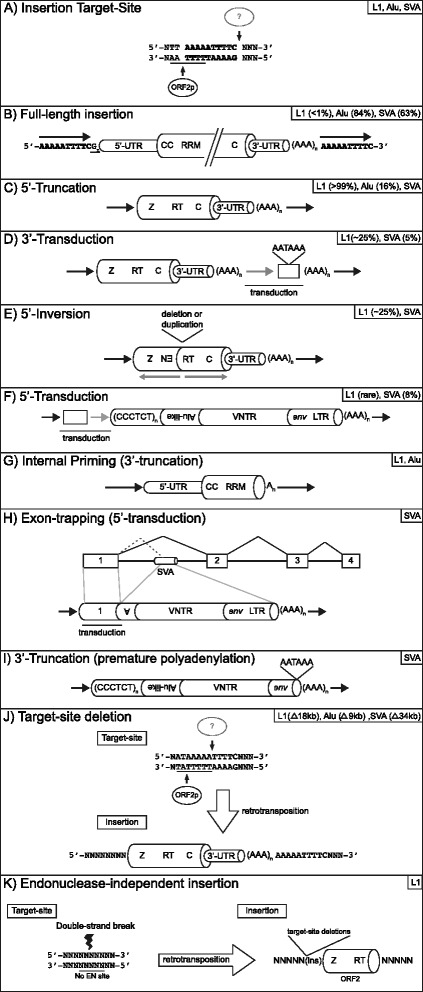
“They can also cause diseases through a variety of mechanisms (Hancks and Kazazian 2016; Kazazian and Moran 2017; Payer and Burns 2019; Table 1): (i) SVA element insertions may lead to target-site deletions (Vogt et al.”
BackgroundInfluentialRibonucleoprotein Granules: Between Stress and Transposable Elements
Moon, S., & Namkoong, S. (2023) · Biomolecules · doi:10.3390/biom13071027 · Cited by 8
Zhang, J., Tang, J., Li, G., Li, N., Wang, J., Yao, R., & Yu, T. (2023) · Journal of Thrombosis and Haemostasis · doi:10.1016/j.jtha.2023.08.012 · Cited by 8
Devine, S. E. (2023) · Genes · doi:10.3390/genes14101923 · Cited by 9
“Germline MEIs have been implicated in several dozen human diseases, including hemophilia [40], neurofibromatosis [41], and Duchenne muscular dystrophy [42] (reviewed in [43,44]).”
BackgroundMethodCharacteristics and expression of lncRNA and transposable elements in Drosophila aneuploidy
Zhang, S., Wang, R., Zhu, X., Zhang, L., Liu, X., & Sun, L. (2023) · iScience · doi:10.1016/j.isci.2023.108494 · Cited by 11
Jourdy, Y., Chatron, N., Frétigny, M., Zawadzki, C., Lienhart, A., Stieltjes, N., Rohrlich, P., Thauvin‐Robinet, C., Volot, F. G., Hamida, Y. F., et al. (2024) · Journal of Thrombosis and Haemostasis · doi:10.1016/j.jtha.2024.03.002 · Cited by 9
Kuan, T., Lin, P.-C., Yang, S., Lin, C., Lan, Y., Lin, H., Liang, W.-Y., Chen, W.-S., Lin, J.-K., Jiang, J., et al. (2018) · PLoS ONE · doi:10.1371/journal.pone.0197681 · Cited by 8
Multiplex structural variant detection by whole-genome mapping and nanopore sequencing
Uppuluri, L., Wang, Y., YOUNG, E. A., Wong, J. S., Abid, H. Z., & Xiao, M. (2022) · Scientific Reports · doi:10.1038/s41598-022-10483-7 · Cited by 8
“With our approach, we were able to detect a breakpoint of LINE-1 insertions, which are thought to be variably inserted among individuals and are associated with multiple genetic conditions and various types of cancers 26 .”
MethodRetrotransposable genetic elements causing neutrophil defects
Roos, D., & de Boer, M. (2018) · European Journal of Clinical Investigation · doi:10.1111/eci.12953 · Cited by 8
“At present, at least 124 cases of human disease caused by retrotransposition have been identified.(2) Often, it has been possible to trace the source elements of the insertions, but rarely the time of insertion through family studies.”
BackgroundInfluentialSystematics for types and effects of DNA variations
Vihinen, M. (2018) · BMC Genomics · doi:10.1186/s12864-018-5262-0 · Cited by 12
“Alu element is the most common form of SINE and involved in numerous human diseases [98].”
BackgroundNazaryan‐Petersen, L., Oliveira, I. R., Mehrjouy, M. M., Mendez, J. M. M., Bak, M., Bugge, M., Kalscheuer, V. M., Bache, I., Hancks, D. C., & Tommerup, N. (2019) · Human Mutation · doi:10.1002/humu.23775 · Cited by 8
Self-citationLannes, L., Furman, C. M., Hickman, A. B., & Dyda, F. (2023) · Nature Communications · doi:10.1038/s41467-023-40210-3 · Cited by 8
“TEs have been found in all eukaryotickingdomsasboth active and inactive forms and can make up a large portion of eukaryotic genomes 1 .”
InfluentialLocus-specific LINE-1 expression in clinical ovarian cancer specimens at the single-cell level
Perkiö, A., Pradhan, B., Genç, F., Pirttikoski, A., Pikkusaari, S., Erkan, E. P., Falco, M. M., Huhtinen, K., Narva, S., Hynninen, J., et al. (2024) · Scientific Reports · doi:10.1038/s41598-024-54113-w · Cited by 8
Cancer fusion transcripts with human non-coding RNAs
Mohammad, T., Zolotovskaia, M., Suntsova, M., & Buzdin, A. A. (2024) · Frontiers in Oncology · doi:10.3389/fonc.2024.1415801 · Cited by 9
“In addition, active families of human transposable elements can fuse to the parts of human genes, thus causing DNA transduction or exon shuf fl ing events (24 – 26).”
BackgroundWalker, K., Kalra, D., Lowdon, R. F., Chen, G., Molik, D. C., Soto, D. C., Dabbaghie, F., Khleifat, A. A., Mahmoud, M., Paulin, L. F., et al. (2022) · F1000Research · doi:10.12688/f1000research.110194.1 · Cited by 8
Fröhlich, A., Hughes, L. S., Middlehurst, B., Pfaff, A. L., Bubb, V. J., Kõks, S., & Quinn, J. P. (2023) · Frontiers in Neurology · doi:10.3389/fneur.2023.1273036 · Cited by 8
“A subset of elements belonging to the latter class still remain active in the human genome (16), this includes the long interspersed nuclear elements (LINEs), Alu , and SINE-VNTR-Alu (SVA) elements, which have demonstrated not only to be drivers of genetic diversity by contributing to genome…”
BackgroundPrete, R. D., Nesta, D., Triggiano, F., Lorusso, M., Garzone, S., Vitulano, L., Denicolò, S., Indraccolo, F., Mastria, M., Ronga, L., et al. (2024) · Diagnostics · doi:10.3390/diagnostics14090968 · Cited by 8
“…the LINE-1 methylation status may be used as a non-invasive early diagnosis in women at risk of cervical cancer since several lines of evidence showed a higher percentage of differential L1 expression in cancerous and precancerous samples with HPV co-infection compared to normal tissues [73–75].”
BackgroundDefective modulation of LINE-1 retrotransposition by cancer-associated SAMHD1 mutants
Gao, W., Li, G., Bian, X., Rui, Y., Zhai, C., Liu, P., Su, J., Wang, H., Zhu, C., Du, Y., et al. (2019) · Biochemical and Biophysical Research Communications · doi:10.1016/j.bbrc.2019.08.155 · Cited by 8
Pinto, A., Cunha, C., Chaves, R., Butchbach, M. E. R., & Adega, F. (2022) · Biology · doi:10.3390/biology11060824 · Cited by 8
“3′UTR retrotransposon insertions reduce mRNA expression [1,67,79].”
BackgroundA novel role of TRIM28 B box domain in L1 retrotransposition and ORF2p-mediated cDNA synthesis
Du, Q., Stow, E. C., LaCoste, D., Freeman, B., Baddoo, M., Shareef, A. M., Miller, K. M., & Belancio, V. P. (2023) · Nucleic Acids Research · doi:10.1093/nar/gkad247 · Cited by 9
The epigenetic regulation of HsMar1, a human DNA transposon
Renault, S., Genty, M., Gabori, A., Boisneau, C., Esnault, C., de Bernonville, T. D., & Augé‐Gouillou, C. (2019) · BMC Genetics · doi:10.1186/s12863-019-0719-y · Cited by 7
der Mude, A. V. (2020) · Journal of Theoretical Biology · doi:10.1016/j.jtbi.2020.110205 · Cited by 7
LINE-1-Mediated AluYa5 Insertion Underlying Complete Autosomal Recessive IFN-γR1 Deficiency
Rosain, J., Deswarte, C., Hancıoğlu, G., Oleaga‐Quintas, C., Kutluğ, Ş., Kartal, İ., Kuzu, I., Toullec, L., Tusseau, M., Casanova, J., et al. (2019) · Journal of Clinical Immunology · doi:10.1007/s10875-019-00667-8 · Cited by 7
Jain, D. S., Chu, C., Alver, B., Lee, S., Lee, E. A., & Park, P. J. (2020) · Bioinformatics · doi:10.1093/bioinformatics/btaa923 · Cited by 8
Lesmana, H. L., Dyer, L. M., Li, X., Denton, J., Griffiths, J., Chonat, S., Seu, K. G., Heeney, M. M., Zhang, K., Hopkin, R. J., et al. (2018) · Human Mutation · doi:10.1002/humu.23392 · Cited by 7
Shaw, A., Craig, J. M., Amiri, H., Kim, J., Upton, H. E., Pimentel, S. C., Huang, J. R., Marqusee, S., Collins, K., Gundlach, J. H., et al. (2023) · bioRxiv (Cold Spring Harbor Laboratory) · doi:10.1101/2023.04.05.535757 · Cited by 7
“Aberrant activity of non-LTR retroelements in humans has been associated with cancer, neuropathology, and autoimmune conditions 13 .”
A Novel Alu Element Insertion in ATM Induces Exon Skipping in Suspected HBOC Patients
Klein, J., Allister, A. B., Schmidt, G., Otto, A., Heinecke, K., Bax-Knoche, J., Beger, C., Becker, S., Bartels, S., Ripperger, T., et al. (2023) · Human Mutation · doi:10.1155/2023/6623515 · Cited by 6
“The insertion of new ME copies may have serious consequences when disrupting protein-coding genes or functional elements [16].”
Background
Metadata
- Authors
- Hancks, D. C., & Kazazian, H. H.
- Affiliations
- University of Utah (US)
- Johns Hopkins University (US)
- Corresponding author
- Hancks, Dustin C.
- Kazazian, Haig H.
- ORCID
- Hancks, Dustin C.
- Venue
- Mobile DNA
- Published
- 2016-05-06
- Volume
- 7
- Issue
- 1
- Pages
- 9-9
- ISSN
- 1759-8753 (ISSN-L)
- PMC
- PMC4859970
- OpenAlex
- W2347011735
- Cited by
- 670
- References
- 325
- Citations by year
- 2026: 39 · 2025: 46 · 2024: 56 · 2023: 81 · 2022: 78 · 2021: 80 · 2020: 92 · 2019: 76 · 2018: 55 · 2017: 51 · 2016: 12
- FWCI
- 6.28
- Type
- journal article
- Language
- en
- Open access
- gold
- doi.org
- Licence
- cc-by
- creativecommons.org/licenses/by/4.0/ (tdm)
- Locations
- Mobile DNA (publishedVersion, cc-by)
- PubMed Central (publishedVersion, cc-by)
- PubMed (publishedVersion)
- Funders
- American Cancer Society (125132-PF-13-371-01-MPC)
- Topics
- Life Sciences › Biochemistry, Genetics and Molecular Biology › Genetics › Chromosomal and Genetic Variations
- Life Sciences › Biochemistry, Genetics and Molecular Biology › Genetics › Genomic variations and chromosomal abnormalities
- Life Sciences › Biochemistry, Genetics and Molecular Biology › Genetics › Genome Rearrangement Algorithms
- Keywords
- LINE-1, retrotransposons, transposable elements, copy number variation, genetic disorders, Alu elements, SVA elements, retrotransposition, human disease genetics, genome evolution
About these checks
Registry, retraction, Cites and statistics results are computed, not judged, with one exception: a printed reference that no index lists is read once by a model before it counts as a citation error. Claims are extracted by a model and kept only when their quote appears verbatim in the text; each cited source is then checked, with a model’s help, for whether it says what the claim relies on. Those verdicts can be wrong — read the claim’s quote and the cited source before relying on one.
Statistics and arithmetic are recomputed, not judged.
Confidence bands are shown only for fields calibrated on our annotated test set. None is calibrated yet, so no band is shown.
What counts as a claim ›How we measure confidence ›How we check this ›
Are you an author, or do you see a problem with this page? Request a review
Data sources
Bibliographic data: Semantic Scholar, OpenAlex, Crossref.
Contains information from the Semantic Scholar Academic Graph Datasets, made available under the ODC Attribution License (ODC-BY 1.0).
Semantic Scholar’s data is described in: Kinney, R., et al. (2023). The Semantic Scholar Open Data Platform. arXiv:2301.10140.
