

Roles for retrotransposon insertions in human disease
Open accessThe DOI matches its Crossref record; 325 of the 325 references it cites were found in a registry or an index.
Abstract
Over evolutionary time, the dynamic nature of a genome is driven, in part, by the activity of transposable elements (TE) such as retrotransposons. On a shorter time scale it has been established that new TE insertions can result in single-gene disease in an individual. In humans, the non-LTR retrotransposon Long INterspersed Element-1 (LINE-1 or L1) is the only active autonomous TE. In addition to mobilizing its own RNA to new genomic locations via a "copy-and-paste" mechanism, LINE-1 is able to retrotranspose other RNAs including Alu, SVA, and occasionally cellular RNAs. To date in humans, 124 LINE-1-mediated insertions which result in genetic diseases have been reported. Disease causing LINE-1 insertions have provided a wealth of insight and the foundation for valuable tools to study these genomic parasites. In this review, we provide an overview of LINE-1 biology followed by highlights from new reports of LINE-1-mediated genetic disease in humans.
Overview
The claims and statistics of this paper haven’t been checked yet.
Free: it reads the open-access text and checks the first 5 claims that cite a source we can check. Create a free account to check every claim.
Integrity signals
Registry
Cites
Statistics
Figures
Verification
Claims the paper makes
The claims and statistics of this paper haven’t been checked yet.
Free: it reads the open-access text and checks the first 5 claims that cite a source we can check. Create a free account to check every claim.
Claims other papers make about this one
Each is checked against this paper’s own text: does it say what the citing paper says it does?
The source backs part of the claim, not all of it — or backs it for a different population, condition or comparison.
In the citing paper
“Over 120 L1-mediated germline insertions have been linked to cases of human genetic diseases78.”
From The role of retrotransposable elements in ageing and age-associated diseases (2021) · cites this paper as [78]
Experimental — accuracy not yet measured
Self-check
Percentages, sums and reported differences re-computed from the paper’s own numbers.
The self-check needs the paper’s full text.
Citations
Cites
Items 201–325 of 325
p53 responsive elements in human retrotransposons
Harris, C. R., DeWan, A., Zupnick, A., Normart, R., Gabriel, A., Prives, C., Levine, A. J., & Hoh, J. (2009) · Oncogene · doi:10.1038/onc.2009.246 · Cited by 102 · cited 1×
“Several transcription factors have been implicated in LINE-1 transcription including ying yang 1 (YY1) [55], T-cell factor/lymphoid enhancer factor (TCF/LEF) [56], p53 [57], and runt related transcription factor 3 (RUNX3) [58].”
BackgroundMany LINE1 elements contribute to the transcriptome of human somatic cells
Rangwala, S. H., Zhang, L., & Kazazian, H. H. (2009) · Genome Biology · doi:10.1186/gb-2009-10-9-r100 · Cited by 102 · cited 1×
“Occasionally, transcription proceeds past the internal polyA signal and terminates at a downstream one [139, 241].”
BackgroundSelf-citationDe novo Alu element insertions targeted to a sequence common to the BRCA1 and BRCA2 genes
Teugels, E., De Brakeleer, S., Goelen, G., Lissens, W., Sermijn, E., & De Grève, J. (2005) · Human Mutation · doi:10.1002/humu.9366 · Cited by 99 · cited 3×
“…II AluYa5 279 17 N N AS E AAAAACAACAACTGAG TTTT/GA 47 Alu BRCA2 13 Miki et al. 1996 [293] Breast Cancer AluYc1 281 62 N N S E AATCACAGGC GATT/AT 48 Alu BRCA2 13 Teugels et al. 2005 [294] Breast Cancer AluYa5 285 N/A N N S E AAGAATCTGAACAT TTCT/GC 3′ Processing 2 nt (5′-CT-3′) 49 Alu BRCA2 13…”
BackgroundInfluentialYoshida, K., Nakamura, A., Yazaki, M., Ikeda, S.-I., & Takeda, S. (1998) · Human Molecular Genetics · doi:10.1093/hmg/7.7.1129 · Cited by 98 · cited 3×
“…Y/5′TR N AS E No TSD TCTT/AA 2 nt deletion 82 L1 DMD X Holmes et al. 1994 [176] DMD L1 Ta 1400 38 Y/5′TR/INV Y(489) S E AAATCATCTGCTGCT ATTT/AA First Report of L1 3′TR 83 L1 DMD X Yoshida et al. 1998 [300] XLDCM L1 Ta 530 73 Y/5′TR N AS 5′-UTR/Loss of mRNA AAAAAAAACCTGGTAAA TTTT/AT Tissue…”
BackgroundInfluentialDiverse cis factors controlling Alu retrotransposition: What causes Alu elements to die?
Comeaux, M. S., Roy-Engel, A. M., Hedges, D. J., & Deininger, P. L. (2009) · Genome Research · doi:10.1101/gr.089789.108 · Cited by 97 · cited 1×
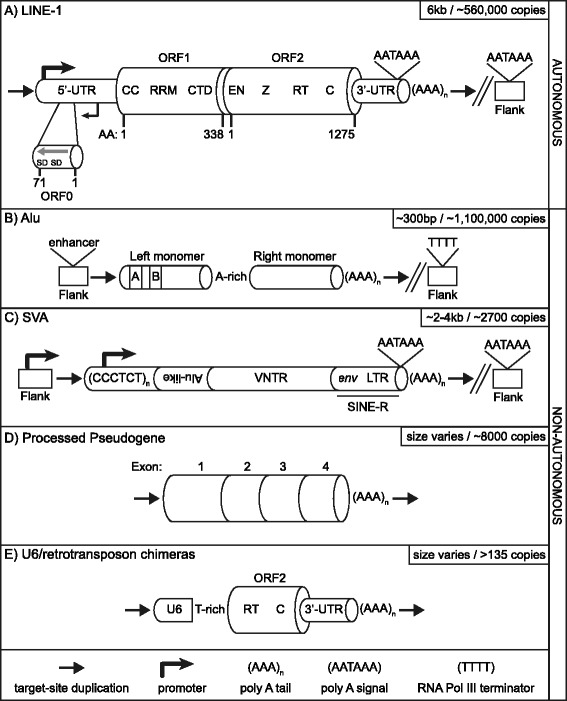
“Transcription termination of an Alu typically occurs at a Pol III terminator (TTTT) located in the downstream flanking sequence [244].”
BackgroundMitra, R., Li, X., Kapusta, A., Mayhew, D., Mitra, R. D., Feschotte, C., & Craig, N. L. (2013) · Proceedings of the National Academy of Sciences · doi:10.1073/pnas.1217548110 · Cited by 90 · cited 1×
“DNA transposons are currently thought to be transpositionally inactive in most mammals with bats being the exception [17, 18]; however, several genes in the human genome are derived from DNA transposons [6].”
BackgroundQuentin, Y. (1992) · Nucleic Acids Research · doi:10.1093/nar/20.3.487 · Cited by 90 · cited 1×
“Namely, evolution from 7SL RNA [100] followed by monomer duplication [106–108], which increased SRP9/14 binding sites, coupled with increased protein levels of SRP 14 due to triplet repeat expansion seeded by a point mutation in the anthropoid ancestor [109], enhanced localization of this non-coding RNA to the ribosom…”
BackgroundChristensen, S. M., & Eickbush, T. H. (2005) · Molecular and Cellular Biology · doi:10.1128/mcb.25.15.6617-6628.2005 · Cited by 90
Frequency of recent retrotransposition events in the human factor IX gene
Li, X., Scaringe, W. A., Hill, K. A., Roberts, S., Mengos, A., Careri, D., Pinto, M. T., Kasper, C. K., & Sommer, S. S. (2001) · Human Mutation · doi:10.1002/humu.1134 · Cited by 88 · cited 6×
“2008 [263] Hemophilia A AluYb8 FL N/A N N AS E N/A 12 Alu FIX X Vidaud et al. 1993 [264] Hemophilia B AluYa5a2 244 78 Y/5′TR N S E AAGAATGGCAGATGCGA TCTT/AA Same insertion site as Wulff et al. Alu 13 Alu FIX X Wulff et al. 2000 [265] Hemophilia B AluYa5a2 237 39 Y/5′TR N S E AAGAATGGCAGATGC TCTT/AA Same insertion site…”
BackgroundInfluentialTransposon Silencing and Imprint Establishment in Mammalian Germ Cells
BESTOR, T. H., & BOURC'HIS, D. (2004) · Cold Spring Harbor Symposia on Quantitative Biology · doi:10.1101/sqb.2004.69.381 · Cited by 88 · cited 1×
“LINE-1 [170, 171] and SVA DNA [172], in the 5′-UTR and VNTR, respectively, are known to be densely methylated in somatic tissue.”
BackgroundUpstream flanking sequences and transcription of SINEs 1 1Edited by M. Gottesman
Roy, A. M., West, N. C., Rao, A., Adhikari, P., Alemán, C., Barnes, A. P., & Deininger, P. L. (2000) · Journal of Molecular Biology · doi:10.1006/jmbi.2000.4027 · Cited by 85 · cited 1×
“While Alu elements contain their own transcriptional signals [101] (A and B box, and Pol III terminator (TTTT)) [102] and end in a polyA tail of varying length, transcriptional robustness is largely dictated by the presence of upstream enhancer elements [103, 104] (Fig.”
BackgroundAPOBEC3 proteins: major players in intracellular defence against LINE-1-mediated retrotransposition
Schumann, G. G. (2007) · Biochemical Society Transactions · doi:10.1042/bst0350637 · Cited by 84 · cited 1×
“Finally, although a bit tenuous, it is worthwhile to note that “kataegis,” the localized hypermutation frequently observed near DNA breakpoint junctions in chromothripsis [188, 189] and cancers [190], is thought to be caused by the LINE-1 restriction factors [94, 191–194]- the APOBEC3 proteins [195].”
BackgroundThe Alu family repeat promoter has a tRNA‐like bipartite structure
Paolella, G., Lucero, M. A., Murphy, M. H., & Baralle, F. E. (1983) · The EMBO Journal · doi:10.1002/j.1460-2075.1983.tb01486.x · Cited by 83 · cited 1×
“While Alu elements contain their own transcriptional signals [101] (A and B box, and Pol III terminator (TTTT)) [102] and end in a polyA tail of varying length, transcriptional robustness is largely dictated by the presence of upstream enhancer elements [103, 104] (Fig.”
BackgroundGenomic rearrangements of the APC tumor-suppressor gene in familial adenomatous polyposis
Su, L., Steinbach, G., Sawyer, J. C., Hindi, M., Ward, P. A., & Lynch, P. M. (2000) · Human Genetics · doi:10.1007/s004399900195 · Cited by 83 · cited 2×
“2000 [279] FAP AluYb9 93 60 Y/5′TR N AS I/Splicing No TSD TTTT/AA 1.”
BackgroundInfluentialHorn, A. V., Klawitter, S., Held, U., Berger, A., Jaguva Vasudevan, A. A., Bock, A., Hofmann, H., Hanschmann, K.-M. O., Trösemeier, J.-H., Flory, E., et al. (2014) · Nucleic Acids Research · doi:10.1093/nar/gkt898 · Cited by 83 · cited 1×
“Finally, although a bit tenuous, it is worthwhile to note that “kataegis,” the localized hypermutation frequently observed near DNA breakpoint junctions in chromothripsis [188, 189] and cancers [190], is thought to be caused by the LINE-1 restriction factors [94, 191–194]- the APOBEC3 proteins [195].”
BackgroundRetrotransposition and Crystal Structure of an Alu RNP in the Ribosome-Stalling Conformation
Ahl, V., Keller, H., Schmidt, S., & Weichenrieder, O. (2015) · Molecular Cell · doi:10.1016/j.molcel.2015.10.003 · Cited by 83 · cited 2×
“Structural analysis has revealed Alu in complex with the SRP 9/14 proteins [110, 112].”
BackgroundIshihara, N., Yamada, K., Yamada, Y., Miura, K., Kato, J., Kuwabara, N., Hara, Y., Kobayashi, Y., Hoshino, K., Nomura, Y., et al. (2004) · Journal of Medical Genetics · doi:10.1136/jmg.2003.016154 · Cited by 83 · cited 2×
“2004 [272] MWS AluYa5 281 93 N N S E AAAATTAAAACA TTTT/AA”
Vogt, J., Bengesser, K., Claes, K. B., Wimmer, K., Mautner, V.-F., van Minkelen, R., Legius, E., Brems, H., Upadhyaya, M., Högel, J., et al. (2014) · Genome Biology · doi:10.1186/gb-2014-15-6-r80 · Cited by 82 · cited 3×
“…F1 1700 23 Y/5′TR (VNTR) Y (282/160) AS I/Deletion of NF1 N/A TTTT/AC Largest reported insertion associated deletion (~1 Mb), somatic 119 SVA SUZ1P 17 Vogt et al. 2014 [153] NF1 F 1300 40 Y/5′TR (VNTR) N AS I/Deletion of NF1 N/A CTTT/AC 867 kb deletion, somatic 120 Processed Pseudogene CYBB X de…”
InfluentialMiné, M., Chen, J.-M., Brivet, M., Desguerre, I., Marchant, D., de Lonlay, P., Bernard, A., Férec, C., Abitbol, M., Ricquier, D., et al. (2007) · Human Mutation · doi:10.1002/humu.20449 · Cited by 81 · cited 2×
“…carcinoma L1 Hs 90 22 Y/5′TR N S E AAAGAATCATCTGGATTATAG CTTT/AA Somatic Insertion 100 L1 HBB 11 Divoky et al. 1996 [309] β-thalassemia L1 Ta 6000 107 FL N AS I AAAATAAAAGCAGA TTTT/AT 101 L1 PDHX 11 Mine et al. 2007 [310] PDHc deficiency L1 Hs 6086 67 FL N S 46 kb Deletion No TSD TTTT/AT 102 L1…”
BackgroundSen, S. K., Huang, C. T., Han, K., & Batzer, M. A. (2007) · Nucleic Acids Research · doi:10.1093/nar/gkm317 · Cited by 81 · cited 2×
“2k) [213–215].”
BackgroundGanguly, A. A., Dunbar, T., Chen, P., Godmilow, L., & Ganguly, T. (2003) · Human Genetics · doi:10.1007/s00439-003-0986-5 · Cited by 80 · cited 1×
“2003 [262] Hemophilia A AluYb9 288 37 N N AS I/Splicing AAAAACCAACAGG TTTT/AT Consensus Yb9”
BackgroundRNA polymerase III promoter and terminator elements affect Alu RNA expression
Chu, W. M., Liu, W.-M., & Schmid, C. W. (1995) · Nucleic Acids Research · doi:10.1093/nar/23.10.1750 · Cited by 79 · cited 1×
“While Alu elements contain their own transcriptional signals [101] (A and B box, and Pol III terminator (TTTT)) [102] and end in a polyA tail of varying length, transcriptional robustness is largely dictated by the presence of upstream enhancer elements [103, 104] (Fig.”
BackgroundThe Human THAP9 Gene Encodes an Active P -Element DNA Transposase
Majumdar, S., Singh, A., & Rio, D. C. (2013) · Science · doi:10.1126/science.1231789 · Cited by 77 · cited 2×
“ADAR: adenosine deaminase acting on RNA; APC: adenomatous polyposis coli; APOBEC3A: apolipoprotein B mRNA editing enzyme catalytic subunit 3A; ASP: antisense promoter; ATM: ataxia telangiectasia mutated; BCC: basal cell carcinoma; C: cysteine-rich; CASP8: caspase 8; CC: coiled coiled; CENPW: centromere protein W; cGAS…”
BackgroundIdentification of RNA polymerase III-transcribed Alu loci by computational screening of RNA-Seq data
Conti, A., Carnevali, D., Bollati, V., Fustinoni, S., Pellegrini, M., & Dieci, G. (2015) · Nucleic Acids Research · doi:10.1093/nar/gku1361 · Cited by 77 · cited 1×
“While Alu elements contain their own transcriptional signals [101] (A and B box, and Pol III terminator (TTTT)) [102] and end in a polyA tail of varying length, transcriptional robustness is largely dictated by the presence of upstream enhancer elements [103, 104] (Fig.”
BackgroundUnusual Mutations in Btk: An Insertion, a Duplication, an Inversion, and Four Large Deletions
Rohrer, J., Minegishi, Y., Richter, D., Eguiguren, J., & Conley, M. E. (1999) · Clinical Immunology · doi:10.1006/clim.1998.4629 · Cited by 75 · cited 2×
“…TCTT/AA H ancks and Kazazian M obile D N A (2016) 7:9 Page 12 of 28 Table 1 Retrotransposition events associated with human disease (Continued) 107 SVA BTK X Rohrer et al. 1999 [311], Conley et al. 2005 [258] XLA N/A 251 92 Y/5′TR N S E AGAAATGTATGAGTAA TTCT/AT Same insertion site as Conley et. al.”
BackgroundDai, L., Taylor, M. S., O'Donnell, K. A., & Boeke, J. D. (2012) · Molecular and Cellular Biology · doi:10.1128/mcb.06785-11 · Cited by 74 · cited 1×
“An active area of current research involves determining other components of the LINE-1 RNP, specifically which cellular RNAs [72] and non-LINE-1 proteins [73–76] are present.”
BackgroundTarget DNA chromatinization modulates nicking by L1 endonuclease
Cost, G. J. (2001) · Nucleic Acids Research · doi:10.1093/nar/29.2.573 · Cited by 74 · cited 1×
“It is highly probable that chromatin states [80] and perhaps proteinprotein interactions with nuclear factors dictate target-site preference.”
BackgroundPolymerization and nucleic acid-binding properties of human L1 ORF1 protein
Callahan, K. E., Hickman, A. B., Jones, C. E., Ghirlando, R., & Furano, A. V. (2011) · Nucleic Acids Research · doi:10.1093/nar/gkr728 · Cited by 74 · cited 1×
“Although structural analysis and biochemical studies [47] have revealed that ORF1p forms a series of trimers with nucleic acids [48, 49] via rapid polymerization mediated by coiled-coiled domain interactions, its precise function remains poorly understood; however, new work indicates that phosphorylation of ORF1p is r…”
BackgroundHuman endogenous retroviruses in the primate lineage and their influence on host genomes
Mayer, J., & Meese, E. (2005) · Cytogenetic and Genome Research · doi:10.1159/000084977 · Cited by 73 · cited 1×
“Most ERVs are speculated to be exogenous viruses that integrated into the host germline in the distant past [31, 32].”
BackgroundSobrier, M., Netchine, I., Heinrichs, C., Thibaud, N., Luton, M., Vliet, G. V., & Amselem, S. (2005) · Human Mutation · doi:10.1002/humu.9332 · Cited by 72 · cited 1×
“…N N S E AAAATTAAAACA TTTT/AA 23 Alu BCHE 3 Muratani et al. 1991 [273] Cholinesterase deficiency AluYb9 289 38 N N S E AAAAATATTTTTTCC TTTT/AA 24 Alu CASR 3 Janicic et al. 1995 [274] FHH and NSHPT AluYa5 280 93 N N AS E GAAAGCGTGAGCTGC TTTC/AA 25 Alu HESX1 3 Sobrier et al. 2005 [275] Anterior…”
BackgroundSciamanna, I., Luca, C. D., & Spadafora, C. (2016) · Frontiers in Chemistry · doi:10.3389/fchem.2016.00006 · Cited by 71 · cited 1×
“A largely unexplored question is whether LINE-1 proteins play yet undefined roles in cancer [212].”
BackgroundRhyne, J., Mantaring, M., GARDNER, D. F., & Miller, M. J. (2009) · BMC Medical Genetics · doi:10.1186/1471-2350-10-1 · Cited by 70
Phosphorylation of ORF1p is required for L1 retrotransposition
Cook, P. R., Jones, C. E., & Furano, A. V. (2015) · Proceedings of the National Academy of Sciences · doi:10.1073/pnas.1416869112 · Cited by 70 · cited 1×
“Although structural analysis and biochemical studies [47] have revealed that ORF1p forms a series of trimers with nucleic acids [48, 49] via rapid polymerization mediated by coiled-coiled domain interactions, its precise function remains poorly understood; however, new work indicates that phosphorylation of ORF1p is r…”
BackgroundInsertion of an Alu SINE in the human homologue of theMlvi-2 locus
Economou-Pachnis, A., & Tsichlis, P. N. (1985) · Nucleic Acids Research · doi:10.1093/nar/13.23.8379 · Cited by 70 · cited 1×
“27 Alu MLVI2 5 EconomouPachnis and Tsichlis 1985 [277] Associated with leukemia AluYa5 280 26 N N AS I GAAAATGT TTTC/AT”
BackgroundAkman, H. O., Davidzon, G., Tanji, K., MacDermott, E. J., Larsen, L., Davidson, M. M., Haller, R. G., Szczepaniak, L. S., Lehman, T. J. A., Hirano, M., et al. (2010) · Neuromuscular Disorders · doi:10.1016/j.nmd.2010.04.004 · Cited by 70 · cited 2×
“2010 [316] NLSDM E 1800 44 Y/5′TR N S E AAAGAGGCCCGG CTTT/AG”
BackgroundFunctional microRNAs and target sites are created by lineage-specific transposition
Spengler, R. M., Oakley, C. K., & Davidson, B. L. (2014) · Human Molecular Genetics · doi:10.1093/hmg/ddt569 · Cited by 70 · cited 1×
“Alus are also commonly found in 3′-UTRs where they may serve as small RNA binding sites [116, 117] or serve as substrates for the RNA editing enzyme adenosine deaminase acting on RNA (ADAR) when at least two inverted Alus are present [118–120].”
BackgroundMorrone, A., Bardelli, T., Donati, M. A., Giorgi, M., Rocco, M. D., Gatti, R., Parini, R., Ricci, R. P., Taddeucci, G., d’Azzo, A., et al. (2000) · Human Mutation · doi:10.1002/(sici)1098-1004(200004)15:4<332::aid-humu5>3.0.co;2-1 · Cited by 69
Haemophilia A mutations in the UK: results of screening one‐third of the population
Green, P. M., Bagnall, R. D., Waseem, N. H., & Giannelli, F. (2008) · British Journal of Haematology · doi:10.1111/j.1365-2141.2008.07310.x · Cited by 68 · cited 1×
“2008 [263] Hemophilia A AluYb8 FL N/A N N AS E N/A”
BackgroundHereditary Desmoid Disease in a Family with a Germline Alu I Repeat Mutation of the APC Gene
Halling, K. C., Lazzaro, C. R., Honchel, R., Bufill, J. A., Powell, S. M., Arndt, C. A. S., & Lindor, N. M. (1999) · Human Heredity · doi:10.1159/000022852 · Cited by 67 · cited 2×
“…TTTT/AC 27 Alu MLVI2 5 EconomouPachnis and Tsichlis 1985 [277] Associated with leukemia AluYa5 280 26 N N AS I GAAAATGT TTTC/AT 28 Alu APC 5 Halling et al. 1999 [278] Hereditary desmoid disease AluYb8 278 40 Y/5′TR N S E AAGAATAATG TCTT/AA Same insertion site as Miki et al. L1 29…”
BackgroundMethodZhuo, X., & Feschotte, C. (2015) · PLoS Pathogens · doi:10.1371/journal.ppat.1005279 · Cited by 67 · cited 1×
“Certain hints already exist, but as more genomes are analyzed one might predict that formation of infectious viruses from endogenous elements followed by re-endogenization of exogenous elements might be more common than previously appreciated [34].”
BackgroundBochukova, E. G., Roscioli, T., Hedges, D. J., Taylor, I. B., Johnson, D., David, D. J., Deininger, P. L., & Wilkie, A. O. M. (2009) · Human Mutation · doi:10.1002/humu.20825 · Cited by 66 · cited 3×
“2009 [288] Apert syndrome AluYk13 214 12 Y/5′TR N AS E AAAAGTTACATTCCG TTTT/GA”
BackgroundInfluentialSimilarities between long interspersed element-1 (LINE-1) reverse transcriptase and telomerase
Kopera, H. C., Moldovan, J. B., Morrish, T. A., Garcia-Perez, J. L., & Moran, J. V. (2011) · Proceedings of the National Academy of Sciences · doi:10.1073/pnas.1100275108 · Cited by 66 · cited 2×
“A potential suspect for top-strand cleavage could be the additional nuclease activity observed in vitro in LINE-1 RNPs [78, 85].”
BackgroundHigh Processivity of the Reverse Transcriptase from a Non-long Terminal Repeat Retrotransposon
Bibillo, A., & Eickbush, T. H. (2002) · Journal of Biological Chemistry · doi:10.1074/jbc.m204345200 · Cited by 65 · cited 1×
“The lack of LINE-1 RT processivity during cDNA synthesis is unlikely to contribute to short insertions as non-LTR RTs, including ORF2p, are highly processive in vitro [87, 92].”
BackgroundEnrichment of processed pseudogene transcripts in L1-ribonucleoprotein particles
Mandal, P. K., Ewing, A. D., Hancks, D. C., & Kazazian, H. H. (2013) · Human Molecular Genetics · doi:10.1093/hmg/ddt225 · Cited by 64 · cited 20×
“In addition to mobilizing its own RNA to new genomic locations via a “copy-and-paste” mechanism, LINE-1 is able to retrotranspose other RNAs including Alu, SVA, and occasionally cellular RNAs.”
BackgroundInfluentialSelf-citationCarbone, L., Harris, R. A., Mootnick, A. R., Milosavljevic, A., Martin, D. I. K., Rocchi, M., Capozzi, O., Archidiacono, N., Konkel, M. K., Walker, J. A., et al. (2012) · Genome Biology and Evolution · doi:10.1093/gbe/evs048 · Cited by 64 · cited 1×
“LAVA, PVA) appear to have acquired distinct 3′-domains via splicing in gibbons [125, 135, 136, 138].”
BackgroundNazaryan‐Petersen, L., Bertelsen, B., Bak, M., Jønson, L., Tommerup, N., Hancks, D. C., & Tümer, Z. (2016) · Human Mutation · doi:10.1002/humu.22953 · Cited by 63 · cited 4×
“A model was developed that integrated Alu-mediated chromosome looping and LINE-1-mediated SVA retrotransposition to account for the genome configuration following chromothripsis [155].”
BackgroundMethodInfluentialSelf-citationU6 snRNA Pseudogenes: Markers of Retrotransposition Dynamics in Mammals
Doucet, A. J., Droc, G., Siol, O., Audoux, J., & Gilbert, N. (2015) · Molecular Biology and Evolution · doi:10.1093/molbev/msv062 · Cited by 62 · cited 1×
“1e) [140–144].”
Clements, A. (1998) · Nucleic Acids Research · doi:10.1093/nar/26.15.3528 · Cited by 59 · cited 1×
“coiled domain [47], RRM-RNA recognition motif [44], CTD-C-terminal domain, EN-endonuclease [51], Z domain [242], RT-reverse transcriptase [52], C-”
Rodriguez‐Martin, C., Cidre‐Aranaz, F., Fernández‐Teijeiro, A., Gómez‐Mariano, G., de la Vega, L., Ramos, P., Zaballos, Á., Monzón, S., & Alonso, J. (2016) · Journal of Human Genetics · doi:10.1038/jhg.2015.173 · Cited by 58 · cited 2×
“2016 [202] Familial Retinoblastoma L1 Ta-1d 6044 33 FL N S I/Splicing AAATTATCTGTTTC ATTT/AA N/A”
BackgroundMukherjee, S., Mukhopadhyay, A., Banerjee, D., Chandak, G. R., & Ray, K. (2004) · Haemophilia · doi:10.1111/j.1365-2516.2004.00895.x · Cited by 57 · cited 2×
“2004 [303] Hemophilia B L1 Ta 163 125 Y/5′TR N S E GAAAAATGGATTGT TTTC/AT H acks nd Kaazian M obile D N A (216) (7):9”
Backgroundvan der Klift, H. M., Tops, C. M. J., Hes, F. J., Devilee, P., & Wijnen, J. (2012) · Human Mutation · doi:10.1002/humu.22092 · Cited by 55 · cited 1×
“114 SVA HLA-A 6 Takasu et al. 2007 [315] Leukemia F1 2000 45 FL N/A AS 14 kb Deletion N/A CCTT/AG Novel SVA subfamily (F1) 115 SVA PMS2 7 van der Klift et al. 2012 [154] Lynch syndrome F 2200 64 Y/5′TR (VNTR) N S I/Splicing AAGAATGTGCCATGTGA TCTT/AA SVA exonization 116 SVA FKTN 9 Kobayashi et al.…”
BackgroundSu, L.-K., Steinbach, G., Sawyer, J. C., Hindi, M., Ward, P. A., & Lynch, P. M. (2000) · Human Genetics · doi:10.1007/s004390051016 · Cited by 55 · cited 1×
“…APC 5 Halling et al. 1999 [278] Hereditary desmoid disease AluYb8 278 40 Y/5′TR N S E AAGAATAATG TCTT/AA Same insertion site as Miki et al. L1 29 Alu APC 5 Su et al. 2000 [279] FAP AluYb9 93 60 Y/5′TR N AS I/Splicing No TSD TTTT/AA 1.6 kb intronic deletion 30 Alu APC 5 Qian et al. 2015…”
BackgroundInfluentialFree left arms as precursor molecules in the evolution of Alu sequences
Jurka, J., & Zuckerkandl, E. (1991) · Journal of Molecular Evolution · doi:10.1007/bf02100195 · Cited by 54 · cited 1×
“Namely, evolution from 7SL RNA [100] followed by monomer duplication [106–108], which increased SRP9/14 binding sites, coupled with increased protein levels of SRP 14 due to triplet repeat expansion seeded by a point mutation in the anthropoid ancestor [109], enhanced localization of this non-coding RNA to the ribosom…”
BackgroundPiskareva, O., & Schmatchenko, V. (2006) · FEBS Letters · doi:10.1016/j.febslet.2005.12.077 · Cited by 54 · cited 2×
“Next, top-strand cDNA synthesis ensues probably by ORF2p which displays DNA-dependent DNA synthesis activity in vitro [87].”
BackgroundMobile element biology: new possibilities with high-throughput sequencing
Xing, J., Witherspoon, D. J., & Jorde, L. B. (2013) · Trends in Genetics · doi:10.1016/j.tig.2012.12.002 · Cited by 53 · cited 1×
“Next-generation sequencing has empowered researchers to interrogate longstanding and previously intractable questions regarding TE biology [7, 10, 11].”
BackgroundAn Alu Insert as the Cause of a Severe Form of Hemophilia A
Šukarova, E., Dimovski, A. J., Tchacarova, P., Petkov, G. H., & Ефремов, Г. Д. (2001) · Acta Haematologica · doi:10.1159/000046602 · Cited by 50 · cited 1×
“2001 [261] Hemophilia A AluYb8 290 47 N N AS 3 nt Deletion No TSD TTTC/AT”
BackgroundTwo independent retrotransposon insertions at the same site within the coding region of BTK
Conley, M. E., Partain, J. D., Norland, S. M., Shurtleff, S. A., & Kazazian, H. H. (2005) · Human Mutation · doi:10.1002/humu.9321 · Cited by 50 · cited 6×
“In contrast, a yet unidentified host-encoded nuclease, such as a factor distantly related to ORF2p with a Hancks and Kazazian Mobile DNA (2016) 7:9 Page 6 of 28 Table 1 Retrotransposition events associated with human disease Insertion Gene CHR Reference Disease Subfamily Size polyA tail length Truncation Transduction…”
BackgroundMethodInfluentialSelf-citationWang, T., Lerer, I., Gueta, Z., Sagi, M., Kadouri, L., Peretz, T., & Abeliovich, D. (2001) · Genes Chromosomes and Cancer · doi:10.1002/gcc.1110 · Cited by 49 · cited 3×
“2008 [263] Hemophilia A AluYb8 FL N/A N N AS E N/A 12 Alu FIX X Vidaud et al. 1993 [264] Hemophilia B AluYa5a2 244 78 Y/5′TR N S E AAGAATGGCAGATGCGA TCTT/AA Same insertion site as Wulff et al. Alu 13 Alu FIX X Wulff et al. 2000 [265] Hemophilia B AluYa5a2 237 39 Y/5′TR N S E AAGAATGGCAGATGC TCTT/AA Same insertion site…”
BackgroundInfluentialTighe, P. J., Stevens, S. E., Dempsey, S., Deist, F. L., Rieux‐Laucat, F., & Edgar, D. (2002) · Genes and Immunity · doi:10.1038/sj.gene.6363864 · Cited by 48 · cited 13×
“2002 [289] ALPS AluYa5 281 33 N N AS I AGAATATTCTAAATGTG TTCT/AA”
BackgroundInfluentialMobile DNA transposition in somatic cells
Kazazian, H. H. (2011) · BMC Biology · doi:10.1186/1741-7007-9-62 · Cited by 48 · cited 1×
“More and more evidence is accumulating that somatic insertions may be more common than previously appreciated and perhaps the norm [178–180].”
BackgroundSelf-citationMacfarlane, C. M., & Badge, R. M. (2015) · Retrovirology · doi:10.1186/s12977-015-0162-8 · Cited by 47 · cited 1×
“Similar to DNA transposons, LTR elements are thought to be inactive in the human lineage, although rare polymorphic ERVs in the human population indicate that mobilization has occurred following the human-chimpanzee divergence [26–28].”
BackgroundBantysh, O. B., & Buzdin, A. A. (2009) · Biochemistry (Moscow) · doi:10.1134/s0006297909120153 · Cited by 47 · cited 2×
“transcripts containing upstream exons may occur [127, 128, 132].”
BackgroundSciamanna, I., Gualtieri, A., Cossetti, C., Osimo, E. F., Ferracin, M., Macchia, G., Aricò, E., Prosseda, G., Vitullo, P., Misteli, T., et al. (2013) · Oncotarget · doi:10.18632/oncotarget.1403 · Cited by 47 · cited 1×
“In addition, ORF2p expression may have important roles in cancer onset and progression through perturbation of regulatory networks [217–220].”
BackgroundHassoun, H., Coetzer, T. L., Vassiliadis, J., Sahr, K. E., Maalouf, G. J., Saad, S. T. O., Catanzariti, L., & Palek, J. (1994) · Journal of Clinical Investigation · doi:10.1172/jci117380 · Cited by 47 · cited 3×
“…TTCC/AT 3′-Processing 1 nt (5′-C-3′) 110 SVA LDRAP1 1 Wilund et al. 2002 [313] ARH E 2600 57 FL N S I/Splicing GAAACCTGTTTTCTC TTTC/AA 111 SVA SPTA1 1 Hassoun et al. 1994 [314], Ostertag et al. 2003 [24] HE and HPP E 632 50 Y/5′TR/INV Y (183/599) S E GAAATTTGAAGACTTCCAAGT TTTC/AA Orphan 3′-…”
BackgroundMoran, J. V. (1999) · Genetica · doi:10.1023/a:1004035023356 · Cited by 46 · cited 2×
“Other than typical LINE-1 hallmarks (target-site duplication, insertion at LINE-1 EN site, end in polyA tail), both LINE-1 and SVA insertions occasionally contain 3′-transductions [24, 62, 65, 139].”
BackgroundHohjoh, H., & Singer, M. (1997) · Journal of Molecular Biology · doi:10.1006/jmbi.1997.1159 · Cited by 46 · cited 1×
“The next step in the LINE-1 lifecycle is RNP assembly [67].”
BackgroundPrimary Immunodeficiency Caused by an Exonized Retroposed Gene Copy Inserted in the CYBB Gene
de Boer, M., van Leeuwen, K., Geissler, J., Weemaes, C. M., van den Berg, T. K., Kuijpers, T. W., Warris, A., & Roos, D. (2014) · Human Mutation · doi:10.1002/humu.22519 · Cited by 46 · cited 1×
“…SUZ1P 17 Vogt et al. 2014 [153] NF1 F 1300 40 Y/5′TR (VNTR) N AS I/Deletion of NF1 N/A CTTT/AC 867 kb deletion, somatic 120 Processed Pseudogene CYBB X de Boer et al. 2014 [152] CGD N/A 5739 100 FL No AS I/Splicing AAAACTCAAAGACTC TTTT/AA First reported de novo processed pseudogene (TMF1) H…”
BackgroundCharacterization of two unusual truncating PMM2 mutations in two CDG-Ia patients
Schollen, E., Keldermans, L., Foulquier, F., Briones, P., Chabás, A., Sánchez‐Valverde, F., Adamowicz, M., Pronicka, E., Wevers, R. A., & Matthijs, G. (2007) · Molecular Genetics and Metabolism · doi:10.1016/j.ymgme.2007.01.003 · Cited by 46 · cited 1×
“…N/A E N/A N/A Pan-cancer panel testing 56 Alu BRCA2 13 Qian et al. 2015 [158] Hereditary Cancer N/A N/A N/A N/A N/A N/A E N/A N/A Pan-cancer panel testing 57 Alu PMM2 16 Schollen et al. 2007 [295] CDG-Ia AluYb8 263 10 Y/5′TR N AS 28 kb Deletion No TSD TTTT/AA 58 Alu PALB2 16 Qian et al. 2015…”
Claveríe‐Martín, F., Gonz�lez-Acosta, H., Flores, C., Antón-Gamero, M., & Garc�a-Nieto, V. (2003) · Human Genetics · doi:10.1007/s00439-003-0991-8 · Cited by 45
De Luca, C., Guadagni, F., Sinibaldi-Vallebona, P., Sentinelli, S., Gallucci, M., Hoffmann, A., Schumann, G. G., Spadafora, C., & Sciamanna, I. (2016) · Oncotarget · doi:10.18632/oncotarget.6767 · Cited by 44 · cited 1×
“Numerous studies by independent labs over the past several years have reported extensive retrotransposition and/or LINE-1 protein expression in a variety of cancer types [201, 204–211].”
BackgroundNaufer, M. N., Callahan, K. E., Cook, P. R., Pérez-González, C. E., Williams, M. C., & Furano, A. V. (2015) · Nucleic Acids Research · doi:10.1093/nar/gkv1342 · Cited by 44 · cited 1×
“Although structural analysis and biochemical studies [47] have revealed that ORF1p forms a series of trimers with nucleic acids [48, 49] via rapid polymerization mediated by coiled-coiled domain interactions, its precise function remains poorly understood; however, new work indicates that phosphorylation of ORF1p is r…”
BackgroundGrimaldi, G., Queen, C., & Singer, M. (1981) · Nucleic Acids Research · doi:10.1093/nar/9.21.5553 · Cited by 43
Okubo, M., Horinishi, A., Saito, M., Ebara, T., Endo, Y., Kaku, K., Murase, T., & Eto, M. (2007) · Molecular Genetics and Metabolism · doi:10.1016/j.ymgme.2007.06.018 · Cited by 43 · cited 2×
“2007 [284] LPL deficiency AluYb9 150 60 Y/5′TR N AS 2.”
BackgroundInfluentialGualtieri, A., Andreola, F., Sciamanna, I., Sinibaldi-Vallebona, P., Serafino, A., & Spadafora, C. (2013) · Oncotarget · doi:10.18632/oncotarget.1188 · Cited by 43 · cited 1×
“Numerous studies by independent labs over the past several years have reported extensive retrotransposition and/or LINE-1 protein expression in a variety of cancer types [201, 204–211].”
BackgroundAn alternative pathway for Alu retrotransposition suggests a role in DNA double-strand break repair
Srikanta, D., Sen, S. K., Huang, C. T., Conlin, E. M., Rhodes, R. M., & Batzer, M. A. (2009) · Genomics · doi:10.1016/j.ygeno.2008.09.016 · Cited by 43 · cited 2×
“2k) [213–215].”
BackgroundPathogenic orphan transduction created by a nonreference LINE-1 retrotransposon
Solyom, S., Ewing, A. D., Hancks, D. C., Takeshima, Y., Awano, H., Matsuo, M., & Kazazian, H. H. (2012) · Human Mutation · doi:10.1002/humu.21663 · Cited by 43 · cited 1×
“2011 [302] DMD L1 Ta 212 118 Y/5′TR Y (212) AS E GAA TTTC/AA Orphan 3′transduction”
BackgroundSelf-citationIdentifying related L1 retrotransposons by analyzing 3' transduced sequences
Szak, S. T., Pickeral, O. K., Landsman, D., & Boeke, J. D. (2003) · Genome Biology · doi:10.1186/gb-2003-4-5-r30 · Cited by 43 · cited 1×
“Notably, insertions containing serial 3′-transductions have been reported and can be used to track the evolutionary history of an element [246].”
BackgroundDeletion of entire HLA‐A gene accompanied by an insertion of a retrotransposon
Takasu, M., Hayashi, R., Maruya, E., Ota, M., Imura, K., Kougo, K., Kobayashi, C., Saji, H., Ishikawa, Y., Asai, T., et al. (2007) · Tissue Antigens · doi:10.1111/j.1399-0039.2007.00870.x · Cited by 42 · cited 2×
“114 SVA HLA-A 6 Takasu et al. 2007 [315] Leukemia F1 2000 45 FL N/A AS 14 kb Deletion N/A CCTT/AG Novel SVA subfamily (F1) 115 SVA PMS2 7 van der Klift et al. 2012 [154] Lynch syndrome F 2200 64 Y/5′TR (VNTR) N S I/Splicing AAGAATGTGCCATGTGA TCTT/AA SVA exonization 116 SVA FKTN 9 Kobayashi et al.…”
BackgroundAlu-element insertion in an OPA1 intron sequence associated with autosomal dominant optic atrophy.
Gallus, G. N., Cardaioli, E., Rufa, A., Pozzo, P. D., Bianchi, S., D’Eramo, C., Collura, M., Tumino, M., Pavone, L., & Federico, A. (2010) · PubMed Central · Cited by 41
Detection of two Alu insertions in the CFTR gene
Chen, J., Masson, E., Maçek, M., Raguénès, O., Piskackova, T., Fercot, B., Fila, L., Cooper, D. N., Audrézet, M., & Férec, C. (2007) · Journal of Cystic Fibrosis · doi:10.1016/j.jcf.2007.04.001 · Cited by 41 · cited 4×
“2008 [282] Cystic Fibrosis AluY 46 57 Y/5′TR N AS E AAGAATCCCACCTATAAT TCTT/AA”
BackgroundInfluentialBranchio-oto-renal syndrome caused by partial EYA1 deletion due to LINE-1 insertion
Morisada, N., Rendtorff, N. D., Nozu, K., Morishita, T., Miyakawa, T., Matsumoto, T., Hisano, S., Iijima, K., Tranebjærg, L., Shirahata, A., et al. (2010) · Pediatric Nephrology · doi:10.1007/s00467-010-1445-x · Cited by 41 · cited 2×
“…panel testing 95 L1 APC 5 Miki et al. 1992 [200] Colon cancer L1Ta 520 222 Y/5′TR/INV N S E AAGAATAATG TCTT/AA Somatic Insertion/ same insertion site as Halling et al. Alu 96 L1 EYA1 8 Morisada et al. 2010 [247] BOR syndrome L1 Hs 3756 None Y/3′TR N AS 17 kb Deletion No TSD TCTC/AG…”
BackgroundCharacterization of breakpoint sequences of five rearrangements inL1CAM andABCD1 (ALD) genes
Kutsche, K., Ressler, B., Katzera, H.-G., Orth, U., Gillessen‐Kaesbach, G., Morlot, S., SCHWINGER, E., & Gal, A. (2002) · Human Mutation · doi:10.1002/humu.10072 · Cited by 40 · cited 3×
“…length Truncation Transduction (bp) Strand Exon/ Intron/ Mechanism Target-site duplication (TSD) L1 EN site (5′-TTTT/AA-3′) Note 1 Alu ABCD1 X Kutsche et al. 2002 [255] ALD AluYb9 98 20 Y/5′TR N S 4.7 kb Deletion No TSD ATTT/GT 2 Alu ATP7A X Gu et al. 2007 [256] Menkes Disease AluYa5a2 282…”
BackgroundInfluentialNovel Alu retrotransposon insertion leading to Alström syndrome
Taşkesen, M., Collin, G. B., Evsikov, A. V., Güzel, A. E., Özgül, R. K., Marshall, J. D., & Naggert, J. Κ. (2011) · Human Genetics · doi:10.1007/s00439-011-1083-9 · Cited by 40 · cited 1×
“2012 [270] Alström syndrome AluYa5 257 76 Y/5′TR N S E AAAAGCCTAGAGAA TTTT/AA”
BackgroundSVA retrotransposition in exon 6 of the coagulation factor IX gene causing severe hemophilia B
Nakamura, Y., Murata, M., Takagi, Y., Kozuka, T., Nakata, Y., Hasebe, R., Takagi, A., Kitazawa, J., Shima, M., & Kojima, T. (2015) · International Journal of Hematology · doi:10.1007/s12185-015-1765-5 · Cited by 40 · cited 1×
“2015 [156] Hemophilia B F 2524 28 FL N AS E AAATGGCACTAGAA TTCC/AT 3′-Processing 1 nt (5′-C-3′)”
BackgroundMoran, J. V. (2000) · Springer eBooks · doi:10.1007/978-94-011-4156-7_5 · Cited by 39
Intronic L1 insertion and F268S, novel mutations in RPS6KA3 (RSK2) causing Coffin–Lowry syndrome
Martínez‐Garay, I., Ballesta, M., Oltra, S., Orellana, C., Palomeque, A., Moltó, M. D., Prieto, F., & Martı́nez, F. (2003) · Clinical Genetics · doi:10.1046/j.1399-0004.2003.00166.x · Cited by 39 · cited 3×
“…events associated with human disease (Continued) 90 L1 RP2 X Schwahn et al. 1998 [304] XLRP L1 Ta 6000 64 FL N S I/Loss of mRNA AAGACTGTAAGGTG TCTT/AA Interrupted polyA 91 L1 RPS6KA3 X Martinez-Garay et al. 2003 [305] Coffin-Lowry syndrome L1 Hs 2800 Yes Y/5′TR/INV N AS E AAGAAAACCTGCATTT…”
BackgroundInfluentialGenomic characterization of two large Alu-mediated rearrangements of the BRCA1 gene
Peixoto, A., Pinheiro, M., Massena, L., Santos, C., Pinto, P., Rocha, P., Pinto, C., & Teixeira, M. R. (2012) · Journal of Human Genetics · doi:10.1038/jhg.2012.137 · Cited by 39 · cited 2×
“…N AS 28 kb Deletion No TSD TTTT/AA 58 Alu PALB2 16 Qian et al. 2015 [158] Hereditary Cancer N/A N/A N/A N/A N/A N/A E N/A N/A Pan-cancer panel testing 59 Alu BRCA1 17 Peixoto et al. 2013 [161] Breast and Ovarian Cancer Family AluYc 191 60 Y/5′TR N AS 23.3 kb Deletion No TSD CTTT/AG 60 Alu…”
BackgroundInfluentialKagawa, T., Oka, A., Kobayashi, Y., Hiasa, Y., Kitamura, T., Sakugawa, H., Adachi, Y., Anzai, K., Tsuruya, K., Arase, Y., et al. (2014) · Human Mutation · doi:10.1002/humu.22745 · Cited by 39 · cited 3×
“…al. 1996 [309] β-thalassemia L1 Ta 6000 107 FL N AS I AAAATAAAAGCAGA TTTT/AT 101 L1 PDHX 11 Mine et al. 2007 [310] PDHc deficiency L1 Hs 6086 67 FL N S 46 kb Deletion No TSD TTTT/AT 102 L1 SLCO1B3 12 Kagawa et al. 2015 [157] Rotor syndrome L1 Ta-1d 5989 100 Near FL N S I/Splicing…”
BackgroundInfluentialA large MSH2 Alu insertion mutation causes HNPCC in a German kindred
Kloor, M., Sutter, C., Wentzensen, N., Cremer, F. W., Buckowitz, A., Keller, M., Doeberitz, M. V. K., & Gebert, J. F. (2004) · Human Genetics · doi:10.1007/s00439-004-1176-9 · Cited by 38 · cited 2×
“…TTCT/AT Shortest Alu insertion 19 Alu ALMS1 2 Taşkesen et al. 2012 [270] Alström syndrome AluYa5 257 76 Y/5′TR N S E AAAAGCCTAGAGAA TTTT/AA 20 Alu MSH2 2 Kloor et al. 2004 [271] HNPCC AluJ 85 40 Y/5′TR N S E N/A N/A Contains extra 99 nt 3′-of Alu, may be transduction or recombination 21 Alu MSH2…”
BackgroundDiscovery and characterization of Alu repeat sequences via precise local read assembly
Halo, J. V., Baron, A., Diroff, N. M., & Kidd, J. M. (2015) · Nucleic Acids Research · doi:10.1093/nar/gkv1089 · Cited by 38 · cited 2×
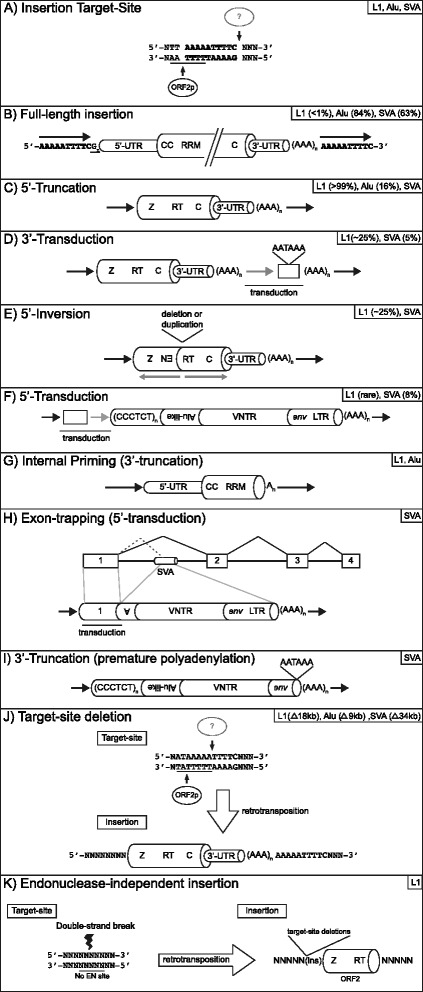
“However, 5′-truncated Alu elements have been identified in human genomes [114] and as de novo insertions resulting in disease (Table 1).”
BackgroundStacey, S., Kehr, B., Guðmundsson, J., Zink, F., Jónasdóttir, Á., Gudjonsson, S. A., Sigurðsson, Á., Halldórsson, B. V., Agnarsson, B. A., Benediktsdóttir, K. R., et al. (2016) · Human Molecular Genetics · doi:10.1093/hmg/ddv622 · Cited by 34 · cited 11×
“…[314], Ostertag et al. 2003 [24] HE and HPP E 632 50 Y/5′TR/INV Y (183/599) S E GAAATTTGAAGACTTCCAAGT TTTC/AA Orphan 3′- transduction 112 SVA CASP8 2 Stacey et al. 2016 [203] Breast Cancer Susceptibility E 2782 N/A FL N AS I/ Decreased RNA AAGAATTTGA TCTT/AT Protective against prostate cancer;…”
BackgroundInfluentialMušová, Z., Hedvičáková, P., Mohrmann, M., Tesařová, M., Křepelová, A., Zeman, J., & Sedláček, Z. (2006) · Biochemical and Biophysical Research Communications · doi:10.1016/j.bbrc.2006.06.071 · Cited by 33 · cited 2×
“2006 [299] DMD L1 Ta 452 41 Y/5′TR/INV N AS E AAATATCTTTATATCA ATTT/AA”
BackgroundGeister, K. A., Brinkmeier, M. L., Cheung, L., Wendt, J., Oatley, M. J., Burgess, D. L., Kozloff, K. M., Cavalcoli, J. D., Oatley, J. M., & Camper, S. A. (2015) · PLoS Genetics · doi:10.1371/journal.pgen.1005569 · Cited by 33 · cited 1×
“Along these lines, retrotransposition of an almost full-length centromere protein W (CENPW) RNA, lacking 7 bp relative to the annotated TSS, into exon 8 of Poc1 centriolar protein A (Poc1a) resulted in growth insufficiency and male infertility in mouse [198] (insertion size = 495 bp).”
BackgroundRegulatory roles of LINE-1-encoded reverse transcriptase in cancer onset and progression
Sciamanna, I., Gualtieri, A., Piazza, P. V., & Spadafora, C. (2014) · Oncotarget · doi:10.18632/oncotarget.2504 · Cited by 32
Chen, J., Férec, C., & Cooper, D. N. (2011) · Mutation Research/Reviews in Mutation Research · doi:10.1016/j.mrrev.2011.10.002 · Cited by 31 · cited 2×
“Several hypotheses have been generated to explain chromothripsis [184–186] including: 1) replication fork collapse coupled with template-switching and 2) ionizing radiation followed by DNA repair via the nonhomologous end-joining pathway.”
BackgroundThe Minimal Active Human SVA Retrotransposon Requires Only the 5′-Hexamer and Alu-Like Domains
Hancks, D. C., Mandal, P. K., Cheung, L. E., & Kazazian, H. H. (2012) · Molecular and Cellular Biology · doi:10.1128/mcb.00860-12 · Cited by 31 · cited 4×
“Consistent with the dispensability of SVA domains [130], 3′-truncations may be more frequent for SVA compared to LINE-1.”
BackgroundMethodInfluentialSelf-citationKuhn, A., Ong, Y. M., Cheng, C., Wong, T. Y., Quake, S. R., & Burkholder, W. F. (2014) · Proceedings of the National Academy of Sciences · doi:10.1073/pnas.1401532111 · Cited by 30 · cited 1×
“Although ~ one-third of the human-specific LINE-1 s are full-length, indicating most full-length elements have been selected against throughout primate evolution [89] and even recently since the human-chimpanzee divergence [90], some LINE-1-containing loci display signatures of positive selection [91].”
BackgroundAn Alu retrotransposition‐mediated deletion of CHD7 in a patient with CHARGE syndrome
Udaka, T., Okamoto, N., Aramaki, M., Torii, C., Kosaki, R., Hosokai, N., Hayakawa, T., Takahata, N., Takahashi, T., & Kosaki, K. (2007) · American Journal of Medical Genetics Part A · doi:10.1002/ajmg.a.31441 · Cited by 30 · cited 3×
“2007 [285] CHARGE syndrome AluYa5/8 75 100 Y/5′TR N S 10 kb Deletion No TSD ATTT/AA”
BackgroundInfluentialSamuelov, L., Fuchs‐Telem, D., Sarig, O., & Sprecher, E. (2011) · British Journal of Dermatology · doi:10.1111/j.1365-2133.2011.10252.x · Cited by 29 · cited 2×
“2011 [306], Eli Sprecher, personal communication CDS N/A FL N/A N N/A N I/Splicing N/A N/A”
BackgroundBeauchamp, N., Makris, M., Preston, F. E., Peake, I. R., & Daly, M. E. (2000) · Thrombosis and Haemostasis · doi:10.1055/s-0037-1613898 · Cited by 28 · cited 3×
“…with human disease (Continued) 17 Alu CRB1 1 den Hollander et al. 1999 [268] RP AluY 244 70 Y/5′TR N AS E AAGAGTAAAGATGA TCTT/GA 18 Alu SERPINC1 1 Beauchamp et al. 2000 [269] Type 1 ATP Alu 6 40 Y/5′TR N AS 1.4 kb Deletion N/A TTCT/AT Shortest Alu insertion 19 Alu ALMS1 2 Taşkesen et al.…”
BackgroundInfluentialOhlsson, G., M�ller, J., Skakkeb�k, N. E., & Schwartz, M. (1999) · Human Mutation · doi:10.1002/(sici)1098-1004(1999)13:6<505::aid-humu16>3.0.co;2-0 · Cited by 28
The first reported case of Menkes disease caused by an Alu insertion mutation
Gu, Y., Kodama, H., Watanabe, S., Kikuchi, N., Ishitsuka, I., Ozawa, H., Fujisawa, C., & Shiga, K. (2006) · Brain and Development · doi:10.1016/j.braindev.2006.05.012 · Cited by 28 · cited 3×
“…(TSD) L1 EN site (5′-TTTT/AA-3′) Note 1 Alu ABCD1 X Kutsche et al. 2002 [255] ALD AluYb9 98 20 Y/5′TR N S 4.7 kb Deletion No TSD ATTT/GT 2 Alu ATP7A X Gu et al. 2007 [256] Menkes Disease AluYa5a2 282 89 N N AS E AAAAAGGACAGC TTTT/AT 3 Alu BTK X Lester et al. 1997 [257] XLA AluY N/A N/A N/A N AS E…”
BackgroundInfluentialChang, D., Sasaki-Tozawa, N., Green, L. K., & Maraia, R. J. (1995) · Molecular and Cellular Biology · doi:10.1128/mcb.15.4.2109 · Cited by 27
Detection of an Alu insertion in the POMT1 gene from three French Walker Warburg syndrome families
Bouchet, C., Vuillaumier‐Barrot, S., Gonzalès, M., Boukari, S., Bizec, C. L., Fallet‐Bianco, C., Delezoide, A., Moirot, H., Laquerrière, A., Encha‐Razavi, F., et al. (2006) · Molecular Genetics and Metabolism · doi:10.1016/j.ymgme.2006.09.005 · Cited by 26 · cited 3×
“…N AS 2.2 kb Deletion No TSD TTTT/AA 37 Alu CHD7 8 Udaka et al. 2007 [285] CHARGE syndrome AluYa5/8 75 100 Y/5′TR N S 10 kb Deletion No TSD ATTT/AA 38 Alu POMT1 9 Bouchet et al. 2007 [286] Walker Warburg syndrome AluYa5 290 53 N N AS E AAAAAGAGATGTACTG TTTT/AC 39 Alu FGFR2 10 Oldridge et al.…”
BackgroundInfluentialJalanko, A., Manninen, T., & Paltonen, L. (1995) · Human Molecular Genetics · doi:10.1093/hmg/4.3.435 · Cited by 26 · cited 2×
“…with human disease (Continued) 121 pA COL4A6 X Segal et al. 1999 [317] Alport syndrome N/A N/A 70 N/A N/A AS 13.4 kb Deletion No TSD TTCT/AT 122 pA AGA 4 Jalanko et al. 1995 [318] AGU N/A N/A 37 N/A N/A AS 2 kb Deletion No TSD TTCT/AA 123 pA BRCA2 13 Wang et al. 2001 [319] Breast Cancer N/A N/A 35…”
BackgroundInfluentialOrigin and evolution of LINE-1 derived “half-L1” retrotransposons (HAL1)
Bao, W., & Jurka, J. (2010) · Gene · doi:10.1016/j.gene.2010.06.005 · Cited by 25 · cited 1×
“mammalian genomes [253].”
Contemporary retrotransposition of a novel non-coding gene induces exon-skipping in dystrophin mRNA
Awano, H., Malueka, R. G., Yagi, M., Okizuka, Y., Takeshima, Y., & Matsuo, M. (2010) · Journal of Human Genetics · doi:10.1038/jhg.2010.111 · Cited by 25 · cited 9×
“2015 [156] Hemophilia B F 2524 28 FL N AS E AAATGGCACTAGAA TTCC/AT 3′-Processing 1 nt (5′-C-3′) 110 SVA LDRAP1 1 Wilund et al. 2002 [313] ARH E 2600 57 FL N S I/Splicing GAAACCTGTTTTCTC TTTC/AA 111 SVA SPTA1 1 Hassoun et al. 1994 [314], Ostertag et al. 2003 [24] HE and HPP E 632 50 Y/5′TR/INV Y (183/599) S E GAAATTTGA…”
BackgroundInfluentialExon deletions and intragenic insertions are not rare in ataxia with oculomotor apraxia 2
Bernard, V., Minnerop, M., Bürk, K., Kreuz, F. R., Gillessen‐Kaesbach, G., & Zühlke, C. (2009) · BMC Medical Genetics · doi:10.1186/1471-2350-10-87 · Cited by 25 · cited 6×
“2015 [156] Hemophilia B F 2524 28 FL N AS E AAATGGCACTAGAA TTCC/AT 3′-Processing 1 nt (5′-C-3′) 110 SVA LDRAP1 1 Wilund et al. 2002 [313] ARH E 2600 57 FL N S I/Splicing GAAACCTGTTTTCTC TTTC/AA 111 SVA SPTA1 1 Hassoun et al. 1994 [314], Ostertag et al. 2003 [24] HE and HPP E 632 50 Y/5′TR/INV Y (183/599) S E GAAATTTGA…”
InfluentialTappino, B., Regis, S., Corsolini, F., & Filocamo, M. (2007) · Molecular Genetics and Metabolism · doi:10.1016/j.ymgme.2007.09.010 · Cited by 24 · cited 2×
“…39 N N AS E AAGAATCTTGTCCC TCTT/GA 45 Alu ATM 11 Qian et al. 2015 [158] Hereditary Cancer N/A N/A N/A N/A N/A N/A E N/A N/A Pan-cancer panel testing 46 Alu GNPTAB 12 Tappino et al. 2008 [292] ML II AluYa5 279 17 N N AS E AAAAACAACAACTGAG TTTT/GA 47 Alu BRCA2 13 Miki et al. 1996 [293] Breast…”
BackgroundHIGM syndrome caused by insertion of an AluYb8 element in exon 1 of the CD40LG gene
Apoil, P. A., Kühlein, E., Robert, A., Rubie, H., & Blancher, A. (2006) · Immunogenetics · doi:10.1007/s00251-006-0175-5 · Cited by 24 · cited 1×
“2007 [259] HIGM AluYb8 292 8 N N AS E AAAAATTTTC TTTT/AT”
BackgroundIanc, B., Ochis, C., Persch, R., Popescu, O., & Damert, A. (2014) · Molecular Biology and Evolution · doi:10.1093/molbev/mst256 · Cited by 24
Internal priming: An opportunistic pathway for L1 and Alu retrotransposition in hominins
Srikanta, D., Sen, S. K., Conlin, E. M., & Batzer, M. A. (2009) · Gene · doi:10.1016/j.gene.2009.05.014 · Cited by 23 · cited 1×
“Occasionally following bottom-strand cleavage, internal A-rich sequences upstream in the retrotransposon RNA may basepair with the T-rich overhang at the target-site instead of the 3′-polyA tail, followed by first-strand cDNA synthesis by ORF2p [247–249].”
BackgroundNeanderthal and Denisovan retroviruses in modern humans
Marchi, E., Kanapin, A. A., Byott, M., Magiorkinis, G., & Belshaw, R. D. (2013) · Current Biology · doi:10.1016/j.cub.2013.10.028 · Cited by 23 · cited 1×
“Similar to DNA transposons, LTR elements are thought to be inactive in the human lineage, although rare polymorphic ERVs in the human population indicate that mobilization has occurred following the human-chimpanzee divergence [26–28].”
Human Genomic Deletions Generated by SVA-Associated Events
Lee, J., Ha, J., Son, S.-Y., & Han, K. (2012) · Comparative and Functional Genomics · doi:10.1155/2012/807270 · Cited by 22
Lupan, I., Bulzu, P., Popescu, O., & Damert, A. (2015) · BMC Genomics · doi:10.1186/s12864-015-1543-z · Cited by 16 · cited 2×
“LAVA, PVA) appear to have acquired distinct 3′-domains via splicing in gibbons [125, 135, 136, 138].”
BackgroundmRNA Retrotransposition Coupled with 5' Inversion as a Possible Source of New Genes
Kojima, K. K., & Okada, N. (2009) · Molecular Biology and Evolution · doi:10.1093/molbev/msp050 · Cited by 14 · cited 2×
“Inversions have only been reported for LINE-1 s, SVAs, and processed pseudogenes [196].”
BackgroundManco, L., Relvas, L., Pinto, C. S., Pereira, J., Almeida, A. B., & Ribeiro, L. (2006) · PubMed · Cited by 13
Characterization of two deletions of the CTRC locus
Masson, E., Hammel, P. R., Garceau, C., Bénech, C., Redon, S., Chen, J., & Férec, C. (2013) · Molecular Genetics and Metabolism · doi:10.1016/j.ymgme.2013.04.022 · Cited by 13 · cited 1×
“2013 [160] Chronic pancreatitis Alu 31 11 Y/5′TR N AS 53.”
BackgroundAncient repeat sequence derived from U6 snRNA in primate genomes
Hasnaoui, M., Doucet, A. J., Méziane, O., & Gilbert, N. (2009) · Gene · doi:10.1016/j.gene.2009.07.015 · Cited by 11
Circular retrotransposition products generated by a LINE retrotransposon
Han, J. S., & Shao, S. J. (2012) · Nucleic Acids Research · doi:10.1093/nar/gks859 · Cited by 10 · cited 1×
“Currently, it is speculated that conflict with host factors, that serve as defenders of the genome against LINE-1 parasites [93, 94] such as apolipoprotein B mRNA editing enzyme catalytic subunit 3A (APOBEC3A) or DNA repair factors [44, 45, 95] like”
BackgroundHara, T., Hirai, Y., Baicharoen, S., Hayakawa, T., Hirai, H., & Koga, A. (2012) · Genes & Genetic Systems · doi:10.1266/ggs.87.181 · Cited by 9 · cited 1×
“LAVA, PVA) appear to have acquired distinct 3′-domains via splicing in gibbons [125, 135, 136, 138].”
BackgroundComposite non-LTR retrotransposons in hominoid primates
Damert, A. (2015) · Mobile Genetic Elements · doi:10.1080/2159256x.2015.1068906 · Cited by 8 · cited 1×
“LAVA, PVA) appear to have acquired distinct 3′-domains via splicing in gibbons [125, 135, 136, 138].”
BackgroundOurania Horaitis: Linking Human Mutation and the HUGO‐Mutation Database Initiative
Paalman, M. H. (2000) · Human Mutation · doi:10.1002/1098-1004(2001)17:1<1::aid-humu1>3.0.co;2-# · Cited by 3
Lesmana, H. L., Dyer, L. M., Zhou, P., Li, X., Denton, J., Chonat, S., Zhang, K., Hopkin, R. J., & Kalfa, T. A. (2015) · Blood · doi:10.1182/blood.v126.23.3349.3349 · Cited by 1
Biologists abandon Popper at their peril
(2000) · doi:10.1002/(sici)1521-1878(200002)22:2
Research works printed but not linked: 2
- Lester T McMahon C VanRegemorter N Jones A Genet S X-linked immunodeficiency caused by insertion of Alu repeat sequences J Med Gen Suppl 1997 34 S81
- Divoky V Indrak K Mrug M Brabec V Huisman T Prchal JT A novel mechanism of β thalassemia: the insertion of L1 retrotransposable element into β globin IVS II Blood 1996 88 Suppl 1 148a
Cited by
Ten things you should know about transposable elements
Bourque, G., Burns, K. H., Gehring, M., Gorbunova, V., Seluanov, A., Hammell, M., Imbeault, M., Izsvák, Z., Levin, H. L., Macfarlan, T. S., et al. (2018) · Genome Biology · doi:10.1186/s13059-018-1577-z · Cited by 1,430
Regulatory activities of transposable elements: from conflicts to benefits
Chuong, E. B., Elde, N. C., & Feschotte, C. (2017) · Nature Reviews Genetics · doi:10.1038/nrg.2016.139 · Cited by 1,489
Haplotype-resolved diverse human genomes and integrated analysis of structural variation
Ebert, P., Audano, P. A., Zhu, Q., Rodriguez-Martin, B., Porubsky, D., Bonder, M. J., Sulovari, A., Ebler, J., Zhou, W., Serra Mari, R., et al. (2021) · Science · doi:10.1126/science.abf7117 · Cited by 702
“Full-length L1 (FL-L1) elements are an especially relevant source of genetic variation because they can mutagenize germline and somatic cells and can lead to gene disruptions that cause human disease ( 29 , 30 ).”
BackgroundA Field Guide to Eukaryotic Transposable Elements
Wells, J. N., & Feschotte, C. (2020) · Annual Review of Genetics · doi:10.1146/annurev-genet-040620-022145 · Cited by 686
Transposable elements in cancer
Burns, K. H. (2017) · Nature Reviews Cancer · doi:10.1038/nrc.2017.35 · Cited by 572
Metadata
- Authors
- Hancks, D. C., & Kazazian, H. H.
- Affiliations
- University of Utah (US)
- Johns Hopkins University (US)
- Corresponding author
- Hancks, Dustin C.
- Kazazian, Haig H.
- ORCID
- Hancks, Dustin C.
- Venue
- Mobile DNA
- Published
- 2016-05-06
- Volume
- 7
- Issue
- 1
- Pages
- 9-9
- ISSN
- 1759-8753 (ISSN-L)
- PMC
- PMC4859970
- OpenAlex
- W2347011735
- Cited by
- 670
- References
- 325
- Citations by year
- 2026: 39 · 2025: 46 · 2024: 56 · 2023: 81 · 2022: 78 · 2021: 80 · 2020: 92 · 2019: 76 · 2018: 55 · 2017: 51 · 2016: 12
- FWCI
- 6.28
- Type
- journal article
- Language
- en
- Open access
- gold
- doi.org
- Licence
- cc-by
- creativecommons.org/licenses/by/4.0/ (tdm)
- Locations
- Mobile DNA (publishedVersion, cc-by)
- PubMed Central (publishedVersion, cc-by)
- PubMed (publishedVersion)
- Funders
- American Cancer Society (125132-PF-13-371-01-MPC)
- Topics
- Life Sciences › Biochemistry, Genetics and Molecular Biology › Genetics › Chromosomal and Genetic Variations
- Life Sciences › Biochemistry, Genetics and Molecular Biology › Genetics › Genomic variations and chromosomal abnormalities
- Life Sciences › Biochemistry, Genetics and Molecular Biology › Genetics › Genome Rearrangement Algorithms
- Keywords
- LINE-1, retrotransposons, transposable elements, copy number variation, genetic disorders, Alu elements, SVA elements, retrotransposition, human disease genetics, genome evolution
About these checks
Registry, retraction, Cites and statistics results are computed, not judged, with one exception: a printed reference that no index lists is read once by a model before it counts as a citation error. Claims are extracted by a model and kept only when their quote appears verbatim in the text; each cited source is then checked, with a model’s help, for whether it says what the claim relies on. Those verdicts can be wrong — read the claim’s quote and the cited source before relying on one.
Statistics and arithmetic are recomputed, not judged.
Confidence bands are shown only for fields calibrated on our annotated test set. None is calibrated yet, so no band is shown.
What counts as a claim ›How we measure confidence ›How we check this ›
Are you an author, or do you see a problem with this page? Request a review
Data sources
Bibliographic data: Semantic Scholar, OpenAlex, Crossref.
Contains information from the Semantic Scholar Academic Graph Datasets, made available under the ODC Attribution License (ODC-BY 1.0).
Semantic Scholar’s data is described in: Kinney, R., et al. (2023). The Semantic Scholar Open Data Platform. arXiv:2301.10140.
