

meQTL and ncRNA functional analyses of 102 GWAS-SNPs associated with depression implicate HACE1 and SHANK2 genes
Open accessThe DOI matches its Crossref record; 74 of the 74 references it cites were found in a registry or an index.
Abstract
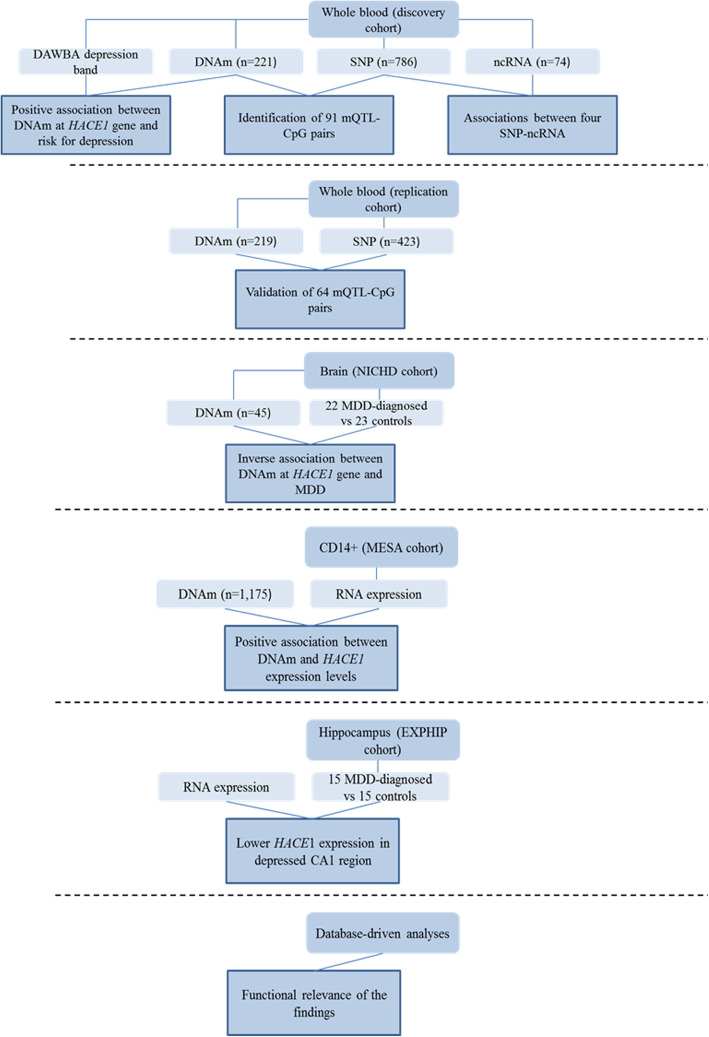
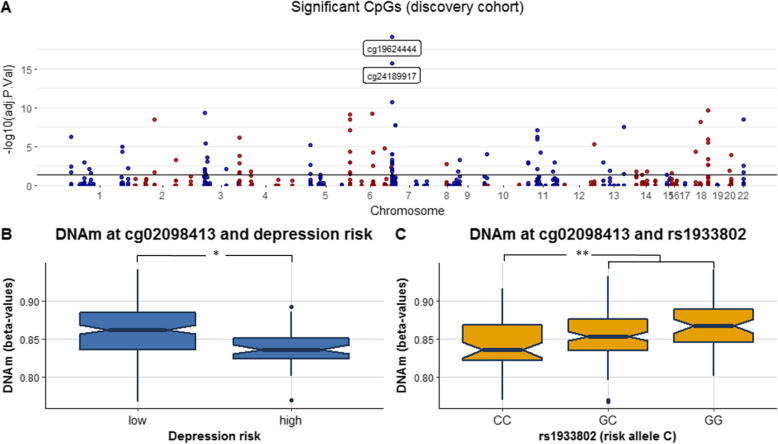
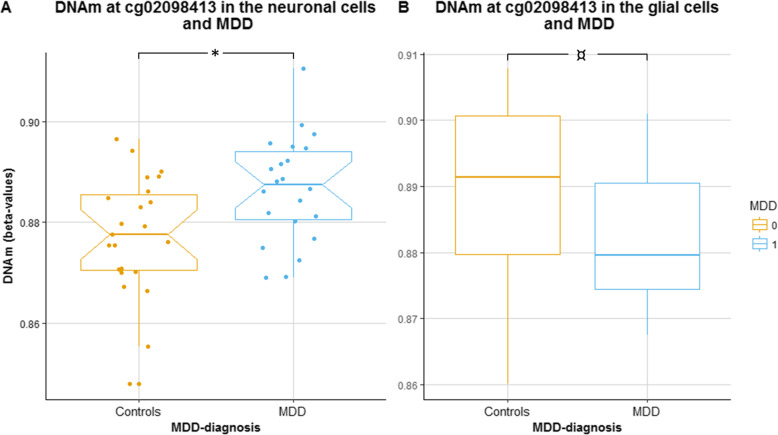
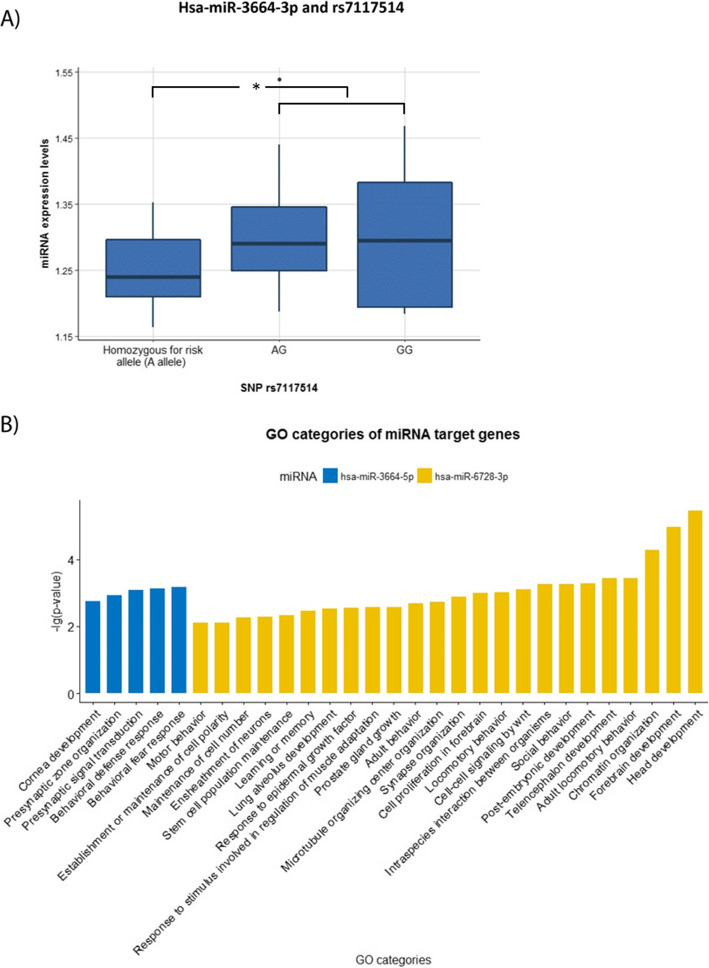
Background: Little is known about how genetics and epigenetics interplay in depression. Evidence suggests that genetic variants may change vulnerability to depression by modulating DNA methylation (DNAm) and non-coding RNA (ncRNA) levels. Therefore, the aim of the study was to investigate the effect of the genetic variation, previously identified in the largest genome-wide association study for depression, on proximal DNAm and ncRNA levels. Results: We performed DNAm quantitative trait locus (meQTL) analysis in two independent cohorts (total n = 435 healthy individuals), testing associations between 102 single-nucleotide polymorphisms (SNPs) and DNAm levels in whole blood. We identified and replicated 64 SNP-CpG pairs (p adj. < 0.05) with meQTL effect. Lower DNAm at cg02098413 located in the HACE1 promoter conferred by the risk allele (C allele) at rs1933802 was associated with higher risk for depression (p raw = 0.014, DNAm = 2.3%). In 1202 CD14+ cells sorted from blood, DNAm at cg02088412 positively correlated with HACE1 mRNA expression. Investigation in postmortem brain tissue of adults diagnosed with major depressive disorder (MDD) indicated 1% higher DNAm at cg02098413 in neurons and lower HACE1 mRNA expression in CA1 hippocampus of MDD patients compared with healthy controls (p = 0.008 and 0.012, respectively). Expression QTL analysis in blood of 74 adolescent revealed that hsa-miR-3664-5p was associated with rs7117514 (SHANK2) (p adj. = 0.015, mRNA difference = 5.2%). Gene ontology analysis of the miRNA target genes highlighted implication in neuronal processes. Conclusions: Collectively, our findings from a multi-tissue (blood and brain) and multi-layered (genetic, epigenetic, transcriptomic) approach suggest that genetic factors may influence depression by modulating DNAm and miRNA levels. Alterations at HACE1 and SHANK2 loci imply potential mechanisms, such as oxidative stress in the brain, underlying depression. Our results deepened the knowledge of molecular mechanisms in depression and suggest new epigenetic targets that should be further evaluated.
Overview
The claims and statistics of this paper haven’t been checked yet.
Free: it reads the open-access text and checks the first 5 claims that cite a source we can check. Create a free account to check every claim.
Integrity signals
Registry
Cites
Statistics
Figures
Verification
Claims the paper makes
The claims and statistics of this paper haven’t been checked yet.
Free: it reads the open-access text and checks the first 5 claims that cite a source we can check. Create a free account to check every claim.
Claims other papers make about this one
Each is checked against this paper’s own text: does it say what the citing paper says it does?
In the citing paper
“For example, psychiatric disease associated SNPs have been found to be enriched for multiple methylation quantitative trait loci (mQTL),35,36 while SNPs in the FKBP5 gene, a key component of the stress response, have been associated with the risk of depression as well as the gene’s methylation state.37,38”
From The role of epigenetics in psychological resilience (2021) · cites this paper as [36]
Self-check
Percentages, sums and reported differences re-computed from the paper’s own numbers.
The self-check needs the paper’s full text.
Citations
Cites
limma powers differential expression analyses for RNA-sequencing and microarray studies
Ritchie, M. E., Phipson, B., Wu, D., Hu, Y., Law, C. W., Shi, W., & Smyth, G. K. (2015) · Nucleic Acids Research · doi:10.1093/nar/gkv007 · Cited by 40,458
PLINK: a tool set for whole-genome association and population-based linkage analyses.
Purcell, S., Neale, B., Todd-Brown, K., Thomas, L., Ferreira, M. A. R., Bender, D., Maller, J., Sklar, P., de Bakker, P. I. W., Daly, M. J., et al. (2007) · The American Journal of Human Genetics · doi:10.1086/519795 · Cited by 34,089
DNA methylation age of human tissues and cell types
Horvath, S. (2013) · Genome Biology · doi:10.1186/gb-2013-14-10-r115 · Cited by 7,075
Leek, J. T., Johnson, W. E., Parker, H. S., Jaffe, A. E., & Storey, J. D. (2012) · Bioinformatics · doi:10.1093/bioinformatics/bts034 · Cited by 6,231
Howie, B. N., Donnelly, P., & Marchini, J. (2009) · PLoS Genetics · doi:10.1371/journal.pgen.1000529 · Cited by 3,928
Genetic Epidemiology of Major Depression: Review and Meta-Analysis
Sullivan, P. F., Neale, M. C., & Kendler, K. S. (2000) · American Journal of Psychiatry · doi:10.1176/appi.ajp.157.10.1552 · Cited by 3,431
Model-based analysis of oligonucleotide arrays: Expression index computation and outlier detection.
Li, C., & Wong, W. H. (2001) · Proceedings of the National Academy of Sciences · doi:10.1073/pnas.98.1.31 · Cited by 3,133
Howard, D. M., Adams, M. J., Clarke, T.-K., Hafferty, J. D., Gibson, J., Shirali, M., Coleman, J. R. I., Hagenaars, S. P., Ward, J., Wigmore, E. M., et al. (2019) · Nature Neuroscience · doi:10.1038/s41593-018-0326-7 · Cited by 2,565
Identification of Mammalian microRNA Host Genes and Transcription Units
Rodriguez, A., Griffiths-Jones, S., Ashurst, J. L., & Bradley, A. (2004) · Genome Research · doi:10.1101/gr.2722704 · Cited by 2,128
Durand, C. M., Betancur, C., Boeckers, T. M., Bockmann, J., Chaste, P., Fauchereau, F., Nygren, G., Rastam, M., Gillberg, I. C., Anckarsäter, H., et al. (2007) · Nature Genetics · doi:10.1038/ng1933 · Cited by 1,602
Chen, Y.-A., Lemire, M., Choufani, S., Butcher, D. T., Grafodatskaya, D., Zanke, B. W., Gallinger, S., Hudson, T. J., & Weksberg, R. (2013) · Epigenetics · doi:10.4161/epi.23470 · Cited by 1,552
BASKERVILLE, S., & BARTEL, D. P. (2005) · RNA · doi:10.1261/rna.7240905 · Cited by 1,508
A survey of human brain transcriptome diversity at the single cell level
Darmanis, S., Sloan, S. A., Zhang, Y., Enge, M., Caneda, C., Shuer, L. M., Hayden Gephart, M. G., Barres, B. A., & Quake, S. R. (2015) · Proceedings of the National Academy of Sciences · doi:10.1073/pnas.1507125112 · Cited by 1,401
Improved whole-chromosome phasing for disease and population genetic studies
Delaneau, O., Zagury, J.-F., & Marchini, J. (2013) · Nature Methods · doi:10.1038/nmeth.2307 · Cited by 1,315
DIANA-microT web server v5.0: service integration into miRNA functional analysis workflows
Paraskevopoulou, M. D., Georgakilas, G., Kostoulas, N., Vlachos, I. S., Vergoulis, T., Reczko, M., Filippidis, C., Dalamagas, T., & Hatzigeorgiou, A. G. (2013) · Nucleic Acids Research · doi:10.1093/nar/gkt393 · Cited by 1,135
Dnmt1 and Dnmt3a maintain DNA methylation and regulate synaptic function in adult forebrain neurons
Feng, J., Zhou, Y., Campbell, S. L., Le, T., Li, E., Sweatt, J. D., Silva, A. J., & Fan, G. (2010) · Nature Neuroscience · doi:10.1038/nn.2514 · Cited by 1,019 · cited 1×
“DNAm is strongly involved in neurodevelopmental processes such as synaptic formation and function [5, 6], especially during adolescence, and its perturbation can lead to psychiatric disorders [7].”
BackgroundLow-level processing of Illumina Infinium DNA Methylation BeadArrays
Triche, T. J., Weisenberger, D. J., Van Den Berg, D., Laird, P. W., & Siegmund, K. D. (2013) · Nucleic Acids Research · doi:10.1093/nar/gkt090 · Cited by 905
The ConsensusPathDB interaction database: 2013 update
Kamburov, A., Stelzl, U., Lehrach, H., & Herwig, R. (2013) · Nucleic Acids Research · doi:10.1093/nar/gks1055 · Cited by 807
Role of Distinct NMDA Receptor Subtypes at Central Synapses
Cull-Candy, S. G., & Leszkiewicz, D. N. (2004) · Science's STKE · doi:10.1126/stke.2552004re16 · Cited by 804
Schratt, G. (2009) · Nature Reviews Neuroscience · doi:10.1038/nrn2763 · Cited by 748
Intra-individual Change Over Time in DNA Methylation With Familial Clustering
Bjornsson, H. T. (2008) · JAMA · doi:10.1001/jama.299.24.2877 · Cited by 702
Transcription factors as readers and effectors of DNA methylation
Zhu, H., Wang, G., & Qian, J. (2016) · Nature Reviews Genetics · doi:10.1038/nrg.2016.83 · Cited by 649
Systematic identification of genetic influences on methylation across the human life course
Gaunt, T. R., Shihab, H. A., Hemani, G., Min, J. L., Woodward, G., Lyttleton, O., Zheng, J., Duggirala, A., McArdle, W. L., Ho, K., et al. (2016) · Genome Biology · doi:10.1186/s13059-016-0926-z · Cited by 598
The Shank family of scaffold proteins
Sheng, M., & Kim, E. (2000) · Journal of Cell Science · doi:10.1242/jcs.113.11.1851 · Cited by 578
Mutations in the SHANK2 synaptic scaffolding gene in autism spectrum disorder and mental retardation
Berkel, S., Marshall, C. R., Weiss, B., Howe, J., Roeth, R., Moog, U., Endris, V., Roberts, W., Szatmari, P., Pinto, D., et al. (2010) · Nature Genetics · doi:10.1038/ng.589 · Cited by 563
Prevalence of Child and Adolescent Psychiatric Disorders in Southeast Brazil
Fleitlich-Bilyk, B., & Goodman, R. (2004) · Journal of the American Academy of Child & Adolescent Psychiatry · doi:10.1097/01.chi.0000120021.14101.ca · Cited by 517
An xQTL map integrates the genetic architecture of the human brain's transcriptome and epigenome
Ng, B., White, C. C., Klein, H.-U., Sieberts, S. K., McCabe, C., Patrick, E., Xu, J., Yu, L., Gaiteri, C., Bennett, D. A., et al. (2017) · Nature Neuroscience · doi:10.1038/nn.4632 · Cited by 452
An integrated epigenetic and genetic approach to common human disease
BJORNSSON, H. (2004) · Trends in Genetics · doi:10.1016/j.tig.2004.06.009 · Cited by 448
Understanding Tissue-Specific Gene Regulation
Sonawane, A. R., Platig, J., Fagny, M., Chen, C.-Y., Paulson, J. N., Lopes-Ramos, C. M., DeMeo, D. L., Quackenbush, J., Glass, K., & Kuijjer, M. L. (2017) · Cell Reports · doi:10.1016/j.celrep.2017.10.001 · Cited by 421
Guintivano, J., Aryee, M. J., & Kaminsky, Z. A. (2013) · Epigenetics · doi:10.4161/epi.23924 · Cited by 368
Maternal programming of steroid receptor expression and phenotype through DNA methylation in the rat
Szyf, M., Weaver, I. C. G., Champagne, F. A., Diorio, J., & Meaney, M. J. (2005) · Frontiers in Neuroendocrinology · doi:10.1016/j.yfrne.2005.10.002 · Cited by 348
Duric, V., Banasr, M., Stockmeier, C. A., Simen, A. A., Newton, S. S., Overholser, J. C., Jurjus, G. J., Dieter, L., & Duman, R. S. (2013) · International Journal of Neuropsychopharmacology · doi:10.1017/s1461145712000016 · Cited by 304 · cited 1×
“Data was analyzed using the 48 K human HEEBO whole-genome microarrays and further followed by normalization using linear-log normalization to stabilize the variance of low expressing genes and removal of spatial and intensity related biases, using the MAANOVA library [70].”
MethodBanovich, N. E., Lan, X., McVicker, G., van de Geijn, B., Degner, J. F., Blischak, J. D., Roux, J., Pritchard, J. K., & Gilad, Y. (2014) · PLoS Genetics · doi:10.1371/journal.pgen.1004663 · Cited by 279
Depression and Oxidative Stress: Results From a Meta-Analysis of Observational Studies
Palta, P., Samuel, L. J., Miller, E. R., & Szanton, S. L. (2014) · Psychosomatic Medicine · doi:10.1097/psy.0000000000000009 · Cited by 277
DNA Methylation Signatures within the Human Brain
Ladd-Acosta, C., Pevsner, J., Sabunciyan, S., Yolken, R. H., Webster, M. J., Dinkins, T., Callinan, P. A., Fan, J.-B., Potash, J. B., & Feinberg, A. P. (2007) · The American Journal of Human Genetics · doi:10.1086/524110 · Cited by 277
Contribution of genetic variation to transgenerational inheritance of DNA methylation
McRae, A. F., Powell, J. E., Henders, A. K., Bowdler, L., Hemani, G., Shah, S., Painter, J. N., Martin, N. G., Visscher, P. M., & Montgomery, G. W. (2014) · Genome Biology · doi:10.1186/gb-2014-15-5-r73 · Cited by 270
BECon: a tool for interpreting DNA methylation findings from blood in the context of brain
Edgar, R. D., Jones, M. J., Meaney, M. J., Turecki, G., & Kobor, M. S. (2017) · Translational Psychiatry · doi:10.1038/tp.2017.171 · Cited by 261
Mechanisms of Memory Disruption in Depression
Dillon, D. G., & Pizzagalli, D. A. (2018) · Trends in Neurosciences · doi:10.1016/j.tins.2017.12.006 · Cited by 254
Abdolmaleky, H. M., Smith, C. L., Faraone, S. V., Shafa, R., Stone, W., Glatt, S. J., & Tsuang, M. T. (2004) · American Journal of Medical Genetics Part B Neuropsychiatric Genetics · doi:10.1002/ajmg.b.20142 · Cited by 216
Epigenetics, cellular memory and gene regulation
Henikoff, S., & Greally, J. M. (2016) · Current Biology · doi:10.1016/j.cub.2016.06.011 · Cited by 213
Reynolds, L. M., Taylor, J. R., Ding, J., Lohman, K., Johnson, C., Siscovick, D., Burke, G., Post, W., Shea, S., Jacobs, D. R., et al. (2014) · Nature Communications · doi:10.1038/ncomms6366 · Cited by 209
Goodman, A., Heiervang, E., Collishaw, S., & Goodman, R. (2011) · Social Psychiatry and Psychiatric Epidemiology · doi:10.1007/s00127-010-0219-x · Cited by 195
Voisin, S., Almén, M. S., Zheleznyakova, G. Y., Lundberg, L., Zarei, S., Castillo, S., Eriksson, F. E., Nilsson, E. K., Blüher, M., Böttcher, Y., et al. (2015) · Genome Medicine · doi:10.1186/s13073-015-0225-4 · Cited by 172
Self-citationStress-induced changes in miRNA biogenesis and functioning
Olejniczak, M., Kotowska-Zimmer, A., & Krzyzosiak, W. (2018) · Cellular and Molecular Life Sciences · doi:10.1007/s00018-017-2591-0 · Cited by 172
Wolff, E. A. (1985) · Archives of General Psychiatry · doi:10.1001/archpsyc.1985.01790260086010 · Cited by 150
A potential role for intragenic miRNAs on their hosts' interactome
Hinske, L. C. G., Galante, P. A., Kuo, W. P., & Ohno-Machado, L. (2010) · BMC Genomics · doi:10.1186/1471-2164-11-533 · Cited by 149
Lutter, D., Marr, C., Krumsiek, J., Lang, E. W., & Theis, F. J. (2010) · BMC Genomics · doi:10.1186/1471-2164-11-224 · Cited by 143
Epigenetic Mechanisms in Memory and Synaptic Function
Sultan, F. A., & Day, J. J. (2011) · Epigenomics · doi:10.2217/epi.11.6 · Cited by 133
Odebrecht Vargas, H., Vargas Nunes, S. O., Pizzo de Castro, M., Cristina Bortolasci, C., Sabbatini Barbosa, D., Kaminami Morimoto, H., Venugopal, K., Dodd, S., Maes, M., & Berk, M. (2013) · Journal of Affective Disorders · doi:10.1016/j.jad.2013.05.016 · Cited by 126
Intronic miR-26b controls neuronal differentiation by repressing its host transcript,ctdsp2
Dill, H., Linder, B., Fehr, A., & Fischer, U. (2012) · Genes & Development · doi:10.1101/gad.177774.111 · Cited by 125
Facial affect processing and depression susceptibility: Cognitive biases and cognitive neuroscience.
Bistricky, S. L., Ingram, R. E., & Atchley, R. A. (2011) · Psychological Bulletin · doi:10.1037/a0025348 · Cited by 119
Sensorimotor modulation of mood and depression: An integrative review
Canbeyli, R. S. (2009) · Behavioural Brain Research · doi:10.1016/j.bbr.2009.11.002 · Cited by 113
HACE1 reduces oxidative stress and mutant Huntingtin toxicity by promoting the NRF2 response
Rotblat, B., Southwell, A. L., Ehrnhoefer, D. E., Skotte, N. H., Metzler, M., Franciosi, S., Leprivier, G., Somasekharan, S. P., Barokas, A., Deng, Y., et al. (2014) · Proceedings of the National Academy of Sciences · doi:10.1073/pnas.1314421111 · Cited by 111
The genetics of depression: successful genome-wide association studies introduce new challenges
Ormel, J., Hartman, C. A., & Snieder, H. (2019) · Translational Psychiatry · doi:10.1038/s41398-019-0450-5 · Cited by 111
Homann, O. R., Misura, K., Lamas, E., Sandrock, R. W., Nelson, P., McDonough, S. I., & DeLisi, L. E. (2016) · Molecular Psychiatry · doi:10.1038/mp.2016.24 · Cited by 104
Reaction time impairment in schizophrenia and affective illness: The role of attention
Schwartz, F., Carr, A. C., Munich, R. L., Glauber, S., Lesser, B., & Murray, J. (1989) · Biological Psychiatry · doi:10.1016/0006-3223(89)90214-x · Cited by 87
Principles and Challenges of Applying Epigenetic Epidemiology to Psychology
Jones, M. J., Moore, S. R., & Kobor, M. S. (2018) · Annual Review of Psychology · doi:10.1146/annurev-psych-122414-033653 · Cited by 84
Neuroepigenetics of memory formation and impairment: The role of microRNAs
Saab, B. J., & Mansuy, I. M. (2014) · Neuropharmacology · doi:10.1016/j.neuropharm.2014.01.026 · Cited by 83
Xia, Y., Dai, R., Wang, K., Jiao, C., Zhang, C., Xu, Y., Li, H., Jing, X., Chen, Y., Jiang, Y., et al. (2021) · Molecular Psychiatry · doi:10.1038/s41380-019-0416-2 · Cited by 80
Noor, A., Lionel, A. C., Cohen‐Woods, S., Moghimi, N., Rucker, J., Fennell, A., Thiruvahindrapuram, B., Kaufman, L., Degagne, B., Wei, J., et al. (2014) · American Journal of Medical Genetics Part B: Neuropsychiatric Genetics · doi:10.1002/ajmg.b.32232 · Cited by 79
Kananen, L., Marttila, S., Nevalainen, T., Kummola, L., Junttila, I., Mononen, N., Kähönen, M. A. P., Raitakari, O. T., Hervonen, A., Jylhä, M. K., et al. (2016) · AGE · doi:10.1007/s11357-016-9927-9 · Cited by 78
Relationships of circular RNA with diabetes and depression
Jiang, G., Ma, Y., An, T., Pan, Y., Mo, F., Zhao, D., Liu, Y., Miao, J.-N., Gu, Y.-J., Wang, Y., et al. (2017) · Scientific Reports · doi:10.1038/s41598-017-07931-0 · Cited by 75
An update on NMDA antagonists in depression
Pochwat, B., Nowak, G., & Szewczyk, B. (2019) · Expert Review of Neurotherapeutics · doi:10.1080/14737175.2019.1643237 · Cited by 70
Deficiency of Shank2 causes mania-like behavior that responds to mood stabilizers
Pappas, A. L., Bey, A. L., Wang, X., Rossi, M., Kim, Y. H., Yan, H., Porkka, F., Duffney, L. J., Phillips, S. M., Cao, X., et al. (2017) · JCI Insight · doi:10.1172/jci.insight.92052 · Cited by 67
Uddin, M., Sipahi, L., Li, J., & Koenen, K. C. (2013) · Depression and Anxiety · doi:10.1002/da.22167 · Cited by 64
Evidence of Higher Oxidative Status in Depression and Anxiety
Grases, G., Colom, M. A., Fernandez, R. A., Costa‐Bauzá, A., & Grases, F. (2014) · Oxidative Medicine and Cellular Longevity · doi:10.1155/2014/430216 · Cited by 59
Ciuculete, D. M., Boström, A. E., Voisin, S., Philipps, H., Titova, O. E., Bandstein, M., Nikontovic, L., Williams, M. J., Mwinyi, J., & Schiöth, H. B. (2017) · Translational Psychiatry · doi:10.1038/tp.2016.275 · Cited by 40
Self-citationEhrnhoefer, D. E., Southwell, A. L., Sivasubramanian, M., Qiu, X., Villanueva, E. B., Xie, Y., Waltl, S., Anderson, L., Fazeli, A., Casal, L., et al. (2018) · Human Molecular Genetics · doi:10.1093/hmg/ddx394 · Cited by 38
Jiao, Y., Yang, H., Qian, J., Gong, Y. L., Liu, H., Wu, S., Cao, L., & Tang, L. (2019) · International Journal of Oncology · doi:10.3892/ijo.2019.4680 · Cited by 38
HACE1 deficiency leads to structural and functional neurodevelopmental defects
Nagy, V., Hollstein, R., Pai, T.-P., Herde, M. K., Buphamalai, P., Moeseneder, P., Lenartowicz, E., Kavirayani, A., Korenke, G. C., Kozieradzki, I., et al. (2019) · Neurology Genetics · doi:10.1212/nxg.0000000000000330 · Cited by 36
Ciuculete, D. M., Boström, A. E. D., Tuunainen, A., Sohrabi, F., Kular, L., Jagodic, M., Voisin, S. A. C., Mwinyi, J., & Schiöth, H. B. (2018) · Journal of Psychiatric Research · doi:10.1016/j.jpsychires.2018.03.008 · Cited by 32
Self-citationEnlarged dendritic spines and pronounced neophobia in mice lacking the PSD protein RICH2
Sarowar, T., Grabrucker, S., Föhr, K., Mangus, K., Eckert, M., Bockmann, J., Boeckers, T. M., & Grabrucker, A. M. (2016) · Molecular Brain · doi:10.1186/s13041-016-0206-6 · Cited by 30
Ciuculete, D. M., Voisin, S. A. C., Kular, L., Welihinda, N., Jonsson, J., Jagodic, M., Mwinyi, J., & Schiöth, H. B. (2019) · Epigenetics · doi:10.1080/15592294.2019.1700628 · Cited by 30
Self-citationThe role of SHANK2 rare variants in schizophrenia susceptibility
Costas, J. (2015) · Molecular Psychiatry · doi:10.1038/mp.2015.119 · Cited by 20
Research works printed but not linked: 1
- 1. Organization WH Depression and other common mental disorders 2017
Cited by
Alzheimer’s disease and type 2 diabetes mellitus: A systematic review of proteomic studies
Pereira, J. D., Fraga, V. G., Santos, A. L. M., Ferriani, M. D. G. C., Caramelli, P., & Gomes, K. B. (2020) · Journal of Neurochemistry · doi:10.1111/jnc.15166 · Cited by 113
The role of epigenetics in psychological resilience
Smeeth, D., Beck, S., Karam, E. G., & Pluess, M. (2021) · The Lancet Psychiatry · doi:10.1016/s2215-0366(20)30515-0 · Cited by 108
The role of epigenetic mechanisms in the regulation of gene expression in the cyclical endometrium
Retis-Resendiz, A. M., González-García, I. N., León-Juárez, M., Camacho-Arroyo, I., Cerbón, M., & Vázquez-Martínez, E. R. (2021) · Clinical Epigenetics · doi:10.1186/s13148-021-01103-8 · Cited by 80
Katrenčíková, B., Vaváková, M., Paduchová, Z., Nagyová, Z., Garaiová, I., Muchová, J., Ďuračková, Z., & Trebatická, J. (2021) · Antioxidants · doi:10.3390/antiox10081256 · Cited by 69
Epigenetic Targeting of Histone Deacetylases in Diagnostics and Treatment of Depression
Park, H., Kim, J., Ahn, S. H., & Ryu, H. (2021) · International Journal of Molecular Sciences · doi:10.3390/ijms22105398 · Cited by 58
Metadata
- Authors
- Ciuculete, D. M., Voisin, S., Kular, L., Jonsson, J., Rask-Andersen, M., Mwinyi, J., & Schiöth, H. B.
- Affiliations
- Uppsala University (SE)
- Victoria University (AU)
- Karolinska Institutet (SE)
- Corresponding author
- Ciuculete, Diana M.
- Venue
- Clinical Epigenetics
- Published
- 2020-07-02
- Volume
- 12
- Issue
- 1
- Pages
- 99-99
- ISSN
- 1868-7075 (ISSN-L)
- 1868-7083
- PMC
- PMC7333393
- OpenAlex
- W3040232429
- Cited by
- 35
- References
- 74
- Citations by year
- 2026: 5 · 2025: 6 · 2024: 4 · 2023: 6 · 2022: 4 · 2021: 9 · 2020: 1
- FWCI
- 2.93
- Type
- journal article
- Language
- en
- Open access
- gold
- doi.org
- Licence
- cc-by
- creativecommons.org/licenses/by/4.0 (tdm)
- creativecommons.org/licenses/by/4.0 (vor)
- Locations
- Clinical Epigenetics (publishedVersion, cc-by)
- PubMed Central (publishedVersion, cc-by)
- PubMed (publishedVersion)
- Victoria University Research Repository (Victoria University) (submittedVersion, cc-by)
- Uppsala University Publications (Uppsala University) (submittedVersion, other-oa)
- Funders
- Brain Research Foundation
- Novo Nordisk
- Vetenskapsrådet
- Uppsala Universitet
- Science for Life Laboratory
- Novo Nordisk Fonden
- Topics
- Life Sciences › Biochemistry, Genetics and Molecular Biology › Genetics › Genetic Associations and Epidemiology
- Life Sciences › Biochemistry, Genetics and Molecular Biology › Molecular Biology › Epigenetics and DNA Methylation
- Life Sciences › Biochemistry, Genetics and Molecular Biology › Molecular Biology › Genomics and Chromatin Dynamics
- Keywords
- depression, DNA methylation, meQTL, non-coding RNA, HACE1, Shank2, major depressive disorder, CpG sites, hippocampus, gene expression, oxidative stress, epigenetics, genetic risk variants, postmortem brain
- MeSH terms
- Adolescent, Adult, Alleles, Autopsy, Brain, Depression, Major Depressive Disorder, Female, Humans, Male, Nerve Tissue Proteins, Neurons, Case-Control Studies, DNA Methylation, Polymorphism, Single Nucleotide, RNA, Untranslated, MicroRNAs, Quantitative Trait Loci, Ubiquitin-Protein Ligases, Genome-Wide Association Study, Epigenomics
About these checks
Registry, retraction, Cites and statistics results are computed, not judged, with one exception: a printed reference that no index lists is read once by a model before it counts as a citation error. Claims are extracted by a model and kept only when their quote appears verbatim in the text; each cited source is then checked, with a model’s help, for whether it says what the claim relies on. Those verdicts can be wrong — read the claim’s quote and the cited source before relying on one.
Statistics and arithmetic are recomputed, not judged.
Confidence bands are shown only for fields calibrated on our annotated test set. None is calibrated yet, so no band is shown.
What counts as a claim ›How we measure confidence ›How we check this ›
Are you an author, or do you see a problem with this page? Request a review
Data sources
Bibliographic data: Semantic Scholar, OpenAlex, Crossref.
Contains information from the Semantic Scholar Academic Graph Datasets, made available under the ODC Attribution License (ODC-BY 1.0).
Semantic Scholar’s data is described in: Kinney, R., et al. (2023). The Semantic Scholar Open Data Platform. arXiv:2301.10140.
