

Neural circuitry at age 6 months associated with later repetitive behavior and sensory responsiveness in autism
Open accessThe DOI matches its Crossref record; 75 of the 75 references it cites were found in a registry or an index.
Abstract
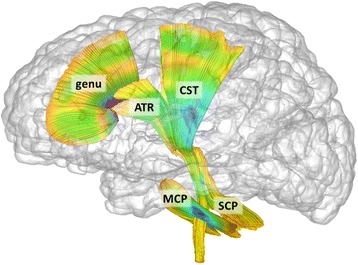
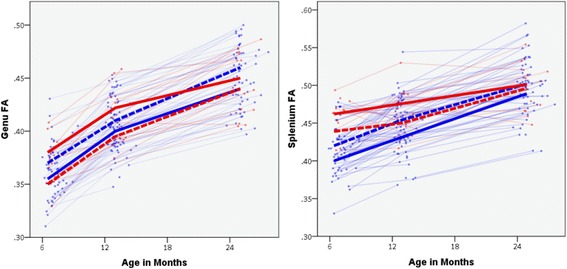
BACKGROUND: Restricted and repetitive behaviors are defining features of autism spectrum disorder (ASD). Under revised diagnostic criteria for ASD, this behavioral domain now includes atypical responses to sensory stimuli. To date, little is known about the neural circuitry underlying these features of ASD early in life. METHODS: Longitudinal diffusion tensor imaging data were collected from 217 infants at high familial risk for ASD. Forty-four of these infants were diagnosed with ASD at age 2. Targeted cortical, cerebellar, and striatal white matter pathways were defined and measured at ages 6, 12, and 24 months. Dependent variables included the Repetitive Behavior Scale-Revised and the Sensory Experiences Questionnaire. RESULTS: Among children diagnosed with ASD, repetitive behaviors and sensory response patterns were strongly correlated, even when accounting for developmental level or social impairment. Longitudinal analyses indicated that the genu and cerebellar pathways were significantly associated with both repetitive behaviors and sensory responsiveness but not social deficits. At age 6 months, fractional anisotropy in the genu significantly predicted repetitive behaviors and sensory responsiveness at age 2. Cerebellar pathways significantly predicted later sensory responsiveness. Exploratory analyses suggested a possible disordinal interaction based on diagnostic status for the association between fractional anisotropy and repetitive behavior. CONCLUSIONS: Our findings suggest that restricted and repetitive behaviors contributing to a diagnosis of ASD at age 2 years are associated with structural properties of callosal and cerebellar white matter pathways measured during infancy and toddlerhood. We further identified that repetitive behaviors and unusual sensory response patterns co-occur and share common brain-behavior relationships. These results were strikingly specific given the absence of association between targeted pathways and social deficits.
Overview
The claims and statistics of this paper haven’t been checked yet.
Free: it reads the open-access text and checks the first 5 claims that cite a source we can check. Create a free account to check every claim.
Integrity signals
Registry
Cites
Statistics
Figures
Verification
Claims the paper makes
The claims and statistics of this paper haven’t been checked yet.
Free: it reads the open-access text and checks the first 5 claims that cite a source we can check. Create a free account to check every claim.
Claims other papers make about this one
Each is checked against this paper’s own text: does it say what the citing paper says it does?
The check wasn’t confident either way, so it gives no verdict — never disputed.
In the citing paper
“Task-based fMRI studies investigate circuits that are responsible for core challenges in ASD (such as language production and comprehension 75 ), and have demonstrated hyper-activation of the superior temporal gyrus and inferior frontal gyrus and hypoactivation of the bilateral middle temporal gyrus 72”
From Autism spectrum disorder (2020) · cites this paper as [75]
Experimental — accuracy not yet measuredThe check wasn’t confident either way, so it gives no verdict — never disputed.
In the citing paper
“In addition, these studies have demonstrated challenges in processing emotions in faces and the 'social brain' 74 , and deficits in attention 75”
From Autism spectrum disorder (2020) · cites this paper as [75]
Experimental — accuracy not yet measured
Self-check
Percentages, sums and reported differences re-computed from the paper’s own numbers.
The self-check needs the paper’s full text.
Citations
Cites
Lord, C., Rutter, M., & Le Couteur, A. (1994) · Journal of Autism and Developmental Disorders · doi:10.1007/bf02172145 · Cited by 9,065 · cited 2×
“Familial high-risk status was defined by having an older sibling with a community diagnosis of the ASD confirmed by the Autism Diagnostic InterviewRevised (ADI-R) [40] and Social Communication Questionnaire [41].”
BackgroundParallel organization of functionally segregated circuits linking basal ganglia and cortex
Alexander, G. E., DeLong, M. R., & Strick, P. L. (1986) · Annual Review of Neuroscience · doi:10.1146/annurev.ne.09.030186.002041 · Cited by 8,527 · cited 1×
“Preclinical work has implicated components of cortico-striatal-thalamo-cortical circuitry [8] as the neurobiological basis of RRBs [9–11].”
BackgroundLord, C., Risi, S., Lambrecht, L., Cook, E. H., Leventhal, B. L., DiLavore, P. C., Pickles, A., & Rutter, M. (2000) · Journal of Autism and Developmental Disorders · doi:10.1023/a:1005592401947 · Cited by 7,520 · cited 9×
“All participants in our study sample had a completed ADOS administration.”
MethodInfluentialAdaptive linear step-up procedures that control the false discovery rate
Benjamini, Y., Krieger, A. M., & Yekutieli, D. (2006) · Biometrika · doi:10.1093/biomet/93.3.491 · Cited by 3,228
Mullen Scales of Early Learning
Bradley-Johnson, S. (1997) · Psychology in the Schools · doi:10.1002/(sici)1520-6807(199710)34:4<379::aid-pits14>3.0.co;2-e · Cited by 2,325 · cited 8×
“This relationship remained when controlling for MSEL composite score (prs = 0.47, p 0.001) or social affect score (prs = 0.48, p 0.001).”
MethodInfluentialPositron emission tomography study of human brain functional development
Chugani, H. T., Phelps, M. E., & Mazziotta, J. C. (1987) · Annals of Neurology · doi:10.1002/ana.410220408 · Cited by 1,548 · cited 2×
“It is less clear what role striatal circuitry plays during infant development or how such circuitry might interact with cerebellar circuits during this period to support emerging function [39], such as the transition from reflexive to instrumental behavior [67].”
BackgroundAnatomical evidence for cerebellar and basal ganglia involvement in higher cognitive function
Middleton, F. A., & Strick, P. L. (1994) · Science · doi:10.1126/science.7939688 · Cited by 1,356 · cited 1×
“Cerebellar and striatal circuits innervate similar frontal cortical regions [70, 71], which are in turn connected by the genu of the corpus callosum.”
BackgroundVarieties of Repetitive Behavior in Autism: Comparisons to Mental Retardation
Bodfish, J. W., Symons, F. J., Parker, D. E., & Lewis, M. H. (2000) · Journal of Autism and Developmental Disorders · doi:10.1023/a:1005596502855 · Cited by 1,223 · cited 1×
“Assessment data included the Repetitive Behavior ScaleRevised (RBS-R) [45] and the Sensory Experiences Questionnaire v2.”
MethodConsensus Paper: The Cerebellum's Role in Movement and Cognition
Koziol, L. F., Budding, D., Andreasen, N., D’Arrigo, S., Bulgheroni, S., Imamizu, H., Ito, M., Manto, M., Marvel, C., Parker, K., et al. (2014) · The Cerebellum · doi:10.1007/s12311-013-0511-x · Cited by 1,133
A clinicopathological study of autism
Bailey, A. (1998) · Brain · doi:10.1093/brain/121.5.889 · Cited by 1,083
Research works printed but not linked: 1
- Oishi K, Faria AV, Zijl PCM van, Mori S. MRI Atlas of Human White Matter. Volume 12. Cambridge: Academic Press; 2010.
Cited by
Lord, C., Brugha, T. S., Charman, T., Cusack, J., Dumas, G., Frazier, T., Jones, E. J. H., Jones, R. M., Pickles, A., State, M. W., et al. (2020) · Nature Reviews Disease Primers · doi:10.1038/s41572-019-0138-4 · Cited by 1,859
The UNC/UMN Baby Connectome Project (BCP): An overview of the study design and protocol development
Howell, B. R., Styner, M. A., Gao, W., Yap, P.-T., Wang, L., Baluyot, K., Yacoub, E., Chen, G., Potts, T., Salzwedel, A., et al. (2019) · NeuroImage · doi:10.1016/j.neuroimage.2018.03.049 · Cited by 427
“…neuroimaging for informing the subsequent emergence of atypical patterns of behavior is highlighted by recent findings from the Infant Brain Imaging Study or IBIS (http://www.ibis-network.org/) (Emerson et al., 2017; Hazlett et al., 2017; Lewis et al., 2017; Shen et al., 2017; Wolff et al., 2017).”
Self-citationAutism spectrum disorder: advances in diagnosis and evaluation
Zwaigenbaum, L., & Penner, M. (2018) · BMJ · doi:10.1136/bmj.k1674 · Cited by 263
Self-citationToward a conceptual framework for early brain and behavior development in autism
Piven, J., Elison, J. T., & Zylka, M. J. (2017) · Molecular Psychiatry · doi:10.1038/mp.2017.131 · Cited by 163
Self-citationIppolito, G., Bertaccini, R., Tarasi, L., Gregorio, F. D., Trajkovic, J., Battaglia, S., & Romei, V. (2022) · Biomedicines · doi:10.3390/biomedicines10123189 · Cited by 152
The journey to autism: Insights from neuroimaging studies of infants and toddlers
Wolff, J. J., Jacob, S., & Elison, J. T. (2017) · Development and Psychopathology · doi:10.1017/s0954579417000980 · Cited by 140
“Wolff et al. (2017) recently reported that FA in cerebellar and corpus callosum white matter pathways from 6 to 24 months was positively associated with restricted and repetitive behaviors, as well as responsiveness to sensory stimuli, in toddlers with ASD.”
BackgroundSelf-citationTian, J., Gao, X., & Yang, L. (2022) · Frontiers in Neuroscience · doi:10.3389/fnins.2022.780407 · Cited by 146
“alterations of the cerebellum are associated with RRBs (Rojas et al., 2006; Cheung et al., 2009; D’Mello et al., 2015; Wolff et al., 2017).”
BackgroundSilverman, J. L., Thurm, A. E., Ethridge, S. B., Soller, M. M., Petkova, S. P., Abel, T. G., Bauman, M. D., Brodkin, E. S., Harony‐Nicolas, H., Wöhr, M., et al. (2022) · Genes Brain & Behavior · doi:10.1111/gbb.12803 · Cited by 147
Development of Brain Networks In Utero: Relevance for Common Neural Disorders
Thomason, M. E. (2020) · Biological Psychiatry · doi:10.1016/j.biopsych.2020.02.007 · Cited by 118
Brain and behavior development in autism from birth through infancy
Shen, M. D., & Piven, J. (2017) · Dialogues in Clinical Neuroscience · doi:10.31887/dcns.2017.19.4/mshen · Cited by 127
Self-citationDong, H.-Y., Wang, B., Li, H.-H., Yue, X.-J., & Jia, F.-Y. (2021) · Frontiers in Psychiatry · doi:10.3389/fpsyt.2021.619994 · Cited by 110
McKinnon, C., Eggebrecht, A. T., Todorov, A. A., Wolff, J. J., Elison, J. T., Adams, C. M., Snyder, A. Z., Estes, A. M., Zwaigenbaum, L., Botteron, K. N., et al. (2018) · Biological Psychiatry Cognitive Neuroscience and Neuroimaging · doi:10.1016/j.bpsc.2018.09.008 · Cited by 117
Self-citationSchulz, S. E., & Stevenson, R. A. (2019) · Autism · doi:10.1177/1362361318774559 · Cited by 95
“…and expand upon previous studies linking these symptoms in autistic individuals based on parent reports (Black et al., 2017; Boyd et al., 2010; Chen et al., 2009; Gabriels et al., 2008) and showing a possible overlap between the underlying neurobiology of these two symptoms (Wolff et al., 2017).”
BackgroundHaartsen, R., Jones, E. J. H., Orekhova, E. V., Charman, T., Johnson, M. H., The BASIS team, Baron‐Cohen, S., Bedford, R., Blasi, A., Bolton, P., et al. (2019) · Translational Psychiatry · doi:10.1038/s41398-019-0380-2 · Cited by 106
Modern Biomarkers for Autism Spectrum Disorder: Future Directions
Jensen, A., Lane, A. L., Werner, B. A., McLees, S. E., Fletcher, T. S., & Frye, R. E. (2022) · Molecular Diagnosis & Therapy · doi:10.1007/s40291-022-00600-7 · Cited by 130
The Neurodevelopment of Autism from Infancy Through Toddlerhood
Girault, J. B., & Piven, J. (2019) · Neuroimaging Clinics of North America · doi:10.1016/j.nic.2019.09.009 · Cited by 107
Self-citationCerebrospinal fluid and the early brain development of autism
Shen, M. D. (2018) · Journal of Neurodevelopmental Disorders · doi:10.1186/s11689-018-9256-7 · Cited by 98
Self-citationHiremath, C., Kommu, J. V. S., Yamini, B. K., Girimaji, A. S., Kumar, K. R., Sravanti, S. L., Padmanabha, H., Raju, K. N. V., Kishore, M. T., Jacob, P., et al. (2021) · Translational Psychiatry · doi:10.1038/s41398-020-01178-6 · Cited by 118
Shen, M. D., Swanson, M. R., Wolff, J. J., Elison, J. T., Girault, J. B., Kim, S. H., Smith, R. G., Graves, M. M., Weisenfeld, L. A. H., Flake, L., et al. (2022) · American Journal of Psychiatry · doi:10.1176/appi.ajp.21090896 · Cited by 89
Self-citationA longitudinal study of parent‐reported sensory responsiveness in toddlers at‐risk for autism
Wolff, J. J., Dimian, A. F., Botteron, K. N., Dager, S. R., Elison, J. T., Estes, A. M., Hazlett, H. C., Schultz, R. T., Zwaigenbaum, L., Piven, J., et al. (2018) · Journal of Child Psychology and Psychiatry · doi:10.1111/jcpp.12978 · Cited by 88
“However, there has been relatively little progress made toward elucidating the nature of this relationship ( Uljarević et al., 2017; Wolff et al., 2017; for an illuminating exchange see Lewis, Baumeister, & Mailman, 1987, & Lovaas, Newsom, & Hickman, 1987).”
BackgroundInfluentialSelf-citationAndrews, D. S., Lee, J. K., Harvey, D. J., Waizbard-Bartov, E., Solomon, M., Rogers, S. J., Nordahl, C. W., & Amaral, D. G. (2021) · Biological Psychiatry · doi:10.1016/j.biopsych.2020.10.013 · Cited by 73
“The corpus callosum has been found to have atypical structure and diffusion properties in ASD (33,34) which have been associated with social deficits in the condition (35) and found to predictive of repetitive behaviors and sensory responsiveness in high risk infants (40).”
BackgroundMaksimović, S., Marisavljević, M., Stanojević, N., Ćirović, M., Punišić, S., Adamović, T., Đorđević, J., Krgović, I., & Subotić, M. (2023) · Children · doi:10.3390/children10010122 · Cited by 99
“Given that repetitive and stereotypical behaviors can be expressed at an early age [58] and have an impact on various aspects of development [59], the importance of reducing these symptoms is emphasized, and our results point out that even a one-year-long intervention can have a significant effect on these symptoms.”
Wilkes, B. J., & Lewis, M. H. (2018) · Neuroscience & Biobehavioral Reviews · doi:10.1016/j.neubiorev.2018.05.022 · Cited by 64
“Reduced volume of the cerebellar crus was correlated with higher RRB in multiple studies of children with ASD (Cheung et al., 2009; D’mello et al., 2015; Rojas et al., 2006; Wolff et al., 2017).”
Wilson, R. B., Vangala, S., Elashoff, D., Safari, T., & Smith, B. A. (2021) · Sensors · doi:10.3390/s21020616 · Cited by 59
Linke, A. C., Chen, B., Olson, L., Ibarra, C., Fong, C., Reynolds, S., Apostol, M., Kinnear, M., Müller, R., & Fishman, I. (2021) · Biological Psychiatry Cognitive Neuroscience and Neuroimaging · doi:10.1016/j.bpsc.2021.07.008 · Cited by 62
Dong, H.-Y., Feng, J.-Y., Wang, B., Shan, L., & Jia, F.-Y. (2021) · Frontiers in Psychiatry · doi:10.3389/fpsyt.2021.675902 · Cited by 41
“The brain develops rapidly in the early stages after birth and is influenced by the developmental environment (43).”
BackgroundLiu, J., Okada, N. J., Cummings, K. K., Jung, J., Patterson, G., Bookheimer, S. Y., Jeste, S., & Dapretto, M. (2020) · Developmental Cognitive Neuroscience · doi:10.1016/j.dcn.2020.100814 · Cited by 57
The meaning of significant mean group differences for biomarker discovery
Loth, E., Ahmad, J., Chatham, C., López, B., Carter, B., Crawley, D., Oakley, B., Hayward, H., Cooke, J., San José Cáceres, A., et al. (2021) · PLOS Computational Biology · doi:10.1371/journal.pcbi.1009477 · Cited by 52
Wolff, J. J., & Piven, J. (2020) · Journal of the American Academy of Child & Adolescent Psychiatry · doi:10.1016/j.jaac.2020.07.910 · Cited by 55
Self-citationAltered lateralization of dorsal language tracts in 6‐week‐old infants at risk for autism
Liu, J., Tsang, T., Jackson, L., Ponting, C., Jeste, S., Bookheimer, S. Y., & Dapretto, M. (2018) · Developmental Science · doi:10.1111/desc.12768 · Cited by 52
on behalf of the TACERN Study Group, Prohl, A. K., Scherrer, B., Tomas-Fernandez, X., Davis, P. E., Filip-Dhima, R., Prabhu, S. P., Peters, J. M., Bebin, E. M., Krueger, D. A., et al. (2019) · Journal of Neurodevelopmental Disorders · doi:10.1186/s11689-019-9293-x · Cited by 50
Pote, I., Wang, S., Sethna, V., Blasi, A., Daly, E., Deprez, M., Lloyd‐Fox, S., Mercure, E., Busuulwa, P., Stoencheva, V., et al. (2019) · Autism Research · doi:10.1002/aur.2083 · Cited by 53
“All of the manual segmentations were completed on ITK-SNAP (i.e., a software application used to segment 3D medical images) and performed by the same rater.”
Vivanti, G., & Messinger, D. S. (2021) · Journal of Autism and Developmental Disorders · doi:10.1007/s10803-021-04887-z · Cited by 78
Erratum: Toward a conceptual framework for early brain and behavior development in autism
Piven, J., Elison, J. T., & Zylka, M. J. (2017) · Molecular Psychiatry · doi:10.1038/mp.2017.212 · Cited by 51
Self-citationInfant Visual Brain Development and Inherited Genetic Liability in Autism
Girault, J. B., Donovan, K., Hawks, Z., Talović, M., Forsen, E., Elison, J. T., Shen, M. D., Swanson, M. R., Wolff, J. J., Kim, S. H., et al. (2022) · American Journal of Psychiatry · doi:10.1176/appi.ajp.21101002 · Cited by 51
Self-citationCarpenter, K. L. H., Major, S. T., Tallman, C. W., Chen, L. W., Franz, L., Sun, J. M., Kurtzberg, J., Song, A. W., & Dawson, G. (2019) · Stem Cells Translational Medicine · doi:10.1002/sctm.18-0251 · Cited by 50
Development of White Matter Circuitry in Infants With Fragile X Syndrome
Swanson, M. R., Wolff, J. J., Shen, M. D., Styner, M., Estes, A., Gerig, G., McKinstry, R. C., Botteron, K. N., Piven, J., Hazlett, H. C., et al. (2018) · JAMA Psychiatry · doi:10.1001/jamapsychiatry.2018.0180 · Cited by 47
Self-citationEmerging signs of autism spectrum disorder in infancy: Putative neural substrate
Hadders‐Algra, M. (2022) · Developmental Medicine & Child Neurology · doi:10.1111/dmcn.15333 · Cited by 50
Can Autism Be Diagnosed with Artificial Intelligence? A Narrative Review
Chaddad, A., Li, J., Lu, Q., Li, Y., Okuwobi, I. P., Tanougast, C., Desrosiers, C., & Niazi, T. M. (2021) · Diagnostics · doi:10.3390/diagnostics11112032 · Cited by 50
“This abnormality is positively correlated with the stereotypical behavior of children with autism Wolff et al. [2017].”
BackgroundAdvances, challenges, and promises in pediatric neuroimaging of neurodevelopmental disorders
Bednarz, H. M., & Kana, R. K. (2018) · Neuroscience & Biobehavioral Reviews · doi:10.1016/j.neubiorev.2018.03.025 · Cited by 38
Qing, P., Zhang, X., Liu, Q., Huang, L., Xu, D., Le, J., Kendrick, K. M., Lai, H., & Zhao, W. (2024) · Molecular Autism · doi:10.1186/s13229-024-00620-6 · Cited by 37
Unruh, K. E., Martin, L. E., Magnon, G. C., Vaillancourt, D. E., Sweeney, J. A., & Mosconi, M. W. (2019) · Journal of Neurophysiology · doi:10.1152/jn.00286.2019 · Cited by 34
Okada, N. J., Liu, J., Tsang, T., Nosco, E., McDonald, N. M., Cummings, K. K., Jung, J., Patterson, G., Bookheimer, S. Y., Green, S. A., et al. (2021) · Journal of Child Psychology and Psychiatry · doi:10.1111/jcpp.13555 · Cited by 32
Clairmont, C. D., Wang, J., Tariq, S., Sherman, H. T., Zhao, M., & Kong, X. (2022) · Frontiers in Neuroscience · doi:10.3389/fnins.2021.812946 · Cited by 47
The Cambridge Handbook of Infant Development: Brain, Behavior, and Cultural Context
Lockman, J. J., & Tamis-LeMonda, C. S. (2020) · Cambridge University Press eBooks · doi:10.1017/9781108351959 · Cited by 35
A cascading effects model of early sensory development in autism.
Russo, N. N., Cascio, C. J., Baranek, G. T., Woynaroski, T. G., Williams, Z. J., Green, S. A., & Schaaf, R. C. (2026) · Psychological Review · doi:10.1037/rev0000558 · Cited by 33
Liu, J., Tsang, T., Ponting, C., Jackson, L., Jeste, S., Bookheimer, S. Y., & Dapretto, M. (2021) · Developmental Science · doi:10.1111/desc.13078 · Cited by 31
“…diagnosed until age 3 (Jones et al., 2014), prior findings from infant sibling studies indicate that early differences in brain function that precede behavioral symptoms associated with ASD are already present before the first birthday (as described below; see Wolff et al., 2017 for review).”
BackgroundReynolds, M., & Culican, S. M. (2023) · Children · doi:10.3390/children10040606 · Cited by 33
Neuroimaging Markers of Risk and Pathways to Resilience in Autism Spectrum Disorder
Molnar-Szakacs, I., Kupis, L. B., & Uddin, L. Q. (2020) · Biological Psychiatry Cognitive Neuroscience and Neuroimaging · doi:10.1016/j.bpsc.2020.06.017 · Cited by 31
“, 2017 (75) 217(44, 173) a 6–24 DTI Genu and cerebellar white matter connectivity Repetitive behaviors; sensory response US/not reported Longitudinal*”
BackgroundMethodWilkes, B. J., Archer, D. B., Farmer, A. L., Bass, C., Korah, H. E., Vaillancourt, D. E., & Lewis, M. H. (2024) · Molecular Autism · doi:10.1186/s13229-023-00581-2 · Cited by 30
Yao, B., Rolfs, M., McLaughlin, C. S., Isenstein, E. L., Guillory, S. B., Grosman, H. E., Kashy, D. A., Foss‐Feig, J. H., & Thakkar, K. N. (2021) · Journal of Vision · doi:10.1167/jov.21.8.9 · Cited by 28
“Specifically, more severe repetitive behaviors have been related to greater hyporesponsiveness across sensory modalities (Wigham et al., 2015; Wolff et al., 2017) and tactile hyporesponsiveness in particular (Foss-Feig et al., 2012).”
BackgroundBahrick, L. E., Lickliter, R., & Todd, J. T. T. (2020) · Cambridge University Press eBooks · doi:10.1017/9781108351959.011 · Cited by 31
Wilson, R. B., Vangala, S., Reetzke, R., Piergies, A. M. H., Ozonoff, S. J., & Miller, M. (2024) · Autism Research · doi:10.1002/aur.3150 · Cited by 26
“K E Y W O R D S attention-deficit/hyperactivity disorder, autism spectrum disorder, complexity, infants, motor skills, sensors, variability”
Synaptopathology in autism spectrum disorders: Complex effects of synaptic genes on neural circuits
Wang, X., Kéry, R., & Xiong, Q. (2017) · Progress in Neuro-Psychopharmacology and Biological Psychiatry · doi:10.1016/j.pnpbp.2017.09.026 · Cited by 24
Wilkes, B. J., Bass, C., Korah, H. E., Febo, M., & Lewis, M. H. (2019) · Brain Imaging and Behavior · doi:10.1007/s11682-019-00158-9 · Cited by 27
“DTI has been used to study WM alterations related to RRB in a small number of studies in ASD (Cheung et al. 2009; Langen et al. 2012; Thakkar et al. 2008; Wolff et al. 2017) and relevant animal models with RRB (Dodero et al. 2013; Ellegood et al. 2013; Sforazzini et al. 2016).”
BackgroundMethodInfluentialSurgent, O. J., Riaz, A., Ausderau, K., Adluru, N., Kirk, G. R., Guerrero-Gonzalez, J. M., Skaletski, E. C., Kecskemeti, S., Dean, D., Weismer, S. E., et al. (2022) · Molecular Autism · doi:10.1186/s13229-022-00524-3 · Cited by 24
Measuring robustness of brain networks in autism spectrum disorder with Ricci curvature
Simhal, A. K., Carpenter, K. L. H., Nadeem, S., Kurtzberg, J., Song, A. W., Tannenbaum, A., Sapiro, G., & Dawson, G. (2020) · Scientific Reports · doi:10.1038/s41598-020-67474-9 · Cited by 22
Sensory–movement underpinnings of lifelong neurodivergence: getting a grip on autism
Kapp, S. K. (2025) · Frontiers in Integrative Neuroscience · doi:10.3389/fnint.2025.1489322 · Cited by 24
The prevalence and developmental course of auditory processing differences in autistic children
Lau, B. K., Emmons, K. A., Lee, A. K. C., MUNSON, J. A., Dager, S. R., & Estes, A. M. (2023) · Autism Research · doi:10.1002/aur.2961 · Cited by 21
“Characteristics of ASD present early in development and affect a range of behaviors including reduced eye contact, differences in verbal and nonverbal communication, repetitive motor movements, and heightened or reduced sensitivity to sensory input.”
BackgroundInfluentialSelf-citationLiu, C., Li, D., Yang, H., Li, H., Xu, Q., Zhou, B., Hu, C., Li, C., Wang, Y., Qiao, Z., et al. (2020) · Progress in Neurobiology · doi:10.1016/j.pneurobio.2020.101985 · Cited by 21
“A long list of neuroimaging studies in literature discovered differences in a numerous brain regions or tracts between ASD and controls (Aoki et al., 2017; Ecker et al., 2015; Muhle et al., 2018; Swanson et al., 2018; Varghese et al., 2017; Wolff et al., 2017).”
Zhao, X., Zhu, S., Cao, Y., Cheng, P., Lin, Y., Sun, Z., Li, Y., Jiang, W., & Du, Y. (2022) · Brain and Behavior · doi:10.1002/brb3.2693 · Cited by 20
DSM-5 symptom expression in toddlers
Coulter, K. L., Barton, M. L., Robins, D. L., Stone, W. L., & FEIN, D. A. (2021) · Autism · doi:10.1177/13623613211000160 · Cited by 21
“The symptoms of ASD, including social and sensory differences (Baranek, 1999), which may be preceded by differences in anatomy and neural circuitry (Emerson et al., 2017; Hazlett et al., 2017; Wolff et al., 2017), appear to emerge primarily during the second year of life.”
BackgroundWorthley, E., Grzadzinski, R., Zwaigenbaum, L., Dager, S. R., Estes, A. M., Hazlett, H. C., Schultz, R. T., Piven, J., Wolff, J. J., & IBIS Network (2023) · Journal of Autism and Developmental Disorders · doi:10.1007/s10803-022-05869-5 · Cited by 20
“These sensory responsivity patterns have been associated with brain development in infants later diagnosed with autism as young as six months (Wolff et al., 2017 ).”
Self-citationWhite matter development and language abilities during infancy in autism spectrum disorder
McFayden, T. C., Rutsohn, J., Cetin, G., Forsen, E., Swanson, M. R., Meera, S. S., Wolff, J. J., Elison, J. T., Shen, M. D., Botteron, K. N., et al. (2024) · Molecular Psychiatry · doi:10.1038/s41380-024-02470-3 · Cited by 18
Self-citationGodel, M., Andrews, D. S., Amaral, D. G., Ozonoff, S. J., Young, G. S., Lee, J. K., Nordahl, C. W., & Schaer, M. (2021) · Frontiers in Neuroscience · doi:10.3389/fnins.2021.669194 · Cited by 17
Infant Emotion Development and Temperament
Aktar, E., & Pérez‐Edgar, K. E. (2020) · Cambridge University Press eBooks · doi:10.1017/9781108351959.026 · Cited by 18
Geng, X., Kang, X., & Wong, P. C. M. (2020) · Progress in molecular biology and translational science · doi:10.1016/bs.pmbts.2020.04.015 · Cited by 18
Diffusion Tensor Based White Matter Tract Atlases for Pediatric Populations
Short, S. J., Jang, D. K., Steiner, R. J., Stephens, R. L., Girault, J. B., Styner, M. A., & Gilmore, J. H. (2022) · Frontiers in Neuroscience · doi:10.3389/fnins.2022.806268 · Cited by 16
Self-citationA Developmental Social Neuroscience Perspective on Infant Autism Interventions
Dawson, G., Rieder, A. D., & Johnson, M. H. (2023) · Annual Review of Developmental Psychology · doi:10.1146/annurev-devpsych-120621-042753 · Cited by 15
“On the basis of MRI at 6 months, fractional anisotropy of the genu in the anterior corpus callosum and cerebellar pathways predicted later levels of repetitive behaviors and sensory responses, respectively, in infant siblings later diagnosed with autism (Wolff et al. 2017).”
Hawks, Z., Todorov, A. A., Marrus, N. M., Nishino, T., Talović, M., Nebel, M. B., Girault, J. B., Davis, S. C., Marek, S. A., Seitzman, B. A., et al. (2021) · Biological Psychiatry Global Open Science · doi:10.1016/j.bpsgos.2021.12.004 · Cited by 14
“The development of cerebellar white matter pathways during infancy predicts sensory responsivity and restricted, repetitive behavior among toddlers (21), and perinatal cerebellar malformations are associated with a 36-fold increase in ASD risk (5,59).”
BackgroundSelf-citationAssociations between the pupil light reflex and the broader autism phenotype in children and adults
Soker-Elimaliah, S., Lehrfield, A., Scarano, S. R., & Wagner, J. (2023) · Frontiers in Human Neuroscience · doi:10.3389/fnhum.2022.1052604 · Cited by 12
“A growing body of research has asked what biological mechanisms might underlie the difficulties seen in autistic individuals, including differences in cerebral activity (e.g., Eack et al., 2017; Wolff et al., 2017; Abbott et al., 2018; Jung et al., 2019; McKinnon et al., 2019; Sato and Uono, 2019; Ecker et al., 2022)…”
BackgroundRiboldi, E. M., Capelli, E., Cantiani, C., Beretta, C., Molteni, M., & Riva, V. (2023) · Autism · doi:10.1177/13623613231200081 · Cited by 12
“…sensory responsiveness were associated with brain development in 6-month-old infant siblings of autistic children later diagnosed with ASD (Wolff et al., 2017), and an observational measure of sensory seeking at 18 months of age is associated with neural responses (frontal asymmetry) and…”
BackgroundSun, B., Calvert, E., Ye, A., Mao, H., Liu, K., Wang, R. K., Wang, X., Wu, Z.-L., Wei, Z., & Kong, X. (2024) · Frontiers in Neuroscience · doi:10.3389/fnins.2024.1502045 · Cited by 12
“According to Wolff et al. (2017), these findings support the idea that increased alpha connectivity within these aberrant neural pathways are indicative of an over-focused attention style most strongly associated with restrictive interests.”
Kotsiris, K., Westrick, J. C., & Little, L. M. (2020) · The Open Journal of Occupational Therapy · doi:10.15453/2168-6408.1624 · Cited by 12
“Twelve of these studies included children with ASD, and the relationship between sensory features and RRBs remains across development in this group, including toddlers (Wiggins, Robins, Bakeman, & Adamson, 2009; Wolff et al., 2017), school aged children (Black et al.”
BackgroundBrain Development in Infants: Structure and Experience
Richards, J. E., & Conte, S. (2020) · Cambridge University Press eBooks · doi:10.1017/9781108351959.004 · Cited by 18
Cross-Cultural Perspectives on Parent–Infant Interactions
Bornstein, M. H., & Esposito, G. (2020) · Cambridge University Press eBooks · doi:10.1017/9781108351959.029 · Cited by 12
Guerrero-Gonzalez, J. M., Surgent, O. J., Adluru, N., Kirk, G. R., Dean, D., Kecskemeti, S., Alexander, A. L., & Travers, B. G. (2022) · Frontiers in Integrative Neuroscience · doi:10.3389/fnint.2022.804743 · Cited by 11
Infant Vocal Learning and Speech Production
Warlaumont, A. S. (2020) · Cambridge University Press eBooks · doi:10.1017/9781108351959.022 · Cited by 13
Shen, Z., & Yu, C. (2025) · Brain Sciences · doi:10.3390/brainsci15080890 · Cited by 9
“Another diffusion MRI study included 217 infants at high familial risk for ASD at ages 6, 12, and 24 months and showed that the integrities of white matter tracts during infancy predicted symptoms in children who developed ASD at 24 months [15].”
Seeing beyond words: Visualizing autism spectrum disorder biomarker insights
Xie, X., Zhou, R., Fang, Z., Zhang, Y., Wang, Q., & Liu, X. (2024) · Heliyon · doi:10.1016/j.heliyon.2024.e30420 · Cited by 9
Action in Development: Plasticity, Variability, and Flexibility
Rachwani, J., Hoch, J. E., & Adolph, K. E. (2020) · Cambridge University Press eBooks · doi:10.1017/9781108351959.017 · Cited by 17
The neural mechanisms of developmental motor disorders in children with autism spectrum disorder
Wang, L., Wang, Z., & Hongjing, W. A. N. G. (2021) · Advances in Psychological Science · doi:10.3724/sp.j.1042.2021.01239 · Cited by 10
“…acid, GABA)是人类 脑内最重要的抑制性神经递质之一。Gaetz等(2014) 运用磁共振波谱(Magnetic resonance spectroscopy, MRS)技术检测了 17 名孤独症儿童脑内 γ-氨基丁 酸和肌酸(Cr)的比值异常情况。结果发现, 孤独症 儿童大脑皮层运动区 GABA+/Cr 显著低于普通儿 童。Puts 等(2017)发现孤独症儿童大脑皮层感觉 运动区的 γ-氨基丁酸水平亦显著低于普通儿童。 Umesawa 等(2020)结合行为学的磁共振波谱研究 发现, 不同运动区 γ-氨基丁酸浓度的改变分别对…”
Endocytosis of AMPA receptors: Role in neurological conditions
Bencsik, N., Morales, C. O. O., Haußer, A., & Schlett, K. (2022) · Progress in molecular biology and translational science · doi:10.1016/bs.pmbts.2022.09.007 · Cited by 9
Wagner, L., Cakar, M. E., Banchik, M., Chiem, E., Glynn, S. S., Than, A., Green, S. A., & Dapretto, M. (2025) · Developmental Cognitive Neuroscience · doi:10.1016/j.dcn.2025.101514 · Cited by 8
“Wolff et al. (2017) studied a very large sample of infants at high familial likelihood for autism and found that greater structural integrity in cerebellar tracts (indexed by FA) was uniformly related to heightened severity of autism symptoms (Wolff et al., 2017).”
InfluentialInfant Object Manipulation and Play
Tamis‐LeMonda, C. S., & Lockman, J. J. (2020) · Cambridge University Press eBooks · doi:10.1017/9781108351959.019 · Cited by 10
Wang, B. M., Mills, Z., Jones, H. F., Montgomery, J. M., & Lee, K. Y. (2025) · Journal of Neurochemistry · doi:10.1111/jnc.70088 · Cited by 8
The developing visual system: A building block on the path to autism
Girault, J. B. (2025) · Developmental Cognitive Neuroscience · doi:10.1016/j.dcn.2025.101547 · Cited by 7
“…a major fiber bundle critical to facilitating interhemispheric communication between visual areas (Putnam et al., 2010), is predictive of later ASD diagnosis (Wolff et al., 2017) and differentially related to visual orienting ability in HL-ASD infants compared to TD infants (Elison et al., 2013a).”
Girault, J. B., Nishino, T., Talović, M., Nebel, M. B., Reynolds, M., Burrows, C. A., Elison, J. T., Lee, C.-M., Snyder, A. Z., Shen, M. D., et al. (2025) · Journal of Neurodevelopmental Disorders · doi:10.1186/s11689-025-09613-9 · Cited by 7
Self-citationTrinh, S., Arnett, A. B., Kurtz‐Nelson, E. C., Beighley, J. S., Picoto, M., & Bernier, R. (2020) · Development and Psychopathology · doi:10.1017/s0954579420000784 · Cited by 7
“This result was surprising given the association of repetitive behavior and atypical sensory responsiveness, at the biological level, with cerebellar white matter circuits (Wolff et al., 2017), and at the behavioral level, with lower IQ.”
BackgroundSensory Subtypes in Autism Spectrum Disorder
Lane, A. E. (2021) · Autism and child psychopathology series · doi:10.1007/978-3-030-66445-9_6 · Cited by 8
The Development of Infant Feeding
Mennella, J. A., Forestell, C. A., Ventura, A. K., & Fisher, J. O. (2020) · Cambridge University Press eBooks · doi:10.1017/9781108351959.010 · Cited by 12
Dagan, O., & Sagi‐Schwartz, A. (2020) · Cambridge University Press eBooks · doi:10.1017/9781108351959.025 · Cited by 12
Farmer, A. L., Febo, M., Wilkes, B. J., & Lewis, M. H. (2024) · PLoS ONE · doi:10.1371/journal.pone.0307290 · Cited by 6
Mitsven, S. G., Messinger, D. S., Moffitt, J., & Ahn, Y. A. (2020) · Cambridge University Press eBooks · doi:10.1017/9781108351959.027 · Cited by 6
Understanding and Evaluating the Moral World in Infancy
Hamlin, J. K., & Sitch, M. J. (2020) · Cambridge University Press eBooks · doi:10.1017/9781108351959.028 · Cited by 6
Myelin, white matter, and social deficits in autism spectrum disorder
Kimchi-Feldhorn, O., Nir, A., & Barak, B. (2025) · Neural Regeneration Research · doi:10.4103/nrr.nrr-d-25-00366 · Cited by 4
Boerwinkle, V. L., Sussman, B. L., Xavier, L. D. L., Wyckoff, S. N., Reuther, W., Kruer, M. C., Arhin, M., & Fine, J. M. (2024) · Frontiers in Human Neuroscience · doi:10.3389/fnhum.2024.1339324 · Cited by 5
Gunderson, J. A., Symons, F. J., Kohli, N., Grzadzinski, R., Burrows, C., Estes, A. M., Dager, S. R., Piven, J., Wolff, J. J., & IBIS Network (2024) · JCPP Advances · doi:10.1002/jcv2.12227 · Cited by 4
Self-citationSensory abnormalities in autism spectrum disorder and their in vitro modeling
Kim, T., Lee, J., Lee, J., Jo, H., Oh, Y., Kim, Y. J., & Seo, J. (2025) · Translational Psychiatry · doi:10.1038/s41398-025-03778-6 · Cited by 3
“According to the National Institute of Mental Health, ASD is classi fi ed as a neurodevelopmental disorder because its symptoms are typically observable within the fi rst two years of life, and abnormal brain growth patterns can be detected as early as six months of age [61 – 63].”
The Development of Touch Perception and Body Representation
Bremner, A. J. (2020) · Cambridge University Press eBooks · doi:10.1017/9781108351959.009 · Cited by 3
Metadata
- Authors
- The IBIS Network, Wolff, J. J., Swanson, M. R., Elison, J. T., Gerig, G., Pruett, J. R., Styner, M. A., Vachet, C., Botteron, K. N., Dager, S. R., Estes, A. M., Hazlett, H. C., Schultz, R. T., Shen, M. D., Zwaigenbaum, L., & Piven, J.
- Affiliations
- University of North Carolina at Chapel Hill (US)
- University of Minnesota (US)
- Washington University in St. Louis (US)
- University of Washington (US)
- Corresponding author
- Wolff, Jason J.
- ORCID
- Venue
- Molecular Autism
- Published
- 2017-03-04
- Volume
- 8
- Issue
- 1
- Pages
- 8-8
- ISSN
- 2040-2392 (ISSN-L)
- PMC
- PMC5351210
- OpenAlex
- W2593611050
- Cited by
- 142
- References
- 74
- Citations by year
- 2026: 4 · 2025: 14 · 2024: 14 · 2023: 8 · 2022: 15 · 2021: 15 · 2020: 47 · 2019: 10 · 2018: 11 · 2017: 4
- FWCI
- 11.30
- Type
- journal article
- Language
- en
- Open access
- gold
- doi.org
- Licence
- cc-by
- creativecommons.org/licenses/by/4.0/ (tdm)
- creativecommons.org/licenses/by/4.0/ (vor)
- Locations
- Molecular Autism (publishedVersion, cc-by)
- Europe PMC (PubMed Central) (publishedVersion, cc-by)
- PubMed Central (publishedVersion, cc-by)
- PubMed (publishedVersion)
- Digital Commons@Becker (Washington University School of Medicine) (submittedVersion)
- Libraries and Cultural Resources (University of Calgary) (submittedVersion)
- Funders
- National Institute of Mental Health (k01MH101653, R01MH093510)
- National Institute of Child Health and Human Development (T32HD40127, P30HD03110)
- Topics
- Life Sciences › Neuroscience › Cognitive Neuroscience › Autism Spectrum Disorder Research
- Life Sciences › Biochemistry, Genetics and Molecular Biology › Genetics › Genetics and Neurodevelopmental Disorders
- Health Sciences › Medicine › Psychiatry and Mental health › Child Nutrition and Feeding Issues
- Keywords
- autism spectrum disorder, restricted and repetitive behaviors, sensory responsiveness, infant brain development, white matter microstructure, corpus callosum, cerebellar white matter, fractional anisotropy, longitudinal neuroimaging, Repetitive Behavior Scale-Revised, social dysfunction
- MeSH terms
- Autism Spectrum Disorder, Brain, Brain Mapping, Child, Preschool, Female, Humans, Infant, Longitudinal Studies, Male, Stereotyped Behavior, Diffusion Tensor Imaging
About these checks
Registry, retraction, Cites and statistics results are computed, not judged, with one exception: a printed reference that no index lists is read once by a model before it counts as a citation error. Claims are extracted by a model and kept only when their quote appears verbatim in the text; each cited source is then checked, with a model’s help, for whether it says what the claim relies on. Those verdicts can be wrong — read the claim’s quote and the cited source before relying on one.
Statistics and arithmetic are recomputed, not judged.
Confidence bands are shown only for fields calibrated on our annotated test set. None is calibrated yet, so no band is shown.
What counts as a claim ›How we measure confidence ›How we check this ›
Are you an author, or do you see a problem with this page? Request a review
Data sources
Bibliographic data: Semantic Scholar, OpenAlex, Crossref.
Contains information from the Semantic Scholar Academic Graph Datasets, made available under the ODC Attribution License (ODC-BY 1.0).
Semantic Scholar’s data is described in: Kinney, R., et al. (2023). The Semantic Scholar Open Data Platform. arXiv:2301.10140.
