

Neural circuitry at age 6 months associated with later repetitive behavior and sensory responsiveness in autism
Open accessThe DOI matches its Crossref record; 75 of the 75 references it cites were found in a registry or an index.
Abstract
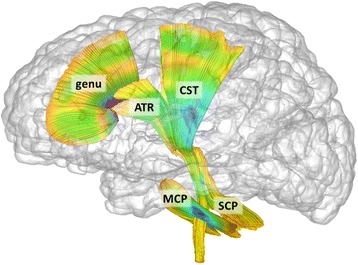
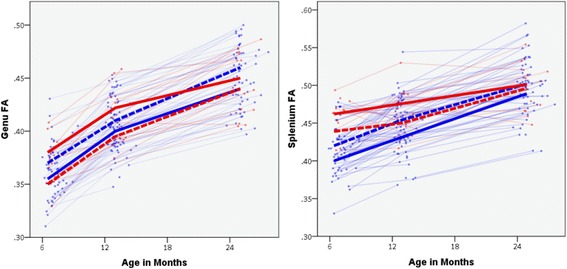
BACKGROUND: Restricted and repetitive behaviors are defining features of autism spectrum disorder (ASD). Under revised diagnostic criteria for ASD, this behavioral domain now includes atypical responses to sensory stimuli. To date, little is known about the neural circuitry underlying these features of ASD early in life. METHODS: Longitudinal diffusion tensor imaging data were collected from 217 infants at high familial risk for ASD. Forty-four of these infants were diagnosed with ASD at age 2. Targeted cortical, cerebellar, and striatal white matter pathways were defined and measured at ages 6, 12, and 24 months. Dependent variables included the Repetitive Behavior Scale-Revised and the Sensory Experiences Questionnaire. RESULTS: Among children diagnosed with ASD, repetitive behaviors and sensory response patterns were strongly correlated, even when accounting for developmental level or social impairment. Longitudinal analyses indicated that the genu and cerebellar pathways were significantly associated with both repetitive behaviors and sensory responsiveness but not social deficits. At age 6 months, fractional anisotropy in the genu significantly predicted repetitive behaviors and sensory responsiveness at age 2. Cerebellar pathways significantly predicted later sensory responsiveness. Exploratory analyses suggested a possible disordinal interaction based on diagnostic status for the association between fractional anisotropy and repetitive behavior. CONCLUSIONS: Our findings suggest that restricted and repetitive behaviors contributing to a diagnosis of ASD at age 2 years are associated with structural properties of callosal and cerebellar white matter pathways measured during infancy and toddlerhood. We further identified that repetitive behaviors and unusual sensory response patterns co-occur and share common brain-behavior relationships. These results were strikingly specific given the absence of association between targeted pathways and social deficits.
Overview
The claims and statistics of this paper haven’t been checked yet.
Free: it reads the open-access text and checks the first 5 claims that cite a source we can check. Create a free account to check every claim.
Integrity signals
Registry
Cites
Statistics
Figures
Verification
Claims the paper makes
The claims and statistics of this paper haven’t been checked yet.
Free: it reads the open-access text and checks the first 5 claims that cite a source we can check. Create a free account to check every claim.
Claims other papers make about this one
Each is checked against this paper’s own text: does it say what the citing paper says it does?
The check wasn’t confident either way, so it gives no verdict — never disputed.
In the citing paper
“Task-based fMRI studies investigate circuits that are responsible for core challenges in ASD (such as language production and comprehension 75 ), and have demonstrated hyper-activation of the superior temporal gyrus and inferior frontal gyrus and hypoactivation of the bilateral middle temporal gyrus 72”
From Autism spectrum disorder (2020) · cites this paper as [75]
Experimental — accuracy not yet measuredThe check wasn’t confident either way, so it gives no verdict — never disputed.
In the citing paper
“In addition, these studies have demonstrated challenges in processing emotions in faces and the 'social brain' 74 , and deficits in attention 75”
From Autism spectrum disorder (2020) · cites this paper as [75]
Experimental — accuracy not yet measured
Self-check
Percentages, sums and reported differences re-computed from the paper’s own numbers.
The self-check needs the paper’s full text.
Citations
Cites
Lord, C., Rutter, M., & Le Couteur, A. (1994) · Journal of Autism and Developmental Disorders · doi:10.1007/bf02172145 · Cited by 9,065 · cited 2×
“Familial high-risk status was defined by having an older sibling with a community diagnosis of the ASD confirmed by the Autism Diagnostic InterviewRevised (ADI-R) [40] and Social Communication Questionnaire [41].”
BackgroundParallel organization of functionally segregated circuits linking basal ganglia and cortex
Alexander, G. E., DeLong, M. R., & Strick, P. L. (1986) · Annual Review of Neuroscience · doi:10.1146/annurev.ne.09.030186.002041 · Cited by 8,527 · cited 1×
“Preclinical work has implicated components of cortico-striatal-thalamo-cortical circuitry [8] as the neurobiological basis of RRBs [9–11].”
BackgroundLord, C., Risi, S., Lambrecht, L., Cook, E. H., Leventhal, B. L., DiLavore, P. C., Pickles, A., & Rutter, M. (2000) · Journal of Autism and Developmental Disorders · doi:10.1023/a:1005592401947 · Cited by 7,520 · cited 9×
“All participants in our study sample had a completed ADOS administration.”
MethodInfluentialAdaptive linear step-up procedures that control the false discovery rate
Benjamini, Y., Krieger, A. M., & Yekutieli, D. (2006) · Biometrika · doi:10.1093/biomet/93.3.491 · Cited by 3,228
Mullen Scales of Early Learning
Bradley-Johnson, S. (1997) · Psychology in the Schools · doi:10.1002/(sici)1520-6807(199710)34:4<379::aid-pits14>3.0.co;2-e · Cited by 2,325 · cited 8×
“This relationship remained when controlling for MSEL composite score (prs = 0.47, p 0.001) or social affect score (prs = 0.48, p 0.001).”
MethodInfluentialPositron emission tomography study of human brain functional development
Chugani, H. T., Phelps, M. E., & Mazziotta, J. C. (1987) · Annals of Neurology · doi:10.1002/ana.410220408 · Cited by 1,548 · cited 2×
“It is less clear what role striatal circuitry plays during infant development or how such circuitry might interact with cerebellar circuits during this period to support emerging function [39], such as the transition from reflexive to instrumental behavior [67].”
BackgroundAnatomical evidence for cerebellar and basal ganglia involvement in higher cognitive function
Middleton, F. A., & Strick, P. L. (1994) · Science · doi:10.1126/science.7939688 · Cited by 1,356 · cited 1×
“Cerebellar and striatal circuits innervate similar frontal cortical regions [70, 71], which are in turn connected by the genu of the corpus callosum.”
BackgroundVarieties of Repetitive Behavior in Autism: Comparisons to Mental Retardation
Bodfish, J. W., Symons, F. J., Parker, D. E., & Lewis, M. H. (2000) · Journal of Autism and Developmental Disorders · doi:10.1023/a:1005596502855 · Cited by 1,223 · cited 1×
“Assessment data included the Repetitive Behavior ScaleRevised (RBS-R) [45] and the Sensory Experiences Questionnaire v2.”
MethodConsensus Paper: The Cerebellum's Role in Movement and Cognition
Koziol, L. F., Budding, D., Andreasen, N., D’Arrigo, S., Bulgheroni, S., Imamizu, H., Ito, M., Manto, M., Marvel, C., Parker, K., et al. (2014) · The Cerebellum · doi:10.1007/s12311-013-0511-x · Cited by 1,133
A clinicopathological study of autism
Bailey, A. (1998) · Brain · doi:10.1093/brain/121.5.889 · Cited by 1,083
A meta-analysis of sensory modulation symptoms in individuals with autism spectrum disorders
Ben-Sasson, A., Hen, L., Fluss, R., Cermak, S. A., Engel-Yeger, B., & Gal, E. (2009) · Journal of Autism and Developmental Disorders · doi:10.1007/s10803-008-0593-3 · Cited by 1,047
Vineland Adaptive Behavior Scales, Second Edition
Sparrow, S. S., Cicchetti, D., & Balla, D. A. (2012) · PsycTESTS Dataset · doi:10.1037/t15164-000 · Cited by 978
Baranek, G. T., David, F. J., Poe, M. D., Stone, W. L., & Watson, L. R. (2006) · Journal of Child Psychology and Psychiatry · doi:10.1111/j.1469-7610.2005.01546.x · Cited by 975 · cited 2×
“1 (SEQ) [46] administered at age 2 years.”
BackgroundAutism From 2 to 9 Years of Age
Lord, C., Risi, S., DiLavore, P. S., Shulman, C., Thurm, A., & Pickles, A. (2006) · Archives of General Psychiatry · doi:10.1001/archpsyc.63.6.694 · Cited by 973 · cited 2×
“There is evidence that RRBs in toddlerhood are early emerging, prognostic features [1] that may differentiate infants who do and do not later develop ASD [2, 3].”
BackgroundResultSocial Communication Questionnaire
Lund, E. (2014) · Encyclopedia of Special Education · doi:10.1002/9781118660584.ese2224 · Cited by 972 · cited 2×
“Familial high-risk status was defined by having an older sibling with a community diagnosis of the ASD confirmed by the Autism Diagnostic InterviewRevised (ADI-R) [40] and Social Communication Questionnaire [41].”
BackgroundAutistic-like behaviour and cerebellar dysfunction in Purkinje cell Tsc1 mutant mice
Tsai, P. T., Hull, C., Chu, Y., Greene-Colozzi, E., Sadowski, A. R., Leech, J. M., Steinberg, J., Crawley, J. N., Regehr, W. G., & Sahin, M. (2012) · Nature · doi:10.1038/nature11310 · Cited by 888
Social Communication Questionnaire
Snow, A. (2013) · Encyclopedia of Autism Spectrum Disorders · doi:10.1007/978-1-4419-1698-3_1651 · Cited by 870
The cerebellum communicates with the basal ganglia
Hoshi, E., Tremblay, L., Féger, J., Carras, P. L., & Strick, P. L. (2005) · Nature Neuroscience · doi:10.1038/nn1544 · Cited by 834 · cited 1×
“There is some evidence that the cerebellum and basal ganglia co-develop with motor skill acquisition during infancy [68] and that both share crucial roles in processing output from the cortex —mutually supportive roles which are substantially less segregated than once thought [22, 69].”
BackgroundThe basal ganglia communicate with the cerebellum
Bostan, A. C., Dum, R. P., & Strick, P. L. (2010) · Proceedings of the National Academy of Sciences · doi:10.1073/pnas.1000496107 · Cited by 780 · cited 1×
“There is some evidence that the cerebellum and basal ganglia co-develop with motor skill acquisition during infancy [68] and that both share crucial roles in processing output from the cortex —mutually supportive roles which are substantially less segregated than once thought [22, 69].”
BackgroundCerebellar networks with the cerebral cortex and basal ganglia
Bostan, A. C., Dum, R. P., & Strick, P. L. (2013) · Trends in Cognitive Sciences · doi:10.1016/j.tics.2013.03.003 · Cited by 759 · cited 1×
“Cerebellar and striatal circuits innervate similar frontal cortical regions [70, 71], which are in turn connected by the genu of the corpus callosum.”
BackgroundConsensus Paper: Pathological Role of the Cerebellum in Autism
Fatemi, S. H., Aldinger, K. A., Ashwood, P., Bauman, M. L., Blaha, C. D., Blatt, G. J., Chauhan, A., Chauhan, V., Dager, S. R., Dickson, P. E., et al. (2012) · The Cerebellum · doi:10.1007/s12311-012-0355-9 · Cited by 723
Self-citationAnnotation: Repetitive Behaviour in Autism: A Review of Psychological Research
Turner, M. (1999) · Journal of Child Psychology and Psychiatry · doi:10.1017/s0021963099004278 · Cited by 685 · cited 1×
“This grouping was made upon the basis of conceptual and factor analytic work [47, 48].”
MethodCerebellum Implicated in Sensory Acquisition and Discrimination Rather Than Motor Control
Gao, J.-H., Parsons, L. M., Bower, J. M., Xiong, J., Li, J., & Fox, P. T. (1996) · Science · doi:10.1126/science.272.5261.545 · Cited by 674 · cited 1×
“Our findings align with previous work identifying a role for the cerebellum in repetitive behavior [18, 27–29] and sensory processing [64, 65].”
ResultWolff, J. J., Gu, H., Gerig, G., Elison, J. T., Styner, M., Gouttard, S., Botteron, K. N., Dager, S. R., Dawson, G., Estes, A. M., et al. (2012) · American Journal of Psychiatry · doi:10.1176/appi.ajp.2011.11091447 · Cited by 671 · cited 2×
“Consistent with previous results [6], these findings suggest that higher FA at age 6 months is associated with increased risk for a later diagnosis of ASD.”
BackgroundResultSelf-citationRogers, S. J., & Ozonoff, S. (2005) · Journal of Child Psychology and Psychiatry · doi:10.1111/j.1469-7610.2005.01431.x · Cited by 597 · cited 1×
“Do measures of these behaviors reflect different aspects of some primary phenomenon? Do repetitive behaviors and unusual responses to sensory stimuli belong together within a plausible, falsifiable theoretical framework [33]? Are existing concepts and terminology related to sensory responsiveness in ASD overly reducti…”
Background(1986) · American Journal of Psychiatry · doi:10.1176/ajp.143.7.862 · Cited by 590
Repeated cortico-striatal stimulation generates persistent OCD-like behavior
Ahmari, S. E., Spellman, T., Douglass, N. L., Kheirbek, M. A., Simpson, H. B., Deisseroth, K., Gordon, J. A., & Hen, R. (2013) · Science · doi:10.1126/science.1234733 · Cited by 502 · cited 1×
“Indeed, much of what is known about the role of the striatum comes from data involving older children [12–15], adults [16–18], or adult animal models [10].”
BackgroundAberrant Striatal Functional Connectivity in Children with Autism
Di Martino, A., Kelly, C., Grzadzinski, R., Zuo, X.-N., Mennes, M., Mairena, M. A., Lord, C., Castellanos, F. X., & Milham, M. P. (2011) · Biological Psychiatry · doi:10.1016/j.biopsych.2010.10.029 · Cited by 483
Rothwell, P. E., Fuccillo, M. V., Maxeiner, S., Hayton, S. J., Gokce, O., Lim, B. K., Fowler, S. C., Malenka, R. C., & Südhof, T. C. (2014) · Cell · doi:10.1016/j.cell.2014.04.045 · Cited by 477
Experience-dependent changes in cerebellar contributions to motor sequence learning
Doyon, J., Song, A. W., Karni, A., Lalonde, F., Adams, M. M., & Ungerleider, L. G. (2002) · Proceedings of the National Academy of Sciences · doi:10.1073/pnas.022615199 · Cited by 477 · cited 1×
“With regard to the second possibility, it is plausible that cerebellar circuitry supports nascent restricted and repetitive behaviors in early childhood, with striatal circuits coming online as such behaviors become entrenched through experience [19, 66, 67] or as laterdeveloping behaviors emerge.”
BackgroundEvidence for a cerebellar role in reduced exploration and stereotyped behavior in autism
Pierce, K., & Courchesne, E. (2001) · Biological Psychiatry · doi:10.1016/s0006-3223(00)01008-8 · Cited by 464 · cited 1×
“Repetitive behavior has been inversely correlated with cerebellar volume among adults with ASD [18], and cerebellar hypoplasia has been linked to stereotypy and decreased environmental exploration in children [28].”
BackgroundA measure of striatal function predicts motor stereotypy
Canales, J. J., & Graybiel, A. M. (2000) · Nature Neuroscience · doi:10.1038/73949 · Cited by 423
Striatal Volume on Magnetic Resonance Imaging and Repetitive Behaviors in Autism
Hollander, E., Anagnostou, E., Chaplin, W., Esposito, K., Haznedar, M. M., Licalzi, E., Wasserman, S., Soorya, L., & Buchsbaum, M. (2005) · Biological Psychiatry · doi:10.1016/j.biopsych.2005.03.040 · Cited by 379
Ozonoff, S., Young, G. S., Landa, R. J., Brian, J., Bryson, S., Charman, T., Chawarska, K., Macari, S. L., Messinger, D., Stone, W. L., et al. (2015) · Journal of Child Psychology and Psychiatry · doi:10.1111/jcpp.12421 · Cited by 377
Self-citationWigham, S., Rodgers, J., South, M., McConachie, H., & Freeston, M. (2015) · Journal of Autism and Developmental Disorders · doi:10.1007/s10803-014-2248-x · Cited by 373
An MRI study of the basal ganglia in autism
Sears, L. L., Vest, C., Mohamed, S., Bailey, J., Ranson, B. J., & Piven, J. (1999) · Progress in Neuro-Psychopharmacology and Biological Psychiatry · doi:10.1016/s0278-5846(99)00020-2 · Cited by 364
Self-citationRojas, D. C., Peterson, E., Winterrowd, E., Reite, M. L., Rogers, S. J., & Tregellas, J. R. (2006) · BMC Psychiatry · doi:10.1186/1471-244x-6-56 · Cited by 360 · cited 1×
“Repetitive behavior has been inversely correlated with cerebellar volume among adults with ASD [18], and cerebellar hypoplasia has been linked to stereotypy and decreased environmental exploration in children [28].”
Sensory features and repetitive behaviors in children with autism and developmental delays
Boyd, B. A., Baranek, G. T., Sideris, J., Poe, M. D., Watson, L. R., Patten, E., & Miller, H. (2010) · Autism Research · doi:10.1002/aur.124 · Cited by 357 · cited 1×
“Recently updated nosology of ASD under DSM 5 includes for the first time symptoms related to unusual behavioral responses to, or interests in, sensory stimuli [30] as part of restricted and repetitive behaviors.”
BackgroundShen, M. D., Nordahl, C. W., Young, G. S., Wootton-Gorges, S. L., Lee, A., Liston, S. E., Harrington, K. R., Ozonoff, S., & Amaral, D. G. (2013) · Brain · doi:10.1093/brain/awt166 · Cited by 345 · cited 1×
“Although diagnoses made at age 2 years show strong stability over time [1, 7], ASD is a heterogeneous disorder and we expect the present findings may be representative only of samples enrolled and assessed with similar procedures [74].”
ResultSelf-citationHoeft, F., Barnea-Goraly, N., Haas, B. W., Golarai, G., Ng, D., Mills, D., Korenberg, J., Bellugi, U., Galaburda, A., & Reiss, A. L. (2007) · The Journal of Neuroscience · doi:10.1523/jneurosci.3591-07.2007 · Cited by 307
Accelerated maturation of white matter in young children with autism: A high b value DWI study
Ben Bashat, D., Kronfeld-Duenias, V., Zachor, D. A., Ekstein, P. M., Hendler, T., Tarrasch, R., Even, A., Levy, Y., & Ben Sira, L. (2007) · NeuroImage · doi:10.1016/j.neuroimage.2007.04.060 · Cited by 300
Gao, W., Lin, W., Chen, Y., Gerig, G., Smith, J. K., Jewells, V., & Gilmore, J. H. (2009) · American Journal of Neuroradiology · doi:10.3174/ajnr.a1363 · Cited by 298 · cited 1×
“Following previous infant DTI studies [56, 57], bilateral pathways were averaged to yield a single estimate.”
MethodSelf-citationNeurobiology of Sensory Overresponsivity in Youth With Autism Spectrum Disorders
Green, S. A., Hernandez, L., Tottenham, N., Krasileva, K., Bookheimer, S. Y., & Dapretto, M. (2015) · JAMA Psychiatry · doi:10.1001/jamapsychiatry.2015.0737 · Cited by 283 · cited 1×
“There is evidence that as with RRBs, atypical sensory responses are evident in toddlerhood [34, 35] and are linked to patterns of neural connectivity in adolescence [36, 37].”
BackgroundCerebellar gray matter and lobular volumes correlate with core autism symptoms
D'Mello, A. M., Crocetti, D., Mostofsky, S. H., & Stoodley, C. J. (2015) · NeuroImage: Clinical · doi:10.1016/j.nicl.2015.02.007 · Cited by 281 · cited 1×
“Similar results have been reported more recently with the addition of significant positive associations between RRBs and vermis grey matter [27].”
ResultWhite Matter Microstructure and Atypical Visual Orienting in 7-Month-Olds at Risk for Autism
Elison, J. T., Paterson, S. J., Wolff, J. J., Reznick, J. S., Sasson, N. J., Gu, H., Botteron, K. N., Dager, S. R., Estes, A. M., Evans, A. C., et al. (2013) · American Journal of Psychiatry · doi:10.1176/appi.ajp.2012.12091150 · Cited by 277 · cited 2×
“This adds to previous reports of disordinal interactions in brain and behavior between infants who did and did not receive a diagnosis of ASD [4, 5].”
BackgroundResultSelf-citationCerebellum involvement in cortical sensorimotor circuits for the control of voluntary movements
Proville, R. D., Spolidoro, M., Guyon, N., Dugué, G. P., Selimi, F., Isope, P., Popa, D., & Léna, C. (2014) · Nature Neuroscience · doi:10.1038/nn.3773 · Cited by 268 · cited 1×
“Our findings align with previous work identifying a role for the cerebellum in repetitive behavior [18, 27–29] and sensory processing [64, 65].”
ResultDTIPrep: quality control of diffusion-weighted images
Oguz, I., Farzinfar, M., Matsui, J., Budin, F., Liu, Z., Gerig, G., Johnson, H. J., & Styner, M. (2014) · Frontiers in Neuroinformatics · doi:10.3389/fninf.2014.00004 · Cited by 261 · cited 1×
“Diffusion-weighted images were processed with DTIprep, which detects common artifacts, corrects for motion and eddy current deformations, and flags bad gradients for manual removal by expert raters [51, 52].”
MethodSelf-citationChanges in the Developmental Trajectories of Striatum in Autism
Langen, M., Schnack, H. G., Nederveen, H., Bos, D., Lahuis, B. E., de Jonge, M. V., van Engeland, H., & Durston, S. (2009) · Biological Psychiatry · doi:10.1016/j.biopsych.2009.03.017 · Cited by 260 · cited 2×
“For example, striatal volumes have been reported to be positively [13, 14] and negatively [12, 19] correlated with repetitive behavior.”
BackgroundChanges in the Development of Striatum Are Involved in Repetitive Behavior in Autism
Langen, M., Bos, D., Noordermeer, S. D. S., Nederveen, H., van Engeland, H., & Durston, S. (2014) · Biological Psychiatry · doi:10.1016/j.biopsych.2013.08.013 · Cited by 256 · cited 2×
“What appear as inconsistent findings may instead reflect phenotypic heterogeneity or developmental effects, wherein the role of striatal circuits and structures in the etiology and maintenance of RRBs is not static across subpopulations or over time [13, 14, 20].”
BackgroundAbnormal white matter integrity in young children with autism
Weinstein, M., Ben‐Sira, L., Levy, Y., Zachor, D. A., Itzhak, E. B., Artzi, M., Tarrasch, R., Eksteine, P. M., Hendler, T., & Bashat, D. B. (2011) · Human Brain Mapping · doi:10.1002/hbm.21042 · Cited by 241
Quantitative tract-based white matter development from birth to age 2 years
Geng, X., Gouttard, S., Sharma, A., Gu, H., Styner, M., Lin, W., Gerig, G., & Gilmore, J. H. (2012) · NeuroImage · doi:10.1016/j.neuroimage.2012.03.057 · Cited by 212 · cited 2×
“processing pipeline providing consistent spatial parameterization within and between individual datasets across ages [53, 54].”
BackgroundMethodSelf-citationOverreactive brain responses to sensory stimuli in youth with autism spectrum disorders
Green, S. A., Rudie, J. D., Colich, N. L., Wood, J. J., Shirinyan, D., Hernandez, L., Tottenham, N., Dapretto, M., & Bookheimer, S. Y. (2013) · Journal of the American Academy of Child & Adolescent Psychiatry · doi:10.1016/j.jaac.2013.08.004 · Cited by 207 · cited 1×
“There is evidence that as with RRBs, atypical sensory responses are evident in toddlerhood [34, 35] and are linked to patterns of neural connectivity in adolescence [36, 37].”
BackgroundAltered corpus callosum morphology associated with autism over the first 2 years of life
Wolff, J. J., Gerig, G., Lewis, J. D., Soda, T., Styner, M. A., Vachet, C., Botteron, K. N., Elison, J. T., Dager, S. R., Estes, A. M., et al. (2015) · Brain · doi:10.1093/brain/awv118 · Cited by 203
Self-citationValidating the Repetitive Behavior Scale-Revised in Young Children with Autism Spectrum Disorder
The Pathways in ASD Study Team, Mirenda, P., Smith, I. M., Vaillancourt, T., Georgiades, S., Duku, E., Szatmari, P., Bryson, S., Fombonne, E., Roberts, W., et al. (2010) · Journal of Autism and Developmental Disorders · doi:10.1007/s10803-010-1012-0 · Cited by 185 · cited 1×
“This grouping was made upon the basis of conceptual and factor analytic work [47, 48].”
MethodSelf-citationBasal ganglia morphometry and repetitive behavior in young children with autism spectrum disorder
Estes, A., Shaw, D. W. W., Sparks, B. F., Friedman, S., Giedd, J. N., Dawson, G., Bryan, M., & Dager, S. R. (2011) · Autism Research · doi:10.1002/aur.193 · Cited by 172 · cited 1×
“For example, striatal volumes have been reported to be positively [13, 14] and negatively [12, 19] correlated with repetitive behavior.”
BackgroundSelf-citationLongitudinal patterns of repetitive behavior in toddlers with autism
Wolff, J. J., Botteron, K. N., Dager, S. R., Elison, J. T., Estes, A. M., Gu, H., Hazlett, H. C., Pandey, J., Paterson, S. J., Schultz, R. T., et al. (2014) · Journal of Child Psychology and Psychiatry · doi:10.1111/jcpp.12207 · Cited by 170 · cited 3×
“Although the parent study also collects data on low-familial risk infants, this group was excluded from the present study given lack of variance in RRB scores due to floor effect [3].”
BackgroundMethodSelf-citationChen, Y.-H., Rodgers, J., & McConachie, H. (2009) · Journal of Autism and Developmental Disorders · doi:10.1007/s10803-008-0663-6 · Cited by 169
Ridler, K., Veijola, J. M., Tanskanen, P., Miettunen, J., Chitnis, X., Suckling, J., Murray, G. K., Haapea, M., Jones, P. B., Isohanni, M. K., et al. (2006) · Proceedings of the National Academy of Sciences · doi:10.1073/pnas.0602639103 · Cited by 164 · cited 1×
“There is some evidence that the cerebellum and basal ganglia co-develop with motor skill acquisition during infancy [68] and that both share crucial roles in processing output from the cortex —mutually supportive roles which are substantially less segregated than once thought [22, 69].”
BackgroundSolso, S., Xu, R., Proudfoot, J., Hagler, D. J., Campbell, K., Venkatraman, V., Carter Barnes, C., Ahrens-Barbeau, C., Pierce, K., Dale, A., et al. (2016) · Biological Psychiatry · doi:10.1016/j.biopsych.2015.06.029 · Cited by 160
Mosconi, M. W., Mohanty, S., Greene, R. K., Cook, E. H., Vaillancourt, D. E., & Sweeney, J. A. (2015) · The Journal of Neuroscience · doi:10.1523/jneurosci.2731-14.2015 · Cited by 145
Quality control of diffusion weighted images
Liu, Z., Wang, Y., Gerig, G., Gouttard, S., Tao, R., Fletcher, T., & Styner, M. (2010) · SPIE Proceedings · doi:10.1117/12.844748 · Cited by 141 · cited 1×
“Diffusion-weighted images were processed with DTIprep, which detects common artifacts, corrects for motion and eddy current deformations, and flags bad gradients for manual removal by expert raters [51, 52].”
MethodSelf-citationRepetitive Behavior in 12-Month-Olds Later Classified With Autism Spectrum Disorder
Elison, J. T., Wolff, J. J., Reznick, J. S., Botteron, K. N., Estes, A. M., Gu, H., Hazlett, H. C., Meadows, A. J., Paterson, S. J., Zwaigenbaum, L., et al. (2014) · Journal of the American Academy of Child & Adolescent Psychiatry · doi:10.1016/j.jaac.2014.08.004 · Cited by 113 · cited 1×
“There is evidence that RRBs in toddlerhood are early emerging, prognostic features [1] that may differentiate infants who do and do not later develop ASD [2, 3].”
BackgroundSelf-citationThe role of cerebellar circuitry alterations in the pathophysiology of autism spectrum disorders
Mosconi, M. W., Wang, Z., Schmitt, L. M., Tsai, P., & Sweeney, J. A. (2015) · Frontiers in Neuroscience · doi:10.3389/fnins.2015.00296 · Cited by 112 · cited 2×
“It is less clear what role striatal circuitry plays during infant development or how such circuitry might interact with cerebellar circuits during this period to support emerging function [39], such as the transition from reflexive to instrumental behavior [67].”
BackgroundPsychometric Validation of the Sensory Experiences Questionnaire
Little, L. M., Freuler, A. C., Houser, M. B., Guckian, L., Carbine, K., David, F. J., & Baranek, G. T. (2011) · The American Journal of Occupational Therapy · doi:10.5014/ajot.2011.000844 · Cited by 106 · cited 1×
“The SEQ has been shown to have strong psychometric properties [46, 49].”
BackgroundElison, J. T., Wolff, J. J., Heimer, D. C., Paterson, S. J., Gu, H., Hazlett, H. C., Styner, M., Gerig, G., Piven, J., & for the IBIS Network (2013) · Developmental Science · doi:10.1111/desc.12015 · Cited by 99 · cited 1×
“of infants at risk for ASD [6, 59] but not specifically in relation to RRBs or sensory responsiveness.”
BackgroundSelf-citationGermani, T., Zwaigenbaum, L., Bryson, S. E., Brian, J. A., Smith, I. M., Roberts, W., Szatmári, P., Roncadin, C., Sacrey, L.-A. R., Garon, N., et al. (2014) · Journal of Autism and Developmental Disorders · doi:10.1007/s10803-014-2175-x · Cited by 96 · cited 1×
“There is evidence that as with RRBs, atypical sensory responses are evident in toddlerhood [34, 35] and are linked to patterns of neural connectivity in adolescence [36, 37].”
BackgroundSelf-citationSadeghi, N., Prastawa, M., Fletcher, P. T., Wolff, J., Gilmore, J. H., & Gerig, G. (2013) · NeuroImage · doi:10.1016/j.neuroimage.2012.11.040 · Cited by 96 · cited 1×
“Following previous infant DTI studies [56, 57], bilateral pathways were averaged to yield a single estimate.”
MethodSelf-citationDiffusion tensor imaging and tract-based spatial statistics in obsessive-compulsive disorder
Nakamae, T., Narumoto, J., Sakai, Y., Nishida, S., Yamada, K., Nishimura, T., & Fukui, K. (2010) · Journal of Psychiatric Research · doi:10.1016/j.jpsychires.2010.09.016 · Cited by 88
Wolff, J. J., Hazlett, H. C., Lightbody, A. A., Reiss, A. L., & Piven, J. (2013) · Journal of Neurodevelopmental Disorders · doi:10.1186/1866-1955-5-12 · Cited by 88
Self-citationThe possible role of the cerebellum in autism/PDD: Disruption of a multisensory feedback loop
Kern, J. K. (2002) · Medical Hypotheses · doi:10.1016/s0306-9877(02)00212-8 · Cited by 65 · cited 1×
“While not yet empirically tested, it has been hypothesized that early cerebellar dysfunction may also explain the range of sensory response patterns observed in ASD [38, 39].”
BackgroundUNC-Utah NA-MIC framework for DTI fiber tract analysis
Verde, A. R., Budin, F., Berger, J.-B., Gupta, A., Farzinfar, M., Kaiser, A., Ahn, M., Johnson, H., Matsui, J., Hazlett, H. C., et al. (2014) · Frontiers in Neuroinformatics · doi:10.3389/fninf.2013.00051 · Cited by 64 · cited 3×
“processing pipeline providing consistent spatial parameterization within and between individual datasets across ages [53, 54].”
BackgroundMethodSelf-citationWatkins, M. W., Kush, J. C., & Glutting, J. J. (1997) · Psychology in the Schools · doi:10.1002/(sici)1520-6807(199710)34:4<309::aid-pits2>3.0.co;2-g · Cited by 63
Tanimura, Y., King, M. A., Williams, D. K., & Lewis, M. H. (2011) · International Journal of Developmental Neuroscience · doi:10.1016/j.ijdevneu.2011.02.004 · Cited by 50 · cited 1×
“What appear as inconsistent findings may instead reflect phenotypic heterogeneity or developmental effects, wherein the role of striatal circuits and structures in the etiology and maintenance of RRBs is not static across subpopulations or over time [13, 14, 20].”
BackgroundAssessment of Reliability of Multi-site Neuroimaging Via Traveling Phantom Study
Gouttard, S., Styner, M. A., Prastawa, M. W., Piven, J., & Gerig, G. (2008) · Lecture notes in computer science · doi:10.1007/978-3-540-85990-1_32 · Cited by 44 · cited 1×
“Intra- and inter-site reliability was established and maintained across sites and time [50].”
BackgroundSelf-citationFitzgerald, K. D., Liu, Y., Reamer, E. N., Taylor, S. F., & Welsh, R. C. (2014) · Journal of the American Academy of Child & Adolescent Psychiatry · doi:10.1016/j.jaac.2014.08.010 · Cited by 25
Research works printed but not linked: 1
- Oishi K, Faria AV, Zijl PCM van, Mori S. MRI Atlas of Human White Matter. Volume 12. Cambridge: Academic Press; 2010.
Cited by
Lord, C., Brugha, T. S., Charman, T., Cusack, J., Dumas, G., Frazier, T., Jones, E. J. H., Jones, R. M., Pickles, A., State, M. W., et al. (2020) · Nature Reviews Disease Primers · doi:10.1038/s41572-019-0138-4 · Cited by 1,859
The UNC/UMN Baby Connectome Project (BCP): An overview of the study design and protocol development
Howell, B. R., Styner, M. A., Gao, W., Yap, P.-T., Wang, L., Baluyot, K., Yacoub, E., Chen, G., Potts, T., Salzwedel, A., et al. (2019) · NeuroImage · doi:10.1016/j.neuroimage.2018.03.049 · Cited by 427
“…neuroimaging for informing the subsequent emergence of atypical patterns of behavior is highlighted by recent findings from the Infant Brain Imaging Study or IBIS (http://www.ibis-network.org/) (Emerson et al., 2017; Hazlett et al., 2017; Lewis et al., 2017; Shen et al., 2017; Wolff et al., 2017).”
Self-citationAutism spectrum disorder: advances in diagnosis and evaluation
Zwaigenbaum, L., & Penner, M. (2018) · BMJ · doi:10.1136/bmj.k1674 · Cited by 263
Self-citationToward a conceptual framework for early brain and behavior development in autism
Piven, J., Elison, J. T., & Zylka, M. J. (2017) · Molecular Psychiatry · doi:10.1038/mp.2017.131 · Cited by 163
Self-citationIppolito, G., Bertaccini, R., Tarasi, L., Gregorio, F. D., Trajkovic, J., Battaglia, S., & Romei, V. (2022) · Biomedicines · doi:10.3390/biomedicines10123189 · Cited by 152
Metadata
- Authors
- The IBIS Network, Wolff, J. J., Swanson, M. R., Elison, J. T., Gerig, G., Pruett, J. R., Styner, M. A., Vachet, C., Botteron, K. N., Dager, S. R., Estes, A. M., Hazlett, H. C., Schultz, R. T., Shen, M. D., Zwaigenbaum, L., & Piven, J.
- Affiliations
- University of North Carolina at Chapel Hill (US)
- University of Minnesota (US)
- Washington University in St. Louis (US)
- University of Washington (US)
- Corresponding author
- Wolff, Jason J.
- ORCID
- Venue
- Molecular Autism
- Published
- 2017-03-04
- Volume
- 8
- Issue
- 1
- Pages
- 8-8
- ISSN
- 2040-2392 (ISSN-L)
- PMC
- PMC5351210
- OpenAlex
- W2593611050
- Cited by
- 142
- References
- 74
- Citations by year
- 2026: 4 · 2025: 14 · 2024: 14 · 2023: 8 · 2022: 15 · 2021: 15 · 2020: 47 · 2019: 10 · 2018: 11 · 2017: 4
- FWCI
- 11.30
- Type
- journal article
- Language
- en
- Open access
- gold
- doi.org
- Licence
- cc-by
- creativecommons.org/licenses/by/4.0/ (tdm)
- creativecommons.org/licenses/by/4.0/ (vor)
- Locations
- Molecular Autism (publishedVersion, cc-by)
- Europe PMC (PubMed Central) (publishedVersion, cc-by)
- PubMed Central (publishedVersion, cc-by)
- PubMed (publishedVersion)
- Digital Commons@Becker (Washington University School of Medicine) (submittedVersion)
- Libraries and Cultural Resources (University of Calgary) (submittedVersion)
- Funders
- National Institute of Mental Health (k01MH101653, R01MH093510)
- National Institute of Child Health and Human Development (T32HD40127, P30HD03110)
- Topics
- Life Sciences › Neuroscience › Cognitive Neuroscience › Autism Spectrum Disorder Research
- Life Sciences › Biochemistry, Genetics and Molecular Biology › Genetics › Genetics and Neurodevelopmental Disorders
- Health Sciences › Medicine › Psychiatry and Mental health › Child Nutrition and Feeding Issues
- Keywords
- autism spectrum disorder, restricted and repetitive behaviors, sensory responsiveness, infant brain development, white matter microstructure, corpus callosum, cerebellar white matter, fractional anisotropy, longitudinal neuroimaging, Repetitive Behavior Scale-Revised, social dysfunction
- MeSH terms
- Autism Spectrum Disorder, Brain, Brain Mapping, Child, Preschool, Female, Humans, Infant, Longitudinal Studies, Male, Stereotyped Behavior, Diffusion Tensor Imaging
About these checks
Registry, retraction, Cites and statistics results are computed, not judged, with one exception: a printed reference that no index lists is read once by a model before it counts as a citation error. Claims are extracted by a model and kept only when their quote appears verbatim in the text; each cited source is then checked, with a model’s help, for whether it says what the claim relies on. Those verdicts can be wrong — read the claim’s quote and the cited source before relying on one.
Statistics and arithmetic are recomputed, not judged.
Confidence bands are shown only for fields calibrated on our annotated test set. None is calibrated yet, so no band is shown.
What counts as a claim ›How we measure confidence ›How we check this ›
Are you an author, or do you see a problem with this page? Request a review
Data sources
Bibliographic data: Semantic Scholar, OpenAlex, Crossref.
Contains information from the Semantic Scholar Academic Graph Datasets, made available under the ODC Attribution License (ODC-BY 1.0).
Semantic Scholar’s data is described in: Kinney, R., et al. (2023). The Semantic Scholar Open Data Platform. arXiv:2301.10140.
