

Exosomes derived from miR-26a-modified MSCs promote axonal regeneration via the PTEN/AKT/mTOR pathway following spinal cord injury
Open accessThe DOI matches its Crossref record; 93 of the 93 references it cites were found in a registry or an index.
Abstract
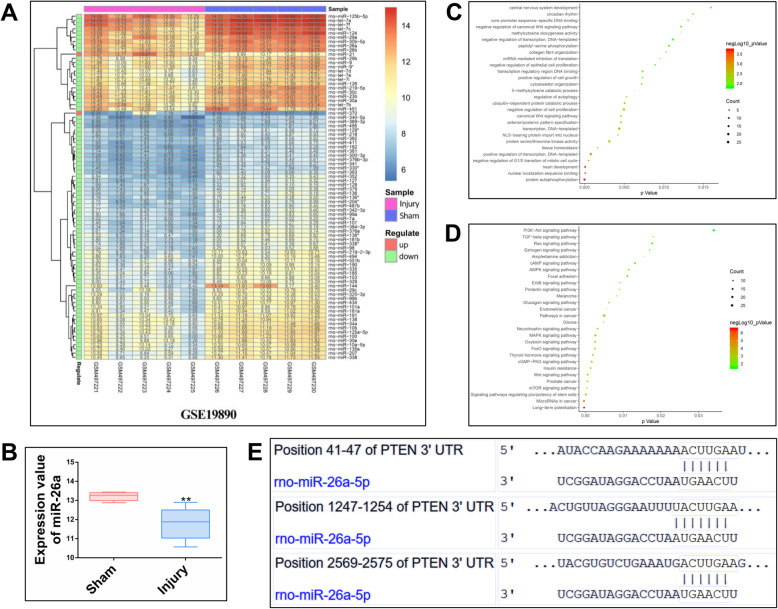
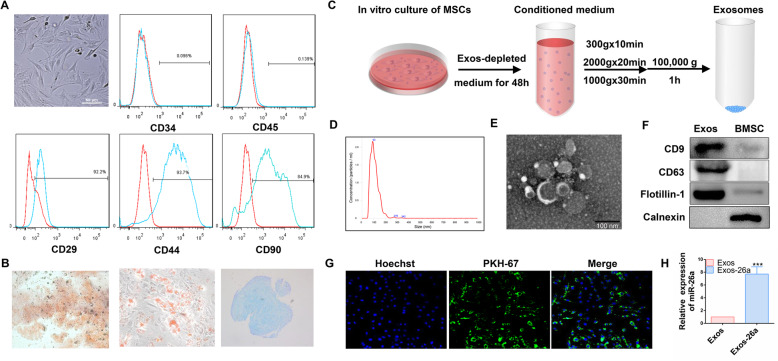
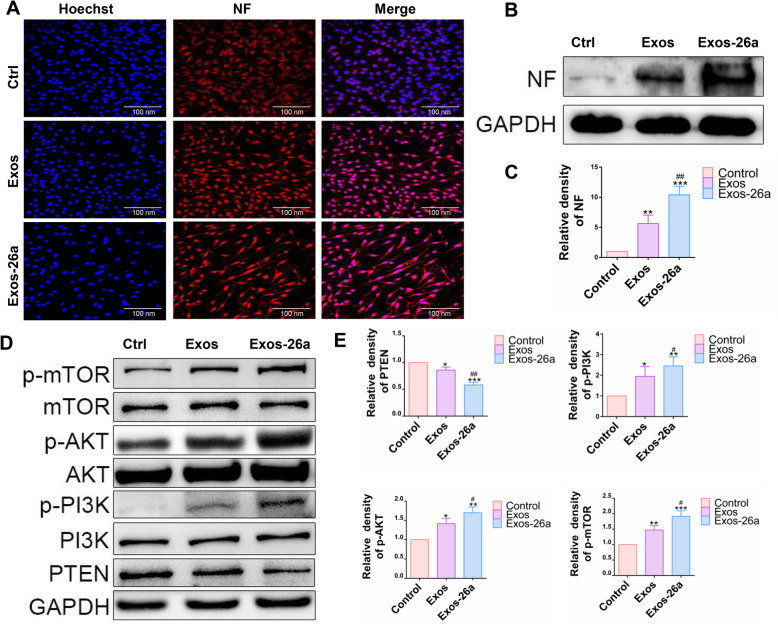
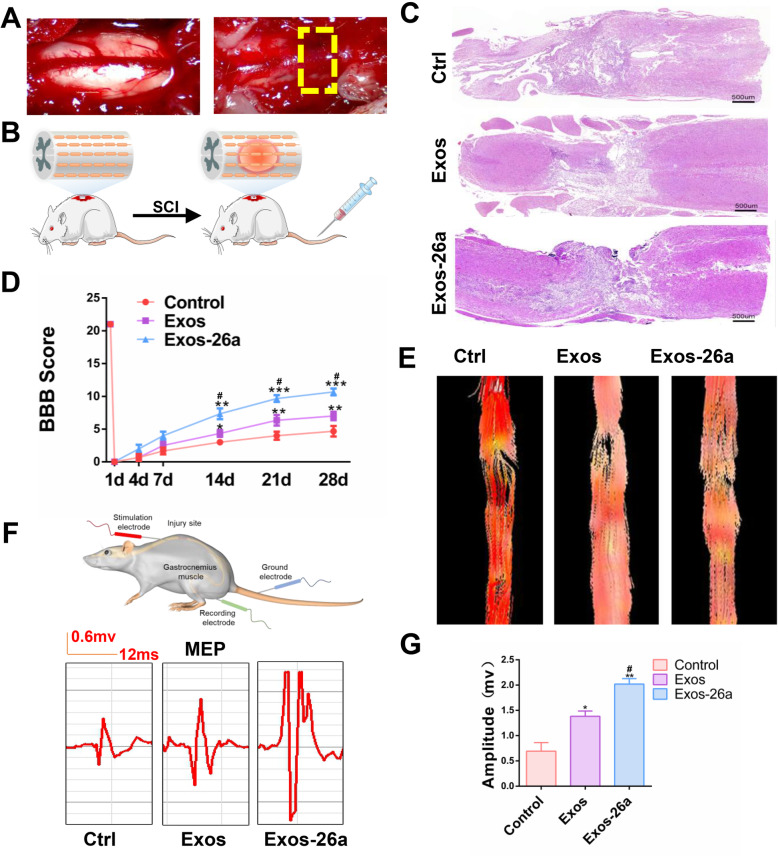
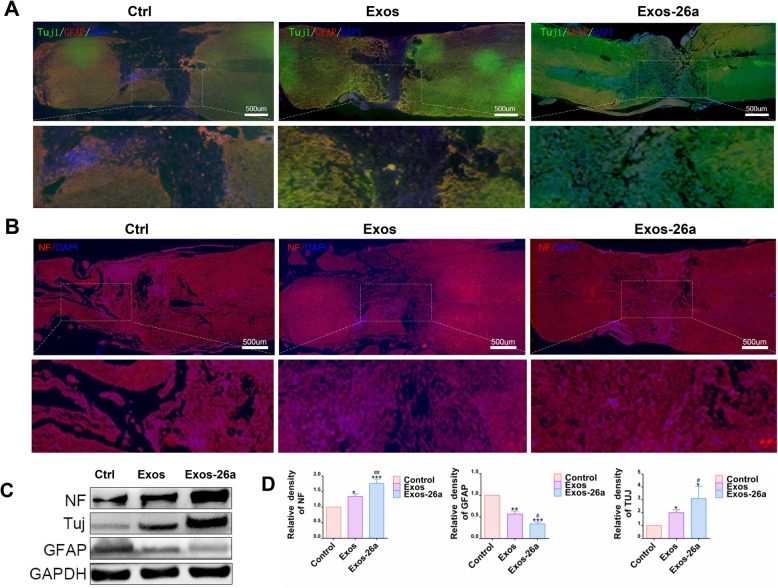
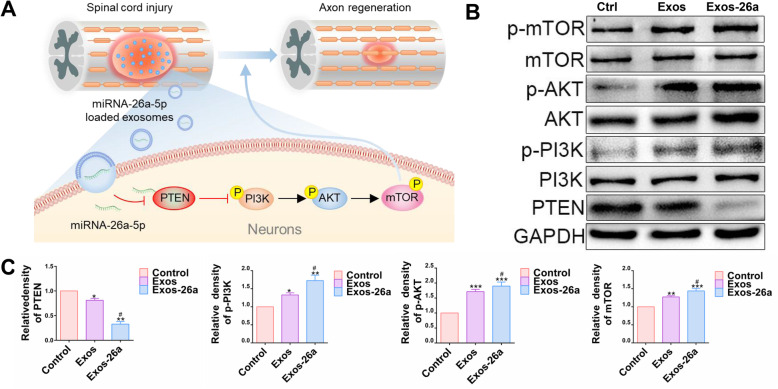
Background: Exosomes derived from the bone marrow mesenchymal stem cell (MSC) have shown great potential in spinal cord injury (SCI) treatment. This research was designed to investigate the therapeutic effects of miR-26a-modified MSC-derived exosomes (Exos-26a) following SCI. Methods: Bioinformatics and data mining were performed to explore the role of miR-26a in SCI. Exosomes were isolated from miR-26a-modified MSC culture medium by ultracentrifugation. A series of experiments, including assessment of Basso, Beattie and Bresnahan scale, histological evaluation, motor-evoked potential recording, diffusion tensor imaging, and western blotting, were performed to determine the therapeutic influence and the underlying molecular mechanisms of Exos-26a in SCI rats. Results: Exos-26a was shown to promote axonal regeneration. Furthermore, we found that exosomes derived from miR-26a-modified MSC could improve neurogenesis and attenuate glial scarring through PTEN/AKT/mTOR signaling cascades. Conclusions: Exosomes derived from miR-26a-modified MSC could activate the PTEN-AKT-mTOR pathway to promote axonal regeneration and neurogenesis and attenuate glia scarring in SCI and thus present great potential for SCI treatment. Graphical abstract:
Overview
The claims and statistics of this paper haven’t been checked yet.
Free: it reads the open-access text and checks the first 5 claims that cite a source we can check. Create a free account to check every claim.
Integrity signals
Registry
Cites
Statistics
Figures
Verification
Claims the paper makes
The claims and statistics of this paper haven’t been checked yet.
Free: it reads the open-access text and checks the first 5 claims that cite a source we can check. Create a free account to check every claim.
Claims other papers make about this one
Each is checked against this paper’s own text: does it say what the citing paper says it does?
The source backs part of the claim, not all of it — or backs it for a different population, condition or comparison.
In the citing paper
“A growing number of studies suggest EVs derived from various cell lines, such as NSCs and MSC are neuroprotective, angiogenic, and immunomodulatory.”
From Extracellular vesicles as nanotheranostic platforms for targeted neurological disorder interventions (2024) · cites this paper as [292]
Experimental — accuracy not yet measured
Self-check
Percentages, sums and reported differences re-computed from the paper’s own numbers.
The self-check needs the paper’s full text.
Citations
Cites
3 retracted
Spontaneous Human Adult Stem Cell Transformation
Rubio, D., Garcia-Castro, J., Martín, M. C., de la Fuente, R., Cigudosa, J. C., Lloyd, A. C., & Bernad, A. (2005) · Cancer Research · doi:10.1158/0008-5472.can-04-4194 · Cited by 1,036
RetractedHou, K., Li, G., Zhao, J., Xu, B., Zhang, Y., Yu, J., & Xu, K. (2020) · Journal of Neuroinflammation · doi:10.1186/s12974-020-1725-8 · Cited by 97
RetractedEffect of miR-26a on diabetic rats with myocardial injury by targeting PTEN.
Cai, S.-S., Tao, X.-W., Long, Y., Xia, K., & Zhang, Y. (2019) · PubMed · doi:10.26355/eurrev_201908_18661 · Cited by 13
RetractedValadi, H., Ekström, K., Bossios, A., Sjöstrand, M., Lee, J. J., & Lötvall, J. O. (2007) · Nature Cell Biology · doi:10.1038/ncb1596 · Cited by 12,834
Shedding light on the cell biology of extracellular vesicles
van Niel, G., D'Angelo, G., & Raposo, G. (2018) · Nature Reviews Molecular Cell Biology · doi:10.1038/nrm.2017.125 · Cited by 8,369
Cui, C., Cui, J., Jin, F., Cui, Y., Li, R., Jiang, X., Tian, Y., Wang, K., Jiang, P., & Gao, J. (2017) · Cellular Physiology and Biochemistry · doi:10.1159/000479571 · Cited by 5,203
Ahuja, C. S., Wilson, J. R., Nori, S., Kotter, M. R. N., Druschel, C., Curt, A., & Fehlings, M. G. (2017) · Nature Reviews Disease Primers · doi:10.1038/nrdp.2017.18 · Cited by 2,441
Exosome secreted by MSC reduces myocardial ischemia/reperfusion injury
Lai, R. C., Arslan, F., Lee, M. M., Sze, N. S. K., Choo, A., Chen, T. S., Salto-Tellez, M., Timmers, L., Lee, C. N., El Oakley, R. M., et al. (2010) · Stem Cell Research · doi:10.1016/j.scr.2009.12.003 · Cited by 2,215 · cited 1×
“To date, MSC exosomes have been reported to promote spinal cord injury recovery [27], improve graft-versus-host disease (GVHD) [28], reduce pulmonary hypertension [29], promote hepatic recovery [30], reduce myocardial ischemia/refusion injury [31], inhibit limb ischemia [32], and ameliorate wound healing [33].”
BackgroundHaematopoietic stem cells adopt mature haematopoietic fates in ischaemic myocardium
Balsam, L. B., Wagers, A. J., Christensen, J. L., Kofidis, T., Weissman, I. L., & Robbins, R. C. (2004) · Nature · doi:10.1038/nature02460 · Cited by 1,736
Abels, E. R., & Breakefield, X. O. (2016) · Cellular and Molecular Neurobiology · doi:10.1007/s10571-016-0366-z · Cited by 1,678 · cited 1×
“formed by endocytosis and the inward germination of the cell membrane, with extracellular components and cell surface proteins [21].”
Background
Research works printed but not linked: 3
- Xu J Xiao Y Liu B Pan S Liu Q Shan Y Li S Qi Y Huang Y Jia L Exosomal MALAT1 sponges miR-26a/26b to promote the invasion and metastasis of colorectal cancer via F UT4 enhanced fucosylation and PI3K/Akt pathway J Exp Clin Cancer Res 2020 39 1 54 10.1186/s13046-020-01562-6 32209115 PMC7092616 · DOI
- Liu W Rong Y Wang J Zhou Z Ge X Ji C Jiang D Gong F Li L Chen J Zhao S Kong F Gu C Fan J Cai W Exosome-shuttled miR-216a-5p from hypoxic preconditioned mesenchymal stem cells repair traumatic spin al cord injury by shifting microglial M1/M2 polarization J Neuroinflammation 2020 17 1 47 10.1186/s12974-020-1726-7 32019561 PMC7001326 · DOI · Paper page
- Jiang JJ Liu CM Zhang BY Wang XW Zhang M Zhang SR Hall P Hu YW Zhou FQ MicroRNA-26a supports mammalian axon regeneration in vivo by suppressing GSK3¦Â expression Cell Death Dis 2015 6 8 e1865 10.1038/cddis.2015.239 26313916 PMC4558520 · DOI · Paper page
Cited by
Kou, M., Huang, L., Yang, J., Chiang, Z., Chen, S., Liu, J., Guo, L., Zhang, X., Zhou, X., Xu, X., et al. (2022) · Cell Death & Disease · doi:10.1038/s41419-022-05034-x · Cited by 640
Hua, T., Yang, M., Song, H., Kong, E., Deng, M., Li, Y., Li, J., Liu, Z., Fu, H., Wang, Y., et al. (2022) · Journal of Nanobiotechnology · doi:10.1186/s12951-022-01522-6 · Cited by 189
“Exosomes protect SCI from glia scarring and axonal injury by transferring miR-26a to the spinal cord [35].”
BackgroundVerma, N., & Arora, S. (2025) · Pharmaceutics · doi:10.3390/pharmaceutics17080990 · Cited by 173
“Complementary policy efforts should also focus on incentivizing research and development in EV technology through targeted grants and funding, thereby empowering emerging scientists and organizations to contribute meaningfully to this field [111,112].”
Chen, S., Sun, F., Qian, H., Xu, W., & Jiang, J. (2022) · Stem Cells International · doi:10.1155/2022/1779346 · Cited by 142
“In addition, MSC-exosomes modified by miR-126 and miR-26a protect neurons in rats with spinal cord injury, stimulate axon regeneration, and improve the recovery of limb motor function after spinal cord injury [128, 129].”
BackgroundEmerging Exosomes and Exosomal MiRNAs in Spinal Cord Injury
Feng, J., Zhang, Y., Zhu, Z., Gu, C., Waqas, A., & Chen, L. (2021) · Frontiers in Cell and Developmental Biology · doi:10.3389/fcell.2021.703989 · Cited by 106
The Exosome-Mediated PI3K/Akt/mTOR Signaling Pathway in Neurological Diseases
Iranpanah, A., Kooshki, L., Moradi, S. Z., Saso, L., Fakhri, S., & Khan, H. (2023) · Pharmaceutics · doi:10.3390/pharmaceutics15031006 · Cited by 64
Recent advances in nanomaterials for the treatment of spinal cord injury
Gong, W., Zhang, T., Che, M., Wang, Y., He, C., Liu, L., Lv, Z., Xiao, C., Wang, H., & Zhang, S. (2022) · Materials Today Bio · doi:10.1016/j.mtbio.2022.100524 · Cited by 72
The Emerging Role of Pericyte-Derived Extracellular Vesicles in Vascular and Neurological Health
Sharma, K., Zhang, Y., Paudel, K. R., Kachelmeier, A., Hansbro, P. M., & Shi, X. (2022) · Cells · doi:10.3390/cells11193108 · Cited by 63
“The EV-derived miRNAs have been reported to play a therapeutic role in a wide array of pathology, including cancer [74], diabetes [75], neurodegenerative disease [76], hypertension [77], cerebrovascular disease [78], osteoporosis [79], and atherosclerosis [80].”
BackgroundPadinharayil, H., Varghese, J., Wilson, C. M., & George, A. (2024) · Life Sciences · doi:10.1016/j.lfs.2024.122542 · Cited by 61
Exosome-mediated repair of spinal cord injury: a promising therapeutic strategy
Yu, T., Yang, L., Zhou, Y. Y., Wu, M., & Jiao, J. (2024) · Stem Cell Research & Therapy · doi:10.1186/s13287-023-03614-y · Cited by 58
“Moreover, many researchers found that MSCs-Exos could inhibit neuronal cell death and promote axonal regeneration through various pathways, including the miR-5627-5p/ FSP1, ERK1/2, and PTEN-AKT-mTOR pathways [118, 160–162].”
BackgroundmTOR pathway: A potential therapeutic target for spinal cord injury
Ding, Y., & Chen, Q. (2021) · Biomedicine & Pharmacotherapy · doi:10.1016/j.biopha.2021.112430 · Cited by 55
Yu, X., Hu, X., Peng, J. C., & Qi, Z. (2023) · Frontiers in Bioengineering and Biotechnology · doi:10.3389/fbioe.2023.1216878 · Cited by 50
Exosomes derived from mir-214-3p overexpressing mesenchymal stem cells promote myocardial repair
Zhu, W., Wang, Q., Zhang, J., Sun, L. V., Hong, X., Du, W., Duan, R., Jiang, J., Ji, Y., Wang, H., et al. (2023) · Biomaterials Research · doi:10.1186/s40824-023-00410-w · Cited by 52
“Genetic engineering of miRNA in exosomes can further enhance the protective effects on different diseases [19, 20].”
BackgroundZhiguo, F., Ji, W., Chen, S., Guoyou, Z., Chen, K., Hui, Q., Xu, W., & Zhai, X. (2023) · Journal of Nanobiotechnology · doi:10.1186/s12951-023-02051-6 · Cited by 50
“This research area holds immense potential to enhance the quality of life of SCI patients, and as such, this field of study should be given due attention and investment [111–113].”
BackgroundSilvestro, S., & Mazzon, E. (2022) · Cells · doi:10.3390/cells11142177 · Cited by 48
Molecular Mechanisms and Clinical Application of Multipotent Stem Cells for Spinal Cord Injury
Szymoniuk, M., Litak, J., Sakwa, L., Dryla, A., Zezuliński, W., Czyżewski, W., Kamieniak, P., & Blicharski, T. (2022) · Cells · doi:10.3390/cells12010120 · Cited by 44
Tang, X., Deng, P., Li, L., He, Y., Wang, J., Hao, D., & Yang, H. (2024) · Stem Cell Research & Therapy · doi:10.1186/s13287-024-04089-1 · Cited by 48
Ulpiano, C., da Silva, C. L., & Monteiro, G. A. (2023) · Biomedicines · doi:10.3390/biomedicines11041231 · Cited by 42
“In addition, recent studies reported that MSC-EV-mediated delivery of miR-22 and miR-26a could represent novel therapeutic approaches for the treatment of SCI [103,104].”
BackgroundInfluentialLi, Q., Zhang, F., Fu, X., & Han, N. (2024) · International Journal of Molecular Sciences · doi:10.3390/ijms25147882 · Cited by 42
“Multifaceted studies have confirmed that exosomes derived from genetically engineered mesenchymal stem cells enriched with miR-26a, miR-133b, and miR-17-92 cluster increased axonal growth [77–79].”
BackgroundApplications of Stem Cell-Derived Extracellular Vesicles in Nerve Regeneration
Yavuz, B., Mutlu, E. C., Ahmed, Z., Ben‐Nissan, B., & Stamboulis, A. G. (2024) · International Journal of Molecular Sciences · doi:10.3390/ijms25115863 · Cited by 34
“Hence, a greater understanding of EVs in ONI will improve their potential use as therapeutics in ocular injury and disease.”
BackgroundBlood–Brain Barrier ( BBB ) Dysfunction in CNS Diseases: Paying Attention to Pericytes
Yu, T., Wang, Z., Chen, Y., Xiang, Y., Wu, M., Zhang, M., Yin, X., & Chen, Z. (2025) · CNS Neuroscience & Therapeutics · doi:10.1111/cns.70422 · Cited by 41
“These miRNAs have been shown to play a role in diseases such as cerebrovascular disease, atherosclerosis, and neurodegenerative diseases [179–182].”
Self-citationRecent advances in nanotechnology for repairing spinal cord injuries
Li, Z., Yu, H., Wang, Z., Duan, H., Li, M., Liao, J., & Yang, L. (2025) · Biomaterials · doi:10.1016/j.biomaterials.2025.123422 · Cited by 52
Role of Stem Cell-Derived Exosomes and microRNAs in Spinal Cord Injury
Hwang, J., Jang, S., Kim, C., Lee, S., & Jeong, H. (2023) · International Journal of Molecular Sciences · doi:10.3390/ijms241813849 · Cited by 37
Schepici, G., Silvestro, S., & Mazzon, E. (2023) · Biomedicines · doi:10.3390/biomedicines11010201 · Cited by 33
“Therefore, miR-26a could activate the PTEN-AKT-mTOR pathway and promote axonal regeneration and neurogenesis [99].”
BackgroundAdvances in molecular therapies for targeting pathophysiology in spinal cord injury
Kim, H. N., McCrea, M. R., & Li, S. (2023) · Expert Opinion on Therapeutic Targets · doi:10.1080/14728222.2023.2194532 · Cited by 36
“miR-26a-modified MSCs might attenuate glial scarring and enhance neurogenesis and axon regeneration by activating PI3K/Akt signaling [87].”
BackgroundExtracellular vesicles as nanotheranostic platforms for targeted neurological disorder interventions
Choi, H. K., Chen, M., Goldston, L. L., & Lee, K.-B. (2024) · Nano Convergence · doi:10.1186/s40580-024-00426-5 · Cited by 26
Exosomes as promising bioactive materials in the treatment of spinal cord injury
Li, Y., Luo, W., Meng, C., Shi, K., Gu, R., & Cui, S. (2024) · Stem Cell Research & Therapy · doi:10.1186/s13287-024-03952-5 · Cited by 29
“3C) [62].”
Therapeutic Potential of Mesenchymal Stem Cell-Derived Exosomes in Spinal Cord Injury
An, J., Chen, B., Zhang, R., Tian, D., Shi, K., Zhang, L., Zhang, G., Wang, J., & Yang, H. (2024) · Molecular Neurobiology · doi:10.1007/s12035-024-04490-0 · Cited by 30
“Chen et al. reported that exosomes derived from miR-26a-modified MSCs improve neurogenesis and attenuate glial scarring through the PTEN/AKT/mTOR signaling cascades [165].”
Hydrogel-encapsulated extracellular vesicles for the regeneration of spinal cord injury
Nazerian, Y., Nazerian, A., Mohamadi-Jahani, F., Sodeifi, P., Jafarian, M., & Javadi, S. A. H. (2023) · Frontiers in Neuroscience · doi:10.3389/fnins.2023.1309172 · Cited by 33
Zhang, C., Deng, R., Zhang, G., He, X., Chen, H., Chen, B., Wan, L., & Kang, X. (2022) · Frontiers in Neurology · doi:10.3389/fneur.2022.847444 · Cited by 28
“The species of animals included SD rats (19– 21, 28–37, 39, 40, 42–44, 46, 47, 49–53, 55, 56), Wistar rats (41, 54), and C57BL/6 mice (38, 45, 48); gender included male (28, 30–32, 38–45, 49, 53, 54) and female (19, 20, 29, 33, 34, 36, 37, 46–48, 50–52, 55, 56), two studies did not report the sex of the animals (21, 3…”
Chen, M., Lin, Y., Guo, W., & Chen, L. (2024) · Molecular Neurobiology · doi:10.1007/s12035-024-04082-y · Cited by 31
“Chen et al. reported that exosomes derived from miR-26a -modified MSCs promote axonal regeneration following SCI [22].”
InfluentialThe Role of Exosomes and Exosomal Noncoding RNAs From Different Cell Sources in Spinal Cord Injury
Yang, Z., Rao, J., Lin, F., Liang, Z., Xu, X., Lin, Y., Chen, X., Wang, C., & Chen, C. (2022) · Frontiers in Cellular Neuroscience · doi:10.3389/fncel.2022.882306 · Cited by 25
Yu, H., Yang, S., Li, H., Wu, R., Lai, B., & Zheng, Q. (2023) · Neurospine · doi:10.14245/ns.2245184.296 · Cited by 26
Ebrahim, N., AlSaihati, H., Mostafa, O., Hassouna, A., Abdulsamea, S. E., Gebaly, E. A. E. A. M. E., Aborayah, N. H., Sabry, D., El‐Sherbiny, M., Madboly, A. G., et al. (2022) · International Journal of Molecular Sciences · doi:10.3390/ijms23115967 · Cited by 28
“have reported maintaining NCX1 activity as a promising strategy for protection against heart failure [46].”
BackgroundSong, Q., Cui, Q., Wang, Y.-S., & Zhang, L.-X. (2023) · Neural Regeneration Research · doi:10.4103/1673-5374.367838 · Cited by 31
“EVs can play a role in neuroprotection (Nakazaki et al., 2021), promoting nerve tissue regeneration (Wang et al., 2021; Zhou et al., 2021), reducing scarring (Jiang et al., 2020; Chen et al., 2021), and inhibiting oxidative stress and angiogenesis (Peng et al., 2021) in SCI.”
Ahmed, L. A., & Al‐Massri, K. F. (2024) · Molecular Neurobiology · doi:10.1007/s12035-024-03916-z · Cited by 23
“In addition, MSC-exos enriched with miR-126 and miR-26a enhanced the recovery of limb motor function and improved axon regeneration after SCI [107, 108].”
BackgroundExosomes: a promising microenvironment modulator for spinal cord injury treatment
Ma, Y., Yu, X., Pan, J., Wang, Y., Li, R., Wang, X., Hu, H., & Hao, D. (2025) · International Journal of Biological Sciences · doi:10.7150/ijbs.115242 · Cited by 24
“Additionally, HpMSCs - Exos stimulate NSC proliferation via the MEK/ERK/CREB signaling cascade, increasing phosphorylation levels of MEK, ERK, and CREB [269].”
Exosomal MiRNA Therapy for Central Nervous System Injury Diseases
Chang, C., Weiping, L., & Chen, J. (2024) · Cellular and Molecular Neurobiology · doi:10.1007/s10571-024-01522-0 · Cited by 21
“Chen et al. transfected miR-26a mimics into rat BMMSC using lipofectamine-3000 and isolated Exo-miR-26a from the supernatant of the culture medium (Chen et al. 2021).”
mTOR signalling pathway in stem cell bioactivities and angiogenesis potential
Lotfimehr, H., Mardi, N., Narimani, S., Nasrabadi, H. T., Karimipour, M., Sokullu, E., & Rahbarghazi, R. (2023) · Cell Proliferation · doi:10.1111/cpr.13499 · Cited by 24
“107 This strategy can be used by cancer cells to stimulate angiogenesis into the tumour parenchyma.”
BackgroundZhang, X., Hou, X., Liu, T., Zhongsheng, Z., Jiang, J., & Wu, X. (2022) · Frontiers in Aging Neuroscience · doi:10.3389/fnagi.2022.1010562 · Cited by 21
Yang, Z., Liang, Z., Rao, J., Lin, F., Lin, Y., Xu, X., Wang, C., & Chen, C. (2023) · Neural Regeneration Research · doi:10.4103/1673-5374.371376 · Cited by 19
“…2019; Liu et al., 2019; Lu et al., 2019; Yu et al., 2019; Zhao et al., 2019; Zhou et al., 2019, 2021, 2022; Gu et al., 2020; Chang et al., 2021; Chen et al., 2021; Cheng et al., 2021; Fan et al., 2021; Jia et al., 2021a, b, c; Jiang and Zhang, 2021; Luo et al., 2021; Mu et al., 2021; Nakazaki…”
Rajizadeh, M. A., Motamedy, S., Mir, Y., Akhgarandouz, F., Nematollahi, M. H., & Nezhadi, A. (2023) · Journal of Drug Delivery Science and Technology · doi:10.1016/j.jddst.2023.105011 · Cited by 22
Exosomes in aging and age-related disorders: mechanisms, therapeutic potentials, and challenges
Safaei, S., Sohrabi, S., Zahmatkesh, P., Soltani‐Zangbar, M. S., & Maleki, L. A. (2025) · Journal of Translational Medicine · doi:10.1186/s12967-025-07379-1 · Cited by 19
“To maintain islet bulk, they also prevent β-cell apoptosis brought on by STZ [125, 126].”
Spinal Cord Injury: From MicroRNAs to Exosomal MicroRNAs
Xu, X., Liu, R., Li, Y., Zhang, C., Guo, C., Zhu, J., Dong, J., Ouyang, L., & Momeni, M. R. (2024) · Molecular Neurobiology · doi:10.1007/s12035-024-03954-7 · Cited by 18
Liao, Z., Zeng, J., Lin, A., Zou, Y., & Zhou, Z. (2025) · European Journal of Pharmacology · doi:10.1016/j.ejphar.2025.177349 · Cited by 24
Aldali, F., Yang, Y., Deng, C., Li, X., Cao, X., Xu, J. M., Li, Y., Ding, J., & Chen, H. (2025) · Cells · doi:10.3390/cells14070529 · Cited by 21
Recent advances in lipid nanovesicles for targeted treatment of spinal cord injury
Lu, D., Wu, J., Yang, Q.-W., Wang, H., Yang, J., Zhang, G., Wang, C., Yang, Y., Zhu, L., & Sun, X. (2023) · Frontiers in Bioengineering and Biotechnology · doi:10.3389/fbioe.2023.1261288 · Cited by 14
“, are loaded with MSC-exos for SCI therapy (Li et al., 2018a; Chen et al., 2021; Jiang and Zhang, 2021; Lai et al., 2022).”
MethodLi, R., Hu, Q., Shi, X., Luo, Z., & Dong-hua, S. (2022) · Cell and Tissue Research · doi:10.1007/s00441-022-03699-6 · Cited by 16
Sintakova, K., & Romanyuk, N. (2024) · Frontiers in Neuroscience · doi:10.3389/fnins.2024.1400413 · Cited by 15
Therapeutic potential of extracellular vesicles in inflammatory diseases
Huang, X., Zhang, S., & Wang, Z. (2024) · Extracellular Vesicle · doi:10.1016/j.vesic.2024.100058 · Cited by 14
Ye, J., Li, F., Wen, Z., He, J., Pan, G., Zhai, X., Song, L., Zhang, X., Zhou, X., Yao, X., et al. (2025) · Research · doi:10.34133/research.0951 · Cited by 19
“Phosphatase and tensin homolog (PTEN) as a tumor suppressor gene constitutively inhibits the mammalian target of rapamycin (mTOR) pathway, which is a critical signaling cascade for regulating cell growth and axonal extension [ 5 ].”
Research Progress of MicroRNAs in Spinal Cord Injury
Deng, Z.-Z., & Chen, Y. (2023) · Journal of Integrative Neuroscience · doi:10.31083/j.jin2202031 · Cited by 16
Self-citationSelf-assembly of gelatin microcarrier-based MSC microtissues for spinal cord injury repair
Liu, H., Yan, X., Jiu, J., Li, J. J., Zhang, Y., Wang, G., Li, D., Yan, L., Du, Y., Zhao, B., et al. (2022) · Chemical Engineering Journal · doi:10.1016/j.cej.2022.138806 · Cited by 13
Mou, C., Xia, Z., Wang, X., Dai, X., Wang, J., Zhang, C., & Xu, Y. (2025) · Frontiers in Neurology · doi:10.3389/fneur.2025.1447414 · Cited by 13
Aldskogius, H., & Kozlova, E. N. (2021) · Cells · doi:10.3390/cells10092185 · Cited by 15
“miRNA-26a primed mesenchymal stem cells were shown to promote spinal cord repair through the mTOR pathway [94], and miR-20a and miR 155-5p promotes the growth of injured sensory axons in the spinal cord dorsal column via the cAMP/PKA [95] and PDZ-RhoGEF/RhoA/GAP43 [96] pathways, respectively.”
BackgroundYe, Z., Zheng, Y., Li, N., Zhang, H., Li, Q., & Wang, X. (2024) · Frontiers in Molecular Neuroscience · doi:10.3389/fnmol.2024.1448777 · Cited by 12
Multiple strategies enhance the efficacy of MSC-Exos transplantation for spinal cord injury
Xu, Y., Wang, X., Zhou, X., Zeng, W., Yuan, J., & Ye, J. (2024) · Experimental Neurology · doi:10.1016/j.expneurol.2024.115038 · Cited by 13
Exosomes-Based Nanotherapeutic Strategies: An Important Approach for Spinal Cord Injury Repair
Ju, C., Dong, H., Liu, R., Wang, X., Xu, R., Hu, H., & Hao, D. (2025) · International Journal of Nanomedicine · doi:10.2147/ijn.s539673 · Cited by 13
The Effect of miRNA-Modified Exosomes in Animal Models of Spinal Cord Injury: A meta-Analysis
Hu, M., Cao, Z., & Jiang, D. (2022) · Frontiers in Bioengineering and Biotechnology · doi:10.3389/fbioe.2021.819651 · Cited by 10
“Chen found that exosomes derived from miR-26a-modified MSCs activate the PTEN-AKT-mTOR pathway, and promote axon regeneration and neurogenesis, and reduce glial scar formation in SCI(Chen et al., 2021).”
BackgroundFang, Q., Liu, Q., Song, Z., Zhang, X., & Du, Y. (2024) · Nanoscale · doi:10.1039/d3nr06538c · Cited by 10
The Role of Exosomes from Mesenchymal Stem Cells in Spinal Cord Injury: A Systematic Review
Wang, H., Zhao, C., Rong, Q., Cao, J., Chen, H., Li, R., Zhang, B., & Peng, X. Z. (2023) · International Journal of Stem Cells · doi:10.15283/ijsc23092 · Cited by 11
“Chen et al. (152) verified that loaded with miR-26a, BMSC-Exos could activate the PTEN-AKT-mTOR pathway to promote axonal regeneration and neurogenesis and attenuate glial scarring in SCI. Sheng et al. (153) reported that MSCs-Exos loaded with miRNA-22 can inhibit the pyroptosis of microglia and the neuroinflammatory…”
BackgroundZhou, Y., He, L.-N., Wang, L., Chen, K., Qian, S.-D., Li, X.-H., Zang, J., Wang, D., Yu, X.-F., & Gao, J. (2024) · Biomedicine & Pharmacotherapy · doi:10.1016/j.biopha.2024.116321 · Cited by 11
Self-citationZhong, T., Gao, N., Niu, H. M., Guan, Y., Wen, J., Liu, Z., & Guan, J. (2025) · Journal of Controlled Release · doi:10.1016/j.jconrel.2025.113938 · Cited by 12
Tailored Extracellular Vesicles: Novel Tool for Tissue Regeneration
Li, L., Wu, P., Qian, H., Xu, W., Shi, H., & Jiang, J. (2022) · Stem Cells International · doi:10.1155/2022/7695078 · Cited by 12
“miRNAs such as miR-124-3p [23], miR-26a [24], lncRNAs like lncGm37494 [25], and plasmid cDNA such as GIT1 [26] and sonic hedgehog [27] are transfected to donor cells, and then modified EVs are isolated to treat SCI (Table 1).”
BackgroundResearch progress of exosomes as drug carriers in cancer and inflammation
Feng, Q., Zhang, Y., Fang, Y., Kong, X., He, Z., Ji, J., Yang, X., & Zhai, G. (2023) · Journal of drug targeting · doi:10.1080/1061186x.2022.2162059 · Cited by 9
“MSCs mir-26a SCi transfection activate the PTen-akt-MTor pathway to promote axonal regeneration and neurogenesis, reduce glial scarring [76]”
BackgroundAnjum, A., Chan, A., Hussain, H. B., & Lokanathan, Y. (2025) · International Journal of Nanomedicine · doi:10.2147/ijn.s522028 · Cited by 10
Exosome-based therapy for spinal cord injury: a narrative review
Zha, X. (2025) · Advanced technology in neuroscience . · doi:10.4103/atn.atn-d-25-00001 · Cited by 15
Yang, Z., Rao, J., Liang, Z., Xu, X., Lin, F., Lin, Y., Wang, C., & Chen, C. (2022) · Frontiers in Neuroscience · doi:10.3389/fnins.2022.989295 · Cited by 9
“Therefore, eight included studies (Yu et al., 2019; Huang et al., 2020; Chen et al., 2021; Huang L. et al., 2021; Huang W. et al., 2021; Zhang M. et al., 2021; He et al., 2022; Wang et al., 2022) were used for data analysis.”
BackgroundMethodResultInfluentialSemita, I. N., Utomo, D. N., & Suroto, H. (2023) · World Journal of Orthopedics · doi:10.5312/wjo.v14.i2.64 · Cited by 10
Su, H., Chen, Y., Tang, B., Xiao, F., Sun, Y., Chen, J., Deng, L., He, A., Li, G., Luo, Y., et al. (2024) · Neuroscience · doi:10.1016/j.neuroscience.2024.10.018 · Cited by 8
Self-citationOsseointegration-Related Exosomes for Surface Functionalization of Titanium Implants
Li, B., Chen, H., & Hang, R. (2024) · Biomaterials Research · doi:10.34133/bmr.0124 · Cited by 9
Spatiotemporal disarray of inflammatory microenvironment following spinal cord injury
Di, J., Lu, Y., Yao, S., Zhang, H., Tian, Z., Xiao, L., Shang, Z., He, L., Pang, M., Yang, Y., et al. (2025) · Neural Regeneration Research · doi:10.4103/nrr.nrr-d-25-00822 · Cited by 9
“…exosomes derived from MSCs that carry many miRNAs, such as miR-29b-3p, mir-199a-3p, mir-145-5p, and mir-26a, regulate signaling pathways, such as the PTEN/AKT/mTOR and NGF/TrkA pathways, to promote axonal regeneration and improve motor function after SCI (Chen et al., 2021; Xiao et al., 2021).”
Self-citationMcGuire, T. K., Stasiewicz, M., Woods, I., Dervan, A. G., & O’Brien, F. J. (2023) · Advanced NanoBiomed Research · doi:10.1002/anbr.202300030 · Cited by 8
KCC2 overexpressed exosomes meditated spinal cord injury recovery in mice
Yin, Z., Yin, J., Huo, Y., Gu, G., Yu, J. Q., Li, A., & Tang, J. (2022) · Biomedical Materials · doi:10.1088/1748-605x/ac956b · Cited by 7
Exosome-based therapeutic approach for spinal cord injury: A review
Bai, S., Qiang, R. R., Liu, R. Y., Kang, D. J., & Yang, Y. L. (2025) · Molecular and Cellular Neuroscience · doi:10.1016/j.mcn.2025.104048 · Cited by 6
Sigdel, S., Sawant, H., Yu, B. X., Chen, A., Albalawy, R., & Wang, J. (2026) · Biomedicines · doi:10.3390/biomedicines14010163 · Cited by 6
“EXs derived from miR-26a-modified MSC could improve neurogenesis, promote axonal regeneration and attenuate astrogliosis through PTEN/AKT/mTOR signaling cascades [114].”
Roles for Exosomes from Various Cellular Sources in Spinal Cord Injury
Mao, W., Liu, X., Chen, C., Luo, T., Zheng, Y., Wu, L., & An, Z. (2025) · Molecular Neurobiology · doi:10.1007/s12035-025-05040-y · Cited by 7
“In another study, miR-26a-modified BMMSC-Exos promoted axonal regeneration by regulating the PTEN/AKT/ mTOR signaling pathway [112].”
Shi, Y., Li, Z., Pu, Y., Wang, Q., Cui, Z., Qi, L., & Sun, Y. (2026) · Frontiers in Cellular Neuroscience · doi:10.3389/fncel.2025.1711454 · Cited by 6
Zhou, H., Wang, J., Zhao, P., Le, D., Cai, S., & Mao, G. (2024) · PubMed Central · doi:10.22038/ijbms.2024.76532.16576 · Cited by 6
“In addition, recent studies have found that exosomes derived from mesenchymal stem cells (MSCs) promote motor function recovery in rats after spinal cord injury (13, 14).”
BackgroundWang, S., Du, C., & Li, G. (2023) · PubMed Central · Cited by 7
Clinical Insights into Mesenchymal Stem Cell Applications for Spinal Cord Injury
Shkap, M., Namestnikova, D. D., Cherkashova, E. A., Chudakova, D., Biktimirov, A., Yarygin, K., & Baklaushev, V. P. (2025) · International Journal of Molecular Sciences · doi:10.3390/ijms262412139 · Cited by 6
“Another example of successful use of modified MSCs for SCI treatment is the work of Chen et al. [107], in which rats with SCI were intravenously administered exosomes isolated from miR-26a-modified MSCs, showing marked recovery of neurological deficits in the animals.”
Human Nasal Olfactory Stem Cell-Derived Extracellular Vesicles Improve the Repair of Rat Nerves
Bonnet, M., Seblani, M., Witters, M., Marqueste, T., Jaloux, C., Morando, P., Decherchi, P., Feron, F. P., & Guiraudie-Capraz, G. (2025) · Tissue Engineering and Regenerative Medicine · doi:10.1007/s13770-025-00748-3 · Cited by 3
Mapping the landscape: A bibliometric perspective on autophagy in spinal cord injury
Wang, F., Zhang, S., Xu, Y., He, W., Wang, X., He, Z., Shang, J., & Zhenyu, Z. (2024) · Medicine · doi:10.1097/md.0000000000038954 · Cited by 3
Zhao, Y., Wu, H., Xu, M., & Zhong, Y. (2025) · European Journal of Neuroscience · doi:10.1111/ejn.70257 · Cited by 2
“…improves neural repair by suppressing the inflammatory response of activated microglia (Chen et al. 2019), and miR-26a alleviates perilesional scar formation by activating the PTEN- AKT-mTOR pathway, thereby promoting axonal re-generation and neurogenesis after SCI (Chen, Tian, et al. 2021).”
Extracellular vesicles: A new therapeutic drug for nerve injury repair
Cai, J., Ren, C., Wang, C., Shen, S., Xu, B., & Cui, C. (2025) · Neural Regeneration Research · doi:10.4103/nrr.nrr-d-25-00133 · Cited by 6
“In this context, exosomes secreted by stem cells are gaining increasing attention as an alternative therapeutic strategy to EVs ( Additional Table 2 ; Zhou et al., 2020; Chen et al., 2021; Sha et al., 2021; Ma et al., 2022; Liu et al., 2024b; Qin et al., 2024).”
McGuire, T. K., Stasiewicz, M., O’Connor, C., Woods, I., Maughan, J., Dobricic, M., Brunetti, G., Dixon, J. E., Dervan, A. G., & O’Brien, F. J. (2026) · Bioactive Materials · doi:10.1016/j.bioactmat.2026.01.022 · Cited by 3
“PTEN inhibition and the resulting activation of mTOR have been linked to increased axonal regrowth following SCI [36 – 47] and are often accompanied by increased expression of growth-associated protein 43 (GAP43) [77,78], which is highly expressed in neuronal growth cones during development and in…”
InfluentialExosomes as regenerative therapeutics for spinal cord injury: mechanisms and clinical prospects
Xiao, Y., Cui, T., Zhou, Y., Su, Q., & Yi, D. (2026) · Frontiers in Medicine · doi:10.3389/fmed.2026.1810270 · Cited by 2
“Additionally, they activate key survival and regenerative pathways, including Wingless-related integration site/beta-catenin (Wnt/ β -catenin) and phosphatase and tensin homolog (PTEN)/protein kinase B (AKT)/mechanistic target of rapamycin (mTOR), facilitating neural regeneration (29, 31).”
Zhao, Y., Wang, Y., Chen, Z., Sheng, H., Jiang, Z., Chai, L., Zhang, L., Song, Y., Zhou, Y.-T., Liu, D., et al. (2025) · ACS Biomaterials Science & Engineering · doi:10.1021/acsbiomaterials.5c00083 · Cited by 3
Nakazaki, M. (2025) · IntechOpen eBooks · doi:10.5772/intechopen.1011413 · Cited by 1
Wang, Z., Lu, Y., Fang, J., Shang, Z., Zhang, W., He, J., Wan, M., & Rong, L. (2026) · Neural Regeneration Research · doi:10.4103/nrr.nrr-d-25-01105 · Cited by 1
Self-citationYao, Y., Fang, M., & Shen, C. (2026) · Journal of Molecular Histology · doi:10.1007/s10735-026-10823-1 · Cited by 1
“Chen et al. (Chen et al. 2021a , b ) showed that exosomes overexpressing miR-26a can downregulate PTEN and activate the PI3K/Akt/mTOR pathway to exert neuroprotective effects after SCI. Chen et al. (J. Chen et al. 2021a , b ) found that neural stem cell-derived exosomes loaded with FTY720 can…”
InfluentialStein, J. B., Arif, M., Cheung, H., & Lee, K. (2026) · Cell Biomaterials · doi:10.1016/j.celbio.2026.100495 · Cited by 2
Khatib, A. O. A., Akhmedov, U., Mansurov, D., Jbar, R. M., Jamuna, K. V., Maharana, L., Bainsal, N., & Singhal, D. (2026) · Journal of Neuroscience Methods · doi:10.1016/j.jneumeth.2026.110861 · Cited by 2
Wang, Y., Tan, P., Xu, X., & Zhou, S. (2024) · Chinese Journal of Plastic and Reconstructive Surgery · doi:10.1016/j.cjprs.2024.11.007 · Cited by 1
Zhang, Y., Zhang, C., Gao, K., Li, K., Fu, M., & Lv, C. (2025) · Current Stem Cell Research & Therapy · doi:10.2174/011574888x384819250823091635 · Cited by 2
“3C ) [91].”
Animal model of contusion compression spinal cord injury by Yasargil aneurysm clip
Semita, I. N., Utomo, D. N., Suroto, H., & Gandi, P. (2023) · Bali Medical Journal · doi:10.15562/bmj.v12i1.3931
“13,14 This study showed significant neuropathic pain outcomes after using the Yasargil aneurysm clip on the spinal cord at compression durations of 60 and 90 seconds, compared to durations of 0 and 30 seconds.”
MethodHua, T., Yang, M., Song, H., Kong, E., Deng, M., Li, Y., Li, J., Liu, Z., Fu, H., Wang, Y., et al. (2022) · Figshare · doi:10.6084/m9.figshare.20315912
Zhu, W., Wang, Q., Zhang, J., Sun, L., Hong, X., Du, W., Duan, R., Jiang, J., Ji, Y., Wang, H., et al. (2023) · Figshare · doi:10.6084/m9.figshare.23930183
Ahmadi, M., Saranjam, A., Hamidifar, M., Shoaran, M., & Rezaie, J. (2026) · European Journal of Pharmacology · doi:10.1016/j.ejphar.2026.178536
Zhang, L., Dong, L., & Dong, Z. (2026) · Regenerative Medicine · doi:10.1080/17460751.2026.2636634 · Cited by 1
Metadata
- Authors
- Chen, Y., Tian, Z., He, L., Liu, C., Wang, N., Rong, L., & Liu, B.
- Affiliations
- Sun Yat-sen University (CN)
- Corresponding author
- Rong, Limin
- Liu, Bin
- Venue
- Stem Cell Research & Therapy
- Published
- 2021-04-05
- Volume
- 12
- Issue
- 1
- Pages
- 224-224
- ISSN
- 1757-6512 (ISSN-L)
- PMC
- PMC8022427
- OpenAlex
- W3144305753
- Cited by
- 106
- References
- 93
- Citations by year
- 2026: 16 · 2025: 23 · 2024: 23 · 2023: 22 · 2022: 19 · 2021: 3
- FWCI
- 11.15
- Type
- journal article
- Language
- en
- Open access
- gold
- doi.org
- Licence
- cc-by
- creativecommons.org/licenses/by/4.0/ (tdm)
- creativecommons.org/licenses/by/4.0/ (vor)
- Locations
- Stem Cell Research & Therapy (publishedVersion, cc-by)
- PubMed Central (publishedVersion, cc-by)
- PubMed (publishedVersion)
- DOAJ (DOAJ: Directory of Open Access Journals) (submittedVersion, cc-by-sa)
- Funders
- The National Key Research and Development Program of China (2017YFA0105400)
- The Key Research and Development Program of Guangdong Province (20180236)
- The Clinical Innovation Research Program of Guangzhou Regenerative Medicine and Health Guangdong Laboratory (2018GZR0201006)
- National Natural Science Foundation of China (81772349, 81772398, 81472122)
- Topics
- Health Sciences › Medicine › Clinical Neurology › Spinal Cord Injury Research
- Life Sciences › Biochemistry, Genetics and Molecular Biology › Molecular Biology › Extracellular vesicles in disease
- Life Sciences › Neuroscience › Cellular and Molecular Neuroscience › Nerve injury and regeneration
- Keywords
- spinal cord injury, exosomes, mesenchymal stem cells, miR-26a, axon regeneration, neurogenesis, glial scar, bone marrow mesenchymal stem cells, exosome therapy
- MeSH terms
- Animals, Spinal Cord, Spinal Cord Injuries, MicroRNAs, Proto-Oncogene Proteins c-akt, PTEN Phosphohydrolase, Rats, Exosomes, Diffusion Tensor Imaging, TOR Serine-Threonine Kinases
About these checks
Registry, retraction, Cites and statistics results are computed, not judged, with one exception: a printed reference that no index lists is read once by a model before it counts as a citation error. Claims are extracted by a model and kept only when their quote appears verbatim in the text; each cited source is then checked, with a model’s help, for whether it says what the claim relies on. Those verdicts can be wrong — read the claim’s quote and the cited source before relying on one.
Statistics and arithmetic are recomputed, not judged.
Confidence bands are shown only for fields calibrated on our annotated test set. None is calibrated yet, so no band is shown.
What counts as a claim ›How we measure confidence ›How we check this ›
Are you an author, or do you see a problem with this page? Request a review
Data sources
Bibliographic data: Semantic Scholar, OpenAlex, Crossref.
Contains information from the Semantic Scholar Academic Graph Datasets, made available under the ODC Attribution License (ODC-BY 1.0).
Semantic Scholar’s data is described in: Kinney, R., et al. (2023). The Semantic Scholar Open Data Platform. arXiv:2301.10140.
