

Exosomes derived from miR-26a-modified MSCs promote axonal regeneration via the PTEN/AKT/mTOR pathway following spinal cord injury
Open accessThe DOI matches its Crossref record; 93 of the 93 references it cites were found in a registry or an index.
Abstract
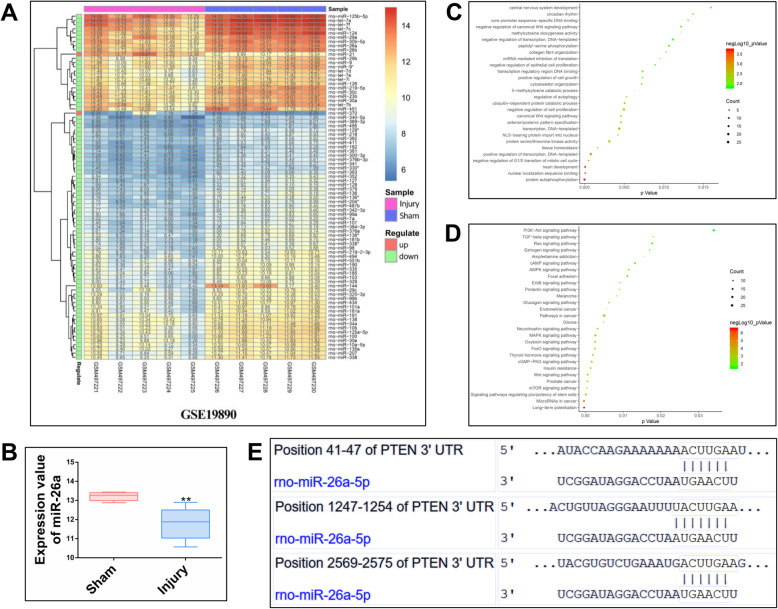
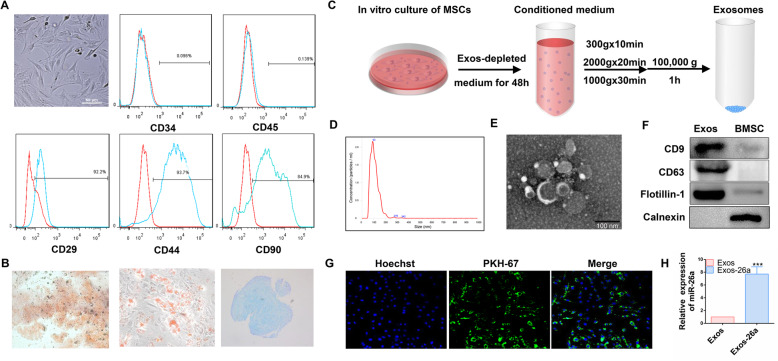
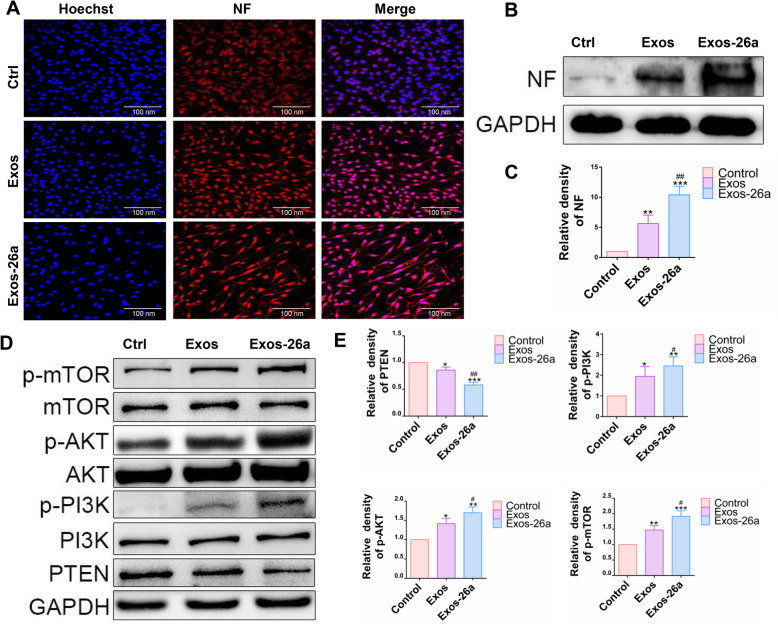
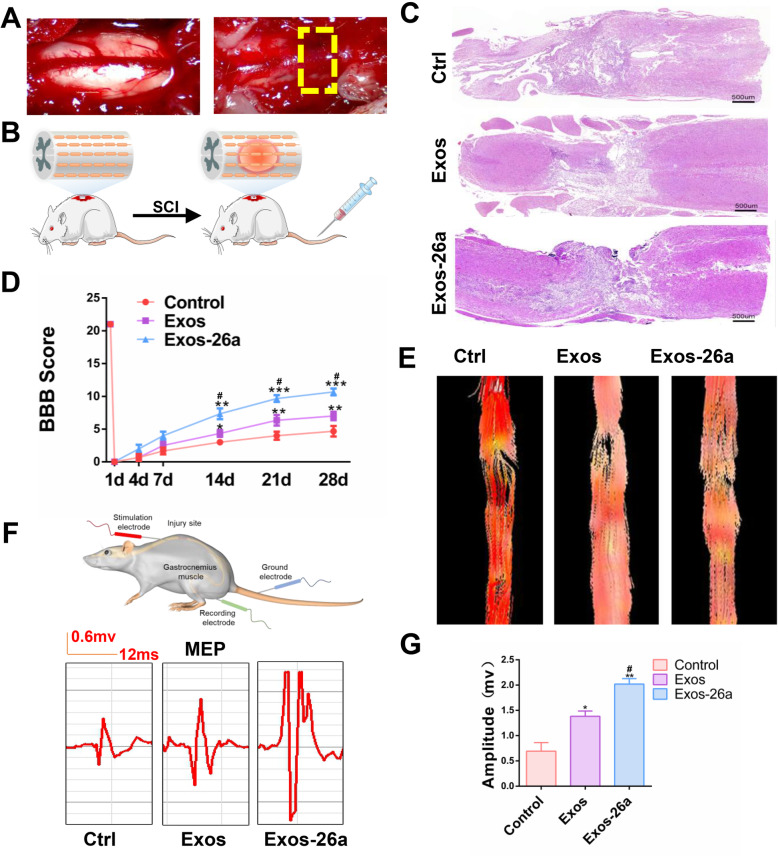
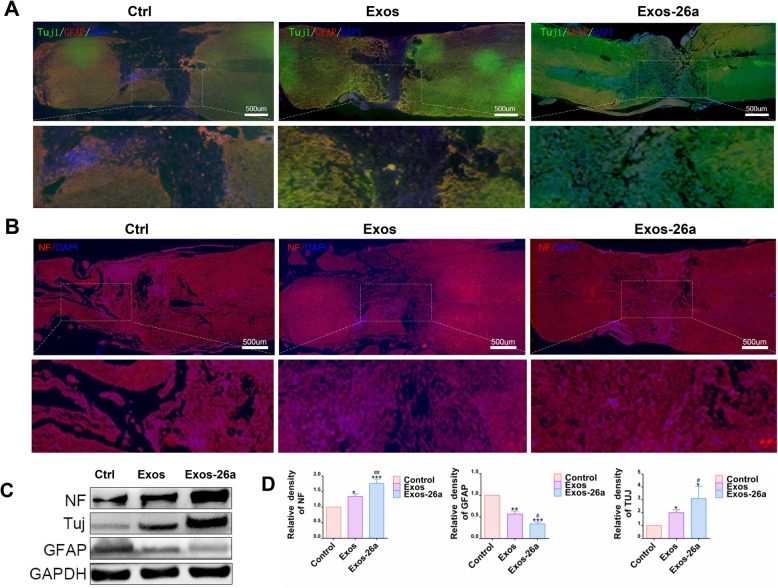
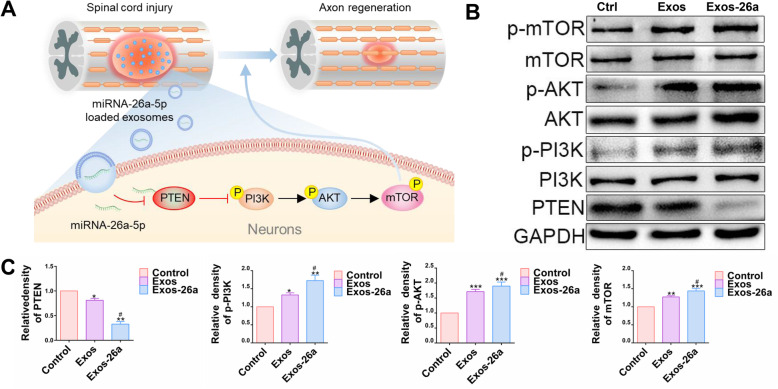
Background: Exosomes derived from the bone marrow mesenchymal stem cell (MSC) have shown great potential in spinal cord injury (SCI) treatment. This research was designed to investigate the therapeutic effects of miR-26a-modified MSC-derived exosomes (Exos-26a) following SCI. Methods: Bioinformatics and data mining were performed to explore the role of miR-26a in SCI. Exosomes were isolated from miR-26a-modified MSC culture medium by ultracentrifugation. A series of experiments, including assessment of Basso, Beattie and Bresnahan scale, histological evaluation, motor-evoked potential recording, diffusion tensor imaging, and western blotting, were performed to determine the therapeutic influence and the underlying molecular mechanisms of Exos-26a in SCI rats. Results: Exos-26a was shown to promote axonal regeneration. Furthermore, we found that exosomes derived from miR-26a-modified MSC could improve neurogenesis and attenuate glial scarring through PTEN/AKT/mTOR signaling cascades. Conclusions: Exosomes derived from miR-26a-modified MSC could activate the PTEN-AKT-mTOR pathway to promote axonal regeneration and neurogenesis and attenuate glia scarring in SCI and thus present great potential for SCI treatment. Graphical abstract:
Overview
The claims and statistics of this paper haven’t been checked yet.
Free: it reads the open-access text and checks the first 5 claims that cite a source we can check. Create a free account to check every claim.
Integrity signals
Registry
Cites
Statistics
Figures
Verification
Claims the paper makes
The claims and statistics of this paper haven’t been checked yet.
Free: it reads the open-access text and checks the first 5 claims that cite a source we can check. Create a free account to check every claim.
Claims other papers make about this one
Each is checked against this paper’s own text: does it say what the citing paper says it does?
The source backs part of the claim, not all of it — or backs it for a different population, condition or comparison.
In the citing paper
“A growing number of studies suggest EVs derived from various cell lines, such as NSCs and MSC are neuroprotective, angiogenic, and immunomodulatory.”
From Extracellular vesicles as nanotheranostic platforms for targeted neurological disorder interventions (2024) · cites this paper as [292]
Experimental — accuracy not yet measured
Self-check
Percentages, sums and reported differences re-computed from the paper’s own numbers.
The self-check needs the paper’s full text.
Citations
Cites
3 retracted
Spontaneous Human Adult Stem Cell Transformation
Rubio, D., Garcia-Castro, J., Martín, M. C., de la Fuente, R., Cigudosa, J. C., Lloyd, A. C., & Bernad, A. (2005) · Cancer Research · doi:10.1158/0008-5472.can-04-4194 · Cited by 1,036
RetractedHou, K., Li, G., Zhao, J., Xu, B., Zhang, Y., Yu, J., & Xu, K. (2020) · Journal of Neuroinflammation · doi:10.1186/s12974-020-1725-8 · Cited by 97
RetractedEffect of miR-26a on diabetic rats with myocardial injury by targeting PTEN.
Cai, S.-S., Tao, X.-W., Long, Y., Xia, K., & Zhang, Y. (2019) · PubMed · doi:10.26355/eurrev_201908_18661 · Cited by 13
RetractedValadi, H., Ekström, K., Bossios, A., Sjöstrand, M., Lee, J. J., & Lötvall, J. O. (2007) · Nature Cell Biology · doi:10.1038/ncb1596 · Cited by 12,834
Shedding light on the cell biology of extracellular vesicles
van Niel, G., D'Angelo, G., & Raposo, G. (2018) · Nature Reviews Molecular Cell Biology · doi:10.1038/nrm.2017.125 · Cited by 8,369
Cui, C., Cui, J., Jin, F., Cui, Y., Li, R., Jiang, X., Tian, Y., Wang, K., Jiang, P., & Gao, J. (2017) · Cellular Physiology and Biochemistry · doi:10.1159/000479571 · Cited by 5,203
Ahuja, C. S., Wilson, J. R., Nori, S., Kotter, M. R. N., Druschel, C., Curt, A., & Fehlings, M. G. (2017) · Nature Reviews Disease Primers · doi:10.1038/nrdp.2017.18 · Cited by 2,441
Exosome secreted by MSC reduces myocardial ischemia/reperfusion injury
Lai, R. C., Arslan, F., Lee, M. M., Sze, N. S. K., Choo, A., Chen, T. S., Salto-Tellez, M., Timmers, L., Lee, C. N., El Oakley, R. M., et al. (2010) · Stem Cell Research · doi:10.1016/j.scr.2009.12.003 · Cited by 2,215 · cited 1×
“To date, MSC exosomes have been reported to promote spinal cord injury recovery [27], improve graft-versus-host disease (GVHD) [28], reduce pulmonary hypertension [29], promote hepatic recovery [30], reduce myocardial ischemia/refusion injury [31], inhibit limb ischemia [32], and ameliorate wound healing [33].”
BackgroundHaematopoietic stem cells adopt mature haematopoietic fates in ischaemic myocardium
Balsam, L. B., Wagers, A. J., Christensen, J. L., Kofidis, T., Weissman, I. L., & Robbins, R. C. (2004) · Nature · doi:10.1038/nature02460 · Cited by 1,736
Abels, E. R., & Breakefield, X. O. (2016) · Cellular and Molecular Neurobiology · doi:10.1007/s10571-016-0366-z · Cited by 1,678 · cited 1×
“formed by endocytosis and the inward germination of the cell membrane, with extracellular components and cell surface proteins [21].”
BackgroundTraumatic Spinal Cord Injury: An Overview of Pathophysiology, Models and Acute Injury Mechanisms
Alizadeh, A., Dyck, S. M., & Karimi-Abdolrezaee, S. (2019) · Frontiers in Neurology · doi:10.3389/fneur.2019.00282 · Cited by 1,407
Mesenchymal Stromal Cells: Sensors and Switchers of Inflammation
Bernardo, M. E., & Fibbe, W. E. (2013) · Cell Stem Cell · doi:10.1016/j.stem.2013.09.006 · Cited by 1,383
Mesenchymal Stem Cell-derived Extracellular Vesicles: Toward Cell-free Therapeutic Applications
Rani, S., Ryan, A. E., Griffin, M. D., & Ritter, T. (2015) · Molecular Therapy · doi:10.1038/mt.2015.44 · Cited by 1,227
Mizushima, N., & Levine, B. (2020) · New England Journal of Medicine · doi:10.1056/nejmra2022774 · Cited by 1,140 · cited 1×
“A recent study showed that activation of autophagy could be a novel strategy to treat neurodegenerative diseases [79, 80].”
BackgroundPTEN deletion enhances the regenerative ability of adult corticospinal neurons
Liu, K., Lu, Y., Lee, J. K., Samara, R., Willenberg, R., Sears-Kraxberger, I., Tedeschi, A., Park, K. K., Jin, D., Cai, B., et al. (2010) · Nature Neuroscience · doi:10.1038/nn.2603 · Cited by 985 · cited 1×
“PTEN was supposed to be a crucial negative regulator of the mTOR pathway that regulates axonal regrowth, neuronal survival, and functional recovery following CNS injury [73, 74].”
BackgroundGlobal prevalence and incidence of traumatic spinal cord injury
Fehlings, M., Singh, A., Tetreault, L., Kalsi-Ryan, S., & Nouri, A. (2014) · Clinical Epidemiology · doi:10.2147/clep.s68889 · Cited by 945
Cell transplantation therapy for spinal cord injury
Assinck, P., Duncan, G. J., Hilton, B. J., Plemel, J. R., & Tetzlaff, W. (2017) · Nature Neuroscience · doi:10.1038/nn.4541 · Cited by 937
Xin, H., Li, Y., Buller, B., Katakowski, M., Zhang, Y., Wang, X., Shang, X., Zhang, Z. G., & Chopp, M. (2012) · Stem Cells · doi:10.1002/stem.1129 · Cited by 895
The Biology of Regeneration Failure and Success After Spinal Cord Injury
Tran, A. P., Warren, P. M., & Silver, J. (2018) · Physiological Reviews · doi:10.1152/physrev.00017.2017 · Cited by 884 · cited 1×
“Currently, treatments that can promote axonal regeneration and suppress astrocytic scarring and neuroinflammation are attracting the attention of researchers [58].”
BackgroundLee, C., Mitsialis, S. A., Aslam, M., Vitali, S. H., Vergadi, E., Konstantinou, G., Sdrimas, K., Fernandez-Gonzalez, A., & Kourembanas, S. (2012) · Circulation · doi:10.1161/circulationaha.112.114173 · Cited by 793 · cited 1×
“To date, MSC exosomes have been reported to promote spinal cord injury recovery [27], improve graft-versus-host disease (GVHD) [28], reduce pulmonary hypertension [29], promote hepatic recovery [30], reduce myocardial ischemia/refusion injury [31], inhibit limb ischemia [32], and ameliorate wound healing [33].”
BackgroundHucMSC-Exosome Mediated-Wnt4 Signaling Is Required for Cutaneous Wound Healing
Zhang, B., Wang, M., Gong, A., Zhang, X., Wu, X., Zhu, Y., Shi, H., Wu, L., Zhu, W., Qian, H., et al. (2015) · Stem Cells · doi:10.1002/stem.1771 · Cited by 792 · cited 1×
“To date, MSC exosomes have been reported to promote spinal cord injury recovery [27], improve graft-versus-host disease (GVHD) [28], reduce pulmonary hypertension [29], promote hepatic recovery [30], reduce myocardial ischemia/refusion injury [31], inhibit limb ischemia [32], and ameliorate wound healing [33].”
BackgroundMesenchymal Stem Cells Secrete Immunologically Active Exosomes
Zhang, B., Yin, Y., Lai, R. C., Tan, S. S., Choo, A. B. H., & Lim, S. K. (2014) · Stem Cells and Development · doi:10.1089/scd.2013.0479 · Cited by 700 · cited 2×
“To date, MSC exosomes have been reported to promote spinal cord injury recovery [27], improve graft-versus-host disease (GVHD) [28], reduce pulmonary hypertension [29], promote hepatic recovery [30], reduce myocardial ischemia/refusion injury [31], inhibit limb ischemia [32], and ameliorate wound healing [33]. miRNAs…”
BackgroundPathophysiology and pharmacologic treatment of acute spinal cord injury*1
KWON, B. (2004) · The Spine Journal · doi:10.1016/j.spinee.2003.07.007 · Cited by 696
Exosomes derived from human embryonic mesenchymal stem cells promote osteochondral regeneration
Zhang, S., Chu, W. C., Lai, R. C., Lim, S. K., Hui, J. H. P., & Toh, W. S. (2016) · Osteoarthritis and Cartilage · doi:10.1016/j.joca.2016.06.022 · Cited by 670
Lou, G., Song, X., Yang, F., Wu, S., Wang, J., Chen, Z., & Liu, Y. (2015) · Journal of Hematology & Oncology · doi:10.1186/s13045-015-0220-7 · Cited by 651
Hofstetter, C. P., Holmström, N. A. V., Lilja, J. A., Schweinhardt, P., Hao, J., Spenger, C., Wiesenfeld-Hallin, Z., Kurpad, S. N., Frisén, J., & Olson, L. (2005) · Nature Neuroscience · doi:10.1038/nn1405 · Cited by 639 · cited 1×
“However, several studies have found that transplantation of MSCs provides few positive efficacies on SCI due to the bloodbrain barrier and immunological rejection [62, 63].”
BackgroundEndogenous RNAs modulate microRNA sorting to exosomes and transfer to acceptor cells.
Squadrito, M. L., Baer, C., Burdet, F., Maderna, C., Gilfillan, G. D., Lyle, R., Ibberson, M., & De Palma, M. (2014) · Cell Reports · doi:10.1016/j.celrep.2014.07.035 · Cited by 604
Mesenchymal stem cell-derived exosomes as a new therapeutic strategy for liver diseases
Lou, G., Chen, Z., Zheng, M., & Liu, Y. (2017) · Experimental & Molecular Medicine · doi:10.1038/emm.2017.63 · Cited by 601
Umezu, T., Tadokoro, H., Azuma, K., Yoshizawa, S., Ohyashiki, K., & Ohyashiki, J. H. (2014) · Blood · doi:10.1182/blood-2014-05-576116 · Cited by 600
Brambilla, R., Bracchi-Ricard, V., Hu, W.-H., Frydel, B., Bramwell, A., Karmally, S., Green, E. J., & Bethea, J. R. (2005) · The Journal of Experimental Medicine · doi:10.1084/jem.20041918 · Cited by 586
Liu, W., Rong, Y., Wang, J., Zhou, Z., Ge, X., Ji, C., Jiang, D., Gong, F., Li, L., Chen, J., et al. (2020) · Journal of Neuroinflammation · doi:10.1186/s12974-020-1726-7 · Cited by 573
Guduric-Fuchs, J., O’Connor, A., Camp, B., O'Neill, C. L., Medina, R. J., & Simpson, D. A. (2012) · BMC Genomics · doi:10.1186/1471-2164-13-357 · Cited by 556
Tan, C. Y., Lai, R. C., Wong, W., Dan, Y. Y., Lim, S.-K., & Ho, H. K. (2014) · Stem Cell Research & Therapy · doi:10.1186/scrt465 · Cited by 548
Xin, H., Katakowski, M., Wang, F., Qian, J.-Y., Liu, X. S., Ali, M. M., Buller, B., Zhang, Z. G., & Chopp, M. (2017) · Stroke · doi:10.1161/strokeaha.116.015204 · Cited by 533
The therapeutic potential of mesenchymal stem cell‐derived extracellular vesicles
Katsuda, T., Kosaka, N., Takeshita, F., & Ochiya, T. (2013) · PROTEOMICS · doi:10.1002/pmic.201200373 · Cited by 423
AMPK–SKP2–CARM1 signalling cascade in transcriptional regulation of autophagy
Shin, H.-J. R., Kim, H., Oh, S., Lee, J.-G., Kee, M., Ko, H.-J., Kweon, M.-N., Won, K.-J., & Baek, S. H. (2016) · Nature · doi:10.1038/nature18014 · Cited by 417 · cited 1×
“A recent study showed that activation of autophagy could be a novel strategy to treat neurodegenerative diseases [79, 80].”
BackgroundJeong, J.-O., Han, J. W., Kim, J.-M., Cho, H.-J., Park, C., Lee, N., Kim, D.-W., & Yoon, Y.-S. (2011) · Circulation Research · doi:10.1161/circresaha.110.239848 · Cited by 410
Hu, G.-W., Li, Q., Niu, X., Hu, B., Liu, J., Zhou, S.-M., Guo, S.-C., Lang, H.-L., Zhang, C.-Q., Wang, Y., et al. (2015) · Stem Cell Research & Therapy · doi:10.1186/scrt546 · Cited by 391
Cellular Specificity of NF-κB Function in the Nervous System
Dresselhaus, E. C., & Meffert, M. K. (2019) · Frontiers in Immunology · doi:10.3389/fimmu.2019.01043 · Cited by 345
Reactive Astrogliosis after Spinal Cord Injury—Beneficial and Detrimental Effects
Karimi-Abdolrezaee, S., & Billakanti, R. (2012) · Molecular Neurobiology · doi:10.1007/s12035-012-8287-4 · Cited by 331 · cited 1×
“Therefore, it is important to understand how to effectively target their activities to take advantage of their potential for repair and regeneration after SCI [89].”
BackgroundRestoring function after spinal cord injury: towards clinical translation of experimental strategies
Ramer, L. M., Ramer, M. S., & Bradbury, E. J. (2014) · The Lancet Neurology · doi:10.1016/s1474-4422(14)70144-9 · Cited by 324 · cited 2×
“Although numerous therapies including drugs, physical therapy, hyperbaric oxygen therapy, and surgical interventions have been used clinically, none has been proven satisfactory due to the complex pathologic conditions [5].”
BackgroundFigley, S. A., Khosravi, R., Legasto, J. M., Tseng, Y.-F., & Fehlings, M. G. (2014) · Journal of Neurotrauma · doi:10.1089/neu.2013.3034 · Cited by 262
Wright, K. T., Masri, W. E., Osman, A., Chowdhury, J., & Johnson, W. E. B. (2011) · Stem Cells · doi:10.1002/stem.570 · Cited by 216
Mesenchymal stem cell-derived exosome: a promising alternative in the therapy of Alzheimer’s disease
Guo, M., Yin, Z., Chen, F., & Lei, P. (2020) · Alzheimer's Research & Therapy · doi:10.1186/s13195-020-00670-x · Cited by 200 · cited 1×
“Exosomes were found to deliver their contents to target cell by receptor-ligand binding, direct membrane fusion, and endocytosis [22].”
BackgroundWang, Z.-F., Liao, F., Wu, H., & Dai, J. (2019) · Journal of Experimental & Clinical Cancer Research · doi:10.1186/s13046-019-1181-4 · Cited by 185
Kawabata, S., Takano, M., Numasawa-Kuroiwa, Y., Itakura, G., Kobayashi, Y., Nishiyama, Y., Sugai, K., Nishimura, S., Iwai, H., Isoda, M., et al. (2016) · Stem Cell Reports · doi:10.1016/j.stemcr.2015.11.013 · Cited by 178 · cited 1×
“The SCI rats were analyzed with MEPs to evaluate functional recovery 4 weeks postinjury [56, 57].”
MethodOh, S. K., Choi, K. H., Yoo, J. Y., Kim, D. Y., Kim, S. J., & Jeon, S. R. (2016) · Neurosurgery · doi:10.1227/neu.0000000000001056 · Cited by 177
Tang, P., Hou, H., Zhang, L., Lan, X., Mao, Z., Liu, D., He, C., Du, H., & Zhang, L. (2014) · Molecular Neurobiology · doi:10.1007/s12035-013-8518-3 · Cited by 176
Marolt, D., Traweger, A., Gimona, M., & Redl, H. R. (2019) · Frontiers in Bioengineering and Biotechnology · doi:10.3389/fbioe.2019.00352 · Cited by 175
Pten Deletion Promotes Regrowth of Corticospinal Tract Axons 1 Year after Spinal Cord Injury
Du, K., Zheng, S., Zhang, Q., Li, S., Gao, X., Wang, J., Jiang, L., & Liu, K. (2015) · Journal of Neuroscience · doi:10.1523/jneurosci.3637-14.2015 · Cited by 169
Xu, J., Xiao, Y., Liu, B., Pan, S., Liu, Q., Shan, Y., Li, S., Qi, Y., Huang, Y., & Li, J. (2020) · Journal of Experimental & Clinical Cancer Research · doi:10.1186/s13046-020-01562-6 · Cited by 159
Self-citationIsolation of rat marrow-derived mesenchymal stem cells
Lennon, D. P., & Caplan, A. I. (2006) · Experimental Hematology · doi:10.1016/j.exphem.2006.07.015 · Cited by 157 · cited 1×
“Rat BMSC isolation and phenotype characterization were performed as described in the previous research [54].”
MethodZhang, H., Wang, Z., Wu, F., Kong, X., Yang, J., Lin, B., Zhu, S., Lin, L., Gan, C.-S., Fu, X., et al. (2013) · Molecular Neurobiology · doi:10.1007/s12035-013-8432-8 · Cited by 157 · cited 1×
“also demonstrated that downregulation of excessive autophagy via the stimulation of mTOR pathway promoted functional recovery after SCI [86].”
BackgroundDamania, A., Jaiman, D., Teotia, A. K., & Kumar, A. (2018) · Stem Cell Research & Therapy · doi:10.1186/s13287-017-0752-6 · Cited by 150
Yousefifard, M., Nasirinezhad, F., Shardi Manaheji, H., Janzadeh, A., Hosseini, M., & Keshavarz, M. (2016) · Stem Cell Research & Therapy · doi:10.1186/s13287-016-0295-2 · Cited by 146
Watanabe, S., Uchida, K., Nakajima, H., Matsuo, H., Sugita, D., Yoshida, A., Honjoh, K., Johnson, W. E. B., & Baba, H. (2015) · Stem Cells · doi:10.1002/stem.2006 · Cited by 144
Su, X., Liao, L., Shuai, Y., Jing, H., Liu, S., Zhou, H., Liu, Y., & Jin, Y. (2015) · Cell Death & Disease · doi:10.1038/cddis.2015.221 · Cited by 133
Brambilla, R., Hurtado, A., Persaud, T., Esham, K., Pearse, D. D., Oudega, M., & Bethea, J. R. (2009) · Journal of Neurochemistry · doi:10.1111/j.1471-4159.2009.06190.x · Cited by 129
MicroRNA Dysregulation in the Spinal Cord following Traumatic Injury
Yunta, M., Nieto-Díaz, M., Esteban, F. J., Caballero-López, M., Navarro-Ruíz, R., Reigada, D., Pita-Thomas, D. W., Águila, Á. D., Muñoz-Galdeano, T., & Maza, R. M. (2012) · PLoS ONE · doi:10.1371/journal.pone.0034534 · Cited by 122 · cited 1×
“A previous study showed that miR-26a expression is decreased after SCI [46].”
BackgroundDual function of the PI3K-Akt-mTORC1 axis in myelination of the peripheral nervous system
Figlia, G., Norrmén, C., Pereira, J. A., Gerber, D., & Suter, U. (2017) · eLife · doi:10.7554/elife.29241 · Cited by 114
A Comparative Study of Three Different Types of Stem Cells for Treatment of Rat Spinal Cord Injury
Růžička, J., Urdzíková, L. M., Gillick, J. L., Amemori, T., Romanyuk, N., Kárová, K., Zaviskova, K., Dubišová, J., Kubinová, Š., Murali, R., et al. (2016) · Cell Transplantation · doi:10.3727/096368916x693671 · Cited by 112
Effects of PTEN and Nogo Codeletion on Corticospinal Axon Sprouting and Regeneration in Mice
Geoffroy, C. G., Lorenzana, A. O., Kwan, J. P., Lin, K., Ghassemi, O., Ma, A., Xu, N., Creger, D., Liu, K., He, Z., et al. (2015) · The Journal of Neuroscience · doi:10.1523/jneurosci.4013-14.2015 · Cited by 109 · cited 1×
“PTEN was supposed to be a crucial negative regulator of the mTOR pathway that regulates axonal regrowth, neuronal survival, and functional recovery following CNS injury [73, 74].”
BackgroundOhtake, Y., Park, D., Muneer, P. M. A., Li, H., Xu, B., Sharma, K., Smith, G. M., Selzer, M. E., & Li, S. (2014) · Biomaterials · doi:10.1016/j.biomaterials.2014.02.037 · Cited by 104
The role of mTOR signaling pathway in spinal cord injury
Kanno, H., Ozawa, H., Sekiguchi, A., Yamaya, S., Tateda, S., Yahata, K., & Itoi, E. (2012) · Cell Cycle · doi:10.4161/cc.21262 · Cited by 97
Focus on Extracellular Vesicles: Therapeutic Potential of Stem Cell-Derived Extracellular Vesicles
Zhang, B., Yeo, R., Tan, K., & Lim, S. (2016) · International Journal of Molecular Sciences · doi:10.3390/ijms17020174 · Cited by 96 · cited 2×
“The combined functional complexity of its contents provides the therapeutic efficacies of MSC exosomes [26].”
Backgroundvan Spronsen, M., van Battum, E. Y., Kuijpers, M., Vangoor, V. R., Rietman, M. L., Pothof, J., Gumy, L. F., van IJcken, W. F. J., Akhmanova, A., Pasterkamp, R. J., et al. (2013) · PLoS ONE · doi:10.1371/journal.pone.0074907 · Cited by 82
Liang, Z., Chi, Y.-J., Gq, L., Sh, L., Qy, J., & Yk, C. (2018) · PubMed · doi:10.26355/eurrev_201806_15175 · Cited by 79 · cited 1×
“A recent study showed that miR-26a induces angiogenesis via PI3K/AKT following cerebral infarction [69].”
BackgroundMicroRNA-26a supports mammalian axon regeneration in vivo by suppressing GSK3β expression
Jiang, J.-J., Liu, C.-M., Zhang, B.-Y., Wang, X.-W., Zhang, M., Saijilafu, Zhang, S.-R., Hall, P., Hu, Y.-W., & Zhou, F.-Q. (2015) · Cell Death & Disease · doi:10.1038/cddis.2015.239 · Cited by 78
Valproic acid reduces autophagy and promotes functional recovery after spinal cord injury in rats
Hao, H., Wang, L., Guo, Z.-J., Bai, L., Zhang, R., Shuang, W., Jia, Y., Wang, J., Li, X., & Liu, Q. (2013) · Neuroscience Bulletin · doi:10.1007/s12264-013-1355-6 · Cited by 78
Guo, H., Huang, B., Wang, Y., Zhang, Y., Ma, Q., & Ren, Y. (2020) · International Immunopharmacology · doi:10.1016/j.intimp.2020.106285 · Cited by 76
Lambert, M.-P., Terrone, S., Giraud, G., Benoit‐Pilven, C., Cluet, D., Combaret, V., Mortreux, F., Auboeuf, D., & Bourgeois, C. F. (2018) · Nucleic Acids Research · doi:10.1093/nar/gky545 · Cited by 75 · cited 1×
“In the central nervous system, miR-26a is highly expressed to regulate cell-cycle progression and neural progenitor differentiation [44, 45].”
BackgroundWang, J., Rong, Y., Ji, C., Lv, C., Jiang, D., Ge, X., Gong, F., Tang, P., Cai, W., Liu, W., et al. (2020) · Journal of Nanobiotechnology · doi:10.1186/s12951-020-00630-5 · Cited by 74
Prospects for mTOR-mediated functional repair after central nervous system trauma
Berry, M., Ahmed, Z., Morgan-Warren, P. J., Fulton, D. J., & Logan, A. (2015) · Neurobiology of Disease · doi:10.1016/j.nbd.2015.10.002 · Cited by 71
Zhou, Z., Tian, X., Biling, M., Xu, H., Zhang, L., Huang, L., Yao, S., Huang, Z.-X., Wang, Y., Xie, H., et al. (2020) · Stem Cell Research & Therapy · doi:10.1186/s13287-020-01724-5 · Cited by 69
Vahsen, B. F., Ribas, V. T., Sundermeyer, J., Boecker, A., Dambeck, V., Lenz, C., Shomroni, O., Gomes, L. C., Tatenhorst, L., Barski, E., et al. (2020) · Cell Death and Differentiation · doi:10.1038/s41418-020-0543-y · Cited by 67 · cited 1×
“proved that the inhibition of ULK1 can lead to mTOR activation, a decrease in autophagy, and an mTOR-mediated upregulation of proteins translation, therefore attenuating axonal degeneration [85].”
BackgroundLuarte, A., Henzi, R., Fernández, A., Gaete, D., Cisternas, P., Pizarro, M., Batiz, L. F., Villalobos, I., Masalleras, M., Vergara, R., et al. (2020) · Cells · doi:10.3390/cells9040930 · Cited by 63
Inhibition of astroglial NF-kappaB enhances oligodendrogenesis following spinal cord injury
Bracchi-Ricard, V. C., Lambertsen, K. L., Ricard, J., Nathanson, L., Karmally, S., Johnstone, J. T., Ellman, D. G., Frydel, B. R., McTigue, D. M., & Bethea, J. R. (2013) · Journal of Neuroinflammation · doi:10.1186/1742-2094-10-92 · Cited by 60
The role of microRNA-26a in human cancer progression and clinical application
Chen, J., Zhang, K., Xu, Y., Gao, Y., Li, C., Wang, R., & Chen, L. (2016) · Tumor Biology · doi:10.1007/s13277-016-5017-y · Cited by 58
Hou, K., Li, G., Zhao, J., Xu, B., Zhang, Y., Yu, J., & Xu, K. (2020) · Journal of Neuroinflammation · doi:10.1186/s12974-020-01872-8 · Cited by 57
Cui, C., Gong, X., Qiu, J., & Fan, X. (2015) · Cell Biology International · doi:10.1002/cbin.10461 · Cited by 55
Liu, Z., Zhang, H., Xia, H., Wang, B., Zhang, R., Zeng, Q., Guo, L., Shen, K., Wang, B., Zhong, Y., et al. (2019) · Biochemical and Biophysical Research Communications · doi:10.1016/j.bbrc.2019.03.002 · Cited by 54
Chen, Y.-T., Tsai, M.-J., Hsieh, N., Lo, M.-J., Lee, M.-J., Cheng, H., & Huang, W.-C. (2019) · Stem Cell Research & Therapy · doi:10.1186/s13287-019-1491-7 · Cited by 54
Self-citationNuclear Factor κB Signaling and Its Related Non-coding RNAs in Cancer Therapy
Liu, X., Shao, Y., Zhou, J., Qian, G., & Ma, Z. (2019) · Molecular Therapy — Nucleic Acids · doi:10.1016/j.omtn.2019.11.007 · Cited by 51
Song, P., Han, T., Xiang, X., Wang, Y., Fang, H., Niu, Y., & Shen, C. (2020) · Stem Cell Research & Therapy · doi:10.1186/s13287-020-01691-x · Cited by 50
Effects of calcitriol on experimental spinal cord injury in rats
Zhou, K.-L., Chen, D.-H., Jin, H.-M., Wu, K., Wang, X.-Y., Xu, H.-Z., & Zhang, X.-L. (2016) · Spinal Cord · doi:10.1038/sc.2015.217 · Cited by 47 · cited 1×
“was investigated in a compression SCI model [83, 84].”
MethodDifferential circulating and visceral fat microRNA expression of non-obese and obese subjects
Kim, N. H., Ahn, J., Choi, Y. M., Son, H. J., Choi, W. H., Cho, H. J., Yu, J. H., Seo, J. A., Jang, Y. J., Jung, C. H., et al. (2019) · Clinical Nutrition · doi:10.1016/j.clnu.2019.03.033 · Cited by 47
Chen, H. C., Hsu, P.-W., Tzaan, W. C., & Lee, A.-W. (2013) · Spinal Cord · doi:10.1038/sc.2013.140 · Cited by 39 · cited 1×
“was investigated in a compression SCI model [83, 84].”
MethodSpatiotemporal regulation of GSK3β levels by miRNA-26a controls axon development in cortical neurons
Lucci, C., Mesquita-Ribeiro, R., Rathbone, A., & Dajas‐Bailador, F. (2020) · Development · doi:10.1242/dev.180232 · Cited by 39 · cited 1×
“miR-26 has a known role in tissue growth and neuronal development [67, 68].”
BackgroundShen, J., Zhong, X., Duan, X., Cheng, L., Hong, G.-B., Bi, X.-B., & Liu, Y. (2009) · Academic Radiology · doi:10.1016/j.acra.2009.03.016 · Cited by 37
MicroRNA‐29a regulates neural stem cell neuronal differentiation by targeting PTEN
Shi, Z., Zhou, H., Lu, L., Pan, B., Wei, Z., Liu, J., Li, J., Yuan, S., Kang, Y., Liu, L., et al. (2018) · Journal of Cellular Biochemistry · doi:10.1002/jcb.26768 · Cited by 32 · cited 1×
“The loss of PTEN has been revealed to increase neural stem cell differentiation and proliferation [78].”
BackgroundBrock, J. H., Graham, L., Staufenberg, E., Collyer, E., Koffler, J. Y., & Tuszynski, M. H. (2015) · Journal of Neurotrauma · doi:10.1089/neu.2015.4009 · Cited by 30
Filippi, M., Boido, M., Pasquino, C., Garello, F., Boffa, C., & Terreno, E. (2016) · Experimental Neurology · doi:10.1016/j.expneurol.2016.05.023 · Cited by 27
Zhang, H., Zhang, L., & Sun, T. (2018) · Frontiers in Molecular Neuroscience · doi:10.3389/fnmol.2018.00044 · Cited by 22
Research works printed but not linked: 3
- Xu J Xiao Y Liu B Pan S Liu Q Shan Y Li S Qi Y Huang Y Jia L Exosomal MALAT1 sponges miR-26a/26b to promote the invasion and metastasis of colorectal cancer via F UT4 enhanced fucosylation and PI3K/Akt pathway J Exp Clin Cancer Res 2020 39 1 54 10.1186/s13046-020-01562-6 32209115 PMC7092616 · DOI
- Liu W Rong Y Wang J Zhou Z Ge X Ji C Jiang D Gong F Li L Chen J Zhao S Kong F Gu C Fan J Cai W Exosome-shuttled miR-216a-5p from hypoxic preconditioned mesenchymal stem cells repair traumatic spin al cord injury by shifting microglial M1/M2 polarization J Neuroinflammation 2020 17 1 47 10.1186/s12974-020-1726-7 32019561 PMC7001326 · DOI · Paper page
- Jiang JJ Liu CM Zhang BY Wang XW Zhang M Zhang SR Hall P Hu YW Zhou FQ MicroRNA-26a supports mammalian axon regeneration in vivo by suppressing GSK3¦Â expression Cell Death Dis 2015 6 8 e1865 10.1038/cddis.2015.239 26313916 PMC4558520 · DOI · Paper page
Cited by
Kou, M., Huang, L., Yang, J., Chiang, Z., Chen, S., Liu, J., Guo, L., Zhang, X., Zhou, X., Xu, X., et al. (2022) · Cell Death & Disease · doi:10.1038/s41419-022-05034-x · Cited by 640
Hua, T., Yang, M., Song, H., Kong, E., Deng, M., Li, Y., Li, J., Liu, Z., Fu, H., Wang, Y., et al. (2022) · Journal of Nanobiotechnology · doi:10.1186/s12951-022-01522-6 · Cited by 189
“Exosomes protect SCI from glia scarring and axonal injury by transferring miR-26a to the spinal cord [35].”
BackgroundVerma, N., & Arora, S. (2025) · Pharmaceutics · doi:10.3390/pharmaceutics17080990 · Cited by 173
“Complementary policy efforts should also focus on incentivizing research and development in EV technology through targeted grants and funding, thereby empowering emerging scientists and organizations to contribute meaningfully to this field [111,112].”
Chen, S., Sun, F., Qian, H., Xu, W., & Jiang, J. (2022) · Stem Cells International · doi:10.1155/2022/1779346 · Cited by 142
“In addition, MSC-exosomes modified by miR-126 and miR-26a protect neurons in rats with spinal cord injury, stimulate axon regeneration, and improve the recovery of limb motor function after spinal cord injury [128, 129].”
BackgroundEmerging Exosomes and Exosomal MiRNAs in Spinal Cord Injury
Feng, J., Zhang, Y., Zhu, Z., Gu, C., Waqas, A., & Chen, L. (2021) · Frontiers in Cell and Developmental Biology · doi:10.3389/fcell.2021.703989 · Cited by 106
Metadata
- Authors
- Chen, Y., Tian, Z., He, L., Liu, C., Wang, N., Rong, L., & Liu, B.
- Affiliations
- Sun Yat-sen University (CN)
- Corresponding author
- Rong, Limin
- Liu, Bin
- Venue
- Stem Cell Research & Therapy
- Published
- 2021-04-05
- Volume
- 12
- Issue
- 1
- Pages
- 224-224
- ISSN
- 1757-6512 (ISSN-L)
- PMC
- PMC8022427
- OpenAlex
- W3144305753
- Cited by
- 106
- References
- 93
- Citations by year
- 2026: 16 · 2025: 23 · 2024: 23 · 2023: 22 · 2022: 19 · 2021: 3
- FWCI
- 11.15
- Type
- journal article
- Language
- en
- Open access
- gold
- doi.org
- Licence
- cc-by
- creativecommons.org/licenses/by/4.0/ (tdm)
- creativecommons.org/licenses/by/4.0/ (vor)
- Locations
- Stem Cell Research & Therapy (publishedVersion, cc-by)
- PubMed Central (publishedVersion, cc-by)
- PubMed (publishedVersion)
- DOAJ (DOAJ: Directory of Open Access Journals) (submittedVersion, cc-by-sa)
- Funders
- The National Key Research and Development Program of China (2017YFA0105400)
- The Key Research and Development Program of Guangdong Province (20180236)
- The Clinical Innovation Research Program of Guangzhou Regenerative Medicine and Health Guangdong Laboratory (2018GZR0201006)
- National Natural Science Foundation of China (81772349, 81772398, 81472122)
- Topics
- Health Sciences › Medicine › Clinical Neurology › Spinal Cord Injury Research
- Life Sciences › Biochemistry, Genetics and Molecular Biology › Molecular Biology › Extracellular vesicles in disease
- Life Sciences › Neuroscience › Cellular and Molecular Neuroscience › Nerve injury and regeneration
- Keywords
- spinal cord injury, exosomes, mesenchymal stem cells, miR-26a, axon regeneration, neurogenesis, glial scar, bone marrow mesenchymal stem cells, exosome therapy
- MeSH terms
- Animals, Spinal Cord, Spinal Cord Injuries, MicroRNAs, Proto-Oncogene Proteins c-akt, PTEN Phosphohydrolase, Rats, Exosomes, Diffusion Tensor Imaging, TOR Serine-Threonine Kinases
About these checks
Registry, retraction, Cites and statistics results are computed, not judged, with one exception: a printed reference that no index lists is read once by a model before it counts as a citation error. Claims are extracted by a model and kept only when their quote appears verbatim in the text; each cited source is then checked, with a model’s help, for whether it says what the claim relies on. Those verdicts can be wrong — read the claim’s quote and the cited source before relying on one.
Statistics and arithmetic are recomputed, not judged.
Confidence bands are shown only for fields calibrated on our annotated test set. None is calibrated yet, so no band is shown.
What counts as a claim ›How we measure confidence ›How we check this ›
Are you an author, or do you see a problem with this page? Request a review
Data sources
Bibliographic data: Semantic Scholar, OpenAlex, Crossref.
Contains information from the Semantic Scholar Academic Graph Datasets, made available under the ODC Attribution License (ODC-BY 1.0).
Semantic Scholar’s data is described in: Kinney, R., et al. (2023). The Semantic Scholar Open Data Platform. arXiv:2301.10140.
