

The DOI matches its Crossref record; 82 of the 82 references it cites were found in a registry or an index.
Sex and estrogens alter the action of glucagon-like peptide-1 on reward
Open accessAbstract
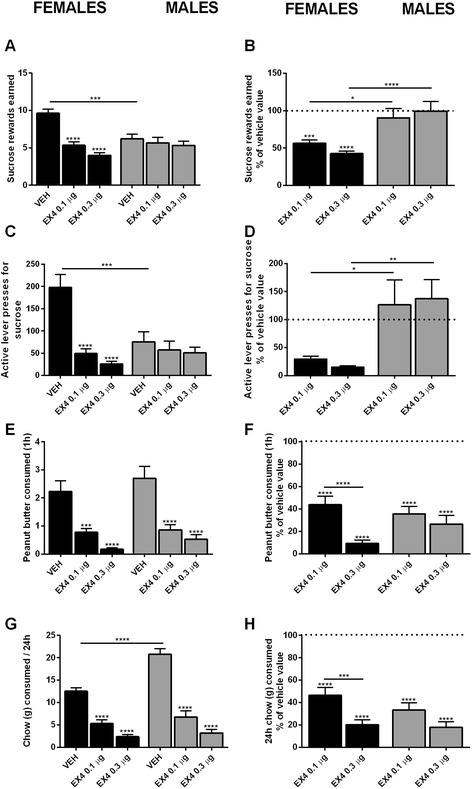
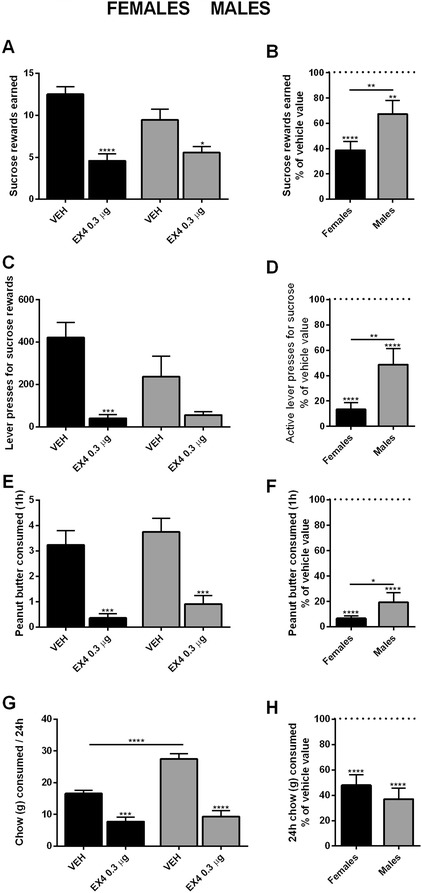
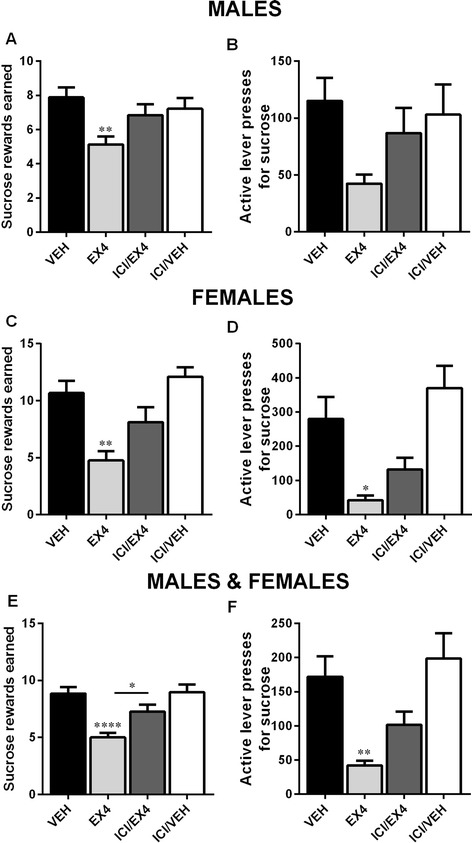
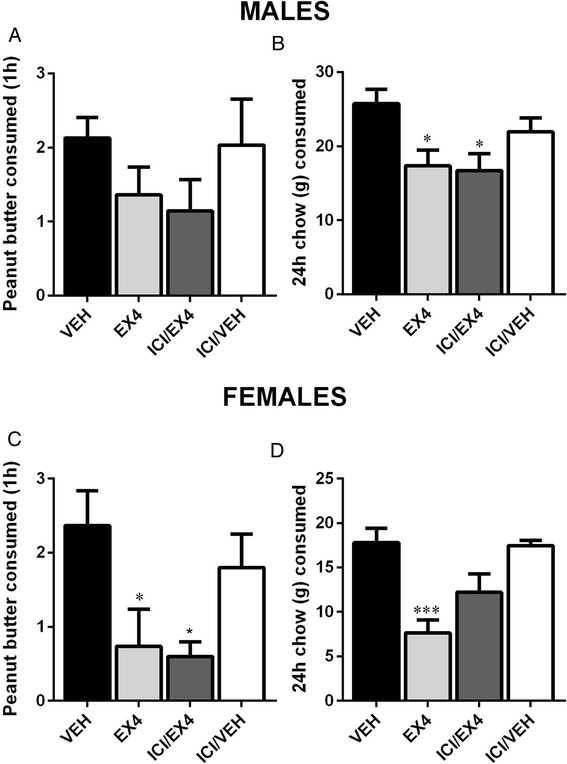
BACKGROUND: Feeding behavior is regulated through an intricate array of anorexic and orexigenic hormones acting on the central nervous system (CNS). Some of these hormones may have differential effects in males and females, effects potentially attributed to actions of gonadal steroids, especially estrogens. Central stimulation of the glucagon-like peptide-1 (GLP-1) receptors reduces feeding and food-reward behavior by acting on CNS regions important for the anorexic actions of estrogens. Thus, we propose that the action of GLP-1 on food intake and reward may differ between sexes. METHODS: Male and female rats were centrally injected with the GLP-1 analog exendin-4 (Ex4) in a non-deprived or food-restricted state; reward behavior was measured in a progressive ratio operant conditioning task. Intake of chow and palatable food were also measured. To determine if sex differences in the actions of Ex4 are due to interactions with estrogens, Ex4 treatment was preceded by treatment with a nonselective estrogen receptor-α (ERα) and ERβ or ERα-selective antagonist. RESULTS: Central injection of Ex4 revealed increased reward behavior suppression in females, compared to males, in the operant conditioning task. This increase was present in both non-deprived and food-restricted animals with larger differences in the fed state. Intake of chow and palatable food, after Ex4, were similar in males and females. Food reward, but not food intake, effect of Ex4 was attenuated by pretreatment with ER antagonist in both sexes, suggesting that estrogens may modulate effects of Ex4 in both sexes. Furthermore, central pretreatment with ERα-selective antagonist was sufficient to attenuate effects of Ex4 on reward. CONCLUSIONS: Collectively, these data reveal that females display much higher sensitivity to the food reward impact of central GLP-1 receptor activation. Surprisingly, they also demonstrate that central ERα signaling is necessary for the actions of GLP-1 on food-reward behavior in both sexes.
Overview
The claims and statistics of this paper haven’t been checked yet.
Run the check — free, no account needed. It reads the open-access text and checks the sources it cites.
Integrity signals
Registry
Cites
Statistics
Figures
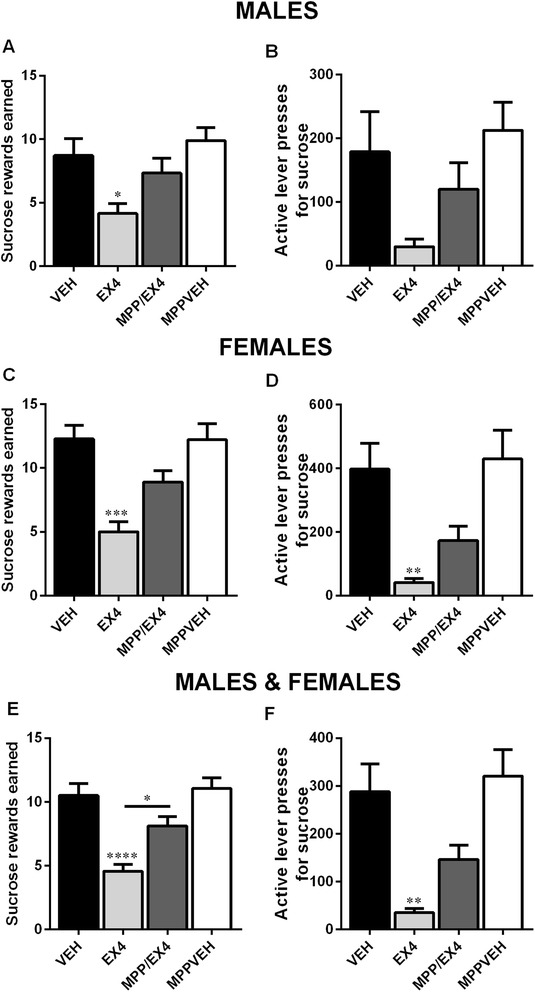
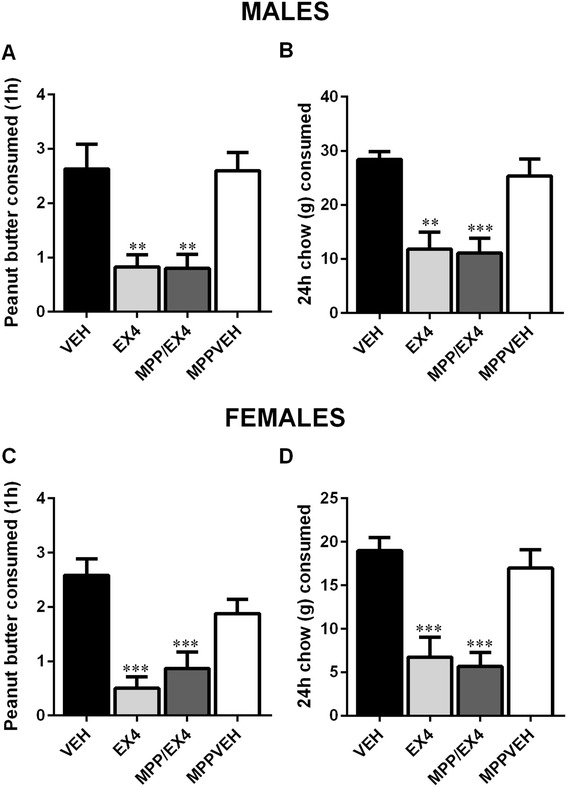
Verification
Claims the paper makes
The claims and statistics of this paper haven’t been checked yet.
Run the check — free, no account needed. It reads the open-access text and checks the sources it cites.
Claims other papers make about this one
Each is checked against this paper’s own text: does it say what the citing paper says it does?
The source backs part of the claim, not all of it — or backs it for a different population, condition or comparison.
In the citing paper
“Animal studies examining the impact of sex on the anorexigenic effects of GLP-1 RAs have demonstrated that, at least in part, sex hormones are responsible for the differential responses between males and females.”
From Sex Differences in Response to Treatment with Glucagon-like Peptide 1 Receptor Agonists: Opportunities for a Tailored Approach to Diabetes and Obesity Care (2022) · cites this paper as [85]
Experimental — accuracy not yet measuredThe cited source says what the claim attributes to it.
In the citing paper
“More specifically, it has been shown that estrogen signaling is a crucial component via which GLP-1 RAs modify the food-reward aspect of food seeking.”
From Sex Differences in Response to Treatment with Glucagon-like Peptide 1 Receptor Agonists: Opportunities for a Tailored Approach to Diabetes and Obesity Care (2022) · cites this paper as [85]
The cited source says what the claim attributes to it.
In the citing paper
“In this sense, higher estrogen concentrations in females, especially during their premenopausal years, could potentially serve as an explanation for why women may respond better to GLP-1 RAs [85].”
From Sex Differences in Response to Treatment with Glucagon-like Peptide 1 Receptor Agonists: Opportunities for a Tailored Approach to Diabetes and Obesity Care (2022) · cites this paper as [85]
In the citing paper
“Finally, referring to sexual dimorphism in weight loss from another point of view, it has been highlighted that estrogen signaling plays a crucial role in the food-reward aspect of food seeking induced by GLP-1 RAs [91].”
From Adipose Tissue: A Novel Target of the Incretin Axis? A Paradigm Shift in Obesity-Linked Insulin Resistance (2024) · cites this paper as [91]
Self-check
Percentages, sums and reported differences re-computed from the paper’s own numbers.
The self-check needs the paper’s full text.
Citations
Cites
The Physiology of Glucagon-like Peptide 1
Holst, J. J. (2007) · Physiological Reviews · doi:10.1152/physrev.00034.2006 · Cited by 3,371
A role for glucagon-like peptide-1 in the central regulation of feeding
Turton, M. D., O'Shea, D., Gunn, I., Beak, S. A., Edwards, C. M. B., Meeran, K., Choi, S. J., Taylor, G. M., Heath, M. M., Lambert, P. D., et al. (1996) · Nature · doi:10.1038/379069a0 · Cited by 1,950
Dissecting components of reward: ‘liking’, ‘wanting’, and learning
Berridge, K. C., Robinson, T. E., & Aldridge, J. W. (2009) · Current Opinion in Pharmacology · doi:10.1016/j.coph.2008.12.014 · Cited by 1,942
Food reward: brain substrates of wanting and liking
Berridge, K. C. (1996) · Neuroscience & Biobehavioral Reviews · doi:10.1016/0149-7634(95)00033-b · Cited by 1,901
Estrogen Actions in the Central Nervous System
McEwen, B. S., & Alves, S. E. (1999) · Endocrine Reviews · doi:10.1210/edrv.20.3.0365 · Cited by 1,504
Increased adipose tissue in male and female estrogen receptor-α knockout mice
Heine, P. A., Taylor, J. A., Iwamoto, G. A., Lubahn, D. B., & Cooke, P. S. (2000) · Proceedings of the National Academy of Sciences · doi:10.1073/pnas.97.23.12729 · Cited by 1,282
Immunolocalization of Estrogen Receptor β in the Mouse Brain: Comparison with Estrogen Receptor α
Mitra, S. W., Hoskin, E., Yudkovitz, J., Pear, L., Wilkinson, H. A., Hayashi, S., Pfaff, D. W., Ogawa, S., Rohrer, S. P., Schaeffer, J. M., et al. (2003) · Endocrinology · doi:10.1210/en.2002-221069 · Cited by 856
Gender Difference in the Prevalence of Eating Disorder Symptoms
Striegel-Moore, R., Rosselli, F., Perrin, N., DeBar, L., Wilson, G., May, A. M., & Kraemer, H. (2009) · International Journal of Eating Disorders · doi:10.1002/eat.20625 · Cited by 680
Larsen, P. J., Tang-Christensen, M., Holst, J. J., & Ørskov, C. (1997) · Neuroscience · doi:10.1016/s0306-4522(96)00434-4 · Cited by 663
Estrogen Actions in the Central Nervous System
McEwen, B. S. (1999) · Endocrine Reviews · doi:10.1210/er.20.3.279 · Cited by 640
Research works printed but not linked: 1
- Shirazi RH, Dickson SL, Skibicka KP. Gut peptide GLP-1 and its analogue, exendin-4, decrease alcohol intake and reward. Plos One. 2013;8(4). doi: 10.1371/journal.pone.0061965 . · DOI
Cited by
Sorted by citations
GLP-1 and weight loss: unraveling the diverse neural circuitry
Kanoski, S. E., Hayes, M. R., & Skibicka, K. P. (2016) · American Journal of Physiology-Regulatory, Integrative and Comparative Physiology · doi:10.1152/ajpregu.00520.2015 · Cited by 290
Self-citationThe role of glucagon‐like peptide 1 (GLP‐1) in addictive disorders
Klausen, M. K., Thomsen, M., Wortwein, G., & Fink‐Jensen, A. (2022) · British Journal of Pharmacology · doi:10.1111/bph.15677 · Cited by 259
Marić, I., Krieger, J.-P., van der Velden, P., Börchers, S., Asker, M., Vujičić, M., Asterholm, I. W., & Skibicka, K. P. (2022) · Frontiers in Nutrition · doi:10.3389/fnut.2022.828522 · Cited by 192
Self-citationSemaglutide reduces alcohol intake and relapse-like drinking in male and female rats
Aranäs, C., Edvardsson, C. E., Shevchouk, O. T., Zhang, Q., Witley, S., Blid Sköldheden, S., Zentveld, L., Vallöf, D., Tufvesson-Alm, M., & Jerlhag, E. (2023) · eBioMedicine · doi:10.1016/j.ebiom.2023.104642 · Cited by 158
Anti-Inflammatory Effects of GLP-1 Receptor Activation in the Brain in Neurodegenerative Diseases
Diz-Chaves, Y., Mastoor, Z., Spuch, C., González-Matías, L. C., & Mallo, F. (2022) · International Journal of Molecular Sciences · doi:10.3390/ijms23179583 · Cited by 148
Rentzeperi, E., Pegiou, S., Koufakis, T., Grammatiki, M., & Kotsa, K. (2022) · Journal of Personalized Medicine · doi:10.3390/jpm12030454 · Cited by 140
López‐Ferreras, L., Richard, J. E., Noble, E. E., Eerola, K., Anderberg, R. H., Olandersson, K., Taing, L., Kanoski, S. E., Hayes, M. R., & Skibicka, K. P. (2017) · Molecular Psychiatry · doi:10.1038/mp.2017.187 · Cited by 135
Self-citationEren, C. Y., Yigit, A., Dogruoz, E., & Eser, H. Y. (2021) · Frontiers in Behavioral Neuroscience · doi:10.3389/fnbeh.2020.614884 · Cited by 142
Raparelli, V., Elharram, M., Moura, C. S., Abrahamowicz, M., Bernatsky, S., Behlouli, H., & Pilote, L. (2020) · Journal of the American Heart Association · doi:10.1161/jaha.119.012940 · Cited by 106
Vogel, H., Wolf, S., Rabasa, C., Rodriguez-Pacheco, F., Babaei, C. S., Stöber, F., Goldschmidt, J., DiMarchi, R. D., Finan, B., Tschöp, M. H., et al. (2016) · Neuropharmacology · doi:10.1016/j.neuropharm.2016.07.039 · Cited by 86
Self-citationGLP-1 and Its Analogs: Does Sex Matter?
Börchers, S., & Skibicka, K. P. (2024) · Endocrinology · doi:10.1210/endocr/bqae165 · Cited by 96
Self-citationHernandez, N. S., Weir, V. R., Ragnini, K., Merkel, R., Zhang, Y., Mace, K. D., Rich, M. T., Pierce, R. C., & Schmidt, H. D. (2020) · Molecular Psychiatry · doi:10.1038/s41380-020-00957-3 · Cited by 73
Guerrero-Hreins, E., Goldstone, A. P., Brown, R. M., & Sumithran, P. (2021) · Progress in Neuro-Psychopharmacology and Biological Psychiatry · doi:10.1016/j.pnpbp.2021.110303 · Cited by 62
Central GLP-1 receptors: Novel molecular targets for cocaine use disorder
Hernandez, N. S., & Schmidt, H. D. (2019) · Physiology & Behavior · doi:10.1016/j.physbeh.2019.03.026 · Cited by 66
Konanur, V., Hsu, T. M., Kanoski, S. E., Hayes, M. R., & Roitman, M. F. (2019) · Physiology & Behavior · doi:10.1016/j.physbeh.2019.112771 · Cited by 59
Parallels and Overlap: The Integration of Homeostatic Signals by Mesolimbic Dopamine Neurons
Hsu, T. M., McCutcheon, J. E., & Roitman, M. F. (2018) · Frontiers in Psychiatry · doi:10.3389/fpsyt.2018.00410 · Cited by 59
Ghrelin and the Control of Energy Balance in Females
Smith, A., Woodside, B. C., & Abizaid, A. B. (2022) · Frontiers in Endocrinology · doi:10.3389/fendo.2022.904754 · Cited by 55
Kong, F., Wu, T., Dai, J., Zhai, Z., Cai, J., Zhu, Z., Xu, Y., & Sun, T. (2023) · Frontiers in Pharmacology · doi:10.3389/fphar.2023.1205207 · Cited by 54
Accumbal ghrelin and glucagon-like peptide 1 signaling in alcohol reward in female rats
Abtahi, S., Howell, E., & Currie, P. J. (2018) · Neuroreport · doi:10.1097/wnr.0000000000001071 · Cited by 52
GLP-1 Receptor Agonists: Promising Therapeutic Targets for Alcohol Use Disorder
Jerlhag, E. (2025) · Endocrinology · doi:10.1210/endocr/bqaf028 · Cited by 49
Sanchez-Garrido, M. A., Serrano-López, V., Ruíz-Pino, F., Vazquez, M. J., Rodríguez-Martín, A., Torres, E., Velasco, I., Rodríguez, A., Chicano‐Gálvez, E., Mora-Ortiz, M., et al. (2024) · Nature Communications · doi:10.1038/s41467-024-52898-y · Cited by 53
Ghrelin and Glucagon-Like Peptide-1: A Gut-Brain Axis Battle for Food Reward
Décarie-Spain, L., & Kanoski, S. E. (2021) · Nutrients · doi:10.3390/nu13030977 · Cited by 49
Tsai, W.-H., Sung, F., Chiu, L., Shih, Y., Tsai, M.-C., & Wu, S. (2022) · Frontiers in Pharmacology · doi:10.3389/fphar.2022.765446 · Cited by 49
Gut peptide regulation of food intake – evidence for the modulation of hedonic feeding
Woodward, O. R. M., Gribble, F. M., Reimann, F., & Lewis, J. E. (2021) · The Journal of Physiology · doi:10.1113/jp280581 · Cited by 46
The emerging role of glucagon-like peptide 1 in binge eating
Balantekin, K. N., Kretz, M. J., & Mietlicki-Baase, E. G. (2024) · Journal of Endocrinology · doi:10.1530/joe-23-0405 · Cited by 38
MASLD: Prevalence, Mechanisms, and Sex-Based Therapies in Postmenopausal Women
Milani, I., Chinucci, M., Leonetti, F., & Capoccia, D. (2025) · Biomedicines · doi:10.3390/biomedicines13040855 · Cited by 38
“The effect of GLP-1 on feeding behavior is based on central signaling through the estrogen receptor ER α , which is necessary for its effects on food reward [342].”
Gender‐related issues in the pharmacology of new anti‐obesity drugs
Cataldi, M., Muscogiuri, G., Savastano, S., Barrea, L., Guida, B., Taglialatela, M., & Colao, A. A. L. (2018) · Obesity Reviews · doi:10.1111/obr.12805 · Cited by 37
Gut peptide regulation of food intake - evidence for the modulation of hedonic feeding.
Woodward, O. R. M., Gribble, F. M., Reimann, F. M., & Lewis, J. E. (2021) · Apollo (University of Cambridge) · doi:10.17863/cam.74301 · Cited by 38
Estradiol modulates the anorexic response to central glucagon-like peptide 1
Maske, C. B., Jackson, C. M., Terrill, S. J., Eckel, L. A., & Williams, D. L. (2017) · Hormones and Behavior · doi:10.1016/j.yhbeh.2017.05.012 · Cited by 35
Allingbjerg, M.-L., Hansen, S. N., Secher, A., & Thomsen, M. (2022) · Experimental and Clinical Psychopharmacology · doi:10.1037/pha0000620 · Cited by 34
Díaz-Megido, C., & Thomsen, M. (2023) · Psychopharmacology · doi:10.1007/s00213-023-06367-x · Cited by 32
Novelle, M. G., & Diéguez, C. (2019) · Molecular and Cellular Endocrinology · doi:10.1016/j.mce.2019.110508 · Cited by 35
The diverse effects of brain glucagon‐like peptide 1 receptors on ingestive behaviour
Williams, D. L. (2021) · British Journal of Pharmacology · doi:10.1111/bph.15535 · Cited by 32
Exenatide Improves Bone Quality in a Murine Model of Genetically Inherited Type 2 Diabetes Mellitus
Pereira, M., Gohin, S., Roux, J.-P., Fisher, A., Cleasby, M. E., Mabilleau, G., & Chenu, C. (2017) · Frontiers in Endocrinology · doi:10.3389/fendo.2017.00327 · Cited by 29
Edvardsson, C. E., Cadeddu, D., Ericson, M., Adermark, L., & Jerlhag, E. (2025) · EBioMedicine · doi:10.1016/j.ebiom.2025.105684 · Cited by 30
Khan, D., Ojo, O. O., Woodward, O. R. M., Lewis, J. E., Sridhar, A., Gribble, F. M., Reimann, F. M., Flatt, P. R., & Moffett, R. C. (2022) · Biomolecules · doi:10.3390/biom12121736 · Cited by 31
Zhu, C., Li, H., Kong, X., Wang, Y., Sun, T., & Wang, F. (2022) · Frontiers in Pharmacology · doi:10.3389/fphar.2022.819470 · Cited by 26
Cawthon, C. R., Blonde, G. D., Nisi, A. V., Bloomston, H. M., Krubitski, B., le Roux, C. W., & Spector, A. C. (2023) · Journal of the Endocrine Society · doi:10.1210/jendso/bvad074 · Cited by 29
Ovarian Hormones Mediate Changes in Adaptive Choice and Motivation in Female Rats
Yoest, K. E., Cummings, J., & Becker, J. B. (2019) · Frontiers in Behavioral Neuroscience · doi:10.3389/fnbeh.2019.00250 · Cited by 28
Merkel, R., Moreno, A., Zhang, Y., Herman, R. J., Nathan, J. B., Zeb, S., Rahematpura, S., Stecyk, K. S., Milliken, B. T., Hayes, M. R., et al. (2021) · Neuroscience & Biobehavioral Reviews · doi:10.1016/j.neubiorev.2021.10.026 · Cited by 17
De Fano, M., Malara, M., Vermigli, C., & Murdolo, G. (2024) · International Journal of Molecular Sciences · doi:10.3390/ijms25168650 · Cited by 17
Sex-divergent effects of hindbrain GLP-1-producing neuron activation in rats
López‐Ferreras, L., Asker, M., Krieger, J.-P., & Skibicka, K. P. (2023) · Frontiers in Neuroscience · doi:10.3389/fnins.2023.1265080 · Cited by 15
Self-citationNeuroendocrine drivers of risk and resilience: The influence of metabolism & mitochondria
Turkson, S., Kloster, A., Hamilton, P. J., & Neigh, G. N. (2019) · Frontiers in Neuroendocrinology · doi:10.1016/j.yfrne.2019.100770 · Cited by 16
Kyriakidou, A., Kyriazou, A. V., Koufakis, T., Vasilopoulos, Y., Avramidis, I., Baltagiannis, S., Goulis, D. G., & Kotsa, K. (2024) · Postgraduate Medicine · doi:10.1080/00325481.2024.2328513 · Cited by 11
Arefin, T. M., Börchers, S., Olekanma, D. I., Cramer, S. R., Sotzen, M. R., Zhang, N., & Skibicka, K. P. (2025) · Neuropharmacology · doi:10.1016/j.neuropharm.2025.110348 · Cited by 11
Self-citationTirzepatide reduces alcohol drinking and relapse-like behaviours in rodents
Edvardsson, C. E., Adermark, L., Gottlieb, S., Alfreji, S., Emous, T. A., Gouda, Y., Thorsell, A., Vujičić, M., Aranäs, C., Benrick, A., et al. (2026) · EBioMedicine · doi:10.1016/j.ebiom.2025.106119 · Cited by 14
Byun, S., Marić, I., Börchers, S., Sotzen, M. R., Olekanma, D. I., Hayes, M. R., & Skibicka, K. P. (2025) · iScience · doi:10.1016/j.isci.2025.112040 · Cited by 10
Self-citationMadsen, J. M., Kjaer, A. K., Lønborg, J. T., Køber, L., Glinge, C., Jabbari, R., & Engstrøm, T. (2025) · Cardiovascular Diabetology · doi:10.1186/s12933-024-02548-w · Cited by 9
Glucagon-Like Peptide-1 Receptors in the Gustatory Cortex Influence Food Intake
Dossat, A. M., Kokoska, M. M., Whitaker‐Fornek, J. R., Sniffen, S. E., Kulkarni, A. S., Levitt, E. S., & Wesson, D. W. (2023) · Journal of Neuroscience · doi:10.1523/jneurosci.1668-22.2023 · Cited by 9
Karnopp, E. V. N., dos Santos, F. G., Zanini, B. M., Cavalcante, M. B., Mason, J. B., Masternak, M. M., de Souza, I. C. C., & Schneider, A. (2025) · Physiology & Behavior · doi:10.1016/j.physbeh.2025.114886 · Cited by 10
Mukherjee, A., DiBrog, A. M., & Mietlicki‐Baase, E. G. (2022) · Behavioural Brain Research · doi:10.1016/j.bbr.2022.113869 · Cited by 8
Discriminative control by deprivation states and external cues in male and female rats
Sample, C. H., Jones, S., Dwider, F., & Davidson, T. L. (2017) · Physiology & Behavior · doi:10.1016/j.physbeh.2017.08.019 · Cited by 8
Baretić, M. (2019) · Acta Clinica Croatica · doi:10.20471/acc.2019.58.02.06 · Cited by 8
Cui, R., Xu, X., Wenxue, G., Zhaoliang, F., Hui, S., & Qu, S. (2022) · Journal of Bone and Mineral Metabolism · doi:10.1007/s00774-021-01291-6 · Cited by 7
Tokgöz, S., Boss, M., Jansen, T. J. P., Meijer, R. I., Frielink, C., van Bon, A. C., Tack, C. J., de Galan, B. E., & Gotthardt, M. (2024) · Diabetes · doi:10.2337/db24-0463 · Cited by 6
Aranäs, C., Caffrey, A., Edvardsson, C. E., Vestlund, J., Schmidt, H. D., & Jerlhag, E. (2024) · British Journal of Pharmacology · doi:10.1111/bph.17406 · Cited by 6
Advances in incretin therapies for targeting cardiovascular disease in diabetes
Roberts, T. D., Hutchinson, D. S., Wootten, D. L., Blasio, M. J. D., & Ritchie, R. H. (2025) · Journal of Molecular and Cellular Cardiology · doi:10.1016/j.yjmcc.2025.03.007 · Cited by 6
Graybeal, A. J., Shah, M., & Willis, J. L. (2020) · Appetite · doi:10.1016/j.appet.2020.105085 · Cited by 6
Findley, C. A., McFadden, S., Cox, M. F., Sime, L. N., Peck, M. R., Quinn, K., Bartke, A., Hascup, K. N., & Hascup, E. R. (2023) · Journal of Alzheimer s Disease · doi:10.3233/jad-221245 · Cited by 6
Synthetic exendin-4 disrupts responding to reward predictive incentive cues in male rats
Wakabayashi, K. T., Baindur, A. N., Feja, M., Suarez, M., Chen, K., Bernosky‐Smith, K. A., & Bass, C. E. (2024) · Frontiers in Behavioral Neuroscience · doi:10.3389/fnbeh.2024.1363497 · Cited by 5
Xiao, Y., Yap, J. A., & Ong, Z. Y. (2025) · Neuropharmacology · doi:10.1016/j.neuropharm.2025.110640 · Cited by 5
Muralikrishnan, A. S., Biasin, V., Zabini, D., & Osto, E. (2025) · Acta Physiologica · doi:10.1111/apha.70091 · Cited by 5
Cheng, X. L., Jiang, Z., Li, G., Wang, J., & Han, F. (2025) · Journal of Endocrinological Investigation · doi:10.1007/s40618-025-02712-3 · Cited by 5
Edvardsson, C. E., Zhang, X., Emous, T. A., Adermark, L., Witley, S., Ericson, M., Schmidt, H. D., & Jerlhag, E. (2026) · EBioMedicine · doi:10.1016/j.ebiom.2026.106219 · Cited by 5
Geary, N., Asarian, L., Graf, G., Gobbi, S., Tobler, P. N., Rehfeld, J. F., & Leeners, B. (2022) · Endocrinology · doi:10.1210/endocr/bqac192 · Cited by 5
Activation of glucagon‐like peptide‐1 receptors and skilled reach foraging
Vestlund, J., Bergquist, F., Licheri, V., Adermark, L., & Jerlhag, E. (2020) · Addiction Biology · doi:10.1111/adb.12953 · Cited by 6
Weight response to GLP-1 receptor agonists: Why women do it better?
Jensterle, M., Rizzo, M., & Janež, A. (2022) · Journal of Diabetes and its Complications · doi:10.1016/j.jdiacomp.2022.108310 · Cited by 5
Applebey, S. V., Xiao, A. G., Harris, E. P., Levine, C. M., Belser, D. L., Geisler, C. E., Parent, M. B., Bangasser, D. A., Crist, R. C., Reiner, B. C., et al. (2025) · Biological Psychiatry · doi:10.1016/j.biopsych.2025.01.012 · Cited by 6
Diabetes y mujer, ¿por qué somos diferentes?
Unanua, M. P. P., Simarro, F. L., López, C., Loro, A. G. O., & Freire, S. Y. (2023) · Medicina de Familia SEMERGEN · doi:10.1016/j.semerg.2023.102138 · Cited by 6
dos Santos, W. C., Ronchi, S. N., Gonçalves, L. A., Oliveira, L. C. S. D. L., de Sousa, G. J., de Melo, A. F., de Andrade, T. U., Bissoli, N. S., & Brasil, G. A. (2025) · Brazilian Journal of Medical and Biological Research · doi:10.1590/1414-431x2025e14209 · Cited by 3
Richard, J. E., Mohammad, A., Go, K. A., McGovern, A. J., Rechlin, R. K., Splinter, T. F. L., Lieblich, S. E., Radovic, L. K., Feng, L., Blankers, S. A., et al. (2025) · Brain Behavior and Immunity · doi:10.1016/j.bbi.2025.106088 · Cited by 4
Self-citationChang, S. E., Turner, C. A., Pagan, N. M., Pereira, D., Kleer, S. I., & Flagel, S. B. (2026) · Psychopharmacology · doi:10.1007/s00213-026-07045-4 · Cited by 4
The effects of GLP-1 receptor agonists on Alzheimer's pathophysiology: A systematic review
Corcoran, E., Kettlety, M., Mogul, U., Azah, J. N., & Cork, S. C. (2026) · Molecular and Cellular Neuroscience · doi:10.1016/j.mcn.2026.104091 · Cited by 5
Liraglutide prevents body and fat mass gain in ovariectomized Wistar rats
Rossetti, C. L., Andrade, I. S., Boa, L. F. F., Neves, M. B., Fassarella, L. B., Bertasso, I. M., de Souza, M. D. G. C., Bouskela, E., Lisboa, P. C., Takyia, C. M., et al. (2024) · Molecular and Cellular Endocrinology · doi:10.1016/j.mce.2024.112374 · Cited by 3
Mazzei, K., Trippett, A. N., Hedrick, T. D., & Wen, S. (2020) · Journal of the American Pharmacists Association · doi:10.1016/j.japh.2020.06.023 · Cited by 3
Amygdala aromatase controls food intake, reward, and thermoregulation
Marić, I., Richard, J. E., Taing, L., Byun, S., López‐Ferreras, L., Qiu, Y., & Skibicka, K. P. (2025) · Molecular Metabolism · doi:10.1016/j.molmet.2025.102202 · Cited by 2
Self-citationWindram, M., Lovelock, D. F., Carew, J. M., Krieman, C. G., Hendershot, C. S., & Besheer, J. (2025) · Psychopharmacology · doi:10.1007/s00213-025-06854-3 · Cited by 3
Females Are Completely Resistant to Semaglutide-Induced Muscle Loss in ob / ob Mice
Rout, S., Karasawa, T., Watanabe, S., Chaix, A., Drummond, M. J., Funai, K., & Choi, R. H. (2026) · Diabetes · doi:10.2337/db26-0229 · Cited by 2
Applebey, S. V., Xiao, A. G., Reiner, B. C., & Hayes, M. R. (2025) · Diabetes Obesity and Metabolism · doi:10.1111/dom.70177 · Cited by 2
New frontiers in the hunger management involving GLP‐1, taste and oestrogen
Baretić, M. (2022) · Diabetic Medicine · doi:10.1111/dme.14846 · Cited by 2
Relevance of Sex-Specific Metabolic Phenotypes in Diagnosis and Treatment of Mood Disorders and PTSD
Henry, S. S., Ross, R., & Rasgon, N. (2022) · Psychiatric Annals · doi:10.3928/00485713-20211221-01 · Cited by 1
Ibrahim, E., Burken, M., Lastra, G., & Manrique‐Acevedo, C. (2024) · American Journal of Physiology-Cell Physiology · doi:10.1152/ajpcell.00765.2024 · Cited by 2
Doty, R. L., Sharetts, R., & Moein, S. T. (2025) · International Forum of Allergy & Rhinology · doi:10.1002/alr.23587 · Cited by 1
Hernández‐Pérez, J. G., Abdelgadir, O., Hussain, M. R., Almandoz, J. P., Barcenas, C. H., Shah, A. M., Cowell, L. G., Messiah, S. E., & López, D. S. (2026) · Diabetes Research and Clinical Practice · doi:10.1016/j.diabres.2026.113119 · Cited by 1
Circadian feeding promotion by Ninjin’yoeito counteracts frailty in aged mice
Wang, L., Rakhat, Y., Nakata, M., Dezaki, K., Kuwata, H., Zhang, B., Han, W., Banno, S., Abe, C., Ogiso, N., et al. (2026) · The Journal of Physiological Sciences · doi:10.1016/j.jphyss.2026.100062 · Cited by 1
Goulet, V., Léveillé, D., Li, J., & Fisette, A. (2026) · Discover Endocrinology and Metabolism · doi:10.1007/s44417-026-00014-7 · Cited by 2
Ryu, V., Gumerova, A. A., Pevnev, G., Yuen, T., & Zaidi, M. (2026) · Brain medicine : · doi:10.61373/bm026a.0006 · Cited by 2
Shin, M. H., Jeong, J. W., Ha, S. E., Singh, R., Lee, M. Y., Ro, S., & Yu, T. Y. (2026) · Pharmaceuticals · doi:10.3390/ph19050791 · Cited by 1
The central amygdala gates exogenous glucagon-like peptide 1 signals
Duran, M., Zeng, N., Cutts, E. J., POLAMARASETTY, A., Rodríguez, M., Habegger, K. M., & Hardaway, J. A. (2026) · Molecular Metabolism · doi:10.1016/j.molmet.2026.102403 · Cited by 2
Castaneda, R., Sepulveda-Gonzalez, D., Andrade, M. D. H., SHUFELT, C. L., & Faubion, S. S. (2026) · Menopause The Journal of The North American Menopause Society · doi:10.1097/gme.0000000000002854 · Cited by 1
Females are protected from semaglutide-induced muscle loss in ob/ob micePreprint
Rout, S., Karasawa, T., Watanabe, S., Chaix, A., Drummond, M. J., Funai, K., & Choi, R. H. (2026) · bioRxiv (Cold Spring Harbor Laboratory) · doi:10.64898/2026.03.03.709376 · Cited by 1
A Comparative Physiologist’s Journey Into the Field of Sex- and Gender-Specific Medicine
Miller, V. M. (2017) · Elsevier eBooks · doi:10.1016/b978-0-12-811850-4.00015-6
Ghrelin Regulates Food Intake in the Ventral Tegmental Area During Chronic Psychosocial Stress
Smith, A. (2024) · Carleton University's Institutional Repository (MacOdrum Library, Carleton University) · doi:10.22215/etd/2024-16006
Greiner, T. U., Seeley, R. J., & Bäckhed, F. (2025) · American Journal of Physiology-Endocrinology and Metabolism · doi:10.1152/ajpendo.00158.2025
Chen, D., Li, Z., Zhou, C., Li, R., Ji, X., Feng, B., & Song, J. (2026) · Frontiers in Clinical Diabetes and Healthcare · doi:10.3389/fcdhc.2026.1665837
The central amygdala integrates exogenous glucagon-like peptide 1 signalsPreprint
Duran, M., Zeng, N., Cutts, E. J., Habegger, K. M., & Hardaway, J. A. (2026) · bioRxiv (Cold Spring Harbor Laboratory) · doi:10.64898/2026.04.06.716705
Covarrubias, M. J., Dib, T., Escobar-Luna, J., Moreno, R. D., Cáceres-Vergara, D., Saldías, C., Renard, G. M., Iturriaga‐Vásquez, P., Escobar, A. P., Torres, G. E., et al. (2026) · Frontiers in Pharmacology · doi:10.3389/fphar.2026.1801283
Doğan, A., Yanılmaz, E. M. B., Karabaş, S. A., & Annac, E. (2026) · Journal of Pharmacy and Pharmacology · doi:10.1093/jpp/rgag065
Xu, W., Lu, C., Xu, J., & Wang, L. (2026) · Neuroscience & Biobehavioral Reviews · doi:10.1016/j.neubiorev.2026.106846
Balbotkina, E. V., Goncharov, M. A., Belyakov, G. V., Шкода, А. О., & Кутина, А. В. (2026) · Journal of Evolutionary Biochemistry and Physiology · doi:10.1134/s002209302604006x
Metadata
- Authors
- Richard, J. E., Anderberg, R. H., López-Ferreras, L., Olandersson, K., & Skibicka, K. P.
- Affiliations
- University of Gothenburg (SE)
- Corresponding author
- Skibicka, Karolina P.
- Venue
- Biology of Sex Differences
- Published
- 2016-01-16
- Volume
- 7
- Issue
- 1
- Pages
- 6-6
- ISSN
- 2042-6410 (ISSN-L)
- PMC
- PMC4715328
- OpenAlex
- W2272001501
- Cited by
- 102
- References
- 82
- Citations by year
- 2026: 21 · 2025: 19 · 2024: 11 · 2023: 8 · 2022: 14 · 2021: 8 · 2020: 5 · 2019: 6 · 2018: 3 · 2017: 5 · 2016: 2
- FWCI
- 3.39
- Type
- journal article
- Language
- en
- Open access
- gold
- doi.org
- Licence
- cc-by
- Locations
- Biology of Sex Differences (publishedVersion, cc-by)
- PubMed Central (publishedVersion, cc-by)
- PubMed (publishedVersion)
- Funders
- Svenska Forskningsrådet Formas (2014-2945 and 2013-7107)
- Novo Nordisk Foundation Excellence project grant
- Ragnar Söderberg Foundation
- Harald Jeanssons Stiftelse
- Greta Jeanssons Stiftelse
- Magnus Bergvalls Stiftelse
- Topics
- Life Sciences › Neuroscience › Endocrine and Autonomic Systems › Regulation of Appetite and Obesity
- Health Sciences › Medicine › Reproductive Medicine › Hypothalamic control of reproductive hormones
- Life Sciences › Neuroscience › Cellular and Molecular Neuroscience › Neurotransmitter Receptor Influence on Behavior
- Keywords
- glucagon-like peptide-1, exendin-4, food reward, sex differences, estrogen receptor alpha, estrogen receptor beta, sex steroids, feeding behavior, dietary intake, palatable food, dietary restriction
About these checks
Registry, retraction, Cites and statistics results are computed, not judged, with one exception: a printed reference that no index lists is read once by a model before it counts as a citation error. Claims are extracted by a model and kept only when their quote appears verbatim in the text; each cited source is then checked, with a model’s help, for whether it says what the claim relies on. Those verdicts can be wrong — read the claim’s quote and the cited source before relying on one.
Statistics and arithmetic are recomputed, not judged.
Confidence bands are shown only for fields calibrated on our annotated test set. None is calibrated yet, so no band is shown.
What counts as a claim ›How we measure confidence ›How we check this ›
Are you an author, or do you see a problem with this page? Request a review
