

The role of sex-differential biology in risk for autism spectrum disorder
Open accessThe DOI matches its Crossref record; 130 of the 130 references it cites were found in a registry or an index.
Abstract
Autism spectrum disorder (ASD) is a developmental condition that affects approximately four times as many males as females, a strong sex bias that has not yet been fully explained. Understanding the causes of this biased prevalence may highlight novel avenues for treatment development that could benefit patients with diverse genetic backgrounds, and the expertise of sex differences researchers will be invaluable in this endeavor. In this review, I aim to assess current evidence pertaining to the sex difference in ASD prevalence and to identify outstanding questions and remaining gaps in our understanding of how males come to be more frequently affected and/or diagnosed with ASD. Though males consistently outnumber females in ASD prevalence studies, prevalence estimates generated using different approaches report male/female ratios of variable magnitude that suggest that ascertainment or diagnostic biases may contribute to the male skew in ASD. Here, I present the different methods applied and implications of their findings. Additionally, even as prevalence estimations challenge the degree of male bias in ASD, support is growing for the long-proposed female protective effect model of ASD risk, and I review the relevant results from recurrence rate, quantitative trait, and genetic analyses. Lastly, I describe work investigating several sex-differential biological factors and pathways that may be responsible for females' protection and/or males' increased risk predicted by the female protective effect model, including sex steroid hormone exposure and regulation and sex-differential activity of certain neural cell types. However, much future work from both the ASD and sex differences research communities will be required to flesh out our understanding of how these factors act to influence the developing brain and modulate ASD risk.
Overview
The claims and statistics of this paper haven’t been checked yet.
Free: it reads the open-access text and checks the first 5 claims that cite a source we can check. Create a free account to check every claim.
Integrity signals
Registry
Cites
Statistics
Figures
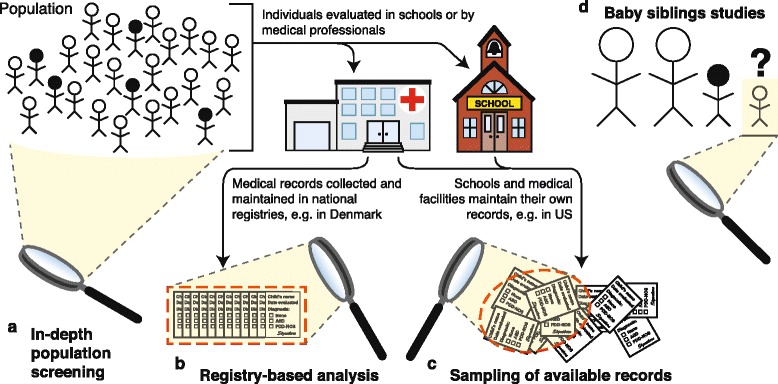
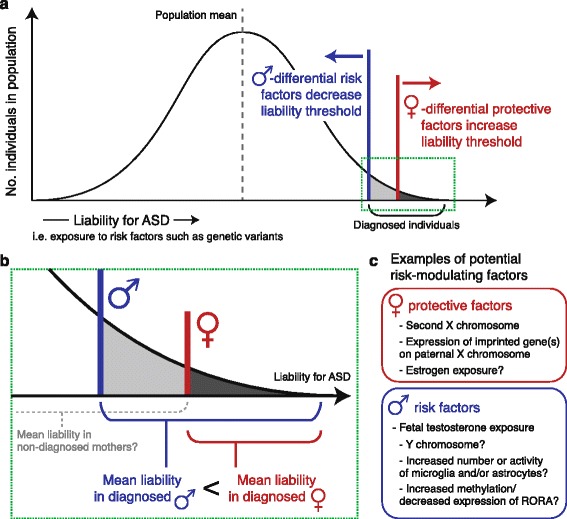
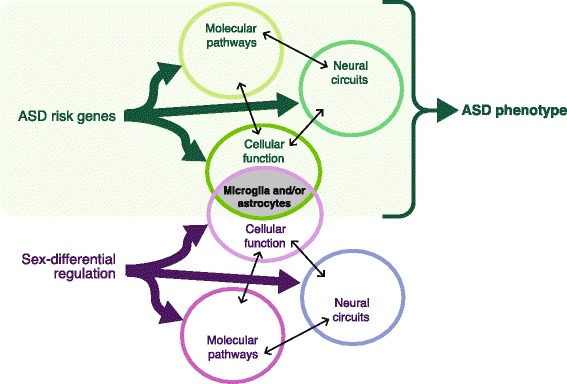
Verification
Claims the paper makes
The claims and statistics of this paper haven’t been checked yet.
Free: it reads the open-access text and checks the first 5 claims that cite a source we can check. Create a free account to check every claim.
Claims other papers make about this one
Each is checked against this paper’s own text: does it say what the citing paper says it does?
The cited source says what the claim attributes to it.
In the citing paper
“This result is consistent with the female protective effect model, which postulates that females require an increased genetic load to reach the threshold for ASD diagnosis”
From Large-Scale Exome Sequencing Study Implicates Both Developmental and Functional Changes in the Neurobiology of Autism (2020) · cites this paper as Werling, 2016
The cited source says what the claim attributes to it.
In the citing paper
“These results are consistent with a “female protective effect” in which females in the general population tolerate a greater genetic load of ASD risk, and likewise a greater genetic load is required for females to meet diagnostic criteria for ASD case status21.”
From A phenotypic spectrum of autism is attributable to the combined effects of rare variants, polygenic risk and sex (2022) · cites this paper as [21]
Self-check
Percentages, sums and reported differences re-computed from the paper’s own numbers.
The self-check needs the paper’s full text.
Citations
Cites
Diagnostic and Statistical Manual of Mental Disorders
American Psychiatric Association (2013) · doi:10.1176/appi.books.9780890425596 · Cited by 116,369
(1943) · The Nervous child · Cited by 8,870
Baio, J., Wiggins, L., Christensen, D. L., Maenner, M. J., Daniels, J., Warren, Z., Kurzius-Spencer, M., Zahorodny, W., Robinson, C., Rosenberg, et al. (2018) · MMWR. Surveillance Summaries · doi:10.15585/mmwr.ss6706a1 · Cited by 6,078 · cited 1×
“For example, the Autism and Developmental Disabilities Monitoring Network (ADDM) of the Centers for Disease Control (CDC) in the USA periodically reports on ASD prevalence across multiple sites nationwide, and these reports show an increase in ASD prevalence over time [49, 57, 58].”
BackgroundMindblindness: An Essay on Autism and Theory of Mind
(1995) · Choice Reviews Online · doi:10.5860/choice.33-2412 · Cited by 3,670 · cited 1×
“For much of the field, top priority questions included characterizing the behaviorally defined autistic phenotype in neuroscientific terms, particularly from the cognitive neuroscience [26, 27] and structural/functional neuroanatomical perspectives [28–31], with the intention to leverage these descriptions to discover…”
BackgroundMindblindness: An Essay on Autism and Theory of Mind
Baron-Cohen, S. (1995) · doi:10.7551/mitpress/4635.001.0001 · Cited by 3,428
Autistic disturbances of affective contact.
Kanner, L. (1968) · PubMed · Cited by 3,143
Cahoy, J. D., Emery, B., Kaushal, A., Foo, L. C., Zamanian, J. L., Christopherson, K. S., Xing, Y., Lubischer, J. L., Krieg, P. A., Krupenko, S. A., et al. (2008) · The Journal of Neuroscience · doi:10.1523/jneurosci.4178-07.2008 · Cited by 3,129 · cited 1×
“Genes with higher expression in males also showed significant enrichment for sets of astrocyte and microglial marker genes derived from independent experiments [116, 117].”
BackgroundCell types in the mouse cortex and hippocampus revealed by single-cell RNA-seq
Zeisel, A., Muñoz-Manchado, A. B., Codeluppi, S., Lönnerberg, P., La Manno, G., Juréus, A., Marques, S., Munguba, H., He, L., Betsholtz, C., et al. (2015) · Science · doi:10.1126/science.aaa1934 · Cited by 3,124
Strong association of de novo copy number mutations with autism
Sebat, J., Lakshmi, B., Malhotra, D., Troge, J., Lese-Martin, C., Walsh, T., Yamrom, B., Yoon, S., Krasnitz, A., Kendall, J., et al. (2007) · Science · doi:10.1126/science.1138659 · Cited by 2,795
Synaptic, transcriptional and chromatin genes disrupted in autism
Study, T. D., De Rubeis, S., Autism, H. M. C. F., UK10K Consortium, The Autism Sequencing Consortium, He, X., Goldberg, A. P., Poultney, C. S., Samocha, K., Ercument Cicek, A., et al. (2014) · Nature · doi:10.1038/nature13772 · Cited by 2,746 · cited 1×
“Later analysis of whole exome sequencing in a larger, combined sample of 16 constituent ASD sample sets was able to find a significantly increased rate of de novo lossof-function SNVs in genes associated with ASD risk in females [20].”
Research works printed but not linked: 2
- Gould J Ashton-Smith J Missed diagnosis or misdiagnosis? Girls and women on the autism spectrum Good Autism Pract 2011 12 34 41
- Autism Sisters Project. [ http://autismsciencefoundation.org/about-asf/media-center/press-releases/autism-sisters-project/].
Cited by
Items 201–221 of 221
Kim, S.-W., Lee, H., Song, D. Y., Lee, G. Q., Ji, J., Park, J. W., Han, J. H., Lee, J. W., Byun, H. J., Son, J. H., et al. (2024) · Figshare · doi:10.6084/m9.figshare.27124222
Self-citationA Potential Link between Gut Leakiness and Sex Differences in Autism Spectrum Disorder (ASD)
Aly, H. F. (2025) · International journal for autism challenges & solution. · doi:10.54878/t52cp193
Gender and Age Differences in Eating Patterns Among Children with Autism
Peretz, C., & Pearlman-Avnion, S. (2026) · Autism and child psychopathology series · doi:10.1007/978-3-032-07009-8_5
Nishigori, H., Nishigori, T., Kyozuka, H., Omoto, T., Fukuda, T., Murata, T., Ogata, Y., Satô, A., Kuraya, H., Yasumura, S., et al. (2026) · Scientific Reports · doi:10.1038/s41598-026-37212-8
Bazedoxifene reverses sexually dimorphic autistic-like abnormalities in biallelic MDGA1-mutant mice
Kim, S., Kim, H., Pelayo, J. P., Alvarez, S., Jang, G., Kim, J., Kim, B., Hoelscher, V. M., Calleja‐Pérez, B., Jung, H., et al. (2026) · EMBO Molecular Medicine · doi:10.1038/s44321-026-00402-y
“Given that there is a strong male bias in human ASDs (Bolte et al, 2023) and many ASD animal models bear sexually dimorphic behavioral abnormalities (Bruce et al, 2021; Werling, 2016), we further tested whether adult female Mdga1 -cKO mice displayed similar autistic-like behavioral phenotypes (Fig.”
Erdoğan, M. A., Koyu, A., Oyar, E. Ö., Güneş, B., Şirin, C., Uyanıkgil, Y., & Erbaş, O. (2026) · Neurochemical Research · doi:10.1007/s11064-026-04730-w
Child Autism Spectrum Disorder Following Maternal Abuse and Trauma History
Coleman, A., Fitzwater, B. M., Harden, P. A., McColl, C., Forrest, J., & Bailey, B. (2026) · Journal of Autism and Developmental Disorders · doi:10.1007/s10803-026-07326-z
Díaz‐Pons, A., Castaño-Castaño, S., Martínez-Asensi, C., de la Foz, V. O., Parás, C., Yorca‐Ruiz, Á., Incera, S., & Ayesa‐Arriola, R. (2026) · Research Square · doi:10.21203/rs.3.rs-9651346/v1
The OET Autism Framework: Rethinking Clinical Practice with Adolescent and Adult Autistic Females
Williams, J. S. (2026) · Social Work · doi:10.1093/sw/swag028
Jerin, N. J., Rayna, R. I., & Parvin, F. (2025) · IEEE International Women in Engineering (WIE) Conference on Electrical and Computer Engineering (WIECON-ECE) · doi:10.1109/wiecon-ece69386.2025.11525923
“However, the heterogeneous nature of ASD populations, influenced by biological factors such as sex and age , complicates robust and generalizable classification [3], [4].”
Early life ventricular enlargement precedes emergence of autistic traitsPreprint
Kyriakopoulou, V., Uus, A. U., Darki, F., Javed, A., Blackmore, C. E., Morgan, T., Batallé, D., Deprez, M., Dong, Y., Eddison, M., et al. (2026) · Research Square · doi:10.21203/rs.3.rs-9839901/v1
Karras, S. Ν., Dalamaga, Μ., Kypraiou, M., Harizopoulou, V., Vlastos, A., Anemoulis, M., Georgopoulos, N. A., Mastorakos, G. P., & Goulis, D. G. (2026) · Nutrients · doi:10.3390/nu18142256
“Recent evidence suggests that autism-related characteristics are not restricted to clinically diagnosed individuals but are continuously distributed throughout the general population [3,4].”
Measurement Invariance of the Autism Spectrum Rating Scales Across Gender
Golson, M. E., McClain, M. B., Schwartz, S., Harris, B., & Gabrielsen, T. P. (2026) · Contemporary School Psychology · doi:10.1007/s40688-026-00612-8
Bucaro, I., Palanza, P., & Ponzi, D. (2026) · Frontiers in Child and Adolescent Psychiatry · doi:10.3389/frcha.2026.1865057
“On the one hand, females may require a higher mutational, and perhaps environmental, burden than males to meet the diagnostic threshold for ASD, suggesting greater resilience among females (18, 19, 104).”
Gender-Based Differences in Autism Spectrum Disorder: Evidence From an Indian Clinical Cohort
Prabhakaran, N., Kaku, S. M., Moncy, A. M., Roopa, N., Srikanth, N., & Raman, V. (2026) · Journal of Autism and Developmental Disorders · doi:10.1007/s10803-026-07483-1
Language development and pro-inflammatory IL-6/IL-10 imbalance in SARS-CoV-2-exposed pregnanciesPreprint
Díaz‐Pons, A., Castaño-Castaño, S., Martínez-Asensi, C., de la Foz, V. O., Parás, C., Yorca‐Ruiz, Á., Incera, S., & Ayesa‐Arriola, R. (2026) · Research Square · doi:10.21203/rs.3.rs-9651346/v2
Sánchez-Yépez, J., Hernández-Plata, I., Mendoza-Trejo, S., & Rodríguez-Córdova, V. (2026) · Toxicology Letters · doi:10.1016/j.toxlet.2026.112717
Nouel‐Saied, L. M., Wang, R., & Werling, D. M. (2026) · Current Opinion in Genetics & Development · doi:10.1016/j.gde.2026.102546
Self-citationGao, M., Gao, Y., Xu, C., Huang, Z., Jin, T., Shen, Z., & Chen, D. (2026) · Medicine · doi:10.1097/md.0000000000050964
“[19,20] Conversely, females may possess some form of sex-related protective mechanism, including genetic resilience, which may contribute to their lower prevalence to some extent.”
Characterizing Human Prompting in Mixed Reality Spelling for Nonspeaking Autistic Users
Leal, D., Jamal, M., Wahab, S., Dow, T., Jaswal, V. K., Alabood, L., & Krishnamurthy, D. (2026) · International ACM SIGACCESS Conference on Computers and Accessibility (ASSETS) · doi:10.1145/3797867.3829013
“The subsample of 23 non-speaking participants were between the ages of 16 and 27 years, with 4 females and 19 males, likely reflecting broader diagnostic patterns [47].”
Graziano, R. T., Bernardini, L., Giovannone, F., Pizzuti, A., & Sogos, C. (2026) · Children · doi:10.3390/children13111484
Metadata
- Authors
- Werling, D. M.
- Affiliations
- University of California, San Francisco (US)
- Corresponding author
- Werling, Donna M.
- ORCID
- Werling, Donna M.
- Venue
- Biology of Sex Differences
- Published
- 2016-11-16
- Volume
- 7
- Issue
- 1
- Pages
- 58-58
- ISSN
- 2042-6410 (ISSN-L)
- PMC
- PMC5112643
- OpenAlex
- W2556402961
- Semantic Scholar
- c5ffdc6f9f3a3318b6bd4cd5e645731d6c0b63a1
- Cited by
- 208
- References
- 129
- Citations by year
- 2026: 23 · 2025: 26 · 2024: 27 · 2023: 31 · 2022: 21 · 2021: 18 · 2020: 25 · 2019: 16 · 2018: 11 · 2017: 9
- FWCI
- 1.26
- Type
- journal article
- Language
- en
- Open access
- gold
- doi.org
- Licence
- cc-by
- creativecommons.org/licenses/by/4.0/ (tdm)
- creativecommons.org/licenses/by/4.0/ (vor)
- Locations
- Biology of Sex Differences (publishedVersion, cc-by)
- Europe PMC (PubMed Central) (publishedVersion, cc-by)
- PubMed Central (publishedVersion, cc-by)
- PubMed (publishedVersion)
- Funders
- National Institute of Mental Health (MH106934)
- Simons Foundation (307705)
- Autism Science Foundation (16-009)
- Topics
- Life Sciences › Neuroscience › Cognitive Neuroscience › Autism Spectrum Disorder Research
- Life Sciences › Biochemistry, Genetics and Molecular Biology › Genetics › Genetics and Neurodevelopmental Disorders
- Health Sciences › Medicine › Endocrinology, Diabetes and Metabolism › Sexual Differentiation and Disorders
- Keywords
- autism spectrum disorder, sex differences, diagnostic bias, ascertainment bias, recurrence rate, quantitative trait loci, sex hormones, brain development, ASD risk
About these checks
Registry, retraction, Cites and statistics results are computed, not judged, with one exception: a printed reference that no index lists is read once by a model before it counts as a citation error. Claims are extracted by a model and kept only when their quote appears verbatim in the text; each cited source is then checked, with a model’s help, for whether it says what the claim relies on. Those verdicts can be wrong — read the claim’s quote and the cited source before relying on one.
Statistics and arithmetic are recomputed, not judged.
Confidence bands are shown only for fields calibrated on our annotated test set. None is calibrated yet, so no band is shown.
What counts as a claim ›How we measure confidence ›How we check this ›
Are you an author, or do you see a problem with this page? Request a review
Data sources
Bibliographic data: Semantic Scholar, OpenAlex, Crossref.
Contains information from the Semantic Scholar Academic Graph Datasets, made available under the ODC Attribution License (ODC-BY 1.0).
Semantic Scholar’s data is described in: Kinney, R., et al. (2023). The Semantic Scholar Open Data Platform. arXiv:2301.10140.
