

Odoribacter laneus protects intestinal barrier by bile acid-FXR axis in acute pancreatitis
Open accessThe DOI matches its Crossref record; 49 of the 49 references it cites were found in a registry or an index; 9 of the 21 sources its claims cite were checked for support.
Abstract
Odoribacter laneus (O. laneus) is a promising probiotic. Acute pancreatitis (AP) is an acute abodominal disease accompanied by intestinal barrier dysfunction and gut dysbiosis. However, the effects of O. laneus in AP remain unexplored. We established AP model of C57BL/6 mice. Western blotting and immunohistofluorescence were used to detect the expression of intestinal tight junction proteins and FXR/NLRP3 pathway. The changes of gut microbiota and bile acids (BAs) were analyzed by 16 S rRNA gene and targeted metabolomics sequencing. The fecal microbiota transplantation (FMT) was used to investigate the role of gut microbiota in O. laneus treatment. O. laneus effectively reduced systemic inflammation, pancreatic damage, and intestinal barrier dysfunction in AP mice. We observed significant enrichment of pathogens along with depletion of second BAs (7-KDA) in AP mice, and these alterations were reversed by O. laneus. FMT experiment showed that the protective roles of O. laneus depended on gut microbiota. O. laneus ameliorated AP via activating intestinal FXR and inhibiting NLRP3 inflammasome in vivo. In vitro and vivo studies showed that 7-KDA protected AP. Taken together, O. laneus could mitigate AP-induced intestinal barrier dysfunction by reversing the disorderd gut microbiota, BAs metabolism, and modulating FXR/NLRP3 pathway.
Overview
CoChat Summary
## TL;DR
Odoribacter laneus reduced pancreatic injury, systemic inflammation, and intestinal barrier dysfunction in a mouse model of acute pancreatitis, and these benefits depended on gut microbiota. The paper links the effect to bile acid metabolism, especially 7-KDA, and activation of intestinal FXR with suppression of NLRP3 inflammasome signaling.
## Key findings
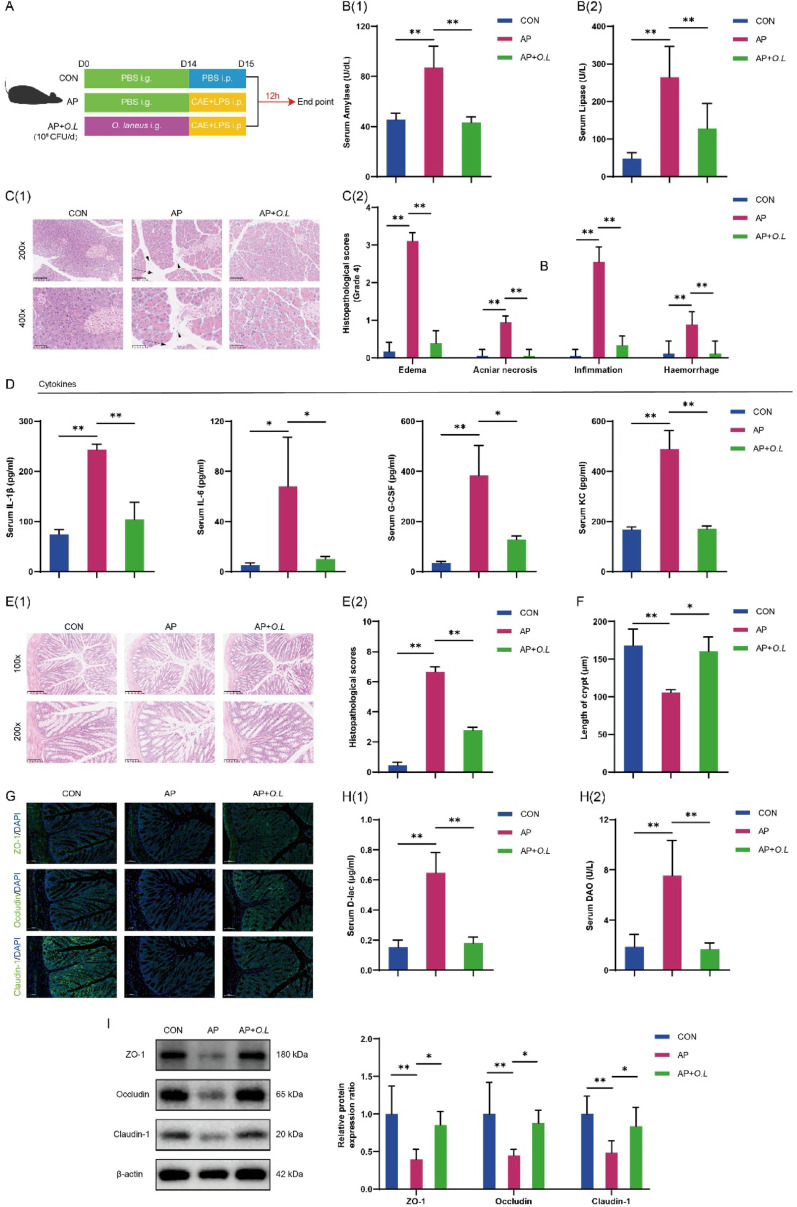
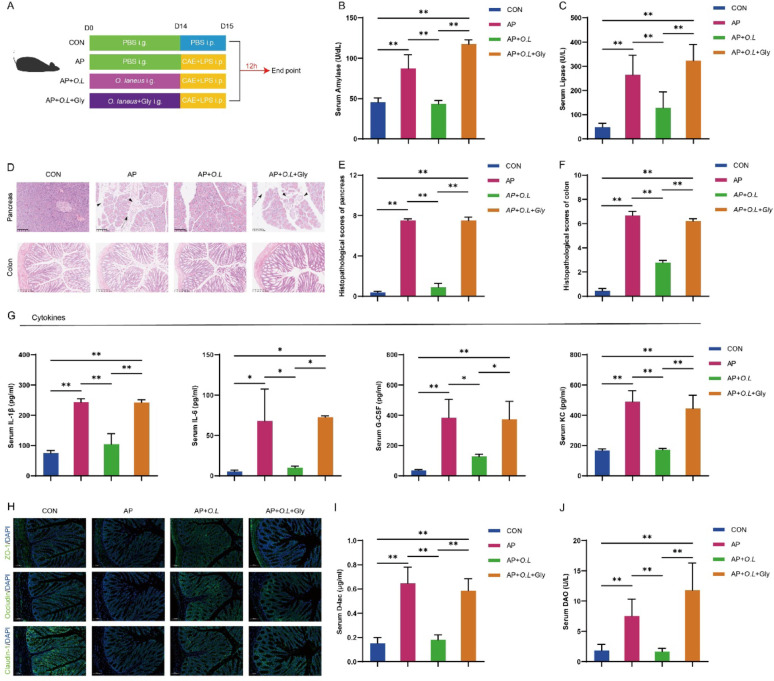
- In AP mice, O. laneus lowered serum amylase and lipase versus AP alone, and reduced pancreatic histopathological scores; the paper reports P < 0.001 for the enzyme reductions.
- O. laneus improved colon injury and barrier function in AP mice: colonic histopathological score fell from 6.67 (SD 0.34) to 2.78 (SD 0.19), with restoration of tight junction proteins and reduced serum D-lactate and DAO.
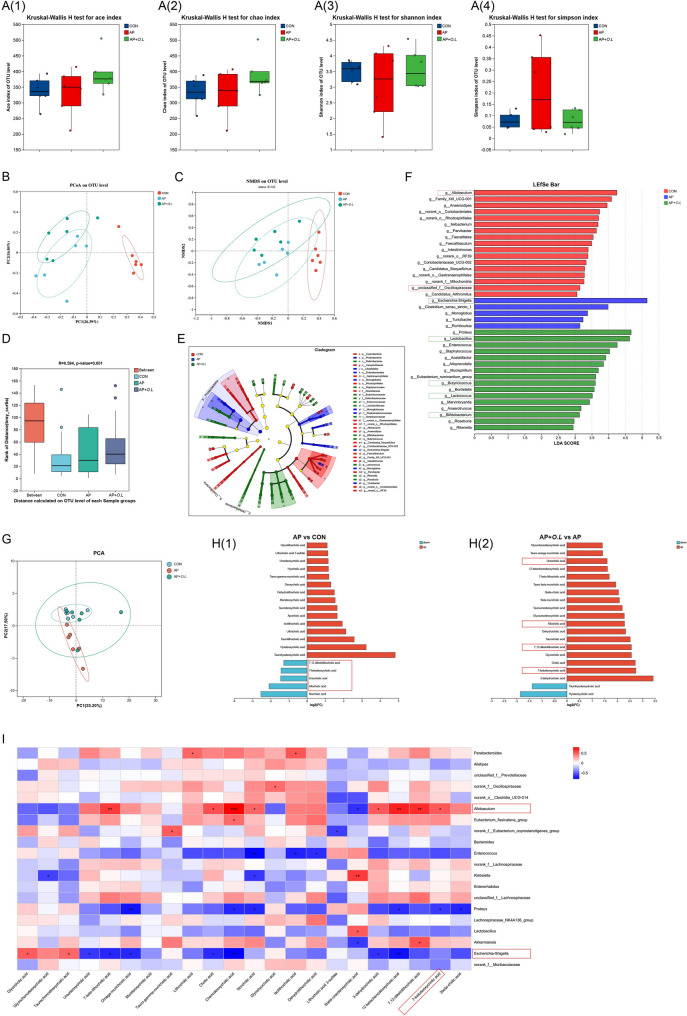
- 16S rRNA sequencing showed AP-associated dysbiosis with enrichment of pathogens such as Escherichia-Shigella and Clostridium, while O. laneus increased genera including Lactobacillus, Alloprevotella, Butyricicoccus, Lactococcus, and Bifidobacterium.
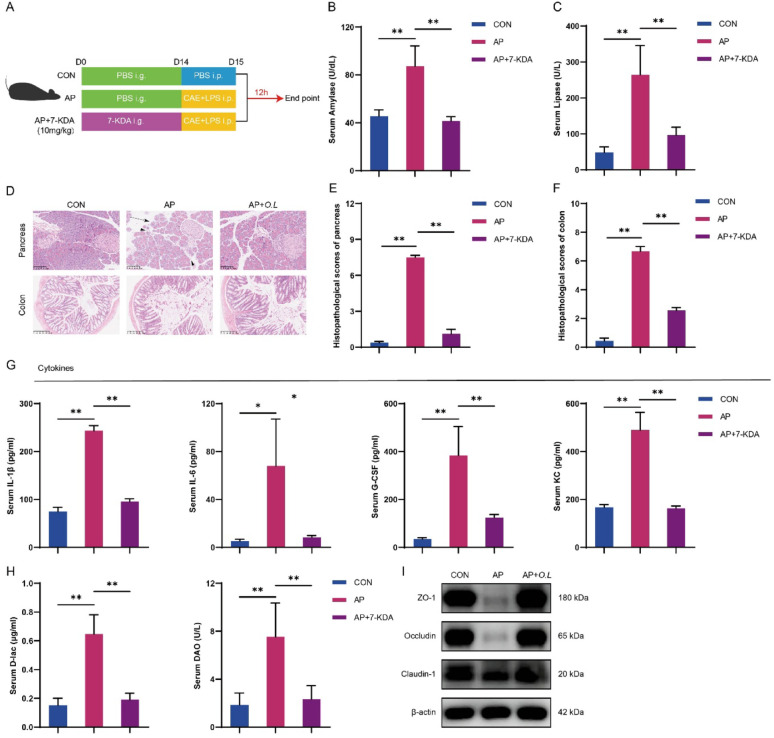
- Targeted bile acid metabolomics showed AP reduced 7-KDA, and O. laneus reversed this change; 7-KDA also showed protective effects in vitro and in vivo.
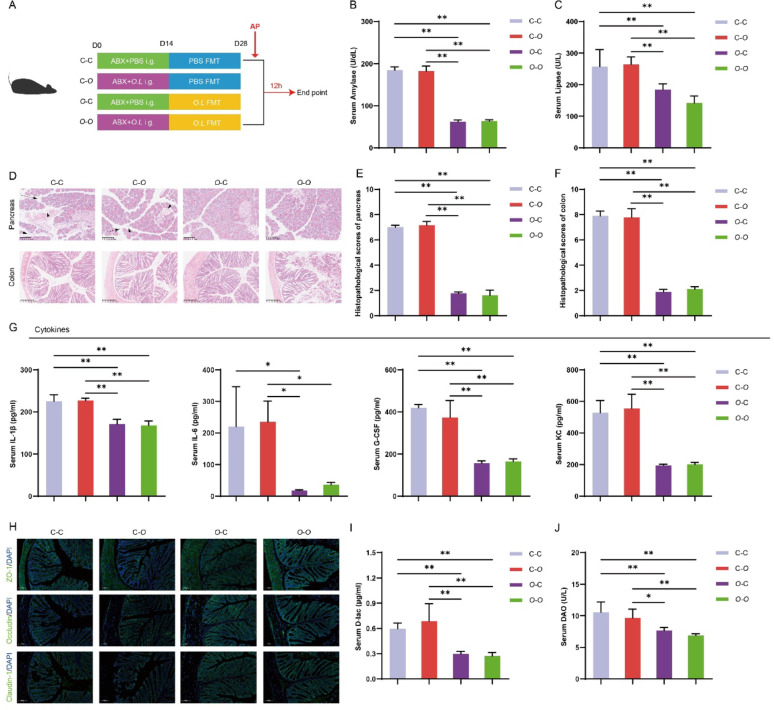
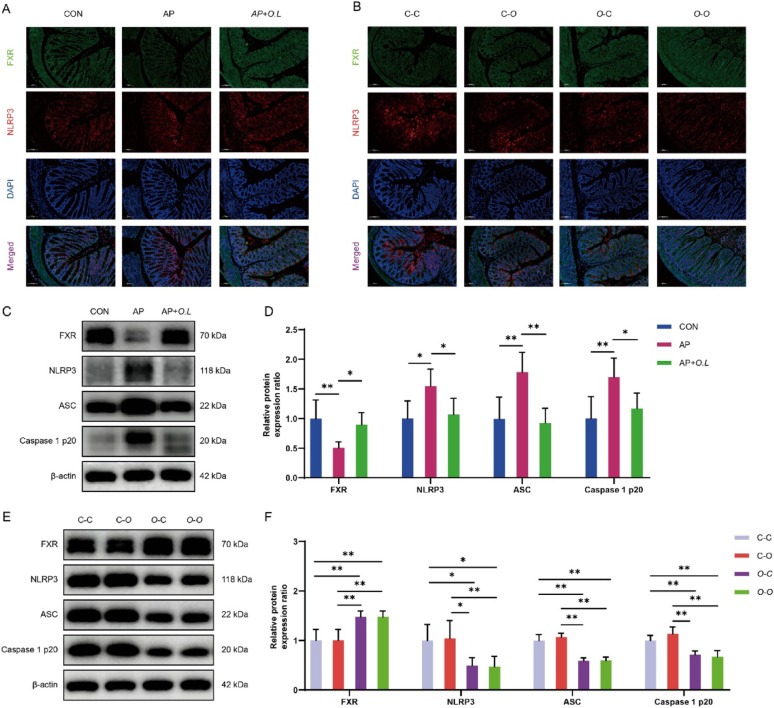
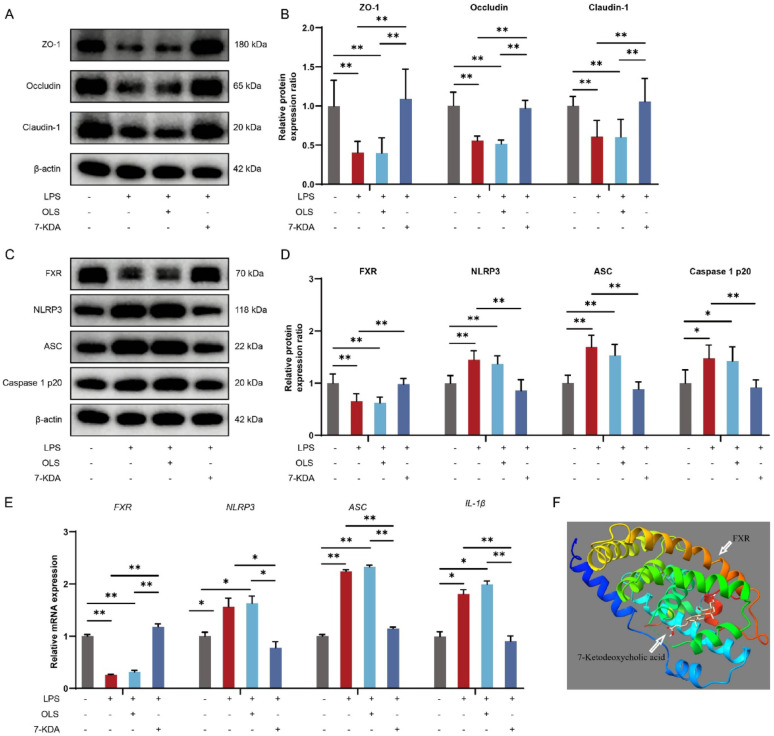
- FMT and FXR inhibition experiments indicated that the protective effects of O. laneus were gut microbiota-dependent and required FXR activation; O. laneus increased FXR and reduced NLRP3, ASC, and Caspase-1 p20 in AP mice.
## Methods
- Mouse AP was induced in 8-week-old male C57BL/6 mice using caerulein plus LPS; animals were grouped for O. laneus treatment, FMT experiments, FXR inhibition with Gly-β-MCA (Gly), and 7-KDA treatment.
- Outcomes included serum inflammatory and injury markers, histology of pancreas and colon, immunohistofluorescence and western blotting for tight junction proteins and FXR/NLRP3 pathway components, plus 16S rRNA sequencing and targeted bile acid metabolomics (HPLC-MS/MS).
- In vitro, differentiated Caco-2 cells were exposed to LPS, O. laneus culture supernatant, or 7-KDA to test effects on barrier proteins and FXR/NLRP3-related gene and protein expression.
## Limitations
- The paper explicitly states that it lacks samples from AP patients and plans future patient sampling to verify 7-KDA changes.
- The authors say they need sterile animals, heat-killed bacteria, or bacterial co-culture experiments to better dissect the microbiota contribution.
- The paper also notes that O. laneus effects on non-bile-acid metabolites remain unclear and that untargeted metabolomics would be useful.
Model-written summary. Check it against the paper before relying on it.
Integrity signals
Registry
Cites
Statistics
Figures
Verification
Claims the paper makes
8 Valid · 0 Not valid · 7 Not checked · 75 Own results and interpretations
The cited sources support only part of this claim — read each source’s verdict below.
In the paper
“The genomes of Odoribacter contain the essential enzymes (5AR and 3β-HSDH) required for secondary bile acid (SBA) synthesis (Sato et al. 2021).”
§ Odoribacter laneus protects intestinal barrier by bile acid-FXR axis in acute pancreatitis > Introduction
What the sources say
- Partly supportedcites Sato et al. 2021 matched to “Novel bile acid biosynthetic pathways are enriched in the microbiome of centenarians” (2021) sourceExperimental — accuracy not yet measured
In “5AR- and 3β-HSDH-mediated transformation of 3-oxoΔ4-LCA to isoalloLCA” (page not given), the paper identifies an Odoribacteraceae St21 isolate carrying genes for 5AR and 3β-HSDH and links them to isoalloLCA production. It does not establish that Odoribacter genomes generally carry these genes or that the enzymes are required for secondary bile acid synthesis broadly. (LLM, conf=0.86)
plain- Asserted: passes — The authors put it forward as true.
- Checkable: passes — It can be checked against evidence.
- Load-bearing: passes — The paper’s conclusions depend on it.
- Based: passes — The paper gives a reason why it holds.
- Partly supported
The cited sources support only part of this claim — read each source’s verdict below.
In the paper
“This certain bacterial genus was strongly associated with the bile acids (BAs) and short-chain fatty acids (SCFAs) (Chen et al. 2025; Sato et al. 2021).”
§ Odoribacter laneus protects intestinal barrier by bile acid-FXR axis in acute pancreatitis > Introduction
What the sources say
- Partly supportedcites Chen et al. 2025 matched to “Bifidobacterium inhibits the progression of colorectal tumorigenesis in mice through fatty acid isomerization and gut microbiota modulation” (2025) sourceExperimental — accuracy not yet measured
The Results section (Effects of O. splanchnicus on CRC mice; page unavailable) reports that O. splanchnicus treatment significantly increased butyric acid, a short-chain fatty acid, but did not increase the other short-chain fatty acids measured. Our copy does not report an association between Odoribacter and bile acids, so it does not support the full claim. (LLM, conf=0.87)
- Partly supportedcites Sato et al. 2021 matched to “Novel bile acid biosynthetic pathways are enriched in the microbiome of centenarians” (2021) sourceExperimental — accuracy not yet measured
In “Effects of isoalloLCA on the commensal gut microbiota” (page not provided), the paper reports positive correlations between Odoribacter laneus and three bile acids. It does not report an association between Odoribacter and short-chain fatty acids, so only the bile-acid part is supported. (LLM, conf=0.88)
boostedstates an association- Asserted: passes — The authors put it forward as true.
- Checkable: passes — It can be checked against evidence.
- Load-bearing: passes — The paper’s conclusions depend on it.
- Based: passes — The paper gives a reason why it holds.
- Partly supported
A result the paper reports from its own data — it cites no other source for it, so there is none to check. The quote shows it is in the paper.
In the paper
“we measured cytokine levels and found a significant elevation in the pro-inflammatory cytokines IL-1β, IL-6, G-CSF, and KC in the AP group (Fig. 1D).”
§ Odoribacter laneus protects intestinal barrier by bile acid-FXR axis in acute pancreatitis > Results > O. laneus attenuated pancreatic damage and systemic inflammation in mice with AP
plainstates a cause- Asserted: passes — The authors put it forward as true.
- Checkable: passes — It can be checked against evidence.
- Load-bearing: passes — The paper’s conclusions depend on it.
- Based: passes — The paper gives a reason why it holds.
A result the paper reports from its own data — it cites no other source for it, so there is none to check. The quote shows it is in the paper.
In the paper
“and the length was restored O. laneus treatment.”
§ Odoribacter laneus protects intestinal barrier by bile acid-FXR axis in acute pancreatitis > Results > O. laneus attenuated intestinal barrier dysfunction in mice with AP
plainstates a cause- Asserted: passes — The authors put it forward as true.
- Checkable: passes — It can be checked against evidence.
- Load-bearing: passes — The paper’s conclusions depend on it.
- Based: passes — The paper gives a reason why it holds.
A result the paper reports from its own data — it cites no other source for it, so there is none to check. The quote shows it is in the paper.
In the paper
“while O. laneus treatment markedly reduced these scores (Fig. 1E(2): 6.67 [SD, 0.34] vs. 2.78 [SD, 0.19], respectively; P < 0.001).”
§ Odoribacter laneus protects intestinal barrier by bile acid-FXR axis in acute pancreatitis > Results > O. laneus attenuated intestinal barrier dysfunction in mice with AP
boostedstates a cause- Asserted: passes — The authors put it forward as true.
- Checkable: passes — It can be checked against evidence.
- Load-bearing: passes — The paper’s conclusions depend on it.
- Based: passes — The paper gives a reason why it holds.
44 more claims
Create a free account to see all 90 claims and to verify the 1 reference still open.
- Probably not a substantial claim. 12
- It may state two separate claims as one. 32
- The quote only partly states this claim. 2
Self-check
Percentages, sums and reported differences re-computed from the paper’s own numbers.
Each contradiction between two passages listed here was confirmed by an independent check.
Rated minor: it would not touch a result — a value no result rests on, a p-value that stays on the same side of the significance level, or a conflict that is clerical, resolved elsewhere in the paper, or outside its own findings.
In the paper
§ Odoribacter laneus protects intestinal barrier by bile acid-FXR axis in acute pancreatitis > Results > 7-KDA alleviated LPS-induced intestinal barrier damage by regulating FXR/NLRP3 signaling pathway in vitro
“The reduced FXR mRNA expression observed in LPS-treated cells was also restored following 7-KDA treatment (Fig. 6E).”
§ Odoribacter laneus protects intestinal barrier by bile acid-FXR axis in acute pancreatitis > Discussion
“7-KDA treatment increased FXR supression and supressed inflammatory response in vitro.”
Citations
Cites
Besselink, M. G., van Santvoort, H. C., Buskens, E., Boermeester, M. A., van Goor, H., Timmerman, H. M., Nieuwenhuijs, V. B., Bollen, T. L., van Ramshorst, B., Witteman, B. J., et al. (2008) · The Lancet · doi:10.1016/s0140-6736(08)60207-x · Cited by 1,367
Majorbio Cloud: A one‐stop, comprehensive bioinformatic platform for multiomics analyses
Ren, Y., Yu, G., Shi, C., Liu, L., Guo, Q., Han, C., Zhang, D., Zhang, L., Liu, B., Gao, H., et al. (2022) · iMeta · doi:10.1002/imt2.12 · Cited by 906
Novel bile acid biosynthetic pathways are enriched in the microbiome of centenarians
Sato, Y., Atarashi, K., Plichta, D. R., Arai, Y., Sasajima, S., Kearney, S. M., Suda, W., Takeshita, K., Sasaki, T., Okamoto, S., et al. (2021) · Nature · doi:10.1038/s41586-021-03832-5 · Cited by 632 · cited 4×
“The genomes of Odoribacter contain the essential enzymes (5AR and 3β-HSDH) required for secondary bile acid (SBA) synthesis (Sato et al. 2021).”
InfluentialBile acid metabolism and signaling, the microbiota, and metabolic disease
Cai, J., Rimal, B., Jiang, C., Chiang, J. Y. L., & Patterson, A. D. (2022) · Pharmacology & Therapeutics · doi:10.1016/j.pharmthera.2022.108238 · Cited by 497
Farnesoid X Receptor Regulation of the NLRP3 Inflammasome Underlies Cholestasis-Associated Sepsis
Hao, H., Cao, L., Jiang, C., Che, Y., Zhang, S., Takahashi, S., Wang, G., & Gonzalez, F. J. (2017) · Cell Metabolism · doi:10.1016/j.cmet.2017.03.007 · Cited by 469 · cited 1×
“Bacteroides dorei alleviates the intestinal barrier in colitis mice via regulating BAs metabolism and the FXR-NLRP3 signaling pathway (Hao et al. 2017).”
Bile acids as modulators of gut microbiota composition and function
Larabi, A. B., Masson, H. L. P., & Bäumler, A. J. (2023) · Gut Microbes · doi:10.1080/19490976.2023.2172671 · Cited by 401
Jang, Y. J., Kim, W.-K., Han, D. H., Lee, K., & Ko, G. (2019) · Gut Microbes · doi:10.1080/19490976.2019.1589281 · Cited by 296 · cited 1×
“In Table 2, the histopathological scores of colon were classified into four groups (Jang et al. 2019).”
Focus on the Role of NLRP3 Inflammasome in Diseases
Fusco, R., Siracusa, R., Genovese, T., Cuzzocrea, S., & Di Paola, R. (2020) · International Journal of Molecular Sciences · doi:10.3390/ijms21124223 · Cited by 290 · cited 1×
“Such activation facilitates Caspase-1 cleavage and subsequent IL-1β and IL-18 release, contributing to colonic injury pathogenesis (Fusco et al. 2020).”
Dietary fat, bile acid metabolism and colorectal cancer
Ocvirk, S., & O’Keefe, S. J. D. (2021) · Seminars in Cancer Biology · doi:10.1016/j.semcancer.2020.10.003 · Cited by 262
Gut microbiota dysbiosis worsens the severity of acute pancreatitis in patients and mice
Zhu, Y., He, C., Li, X., Cai, Y., Hu, J., Liao, Y., Zhao, J., Xia, L., He, W., Liu, L., et al. (2019) · Journal of Gastroenterology · doi:10.1007/s00535-018-1529-0 · Cited by 250 · cited 5×
“The disrupted intestinal microbiota in AP involves elevated levels of pathogens like Escherichia–Shigella and reduced levels of beneficial bacteria such as Bifidobacterium (Zhu et al. 2019).”
InfluentialWei, W., Wong, C. C., Jia, Z., Liu, W., Liu, C., Ji, F., Pan, Y., Wang, F., Wang, G., Zhao, L., et al. (2023) · Nature Microbiology · doi:10.1038/s41564-023-01418-7 · Cited by 248 · cited 1×
“DNA-stable isotope probing methodology could track metabolite flow directly synthesized via O. laneus (Cheng et al. 2023; Wei et al. 2023).”
Bacteria-derived long chain fatty acid exhibits anti-inflammatory properties in colitis
Pujo, J., Petitfils, C., Le Faouder, P., Eeckhaut, V., Payros, G., Maurel, S., Perez-Berezo, T., Van Hul, M., Barreau, F., Blanpied, C., et al. (2021) · Gut · doi:10.1136/gutjnl-2020-321173 · Cited by 225 · cited 1×
“The genus Allobaculum may exert anti-inflammatory effects by producing long-chain fatty acid (Pujo et al. 2021) Recent study suggests that Allobaculum is associated with BAs metabolism and FXR activation (Lu et al. 2025).”
Dong, S., Zhu, M., Wang, K., Zhao, X., Hu, L., Jing, W., Lu, H., & Wang, S. (2021) · Pharmacological Research · doi:10.1016/j.phrs.2021.105767 · Cited by 204
Lima, S. F., Gogokhia, L., Viladomiu, M., Chou, L., Putzel, G., Jin, W.-B., Pires, S., Guo, C.-J., Gerardin, Y., Crawford, C. V., et al. (2022) · Gastroenterology · doi:10.1053/j.gastro.2021.09.061 · Cited by 165
Grajeda-Iglesias, C., Durand, S., Daillère, R., Iribarren, K., Lemaitre, F., Derosa, L., Aprahamian, F., Bossut, N., Nirmalathasan, N., Madeo, F., et al. (2021) · Aging · doi:10.18632/aging.202739 · Cited by 161 · cited 1×
“…the precise order of FXR activation potency among different bile acids remains debated, it is generally accepted that UBAs and SBAs are more effective in activating FXR than CBAs and PBAs—an effect likely attributed to their greater hydrophobicity (Grajeda-Iglesias et al. 2021; Larabi et al. 2023).”
Lajczak, N., Porru, E., Fallon, C. M., Smyth, J. S., Curley, C. E., McCarron, P. A., Tambuwala, M. M., Roda, A., & Keely, S. J. (2020) · Physiological Reports · doi:10.14814/phy2.14456 · Cited by 157 · cited 1×
“…have demonstrated that BA therapy can improve intestinal barrier impairment and colonic inflammation in DSS-injured mice (Carino et al. 2020; Lajczak-McGinley et al. 2020; Thomas et al. 2022), although elevated BA concentrations may trigger oxidative/nitrative stress, DNA damage, and…”
The Emerging Role of Bile Acids in the Pathogenesis of Inflammatory Bowel Disease
Thomas, J. P., Modos, D., Rushbrook, S. M., Powell, N., & Korcsmaros, T. (2022) · Frontiers in Immunology · doi:10.3389/fimmu.2022.829525 · Cited by 156
Huber-Ruano, I., Calvo, E., Mayneris-Perxachs, J., Rodríguez-Peña, M.-M., Ceperuelo-Mallafré, V., Cedó, L., Núñez-Roa, C., Miro-Blanch, J., Arnoriaga-Rodríguez, M., Balvay, A., et al. (2022) · Microbiome · doi:10.1186/s40168-022-01306-y · Cited by 122 · cited 2×
“Odoribacter laneus ( O. laneus ) is a promising probiotic in anti-infammation and anti-obesity (Huber-Ruano et al. 2022).”
Li, H., Xie, J., Guo, X., Yang, G., Cai, B., Liu, J., Yue, M., Tang, Y., Wang, G., Chen, S., et al. (2022) · Gut Microbes · doi:10.1080/19490976.2022.2127456 · Cited by 122 · cited 3×
“Pro-biotics as therapeutic agents for AP are the hot topics in clinical and laboratory research, which can prevent leaky gut and translocation of pathogens (Li et al. 2022; Wang et al. 2024).”
Qi-Xiang, M., Yang, F., Ze-Hua, H., Nuo-Ming, Y., Rui-Long, W., Bin-Qiang, X., Jun-Jie, F., Chun-Lan, H., & Yue, Z. (2022) · Gut Microbes · doi:10.1080/19490976.2022.2112882 · Cited by 112 · cited 1×
“This microbial imbalance compromises the biological barrier and enhances intestinal permeability, creating pathways for pathogen migration that ultimately results in organ infections (Mei et al. 2022; Gu et al. 2024).”
Morphometric characteristics and homogeneity of a new model of acute pancreatitis in the rat
Schmidt, J., Lewandrowsi, K., Warshaw, A. L., Compton, C. C., & Rattner, D. W. (1992) · International Journal of Pancreatology · doi:10.1007/bf02927069 · Cited by 106
Wu, L., Zhou, J., Zhou, A., Lei, Y., Tang, L., Hu, S., Wang, S., Xu, X., Chen, Q., Tu, D., et al. (2024) · Gut Microbes · doi:10.1080/19490976.2024.2390176 · Cited by 97 · cited 1×
“In the mouse model with colitis, BAs-FXR axis is crucial for Dihydromyricetin on restoring intestinal barrier integrity (Wu et al. 2024).”
Gut microbiome determines therapeutic effects of OCA on NAFLD by modulating bile acid metabolism
Liu, J., Sun, J., Yu, J., Chen, H., Zhang, D., Zhang, T., Ma, Y., Zou, C., Zhang, Z., Ma, L., et al. (2023) · npj Biofilms and Microbiomes · doi:10.1038/s41522-023-00399-z · Cited by 94
Lin, Z., Wu, J., Wang, J., Levesque, C. L., & Ma, X. (2022) · Food Chemistry · doi:10.1016/j.foodchem.2022.134643 · Cited by 87
Jiang, P., Yuan, G., Jiang, B., Zhang, J., Wang, Y., Lv, H.-J., Zhang, Z., Wu, J.-L., Wu, Q., & Li, L. (2021) · Ecotoxicology and Environmental Safety · doi:10.1016/j.ecoenv.2021.112345 · Cited by 84 · cited 1×
“Referring to previous study (Jiang et al. 2021), the intestinal microbiota of mice in each group was sequenced using Illumina next-generation 16 S rRNA gene amplicon sequencing technology.”
Capsaicin shapes gut microbiota and pre-metastatic niche to facilitate cancer metastasis to liver
Cheng, P., Wu, J., Zong, G., Wang, F., Deng, R., Tao, R., Qian, C., Shan, Y., Wang, A., Zhao, Y., et al. (2023) · Pharmacological Research · doi:10.1016/j.phrs.2022.106643 · Cited by 81 · cited 1×
“DNA-stable isotope probing methodology could track metabolite flow directly synthesized via O. laneus (Cheng et al. 2023; Wei et al. 2023).”
Zhang, Z., Tanaka, I., Pan, Z., Ernst, P. B., Kiyono, H., & Kurashima, Y. (2022) · European Journal of Immunology · doi:10.1002/eji.202149532 · Cited by 69
Zhou, C., Wang, Y., Li, C., Xie, Z., & Dai, L. (2023) · Microbiology Spectrum · doi:10.1128/spectrum.03330-22 · Cited by 67 · cited 1×
“The oral gavage of the bacterial consortium improves intestinal barrier integrity and reduces the inflammation via restoring SBAs abundance in colitis mice (Zhou et al. 2023).”
Gut microbiota predicts severity and reveals novel metabolic signatures in acute pancreatitis
Ammer-Herrmenau, C., Antweiler, K. L., Asendorf, T., Beyer, G., Buchholz, S. M., Cameron, S., Capurso, G., Damm, M., Dang, L., Frost, F., et al. (2024) · Gut · doi:10.1136/gutjnl-2023-330987 · Cited by 67
Jiang, L., Hao, Y., Han, D., Dong, W., Yang, A., Sun, Z., Ge, Y., Duan, S., Zhang, X., & Dai, Z. (2024) · The ISME Journal · doi:10.1093/ismejo/wrae166 · Cited by 61 · cited 1×
“…vancomycin (100 mg/kg), neomycin sulfate (200 mg/ kg), metronidazole (200 mg/kg), and ampicillin (200 mg/ kg) (HY-B0671, HY-B0470, HY-B0318, and HY-B0522, MedChemExpress) via intragastric gavage once daily for 14 days, following previously described protocols with modifications (Jiang et al. 2024).”
Wang, L.-J., Jin, Y.-L., Pei, W.-L., Li, J.-C., Zhang, R.-L., Wang, J.-J., & Lin, W. (2024) · Acta Pharmacologica Sinica · doi:10.1038/s41401-023-01186-4 · Cited by 60 · cited 3×
“Pro-biotics as therapeutic agents for AP are the hot topics in clinical and laboratory research, which can prevent leaky gut and translocation of pathogens (Li et al. 2022; Wang et al. 2024).”
Self-citationCarino, A., Biagioli, M., Marchianò, S., Fiorucci, C., Bordoni, M., Roselli, R., Giorgio, C. D., Baldoni, M., Ricci, P., Monti, M. C., et al. (2020) · Biochimica et Biophysica Acta (BBA) - Molecular and Cell Biology of Lipids · doi:10.1016/j.bbalip.2020.158733 · Cited by 52 · cited 1×
“Multiple investigations have demonstrated that BA therapy can improve intestinal barrier impairment and colonic inflammation in DSS-injured mice (Carino et al. 2020; Lajczak-McGinley et al. 2020; Thomas et al. 2022), although elevated BA concentrations may trigger oxidative/nitrative stress, DNA…”
Zhu, Q., Yuan, C., Dong, X., Wang, Y., Li, B., Tu, B., Chen, W., Xu, X., Gong, W., Xiao, W., et al. (2023) · Cell Reports Medicine · doi:10.1016/j.xcrm.2023.101304 · Cited by 50 · cited 4×
“Some studies show that the SBAs can improve the severity of AP via activating the FXR signaling (Cai et al. 2022; Zhu et al. 2023).”
InfluentialChen, Y., Fang, H., Chen, H., Liu, X., Zhao, J., Stanton, C., Ross, R. P., Chen, W., & Yang, B. (2025) · Gut Microbes · doi:10.1080/19490976.2025.2464945 · Cited by 44
Lei, S., He, S., Li, X., Zheng, B., Zhang, Y., & Zeng, H. (2022) · Food Chemistry · doi:10.1016/j.foodchem.2022.134599 · Cited by 42 · cited 1×
“This metabolite has multiple biological properties, encompassing antioxidant, anti-inflammatory, anti-tumor and immunomodulatory effects (Lei et al. 2023).”
Acute pancreatitis is characterized by generalized intestinal barrier dysfunction in early stage
Agarwal, S., Goswami, P., Poudel, S., Gunjan, D., Singh, N., Yadav, R., Kumar, U., Pandey, G., & Saraya, A. (2023) · Pancreatology · doi:10.1016/j.pan.2022.11.011 · Cited by 36 · cited 2×
“Intestinal barrier dysfunction, characterized by the loss of tight junction protein and increased inflammatory activity, is a common complication of AP (Agarwal et al. 2023; Wang et al. 2023).”
Xu, X., Huang, Z., Huang, Z., Lv, X., Jiang, D., Huang, Z., Han, B., Lin, G., Liu, G., Li, S., et al. (2024) · International Immunopharmacology · doi:10.1016/j.intimp.2024.113305 · Cited by 36
Wang, J., Jiang, M., Hu, Y., Lei, Y., Zhu, Y., Xiong, H., & He, C. (2023) · Biomedicine & Pharmacotherapy · doi:10.1016/j.biopha.2023.114769 · Cited by 33 · cited 2×
“Intestinal barrier dysfunction, characterized by the loss of tight junction protein and increased inflammatory activity, is a common complication of AP (Agarwal et al. 2023; Wang et al. 2023).”
Sun, X., Chen, Z., Yu, L., Zeng, W., Sun, B., Fan, H., & Bai, Y. (2023) · Frontiers in Pharmacology · doi:10.3389/fphar.2023.1205323 · Cited by 33
Wen, Y., Luo, Y., Huang, Y., Zhang, Z., Xiong, L., & Wang, Y. (2024) · BMC Public Health · doi:10.1186/s12889-024-20796-z · Cited by 32 · cited 2×
“Acute pancreatitis (AP) represents an acute abdominal condition in clinical practice with increasing global morbidity rates (Wen et al. 2024).”
He, L., Chen, K., Chen, Z., Chen, C., Zhou, J., Shao, Y., Ma, J., Qiu, Z., Chen, Y., & Zhang, W. (2024) · International Journal of Biological Macromolecules · doi:10.1016/j.ijbiomac.2024.134370 · Cited by 26
Ma, Y., Yang, H., Wang, X., Huang, Y., Li, Y., & Pan, G. (2024) · Journal of Ethnopharmacology · doi:10.1016/j.jep.2024.118968 · Cited by 20 · cited 1×
“Several research findings have indicated that Lactobacillus represents the predominant bacterial genus accountable for BA deconjugation and PBAs conversion (Lin et al. 2023; Ma et al. 2025).”
Rohith, G., Sureshkumar, S., Anandhi, A., Kate, V., Rajesh, B. S., Abdulbasith, K. M., Nanda, N., Palanivel, C., & Vijayakumar, C. (2023) · Digestive Diseases and Sciences · doi:10.1007/s10620-022-07618-1 · Cited by 15
Tran, Q. T., Sendler, M., Wiese, M. L., Doller, J., Zierke, L., Gischke, M., Glaubitz, J., Tran, V. H., Lalk, M., Bornscheuer, U. T., et al. (2022) · International Journal of Molecular Sciences · doi:10.3390/ijms232113592 · Cited by 15
Gu, R., Cui, T., Guo, Y., Luan, Y., Wang, X., Liu, R., & Yin, C. (2023) · Molecular Biology Reports · doi:10.1007/s11033-023-08544-9 · Cited by 10 · cited 2×
“Our previous study shows that Angiotensin-(1–7) can protect intestinal barrier in AP (Gu et al. 2023).”
Self-citationLu, Y., Li, X., Ma, S., Ding, M., Yang, F., Pang, X., Sun, J., & Li, X. (2025) · Food & Function · doi:10.1039/d4fo03731f · Cited by 10 · cited 1×
“The genus Allobaculum may exert anti-inflammatory effects by producing long-chain fatty acid (Pujo et al. 2021) Recent study suggests that Allobaculum is associated with BAs metabolism and FXR activation (Lu et al. 2025).”
Aryl hydrocarbon receptor attenuates cholestatic liver injury by regulating bile acid metabolism
Han, Q., Yan, X., Wang, L., Zhang, N., Zhang, W., Li, H., Chen, W., You, H., & Yang, A. (2023) · Biochemical and Biophysical Research Communications · doi:10.1016/j.bbrc.2023.10.030 · Cited by 9
Gu, R., Wei, H., Cui, T., Wang, G., Luan, Y., Liu, R., & Yin, C. (2024) · The FASEB Journal · doi:10.1096/fj.202401565rr · Cited by 6 · cited 3×
“The AP model was established through six intraperitoneal CAE injections (100 µg/kg) administered hourly, then received 10 mg/kg LPS immediately after the last CAE injection (Gu et al. 2024).”
Self-citationHarfouche, M., Ghneim, M. H., Nezami, N., Vesselinov, R. M., & Diaz, J. J. (2023) · Pancreatology · doi:10.1016/j.pan.2023.08.010 · Cited by 2
Cited by
Tian, J., Chen, K., Wang, L., & Wang, J. (2026) · Frontiers in Immunology · doi:10.3389/fimmu.2026.1932634
“More recently, Gu et al. (2026) showed that Odoribacter laneus, a bacterium involved in bile acid metabolism, protects the intestinal barrier in AP speci fi cally through the bile acid-FXR axis, and that this protective effect is transferable via fecal microbiota transplantation (26).”
Peng, X. Y., Yan-bing, H., Luo, X.-L., et al. (2026) · Journal of Applied Microbiology · doi:10.1093/jambio/lxag238
Metadata
- Authors
- Gu, R., Li, J., Qi, J., Sun, R., Wu, H., & Jin, B.
- Affiliations
- Second Hospital of Shandong University (CN)
- Shandong University (CN)
- Corresponding author
- Wu, Honglei
- Jin, Bin
- Venue
- AMB Express
- Published
- 2026-05-20
- Volume
- 16
- Issue
- 1
- ISSN
- 2191-0855 (ISSN-L)
- PMC
- PMC13365277
- OpenAlex
- W7161851272
- Semantic Scholar
- e02b6498ba630f3ccef76af7c4d19af15283093f
- Cited by
- 2
- References
- 48
- Citations by year
- 2026: 2
- FWCI
- 4.10
- Type
- journal article
- Language
- en
- Open access
- gold
- doi.org
- Licence
- cc-by-nc-nd
- creativecommons.org/licenses/by-nc-nd/4.0 (tdm)
- creativecommons.org/licenses/by-nc-nd/4.0 (vor, 55 d)
- Locations
- AMB Express (publishedVersion, cc-by-nc-nd)
- PubMed Central (publishedVersion, cc-by-nc-nd)
- PubMed (publishedVersion)
- DOAJ (DOAJ: Directory of Open Access Journals) (submittedVersion)
- Funders
- the Cultivation Foundation of The Second Hospital of Shandong University (2023YP44)
- Topics
- Life Sciences › Biochemistry, Genetics and Molecular Biology › Molecular Biology › Gut microbiota and health
- Health Sciences › Medicine › Surgery › Pancreatitis Pathology and Treatment
- Life Sciences › Agricultural and Biological Sciences › Food Science › Probiotics and Fermented Foods
- Keywords
- acute pancreatitis, intestinal barrier dysfunction, bile acids, farnesoid X receptor, NLRP3 inflammasome, gut microbiota, probiotics, fecal microbiota transplantation, secondary bile acids, tight junction proteins, systemic inflammation, gut dysbiosis
About these checks
Registry, retraction, Cites and statistics results are computed, not judged, with one exception: a printed reference that no index lists is read once by a model before it counts as a citation error. Claims are extracted by a model and kept only when their quote appears verbatim in the text; each cited source is then checked, with a model’s help, for whether it says what the claim relies on. Those verdicts can be wrong — read the claim’s quote and the cited source before relying on one.
The claim verdicts this report counts are experimental: their accuracy is not yet measured.
A language model drew the claims from the paper on 2026-10-11, under version 3 of the claim definition (model deepseek-v4.1-flash, prompt extract-v3).
A second model labelled each claim on 2026-10-11 (model jev-1.13-20260917, definition revision gold-guideline-v0.2).
Cited sources are checked with a language model’s help (gpt-6-sol).
Statistics and arithmetic are recomputed, not judged.
Confidence bands are shown only for fields calibrated on our annotated test set. None is calibrated yet, so no band is shown.
What counts as a claim ›How we measure confidence ›How we check this ›
Are you an author, or do you see a problem with this page? Request a review
Data sources
Bibliographic data: Semantic Scholar, OpenAlex, Crossref.
Contains information from the Semantic Scholar Academic Graph Datasets, made available under the ODC Attribution License (ODC-BY 1.0).
Semantic Scholar’s data is described in: Kinney, R., et al. (2023). The Semantic Scholar Open Data Platform. arXiv:2301.10140.
