

Amyloid-β interrupts canonical Sonic hedgehog signaling by distorting primary cilia structure
Open accessThe DOI matches its Crossref record; 85 of the 85 references it cites were found in a registry or an index; 41 of the 74 sources its claims cite were checked for support.
Abstract
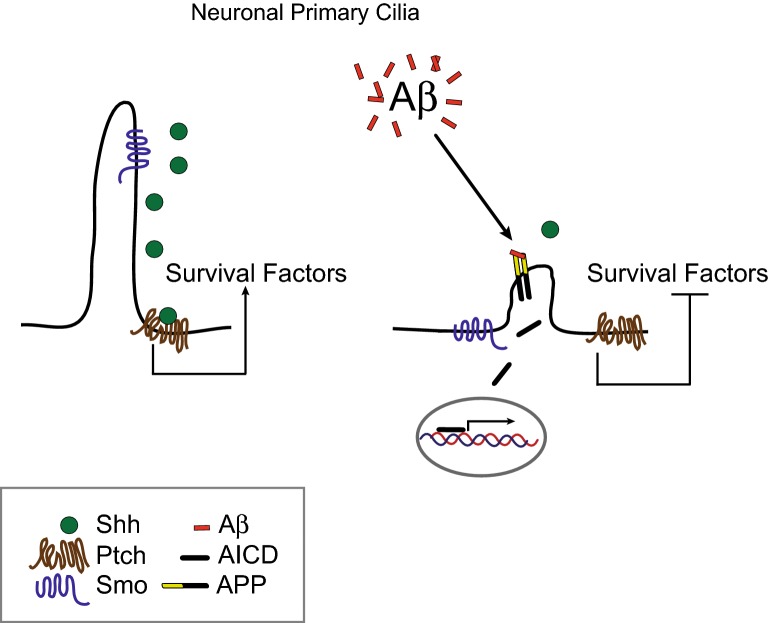
BACKGROUND: Primary cilia are small non-motile microtubule and cell membrane protrusions expressed on most vertebrate cells, including cortical and hippocampal neurons. These small organelles serve as sensory structures sampling the extracellular environment and reprogramming the transcriptional machinery in response to environmental change. Primary cilia are decorated with a variety of receptor proteins and are necessary for specific signaling cascades such as the Sonic hedgehog (Shh) pathway. Disrupting cilia structure or function results in a spectrum of diseases collectively referred to as ciliopathies. Common to human ciliopathies is cognitive impairment, a symptom also observed in Alzheimer's disease (AD). One hallmark of AD is accumulation of senile plaques composed of neurotoxic Amyloid-β (Aβ) peptide. The Aβ peptide is generated by the proteolytic cleavage of the amyloid precursor protein (APP). We set out to determine if Aβ affects primary cilia structure and the Shh signaling cascade. METHODS: We utilized in vitro cell-based assays in combination with fluorescent confocal microscopy to address our study goals. Shh signaling and cilia structure was studied using two different cell lines, mouse NIH3T3 and human HeLa cells. To investigate how Aβ levels affect Shh signaling and cilia structure in these cells, we utilized naturally secreted Aβ as well as synthetic Aβ. Effects on Shh signaling were assessed by luciferase activity while cilia structure was analyzed by fluorescent microscopy. RESULTS: Here, we report that APP localizes to primary cilia and Aβ treatment results in distorted primary cilia structure. In addition, we demonstrate that Aβ treatment interrupts canonical Shh signal transduction. CONCLUSIONS: Overall, our study illustrates that Aβ can alter primary cilia structure suggesting that elevated Aβ levels, like those observed in AD patients, could have similar effects on neuronal primary cilia in the brain. Additionally, our study suggests that Aβ impairs the Shh signaling pathway. Together our findings shed light on two novel targets for future AD therapeutics.
Overview
CoChat Summary
## TL;DR
This in vitro study reports that Amyloid-β (Aβ) distorts primary cilia structure and inhibits canonical Sonic hedgehog (Shh) signaling in mouse NIH3T3 cells. The authors also show that APP localizes to primary cilia, suggesting a potential cilia-based link between APP/Aβ biology and Alzheimer’s disease.
## Key findings
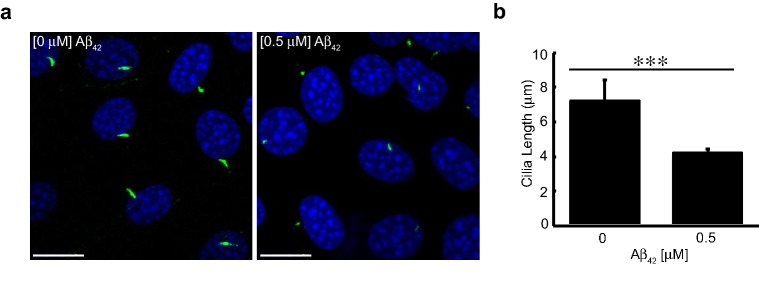
- Exposure to synthetic human Aβ42 reduced primary cilia length in NIH3T3 cells by 43% at 0.5 μM.
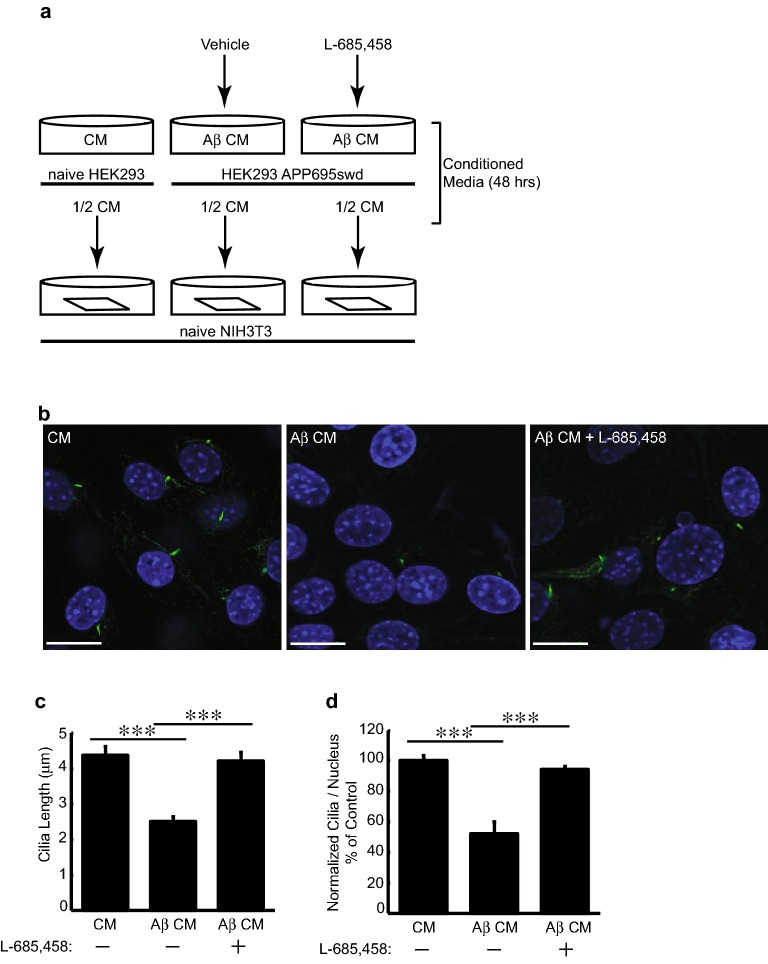
- Conditioned media containing biologically secreted Aβ from APP695swd HEK293 cells reduced cilia length by 47% and decreased the percentage of ciliated cells by 47.5% (p = 4.095 × 10⁻⁶).
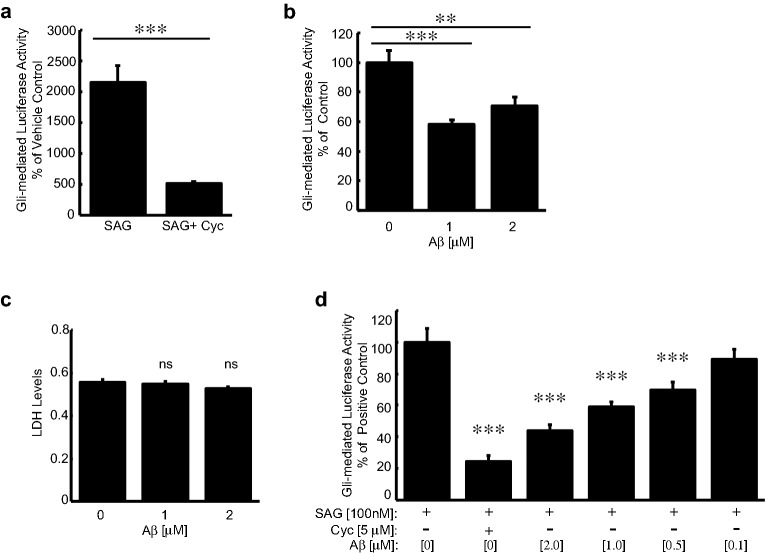
- In Shh reporter NIH3T3 Shh-Light2 cells, Aβ lowered Gli-mediated luciferase activity by 42% at 1 μM and 30% at 2 μM without SAG, and by 56% at 2 μM with SAG; as little as 100 nM Aβ produced an 11% decrease with SAG.
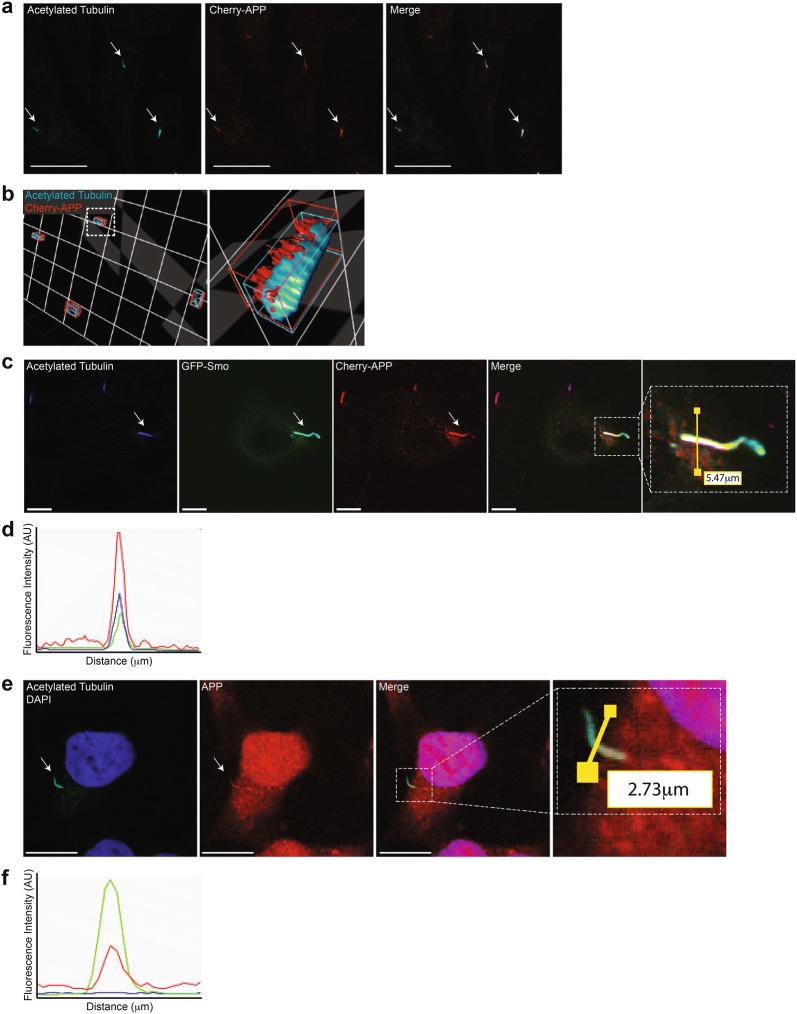
- APP localized to primary cilia in NIH3T3 cells and endogenous APP-positive primary cilia were also detected in HeLa cells, with Pearson’s correlation coefficient r = 0.91.
## Methods
- In vitro cell-based experiments used mouse NIH3T3, NIH3T3 Shh-Light2, HeLa, and HEK293 cells; cells were serum-starved to induce ciliogenesis and then treated with synthetic Aβ42 or conditioned media containing secreted Aβ.
- Primary cilia structure and APP localization were assessed by immunofluorescence/confocal microscopy using markers including acetylated tubulin and Smo, with 3D image quantification in Volocity.
- Canonical Shh signaling was measured using a luciferase reporter assay in Shh-Light2 cells; cytotoxicity was checked with an LDH assay.
## Limitations
- The paper is primarily cell culture/in vitro work, so the findings do not directly establish effects in the brain or in human patients.
- The authors explicitly note in Discussion that they did not illustrate the direct mechanism by which Sonic hedgehog inhibition could alter APP metabolism and say they are still investigating it.
- The text makes evident that the study is limited to a small set of cell lines and assays; it does not provide in vivo validation of the cilia/Shh effects in AD tissue.
Model-written summary. Check it against the paper before relying on it.
Integrity signals
Registry
Cites
Statistics
Figures
Verification
Claims the paper makes
14 Valid · 2 Not valid · 3 Not checked · 21 Own results and interpretations
Some cited sources support this claim and some don’t — read each source’s verdict below.
In the paper
“All ciliopathies share one phenotype, cognitive impairment [37–42].”
§ Amyloid-β interrupts canonical Sonic hedgehog signaling by distorting primary cilia structure > Background
What the sources say
- Not checked — no full text of the sourcecites [37] Badano JL Mitsuma N Beales PL Katsanis N The ciliopathies: an emerging class of human genetic disorders Annu Rev Genomics Hum Genet 2006 7 125 148 10.1146/annurev.genom.7.080505.115610 16722803 source
- Disputedcites [38] Sattar S Gleeson JG The ciliopathies in neuronal development: a clinical approach to investigation of Joubert syndrome and Joubert syndrome-related disorders Dev Med Child Neurol 2011 53 9 793 798 10.1111/j.1469-8749.2011.04021.x 21679365 PMC3984879 sourceExperimental — accuracy not yet measured
The Abstract describes ciliopathies as having disparate symptoms and says ciliary dysfunction can affect a single tissue, including in retinal disorders. It identifies cognitive impairment in particular ciliopathies, such as Joubert syndrome, but does not present it as a phenotype shared by all ciliopathies. (LLM, conf=0.86)
Checked by a reasoning model — may be wrong.
- Disputedcites [39] Hildebrandt F Benzing T Katsanis N Cilipathies N Engl J Med 2011 364 16 1533 1543 10.1056/NEJMra1010172 21506742 PMC3640822 sourceExperimental — accuracy not yet measured
The Summary (page unavailable) says ciliopathy phenotypes vary and identifies localization of disease-related proteins at cilia or centrosomes—not cognitive impairment—as a common feature. The Recessive Disorders section describes cognitive impairment in Joubert’s syndrome specifically, while describing autosomal recessive polycystic kidney disease by its renal and liver features. (LLM, conf=0.89)
Checked by a reasoning model — may be wrong.
- Partly supportedcites [40] Duldulao NA Li J Sun Z Cilia in cell signaling and human disorders Protein Cell 2010 1 8 726 736 10.1007/s13238-010-0098-7 21203914 PMC4875200 sourceExperimental — accuracy not yet measured
The CILIOPATHIES section describes mental retardation as a classical feature of Joubert syndrome, which it identifies as a ciliopathy. It describes ciliopathies as a diverse group united by involvement of the cilium, not by cognitive impairment; it does not support the claim that all ciliopathies share that phenotype. No page number is available in our copy. (LLM, conf=0.87)
- Partly supportedcites [41] Lee JE Gleeson JG Cilia in the nervous system: linking cilia function and neurodevelopmental disorders Curr Opin Neurol 2011 24 2 98 105 10.1097/WCO.0b013e3283444d05 21386674 PMC3984876 sourceExperimental — accuracy not yet measured
The Characteristics of ciliopathies section (page not provided) says many ciliopathy syndromes have neurological features, most commonly intellectual impairment. It does not say cognitive impairment occurs in all ciliopathies; the Introduction also emphasizes variability in their clinical presentation. (LLM, conf=0.88)
- Disputedcites [42] Waters AM Beales PL Ciliopathies: an expanding disease spectrum Pediatr Nephrol 2011 26 7 1039 1056 10.1007/s00467-010-1731-7 21210154 PMC3098370 sourceExperimental — accuracy not yet measured
The section on Alström syndrome describes it as a ciliopathy with relative preservation of cognitive function, in contrast to Bardet–Biedl syndrome. The paper therefore does not support cognitive impairment as a phenotype shared by all ciliopathies. (LLM, conf=0.88)
Checked by a reasoning model — may be wrong.
plainstates an association- Asserted: passes — The authors put it forward as true.
- Checkable: passes — It can be checked against evidence.
- Load-bearing: passes — The paper’s conclusions depend on it.
- Based: passes — The paper gives a reason why it holds.
Every source the paper cites for this claim was checked and supports it.
In the paper
“In our recent report, we discovered that cyclopamine, a Sonic hedgehog (Shh) signaling inhibitor, decreases Aβ generation by modulating γ-secretase-mediated cleavage of APP [17].”
§ Amyloid-β interrupts canonical Sonic hedgehog signaling by distorting primary cilia structure > Background
What the sources say
- Supportedcites [17] Vorobyeva AG Lee R Miller S Longen C Sharoni M Kandelwal PJ Kim FJ Marenda DR Saunders AJ Cyclopamine modulates γ-secretase-mediated cleavage of amyloid precursor protein by altering its subcellular trafficking and lysosomal degradation J Biol Chem 2014 289 48 33258 33274 10.1074/jbc.M114.591792 25281744 PMC4246084 source
The RESULTS section ('Cyclopamine Decreases γ-Secretase-mediated Cleavage of APP in Vitro and in Vivo') states that cyclopamine-treated primary cortical neurons and HeLa cells 'secreted significantly less Aβ compared with vehicle control' and that AICD-Gal4, the other γ-secretase cleavage product, was significantly decreased. The DISCUSSION identifies cyclopamine as a Smoothened inhibitor and thus 'a component of the Sonic hedgehog (Shh) signaling pathway,' and summarizes the mechanism as 'cyclopamine treatment decreases γ-secretase-mediated proteolysis of APP without inhibiting γ-secretase activity directly' (via altered APP-CTF retrograde trafficking/lysosomal accumulation). All three elements of the paraphrase — Shh-pathway inhibitor, decreased Aβ generation, modulation of γ-secretase-mediated APP cleavage — are stated in our copy. (LLM, conf=0.92)
plainstates a cause- Asserted: passes — The authors put it forward as true.
- Checkable: passes — It can be checked against evidence.
- Load-bearing: unclear — It is unclear whether the paper’s conclusions depend on it.
- Based: passes — The paper gives a reason why it holds.
- Supported
The cited sources support only part of this claim — read each source’s verdict below.
In the paper
“In mammals, this canonical Shh signaling pathway requires primary cilia [25, 29–34].”
§ Amyloid-β interrupts canonical Sonic hedgehog signaling by distorting primary cilia structure > Background
What the sources say
- Partly supportedcites [25] Varjosalo M Taipale J Hedgehog: functions and mechanisms Genes Dev 2008 22 18 2454 2472 10.1101/gad.1693608 18794343 sourceExperimental — accuracy not yet measured
In “Divergence of pathway components and mechanisms” (page not supplied), the paper says mammalian Hh signaling depends on components involved in forming primary cilia. It also says those components might be needed for another microtubule-linked process and that whether ciliary localization is required remains unresolved. Thus, the source does not establish the categorical claim that the pathway requires primary cilia themselves. (LLM, conf=0.88)
- Not checked — no full text of the sourcecites [29] Han YG Spassky N Romaguera-Ros M Garcia-Verdugo JM Aguilar A Schneider-Maunoury S Alvarez-Buylla A Hedgehog signaling and primary cilia are required for the formation of adult neural stem cells Nat Neurosci 2008 11 3 277 284 10.1038/nn2059 18297065 source
- Supportedcites [30] Houde C Dickinson RJ Houtzager VM Cullum R Montpetit R Metzler M Simpson EM Roy S Hayden MR Hoodless PA Nicholson DW Hippi is essential for node cilia assembly and Sonic hedgehog signaling Dev Biol 2006 300 523 533 10.1016/j.ydbio.2006.09.001 17027958 PMC5053816 source
In “Hippi mutants display defects in Shh signaling” (page unavailable), the paper reports that Shh-dependent localization of Smoothened to cilia is essential for its function and that ciliary-transport mutants have reduced Shh pathway activity. This supports the cited background claim that mammalian canonical Shh signaling requires cilia. (LLM, conf=0.85)
- Supportedcites [31] Huangfu D Anderson KV Cilia and Hedgehog responsiveness in the mouse Proc Natl Acad Sci USA 2005 102 11325 11330 10.1073/pnas.0505328102 16061793 PMC1183606 source
The Discussion states that normally structured cilia are required for cells to respond to mammalian Hedgehog signals. The paper also reports that loss of cilia-associated transport components disrupts Shh-dependent neural patterning in mouse embryos, supporting the cited statement. (LLM, conf=0.91)
- Not checked — no full text of the sourcecites [32] Huangfu D Liu A Rakeman AS Murcia NS Niswander L Anderson KV Hedgehog signaling in the mouse requires intraflagellar transport proteins Nature 2003 426 83 87 10.1038/nature02061 14603322 source
- Not checked — no full text of the sourcecites [33] Corbit KC Aanstad P Singla V Norman AR Stainier DY Reiter JF Vertebrate smoothened functions at the primary cilia Nature 2005 437 1018 1021 10.1038/nature04117 16136078 source
- Could not verifycites [34] Town T Breunig JJ Sarkisian MP Spilianakis C Ayoub AE Liu X Ferrandino AF Gallagher AR Li MO Rakic P Flavell RA The stumpy gene is required for mammalian ciliogenesis Proc Natl Acad Sci USA 2008 105 8 2853 2858 10.1073/pnas.0712385105 18287022 PMC2268549 sourceExperimental — accuracy not yet measured
The paper’s opening summary and “Stumpy Conditional Mutant Mice Lack Functional Intact Cilia” section describe defects in primary cilia in stumpy-mutant mice. Neither those passages nor searches for Shh, Sonic hedgehog, and Hedgehog pathway terms yielded a passage addressing whether canonical Shh signaling requires primary cilia. No page numbers are available in our copy. (LLM, conf=0.73)
plainstates a cause- Asserted: passes — The authors put it forward as true.
- Checkable: passes — It can be checked against evidence.
- Load-bearing: passes — The paper’s conclusions depend on it.
- Based: passes — The paper gives a reason why it holds.
- Partly supported
The cited sources support only part of this claim — read each source’s verdict below.
In the paper
“Impaired Shh signaling results in similar phenotypes as those observed in patients with disrupted cilia structure or function [37–42].”
§ Amyloid-β interrupts canonical Sonic hedgehog signaling by distorting primary cilia structure > Background
What the sources say
- Not checked — no full text of the sourcecites [37] Badano JL Mitsuma N Beales PL Katsanis N The ciliopathies: an emerging class of human genetic disorders Annu Rev Genomics Hum Genet 2006 7 125 148 10.1146/annurev.genom.7.080505.115610 16722803 source
- Partly supportedcites [38] Sattar S Gleeson JG The ciliopathies in neuronal development: a clinical approach to investigation of Joubert syndrome and Joubert syndrome-related disorders Dev Med Child Neurol 2011 53 9 793 798 10.1111/j.1469-8749.2011.04021.x 21679365 PMC3984879 sourceExperimental — accuracy not yet measured
The Abstract says defects in ciliary proteins adversely affect Sonic hedgehog signalling and describes phenotypes associated with ciliary defects. It does not establish that impaired Sonic hedgehog signalling produces similar phenotypes; it explicitly says the extent to which altered signalling leads to clinical presentation is unknown. No page number is available in our copy. (LLM, conf=0.85)
- Partly supportedcites [39] Hildebrandt F Benzing T Katsanis N Cilipathies N Engl J Med 2011 364 16 1533 1543 10.1056/NEJMra1010172 21506742 PMC3640822 sourceExperimental — accuracy not yet measured
The “Hedgehog Signaling” section links ciliary IFT-gene mutations to hedgehog-mutant phenotypes in mice, supporting a connection between ciliary defects and impaired hedgehog signaling. It does not establish that impaired Shh signaling independently produces phenotypes similar to those of patients with disrupted cilia; it describes a possible GLIS2–hedgehog pathway connection as a question for future investigation. (LLM, conf=0.82)
- Partly supportedcites [40] Duldulao NA Li J Sun Z Cilia in cell signaling and human disorders Protein Cell 2010 1 8 726 736 10.1007/s13238-010-0098-7 21203914 PMC4875200 sourceExperimental — accuracy not yet measured
The Hedgehog section links cilia to Hedgehog signaling and says that this pathway contributes to development of the cerebellar vermis. The Ciliopathies section reports cerebellar vermis hypoplasia in patients with Joubert syndrome, a ciliopathy. These passages support a connection, but do not directly establish that impaired Shh signaling produces phenotypes similar to those observed in patients with disrupted cilia. (LLM, conf=0.78)
- Partly supportedcites [41] Lee JE Gleeson JG Cilia in the nervous system: linking cilia function and neurodevelopmental disorders Curr Opin Neurol 2011 24 2 98 105 10.1097/WCO.0b013e3283444d05 21386674 PMC3984876 sourceExperimental — accuracy not yet measured
In “The primary cilia in brain development” (page not provided), the review links Shh-dependent cerebellar development to cerebellar hypoplasia in ciliopathies and reports cerebellar defects after disruption of ciliary or Shh-pathway genes. The overlap is supported, but the direct comparison of impaired-Shh phenotypes with those observed in patients goes beyond the experimental findings described. (LLM, conf=0.83)
- Partly supportedcites [42] Waters AM Beales PL Ciliopathies: an expanding disease spectrum Pediatr Nephrol 2011 26 7 1039 1056 10.1007/s00467-010-1731-7 21210154 PMC3098370 sourceExperimental — accuracy not yet measured
The Hedgehog signalling section links defective ciliary transport to impaired Shh signalling, and the Wnt signalling section describes mouse mutants with disrupted ciliogenesis, Hedgehog defects, neural tube defects and skeletal abnormalities. The Abstract lists skeletal and cerebral abnormalities among human ciliopathy features. The paper does not directly establish that impaired Shh signalling independently produces the same phenotypes seen in patients with disrupted cilia. (LLM, conf=0.78)
plainstates an association- Asserted: passes — The authors put it forward as true.
- Checkable: passes — It can be checked against evidence.
- Load-bearing: passes — The paper’s conclusions depend on it.
- Based: passes — The paper gives a reason why it holds.
The cited sources support only part of this claim — read each source’s verdict below.
In the paper
“The canonical Shh signaling cascade relies on the primary cilium for signal transduction [25, 29–34].”
§ Amyloid-β interrupts canonical Sonic hedgehog signaling by distorting primary cilia structure > Background
What the sources say
- Partly supportedcites [25] Varjosalo M Taipale J Hedgehog: functions and mechanisms Genes Dev 2008 22 18 2454 2472 10.1101/gad.1693608 18794343 sourceExperimental — accuracy not yet measured
The “Divergence of pathway components and mechanisms” section says mammalian Hh signaling depends on components involved in forming primary cilia. It also explicitly says that whether localization to cilia is required for signaling remains to be established, so the categorical claim that the cascade relies on the primary cilium overstates the paper. Page numbers were not provided in our copy. (LLM, conf=0.88)
- Not checked — no full text of the sourcecites [29] Han YG Spassky N Romaguera-Ros M Garcia-Verdugo JM Aguilar A Schneider-Maunoury S Alvarez-Buylla A Hedgehog signaling and primary cilia are required for the formation of adult neural stem cells Nat Neurosci 2008 11 3 277 284 10.1038/nn2059 18297065 source
- Supportedcites [30] Houde C Dickinson RJ Houtzager VM Cullum R Montpetit R Metzler M Simpson EM Roy S Hayden MR Hoodless PA Nicholson DW Hippi is essential for node cilia assembly and Sonic hedgehog signaling Dev Biol 2006 300 523 533 10.1016/j.ydbio.2006.09.001 17027958 PMC5053816 source
In “Hippi mutants display defects in Shh signaling” (page not provided), the paper reports that Shh-dependent localization of Smoothened to cilia is essential for Smoothened function. It also describes reduced Shh pathway activity in mutants affecting cilia-associated transport, supporting the attributed dependence of Shh signal transduction on cilia. (LLM, conf=0.90)
- Supportedcites [31] Huangfu D Anderson KV Cilia and Hedgehog responsiveness in the mouse Proc Natl Acad Sci USA 2005 102 11325 11330 10.1073/pnas.0505328102 16061793 PMC1183606 source
The paper’s opening section says that loss of anterograde or retrograde IFT produces phenotypes indicating that cilia are essential for Hedgehog signal transduction. The Discussion likewise states that normally structured cilia are required for mammalian cells to respond to Hedgehog signals, supporting the claim in the mouse context studied. (LLM, conf=0.93)
- Not checked — no full text of the sourcecites [32] Huangfu D Liu A Rakeman AS Murcia NS Niswander L Anderson KV Hedgehog signaling in the mouse requires intraflagellar transport proteins Nature 2003 426 83 87 10.1038/nature02061 14603322 source
- Not checked — no full text of the sourcecites [33] Corbit KC Aanstad P Singla V Norman AR Stainier DY Reiter JF Vertebrate smoothened functions at the primary cilia Nature 2005 437 1018 1021 10.1038/nature04117 16136078 source
- Could not verifycites [34] Town T Breunig JJ Sarkisian MP Spilianakis C Ayoub AE Liu X Ferrandino AF Gallagher AR Li MO Rakic P Flavell RA The stumpy gene is required for mammalian ciliogenesis Proc Natl Acad Sci USA 2008 105 8 2853 2858 10.1073/pnas.0712385105 18287022 PMC2268549 sourceExperimental — accuracy not yet measured
The paper’s Discussion and opening section describe stumpy’s role in ciliogenesis and cilia-related hydrocephalus and kidney disease, but do not address Shh signal transduction. Searches for “Hedgehog,” “Shh,” and “signal transduction” found no passage establishing that the canonical Shh cascade relies on the primary cilium. Page numbers were not available in our copy. (LLM, conf=0.72)
plainstates a cause- Asserted: passes — The authors put it forward as true.
- Checkable: passes — It can be checked against evidence.
- Load-bearing: passes — The paper’s conclusions depend on it.
- Based: passes — The paper gives a reason why it holds.
- Partly supported
15 more claims
Create a free account to see all 40 claims and to verify the 2 references still open.
- Probably not a substantial claim. 9
- It may state two separate claims as one. 13
Claims other papers make about this one
Each is checked against this paper’s own text: does it say what the citing paper says it does?
The source backs part of the claim, not all of it — or backs it for a different population, condition or comparison.
In the citing paper
“APP and other AD-related proteins accumulate at the ciliary basal body, contributing to shortening of cilia and subsequent dysfunction of ciliary signaling and neuroprotective pathways [29,89,97].”
From The Impact of Neurotoxin Proteins Trafficked by Primary Cilia and Extracellular Vesicles in Neurodegenerative Diseases (2025) · cites this paper as [97]
Experimental — accuracy not yet measuredThe source backs part of the claim, not all of it — or backs it for a different population, condition or comparison.
In the citing paper
“Aβ not only affects intracellular vesicular trafficking but could also affect primary cilia function directly or indirectly via its cognate binding receptors such as LRP1 [15, 50, 75].”
From Abnormal accumulation of extracellular vesicles in hippocampal dystrophic axons and regulation by the primary cilia in Alzheimer's disease (2023) · cites this paper as [75]
Experimental — accuracy not yet measuredThe source backs part of the claim, not all of it — or backs it for a different population, condition or comparison.
In the citing paper
“Ciliary dysfunction associated with Aβ has been reported to reduce the connectivity of neuronal circuits and cause synapse loss [25, 75].”
From Abnormal accumulation of extracellular vesicles in hippocampal dystrophic axons and regulation by the primary cilia in Alzheimer's disease (2023) · cites this paper as [75]
Experimental — accuracy not yet measuredThe cited source says what the claim attributes to it.
In the citing paper
“It has been postulated that increased Aβ leads to cilia degeneration, which inhibits Shh [49].”
From Primary Cilia and Cardiovascular Risk Factors in Alzheimer's Disease (2025) · cites this paper as [49]
The cited source says what the claim attributes to it.
In the citing paper
“These pathways are not the only ones that are negatively impacted by Aβ, as it also disrupts Shh signaling and distorts primary cilia structure [49].”
From Primary Cilia and Cardiovascular Risk Factors in Alzheimer's Disease (2025) · cites this paper as [49]
1 more claim about this paper
Create a free account to see every claim other papers make about this one.
Citations
Cites
The Amyloid Hypothesis of Alzheimer’s Disease: Progress and Problems on the Road to Therapeutics
Hardy, J., & Selkoe, D. J. (2002) · Science · doi:10.1126/science.1072994 · Cited by 13,864
Amyloid oligomers exacerbate tau pathology in a mouse model of tauopathy
Selenica, M.-L. B., Brownlow, M., Jimenez, J. P., Lee, D. C., Pena, G., Dickey, C. A., Gordon, M. N., & Morgan, D. (2013) · Neurodegenerative Diseases · doi:10.1159/000337230 · Cited by 10,359
Vassar, R., Bennett, B. D., Babu-Khan, S., Kahn, S., Mendiaz, E. A., Denis, P., Teplow, D. B., Ross, S., Amarante, P., Loeloff, R., et al. (1999) · Science · doi:10.1126/science.286.5440.735 · Cited by 3,876
The molecular pathology of Alzheimer's disease
Selkoe, D. J. (1991) · Neuron · doi:10.1016/0896-6273(91)90052-2 · Cited by 2,708
Scheuner, D., Eckman, C., Jensen, M., Song, X., Citron, M., Suzuki, N., Bird, T. D., Hardy, J., Hutton, M., Kukull, W., et al. (1996) · Nature Medicine · doi:10.1038/nm0896-864 · Cited by 2,599
Amyloid deposition as the central event in the aetiology of Alzheimer’s disease
Hardy, J., & Allsop, D. (1991) · Trends in Pharmacological Sciences · doi:10.1016/0165-6147(91)90609-v · Cited by 2,538
Echelard, Y., Epstein, D. J., St-Jacques, B., Shen, L., Mohler, J., McMahon, J. A., & McMahon, A. P. (1993) · Cell · doi:10.1016/0092-8674(93)90627-3 · Cited by 2,154
Deficiency of presenilin-1 inhibits the normal cleavage of amyloid precursor protein
De Strooper, B., Saftig, P., Craessaerts, K., Vanderstichele, H., Guhde, G., Annaert, W., Von Figura, K., & Van Leuven, F. (1998) · Nature · doi:10.1038/34910 · Cited by 1,818
Isolation and quantification of soluble Alzheimer's β-peptide from biological fluids
Seubert, P., Vigo-Pelfrey, C., Esch, F., Lee, M., Dovey, H., Davis, D., Sinha, S., Schiossmacher, M., Whaley, J., Swindlehurst, C., et al. (1992) · Nature · doi:10.1038/359325a0 · Cited by 1,731
Vertebrate Smoothened functions at the primary cilium
Corbit, K. C., Aanstad, P., Singla, V., Norman, A. R., Stainier, D. Y. R., & Reiter, J. F. (2005) · Nature · doi:10.1038/nature04117 · Cited by 1,481
Patched1 Regulates Hedgehog Signaling at the Primary Cilium
Rohatgi, R., Milenkovic, L., & Scott, M. P. (2007) · Science · doi:10.1126/science.1139740 · Cited by 1,426
Hedgehog signalling in the mouse requires intraflagellar transport proteins
Huangfu, D., Liu, A., Rakeman, A. S., Murcia, N. S., Niswander, L., & Anderson, K. V. (2003) · Nature · doi:10.1038/nature02061 · Cited by 1,425
Hildebrandt, F., Benzing, T., & Katsanis, N. (2011) · New England Journal of Medicine · doi:10.1056/nejmra1010172 · Cited by 1,331
Effects of oncogenic mutations in Smoothened and Patched can be reversed by cyclopamine
Taipale, J., Chen, J. K., Cooper, M. K., Wang, B., Mann, R. K., Milenkovic, L., Scott, M. P., & Beachy, P. A. (2000) · Nature · doi:10.1038/35023008 · Cited by 1,311
Hedgehog: functions and mechanisms
Varjosalo, M., & Taipale, J. (2008) · Genes & Development · doi:10.1101/gad.1693608 · Cited by 1,217
The Ciliopathies: An Emerging Class of Human Genetic Disorders
Badano, J. L., Mitsuma, N., Beales, P. L., & Katsanis, N. (2006) · Annual Review of Genomics and Human Genetics · doi:10.1146/annurev.genom.7.080505.115610 · Cited by 1,144
Plaque-independent disruption of neural circuits in Alzheimer’s disease mouse models
Hsia, A. Y., Masliah, E., McConlogue, L., Yu, G.-Q., Tatsuno, G., Hu, K., Kholodenko, D., Malenka, R. C., Nicoll, R. A., & Mucke, L. (1999) · Proceedings of the National Academy of Sciences · doi:10.1073/pnas.96.6.3228 · Cited by 1,123
Kumar, D. K. V., Choi, S. H., Washicosky, K. J., Eimer, W. A., Tucker, S., Ghofrani, J., Lefkowitz, A., McColl, G., Goldstein, L. E., Tanzi, R. E., et al. (2016) · Science Translational Medicine · doi:10.1126/scitranslmed.aaf1059 · Cited by 971
Cilia and Hedgehog responsiveness in the mouse
Huangfu, D., & Anderson, K. V. (2005) · Proceedings of the National Academy of Sciences · doi:10.1073/pnas.0505328102 · Cited by 820
Patched acts catalytically to suppress the activity of Smoothened
Taipale, J., Cooper, M. K., Maiti, T., & Beachy, P. A. (2002) · Nature · doi:10.1038/nature00989 · Cited by 794
Saura, C. A., Choi, S.-Y., Beglopoulos, V., Malkani, S., Zhang, D., Rao, B. S. S., Chattarji, S., Kelleher, R. J., Kandel, E. R., Duff, K., et al. (2004) · Neuron · doi:10.1016/s0896-6273(04)00182-5 · Cited by 757
Picomolar Amyloid-β Positively Modulates Synaptic Plasticity and Memory in Hippocampus
Puzzo, D., Privitera, L., Leznik, E., Fà, M., Staniszewski, A., Palmeri, A., & Arancio, O. (2008) · The Journal of Neuroscience · doi:10.1523/jneurosci.2692-08.2008 · Cited by 740
Sasaki, H., Nishizaki, Y., Hui, C.-C., Nakafuku, M., & Kondoh, H. (1999) · Development · doi:10.1242/dev.126.17.3915 · Cited by 715
Sonic Hedgehog Is Required for Progenitor Cell Maintenance in Telencephalic Stem Cell Niches
Machold, R., Hayashi, S., Rutlin, M., Muzumdar, M. D., Nery, S., Corbin, J. G., Gritli-Linde, A., Dellovade, T., Porter, J. A., Rubin, L. L., et al. (2003) · Neuron · doi:10.1016/s0896-6273(03)00561-0 · Cited by 710
Gli2, but not Gli1, is required for initial Shh signaling and ectopic activation of the Shh pathway
Bai, C. B., Auerbach, W., Lee, J. S., Stephen, D., & Joyner, A. L. (2002) · Development · doi:10.1242/dev.129.20.4753 · Cited by 692
The genetic epidemiology of neurodegenerative disease
Bertram, L. (2005) · Journal of Clinical Investigation · doi:10.1172/jci24761 · Cited by 680
Ciliopathies: an expanding disease spectrum
Waters, A. M., & Beales, P. L. (2011) · Pediatric Nephrology · doi:10.1007/s00467-010-1731-7 · Cited by 676
The Primary Cilium as a Complex Signaling Center
Berbari, N. F., O'Connor, A. K., Haycraft, C. J., & Yoder, B. K. (2009) · Current Biology · doi:10.1016/j.cub.2009.05.025 · Cited by 621
Sonic hedgehog controls stem cell behavior in the postnatal and adult brain
Palma, V., Lim, D. A., Dahmane, N., Sánchez, P., Brionne, T. C., Herzberg, C. D., Gitton, Y., Carleton, A., Álvarez-Buylla, A., & Altaba, A. R. I. (2005) · Development · doi:10.1242/dev.01567 · Cited by 611
Lee, J. J., von Kessler, D. P., Parks, S., & Beachy, P. A. (1992) · Cell · doi:10.1016/0092-8674(92)90264-d · Cited by 581
Hedgehog signaling and primary cilia are required for the formation of adult neural stem cells
Han, Y.-G., Spassky, N., Romaguera-Ros, M., Garcia-Verdugo, J.-M., Aguilar, A., Schneider-Maunoury, S., & Alvarez-Buylla, A. (2008) · Nature Neuroscience · doi:10.1038/nn2059 · Cited by 547
A highlight on Sonic hedgehog pathway
Carballo, G. B., Honorato, J. R., de Lopes, G. P. F., & Spohr, T. C. L. D. S. E. (2018) · Cell Communication and Signaling · doi:10.1186/s12964-018-0220-7 · Cited by 460
Bhattacharyya, S., Rainey, M. A., Arya, P., Mohapatra, B. C., Mushtaq, I., Dutta, S., George, M., Storck, M. D., McComb, R. D., Muirhead, D., et al. (2017) · Scientific Reports · doi:10.1038/srep42320 · Cited by 459
The Presenilins in Alzheimer's Disease--Proteolysis Holds the Key
Haass, C., & Strooper, B. D. (1999) · Science · doi:10.1126/science.286.5441.916 · Cited by 388
Selective targeting of somatostatin receptor 3 to neuronal cilia
Händel, M., Schulz, S., Stanarius, A., Schreff, M., Erdtmann-Vourliotis, M., Schmidt, H., Wolf, G., & Höllt, V (1999) · Neuroscience · doi:10.1016/s0306-4522(98)00354-6 · Cited by 386
Citron, M., Vigo-Pelfrey, C., Teplow, D. B., Miller, C., Schenk, D., Johnston, J., Winblad, B., Venizelos, N., Lannfelt, L., & Selkoe, D. J. (1994) · Proceedings of the National Academy of Sciences · doi:10.1073/pnas.91.25.11993 · Cited by 366 · cited 1×
“APP695 swd cells harbor the APP Swedish mutation (K670N/M671L), which increases β-secretase cleavage, resulting in elevated levels of Aβ secretion [53].”
BackgroundPrimary cilia regulate hippocampal neurogenesis by mediating sonic hedgehog signaling
Breunig, J. J., Sarkisian, M. R., Arellano, J. I., Morozov, Y. M., Ayoub, A. E., Sojitra, S., Wang, B., Flavell, R. A., Rakic, P., & Town, T. (2008) · Proceedings of the National Academy of Sciences · doi:10.1073/pnas.0804558105 · Cited by 344
Type III adenylyl cyclase localizes to primary cilia throughout the adult mouse brain
Bishop, G. A., Berbari, N. F., Lewis, J., & Mykytyn, K. (2007) · Journal of Comparative Neurology · doi:10.1002/cne.21510 · Cited by 317
Wolfe, M. S., Xia, W., Moore, C. L., Leatherwood, D. D., Ostaszewski, B., Rahmati, T., Donkor, I. O., & Selkoe, D. J. (1999) · Biochemistry · doi:10.1021/bi982562p · Cited by 289
Physiological roles for amyloid β peptides
Pearson, H. A., & Peers, C. (2006) · The Journal of Physiology · doi:10.1113/jphysiol.2006.111203 · Cited by 286
Lateral transport of Smoothened from the plasma membrane to the membrane of the cilium
Milenkovic, L., Scott, M. P., & Rohatgi, R. (2009) · Journal of Cell Biology · doi:10.1083/jcb.200907126 · Cited by 263
Persistent Sonic Hedgehog Signaling in Adult Brain Determines Neural Stem Cell Positional Identity
Ihrie, R. A., Shah, J. K., Harwell, C. C., Levine, J. H., Guinto, C. D., Lezameta, M., Kriegstein, A. R., & Alvarez-Buylla, A. (2011) · Neuron · doi:10.1016/j.neuron.2011.05.018 · Cited by 255
Hedgehog signalling: Emerging evidence for non-canonical pathways
Jenkins, D. (2009) · Cellular Signalling · doi:10.1016/j.cellsig.2009.01.033 · Cited by 230 · cited 1×
“Hedgehog signaling is complex, with canonical and non-canonical signaling mechanisms described [61, 62].”
BackgroundCortical Synaptic Integration In Vivo Is Disrupted by Amyloid-β Plaques
Stern, E. A., Bacskai, B. J., Hickey, G. A., Attenello, F. J., Lombardo, J. A., & Hyman, B. T. (2004) · The Journal of Neuroscience · doi:10.1523/jneurosci.0462-04.2004 · Cited by 210
Kirouac, L., Rajic, A. J., Cribbs, D. H., & Padmanabhan, J. (2017) · eneuro · doi:10.1523/eneuro.0149-16.2017 · Cited by 207
Wang, Y., Zhou, Z., Walsh, C. T., & McMahon, A. P. (2009) · Proceedings of the National Academy of Sciences · doi:10.1073/pnas.0812110106 · Cited by 199
A role for primary cilia in glutamatergic synaptic integration of adult-born neurons
Kumamoto, N., Gu, Y., Wang, J., Janoschka, S., Takemaru, K.-I., Levine, J., & Ge, S. (2012) · Nature Neuroscience · doi:10.1038/nn.3042 · Cited by 196
Impaired Spine Stability Underlies Plaque-Related Spine Loss in an Alzheimer's Disease Mouse Model
Spires-Jones, T. L., Meyer-Luehmann, M., Osetek, J. D., Jones, P. B., Stern, E. A., Bacskai, B. J., & Hyman, B. T. (2007) · The American Journal of Pathology · doi:10.2353/ajpath.2007.070055 · Cited by 189
Cilia in the nervous system: linking cilia function and neurodevelopmental disorders
Lee, J. E., & Gleeson, J. G. (2011) · Current Opinion in Neurology · doi:10.1097/wco.0b013e3283444d05 · Cited by 185
SATTAR, S., & GLEESON, J. G. (2011) · Developmental Medicine & Child Neurology · doi:10.1111/j.1469-8749.2011.04021.x · Cited by 155
CCDC41 is required for ciliary vesicle docking to the mother centriole
Joo, K., Kim, C. G., Lee, M.-S., Moon, H.-Y., Lee, S.-H., Kim, M. J., Kweon, H.-S., Park, W.-Y., Kim, C.-H., Gleeson, J. G., et al. (2013) · Proceedings of the National Academy of Sciences · doi:10.1073/pnas.1220927110 · Cited by 153
The ciliary membrane‐associated proteome reveals actin‐binding proteins as key components of cilia
Kohli, P., Höhne, M., Jüngst, C., Bertsch, S., Ebert, L. K., Schauss, A. C., Benzing, T., Rinschen, M. M., & Schermer, B. (2017) · The EMBO Reports · doi:10.15252/embr.201643846 · Cited by 145
Fogel, H., Frere, S., Segev, O., Bharill, S., Shapira, I., Gazit, N., O’Malley, T., Slomowitz, E., Berdichevsky, Y., Walsh, D. M., et al. (2014) · Cell Reports · doi:10.1016/j.celrep.2014.04.024 · Cited by 138
Molecular mechanisms of protein and lipid targeting to ciliary membranes
Emmer, B. T., Maric, D., & Engman, D. M. (2010) · Journal of Cell Science · doi:10.1242/jcs.062968 · Cited by 125
Trazzi, S., Mitrugno, V. M., Valli, E., Fuchs, C., Rizzi, S., Guidi, S., Perini, G., Bartesaghi, R., & Ciani, E. (2011) · Human Molecular Genetics · doi:10.1093/hmg/ddr033 · Cited by 114 · cited 1×
“Previous reports suggest AICD modulates Shh signaling by regulating transcriptional activation of PTCH1, a negative regulator of Shh signaling, further indicating a relationship between Shh signaling and APP [79, 80].”
BackgroundHippocampal neurons possess primary cilia in culture
Berbari, N. F., Bishop, G. A., Askwith, C. C., Lewis, J. S., & Mykytyn, K. (2007) · Journal of Neuroscience Research · doi:10.1002/jnr.21209 · Cited by 111
Neuronal primary cilia: a review
Fuchs, J. L., & Schwark, H. D. (2004) · Cell Biology International · doi:10.1016/j.cellbi.2003.11.008 · Cited by 107
Sonic hedgehog signaling in the postnatal brain
Álvarez-Buylla, A., & Ihrie, R. A. (2014) · Seminars in Cell & Developmental Biology · doi:10.1016/j.semcdb.2014.05.008 · Cited by 100
Wang, Z., Phan, T., & Storm, D. R. (2011) · The Journal of Neuroscience · doi:10.1523/jneurosci.6561-10.2011 · Cited by 100
Hippi is essential for node cilia assembly and Sonic hedgehog signaling
Houde, C., Dickinson, R. J., Houtzager, V. M., Cullum, R., Montpetit, R., Metzler, M., Simpson, E. M., Roy, S., Hayden, M. R., Hoodless, P. A., et al. (2006) · Developmental Biology · doi:10.1016/j.ydbio.2006.09.001 · Cited by 98
Development and distribution of neuronal cilia in mouse neocortex
Arellano, J. I., Guadiana, S. M., Breunig, J. J., Rakic, P., & Sarkisian, M. R. (2012) · Journal of Comparative Neurology · doi:10.1002/cne.22793 · Cited by 97
Presenilins and Alzheimer's disease
Kim, T.-W., & Tanzi, R. E. (1997) · Current Opinion in Neurobiology · doi:10.1016/s0959-4388(97)80089-x · Cited by 97
Lazarevic, V., Fieńko, S., Andres-Alonso, M., Anni, D., Ivanova, D., Montenegro-Venegas, C., Gundelfinger, E. D., Cousin, M. A., & Fejtova, A. (2017) · Frontiers in Molecular Neuroscience · doi:10.3389/fnmol.2017.00221 · Cited by 97
Potter, P. E., Rauschkolb, P. K., Pandya, Y., Sue, L. I., Sabbagh, M. N., Walker, D. G., & Beach, T. G. (2011) · Acta Neuropathologica · doi:10.1007/s00401-011-0831-1 · Cited by 94
Jin, H., & Nachury, M. V. (2009) · Current Biology · doi:10.1016/j.cub.2009.04.015 · Cited by 93 · cited 1×
“One function of the cilia basal body complex is to sort and facilitate cilia-specific transmembrane cargo for further cilia intraflagellar transport (IFT) (reviewed in [58, 59]).”
BackgroundThe stumpy gene is required for mammalian ciliogenesis
Town, T., Breunig, J. J., Sarkisian, M. R., Spilianakis, C., Ayoub, A. E., Liu, X., Ferrandino, A. F., Gallagher, A. R., Li, M. O., Rakic, P., et al. (2008) · Proceedings of the National Academy of Sciences · doi:10.1073/pnas.0712385105 · Cited by 91
Primary cilium—is it an osteocyte's strain‐sensing flowmeter?
Whitfield, J. F. (2003) · Journal of Cellular Biochemistry · doi:10.1002/jcb.10509 · Cited by 90
Beta-amyloid disrupted synaptic vesicle endocytosis in cultured hippocampal neurons
Kelly, B. L., & Ferreira, A. (2007) · Neuroscience · doi:10.1016/j.neuroscience.2007.03.047 · Cited by 85
Hippocampal and Cortical Primary Cilia Are Required for Aversive Memory in Mice
Berbari, N. F., Malarkey, E. B., Yazdi, S. M. Z. R., McNair, A. D., Kippe, J. M., Croyle, M. J., Kraft, T. W., & Yoder, B. K. (2014) · PLoS ONE · doi:10.1371/journal.pone.0106576 · Cited by 69
A role for primary cilia in glutamatergic synaptic integration of adult-born neurons
Kumamoto, N., Gu, Y., Wang, J., Jenoschka, S., Takemaru, K., Levine, J., & Ge, S. (2012) · Cilia · doi:10.1186/2046-2530-1-s1-p31 · Cited by 63
Chakravarthy, B., Gaudet, C., Ménard, M., Brown, L., Atkinson, T., LaFerla, F. M., Ito, S., Armato, U., Dal Prà, I., & Whitfield, J. (2012) · Biochemical and Biophysical Research Communications · doi:10.1016/j.bbrc.2012.09.056 · Cited by 52
Neurobehavioral Development in Joubert Syndrome
Gitten, J. C., Dede, D. E., Fennell, E. B., Quisling, R., & Maria, B. L. (1998) · Journal of Child Neurology · doi:10.1177/088307389801300806 · Cited by 48
Cerro, M. P. D., Snider, R. S., & Oster, M. L. (1969) · The Anatomical Record · doi:10.1002/ar.1091650202 · Cited by 45
AICD Overexpression in Neuro 2A Cells Regulates Expression of PTCH1 and TRPC5
Raychaudhuri, M., & Mukhopadhyay, D. (2010) · International Journal of Alzheimer s Disease · doi:10.4061/2011/239453 · Cited by 44 · cited 1×
“Previous reports suggest AICD modulates Shh signaling by regulating transcriptional activation of PTCH1, a negative regulator of Shh signaling, further indicating a relationship between Shh signaling and APP [79, 80].”
BackgroundGuadiana, S. M., Parker, A. K., Filho, G. F., Sequeira, A., Semple-Rowland, S., Shaw, G., Mandel, R. J., Foster, T. C., Kumar, A., & Sarkisian, M. R. (2016) · Frontiers in Aging Neuroscience · doi:10.3389/fnagi.2016.00127 · Cited by 40
Primary cilia and forebrain development
Willaredt, M. A., Tasouri, E., & Tucker, K. L. (2012) · Mechanisms of Development · doi:10.1016/j.mod.2012.10.003 · Cited by 38
Bhattacharyya, S., Rainey, M. A., Arya, P., Mohapatra, B. C., Mushtaq, I., Dutta, S., George, M., Storck, M. D., McComb, R. D., Muirhead, D., et al. (2016) · Scientific Reports · doi:10.1038/srep20727 · Cited by 36
He, P., Staufenbiel, M., Li, R., & Shen, Y. (2014) · Human Molecular Genetics · doi:10.1093/hmg/ddu370 · Cited by 33 · cited 1×
“provided insight into the canonical Shh signaling pathway using APP23 transgenic mouse model and compared the results to biochemical analysis of healthy controls and Alzheimer’s patient human brain tissue results [82].”
ResultPrimary cilia in normal human neocortical neurons.
Mandl, L., & Megele, R. (1989) · PubMed · Cited by 25
Life without Centrioles: Cilia in the Spotlight
Badano, J. L., & Katsanis, N. (2006) · Cell · doi:10.1016/j.cell.2006.06.013 · Cited by 19
Vorobyeva, A. G., Lee, R., Miller, S., Longen, C., Sharoni, M., Kandelwal, P. J., Kim, F. J., Marenda, D. R., & Saunders, A. J. (2014) · Journal of Biological Chemistry · doi:10.1074/jbc.m114.591792 · Cited by 16
Self-citationAnalyzing Primary Cilia by Multiphoton Microscopy
Farnum, C. E., Williams, R. M., & Donnelly, E. L. (2009) · Methods in cell biology · doi:10.1016/s0091-679x(08)94006-1 · Cited by 13
Cilia in cell signaling and human disorders
Duldulao, N. A., Li, J., & Sun, Z. (2010) · Protein & Cell · doi:10.1007/s13238-010-0098-7 · Cited by 13
Cilia: conductors' batons of neuronal maturation
Tissir, F., & Goffinet, A. M. (2012) · Nature Neuroscience · doi:10.1038/nn.3050 · Cited by 7
(2005) · PubMed · Cited by 3
Cited by
3D cell cultures toward quantitative high-throughput drug screening
Wang, Y., & Jeon, H. (2022) · Trends in Pharmacological Sciences · doi:10.1016/j.tips.2022.03.014 · Cited by 157
Hedgehog Signal and Genetic Disorders
Sasai, N., Toriyama, M., & Kondo, T. (2019) · Frontiers in Genetics · doi:10.3389/fgene.2019.01103 · Cited by 160
“…Gonzalez-Reyes et al., 2012 Alzheimer’s disease (AD) deterioration of cognitive and memory functions ND (involvement of Hh signal has been suggested) Vorobyeva and Saunders, 2018 Frontiers in Genetics | www.frontiersin.org November 2019 | Volume 10 | Article 1103 Recent Progress on Hedgehog…”
BackgroundPrimary cilia and ciliary signaling pathways in aging and age-related brain disorders
Ma, R., Kutchy, N. A., Chen, L., Meigs, D. D., & Hu, G. (2022) · Neurobiology of Disease · doi:10.1016/j.nbd.2021.105607 · Cited by 114
Chen, Y., Yan, Q., & Sun, Z. (2021) · Frontiers in Molecular Biosciences · doi:10.3389/fmolb.2021.711710 · Cited by 112
“Recent evidence has demonstrated that SHH may participate in the cell cycle of postmitotic neurons, and abnormal cell cycle promotes Aβ-induced neuronal death (Vorobyeva and Saunders, 2018).”
BackgroundJha, N. K., Chen, W., Kumar, S., Dubey, R., Tsai, L.-W., Kar, R., Jha, S. K., Gupta, P. K., Sharma, A., Gundamaraju, R., et al. (2022) · Open Biology · doi:10.1098/rsob.210289 · Cited by 67
“Studies have suggested that Aβ peptides can disturb the normal activation and operation of the canonical Shh signalling pathway in the AD brain [136].”
Background
Metadata
- Authors
- Vorobyeva, A. G., & Saunders, A. J.
- Affiliations
- Drexel University (US)
- Corresponding author
- Saunders, Aleister J.
- Venue
- Cilia
- Published
- 2018-08-17
- Volume
- 7
- Issue
- 1
- Pages
- 5-5
- ISSN
- 2046-2530 (ISSN-L)
- PMC
- PMC6098584
- OpenAlex
- W2887863961
- Cited by
- 67
- References
- 85
- Citations by year
- 2026: 7 · 2025: 12 · 2024: 5 · 2023: 9 · 2022: 9 · 2021: 15 · 2020: 4 · 2019: 6
- FWCI
- 4.74
- Type
- journal article
- Language
- en
- Open access
- hybrid
- doi.org
- Licence
- cc-by
- creativecommons.org/licenses/by/4.0/ (tdm)
- creativecommons.org/licenses/by/4.0/ (vor)
- Locations
- Cilia (publishedVersion, cc-by)
- Europe PMC (PubMed Central) (publishedVersion, cc-by)
- PubMed Central (publishedVersion, cc-by)
- PubMed (publishedVersion)
- DOAJ (DOAJ: Directory of Open Access Journals) (submittedVersion)
- Funders
- National Institutes of Health (R01NS057295)
- Drexel University
- Topics
- Life Sciences › Biochemistry, Genetics and Molecular Biology › Genetics › Genetic and Kidney Cyst Diseases
- Life Sciences › Neuroscience › Cellular and Molecular Neuroscience › Alzheimer's disease research and treatments
- Life Sciences › Biochemistry, Genetics and Molecular Biology › Molecular Biology › Hedgehog Signaling Pathway Studies
- Keywords
- amyloid-beta, Sonic hedgehog signaling, primary cilia, ciliopathies, Alzheimer's disease, amyloid precursor protein, neuronal cilia, cognitive impairment
About these checks
Registry, retraction, Cites and statistics results are computed, not judged, with one exception: a printed reference that no index lists is read once by a model before it counts as a citation error. Claims are extracted by a model and kept only when their quote appears verbatim in the text; each cited source is then checked, with a model’s help, for whether it says what the claim relies on. Those verdicts can be wrong — read the claim’s quote and the cited source before relying on one.
The claim verdicts this report counts are experimental: their accuracy is not yet measured.
A language model drew the claims from the paper on 2026-09-28, under version 3 of the claim definition (model deepseek-v4.1-flash, prompt extract-v3).
A second model labelled each claim on 2026-09-28 (model jev-1.13-20260917, definition revision gold-guideline-v0.2).
Cited sources are checked with a language model’s help (gpt-6-sol and qwen3.8-omni-flash).
Statistics and arithmetic are recomputed, not judged.
Confidence bands are shown only for fields calibrated on our annotated test set. None is calibrated yet, so no band is shown.
What counts as a claim ›How we measure confidence ›How we check this ›
Are you an author, or do you see a problem with this page? Request a review
Data sources
Bibliographic data: Semantic Scholar, OpenAlex, Crossref.
Contains information from the Semantic Scholar Academic Graph Datasets, made available under the ODC Attribution License (ODC-BY 1.0).
Semantic Scholar’s data is described in: Kinney, R., et al. (2023). The Semantic Scholar Open Data Platform. arXiv:2301.10140.
