

The SAFE procedure: a practical stopping heuristic for active learning-based screening in systematic reviews and meta-analyses
Open accessPublished version of a preprint
The DOI matches its Crossref record; 61 of the 62 references it cites were found in a registry or an index; 33 of the 56 sources its claims cite were checked for support.
Abstract
Active learning has become an increasingly popular method for screening large amounts of data in systematic reviews and meta-analyses. The active learning process continually improves its predictions on the remaining unlabeled records, with the goal of identifying all relevant records as early as possible. However, determining the optimal point at which to stop the active learning process is a challenge. The cost of additional labeling of records by the reviewer must be balanced against the cost of erroneous exclusions. This paper introduces the SAFE procedure, a practical and conservative set of stopping heuristics that offers a clear guideline for determining when to end the active learning process in screening software like ASReview. The eclectic mix of stopping heuristics helps to minimize the risk of missing relevant papers in the screening process. The proposed stopping heuristic balances the costs of continued screening with the risk of missing relevant records, providing a practical solution for reviewers to make informed decisions on when to stop screening. Although active learning can significantly enhance the quality and efficiency of screening, this method may be more applicable to certain types of datasets and problems. Ultimately, the decision to stop the active learning process depends on careful consideration of the trade-off between the costs of additional record labeling against the potential errors of the current model for the specific dataset and context.
Overview
CoChat Summary
TL;DR
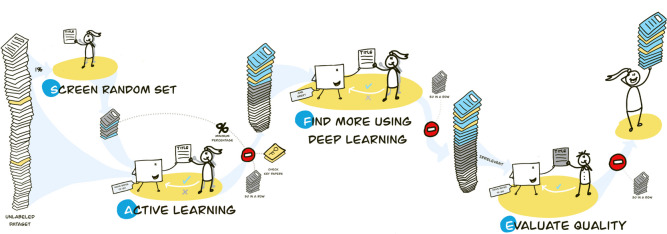
The paper introduces the SAFE procedure, a conservative four-phase stopping heuristic for active learning-based screening in systematic reviews and meta-analyses. It combines multiple stopping checks to balance the cost of continued labeling against the risk of missing relevant records.
Key findings
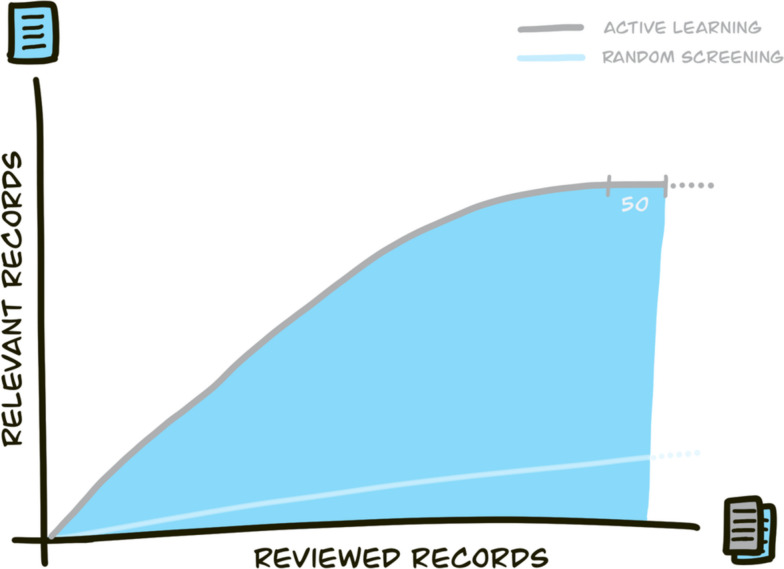
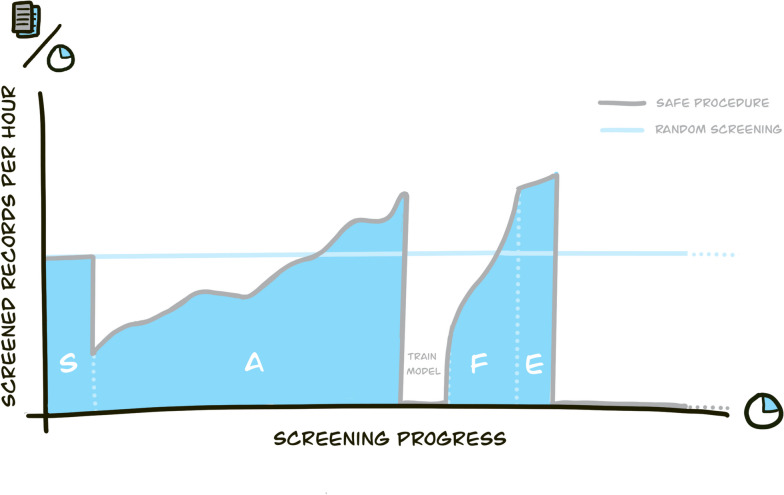
- SAFE consists of four phases: screen a random training set, apply active learning, find more relevant records with a different model, and evaluate quality. In Phase 2, screening stops only when all four conditions are met: all key papers are marked relevant; at least twice the estimated total relevant records (RR_T) have been screened; at least 10% of the total dataset has been screened; and no relevant records have been identified in the last, for example, 50 records.
- An expert meeting with 26 information specialists, data scientists, and active-learning users from the Netherlands and Germany on 12-01-2023 supported a minimum percentage of records screened combined with a threshold of 50 consecutive irrelevant records as “safe and reasonable.” Visual inspection of the recall plot was viewed positively but not precise enough as a stopping rule on its own.
- Experts agreed key papers are useful for validating screening results but may introduce bias if used as prior knowledge in active learning. The paper also notes that humans typically miss around 10% of relevant records.
- Time estimates include Phase 4 taking maybe only 1–2 h, while neural network training in Phase 3 may take up to 6 h on a high-performance cluster; deep learning may be less practical for datasets over 50,000 records due to training times.
Methods
- The stopping heuristic was initially developed in December 2022, inspired by the procedure used by Brouwer et al., and was peer-reviewed on 12-01-2023 by 26 experts. Feedback was collected digitally via Wooclap, discussed by the authors, and used to adapt the heuristic.
- The paper presents the resulting SAFE procedure, its assumptions, four phases, example stopping values, and practical implementation guidance; it does not report an empirical dataset analysis or a direct comparison with existing stopping heuristics.
- The expert feedback focused on use of a minimum percentage to screen, a conservative number of consecutive irrelevant records, visual inspection of the recall plot, and use of key papers as prior knowledge.
Limitations
- The paper states that a direct comparison with existing stopping heuristics has not been presented, and future comparative analysis is needed to validate effectiveness and efficiency in different contexts.
- The paper states that the cut-off values are examples and may not suit small datasets; for a dataset of only 500 records, screening 1% means only 5 records, and the observed fraction may not represent the complete set, potentially leading to over-screening.
- The paper states that the proposed batch size depends on the research question, domain, and desired recall, and that the procedure may not apply to all active learning scenarios or types of data and models; it also notes diminishing returns and training-time concerns in the deep learning phase.
Model-written summary. Check it against the paper before relying on it.
Integrity signals
Registry
Cites
Statistics
Figures
Verification
Claims the paper makes
17 Valid · 4 Not valid · 4 Not checked · 48 Own results and interpretations
Every source the paper cites for this claim was checked and supports it.
In the paper
“However, defining a stopping rule is difficult as the cost of labeling additional records must be balanced against the cost of errors made by the model [15].”
§ The SAFE procedure: a practical stopping heuristic for active learning-based screening in systematic reviews and meta-analyses > Introduction
What the sources say
- Supportedcites [15] Cormack, G. v., & Grossman, M. R. (2016). Engineering quality and reliability in technology-assisted review. SIGIR 2016 - Proceedings of the 39th International ACM SIGIR Conference on Research and Development in Information Retrieval, 75–84. 10.1145/2911451.2911510 source
The Background section identifies deciding when to stop as a central problem. Section 6, “Diminishing Loss,” evaluates both relevance loss and review-effort loss, and describes the preferred method as balancing high recall against low effort. That supports the claim’s trade-off between additional labeling and missed relevant records. (LLM, conf=0.88)
plainstates a cause- Asserted: passes — The authors put it forward as true.
- Checkable: passes — It can be checked against evidence.
- Load-bearing: passes — The paper’s conclusions depend on it.
- Based: passes — The paper gives a reason why it holds.
- Supported
Every source the paper cites for this claim was checked and supports it.
In the paper
“While finding all relevant records is nearly impossible, even for human screeners [52]”
§ The SAFE procedure: a practical stopping heuristic for active learning-based screening in systematic reviews and meta-analyses > Introduction
What the sources say
- Supportedcites [52] Wang Z Nayfeh T Tetzlaff J O’Blenis P Murad MH Error rates of human reviewers during abstract screening in systematic reviews PLoS ONE 2020 15 1 1 8 10.1371/journal.pone.0227742 PMC6959565 31935267 source
The Discussion > Implications section (page unavailable) says 100% accuracy by human reviewers is unlikely in reality. The paper also reports false exclusions during abstract screening, supporting the claim that human screeners may miss relevant records. (LLM, conf=0.88)
plain- Asserted: passes — The authors put it forward as true.
- Checkable: passes — It can be checked against evidence.
- Load-bearing: passes — The paper’s conclusions depend on it.
- Based: passes — The paper gives a reason why it holds.
- Supported
The cited sources support only part of this claim — read each source’s verdict below.
In the paper
“It is important to note that humans typically miss around 10% of the relevant records [52]”
§ The SAFE procedure: a practical stopping heuristic for active learning-based screening in systematic reviews and meta-analyses > Development > Results
What the sources say
- Partly supportedcites [52] Wang Z Nayfeh T Tetzlaff J O’Blenis P Murad MH Error rates of human reviewers during abstract screening in systematic reviews PLoS ONE 2020 15 1 1 8 10.1371/journal.pone.0227742 PMC6959565 31935267 sourceExperimental — accuracy not yet measured
The Discussion reports a 10.76% error rate during abstract screening, but that figure combines false inclusions and false exclusions across screening decisions; it is not the percentage of relevant records missed. The Limitations section also says that records erroneously excluded by both reviewers could not be assessed, so the paper does not establish the claimed miss rate. (LLM, conf=0.90)
plain- Asserted: passes — The authors put it forward as true.
- Checkable: passes — It can be checked against evidence.
- Load-bearing: unclear — It is unclear whether the paper’s conclusions depend on it.
- Based: passes — The paper gives a reason why it holds.
- Partly supported
The cited sources that could be checked couldn’t confirm or dispute this claim.
In the paper
“It might be that some relevant records are not presented to the reviewer because the text used in the abstract is not seen as potentially relevant because of concept ambiguity [11, 17], which can make finding relevant records challenging.”
§ The SAFE procedure: a practical stopping heuristic for active learning-based screening in systematic reviews and meta-analyses > The SAFE procedure > The four phases
What the sources say
- Could not verifycites [11] Chen Y Mani S Xu H Applying active learning to assertion classification of concepts in clinical text J Biomed Inform 2012 45 2 265 272 10.1016/j.jbi.2011.11.003 22127105 PMC3306548 sourceExperimental — accuracy not yet measured
The Methods (§3.1; page unavailable) describe classifying assertions about medical concepts in clinical notes, and the Discussion (§5; page unavailable) concerns which samples active-learning algorithms select for annotation. Neither addresses relevant records being withheld from a reviewer because ambiguous abstract text appears irrelevant. Searches for reviewer screening, missed records, and concept ambiguity found no supporting passage. (LLM, conf=0.76)
- Could not verifycites [17] Gama J Žliobaitė I Bifet A Pechenizkiy M Bouchachia A A survey on concept drift adaptation ACM Computing Surveys (CSUR) 2014 46 4 1 37 10.1145/2523813 sourceExperimental — accuracy not yet measured
Section 2.1 discusses classifying news as relevant or not relevant, and Section 5 mentions representation bias in adaptive systems. Neither passage says that relevant records may be withheld from a reviewer because ambiguous concepts in their abstracts make them appear irrelevant. Searches for abstract ambiguity and for relevant items not being presented found no passage addressing that mechanism; page numbers were not available in our copy. (LLM, conf=0.72)
hedgedstates a possible cause- Asserted: passes — The authors put it forward as true.
- Checkable: passes — It can be checked against evidence.
- Load-bearing: passes — The paper’s conclusions depend on it.
- Based: passes — The paper gives a reason why it holds.
- Could not verify
A conclusion the paper draws from its own results — it cites no other source for it, so there is none to check. The quote shows it is in the paper.
In the paper
“At the same time, using a single heuristic may result in missing potentially relevant records.”
§ The SAFE procedure: a practical stopping heuristic for active learning-based screening in systematic reviews and meta-analyses > Introduction
hedgedstates a possible cause- Asserted: passes — The authors put it forward as true.
- Checkable: passes — It can be checked against evidence.
- Load-bearing: passes — The paper’s conclusions depend on it.
- Based: unclear — It is unclear why the paper says it holds.
2 more claims
Create a free account to see all 73 claims and to verify the 5 references still open.
- It may state two separate claims as one. 28
- Probably not a substantial claim. 59
Claims other papers make about this one
Each is checked against this paper’s own text: does it say what the citing paper says it does?
The source backs part of the claim, not all of it — or backs it for a different population, condition or comparison.
In the citing paper
“Each agent specializes in different tasks, such as other features of the texts (e.g., short versus long abstracts or domain-specific language) or different stopping heuristics.39”
From ASReview LAB v.2: Open-source text screening with multiple agents and a crowd of experts (2025) · cites this paper as [39]
Experimental — accuracy not yet measuredIn the citing paper
“This work provides a workflow that ensures an evidence-based strategy for determining when to stop screening and switch between models if needed.”
From Large-scale simulation study of active learning models for systematic reviews (2025) · cites this paper as [4]
In the citing paper
“Therefore, we foresee that this model can serve as a model to switch to if enough labels have been gathered,30 as a quality check,39 or if a previously labeled dataset is available, for example, in an update of a systematic review (e.g., van de Schoot et al.2).”
From ASReview LAB v.2: Open-source text screening with multiple agents and a crowd of experts (2025) · cites this paper as [39]
Citations
Cites
The PRISMA 2020 statement: An updated guideline for reporting systematic reviews
Page, M. J., McKenzie, J. E., Bossuyt, P. M., Boutron, I., Hoffmann, T. C., Mulrow, C. D., Shamseer, L., Tetzlaff, J. M., Akl, E. A., Brennan, S. E., et al. (2021) · BMJ · doi:10.1136/bmj.n71 · Cited by 108,283
Rayyan-a web and mobile app for systematic reviews.
Ouzzani, M., Hammady, H., Fedorowicz, Z., & Elmagarmid, A. (2016) · Systematic Reviews · doi:10.1186/s13643-016-0384-4 · Cited by 26,092 · cited 1×
“Priority screening via active learning has been successfully implemented in various software tools such as Abstrackr [49], ASReview [45], Colandr [12], EPPI-Reviewer [41], FASTREAD [54], Rayyan [28], RobotA-nalyst [32], Research Screener [10], DistillerSR [20], and robotreviewer [25].”
Method(2016) · Cited by 11,679
The PRISMA 2020 statement: an updated guideline for reporting systematic reviews
Page, M. J., McKenzie, J., Bossuyt, P., Boutron, I., Hoffmann, T., mulrow, C., Shamseer, L., Tetzlaff, J., Akl, E., Brennan, S. E., et al. (2020) · doi:10.31222/osf.io/v7gm2_v1 · Cited by 8,090
The PRISMA 2020 statement: an updated guideline for reporting systematic reviews
Page, M. J., McKenzie, J., Bossuyt, P., Boutron, I., Hoffmann, T., mulrow, C., Shamseer, L., Tetzlaff, J., Akl, E., Brennan, S. E., et al. (2020) · doi:10.31222/osf.io/v7gm2 · Cited by 5,177
(2009) · Minds at UW (University of Wisconsin) · Cited by 4,791
A survey on concept drift adaptation
Gama, J., Žliobaitė, I., Bifet, A., Pechenizkiy, M., & Bouchachia, A. (2014) · ACM Computing Surveys · doi:10.1145/2523813 · Cited by 3,735 · cited 1×
“It might be that some relevant records are not presented to the reviewer because the text used in the abstract is not seen as potentially relevant because of concept ambiguity [11, 17], which can make finding relevant records challenging.”
BackgroundAn open source machine learning framework for efficient and transparent systematic reviews
van de Schoot, R., de Bruin, J., Schram, R., Zahedi, P., de Boer, J., Weijdema, F., Kramer, B., Huijts, M., Hoogerwerf, M., Ferdinands, G., et al. (2021) · Nature Machine Intelligence · doi:10.1038/s42256-020-00287-7 · Cited by 1,157
Self-citationA systematic approach to searching: an efficient and complete method to develop literature searches
Bramer, W. M., De Jonge, G. B., Rethlefsen, M. L., Mast, F., & Kleijnen, J. (2018) · Journal of the Medical Library Association · doi:10.5195/jmla.2018.283 · Cited by 863 · cited 2×
“This method is often used for validating the search strategy by ensuring that the search process adequately identifies relevant primary studies [8, 42].”
BackgroundMethodA full systematic review was completed in 2 weeks using automation tools: a case study
Clark, J., Glasziou, P., Del Mar, C., Bannach-Brown, A., Stehlik, P., & Scott, A. M. (2020) · Journal of Clinical Epidemiology · doi:10.1016/j.jclinepi.2020.01.008 · Cited by 687 · cited 1×
“This can be automated, for example, through the use of SR-Accelerator’s Spi-dercite [14], Citation Chaser [19].”
Method
Research works printed but not linked: 1
- Qin X Liu J Wang Y Deng K Ma Y Zou K Li L Sun X Application of nature language processing in systematic reviews Chin J Evid Based Med 2021 21 6 715 720 10.7507/1672-2531.202012150 · doi:10.7507/1672-2531.202012150
Cited by
Evaluating the effectiveness of large language models in abstract screening: a comparative analysis
Li, M., Sun, J., & Tan, X. (2024) · Systematic Reviews · doi:10.1186/s13643-024-02609-x · Cited by 125
The AI risk repository: A meta-review, database, and taxonomy of risks from artificial intelligence
Slattery, P., Saeri, A. K., Grundy, E. A. C., Graham, J., Noetel, M., Uuk, R., Dao, J., Pour, S., Casper, S., & Thompson, N. (2024) · arXiv · doi:10.48550/arxiv.2408.12622 · Cited by 51
The AI risk repository: A meta-review, database, and taxonomy of risks from artificial intelligence
Slattery, P., Saeri, A. K., Grundy, E. A. C., Graham, J., Noetel, M., Uuk, R., Dao, J., Pour, S., Casper, S., & Thompson, N. (2026) · Patterns · doi:10.1016/j.patter.2026.101517 · Cited by 264
“For the first iteration of the active-learning model, the team followed the recommendation of Boetje and van de Schoot 46 to use the Oracle model and the default model setup (TF-IDF as the feature extractor, Naive Bayes as the classifier, maximum as the query strategy, and dynamic resampling…”
InfluentialBrück, C. C., Mooldijk, S. S., Kuiper, L. M., Sambou, M. L., Licher, S., Mattace-Raso, F. U. S., & Wolters, F. J. (2025) · BMJ · doi:10.1136/bmj-2024-080636 · Cited by 60
König, L., Zitzmann, S., Fütterer, T., Campos, D., Scherer, R., & Hecht, M. (2023) · doi:10.31234/osf.io/ybu3w · Cited by 33
ASReview LAB v.2: Open-source text screening with multiple agents and a crowd of experts
de Bruin, J., Lombaers, P., Kaandorp, C., Teijema, J., van der Kuil, T., Yazan, B., Dong, A., & van de Schoot, R. (2025) · Patterns · doi:10.1016/j.patter.2025.101318 · Cited by 27
“Therefore, we foresee that this model can serve as a model to switch to if enough labels have been gathered, 30 as a quality check, 39 or if a previously labeled dataset is available, for example, in an update of a systematic review (e.g., van de Schoot et al. 2 ).”
Influentialvan der Veer, A., Madern, T., & van Lenthe, F. J. (2024) · International Journal of Behavioral Nutrition and Physical Activity · doi:10.1186/s12966-024-01576-9 · Cited by 43
“The SAFE-procedure 3 was followed to screen the abstracts, which contains of four steps, with a different heuristic for the number of abstracts to screen in each step [126].”
MethodCallaghan, M., Müller-Hansen, F., Bond, M., Hamel, C., Devane, D., Kusa, W., O’Mara-Eves, A., Spijker, R., Stevenson, M., Stansfield, C., et al. (2024) · Systematic Reviews · doi:10.1186/s13643-024-02699-7 · Cited by 27
Liu, Y. C., Zhao, S., Zhang, X. R., Zhang, X., Liang, T., & Ning, Z. (2025) · Behavioral Sciences · doi:10.3390/bs15050685 · Cited by 48
“Using a conservative application of the SAFE guideline, inclusion of studies through ASReview was continued until 200 consecutive studies were deemed ineligible (Boetje & Van De Schoot, 2024).”
Ceballos, H., van den Bogaart, T., van Ginkel, S. O., Spandaw, J., & Drijvers, P. H. M. (2025) · Thinking Skills and Creativity · doi:10.1016/j.tsc.2025.102001 · Cited by 59
Generative AI-based predictive maintenance in aviation: a systematic literature review
Khan, Z. U., Nasim, B., & Rasheed, Z. (2025) · CEAS Aeronautical Journal · doi:10.1007/s13272-025-00818-1 · Cited by 43
“In the context of systematic reviews, this translates to the tool prioritizing studies that are most likely to be relevant to the research question [24].”
Supporting peer learning with artificial intelligence: A systematic literature review
Sichterman, B., Noroozi, O., Boetje, J., van Ginkel, S. O., Khosravi, H., & Versendaal, J. (2025) · Innovations in Education and Teaching International · doi:10.1080/14703297.2025.2530118 · Cited by 32
“This calibration involved screening the titles, abstracts, and, when necessary, full-texts of 1% of the remaining 1748 articles to refine the inclusion criteria and ensure a consistent and reliable screening procedure (Boetje & Van der Schoot, 2024).”
InfluentialSelf-citationReproducibility and Data Storage for Active Learning-Aided Systematic Reviews
Lombaers, P., de Bruin, J., & van de Schoot, R. (2024) · Applied Sciences · doi:10.3390/app14093842 · Cited by 20
Self-citationvan der Drift, A.-M. R., Welling, A., Arntzen, V. H., Nagelkerke, E., van der Beek, R. F. H. J., & Husman, A. M. D. R. (2025) · The Science of The Total Environment · doi:10.1016/j.scitotenv.2025.179982 · Cited by 21
Empowering early predictions: A paradigm shift in diabetes risk assessment with Deep Active Learning
Shaheen, I., Javaid, N., Rahim, A., et al. (2025) · Knowledge-Based Systems · doi:10.1016/j.knosys.2025.113284 · Cited by 14
Goodman, C. A., Witter, S., Hellowell, M., Allen, L., Srinivasan, S., Nixon, S., Burney, A., Bhattacharjee, D., Cocozza, A., Appleford, G., et al. (2024) · BMJ Global Health · doi:10.1136/bmjgh-2024-015771 · Cited by 27
Neeleman, R., Leenaars, C. H. C., Oud, M., Weijdema, F., & van de Schoot, R. (2024) · Systematic Reviews · doi:10.1186/s13643-024-02472-w · Cited by 12
Self-citationSchoenmakers, M., Saygin, M., Sikora, M. T., Vaessen, T., Noordzij, M. L., & de Geus, E. J. C. (2025) · Behavior Research Methods · doi:10.3758/s13428-025-02685-4 · Cited by 23
“The two phases of the literature review were based on the SAFE procedure (Boetje & Van De Schoot, 2024) and are shown in Fig.”
Large-scale simulation study of active learning models for systematic reviews
Teijema, J. J., de Bruin, J., Bagheri, A., & van de Schoot, R. (2025) · International Journal of Data Science and Analytics · doi:10.1007/s41060-025-00777-0 · Cited by 13
“To balance efficiency and thorough-ness, users should follow the SAFE procedure [4].”
Bühler, B., Fütterer, T., von Keyserlingk, L., Bozkir, E., Kasneci, E., Gerjets, P. H., & Trautwein, U. (2025) · Educational Psychology Review · doi:10.1007/s10648-025-10041-3 · Cited by 18
Parambil-Peedika, A., Laing, A. M., Gathala, M. K., Cariappa, A. G. A., & Krishna, V. V. (2025) · The Science of The Total Environment · doi:10.1016/j.scitotenv.2025.179963 · Cited by 21
Accelerating materials discovery through active learning: Methods, challenges and opportunities
Ma, Y., Gao, Y., Wang, L., Chen, M., Cui, W., Wang, B., & Du, Y. (2025) · The Innovation Informatics · doi:10.59717/j.xinn-inform.2025.100013 · Cited by 21
Berg, I., Härvelid, P., Zürrer, W. E., Rosso, M., Reich, D. S., & Ineichen, B. V. (2024) · EBioMedicine · doi:10.1016/j.ebiom.2024.105434 · Cited by 16
“We de fi ned heuristic stopping criteria based on published recommendations for abstract screening augmented by machine learning 18 : The criteria were: 1) all prede fi ned benchmark papers were marked as relevant (we had a set of 15 benchmark studies known to be relevant), 2) at least twice the…”
Canova, C., Dansero, L., Destefanis, C., Benna, C., & Rosato, I. (2024) · Globalization and Health · doi:10.1186/s12992-024-01075-3 · Cited by 22
“The same reviewer then screened the relevant papers; when many articles are excluded in a row, it can be assumed that the articles listed after them can be labelled as irrelevant [26].”
Backgroundvan den Berg, R. L., van der Landen, S. M., Keijzer, M. J., van Gils, A. M., van Dam, M., Ziesemer, K. A., Jutten, R. J., Harrison, J., de Boer, C., van der Flier, W. M., et al. (2025) · Journal of Medical Internet Research · doi:10.2196/65297 · Cited by 17
“Importantly, it has previously been noted that the stopping rule should aim to find the trade-off between the costs of manually labeling additional records and the costs of erroneous exclusions of relevant records by the algorithm [42].”
Löffler, M. T., Daikeler, J., Wagner, L., Natalucci, G., & Daum, M. M. (2025) · PEDIATRICS · doi:10.1542/peds.2024-070477 · Cited by 16
Generative AI based Predictive Maintenance in Aviation: A Systematic Literature ReviewPreprint
Khan, Z., Nasim, B., & Rasheed, Z. (2024) · Research Square · doi:10.21203/rs.3.rs-5277729/v1 · Cited by 9
van Mossel, S., Wolcherink, M. J. O., Cardet, R. E. D. F., de Geus‐Oei, L., Vriens, D., Koffijberg, H., & Saing, S. (2025) · PharmacoEconomics · doi:10.1007/s40273-025-01481-4 · Cited by 15
“Practical guidance details how to prepare for AI-assisted screening including search strategy, database selection and retrieval of records [13], how to build an initial training set and to proceed screening [13], and how to select stopping rules [14, 15].”
Huber, N., Meester, M., Sassu, E. L., Waller, E. S. L., Krumova-Valcheva, G. L., Aprea, G., D’Angelantonio, D., Zoche-Golob, V., Scattolini, S., Marriott, E., et al. (2024) · Frontiers in Veterinary Science · doi:10.3389/fvets.2024.1494870 · Cited by 13
“The decision about when to stop screening abstracts using ASReview was recently investigated and was proposed to be carried out after at least 10% of the abstracts is screened and 50 consecutive abstracts are marked as irrelevant by the reviewer (21).”
Wessels, W., Bokkers, E. A. M., de Boer, I. J. M., Meijer, E., Rodenburg, T. B., Hostens, M., & Koop, G. (2025) · Journal of Dairy Science · doi:10.3168/jds.2025-26585 · Cited by 12
Nshakira‐Rukundo, E., Tabe‐Ojong, M. P. J., Gebrekidan, B. H., Agaba, M., Padmaja, S. S., & Dhehibi, B. (2026) · Communications Earth & Environment · doi:10.1038/s43247-025-03171-7 · Cited by 11
Lenze, L., Benzing, V., Schmid, J., Minder, B., Henn, R.-E., & Frahsa, A. (2025) · International Journal of Behavioral Nutrition and Physical Activity · doi:10.1186/s12966-025-01834-4 · Cited by 10
“Following the SAFE procedure [49], two authors (LL, RH) independently assessed a part of all records in a four-step procedure (for details see Supplementary Section S6).”
Cijs, B., Stekelenburg, R., Veenhof, C., Knoop, J., Boymans, T. A. E. J., de Rooij, M., & Kloek, C. J. J. (2024) · Arthritis Care & Research · doi:10.1002/acr.25428 · Cited by 11
Public Communication of Climate and Justice: A Scoping Review
Tschötschel, R., Diamond, E. P., Howley, S. E., McNally, B., Morris, H. E., Perry, K. E., & Wilhelmsen, M. E. (2025) · Wiley Interdisciplinary Reviews Climate Change · doi:10.1002/wcc.932 · Cited by 12
Byrne, F., Hofstee, L., Teijema, J., De Bruin, J., & van de Schoot, R. (2024) · Systematic Reviews · doi:10.1186/s13643-024-02587-0 · Cited by 9
“Let us assume that the screener uses a (naïve) stopping rule of 100 irrelevant papers in a row (more on stopping rules: [4, 8, 14, 30, 33] and the screener indeed is presented 100 irrelevant records in a row and decides to stop screening.”
Self-citationLanguage models in nutrition and dietetics: a scoping review
O’Hara, C., Kent, G., Leydon, C. L., Walsh, N., Gibney, E. R., Skoutas, D., Flynn, A. C., & Timon, C. (2025) · American Journal of Clinical Nutrition · doi:10.1016/j.ajcnut.2025.101127 · Cited by 16
Zhang, X., Chang, Z., Zhao, S., & Ning, Z. (2025) · Frontiers in Psychology · doi:10.3389/fpsyg.2025.1662868 · Cited by 5
The hunt for the last relevant paper: blending the best of humans and AI
van de Schoot, R., Messina Coimbra, B., Evenhuis, T., Lombaers, P., Weijdema, F., de Bruin, L., Neeleman, R., Grandfield, E., Sijbrandij, M., Teijema, J. J., et al. (2025) · European Journal of Psychotraumatology · doi:10.1080/20008066.2025.2546214 · Cited by 6
“Following the SAFE procedure (Boetje & van de Schoot, 2024), a second screener (RN) employed ASReview 1.5 to re-assess the most likely relevant abstracts (as predicted by the machine learning model) that the first screener had excluded either on Title level or on Abstract level.”
InfluentialSelf-citationSocial media discussions on educators: Selecting and appraisal of recent research using TF-IDF
Borbon, M. R., & Ebardo, R. A. (2025) · Computers and Education Open · doi:10.1016/j.caeo.2025.100293 · Cited by 9
Moens, M., Nagels, G., Wake, N., & Goudman, L. (2025) · iScience · doi:10.1016/j.isci.2025.113559 · Cited by 13
“17,35 This stopping criterion implied that a substantial proportion of articles remained unscreened, while almost all articles that were included when manually screening were retrieved.”
Christie, A. P., Martin, P. A., & Taylor, N. G. (2025) · PLoS ONE · doi:10.1371/journal.pone.0326521 · Cited by 6
“For example, it is common for arbitrary, inconsistent stopping rules to be used by review papers [67,68], such as once n irrelevant papers screened in a row, or to use methodologies that appear to lack statistical justifications or proper empirical evaluations (e.g., SAFE procedure [69]).”
Sannes, A., Rognli, E. W., Hanssen‐Bauer, K., Torp, N. C., Storfossen, S. K., Høstaker, M. N., & Aalberg, M. (2025) · Journal of Medical Internet Research · doi:10.2196/83543 · Cited by 6
“We applied a conservative approach with multiple stopping rules for the artificial intelligence–assisted article screening process, following the SAFE procedure [31].”
Al-Marridi, A. Z., Said, A. B., Ulde, S. M., & Khwaileh, T. (2025) · Systematic Reviews · doi:10.1186/s13643-025-02895-z · Cited by 8
Zhang, X. R., Zhao, S., Ng, S., Liu, Y., Liang, T., Lao, C. I., & Ning, Z. (2025) · Frontiers in Psychology · doi:10.3389/fpsyg.2025.1618617 · Cited by 8
Boetje, J., Sichterman, B., van Ginkel, S. O., Smakman, M., & Versendaal, J. (2025) · Review of Educational Research · doi:10.3102/00346543251338057 · Cited by 16
“The SAFE procedure described by Boetje and Van de Schoot (2024) was followed to determine when to stop screening.”
Self-citationSuárez, M. J. A., García, M. D. D., & Leiras, A. (2025) · Urban forestry & urban greening · doi:10.1016/j.ufug.2025.128873 · Cited by 7
Machine Learning-Assisted Health Economics and Policy Reviews: A Comparative Assessment
Cavallaro, L., Ardito, V., Drummond, M., & Ciani, O. (2025) · Applied Health Economics and Health Policy · doi:10.1007/s40258-025-00963-y · Cited by 6
“Additionally, the study evaluated only two stopping rules from the various options documented in the literature [22].”
Repke, T., Tinsdeall, F., Danilenko, D., Graziosi, S., Müller-Hansen, F., Schmidt, L., Thomas, J., & van Valkenhoef, G. (2026) · Cochrane Evidence Synthesis and Methods · doi:10.1002/cesm.70068 · Cited by 11
“We also do not include hybrid stopping methods, for example, as suggested in the “SAFE procedure” [28].”
Do robots boost productivity? A quantitative meta‐study
Schneider, F. (2025) · Journal of Economic Surveys · doi:10.1111/joes.70042 · Cited by 12
Exploring the definitions of gender bias in healthcare literature: a scoping review protocol
Bargeri, S., Schaap, L. S., Castellini, G., Gianola, S., Innocenti, T., Ostelo, R., Tomaiuolo, R., Vidal-Itriago, A., & Rubinstein, S. M. (2025) · MethodsX · doi:10.1016/j.mex.2025.103545 · Cited by 3
“• 2.2: Screening will continue until a predefined stopping rule is satisfied, according to the SAFE procedure for active learning-based screening [32]: A.”
InfluentialKonzett, V., Laskou, F., Smolen, J. S., Edwards, C. J., Aletaha, D., van der Heijde, D. M. F. M., Winthrop, K. L., Takeuchi, T., Caporali, R. F., Verschueren, P., et al. (2026) · Annals of the Rheumatic Diseases · doi:10.1016/j.ard.2026.05.006 · Cited by 5
Designing digital mental health interventions for older adults: a scoping review
Rajappan, D., Yin, R., Martinengo, L., & Car, L. T. (2026) · npj Digital Medicine · doi:10.1038/s41746-026-02523-7 · Cited by 3
“Toevaluatequalityofthisapproachandminimise theriskofmissingeligiblestudies 126 , a random 5% sample of the studies excluded by the AI tool was screened by the human reviewer.”
Stuhlfauth, V., Saheb, Y., & Bouzouina, L. (2026) · Environmental Research Communications · doi:10.1088/2515-7620/ae4563 · Cited by 2
Zhang, X., Chang, Z., Zhao, S., Wu, X., Wang, X., Ai, G., & Ning, Z. (2026) · Frontiers in Nutrition · doi:10.3389/fnut.2026.1731627 · Cited by 4
König, L., Zitzmann, S., & Hecht, M. (2025) · Research Synthesis Methods · doi:10.1017/rsm.2025.10053 · Cited by 5
“As outlined by Boetje and van de Schoot, 45 the primary purpose of the random screening phase is to estimate the prevalence of relevant abstracts, compile a training set, and identify relevant articles to be used as key studies.”
InfluentialLousen, I., Johnstone, A., Schipperijn, J., Traynor, O., McCrorie, P., & Pawlowski, C. S. (2025) · Mental Health & Prevention · doi:10.1016/j.mhp.2025.200460 · Cited by 6
Peschke, L., Monschau, K., Folkvord, F., Peschke, S. G., & van de Schoot, R. (2025) · Journal of Innovation and Entrepreneurship · doi:10.1186/s13731-025-00563-z · Cited by 3
“Then, it was applied to the excluded papers following the SAFE-procedure (Boetje & Van de Schoot, 2024), where the AI model predicted relevance based on a large training set.”
InfluentialSelf-citationZingone, F., Canova, C., Forss, A., Ebrahimi, F., Cazzagon, N., Rosato, I., & Ludvigsson, J. F. (2025) · Liver International · doi:10.1111/liv.70293 · Cited by 3
Understanding healthcare efficiency—an AI-supported narrative review of diverse terminologies used
Bock, L. A., Vaassen, S., van Mook, W., & Noben, C. Y. G. (2025) · BMC Medical Education · doi:10.1186/s12909-025-06983-5 · Cited by 2
A survey on multimodal explainable Artificial Intelligence
Giovannoni, C., Metta, C., Monreale, A., & Rinzivillo, S. (2026) · Intelligent Systems with Applications · doi:10.1016/j.iswa.2026.200671 · Cited by 5
Virtual worlds and mental health: A scoping review
Barreda-Ángeles, M., Amendola, S., Hartmann, T., Meier, A., Mansfield, K. L., Coecke, S., & Hupont, I. (2026) · Humanities and Social Sciences Communications · doi:10.1057/s41599-026-08349-8 · Cited by 1
Promoting patient empowerment in chronic care: A scoping review of key facilitating factors
Peters, L. H. L., Debie, V. H. J., Vervloet, M., van Schayck, O. C. P., Muris, J. W. M., & Slok, A. H. M. (2026) · Patient Education and Counseling · doi:10.1016/j.pec.2026.109802 · Cited by 1
Rejaän, Z., Mol, C., van Dijk, R., & van der Valk, I. E. (2026) · Family Transitions · doi:10.1080/28375300.2026.2693831 · Cited by 1
Resilience indicator traits in chickens: a systematic review
Büttgen, L., van der Sluis, M., Auerbach, S., Collin, A., Ekiri, A. B., Wimmers, K., Farias, T. F., Bergmann, H., & Ellen, E. D. (2026) · Poultry Science · doi:10.1016/j.psj.2026.107258 · Cited by 1
de Oliveira, J. M. D., Mello, A. T., Scandolara, D. H., Celuppi, I. C., Rampinelli, V. P. C., Wazlawick, R. S., & Dalmarco, E. M. (2026) · International Journal of Medical Informatics · doi:10.1016/j.ijmedinf.2026.106516 · Cited by 1
Mtaallah, O., Germeraad, E. A., Puspitarani, G. A., Bayle, B., Nguyen, U. H. P., Meester, M., Stegeman, A., Apolloni, A., & Hautefeuille, C. (2026) · Preventive Veterinary Medicine · doi:10.1016/j.prevetmed.2026.106877 · Cited by 1
Exposure-Response Relationships of Antibody Drug Conjugates in Solid Tumours
Lucassen, M. J. J., Buitelaar, P. L. M., Jacobs, B., Schutte, T., Steeghs, N., & Huitema, A. D. R. (2026) · Clinical Pharmacokinetics · doi:10.1007/s40262-026-01633-5 · Cited by 2
“These restrictions enabled the author to find at least more than 95% of all eligible studies [11, 12].”
Fütterer, T., König, L., Campos, D., Scherer, R., Zitzmann, S., & Hecht, M. (2026) · Advances in Methods and Practices in Psychological Science · doi:10.1177/25152459261442150 · Cited by 2
“One example is the SAFE procedure (Boetje & van de Schoot, 2024), which organizes the process into four phases.”
Influentialvan Esveld, L., van den Dikkenberg, M., Luurssen‐Masurel, N., de Jong, P. H. P., Kok, M. R., Bosch, T. M., Hackert, M. Q. N., Weel, A. E. A. M., Barreto, D. L., & Kuijper, T. M. (2026) · RMD Open · doi:10.1136/rmdopen-2025-006578 · Cited by 1
Language mixing in young multilingual children and its correlates: a systematic review
Snijders, V. E., Oudgenoeg‐Paz, O., van Witteloostuijn, M., & Blom, E. (2026) · Developmental Review · doi:10.1016/j.dr.2026.101248 · Cited by 2
A meta-analysis of factors that SHIFT consumers toward the sharing economy
Habib, R., Fares, O. H., & Butt, I. (2026) · Journal of Consumer Marketing · doi:10.1108/jcm-02-2025-7582 · Cited by 3
Self-Regulated Learning and Self-Efficacy Among Homeschooled Students: A Systematic Review
Wang, X., Smith, G., & Watson, A. R. (2025) · Journal of School Choice · doi:10.1080/15582159.2025.2575559 · Cited by 2
Machine learning-guided field site selection for river classification
Wang, Z., Pasternack, G. B., Jin, Y., Rampini, C., Alexander, S. E., Kumar, N., Storesund, R., Perales, K., Lim, C., Moreno, S. A., et al. (2025) · International Journal of Applied Earth Observation and Geoinformation · doi:10.1016/j.jag.2025.104742 · Cited by 2
Nunnery, J. A. (2026) · Research Synthesis Methods · doi:10.1017/rsm.2026.10116 · Cited by 1
Lee, A., Zhang, H., & Rhodes, R. E. (2026) · Health Psychology Review · doi:10.1080/17437199.2026.2735273
Huijzendveld, R. A., Mölenberg, F. J. M., van Lenthe, F. J., & Beenackers, M. A. (2026) · Journal of Urban Health · doi:10.1007/s11524-026-01137-4
Sikora, M. T., Zhao, X., Klooster, J. W. J. R. V. '., Koyuncu, Z., de Geus, E. J. C., & Noordzij, M. L. (2026) · Behavior Research Methods · doi:10.3758/s13428-026-03161-3 · Cited by 1
Mies-Padilla, S., Rodríguez-Suárez, C.-A., & González-de la Torre, H. (2026) · Information · doi:10.3390/info17090914 · Cited by 1
Castro, M. M. C., Aziz, A. A., & Adhikari, R. (2026) · Journal of Agribusiness in Developing and Emerging Economies · doi:10.1108/jadee-03-2026-0207
PASHA, M., & Shaikᵇ, M. A. (2026) · Research Square · doi:10.21203/rs.3.rs-10938971/v1
Peer feedback quality matters for post-feedback outcomes: A meta-analysis
Alemdağ, E., Lipnevich, A. A., Bardach, L., & Lindner, M. A. (2026) · Educational Research Review · doi:10.1016/j.edurev.2026.100848
Spanodimitriou, Y., Ejaz, K. T., Ciampi, G., Scorpio, M., Masullo, M., Rosato, A., Maffei, L., & Sibilio, S. (2026) · Sensors · doi:10.3390/s26175640 · Cited by 1
Beenen, K. T., Beukeboom, C. J., Burgers, C. F., & Sommerauer, P. (2026) · Communication Research · doi:10.1177/00936502261478981 · Cited by 1
Debele, S. E., Bozzani, F. M., Mushinda-Musonda, G., Kovats, S. R., Bonnet, G., Chama‐Chiliba, C. M., Foss, A. M., da Silva, E. N., & Borghi, J. (2026) · BMJ Open · doi:10.1136/bmjopen-2026-123914
“39 ASReview prioritised the presentation of records, but all eligibility judgements were made by the reviewers.”
InfluentialSafety Perceptions in Urban Green Spaces: A Global Systematic Review
Presser, P., Reckien, D., Atún, F., & Pfeffer, K. (2026) · Urban forestry & urban greening · doi:10.1016/j.ufug.2026.129680
Steijger, D. J. M., Thissen, S., Aarts, S., Verbeek, H., de Vugt, M. E., & Christie, H. L. (2026) · JMIR Formative Research · doi:10.2196/84989
“The two ASReview configurations were based on recommendations from ASReview’s model selection guide and the SAFE (Screen, Apply, Find, Evaluate) procedure [24,25]: a default configuration and a custom configuration.”
InfluentialSoultanopoulos, G. C., Idzenga, J. J., Kamperman, A. M., van Pampus, M. G., Ket, J. C. F., Henrichs, J., & Verhoeven, C. J. M. (2026) · Journal of Psychosomatic Obstetrics & Gynecology · doi:10.1080/0167482x.2026.2714888 · Cited by 1
Zhao, S., Zhang, X., Liu, Y. C., Liang, Z., Liang, T., Du, S., Iao, C. I., Ng, S., & Ning, Z. (2026) · Journal of Sports Sciences · doi:10.1080/02640414.2026.2715216 · Cited by 3
“To ensure a conservative approach, the SAFE rule was applied, which allowed screening to cease after 200 consecutive records were identified as irrelevant (Boetje & van de Schoot, 2024).”
Uhm, J., Meeusen, R., Jansen, P. R., van Haelst, M. M., van Rossum, E. F. C., & van den Akker, E. L. T. (2026) · International Journal of Obesity · doi:10.1038/s41366-026-02181-5
Agrevinna, M., Sudardi, B., Widodo, S. T., & Habsari, S. K. (2026) · Discover Global Society · doi:10.1007/s44282-026-00516-1 · Cited by 1
“To reduce selection bias and improve reliability, two reviewers independently screened records using standardised decision labels: include, exclude, and uncertain [12, 13, 68].”
Estimating the costs of advanced therapy medicinal products: a systematic review
Mauricio, M., Fernandez, D., Tihaya, M. S., Meij, P., Munsie, M., & van den Hout, W. B. (2026) · Cytotherapy · doi:10.1016/j.jcyt.2026.102988
Jonsson, M. L., Gustavell, T., Sissala, N., Babačić, H., & Eriksson, L. E. (2026) · PLoS ONE · doi:10.1371/journal.pone.0352015
Droogsma, T., Tuijthof, G. J. M., van Laarhoven, S. N., & Heesterbeek, P. J. C. (2026) · The Knee · doi:10.1016/j.knee.2026.104560
Malgir, B. Z., Tian, Y. J., Herger, E., Milford, S. R., Shaw, D., & Elger, B. S. (2026) · JMIR Research Protocols · doi:10.2196/92780
“This is a conservative set of stopping heuristics that offers a clear guideline for determining when to end the active-learning process in screening software such as ASReview [43].”
InfluentialWorkforce shortages and supported access to medical care for hospital employees: a scoping review
Beulen, V., Noben, C. Y. G., Smits, M., Mertens, H. J. M. M., Paulus, A. T. G., & van Mook, W. (2026) · BMJ Open · doi:10.1136/bmjopen-2026-117423
“20 The full dataset was imported into ASReview.”
Socioeconomic position and the hair cortisol–obesity association: a systematic review
Meeusen, R. E. H., Uhm, J., van den Akker, E. L. T., & van Rossum, E. F. C. (2026) · Obesity and Endocrinology · doi:10.1093/obendo/wjag010
Making Grey and Blue Hydrogen Costs Comparable: A Meta-Analysis
Capogrosso, A., Tassinari, R., & Yildiz, S. (2026) · International Conference on Electrical, Computer and Energy Technologies (ICECET) · doi:10.1109/icecet65726.2026.11633201
“Screening was terminated once both stopping rules were met: at least 10% of the dataset had been labelled and 100 consecutive abstracts were classified as irrelevant [14, 15].”
Implementation of healthcare guidelines in public health: an umbrella review
Ivanova, H. I., Deurloo, J. A., & Lanting, C. I. (2026) · BMC Public Health · doi:10.1186/s12889-026-28065-x
“In line with the SAFE (Stopping Active learning in sEarch) procedure [25], multiple stopping criteria were combined to ensure a balance between efficiency and sensitivity.”
Preference-based measures in people with dementia: a systematic review of psychometric properties
Lamé, A., Suasnabar, J. M. H., Adam, E., Handels, R. L. H., Smaling, H. J. A., Haaksma, M. L., & van Marle, M. E. V. D. A. –. (2026) · Health and Quality of Life Outcomes · doi:10.1186/s12955-026-02563-3
“A strength of this review is the use of an AI-tool for time-efficient title and abstract screening whilst attaining to the methodology and predetermined stopping rules of the SAFE procedure [23].”
InfluentialChanging organizational culture in community sport: a systematic review
Woodforde, J., Thomas, G., Harrison, Z., Mulcahy, S., Townsend, S., & Cairney, J. (2026) · Frontiers in Sports and Active Living · doi:10.3389/fspor.2026.1852179 · Cited by 2
“SAFE combines multiple heuristics, including preliminary training data, explicit stopping criteria, model switching and post-hoc verification steps to maintain transparency and minimize the risk of excluding relevant studies (33).”
Metadata
- Authors
- Boetje, J., & van de Schoot, R.
- Affiliations
- University of Applied Sciences Utrecht (NL)
- Corresponding author
- Boetje, Josien
- ORCID
- Boetje, Josien
- Venue
- Systematic Reviews
- Published
- 2024-03-01
- Volume
- 13
- Issue
- 1
- Pages
- 81-81
- ISSN
- 2046-4053 (ISSN-L)
- PMC
- PMC10908130
- OpenAlex
- W4392356867
- Cited by
- 146
- References
- 53
- Citations by year
- 2026: 80 · 2025: 50 · 2024: 15
- FWCI
- 18.22
- Type
- journal article
- Language
- en
- Open access
- gold
- doi.org
- Licence
- cc-by
- creativecommons.org/licenses/by/4.0 (tdm)
- creativecommons.org/licenses/by/4.0 (vor)
- Locations
- Systematic Reviews (publishedVersion, cc-by)
- Research Square (acceptedVersion, cc-by)
- PubMed Central (publishedVersion, cc-by)
- PubMed (publishedVersion)
- DOAJ (DOAJ: Directory of Open Access Journals) (submittedVersion, cc-by-sa)
- DSpace (Open University in the Netherlands) (submittedVersion, cc-by)
- Funders
- Nederlandse Organisatie voor Wetenschappelijk Onderzoek (406.22.GO.048, 406.22)
- Topics
- Social Sciences › Decision Sciences › Statistics, Probability and Uncertainty › Meta-analysis and systematic reviews
- Physical Sciences › Computer Science › Artificial Intelligence › Machine Learning and Algorithms
- Physical Sciences › Computer Science › Information Systems › Information Retrieval and Search Behavior
- Keywords
- active learning (machine learning), systematic review screening, ASReview, cost-benefit trade-off
- MeSH terms
- Heuristics, Systematic Reviews as Topic, Humans, Software, Problem-Based Learning
About these checks
Registry, retraction, Cites and statistics results are computed, not judged, with one exception: a printed reference that no index lists is read once by a model before it counts as a citation error. Claims are extracted by a model and kept only when their quote appears verbatim in the text; each cited source is then checked, with a model’s help, for whether it says what the claim relies on. Those verdicts can be wrong — read the claim’s quote and the cited source before relying on one.
The claim verdicts this report counts are experimental: their accuracy is not yet measured.
A language model drew the claims from the paper on 2026-09-29, under version 3 of the claim definition (model deepseek-v4.1-flash, prompt extract-v3).
A second model labelled each claim on 2026-09-29 (model jev-1.13-20260917, definition revision gold-guideline-v0.2).
Cited sources are checked with a language model’s help (gpt-6-sol).
Statistics and arithmetic are recomputed, not judged.
Confidence bands are shown only for fields calibrated on our annotated test set. None is calibrated yet, so no band is shown.
What counts as a claim ›How we measure confidence ›How we check this ›
Are you an author, or do you see a problem with this page? Request a review
Data sources
Bibliographic data: Semantic Scholar, OpenAlex, Crossref.
Contains information from the Semantic Scholar Academic Graph Datasets, made available under the ODC Attribution License (ODC-BY 1.0).
Semantic Scholar’s data is described in: Kinney, R., et al. (2023). The Semantic Scholar Open Data Platform. arXiv:2301.10140.
