

Mindfulness-based treatment of addiction: current state of the field and envisioning the next wave of research
Open accessThe DOI matches its Crossref record; 89 of the 91 references it cites were found in a registry or an index; 18 of the 105 sources its claims cite were checked for support.
Abstract
Contemporary advances in addiction neuroscience have paralleled increasing interest in the ancient mental training practice of mindfulness meditation as a potential therapy for addiction. In the past decade, mindfulness-based interventions (MBIs) have been studied as a treatment for an array addictive behaviors, including drinking, smoking, opioid misuse, and use of illicit substances like cocaine and heroin. This article reviews current research evaluating MBIs as a treatment for addiction, with a focus on findings pertaining to clinical outcomes and biobehavioral mechanisms. Studies indicate that MBIs reduce substance misuse and craving by modulating cognitive, affective, and psychophysiological processes integral to self-regulation and reward processing. This integrative review provides the basis for manifold recommendations regarding the next wave of research needed to firmly establish the efficacy of MBIs and elucidate the mechanistic pathways by which these therapies ameliorate addiction. Issues pertaining to MBI treatment optimization and sequencing, dissemination and implementation, dose-response relationships, and research rigor and reproducibility are discussed.
Overview
CoChat Summary
TL;DR
This integrative review concludes that mindfulness-based interventions (MBIs) are promising treatments for addiction, reducing substance misuse and craving by modulating cognitive, affective, and psychophysiological self-regulation and reward processes. It also outlines a next-wave research agenda focused on rigor, mechanisms, treatment sequencing, dose–response, dissemination, and mindfulness as a long-term recovery lifestyle.
Key findings
- In the only published meta-analysis solely focused on MBIs for substance misuse, Li et al. identified 34 randomized controlled trials and concluded that “virtually all studies found that mindfulness treatments were associated with superior treatment outcomes at posttreatment and follow-up assessments compared to comparison conditions.” Pooled effects ranged from moderate to large: substance use d = 0.33, cigarette smoking OR = 1.76 (p = 0.056), craving d = 0.68 (p < 0.01), and stress d = 1.12 (p < 0.05).
- MBIs increased Five Factor Mindfulness Questionnaire scores in all eight studies using that measure (d = 0.62, p = 0.057), and individual studies reported increases in emotion regulation, substance-related self-efficacy, and positive emotions, plus decreases in attentional bias, addictive automaticity, dysphoric affect, and pain severity/interference.
- Subgroup analyses indicated that MORE was associated with larger effects than other MBIs for substance use, craving, stress, and mindfulness measures; studies comprised entirely of men also reported larger effects for MBIs across craving, stress, and mindfulness measures.
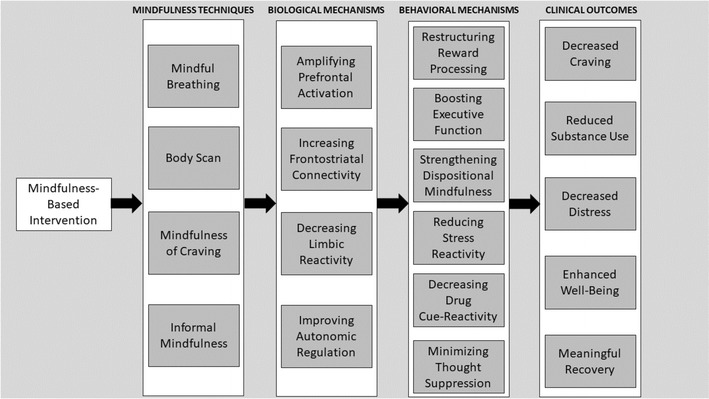
- Mechanistic evidence reviewed includes MBI-related reductions in cue-reactivity and craving, increased heart rate variability and stress recovery, altered reward-circuit responses to natural versus drug cues, and mediation of outcomes by increases in dispositional mindfulness.
Methods
- Design: integrative/narrative review of current research on MBIs as addiction treatment, with a focus on clinical outcomes and biobehavioral mechanisms.
- Data: synthesized prior systematic reviews, meta-analyses, and randomized controlled trials, including Li et al.’s meta-analysis of 34 RCTs and studies of MBRP, MORE, mindfulness training for smokers, and related interventions.
- Analysis: qualitative synthesis of clinical and mechanistic findings; no new primary data are reported, and pooled effect sizes are drawn from the cited meta-analysis.
Limitations
- Stated in the paper: few psychophysiological and neuroimaging studies of MBIs for addiction exist, so little data support or refute proposed neural mechanistic models; little is known about neurobiological mechanisms, mediators, and moderators; few long-term follow-ups assess durability; many studies have small samples; and dissemination/implementation questions remain unresolved.
- Stated in the paper: the Li et al. meta-analysis did not include a formal search for gray literature, though funnel plots and Egger’s test suggested findings were not likely due to publication bias.
- Evident from the text: as an integrative review, this paper does not report a systematic search strategy, inclusion/exclusion criteria, or formal risk-of-bias assessment for the literature it summarizes.
Model-written summary. Check it against the paper before relying on it.
Integrity signals
Registry
Cites
Statistics
Figures
Verification
Claims the paper makes
13 Valid · 2 Not valid · 66 Not checked · 29 Own results and interpretations
Every source the paper cites for this claim was checked and supports it.
In the paper
“increases in the trajectory of state mindfulness produced over time through meditation predicts increases in trait mindfulness [11]”
§ Mindfulness-based treatment of addiction: current state of the field and envisioning the next wave of research > Mindfulness as a means of targeting mechanisms of addiction > Mindfulness operationalized
What the sources say
- Supportedcites [11] Kiken LG Garland EL Bluth K Palsson OS Gaylord SA From a state to a trait: trajectories of state mindfulness in meditation during intervention predict changes in trait mindfulness Pers Individ Dif 2015 81 41 46 10.1016/j.paid.2014.12.044 25914434 PMC4404745 source
The Discussion reports that participants with greater rates of increase in state mindfulness during repeated meditation practice increased more in trait mindfulness. The claim describes this as a prediction, consistent with the study’s finding; the Discussion also cautions that the observational design cannot establish causation. (LLM, conf=0.92)
plainstates a cause- Asserted: passes — The authors put it forward as true.
- Checkable: passes — It can be checked against evidence.
- Load-bearing: passes — The paper’s conclusions depend on it.
- Based: passes — The paper gives a reason why it holds.
- Supported
Every source the paper cites for this claim was checked and supports it.
In the paper
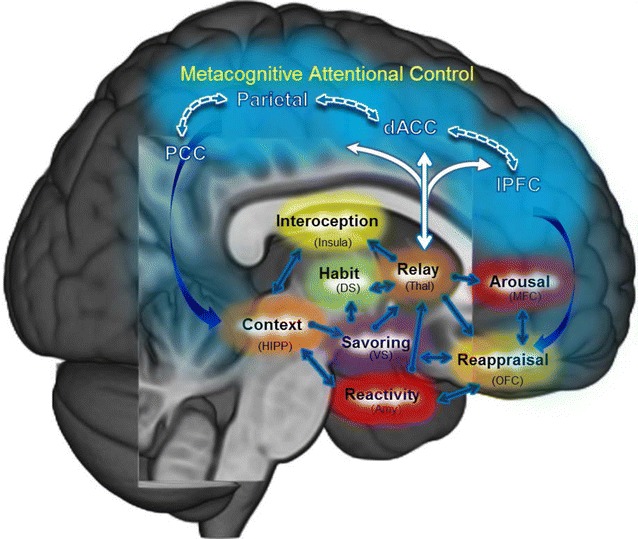
“Garland, Froeliger, & Howard conceptualized MBIs as means of mental training designed to exercise a number of neurocognitive processes that become dysregulated during the process of addiction [22].”
§ Mindfulness-based treatment of addiction: current state of the field and envisioning the next wave of research > Mindfulness as a means of targeting mechanisms of addiction > Therapeutic mechanisms of mindfulness as a treatment for addiction
What the sources say
- Supportedcites [22] Garland EL, Froeliger B, Howard MO. Mindfulness training targets neurocognitive mechanisms of addiction at the attention-appraisal-emotion interface. Front Psychiatry [Internet]. 2013 [cited 2017 Sep 27];4. https://www.ncbi.nlm.nih.gov/pmc/articles/PMC3887509/. PMC3887509 24454293 source
The section “Mindfulness Training Ameliorates Addiction by Targeting Neurocognitive Mechanisms” explicitly says that MBIs exercise neurocognitive processes believed to go awry in addiction and conceptualizes them as training cognitive-control networks. This directly supports the citing sentence’s characterization of the authors’ framework. (LLM, conf=0.95)
plain- Asserted: passes — The authors put it forward as true.
- Checkable: passes — It can be checked against evidence.
- Load-bearing: passes — The paper’s conclusions depend on it.
- Based: passes — The paper gives a reason why it holds.
- Supported
Every source the paper cites for this claim was checked and supports it.
In the paper
“As adaptive cognitive control is restored through mindfulness exercises, MBIs may increase functional connectivity between these top-down prefrontal networks and bottom-up limbic-striatal brain circuitry involved in reward processing and motivated behavior [22].”
§ Mindfulness-based treatment of addiction: current state of the field and envisioning the next wave of research > Mindfulness as a means of targeting mechanisms of addiction > Therapeutic mechanisms of mindfulness as a treatment for addiction
What the sources say
- Supportedcites [22] Garland EL, Froeliger B, Howard MO. Mindfulness training targets neurocognitive mechanisms of addiction at the attention-appraisal-emotion interface. Front Psychiatry [Internet]. 2013 [cited 2017 Sep 27];4. https://www.ncbi.nlm.nih.gov/pmc/articles/PMC3887509/. PMC3887509 24454293 source
The main section 'MINDFULNESS TRAINING AMELIORATES ADDICTION BY TARGETING NEUROCOGNITIVE MECHANISMS' states that MBIs train/exercise 'prefrontally mediated cognitive control networks which have become atrophied or usurped in the service of drug seeking and use' and 'may restructure dysregulated processes by strengthening functional connectivity and efficiency of prefrontally mediated self-regulatory circuits'. The 'SUMMARY OF THE NEUROCOGNITIVE MODEL' and 'HABIT RESPONSES' sections supply the bottom-up limbic-striatal side: fronto-parietal top-down modulation of amygdala and ventral striatum 'during reward processing', and enhanced functional connectivity in a cortico-thalamic loop 'providing feedback to the striatum'. The claim's hedge ('may') matches the source's own hypothetical framing, and motivated behavior corresponds to the drug-seeking/urge-motivation circuitry the paper describes. (LLM, conf=0.88)
hedgedstates a possible cause- Asserted: passes — The authors put it forward as true.
- Checkable: passes — It can be checked against evidence.
- Load-bearing: passes — The paper’s conclusions depend on it.
- Based: passes — The paper gives a reason why it holds.
- Supported
Every source the paper cites for this claim was checked and supports it.
In the paper
“a mindfulness training intervention based on MBRP for individuals with alcohol and/or cocaine use disorders was associated with significantly attenuated sympathovagal HRV ratio during stress exposure [46].”
§ Mindfulness-based treatment of addiction: current state of the field and envisioning the next wave of research > Mindfulness as a means of targeting mechanisms of addiction > Therapeutic mechanisms of mindfulness as a treatment for addiction
What the sources say
- Supportedcites [46] Brewer JA Sinha R Chen JA Michalsen RN Babuscio TA Nich C Mindfulness training and stress reactivity in substance abuse: results from a randomized, controlled stage I pilot study Subst Abus 2009 30 306 317 10.1080/08897070903250241 19904666 PMC3045038 source
The Methods describe an intervention adapted from MBRP for participants with alcohol and/or cocaine use disorders. The Results report a significantly lower sympathetic/vagal heart-rate-variability ratio in the mindfulness group than in the CBT group during the stress-reactivity assessment (p = 0.02). (LLM, conf=0.94)
plainstates an association- Asserted: passes — The authors put it forward as true.
- Checkable: passes — It can be checked against evidence.
- Load-bearing: passes — The paper’s conclusions depend on it.
- Based: passes — The paper gives a reason why it holds.
- Supported
Every source the paper cites for this claim was checked and supports it.
In the paper
“A mindfulness-based smoking cessation intervention derived from MBRP significantly reduced the association between craving and cigarette smoking [57].”
§ Mindfulness-based treatment of addiction: current state of the field and envisioning the next wave of research > Mindfulness as a means of targeting mechanisms of addiction > Therapeutic mechanisms of mindfulness as a treatment for addiction
What the sources say
- Supportedcites [57] Elwafi HM Witkiewitz K Mallik S Thornhill TA IV Brewer JA Mindfulness training for smoking cessation: moderation of the relationship between craving and cigarette use Drug Alcohol Depend 2013 130 1 222 229 10.1016/j.drugalcdep.2012.11.015 23265088 PMC3619004 source
The Methods (2.3 Intervention) say the smoking-cessation training was adapted from a mindfulness-training manual for drug relapse prevention. The Results (3.2) report that the craving–smoking correlation fell from r=0.582 at baseline to r=0.126 at the end of treatment, with a significant difference between the correlations (p=0.04). (LLM, conf=0.93)
plainstates a cause- Asserted: passes — The authors put it forward as true.
- Checkable: passes — It can be checked against evidence.
- Load-bearing: passes — The paper’s conclusions depend on it.
- Based: passes — The paper gives a reason why it holds.
- Supported
64 more claims · 5 with their cited sources checked
Create a free account to see all 110 claims and to verify the 87 references still open.
- It may state two separate claims as one. 31
- Probably not a substantial claim. 11
Claims other papers make about this one
Each is checked against this paper’s own text: does it say what the citing paper says it does?
The source backs part of the claim, not all of it — or backs it for a different population, condition or comparison.
In the citing paper
“MBIs show promise as a treatment for SUDs, possibly because they develop mindfulness, self-compassion, and interoceptive awareness – three key processes involved in coping with pain and anxiety, and healthy emotion regulation 9,10.”
From Effects of a trauma-informed mindful recovery program on comorbid pain, anxiety, and substance use during primary care buprenorphine treatment: A proof-of-concept study (2023) · cites this paper as [10]
Experimental — accuracy not yet measuredThe source backs part of the claim, not all of it — or backs it for a different population, condition or comparison.
In the citing paper
“As the positive association between problematic use level and mental health (i.e., loneliness, anxiety and stress) has been established [46,47].”
From Comparative effectiveness of mind-body exercise versus cognitive behavioral therapy for college students with problematic smartphone use: A randomized controlled trial (2020) · cites this paper as [47]
Experimental — accuracy not yet measuredThe cited source says what the claim attributes to it.
In the citing paper
“Mindfulness-based interventions have also shown promise in behavior change and addiction treatment [15].”
From Mindfulness meditation and psychedelics: potential synergies and commonalities (2023) · cites this paper as [15]
The cited source says what the claim attributes to it.
In the citing paper
“They help develop a greater awareness of addiction triggers and automatic reactions, enabling practitioners to respond more skillfully to challenging situations [15].”
From Mindfulness meditation and psychedelics: potential synergies and commonalities (2023) · cites this paper as [15]
Self-check
Percentages, sums and reported differences re-computed from the paper’s own numbers.
Each contradiction between two passages listed here was confirmed by an independent check.
Rated minor: it would not touch a result — a value no result rests on, a p-value that stays on the same side of the significance level, or a conflict that is clerical, resolved elsewhere in the paper, or outside its own findings.
In the paper
§ Mindfulness-based treatment of addiction: current state of the field and envisioning the next wave of research > Mindfulness as a means of targeting mechanisms of addiction > Therapeutic mechanisms of mindfulness as a treatment for addiction
“Garland et al. [20] model of mindfulness-centered regulation”
§ Mindfulness-based treatment of addiction: current state of the field and envisioning the next wave of research > References
“20. Langer EJ Matters of mind: mindfulness/mindlessness in perspective”
Rated minor: it would not touch a result — a value no result rests on, a p-value that stays on the same side of the significance level, or a conflict that is clerical, resolved elsewhere in the paper, or outside its own findings.
In the paper
§ Mindfulness-based treatment of addiction: current state of the field and envisioning the next wave of research > Current state of the field: a review of clinical outcomes of mindfulness-based treatments for addiction
“MBIs produced significant increases on the Five Factor Mindfulness Questionnaires in all eight studies that used this measure”
§ Mindfulness-based treatment of addiction: current state of the field and envisioning the next wave of research > Current state of the field: a review of clinical outcomes of mindfulness-based treatments for addiction
“(d = 0.62, − 0.02 to 1.26, p = 0.057)”
Rated minor: it would not touch a result — a value no result rests on, a p-value that stays on the same side of the significance level, or a conflict that is clerical, resolved elsewhere in the paper, or outside its own findings.
In the paper
§ Mindfulness-based treatment of addiction: current state of the field and envisioning the next wave of research > Current state of the field: a review of clinical outcomes of mindfulness-based treatments for addiction
“stress (d = 1.12, − 2.24 to –0.01, p < 0.05)”
§ Mindfulness-based treatment of addiction: current state of the field and envisioning the next wave of research > Current state of the field: a review of clinical outcomes of mindfulness-based treatments for addiction
“Effects (Cohen’s d/odds ratios) ranged from moderate-to-large across the synthesized effect sizes”
Citations
Cites
Using Self-Report Assessment Methods to Explore Facets of Mindfulness
Baer, R. A., Smith, G. T., Hopkins, J., Krietemeyer, J., & Toney, L. (2006) · Assessment · doi:10.1177/1073191105283504 · Cited by 7,511 · cited 1×
“According to operationalizations of the construct derived from factor analytic research, dispositional or trait mindfulness is characterized by the capacity to remain nonreactive to and accepting of distressing thoughts and emotions; observe interoceptive and exteroceptive experience; discriminate emotional states; an…”
MethodKabat-Zinn, J. (1982) · General Hospital Psychiatry · doi:10.1016/0163-8343(82)90026-3 · Cited by 4,255 · cited 10×
“Such tailoring is presumed necessary for maximizing clinical effects of MBIs as treatments for addiction, though no quantitative comparisons of tailored (e.g., MBRP) versus general (e.g., MBSR) MBIs have been conducted for individuals with substance use disorders.”
BackgroundInfluentialNeurobiology of addiction: a neurocircuitry analysis
Koob, G. F., & Volkow, N. D. (2016) · The Lancet Psychiatry · doi:10.1016/s2215-0366(16)00104-8 · Cited by 3,698 · cited 1×
“This large body of research suggests that addiction is best regarded as a cycle of compulsive substance use subserved by dysregulation in neural circuitry governing motivation and hedonic experience, habit behavior, and executive function [1].”
BackgroundA model of neurovisceral integration in emotion regulation and dysregulation
Thayer, J. F., & Lane, R. D. (2000) · Journal of Affective Disorders · doi:10.1016/s0165-0327(00)00338-4 · Cited by 3,092
The Neuroscience of Mindfulness Meditation
Tang, Y.-Y., Hölzel, B. K., & Posner, M. I. (2015) · Nature reviews. Neuroscience · doi:10.1038/nrn3916 · Cited by 2,889
Attention regulation and monitoring in meditation
Lutz, A., Slagter, H. A., Dunne, J. D., & Davidson, R. J. (2008) · Trends in Cognitive Sciences · doi:10.1016/j.tics.2008.01.005 · Cited by 2,659 · cited 2×
“Focused attention practices often precede the practice of open monitoring, in which one observes both the arising of mental contents as well as the field of awareness in which those contents arise [7].”
Chronic stress, drug use, and vulnerability to addiction
Sinha, R. (2008) · Annals of the New York Academy of Sciences · doi:10.1196/annals.1441.030 · Cited by 1,904
Gu, J., Strauss, C., Bond, R., & Cavanagh, K. (2015) · Clinical Psychology Review · doi:10.1016/j.cpr.2015.01.006 · Cited by 1,712 · cited 1×
“In partial support of this hypothesis, increases in the trajectory of state mindfulness produced over time through meditation predicts increases in trait mindfulness [11], and meta-analysis demonstrates that the effects of MBIs on clinical outcomes are mediated by increases in trait mindfulness [12].”
BackgroundA cognitive model of drug urges and drug-use behavior: role of automatic and nonautomatic processes
Tiffany, S. T. (1990) · Psychological Review · doi:10.1037/0033-295x.97.2.147 · Cited by 1,554
Mindfulness-based cognitive therapy for depression
(2006) · Buddhist Thought and Applied Psychological Research · doi:10.4324/9780203098899-33 · Cited by 1,324
Research works printed but not linked: 3
- Garland EL Mindfulness-oriented recovery enhancement for addiction, stress, and pain 2013 Washington, DC NASW Press
- Garland EL Mindfulness-oriented recovery enhancement modulates neurocognitive mechanisms and reward system function in addiction, stress, and pain 2015 New York, NY In Sloan Kettering Memorial Hospital
- Spears CA, Hedeker D, Li L, Wu C, Anderson NK, Houchins SC, et al. Mechanisms underlying mindfulness-based addiction treatment versus cognitive behavioral therapy and usual care for smoking cessation. J Consult Clin Psychol [Internet]. 2017 [cited 2017 Aug 7]. https://www.ncbi.nlm.nih.gov/pubmed/28650195. PMC5662477 28650195
Cited by
Items 101–200 of 298
Dispositional mindfulness and its relationship to exercise motivation and experience
Lynn, S., Satyal, M. K., Smith, A. J., Tasnim, N., Gyamfi, D., English, D. F., SUZUKI, W. A., & Basso, J. C. (2022) · Frontiers in Sports and Active Living · doi:10.3389/fspor.2022.934657 · Cited by 12
Are You Distracted by Pleasure? Practice Mindfulness Meditation
Lodha, S., & Gupta, R. (2023) · Journal of Cognitive Enhancement · doi:10.1007/s41465-023-00257-y · Cited by 9
“…from attention impairment (attention deficit hyperactivity disorder: Baijal & Gupta, 2008; Cairncross & Miller, 2020), and emotion dysregulation (depression, anxiety, and stress: Baer, 2015; eating disorders: Katterman et al., 2014; substance abuse and addiction: (Garland & Howard, 2018).”
Hosseini, P. S., Saadi, Z. E., & Fard, R. J. (2023) · Journal of Health Reports and Technology · doi:10.5812/jhrt-136888 · Cited by 9
Zrenner, B., Zrenner, C., Balderston, N. L., Blumberger, D. M., Kloiber, S. M., Laposa, J. M., Tadayonnejad, R., Trevizol, A. P., Zai, G. C., & Feusner, J. D. (2023) · Frontiers in Neural Circuits · doi:10.3389/fncir.2023.1208930 · Cited by 8
“Focused attention practices often precede the practice of open monitoring, in which one observes both the arising of mental contents and the field of awareness in which those contents arise (Garland and Howard, 2018).”
BackgroundIntegrative Medicine Is a Good Prescription for Patients and Planet
Nusrat, A. Z., Majd, I., & Wayne, P. M. (2019) · The Journal of Alternative and Complementary Medicine · doi:10.1089/acm.2019.0421 · Cited by 10
“More robust studies have demonstrated the positive impact of introducing mindfulness therapies to manage other addictive and compulsive behaviors.(28) Larimer and colleagues integrated mindfulness therapies into traditional relapse programs addressing substance abuse and drinking addictions.”
BackgroundThe MET(T)A Protocol: Mindfulness and EMDR Treatment Template for Agencies
Dansiger, S., Chabra, R., Emmel, L., & Kovacs, J. (2020) · Substance Abuse Research and Treatment · doi:10.1177/1178221820977483 · Cited by 8
Dubbini, A., Mabit, J., & Politi, M. (2020) · Cultura y Droga · doi:10.17151/culdr.2020.25.29.3 · Cited by 15
“…practice of Mindfulness meditation as a potential therapy for addiction; studies indicate that this technique reduces substance misuse and craving by modulating cognitive, affective and psychophysiological processes integral to self-regulation and reward processing (Garland & Howard, 2018).”
BackgroundAdaptive interventions for opioid prescription management and consumption monitoring
Singh, N., & Varshney, U. (2022) · Journal of the American Medical Informatics Association · doi:10.1093/jamia/ocac253 · Cited by 7
May, A. C., Davis, C. B., Kirlić, N., & Stewart, J. L. (2022) · Brain Sciences · doi:10.3390/brainsci12020279 · Cited by 12
“Mindfulness, with its ability to teach people to adjust their awareness and ultimately reduce their stress, has potential for improving mental health, pain management, and SUD treatments [9,60,61].”
BackgroundSohrabi, M., Safarzadeh, S., & Hooman, F. (2022) · Journal of Health Reports and Technology · doi:10.5812/jhrt-127427 · Cited by 10
“Training mindfulness and employing the treatments such as psychodynamic psychotherapy can be influential in treating addiction (16, 17).”
BackgroundThurgur, H., Sessa, B., Higbed, L., O’Brien, S., Durant, C. F., Wilson, S. J., Szigeti, B., Morgan, C. J. A., & Nutt, D. J. (2025) · Alcohol and Alcoholism · doi:10.1093/alcalc/agaf031 · Cited by 9
“Additionally, psychotherapeutic methods that emphasize compassion and mindfulness may contribute to enhancing self-compassion and reducing addictive behavioral processes which may reduce substance misuse (Luoma and Platt 2015, Garland and Howard 2018).”
Exercise addiction: A review and evaluation of current research and theory
Chhabra, B., Demetrovics, Z., Griffiths, M. D., & Szabó, A. (2026) · Journal of Behavioral Addictions · doi:10.1556/2006.2025.00336 · Cited by 10
“Over the past decade, mental training techniques such as spiritual meditation and mind-fulness have emerged as effective treatments for various addictions, including both behavioral (Sancho et al., 2018) and substance-related addictions (Garland & Howard, 2018; Sancho et al., 2018).”
Boumparis, N., Schulte, M. H. J., Kleiboer, A. M., Huizink, A. C., & Riper, H. M. (2021) · JMIR Research Protocols · doi:10.2196/29750 · Cited by 7
“The behavioral change techniques used include PNF [18], motivational interviewing [33], cognitive behavioral therapy [34], goal setting [35], self-monitoring [36], protective behavioral strategies [37], and mindfulness [38].”
Habelt, B., Afanasenkau, D., Schwarz, C., Domanegg, K., Kuchař, M., Werner, C., Minev, I. R., Spanagel, R., Meinhardt, M. W., & Bernhardt, N. R. (2024) · Translational Psychiatry · doi:10.1038/s41398-024-03189-z · Cited by 7
Mapping future directions to test biopsychosocial pathways to health and well-being
Doom, J. R. (2020) · Social Science & Medicine · doi:10.1016/j.socscimed.2020.113083 · Cited by 8
“For example, psychological strategies or mindfulness-based interventions may be used to change cognitive, affective, and psychophysiological processes that could reduce craving for substances and produce changes in the brain that may lead to lower substance use (Garland and Howard, 2018).”
BackgroundYoga: A Holistic Approach to Addiction Treatment and Recovery
Greene, D. S. (2021) · OBM Integrative and Complementary Medicine · doi:10.21926/obm.icm.2104047 · Cited by 8
“Yoga is gaining popularity as an intervention in addiction treatment and recovery, and science is beginning to support its efficacy, at least as an adjunctive tool for addiction recovery [7].”
Wang, Y., Qin, Y. F., Li, H., Yao, D., Sun, B., Gong, J., Dai, Y., Wen, C., Zhang, L., Zhang, C., et al. (2023) · Brain and Behavior · doi:10.1002/brb3.3241 · Cited by 6
“A multitude of studies suggested that the altered FC within and between the SN and FPN could be normalized by drug and nondrug interventions (Garland & Howard, 2018; Konova et al., 2013).”
BackgroundBakshi, K., & Srivastava, V. (2024) · Springer eBooks · doi:10.1007/978-981-97-2851-0_3 · Cited by 8
Segal, G. (2020) · Behavioural Brain Research · doi:10.1016/j.bbr.2020.112645 · Cited by 9
Chmiel, J., Malinowska, A., Rybakowski, F., & Leszek, J. (2024) · Brain Sciences · doi:10.3390/brainsci14040320 · Cited by 13
“Mindfulness training, albeit not explicitly designed for this purpose, might enhance the pleasure derived from perceptual experiences, analogous to sensate-focus techniques [89].”
BackgroundInfluentialSmith-Russell, D., & Bowen, S. W. (2023) · Substance Use & Misuse · doi:10.1080/10826084.2023.2212277 · Cited by 6
“…has explored mindfulness as a multidimensional, trait-like construct relevant in treatment of SUDs (Garland, 2011; Garland et al., 2014), and current research reflects an increasing interest in mindfulness practice as a potential intervention for addictive behaviors (Garland & Howard, 2018).”
BackgroundCan lifestyle medicine improve global mental health?
Sugden, S. G., Merlo, G., & Manger, S. (2024) · Academia Mental Health and Well-Being · doi:10.20935/mhealthwellb6224 · Cited by 7
Freedom from Within: A Meta-Analytic Review of Mindfulness Meditation-Based Interventions in Prisons
Pankovics, N., & Martinovic, M. (2024) · European journal of behavioral sciences · doi:10.33422/ejbs.v7i2.1251 · Cited by 9
“Corresponding findings from Garland and Howard (2018) contend MMBIs facilitate and reinforce cognitive control of drug cue-reactivity behaviors.”
BackgroundSubstance and Behavioral Addictions Assessment Instruments
Grigsby, T. J. (2020) · Cambridge University Press eBooks · doi:10.1017/9781108632591.012 · Cited by 7
Neurocircuitry of Mindfulness-Based Interventions for Substance Use Prevention and Recovery
Kirlić, N., Cohen, Z. P., & Stewart, J. L. (2021) · Current Addiction Reports · doi:10.1007/s40429-021-00396-2 · Cited by 7
“Similarly, others have argued failure by the field to systematically integrate neuroscience discoveries on SUD and relapse into treatment of SUD [15, 16].”
BackgroundExamining the Relationships between Mindfulness and Tobacco Craving Factors
Barré, T., Ramier, C., Mounir, I., David, R., Menvielle, L., Marcellin, F., Carrieri, P., Protopopescu, C., & Chérikh, F. (2021) · Substance Use & Misuse · doi:10.1080/10826084.2021.2019782 · Cited by 5
“Research on mindfulness as a treatment for substance use disorder is proliferating with promising results (Garland & Howard, 2018; Li et al., 2017).”
BackgroundMeditation and Yoga in the Treatment of Addictive Disorders
Mallik, D., Dingle, T., & Bowen, S. W. (2022) · Springer eBooks · doi:10.1007/978-981-16-6913-2_21 · Cited by 5
Mindfulness for internet use disorder: a study protocol of a systematic review and meta-analysis
Fendel, J. C., & Schmidt, S. (2022) · BMJ Open · doi:10.1136/bmjopen-2022-067357 · Cited by 5
Therapy Strategies for Substance Use Disorders
Worley, J. (2020) · Journal of Psychosocial Nursing and Mental Health Services · doi:10.3928/02793695-20200115-02 · Cited by 5
Mumba, M. N., Mugoya, G. C. T., Allen, R. S., Glenn, A. L., Richman, J., Ghera, A., Butler, A., Rogers, B., Granger, T. A., & Davis, L. L. (2024) · Frontiers in Psychiatry · doi:10.3389/fpsyt.2024.1330672 · Cited by 4
“In a meta-analysis of mindfulness-based treatments for addictive disorders conducted by Garland and Howard (20), although preliminary evidence was largely positive, many of the studies evaluated had serious limitations, including small sample sizes, high attrition rates, relied extensively on self-report measures for…”
Hong, H., Chen, Q., Lin, Y., Li, Y., Zheng, J., Gao, P., Lei, Y., & Huang, F. (2025) · BMC Pregnancy and Childbirth · doi:10.1186/s12884-025-07364-y · Cited by 7
“Furthermore, according to mindfulness-to-meaning theory [46], mindfulness enables individuals to be aware of and analytically assess their negative emotions, allowing them to adjust their thought patterns and embrace an attitude of openness and acceptance rather than resistance or avoidance.”
Xie, F., & Li, M. (2025) · Frontiers in Psychology · doi:10.3389/fpsyg.2025.1632396 · Cited by 11
Jia, S., Wang, H., Chu, D., Yao, J., Wang, H., Chen, W.-J., Zhang, D., & Zhang, W. (2025) · Frontiers in Public Health · doi:10.3389/fpubh.2025.1670168 · Cited by 8
“In summary, Mindfulness as a single intervention method has more high-quality research support (77), and its mechanism in improving attention control, emotion regulation, and impulse control is more clear (56, 78).”
Ho, K. Y., Lam, K. K. W., Wu, C. S. T., Tong, M.-N., Tang, L.-N., & Mak, Y. W. (2022) · International Journal of Environmental Research and Public Health · doi:10.3390/ijerph19148371 · Cited by 4
“However, mindfulness-based interventions have been reported to have promising effects on strengthening the neural circuits mentioned above, potentially minimizing addiction [49].”
BackgroundMindfulness and clinical correlates in methamphetamine use disorder
Jarrett, O., London, E. D., Mahmoudie, T., Suh, J., Ghahremani, D. G., & Dean, A. C. (2023) · Drug and Alcohol Dependence · doi:10.1016/j.drugalcdep.2023.111029 · Cited by 6
“The best outcomes, in terms of measures of drug use and its consequences, may be obtained by combining mindfulness treatment with cognitive behavioral therapy or similarly structured interventions (Garland and Howard, 2018).”
InfluentialPositive Psychology Intervention (PPI) Program for Persons Who Use Drugs (PWUDS): A Pilot Study
Masanda, A. B. (2024) · Journal of Primary Care & Community Health · doi:10.1177/21501319241271909 · Cited by 4
“Furthermore, these scores also indicated that their self and emotion regulation 22 and related skills had improved significantly, especially those drug-related cravings that are the most troubling for them as one of the debilitating effects 23,24 of their illicit drug use.”
BackgroundPsychotherapy research for compulsive buying-shopping disorder: Quo vadis?
Müller, A., Trotzke, P., Schaar, P., Thomas, T. A., Georgiadou, E., & Steins‐Loeber, S. (2025) · Addictive Behaviors Reports · doi:10.1016/j.abrep.2025.100591 · Cited by 7
“…are assumed to be effective in managing craving, negative affective states (e.g., discomfort, distress) and habitual behaviour by modulating cognitive, affective, and psycho-physiological processes inherent to self-regulation and reward processing (for details see Garland & Howard, 2018).”
Prevention and Treatment of Sex Addiction
Reid, R. C., Grubbs, J. B., & Kraus, S. W. (2020) · Cambridge University Press eBooks · doi:10.1017/9781108632591.025 · Cited by 4
Integrated Care Approach to the Prevention of Opioid Use Disorder
Schainker, L. M., Voss, M. W., & Yaugher, A. C. (2021) · Springer eBooks · doi:10.1007/978-3-030-83469-2_12 · Cited by 5
Barré, T., Ramier, C., Mounir, I., David, R., Menvielle, L., Marcellin, F., Carrieri, P., Protopopescu, C., & Chérikh, F. (2022) · International Journal of Mental Health and Addiction · doi:10.1007/s11469-021-00739-0 · Cited by 4
“Mindfulness qualities such as accepting and remaining nonreactive to distressful thoughts and emotions have been identified as possible antidotes to addictive behaviors (Garland & Howard, 2018).”
BackgroundFranz, S., Simon-Kutscher, K., Kunze, S., Bröning, S., Thomasius, R., & Konsortium, I.-M. (2022) · SUCHT - Zeitschrift für Wissenschaft und Praxis / Journal of Addiction Research and Practice · doi:10.1024/0939-5911/a000744 · Cited by 4
Zhou, H., Hong, T., Chen, X., Su, C., Teng, B., Xi, W., Cadet, J. L., Yang, Y., Geng, F., & Hu, Y. (2024) · Translational Psychiatry · doi:10.1038/s41398-024-03145-x · Cited by 8
Politi, M., Friso, F., & Mabit, J. (2019) · Cultura y Droga · doi:10.17151/culdr.2019.24.28.2 · Cited by 4
“Despite that, today we can observe an increasing number of herbal, alternative and complementary medicine practices that spread around the world with promising results (Winkelman, 2014; Sarkar & Varshney, 2017; Hohmann, Bradt, Stegemann & Koelsch, 2017; Grant et al., 2016; Garland & Howard, 2018).”
BackgroundHistorical Origins and Psychological Models of Mindfulness
Gordon, M., Shapiro, S. L., & Quist-Møller, S. (2021) · Springer eBooks · doi:10.1007/978-3-030-81245-4_6 · Cited by 13
Prignitz, M., Guldner, S., Lehmler, S. J., Aggensteiner, P.-M., & Nees, F. (2024) · JMIR mhealth and uhealth · doi:10.2196/53401 · Cited by 5
“A relevant concept of prevention might be mindfulness, which has already been successfully used in alcohol addiction treatment [86,87].”
Mindfulness-based interventions for gambling disorder: A systematic review
Tannous, A., Demetrovics, Z., Chhabra, B., Logemann, H. N. A., Czakó, A., Griffiths, M. D., & Szabó, A. (2026) · Journal of Behavioral Addictions · doi:10.1556/2006.2025.00100 · Cited by 5
“This mindful awareness disrupts habitual stimulus – response patterns and supports adaptive coping, thereby reducing relapse risk (Garland & Howard, 2018; Hsu & Forestell, 2021).”
Associations of thalamocortical networks with reduced mindfulness in alcohol use disorder
Denier, N., Soravia, L. M., Moggi, F., Stein, M., Grieder, M., Federspiel, A., Kupper, Z., Wiest, R., & Bracht, T. (2023) · Frontiers in Psychiatry · doi:10.3389/fpsyt.2023.1123204 · Cited by 3
Cipriano, G., Peluso, P. R., Bright, E., & Hutarkova, B. (2025) · Frontiers in Human Neuroscience · doi:10.3389/fnhum.2025.1544437 · Cited by 3
Gaming Disorder and Its Treatment
Griffiths, M. D., Kuss, D. J., & Pontes, H. M. (2020) · Cambridge University Press eBooks · doi:10.1017/9781108632591.029 · Cited by 7
Mindfulness-Based Interventions (MBIs) as a Way for Treating EFs in Addiction-Related Disorders
Balconi, M., & Angioletti, L. (2021) · Advances in mental health and addiction · doi:10.1007/978-3-030-82408-2_6 · Cited by 3
Dey, M., Wenger, A., Baumgartner, C., Herrmann, U., Augsburger, M., Haug, S., Malischnig, D., & Schaub, M. P. (2022) · BMC Psychiatry · doi:10.1186/s12888-022-03802-9 · Cited by 6
“Other meta-analyses and systematic reviews have also yielded promising results concerning the effectiveness of MBI treating SUD [33, 40–44].”
BackgroundInfluentialObarska, K., Binkowska, A. A., Marcowski, P., Szymczak, K., Lewczuk, K., Sollich, K., Banaszak, M., Woronowicz, B. T., Nowicka, M., Skorko, M., et al. (2022) · Frontiers in Psychiatry · doi:10.3389/fpsyt.2022.1011585 · Cited by 4
Ellis, J. D., Lister, J. J., Wohl, M. J. A., Greenwald, M. K., & Ledgerwood, D. M. (2023) · Addictive Behaviors · doi:10.1016/j.addbeh.2022.107604 · Cited by 4
Félix-Junior, I. J., Opaleye, E. S., Donate, A. P. G., Bedendo, A., Machado, M. P. A., Galduróz, J. C. F., Bowen, S. W., & Noto, A. R. (2023) · International Journal of Mental Health and Addiction · doi:10.1007/s11469-023-01113-y · Cited by 3
“MBRP practice increased awareness, improving executive function while decreasing cue reactivity in high-risk situations, distress, and craving (Garland & Howard, 2018).”
Redeł, A., Binkowska, A. A., Obarska, K., Marcowski, P., Szymczak, K., Lewczuk, K., Sollich, K., Banaszak, M., Woronowicz, B. T., Nowicka, M., et al. (2024) · Frontiers in Psychiatry · doi:10.3389/fpsyt.2024.1335105 · Cited by 5
de Souza, I. C. W., Kozasa, E. H., Rabello, L., Mattozo, B., Bowen, S. W., Richter, K. P., Sartes, L. M. A., & Noto, A. R. (2019) · Tobacco Induced Diseases · doi:10.18332/tid/105846 · Cited by 5
Treatment of Alcohol, Tobacco, and Other Drug (ATOD) Misuse
Sussman, S. Y., & Bolshakova, M. (2020) · Cambridge University Press eBooks · doi:10.1017/9781108632591.022 · Cited by 3
The Role of Culture in Addiction
Hoffman, B. R., & Unger, J. B. (2020) · Cambridge University Press eBooks · doi:10.1017/9781108632591.018 · Cited by 4
Cocaïne et cocaïnomanie. Enseignements récents et stratégies actuelles
Lacoste, J., Michel, G., Rollier, S., & Charles‐Nicolas, A. (2018) · Annales Médico-psychologiques revue psychiatrique · doi:10.1016/j.amp.2018.08.015 · Cited by 3
Rose, S. J. (2021) · Journal of Social Work Practice in the Addictions · doi:10.1080/1533256x.2021.1893966 · Cited by 4
The Twelve-Step Path? Mindfulness and Ethics in Buddhist Addiction Recovery Literature
Hartmann, C. (2024) · Mindfulness · doi:10.1007/s12671-024-02355-0 · Cited by 4
“…is increasing research into mindfulness interventions for substance use disorder treatment (for systematic reviews in just the last six years, see Garland et al. 2018; Kadri et al., 2020; Kirlic et al., 2021; Korecki et al., 2020; McClintock et al. 2021; Rosenthal et al., 2021; Schwebel et al.,…”
Osborne, E., Ainsworth, B., Hooper, N., Chadwick, P., & Atkinson, M. (2025) · International Journal of Eating Disorders · doi:10.1002/eat.24546 · Cited by 2
Yoon, A. S., Park, Y., Kim, M. A., Chiu, I.-M., Solomon, P., Kim, S. J., Oh, H., & Kuyken, W. (2025) · Mindfulness · doi:10.1007/s12671-026-02855-1 · Cited by 2
Mindfulness-based therapy for adolescent internet gaming disorder: A feasibility and pilot study
Yang, X., & Zheng, Y. (2026) · Psychiatry Research · doi:10.1016/j.psychres.2026.116990 · Cited by 2
Staying with the silence: Silence as affording care in online alcohol and other drug counselling
Savic, M., Barnett, A., Pienaar, K., Carter, A., Warren, N., Sandral, E., Manning, V., & Lubman, D. I. (2023) · International Journal of Drug Policy · doi:10.1016/j.drugpo.2023.104030 · Cited by 3
Contreras-Pérez, M. E., Alessi, S. M., Langwerden, R. J., Morris, S. L., & Wagner, E. F. (2023) · Addictive Behaviors · doi:10.1016/j.addbeh.2023.107759 · Cited by 4
Designing a Positive Psychological Intervention (PPI) Program for Persons Who Use Drugs (PWUDs)
Masanda, A. B. (2023) · International Journal of Multidisciplinary Applied Business and Education Research · doi:10.11594/ijmaber.04.07.42 · Cited by 3
Martins, J. E., Simões, J., Barros, M., & Simões, M. (2022) · Behavioral Sciences · doi:10.3390/bs12100381 · Cited by 1
Passionate Love Addiction: An Evolutionary Survival Mechanism That Can Go Terribly Wrong
Bolshakova, M., Fisher, H. E., Aubin, H., & Sussman, S. Y. (2020) · Cambridge University Press eBooks · doi:10.1017/9781108632591.026 · Cited by 2
Philosophical Issues in the Addictions
Glackin, S. N. (2020) · Cambridge University Press eBooks · doi:10.1017/9781108632591.007 · Cited by 2
Sussman, S. Y. (2020) · Cambridge University Press eBooks · doi:10.1017/9781108632591.020 · Cited by 2
Bautista, T. G., & Amaro, H. D. L. A. (2022) · Journal of Substance Use · doi:10.1080/14659891.2022.2039970 · Cited by 3
“Findings from research on mindfulness-based interventions (MBI) for individuals in treatment for substance use disorders (SUD) are promising despite still being in the early stages (Garland & Howard, 2018; Li et al., 2017).”
Guillén, J. M. B. (2019) · Annals of Psychiatry and Treatment · doi:10.17352/apt.000010 · Cited by 4
“For over a decade, mindfulness-based interventions have been studied as potentially valid treatments for many addictive behaviors [47].”
BackgroundRajabpour, M., Narimani, M., Mikaeili, N., & Hajloo, N. (2020) · کومش · doi:10.29252/koomesh.22.2.203 · Cited by 2
McIntosh, H. C., Kezbers, K. M., Nichols, R., & Hellman, C. M. (2021) · Research on Social Work Practice · doi:10.1177/1049731521993230 · Cited by 5
Mindfulness-Based Interventions for Psychiatry
Ivkovic, A., Evans, S., Mirsky, P., Ashar, Y. K., & Muskin, P. R. (2024) · Tasman’s Psychiatry · doi:10.1007/978-3-030-51366-5_159 · Cited by 1
Digital Technology Disorder: Justification and a Proposed Model of Treatment
Kear, A., & Sasha, L. (2018) · International Journal of Advanced Computer Science and Applications · doi:10.14569/ijacsa.2018.090882 · Cited by 3
“For example, with ―Mindfulness-Based Relapse Prevention (MBRP) and Mindfulness-Oriented Recovery Enhancement (MORE)‘‘ that ―have been tailored to directly to address the mechanisms that undergird addiction‘‘ [20].”
BackgroundMethodInfluentialPsychopharmacotherapy of Sexual Disorders
Malandain, L., Chagraoui, A., & Thibaut, F. (2021) · Springer eBooks · doi:10.1007/978-3-319-56015-1_255-1 · Cited by 1
Substance Use Disorders and Role of Complementary and Integrative Medicine/Functional Medicine
Verma, S. (2023) · Child and Adolescent Psychiatric Clinics of North America · doi:10.1016/j.chc.2022.08.007 · Cited by 1
Pélerin, J.-M., Gegout, T., Schwitzer, T., Schwan, R., Albuisson, É., Gedor, M., Laprévote, V., & Bourgognon, F. (2025) · L Encéphale · doi:10.1016/j.encep.2024.11.014 · Cited by 1
What does a dollar mean to you? utilizing intrinsic rewards within contingency management
Shirazi, A., Carley, J. A., Ghahremani, D. G., Brody, A. L., & Lang, A. J. (2025) · Frontiers in Psychiatry · doi:10.3389/fpsyt.2025.1420763 · Cited by 2
Experiences of Women Prescribed Methadone
Wimberly, A. S., Rawlett, K. E., Smith, J., & Murray-Browne, S. (2025) · Substance Use & Misuse · doi:10.1080/10826084.2025.2499604 · Cited by 1
“Mindfulness interventions teach practices to cultivate purposeful attention to the present moment (Garland & Howard, 2018).”
Cosper, C., & Rubel, D. J. (2025) · Sexual Health & Compulsivity · doi:10.1080/26929953.2025.2504352 · Cited by 1
“While mindfulness practices align with broader therapeutic approaches to compulsive behaviors (Garland & Howard, 2018), their effectiveness may not be universal.”
Mindfulness, Emotion Regulation, and Links to Behavioral Health
Heppner, W. L., & Spears, C. A. (2025) · Springer eBooks · doi:10.1007/978-3-031-91451-5_11 · Cited by 1
Brief mindfulness intervention for adults with cannabis use disorder: A randomised clinical trial
Lorenzetti, V., McTavish, E., Thomson, H. M., Clemente, A., Rendell, P. G., Terrett, G., Greenwood, L., Freeman, T. P., Kamboj, S. K., & Manning, V. (2025) · Drug and Alcohol Dependence · doi:10.1016/j.drugalcdep.2025.112909 · Cited by 2
Husain, B., Ray, S., & Tafuto, B. A. (2025) · Cureus · doi:10.7759/cureus.95352 · Cited by 1
“Separately, an integrative review by Garland and Howard highlighted the significant impact of mindfulness in reducing craving and substance misuse, thereby supporting recovery from substance addiction [39].”
Cue-Reactivity in Poker-Machine Gamblers: State Mindfulness and Cue-Reactive Urge to Gamble
Adams, A. L., & Rock, A. J. (2025) · Journal of Gambling Studies · doi:10.1007/s10899-025-10432-9 · Cited by 3
“Mindfulness may be conceptualised as a dispositional tendency (i.e., trait) or as a tran - sient, context-dependent state (Garland & Howard, 2018).”
Liu, N., Han, X., Dai, X., & Zhang, G. (2025) · Frontiers in Public Health · doi:10.3389/fpubh.2025.1681556 · Cited by 4
Okrant, E., Reif, S., Bailey, G. L., Horgan, C. M., Lee, M. T., Brown, M. A., Simas, B. L., Alfaro, K. A., & Ritter, G. A. (2025) · Addiction Science & Clinical Practice · doi:10.1186/s13722-025-00632-4 · Cited by 1
“As the substance use treatment system struggles with defining best practices and demonstrating quality of care, PROs offer a remedy to both improving treatment delivery and demonstrating recovery progress [3, 58].”
Kim, K. S. (2026) · Springer eBooks · doi:10.1007/978-981-95-7147-5_3 · Cited by 1
Li, H., Chen, B., Shao, S., Zhang, J., & Shi, Z. (2026) · Frontiers in Psychiatry · doi:10.3389/fpsyt.2026.1899323 · Cited by 2
“…mostly based on yoga postures and simpli fi ed mindfulness, and their neural effects lean more toward the attention – emotion regulation pathway (69, 74), with relatively limited direct evidence for intervention on reward-system sensitization, which may be the underlying reason for its poor…”
The Boy Who Grew a New Brain: Understanding this Miracle from a Neuro-Quantum Perspective
Pereira, C. (2018) · NeuroQuantology · doi:10.14704/nq.2018.16.7.1687 · Cited by 1
“Minor neural changes such as those caused in drugs and alcohol addicted patients have been reversed by external psychological influence through rehabilitation courses in meditation and mindfulness (Winkelman, 2001; Garland et al., 2014; Garland and Howard, 2018).”
BackgroundPsychosocial Treatment of Substance Use Disorders
Gaznick, N. V., & Judd, P. A. (2020) · Springer eBooks · doi:10.1007/978-3-030-33404-8_5 · Cited by 2
Prevention and Treatment of Work Addiction
Quiñones, C., & Griffiths, M. D. (2020) · Cambridge University Press eBooks · doi:10.1017/9781108632591.028 · Cited by 3
Chapter 11. Treatment of Stimulant-Related Disorders
Rawson, R. A., Schmidt, K., & Mooney, L. J. (2021) · American Psychiatric Association Publishing eBooks · doi:10.1176/appi.books.9781615373970.kb11 · Cited by 1
Mindfulness-Based Interventions
Shamblaw, A. L., & Segal, Z. V. (2021) · Elsevier eBooks · doi:10.1016/b978-0-12-818697-8.00212-0 · Cited by 1
Sussman, S. Y. (2020) · Cambridge University Press eBooks · doi:10.1017/9781108632591.003 · Cited by 1
Maladaptive decision making and addiction
Yates, J. R. (2023) · Elsevier eBooks · doi:10.1016/b978-0-323-90578-7.00006-2 · Cited by 3
A call for mindfulness-based interventions for cannabis-use disorders
Barré, T., Chérikh, F., Carrieri, P., & Marcellin, F. (2023) · L Encéphale · doi:10.1016/j.encep.2023.06.015 · Cited by 2
Mindfulness as a Complex Psychological Phenomenon
Umnyashkin, V. G., & Дорошева, Е. А. (2023) · Reflexio · doi:10.25205/2658-4506-2022-15-2-17-30 · Cited by 1
Metadata
- Authors
- Garland, E. L., & Howard, M. O.
- Affiliations
- University of Utah (US)
- University of North Carolina at Chapel Hill (US)
- Corresponding author
- Garland, Eric L.
- Venue
- Addiction Science & Clinical Practice
- Published
- 2018-04-18
- Volume
- 13
- Issue
- 1
- Pages
- 14-14
- ISSN
- 1940-0632 (ISSN-L)
- 1940-0640
- PMC
- PMC5907295
- OpenAlex
- W2804135251
- Cited by
- 300
- References
- 91
- Citations by year
- 2026: 23 · 2025: 32 · 2024: 51 · 2023: 42 · 2022: 35 · 2021: 29 · 2020: 69 · 2019: 11 · 2018: 8
- FWCI
- 4.93
- Type
- journal article
- Language
- en
- Open access
- gold
- doi.org
- Licence
- cc-by
- creativecommons.org/licenses/by/4.0/ (tdm)
- creativecommons.org/licenses/by/4.0/ (vor)
- Locations
- Addiction Science & Clinical Practice (publishedVersion, cc-by)
- Europe PMC (PubMed Central) (publishedVersion, other-oa)
- PubMed Central (publishedVersion, cc-by)
- PubMed (publishedVersion)
- Carolina Digital Repository (University of North Carolina at Chapel Hill) (submittedVersion)
- DOAJ (DOAJ: Directory of Open Access Journals) (submittedVersion, cc-by-sa)
- UNC Libraries
- Funders
- National Institute on Drug Abuse (R01DA042033)
- National Center for Complementary and Integrative Health (R61AT009296)
- Topics
- Social Sciences › Psychology › Clinical Psychology › Mindfulness and Compassion Interventions
- Health Sciences › Medicine › Epidemiology › Substance Abuse Treatment and Outcomes
- Health Sciences › Medicine › Public Health, Environmental and Occupational Health › Opioid Use Disorder Treatment
- Keywords
- mindfulness-based interventions, addiction treatment, substance use disorders, craving reduction, neurobiology of addiction, self-regulation, reward processing, alcohol consumption, smoking cessation, opioid misuse, cocaine use, heroin use, treatment sequencing, dissemination and implementation, dose-response relationship, research reproducibility
- MeSH terms
- Data Accuracy, Mentalization, Attention, Combined Modality Therapy, Humans, Research Design, Reward, Socioeconomic Factors, Stress, Psychological, Reproducibility of Results, Behavior, Addictive, Executive Function, Mindfulness, Craving
About these checks
Registry, retraction, Cites and statistics results are computed, not judged, with one exception: a printed reference that no index lists is read once by a model before it counts as a citation error. Claims are extracted by a model and kept only when their quote appears verbatim in the text; each cited source is then checked, with a model’s help, for whether it says what the claim relies on. Those verdicts can be wrong — read the claim’s quote and the cited source before relying on one.
The claim verdicts this report counts are experimental: their accuracy is not yet measured.
A language model drew the claims from the paper on 2026-10-05, under version 3 of the claim definition (model deepseek-v4.1-flash, prompt extract-v3).
A second model labelled each claim on 2026-10-05 (model jev-1.13-20260917, definition revision gold-guideline-v0.2).
Cited sources are checked with a language model’s help (gpt-6-sol and qwen3.8-omni-flash).
Statistics and arithmetic are recomputed, not judged.
Confidence bands are shown only for fields calibrated on our annotated test set. None is calibrated yet, so no band is shown.
What counts as a claim ›How we measure confidence ›How we check this ›
Are you an author, or do you see a problem with this page? Request a review
Data sources
Bibliographic data: Semantic Scholar, OpenAlex, Crossref.
Contains information from the Semantic Scholar Academic Graph Datasets, made available under the ODC Attribution License (ODC-BY 1.0).
Semantic Scholar’s data is described in: Kinney, R., et al. (2023). The Semantic Scholar Open Data Platform. arXiv:2301.10140.
