

Mindfulness-based treatment of addiction: current state of the field and envisioning the next wave of research
Open accessThe DOI matches its Crossref record; 89 of the 91 references it cites were found in a registry or an index; 18 of the 105 sources its claims cite were checked for support.
Abstract
Contemporary advances in addiction neuroscience have paralleled increasing interest in the ancient mental training practice of mindfulness meditation as a potential therapy for addiction. In the past decade, mindfulness-based interventions (MBIs) have been studied as a treatment for an array addictive behaviors, including drinking, smoking, opioid misuse, and use of illicit substances like cocaine and heroin. This article reviews current research evaluating MBIs as a treatment for addiction, with a focus on findings pertaining to clinical outcomes and biobehavioral mechanisms. Studies indicate that MBIs reduce substance misuse and craving by modulating cognitive, affective, and psychophysiological processes integral to self-regulation and reward processing. This integrative review provides the basis for manifold recommendations regarding the next wave of research needed to firmly establish the efficacy of MBIs and elucidate the mechanistic pathways by which these therapies ameliorate addiction. Issues pertaining to MBI treatment optimization and sequencing, dissemination and implementation, dose-response relationships, and research rigor and reproducibility are discussed.
Overview
CoChat Summary
TL;DR
This integrative review concludes that mindfulness-based interventions (MBIs) are promising treatments for addiction, reducing substance misuse and craving by modulating cognitive, affective, and psychophysiological self-regulation and reward processes. It also outlines a next-wave research agenda focused on rigor, mechanisms, treatment sequencing, dose–response, dissemination, and mindfulness as a long-term recovery lifestyle.
Key findings
- In the only published meta-analysis solely focused on MBIs for substance misuse, Li et al. identified 34 randomized controlled trials and concluded that “virtually all studies found that mindfulness treatments were associated with superior treatment outcomes at posttreatment and follow-up assessments compared to comparison conditions.” Pooled effects ranged from moderate to large: substance use d = 0.33, cigarette smoking OR = 1.76 (p = 0.056), craving d = 0.68 (p < 0.01), and stress d = 1.12 (p < 0.05).
- MBIs increased Five Factor Mindfulness Questionnaire scores in all eight studies using that measure (d = 0.62, p = 0.057), and individual studies reported increases in emotion regulation, substance-related self-efficacy, and positive emotions, plus decreases in attentional bias, addictive automaticity, dysphoric affect, and pain severity/interference.
- Subgroup analyses indicated that MORE was associated with larger effects than other MBIs for substance use, craving, stress, and mindfulness measures; studies comprised entirely of men also reported larger effects for MBIs across craving, stress, and mindfulness measures.
- Mechanistic evidence reviewed includes MBI-related reductions in cue-reactivity and craving, increased heart rate variability and stress recovery, altered reward-circuit responses to natural versus drug cues, and mediation of outcomes by increases in dispositional mindfulness.
Methods
- Design: integrative/narrative review of current research on MBIs as addiction treatment, with a focus on clinical outcomes and biobehavioral mechanisms.
- Data: synthesized prior systematic reviews, meta-analyses, and randomized controlled trials, including Li et al.’s meta-analysis of 34 RCTs and studies of MBRP, MORE, mindfulness training for smokers, and related interventions.
- Analysis: qualitative synthesis of clinical and mechanistic findings; no new primary data are reported, and pooled effect sizes are drawn from the cited meta-analysis.
Limitations
- Stated in the paper: few psychophysiological and neuroimaging studies of MBIs for addiction exist, so little data support or refute proposed neural mechanistic models; little is known about neurobiological mechanisms, mediators, and moderators; few long-term follow-ups assess durability; many studies have small samples; and dissemination/implementation questions remain unresolved.
- Stated in the paper: the Li et al. meta-analysis did not include a formal search for gray literature, though funnel plots and Egger’s test suggested findings were not likely due to publication bias.
- Evident from the text: as an integrative review, this paper does not report a systematic search strategy, inclusion/exclusion criteria, or formal risk-of-bias assessment for the literature it summarizes.
Model-written summary. Check it against the paper before relying on it.
Integrity signals
Registry
Cites
Statistics
Figures
Verification
Claims the paper makes
13 Valid · 2 Not valid · 66 Not checked · 29 Own results and interpretations
Every source the paper cites for this claim was checked and supports it.
In the paper
“increases in the trajectory of state mindfulness produced over time through meditation predicts increases in trait mindfulness [11]”
§ Mindfulness-based treatment of addiction: current state of the field and envisioning the next wave of research > Mindfulness as a means of targeting mechanisms of addiction > Mindfulness operationalized
What the sources say
- Supportedcites [11] Kiken LG Garland EL Bluth K Palsson OS Gaylord SA From a state to a trait: trajectories of state mindfulness in meditation during intervention predict changes in trait mindfulness Pers Individ Dif 2015 81 41 46 10.1016/j.paid.2014.12.044 25914434 PMC4404745 source
The Discussion reports that participants with greater rates of increase in state mindfulness during repeated meditation practice increased more in trait mindfulness. The claim describes this as a prediction, consistent with the study’s finding; the Discussion also cautions that the observational design cannot establish causation. (LLM, conf=0.92)
plainstates a cause- Asserted: passes — The authors put it forward as true.
- Checkable: passes — It can be checked against evidence.
- Load-bearing: passes — The paper’s conclusions depend on it.
- Based: passes — The paper gives a reason why it holds.
- Supported
Every source the paper cites for this claim was checked and supports it.
In the paper
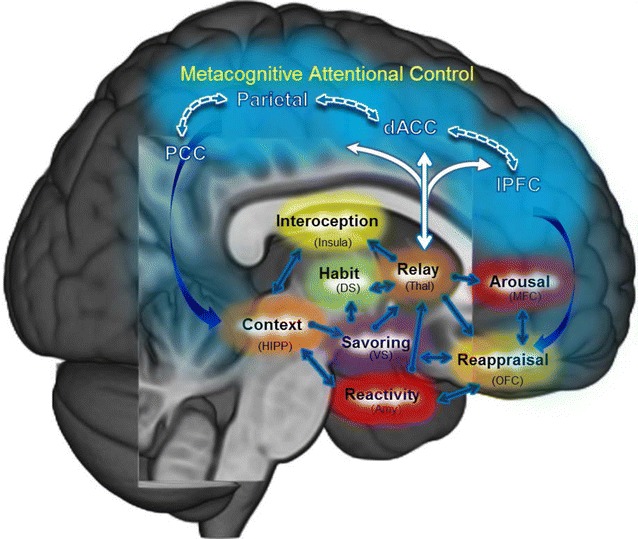
“Garland, Froeliger, & Howard conceptualized MBIs as means of mental training designed to exercise a number of neurocognitive processes that become dysregulated during the process of addiction [22].”
§ Mindfulness-based treatment of addiction: current state of the field and envisioning the next wave of research > Mindfulness as a means of targeting mechanisms of addiction > Therapeutic mechanisms of mindfulness as a treatment for addiction
What the sources say
- Supportedcites [22] Garland EL, Froeliger B, Howard MO. Mindfulness training targets neurocognitive mechanisms of addiction at the attention-appraisal-emotion interface. Front Psychiatry [Internet]. 2013 [cited 2017 Sep 27];4. https://www.ncbi.nlm.nih.gov/pmc/articles/PMC3887509/. PMC3887509 24454293 source
The section “Mindfulness Training Ameliorates Addiction by Targeting Neurocognitive Mechanisms” explicitly says that MBIs exercise neurocognitive processes believed to go awry in addiction and conceptualizes them as training cognitive-control networks. This directly supports the citing sentence’s characterization of the authors’ framework. (LLM, conf=0.95)
plain- Asserted: passes — The authors put it forward as true.
- Checkable: passes — It can be checked against evidence.
- Load-bearing: passes — The paper’s conclusions depend on it.
- Based: passes — The paper gives a reason why it holds.
- Supported
Every source the paper cites for this claim was checked and supports it.
In the paper
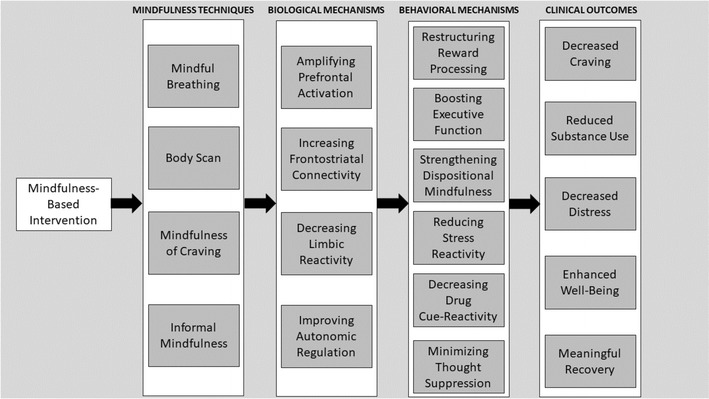
“As adaptive cognitive control is restored through mindfulness exercises, MBIs may increase functional connectivity between these top-down prefrontal networks and bottom-up limbic-striatal brain circuitry involved in reward processing and motivated behavior [22].”
§ Mindfulness-based treatment of addiction: current state of the field and envisioning the next wave of research > Mindfulness as a means of targeting mechanisms of addiction > Therapeutic mechanisms of mindfulness as a treatment for addiction
What the sources say
- Supportedcites [22] Garland EL, Froeliger B, Howard MO. Mindfulness training targets neurocognitive mechanisms of addiction at the attention-appraisal-emotion interface. Front Psychiatry [Internet]. 2013 [cited 2017 Sep 27];4. https://www.ncbi.nlm.nih.gov/pmc/articles/PMC3887509/. PMC3887509 24454293 source
The main section 'MINDFULNESS TRAINING AMELIORATES ADDICTION BY TARGETING NEUROCOGNITIVE MECHANISMS' states that MBIs train/exercise 'prefrontally mediated cognitive control networks which have become atrophied or usurped in the service of drug seeking and use' and 'may restructure dysregulated processes by strengthening functional connectivity and efficiency of prefrontally mediated self-regulatory circuits'. The 'SUMMARY OF THE NEUROCOGNITIVE MODEL' and 'HABIT RESPONSES' sections supply the bottom-up limbic-striatal side: fronto-parietal top-down modulation of amygdala and ventral striatum 'during reward processing', and enhanced functional connectivity in a cortico-thalamic loop 'providing feedback to the striatum'. The claim's hedge ('may') matches the source's own hypothetical framing, and motivated behavior corresponds to the drug-seeking/urge-motivation circuitry the paper describes. (LLM, conf=0.88)
hedgedstates a possible cause- Asserted: passes — The authors put it forward as true.
- Checkable: passes — It can be checked against evidence.
- Load-bearing: passes — The paper’s conclusions depend on it.
- Based: passes — The paper gives a reason why it holds.
- Supported
Every source the paper cites for this claim was checked and supports it.
In the paper
“a mindfulness training intervention based on MBRP for individuals with alcohol and/or cocaine use disorders was associated with significantly attenuated sympathovagal HRV ratio during stress exposure [46].”
§ Mindfulness-based treatment of addiction: current state of the field and envisioning the next wave of research > Mindfulness as a means of targeting mechanisms of addiction > Therapeutic mechanisms of mindfulness as a treatment for addiction
What the sources say
- Supportedcites [46] Brewer JA Sinha R Chen JA Michalsen RN Babuscio TA Nich C Mindfulness training and stress reactivity in substance abuse: results from a randomized, controlled stage I pilot study Subst Abus 2009 30 306 317 10.1080/08897070903250241 19904666 PMC3045038 source
The Methods describe an intervention adapted from MBRP for participants with alcohol and/or cocaine use disorders. The Results report a significantly lower sympathetic/vagal heart-rate-variability ratio in the mindfulness group than in the CBT group during the stress-reactivity assessment (p = 0.02). (LLM, conf=0.94)
plainstates an association- Asserted: passes — The authors put it forward as true.
- Checkable: passes — It can be checked against evidence.
- Load-bearing: passes — The paper’s conclusions depend on it.
- Based: passes — The paper gives a reason why it holds.
- Supported
Every source the paper cites for this claim was checked and supports it.
In the paper
“A mindfulness-based smoking cessation intervention derived from MBRP significantly reduced the association between craving and cigarette smoking [57].”
§ Mindfulness-based treatment of addiction: current state of the field and envisioning the next wave of research > Mindfulness as a means of targeting mechanisms of addiction > Therapeutic mechanisms of mindfulness as a treatment for addiction
What the sources say
- Supportedcites [57] Elwafi HM Witkiewitz K Mallik S Thornhill TA IV Brewer JA Mindfulness training for smoking cessation: moderation of the relationship between craving and cigarette use Drug Alcohol Depend 2013 130 1 222 229 10.1016/j.drugalcdep.2012.11.015 23265088 PMC3619004 source
The Methods (2.3 Intervention) say the smoking-cessation training was adapted from a mindfulness-training manual for drug relapse prevention. The Results (3.2) report that the craving–smoking correlation fell from r=0.582 at baseline to r=0.126 at the end of treatment, with a significant difference between the correlations (p=0.04). (LLM, conf=0.93)
plainstates a cause- Asserted: passes — The authors put it forward as true.
- Checkable: passes — It can be checked against evidence.
- Load-bearing: passes — The paper’s conclusions depend on it.
- Based: passes — The paper gives a reason why it holds.
- Supported
64 more claims · 5 with their cited sources checked
Create a free account to see all 110 claims and to verify the 87 references still open.
- It may state two separate claims as one. 31
- Probably not a substantial claim. 11
Claims other papers make about this one
Each is checked against this paper’s own text: does it say what the citing paper says it does?
The source backs part of the claim, not all of it — or backs it for a different population, condition or comparison.
In the citing paper
“MBIs show promise as a treatment for SUDs, possibly because they develop mindfulness, self-compassion, and interoceptive awareness – three key processes involved in coping with pain and anxiety, and healthy emotion regulation 9,10.”
From Effects of a trauma-informed mindful recovery program on comorbid pain, anxiety, and substance use during primary care buprenorphine treatment: A proof-of-concept study (2023) · cites this paper as [10]
Experimental — accuracy not yet measuredThe source backs part of the claim, not all of it — or backs it for a different population, condition or comparison.
In the citing paper
“As the positive association between problematic use level and mental health (i.e., loneliness, anxiety and stress) has been established [46,47].”
From Comparative effectiveness of mind-body exercise versus cognitive behavioral therapy for college students with problematic smartphone use: A randomized controlled trial (2020) · cites this paper as [47]
Experimental — accuracy not yet measuredThe cited source says what the claim attributes to it.
In the citing paper
“Mindfulness-based interventions have also shown promise in behavior change and addiction treatment [15].”
From Mindfulness meditation and psychedelics: potential synergies and commonalities (2023) · cites this paper as [15]
The cited source says what the claim attributes to it.
In the citing paper
“They help develop a greater awareness of addiction triggers and automatic reactions, enabling practitioners to respond more skillfully to challenging situations [15].”
From Mindfulness meditation and psychedelics: potential synergies and commonalities (2023) · cites this paper as [15]
Self-check
Percentages, sums and reported differences re-computed from the paper’s own numbers.
Each contradiction between two passages listed here was confirmed by an independent check.
Rated minor: it would not touch a result — a value no result rests on, a p-value that stays on the same side of the significance level, or a conflict that is clerical, resolved elsewhere in the paper, or outside its own findings.
In the paper
§ Mindfulness-based treatment of addiction: current state of the field and envisioning the next wave of research > Mindfulness as a means of targeting mechanisms of addiction > Therapeutic mechanisms of mindfulness as a treatment for addiction
“Garland et al. [20] model of mindfulness-centered regulation”
§ Mindfulness-based treatment of addiction: current state of the field and envisioning the next wave of research > References
“20. Langer EJ Matters of mind: mindfulness/mindlessness in perspective”
Rated minor: it would not touch a result — a value no result rests on, a p-value that stays on the same side of the significance level, or a conflict that is clerical, resolved elsewhere in the paper, or outside its own findings.
In the paper
§ Mindfulness-based treatment of addiction: current state of the field and envisioning the next wave of research > Current state of the field: a review of clinical outcomes of mindfulness-based treatments for addiction
“MBIs produced significant increases on the Five Factor Mindfulness Questionnaires in all eight studies that used this measure”
§ Mindfulness-based treatment of addiction: current state of the field and envisioning the next wave of research > Current state of the field: a review of clinical outcomes of mindfulness-based treatments for addiction
“(d = 0.62, − 0.02 to 1.26, p = 0.057)”
Rated minor: it would not touch a result — a value no result rests on, a p-value that stays on the same side of the significance level, or a conflict that is clerical, resolved elsewhere in the paper, or outside its own findings.
In the paper
§ Mindfulness-based treatment of addiction: current state of the field and envisioning the next wave of research > Current state of the field: a review of clinical outcomes of mindfulness-based treatments for addiction
“stress (d = 1.12, − 2.24 to –0.01, p < 0.05)”
§ Mindfulness-based treatment of addiction: current state of the field and envisioning the next wave of research > Current state of the field: a review of clinical outcomes of mindfulness-based treatments for addiction
“Effects (Cohen’s d/odds ratios) ranged from moderate-to-large across the synthesized effect sizes”
Citations
Cites
Using Self-Report Assessment Methods to Explore Facets of Mindfulness
Baer, R. A., Smith, G. T., Hopkins, J., Krietemeyer, J., & Toney, L. (2006) · Assessment · doi:10.1177/1073191105283504 · Cited by 7,511 · cited 1×
“According to operationalizations of the construct derived from factor analytic research, dispositional or trait mindfulness is characterized by the capacity to remain nonreactive to and accepting of distressing thoughts and emotions; observe interoceptive and exteroceptive experience; discriminate emotional states; an…”
MethodKabat-Zinn, J. (1982) · General Hospital Psychiatry · doi:10.1016/0163-8343(82)90026-3 · Cited by 4,255 · cited 10×
“Such tailoring is presumed necessary for maximizing clinical effects of MBIs as treatments for addiction, though no quantitative comparisons of tailored (e.g., MBRP) versus general (e.g., MBSR) MBIs have been conducted for individuals with substance use disorders.”
BackgroundInfluentialNeurobiology of addiction: a neurocircuitry analysis
Koob, G. F., & Volkow, N. D. (2016) · The Lancet Psychiatry · doi:10.1016/s2215-0366(16)00104-8 · Cited by 3,698 · cited 1×
“This large body of research suggests that addiction is best regarded as a cycle of compulsive substance use subserved by dysregulation in neural circuitry governing motivation and hedonic experience, habit behavior, and executive function [1].”
BackgroundA model of neurovisceral integration in emotion regulation and dysregulation
Thayer, J. F., & Lane, R. D. (2000) · Journal of Affective Disorders · doi:10.1016/s0165-0327(00)00338-4 · Cited by 3,092
The Neuroscience of Mindfulness Meditation
Tang, Y.-Y., Hölzel, B. K., & Posner, M. I. (2015) · Nature reviews. Neuroscience · doi:10.1038/nrn3916 · Cited by 2,889
Attention regulation and monitoring in meditation
Lutz, A., Slagter, H. A., Dunne, J. D., & Davidson, R. J. (2008) · Trends in Cognitive Sciences · doi:10.1016/j.tics.2008.01.005 · Cited by 2,659 · cited 2×
“Focused attention practices often precede the practice of open monitoring, in which one observes both the arising of mental contents as well as the field of awareness in which those contents arise [7].”
Chronic stress, drug use, and vulnerability to addiction
Sinha, R. (2008) · Annals of the New York Academy of Sciences · doi:10.1196/annals.1441.030 · Cited by 1,904
Gu, J., Strauss, C., Bond, R., & Cavanagh, K. (2015) · Clinical Psychology Review · doi:10.1016/j.cpr.2015.01.006 · Cited by 1,712 · cited 1×
“In partial support of this hypothesis, increases in the trajectory of state mindfulness produced over time through meditation predicts increases in trait mindfulness [11], and meta-analysis demonstrates that the effects of MBIs on clinical outcomes are mediated by increases in trait mindfulness [12].”
BackgroundA cognitive model of drug urges and drug-use behavior: role of automatic and nonautomatic processes
Tiffany, S. T. (1990) · Psychological Review · doi:10.1037/0033-295x.97.2.147 · Cited by 1,554
Mindfulness-based cognitive therapy for depression
(2006) · Buddhist Thought and Applied Psychological Research · doi:10.4324/9780203098899-33 · Cited by 1,324
Research works printed but not linked: 3
- Garland EL Mindfulness-oriented recovery enhancement for addiction, stress, and pain 2013 Washington, DC NASW Press
- Garland EL Mindfulness-oriented recovery enhancement modulates neurocognitive mechanisms and reward system function in addiction, stress, and pain 2015 New York, NY In Sloan Kettering Memorial Hospital
- Spears CA, Hedeker D, Li L, Wu C, Anderson NK, Houchins SC, et al. Mechanisms underlying mindfulness-based addiction treatment versus cognitive behavioral therapy and usual care for smoking cessation. J Consult Clin Psychol [Internet]. 2017 [cited 2017 Aug 7]. https://www.ncbi.nlm.nih.gov/pubmed/28650195. PMC5662477 28650195
Cited by
Mindfulness Meditation and Psychopathology
Wielgosz, J., Goldberg, S. B., Kral, T. R. A., Dunne, J. D., & Davidson, R. J. (2019) · Annual Review of Clinical Psychology · doi:10.1146/annurev-clinpsy-021815-093423 · Cited by 435
“A uthor M anuscript A uthor M anuscript A uthor M anuscript A uthor M anuscript changes in reward processing (Garland & Howard 2018).”
BackgroundMindfulness and Behavior Change
Schuman-Olivier, Z., Trombka, M., Lovas, D. A., Brewer, J. A., Vago, D. R., Gawande, R., Dunne, J. P., Lazar, S. W., Loucks, E. B., & Fulwiler, C. (2020) · Harvard Review of Psychiatry · doi:10.1097/hrp.0000000000000277 · Cited by 435
Ceceli, A. O., Bradberry, C. W., & Goldstein, R. Z. (2022) · Neuropsychopharmacology · doi:10.1038/s41386-021-01153-9 · Cited by 150
The role of stress in drug addiction. An integrative review
Ruisoto, P., & Contador, I. (2019) · Physiology & Behavior · doi:10.1016/j.physbeh.2019.01.022 · Cited by 140
Priddy, S. E., Howard, M. O., Hanley, A. W., Riquino, M. R., Friberg-Felsted, K., & Garland, E. L. (2018) · Substance Abuse and Rehabilitation · doi:10.2147/sar.s145201 · Cited by 101
“103 Mindfulness might be integrated into standard cognitive-behavioral interventions for addiction, indeed Bowen et al 43 found that MBRP is superior to relapse prevention without mindfulness.”
BackgroundSelf-citationVerdejo‐García, A., Lorenzetti, V., Manning, V., Piercy, H., Bruno, R., Hester, R., Pennington, D., Tolomeo, S., Arunogiri, S., Bates, M. E., et al. (2019) · Frontiers in Psychiatry · doi:10.3389/fpsyt.2019.00877 · Cited by 103
Kibaly, C., Xu, C., Cahill, C. M., Evans, C. J., & Law, P. (2018) · Nature reviews. Neuroscience · doi:10.1038/s41583-018-0092-2 · Cited by 90
Carreiro, S., Chintha, K. K., Shrestha, S., Chapman, B. P., Smelson, D. A., & Indic, P. (2020) · Drug and Alcohol Dependence · doi:10.1016/j.drugalcdep.2020.107929 · Cited by 88
“(Garland and Howard, 2018) In fact, regular MBIs have not only been associated with behavioral changes, but with neuroplastic changes detectable on functional neuroimaging.”
BackgroundResultThe Cambridge Handbook of Substance and Behavioral Addictions
Sussman, S. Y. (2020) · Cambridge University Press eBooks · doi:10.1017/9781108632591 · Cited by 69
Brewer, J. (2019) · Current Opinion in Psychology · doi:10.1016/j.copsyc.2019.01.014 · Cited by 58
Nikolinakou, A., Phua, J., & Kwon, E. S. (2023) · Computers in Human Behavior · doi:10.1016/j.chb.2023.108086 · Cited by 82
Aaron, R. V., Finan, P. H., Wegener, S. T., Keefe, F. J., & Lumley, M. A. (2020) · American Psychologist · doi:10.1037/amp0000678 · Cited by 56
“Improved reward responsiveness predicts improvements in pain-related outcomes (Garland & Howard, 2018) and reductions in opioid misuse (Garland, Atchley, Hanley, Zubieta, & Froeliger, 2019).”
BackgroundRamadas, E., de Lima, M. P., Caetano, T., Lopes, J., & Dixe, M. D. A. (2021) · Behavioral Sciences · doi:10.3390/bs11100133 · Cited by 70
Dong, G., Dai, J., & Potenza, M. N. (2024) · Journal of Behavioral Addictions · doi:10.1556/2006.2023.00071 · Cited by 69
“Mindfulness-based treatment appears effective in changing maladaptive cognitive processes and increasing adaptive coping among people with addictions or related behaviours/conditions (Brewer, Bowen, Smith, Marlatt, & Potenza, 2010; Garland & Howard, 2018), which may also be useful in treating IGD.”
BackgroundLiu, H., Soh, K. G., Samsudin, S., Rattanakoses, W., & Qi, F. (2022) · Frontiers in Psychology · doi:10.3389/fpsyg.2022.1021285 · Cited by 68
“main intervention measures for smartphone addiction include group psychological counseling, mindfulness intervention (Li et al., 2017b; Garland and Howard, 2018; Lan et al., 2018; Sancho et al., 2018), meditation (Choi et al.”
BackgroundZamboni, L., Centoni, F., Fusina, F., Mantovani, E., Rubino, F., Lugoboni, F., & Federico, A. (2021) · The Journal of Nervous and Mental Disease · doi:10.1097/nmd.0000000000001381 · Cited by 76
Physical activity: A promising adjunctive treatment for severe alcohol use disorder
Cabé, N., Lanièpce, A., & Pitel, A. (2020) · Addictive Behaviors · doi:10.1016/j.addbeh.2020.106667 · Cited by 64
“Several treatments, such as mindfulness meditation, cognitive remediation or cognitive behavioral therapy, have shown their effectiveness on some of these subcomponents (Coates et al., 2018; Garland & Howard, 2018; Rupp et al., 2012).”
BackgroundReed, D. D., Naudé, G. P., Gelino, B. W., & Amlung, M. T. (2020) · Cambridge University Press eBooks · doi:10.1017/9781108632591.011 · Cited by 48
Levit‐Binnun, N., Arbel, K., & Dorjee, D. (2021) · Frontiers in Psychology · doi:10.3389/fpsyg.2021.727857 · Cited by 67
Mindfulness programs for problematic usage of the internet: A systematic review and meta-analysis
Fendel, J. C., Vogt, A., Brandtner, A., & Schmidt, S. (2024) · Journal of Behavioral Addictions · doi:10.1556/2006.2024.00024 · Cited by 57
“In the context of addiction, a mechanistic theoretical account conceptualizes mindfulness practice as form of mental training for neurocognitive mechanisms that have become dysregulated in the process of becoming and remaining addicted (Garland & Howard, 2018).”
BackgroundThe Prevention and Treatment of Gambling Disorders: Some Art, Some Science
Derevensky, J. L. (2020) · Cambridge University Press eBooks · doi:10.1017/9781108632591.024 · Cited by 47
Roos, C. R., Kirouac, M., Stein, E., Wilson, A. D., Bowen, S., & Witkiewitz, K. (2019) · Mindfulness · doi:10.1007/s12671-018-1054-5 · Cited by 45
Considering the Overlap and Nonoverlap of Compulsivity, Impulsivity, and Addiction
Blum, A. W., & Grant, J. E. (2020) · Cambridge University Press eBooks · doi:10.1017/9781108632591.038 · Cited by 44
Neurobiological Foundations of Behavioral Addictions
Vaccaro, A. G., & Potenza, M. N. (2020) · Cambridge University Press eBooks · doi:10.1017/9781108632591.016 · Cited by 45
Neurobiology of Substance Addictions
Christie, N. C., & Bechara, A. (2020) · Cambridge University Press eBooks · doi:10.1017/9781108632591.015 · Cited by 44
Sensitization of Incentive Salience and the Transition to Addiction
Warlow, S. M., Baumgartner, H. M., Freeland, C. M., Naffziger, E. E., Olney, J. J., Berridge, K. C., & Robinson, M. J. F. (2020) · Cambridge University Press eBooks · doi:10.1017/9781108632591.006 · Cited by 47
Mindfulness-Based Interventions Applied to Addiction Treatments
Kechter, A., & Black, D. S. (2020) · Cambridge University Press eBooks · doi:10.1017/9781108632591.040 · Cited by 44
Multiple Memory Systems, Addiction, and Health Habits: New Routes for Translational Science
Stacy, A. W., Pike, J. R., & Lee, A. Y. (2020) · Cambridge University Press eBooks · doi:10.1017/9781108632591.017 · Cited by 43
Tanning as an Addiction: The State of the Research and Implications for Intervention
Miller, K. A., & Mays, D. M. (2020) · Cambridge University Press eBooks · doi:10.1017/9781108632591.037 · Cited by 43
Schulte, E. M., Schiestl, E. T., & Gearhardt, A. N. (2020) · Cambridge University Press eBooks · doi:10.1017/9781108632591.035 · Cited by 43
Mindfulness meditation and psychedelics: potential synergies and commonalities
Holas, P., & Kamińska, J. (2023) · Pharmacological Reports · doi:10.1007/s43440-023-00551-8 · Cited by 43
“Mindfulness-based interventions have also shown promise in behavior change and addiction treatment [15].”
BackgroundLu, C., Zou, L., Becker, B., D. Griffiths, M., Yu, Q., Chen, S.-T., Demetrovics, Z., Jiao, C., Chi, X., Chen, A., et al. (2020) · International Journal of Mental Health Promotion · doi:10.32604/ijmhp.2020.014419 · Cited by 42
“, loneliness, anxiety and stress) has been established [46,47].”
Behavioral Economics and Addictive Disorders
Jarmolowicz, D. P., & Schneider, T. D. (2020) · Cambridge University Press eBooks · doi:10.1017/9781108632591.005 · Cited by 42
Prevention and Treatment of Compulsive Buying Disorder
Galimov, A., & Black, D. W. (2020) · Cambridge University Press eBooks · doi:10.1017/9781108632591.027 · Cited by 42
Blum, K., Roy, A. K., Podesta, A., Modestino, E. J., Steinberg, B., Gondré-Lewis, M. C., Baron, D. A., Thanos, P. K., Lott, L., Badgaiyan, S., et al. (2020) · Cambridge University Press eBooks · doi:10.1017/9781108632591.031 · Cited by 42
Prevention and Treatment of “Food Addiction”
Davis, C., & Mason, A. E. (2020) · Cambridge University Press eBooks · doi:10.1017/9781108632591.023 · Cited by 42
Human Neurobiological Approaches to Hedonically Motivated Behaviors
Burger, K. S., Shearrer, G. E., & Sadler, J. R. (2020) · Cambridge University Press eBooks · doi:10.1017/9781108632591.009 · Cited by 42
Feedback Models for Gambling Control: The Use and Efficacy of Online Responsible Gambling Tools
Griffiths, M. D. (2020) · Cambridge University Press eBooks · doi:10.1017/9781108632591.034 · Cited by 42
Abellaneda‐Pérez, K., Potash, R. M., Pascual‐Leone, Á., & Sacchet, M. D. (2024) · Neuroscience & Biobehavioral Reviews · doi:10.1016/j.neubiorev.2024.105862 · Cited by 55
Shuai, R., Bakou, A. E., Hardy, L., & Hogarth, L. (2020) · Addictive Behaviors · doi:10.1016/j.addbeh.2019.106141 · Cited by 38
Smith, J. L., Allen, J. W., Haack, C., Wehrmeyer, K., Alden, K., Lund, M. B., & Mascaro, J. S. (2021) · Mindfulness · doi:10.1007/s12671-020-01502-7 · Cited by 37
“Fourth, studies have demonstrated that mindfulness training impacts functional activity in or connectivity within and between these networks during tasks such as reappraisal or induction tasks (see Gotink et al. 2016).”
BackgroundThe Treatment of Substance Use Disorders: Recent Developments and New Perspectives
Rosenthal, A., Ebrahimi, C., Wedemeyer, F., Romanczuk‐Seiferth, N., & Beck, A. (2022) · Neuropsychobiology · doi:10.1159/000525268 · Cited by 49
Amaro, H. D. L. A., & Black, D. S. (2021) · Psychosomatic Medicine · doi:10.1097/psy.0000000000000907 · Cited by 36
Mindfulness-based interventions for addictions among diverse and underserved populations
Spears, C. A. (2018) · Current Opinion in Psychology · doi:10.1016/j.copsyc.2018.12.012 · Cited by 37
“Several mindfulness-based interventions (MBIs) have been developed to target addictive behaviors, including alcohol, tobacco, and illicit substance use [2,3].”
BackgroundInteroception Within the Context of Impulsivity and Addiction
Herman, A. M. (2023) · Current Addiction Reports · doi:10.1007/s40429-023-00482-7 · Cited by 43
Lodha, S., & Gupta, R. (2022) · Journal of Cognitive Enhancement · doi:10.1007/s41465-022-00254-7 · Cited by 41
“…treatment for impaired inhibition in eating disorders (Katterman et al., 2014), attention deficit hyperactivity disorder (Baijal & Gupta, 2008), obsessive–compulsive disorders (Külz et al., 2019; Strauss et al., 2018), addiction, and substance abuse (Garland & Howard, 2018; Sancho et al., 2018).”
BackgroundWang, Q., Chen, Y., & Li, L. (2024) · Frontiers in Psychology · doi:10.3389/fpsyg.2024.1417379 · Cited by 37
Relación entre las motivaciones para consumir y el consumo problemático de cannabis
Casajuana, C., López‐Pelayo, H., Oliveras, C., Colom, J., Gual, A., & Balcells‐Oliveró, M. (2019) · Adicciones · doi:10.20882/adicciones.1221 · Cited by 38
Bagereka, P., Ameli, R., Sinaii, N., Vocci, M. C., & Berger, A. M. (2023) · BMC Palliative Care · doi:10.1186/s12904-023-01258-6 · Cited by 46
“Mindfulness relieves symptoms of depression, anxiety, and addiction in several clinical populations [35, 36].”
BackgroundLechner, W. V., Sidhu, N. K., Kittaneh, A. A., & Anand, A. (2019) · Current Opinion in Psychology · doi:10.1016/j.copsyc.2019.01.017 · Cited by 40
The Evolution of Telepsychiatry for Substance Use Disorders During COVID-19: a Narrative Review
Fast, N., van Kessel, R., Humphreys, K. N., Ward, N. F., & Román-Urrestarazu, A. (2023) · Current Addiction Reports · doi:10.1007/s40429-023-00480-9 · Cited by 26
Targeting automatic processes to reduce unhealthy behaviours: a process framework
Larsen, J. K., & Hollands, G. J. (2021) · Health Psychology Review · doi:10.1080/17437199.2021.1876572 · Cited by 20
“…cognitive control over attentional bias and physiological indices of cue-reactivity (Froeliger et al., 2017; Garland et al., 2017), also reflected in increased prefrontal activation to ‘regulate’ subcortical brain networks in a goal-directed manner (Froeliger et al., 2017; Garland & Howard, 2018).”
BackgroundAddiction and COVID: Issues, Challenges, and New Telehealth Approaches
Edinoff, A. N., Kaufman, S. E., Chauncy, T. M., Erwin, A. P., Russo, K. M., Nelson, M. E., Cornett, E. M., Shah-Bruce, M. D., Kaye, A. M., & Kaye, A. D. (2022) · Psychiatry International · doi:10.3390/psychiatryint3020014 · Cited by 21
“In addition, individuals who utilize harm reduction services or addiction services can also have increased exposure when visiting those facilities [20,22].”
BackgroundWeiß, F., Aslan, A., Zhang, J., Gerchen, M. F., Kiefer, F., & Kirsch, P. (2020) · BMC Psychiatry · doi:10.1186/s12888-020-02717-7 · Cited by 24
Weiss de Souza, I. C., Kozasa, E. H., Bowen, S., Richter, K. P., Sartes, L. M. A., Colugnati, F. A. B., & Noto, A. R. (2020) · Nicotine and Tobacco Research · doi:10.1093/ntr/ntaa057 · Cited by 18
Mercado, D., Werthmann, J., Duarte, T., Campbell, I., & Schmidt, U. (2023) · Journal of Eating Disorders · doi:10.1186/s40337-023-00780-5 · Cited by 17
Zhang, Z., Wu, L., Lu, C., & Guan, T. (2025) · Frontiers in Psychology · doi:10.3389/fpsyg.2025.1400327 · Cited by 28
“It has been proven to be highly effective in a significant number of studies (Garland and Howard, 2018; Rosenthal et al., 2021; Sancho et al., 2018).”
Consciousness Beyond Neural Fields: Expanding the Possibilities of What Has Not Yet Happened
Dresp, B. (2022) · Frontiers in Psychology · doi:10.3389/fpsyg.2021.762349 · Cited by 20
Value, drug addiction and the brain
Loganathan, K., & Ho, E. T. W. (2021) · Addictive Behaviors · doi:10.1016/j.addbeh.2021.106816 · Cited by 18
Boness, C. L., Hasler, B. P., Sheehan, H., & Pedersen, S. L. (2022) · Addictive Behaviors · doi:10.1016/j.addbeh.2022.107348 · Cited by 19
Psychological processes linking problematic smartphone use to sleep disturbance in young adults
Peltz, J. S., Bodenlos, J. S., Kingery, J. N., & Abar, C. C. (2023) · Sleep Health · doi:10.1016/j.sleh.2023.05.005 · Cited by 19
Schuman‐Olivier, Z., Fatkin, T., Creedon, T. B., Samawi, F., Moore, S. K., Okst, K., Fredericksen, A. (., Oxnard, A. (., Roll, D., Smith, L., et al. (2023) · The American Journal on Addictions · doi:10.1111/ajad.13364 · Cited by 15
Nonmedical Prescription Opioid Use among a Sample of College Students: Prevalence and Predictors
Weyandt, L. L., Guðmundsdóttir, B. G., Shepard, E., Brick, L. A. D., Buchanan, A. L., Clarkin, C. M., Francis, A. R., & Marraccini, M. E. (2021) · Pharmacy · doi:10.3390/pharmacy9020106 · Cited by 19
A Randomized Controlled Trial Evaluating the Effect of Tai Chi on the Drug Craving in Women
Wang, M., Chen, Y., Xu, Y., Zhang, X., Sun, T., Li, H., Yuan, C., Li, J., Ding, Z., Ma, Z., et al. (2022) · International Journal of Mental Health and Addiction · doi:10.1007/s11469-022-00917-8 · Cited by 20
“Moreover, both Xu et al. (2017) and Lim et al. (2019) found that one’s cognitive function is improved after certain engagement with Tai Chi training, while it is worth pointing out that cognitive function enhancing training is considered an approach for addiction treatment (Garland & Howard, 2018).”
Kalmbach, D. A., Cheng, P., Ong, J. C., Reffi, A. N., Fresco, D. M., Fellman-Couture, C., Ruprich, M. K., Sultan, Z., Sagong, C., & Drake, C. L. (2023) · Frontiers in Sleep · doi:10.3389/frsle.2023.1072752 · Cited by 17
“It is also possible that sequencing MBTI with motivational interviewing or motivational enhancement therapy may promote long-term insomnia maintenance by evoking patients’ intrinsic reasons and desires for continued and independent meditation practice (Garland and Howard, 2018).”
BackgroundStrengthening Neuroplasticity in Substance Use Recovery Through Lifestyle Intervention
Sugden, S. G., Merlo, G., & Manger, S. (2024) · American Journal of Lifestyle Medicine · doi:10.1177/15598276241242016 · Cited by 20
Current trends and challenges in EEG research on meditation and mindfulness
Barrows, P. D., Gordon, W. V., & Gilbert, P. (2024) · Discover Psychology · doi:10.1007/s44202-024-00269-5 · Cited by 18
Shuai, R., Bakou, A. E., Andrade, J., Hides, L. M., & Hogarth, L. (2021) · International Journal of Behavioral Medicine · doi:10.1007/s12529-021-10019-9 · Cited by 21
Hassett, A. L., Williams, D. A., Harris, R. E., Harte, S. E., Kaplan, C. M., Schrepf, A., Kratz, A. L., Brummett, C. M., Kidwell, K., Tsodikov, A. D., et al. (2023) · Pain Medicine · doi:10.1093/pm/pnad005 · Cited by 17
Savoring as an intervention for cannabis use: acceptability, feasibility, and preliminary results
Mian, M. N., & Earleywine, M. (2022) · Addiction Research & Theory · doi:10.1080/16066359.2022.2160871 · Cited by 14
“Comparable work reveals that savoring improves substance use outcomes by increasing cognitive control and effectively regulating attention during withdrawal (Garland and Howard 2018).”
BackgroundGarland, E. L., Recasens, M., Taple, B. J., Donaldson, G. W., & Weisberg, R. B. (2024) · Annals of Medicine · doi:10.1080/07853890.2024.2392870 · Cited by 18
Self-citationReflective peer observations of university teaching: A Canadian case study
Kanuka, H., & Sadowski, C. A. (2020) · Journal of University Teaching and Learning Practice · doi:10.53761/1.17.5.20 · Cited by 17
“The most researched intervention of this type has been Kabat-Zinn’s (2013) Mindfulness-based stress reduction course, which reduces anxiety (Galante et al., 2018), addictions (Garland & Howard, 2018) and eating disorders.”
BackgroundAppetitive Needs and Addiction
Sussman, S. Y., & Pakdaman, S. (2020) · Cambridge University Press eBooks · doi:10.1017/9781108632591.004 · Cited by 12
Barrows, P. D., & Gordon, W. V. (2021) · Religions · doi:10.3390/rel12080586 · Cited by 12
A perspective of yoga on smartphone addiction: A narrative review
Putchavayala, C. K., Singh, D., & Sashidharan, R. K. (2022) · Journal of Family Medicine and Primary Care · doi:10.4103/jfmpc.jfmpc_1765_21 · Cited by 24
“[65] Studies on addiction have reported meditation increases prefrontal activation, which might help in the de‐automatization of addictive responses[66] and improved cognitive functions,[67] response inhibition,[68]self‐control,[69] psychological well‐being,[70] and abstinence from craving.”
BackgroundLarsen, J. K., Hollands, G. J., Garland, E. L., Evers, A. W. M., & Wiers, R. W. H. J. (2023) · Neuroscience & Biobehavioral Reviews · doi:10.1016/j.neubiorev.2023.105408 · Cited by 13
Self-citationTrastorno por uso de sustancias: epidemiología, complicaciones médicas y tratamiento
Fuster, D., Zuluaga, P., & Muga, R. (2024) · Medicina Clínica · doi:10.1016/j.medcli.2023.11.016 · Cited by 25
Mindfulness in Sexual Activity, Sexual Satisfaction and Erotic Fantasies in a Non-Clinical Sample
Sánchez-Sánchez, L. C., Rodríguez, M. F. V., García‐Montes, J. M., Petisco, C., & García, R. F. (2021) · International Journal of Environmental Research and Public Health · doi:10.3390/ijerph18031161 · Cited by 19
“In the field of mental health, the efficiency of Mindfulness has been demonstrated in people diagnosed with depression [7], in the prevention of depression relapses [8], in somatization disorder [9], suicide prevention [10], general anxiety [11], addictions [12], personality disorders [13], prevention of eating disord…”
BackgroundLaBelle, O. P., Hastings, M., Vest, N. A., Meeks, M., & Lucier, K. (2022) · SSRN Electronic Journal · doi:10.1016/j.josat.2022.208939 · Cited by 17
Serre, F., Moriceau, S., Donnadieu, L., Forcier, C., Garnier, H., Alexandre, J., Dupuy, L., Philip, P., Levavasseur, Y., de Sevin, É., et al. (2023) · Frontiers in Psychiatry · doi:10.3389/fpsyt.2023.1143167 · Cited by 15
“Interventions (see Table 2 below) are derived from standard approaches of addiction treatment, mainly Relapse Prevention (114), CBT (42) and to a lesser extent mindfulness (115).”
MethodZarean, F., & Latifi, Z. (2020) · Current Psychology · doi:10.1007/s12144-020-00860-8 · Cited by 16
The Effects of Mindfulness-Based Intervention on Emotion-Related Impulsivity in Addictive Disorders
Parisi, A. B., Hudak, J., & Garland, E. L. (2023) · Current Addiction Reports · doi:10.1007/s40429-023-00501-7 · Cited by 14
Self-citationFendel, J. C., Bürkle, J. J., & Schmidt, S. (2025) · Journal of Behavioral Addictions · doi:10.1556/2006.2025.00052 · Cited by 15
“Fourth, mindfulness impacts how individuals respond to stress and distress in general, reducing vulnerability to stress reactivity and negative affect (Garland & Howard, 2018).”
InfluentialNeurocognitive Disorders in Substance Use Disorders
Ekhtiari, H., Zare-Bidoky, M., & Verdejo‐García, A. (2020) · Springer eBooks · doi:10.1007/978-3-030-36391-8_81 · Cited by 12
Orchowski, L. M., Merrill, J. E., Oesterle, D. W., Barnett, N. P., Borsari, B. E., Zlotnick, C., Haikalis, M., & Berkowitz, A. D. (2023) · JMIR Formative Research · doi:10.2196/47354 · Cited by 14
Behavioral therapies targeting reward mechanisms in substance use disorders
Wardle, M. C., Webber, H. E., Yoon, J. H., Heads, A. M. B., Stotts, A. L., Lane, S. D., & Schmitz, J. M. (2024) · Pharmacology Biochemistry and Behavior · doi:10.1016/j.pbb.2024.173787 · Cited by 12
The Transdiagnostic Mechanisms of Behavioral Addictions and Their Treatment
Kim, H. S. A., & Hodgins, D. C. (2020) · Springer eBooks · doi:10.1007/978-3-030-36391-8_64 · Cited by 13
Moniz-Lewis, D. I. K., Carlon, H. A., Hebden, H. M., Tuchman, F. R., Votaw, V. R., Stein, E., & Witkiewitz, K. A. (2023) · Current Addiction Reports · doi:10.1007/s40429-023-00487-2 · Cited by 12
Song, Y., Zhang, G., Liu, N., Zhang, Y., Zhai, J.-H., Niu, X., & Liu, Y. (2024) · Frontiers in Psychology · doi:10.3389/fpsyg.2024.1445847 · Cited by 19
Using lifestyle interventions and the gut microbiota to improve PTSD symptoms
Sugden, S. G., & Merlo, G. (2024) · Frontiers in Neuroscience · doi:10.3389/fnins.2024.1488841 · Cited by 12
Primary Care at the Intersection of Lifestyle Interventions and Unhealthy Substance Use
Nakaishi, L., Sugden, S. G., & Merlo, G. (2022) · American Journal of Lifestyle Medicine · doi:10.1177/15598276221111047 · Cited by 9
Asif, M., Khoso, A. B., Husain, M., Shahzad, S., Hout, M. C. V., Rafiq, N. U. Z., Lane, S., Chaudhry, I. B., & Husain, N. (2023) · Pilot and Feasibility Studies · doi:10.1186/s40814-023-01296-0 · Cited by 12
“Another review by Garland and Howard [41] has also provided strong recommendations for the next wave of research to firmly establish the efficacy of mindfulness interventions for SUD.”
BackgroundGaming Disorder: How to Translate Behavioral Neuroscience Into Public Health Advances
Antons, S., Müller, S. M., Liebherr, M., & Brand, M. (2020) · Current Behavioral Neuroscience Reports · doi:10.1007/s40473-020-00216-3 · Cited by 11
Substance use disorder: Epidemiology, medical consequences and treatment
Fuster, D., Zuluaga, P., & Muga, R. (2024) · Medicina Clínica (English Edition) · doi:10.1016/j.medcle.2023.11.021 · Cited by 70
Holtzman, S., Bakker, A. M., Godard, R., Wiebe, S., & Avnoor, A. (2025) · Mindfulness · doi:10.1007/s12671-025-02665-x · Cited by 10
“Mindfulness has both state and trait properties, and can be cultivated through mindfulness-based practices (Garland & Howard, 2018).”
A specific cognitive behavioral group therapy program for stimulant use disorder
Karsinti, E., Vorspan, F., Therribout, N., Icick, R., Bloch, V., Fortias, M., Piani, K., & Romo, L. (2022) · Frontiers in Psychiatry · doi:10.3389/fpsyt.2022.1031067 · Cited by 8
“The third wave of CBT approaches, specifically Mindfulness Based Interventions, seems to have a significant effect on craving and substance misuse, so this approach could constitute a useful therapy for addiction treatment (29).”
BackgroundHamonnière, T., & Billieux, J. (2023) · Clinical Psychology & Psychotherapy · doi:10.1002/cpp.2827 · Cited by 8
Misgana, S., Asemahagn, M. A., Atnafu, D. D., & Anagaw, T. F. (2023) · European journal of medical research · doi:10.1186/s40001-023-01192-6 · Cited by 8
“Globally, it is the second leading cause of death, and physical disability [24].”
Backgroundystematic review on the clinical management of chronic pain and comorbid opioid use disorder
Jiménez-Fernández, B., Calomarde-Gómez, C., López-Lazcano, A., Lligoña, A., Gual, A., & López‐Pelayo, H. (2022) · Adicciones · doi:10.20882/adicciones.1680 · Cited by 13
Qualitative Approaches to the Study of Substance and Behavioral Addictions
Simpson, K. A., & Bluthenthal, R. N. (2020) · Cambridge University Press eBooks · doi:10.1017/9781108632591.013 · Cited by 11
Metadata
- Authors
- Garland, E. L., & Howard, M. O.
- Affiliations
- University of Utah (US)
- University of North Carolina at Chapel Hill (US)
- Corresponding author
- Garland, Eric L.
- Venue
- Addiction Science & Clinical Practice
- Published
- 2018-04-18
- Volume
- 13
- Issue
- 1
- Pages
- 14-14
- ISSN
- 1940-0632 (ISSN-L)
- 1940-0640
- PMC
- PMC5907295
- OpenAlex
- W2804135251
- Cited by
- 300
- References
- 91
- Citations by year
- 2026: 23 · 2025: 32 · 2024: 51 · 2023: 42 · 2022: 35 · 2021: 29 · 2020: 69 · 2019: 11 · 2018: 8
- FWCI
- 4.93
- Type
- journal article
- Language
- en
- Open access
- gold
- doi.org
- Licence
- cc-by
- creativecommons.org/licenses/by/4.0/ (tdm)
- creativecommons.org/licenses/by/4.0/ (vor)
- Locations
- Addiction Science & Clinical Practice (publishedVersion, cc-by)
- Europe PMC (PubMed Central) (publishedVersion, other-oa)
- PubMed Central (publishedVersion, cc-by)
- PubMed (publishedVersion)
- Carolina Digital Repository (University of North Carolina at Chapel Hill) (submittedVersion)
- DOAJ (DOAJ: Directory of Open Access Journals) (submittedVersion, cc-by-sa)
- UNC Libraries
- Funders
- National Institute on Drug Abuse (R01DA042033)
- National Center for Complementary and Integrative Health (R61AT009296)
- Topics
- Social Sciences › Psychology › Clinical Psychology › Mindfulness and Compassion Interventions
- Health Sciences › Medicine › Epidemiology › Substance Abuse Treatment and Outcomes
- Health Sciences › Medicine › Public Health, Environmental and Occupational Health › Opioid Use Disorder Treatment
- Keywords
- mindfulness-based interventions, addiction treatment, substance use disorders, craving reduction, neurobiology of addiction, self-regulation, reward processing, alcohol consumption, smoking cessation, opioid misuse, cocaine use, heroin use, treatment sequencing, dissemination and implementation, dose-response relationship, research reproducibility
- MeSH terms
- Data Accuracy, Mentalization, Attention, Combined Modality Therapy, Humans, Research Design, Reward, Socioeconomic Factors, Stress, Psychological, Reproducibility of Results, Behavior, Addictive, Executive Function, Mindfulness, Craving
About these checks
Registry, retraction, Cites and statistics results are computed, not judged, with one exception: a printed reference that no index lists is read once by a model before it counts as a citation error. Claims are extracted by a model and kept only when their quote appears verbatim in the text; each cited source is then checked, with a model’s help, for whether it says what the claim relies on. Those verdicts can be wrong — read the claim’s quote and the cited source before relying on one.
The claim verdicts this report counts are experimental: their accuracy is not yet measured.
A language model drew the claims from the paper on 2026-10-05, under version 3 of the claim definition (model deepseek-v4.1-flash, prompt extract-v3).
A second model labelled each claim on 2026-10-05 (model jev-1.13-20260917, definition revision gold-guideline-v0.2).
Cited sources are checked with a language model’s help (gpt-6-sol and qwen3.8-omni-flash).
Statistics and arithmetic are recomputed, not judged.
Confidence bands are shown only for fields calibrated on our annotated test set. None is calibrated yet, so no band is shown.
What counts as a claim ›How we measure confidence ›How we check this ›
Are you an author, or do you see a problem with this page? Request a review
Data sources
Bibliographic data: Semantic Scholar, OpenAlex, Crossref.
Contains information from the Semantic Scholar Academic Graph Datasets, made available under the ODC Attribution License (ODC-BY 1.0).
Semantic Scholar’s data is described in: Kinney, R., et al. (2023). The Semantic Scholar Open Data Platform. arXiv:2301.10140.
