

The DOI matches its Crossref record; 274 of the 274 references it cites were found in a registry or an index.
From nitrate to NO: potential effects of nitrate-reducing bacteria on systemic health and disease
Open accessAbstract
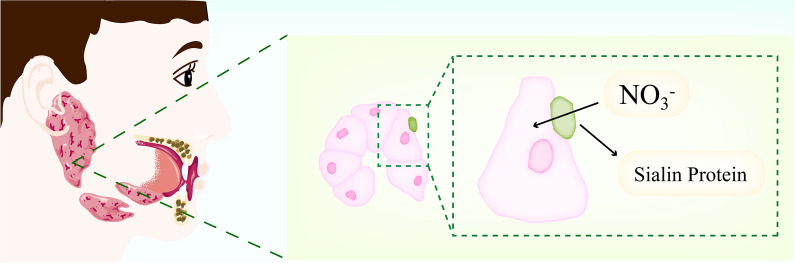
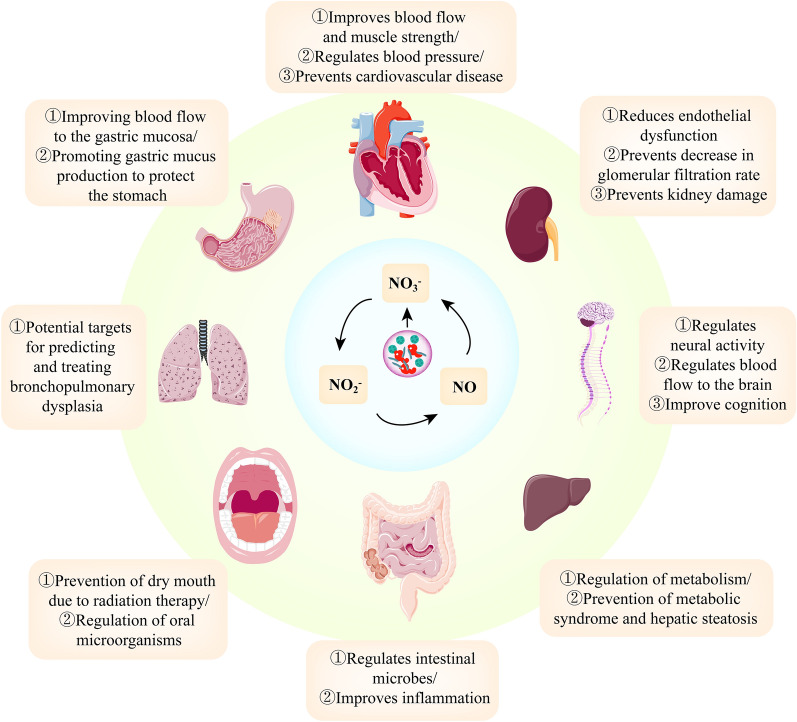
Abstract Current research has described improving multisystem disease and organ function through dietary nitrate (DN) supplementation. They have provided some evidence that these floras with nitrate (NO3−) reductase are mediators of the underlying mechanism. Symbiotic bacteria with nitrate reductase activity (NRA) are found in the human digestive tract, including the mouth, esophagus and gastrointestinal tract (GT). Nitrate in food can be converted to nitrite under the tongue or in the stomach by these symbiotic bacteria. Then, nitrite is transformed to nitric oxide (NO) by non-enzymatic synthesis. NO is currently recognized as a potent bioactive agent with biological activities, such as vasodilation, regulation of cardiomyocyte function, neurotransmission, suppression of platelet agglutination, and prevention of vascular smooth muscle cell proliferation. NO also can be produced through the conventional l-arginine–NO synthase (l-NOS) pathway, whereas endogenous NO production by l-arginine is inhibited under hypoxia–ischemia or disease conditions. In contrast, exogenous NO3−/NO2−/NO activity is enhanced and becomes a practical supplemental pathway for NO in the body, playing an essential role in various physiological activities. Moreover, many diseases (such as metabolic or geriatric diseases) are primarily associated with disorders of endogenous NO synthesis, and NO generation from the exogenous NO3−/NO2−/NO route can partially alleviate the disease progression. The imbalance of NO in the body may be one of the potential mechanisms of disease development. Therefore, the impact of these floras with nitrate reductase on host systemic health through exogenous NO3−/NO2−/NO pathway production of NO or direct regulation of floras ecological balance is essential (e.g., regulation of body homeostasis, amelioration of diseases, etc.). This review summarizes the bacteria with nitrate reductase in humans, emphasizing the relationship between the metabolic processes of this microflora and host systemic health and disease. The potential effects of nitrate reduction bacteria on human health and disease were also highlighted in disease models from different human systems, including digestive, cardiovascular, endocrine, nervous, respiratory, and urinary systems, providing innovative ideas for future disease diagnosis and treatment based on nitrate reduction bacteria.
Overview
The claims and statistics of this paper haven’t been checked yet.
Run the check — free, no account needed. It reads the open-access text and checks the sources it cites.
Integrity signals
Registry
Cites
Statistics
Figures
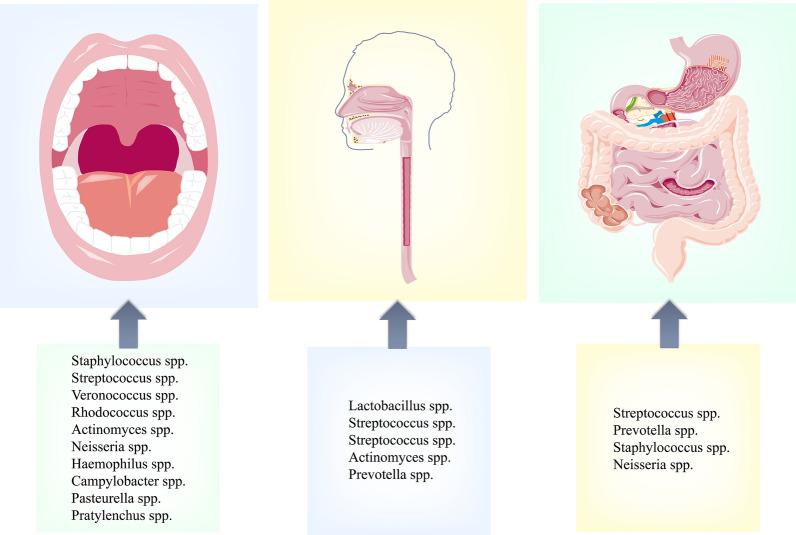
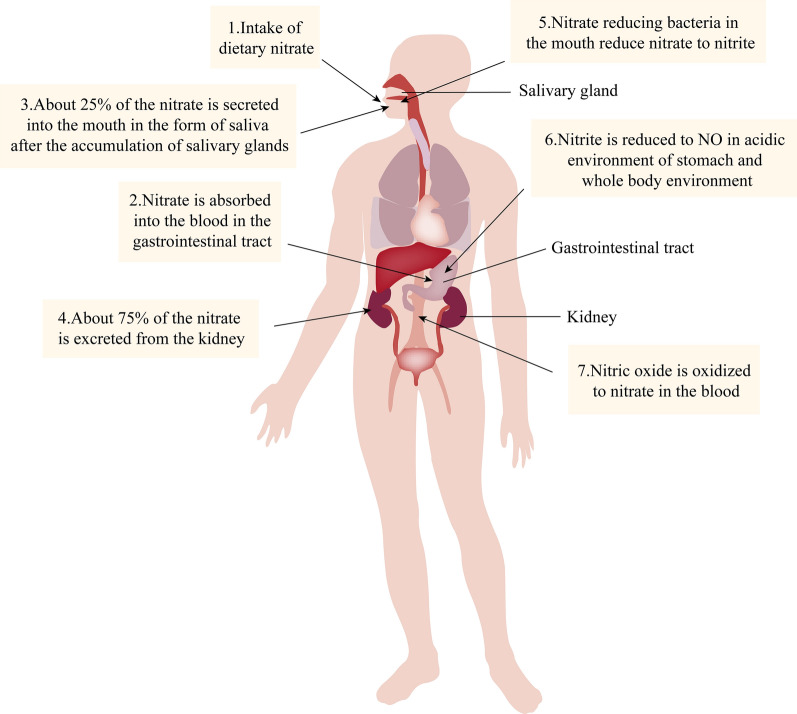
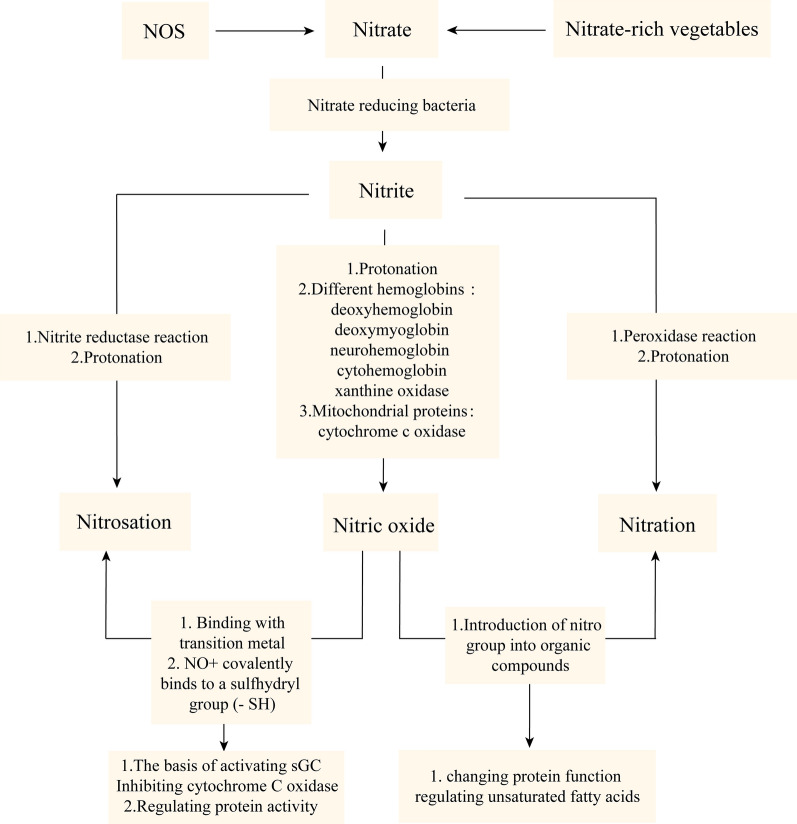
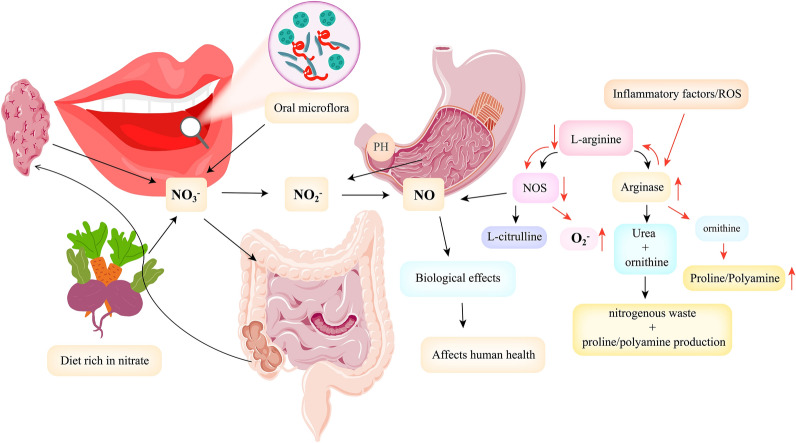
Verification
Claims the paper makes
The claims and statistics of this paper haven’t been checked yet.
Run the check — free, no account needed. It reads the open-access text and checks the sources it cites.
Claims other papers make about this one
Each is checked against this paper’s own text: does it say what the citing paper says it does?
The cited source says what the claim attributes to it.
In the citing paper
“This enterosalivary circulation, comprising intestinal absorption, systemic distribution, salivary concentration, and re-swallowing, maintains a circulating nitrate reservoir that supports NO production, particularly under hypoxic conditions where endogenous NO synthase (NOS) activity is limited [27,28].”
From Dietary Nitrate-Rich Vegetables as Natural Modulators of Health: Mechanisms and Benefits in Ageing Populations (2026) · cites this paper as [27]
Self-check
Percentages, sums and reported differences re-computed from the paper’s own numbers.
The self-check needs the paper’s full text.
Citations
Cites
1 retracted
Mohamed, N. I., Suddek, G. M., & El‐Kashef, D. H. (2021) · International Immunopharmacology · doi:10.1016/j.intimp.2021.108005 · Cited by 13
RetractedZhang, Q., Wang, C., Zheng, M., Li, Y., Li, J., Zhang, L., Shang, X., & Yan, C. (2014) · Cerebrovascular Diseases · doi:10.1159/000369778 · Cited by 11,609
Projections of Global Mortality and Burden of Disease from 2002 to 2030
Mathers, C. D., & Loncar, D. (2006) · PLoS Medicine · doi:10.1371/journal.pmed.0030442 · Cited by 11,386
Heart Disease and Stroke Statistics—2022 Update: A Report From the American Heart Association
Tsao, C. W., Aday, A. W., Almarzooq, Z. I., Alonso, A., Beaton, A. Z., Bittencourt, M. S., Boehme, A. K., Buxton, A. E., Carson, A. P., Commodore-Mensah, Y., et al. (2022) · Circulation · doi:10.1161/cir.0000000000001052 · Cited by 5,987
A Clinical Trial of the Effects of Dietary Patterns on Blood Pressure
Appel, L. J., Moore, T. J., Obarzanek, E., Vollmer, W. M., Svetkey, L. P., Sacks, F. M., Bray, G. A., Vogt, T. M., Cutler, J. A., Windhauser, M. M., et al. (1997) · New England Journal of Medicine · doi:10.1056/nejm199704173361601 · Cited by 5,981
Cillà, S. D., Farruggio, S., Vujosevic, S., Raina, G., Filippini, D. A., Gatti, V., Clemente, N., Mary, D., Vezzola, D., Casini, G., et al. (2017) · Cellular Physiology and Biochemistry · doi:10.1159/000479441 · Cited by 5,154
Chronic kidney disease: global dimension and perspectives
Jha, V., Garcia-Garcia, G., Iseki, K., Li, Z., Naicker, S., Plattner, B., Saran, R., Wang, A. Y.-M., & Yang, C.-W. (2013) · The Lancet · doi:10.1016/s0140-6736(13)60687-x · Cited by 4,383
Nitric oxide synthases: structure, function and inhibition
ALDERTON, W. K., COOPER, C. E., & KNOWLES, R. G. (2001) · Biochemical Journal · doi:10.1042/bj3570593 · Cited by 4,110
Defining the normal bacterial flora of the oral cavity
Aas, J. A., Paster, B. J., Stokes, L. N., Olsen, I., & Dewhirst, F. E. (2005) · Journal of Clinical Microbiology · doi:10.1128/jcm.43.11.5721-5732.2005 · Cited by 3,092
The nitrate-nitrite-nitric oxide pathway in physiology and therapeutics
Lundberg, J. O., Weitzberg, E., & Gladwin, M. T. (2008) · Nature Reviews Drug Discovery · doi:10.1038/nrd2466 · Cited by 2,739 · cited 1×
“It decreases hypoxia by inducing a long-term increase in blood flow and increasing glandular micro vascularization, facilitating salivary production by glandular vesicle cells [126].”
Background
Research works printed but not linked: 1
- Carlstrom M, Montenegro MF. Therapeutic value of stimulating the nitrate-nitrite-nitric oxide pathway to attenuate oxidative stress and restore nitric oxide bioavailability in cardiorenal disease. J Intern Med. 2019;285(1):2–18. · DOI
Cited by
Sorted by citations
Mechanisms and implications of the gut microbial modulation of intestinal metabolic processes
Jyoti, & Dey, P. (2025) · npj Metabolic Health and Disease · doi:10.1038/s44324-025-00066-1 · Cited by 229
Nitric oxide in exercise physiology: past and present perspectives
Mueller, B. J., Roberts, M. D., Mobley, C. B., Judd, R. L., & Kavazis, A. N. (2025) · Frontiers in Physiology · doi:10.3389/fphys.2024.1504978 · Cited by 32
Venkatesan, S., Smirne, C., Aquino, C. I., Surico, D., Remorgida, V., Pour, M. M. O., Pirisi, M., & Grossini, E. (2026) · International Journal of Molecular Sciences · doi:10.3390/ijms27020629 · Cited by 30
Yang, Z., Du, C., Chang, Z., Yang, Y., & Hu, L. (2025) · Frontiers in Cellular and Infection Microbiology · doi:10.3389/fcimb.2025.1612223 · Cited by 19
Men, B., Li, Y., & Jiang, S. (2024) · Journal of Inflammation Research · doi:10.2147/jir.s449661 · Cited by 21
Zhou, J., Liu, H., Hu, L., Kagami, H., & Wang, S. (2024) · Medicine Plus · doi:10.1016/j.medp.2023.100003 · Cited by 17
Self-citationAngjelova, A., Jovanova, E., Polizzi, A., Leonardi, R. M., & Isola, G. (2025) · Antibiotics · doi:10.3390/antibiotics14080815 · Cited by 18
Commentary of the SKLM to the EFSA opinion on risk assessment of N-nitrosamines in food
Eisenbrand, G., Buettner, A., Diel, P. R., Epe, B., Först, P., Grune, T., Haller, D., Heinz, V., Hellwig, M., Humpf, H., et al. (2024) · Archives of Toxicology · doi:10.1007/s00204-024-03726-1 · Cited by 17
Benjamim, C. J. R., da Silva, L. S. L., Gonçalves, L. D. S., Júnior, M. F. T., Spellanzon, B., Rebelo, M. A., Tanus-Santos, J. E., & Júnior, C. R. B. (2024) · Clinical Nutrition · doi:10.1016/j.clnu.2024.05.031 · Cited by 9
Xie, J., Wang, H., Ma, R., Fan, J., Quan, Q., Zhang, Z., Li, M., & Li, B. (2025) · Virulence · doi:10.1080/21505594.2025.2474185 · Cited by 9
Fujii, A., Akatsu, T., Souno, H., Kawano, S., Minegishi, Y., & Ota, N. (2025) · Journal of Oral Microbiology · doi:10.1080/20002297.2025.2526069 · Cited by 6
Klinhom, S., Kunasol, C., Sriwichaiin, S., Kerdphoo, S., Chattipakorn, N., Chattipakorn, S. C., & Thitaram, C. (2025) · Scientific Reports · doi:10.1038/s41598-025-85495-0 · Cited by 8
Microbiologically influenced corrosion of biodegradable Zn-Mn alloys by Lactobacillus acidophilus
Wu, L., Ji, X., Zhang, X., Zhang, M., Zhangzhi, S., Na, D., Wang, F., Xu, D., & Wang, L. (2025) · Journal of Material Science and Technology · doi:10.1016/j.jmst.2025.01.088 · Cited by 7
Macías, J. D. R., Saurith-Coronell, O., Parra, L. M. S., Carrascal-Hernández, D. C., Fuentes-Gandara, F., Insuasty, D., & Márquez, E. (2025) · International Journal of Molecular Sciences · doi:10.3390/ijms262110574 · Cited by 7
Endogenous nitric oxide promotes Staphylococcus aureus virulence by activating autophagy
Nurxat, N., Wang, Q., Zhao, N., Guo, Y., Zhang, X., Wang, Y., Jian, Y., Wang, H., Yang, S., Li, M., et al. (2025) · mBio · doi:10.1128/mbio.04006-24 · Cited by 6
An Introduction to the Role of Molybdenum and Tungsten in Biology
Marques, H. M. (2025) · Inorganics · doi:10.3390/inorganics13070219 · Cited by 9
Simpson, A., Rosier, B. T., Pons, J., Henriquez, F. L., Mira, A., Easton, C., & Burleigh, M. C. (2025) · Scientific Reports · doi:10.1038/s41598-025-16835-3 · Cited by 6
Rapid and selective ratiometric colorimetric detection of nitrite based on Ir-doped CDs nanozyme
HuixiangYan, Ahmad, H., Chong, P. P., Sooriamoorthy, D., Cao, Z., & Zeng, Y. (2025) · Microchemical Journal · doi:10.1016/j.microc.2025.116050 · Cited by 6
Gut Biome-Mediated Barriers to Nutrient Absorption: Investigating the Impact of Dysbiosis
Sandhu, A. H., & Radhakrishnan, A. (2025) · Microbiology Research · doi:10.3390/microbiolres16110241 · Cited by 7
Wei, J.-L., Hong, Z.-J., Li, W., Yang, X., Fu, Z., Chen, X., Hu, J., Jin, Z., Long, B., Chang, X.-X., et al. (2024) · Journal of Hazardous Materials · doi:10.1016/j.jhazmat.2024.135116 · Cited by 6
Nitrate as Warden of Nitric Oxide Homeostasis in Mammals
Piknova, B., Park, J. W., & Schechter, A. N. (2025) · Nutrients · doi:10.3390/nu17091544 · Cited by 6
Brown, J. L., Johnston, W., Butcher, M. C., Burleigh, M. C., & Ramage, G. (2025) · npj Antimicrobials and Resistance · doi:10.1038/s44259-025-00156-6 · Cited by 7
Liao, G., He, C., Zhang, Y., & Zhang, J. (2025) · Obesity Reviews · doi:10.1111/obr.70021 · Cited by 5
Altamura, S., Augello, F. R., Lombardi, F., Palumbo, P., Cinque, B., Pietropaoli, D., & Simone, C. D. (2025) · Foods · doi:10.3390/foods14091512 · Cited by 5
INOS ablation promotes corneal wound healing via activation of Akt signaling
Sun, Z., Lu, K., He, Q., Tang, Y., Li, H., Pazo, E. E., Hu, L., & Wei, R. (2024) · Experimental Eye Research · doi:10.1016/j.exer.2024.109886 · Cited by 4
Ov, A., Korkach, Y. P., & Sagach, V. F. (2024) · Naunyn-Schmiedeberg s Archives of Pharmacology · doi:10.1007/s00210-024-03154-z · Cited by 5
Salivary-Gland-Mediated Nitrate Recirculation as a Modulator for Cardiovascular Diseases
Pang, B., Qi, X., & Zhang, H. (2025) · Biomolecules · doi:10.3390/biom15030439 · Cited by 3
The potential association between salivary gland hypofunction and systemic homeostasis
Song, W., Zhou, J. P., Wang, X., & Wang, H. (2024) · Medical Hypotheses · doi:10.1016/j.mehy.2024.111279 · Cited by 3
Kurhaluk, N., Kołodziejska, R., Buyun, L., Kamiński, P., & Tkaczenko, H. (2026) · International Journal of Molecular Sciences · doi:10.3390/ijms27083461 · Cited by 3
“…circulation, comprising intestinal absorption, systemic distribution, salivary concentration, and re-swallowing, maintains a circulating nitrate reservoir that supports NO production, particularly under hypoxic conditions where endogenous NO synthase (NOS) activity is limited [27,28].”
Agent-based model of the human colon to investigate mechanisms of pathogen colonization resistance
Fletcher, S. J., Ching, C., Suprenant, M. P., Desai, D., & Zaman, M. H. (2025) · Biophysical Journal · doi:10.1016/j.bpj.2025.03.022 · Cited by 2
The Oral Microbiota, Its Evolution, and Aspects of Support for Oral Health
Плескова, С. Н., & Bezrukov, N. A. (2025) · Molecular Oral Microbiology · doi:10.1111/omi.70011 · Cited by 4
Health Risk Assessment of Nitrate Pollution in the Voronezh Region
Krasnikova, A. A., Klepikov, O. V., Mehantyev, I., Прожорина, Т. И., Mamchik, N. P., & Zanina, M. Y. (2025) · ЗДОРОВЬЕ НАСЕЛЕНИЯ И СРЕДА ОБИТАНИЯ - ЗНиСО / PUBLIC HEALTH AND LIFE ENVIRONMENT · doi:10.35627/2219-5238/2025-33-8-70-77 · Cited by 1
Guan, L., Li, Y., Wang, Y., & Hao, X. (2026) · Dyes and Pigments · doi:10.1016/j.dyepig.2026.113850 · Cited by 1
Zhang, Y., & Yuan, Z. (2026) · Frontiers in Microbiology · doi:10.3389/fmicb.2026.1846664 · Cited by 1
Lourenço, S. V., Florezi, G. P., Pelissari, C., Hojaij, F. C., Otoch, J. P., & Ramires, J. A. F. (2026) · Arquivos Brasileiros de Cardiologia · doi:10.36660/abc.20250737i · Cited by 1
Park, J. W., Piknova, B., Tunau-Spencer, K. J., Thomas, S. M., Cai, H., Walter, P. J., Jenkins, A. L., Hellinga, D., Parver, L. M., & Schechter, A. N. (2024) · Nutrients · doi:10.3390/nu16081154 · Cited by 1
[Effect of intestinal nitrate on growth of Klebsiella pneumoniae and its regulatory mechanism].
Xie, J., Ma, R., Ma, L., Li, B., & Xiong, L. (2024) · PubMed Central · doi:10.12122/j.issn.1673-4254.2024.04.18 · Cited by 1
Ov, A. (2024) · International Journal of Biochemistry & Physiology · doi:10.23880/ijbp-16000252 · Cited by 1
Chervinets, Y. V., Stepanova, E. V., Chervinets, V. M., & Belyaev, V. S. (2025) · Parodontologiya · doi:10.33925/1683-3759-2024-1006
González‐Zamora, A., Olivas-Calderón, E., Calleros-Rincón, E. Y., & Pérez–Morales, R. (2025) · BENTHAM SCIENCE PUBLISHERS eBooks · doi:10.2174/9789815322460125010016
Peristalsis and regulation of gastrointestinal motility: From mechanisms to pathophysiology
Halinska, A. M., Севериновська, О. В., & Halinskyi, O. O. (2025) · Regulatory Mechanisms in Biosystems · doi:10.15421/0225065
Preeclampsia-Associated Microbiome Alterations Across Maternal Niches and Infant GutPreprint
Birchall, C. L., Vargas-Robles, D., Hickey, D. C., Cohen-Sandler, R., Dmello, M., Leftwich, H. K., & Maldonado‐Contreras, A. (2025) · medRxiv · doi:10.1101/2025.08.25.25334409
Bachtiar, B. M., Bachtiar, E. W., Jakubovics, N. S., Fath, T., Sumardi, S., Ismah, N., Haerani, N., Tadjoedin, F. M., & Radzi, Z. (2025) · Dentistry Journal · doi:10.3390/dj13090405
Yang, Z., Cai, C., Sun, Y., Chen, J., Zhang, L., Li, J., Liu, J., & Zhang, Z. (2025) · Food Research International · doi:10.1016/j.foodres.2025.118218
Xu, S., Raza, D., & Musarrat, M. (2026) · Food Chemistry Advances · doi:10.1016/j.focha.2026.101238
The role of gut microbiota in the development, diagnosis, and treatment of gastric cancer
Hu, M., Xiao, Y., Zhang, X., Guo, J., Shen, T., Wang, Y., Deng, J., & Liu, D. Y. (2026) · Folia Microbiologica · doi:10.1007/s12223-026-01442-0
Granados, D. M. M., de Araujo, T. K., Malan‐Müller, S., Araújo, P. A. O. R. D. A., dos Santos, L. H. B., Yasuda, C. L., Alvim, M. K. M., Carvalho, B. D. S., Cendes, F., & Lopes‐Cendes, Í. (2026) · Gut Microbes Reports · doi:10.1080/29933935.2026.2679348
Yu, K., Yang, X., Guo, R., Huang, K., & Deng, J. (2026) · Microorganisms · doi:10.3390/microorganisms14061247
Lourenço, S. V., Florezi, G. P., Pelissari, C., Hojaij, F. C., Otoch, J. P., & Ramires, J. A. F. (2026) · Arquivos Brasileiros de Cardiologia · doi:10.36660/abc.20250737
Nitrate in drinking water in rural communities in Goiás, Brazil
Ramos, A. C. B., & Scalize, P. S. (2026) · Revista Brasileira de Ciências Ambientais · doi:10.5327/z2176-94782577
Fuentes, J., Nina, N., Schmeda‐Hirschmann, G., Aranda, M., Patiño-Arias, L., & Speisky, H. (2026) · Molecules · doi:10.3390/molecules31132320 · Cited by 1
Xiong, P., Wang, B., Liu, Y., Wang, Z., Huang, X., & Guo, J. (2026) · Frontiers in Nutrition · doi:10.3389/fnut.2026.1819765
Buzatu, G.-D., Dodocioiu, A. M., Ciupeanu-Călugăru, E. D., Rădulescu, D., & Trasca, E.-T. (2026) · Nutrients · doi:10.3390/nu18172841
Wang, Y., Zhang, Y., Zhou, Y., & Zhou, X. (2026) · Bioelectrochemistry · doi:10.1016/j.bioelechem.2026.109461
Zhan, X., Hao, Y., Zeng, W., Sun, M., Yang, Y., Lyu, C., An, R., & Wang, D. (2026) · Food Bioscience · doi:10.1016/j.fbio.2026.110019
Enwere, M., Bryan, N. S., Onu, A., Neufeld, M., Hussein, M. T. E., Yakub, I., Omale, C., Onyedike, O., Atim, T., Agbeyomi, O. A., et al. (2026) · Frontiers in Immunology · doi:10.3389/fimmu.2026.1904698
Ткаченко, Г. М., Rymuszka, A., Kołodziejska, R., & Kurhaluk, N. (2026) · International Journal of Molecular Sciences · doi:10.3390/ijms27198629
Altamura, S., Lombardi, F., Ciafarone, A., Palumbo, P., Cinque, B., Cifone, M. G., & Pietropaoli, D. (2026) · International Journal of Molecular Sciences · doi:10.3390/ijms27209012
Metadata
- Authors
- Liu, H., Huang, Y., Huang, M., Wang, M., Ming, Y., Chen, W., Chen, Y., Tang, Z., & Jia, B.
- Affiliations
- Southern Medical University (CN)
- Corresponding author
- Jia, Bo
- ORCID
- Venue
- European Journal of Medical Research
- Published
- 2023-10-11
- Volume
- 28
- Issue
- 1
- Pages
- 425-425
- ISSN
- 0949-2321 (ISSN-L)
- 2047-783X
- PMC
- PMC10566198
- OpenAlex
- W4387539320
- Cited by
- 58
- References
- 274
- Citations by year
- 2026: 19 · 2025: 28 · 2024: 11
- FWCI
- 2.07
- Type
- journal article
- Language
- en
- Open access
- gold
- doi.org
- Locations
- European journal of medical research (publishedVersion, cc-by)
- PubMed Central (publishedVersion, cc-by)
- PubMed (publishedVersion)
- DOAJ (DOAJ: Directory of Open Access Journals) (submittedVersion, cc-by-sa)
- Funders
- Bo Jia (201802020018)
- Topics
- Health Sciences › Medicine › Physiology (medical) › Nitric Oxide and Endothelin Effects
- Life Sciences › Biochemistry, Genetics and Molecular Biology › Molecular Biology › Gut microbiota and health
- Health Sciences › Dentistry › Periodontics › Oral microbiology and periodontitis research
- Keywords
- nitrate-reducing bacteria, nitrate reductase, dietary nitrate, nitric oxide, nitrite, gut microbiota, hypoxia-ischemia, cardiovascular disease, metabolic disorders, geriatric diseases, host-microbe interactions
- MeSH terms
- Aged, Arginine, Bacteria, Humans, Nitrate Reductases, Nitrates, Nitric Oxide, Nitrites, Nitrogen Dioxide
About these checks
Registry, retraction, Cites and statistics results are computed, not judged, with one exception: a printed reference that no index lists is read once by a model before it counts as a citation error. Claims are extracted by a model and kept only when their quote appears verbatim in the text; each cited source is then checked, with a model’s help, for whether it says what the claim relies on. Those verdicts can be wrong — read the claim’s quote and the cited source before relying on one.
Statistics and arithmetic are recomputed, not judged.
Confidence bands are shown only for fields calibrated on our annotated test set. None is calibrated yet, so no band is shown.
What counts as a claim ›How we measure confidence ›How we check this ›
Are you an author, or do you see a problem with this page? Request a review
