

Differential seeding and propagating efficiency of α-synuclein strains generated in different conditions
Open accessThe DOI matches its Crossref record; 96 of the 96 references it cites were found in a registry or an index.
Abstract
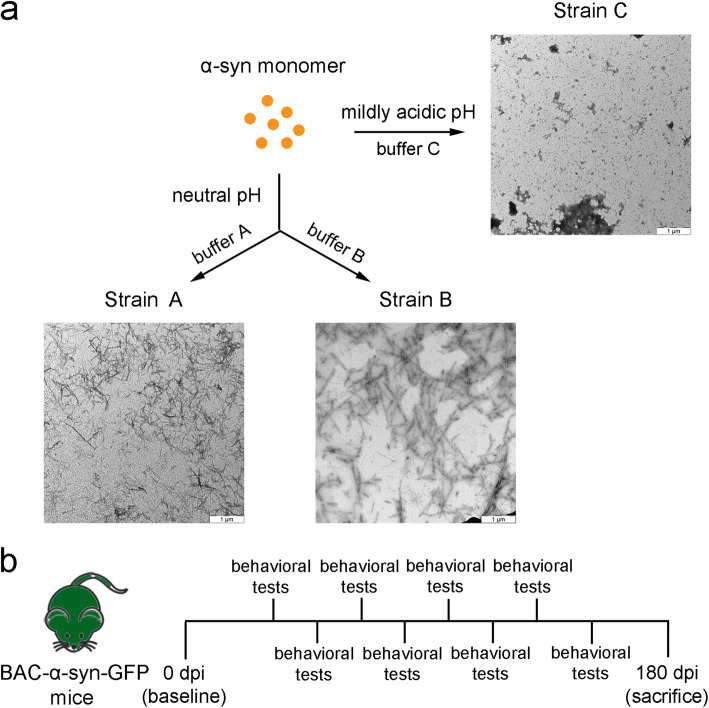
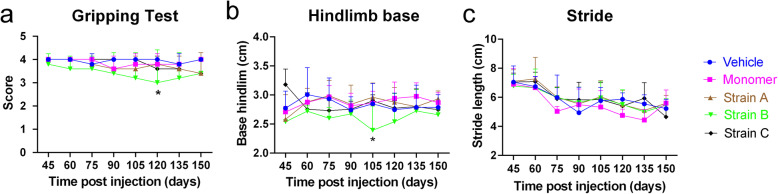
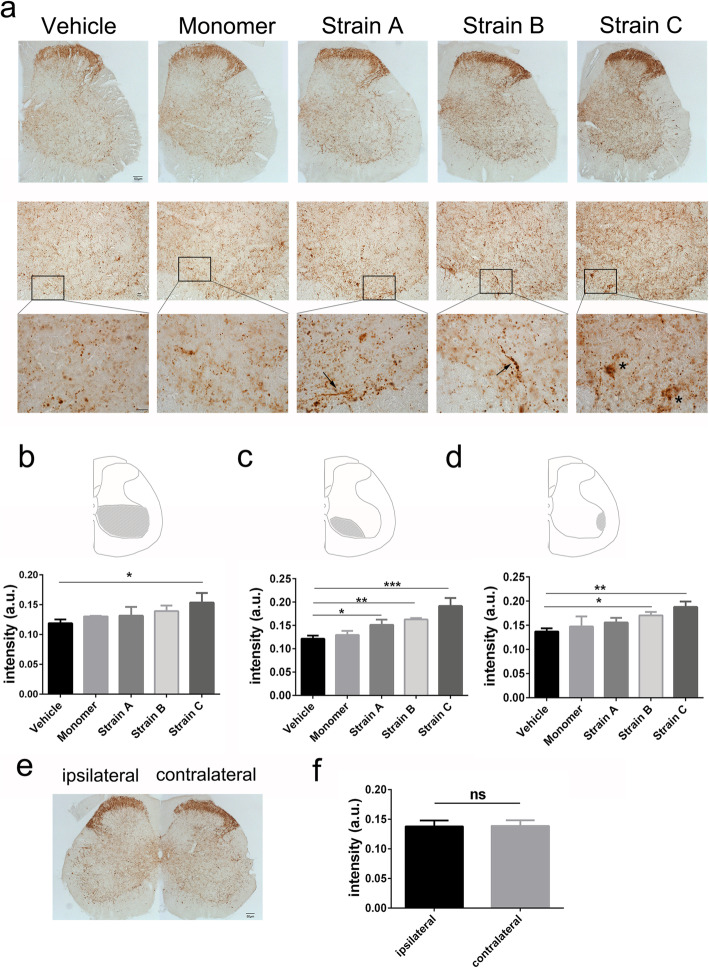
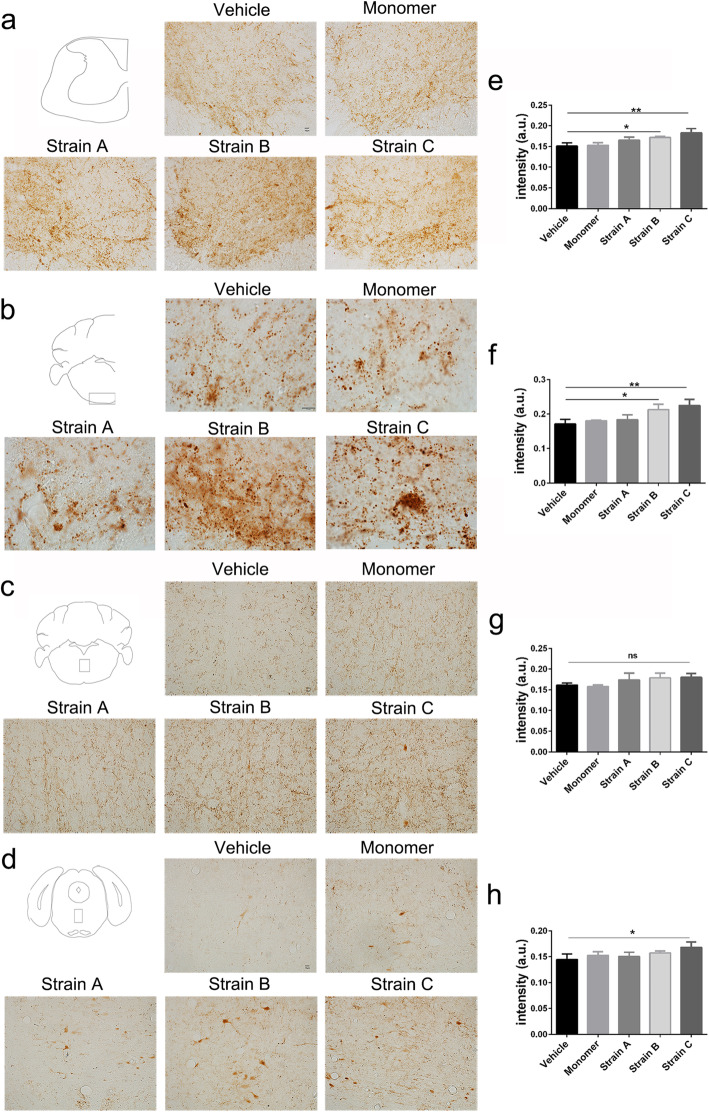
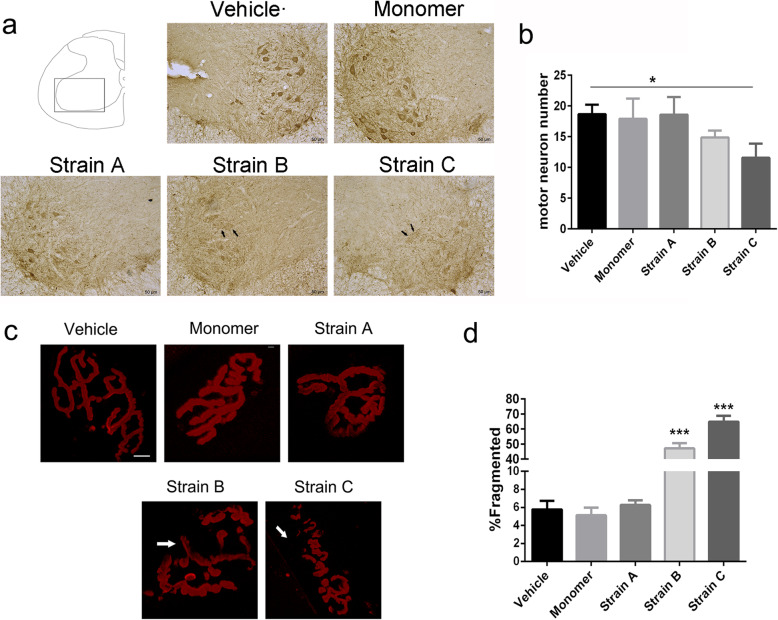
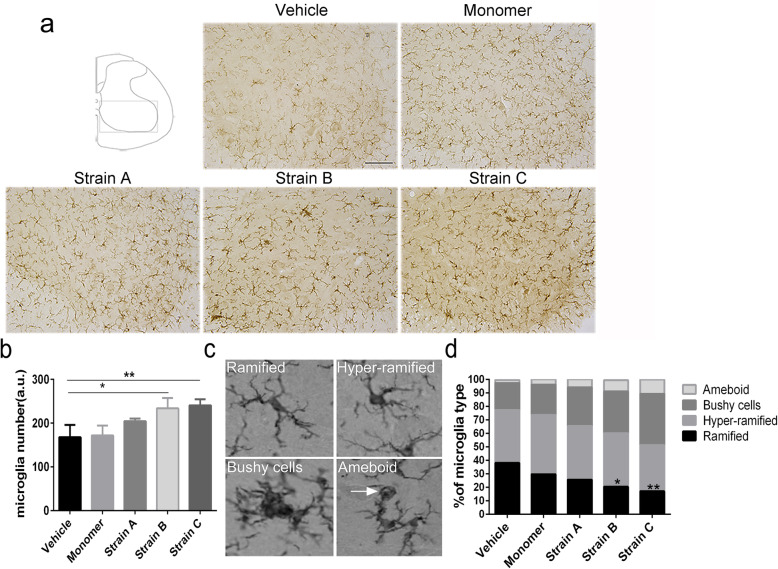
Background: Accumulation of alpha-synuclein (α-syn) is a main pathological hallmark of Parkinson’s and related diseases, which are collectively known as synucleinopathies. Growing evidence has supported that the same protein can induce remarkably distinct pathological progresses and disease phenotypes, suggesting the existence of strain difference among α-syn fibrils. Previous studies have shown that α-syn pathology can propagate from the peripheral nervous system (PNS) to the central nervous system (CNS) in a “prion-like” manner. However, the difference of the propagation potency from the periphery to CNS among different α-syn strains remains unknown and the effect of different generation processes of these strains on the potency of seeding and propagation remains to be revealed in more detail. Methods: Three strains of preformed α-syn fibrils (PFFs) were generated in different buffer conditions which varied in pH and ionic concentrations. The α-syn PFFs were intramuscularly (IM) injected into a novel bacterial artificial chromosome (BAC) transgenic mouse line that expresses wild-type human α-syn, and the efficiency of seeding and propagation of these PFFs from the PNS to the CNS was evaluated. Results: The three strains of α-syn PFFs triggered distinct propagation patterns. The fibrils generated in mildly acidic buffer led to the most severe α-syn pathology, degeneration of motor neurons and microgliosis in the spinal cord. Conclusions: The different α-syn conformers generated in different conditions exhibited strain-specific pathology and propagation patterns from the periphery to the CNS, which further supports the view that α-syn strains may be responsible for the heterogeneity of pathological features and disease progresses among synucleinopathies.
Overview
The claims and statistics of this paper haven’t been checked yet.
Free: it reads the open-access text and checks the first 5 claims that cite a source we can check. Create a free account to check every claim.
Integrity signals
Registry
Cites
Statistics
Figures
Verification
Claims the paper makes
The claims and statistics of this paper haven’t been checked yet.
Free: it reads the open-access text and checks the first 5 claims that cite a source we can check. Create a free account to check every claim.
Claims other papers make about this one
Each is checked against this paper’s own text: does it say what the citing paper says it does?
The source backs part of the claim, not all of it — or backs it for a different population, condition or comparison.
In the citing paper
“Moreover, strain-specific α-syn conformations exhibit distinct propensities for exosomal packaging, likely driving variability in “prion-like” propagation [159].”
From The Impact of Neurotoxin Proteins Trafficked by Primary Cilia and Extracellular Vesicles in Neurodegenerative Diseases (2025) · cites this paper as [159]
Experimental — accuracy not yet measured
Self-check
Percentages, sums and reported differences re-computed from the paper’s own numbers.
The self-check needs the paper’s full text.
Citations
Cites
Staging of brain pathology related to sporadic Parkinson’s disease
Braak, H., Tredici, K. D., Rüb, U., de Vos, R. A. I., Jansen Steur, E. N. H., & Braak, E. (2003) · Neurobiology of Aging · doi:10.1016/s0197-4580(02)00065-9 · Cited by 10,777
Spillantini, M. G., Schmidt, M. L., Lee, V. M.-Y., Trojanowski, J. Q., Jakes, R., & Goedert, M. (1997) · Nature · doi:10.1038/42166 · Cited by 8,382
U1 snRNP regulates cancer cell migration and invasion in vitro
Oh, J.-M., Venters, C. C., Di, C., Pinto, A. M., Wan, L., Younis, I., Cai, Z., Arai, C., So, B. R., Duan, J., et al. (2020) · Nature Communications · doi:10.1038/s41467-019-13993-7 · Cited by 7,157
Dauer, W., & Przedborski, S. (2003) · Neuron · doi:10.1016/s0896-6273(03)00568-3 · Cited by 5,469
Luk, K. C., Kehm, V., Carroll, J., Zhang, B., O’Brien, P., Trojanowski, J. Q., & Lee, V. M.-Y. (2012) · Science · doi:10.1126/science.1227157 · Cited by 2,563
α-Synuclein is phosphorylated in synucleinopathy lesions
Fujiwara, H., Hasegawa, M., Dohmae, N., Kawashima, A., Masliah, E., Goldberg, M. S., Shen, J., Takio, K., & Iwatsubo, T. (2002) · Nature Cell Biology · doi:10.1038/ncb748 · Cited by 2,132
Li, J.-Y., Englund, E., Holton, J. L., Soulet, D., Hagell, P., Lees, A. J., Lashley, T., Quinn, N. P., Rehncrona, S., Björklund, A., et al. (2008) · Nature Medicine · doi:10.1038/nm1746 · Cited by 1,845
Self-citationLewy body–like pathology in long-term embryonic nigral transplants in Parkinson's disease
Kordower, J. H., Chu, Y., Hauser, R. A., Freeman, T. B., & Olanow, C. W. (2008) · Nature Medicine · doi:10.1038/nm1747 · Cited by 1,722
The footprint of urban heat island effect in China
Zhou, D., Zhao, S., Zhang, L., Sun, G., & Liu, Y. (2015) · Scientific Reports · doi:10.1038/srep11160 · Cited by 1,621
(1998) · Europe PMC (PubMed Central) · Cited by 1,594
Cited by
Ferroptosis in Parkinson’s disease: glia–neuron crosstalk
Wang, Z.-L., Yuan, L., Li, W., & Li, J.-Y. (2022) · Trends in Molecular Medicine · doi:10.1016/j.molmed.2022.02.003 · Cited by 319
Self-citationLv, Q.-K., Tao, K., Yao, X., Pang, M., Cao, B., Liu, C., & Wang, F. (2024) · Journal of Pineal Research · doi:10.1111/jpi.12948 · Cited by 116
Propagation of tau and α-synuclein in the brain: therapeutic potential of the glymphatic system
Lopes, D. M., Llewellyn, S. K., & Harrison, I. F. (2022) · Translational Neurodegeneration · doi:10.1186/s40035-022-00293-2 · Cited by 81
Multiple system atrophy: α-Synuclein strains at the neuron-oligodendrocyte crossroad
Reddy, K., & Dieriks, B. V. (2022) · Molecular Neurodegeneration · doi:10.1186/s13024-022-00579-z · Cited by 56
So, R. W. L., & Watts, J. C. (2023) · Journal of Molecular Biology · doi:10.1016/j.jmb.2023.168011 · Cited by 51
Impact of Microbiome–Brain Communication on Neuroinflammation and Neurodegeneration
Stolzer, I., Scherer, E., Süß, P., Rothhammer, V., Winner, B., Neurath, M. F., & Günther, C. (2023) · International Journal of Molecular Sciences · doi:10.3390/ijms241914925 · Cited by 50
Graves, N. J., Gambin, Y., & Sierecki, E. (2023) · International Journal of Molecular Sciences · doi:10.3390/ijms241512134 · Cited by 38
The Pathological Mechanism Between the Intestine and Brain in the Early Stage of Parkinson's Disease
Yang, R., Gao, G., & Yang, H. M. (2022) · Frontiers in Aging Neuroscience · doi:10.3389/fnagi.2022.861035 · Cited by 32
Iwaide, S., Murakami, T., Masoud, N. S., Kobayashi, N., Fortin, J. S., Miyahara, H., Higuchi, K., & CHAMBERS, J. K. (2024) · Veterinary Pathology · doi:10.1177/03009858241283750 · Cited by 31
Positron emission tomography tracers for synucleinopathies
Xiang, J., Zhang, Z., Wu, S., & Ye, K. (2025) · Molecular Neurodegeneration · doi:10.1186/s13024-024-00787-9 · Cited by 29
Human pericytes degrade diverse α-synuclein aggregates
Dieriks, B. V., Highet, B., Alik, A., Bellande, T., Stevenson, T. J., Low, V. F., Park, T., Correia, J. A., Schweder, P. M., Faull, R. L. M., et al. (2022) · PLoS ONE · doi:10.1371/journal.pone.0277658 · Cited by 28
α-Synuclein aggregates inhibit ESCRT-III through sequestration and collateral degradation
Sitron, C. S., Trinkaus, V. A., Galesic, A., Garhammer, M., Yuste‐Checa, P., Dransfeld, U., Feigenbutz, D., Zhang, J., Ivashko, L., Dudanova, I., et al. (2025) · Molecular Cell · doi:10.1016/j.molcel.2025.08.022 · Cited by 22
Is Multiple System Atrophy a Prion-like Disorder?
Jellinger, K. A., Wenning, G. K., & Stefanova, N. (2021) · International Journal of Molecular Sciences · doi:10.3390/ijms221810093 · Cited by 22
Peelaerts, W., & Baekelandt, V. (2023) · Neurotherapeutics · doi:10.1007/s13311-023-01365-5 · Cited by 20
Modulating α-synuclein propagation and decomposition: Implications in Parkinson's disease therapy
Li, B., Xiao, X., Bi, M., Jiao, Q., Chen, X., Yan, C., Du, X., & Jiang, H. F. (2024) · Ageing Research Reviews · doi:10.1016/j.arr.2024.102319 · Cited by 15
Zhan, X., Li, W., Hatterer, E., Courade, J., Piché, K., Klementieva, O. L., & Li, J. (2025) · Journal of the American Chemical Society · doi:10.1021/jacs.5c02811 · Cited by 14
Self-citationRuiz, E., Wilkaniec, A., & Adamczyk, A. (2024) · Frontiers in Molecular Neuroscience · doi:10.3389/fnmol.2024.1494218 · Cited by 13
Sheng, Y.-C., Huang, J., Wu, W.-L., Wan, X., Wang, J., Qin, Z., & Wang, Y. (2025) · European Journal of Pharmacology · doi:10.1016/j.ejphar.2025.177430 · Cited by 10
The carbon dots based on Nile red: The preparation and application to probe α-synuclein fibrils
Li, Q., Ma, L.-Y., Li, L., Zhang, J., Li, X., Zhang, Y., Jiang, M., Luo, W.-C., Yang, L.-J., Li, Z., et al. (2024) · Sensors and Actuators B Chemical · doi:10.1016/j.snb.2024.135785 · Cited by 9
Effect of host and strain factors on α-synuclein prion pathogenesis
Woerman, A. L., & Bartz, J. C. (2024) · Trends in Neurosciences · doi:10.1016/j.tins.2024.05.004 · Cited by 9
Detection of TDP‐43 seeds in CSF of presymptomatic and symptomatic genetic FTD/ALS
Dellarole, I. L., Aprea, V., Catania, M., Battipaglia, C., Romeo, A., Villa, C., Burato, A., Celauro, L., Bella, E. D., Riva, N., et al. (2025) · Alzheimer s & Dementia · doi:10.1002/alz.70989 · Cited by 9
Thermodynamic stability modulates chaperone-mediated disaggregation of α-synuclein fibrils
Fricke, C., Kunka, A., Norrild, R. K., Wang, S., Dang, T. L., Folke, J., Shahnawaz, M., Soto, C. A., Aznar, S., Wentink, A. S., et al. (2026) · Chemical Science · doi:10.1039/d5sc04927j · Cited by 8
Luo, H., Peng, C., Wu, C.-S. C., Liu, C., Li, Q., Yu, S., Liu, J., & Chen, M. (2024) · Neural Regeneration Research · doi:10.4103/nrr.nrr-d-23-01965 · Cited by 9
Ruiz, E., Wilkaniec, A., Juárez, J., & Adamczyk, A. (2025) · Acta Neuropathologica Communications · doi:10.1186/s40478-025-02190-x · Cited by 5
New Targets for Positron Emission Tomography Imaging in Parkinson´s Disease
Yang, Y., Zhao, Y.-X., Li, X., & Zuo, C. (2025) · Seminars in Nuclear Medicine · doi:10.1053/j.semnuclmed.2025.05.004 · Cited by 4
Targeting non-apoptotic regulated cell death (RCD) to treat neurodegenerative diseases
Zhao, W., Lai, Y., Li, Z., Yuan, Z., Wen, Z., & Zhang, L. (2026) · Acta Pharmaceutica Sinica B · doi:10.1016/j.apsb.2026.01.040 · Cited by 3
Danna, R., Kondle, S., Amar, O., Mabourakh, M., Chen, G., Fadol, W. B., & Mohieldin, A. M. (2025) · Biology · doi:10.3390/biology14121787 · Cited by 2
“Moreover, strain-specific α -syn conformations exhibit distinct propensities for exosomal packaging, likely driving variability in “prion-like” propagation [159].”
Sánchez-Camacho, J. V., Gómez-Chavarín, M., Galindo-Solano, N., Padilla-Cortés, P., Maldonado-García, J. L., Pérez‐Sánchez, G., Pavón, L., Ramírez‐Santos, J., Roldán-Roldán, G., Gómez‐López, M., et al. (2024) · International Journal of Molecular Sciences · doi:10.3390/ijms252312635 · Cited by 2
LRP1 Regulates the Uptake and Propagation of α-SynucleinPreprint
Peng, C., Luo, H., Liu, J., Li, Q., Liu, C., & Chen, M. (2022) · Research Square · doi:10.21203/rs.3.rs-1411309/v1 · Cited by 2
Deciphering the Seed Size-Dependent Cellular Internalization Mechanism for α-Synuclein Fibrils
Sakunthala, A., & Maji, S. K. (2025) · Biochemistry · doi:10.1021/acs.biochem.4c00667 · Cited by 2
Samidurai, M., Chennakesavan, K., Sarkar, S., Malovic, E., Nguyen, H. M., Singh, L., Kumar, A., Ealy, A., Janarthanam, C., Palanisamy, B. N., et al. (2025) · bioRxiv (Cold Spring Harbor Laboratory) · doi:10.1101/2025.03.18.643982 · Cited by 1
A Degron Decoy System Co-opts Pathological Seeding to Enable Clearance of Multimeric α-SynucleinPreprint
Gadbois, G. E., Plonski, A. P., Debelouchina, G. T., & Ferguson, F. M. (2026) · bioRxiv (Cold Spring Harbor Laboratory) · doi:10.64898/2026.02.23.706428 · Cited by 1
Parkinson's disease pathogenesis: From molecular insights to novel therapies
Ramli, M. D. C., Abidin, Z. Z., Okunsai, B., Umbar, G. S. A., & Mauta, T. E. (2026) · Elsevier eBooks · doi:10.1016/b978-0-443-27702-3.00027-3
Li, L., Rejna, M. J., Woon, Z.-N., Chee, J. C., Kedir, W. M., Chen, Y.-J., & Loke, D. K. (2026) · Chemical Engineering Journal · doi:10.1016/j.cej.2026.183964
CRISPRa-mediated activation of Tfeb in a fibril-induced alpha-synuclein aggregation modelPreprint
Arvidsson, E., Börjesson, E. P., Sabarese, E., Quintino, L., & Lundberg, C. (2026) · bioRxiv (Cold Spring Harbor Laboratory) · doi:10.64898/2026.10.16.757246
Metadata
- Authors
- Liu, D., Guo, J.-J., Su, J.-H., Svanbergsson, A., Yuan, L., Haikal, C., Li, W., Gouras, G., & Li, J.-Y.
- Affiliations
- Lund University (SE)
- China Medical University (CN)
- Venue
- Translational Neurodegeneration
- Published
- 2021-06-21
- Volume
- 10
- Issue
- 1
- Pages
- 20-20
- ISSN
- 2047-9158 (ISSN-L)
- PMC
- PMC8215826
- OpenAlex
- W3175067089
- Cited by
- 32
- References
- 96
- Citations by year
- 2026: 3 · 2025: 11 · 2024: 8 · 2023: 4 · 2022: 5 · 2021: 1
- FWCI
- 2.15
- Type
- journal article
- Language
- en
- Open access
- gold
- doi.org
- Licence
- cc-by
- creativecommons.org/licenses/by/4.0 (tdm)
- creativecommons.org/licenses/by/4.0 (vor)
- Locations
- Translational Neurodegeneration (publishedVersion, cc-by)
- PubMed Central (publishedVersion, cc-by)
- PubMed (publishedVersion)
- DOAJ (DOAJ: Directory of Open Access Journals) (submittedVersion, cc-by-sa)
- Lund University Publications (Lund University) (submittedVersion)
- Funders
- EU Joint Programme – Neurodegenerative Disease Research
- Strong
- National Natural Science Foundation of China (81701265, 31800898, U1801681, 81430025)
- Lunds Universitet
- Vetenskapsrådet (2019-01551, 521-2014-3257)
- China Scholarship Council
- Parkinsonfonden
- Horizon 2020 Framework Programme (H2020-MSCA, MSCA-ITN-2016, EU‐H2020, H2020-MSCA-ITN, H2020‐MSCA‐ITN‐2016)
- National Key Research and Development Program of China (2018YFA0108500)
- Topics
- Health Sciences › Medicine › Clinical Neurology › Parkinson's Disease Mechanisms and Treatments
- Life Sciences › Neuroscience › Cellular and Molecular Neuroscience › Alzheimer's disease research and treatments
- Life Sciences › Neuroscience › Neurology › Neuroinflammation and Neurodegeneration Mechanisms
- Keywords
- alpha-synuclein, prion-like propagation, synucleinopathies, Parkinson's disease, preformed fibrils, strain heterogeneity, seeding efficiency, motor neuron degeneration, microglial activation, spinal cord
- MeSH terms
- Synucleinopathies, Animals, Behavior, Animal, Central Nervous System, Humans, Hydrogen-Ion Concentration, Injections, Intramuscular, Mice, Inbred C57BL, Mice, Transgenic, Prions, Peripheral Nervous System, Chromosomes, Artificial, Bacterial, Mice, alpha-Synuclein, HEK293 Cells
About these checks
Registry, retraction, Cites and statistics results are computed, not judged, with one exception: a printed reference that no index lists is read once by a model before it counts as a citation error. Claims are extracted by a model and kept only when their quote appears verbatim in the text; each cited source is then checked, with a model’s help, for whether it says what the claim relies on. Those verdicts can be wrong — read the claim’s quote and the cited source before relying on one.
Statistics and arithmetic are recomputed, not judged.
Confidence bands are shown only for fields calibrated on our annotated test set. None is calibrated yet, so no band is shown.
What counts as a claim ›How we measure confidence ›How we check this ›
Are you an author, or do you see a problem with this page? Request a review
Data sources
Bibliographic data: Semantic Scholar, OpenAlex, Crossref.
Contains information from the Semantic Scholar Academic Graph Datasets, made available under the ODC Attribution License (ODC-BY 1.0).
Semantic Scholar’s data is described in: Kinney, R., et al. (2023). The Semantic Scholar Open Data Platform. arXiv:2301.10140.
