

Differential seeding and propagating efficiency of α-synuclein strains generated in different conditions
Open accessThe DOI matches its Crossref record; 96 of the 96 references it cites were found in a registry or an index.
Abstract
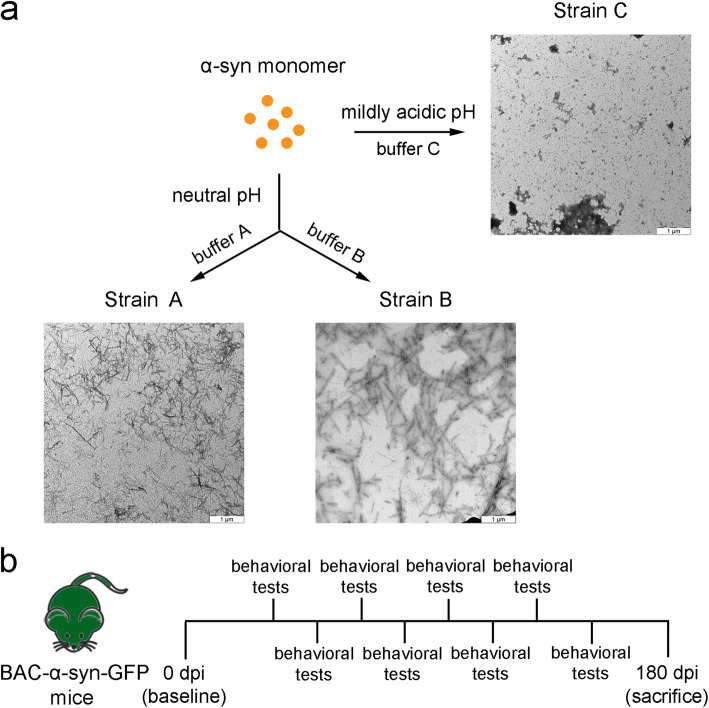
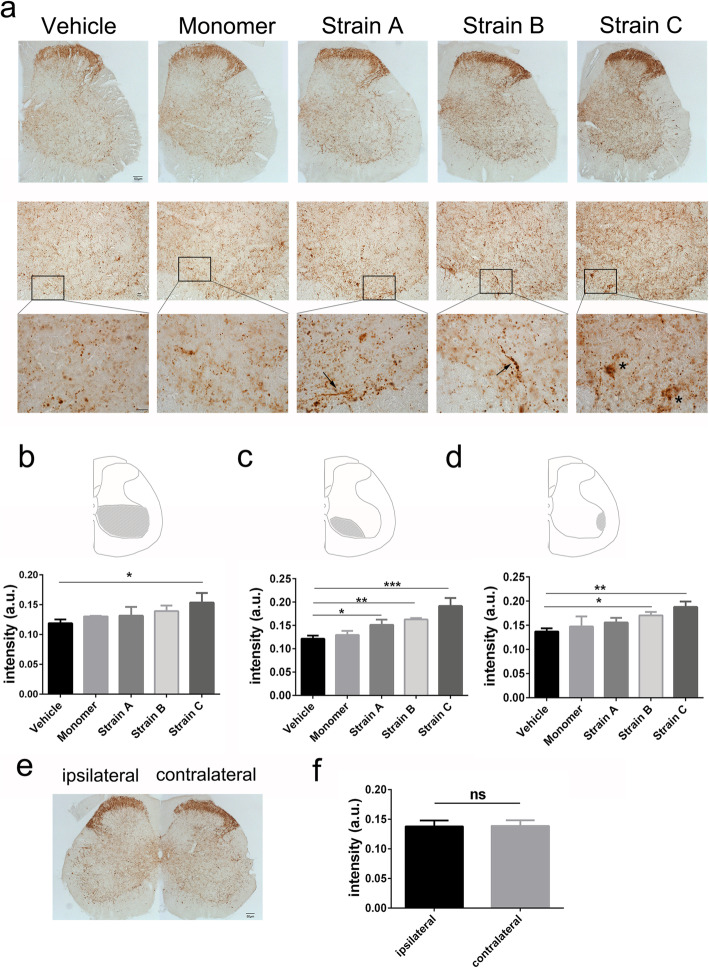
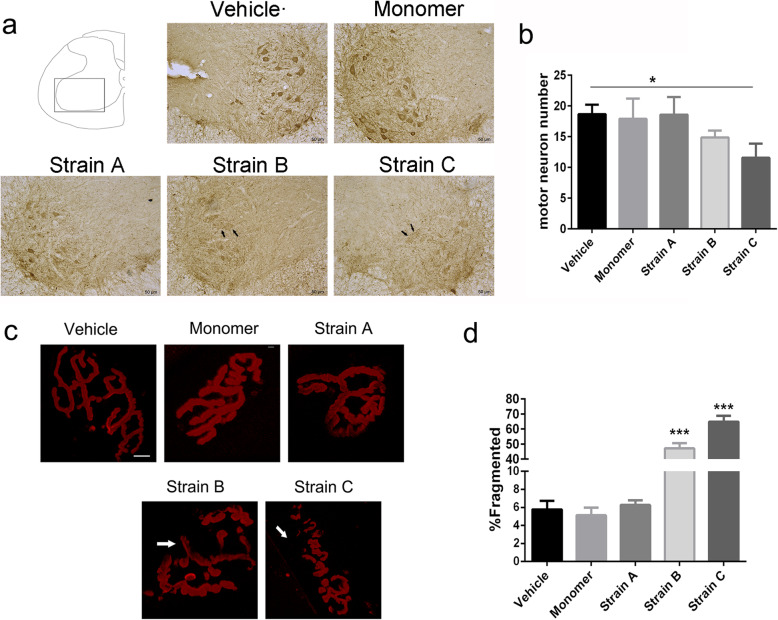
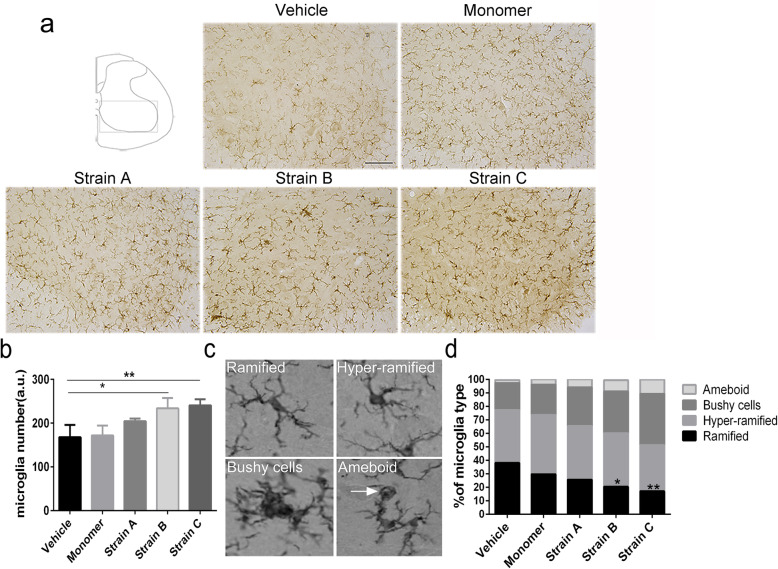
Background: Accumulation of alpha-synuclein (α-syn) is a main pathological hallmark of Parkinson’s and related diseases, which are collectively known as synucleinopathies. Growing evidence has supported that the same protein can induce remarkably distinct pathological progresses and disease phenotypes, suggesting the existence of strain difference among α-syn fibrils. Previous studies have shown that α-syn pathology can propagate from the peripheral nervous system (PNS) to the central nervous system (CNS) in a “prion-like” manner. However, the difference of the propagation potency from the periphery to CNS among different α-syn strains remains unknown and the effect of different generation processes of these strains on the potency of seeding and propagation remains to be revealed in more detail. Methods: Three strains of preformed α-syn fibrils (PFFs) were generated in different buffer conditions which varied in pH and ionic concentrations. The α-syn PFFs were intramuscularly (IM) injected into a novel bacterial artificial chromosome (BAC) transgenic mouse line that expresses wild-type human α-syn, and the efficiency of seeding and propagation of these PFFs from the PNS to the CNS was evaluated. Results: The three strains of α-syn PFFs triggered distinct propagation patterns. The fibrils generated in mildly acidic buffer led to the most severe α-syn pathology, degeneration of motor neurons and microgliosis in the spinal cord. Conclusions: The different α-syn conformers generated in different conditions exhibited strain-specific pathology and propagation patterns from the periphery to the CNS, which further supports the view that α-syn strains may be responsible for the heterogeneity of pathological features and disease progresses among synucleinopathies.
Overview
The claims and statistics of this paper haven’t been checked yet.
Free: it reads the open-access text and checks the first 5 claims that cite a source we can check. Create a free account to check every claim.
Integrity signals
Registry
Cites
Statistics
Figures
Verification
Claims the paper makes
The claims and statistics of this paper haven’t been checked yet.
Free: it reads the open-access text and checks the first 5 claims that cite a source we can check. Create a free account to check every claim.
Claims other papers make about this one
Each is checked against this paper’s own text: does it say what the citing paper says it does?
The source backs part of the claim, not all of it — or backs it for a different population, condition or comparison.
In the citing paper
“Moreover, strain-specific α-syn conformations exhibit distinct propensities for exosomal packaging, likely driving variability in “prion-like” propagation [159].”
From The Impact of Neurotoxin Proteins Trafficked by Primary Cilia and Extracellular Vesicles in Neurodegenerative Diseases (2025) · cites this paper as [159]
Experimental — accuracy not yet measured
Self-check
Percentages, sums and reported differences re-computed from the paper’s own numbers.
The self-check needs the paper’s full text.
Citations
Cites
Staging of brain pathology related to sporadic Parkinson’s disease
Braak, H., Tredici, K. D., Rüb, U., de Vos, R. A. I., Jansen Steur, E. N. H., & Braak, E. (2003) · Neurobiology of Aging · doi:10.1016/s0197-4580(02)00065-9 · Cited by 10,777
Spillantini, M. G., Schmidt, M. L., Lee, V. M.-Y., Trojanowski, J. Q., Jakes, R., & Goedert, M. (1997) · Nature · doi:10.1038/42166 · Cited by 8,382
U1 snRNP regulates cancer cell migration and invasion in vitro
Oh, J.-M., Venters, C. C., Di, C., Pinto, A. M., Wan, L., Younis, I., Cai, Z., Arai, C., So, B. R., Duan, J., et al. (2020) · Nature Communications · doi:10.1038/s41467-019-13993-7 · Cited by 7,157
Dauer, W., & Przedborski, S. (2003) · Neuron · doi:10.1016/s0896-6273(03)00568-3 · Cited by 5,469
Luk, K. C., Kehm, V., Carroll, J., Zhang, B., O’Brien, P., Trojanowski, J. Q., & Lee, V. M.-Y. (2012) · Science · doi:10.1126/science.1227157 · Cited by 2,563
α-Synuclein is phosphorylated in synucleinopathy lesions
Fujiwara, H., Hasegawa, M., Dohmae, N., Kawashima, A., Masliah, E., Goldberg, M. S., Shen, J., Takio, K., & Iwatsubo, T. (2002) · Nature Cell Biology · doi:10.1038/ncb748 · Cited by 2,132
Li, J.-Y., Englund, E., Holton, J. L., Soulet, D., Hagell, P., Lees, A. J., Lashley, T., Quinn, N. P., Rehncrona, S., Björklund, A., et al. (2008) · Nature Medicine · doi:10.1038/nm1746 · Cited by 1,845
Self-citationLewy body–like pathology in long-term embryonic nigral transplants in Parkinson's disease
Kordower, J. H., Chu, Y., Hauser, R. A., Freeman, T. B., & Olanow, C. W. (2008) · Nature Medicine · doi:10.1038/nm1747 · Cited by 1,722
The footprint of urban heat island effect in China
Zhou, D., Zhao, S., Zhang, L., Sun, G., & Liu, Y. (2015) · Scientific Reports · doi:10.1038/srep11160 · Cited by 1,621
(1998) · Europe PMC (PubMed Central) · Cited by 1,594
Volpicelli-Daley, L. A., Luk, K. C., Patel, T. P., Tanik, S. A., Riddle, D. M., Stieber, A., Meaney, D. F., Trojanowski, J. Q., & Lee, V. M.-Y. (2011) · Neuron · doi:10.1016/j.neuron.2011.08.033 · Cited by 1,569
Conway, K. A., Lee, S.-J., Rochet, J.-C., Ding, T. T., Williamson, R. E., & Lansbury, P. T. (2000) · Proceedings of the National Academy of Sciences · doi:10.1073/pnas.97.2.571 · Cited by 1,541
Anderson, J. P., Walker, D. E., Goldstein, J. M., de Laat, R., Banducci, K., Caccavello, R. J., Barbour, R., Huang, J., Kling, K., Lee, M., et al. (2006) · Journal of Biological Chemistry · doi:10.1074/jbc.m600933200 · Cited by 1,416
Alpha-synuclein and neurodegenerative diseases
Goedert, M. (2001) · Nature Reviews Neuroscience · doi:10.1038/35081564 · Cited by 1,408
Kim, S., Kwon, S.-H., Kam, T.-I., Panicker, N., Karuppagounder, S. S., Lee, S., Lee, J. H., Kim, W. R., Kook, M., Foss, C. A., et al. (2019) · Neuron · doi:10.1016/j.neuron.2019.05.035 · Cited by 1,397
Disease duration and the integrity of the nigrostriatal system in Parkinson’s disease
Kordower, J. H., Olanow, C. W., Dodiya, H. B., Chu, Y., Beach, T. G., Adler, C. H., Halliday, G. M., & Bartus, R. T. (2013) · Brain · doi:10.1093/brain/awt192 · Cited by 1,286
α-Synuclein strains cause distinct synucleinopathies after local and systemic administration
Peelaerts, W., Bousset, L., Van der Perren, A., Moskalyuk, A., Pulizzi, R., Giugliano, M., Van den Haute, C., Melki, R., & Baekelandt, V. (2015) · Nature · doi:10.1038/nature14547 · Cited by 1,130 · cited 1×
“have shown that α-syn strains assembled from the same precursor α-syn but in different buffers have varied biological activities and abilities of transmission in vivo [35, 36].”
BackgroundLuk, K. C., Kehm, V. M., Zhang, B., O’Brien, P., Trojanowski, J. Q., & Lee, V. M. Y. (2012) · Journal of Experimental Medicine · doi:10.1084/jem.20112457 · Cited by 1,100
Evidence for a Partially Folded Intermediate in α-Synuclein Fibril Formation
Uversky, V. N., Li, J., & Fink, A. L. (2001) · Journal of Biological Chemistry · doi:10.1074/jbc.m010907200 · Cited by 1,096 · cited 2×
“In addition, lower pH can affect the lag time and the elongation rate, leading to acceleration of the kinetics of α-syn fibrillation [55].”
BackgroundSelf-citationNeuropathological assessment of Parkinson’s disease: refining the diagnostic criteria
Dickson, D. W., Braak, H., Duda, J. E., Duyckaerts, C., Gasser, T., Halliday, G. M., Hardy, J., Leverenz, J. B., Del Tredici, K., Wszolek, Z. K., et al. (2009) · The Lancet Neurology · doi:10.1016/s1474-4422(09)70238-8 · Cited by 972
Direct evidence of Parkinson pathology spread from the gastrointestinal tract to the brain in rats
Holmqvist, S., Chutna, O., Bousset, L., Aldrin-Kirk, P., Li, W., Björklund, T., Wang, Z.-Y., Roybon, L., Melki, R., & Li, J.-Y. (2014) · Acta Neuropathologica · doi:10.1007/s00401-014-1343-6 · Cited by 925
Self-citationStructural and functional characterization of two alpha-synuclein strains
Bousset, L., Pieri, L., Ruiz-Arlandis, G., Gath, J., Jensen, P. H., Habenstein, B., Madiona, K., Olieric, V., Böckmann, A., Meier, B. H., et al. (2013) · Nature Communications · doi:10.1038/ncomms3575 · Cited by 909
Prion-like spreading of pathological α-synuclein in brain
Masuda-Suzukake, M., Nonaka, T., Hosokawa, M., Oikawa, T., Arai, T., Akiyama, H., Mann, D. M. A., & Hasegawa, M. (2013) · Brain · doi:10.1093/brain/awt037 · Cited by 867
Telling, G. C., Scott, M., Mastrianni, J., Gabizon, R., Torchia, M., Cohen, F. E., DeArmond, S. J., & Prusiner, S. B. (1995) · Cell · doi:10.1016/0092-8674(95)90236-8 · Cited by 857
Hansen, C., Angot, E., Bergström, A.-L., Steiner, J. A., Pieri, L., Paul, G., Outeiro, T. F., Melki, R., Kallunki, P., Fog, K., et al. (2011) · Journal of Clinical Investigation · doi:10.1172/jci43366 · Cited by 842
Self-citationBendor, J. T., Logan, T. P., & Edwards, R. H. (2013) · Neuron · doi:10.1016/j.neuron.2013.09.004 · Cited by 825
Discriminating α-synuclein strains in Parkinson’s disease and multiple system atrophy
Shahnawaz, M., Mukherjee, A., Pritzkow, S., Mendez, N., Rabadia, P., Liu, X., Hu, B., Schmeichel, A., Singer, W., Wu, G., et al. (2020) · Nature · doi:10.1038/s41586-020-1984-7 · Cited by 820
α-Synuclein Fibrillogenesis Is Nucleation-dependent
Wood, S. J., Wypych, J., Steavenson, S., Louis, J.-C., Citron, M., & Biere, A. L. (1999) · Journal of Biological Chemistry · doi:10.1074/jbc.274.28.19509 · Cited by 720
Both Familial Parkinson's Disease Mutations Accelerate α-Synuclein Aggregation
Narhi, L., Wood, S. J., Steavenson, S., Jiang, Y., Wu, G. M., Anafi, D., Kaufman, S. A., Martin, F., Sitney, K., Denis, P., et al. (1999) · Journal of Biological Chemistry · doi:10.1074/jbc.274.14.9843 · Cited by 710
the Arizona Parkinson’s Disease Consortium, Beach, T. G., Adler, C. H., Lue, L., Sue, L. I., Bachalakuri, J., Henry-Watson, J., Sasse, J., Boyer, S., Shirohi, S., et al. (2009) · Acta Neuropathologica · doi:10.1007/s00401-009-0538-8 · Cited by 698
Evidence for α-synuclein prions causing multiple system atrophy in humans with parkinsonism
Prusiner, S. B., Woerman, A. L., Mordes, D. A., Watts, J. C., Rampersaud, R., Berry, D. B., Patel, S., Oehler, A., Lowe, J. K., Kravitz, S. N., et al. (2015) · Proceedings of the National Academy of Sciences · doi:10.1073/pnas.1514475112 · Cited by 689
Buell, A. K., Galvagnion, C., Gaspar, R., Sparr, E., Vendruscolo, M., Knowles, T. P. J., Linse, S., & Dobson, C. M. (2014) · Proceedings of the National Academy of Sciences · doi:10.1073/pnas.1315346111 · Cited by 664
α-Synuclein immunoreactivity in glial cytoplasmic inclusions in multiple system atrophy
Wakabayashi, K., Yoshimoto, M., Tsuji, S., & Takahashi, H. (1998) · Neuroscience Letters · doi:10.1016/s0304-3940(98)00407-8 · Cited by 643
Braak, H., Bohl, J. R., Müller, C. M., Rüb, U., de Vos, R. A. I., & Del Tredici, K. (2006) · Movement Disorders · doi:10.1002/mds.21065 · Cited by 630
Inflammation and neurodegeneration in Parkinson's disease
McGeer, P. L., & McGeer, E. G. (2004) · Parkinsonism & Related Disorders · doi:10.1016/j.parkreldis.2004.01.005 · Cited by 625
Cellular milieu imparts distinct pathological α-synuclein strains in α-synucleinopathies
Peng, C., Gathagan, R. J., Covell, D. J., Medellin, C., Stieber, A., Robinson, J. L., Zhang, B., Pitkin, R. M., Olufemi, M. F., Luk, K. C., et al. (2018) · Nature · doi:10.1038/s41586-018-0104-4 · Cited by 605 · cited 1×
“Moreover, it remains unclear how different α-syn strains induce different pathologies, and the factors influencing the seeding and spreading process of α-syn from the periphery to the CNS still need further elaboration, from both views of endogenous cellular environment [39, 40] and the strain-specific characteristics…”
BackgroundDependence of α-Synuclein Aggregate Morphology on Solution Conditions
Hoyer, W., Antony, T., Cherny, D., Heim, G., Jovin, T. M., & Subramaniam, V. (2002) · Journal of Molecular Biology · doi:10.1016/s0022-2836(02)00775-1 · Cited by 565
Quantitating the subtleties of microglial morphology with fractal analysis
Karperien, A., Ahammer, H., & Jelinek, H. F. (2013) · Frontiers in Cellular Neuroscience · doi:10.3389/fncel.2013.00003 · Cited by 538
The α‐Synucleinopathies: Parkinson's Disease, Dementia with Lewy Bodies, and Multiple System Atrophy
SPILLANTINI, M. G., & GOEDERT, M. (2000) · Annals of the New York Academy of Sciences · doi:10.1111/j.1749-6632.2000.tb06900.x · Cited by 523
Li, J., Uversky, V. N., & Fink, A. L. (2001) · Biochemistry · doi:10.1021/bi010616g · Cited by 513
Self-citationThe Aggregation and Fibrillation of α-Synuclein
Fink, A. L. (2006) · Accounts of Chemical Research · doi:10.1021/ar050073t · Cited by 501
Valdez, G., Tapia, J. C., Kang, H., Clemenson, G. D., Gage, F. H., Lichtman, J. W., & Sanes, J. R. (2010) · Proceedings of the National Academy of Sciences · doi:10.1073/pnas.1002220107 · Cited by 500
Synucleins in synaptic plasticity and neurodegenerative disorders
Clayton, D. F., & George, J. M. (1999) · Journal of Neuroscience Research · doi:10.1002/(sici)1097-4547(19991001)58:1<120::aid-jnr12>3.0.co;2-e · Cited by 442
Transmission of multiple system atrophy prions to transgenic mice
Watts, J. C., Giles, K., Oehler, A., Middleton, L., Dexter, D. T., Gentleman, S. M., DeArmond, S. J., & Prusiner, S. B. (2013) · Proceedings of the National Academy of Sciences · doi:10.1073/pnas.1318268110 · Cited by 438
Neuroinflammation and Oxidation/Nitration of α-Synuclein Linked to Dopaminergic Neurodegeneration
Gao, H.-M., Kotzbauer, P. T., Uryu, K., Leight, S., Trojanowski, J. Q., & Lee, V. M.-Y. (2008) · The Journal of Neuroscience · doi:10.1523/jneurosci.0143-07.2008 · Cited by 436
Hu, F., Jiang, X., Guo, C., Li, Y., Chen, S., Zhang, W., Du, Y., Wang, P., Zheng, X., Fang, X., et al. (2020) · Nature Communications · doi:10.1038/s41467-020-15700-3 · Cited by 418
Self-citationPaumier, K. L., Luk, K. C., Manfredsson, F. P., Kanaan, N. M., Lipton, J. W., Collier, T. J., Steece-Collier, K., Kemp, C. J., Celano, S., Schulz, E., et al. (2015) · Neurobiology of Disease · doi:10.1016/j.nbd.2015.06.003 · Cited by 392
Prion-like acceleration of a synucleinopathy in a transgenic mouse model
Mougenot, A.-L., Nicot, S., Bencsik, A., Morignat, E., Verchère, J., Lakhdar, L., Legastelois, S., & Baron, T. (2012) · Neurobiology of Aging · doi:10.1016/j.neurobiolaging.2011.06.022 · Cited by 387
Gao, H.-M., Zhang, F., Zhou, H., Kam, W., Wilson, B., & Hong, J.-S. (2011) · Environmental Health Perspectives · doi:10.1289/ehp.1003013 · Cited by 355 · cited 1×
“has been reported that the IC or peripheral injection of LPS could induce α-syn pathology in homozygous M83 mice [87, 88], and LPS has been shown to cause α-syn”
BackgroundSacino, A. N., Brooks, M., Thomas, M. A., McKinney, A. B., Lee, S., Regenhardt, R. W., McGarvey, N. H., Ayers, J. I., Notterpek, L., Borchelt, D. R., et al. (2014) · Proceedings of the National Academy of Sciences · doi:10.1073/pnas.1321785111 · Cited by 339
Microglial cell population dynamics in the injured adult central nervous system
Ladeby, R., Wirenfeldt, M., Garcia-Ovejero, D., Fenger, C., Dissing-Olesen, L., Dalmau, I., & Finsen, B. (2005) · Brain Research Reviews · doi:10.1016/j.brainresrev.2004.12.009 · Cited by 334 · cited 1×
“The activation of microglia is thought to cause the loss of dopaminergic neurons in PD [49, 50].”
BackgroundBloch, A., Probst, A., Bissig, H., Adams, H., & Tolnay, M. (2006) · Neuropathology and Applied Neurobiology · doi:10.1111/j.1365-2990.2006.00727.x · Cited by 330
Telling, G. C., Scott, M., Hsiao, K. K., Foster, D., Yang, S. L., Torchia, M., Sidle, K. C., Collinge, J., DeArmond, S. J., & Prusiner, S. B. (1994) · Proceedings of the National Academy of Sciences · doi:10.1073/pnas.91.21.9936 · Cited by 314
Li, W., Englund, E., Widner, H., Mattsson, B., van Westen, D., Lätt, J., Rehncrona, S., Brundin, P., Björklund, A., Lindvall, O., et al. (2016) · Proceedings of the National Academy of Sciences · doi:10.1073/pnas.1605245113 · Cited by 313
Self-citationα-Synuclein strains target distinct brain regions and cell types
Lau, A., So, R. W. L., Lau, H. H. C., Sang, J. C., Ruiz-Riquelme, A., Fleck, S. C., Stuart, E., Menon, S., Visanji, N. P., Meisl, G., et al. (2020) · Nature Neuroscience · doi:10.1038/s41593-019-0541-x · Cited by 309
Kelly, L. P., Carvey, P. M., Keshavarzian, A., Shannon, K. M., Shaikh, M., Bakay, R. A. E., & Kordower, J. H. (2014) · Movement Disorders · doi:10.1002/mds.25736 · Cited by 308 · cited 1×
“accumulation, dopaminergic degeneration and motor dysfunction [30, 89, 90].”
Van der Perren, A., Gelders, G., Fenyi, A., Bousset, L., Brito, F., Peelaerts, W., Van den Haute, C., Gentleman, S., Melki, R., & Baekelandt, V. (2020) · Acta Neuropathologica · doi:10.1007/s00401-020-02157-3 · Cited by 277
Transfer of human α-synuclein from the olfactory bulb to interconnected brain regions in mice
Rey, N. L., Petit, G. H., Bousset, L., Melki, R., & Brundin, P. (2013) · Acta Neuropathologica · doi:10.1007/s00401-013-1160-3 · Cited by 267
El-Agnaf, O. M. A., Jakes, R., Curran, M. D., & Wallace, A. (1998) · FEBS Letters · doi:10.1016/s0014-5793(98)01419-7 · Cited by 258
Propagation of prions causing synucleinopathies in cultured cells
Woerman, A. L., Stöhr, J., Aoyagi, A., Rampersaud, R., Krejciova, Z., Watts, J. C., Ohyama, T., Patel, S., Widjaja, K., Oehler, A., et al. (2015) · Proceedings of the National Academy of Sciences · doi:10.1073/pnas.1513426112 · Cited by 247
Structural heterogeneity of α-synuclein fibrils amplified from patient brain extracts
Strohäker, T., Jung, B. C., Liou, S.-H., Fernandez, C. O., Riedel, D., Becker, S., Halliday, G. M., Bennati, M., Kim, W. S., Lee, S.-J., et al. (2019) · Nature Communications · doi:10.1038/s41467-019-13564-w · Cited by 223
Rey, N. L., George, S., Steiner, J. A., Madaj, Z., Luk, K. C., Trojanowski, J. Q., Lee, V. M.-Y., & Brundin, P. (2018) · Acta Neuropathologica · doi:10.1007/s00401-017-1792-9 · Cited by 215
Molecular mechanisms of α-synuclein neurodegeneration
Waxman, E. A., & Giasson, B. I. (2009) · Biochimica et Biophysica Acta (BBA) - Molecular Basis of Disease · doi:10.1016/j.bbadis.2008.09.013 · Cited by 213
Ghosh, D., Singh, P. K., Sahay, S., Jha, N. N., Jacob, R. S., Sen, S., Kumar, A., Riek, R., & Maji, S. K. (2015) · Scientific Reports · doi:10.1038/srep09228 · Cited by 211
Bernis, M. E., Babila, J. T., Breid, S., Wüsten, K. A., Wüllner, U., & Tamgüney, G. (2015) · Acta Neuropathologica Communications · doi:10.1186/s40478-015-0254-7 · Cited by 166
Ma, S. Y., Röyttä, M., Rinne, J. O., Collan, Y., & Rinne, U. K. (1997) · Journal of the Neurological Sciences · doi:10.1016/s0022-510x(97)00100-7 · Cited by 160
Araki, K., Yagi, N., Aoyama, K., Choong, C., Hayakawa, H., Fujimura, H., Nagai, Y., Goto, Y., & Mochizuki, H. (2019) · Proceedings of the National Academy of Sciences · doi:10.1073/pnas.1906124116 · Cited by 156
Propagation of α-Synuclein Strains within Human Reconstructed Neuronal Network
Gribaudo, S., Tixador, P., Bousset, L., Fenyi, A., Lino, P., Melki, R., Peyrin, J.-M., & Perrier, A. L. (2019) · Stem Cell Reports · doi:10.1016/j.stemcr.2018.12.007 · Cited by 153
Evidence in favor of Braak staging of Parkinson's disease
Dickson, D. W., Uchikado, H., Fujishiro, H., & Tsuboi, Y. (2010) · Movement Disorders · doi:10.1002/mds.22637 · Cited by 126
The Effect of Fragmented Pathogenic α-Synuclein Seeds on Prion-like Propagation
Tarutani, A., Suzuki, G., Shimozawa, A., Nonaka, T., Akiyama, H., Hisanaga, S.-I., & Hasegawa, M. (2016) · Journal of Biological Chemistry · doi:10.1074/jbc.m116.734707 · Cited by 118 · cited 2×
“accumulation both in vitro and in vivo [58].”
BackgroundSeeding variability of different alpha synuclein strains in synucleinopathies
Candelise, N., Schmitz, M., Llorens, F., Villar‐Piqué, A., Cramm, M., Thom, T., da Silva Correia, S. M., da Cunha, J. E. G., Möbius, W., Outeiro, T. F., et al. (2019) · Annals of Neurology · doi:10.1002/ana.25446 · Cited by 118
Familial aggregation of early‐ and late‐onset Parkinson's disease
Marder, K., Levy, G., Louis, E. D., Mejia‐Santana, H., Cote, L., Andrews, H., Harris, J., Waters, C., Ford, B., Frucht, S., et al. (2003) · Annals of Neurology · doi:10.1002/ana.10711 · Cited by 103
Neuroinvasion of α-Synuclein Prionoids after Intraperitoneal and Intraglossal Inoculation
Breid, S., Bernis, M. E., Babila, J. T., Garza, M. C., Wille, H., & Tamgüney, G. (2016) · Journal of Virology · doi:10.1128/jvi.01399-16 · Cited by 103 · cited 1×
“Peripheral administration including intramuscular [41], intraperitoneal [79], intraglossal [79], intravenous [80, 81] and even oral [81] infusions of α-syn PFFs has been performed in M83 mice and all leads to the development of α-syn pathology.”
BackgroundOral and intravenous transmission of α-synuclein fibrils to mice
Lohmann, S., Bernis, M. E., Babila, J. T., Ziemski, A., Grigoletto, J., & Tamgüney, G. (2019) · Acta Neuropathologica · doi:10.1007/s00401-019-02037-5 · Cited by 102
Patterson, J. R., Duffy, M. F., Kemp, C. J., Howe, J. W., Collier, T. J., Stoll, A. C., Miller, K. M., Patel, P., Levine, N., Moore, D. J., et al. (2019) · Neurobiology of Disease · doi:10.1016/j.nbd.2019.104525 · Cited by 102
Ayers, J. I., Brooks, M. M., Rutherford, N. J., Howard, J. K., Sorrentino, Z. A., Riffe, C. J., & Giasson, B. I. (2017) · Journal of Virology · doi:10.1128/jvi.02095-16 · Cited by 98
Woerman, A. L., Oehler, A., Kazmi, S. A., Lee, J., Halliday, G. M., Middleton, L. T., Gentleman, S. M., Mordes, D. A., Spina, S., Grinberg, L. T., et al. (2019) · Acta Neuropathologica · doi:10.1007/s00401-019-01959-4 · Cited by 88
Selective vulnerability in α-synucleinopathies
Alegre-Abarrategui, J., Brimblecombe, K. R., Roberts, R. F., Velentza-Almpani, E., Tilley, B. S., Bengoa-Vergniory, N., & Proukakis, C. (2019) · Acta Neuropathologica · doi:10.1007/s00401-019-02010-2 · Cited by 87
Sorrentino, Z. A., Brooks, M. M. T., Hudson, V., Rutherford, N. J., Golde, T. E., Giasson, B. I., & Chakrabarty, P. (2017) · Molecular Neurodegeneration · doi:10.1186/s13024-017-0182-z · Cited by 79
He, Q., Yu, W., Wu, J., Chen, C., Lou, Z., Zhang, Q., Zhao, J., Wang, J., & Xiao, B. (2013) · PLoS ONE · doi:10.1371/journal.pone.0078418 · Cited by 72
α-synuclein strains that cause distinct pathologies differentially inhibit proteasome
Suzuki, G., Imura, S., Hosokawa, M., Katsumata, R., Nonaka, T., Hisanaga, S.-I., Saeki, Y., & Hasegawa, M. (2020) · eLife · doi:10.7554/elife.56825 · Cited by 72
Ganglioside lipids accelerate α-synuclein amyloid formation
Gaspar, R., Pallbo, J., Weininger, U., Linse, S. S., & Sparr, E. (2018) · Biochimica et Biophysica Acta (BBA) - Proteins and Proteomics · doi:10.1016/j.bbapap.2018.07.004 · Cited by 71
Hansen, C., Björklund, T., Petit, G. H., Lundblad, M., Murmu, R. P., Brundin, P., & Li, J.-Y. (2013) · Neurobiology of Disease · doi:10.1016/j.nbd.2013.04.017 · Cited by 70
Self-citationWang, X.-J., Ma, M.-M., Zhou, L.-B., Jiang, X.-Y., Hao, M.-M., Teng, R. K. F., Wu, E., Tang, B.-S., Li, J., Teng, J.-F., et al. (2020) · Nature Communications · doi:10.1038/s41467-019-14189-9 · Cited by 63
Self-citationMotor neuron loss and neuroinflammation in a model of α-synuclein-induced neurodegeneration
Sorrentino, Z. A., Xia, Y., Funk, C., Riffe, C. J., Rutherford, N. J., Ceballos Diaz, C., Sacino, A. N., Price, N. D., Golde, T. E., Giasson, B. I., et al. (2018) · Neurobiology of Disease · doi:10.1016/j.nbd.2018.09.005 · Cited by 54 · cited 1×
“Moreover, it has been found that α-syn pathology induced by IM injection with PFFs is largely doseindependent [82].”
BackgroundAn essential role for MEF2C in the cortical response to loss of sleep in mice
Bjorness, T. E., Kulkarni, A., Rybalchenko, V., Suzuki, A., Bridges, C., Harrington, A. J., Cowan, C. W., Takahashi, J. S., Konopka, G., & Greene, R. W. (2020) · eLife · doi:10.7554/elife.58331 · Cited by 51
α-Synuclein aggregation at low concentrations
Afitska, K., Fucikova, A., Shvadchak, V. V., & Yushchenko, D. A. (2019) · Biochimica et Biophysica Acta (BBA) - Proteins and Proteomics · doi:10.1016/j.bbapap.2019.05.003 · Cited by 50
[A NEW METHOD FOR THE MEASUREMENT OF MUSCLE RELAXATION IN WHITE MICE].
Kondziella, W. (1964) · PubMed · Cited by 43
Cytotoxic Oligomers and Fibrils Trapped in a Gel‐like State of α‐Synuclein Assemblies
Kumar, R., Das, S., Mohite, G. M., Rout, S. K., Halder, S., Jha, N. N., Ray, S., Mehra, S., Agarwal, V., & Maji, S. K. (2018) · Angewandte Chemie International Edition · doi:10.1002/anie.201711854 · Cited by 42
Chen, Q.-Q., Haikal, C., Li, W., Li, M.-T., Wang, Z.-Y., & Li, J.-Y. (2018) · Translational Neurodegeneration · doi:10.1186/s40035-018-0118-8 · Cited by 42
Self-citationRutherford, N. J., Dhillon, J.-K. S., Riffe, C. J., Howard, J. K., Brooks, M., & Giasson, B. I. (2017) · Human Molecular Genetics · doi:10.1093/hmg/ddx371 · Cited by 36
Rutherford, N. J., Sacino, A. N., Brooks, M., Ceballos-Diaz, C., Ladd, T. B., Howard, J. K., Golde, T. E., & Giasson, B. I. (2015) · Molecular Neurodegeneration · doi:10.1186/s13024-015-0029-4 · Cited by 35
Zhong, C.-B., Chen, Q.-Q., Haikal, C., Li, W., Svanbergsson, A., Diepenbroek, M., & Li, J. (2017) · Neuroscience Bulletin · doi:10.1007/s12264-017-0179-1 · Cited by 33
Self-citationMotor Assessment in Huntington’s Disease Mice
Dunnett, S. B., & Brooks, S. P. (2018) · Methods in molecular biology · doi:10.1007/978-1-4939-7825-0_7 · Cited by 19
Medicaid program; State share of financial participation--HCFA. Interim final rule with comment.
(1991) · PubMed · Cited by 2
Marder, K. S., Levy, G., Louis, E. D., Mejia‐Santana, H., Cote, L. J., Andrews, H., Harris, J. M., Waters, C., Ford, B., Frucht, S. J., et al. (2003) · Annals of Neurology · Cited by 1
Cited by
Ferroptosis in Parkinson’s disease: glia–neuron crosstalk
Wang, Z.-L., Yuan, L., Li, W., & Li, J.-Y. (2022) · Trends in Molecular Medicine · doi:10.1016/j.molmed.2022.02.003 · Cited by 319
Self-citationLv, Q.-K., Tao, K., Yao, X., Pang, M., Cao, B., Liu, C., & Wang, F. (2024) · Journal of Pineal Research · doi:10.1111/jpi.12948 · Cited by 116
Propagation of tau and α-synuclein in the brain: therapeutic potential of the glymphatic system
Lopes, D. M., Llewellyn, S. K., & Harrison, I. F. (2022) · Translational Neurodegeneration · doi:10.1186/s40035-022-00293-2 · Cited by 81
Multiple system atrophy: α-Synuclein strains at the neuron-oligodendrocyte crossroad
Reddy, K., & Dieriks, B. V. (2022) · Molecular Neurodegeneration · doi:10.1186/s13024-022-00579-z · Cited by 56
So, R. W. L., & Watts, J. C. (2023) · Journal of Molecular Biology · doi:10.1016/j.jmb.2023.168011 · Cited by 51
Metadata
- Authors
- Liu, D., Guo, J.-J., Su, J.-H., Svanbergsson, A., Yuan, L., Haikal, C., Li, W., Gouras, G., & Li, J.-Y.
- Affiliations
- Lund University (SE)
- China Medical University (CN)
- Venue
- Translational Neurodegeneration
- Published
- 2021-06-21
- Volume
- 10
- Issue
- 1
- Pages
- 20-20
- ISSN
- 2047-9158 (ISSN-L)
- PMC
- PMC8215826
- OpenAlex
- W3175067089
- Cited by
- 32
- References
- 96
- Citations by year
- 2026: 3 · 2025: 11 · 2024: 8 · 2023: 4 · 2022: 5 · 2021: 1
- FWCI
- 2.15
- Type
- journal article
- Language
- en
- Open access
- gold
- doi.org
- Licence
- cc-by
- creativecommons.org/licenses/by/4.0 (tdm)
- creativecommons.org/licenses/by/4.0 (vor)
- Locations
- Translational Neurodegeneration (publishedVersion, cc-by)
- PubMed Central (publishedVersion, cc-by)
- PubMed (publishedVersion)
- DOAJ (DOAJ: Directory of Open Access Journals) (submittedVersion, cc-by-sa)
- Lund University Publications (Lund University) (submittedVersion)
- Funders
- EU Joint Programme – Neurodegenerative Disease Research
- Strong
- National Natural Science Foundation of China (81701265, 31800898, U1801681, 81430025)
- Lunds Universitet
- Vetenskapsrådet (2019-01551, 521-2014-3257)
- China Scholarship Council
- Parkinsonfonden
- Horizon 2020 Framework Programme (H2020-MSCA, MSCA-ITN-2016, EU‐H2020, H2020-MSCA-ITN, H2020‐MSCA‐ITN‐2016)
- National Key Research and Development Program of China (2018YFA0108500)
- Topics
- Health Sciences › Medicine › Clinical Neurology › Parkinson's Disease Mechanisms and Treatments
- Life Sciences › Neuroscience › Cellular and Molecular Neuroscience › Alzheimer's disease research and treatments
- Life Sciences › Neuroscience › Neurology › Neuroinflammation and Neurodegeneration Mechanisms
- Keywords
- alpha-synuclein, prion-like propagation, synucleinopathies, Parkinson's disease, preformed fibrils, strain heterogeneity, seeding efficiency, motor neuron degeneration, microglial activation, spinal cord
- MeSH terms
- Synucleinopathies, Animals, Behavior, Animal, Central Nervous System, Humans, Hydrogen-Ion Concentration, Injections, Intramuscular, Mice, Inbred C57BL, Mice, Transgenic, Prions, Peripheral Nervous System, Chromosomes, Artificial, Bacterial, Mice, alpha-Synuclein, HEK293 Cells
About these checks
Registry, retraction, Cites and statistics results are computed, not judged, with one exception: a printed reference that no index lists is read once by a model before it counts as a citation error. Claims are extracted by a model and kept only when their quote appears verbatim in the text; each cited source is then checked, with a model’s help, for whether it says what the claim relies on. Those verdicts can be wrong — read the claim’s quote and the cited source before relying on one.
Statistics and arithmetic are recomputed, not judged.
Confidence bands are shown only for fields calibrated on our annotated test set. None is calibrated yet, so no band is shown.
What counts as a claim ›How we measure confidence ›How we check this ›
Are you an author, or do you see a problem with this page? Request a review
Data sources
Bibliographic data: Semantic Scholar, OpenAlex, Crossref.
Contains information from the Semantic Scholar Academic Graph Datasets, made available under the ODC Attribution License (ODC-BY 1.0).
Semantic Scholar’s data is described in: Kinney, R., et al. (2023). The Semantic Scholar Open Data Platform. arXiv:2301.10140.
