

Interpreting Prevotella and Bacteroides as biomarkers of diet and lifestyle
Open accessThe DOI matches its Crossref record; 31 of the 31 references it cites were found in a registry or an index.
Abstract
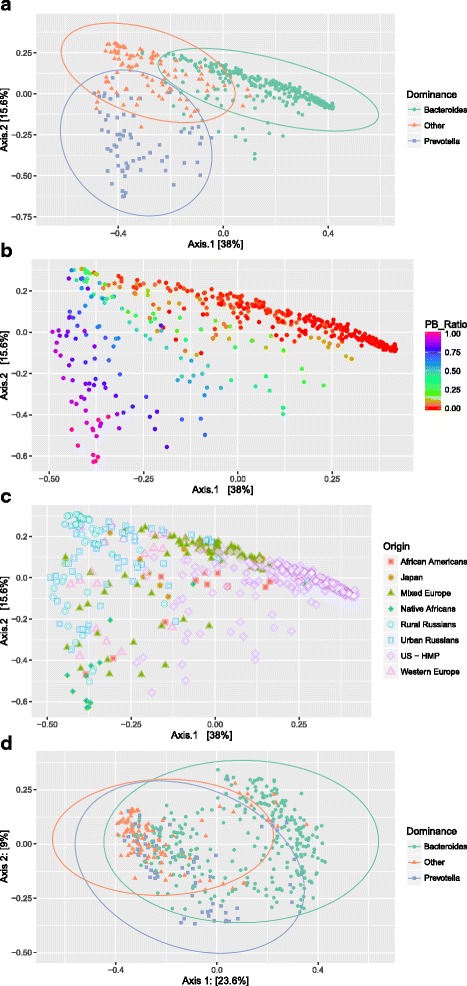
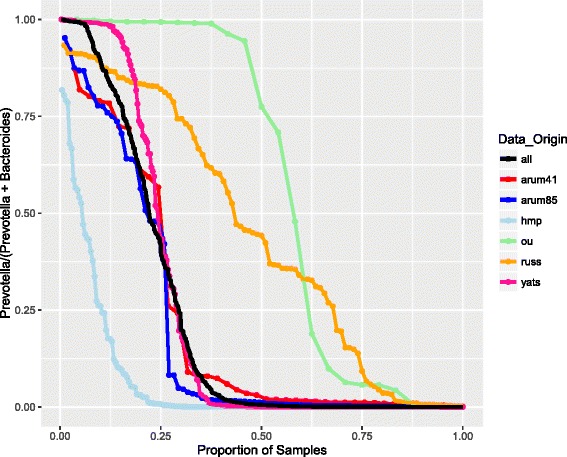
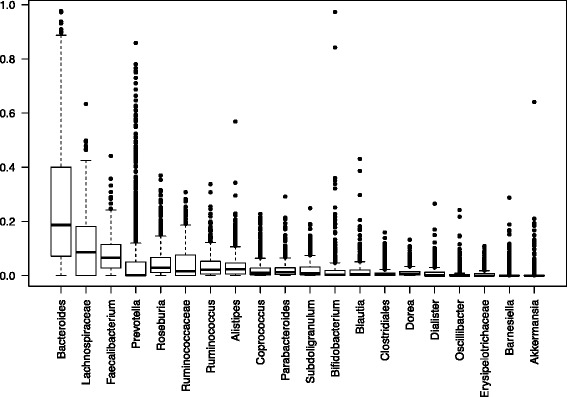
BACKGROUND: In a series of studies of the gut microbiome, "enterotypes" have been used to classify gut microbiome samples that cluster together in ordination analyses. Initially, three distinct enterotypes were described, although later studies reduced this to two clusters, one dominated by Bacteroides or Clostridiales species found more commonly in Western (American and Western European) subjects and the other dominated by Prevotella more often associated with non-Western subjects. The two taxa, Bacteroides and Prevotella, have been presumed to represent consistent underlying microbial communities, but no one has demonstrated the presence of additional microbial taxa across studies that can define these communities. RESULTS: We analyzed the combined microbiome data from five previous studies with samples across five continents. We clearly demonstrate that there are no consistent bacterial taxa associated with either Bacteroides- or Prevotella-dominated communities across the studies. By increasing the number and diversity of samples, we found gradients of both Bacteroides and Prevotella and a lack of the distinct clusters in the principal coordinate plots originally proposed in the "enterotypes" hypothesis. The apparent segregation of the samples seen in many ordination plots is due to the differences in the samples' Prevotella and Bacteroides abundances and does not represent consistent microbial communities within the "enterotypes" and is not associated with other taxa across studies. The projections we see are consistent with a continuum of values created from a simple mixture of Bacteroides and Prevotella; these two biomarkers are significantly correlated to the projection axes. We suggest that previous findings citing Bacteroides- and Prevotella-dominated clusters are the result of an artifact caused by the greater relative abundance of these two taxa over other taxa in the human gut and the sparsity of Prevotella abundant samples. CONCLUSIONS: We believe that the term "enterotypes" is misleading because it implies both an underlying consistency of community taxa and a clear separation of sets of human gut samples, neither of which is supported by the broader data. We propose the use of "biomarker" as a more accurate description of these and other taxa that correlate with diet, lifestyle, and disease state.
Overview
The claims and statistics of this paper haven’t been checked yet.
Free: it reads the open-access text and checks the first 5 claims that cite a source we can check. Create a free account to check every claim.
Integrity signals
Registry
Cites
Statistics
Figures
Verification
Claims the paper makes
The claims and statistics of this paper haven’t been checked yet.
Free: it reads the open-access text and checks the first 5 claims that cite a source we can check. Create a free account to check every claim.
Claims other papers make about this one
Each is checked against this paper’s own text: does it say what the citing paper says it does?
The cited source doesn’t support the claim as written.
In the citing paper
“The human gut microbiome includes multiple discrete ecologically balanced communities—hereafter referred to as ‘enteric microbiotypes’—that are resilient although still modifiable by diet, drugs and lifestyle47–52.”
From Intestinal microbiota signatures of clinical response and immune-related adverse events in melanoma patients treated with anti-PD-1 (2022) · cites this paper as [50]
Checked by a reasoning model — may be wrong.
Experimental — accuracy not yet measuredThe source backs part of the claim, not all of it — or backs it for a different population, condition or comparison.
In the citing paper
“Prevotella is normally found in only a small percentage of healthy individuals in European and American cohorts [1, 2, 20, 210].”
From The athletic gut microbiota (2020) · cites this paper as [210]
Experimental — accuracy not yet measuredIn the citing paper
“Human intestinal microbiota variation encompasses discrete microbial clusters or enterotypes, although their distribution may be continuous and their composition can be variable within the same individual47,50,51.”
From Intestinal microbiota signatures of clinical response and immune-related adverse events in melanoma patients treated with anti-PD-1 (2022) · cites this paper as [50]
In the citing paper
“For example, the genus Bacteroides in human stools is often more abundant in patients in the USA compared to global levels while the genus Prevotella is more abundant outside the USA (41).”
From A Uniform Computational Approach Improved on Existing Pipelines to Reveal Microbiome Biomarkers of Nonresponse to Immune Checkpoint Inhibitors (2021) · cites this paper as [41]
Self-check
Percentages, sums and reported differences re-computed from the paper’s own numbers.
The self-check needs the paper’s full text.
Citations
Cites
R: A Language and Environment for Statistical Computing
R Core Team (2025) · doi:10.32614/r.manuals · Cited by 352,181
The SILVA ribosomal RNA gene database project: improved data processing and web-based tools
Quast, C., Pruesse, E., Yilmaz, P., Gerken, J., Schweer, T., Yarza, P., Peplies, J., & Glöckner, F. O. (2012) · Nucleic Acids Research · doi:10.1093/nar/gks1219 · Cited by 33,055 · cited 1×
“The reads were assigned taxonomy by comparison against the SILVA database [26] using GAST [27].”
Methodphyloseq: An R Package for Reproducible Interactive Analysis and Graphics of Microbiome Census Data
McMurdie, P. J., & Holmes, S. (2013) · PLoS ONE · doi:10.1371/journal.pone.0061217 · Cited by 21,322 · cited 8×
“For the studies for which sequence counts were available, the Malawi, Venezuela, and American study [11] and the HMP study of healthy Americans [15], we ran both SparCC [32] and nbinomTest of DESeq2 package [18] on the count data.”
MethodInfluentialSelf-citationStructure, function and diversity of the healthy human microbiome
The Human Microbiome Project Consortium (2012) · Nature · doi:10.1038/nature11234 · Cited by 11,726 · cited 18×
“For the studies for which sequence counts were available, the Malawi, Venezuela, and American study [11] and the HMP study of healthy Americans [15], we ran both SparCC [32] and nbinomTest of DESeq2 package [18] on the count data.”
BackgroundMethodInfluentialDiet rapidly and reproducibly alters the human gut microbiome
David, L. A., Maurice, C. F., Carmody, R. N., Gootenberg, D. B., Button, J. E., Wolfe, B. E., Ling, A. V., Devlin, A. S., Varma, Y., Fischbach, M. A., et al. (2014) · Nature · doi:10.1038/nature12820 · Cited by 10,100 · cited 1×
“[22] report an increase in the bile-tolerant bacteria: Alistipes, Bilophila, and Bacteroides with an animal-based diet, while Roseburia, Eubacterium, and Ruminococcus were more abundant on a diet rich in plant polysaccharides.”
BackgroundHuman gut microbiome viewed across age and geography
Yatsunenko, T., Rey, F. E., Manary, M. J., Trehan, I., Dominguez-Bello, M. G., Contreras, M., Magris, M., Hidalgo, G., Baldassano, R. N., Anokhin, A. P., et al. (2012) · Nature · doi:10.1038/nature11053 · Cited by 7,815 · cited 10×
“For the studies for which sequence counts were available, the Malawi, Venezuela, and American study [11] and the HMP study of healthy Americans [15], we ran both SparCC [32] and nbinomTest of DESeq2 package [18] on the count data.”
BackgroundMethodInfluentialEnterotypes of the human gut microbiome
MetaHIT Consortium (additional members), Arumugam, M., Raes, J., Pelletier, E., Le Paslier, D., Yamada, T., Mende, D. R., Fernandes, G. R., Tap, J., Bruls, T., et al. (2011) · Nature · doi:10.1038/nature09944 · Cited by 7,548
Biomarkers and surrogate endpoints: Preferred definitions and conceptual framework
(2001) · Clinical Pharmacology & Therapeutics · doi:10.1067/mcp.2001.113989 · Cited by 6,762 · cited 1×
“communities, and a plant-based diet rich in polysaccharides and fiber [2, 8, 10, 11, 13, 21].”
BackgroundLinking long-term dietary patterns with gut microbial enterotypes
Wu, G. D., Chen, J., Hoffmann, C., Bittinger, K., Chen, Y.-Y., Keilbaugh, S. A., Bewtra, M., Knights, D., Walters, W. A., Knight, R., et al. (2011) · Science · doi:10.1126/science.1208344 · Cited by 6,513 · cited 4×
“Bacteroides is generally seen at a range of abundances including low, medium, and high abundances [2, 3, 10].”
BackgroundMethodInfluentialDe Filippo, C., Cavalieri, D., Di Paola, M., Ramazzotti, M., Poullet, J. B., Massart, S., Collini, S., Pieraccini, G., & Lionetti, P. (2010) · Proceedings of the National Academy of Sciences · doi:10.1073/pnas.1005963107 · Cited by 5,579 · cited 13×
“pling the gut microbiome of subjects from native or rural villages (Burkina Faso [8], South Africa [10], Venezuela and Malawi [11], and Russia [12]), Prevotella was commonly dominant in the adult samples.”
BackgroundInfluential
Research works printed but not linked: 1
- Arumugam M, Raes J, Pelletier E, Le Paslier D, Yamada T, Mende DR et al. Enterotypes of the human gut microbiome. Nature 473: 174-180 doi:10.1038/nature09944. http://www.nature.com/nature/journal/v473/n7346/full/nature09944.html PMC3728647 21508958 · DOI · Paper page
Cited by
Items 201–300 of 479
McCoubrey, L. E., Ferraro, F., Seegobin, N., Vérin, J., Alfassam, H. A., Awad, A., Marzorati, M., Verstrepen, L., Ghyselinck, J., Munck, J. D., et al. (2024) · Journal of Controlled Release · doi:10.1016/j.jconrel.2024.03.039 · Cited by 21
“This relative increase in Bacteroides species in donor 1's vessels and decrease in Prevotella species in donor 2's vessels is interesting, as these two genera have been associated with human lifestyle and health [85].”
Diet, the Gut Microbiome and Heart Failure
Harikrishnan, S. (2019) · Cardiac failure review · doi:10.15420/cfr.2018.39.2 · Cited by 22
Microbiome and metabolome profiles of high screen time in a cohort of healthy college students
Jasbi, P., Mohr, A. E., Shi, X., Mahmood, T. N., Zhu, Q., Bruening, M. M., Gu, H., & Whisner, C. M. (2022) · Scientific Reports · doi:10.1038/s41598-022-07381-3 · Cited by 23
Tagliamonte, S., Lumaga, R. B., Filippis, F. D., Valentino, V., Ferracane, R., Guerville, M., Gandolfi, I., Barbara, G., Ercolini, D., & Vitaglione, P. (2023) · Food Research International · doi:10.1016/j.foodres.2023.112953 · Cited by 21
Cai, S., Lin, J., Li, Z., Liu, S., Feng, Z., Zhang, Y., Zhang, Y., Huang, J., & Chen, Q. (2023) · Frontiers in Microbiology · doi:10.3389/fmicb.2023.1016872 · Cited by 21
“Both Prevotella and Bacteroides have been suggested as biomarkers for diet or disease (Gorvitovskaia et al., 2016).”
BackgroundGroßerichter-Wagener, C., Radjabzadeh, D., van der Weide, H., Smit, K. N., Kraaij, R., Hays, J. P., & van Zelm, M. C. (2019) · Frontiers in Immunology · doi:10.3389/fimmu.2019.00341 · Cited by 23
“Therefore, Prevotella and Bacteroides have been suggested as potentially useful biomarkers in studies determining diet and lifestyle choices in humans (43).”
BackgroundA Statistical Perspective on the Challenges in Molecular Microbial Biology
Jeganathan, P., & Holmes, S. (2021) · Journal of Agricultural Biological and Environmental Statistics · doi:10.1007/s13253-021-00447-1 · Cited by 25
Self-citationLemieux‐Labonté, V., Vigliotti, C., Tadić, Z., Wehrle, B. A., Lopez, P., Bapteste, E. P., Lapointe, F., German, D. P., & Herrel, A. (2022) · Microorganisms · doi:10.3390/microorganisms10081550 · Cited by 20
Zhou, P., Yang, T., Xu, M., Zhao, Y., Shen, P., & Wang, Y. (2022) · BMC Complementary Medicine and Therapies · doi:10.1186/s12906-022-03542-z · Cited by 19
“Thus, understanding what constitutes a health-promoting (eubiotic) or disease-promoting (dysbiotic) microbial community has become the focus of recent research [26].”
BackgroundYang, J., Fan, Y., Jin, R., Peng, Y., Chai, J., Wei, X., Zhao, Y., Deng, F., Zhao, J., & Li, Y. (2024) · Fermentation · doi:10.3390/fermentation10040207 · Cited by 21
Dietary Fibers: A Way to a Healthy Microbiome
Sharma, P., Bhandari, C., Kumar, S., Sharma, B., Bhadwal, P., & Agnihotri, N. (2018) · Elsevier eBooks · doi:10.1016/b978-0-12-811440-7.00011-9 · Cited by 26
Robust and automatic definition of microbiome states
García-Jiménez, B., & Wilkinson, M. D. (2019) · PeerJ · doi:10.7717/peerj.6657 · Cited by 23
Han, C.-Y., Kwon, S.-K., Yeom, M., Hahm, D., Park, J.-W., Park, H., & Kim, K. (2022) · Journal of Clinical Medicine · doi:10.3390/jcm11133690 · Cited by 19
Lifestyle alters GUT-bacteria function: Linking immune response and host
Jazayeri, O., Daghighi, S. M., & Rezaee, F. (2017) · Best Practice & Research Clinical Gastroenterology · doi:10.1016/j.bpg.2017.09.009 · Cited by 21
Sun, B., Hou, L., & Yang, Y. (2021) · Frontiers in Veterinary Science · doi:10.3389/fvets.2021.668003 · Cited by 21
“Bacteroides and Prevotella are excellent fiber-degrading bacterial genera belonging to the Bacteroidetes phylum.”
BackgroundInfluentialChi, Y., Zhu, L., Wang, Y., Peng, C., Lin, Y., Ji, S., & Wei, J. (2024) · Toxicology · doi:10.1016/j.tox.2024.153798 · Cited by 18
Zhao, F., Song, S., Ma, Y., Xu, X., Zhou, G., & Li, C. (2019) · Frontiers in Microbiology · doi:10.3389/fmicb.2019.02411 · Cited by 20
“The dominance of genus Bacteroides has been considered biomarkers of human diet and lifestyle (Gorvitovskaia et al., 2016).”
BackgroundBariatric Surgery as Treatment Strategy of Obesity in Saudi People: Effects of Gut Microbiota
Alqahtani, S. M., Alfawaz, H., Moubayed, N., Hassan, W. M., Almnaizel, A. T., Alshiban, N. M., Abuhaimed, J. M., Alahmed, M. F., Al-Dagal, M. M., & El-Ansary, A. K. (2023) · Nutrients · doi:10.3390/nu15020361 · Cited by 18
Tariq, M., Newberry, F., Haagmans, R., Booth, C., Wileman, T., Hoyles, L., Clokie, M. R. J., Ebdon, J., & Carding, S. R. (2020) · Frontiers in Microbiology · doi:10.3389/fmicb.2020.583378 · Cited by 17
Velizarova, M., Yanachkova, V. E., Boneva, T., Giragosyan, S., Mihaleva, I., Andreeva-Gateva, P. A., Svinarov, D. A., & Dimova, I. I. (2023) · Biotechnology & Biotechnological Equipment · doi:10.1080/13102818.2023.2209662 · Cited by 19
“SCFAs exist at higher content in healthy subjects compared to diabetic patients [19].”
BackgroundSURONO, I. S., Popov, I. V., Verbruggen, S. E. L., Verhoeven, J., Kusumo, P. D., & Venema, K. (2024) · PLoS ONE · doi:10.1371/journal.pone.0299349 · Cited by 20
“Prevotella has previously been linked with non-Western subjects [38].”
BackgroundMicrobiome's Universe: Impact on health, disease and cancer treatment
Réthi‐Nagy, Z., & Juhász, S. (2024) · Journal of Biotechnology · doi:10.1016/j.jbiotec.2024.07.002 · Cited by 18
Alanee, S. R., El-Zawahry, A. M., Dynda, D. I., McVary, K. T., Karr, M., & Braundmeier‐Fleming, A. (2019) · Prostate Cancer and Prostatic Diseases · doi:10.1038/s41391-018-0120-3 · Cited by 17
Different Reactions in Each Enterotype Depending on the Intake of Probiotic Yogurt Powder
Lee, S., You, H., Lee, M., Kim, D., Jung, S., Park, Y., & Hyun, S. (2021) · Microorganisms · doi:10.3390/microorganisms9061277 · Cited by 16
Diet and Lifestyle Impact on Rheumatoid Arthritis: A Comprehensive Review
Shekhar, K. V., Pathak, M. M., & Pisulkar, G. L. (2023) · Cureus · doi:10.7759/cureus.48625 · Cited by 16
RetractedYuan, Y., Li, L., Wang, J., Myagmar, B.-O., Gao, Y., Wang, H., Wang, Z., Zhang, C., & Zhang, X. (2024) · Frontiers in Neuroscience · doi:10.3389/fnins.2024.1398913 · Cited by 18
“Aged stroke mice colonized with a young microbiome exhibited lower abundances of Bacteroides , which are known to include potential pathobionts (Gorvitovskaia et al., 2016), compared to those gavaged with aged FTG (Figure 6D).”
Tsai, C.-Y., Liu, P., Huang, M., Chang, C.-I., Chen, H., Chou, Y.-H., Tsai, C., & Lin, C.-H. (2023) · Journal of Food and Drug Analysis · doi:10.38212/2224-6614.3484 · Cited by 18
“The concept of enterotypes provides a diagnostic tool in searching for biomarkers among complex microbiome compositions [8].”
Japanese Diet Score Is Associated with Gut Microbiota Composition in Young Japanese Adults
Seura, T., & Fukuwatari, T. (2019) · Journal of Nutritional Science and Vitaminology · doi:10.3177/jnsv.65.414 · Cited by 18
Bacterial colonization and TH17 immunity are shaped by intestinal sialylation in neonatal mice
Irons, E. E., Gomez, E. C., Andersen, V. L., & Lau, J. T. Y. (2022) · Glycobiology · doi:10.1093/glycob/cwac005 · Cited by 16
Bacteroides thetaiotaomicron Outer Membrane Vesicles Modulate Virulence of Shigella flexneri
Xerri, N. L., & Payne, S. M. (2022) · mBio · doi:10.1128/mbio.02360-22 · Cited by 16
Gut enterotypes are stable during Bifidobacterium and Lactobacillus probiotic supplementation
Haddad, E. N., Sugino, K. Y., Tucker, R. M., & Comstock, S. S. (2020) · Journal of Food Science · doi:10.1111/1750-3841.15127 · Cited by 17
Ajibola, O., Penumutchu, S., Gulumbe, B. H., Aminu, U., & Belenky, P. A. (2023) · Research Square · doi:10.21203/rs.3.rs-2832346/v1 · Cited by 16
Xu, H.-J., Liu, Z., Xu, W., & Zhang, Y. (2024) · Molecules · doi:10.3390/molecules29122791 · Cited by 15
“Bacteroides is associated with a high fat and protein intake, while Prevotella is associated with a plant-based diet rich in polysaccharides and fiber [24].”
BackgroundInteraction between the breast tumor microenvironment and gut microbiome
Tang, G., Millar, E. K. A., Graham, P., & Beretov, J. (2025) · Gut Microbes · doi:10.1080/19490976.2025.2514136 · Cited by 15
“109 More specifically, dietary fiber from fruits and vegetables is associated with colonization with Clostridia , while fiber from beans raises the prevalence of Actinobacteria and Bifidobacteriales .”
Cristanziano, V. D., Farowski, F., Berrilli, F., Santoro, M., Cave, D. D., Glé, C., Daeumer, M., Thielen, A., Wirtz, M., Kaiser, R., et al. (2021) · Microorganisms · doi:10.3390/microorganisms9081763 · Cited by 15
Essential Factors for a Healthy Microbiome: A Scoping Review
Grace-Farfaglia, P., Frazier, H., & Iversen, M. D. (2022) · International Journal of Environmental Research and Public Health · doi:10.3390/ijerph19148361 · Cited by 20
Enterotypes in asthenospermia patients with obesity
Jiao, J., Xu, P. W., Wang, X., Xing, Z., Dong, S., Li, G., Yao, X., Guo, R., Feng, T., Yao, W., et al. (2022) · Scientific Reports · doi:10.1038/s41598-022-20574-0 · Cited by 14
Genus-Level Analysis of Gut Microbiota in Children with Autism Spectrum Disorder: A Mini Review
Levkova, M., Chervenkov, T., & Pancheva, R. (2023) · Children · doi:10.3390/children10071103 · Cited by 21
Gut microbiome changes in overweight male adults following bowel preparation
Chen, H., Chen, C.-C., Chen, C.-C., Wang, S., Wang, C. L., Huang, C.-H., Liou, J.-S., Liu, T.-W., Peng, H., Lin, F.-M., et al. (2018) · BMC Genomics · doi:10.1186/s12864-018-5285-6 · Cited by 14
Microbiota links to neural dynamics supporting threat processing
Hall, C. V., Harrison, B. J., Iyer, K. K., Savage, H. S., Zakrzewski, M., Simms, L. A., Radford‐Smith, G. L., Moran, R., & Cocchi, L. (2021) · Human Brain Mapping · doi:10.1002/hbm.25682 · Cited by 14
“ples, rather than the enterotype classifications themselves, as features to link with clinical or behavioural variables (Gorvitovskaia et al., 2016; Cheng and Ning, 2019).”
BackgroundGuo, T., Wang, X., Zhang, Q., Jia, Y., Wang, Y., Wei, L. S., Li, N., Xu, X., Liu, H., Hu, L., et al. (2024) · BMC Microbiology · doi:10.1186/s12866-024-03182-y · Cited by 13
“A previous study showed that Prevotella and Bacteroides serve as dietary and lifestyle indicators [17].”
Singh, A. K., Kumar, P., Mishra, S. K., Rajput, V. D., Tiwari, K. N., Singh, A. K., Minkina, T., Pandey, A. K., & Upadhyay, P. (2024) · Applied Biochemistry and Biotechnology · doi:10.1007/s12010-024-04879-6 · Cited by 14
“As stated, the presence of Prevotella copri is an indicator of food, lifestyle, and health status [80].”
The composition of the gut microbiome in patients with sarcopenia
Wu, Y., Xia, Y., Huang, S., Liu, S., Yang, J. H., Yang, Y., & Zhu, X. (2022) · Turkish Journal of Biochemistry · doi:10.1515/tjb-2021-0197 · Cited by 14
Sustainable Nanotechnology Strategies for Modulating the Human Gut Microbiota
Törős, G., Gulyás, G., El-Ramady, H. R., Alibrahem, W., Muthu, A., Gangakhedkar, P. S., Atieh, R., & Prokisch, J. (2025) · International Journal of Molecular Sciences · doi:10.3390/ijms26125433 · Cited by 12
“Conversely, the genus Bifidobacterium represents the most prevalent group within the Actinobacteria phylum; however, the overall occurrence of this phylum is relatively low [179].”
Challenges and Opportunities in Analyzing Cancer-Associated Microbiomes
Chia, M., Pop, M., Salzberg, S. L., & Nagarajan, N. (2025) · Cancer Research · doi:10.1158/0008-5472.can-24-3629 · Cited by 12
Liu, H., Ling, W., Hua, X., Moon, J., Williams-Nguyen, J. S., Zhan, X., Plantinga, A., Zhao, N., Zhang, A. Y., Knight, R. D., et al. (2023) · Microbiome · doi:10.1186/s40168-023-01530-0 · Cited by 12
Liu, L., Deng, Z., Liu, W., Liu, R., Ma, T., Zhou, Y., Wang, E., & Tang, Y. (2023) · Frontiers in Cellular and Infection Microbiology · doi:10.3389/fcimb.2023.1257073 · Cited by 13
“These two taxa were interpreted as biomarkers of diet and lifestyle (Gorvitovskaia et al., 2016).”
Berbisá, M. Á. F., Nielsen, K. R., Ingham, A. C., Midjord, J., Hammer, T., Patursson, P., Vest, N., Gregersen, N. O., Burisch, J. M., & Vang, A. G. (2022) · Inflammatory Bowel Diseases · doi:10.1093/ibd/izab355 · Cited by 12
Gomes, M. J. C., da Silva, J. S., Alves, N. E. G., de Assis, A., de Mejía, E. G., Mantovani, H. C., & Martino, H. S. D. (2022) · The Journal of Nutritional Biochemistry · doi:10.1016/j.jnutbio.2022.109022 · Cited by 12
Abed, J. Y., Godon, T., Mehdaoui, F., Plante, P.-L., Boissinot, M., Bergeron, M. G., Bélanger, R. E., Muckle, G., Poliakova, N., Ayotte, P., et al. (2022) · Communications Biology · doi:10.1038/s42003-022-04372-y · Cited by 11
Designing fiber–gut microbiome interactions with active learning
Connors, B., Thompson, J. C., Gangan, M. S., Quinn-Bohmann, N., Gibbons, S. M., Grant, J., Castellanos-Sanchez, A., McCann, J. R., Rawls, J. F., & Venturelli, O. S. (2026) · Nature Chemical Biology · doi:10.1038/s41589-026-02272-4 · Cited by 11
“A. cac-cae , Bifidobacterium adolescentis , Bifidobacterium longum , Bacteroides uniformis , C . comes and Prevotella copri displayed substantial growth (OD 600 > 0.5) in the presence of at least one fiber, while only B . uniformis and P . copri displayed substantial growth in multiple fibers (Supplementary Fig.”
InfluentialMeal Regularity Plays a Role in Shaping the Saliva Microbiota
Viljakainen, J., Raju, S. C., Viljakainen, H. T., Figueiredo, R. A. D. O., Roos, E., Weiderpass, E., & Rounge, T. B. (2020) · Frontiers in Microbiology · doi:10.3389/fmicb.2020.00757 · Cited by 11
Shetty, S. A. (2019) · doi:10.18174/468013 · Cited by 13
Park, W. S., & Park, J. (2024) · International Journal of Molecular Sciences · doi:10.3390/ijms25063297 · Cited by 10
“…that the microbial composition in choledocholithiasis patients was more intricate than that Genera like Prevotella, Bacteroides , and Bi fi dobacterium may serve as reliable indicators for assessing dietary habits and life-style [21]. of cholecystolithiasis resembled typical intestinal microbiota.”
BackgroundWei, Y., Mao, H., Liu, Q., Fang, W., Zhang, T., Xu, Y., Zhang, W., Chen, B., Zheng, Y., & Hu, X. (2025) · Communications Biology · doi:10.1038/s42003-025-07493-2 · Cited by 10
“In contrast, Bac-teroidota favors more digestible carbohydrates 55 .”
Castañeda, S., Tomiak, J., Andersen, L. O., Acosta, C. P., Arteaga, L. R. V., Stensvold, C. R., & Ramírez, J. D. (2025) · PLoS neglected tropical diseases · doi:10.1371/journal.pntd.0013111 · Cited by 11
“These effects are especially relevant in non-westernized rural populations, where diet and lifestyle play a significant role in shaping microbiota composition [7,8,40,42,45–47].”
InfluentialBecerra‐Cervera, A., Jiménez-Ortega, R. F., Aparicio‐Bautista, D. I., Palacios‐González, B., Vela-Amieva, M. B., Ibarra‐González, I., Canizales‐Quinteros, S., Salmerón, J., Rivera‐Paredez, B., & Velázquez‐Cruz, R. (2025) · Frontiers in Cellular and Infection Microbiology · doi:10.3389/fcimb.2025.1627519 · Cited by 11
“East Asian populations, particularly in China, Japan, and Taiwan, exhibit higher Bacteroides abundance, “ BB-type ” , compared to Southeast, Southern, and Central Asian populations (Nakayama et al., 2015; Gaulke and Sharpton, 2018; Gorvitovskaia et al., 2016).”
Qin, P., Kragsnæs, M. S., Holm, D. K., Horn, H. C., Nilsson, A. C., Kjeldsen, J., Kristiansen, K., & Ellingsen, T. (2025) · Arthritis & Rheumatology · doi:10.1002/art.43359 · Cited by 11
“36 In our study, we identi fi ed three distinct clusters among the four healthy donors but only two distinct clusters among the 31 patients with PsA.”
Remesh, A. T., & Viswanathan, R. (2024) · Food and Environmental Virology · doi:10.1007/s12560-024-09584-5 · Cited by 10
“Studies on the gut microbiome have suggested that individuals adhering to a high-protein/low-carbohydrate Western diet show a prevalence of Bacteroides sp., while those following a high-carbohydrate/low-protein Eastern diet primarily host Prevotella sp. in their gut (Gorvitovskaia et al., 2016).”
Feng, T., Hilal, M. G., Wang, Y., Zhou, R., Yu, Q., Qu, J., & Li, H. (2021) · Microorganisms · doi:10.3390/microorganisms9061152 · Cited by 10
Zahran, S. A., Ali‐Tammam, M., Ali, A. E., & Aziz, R. K. (2021) · Gut Pathogens · doi:10.1186/s13099-021-00454-0 · Cited by 10
“It is often the case that when Bacteroides is high in a sample, Prevotella is low, and vice versa [35].”
BackgroundGut microbiome of healthy people and patients with hematological malignancies in Belarus
Akhremchuk, K. U., Skapavets, K. Y., Akhremchuk, A. E., Kirsanava, N. P., Sidarenka, A. V., & Valentovich, L. N. (2022) · Microbiology Independent Research Journal (MIR Journal) · doi:10.18527/2500-2236-2022-9-1-18-30 · Cited by 11
Li, L., Sohn, J., Genco, R. J., Wactawski‐Wende, J., Goodison, S., Diaz, P. I., & Sun, Y. (2022) · PLoS Computational Biology · doi:10.1371/journal.pcbi.1010373 · Cited by 11
Thomas, J. C., Kieran, T. J., Finger, J. W., Bayona‐Vásquez, N. J., Oladeinde, A., Beasley, J. C., Seaman, J. C., McArthur, J. V., Rhodes, O. E., & Glenn, T. C. (2021) · Microbiology Spectrum · doi:10.1128/spectrum.00097-21 · Cited by 12
Effect of Dietary Fiber Sources on In-Vitro Fermentation and Microbiota in Monogastrics
Ngalavu, A., Jiang, H., El-Ashram, S. A., Téllez‐Isaías, G., Farouk, M. H., Nyingwa, P. S., Adams, S., & Tyasi, T. L. (2020) · Animals · doi:10.3390/ani10040674 · Cited by 10
“[41], who showed that there was an inverse correlation between of Bacteriodes and Prevotella: when Bacteroides numbers were high in a sample, Prevotella was less abundant and vice versa.”
BackgroundSun, B., Hou, L., & Yang, Y. (2020) · Preprints.org · doi:10.20944/preprints202002.0109.v1 · Cited by 10
Structural characteristics of gut microbiota in longevity from Changshou town, Hubei, China
Ai, X., Liu, Y., Shi, J., Xie, X., Li, L., Duan, R., Lv, Y., Xiong, K., Miao, Y., & Zhang, Y. (2024) · Applied Microbiology and Biotechnology · doi:10.1007/s00253-024-13140-3 · Cited by 10
Methodology for microbiome data analysis: An overview
Creus-Martí, I., Moyá, A., & Gómez, F. J. S. (2025) · Computers in Biology and Medicine · doi:10.1016/j.compbiomed.2025.110157 · Cited by 10
Wang, S., Zhou, T., Wang, X., Zhao, J., & Wang, X. (2026) · Gut Microbes · doi:10.1080/19490976.2026.2638001 · Cited by 10
“147 It enhances the therapeutic effect of Lactobacillus murinus in primary sclerosing cholangitis by increasing its relative abundance, and the combined intervention of these two microbes effectively reduces inflammation and fibrosis by inhibiting the transforming growth factor beta 1/SMAD…”
Distinct Gut Microbiome Induced by Different Feeding Regimes in Weaned Piglets
Zhang, J., Long, X., Liao, Q., Chai, J., Zhang, T., Chen, L., He, H., Yuan, Y., Wan, K., Wang, J., et al. (2022) · Genes · doi:10.3390/genes14010049 · Cited by 9
DAMP-ing IBD: Extinguish the Fire and Prevent Smoldering
Sandys, O., Stokkers, P. C. F., & Velde, A. A. T. (2024) · Digestive Diseases and Sciences · doi:10.1007/s10620-024-08523-5 · Cited by 9
Variation in Gut Microbiota of Captive Bengal Slow Lorises
Ni, Q., He, X., Zeng, B., Meng, X., Xu, H., Li, Y., Yang, M., Li, D., Yao, Y., Zhang, M., et al. (2020) · Current Microbiology · doi:10.1007/s00284-020-02035-x · Cited by 11
Is There a Universal Endurance Microbiota?
Olbricht, H., Twadell, K., Sandel, B., Stephens, C. M., & Whittall, J. B. (2022) · Microorganisms · doi:10.3390/microorganisms10112213 · Cited by 9
Haddad, E. N., Nel, N. H., Petrick, L. M., Kerver, J. M., & Comstock, S. S. (2022) · Current Developments in Nutrition · doi:10.1016/j.cdnut.2022.100025 · Cited by 9
Ramírez, J. D., Castañeda, S., Weatherhead, J. E., & Poveda, C. (2024) · Future Microbiology · doi:10.1080/17460913.2024.2431417 · Cited by 8
Barkus, A., Baltrūnienė, V., Barkienė, L., Baušienė, J., Baltrūnas, T., Brazys, M., Rauduvytė, K., Kazlauskaitė, P., & Baušys, A. (2025) · Journal of Neurochemistry · doi:10.1111/jnc.70165 · Cited by 8
“At the genus level, Bacteroides and Prevotella often appeared increased—both of which have been tied to underlying dietary habits (Gorvitovskaia et al. 2016), with Prevotella commonly enriched in both the gut and oral microbiome (Liao et al. 2018; Seo et al. 2020; Addolorato et al. 2020;…”
Neha, S. A., & Salazar-Bravo, J. A. (2023) · BMC Microbiology · doi:10.1186/s12866-023-02778-0 · Cited by 8
“Furthermore, the prevalence of Bacteroides and Alistipes in urban settlements suggested prairie dogs in these areas consumed high fat and protein diets which could contribute to metabolic disease risk [81, 82].”
BackgroundKim, B., Lee, J., Jung, E. S., Lee, S., Suh, D. H., Park, Y. J., Kim, J., Kwak, J., & Lee, S. H. (2024) · Frontiers in Microbiology · doi:10.3389/fmicb.2024.1282932 · Cited by 8
Sun, B., Hou, L., & Yang, Y. (2022) · Brazilian Journal of Microbiology · doi:10.1007/s42770-022-00796-0 · Cited by 9
“Prevotella can produce xylanase by PUL to decompose plant fiber [29].”
BackgroundShetty, S. A., Stege, P. B., Hordijk, J., Gijsbers, E. F., Dierikx, C. M., van Duijkeren, E., Franz, E., Willems, R. J. L., Paganelli, F. L., & Fuentes, S. (2022) · mSphere · doi:10.1128/msphere.00512-22 · Cited by 8
Xiao, Q., Chen, B., Zhu, Z., Yang, T., Tao, E., Hu, C., Zheng, W., Tang, W., Shu, X., & Jiang, M. (2023) · Infection and Drug Resistance · doi:10.2147/idr.s410720 · Cited by 11
“On the other hand, population-based studies have shown that Prevotella and Lactococcus have diagnostic value.(22) The study might have included participants from a specific geographical region or age group, limiting the generalizability of the findings.”
ResultGut as a Target of Ochratoxin A: Toxicological Insights and the Role of Microbiota
Więckowska, M., Szelenberger, R., Popławski, T., Bijak, M., Gorniak, L., Stela, M., & Cichoń, N. (2025) · International Journal of Molecular Sciences · doi:10.3390/ijms26199438 · Cited by 7
“Population-based studies have identified recurrent en-terotypes dominated by Bacteroides , Prevotella , or Ruminococcus , which differ in multiple physiological attributes, including the production of SCFAs, fiber utilization efficiency, and pro-inflammatory potential [166–168].”
Woźniak, A., Dorotkiewicz‐Jach, A., & Brzychczy‐Włoch, M. (2025) · Postępy Mikrobiologii - Advancements of Microbiology · doi:10.2478/am-2025-0013 · Cited by 12
Long, C., Scheun, J., Sauther, M. L., Cuozzo, F. P., Millette, J. B., & Tordiffe, A. S. W. (2023) · International Journal of Primatology · doi:10.1007/s10764-023-00407-1 · Cited by 7
“Prevotella , which is important in carbohydrate metabolism, is associated with a carbohydrate and plant-based diet (Wu et al., 2011; Amato et al., 2014; Kovatcheva-Datchary et al., 2015; Gorvitovskaia et al., 2016).”
Chen, L., Zhao, L., Meng, Q., Li, C., Guo, Y., Wong, K., Shi, G., Cheung, P. C. K., & Ding, Z. (2025) · Food Hydrocolloids · doi:10.1016/j.foodhyd.2025.111156 · Cited by 8
Hidalgo, V. S., Witney, A. A., Chico, M. E., Vaca, M. G., Arévalo‐Cortes, A., Schuyler, A. J., Platts‐Mills, T. A. E., Ster, I. C., & Cooper, P. J. (2025) · Scientific Reports · doi:10.1038/s41598-025-89224-5 · Cited by 9
“…comparing the gut microbiota of adults living in rural traditional settings in Africa and Latin America compared to US and European cities have emphasized the importance of Prevotella and Bacteriodes as core taxa that distinguish gut microbiota between these very different settings 1,40,79,80 .”
Freitas, R. G. B. D. O. N., Vasques, A. C. J., Fernandes, G. D. R., Ribeiro, F. B., Solar, I., Barbosa, M., de Almeida-Pititto, B., Geloneze, B., & Ferreira, S. R. G. (2022) · European Journal of Clinical Nutrition · doi:10.1038/s41430-022-01182-7 · Cited by 7
“Further studies questioned the presence of such discrete clusters, considering that they were not recurrent bacterial communities across the diversity of human populations [38].”
BackgroundWei, Y., Zhou, M., Fang, W., Liu, Q., Mao, H., Chen, B., Liu, S., Zhang, T., Xu, Y., Zhang, W., et al. (2023) · Applied Microbiology and Biotechnology · doi:10.1007/s00253-023-12524-1 · Cited by 7
“Lachnospiraceae and Bacteroides are common core microbes in animals; these beneficial symbiotic bacteria are involved in food degradation and nutrient production for hosts (Gorvitovskaia et al. 2016).”
BackgroundMicrobial Interaction Network Estimation via Bias-Corrected Graphical Lasso
Jiang, D., Sharpton, T. J., & Jiang, Y. (2020) · Statistics in Biosciences · doi:10.1007/s12561-020-09279-y · Cited by 7
Tanaka, S., Yamamoto, K., Hamajima, C., Takahashi, F., Endo, K., & Uyeno, Y. (2021) · Nutrients · doi:10.3390/nu13061847 · Cited by 7
Taking a Closer Look at the Biogeography of the Human Gastrointestinal Microbiome
Engevik, M. A., & Versalovic, J. A. (2019) · Gastroenterology · doi:10.1053/j.gastro.2019.08.006 · Cited by 7
Gao, Y., Wu, J., Zeng, J., Huo, X., & Lou, K. (2024) · Science in One Health · doi:10.1016/j.soh.2024.100071 · Cited by 6
Wellness Fasting and Hyperketosis
Watanabe, S. (2016) · Diabetes Research - Open Journal · doi:10.17140/droj-2-e007 · Cited by 7
Natale, F., Fusco, C., Limatola, M., Cante, L. C., Alfieri, R., Mollo, N., Franzese, R., D’Elia, S., & Cimmino, G. (2024) · Functional Foods in Health and Disease · doi:10.31989/ffhd.v14i12.1437 · Cited by 6
Lee, S., Yang, J.-H., & Lee, J.-H. (2023) · Frontiers in Microbiology · doi:10.3389/fmicb.2023.1185788 · Cited by 6
“mainly colonizes in the gut of people who consume a highcarbohydrate/low-protein Eastern diet (Gorvitovskaia et al., 2016; Ahmed et al., 2018).”
BackgroundPérez‐Díaz, I. M. (2019) · Springer eBooks · doi:10.1007/978-3-030-28737-5_4 · Cited by 7
“While the enrichment of cucumber fermentations with Prevotella indicates the development of spoilage, in the gut it can serve as a biomarker for dietary interventions (Medina-Pradas et al. 2016; Salonen and deVos 2014; Gorvitovskaia et al. 2016; Kovatcheva-Datchary et al. 2015; Verbeke et al. 2015).”
Gu, B., Jung, H. Y., Rim, C., Kim, T., Lee, S., Choi, D. Y., Park, H., & Kim, M. (2025) · Microbial Biotechnology · doi:10.1111/1751-7915.70173 · Cited by 5
“However, the removal of Bacteroidaceae and Tannerellaceae from the commensal bacteria was relatively inefficient.”
InfluentialThe human milk bacteriome and mycobiome and their inter-kingdom interactions viewed across geography
Sun, H., Finlay, B. B., Azad, M. B., Cuomo, C. A., Cowen, L. E., Berdy, B. M., Livny, J., Shea, T., Aquino, E. E., Godoy‐Vitorino, F., et al. (2025) · Frontiers in Nutrition · doi:10.3389/fnut.2025.1610346 · Cited by 7
“These three genera have been proposed as biomarkers of diet and lifestyle (79).”
Mavridou, M., Kyriazidi, M. A., Varlamis, S., Skepastianos, P., Mitka, S., Papaliagkas, V. T., & Chatzidimitriou, M. (2025) · Acta Microbiologica et Immunologica Hungarica · doi:10.1556/030.2025.02663 · Cited by 6
Paradigms for microbiome analysis in infectious and non-communicable diseases
Autenrieth, I. B., Bury, L., Rooney, A. M., Willmann, M., Vehreschild, M. J. G. T., & Egli, A. (2025) · Trends in Microbiology · doi:10.1016/j.tim.2025.11.016 · Cited by 7
Metadata
- Authors
- Gorvitovskaia, A., Holmes, S. P., & Huse, S. M.
- Affiliations
- Brown University (US)
- Stanford University (US)
- Corresponding author
- Holmes, Susan P.
- ORCID
- Holmes, Susan P.
- Venue
- Microbiome
- Published
- 2016-04-12
- Volume
- 4
- Issue
- 1
- Pages
- 15-15
- ISSN
- 2049-2618 (ISSN-L)
- PMC
- PMC4828855
- OpenAlex
- W2333091667
- Cited by
- 461
- References
- 31
- Citations by year
- 2026: 30 · 2025: 37 · 2024: 42 · 2023: 32 · 2022: 73 · 2021: 50 · 2020: 61 · 2019: 48 · 2018: 51 · 2017: 30 · 2016: 7
- FWCI
- 23.57
- Type
- journal article
- Language
- en
- Open access
- gold
- doi.org
- Licence
- cc-by
- creativecommons.org/licenses/by/4.0/ (tdm)
- creativecommons.org/licenses/by/4.0/ (vor)
- Locations
- Microbiome (publishedVersion, cc-by)
- Europe PMC (PubMed Central) (publishedVersion, cc-by)
- PubMed Central (publishedVersion, cc-by)
- PubMed (publishedVersion)
- Funders
- National Institute of Allergy and Infectious Diseases (AI112401)
- Topics
- Life Sciences › Biochemistry, Genetics and Molecular Biology › Molecular Biology › Gut microbiota and health
- Health Sciences › Dentistry › Periodontics › Oral microbiology and periodontitis research
- Physical Sciences › Environmental Science › Ecology › Microbial Community Ecology and Physiology
- Keywords
- gut microbiota, enterotypes, Prevotella, Bacteroides, microbial biomarkers, diet and lifestyle, microbial community structure, cross-study comparison, Clostridiales
- MeSH terms
- Gastrointestinal Microbiome, Bacteroides, Diet, Humans, Life Style, Symbiosis, Biomarkers, Cluster Analysis, Prevotella, Principal Component Analysis, Gastrointestinal Tract, Black People, White People, Asian People
About these checks
Registry, retraction, Cites and statistics results are computed, not judged, with one exception: a printed reference that no index lists is read once by a model before it counts as a citation error. Claims are extracted by a model and kept only when their quote appears verbatim in the text; each cited source is then checked, with a model’s help, for whether it says what the claim relies on. Those verdicts can be wrong — read the claim’s quote and the cited source before relying on one.
Statistics and arithmetic are recomputed, not judged.
Confidence bands are shown only for fields calibrated on our annotated test set. None is calibrated yet, so no band is shown.
What counts as a claim ›How we measure confidence ›How we check this ›
Are you an author, or do you see a problem with this page? Request a review
Data sources
Bibliographic data: Semantic Scholar, OpenAlex, Crossref.
Contains information from the Semantic Scholar Academic Graph Datasets, made available under the ODC Attribution License (ODC-BY 1.0).
Semantic Scholar’s data is described in: Kinney, R., et al. (2023). The Semantic Scholar Open Data Platform. arXiv:2301.10140.
