

Interpreting Prevotella and Bacteroides as biomarkers of diet and lifestyle
Open accessThe DOI matches its Crossref record; 31 of the 31 references it cites were found in a registry or an index.
Abstract
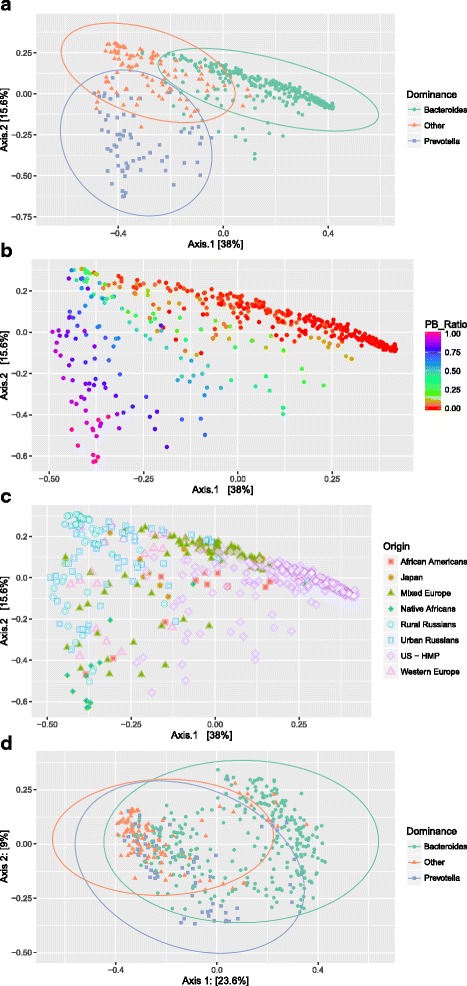
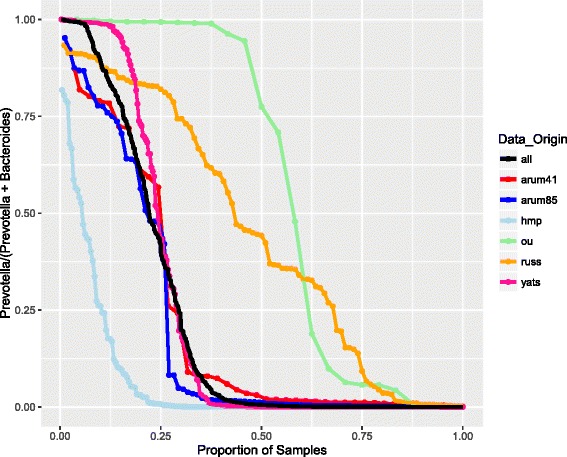
BACKGROUND: In a series of studies of the gut microbiome, "enterotypes" have been used to classify gut microbiome samples that cluster together in ordination analyses. Initially, three distinct enterotypes were described, although later studies reduced this to two clusters, one dominated by Bacteroides or Clostridiales species found more commonly in Western (American and Western European) subjects and the other dominated by Prevotella more often associated with non-Western subjects. The two taxa, Bacteroides and Prevotella, have been presumed to represent consistent underlying microbial communities, but no one has demonstrated the presence of additional microbial taxa across studies that can define these communities. RESULTS: We analyzed the combined microbiome data from five previous studies with samples across five continents. We clearly demonstrate that there are no consistent bacterial taxa associated with either Bacteroides- or Prevotella-dominated communities across the studies. By increasing the number and diversity of samples, we found gradients of both Bacteroides and Prevotella and a lack of the distinct clusters in the principal coordinate plots originally proposed in the "enterotypes" hypothesis. The apparent segregation of the samples seen in many ordination plots is due to the differences in the samples' Prevotella and Bacteroides abundances and does not represent consistent microbial communities within the "enterotypes" and is not associated with other taxa across studies. The projections we see are consistent with a continuum of values created from a simple mixture of Bacteroides and Prevotella; these two biomarkers are significantly correlated to the projection axes. We suggest that previous findings citing Bacteroides- and Prevotella-dominated clusters are the result of an artifact caused by the greater relative abundance of these two taxa over other taxa in the human gut and the sparsity of Prevotella abundant samples. CONCLUSIONS: We believe that the term "enterotypes" is misleading because it implies both an underlying consistency of community taxa and a clear separation of sets of human gut samples, neither of which is supported by the broader data. We propose the use of "biomarker" as a more accurate description of these and other taxa that correlate with diet, lifestyle, and disease state.
Overview
The claims and statistics of this paper haven’t been checked yet.
Free: it reads the open-access text and checks the first 5 claims that cite a source we can check. Create a free account to check every claim.
Integrity signals
Registry
Cites
Statistics
Figures
Verification
Claims the paper makes
The claims and statistics of this paper haven’t been checked yet.
Free: it reads the open-access text and checks the first 5 claims that cite a source we can check. Create a free account to check every claim.
Claims other papers make about this one
Each is checked against this paper’s own text: does it say what the citing paper says it does?
The cited source doesn’t support the claim as written.
In the citing paper
“The human gut microbiome includes multiple discrete ecologically balanced communities—hereafter referred to as ‘enteric microbiotypes’—that are resilient although still modifiable by diet, drugs and lifestyle47–52.”
From Intestinal microbiota signatures of clinical response and immune-related adverse events in melanoma patients treated with anti-PD-1 (2022) · cites this paper as [50]
Checked by a reasoning model — may be wrong.
Experimental — accuracy not yet measuredThe source backs part of the claim, not all of it — or backs it for a different population, condition or comparison.
In the citing paper
“Prevotella is normally found in only a small percentage of healthy individuals in European and American cohorts [1, 2, 20, 210].”
From The athletic gut microbiota (2020) · cites this paper as [210]
Experimental — accuracy not yet measuredIn the citing paper
“Human intestinal microbiota variation encompasses discrete microbial clusters or enterotypes, although their distribution may be continuous and their composition can be variable within the same individual47,50,51.”
From Intestinal microbiota signatures of clinical response and immune-related adverse events in melanoma patients treated with anti-PD-1 (2022) · cites this paper as [50]
In the citing paper
“For example, the genus Bacteroides in human stools is often more abundant in patients in the USA compared to global levels while the genus Prevotella is more abundant outside the USA (41).”
From A Uniform Computational Approach Improved on Existing Pipelines to Reveal Microbiome Biomarkers of Nonresponse to Immune Checkpoint Inhibitors (2021) · cites this paper as [41]
Self-check
Percentages, sums and reported differences re-computed from the paper’s own numbers.
The self-check needs the paper’s full text.
Citations
Cites
R: A Language and Environment for Statistical Computing
R Core Team (2025) · doi:10.32614/r.manuals · Cited by 352,181
The SILVA ribosomal RNA gene database project: improved data processing and web-based tools
Quast, C., Pruesse, E., Yilmaz, P., Gerken, J., Schweer, T., Yarza, P., Peplies, J., & Glöckner, F. O. (2012) · Nucleic Acids Research · doi:10.1093/nar/gks1219 · Cited by 33,055 · cited 1×
“The reads were assigned taxonomy by comparison against the SILVA database [26] using GAST [27].”
Methodphyloseq: An R Package for Reproducible Interactive Analysis and Graphics of Microbiome Census Data
McMurdie, P. J., & Holmes, S. (2013) · PLoS ONE · doi:10.1371/journal.pone.0061217 · Cited by 21,322 · cited 8×
“For the studies for which sequence counts were available, the Malawi, Venezuela, and American study [11] and the HMP study of healthy Americans [15], we ran both SparCC [32] and nbinomTest of DESeq2 package [18] on the count data.”
MethodInfluentialSelf-citationStructure, function and diversity of the healthy human microbiome
The Human Microbiome Project Consortium (2012) · Nature · doi:10.1038/nature11234 · Cited by 11,726 · cited 18×
“For the studies for which sequence counts were available, the Malawi, Venezuela, and American study [11] and the HMP study of healthy Americans [15], we ran both SparCC [32] and nbinomTest of DESeq2 package [18] on the count data.”
BackgroundMethodInfluentialDiet rapidly and reproducibly alters the human gut microbiome
David, L. A., Maurice, C. F., Carmody, R. N., Gootenberg, D. B., Button, J. E., Wolfe, B. E., Ling, A. V., Devlin, A. S., Varma, Y., Fischbach, M. A., et al. (2014) · Nature · doi:10.1038/nature12820 · Cited by 10,100 · cited 1×
“[22] report an increase in the bile-tolerant bacteria: Alistipes, Bilophila, and Bacteroides with an animal-based diet, while Roseburia, Eubacterium, and Ruminococcus were more abundant on a diet rich in plant polysaccharides.”
BackgroundHuman gut microbiome viewed across age and geography
Yatsunenko, T., Rey, F. E., Manary, M. J., Trehan, I., Dominguez-Bello, M. G., Contreras, M., Magris, M., Hidalgo, G., Baldassano, R. N., Anokhin, A. P., et al. (2012) · Nature · doi:10.1038/nature11053 · Cited by 7,815 · cited 10×
“For the studies for which sequence counts were available, the Malawi, Venezuela, and American study [11] and the HMP study of healthy Americans [15], we ran both SparCC [32] and nbinomTest of DESeq2 package [18] on the count data.”
BackgroundMethodInfluentialEnterotypes of the human gut microbiome
MetaHIT Consortium (additional members), Arumugam, M., Raes, J., Pelletier, E., Le Paslier, D., Yamada, T., Mende, D. R., Fernandes, G. R., Tap, J., Bruls, T., et al. (2011) · Nature · doi:10.1038/nature09944 · Cited by 7,548
Biomarkers and surrogate endpoints: Preferred definitions and conceptual framework
(2001) · Clinical Pharmacology & Therapeutics · doi:10.1067/mcp.2001.113989 · Cited by 6,762 · cited 1×
“communities, and a plant-based diet rich in polysaccharides and fiber [2, 8, 10, 11, 13, 21].”
BackgroundLinking long-term dietary patterns with gut microbial enterotypes
Wu, G. D., Chen, J., Hoffmann, C., Bittinger, K., Chen, Y.-Y., Keilbaugh, S. A., Bewtra, M., Knights, D., Walters, W. A., Knight, R., et al. (2011) · Science · doi:10.1126/science.1208344 · Cited by 6,513 · cited 4×
“Bacteroides is generally seen at a range of abundances including low, medium, and high abundances [2, 3, 10].”
BackgroundMethodInfluentialDe Filippo, C., Cavalieri, D., Di Paola, M., Ramazzotti, M., Poullet, J. B., Massart, S., Collini, S., Pieraccini, G., & Lionetti, P. (2010) · Proceedings of the National Academy of Sciences · doi:10.1073/pnas.1005963107 · Cited by 5,579 · cited 13×
“pling the gut microbiome of subjects from native or rural villages (Burkina Faso [8], South Africa [10], Venezuela and Malawi [11], and Russia [12]), Prevotella was commonly dominant in the adult samples.”
BackgroundInfluential
Research works printed but not linked: 1
- Arumugam M, Raes J, Pelletier E, Le Paslier D, Yamada T, Mende DR et al. Enterotypes of the human gut microbiome. Nature 473: 174-180 doi:10.1038/nature09944. http://www.nature.com/nature/journal/v473/n7346/full/nature09944.html PMC3728647 21508958 · DOI · Paper page
Cited by
Items 301–400 of 479
Lyu, Y., Wen, L., Zhong, Y., Yin, D., Yang, M., Wen, Y., Li, Y., & Hu, J. (2026) · Food Bioscience · doi:10.1016/j.fbio.2026.108291 · Cited by 5
Gut microbiota and brain aging: a comparative review of African and western populations
Ortutu, B. F., Okin, A. O., Darkwah, K. O., Onuorah, U. M., Maigoro, A. Y., & Iheme, G. O. (2026) · Frontiers in Aging Neuroscience · doi:10.3389/fnagi.2026.1740408 · Cited by 5
“In contrast, studies conducted in urban African settings have revealed more variable gut microbiota compositions, often characterized by a relative increase in Clostridium and Bacteroides taxa, along with a decline in the Prevotella genus (Ayeni et al., 2018; Rocafort et al., 2019; Samb-Ba et al., 2014; Smith et al.,…”
InfluentialDistinct trajectories of urbanization shape the human gut microbiome across South Asia
Ramachandran, S. L., Pasupuleti, N., Abdill, R. J., Adikari, G., Ahlawat, B., Blekhman, R., Burgo, V., Davenport, E., Dwivedi, A., Gupta, S., et al. (2026) · Gut Microbes · doi:10.1080/19490976.2026.2700042 · Cited by 5
Zhang, L., Chun, Y., Grishina, G. T., Lo, T. T. Y., Reed, K., Wang, J., Sicherer, S. H., Berin, M. C., & Bunyavanich, S. (2025) · Allergy · doi:10.1111/all.16481 · Cited by 5
“The microbial hubs in saliva and stool identified in this study (Figure 2) belong to genera recognized as prevalent and abundant in these niches of the human microbiome, including Bacteroides [32] and Bifidobacterium [33] in the gut.”
Prevotella illustrans sp. nov., derived from human oropharyngeal abscess puncture fluid
Buhl, M. E. J., Meier‐Kolthoff, J. P., & Marschal, M. (2021) · INTERNATIONAL JOURNAL OF SYSTEMATIC AND EVOLUTIONARY MICROBIOLOGY · doi:10.1099/ijsem.0.005146 · Cited by 6
Gudan, A., & Stachowska, E. (2022) · Postępy Higieny i Medycyny Doświadczalnej · doi:10.2478/ahem-2022-0019 · Cited by 5
Huang, C., Yu, H.-S., Yu, S., Tu, H., Yeh, Y., & Yu, H. (2024) · Frontiers in Cellular and Infection Microbiology · doi:10.3389/fcimb.2023.1320713 · Cited by 5
Effects of host identity on the gut microbiota: A comparative study on three microtinae species
Yao, Z., Zhao, W., Tang, B., Li, Q., & Wang, Z. (2024) · Animal Models and Experimental Medicine · doi:10.1002/ame2.12404 · Cited by 5
“34 In our study, this ratio in N. fuscus was higher than that in L. brandtii , indicating that the capacity to digest cellulose-rich plant was still maintained in wild N. fuscus when its diet was changed.”
ResultExploring Human Bacterial Diversity Toward Prevention of Infectious Disease and Health Promotion
Yousuf, B., & Mishra, A. (2018) · Elsevier eBooks · doi:10.1016/b978-0-12-814849-5.00029-0 · Cited by 7
Bosi, E., & Mascagni, F. (2019) · International Journal of Genomics · doi:10.1155/2019/2659175 · Cited by 5
Variability and Stability of the Human Gut Microbiome
Flint, H. J. (2020) · Fascinating life sciences · doi:10.1007/978-3-030-43246-1_6 · Cited by 7
Lumen and mucosa-associatedLactobacillus rhamnosusfrom the intestinal tract of organ donors
Marsh, A. J., Yaya, A.-M. A., Ng, S., Chandrashekhar, K., Roach, J. M., Magness, S. T., & Azcárate-Peril, M. A. (2020) · Gut Microbiome · doi:10.1017/gmb.2020.4 · Cited by 5
“The abundance of the genus Bacteroides across all samples was also consistent with a gut enterotype common to Western microbiomes (Gorvitovskaia et al., 2016).”
Intestinal Microbiota in Migrating Barn Swallows around Osaka
Kenzaka, T., Kataoka, K., Fujimitsu, T., & Tani, K. (2017) · YAKUGAKU ZASSHI · doi:10.1248/yakushi.17-00148 · Cited by 6
Early sexual dimorphism in the developing gut microbiome of northern elephant sealsPreprint
Stoffel, M. A., Acevedo‐Whitehouse, K. A., Morales‐Durán, N., Grosser, S., Chakarov, N., Krüger, O., Nichols, H. J., Elorriaga-Verplancken, F. R., & Hoffman, J. I. (2019) · bioRxiv (Cold Spring Harbor Laboratory) · doi:10.1101/2019.12.11.871855 · Cited by 5
Mohr, A. E., Jasbi, P., van Woerden, I., Chi, J., Gu, H., Bruening, M. M., & Whisner, C. M. (2024) · Gut Microbes Reports · doi:10.1080/29933935.2024.2387936 · Cited by 4
“16–18 In contrast, the Blautia/Bacteroides (B/B) ratio did not exhibit a similar trend (Figure 1H).”
Su, T., Liu, R., Long, Y., Quan, S., Lai, S., Wang, L., Si, J., & Chen, S. (2018) · Current Microbiology · doi:10.1007/s00284-017-1378-8 · Cited by 4
Brizita, D. I., & Ivanović, N. (2022) · Springer eBooks · doi:10.1007/978-3-031-10153-3_6 · Cited by 6
Wang, Z., Han, S., Xiao, Y., Zhang, Y., Ge, Y., Liu, X., & Gao, J. (2024) · Frontiers in Microbiology · doi:10.3389/fmicb.2024.1324209 · Cited by 5
Modulation of Gut Microbiota by Cacao: Insights from an In Vitro Model
Kim, J., Jung, S., Kim, G., Kim, J., Son, B., & Shin, H. (2025) · Current Issues in Molecular Biology · doi:10.3390/cimb47060414 · Cited by 4
“Among these, Bacteroides and Prevotella enterotypes are the most prevalent worldwide, as shown by fecal microbiota analyses of healthy individuals across five continents [10].”
Shin, S. B., Lee, J. H., Lim, C.-W., Son, K.-T., & Jeong, S. H. (2019) · Environmental Science and Pollution Research · doi:10.1007/s11356-018-3995-6 · Cited by 4
Captivity, diet and geography may impact the composition of animal gut microbiota
Hui, G., Hong, C., & Son, J. M. (2021) · Open Collections · doi:10.14288/ujemi.v26.195490 · Cited by 5
Wetherill, M. S., Bakhsh, C., Caywood, L. T., Williams, M. B., Hartwell, M. L., Wheeler, D., Hubach, R. D., Teague, T. K., Köhler, G. A., Hébert, J. R., et al. (2022) · Frontiers in Clinical Diabetes and Healthcare · doi:10.3389/fcdhc.2022.947552 · Cited by 4
Vega, L., Bohórquez, L., Ramírez, J. D., & Muñoz, M. (2022) · Frontiers in Cellular and Infection Microbiology · doi:10.3389/fcimb.2022.918237 · Cited by 5
“Firmicutes, there is a wide diversity of genera with functional differences in the microbiota (Gorvitovskaia et al., 2016).”
BackgroundInfluentialPublic Health Implications of Intestinal Microbiota in Migratory Birds
Kenzaka, T., & Tani, K. (2018) · InTech eBooks · doi:10.5772/intechopen.72456 · Cited by 4
Stewart, C. J., Auchtung, T. A., Ajami, N. J., Velasquez, K. M., Smith, D. P., Garza, R. D. L., Salas, R., & Petrosino, J. F. (2018) · PeerJ · doi:10.7717/peerj.4693/correction-1 · Cited by 4
O’Donovan, C. M., Nori, S. R. C., Shanahan, F., Celentano, G., Murphy, T. B., Cotter, P. D., & Sullivan, O. O. (2025) · Scientific Reports · doi:10.1038/s41598-025-88723-9 · Cited by 3
“…is consistent with other investigations of the gut microbiome where in particular clusters of Bacteroides versus Prevotella dominant gut microbiomes have been identified 31,32 , with additional clusters, including in some instances a Bifidobacterium cluster, being observed on some occasions 32 .”
Antonetti, L., Berrilli, F., Cardellini, M., Federici, M., & D’Alfonso, R. (2025) · Nutrients · doi:10.3390/nu17182950 · Cited by 3
“The most significantly enriched taxa in the three groups belong to Bacteroidaceae ( Bacteroides ) and Prevotellaceae ( Prevotella _9 and Alloprevotella ) (Figure 1C) as shown by Gorvi-tovskaia [45] in a comparison between American, Western European, and non-Western subjects.”
Shen, J., Sun, Z., Song, H., Pu, Y., Wang, P., Hailili, G., Huang, Y., Mei, Z., Chen, H., Huang, L., et al. (2026) · Cell Reports Medicine · doi:10.1016/j.xcrm.2026.102797 · Cited by 4
Comparing Published Gut Microbiome Taxonomic Data Across Multinational Studies
Meeks, B. K., Maki, K. A., Ames, N. J., & Barb, J. J. (2021) · Nursing Research · doi:10.1097/nnr.0000000000000557 · Cited by 4
“This observation agrees with another published microbiome study that reported these patternswhencomparingWesterncountriesandnon-Western countries (Gorvitovskaia et al., 2016).”
Wu, Y., Zhou, T., Yang, S., Yin, B., Wu, R., & Wei, W. (2024) · Microorganisms · doi:10.3390/microorganisms12040671 · Cited by 3
“The concept of “enterotype” has emerged as a key framework for understanding the complex interplay between gut microbial composition, host factors, and environmental influences and was first conceptualized in extensive studies of the human gut micro-biome [1,2].”
BackgroundZhang, F., Wang, J.-L., Zhu, J. H., Si, S., Guo, H., Yue, X., & Wen, W. X. (2025) · Frontiers in Medicine · doi:10.3389/fmed.2025.1517389 · Cited by 3
Febinia, C. A., Malik, S. G., Djuwita, R., Weta, I. W., Wihandani, D. M., Maulida, R., Sudoyo, H., & Holmes, A. J. (2021) · Microbial Ecology · doi:10.1007/s00248-021-01786-9 · Cited by 3
Zou, L. (2021) · Indian Journal of Microbiology · doi:10.1007/s12088-021-00989-5 · Cited by 3
“The Firmicutes/Bacteroidetes (F/B) and Prevotella/ Bacteroides (P/B) ratios have been considered as important characteristics of gut microbiota [51].”
BackgroundComparing Gut Microbial Composition and Functional Adaptations between SPF and Non-SPF Pigs
Lee, H., Park, W., No, J.-G., Hyung, N., Lee, J., Kim, S., Yang, H., Lee, P., Kim, E., Oh, K. B., et al. (2024) · Journal of Microbiology and Biotechnology · doi:10.4014/jmb.2402.02018 · Cited by 3
“Gorvitovskaia et al. elucidated an inverse relationship between the ratio of Prevotella and Bacteroides in the human gut microbiota [30].”
BackgroundPosition statement of the Microbiota International Clinical Society
Palazzi, C. M., Ciampaglia, G., Binato, B., Ragazzini, M., Bertuccioli, A., Cavecchia, I., Matera, M., Cazzaniga, M., Zonzini, G. B., Zerbinati, N., et al. (2025) · Frontiers in Microbiomes · doi:10.3389/frmbi.2025.1657750 · Cited by 3
Gut Microbiota: A Future Clinical Magic Bullet to Manifest Pathogenic Disease in the Current Future
Mina, P. R. (2023) · Journal of Pure and Applied Microbiology · doi:10.22207/jpam.17.1.43 · Cited by 3
Raghunath, R., Thakkar, R., Tunçil, Y. E., & Lindemann, S. R. (2025) · Food Bioscience · doi:10.1016/j.fbio.2025.106995 · Cited by 2
Cuperus, T., Kool, J., Boverhoff, D., van der Ark, K. C. H., Opsteegh, M., & Fuentes, S. (2025) · Frontiers in Microbiomes · doi:10.3389/frmbi.2025.1612922 · Cited by 2
“Looking at the ratio of Prevotella to Bacteroides in our study population, a clear gradient emerged, which was distinctive between DF participants and controls (Figures 1C, D).”
InfluentialThe Gut Microbiota of Peruvian Children Under the Age of Two During the Complementary Feeding Period
Kutbi, A., Gong, J., Dluzen, D. F., Pop, M., & Li, Y. (2025) · International Journal of Environmental Research and Public Health · doi:10.3390/ijerph22091369 · Cited by 3
“In contrast, many infants in industrialized countries with lower dietary fiber intake at weaning have minimal Prevotella in the first years of life, instead showing greater abundances of Bacteroides when animal proteins and processed carbohydrates are introduced [99].”
Febinia, C. A., Luqman, H., Kusuma, P., Priliani, L., Lewis, J., Wihandani, D. M., Pinatih, G. N. I., Sudoyo, H., Almeida, A., Malik, S. G., et al. (2025) · Cell Reports · doi:10.1016/j.celrep.2025.116573 · Cited by 3
Rutgrink, J. M. I., & Velde, A. A. T. (2026) · Immuno · doi:10.3390/immuno6020024 · Cited by 2
Rodziewicz, A., & Bryl, E. (2026) · Nutrients · doi:10.3390/nu18091325 · Cited by 3
Lu, X., Ping, J., Han, Z., Zhang, S., Liu, L., Xiong, M., Fan, Y., Li, J., Sun, X., Yang, P., et al. (2026) · Nature Aging · doi:10.1038/s43587-026-01181-4 · Cited by 2
Influence of a Food Supplement on the Gut Microbiome in Healthy Overweight Women
Joller, P. W., Cabaset, S., & Maurer, S. (2020) · Functional Foods in Health and Disease · doi:10.31989/ffhd.v10i10.750 · Cited by 3
“Gorvitovskaia states that the enterotypes of Prevotella and Bacteroides should be interpreted as ‘biomarkers’ of diet, lifestyle, and disease state [27].”
BackgroundDai, F., Lin, T., Huang, X., Yang, Y., Nong, X., Zuo, J., & Feng, D. (2023) · Animal Production Science · doi:10.1071/an22363 · Cited by 3
Deng, H., Guan, B., Deng, Q., Zhou, X., & Chen, H. (2025) · Food & Function · doi:10.1039/d5fo00791g · Cited by 2
Bureau, L. (2016) · Phytothérapie · doi:10.1007/s10298-016-1082-z · Cited by 3
Zhang, Z., Hou, Q., Wang, Y., Xiang, F., & Guo, Z. (2022) · Microbiology Spectrum · doi:10.1128/spectrum.01442-21 · Cited by 2
“drate intake, as its enzymes can degrade plant fibers and contribute to polysaccharide breakdown (36, 37).”
BackgroundCircadian Clocks and Metabolism
Challet, É., & Vuillez, P. (2024) · Royal Society of Chemistry eBooks · doi:10.1039/bk9781839167553-00476 · Cited by 2
Gut microbiota features of the geographically diverse Indian populationPreprint
Shetty, S. A. (2018) · bioRxiv (Cold Spring Harbor Laboratory) · doi:10.1101/478586 · Cited by 4
“It is commonly observed that Bacteroides is associated with high protein diet while Prevotella is associated with high fibre diet (David et al., 2014, Gorvitovskaia et al., 2016).”
BackgroundMethodAssociation between the Distal Gut Microbiome and Anxiety in Highly Active IndividualsPreprint
Morales, E., Fletcher, E., Hwang, P. S., Kim, C. S., Padgett, R. N., Smeding, S., Scullin, M. K., Gordon, P. M., & Greathouse, K. L. (2020) · Research Square · doi:10.21203/rs.3.rs-26541/v1 · Cited by 2
Different maturation of gut microbiome in Korean children
Kim, J., Kim, E. J., Kim, B., Kim, J., Lee, H. J., Park, J.-S., Hwang, S., Rho, M., & Pai, H. (2022) · Frontiers in Microbiology · doi:10.3389/fmicb.2022.1036533 · Cited by 2
“Diet and lifestyle were considered to impact shaping gut microbiota (De Filippo et al., 2010; Gorvitovskaia et al., 2016; Zhong et al., 2019).”
BackgroundA review of common methods used in the analysis of human microbiome sequencing data
Hannan, L., Nicol, M. P., & Lesosky, M. (2024) · F1000Research · doi:10.12688/f1000research.110605.1 · Cited by 1
Convergent gut microbiome signatures of Autism Spectrum Disorder across independent pediatric cohort
Li, Y. (2025) · Journal of Food Science Nutrition and Health · doi:10.54254/3029-0821/2025.29698 · Cited by 1
Soczyńska, J., Butyńska, K., Ickiewicz, M., Soczyński, O., Pluta, K., Frątczak, A., Gawełczyk, W., & Woźniak, S. (2026) · Gastroenterology Insights · doi:10.3390/gastroent17010009 · Cited by 2
Gut microbial signatures expose the westernized lifestyle of urban Ethiopian children
Kirsche, L., Leary, P., Blaser, M. J., Scharl, M. M., Negussie, A., & Mueller, A. (2026) · Communications Biology · doi:10.1038/s42003-026-09639-2 · Cited by 1
“…populations across African, Asian, and South American continents, which include a range of lifestyles from rural agriculturalists to hunter-gatherers, have microbiotas that are distinguished by their abundances of Prevotellaceae, both families being members of the Bacteroidetes phylum 14,20,50 .”
Weng, Y., Han, Y., Wang, L., Zafar, M. H., Wu, Q., Zhang, W., & Wang, H. (2026) · AMB Express · doi:10.1186/s13568-026-02017-5 · Cited by 1
“Recent studies have highlighted the role of microbiota based on typical genera in enterotypes or biomarkers in each group (Gorvitovskaia et al. 2016; Guo et al. 2021).”
Gan, B. C., Li, G., Xu, Y., Yang, J., 林位琅, Yan, X., Lin, M., Ding, G., Su, F., & Xiao, Q. (2026) · Frontiers in Marine Science · doi:10.3389/fmars.2026.1774577 · Cited by 1
Kim, N., Eom, H., Lee, H., Moon, J., Jung, Y., Oh, H., Kim, N., Chun, J., & Lee, D. (2026) · Food Science and Biotechnology · doi:10.1007/s10068-026-02186-w · Cited by 1
The relationship between fermented foods and depression: A systematic review.
Hanssens, M. B., Patterson, S., & Wagner, C. (2019) · SOPHIA (St. Catherine University) · Cited by 1
Is the Diet Industry Disrupting Your Microbiota?
Sinibaldi, E. M., & Zelaya, A. M. (2019) · Current Tropical Medicine Reports · doi:10.1007/s40475-019-00189-8 · Cited by 1
Focus on gut microbiota in age-associated body changes
Agafonova, E. V. (2021) · Medical alphabet · doi:10.33667/2078-5631-2021-9-44-51 · Cited by 1
Microbiota, Sports and Exercise Medicine
Shen, K., & Shen, B. (2022) · Springer eBooks · doi:10.1007/978-981-16-9162-1_4 · Cited by 1
A Narrative Review: Exercise Induces Adipose Browning by Altering the Gut Microbiome Profile
Suryani, D., Tarawan, V. M., Megantara, I., Lesmana, R., Sylviana, N., & Goenawan, H. (2022) · The Open Sports Sciences Journal · doi:10.2174/1875399x-v15-e221125-2022-28 · Cited by 1
Han, M., Zhang, N., Peng, Z., Mao, Y., Yang, Q., Chen, Y., Ren, M., & Jia, W. (2023) · Translational bioinformatics · doi:10.1007/978-981-19-8210-1_6 · Cited by 1
Wang, W., Xian, M., Chen, R., Li, J., & Wu, L. (2024) · World Allergy Organization Journal · doi:10.1016/j.waojou.2024.101018 · Cited by 2
“27 We founded that consumption of ice-cream (high-fat diet) increased the risk of allergic diseases in migrant populations.”
Revisiting Enterotypes: A Viral Perspective
Ogilvie, L. A., & Jones, B. V. (2017) · Future Virology · doi:10.2217/fvl-2017-0056 · Cited by 1
“redefining the major phylogenetic designations around these groups [2-6], potentially”
BackgroundMicrobial community dynamics of surface water in British Columbia, CanadaPreprint
Uyaguari, M., Croxen, M. A., Cronin, K. I., Luo, Z., Isaac‐Renton, J. L., Prystajecky, N., & Tang, P. (2019) · bioRxiv (Cold Spring Harbor Laboratory) · doi:10.1101/719146 · Cited by 1
“The prevalence of Prevotella and Bacteroides in URB may also reflect biomarkers of the sampled urban setting (Gorvitovskaia et al. 2016).”
BackgroundMicrobiota and diet in infants and young children
Leong, C. S.-F. (2019) · Otago University Research Archive (University of Otago) · Cited by 2
Hashimoto, L. L. (2020) · Digital Library of Theses and Dissertations (Universidade de São Paulo) · doi:10.11606/t.9.2020.tde-19022020-153422 · Cited by 2
Tamburini, F. B., Maghini, D. G., Oduaran, O. H., Brewster, R., Hulley, M., Sahibdeen, V., Norris, S. A., Tollman, S. M., Kahn, K., Wagner, R. G., et al. (2020) · bioRxiv (Cold Spring Harbor Laboratory) · doi:10.1101/2020.05.18.099820 · Cited by 1
Population Stratification in the Gut Microbiota of Bali is Associated with Transitional LifestylePreprint
Febinia, C. A., Malik, S. G., Djuwita, R., Weta, I. W., Wihandani, D. M., Maulida, R., Sudoyo, H., & Holmes, A. J. (2020) · Research Square · doi:10.21203/rs.3.rs-40341/v1 · Cited by 1
“Similar patterns have since been reported in numerous other studies [5, 14, 16, 17].”
BackgroundResultInfluentialNeha, S. A., & Salazar-Bravo, J. A. (2022) · Research Square · doi:10.21203/rs.3.rs-1964787/v1 · Cited by 1
Neha, S. A., & Salazar-Bravo, J. A. (2022) · Research Square · doi:10.21203/rs.3.rs-1964787/v2 · Cited by 1
Castelino, M., Ijaz, U. Z., Tutino, M., MacDonald, E., Fragoulis, G., Ho, P., Mewar, D., Chelliah, G., McBain, A. J., O’Neill, C. A., et al. (2023) · medRxiv · doi:10.1101/2023.05.18.23289979 · Cited by 1
Sciellour, M. L. (2019) · theses.fr (ABES) · doi:10.70675/9856b9fbz4b6fz4178zb870z35e3676a87e0 · Cited by 3
Giancarli, S. M., Kasprowicz, A. E., Balman, M., Clark, R. D., Kupchella, S. C., Lacy, L. J., Moeller, A. H., Suzuki, T. A., & Phifer‐Rixey, M. (2026) · bioRxiv (Cold Spring Harbor Laboratory) · doi:10.64898/2026.04.30.721966 · Cited by 1
“For example, both within humans and mice, abundance and/or dominance of taxa within Bacteroides and Prevotella are seen to covary with diet (Gorvitovskaia et al., 2016, 2016; Kovatcheva-Datchary et al., 2019; Wu et al., 2011).”
Eubanks, S. R. E. (2017) · NC Digital Online Collection of Knowledge and Scholarship (The University of North Carolina at Greensboro) · doi:10.71889/5fylantbak.29861864
Vigliotti, C. (2017) · theses.fr (ABES) · doi:10.70675/8d7a6cb1zccf0z4811z99c3z29cf6fae9433 · Cited by 1
A Case Study on the Relationship between Fitness Intensity and Dietary Pattern to Intestinal Flora
Zou, X., & Gao, J. (2018) · Health · doi:10.4236/health.2018.108078
“Prevotella abundance is commonly used as a biomarker for lifestyle and dietary habits in microbiota studies [6].”
BackgroundDynamism and diversity of human gut microbial community
Uchikawa, A., Tanaka, M., & Nakayama, J. (2017) · Japanese Journal of Lactic Acid Bacteria · doi:10.4109/jslab.28.74
Discovering, Characterizing, and Applying CRISPR-Cas Systems in Bacteria.
Leenay, R. T. (2017) · NCSU Libraries Repository (North Carolina State University Libraries)
Jain, A. (2018) · doi:10.32657/10220/46936
“The dominance of genus Bifidobacterium due to carbohydrate-rich diet is another notable feature of this study.”
BackgroundInfluentialOliphant, K. (2018) · The Atrium (University of Guelph) · Cited by 1
Schmidt, E. (2018) · Lu Zone Ul (Laurentian University)
Villa, C. (2018) · TSpace (University of Toronto)
Gastrointestinal Microbiology in the Normal Host
Zhang, M. H., Wang, J., Wu, G. G., Li, H., & Zhao, L. (2019) · Elsevier eBooks · doi:10.1016/b978-0-12-801238-3.99213-4
Nutritional Regulation of the Microbiota - Can One Meal Change a Trillion Lives?
Trikha, S. R. J., Wrigley, S. D., Gentile, C. L., & Weir, T. L. (2019) · Elsevier eBooks · doi:10.1016/b978-0-08-100596-5.22883-7
Brown, R. E., Arlova, A., & Gillevet, P. M. (2020) · bioRxiv (Cold Spring Harbor Laboratory) · doi:10.1101/2020.07.01.174409
Influência da infecção por Trypanosoma Cruzi sobre a microbiota intestinal no hospedeiro mamífero
Alves, N. S. G. D. (2020) · LA Referencia (Red Federada de Repositorios Institucionales de Publicaciones Científicas) · Cited by 2
Impact of antibiotics and dietary fibre on gut bacterial diversity: an in vitro approach
Johnson, L. P. (2017) · Spiral (Imperial College London) · doi:10.25560/80499
STUDY OF THE GUT ENTEROTYPES IN SOME EGYPTIAN PATIENTS WITH REMITTING RELAPSING MULTIPLE SCLEROSISPreprint
Said, S., Ahmed, S. M., Hamdy, M., Wani, R., Ibrahim, A. E., & Mekky, J. F. (2021) · doi:10.22541/au.161700285.57402411/v1
Galena, A. E. (2021) · University of North Florida Digital Commons (University of North Florida)
Urbanization and Its Effects on Microbiota
Turroni, S. (2021) · Elsevier eBooks · doi:10.1016/b978-0-12-819265-8.00083-8
Assessing Lyme Disease Relevant Antibiotics through Gut Bacteroides Panels
Sheth, S. (2020) · Aisthesis: The Interdisciplinary Honors Journal
Metadata
- Authors
- Gorvitovskaia, A., Holmes, S. P., & Huse, S. M.
- Affiliations
- Brown University (US)
- Stanford University (US)
- Corresponding author
- Holmes, Susan P.
- ORCID
- Holmes, Susan P.
- Venue
- Microbiome
- Published
- 2016-04-12
- Volume
- 4
- Issue
- 1
- Pages
- 15-15
- ISSN
- 2049-2618 (ISSN-L)
- PMC
- PMC4828855
- OpenAlex
- W2333091667
- Cited by
- 461
- References
- 31
- Citations by year
- 2026: 30 · 2025: 37 · 2024: 42 · 2023: 32 · 2022: 73 · 2021: 50 · 2020: 61 · 2019: 48 · 2018: 51 · 2017: 30 · 2016: 7
- FWCI
- 23.57
- Type
- journal article
- Language
- en
- Open access
- gold
- doi.org
- Licence
- cc-by
- creativecommons.org/licenses/by/4.0/ (tdm)
- creativecommons.org/licenses/by/4.0/ (vor)
- Locations
- Microbiome (publishedVersion, cc-by)
- Europe PMC (PubMed Central) (publishedVersion, cc-by)
- PubMed Central (publishedVersion, cc-by)
- PubMed (publishedVersion)
- Funders
- National Institute of Allergy and Infectious Diseases (AI112401)
- Topics
- Life Sciences › Biochemistry, Genetics and Molecular Biology › Molecular Biology › Gut microbiota and health
- Health Sciences › Dentistry › Periodontics › Oral microbiology and periodontitis research
- Physical Sciences › Environmental Science › Ecology › Microbial Community Ecology and Physiology
- Keywords
- gut microbiota, enterotypes, Prevotella, Bacteroides, microbial biomarkers, diet and lifestyle, microbial community structure, cross-study comparison, Clostridiales
- MeSH terms
- Gastrointestinal Microbiome, Bacteroides, Diet, Humans, Life Style, Symbiosis, Biomarkers, Cluster Analysis, Prevotella, Principal Component Analysis, Gastrointestinal Tract, Black People, White People, Asian People
About these checks
Registry, retraction, Cites and statistics results are computed, not judged, with one exception: a printed reference that no index lists is read once by a model before it counts as a citation error. Claims are extracted by a model and kept only when their quote appears verbatim in the text; each cited source is then checked, with a model’s help, for whether it says what the claim relies on. Those verdicts can be wrong — read the claim’s quote and the cited source before relying on one.
Statistics and arithmetic are recomputed, not judged.
Confidence bands are shown only for fields calibrated on our annotated test set. None is calibrated yet, so no band is shown.
What counts as a claim ›How we measure confidence ›How we check this ›
Are you an author, or do you see a problem with this page? Request a review
Data sources
Bibliographic data: Semantic Scholar, OpenAlex, Crossref.
Contains information from the Semantic Scholar Academic Graph Datasets, made available under the ODC Attribution License (ODC-BY 1.0).
Semantic Scholar’s data is described in: Kinney, R., et al. (2023). The Semantic Scholar Open Data Platform. arXiv:2301.10140.
