

Interpreting Prevotella and Bacteroides as biomarkers of diet and lifestyle
Open accessThe DOI matches its Crossref record; 31 of the 31 references it cites were found in a registry or an index.
Abstract
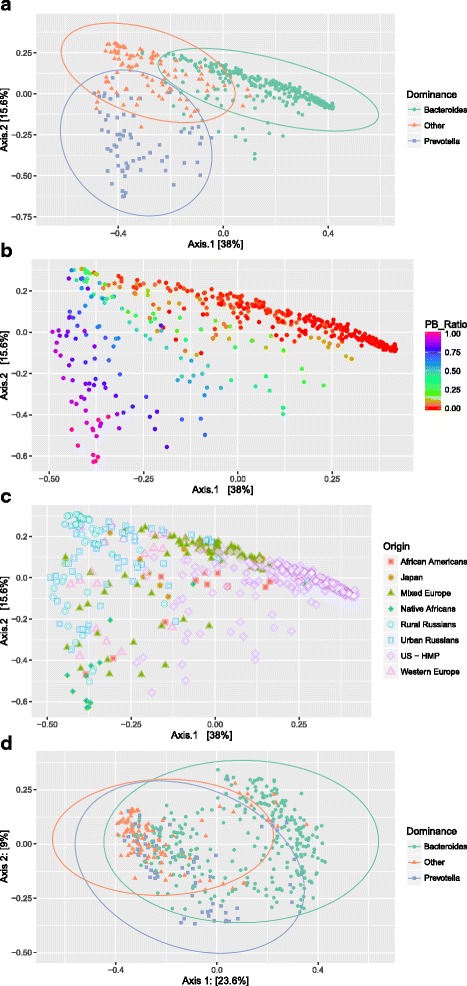
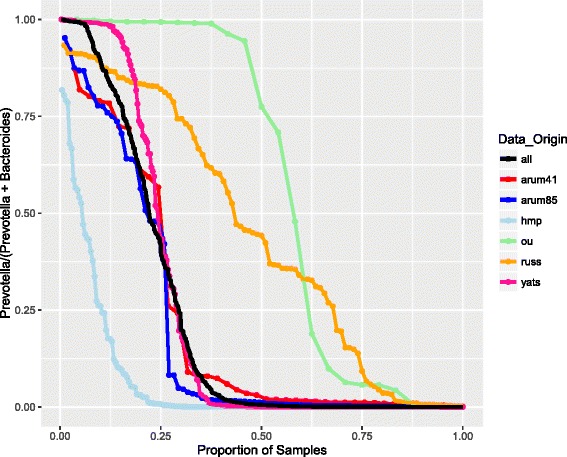
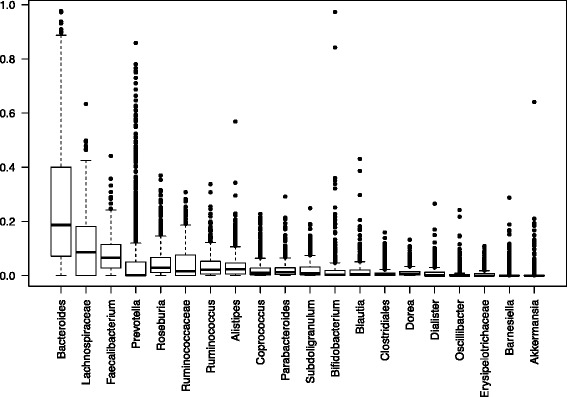
BACKGROUND: In a series of studies of the gut microbiome, "enterotypes" have been used to classify gut microbiome samples that cluster together in ordination analyses. Initially, three distinct enterotypes were described, although later studies reduced this to two clusters, one dominated by Bacteroides or Clostridiales species found more commonly in Western (American and Western European) subjects and the other dominated by Prevotella more often associated with non-Western subjects. The two taxa, Bacteroides and Prevotella, have been presumed to represent consistent underlying microbial communities, but no one has demonstrated the presence of additional microbial taxa across studies that can define these communities. RESULTS: We analyzed the combined microbiome data from five previous studies with samples across five continents. We clearly demonstrate that there are no consistent bacterial taxa associated with either Bacteroides- or Prevotella-dominated communities across the studies. By increasing the number and diversity of samples, we found gradients of both Bacteroides and Prevotella and a lack of the distinct clusters in the principal coordinate plots originally proposed in the "enterotypes" hypothesis. The apparent segregation of the samples seen in many ordination plots is due to the differences in the samples' Prevotella and Bacteroides abundances and does not represent consistent microbial communities within the "enterotypes" and is not associated with other taxa across studies. The projections we see are consistent with a continuum of values created from a simple mixture of Bacteroides and Prevotella; these two biomarkers are significantly correlated to the projection axes. We suggest that previous findings citing Bacteroides- and Prevotella-dominated clusters are the result of an artifact caused by the greater relative abundance of these two taxa over other taxa in the human gut and the sparsity of Prevotella abundant samples. CONCLUSIONS: We believe that the term "enterotypes" is misleading because it implies both an underlying consistency of community taxa and a clear separation of sets of human gut samples, neither of which is supported by the broader data. We propose the use of "biomarker" as a more accurate description of these and other taxa that correlate with diet, lifestyle, and disease state.
Overview
The claims and statistics of this paper haven’t been checked yet.
Free: it reads the open-access text and checks the first 5 claims that cite a source we can check. Create a free account to check every claim.
Integrity signals
Registry
Cites
Statistics
Figures
Verification
Claims the paper makes
The claims and statistics of this paper haven’t been checked yet.
Free: it reads the open-access text and checks the first 5 claims that cite a source we can check. Create a free account to check every claim.
Claims other papers make about this one
Each is checked against this paper’s own text: does it say what the citing paper says it does?
The cited source doesn’t support the claim as written.
In the citing paper
“The human gut microbiome includes multiple discrete ecologically balanced communities—hereafter referred to as ‘enteric microbiotypes’—that are resilient although still modifiable by diet, drugs and lifestyle47–52.”
From Intestinal microbiota signatures of clinical response and immune-related adverse events in melanoma patients treated with anti-PD-1 (2022) · cites this paper as [50]
Checked by a reasoning model — may be wrong.
Experimental — accuracy not yet measuredThe source backs part of the claim, not all of it — or backs it for a different population, condition or comparison.
In the citing paper
“Prevotella is normally found in only a small percentage of healthy individuals in European and American cohorts [1, 2, 20, 210].”
From The athletic gut microbiota (2020) · cites this paper as [210]
Experimental — accuracy not yet measuredIn the citing paper
“Human intestinal microbiota variation encompasses discrete microbial clusters or enterotypes, although their distribution may be continuous and their composition can be variable within the same individual47,50,51.”
From Intestinal microbiota signatures of clinical response and immune-related adverse events in melanoma patients treated with anti-PD-1 (2022) · cites this paper as [50]
In the citing paper
“For example, the genus Bacteroides in human stools is often more abundant in patients in the USA compared to global levels while the genus Prevotella is more abundant outside the USA (41).”
From A Uniform Computational Approach Improved on Existing Pipelines to Reveal Microbiome Biomarkers of Nonresponse to Immune Checkpoint Inhibitors (2021) · cites this paper as [41]
Self-check
Percentages, sums and reported differences re-computed from the paper’s own numbers.
The self-check needs the paper’s full text.
Citations
Cites
R: A Language and Environment for Statistical Computing
R Core Team (2025) · doi:10.32614/r.manuals · Cited by 352,181
The SILVA ribosomal RNA gene database project: improved data processing and web-based tools
Quast, C., Pruesse, E., Yilmaz, P., Gerken, J., Schweer, T., Yarza, P., Peplies, J., & Glöckner, F. O. (2012) · Nucleic Acids Research · doi:10.1093/nar/gks1219 · Cited by 33,055 · cited 1×
“The reads were assigned taxonomy by comparison against the SILVA database [26] using GAST [27].”
Methodphyloseq: An R Package for Reproducible Interactive Analysis and Graphics of Microbiome Census Data
McMurdie, P. J., & Holmes, S. (2013) · PLoS ONE · doi:10.1371/journal.pone.0061217 · Cited by 21,322 · cited 8×
“For the studies for which sequence counts were available, the Malawi, Venezuela, and American study [11] and the HMP study of healthy Americans [15], we ran both SparCC [32] and nbinomTest of DESeq2 package [18] on the count data.”
MethodInfluentialSelf-citationStructure, function and diversity of the healthy human microbiome
The Human Microbiome Project Consortium (2012) · Nature · doi:10.1038/nature11234 · Cited by 11,726 · cited 18×
“For the studies for which sequence counts were available, the Malawi, Venezuela, and American study [11] and the HMP study of healthy Americans [15], we ran both SparCC [32] and nbinomTest of DESeq2 package [18] on the count data.”
BackgroundMethodInfluentialDiet rapidly and reproducibly alters the human gut microbiome
David, L. A., Maurice, C. F., Carmody, R. N., Gootenberg, D. B., Button, J. E., Wolfe, B. E., Ling, A. V., Devlin, A. S., Varma, Y., Fischbach, M. A., et al. (2014) · Nature · doi:10.1038/nature12820 · Cited by 10,100 · cited 1×
“[22] report an increase in the bile-tolerant bacteria: Alistipes, Bilophila, and Bacteroides with an animal-based diet, while Roseburia, Eubacterium, and Ruminococcus were more abundant on a diet rich in plant polysaccharides.”
BackgroundHuman gut microbiome viewed across age and geography
Yatsunenko, T., Rey, F. E., Manary, M. J., Trehan, I., Dominguez-Bello, M. G., Contreras, M., Magris, M., Hidalgo, G., Baldassano, R. N., Anokhin, A. P., et al. (2012) · Nature · doi:10.1038/nature11053 · Cited by 7,815 · cited 10×
“For the studies for which sequence counts were available, the Malawi, Venezuela, and American study [11] and the HMP study of healthy Americans [15], we ran both SparCC [32] and nbinomTest of DESeq2 package [18] on the count data.”
BackgroundMethodInfluentialEnterotypes of the human gut microbiome
MetaHIT Consortium (additional members), Arumugam, M., Raes, J., Pelletier, E., Le Paslier, D., Yamada, T., Mende, D. R., Fernandes, G. R., Tap, J., Bruls, T., et al. (2011) · Nature · doi:10.1038/nature09944 · Cited by 7,548
Biomarkers and surrogate endpoints: Preferred definitions and conceptual framework
(2001) · Clinical Pharmacology & Therapeutics · doi:10.1067/mcp.2001.113989 · Cited by 6,762 · cited 1×
“communities, and a plant-based diet rich in polysaccharides and fiber [2, 8, 10, 11, 13, 21].”
BackgroundLinking long-term dietary patterns with gut microbial enterotypes
Wu, G. D., Chen, J., Hoffmann, C., Bittinger, K., Chen, Y.-Y., Keilbaugh, S. A., Bewtra, M., Knights, D., Walters, W. A., Knight, R., et al. (2011) · Science · doi:10.1126/science.1208344 · Cited by 6,513 · cited 4×
“Bacteroides is generally seen at a range of abundances including low, medium, and high abundances [2, 3, 10].”
BackgroundMethodInfluentialDe Filippo, C., Cavalieri, D., Di Paola, M., Ramazzotti, M., Poullet, J. B., Massart, S., Collini, S., Pieraccini, G., & Lionetti, P. (2010) · Proceedings of the National Academy of Sciences · doi:10.1073/pnas.1005963107 · Cited by 5,579 · cited 13×
“pling the gut microbiome of subjects from native or rural villages (Burkina Faso [8], South Africa [10], Venezuela and Malawi [11], and Russia [12]), Prevotella was commonly dominant in the adult samples.”
BackgroundInfluential
Research works printed but not linked: 1
- Arumugam M, Raes J, Pelletier E, Le Paslier D, Yamada T, Mende DR et al. Enterotypes of the human gut microbiome. Nature 473: 174-180 doi:10.1038/nature09944. http://www.nature.com/nature/journal/v473/n7346/full/nature09944.html PMC3728647 21508958 · DOI · Paper page
Cited by
Items 101–200 of 479
Li, N., Yan, F., Wang, N., Song, Y., Yue, Y., Guan, J., Li, B., & Huo, G. (2020) · Frontiers in Microbiology · doi:10.3389/fmicb.2020.00714 · Cited by 67
“The relative abundance of Bacteroidetes in gutmicrobiota is highly susceptible to dietary changes (Gorvitovskaia et al., 2016).”
BackgroundNakata, T., Kyoui, D., Takahashi, H., Kimura, B., & Kuda, T. (2017) · International Journal of Biological Macromolecules · doi:10.1016/j.ijbiomac.2017.01.015 · Cited by 68
Sciellour, M. L., Zemb, O., Hochu, I., Riquet, J., Gilbert, H., Gıorgı, M., Billon, Y., Gourdine, J.-L., & Renaudeau, D. (2019) · Journal of Animal Science · doi:10.1093/jas/skz222 · Cited by 68
Yıldırım, S., Nalbantoğlu, Ö. U., Bayraktar, A., Ercan, F. B., Gündoğdu, A., Velioğlu, H. A., Göl, M. F., Ekinci, A., Koç, F., Aslan-Gülpınar, E., et al. (2022) · mSystems · doi:10.1128/msystems.00004-22 · Cited by 70
Paepe, K. D., Verspreet, J., Courtin, C. M., & de Wiele, T. V. (2019) · The ISME Journal · doi:10.1038/s41396-019-0550-5 · Cited by 67
Zhang, Z., & Li, D. (2018) · Microbiome · doi:10.1186/s40168-018-0471-y · Cited by 62
Gut Microbiota of Wild and Captive Alpine Musk Deer (Moschus chrysogaster)
Sun, Y., Sun, Y., Shi, Z., Liu, Z., Zhao, C. S., Lu, T., Gao, H., Zhu, F., Chen, R., Zhang, J., et al. (2020) · Frontiers in Microbiology · doi:10.3389/fmicb.2019.03156 · Cited by 67
“In this regard, the microbiota of wild group can provide a good indicator that tells the direction of provision artificial food (Gorvitovskaia et al., 2016; Hale et al., 2017).”
BackgroundWu, X., Unno, T., Kang, S., & Park, S. (2021) · Nutrients · doi:10.3390/nu13020495 · Cited by 57
The Microbiome of the Built Environment and Human Behavior
Stamper, C. E., Hoisington, A. J., Gomez, O. M., Halweg‐Edwards, A. L., Smith, D. G., Bates, K. L., Kinney, K. A., Postolache, T. T., Brenner, L. A., Rook, G. A. W., et al. (2016) · International review of neurobiology · doi:10.1016/bs.irn.2016.07.006 · Cited by 66
Effect of green tea and mulberry leaf powders on the gut microbiota of chicken
Chen, Y., Ni, J., & Li, H. (2019) · BMC Veterinary Research · doi:10.1186/s12917-019-1822-z · Cited by 62
Sun, G., Zhang, H., Wei, Q., Zhao, C., Yang, X., Wu, X., Xia, T., Liu, G., Zhang, L., Gao, Y., et al. (2019) · Frontiers in Microbiology · doi:10.3389/fmicb.2019.01735 · Cited by 64
Colorectal Cancer-Associated Microbiome Patterns and Signatures
Zhao, L., Cho, W. C. S., & Nicolls, M. R. (2021) · Frontiers in Genetics · doi:10.3389/fgene.2021.787176 · Cited by 59
van de Guchte, M., Burz, S. D., Cadiou, J., Wu, J., Mondot, S., Blottière, H. M., & Dore, J. M. (2020) · Microbiome · doi:10.1186/s40168-020-00933-7 · Cited by 59
Microbes Associated With Black Soldier Fly (Diptera: Stratiomiidae) Degradation of Food Waste
Shelomi, M., Wu, M.-K., Chen, S.-M., Huang, J.-J., & Burke, C. G. (2020) · Environmental Entomology · doi:10.1093/ee/nvz164 · Cited by 50
Bacteriophage-Bacteria Interactions in the Gut: From Invertebrates to Mammals
Kirsch, J. M., Brzozowski, R., Faith, D. R., Round, J. L., Secor, P. R., & Duerkop, B. A. (2021) · Annual Review of Virology · doi:10.1146/annurev-virology-091919-101238 · Cited by 63
Kwak, S., Usyk, M., Beggs, D. B., Choi, H., Ahdoot, D., Wu, F. C., Maceda, L., Li, H., Im, E.-O., Han, H.-R., et al. (2024) · npj Biofilms and Microbiomes · doi:10.1038/s41522-024-00491-y · Cited by 59
“We additionally comparedtheabundanceof Bacteroides and Prevotella atgenuslevel, which were noted to be a predictor of body weight 27 , and a biomarker for diet and lifestyle 28 .”
BackgroundCinek, O., Kramná, L., Mazankova, K., Odeh, R., Alassaf, A. A., Ibekwe, R., Ahmadov, G., Elmahi, B. M. E., Mekki, H., Lebl, J., et al. (2018) · Diabetes Research and Clinical Practice · doi:10.1016/j.diabres.2018.08.010 · Cited by 58
Hamamah, S., Iatcu, O. C., & Covașă, M. (2024) · Nutrients · doi:10.3390/nu17010143 · Cited by 58
Social Influences on Prevotella and the Gut Microbiome of Young Monkeys
Amaral, W. Z., Lubach, G. R., Proctor, A., Lyte, M., Phillips, G. J., & Coe, C. L. (2017) · Psychosomatic Medicine · doi:10.1097/psy.0000000000000454 · Cited by 53
“Although Prevotella spp are commonly found to be a dominant component of the gut microbiota in nonhuman primates (14,15), they seem to be a major factor only in certain human populations (16,17).”
Gut microbiota characterisation in obese patients before and after bariatric surgery
Campisciano, G., Palmisano, S., Cason, C., Giuricin, M., Silvestri, M., Guerra, M., Macor, D., De Manzini, N., Crocé, L. S., & Comar, M. (2018) · Beneficial Microbes · doi:10.3920/bm2017.0152 · Cited by 53
Gut microbiome and multiple sclerosis: New insights and perspective
Amini, M. E., Shomali, N., Bakhshi, A., Rezaei, S., Hemmatzadeh, M., Hosseinzadeh, R., Eslami, S., Babaie, F., Aslani, S., Torkamandi, S., et al. (2020) · International Immunopharmacology · doi:10.1016/j.intimp.2020.107024 · Cited by 54
Effects of bacteriophages on gut microbiome functionality
Kurilovich, E., & Geva-Zatorsky, N. (2025) · Gut Microbes · doi:10.1080/19490976.2025.2481178 · Cited by 51
Functional host-specific adaptation of the intestinal microbiome in hominids
Rühlemann, M. C., Bang, C., Gogarten, J. F., Hermes, B. M., Groussin, M., Waschina, S., Poyet, M., Ulrich, M., Akoua-Koffi, C. G., Deschner, T., et al. (2024) · Nature Communications · doi:10.1038/s41467-023-44636-7 · Cited by 52
Crhánová, M., Karasová, D., Juřicová, H., Matiasovicova, J., Jahodářová, E., Kubasová, T., Seidlerová, Z., Čížek, A., & Rychlík, I. (2019) · Microorganisms · doi:10.3390/microorganisms7110496 · Cited by 56
Zou, H., Wang, D., Ren, H., Chen, P., Fang, C., Shi, Z., Zhang, P., Wang, J., Wang, J., Cai, K., et al. (2020) · Nutrients · doi:10.3390/nu12030631 · Cited by 53
“Both Prevotella and Bacteroides have played pivotal roles in carbohydrate metabolism, while showing various fiber-utilizing capacity [46,47].”
BackgroundRural environment reduces allergic inflammation by modulating the gut microbiota
Yang, Z., Chen, Z., Lin, X., Yao, S., Xian, M., Ning, X., Fu, W., Jiang, M., Li, N., Xiao, X., et al. (2022) · Gut Microbes · doi:10.1080/19490976.2022.2125733 · Cited by 51
Fitzgerald, C. B., Shkoporov, A. N., Upadrasta, A., Khokhlova, E. V., Ross, R. P., & Hill, C. (2021) · Frontiers in Cellular and Infection Microbiology · doi:10.3389/fcimb.2021.616918 · Cited by 54
“This phage belongs to a previously proposed genus VIII of subfamily Deltacrassvirinae of crAss-like phages, a subgroup which is highly abundant in non-Western human populations with high faecal Prevotella counts (Gorvitovskaia et al., 2016; Guerin et al., 2018).”
BackgroundResearch advancements on the diversity and host interaction of gut microbiota in chickens
Yue, Y., Luasiri, P., Li, J., Laosam, P., & Sangsawad, P. (2024) · Frontiers in Veterinary Science · doi:10.3389/fvets.2024.1492545 · Cited by 52
Turpin, W., Bedrani, L., Espin‐Garcia, O., Xu, W., Silverberg, M. S., Smith, M. I., Guttman, D. S., Griffiths, A. M., Moayyedi, P., Panaccione, R., et al. (2018) · Gut Microbes · doi:10.1080/19490976.2018.1445956 · Cited by 57
“The major microbial phyla comprising the human gut microbiome are Firmicutes, Bacteroidetes, Actinobacteria, and Proteobacteria(2) At the genus taxonomy level, the composition varies markedly in healthy subjects, with some subjects having > 80% of their microbiota composition represented by a single taxa such as Bacte…”
BackgroundPaepe, K. D., Verspreet, J., Verbeke, K., Raes, J., Courtin, C. M., & de Wiele, T. V. (2018) · Environmental Microbiology · doi:10.1111/1462-2920.14381 · Cited by 49
Liu, Y., Li, W., Yang, H., Zhang, X., Wang, W., Jia, S., Xiang, B., Wang, Y., Miao, L., Zhang, H., et al. (2021) · Frontiers in Cellular and Infection Microbiology · doi:10.3389/fcimb.2021.645951 · Cited by 56
The oropharyngeal microbiome is altered in individuals with schizophrenia and mania
Yolken, R. H., Prandovszky, E., Severance, E. G., Hatfield, G. S., & Dickerson, F. (2020) · Schizophrenia Research · doi:10.1016/j.schres.2020.03.010 · Cited by 48
Shared and Distinct Gut Microbiota in Spondyloarthritis, Acute Anterior Uveitis, and Crohn's Disease
Essex, M., Rodríguez, V. R., Rademacher, J., Proft, F. N., Löber, U., Markó, L., Pleyer, U., Strowig, T., Marchand, J., Kirwan, J., et al. (2023) · Arthritis & Rheumatology · doi:10.1002/art.42658 · Cited by 48
Lin, S., Han, S., Wang, X., Wang, X., Shi, X., He, Z., Sun, M., & Sun, J. (2024) · ACS Nano · doi:10.1021/acsnano.4c07750 · Cited by 49
Microbiota assembly, structure, and dynamics among Tsimane horticulturalists of the Bolivian Amazon
Sprockett, D. D., Martin, M. A., Costello, E. K., Burns, A. R., Holmes, S., Gurven, M., & Relman, D. A. (2020) · Nature Communications · doi:10.1038/s41467-020-17541-6 · Cited by 50
Self-citationEquine Fecal Microbiota Changes Associated With Anthelmintic Administration
Kunz, I. G. Z., Reed, K. J., Metcalf, J. L., Hassel, D. M., Coleman, R., Hess, T. M., & Coleman, S. J. (2019) · Journal of Equine Veterinary Science · doi:10.1016/j.jevs.2019.01.018 · Cited by 48
Osakunor, D. N. M., Munk, P., Mduluza, T., Petersen, T. N., Brinch, C., Ivens, A. C., Chimponda, T. N., Amanfo, S., Murray, J., Woolhouse, M. E. J., et al. (2020) · Communications Biology · doi:10.1038/s42003-020-0859-7 · Cited by 51
Shaikh, F. Y., White, J. R., Gills, J. J., Hakozaki, T., Richard, C., Routy, B., Okuma, Y., Usyk, M., Pandey, A., Weber, J. S., et al. (2021) · Clinical Cancer Research · doi:10.1158/1078-0432.ccr-20-4834 · Cited by 44
“1 was used to determine classification of patients as R or NR (41).”
MethodMeta-analysis identifies common gut microbiota associated with multiple sclerosis
Lin, Q., Dorsett, Y., Mirza, A., Tremlett, H. L., Piccio, L. M., Longbrake, E. E., Choileáin, S. N., Hafler, D. A., Cox, L. M., Weiner, H. L., et al. (2024) · Genome Medicine · doi:10.1186/s13073-024-01364-x · Cited by 46
“4c) This strong negative correlation appears to be a fundamental characteristic of the microbiota in the gut of healthy adults [32, 33].”
BackgroundThe internationalization of human microbiome research
Porras, A. M., & Brito, I. (2019) · Current Opinion in Microbiology · doi:10.1016/j.mib.2019.09.012 · Cited by 46
Facts and Hopes for Gut Microbiota Interventions in Cancer Immunotherapy
Davar, D., & Zarour, H. M. (2022) · Clinical Cancer Research · doi:10.1158/1078-0432.ccr-21-1129 · Cited by 40
Qi, R., Qiu, X., Du, L., Wang, J., Wang, Q., Huang, J., & Liu, Z. (2021) · Frontiers in Veterinary Science · doi:10.3389/fvets.2020.617259 · Cited by 46
“When the piglets were exposed to solid feed after 7 days, the relative abundance of Prevotella and Ruminococcaceae genera in the colon began to increase significantly, which was useful for food digestion and nutrient intake (especially carbohydrates) (23, 24).”
BackgroundChen, Z.-H., Yuan, X., Tu, T.-T., Wang, L., Mao, Y.-H., Luo, Y., Qiu, S., & Song, A.-X. (2024) · International Journal of Biological Macromolecules · doi:10.1016/j.ijbiomac.2024.131910 · Cited by 40
Seidlerová, Z., Kubasová, T., Faldynová, M., Crhánová, M., Karasová, D., Babák, V., & Rychlík, I. (2020) · Microorganisms · doi:10.3390/microorganisms8050767 · Cited by 38
Yu, J., Wu, Y., Zhu, Z., & Lu, H. (2025) · Nutrition Journal · doi:10.1186/s12937-024-01060-x · Cited by 39
“However, contrasting this observa - tion, prior evidence suggested that animal-based or typical Western diets, characterized by their high protein and fat content, were associated with elevated Bacteroides abundance [50, 51].”
Shivani, S., Kao, C., Chattopadhyay, A. S., Chen, J., Lai, L., Lin, W., Lu, T., Huang, I., Tsai, M., Teng, C., et al. (2022) · Frontiers in Cellular and Infection Microbiology · doi:10.3389/fcimb.2022.726256 · Cited by 41
Zhou, J., Zhang, H., Wu, S., Qiu, K., Fu, Y., Qi, G., & Wang, J. (2021) · Frontiers in Microbiology · doi:10.3389/fmicb.2021.635333 · Cited by 40
Min, U.-G., Jin, Y.-J., Jang, Y. J., Lim, J.-H., & Kim, B. (2024) · Frontiers in Nutrition · doi:10.3389/fnut.2024.1302093 · Cited by 37
Inflammatory Response: A Crucial Way for Gut Microbes to Regulate Cardiovascular Diseases
Wang, W., Zhu, L., Leng, Y.-Q., Wang, Y.-W., Shi, T., Wang, W., & Sun, J. (2023) · Nutrients · doi:10.3390/nu15030607 · Cited by 37
The Role of Gut Microbiota in the Etiopathogenesis of Multiple Chronic Diseases
Pires, L., Gonzaléz‐Paramás, A. M., Heleno, S. A., & Calhelha, R. C. (2024) · Antibiotics · doi:10.3390/antibiotics13050392 · Cited by 37
Hadza Prevotella require diet-derived microbiota-accessible carbohydrates to persist in mice
Gellman, R., Olm, M. R., Terrapon, N., Enam, F., Higginbottom, S. K., Sonnenburg, J. L., & Sonnenburg, E. D. (2023) · Cell Reports · doi:10.1016/j.celrep.2023.113233 · Cited by 39
“8,42 Here, we demonstrate that Hadza isolates of Bacteroides and Prevotella do not differ dramatically from their non-Hazda counterparts in terms of genome-wide average nucleotide identity and carbohydrate utilization, suggesting that differences in their relative abundance and prevalence across…”
BackgroundTian, Y., Nichols, R. G., Roy, P., Gui, W., Smith, P. B. W., Zhang, J., Lin, Y., Weaver, V. C., Cai, J., Patterson, A. D., et al. (2018) · Journal of Functional Foods · doi:10.1016/j.jff.2018.04.008 · Cited by 35
Wu, X., Chen, H., Gao, X., Gao, H., He, Q., Li, G., Yao, J., & Liu, Z. (2022) · Inflammatory Bowel Diseases · doi:10.1093/ibd/izab348 · Cited by 34
Liang, L., Su, X., Guan, Y., Wu, B., Zhang, X., & Nian, X. (2024) · iScience · doi:10.1016/j.isci.2024.109784 · Cited by 35
“47 Additionally, the biggest clinical side effects of GLP-1 RA are gastrointestinal reactions such as nausea, vomiting, and diarrhea, which usually appear in the first and second weeks of drug administration and then gradually disappear.”
BackgroundEvaluation of hypoglycemic effect, safety and immunomodulation of Prevotella copri in mice
Verbrugghe, P., Brynjólfsson, J., Jing, X., Björck, I., Hållenius, F. F., & Nilsson, A. C. (2021) · Scientific Reports · doi:10.1038/s41598-021-96161-6 · Cited by 33
The gut microbiome as an indicator of habitat disturbance in a Critically Endangered lemur
McManus, N., Holmes, S. M., Louis, E. E., Johnson, S. E., Baden, A. L., & Amato, K. R. (2021) · BMC Ecology and Evolution · doi:10.1186/s12862-021-01945-z · Cited by 35
“In contrast, Prevotella and Roseburia are generally considered to be indicators of a ‘healthy’ GM with reduced disease risk [66, 67], and these taxa were most abundant in Mangevo, our least disturbed site.”
BackgroundSelf-citationHur, H. J., Wu, X., Yang, H. J., Kim, M. J., Lee, K., Hong, M., Park, S., & Kim, M. (2022) · Frontiers in Nutrition · doi:10.3389/fnut.2022.861880 · Cited by 36
“However, the Ruminococcus enterotype is not separated from the Bacteroides one (13).”
BackgroundSalivary microbiome of an urban Indian cohort and patterns linked to subclinical inflammation
Acharya, A., Chan, Y., Kheur, S. M., Kheur, M. G., Gopalakrishnan, D., Watt, R., & Mattheos, N. (2017) · Oral Diseases · doi:10.1111/odi.12676 · Cited by 35
Exploring thematic structure and predicted functionality of 16S rRNA amplicon data
Woloszynek, S., Mell, J. C., Zhao, Z., Simpson, G., O’Connor, M. P., & ROSEN, G. L. (2019) · PLoS ONE · doi:10.1371/journal.pone.0219235 · Cited by 33
Taylor, H. B., Gudi, R. R., Brown, R. R., & Vasu, C. (2020) · Nutrients · doi:10.3390/nu12082193 · Cited by 34
Exploring the signature gut and oral microbiome in individuals of specific Ayurveda prakriti
Shalini, T., Jnana, A., Sriranjini, J. S., Tanwar, A. S., Brand, A. M., Murali, T. S., Satyamoorthy, K., & Gangadharan, G. G. (2021) · Journal of Biosciences · doi:10.1007/s12038-021-00182-2 · Cited by 34
Kort, R., Schlösser, J., Vazquez, A. R., Atukunda, P., Muhoozi, G. K. M., Wacoo, A. P., Sybesma, W., Westerberg, A. C., Iversen, P. O., & Schoen, E. D. (2021) · Frontiers in Microbiology · doi:10.3389/fmicb.2021.681485 · Cited by 32
“Noteworthy, both microbiota cores clearly show a typical Prevotella gut microbiota type, in agreement with previous observations that led to the assignment of Bacteroides and Prevotella as biomarkers of diet and lifestyle in Western and non-Western subjects, respectively (Gorvitovskaia et al., 2016), and references he…”
ResultClosely related Lak megaphages replicate in the microbiomes of diverse animals
Crisci, M. A., Chen, L.-X., Devoto, A. E., Borges, A. L., Bordin, N., Sachdeva, R., Tett, A., Sharrar, A. M., Segata, N., Debenedetti, F., et al. (2021) · iScience · doi:10.1016/j.isci.2021.102875 · Cited by 34
Microbiota, natural products, and human health: exploring interactions for therapeutic insights
Qadri, H., Shah, A. H., Almilaibary, A., & Mir, M. A. (2024) · Frontiers in Cellular and Infection Microbiology · doi:10.3389/fcimb.2024.1371312 · Cited by 32
“…regarding the prevalence of ecotypes like Ruminococcus, warrant further investigation considering factors such as sample size and variations in sampling methods (Arumugam et al., 2011; Wu et al., 2011; Huse et al., 2012; Zupancic et al., 2012; Gorvitovskaia et al., 2016; Liang et al., 2017).”
BackgroundBayesian Nonparametric Ordination for the Analysis of Microbial Communities
Ren, B., Bacallado, S., Favaro, S., Holmes, S., & Trippa, L. (2017) · Journal of the American Statistical Association · doi:10.1080/01621459.2017.1288631 · Cited by 41
“, 2011)) that can exist between different species (Gorvitovskaia et al., 2016).”
Self-citationRelationship of Diet to Gut Microbiota and Inflammatory Biomarkers in People with HIV
Manzano, M., Talavera-Rodríguez, A., Moreno, E., Madrid, N., Gosalbes, M. J., Ron, R., Dronda, F., Pérez-Molina, J. A., Lanza, V. F., Díaz, J., et al. (2022) · Nutrients · doi:10.3390/nu14061221 · Cited by 31
Posteraro, P., Maio, F. D., Menchinelli, G., Palucci, I., Errico, F. M., Carbone, M. A., Sanguinetti, M., Gasbarrini, A., & Posteraro, B. (2019) · Gut Pathogens · doi:10.1186/s13099-019-0325-6 · Cited by 32
Alteration of the fecal microbiota in Chinese patients with Schistosoma japonicum infection
Jiang, Y., Yuan, Z., Shen, Y., Rosa, B. A., Martin, J. C., Cao, S., Zhou, Y., Mitreva, M., & Cao, J. (2021) · Parasite · doi:10.1051/parasite/2020074 · Cited by 33
mbDenoise: microbiome data denoising using zero-inflated probabilistic principal components analysis
Zeng, Y., Li, J., Wei, C., Zhao, H., & Wang, T. (2022) · Genome biology · doi:10.1186/s13059-022-02657-3 · Cited by 32
“In recent years, large-scale human microbiome projects have revealed the variability of intestinal microbial compositions in healthy individuals caused by geography, lifestyle, and other factors [30–32].”
BackgroundZhang, Y., Brady, A., Jones, C., Song, Y., Darton, T. C., Jones, C., Blohmke, C. J., Pollard, A. J., Magder, L. S., Fasano, A., et al. (2018) · mBio · doi:10.1128/mbio.00686-18 · Cited by 31
Hjorth, M. F., Roager, H. M., Larsen, T. M., Poulsen, S. K., Licht, T. R., Bahl, M. I., Zohar, Y., & Astrup, A. V. (2018) · International Journal of Obesity · doi:10.1038/ijo.2018.1 · Cited by 31
Granata, I., Nardelli, C., D’Argenio, V., Tramontano, S., Compare, D., Guarracino, M. R., Nardone, G., Pilone, V., & Sacchetti, L. (2020) · Microorganisms · doi:10.3390/microorganisms8111811 · Cited by 31
Gao, M., Wu, J., Zhou, S., Chen, Y., Wang, M., He, W., Jiang, L., Shu, Y., & Wang, X. (2024) · Microbiology Spectrum · doi:10.1128/spectrum.04012-23 · Cited by 29
“Prevotella and Anaplasma may serve as valid biomarkers of diet and lifestyle (12).”
BackgroundKang, S., Jeong, D., Seo, J., Daily, J. W., & Park, S. (2025) · Cells · doi:10.3390/cells15010023 · Cited by 30
“Temporal Stability: Longitudinal studies have reported that approximately 80–85% of individuals maintain their dominant en-terotype over time despite dietary fluctuations, largely sustained by BA–microbe feedback mechanisms [23,37].”
InfluentialHaaland, R. E., Fountain, J. J., Hu, Y., Holder, A. N., Dinh, C. T., Hall, L., Pescatore, N. A., Heeke, S., Hart, C. E., Xu, J., et al. (2018) · Journal of the International AIDS Society · doi:10.1002/jia2.25199 · Cited by 30
“Prevotella and Bacteroides both belong to the Bacteroidetes phylum, which contributes to a healthy gut microbiota; however, some have suggested enrichment for Prevotella versus Bacteroides represents a distinct “enterotype” [39], or underlying microbial community, while others have not confirmed this finding [40,41].”
BackgroundCharacterisation of gut microbiota of obesity and type 2 diabetes in a rodent model
Ibrahim, K. S., BOURWIS, N., Dolan, S., Sue, L. A. N. G., Spencer, J., & Craft, J. A. (2020) · Bioscience of Microbiota Food and Health · doi:10.12938/bmfh.2019-031 · Cited by 33
Diet, Probiotics and Physical Activity: The Right Allies for a Healthy Microbiota
Divella, R., Palma, G. D., Tufaro, A., Pelagio, G., Gadaleta‐Caldarola, G., Bringiotti, R., & Paradiso, A. (2021) · Anticancer Research · doi:10.21873/anticanres.15057 · Cited by 29
Duan, Y., Wu, X., Yang, Y., Gu, L., Liu, L., Yang, Y., Zhou, J. Z., Wu, C., & Jin, F. (2022) · International Journal of Clinical and Health Psychology · doi:10.1016/j.ijchp.2022.100323 · Cited by 31
Bartsch, M., Hahn, A., & Berkemeyer, S. (2023) · Metabolites · doi:10.3390/metabo13121182 · Cited by 31
“When analyzing the gut microbiota composition in diverse global populations, a consistent association between Enterotype 1 and Enterotype 2 with other bacterial groups is notably absent [121].”
BackgroundDynamics of the gut microbiota in rats after hypobaric hypoxia exposure
Han, Y., Xu, J., Yan, Y., & Zhao, X. (2022) · PeerJ · doi:10.7717/peerj.14090 · Cited by 27
“These results further indicated that the competition between dominant taxa and the separation along the first principal coordinate was driven by a continuous variable that was a trade-off between Prevotella and Bacteroides ( Gorvitovskaia, Holmes & Huse, 2016 ; Smits et al., 2017 ).”
Liu, Y., Huang, K., Zhang, Y., Cao, H., & Guan, X. (2023) · Food & Function · doi:10.1039/d3fo02471g · Cited by 26
Bartsch, M., Vital, M., Woltemate, S., Bouwman, F. G., Berkemeyer, S., Hahn, A., & Müller, M. (2025) · Journal of Nutrition · doi:10.1016/j.tjnut.2025.08.034 · Cited by 28
“Prevotella and Bacteroides are 2 predominant members of the commensal gut microbiota, known for their distinct roles in the fermentation of dietary fiber and metabolic regulation [16].”
Two community types occur in gut microbiota of large‐sample wild plateau pikas (Ochotona curzoniae)
Yu, Q., Li, G., & Li, H. (2021) · Integrative Zoology · doi:10.1111/1749-4877.12575 · Cited by 29
Djurić, Z., Bassis, C. M., Plegue, M. A., Sen, A., Turgeon, D. K., Herman, K., Young, V. B., Brenner, D. E., & Ruffin, M. T. (2019) · Journal of Nutrition · doi:10.1093/jn/nxy255 · Cited by 27
“Other work suggests that this is an artefact of sparsity of samples with a high Prevotella abundance (76).”
BackgroundKillinger, B., Whidbey, C., Sadler, N., DeLeon, A. J., Munoz, N. M., Kim, Y., & Wright, A. (2022) · npj Biofilms and Microbiomes · doi:10.1038/s41522-022-00313-z · Cited by 30
Pamanji, R., Kumareshan, T. N., Lakshmi Priya, S., Sivan, G., & Selvin, J. (2023) · Chemosphere · doi:10.1016/j.chemosphere.2023.140867 · Cited by 25
Shi, Y., Zhong, L. X., Li, Y., Chen, Y., Feng, S., Wang, M., Xia, Y. Y., & Tang, S. (2021) · Frontiers in Microbiology · doi:10.3389/fmicb.2021.648915 · Cited by 27
“which are mostly driven by species composition (Arumugam et al., 2011; Gorvitovskaia et al., 2016; Levy et al., 2020).”
BackgroundVega, L., Herrera, G., Muñoz, M., Patarroyo, M. A., Maloney, J. G., Santín, M., & Ramírez, J. D. (2021) · PLoS ONE · doi:10.1371/journal.pone.0248185 · Cited by 27
Sahoyama, Y., Hamazato, F., Shiozawa, M., Nakagawa, T., Suda, W., Ogata, Y., Hachiya, T., Kawakami, E., & Hattori, M. (2022) · Scientific Reports · doi:10.1038/s41598-022-07398-8 · Cited by 24
Barry, D. J., Wu, S. S. X., & Cooke, M. B. (2024) · Nutrients · doi:10.3390/nu17010081 · Cited by 23
“Perhaps most importantly, in all described clinical trials, the dose, duration and intervention used differed from each other.”
Pescatore, N. A., Pollak, R. M., Kraft, C. S., Mullé, J. G., & Kelley, C. F. (2018) · AIDS Research and Human Retroviruses · doi:10.1089/aid.2017.0206 · Cited by 23
Adithya, K. K., Rajeev, R., Selvin, J., & Kiran, G. S. (2021) · ACS Food Science & Technology · doi:10.1021/acsfoodscitech.0c00075 · Cited by 26
Wassie, T., Cheng, B., Zhou, T., Gao, L., Lu, Z., Xie, C., & Wu, X. (2022) · Frontiers in Immunology · doi:10.3389/fimmu.2022.996897 · Cited by 24
“Most of the enriched functional pathways observed in the caecal microbiota of EP+YG-supplemented chickens were associated with Bacteroides, which have many species involved in SCFA production and immune system modulation (60).”
BackgroundA single serving of mixed spices alters gut microflora composition: a dose–response randomised trial
Khine, W. W. T., Haldar, S., Loi, S. D., & Lee, Y. K. (2021) · Scientific Reports · doi:10.1038/s41598-021-90453-7 · Cited by 23
Oh, H., Min, U.-G., Jang, H.-J., Kim, N., Lim, J., Chalita, M., & Chun, J. (2022) · The Journal of Microbiology · doi:10.1007/s12275-022-1526-0 · Cited by 23
“Human enterotypes are divided into the Prevotella type (P-type) and the Bacteroides type (B-type) in some studies (Wu et al., 2011; Gorvitovskaia et al., 2016; Liang et al., 2017), whereas others divide enterotypes into the Prevotella type, Bacteroides type, and Firmicutes (Ruminococcus) type…”
BackgroundAssociations of Blautia Genus With Early-Life Events and Later Phenotype in the NutriHS
Freitas, R. G. B. D. O. N., Vasques, A. C. J., Fernandes, G. D. R., Ribeiro, F. B., Solar, I., Barbosa, M., de Almeida-Pititto, B., Geloneze, B., & Ferreira, S. R. G. (2022) · Frontiers in Cellular and Infection Microbiology · doi:10.3389/fcimb.2022.838750 · Cited by 22
Pleasurable and problematic receptive anal intercourse and diseases of the colon, rectum and anus
Dickstein, D. R., Edwards, C. R., Rowan, C. R., Avanessian, B. K., Chubak, B. M., Wheldon, C. W., Simoes, P. K., Buckstein, M. H., Keefer, L., Safer, J. D., et al. (2024) · Nature Reviews Gastroenterology & Hepatology · doi:10.1038/s41575-024-00932-1 · Cited by 24
“…with a higher ratio of Prevotella to Bacteroides 117 (a biomarker of diet and lifestyle, with an increased ratio corresponding to a plant-based diet 118 ), possibly influenced by factors such as a higher fibre diet to facilitate RAI preparation 119,120 , the presence of Prevotella in semen 121 ,…”
Villa, C., Taïbi, A., Chen, J., Ward, W. E., & Comelli, E. M. (2017) · International Journal of Obesity · doi:10.1038/ijo.2017.294 · Cited by 24
Dietary Fiber, Gut Microbiota, Short-Chain Fatty Acids, and Host Metabolism
Hou, L., Yang, Y., Sun, B., Jing, Y., & Deng, W. (2021) · American Journal of Life Sciences · doi:10.11648/j.ajls.20210906.12 · Cited by 29
Čížková, D., Ďureje, Ľ., Piálek, J., & Kreisinger, J. (2021) · Heredity · doi:10.1038/s41437-021-00445-6 · Cited by 21
“…of autoimmune diseases, response to hypoxia and acute and chronic stressors (De Filippo et al. 2010; Wu et al. 2011; Maslanik et al. 2012; Scher et al. 2013; Palm et al. 2014; Gorvitovskaia et al. 2016; Amaral et al. 2017; Suzuki et al. 2019; Stothart et al. 2019; Iljazovic et al. 2020).”
Background
Metadata
- Authors
- Gorvitovskaia, A., Holmes, S. P., & Huse, S. M.
- Affiliations
- Brown University (US)
- Stanford University (US)
- Corresponding author
- Holmes, Susan P.
- ORCID
- Holmes, Susan P.
- Venue
- Microbiome
- Published
- 2016-04-12
- Volume
- 4
- Issue
- 1
- Pages
- 15-15
- ISSN
- 2049-2618 (ISSN-L)
- PMC
- PMC4828855
- OpenAlex
- W2333091667
- Cited by
- 461
- References
- 31
- Citations by year
- 2026: 30 · 2025: 37 · 2024: 42 · 2023: 32 · 2022: 73 · 2021: 50 · 2020: 61 · 2019: 48 · 2018: 51 · 2017: 30 · 2016: 7
- FWCI
- 23.57
- Type
- journal article
- Language
- en
- Open access
- gold
- doi.org
- Licence
- cc-by
- creativecommons.org/licenses/by/4.0/ (tdm)
- creativecommons.org/licenses/by/4.0/ (vor)
- Locations
- Microbiome (publishedVersion, cc-by)
- Europe PMC (PubMed Central) (publishedVersion, cc-by)
- PubMed Central (publishedVersion, cc-by)
- PubMed (publishedVersion)
- Funders
- National Institute of Allergy and Infectious Diseases (AI112401)
- Topics
- Life Sciences › Biochemistry, Genetics and Molecular Biology › Molecular Biology › Gut microbiota and health
- Health Sciences › Dentistry › Periodontics › Oral microbiology and periodontitis research
- Physical Sciences › Environmental Science › Ecology › Microbial Community Ecology and Physiology
- Keywords
- gut microbiota, enterotypes, Prevotella, Bacteroides, microbial biomarkers, diet and lifestyle, microbial community structure, cross-study comparison, Clostridiales
- MeSH terms
- Gastrointestinal Microbiome, Bacteroides, Diet, Humans, Life Style, Symbiosis, Biomarkers, Cluster Analysis, Prevotella, Principal Component Analysis, Gastrointestinal Tract, Black People, White People, Asian People
About these checks
Registry, retraction, Cites and statistics results are computed, not judged, with one exception: a printed reference that no index lists is read once by a model before it counts as a citation error. Claims are extracted by a model and kept only when their quote appears verbatim in the text; each cited source is then checked, with a model’s help, for whether it says what the claim relies on. Those verdicts can be wrong — read the claim’s quote and the cited source before relying on one.
Statistics and arithmetic are recomputed, not judged.
Confidence bands are shown only for fields calibrated on our annotated test set. None is calibrated yet, so no band is shown.
What counts as a claim ›How we measure confidence ›How we check this ›
Are you an author, or do you see a problem with this page? Request a review
Data sources
Bibliographic data: Semantic Scholar, OpenAlex, Crossref.
Contains information from the Semantic Scholar Academic Graph Datasets, made available under the ODC Attribution License (ODC-BY 1.0).
Semantic Scholar’s data is described in: Kinney, R., et al. (2023). The Semantic Scholar Open Data Platform. arXiv:2301.10140.
