

Interpreting Prevotella and Bacteroides as biomarkers of diet and lifestyle
Open accessThe DOI matches its Crossref record; 31 of the 31 references it cites were found in a registry or an index.
Abstract
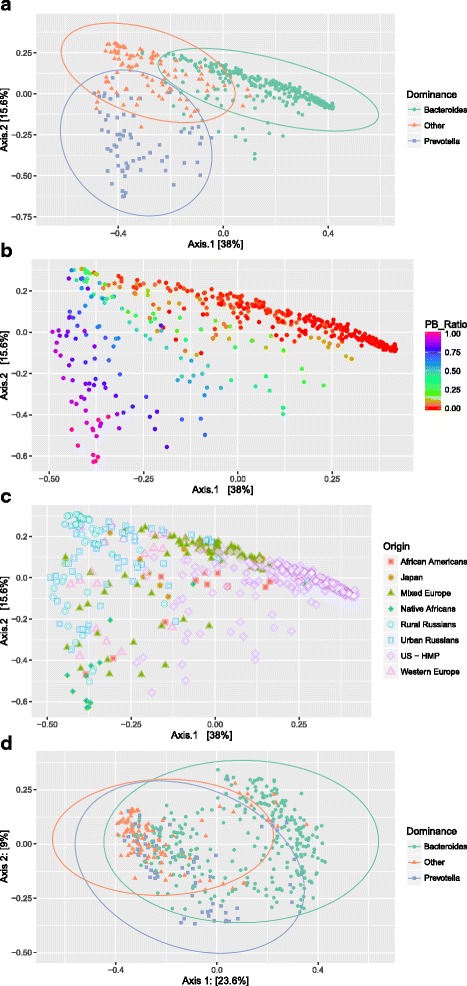
BACKGROUND: In a series of studies of the gut microbiome, "enterotypes" have been used to classify gut microbiome samples that cluster together in ordination analyses. Initially, three distinct enterotypes were described, although later studies reduced this to two clusters, one dominated by Bacteroides or Clostridiales species found more commonly in Western (American and Western European) subjects and the other dominated by Prevotella more often associated with non-Western subjects. The two taxa, Bacteroides and Prevotella, have been presumed to represent consistent underlying microbial communities, but no one has demonstrated the presence of additional microbial taxa across studies that can define these communities. RESULTS: We analyzed the combined microbiome data from five previous studies with samples across five continents. We clearly demonstrate that there are no consistent bacterial taxa associated with either Bacteroides- or Prevotella-dominated communities across the studies. By increasing the number and diversity of samples, we found gradients of both Bacteroides and Prevotella and a lack of the distinct clusters in the principal coordinate plots originally proposed in the "enterotypes" hypothesis. The apparent segregation of the samples seen in many ordination plots is due to the differences in the samples' Prevotella and Bacteroides abundances and does not represent consistent microbial communities within the "enterotypes" and is not associated with other taxa across studies. The projections we see are consistent with a continuum of values created from a simple mixture of Bacteroides and Prevotella; these two biomarkers are significantly correlated to the projection axes. We suggest that previous findings citing Bacteroides- and Prevotella-dominated clusters are the result of an artifact caused by the greater relative abundance of these two taxa over other taxa in the human gut and the sparsity of Prevotella abundant samples. CONCLUSIONS: We believe that the term "enterotypes" is misleading because it implies both an underlying consistency of community taxa and a clear separation of sets of human gut samples, neither of which is supported by the broader data. We propose the use of "biomarker" as a more accurate description of these and other taxa that correlate with diet, lifestyle, and disease state.
Overview
The claims and statistics of this paper haven’t been checked yet.
Free: it reads the open-access text and checks the first 5 claims that cite a source we can check. Create a free account to check every claim.
Integrity signals
Registry
Cites
Statistics
Figures
Verification
Claims the paper makes
The claims and statistics of this paper haven’t been checked yet.
Free: it reads the open-access text and checks the first 5 claims that cite a source we can check. Create a free account to check every claim.
Claims other papers make about this one
Each is checked against this paper’s own text: does it say what the citing paper says it does?
The cited source doesn’t support the claim as written.
In the citing paper
“The human gut microbiome includes multiple discrete ecologically balanced communities—hereafter referred to as ‘enteric microbiotypes’—that are resilient although still modifiable by diet, drugs and lifestyle47–52.”
From Intestinal microbiota signatures of clinical response and immune-related adverse events in melanoma patients treated with anti-PD-1 (2022) · cites this paper as [50]
Checked by a reasoning model — may be wrong.
Experimental — accuracy not yet measuredThe source backs part of the claim, not all of it — or backs it for a different population, condition or comparison.
In the citing paper
“Prevotella is normally found in only a small percentage of healthy individuals in European and American cohorts [1, 2, 20, 210].”
From The athletic gut microbiota (2020) · cites this paper as [210]
Experimental — accuracy not yet measuredIn the citing paper
“Human intestinal microbiota variation encompasses discrete microbial clusters or enterotypes, although their distribution may be continuous and their composition can be variable within the same individual47,50,51.”
From Intestinal microbiota signatures of clinical response and immune-related adverse events in melanoma patients treated with anti-PD-1 (2022) · cites this paper as [50]
In the citing paper
“For example, the genus Bacteroides in human stools is often more abundant in patients in the USA compared to global levels while the genus Prevotella is more abundant outside the USA (41).”
From A Uniform Computational Approach Improved on Existing Pipelines to Reveal Microbiome Biomarkers of Nonresponse to Immune Checkpoint Inhibitors (2021) · cites this paper as [41]
Self-check
Percentages, sums and reported differences re-computed from the paper’s own numbers.
The self-check needs the paper’s full text.
Citations
Cites
R: A Language and Environment for Statistical Computing
R Core Team (2025) · doi:10.32614/r.manuals · Cited by 352,181
The SILVA ribosomal RNA gene database project: improved data processing and web-based tools
Quast, C., Pruesse, E., Yilmaz, P., Gerken, J., Schweer, T., Yarza, P., Peplies, J., & Glöckner, F. O. (2012) · Nucleic Acids Research · doi:10.1093/nar/gks1219 · Cited by 33,055 · cited 1×
“The reads were assigned taxonomy by comparison against the SILVA database [26] using GAST [27].”
Methodphyloseq: An R Package for Reproducible Interactive Analysis and Graphics of Microbiome Census Data
McMurdie, P. J., & Holmes, S. (2013) · PLoS ONE · doi:10.1371/journal.pone.0061217 · Cited by 21,322 · cited 8×
“For the studies for which sequence counts were available, the Malawi, Venezuela, and American study [11] and the HMP study of healthy Americans [15], we ran both SparCC [32] and nbinomTest of DESeq2 package [18] on the count data.”
MethodInfluentialSelf-citationStructure, function and diversity of the healthy human microbiome
The Human Microbiome Project Consortium (2012) · Nature · doi:10.1038/nature11234 · Cited by 11,726 · cited 18×
“For the studies for which sequence counts were available, the Malawi, Venezuela, and American study [11] and the HMP study of healthy Americans [15], we ran both SparCC [32] and nbinomTest of DESeq2 package [18] on the count data.”
BackgroundMethodInfluentialDiet rapidly and reproducibly alters the human gut microbiome
David, L. A., Maurice, C. F., Carmody, R. N., Gootenberg, D. B., Button, J. E., Wolfe, B. E., Ling, A. V., Devlin, A. S., Varma, Y., Fischbach, M. A., et al. (2014) · Nature · doi:10.1038/nature12820 · Cited by 10,100 · cited 1×
“[22] report an increase in the bile-tolerant bacteria: Alistipes, Bilophila, and Bacteroides with an animal-based diet, while Roseburia, Eubacterium, and Ruminococcus were more abundant on a diet rich in plant polysaccharides.”
BackgroundHuman gut microbiome viewed across age and geography
Yatsunenko, T., Rey, F. E., Manary, M. J., Trehan, I., Dominguez-Bello, M. G., Contreras, M., Magris, M., Hidalgo, G., Baldassano, R. N., Anokhin, A. P., et al. (2012) · Nature · doi:10.1038/nature11053 · Cited by 7,815 · cited 10×
“For the studies for which sequence counts were available, the Malawi, Venezuela, and American study [11] and the HMP study of healthy Americans [15], we ran both SparCC [32] and nbinomTest of DESeq2 package [18] on the count data.”
BackgroundMethodInfluentialEnterotypes of the human gut microbiome
MetaHIT Consortium (additional members), Arumugam, M., Raes, J., Pelletier, E., Le Paslier, D., Yamada, T., Mende, D. R., Fernandes, G. R., Tap, J., Bruls, T., et al. (2011) · Nature · doi:10.1038/nature09944 · Cited by 7,548
Biomarkers and surrogate endpoints: Preferred definitions and conceptual framework
(2001) · Clinical Pharmacology & Therapeutics · doi:10.1067/mcp.2001.113989 · Cited by 6,762 · cited 1×
“communities, and a plant-based diet rich in polysaccharides and fiber [2, 8, 10, 11, 13, 21].”
BackgroundLinking long-term dietary patterns with gut microbial enterotypes
Wu, G. D., Chen, J., Hoffmann, C., Bittinger, K., Chen, Y.-Y., Keilbaugh, S. A., Bewtra, M., Knights, D., Walters, W. A., Knight, R., et al. (2011) · Science · doi:10.1126/science.1208344 · Cited by 6,513 · cited 4×
“Bacteroides is generally seen at a range of abundances including low, medium, and high abundances [2, 3, 10].”
BackgroundMethodInfluentialDe Filippo, C., Cavalieri, D., Di Paola, M., Ramazzotti, M., Poullet, J. B., Massart, S., Collini, S., Pieraccini, G., & Lionetti, P. (2010) · Proceedings of the National Academy of Sciences · doi:10.1073/pnas.1005963107 · Cited by 5,579 · cited 13×
“pling the gut microbiome of subjects from native or rural villages (Burkina Faso [8], South Africa [10], Venezuela and Malawi [11], and Russia [12]), Prevotella was commonly dominant in the adult samples.”
BackgroundInfluential
Research works printed but not linked: 1
- Arumugam M, Raes J, Pelletier E, Le Paslier D, Yamada T, Mende DR et al. Enterotypes of the human gut microbiome. Nature 473: 174-180 doi:10.1038/nature09944. http://www.nature.com/nature/journal/v473/n7346/full/nature09944.html PMC3728647 21508958 · DOI · Paper page
Cited by
Microbiome Datasets Are Compositional: And This Is Not Optional
Gloor, G. B., Macklaim, J. M., Pawlowsky-Glahn, V., & Egozcue, J. J. (2017) · Frontiers in Microbiology · doi:10.3389/fmicb.2017.02224 · Cited by 3,044
“…addition to being sensitive to the total read depth of a sample, DD methods largely discriminate between samples based on the most relatively abundant features in the samples, not on the features that are necessarily the most variable between samples (Gorvitovskaia et al., 2016; Wong et al., 2016).”
BackgroundEnterotypes in the landscape of gut microbial community composition
Costea, P. I., Hildebrand, F., Arumugam, M., Bäckhed, F., Blaser, M. J., Bushman, F. D., de Vos, W. M., Ehrlich, S. D., Fraser, C. M., Hattori, M., et al. (2017) · Nature Microbiology · doi:10.1038/s41564-017-0072-8 · Cited by 1,138
Seasonal cycling in the gut microbiome of the Hadza hunter-gatherers of Tanzania
Smits, S. A., Leach, J., Sonnenburg, E. D., Gonzalez, C. G., Lichtman, J. S., Reid, G., Knight, R., Manjurano, A., Changalucha, J., Elias, J. E., et al. (2017) · Science · doi:10.1126/science.aan4834 · Cited by 886
Gut Microbiota–Derived Short-Chain Fatty Acids Promote Poststroke Recovery in Aged Mice
Lee, J., d’Aigle, J., Atadja, L., Quaicoe, V., Honarpisheh, P., Ganesh, B. P., Hassan, A., Graf, J., Petrosino, J., Putluri, N., et al. (2020) · Circulation Research · doi:10.1161/circresaha.119.316448 · Cited by 554
Effects of Psychological, Environmental and Physical Stressors on the Gut Microbiota
Karl, J. P., Hatch, A. M., Arcidiacono, S. M., Pearce, S. C., Pantoja-Feliciano, I. G., Doherty, L. A., & Soares, J. W. (2018) · Frontiers in Microbiology · doi:10.3389/fmicb.2018.02013 · Cited by 530
“…diets) have been proposed as possible biomarkers of diet and lifestyle Frontiers in Microbiology | www.frontiersin.org 4 September 2018 | Volume 9 | Article 2013 (Gorvitovskaia et al., 2016) that could help predict individual responses to dietary intervention (Kovatcheva-Datchary et al., 2015).”
BackgroundCuevas-Sierra, A., Ramos-Lopez, O., Riezu-Boj, J. I., Milagro, F. I., & Martinez, J. A. (2019) · Advances in Nutrition · doi:10.1093/advances/nmy078 · Cited by 523
“However, other studies suggest that these enterotypes do not represent recurrent microbial communities across the diversity of human populations and the use of “biomarkers” is proposed as a more accurate term (16).”
BackgroundDifferences in gut microbiota profile between women with active lifestyle and sedentary women
Bressa, C., Bailén-Andrino, M., Pérez-Santiago, J., González-Soltero, R., Pérez, M., Montalvo-Lominchar, M. G., Maté-Muñoz, J. L., Domínguez, R., Moreno, D., & Larrosa, M. (2017) · PLOS ONE · doi:10.1371/journal.pone.0171352 · Cited by 501
Composition and Function of Chicken Gut Microbiota
Rychlik, I. (2020) · Animals · doi:10.3390/ani10010103 · Cited by 440
“In vitro culturomics indicates that chicken Prevotellaceae are specialised in the digestion of complex polysaccharides [29], consistent with the fact that in humans Prevotellaceae are enriched in gut microbiota of humans from rural parts of Africa [41,42].”
BackgroundMcCulloch, J. A., Davar, D., Rodrigues, R. R., Badger, J. H., Fang, J. R., Cole, A. M., Balaji, A. K., Vetizou, M., Prescott, S. M., Fernandes, M. R., et al. (2022) · Nature Medicine · doi:10.1038/s41591-022-01698-2 · Cited by 472
Precision Nutrition and the Microbiome, Part I: Current State of the Science
Mills, S., Stanton, C., Lane, J., Smith, G., & Ross, R. (2019) · Nutrients · doi:10.3390/nu11040923 · Cited by 399
Ticinesi, A., Lauretani, F., Milani, C., Nouvenne, A., Tana, C., Del Rio, D., Maggio, M., Ventura, M., & Meschi, T. (2017) · Nutrients · doi:10.3390/nu9121303 · Cited by 401
Mohr, A. E., Jäger, R., Carpenter, K. C., Kerksick, C. M., Purpura, M., Townsend, J. R., West, N. P., Black, K., Gleeson, M., Pyne, D. B., et al. (2020) · Journal of the International Society of Sports Nutrition · doi:10.1186/s12970-020-00353-w · Cited by 378
“Prevotella is normally found in only a small percentage of healthy individuals in European and American cohorts [1, 2, 20, 210].”
BackgroundPrecup, G., & Vodnar, D.-C. (2019) · British Journal of Nutrition · doi:10.1017/s0007114519000680 · Cited by 378
“copri was highlighted as an important biomarker for diet and lifestyle, due to its abundance in different populations across the world(13,36).”
BackgroundCommunity characteristics of the gut microbiomes of competitive cyclists
Petersen, L. M., Bautista, E. J., Nguyen, H., Hanson, B. M., Chen, L., Lek, S. H., Sodergren, E., & Weinstock, G. M. (2017) · Microbiome · doi:10.1186/s40168-017-0320-4 · Cited by 377
“Despite having been defined as a driver of one of the previously defined enterotypes [19], Prevotella is normally found in only a small percentage of healthy individuals in European and American cohorts [1, 4, 25, 26].”
BackgroundNetwork analysis methods for studying microbial communities: A mini review
Matchado, M. S., Lauber, M., Reitmeier, S., Kacprowski, T., Baumbach, J., Haller, D., & List, M. (2021) · Computational and Structural Biotechnology Journal · doi:10.1016/j.csbj.2021.05.001 · Cited by 357
“[105] and other studies including identifying biomarkers in of diet and lifestyle [28], interaction between Mucosal microbiome in gastric carcinogenesis [106] etc [107] (cid:1) It was used to capture the interaction between Marine phototrophs and archaea [108] REBACCA (2015) Linear system using log…”
MethodGioia, C., Lucchino, B., Tarsitano, M. G., Iannuccelli, C., & Di Franco, M. (2020) · Nutrients · doi:10.3390/nu12051456 · Cited by 292
Mitsou, E. K., Kakali, A., Antonopoulou, S., Mountzouris, K. C., Yannakoulia, M., Panagiotakos, D. B., & Kyriacou, A. (2017) · British Journal of Nutrition · doi:10.1017/s0007114517001593 · Cited by 325
“Previously reported connections of the Mediterranean diet or plant-based diets typical in rural, agrarian societies((39)) with suggested diet-responsive gut microbiota characteristics (e.”
Biology and Taxonomy of crAss-like Bacteriophages, the Most Abundant Virus in the Human Gut
Guerin, E., Shkoporov, A., Stockdale, S. R., Clooney, A. G., Ryan, F. J., Sutton, T. D. S., Draper, L. A., Gonzalez-Tortuero, E., Ross, R. P., & Hill, C. (2018) · Cell Host & Microbe · doi:10.1016/j.chom.2018.10.002 · Cited by 315
Gut microbiomes of wild great apes fluctuate seasonally in response to diet
Hicks, A. L., Lee, K. J., Couto-Rodriguez, M., Patel, J., Sinha, R., Guo, C., Olson, S. H., Seimon, A., Seimon, T. A., Ondzie, A. U., et al. (2018) · Nature Communications · doi:10.1038/s41467-018-04204-w · Cited by 272
Hjorth, M. F., Blædel, T., Bendtsen, L. Q., Lorenzen, J. K., Holm, J. B., Kiilerich, P., Roager, H. M., Kristiansen, K., Larsen, L. H., & Astrup, A. (2019) · International Journal of Obesity · doi:10.1038/s41366-018-0093-2 · Cited by 259
“Recently, the distinction of enterotypes as discrete clusters was challenged by studies suggesting that enterotype distribution is continuous and that information may be masked within these enterotype clusters [29, 30].”
BackgroundShetty, S. A., Hugenholtz, F., Lahti, L., Smidt, H., & de Vos, W. M. (2017) · FEMS Microbiology Reviews · doi:10.1093/femsre/fuw045 · Cited by 255
Recent insights into Shigella: a major contributor to the global diarrhoeal disease burden
Baker, S., & The, H. C. (2018) · Current Opinion in Infectious Diseases · doi:10.1097/qco.0000000000000475 · Cited by 198
Gut microbiota composition is associated with polypharmacy in elderly hospitalized patients
Ticinesi, A., Milani, C., Lauretani, F., Nouvenne, A., Mancabelli, L., Lugli, G. A., Turroni, F., Duranti, S., Mangifesta, M., Viappiani, A., et al. (2017) · Scientific Reports · doi:10.1038/s41598-017-10734-y · Cited by 211
Hjorth, M. F., Roager, H. M., Larsen, T. M., Poulsen, S. K., Licht, T. R., Bahl, M. I., Zohar, Y., & Astrup, A. (2018) · International Journal of Obesity · doi:10.1038/ijo.2017.220 · Cited by 207
Liang, D., Leung, R. K.-K., Guan, W., & Au, W. W. (2018) · Gut Pathogens · doi:10.1186/s13099-018-0230-4 · Cited by 203
“In another context, some studies reported that Ruminococcus was a major ecotype [30–32], including one which analyzed data from native populations from different countries [33].”
BackgroundFehlbaum, S., Prudence, K., Kieboom, J., Heerikhuisen, M., Van den Broek, T., Schuren, F. H. J., Steinert, R. E., & Raederstorff, D. (2018) · International Journal of Molecular Sciences · doi:10.3390/ijms19103097 · Cited by 190
Emerging Priorities for Microbiome Research
Cullen, C. M., Aneja, K. K., Beyhan, S., Cho, C. E., Woloszynek, S., Convertino, M., McCoy, S. J., Zhang, Y., Anderson, M. Z., Alvarez-Ponce, D., et al. (2020) · Frontiers in Microbiology · doi:10.3389/fmicb.2020.00136 · Cited by 190
“Distinct GI communities of “enterotypes” are centered on key bacterial species such as Bacteroides (enterotype 1) and Prevotella (enterotype 2) although each enterotype spans a range of species prevalence (Arumugam et al., 2011; Gorvitovskaia et al., 2016).”
BackgroundHumans as holobionts: implications for prevention and therapy
van de Guchte, M., Blottière, H. M., & Doré, J. (2018) · Microbiome · doi:10.1186/s40168-018-0466-8 · Cited by 191
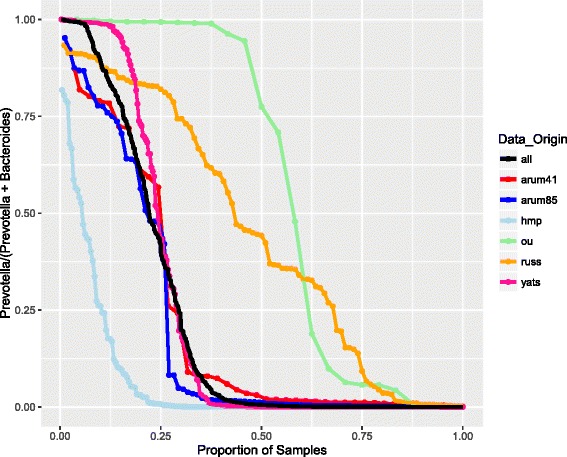
“Some have preferred to take the ratio of Prevotella/(Bacteroides + Prevotella) as an indicator of microbiota type, which reveals clear bimodal distributions across several studies [26].”
BackgroundDynamics of the normal gut microbiota: A longitudinal one-year population study in Sweden
Olsson, L. M., Boulund, F., Nilsson, S., Khan, M. T., Gummesson, A., Fagerberg, L., Engstrand, L., Perkins, R., Uhlén, M., Bergström, G., et al. (2022) · Cell Host & Microbe · doi:10.1016/j.chom.2022.03.002 · Cited by 194
Microbial enterotypes in personalized nutrition and obesity management
Christensen, L., Roager, H. M., Astrup, A., & Hjorth, M. F. (2018) · The American Journal of Clinical Nutrition · doi:10.1093/ajcn/nqy175 · Cited by 190
Gálvez, E. J. C., Iljazovic, A., Amend, L., Lesker, T. R., Renault, T., Thiemann, S., Hao, L., Roy, U., Gronow, A., Charpentier, E., et al. (2020) · Cell Host & Microbe · doi:10.1016/j.chom.2020.09.012 · Cited by 191
New insights into the interactions between Blastocystis, the gut microbiota, and host immunity
Deng, L., Wojciech, L., Gascoigne, N. R. J., Peng, G., & Tan, K. S. W. (2021) · PLOS Pathogens · doi:10.1371/journal.ppat.1009253 · Cited by 180
“Blastocystis carriers PLOS Pathogens | https://doi.org/10.1371/journal.ppat.1009253 February 25, 2021 3 / 15 had a higher abundance of Prevotella copri and Ruminococcus bromii, which are commonly found in the human gut microbiome and are often described as either Prevotella-rich or Ruminococcus-rich [36].”
BackgroundInfluentialThe Gut Microbiota of Healthy Aged Chinese Is Similar to That of the Healthy Young
Bian, G., Gloor, G. B., Gong, A., Jia, C., Zhang, W., Hu, J., Zhang, H., Zhang, Y., Zhou, Z., Zhang, J., et al. (2017) · mSphere · doi:10.1128/msphere.00327-17 · Cited by 185
“…across all three methods, which is in contrast to more standard approaches such as weighted Unifrac or Bray-Curtis dissimilarity, where the ordination or clustering is driven by the most abundant taxa, but the most differentially abundant taxa are often those that are rarest in the data set (17).”
Goodman, B., & Gardner, H. (2018) · The Journal of Pathology · doi:10.1002/path.5047 · Cited by 187
“As more data have accumulated, the picture has simplified, and it appears that most differences between individuals in the microbiome occur along a continuum of the ratio of two genera in the phylum Bacteroidetes, Prevotella and Bacteriodes, with the former being more abundant in humans with a plant-rich diet high in…”
BackgroundDiet, nutrients and the microbiome
(2020) · Progress in Molecular Biology and Translational Science · doi:10.1016/bs.pmbts.2020.04.006 · Cited by 170
Cross-Domain and Viral Interactions in the Microbiome
Rowan-Nash, A. D., Korry, B. J., Mylonakis, E., & Belenky, P. (2019) · Microbiology and Molecular Biology Reviews · doi:10.1128/mmbr.00044-18 · Cited by 163
“Despite such factors, some potential commonalities have arisen: several studies found an enrichment in Lactobacillaceae during infection of animal models with gut-resident nematodes, both human and animal studies found enrichment in potentially mucolytic (Mucispirillum, Akkermansia, and Prevotella) or sulfate-reducing…”
BackgroundInfluentialImpact of Westernized Diet on Gut Microbiota in Children on Leyte Island
Nakayama, J., Yamamoto, A., Palermo-Conde, L. A., Higashi, K., Sonomoto, K., Tan, J., & Lee, Y.-K. (2017) · Frontiers in Microbiology · doi:10.3389/fmicb.2017.00197 · Cited by 164
“…and boundaries between clusters become less clear-cut with increase of sample sizes (Jeffery et al., 2012; Koren et al., 2013; Knights et al., 2014; Gorvitovskaia et al., 2016), several studies have indicated the existence of at least two types of microbiomes comprising a trade-off of Prevotella…”
BackgroundFielding, R. A., Reeves, A. R., Jasuja, R., Liu, C., Barrett, B. B., & Lustgarten, M. S. (2019) · Experimental Gerontology · doi:10.1016/j.exger.2019.110722 · Cited by 163
“Although Prevotella have been reported as a marker of a diet that is rich in polysaccharides and fiber (Gorvitovskaia et al., 2016), in contrast, levels of the polysaccharides starch and pectin (data not shown), and dietary fiber were not significantly different when comparing HF with LF older adults, evidence that ar…”
Diet, Gut Microbiota, and Vitamins D + A in Multiple Sclerosis
Riccio, P., & Rossano, R. (2017) · Neurotherapeutics · doi:10.1007/s13311-017-0581-4 · Cited by 183
Prevotella in Pigs: The Positive and Negative Associations with Production and Health
Amat, S., Lantz, H. L., Munyaka, P. M., & Willing, B. P. (2020) · Microorganisms · doi:10.3390/microorganisms8101584 · Cited by 166
Yang, J., McDowell, A., Kim, E. K., Seo, H., Lee, W. H., Moon, C. M., Kym, S.-M., Lee, D. H., Park, Y. S., Jee, Y., et al. (2019) · Experimental & Molecular Medicine · doi:10.1038/s12276-019-0313-4 · Cited by 161
Nieves-Ramírez, M. E., Partida-Rodríguez, O., Laforest-Lapointe, I., Reynolds, L. A., Brown, E. M., Valdez-Salazar, A., Morán-Silva, P., Rojas-Velázquez, L., Morien, E., Parfrey, L. W., et al. (2018) · mSystems · doi:10.1128/msystems.00007-18 · Cited by 135
Dietary Protein and Muscle in Aging People: The Potential Role of the Gut Microbiome
Ni Lochlainn, M., Bowyer, R. C. E., & Steves, C. J. (2018) · Nutrients · doi:10.3390/nu10070929 · Cited by 138
Kumar, R., Sood, U., Gupta, V., Singh, M., Scaria, J., & Lal, R. (2019) · Indian Journal of Microbiology · doi:10.1007/s12088-019-00808-y · Cited by 147
Colon Carcinogenesis: The Interplay Between Diet and Gut Microbiota
Loke, Y. L., Chew, M. T., Ngeow, Y. F., Lim, W. W.-D., & Peh, S. C. (2020) · Frontiers in Cellular and Infection Microbiology · doi:10.3389/fcimb.2020.603086 · Cited by 144
Integration of 168,000 samples reveals global patterns of the human gut microbiome
Abdill, R. J., Graham, S. P., Rubinetti, V., Ahmadian, M., Hicks, P., Chetty, A., McDonald, D., Ferretti, P., Gibbons, E., Rossi, M., et al. (2025) · Cell · doi:10.1016/j.cell.2024.12.017 · Cited by 150
Dietary Protein and Muscle in Aging People: The Potential Role of the Gut Microbiome
Ni Lochlainn, M., Bowyer, R. C. E., & Steves, C. J. (2018) · doi:10.20944/preprints201806.0152.v1 · Cited by 138
Multi-stability and the origin of microbial community types
Gonze, D., Lahti, L., Raes, J., & Faust, K. (2017) · The ISME Journal · doi:10.1038/ismej.2017.60 · Cited by 137
“The ISME Journal changed beyond another tipping point (Figure 1d).”
BackgroundInfluentialDiet, Microbiota, and Gut Permeability—The Unknown Triad in Rheumatoid Arthritis
Guerreiro, C. S., Calado, Â., Sousa, J., & Fonseca, J. E. (2018) · Frontiers in Medicine · doi:10.3389/fmed.2018.00349 · Cited by 131
Microbiome in cancer: Role in carcinogenesis and impact in therapeutic strategies
Rahman, M. M., Islam, M. R., Shohag, S., Ahasan, M. T., Sarkar, N., Khan, H., Hasan, A. M., Cavalu, S. D., & Rauf, A. (2022) · Biomedicine & Pharmacotherapy · doi:10.1016/j.biopha.2022.112898 · Cited by 142
Metagenomic Assembly: Overview, Challenges and Applications.
Ghurye, J., Cepeda-Espinoza, V. P., & Pop, M. (2016) · PubMed Central · Cited by 190
Stewart, C. J., Auchtung, T. A., Ajami, N. J., Velasquez, K. M., Smith, D. P., Garza, R. D. L., Salas, R., & Petrosino, J. F. (2018) · PeerJ · doi:10.7717/peerj.4693 · Cited by 137
Balakrishnan, B., Luckey, D. H., Bodkhe, R., Chen, J., Marietta, E. V., Jeraldo, P., Murray, J. A., & Taneja, V. (2021) · Frontiers in Immunology · doi:10.3389/fimmu.2021.609644 · Cited by 128
HumGut: a comprehensive human gut prokaryotic genomes collection filtered by metagenome data
Hiseni, P., Rudi, K., Wilson, R. C., Hegge, F. T., & Snipen, L. G. (2021) · Microbiome · doi:10.1186/s40168-021-01114-w · Cited by 128
Enterotype Variations of the Healthy Human Gut Microbiome in Different Geographical Regions
School of Basic Sciences, I. I. O. T. M., Mobeen, F., Sharma, V., School of Basic Sciences, I. I. O. T. M., Prakash, T., & School of Basic Sciences, I. I. O. T. M. (2018) · Bioinformation · doi:10.6026/97320630014560 · Cited by 112
A spatial gradient of bacterial diversity in the human oral cavity shaped by salivary flow
Proctor, D. M., Fukuyama, J. A., Loomer, P. M., Armitage, G. C., Lee, S. A., Davis, N. M., Ryder, M. I., Holmes, S. P., & Relman, D. A. (2018) · Nature Communications · doi:10.1038/s41467-018-02900-1 · Cited by 115
Self-citationde la Cuesta-Zuluaga, J., Corrales-Agudelo, V., Velásquez-Mejía, E. P., Carmona, J. A., Abad, J. M., & Escobar, J. S. (2018) · Scientific Reports · doi:10.1038/s41598-018-29687-x · Cited by 112
A minimal model for microbial biodiversity can reproduce experimentally observed ecological patterns
Marsland, R., Cui, W., & Mehta, P. (2020) · Scientific Reports · doi:10.1038/s41598-020-60130-2 · Cited by 117
“As shown in Figure 3c, one factor associated with the compositional gradient is the host’s typical diet [23, 26].”
BackgroundConterno, L., Martinelli, F., Tamburini, M., Fava, F., Mancini, A., Sordo, M., Pindo, M., Martens, S., Masuero, D., Vrhovšek, U., et al. (2017) · European Journal of Nutrition · doi:10.1007/s00394-017-1572-2 · Cited by 112
Alanee, S. R., El-Zawahry, A. M., Dynda, D. I., Dabaja, A. A., McVary, K. T., Karr, M., & Braundmeier‐Fleming, A. (2018) · The Prostate · doi:10.1002/pros.23713 · Cited by 112
“However, previous studies did show a familiar pattern of fecal microbiota shared among inhabitants of sizeable geographic area (countries) not living very close to each other.(15) Another limitation of this study is that some patients with benign tissue had benign prostatic hyperplasia, and we did not control for that…”
BackgroundHsu, C., Lin, Y., Hou, C., & Tain, Y. (2018) · Nutrients · doi:10.3390/nu10091229 · Cited by 109
Mendes-Soares, H., Raveh-Sadka, T., Azulay, S., Ben-Shlomo, Y., Cohen, Y., Ofek, T., Stevens, J., Bachrach, D., Kashyap, P., Segal, L., et al. (2019) · The American Journal of Clinical Nutrition · doi:10.1093/ajcn/nqz028 · Cited by 97
“At the genus level, a significantly decreased Prevotella/Bacteroides ratio (Figure 6G; P value = 1e-18), was observed in the Midwestern cohort, in line with decreased fiber consumption (36).”
BackgroundGootenberg, D. B., Paer, J. M., Luévano, J. M., & Kwon, D. S. (2016) · Current Opinion in Infectious Diseases · doi:10.1097/qco.0000000000000341 · Cited by 110
“The microbiota differences observed between HIV-infected and uninfected individuals as a whole [17,18 && ] mirror some differences seen at baseline between populations in the developing and developed world [113,115,117].”
BackgroundMetagenomic Characterization of Intestinal Regions in Pigs With Contrasting Feed Efficiency
Quan, J., Wu, Z., Ye, Y., Peng, L., Wu, J., Ruan, D., Qiu, Y., Ding, R., Wang, X., Zheng, E., et al. (2020) · Frontiers in Microbiology · doi:10.3389/fmicb.2020.00032 · Cited by 111
“This genus dominated the human gut with proteinrich diet and was associated with the protein breakdown process (Gorvitovskaia et al., 2016).”
Accetto, T., & Avguštin, G. (2018) · Systematic and Applied Microbiology · doi:10.1016/j.syapm.2018.10.001 · Cited by 109
Huang, C., Li, Y., Feng, X., Li, D., Li, X., Ouyang, Q., Dai, W., Wu, G., Zhou, Q., Wang, P., et al. (2019) · Frontiers in Pediatrics · doi:10.3389/fped.2019.00394 · Cited by 106
“Probably due to its high diversity and abundance (33), Bacteroides participated in multiple metabolic pathways, including amino acid metabolism, energy metabolism, and lipid metabolism.”
BackgroundAssociations between the gut microbiota and host responses to high altitude
Karl, J. P., Berryman, C. E., Young, A., Radcliffe, P. N., Branck, T. A., Pantoja-Feliciano, I. G., Rood, J. C., & Pasiakos, S. M. (2018) · American Journal of Physiology-Gastrointestinal and Liver Physiology · doi:10.1152/ajpgi.00253.2018 · Cited by 101
“A higher ratio of Prevotella to Bacteroides is generally considered a marker of a healthy high-fiber, plant-rich diet (18, 32, 80), Prevotella are known SCFA producers (48), and certain Prevotella species have been associated with improved glucose homeostasis (43), which could be beneficial for mitigating impairments…”
Chung, W. S. F., Walker, A. W., Bosscher, D., Garcia-Campayo, V., Wagner, J., Parkhill, J., Duncan, S. H., & Flint, H. J. (2020) · BMC Microbiology · doi:10.1186/s12866-020-01968-4 · Cited by 93
“Since it is not yet established that these gut microbial communities conform to a common microbiota composition we prefer to avoid applying the term ‘enterotype’ and this view is strongly supported by an extensive recent analysis of metagenome data [37].”
BackgroundGut microbiome response to a modern Paleolithic diet in a Western lifestyle context
Barone, M., Turroni, S., Rampelli, S., Soverini, M., D’Amico, F., Biagi, E., Brigidi, P., Troiani, E., & Candela, M. (2019) · PLoS ONE · doi:10.1371/journal.pone.0220619 · Cited by 98
Jain, A., Li, X. H., & Chen, W. N. (2018) · AMB Express · doi:10.1186/s13568-018-0632-1 · Cited by 88
“Prevotella is very well known as an important biomarker of diet (Gorvitovskaia et al. 2016).”
BackgroundGao, S., Liang, J., Teng, T., & Zhang, M. (2018) · Applied Soil Ecology · doi:10.1016/j.apsoil.2018.12.012 · Cited by 93
Zhu, X., Hu, M., Huang, X., Li, L., Lin, X., Shao, X., Li, J., Du, X., Zhang, X., Sun, R., et al. (2025) · Cell Metabolism · doi:10.1016/j.cmet.2024.12.013 · Cited by 95
Fecal Bacterial Communities in treated HIV infected individuals on two antiretroviral regimens
Pinto-Cardoso, S. M., Lozupone, C., Briceño, O., Alva-Hernández, S., Téllez-Navarrete, N. A., Adriana, A., Murakami-Ogasawara, A., & Reyes‐Terán, G. (2017) · Scientific Reports · doi:10.1038/srep43741 · Cited by 100
Fei, Y., Wang, Y., Pang, Y., Wang, W., Zhu, D., Xie, M., Lan, S., & Wang, Z. (2020) · Frontiers in Physiology · doi:10.3389/fphys.2019.01601 · Cited by 88
Shining Light on Human Gut Bacteriophages
Guerin, E., & Hill, C. (2020) · Frontiers in Cellular and Infection Microbiology · doi:10.3389/fcimb.2020.00481 · Cited by 90
“Therefore, this diet driven variation in dominant bacterial species in the gut may also influence crAss-like phage composition (Gorvitovskaia et al., 2016; Guerin et al., 2018).”
BackgroundHelicobacter pylori infection associates with fecal microbiota composition and diversity
Frost, F., Kacprowski, T., Rühlemann, M. C., Bang, C., Franke, A., Zimmermann, K., Nauck, M. A., Völker, U., Völzke, H., Biffar, R., et al. (2019) · Scientific Reports · doi:10.1038/s41598-019-56631-4 · Cited by 94
Gut microbiota predicts body fat change following a low-energy diet: a PREVIEW intervention study
Jian, C., Silvestre, M. P., Middleton, D., Korpela, K., Jalo, E., Broderick, D. T. J., de Vos, W. M., Fogelholm, M., Taylor, M. W., Raben, A., et al. (2022) · Genome Medicine · doi:10.1186/s13073-022-01053-7 · Cited by 95
Sciellour, M. L., Labussière, E., Zemb, O., & Renaudeau, D. (2018) · PLoS ONE · doi:10.1371/journal.pone.0206159 · Cited by 94
Tamburini, F. B., Maghini, D., Oduaran, O. H., Brewster, R., Hulley, M. R., Sahibdeen, V., Norris, S. A., Tollman, S., Kahn, K., Wagner, R. G., et al. (2022) · Nature Communications · doi:10.1038/s41467-021-27917-x · Cited by 88
Chronic kidney disease and gut microbiota
Khiabani, S. A., Asgharzadeh, M., & Kafil, H. S. (2023) · Heliyon · doi:10.1016/j.heliyon.2023.e18991 · Cited by 87
“The researchers suggested using the biomarker as a better description for the taxa, related to nutrition, lifestyle and disease state [100].”
MethodImpact of dietary gut microbial metabolites on the epigenome
Gerhäuser, C. (2018) · Philosophical Transactions of the Royal Society B Biological Sciences · doi:10.1098/rstb.2017.0359 · Cited by 89
Gut microbiota is associated with metabolic health in children with obesity
Alcazar, M., Escribano, J., Ferré, N., Closa-Monasterolo, R., Selma‐Royo, M., Feliu, A., Castillejo, G., Luque, V., Closa-Monasterolo, R., Escribano, J., et al. (2022) · Clinical Nutrition · doi:10.1016/j.clnu.2022.06.007 · Cited by 88
Metabolic Modeling of Human Gut Microbiota on a Genome Scale: An Overview
Sen, P., & Orešič, M. (2019) · Metabolites · doi:10.3390/metabo9020022 · Cited by 86
Homeostasis in the Gut Microbiota in Chronic Kidney Disease
Bhargava, S., Merckelbach, E., Noels, H., Vohra, A., & Jankowski, J. (2022) · Toxins · doi:10.3390/toxins14100648 · Cited by 88
Exploring the Influence of Gut Microbiome on Energy Metabolism in Humans
Montenegro, J., Armet, A. M., Willing, B. P., Deehan, E. C., Fassini, P. G., Mota, J. F., Walter, J., & Prado, C. M. M. (2023) · Advances in Nutrition · doi:10.1016/j.advnut.2023.03.015 · Cited by 88
“The Bacteroides enterotype is more common in Western populations, whereas the Prevotella enterotype is found more commonly in nonindustrialized populations, which typically consume a diet higher in fiber and lower in animal protein compared with industrialized populations [73].”
Backgroundde Goffau, M. C., Jallow, A. T., Sanyang, C., Prentice, A. M., Meagher, N., Price, D. J., Revill, P. A., Parkhill, J., Pereira, D. I. A., & Wagner, J. (2021) · Nature Microbiology · doi:10.1038/s41564-021-01023-6 · Cited by 82
Gargari, G., Taverniti, V., Balzaretti, S., Ferrario, C., Gardana, C., Simonetti, P., & Guglielmetti, S. (2016) · Applied and Environmental Microbiology · doi:10.1128/aem.01753-16 · Cited by 79
Shaping of Intestinal Microbiota in Nlrp6- and Rag2-Deficient Mice Depends on Community Structure
Gálvez, E. J. C., Iljazovic, A., Gronow, A., Flavell, R., & Strowig, T. (2017) · Cell Reports · doi:10.1016/j.celrep.2017.12.027 · Cited by 81
Feng, S., Bootsma, M. J., & McLellan, S. L. (2018) · Applied and Environmental Microbiology · doi:10.1128/aem.00309-18 · Cited by 84
Associations Between Nutrition, Gut Microbiome, and Health in A Novel Nonhuman Primate Model
Clayton, J. B., Al‐Ghalith, G. A., Long, H. T., Tuan, B. V., Cabana, F., Huang, H., Vangay, P., Ward, T., Minh, V. V., Tam, N. A., et al. (2018) · Scientific Reports · doi:10.1038/s41598-018-29277-x · Cited by 100
Pellegrini, M., Ippolito, M., Monge, T., Violi, R., Cappello, P., Ferrocino, I., Cocolin, L. S., De Francesco, A., Bo, S., & Finocchiaro, C. (2020) · Nutrition · doi:10.1016/j.nut.2020.110749 · Cited by 77
Huh, J.-W., Kim, M. J., Kim, J., Lee, H. G., Ryoo, S. B., Ku, J.-L., Jeong, S.-Y., Park, K. J., Kim, D., Kim, J. F., et al. (2022) · Microbiome · doi:10.1186/s40168-022-01388-8 · Cited by 81
“The Prevotella is enriched in the gut of non-Western people, who consume more vegetables and less processed meat [37].”
Videnska, P., Smerkova, K., Zwinsova, B., Popovici, V., Micenkova, L., Sedlar, K., & Budinska, E. (2019) · Scientific Reports · doi:10.1038/s41598-019-49520-3 · Cited by 72
Early sexual dimorphism in the developing gut microbiome of northern elephant seals
Stoffel, M. A., Acevedo‐Whitehouse, K. A., Morales‐Durán, N., Grosser, S., Chakarov, N., Krüger, O., Nichols, H. J., Elorriaga-Verplancken, F. R., & Hoffman, J. I. (2020) · Molecular Ecology · doi:10.1111/mec.15385 · Cited by 78
Crossing the barriers: Revisiting the gut feeling in rheumatoid arthritis
Brandl, C., Bucci, L., Schett, G. A., & Zaiss, M. M. (2021) · European Journal of Immunology · doi:10.1002/eji.202048876 · Cited by 81
Microbiota Transplant in the Treatment of Obesity and Diabetes: Current and Future Perspectives
Napolitano, M., & Covașă, M. (2020) · Frontiers in Microbiology · doi:10.3389/fmicb.2020.590370 · Cited by 82
Mathew, S., Smatti, M. K., Alansari, K., Nasrallah, G. K., Thani, A. A. A., & Yassine, H. M. (2019) · Scientific Reports · doi:10.1038/s41598-018-37162-w · Cited by 80
Exploring the universal healthy human gut microbiota around the World
Piquer-Esteban, S., Ruiz‐Ruiz, S., Arnau, V., Díaz-Villanueva, W., & Moyá, A. (2022) · Computational and Structural Biotechnology Journal · doi:10.1016/j.csbj.2021.12.035 · Cited by 80
“Furthermore, these genera have been used to define different community composition types termed enterotypes, which appear to be useful to some degree in attempting to stratify human populations [93,113]], although with some controversy [114,115].”
Gut Microbiota Composition Associated with Clostridioides difficile Colonization and Infection
Martínez, E. D., Taminiau, B., Rodriguez, C., & Daube, G. (2022) · Pathogens · doi:10.3390/pathogens11070781 · Cited by 75
Sun, B., Hou, L., & Yang, Y. (2021) · Frontiers in Veterinary Science · doi:10.3389/fvets.2021.666535 · Cited by 72
“a fiber diet (47) and has a strong ability to utilize fiber (48).”
Background
Metadata
- Authors
- Gorvitovskaia, A., Holmes, S. P., & Huse, S. M.
- Affiliations
- Brown University (US)
- Stanford University (US)
- Corresponding author
- Holmes, Susan P.
- ORCID
- Holmes, Susan P.
- Venue
- Microbiome
- Published
- 2016-04-12
- Volume
- 4
- Issue
- 1
- Pages
- 15-15
- ISSN
- 2049-2618 (ISSN-L)
- PMC
- PMC4828855
- OpenAlex
- W2333091667
- Cited by
- 461
- References
- 31
- Citations by year
- 2026: 30 · 2025: 37 · 2024: 42 · 2023: 32 · 2022: 73 · 2021: 50 · 2020: 61 · 2019: 48 · 2018: 51 · 2017: 30 · 2016: 7
- FWCI
- 23.57
- Type
- journal article
- Language
- en
- Open access
- gold
- doi.org
- Licence
- cc-by
- creativecommons.org/licenses/by/4.0/ (tdm)
- creativecommons.org/licenses/by/4.0/ (vor)
- Locations
- Microbiome (publishedVersion, cc-by)
- Europe PMC (PubMed Central) (publishedVersion, cc-by)
- PubMed Central (publishedVersion, cc-by)
- PubMed (publishedVersion)
- Funders
- National Institute of Allergy and Infectious Diseases (AI112401)
- Topics
- Life Sciences › Biochemistry, Genetics and Molecular Biology › Molecular Biology › Gut microbiota and health
- Health Sciences › Dentistry › Periodontics › Oral microbiology and periodontitis research
- Physical Sciences › Environmental Science › Ecology › Microbial Community Ecology and Physiology
- Keywords
- gut microbiota, enterotypes, Prevotella, Bacteroides, microbial biomarkers, diet and lifestyle, microbial community structure, cross-study comparison, Clostridiales
- MeSH terms
- Gastrointestinal Microbiome, Bacteroides, Diet, Humans, Life Style, Symbiosis, Biomarkers, Cluster Analysis, Prevotella, Principal Component Analysis, Gastrointestinal Tract, Black People, White People, Asian People
About these checks
Registry, retraction, Cites and statistics results are computed, not judged, with one exception: a printed reference that no index lists is read once by a model before it counts as a citation error. Claims are extracted by a model and kept only when their quote appears verbatim in the text; each cited source is then checked, with a model’s help, for whether it says what the claim relies on. Those verdicts can be wrong — read the claim’s quote and the cited source before relying on one.
Statistics and arithmetic are recomputed, not judged.
Confidence bands are shown only for fields calibrated on our annotated test set. None is calibrated yet, so no band is shown.
What counts as a claim ›How we measure confidence ›How we check this ›
Are you an author, or do you see a problem with this page? Request a review
Data sources
Bibliographic data: Semantic Scholar, OpenAlex, Crossref.
Contains information from the Semantic Scholar Academic Graph Datasets, made available under the ODC Attribution License (ODC-BY 1.0).
Semantic Scholar’s data is described in: Kinney, R., et al. (2023). The Semantic Scholar Open Data Platform. arXiv:2301.10140.
