

Interpreting Prevotella and Bacteroides as biomarkers of diet and lifestyle
Open accessThe DOI matches its Crossref record; 31 of the 31 references it cites were found in a registry or an index.
Abstract
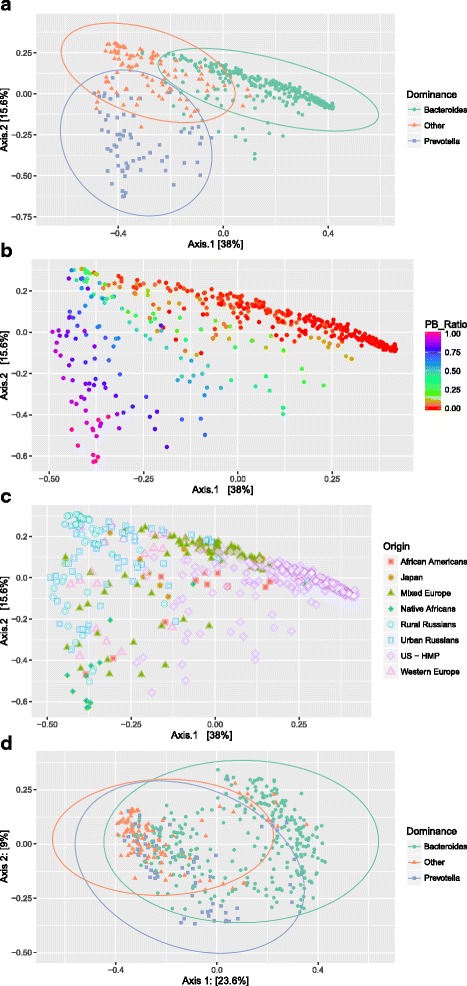
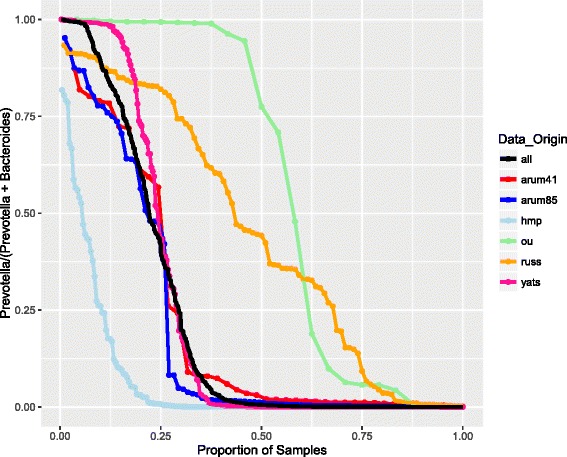
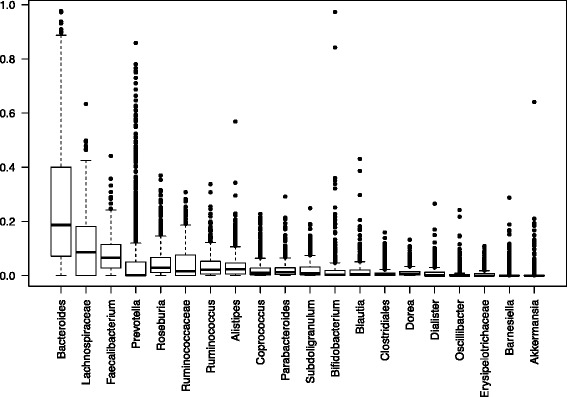
BACKGROUND: In a series of studies of the gut microbiome, "enterotypes" have been used to classify gut microbiome samples that cluster together in ordination analyses. Initially, three distinct enterotypes were described, although later studies reduced this to two clusters, one dominated by Bacteroides or Clostridiales species found more commonly in Western (American and Western European) subjects and the other dominated by Prevotella more often associated with non-Western subjects. The two taxa, Bacteroides and Prevotella, have been presumed to represent consistent underlying microbial communities, but no one has demonstrated the presence of additional microbial taxa across studies that can define these communities. RESULTS: We analyzed the combined microbiome data from five previous studies with samples across five continents. We clearly demonstrate that there are no consistent bacterial taxa associated with either Bacteroides- or Prevotella-dominated communities across the studies. By increasing the number and diversity of samples, we found gradients of both Bacteroides and Prevotella and a lack of the distinct clusters in the principal coordinate plots originally proposed in the "enterotypes" hypothesis. The apparent segregation of the samples seen in many ordination plots is due to the differences in the samples' Prevotella and Bacteroides abundances and does not represent consistent microbial communities within the "enterotypes" and is not associated with other taxa across studies. The projections we see are consistent with a continuum of values created from a simple mixture of Bacteroides and Prevotella; these two biomarkers are significantly correlated to the projection axes. We suggest that previous findings citing Bacteroides- and Prevotella-dominated clusters are the result of an artifact caused by the greater relative abundance of these two taxa over other taxa in the human gut and the sparsity of Prevotella abundant samples. CONCLUSIONS: We believe that the term "enterotypes" is misleading because it implies both an underlying consistency of community taxa and a clear separation of sets of human gut samples, neither of which is supported by the broader data. We propose the use of "biomarker" as a more accurate description of these and other taxa that correlate with diet, lifestyle, and disease state.
Overview
The claims and statistics of this paper haven’t been checked yet.
Free: it reads the open-access text and checks the first 5 claims that cite a source we can check. Create a free account to check every claim.
Integrity signals
Registry
Cites
Statistics
Figures
Verification
Claims the paper makes
The claims and statistics of this paper haven’t been checked yet.
Free: it reads the open-access text and checks the first 5 claims that cite a source we can check. Create a free account to check every claim.
Claims other papers make about this one
Each is checked against this paper’s own text: does it say what the citing paper says it does?
The cited source doesn’t support the claim as written.
In the citing paper
“The human gut microbiome includes multiple discrete ecologically balanced communities—hereafter referred to as ‘enteric microbiotypes’—that are resilient although still modifiable by diet, drugs and lifestyle47–52.”
From Intestinal microbiota signatures of clinical response and immune-related adverse events in melanoma patients treated with anti-PD-1 (2022) · cites this paper as [50]
Checked by a reasoning model — may be wrong.
Experimental — accuracy not yet measuredThe source backs part of the claim, not all of it — or backs it for a different population, condition or comparison.
In the citing paper
“Prevotella is normally found in only a small percentage of healthy individuals in European and American cohorts [1, 2, 20, 210].”
From The athletic gut microbiota (2020) · cites this paper as [210]
Experimental — accuracy not yet measuredIn the citing paper
“Human intestinal microbiota variation encompasses discrete microbial clusters or enterotypes, although their distribution may be continuous and their composition can be variable within the same individual47,50,51.”
From Intestinal microbiota signatures of clinical response and immune-related adverse events in melanoma patients treated with anti-PD-1 (2022) · cites this paper as [50]
In the citing paper
“For example, the genus Bacteroides in human stools is often more abundant in patients in the USA compared to global levels while the genus Prevotella is more abundant outside the USA (41).”
From A Uniform Computational Approach Improved on Existing Pipelines to Reveal Microbiome Biomarkers of Nonresponse to Immune Checkpoint Inhibitors (2021) · cites this paper as [41]
Self-check
Percentages, sums and reported differences re-computed from the paper’s own numbers.
The self-check needs the paper’s full text.
Citations
Cites
R: A Language and Environment for Statistical Computing
R Core Team (2025) · doi:10.32614/r.manuals · Cited by 352,181
The SILVA ribosomal RNA gene database project: improved data processing and web-based tools
Quast, C., Pruesse, E., Yilmaz, P., Gerken, J., Schweer, T., Yarza, P., Peplies, J., & Glöckner, F. O. (2012) · Nucleic Acids Research · doi:10.1093/nar/gks1219 · Cited by 33,055 · cited 1×
“The reads were assigned taxonomy by comparison against the SILVA database [26] using GAST [27].”
Methodphyloseq: An R Package for Reproducible Interactive Analysis and Graphics of Microbiome Census Data
McMurdie, P. J., & Holmes, S. (2013) · PLoS ONE · doi:10.1371/journal.pone.0061217 · Cited by 21,322 · cited 8×
“For the studies for which sequence counts were available, the Malawi, Venezuela, and American study [11] and the HMP study of healthy Americans [15], we ran both SparCC [32] and nbinomTest of DESeq2 package [18] on the count data.”
MethodInfluentialSelf-citationStructure, function and diversity of the healthy human microbiome
The Human Microbiome Project Consortium (2012) · Nature · doi:10.1038/nature11234 · Cited by 11,726 · cited 18×
“For the studies for which sequence counts were available, the Malawi, Venezuela, and American study [11] and the HMP study of healthy Americans [15], we ran both SparCC [32] and nbinomTest of DESeq2 package [18] on the count data.”
BackgroundMethodInfluentialDiet rapidly and reproducibly alters the human gut microbiome
David, L. A., Maurice, C. F., Carmody, R. N., Gootenberg, D. B., Button, J. E., Wolfe, B. E., Ling, A. V., Devlin, A. S., Varma, Y., Fischbach, M. A., et al. (2014) · Nature · doi:10.1038/nature12820 · Cited by 10,100 · cited 1×
“[22] report an increase in the bile-tolerant bacteria: Alistipes, Bilophila, and Bacteroides with an animal-based diet, while Roseburia, Eubacterium, and Ruminococcus were more abundant on a diet rich in plant polysaccharides.”
BackgroundHuman gut microbiome viewed across age and geography
Yatsunenko, T., Rey, F. E., Manary, M. J., Trehan, I., Dominguez-Bello, M. G., Contreras, M., Magris, M., Hidalgo, G., Baldassano, R. N., Anokhin, A. P., et al. (2012) · Nature · doi:10.1038/nature11053 · Cited by 7,815 · cited 10×
“For the studies for which sequence counts were available, the Malawi, Venezuela, and American study [11] and the HMP study of healthy Americans [15], we ran both SparCC [32] and nbinomTest of DESeq2 package [18] on the count data.”
BackgroundMethodInfluentialEnterotypes of the human gut microbiome
MetaHIT Consortium (additional members), Arumugam, M., Raes, J., Pelletier, E., Le Paslier, D., Yamada, T., Mende, D. R., Fernandes, G. R., Tap, J., Bruls, T., et al. (2011) · Nature · doi:10.1038/nature09944 · Cited by 7,548
Biomarkers and surrogate endpoints: Preferred definitions and conceptual framework
(2001) · Clinical Pharmacology & Therapeutics · doi:10.1067/mcp.2001.113989 · Cited by 6,762 · cited 1×
“communities, and a plant-based diet rich in polysaccharides and fiber [2, 8, 10, 11, 13, 21].”
BackgroundLinking long-term dietary patterns with gut microbial enterotypes
Wu, G. D., Chen, J., Hoffmann, C., Bittinger, K., Chen, Y.-Y., Keilbaugh, S. A., Bewtra, M., Knights, D., Walters, W. A., Knight, R., et al. (2011) · Science · doi:10.1126/science.1208344 · Cited by 6,513 · cited 4×
“Bacteroides is generally seen at a range of abundances including low, medium, and high abundances [2, 3, 10].”
BackgroundMethodInfluentialDe Filippo, C., Cavalieri, D., Di Paola, M., Ramazzotti, M., Poullet, J. B., Massart, S., Collini, S., Pieraccini, G., & Lionetti, P. (2010) · Proceedings of the National Academy of Sciences · doi:10.1073/pnas.1005963107 · Cited by 5,579 · cited 13×
“pling the gut microbiome of subjects from native or rural villages (Burkina Faso [8], South Africa [10], Venezuela and Malawi [11], and Russia [12]), Prevotella was commonly dominant in the adult samples.”
BackgroundInfluentialWaste Not, Want Not: Why Rarefying Microbiome Data Is Inadmissible
McMurdie, P. J., & Holmes, S. (2014) · PLoS Computational Biology · doi:10.1371/journal.pcbi.1003531 · Cited by 2,921 · cited 8×
“For the studies for which sequence counts were available, the Malawi, Venezuela, and American study [11] and the HMP study of healthy Americans [15], we ran both SparCC [32] and nbinomTest of DESeq2 package [18] on the count data.”
BackgroundMethodInfluentialSelf-citationInferring Correlation Networks from Genomic Survey Data
Friedman, J., & Alm, E. J. (2012) · PLoS Computational Biology · doi:10.1371/journal.pcbi.1002687 · Cited by 2,706 · cited 8×
“For the studies for which sequence counts were available, the Malawi, Venezuela, and American study [11] and the HMP study of healthy Americans [15], we ran both SparCC [32] and nbinomTest of DESeq2 package [18] on the count data.”
BackgroundMethodInfluentialGenomic analysis identifies association of Fusobacterium with colorectal carcinoma
Kostic, A. D., Gevers, D., Pedamallu, C. S., Michaud, M., Duke, F., Earl, A. M., Ojesina, A. I., Jung, J., Bass, A. J., Tabernero, J., et al. (2012) · Genome Research · doi:10.1101/gr.126573.111 · Cited by 1,960 · cited 1×
“Fusobacterium has also been associated with colon cancer [24].”
BackgroundPearson, K. (1897) · Proceedings of the Royal Society of London · doi:10.1098/rspl.1896.0076 · Cited by 1,130 · cited 2×
“As was pointed out as early as 1896 by Pearson [20], proportions give rise to spurious correlations and our approach here relies on the study of proportions that eliminate the common denominators as suggested in [19].”
MethodExploring Microbial Diversity and Taxonomy Using SSU rRNA Hypervariable Tag Sequencing
Huse, S. M., Dethlefsen, L., Huber, J. A., Welch, D. M., Relman, D. A., & Sogin, M. L. (2008) · PLoS Genetics · doi:10.1371/journal.pgen.1000255 · Cited by 1,001 · cited 1×
“The reads were assigned taxonomy by comparison against the SILVA database [26] using GAST [27].”
MethodSelf-citationOu, J., Carbonero, F., Zoetendal, E. G., DeLany, J. P., Wang, M., Newton, K., Gaskins, H. R., & O’Keefe, S. J. (2013) · The American Journal of Clinical Nutrition · doi:10.3945/ajcn.112.056689 · Cited by 646 · cited 12×
“pling the gut microbiome of subjects from native or rural villages (Burkina Faso [8], South Africa [10], Venezuela and Malawi [11], and Russia [12]), Prevotella was commonly dominant in the adult samples.”
BackgroundInfluentialAccurate taxonomy assignments from 16S rRNA sequences produced by highly parallel pyrosequencers
Liu, Z., DeSantis, T. Z., Andersen, G. L., & Knight, R. (2008) · Nucleic Acids Research · doi:10.1093/nar/gkn491 · Cited by 592 · cited 1×
“studies [29].”
A Core Human Microbiome as Viewed through 16S rRNA Sequence Clusters
Huse, S. M., Ye, Y., Zhou, Y., & Fodor, A. A. (2012) · PLoS ONE · doi:10.1371/journal.pone.0034242 · Cited by 572 · cited 9×
“For the studies for which sequence counts were available, the Malawi, Venezuela, and American study [11] and the HMP study of healthy Americans [15], we ran both SparCC [32] and nbinomTest of DESeq2 package [18] on the count data.”
BackgroundResultInfluentialSelf-citationKoren, O., Knights, D., Gonzalez, A., Waldron, L., Segata, N., Knight, R., Huttenhower, C., & Ley, R. E. (2013) · PLoS Computational Biology · doi:10.1371/journal.pcbi.1002863 · Cited by 508 · cited 7×
“Firmicutes as a phylum, however, is unlikely to be an effective candidate for a biomarker, as it incorporates a diversity of genera.”
BackgroundResultInfluentialNursing our microbiota: molecular linkages between bifidobacteria and milk oligosaccharides
Sela, D. A., & Mills, D. A. (2010) · Trends in Microbiology · doi:10.1016/j.tim.2010.03.008 · Cited by 468 · cited 2×
“ium, a beneficial microbe associated with milk-based diets such as breast-feeding [9].”
BackgroundMeta-analyses of studies of the human microbiota
Lozupone, C. A., Stombaugh, J., Gonzalez, A., Ackermann, G., Wendel, D., Vázquez-Baeza, Y., Jansson, J. K., Gordon, J. I., & Knight, R. (2013) · Genome Research · doi:10.1101/gr.151803.112 · Cited by 424 · cited 1×
“[30] analyzed the effectiveness of meta-study comparisons of human gut samples.”
BackgroundKnights, D., Ward, T. L., McKinlay, C. E., Miller, H., Gonzalez, A., McDonald, D., & Knight, R. (2014) · Cell Host & Microbe · doi:10.1016/j.chom.2014.09.013 · Cited by 396 · cited 3×
“[6] further cautioned that supervised ordination methods can lead to false clustering when the number of features in the data (here microbial genera) is much higher than the number of samples, as is the case in most human gut microbiome studies.”
BackgroundBaxter, N. T., Zackular, J. P., Chen, G. Y., & Schloss, P. D. (2014) · Microbiome · doi:10.1186/2049-2618-2-20 · Cited by 299 · cited 1×
“[23] found correlations between Bacteroides, Parabacteroides, Alistipes, and Akkermansia with increased tumor burden and Clostridiales Cluster XIVa (which includes Roseburia and Faecalibacterium) with decreased tumor burden.”
BackgroundHuman gut microbiota community structures in urban and rural populations in Russia
Tyakht, A. V., Kostryukova, E. S., Popenko, A. S., Belenikin, M. S., Pavlenko, A. V., Larin, A. K., Karpova, I. Y., Selezneva, O. V., Semashko, T. A., Ospanova, E. A., et al. (2013) · Nature Communications · doi:10.1038/ncomms3469 · Cited by 282 · cited 16×
“[12, 13] found between two and three community types.”
BackgroundResultInfluentialProportionality: A Valid Alternative to Correlation for Relative Data
Lovell, D., Pawlowsky-Glahn, V., Egozcue, J. J., Marguerat, S., & Bähler, J. (2015) · PLOS Computational Biology · doi:10.1371/journal.pcbi.1004075 · Cited by 281 · cited 3×
“As was pointed out as early as 1896 by Pearson [20], proportions give rise to spurious correlations and our approach here relies on the study of proportions that eliminate the common denominators as suggested in [19].”
BackgroundMethodCategorization of the gut microbiota: enterotypes or gradients?
Jeffery, I. B., Claesson, M. J., O'Toole, P. W., & Shanahan, F. (2012) · Nature Reviews Microbiology · doi:10.1038/nrmicro2859 · Cited by 238 · cited 1×
“[4] reached the same conclusion that a gradient of microbial populations was a more accurate interpretation of the data.”
BackgroundVAMPS: a website for visualization and analysis of microbial population structures
Huse, S. M., Mark Welch, D. B., Voorhis, A., Shipunova, A., Morrison, H. G., Eren, A. M., & Sogin, M. L. (2014) · BMC Bioinformatics · doi:10.1186/1471-2105-15-41 · Cited by 210 · cited 1×
“We downloaded the Human Microbiome Project (HMP) data from the VAMPS website [28] at the Marine Biological Laboratory (https://vamps.”
MethodSelf-citationRoager, H. M., Licht, T. R., Poulsen, S. K., Larsen, T. M., & Bahl, M. I. (2014) · Applied and Environmental Microbiology · doi:10.1128/aem.03549-13 · Cited by 194 · cited 2×
“Several researchers reported correlations within Bacteroides-dominated samples within their studies, including Acidminococcus, Roseburia, Faecalibacterium, Anaerostipes, Parabacteroides, and Clostridiales [14], Alistipes only [16], Escherichia (Enterobacteriaceae) and Acinetobacter [10], and Faecalibacterium and Enter…”
BackgroundTrosvik, P., & de Muinck, E. J. (2015) · Microbiome · doi:10.1186/s40168-015-0107-4 · Cited by 168 · cited 1×
“The use of specific bacterial taxa to characterize the ecological roles of microbial community members was recently described by Trosvik and de Muinck [25].”
BackgroundExploration of bacterial community classes in major human habitats
Zhou, Y., Mihindukulasuriya, K. A., Gao, H., La Rosa, P. S., Wylie, K. M., Martin, J. C., Kota, K., Shannon, W. D., Mitreva, M., Sodergren, E., et al. (2014) · Genome Biology · doi:10.1186/gb-2014-15-5-r66 · Cited by 149 · cited 2×
“over time [6, 7], and no one has evaluated the taxonomic composition of the clusters across studies.”
BackgroundRural and urban microbiota: To be or not to be?
Tyakht, A. V., Alexeev, D. G., Popenko, A. S., Kostryukova, E. S., & Govorun, V. M. (2014) · Gut Microbes · doi:10.4161/gmic.28685 · Cited by 43
Research works printed but not linked: 1
- Arumugam M, Raes J, Pelletier E, Le Paslier D, Yamada T, Mende DR et al. Enterotypes of the human gut microbiome. Nature 473: 174-180 doi:10.1038/nature09944. http://www.nature.com/nature/journal/v473/n7346/full/nature09944.html PMC3728647 21508958 · DOI · Paper page
Cited by
Microbiome Datasets Are Compositional: And This Is Not Optional
Gloor, G. B., Macklaim, J. M., Pawlowsky-Glahn, V., & Egozcue, J. J. (2017) · Frontiers in Microbiology · doi:10.3389/fmicb.2017.02224 · Cited by 3,044
“…addition to being sensitive to the total read depth of a sample, DD methods largely discriminate between samples based on the most relatively abundant features in the samples, not on the features that are necessarily the most variable between samples (Gorvitovskaia et al., 2016; Wong et al., 2016).”
BackgroundEnterotypes in the landscape of gut microbial community composition
Costea, P. I., Hildebrand, F., Arumugam, M., Bäckhed, F., Blaser, M. J., Bushman, F. D., de Vos, W. M., Ehrlich, S. D., Fraser, C. M., Hattori, M., et al. (2017) · Nature Microbiology · doi:10.1038/s41564-017-0072-8 · Cited by 1,138
Seasonal cycling in the gut microbiome of the Hadza hunter-gatherers of Tanzania
Smits, S. A., Leach, J., Sonnenburg, E. D., Gonzalez, C. G., Lichtman, J. S., Reid, G., Knight, R., Manjurano, A., Changalucha, J., Elias, J. E., et al. (2017) · Science · doi:10.1126/science.aan4834 · Cited by 886
Gut Microbiota–Derived Short-Chain Fatty Acids Promote Poststroke Recovery in Aged Mice
Lee, J., d’Aigle, J., Atadja, L., Quaicoe, V., Honarpisheh, P., Ganesh, B. P., Hassan, A., Graf, J., Petrosino, J., Putluri, N., et al. (2020) · Circulation Research · doi:10.1161/circresaha.119.316448 · Cited by 554
Effects of Psychological, Environmental and Physical Stressors on the Gut Microbiota
Karl, J. P., Hatch, A. M., Arcidiacono, S. M., Pearce, S. C., Pantoja-Feliciano, I. G., Doherty, L. A., & Soares, J. W. (2018) · Frontiers in Microbiology · doi:10.3389/fmicb.2018.02013 · Cited by 530
“…diets) have been proposed as possible biomarkers of diet and lifestyle Frontiers in Microbiology | www.frontiersin.org 4 September 2018 | Volume 9 | Article 2013 (Gorvitovskaia et al., 2016) that could help predict individual responses to dietary intervention (Kovatcheva-Datchary et al., 2015).”
Background
Metadata
- Authors
- Gorvitovskaia, A., Holmes, S. P., & Huse, S. M.
- Affiliations
- Brown University (US)
- Stanford University (US)
- Corresponding author
- Holmes, Susan P.
- ORCID
- Holmes, Susan P.
- Venue
- Microbiome
- Published
- 2016-04-12
- Volume
- 4
- Issue
- 1
- Pages
- 15-15
- ISSN
- 2049-2618 (ISSN-L)
- PMC
- PMC4828855
- OpenAlex
- W2333091667
- Cited by
- 461
- References
- 31
- Citations by year
- 2026: 30 · 2025: 37 · 2024: 42 · 2023: 32 · 2022: 73 · 2021: 50 · 2020: 61 · 2019: 48 · 2018: 51 · 2017: 30 · 2016: 7
- FWCI
- 23.57
- Type
- journal article
- Language
- en
- Open access
- gold
- doi.org
- Licence
- cc-by
- creativecommons.org/licenses/by/4.0/ (tdm)
- creativecommons.org/licenses/by/4.0/ (vor)
- Locations
- Microbiome (publishedVersion, cc-by)
- Europe PMC (PubMed Central) (publishedVersion, cc-by)
- PubMed Central (publishedVersion, cc-by)
- PubMed (publishedVersion)
- Funders
- National Institute of Allergy and Infectious Diseases (AI112401)
- Topics
- Life Sciences › Biochemistry, Genetics and Molecular Biology › Molecular Biology › Gut microbiota and health
- Health Sciences › Dentistry › Periodontics › Oral microbiology and periodontitis research
- Physical Sciences › Environmental Science › Ecology › Microbial Community Ecology and Physiology
- Keywords
- gut microbiota, enterotypes, Prevotella, Bacteroides, microbial biomarkers, diet and lifestyle, microbial community structure, cross-study comparison, Clostridiales
- MeSH terms
- Gastrointestinal Microbiome, Bacteroides, Diet, Humans, Life Style, Symbiosis, Biomarkers, Cluster Analysis, Prevotella, Principal Component Analysis, Gastrointestinal Tract, Black People, White People, Asian People
About these checks
Registry, retraction, Cites and statistics results are computed, not judged, with one exception: a printed reference that no index lists is read once by a model before it counts as a citation error. Claims are extracted by a model and kept only when their quote appears verbatim in the text; each cited source is then checked, with a model’s help, for whether it says what the claim relies on. Those verdicts can be wrong — read the claim’s quote and the cited source before relying on one.
Statistics and arithmetic are recomputed, not judged.
Confidence bands are shown only for fields calibrated on our annotated test set. None is calibrated yet, so no band is shown.
What counts as a claim ›How we measure confidence ›How we check this ›
Are you an author, or do you see a problem with this page? Request a review
Data sources
Bibliographic data: Semantic Scholar, OpenAlex, Crossref.
Contains information from the Semantic Scholar Academic Graph Datasets, made available under the ODC Attribution License (ODC-BY 1.0).
Semantic Scholar’s data is described in: Kinney, R., et al. (2023). The Semantic Scholar Open Data Platform. arXiv:2301.10140.
