

MetaEuk—sensitive, high-throughput gene discovery, and annotation for large-scale eukaryotic metagenomics
Open accessPublished version of a preprint
The DOI matches its Crossref record; 66 of the 66 references it cites were found in a registry or an index.
Abstract
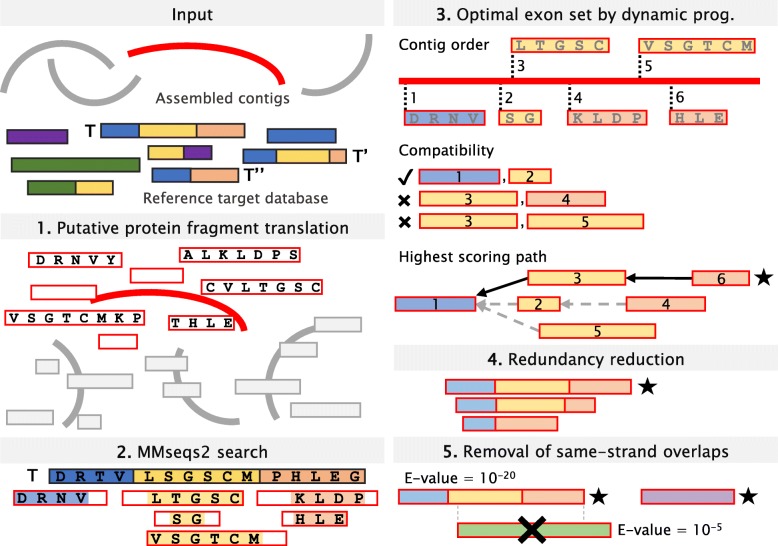
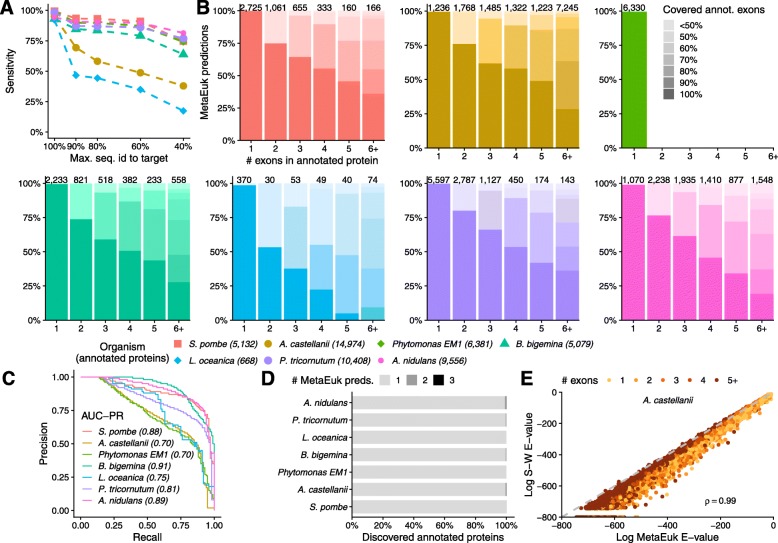
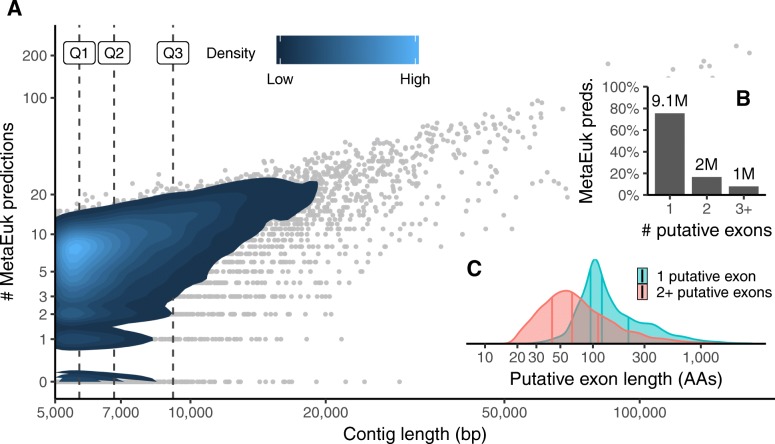
Background: Metagenomics is revolutionizing the study of microorganisms and their involvement in biological, biomedical, and geochemical processes, allowing us to investigate by direct sequencing a tremendous diversity of organisms without the need for prior cultivation. Unicellular eukaryotes play essential roles in most microbial communities as chief predators, decomposers, phototrophs, bacterial hosts, symbionts, and parasites to plants and animals. Investigating their roles is therefore of great interest to ecology, biotechnology, human health, and evolution. However, the generally lower sequencing coverage, their more complex gene and genome architectures, and a lack of eukaryote-specific experimental and computational procedures have kept them on the sidelines of metagenomics. Results: MetaEuk is a toolkit for high-throughput, reference-based discovery, and annotation of protein-coding genes in eukaryotic metagenomic contigs. It performs fast searches with 6-frame-translated fragments covering all possible exons and optimally combines matches into multi-exon proteins. We used a benchmark of seven diverse, annotated genomes to show that MetaEuk is highly sensitive even under conditions of low sequence similarity to the reference database. To demonstrate MetaEuk’s power to discover novel eukaryotic proteins in large-scale metagenomic data, we assembled contigs from 912 samples of the Tara Oceans project. MetaEuk predicted >12,000,000 protein-coding genes in 8 days on ten 16-core servers. Most of the discovered proteins are highly diverged from known proteins and originate from very sparsely sampled eukaryotic supergroups. Conclusion: The open-source (GPLv3) MetaEuk software ( https://github.com/soedinglab/metaeuk ) enables large-scale eukaryotic metagenomics through reference-based, sensitive taxonomic and functional annotation.
Overview
The claims and statistics of this paper haven’t been checked yet.
Free: it reads the open-access text and checks the first 5 claims that cite a source we can check. Create a free account to check every claim.
Integrity signals
Registry
Cites
Statistics
Figures
Verification
Claims the paper makes
The claims and statistics of this paper haven’t been checked yet.
Free: it reads the open-access text and checks the first 5 claims that cite a source we can check. Create a free account to check every claim.
Self-check
Percentages, sums and reported differences re-computed from the paper’s own numbers.
The self-check needs the paper’s full text.
Citations
Cites
Trimmomatic: a flexible trimmer for Illumina sequence data
Bolger, A. M., Lohse, M., & Usadel, B. (2014) · Bioinformatics · doi:10.1093/bioinformatics/btu170 · Cited by 65,548 · cited 1×
“38 [59] with 582 parameters ILLUMINACLIP:TruSeq3-PE.”
RAxML version 8: a tool for phylogenetic analysis and post-analysis of large phylogenies
Stamatakis, A. (2014) · Bioinformatics · doi:10.1093/bioinformatics/btu033 · Cited by 32,291 · cited 4×
“We aligned these sequences using MAFFT [44] and constructed the maximum-likelihood phylogeny using RAxML [45].”
MethodInfluentialLi, D., Liu, C.-M., Luo, R., Sadakane, K., & Lam, T.-W. (2015) · Bioinformatics · doi:10.1093/bioinformatics/btv033 · Cited by 9,893 · cited 4×
“The resulting reads were 584 then assembled with MEGAHIT [38] with default parameters.”
MethodInfluentialUniProt: the Universal Protein knowledgebase
Apweiler, R. (2004) · Nucleic Acids Research · doi:10.1093/nar/gkh131 · Cited by 7,498 · cited 8×
“For datasets (4, 5), we first down-loaded candidate proteins from the UniProt database by searching for the five domains and restricting taxonomy: archaea (bacteria).”
BackgroundMethodInfluentialCanu: scalable and accurate long-read assembly via adaptive k -mer weighting and repeat separation
Koren, S., Walenz, B. P., Berlin, K., Miller, J. R., Bergman, N. H., & Phillippy, A. M. (2017) · Genome Research · doi:10.1101/gr.215087.116 · Cited by 7,304
Primary production of the biosphere: Integrating terrestrial and oceanic components
Field, C. B., Behrenfeld, M. J., Randerson, J. T., & Falkowski, P. (1998) · Science · doi:10.1126/science.281.5374.237 · Cited by 6,371 · cited 1×
“They account for roughly half of the global primary productivity 49 in the oceans, mostly by photosynthesis [8], are key contributors to the carbon and nitrogen 50 cycles through carbon-dioxide fixation, organic matter degradation, and denitrification [9,10], 51 and have been shown to be a source for chemically bioact…”
BackgroundInteractive Tree Of Life (iTOL) v4: recent updates and new developments
Letunic, I., & Bork, P. (2019) · Nucleic Acids Research · doi:10.1093/nar/gkz239 · Cited by 5,925 · cited 1×
“Tree visualization was 625 performed in iTOL [62].”
MethodMMseqs2 enables sensitive protein sequence searching for the analysis of massive data sets
Steinegger, M., & Söding, J. (2017) · Nature Biotechnology · doi:10.1038/nbt.3988 · Cited by 4,840
UniProt: the universal protein knowledgebase
The UniProt Consortium (2017) · Nucleic Acids Research · doi:10.1093/nar/gkw1099 · Cited by 4,436
Korf, I. (2004) · BMC Bioinformatics · doi:10.1186/1471-2105-5-59 · Cited by 3,192
Structure and function of the global ocean microbiome
Sunagawa, S., Coelho, L. P., Chaffron, S., Kultima, J. R., Labadie, K., Salazar, G., Djahanschiri, B., Zeller, G., Mende, D. R., Alberti, A., et al. (2015) · Science · doi:10.1126/science.1261359 · Cited by 2,921
Interactive metagenomic visualization in a Web browser
Ondov, B. D., Bergman, N. H., & Phillippy, A. M. (2011) · BMC Bioinformatics · doi:10.1186/1471-2105-12-385 · Cited by 2,144 · cited 1×
“The assignment was visualized using Krona [60].”
Eukaryotic plankton diversity in the sunlit ocean
de Vargas, C., Audic, S., Henry, N., Decelle, J., Mahé, F., Logares, R., Lara, E., Berney, C., Le Bescot, N., Probert, I., et al. (2015) · Science · doi:10.1126/science.1261605 · Cited by 2,003
AUGUSTUS: a web server for gene prediction in eukaryotes that allows user-defined constraints
Stanke, M., & Morgenstern, B. (2005) · Nucleic Acids Research · doi:10.1093/nar/gki458 · Cited by 1,592
Karlin, S., & Altschul, S. F. (1990) · Proceedings of the National Academy of Sciences · doi:10.1073/pnas.87.6.2264 · Cited by 1,535 · cited 2×
“MetaEuk computes the bit-score of the concatenated pairwise alignment S(Pset, T) by summing the individual Karlin-Altschul [58] bit-scores S(Pi,T) of the putative exons to T and penalizing for unmatched or overlapping amino acids in T as follows: where the penalty function is C(li) = −|li| for li ≠ 1 and 0 if li = 1.”
MethodBRAKER1: Unsupervised RNA-Seq-Based Genome Annotation with GeneMark-ET and AUGUSTUS
Hoff, K. J., Lange, S., Lomsadze, A., Borodovsky, M., & Stanke, M. (2016) · Bioinformatics · doi:10.1093/bioinformatics/btv661 · Cited by 1,153
Keeling, P. J., Burki, F., Wilcox, H. M., Allam, B., Allen, E. E., Amaral-Zettler, L. A., Armbrust, E. V., Archibald, J. M., Bharti, A. K., Bell, C. J., et al. (2014) · PLoS Biology · doi:10.1371/journal.pbio.1001889 · Cited by 1,042 · cited 3×
“Due to their vast diversity [16,17], 55 unicellular eukaryotes are certain to hold invaluable secrets for biotechnology and 56 biomedicine.”
BackgroundMethodParallelization of MAFFT for large-scale multiple sequence alignments
Nakamura, T., Yamada, K. D., Tomii, K., & Katoh, K. (2018) · Bioinformatics · doi:10.1093/bioinformatics/bty121 · Cited by 1,038 · cited 4×
“We aligned these sequences using MAFFT [44] and constructed the maximum-likelihood phylogeny using RAxML [45].”
MethodInfluentialOrthoMCL-DB: querying a comprehensive multi-species collection of ortholog groups
Chen, F. (2006) · Nucleic Acids Research · doi:10.1093/nar/gkj123 · Cited by 884 · cited 1×
“The sources were: (1) 75 sequences of the OrthoMCL 610 [61] group OG5_127924.”
Clustering huge protein sequence sets in linear time
Steinegger, M., & Söding, J. (2018) · Nature Communications · doi:10.1038/s41467-018-04964-5 · Cited by 875
Benson, D. A., Cavanaugh, M., Clark, K., Karsch-Mizrachi, I., Ostell, J., Pruitt, K. D., & Sayers, E. W. (2018) · Nucleic Acids Research · doi:10.1093/nar/gkx1094 · Cited by 760
Uniclust databases of clustered and deeply annotated protein sequences and alignments
Mirdita, M., von den Driesch, L., Galiez, C., Martin, M. J., Söding, J., & Steinegger, M. (2017) · Nucleic Acids Research · doi:10.1093/nar/gkw1081 · Cited by 759 · cited 2×
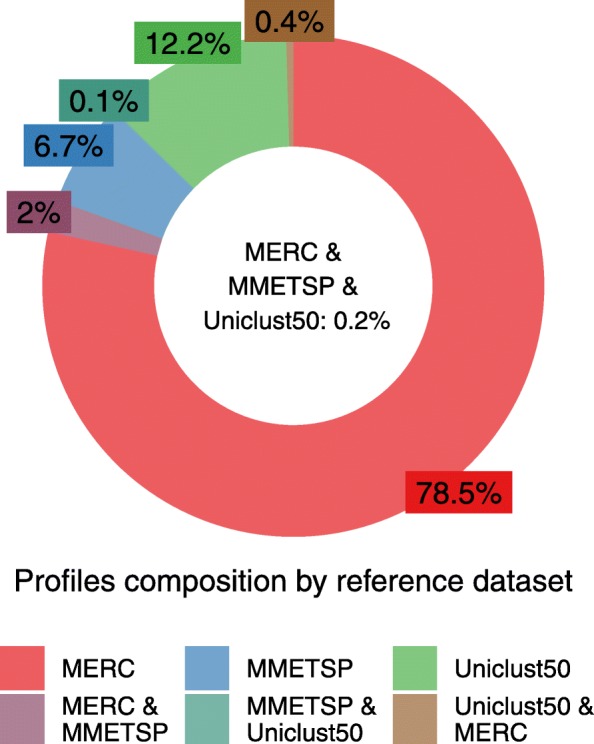
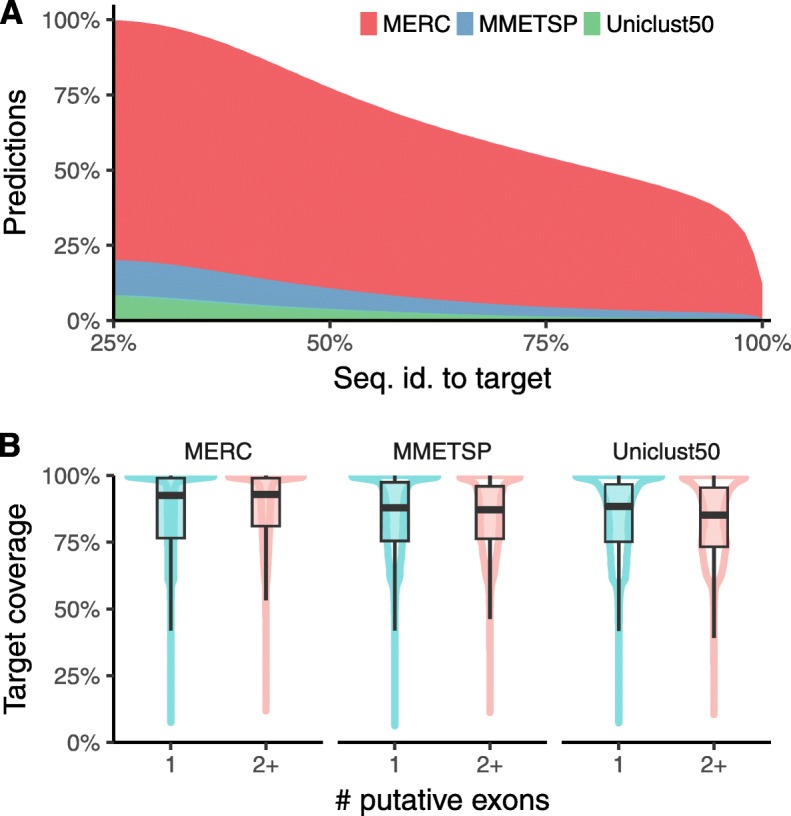
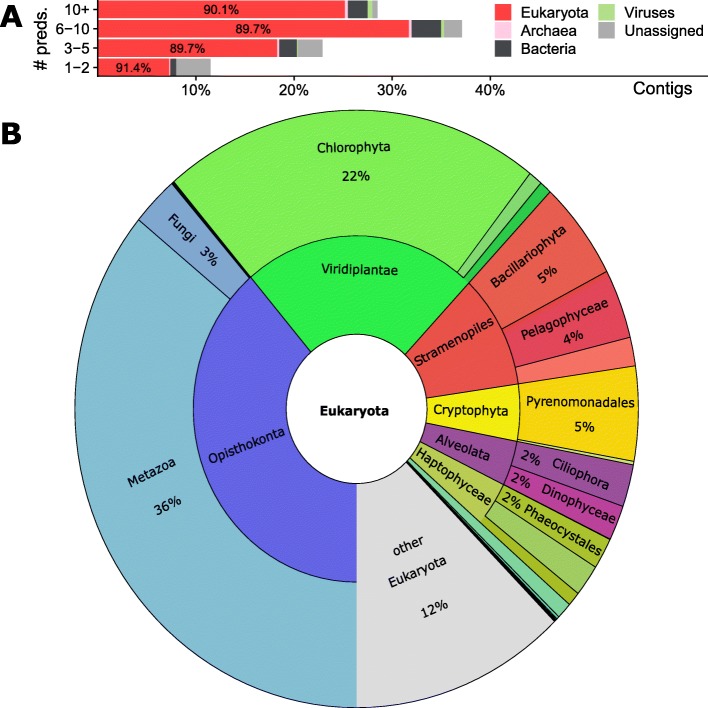
“Since the majority 307 (77%) of MetaEuk predictions were based on homologies to the MERC dataset, for which no 308 taxonomic annotation is available, we queried the MetaEuk marine proteins collection against 309 the Uniclust90 dataset [39] and the MMETSP dataset, both annotated using NCBI taxonomy 310 (see Methods).”
MethodSelf-citationMMseqs2 desktop and local web server app for fast, interactive sequence searches
Mirdita, M., Steinegger, M., & Söding, J. (2019) · Bioinformatics · doi:10.1093/bioinformatics/bty1057 · Cited by 618
Self-citationDelmont, T. O., Quince, C., Shaiber, A., Esen, Ö. C., Lee, S. T., Rappé, M. S., McLellan, S. L., Lücker, S., & Eren, A. M. (2018) · Nature Microbiology · doi:10.1038/s41564-018-0176-9 · Cited by 602
DNA barcoding and metabarcoding of standardized samples reveal patterns of marine benthic diversity
Leray, M., & Knowlton, N. (2015) · Proceedings of the National Academy of Sciences · doi:10.1073/pnas.1424997112 · Cited by 597 · cited 1×
“Since the advent of metabarcoding using 18S rRNA genes, the known evolutionary diversity 53 of unicellular eukaryotes has increased by orders of magnitude [13], and novel phyla and 54 supra-kingdoms are still being discovered [14,15].”
BackgroundAlgae as Production Systems of Bioactive Compounds
Michalak, I., & Chojnacka, K. (2015) · Engineering in Life Sciences · doi:10.1002/elsc.201400191 · Cited by 576
Protein structure determination using metagenome sequence data
Ovchinnikov, S., Park, H., Varghese, N., Huang, P.-S., Pavlopoulos, G. A., Kim, D. E., Kamisetty, H., Kyrpides, N. C., & Baker, D. (2017) · Science · doi:10.1126/science.aah4043 · Cited by 520 · cited 1×
“By adding sequences from under-sampled eukaryotic lineages, we can improve 431 sequence homology searches, protein profile computation and thereby homology-based 432 function annotation, template-based and even de-novo protein structure prediction [55,56].”
MethodTeraguchi, M., Yoshimura, N., Hashizume, H., Muraki, S., Yamada, H., Minamide, A., Oka, H., Ishimoto, Y., Nagata, K., Kagotani, R., et al. (2014) · Osteoarthritis and Cartilage · doi:10.1016/j.joca.2013.10.019 · Cited by 510
Sequencing our way towards understanding global eukaryotic biodiversity
Bik, H. M., Porazinska, D. L., Creer, S., Caporaso, J. G., Knight, R., & Thomas, W. K. (2012) · Trends in Ecology & Evolution · doi:10.1016/j.tree.2011.11.010 · Cited by 491 · cited 1×
“Protein-coding genes are major keys for understanding eukaryotic functions and activities [18].”
BackgroundProtein-level assembly increases protein sequence recovery from metagenomic samples manyfold
Steinegger, M., Mirdita, M., & Söding, J. (2019) · Nature Methods · doi:10.1038/s41592-019-0437-4 · Cited by 445 · cited 1×
“We next constructed a comprehensive set of reference 263 proteins by uniting over 21,000,000 representative sequences of the Uniclust50 database [39], 264 the MERC dataset of over 292,000,000 protein sequence fragments assembled from 265 eukaryotic Tara Oceans metatranscriptomic datasets [40], and over 18,500,000 prot…”
MethodSelf-citationDefensive symbioses of animals with prokaryotic and eukaryotic microorganisms
Flórez, L. V., Biedermann, P. H. W., Engl, T., & Kaltenpoth, M. (2015) · Natural Product Reports · doi:10.1039/c5np00010f · Cited by 410 · cited 1×
“They exhibit both autotrophic and 47 heterotrophic lifestyles [5], exist in symbiosis with plants and animals [6], and interact with 48 other microbial organisms [7].”
BackgroundThe Eukaryotic Tree of Life from a Global Phylogenomic Perspective
Burki, F. (2014) · Cold Spring Harbor Perspectives in Biology · doi:10.1101/cshperspect.a016147 · Cited by 366 · cited 2×
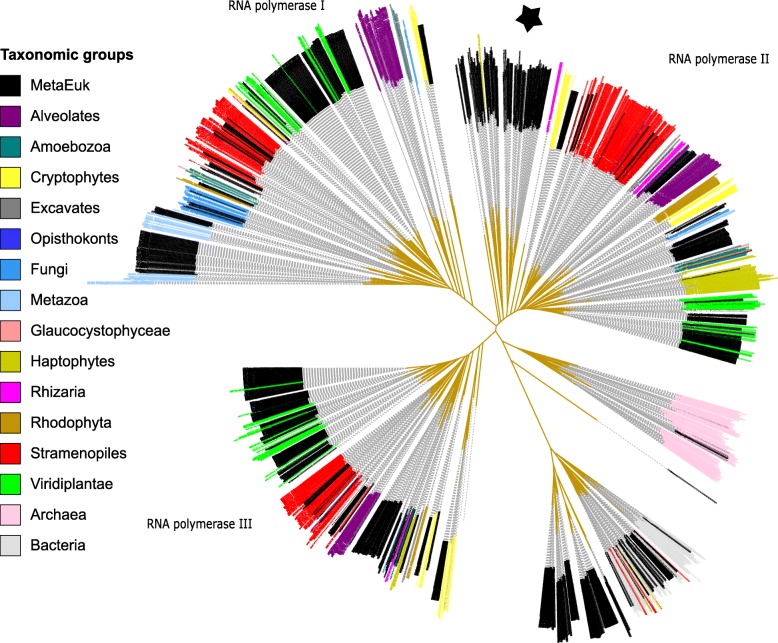
“…(black) expand major eukaryotic lineages, including deeply rooted supergroups (denoted with star) Thus, we expect the resources produced in this study and further analyses of eukaryotic metagenomic data using MetaEuk to produce a more comprehensive description of the tree of life [16, 52 – 54].”
BackgroundA global ocean atlas of eukaryotic genes
Carradec, Q., Pelletier, E., Da Silva, C., Alberti, A., Seeleuthner, Y., Blanc-Mathieu, R., Lima-Mendez, G., Rocha, F., Tirichine, L., Labadie, K., et al. (2018) · Nature Communications · doi:10.1038/s41467-017-02342-1 · Cited by 366
The Road to Metagenomics: From Microbiology to DNA Sequencing Technologies and Bioinformatics
Escobar-Zepeda, A., Vera-Ponce de León, A., & Sanchez-Flores, A. (2015) · Frontiers in Genetics · doi:10.3389/fgene.2015.00348 · Cited by 363
Biodiversity, biogeography and conservation of diatoms
Mann, D. G., & Droop, S. J. M. (1996) · Biogeography of Freshwater Algae · doi:10.1007/978-94-017-0908-8_2 · Cited by 333
3. Biodiversity, biogeography and conservation of diatoms
Mann, D. G., & Droop, S. J. M. (1996) · Hydrobiologia · doi:10.1007/bf00010816 · Cited by 324 · cited 1×
“Thus, we expect the resources produced in this study 423 and further analyses of eukaryotic metagenomic data using MetaEuk to produce a more 424 comprehensive description of the tree of life [16,52–54].”
MethodJardillier, L., Zubkov, M. V., Pearman, J., & Scanlan, D. J. (2010) · The ISME Journal · doi:10.1038/ismej.2010.36 · Cited by 318 · cited 1×
“They account for roughly half of the global primary productivity 49 in the oceans, mostly by photosynthesis [8], are key contributors to the carbon and nitrogen 50 cycles through carbon-dioxide fixation, organic matter degradation, and denitrification [9,10], 51 and have been shown to be a source for chemically bioact…”
BackgroundGene recognition via spliced sequence alignment.
Gelfand, M. S., Mironov, A. A., & Pevzner, P. A. (1996) · Proceedings of the National Academy of Sciences · doi:10.1073/pnas.93.17.9061 · Cited by 307
Eukaryotic Picoplankton in Surface Oceans
Massana, R. (2011) · Annual Review of Microbiology · doi:10.1146/annurev-micro-090110-102903 · Cited by 286 · cited 1×
“They exhibit both autotrophic and heterotrophic lifestyles [5], exist in symbiosis with plants and animals [6], and interact with other microbial organisms [7].”
BackgroundWebAUGUSTUS--a web service for training AUGUSTUS and predicting genes in eukaryotes
Hoff, K. J., & Stanke, M. (2013) · Nucleic Acids Research · doi:10.1093/nar/gkt418 · Cited by 276 · cited 1×
“Finally, model-training in itself is time consuming, taking hours to days per genomic 82 bin [25,27], limiting this approach to the analysis of few genomic bins at a time.”
Norton, T. A., Melkonian, M., & Andersen, R. A. (1996) · Phycologia · doi:10.2216/i0031-8884-35-4-308.1 · Cited by 269
Genome-reconstruction for eukaryotes from complex natural microbial communities
West, P. T., Probst, A. J., Grigoriev, I. V., Thomas, B. C., & Banfield, J. F. (2018) · Genome Research · doi:10.1101/gr.228429.117 · Cited by 266 · cited 5×
“We retained 1,351,204 contigs of at least 5kbp in length that were classified as 262 potentially eukaryotic by EukRep [27].”
MethodInfluentialFalaise, C., François, C., Travers, M.-A., Morga, B., Haure, J., Tremblay, R., Turcotte, F., Pasetto, P., Gastineau, R., Hardivillier, Y., et al. (2016) · Marine Drugs · doi:10.3390/md14090159 · Cited by 253
Microbial Eukaryotes in the Human Microbiome: Ecology, Evolution, and Future Directions
Parfrey, L. W., Walters, W. A., & Knight, R. (2011) · Frontiers in Microbiology · doi:10.3389/fmicb.2011.00153 · Cited by 241 · cited 1×
“Unicellular eukaryotes are present in almost all environments, including soil [1], oceans [2], 46 and plant and animal-associated microbiomes [3,4].”
BackgroundMetagenomic Assembly: Overview, Challenges and Applications.
Ghurye, J., Cepeda-Espinoza, V. P., & Pop, M. (2016) · PubMed Central · Cited by 195
Parfrey, L. W., Walters, W. A., Lauber, C. L., Clemente, J. C., Berg-Lyons, D., Teiling, C., Kodira, C., Mohiuddin, M., Brunelle, J., Driscoll, M., et al. (2014) · Frontiers in Microbiology · doi:10.3389/fmicb.2014.00298 · Cited by 181 · cited 1×
“Unicellular eukaryotes are present in almost all environments, including soil [1], oceans [2], 46 and plant and animal-associated microbiomes [3,4].”
BackgroundWarwick-Dugdale, J., Solonenko, N., Moore, K., Chittick, L., Gregory, A., Allen, M. J., Sullivan, M. B., & Temperton, B. (2019) · PeerJ · doi:10.7717/peerj.6800 · Cited by 165
Lu, Y. Y., Chen, T., Fuhrman, J. A., & Sun, F. (2017) · Bioinformatics · doi:10.1093/bioinformatics/btw290 · Cited by 164
Marine Protists Are Not Just Big Bacteria
Keeling, P. J., & Campo, J. D. (2017) · Current Biology · doi:10.1016/j.cub.2017.03.075 · Cited by 158 · cited 2×
“To date, little is known about the biological activities of eukaryotes in the oceans [2, 37].”
BackgroundSymbiosis as a General Principle in Eukaryotic Evolution
Douglas, A. E. (2014) · Cold Spring Harbor Perspectives in Biology · doi:10.1101/cshperspect.a016113 · Cited by 155
Frank, J. A., Pan, Y., Tooming-Klunderud, A., Eijsink, V. G. H., McHardy, A. C., Nederbragt, A. J., & Pope, P. B. (2016) · Scientific Reports · doi:10.1038/srep25373 · Cited by 148
Sedlar, K., Kupkova, K., & Provaznik, I. (2017) · Computational and Structural Biotechnology Journal · doi:10.1016/j.csbj.2016.11.005 · Cited by 145
Hemimastigophora is a novel supra-kingdom-level lineage of eukaryotes
Lax, G., Eglit, Y., Eme, L., Bertrand, E. M., Roger, A. J., & Simpson, A. G. B. (2018) · Nature · doi:10.1038/s41586-018-0708-8 · Cited by 145 · cited 1×
“Since the advent of metabarcoding using 18S rRNA genes, the known evolutionary diversity 53 of unicellular eukaryotes has increased by orders of magnitude [13], and novel phyla and 54 supra-kingdoms are still being discovered [14,15].”
BackgroundA Novel Eukaryotic Denitrification Pathway in Foraminifera
Woehle, C., Roy, A.-S., Glock, N., Wein, T., Weißenbach, J., Rosenstiel, P. C., Hiebenthal, C., Michels, J., Schönfeld, J., & Dagan, T. (2018) · Current Biology · doi:10.1016/j.cub.2018.06.027 · Cited by 129 · cited 1×
“They account for roughly half of the global primary productivity 49 in the oceans, mostly by photosynthesis [8], are key contributors to the carbon and nitrogen 50 cycles through carbon-dioxide fixation, organic matter degradation, and denitrification [9,10], 51 and have been shown to be a source for chemically bioact…”
BackgroundRe-assembly, quality evaluation, and annotation of 678 microbial eukaryotic reference transcriptomes
Johnson, L. K., Alexander, H., & Brown, C. T. (2019) · GigaScience · doi:10.1093/gigascience/giy158 · Cited by 94
Majaneva, M., Hyytiäinen, K., Varvio, S., Nagai, S., & Blomster, J. (2015) · PLoS ONE · doi:10.1371/journal.pone.0130035 · Cited by 88
An Overview of Nested Genes in Eukaryotic Genomes
Kumar, A. (2009) · Eukaryotic Cell · doi:10.1128/ec.00143-09 · Cited by 69 · cited 1×
“” Finally, as overlaps of genes on the same strand are very rare as reviewed by [34], gene predictions overlapping others on the same strand with a better E -value are removed.”
BackgroundDriscoll, C. B., Otten, T. G., Brown, N. M., & Dreher, T. W. (2017) · Standards in Genomic Sciences · doi:10.1186/s40793-017-0224-8 · Cited by 65
BMC3C: binning metagenomic contigs using codon usage, sequence composition and read coverage
Yu, G., Jiang, Y., Wang, J., Zhang, H., & Luo, H. (2018) · Bioinformatics · doi:10.1093/bioinformatics/bty519 · Cited by 63
Direct mapping and alignment of protein sequences onto genomic sequence
Gotoh, O. (2008) · Bioinformatics · doi:10.1093/bioinformatics/btn460 · Cited by 55
Ren, R., Sun, Y., Zhao, Y., Geiser, D. M., Mā, H., & Zhou, X. (2016) · Genome Biology and Evolution · doi:10.1093/gbe/evw196 · Cited by 46 · cited 1×
“We thus collected orthologous 331 sequences of the large subunits of RNA polymerases, which are universal phylogenetic 332 markers [43] from 985 organisms for which we had taxonomic information, as well as 1,076 333 MetaEuk proteins, which consisted of all five Pfam domains of the large subunit in the right 334 order…”
MethodThe new micro-kingdoms of eukaryotes
Pawlowski, J. W. (2013) · BMC Biology · doi:10.1186/1741-7007-11-40 · Cited by 39
Big-data approaches to protein structure prediction
Söding, J. (2017) · Science · doi:10.1126/science.aal4512 · Cited by 38 · cited 1×
“By adding sequences from under-sampled eukaryotic lineages, we can improve sequence homology searches, protein profile computation and thereby homology-based function annotation, template-based, and even de novo protein structure prediction [55, 56].”
MethodSelf-citationThe voyage of the microbial eukaryote
Worden, A. Z., & Allen, A. E. (2010) · Current Opinion in Microbiology · doi:10.1016/j.mib.2010.08.001 · Cited by 25 · cited 1×
“These, in turn will allow for further exploration of eukaryotic activity in various environments [57].”
BackgroundLentendu, G., Hübschmann, T., Müller, S., Dunker, S., Buscot, F., & Wilhelm, C. (2013) · Journal of Microbiological Methods · doi:10.1016/j.mimet.2013.05.006 · Cited by 18
Warwick-Dugdale, J., Solonenko, N., Moore, K., et al. (2018) · bioRxiv (Cold Spring Harbor Laboratory) · doi:10.1101/345041 · Cited by 16 · cited 1×
“We thus expect MetaEuk to benefit from future improvements in assembly algorithms, higher sequencing coverage, and long-read sequencing technology [47 – 50].”
Method
Cited by
ColabFold - Making protein folding accessible to all
Mirdita, M., Schütze, K., Moriwaki, Y., Heo, L., Ovchinnikov, S., & Steinegger, M. (2021) · doi:10.1101/2021.08.15.456425 · Cited by 9,391
Self-citationManni, M., Berkeley, M. R., Seppey, M., Simão, F. A., & Zdobnov, E. M. (2021) · Molecular Biology and Evolution · doi:10.1093/molbev/msab199 · Cited by 6,187
“…predictor Prodigal (Hyatt et al. 2010); 3) an alternative workflow for the assessment of eukaryotic genomes using the gene predictor MetaEuk (Levy Karin et al. 2020); 4) a workflow to automatically select the most appropriate BUSCO data set, enabling the analysis of sequences of unknown origin;…”
MethodBUSCO: Assessing Genomic Data Quality and Beyond
Manni, M., Berkeley, M. R., Seppey, M., & Zdobnov, E. M. (2021) · Current Protocols · doi:10.1002/cpz1.323 · Cited by 1,286
compleasm: a faster and more accurate reimplementation of BUSCO
Huang, N., & Li, H. (2023) · Bioinformatics · doi:10.1093/bioinformatics/btad595 · Cited by 333
“On the contrary, the completeness reported by BUSCO decreased because MetaEuk interrupted the sequence alignment due to frameshifts.”
MethodInfluentialGenome assembly in the telomere-to-telomere era
Li, H., & Durbin, R. (2024) · Nature Reviews Genetics · doi:10.1038/s41576-024-00718-w · Cited by 224
“It works by aligning conserved single-copy proteins to the genome 127 and counting alignments that are missing, broken or duplicated: the less complete the assembly, the more proteins are una-ligned.”
Metadata
- Authors
- Levy Karin, E., Mirdita, M., & Söding, J.
- Affiliations
- Max Planck Institute for Biophysical Chemistry (DE)
- Corresponding author
- Söding, Johannes
- Venue
- Microbiome
- Published
- 2020-04-03
- Volume
- 8
- Issue
- 1
- Pages
- 48-48
- ISSN
- 2049-2618 (ISSN-L)
- PMC
- PMC7126354
- OpenAlex
- W3014607123
- Cited by
- 299
- References
- 65
- Citations by year
- 2026: 51 · 2025: 64 · 2024: 72 · 2023: 52 · 2022: 33 · 2021: 21 · 2020: 5
- FWCI
- 8.96
- Type
- journal article
- Language
- en
- Open access
- gold
- doi.org
- Licence
- cc-by
- creativecommons.org/licenses/by/4.0/ (tdm)
- creativecommons.org/licenses/by/4.0/ (vor)
- Locations
- Microbiome (publishedVersion, cc-by)
- bioRxiv (Cold Spring Harbor Laboratory) (acceptedVersion, cc-by)
- PubMed Central (publishedVersion, cc-by)
- PubMed (publishedVersion)
- DOAJ (DOAJ: Directory of Open Access Journals) (submittedVersion, cc-by-sa)
- GoeScholar The Publication Server of the Georg-August-Universität Göttingen (Georg-August-Universität Göttingen) (submittedVersion, cc-by)
- MPG.PuRe (Max Planck Society) (submittedVersion, other-oa)
- Funders
- Horizon 2020 Framework Programme (685778)
- Topics
- Life Sciences › Biochemistry, Genetics and Molecular Biology › Molecular Biology › Genomics and Phylogenetic Studies
- Physical Sciences › Environmental Science › Ecology › Environmental DNA in Biodiversity Studies
- Life Sciences › Agricultural and Biological Sciences › Ecology, Evolution, Behavior and Systematics › Protist diversity and phylogeny
- Keywords
- genome annotation, Tara Oceans, eukaryotic supergroups, taxonomic annotation, functional annotation, metagenomic contigs
- MeSH terms
- Algorithms, Sequence Analysis, DNA, Computational Biology, Databases, Genetic, Metagenome, Metagenomics, Eukaryota, High-Throughput Screening Assays, Molecular Sequence Annotation, Microbiota
About these checks
Registry, retraction, Cites and statistics results are computed, not judged, with one exception: a printed reference that no index lists is read once by a model before it counts as a citation error. Claims are extracted by a model and kept only when their quote appears verbatim in the text; each cited source is then checked, with a model’s help, for whether it says what the claim relies on. Those verdicts can be wrong — read the claim’s quote and the cited source before relying on one.
Statistics and arithmetic are recomputed, not judged.
Confidence bands are shown only for fields calibrated on our annotated test set. None is calibrated yet, so no band is shown.
What counts as a claim ›How we measure confidence ›How we check this ›
Are you an author, or do you see a problem with this page? Request a review
Data sources
Bibliographic data: Semantic Scholar, OpenAlex, Crossref.
Contains information from the Semantic Scholar Academic Graph Datasets, made available under the ODC Attribution License (ODC-BY 1.0).
Semantic Scholar’s data is described in: Kinney, R., et al. (2023). The Semantic Scholar Open Data Platform. arXiv:2301.10140.
