

Endometrial microbiota composition is associated with reproductive outcome in infertile patients
Open accessPublished version of a preprint
The DOI matches its Crossref record; 69 of the 69 references it cites were found in a registry or an index.
Abstract
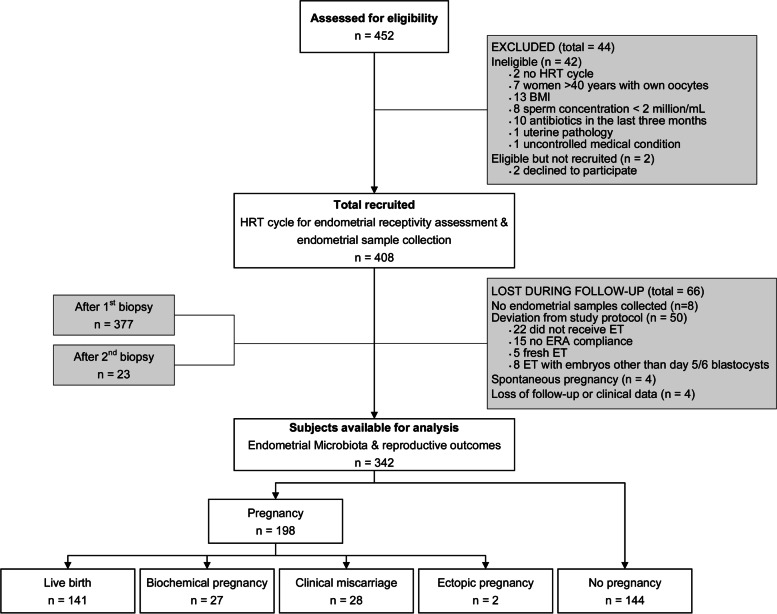
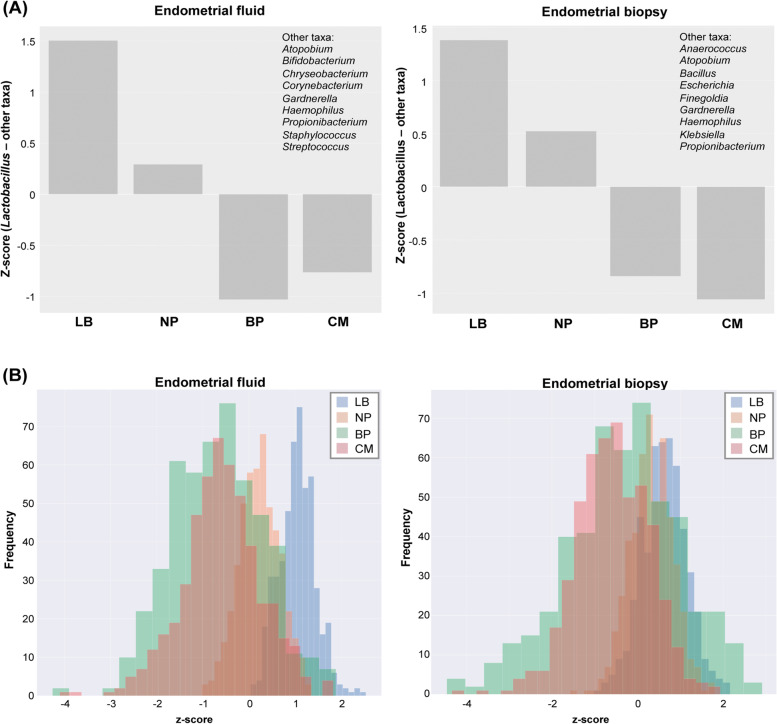
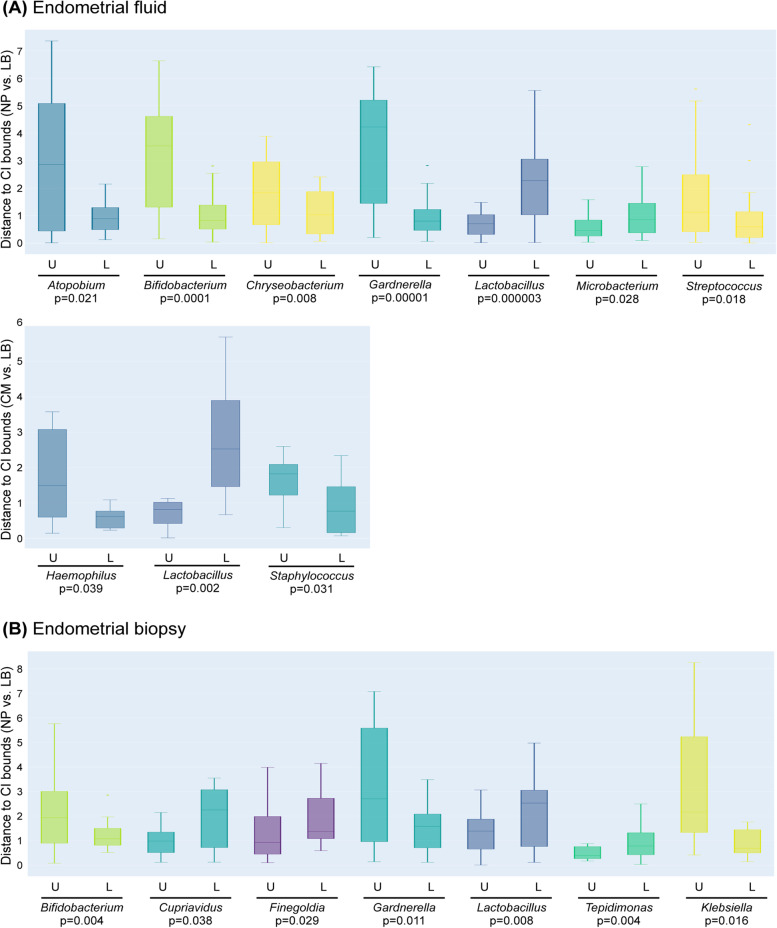
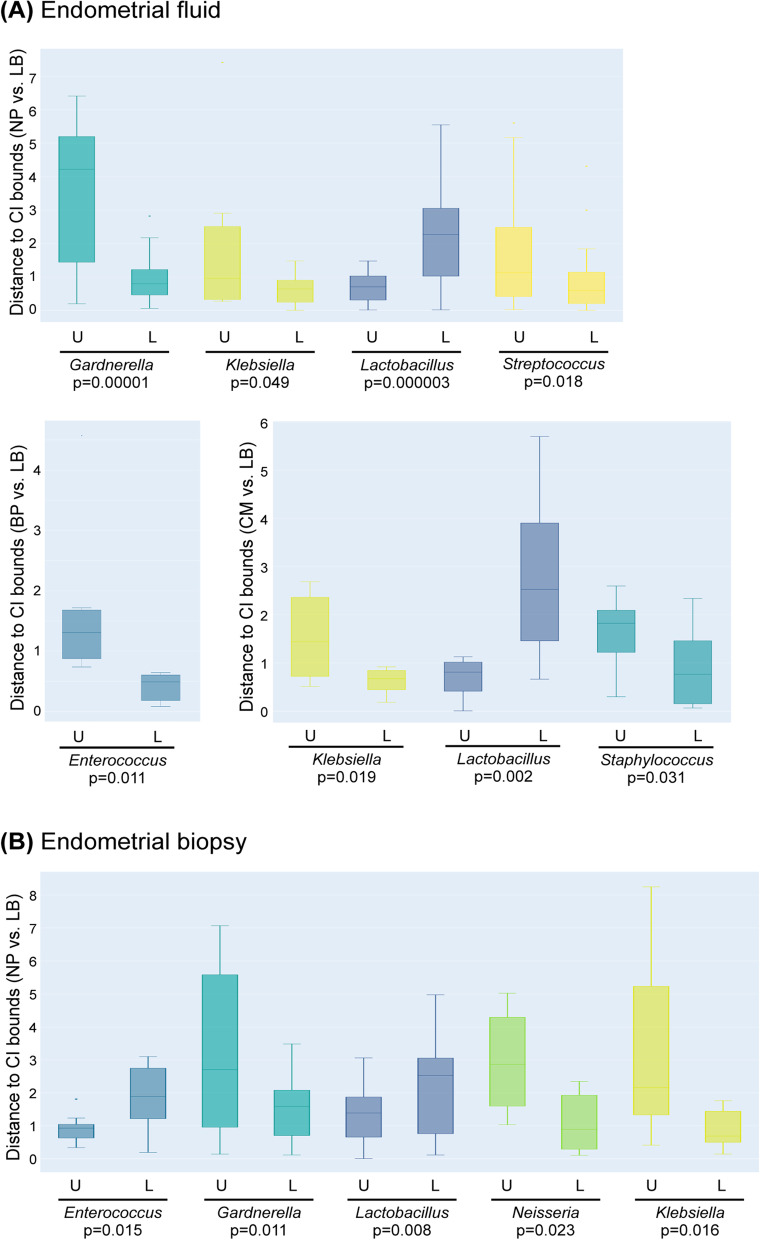
Background: Previous evidence indicates associations between the female reproductive tract microbiome composition and reproductive outcome in infertile patients undergoing assisted reproduction. We aimed to determine whether the endometrial microbiota composition is associated with reproductive outcomes of live birth, biochemical pregnancy, clinical miscarriage or no pregnancy. Methods: Here, we present a multicentre prospective observational study using 16S rRNA gene sequencing to analyse endometrial fluid and biopsy samples before embryo transfer in a cohort of 342 infertile patients asymptomatic for infection undergoing assisted reproductive treatments. Results: A dysbiotic endometrial microbiota profile composed of Atopobium , Bifidobacterium , Chryseobacterium , Gardnerella , Haemophilus , Klebsiella , Neisseria , Staphylococcus and Streptococcus was associated with unsuccessful outcomes. In contrast, Lactobacillus was consistently enriched in patients with live birth outcomes. Conclusions: Our findings indicate that endometrial microbiota composition before embryo transfer is a useful biomarker to predict reproductive outcome, offering an opportunity to further improve diagnosis and treatment strategies.
Overview
The claims and statistics of this paper haven’t been checked yet.
Free: it reads the open-access text and checks the first 5 claims that cite a source we can check. Create a free account to check every claim.
Integrity signals
Registry
Cites
Statistics
Figures
Verification
Claims the paper makes
The claims and statistics of this paper haven’t been checked yet.
Free: it reads the open-access text and checks the first 5 claims that cite a source we can check. Create a free account to check every claim.
Claims other papers make about this one
Each is checked against this paper’s own text: does it say what the citing paper says it does?
The source backs part of the claim, not all of it — or backs it for a different population, condition or comparison.
In the citing paper
“A shift in the population of Lactobacillus species, for instance, has been implicated in diminished endometrial receptivity [8, 9, 28, 29].”
From Vaginal probiotics as therapeutic adjuncts for improving embryo transfer success rates: a systematic review and meta-analysis (2025) · cites this paper as [9]
Experimental — accuracy not yet measuredThe source backs part of the claim, not all of it — or backs it for a different population, condition or comparison.
In the citing paper
“Accordingly, several studies suggest that dysbiosis at the time of ET may lead to reduced pregnancy rates while Lactobacillus abundance poses a positive impact on ART outcomes [9–11].”
From Vaginal probiotics as therapeutic adjuncts for improving embryo transfer success rates: a systematic review and meta-analysis (2025) · cites this paper as [9]
Experimental — accuracy not yet measured
Self-check
Percentages, sums and reported differences re-computed from the paper’s own numbers.
The self-check needs the paper’s full text.
Citations
Cites
SciPy 1.0: fundamental algorithms for scientific computing in Python
Virtanen, P., Gommers, R., Oliphant, T. E., Haberland, M., Reddy, T., Cournapeau, D., Burovski, E., Peterson, P., Weckesser, W., Bright, J., et al. (2020) · Nature Methods · doi:10.1038/s41592-019-0686-2 · Cited by 38,430
Reproducible, interactive, scalable and extensible microbiome data science using QIIME 2
Bolyen, E., Rideout, J. R., Dillon, M. R., Bokulich, N. A., Abnet, C. C., Al-Ghalith, G. A., Alexander, H., Alm, E. J., Arumugam, M., Asnicar, F., et al. (2019) · Nature Biotechnology · doi:10.1038/s41587-019-0209-9 · Cited by 23,742
Naïve Bayesian Classifier for Rapid Assignment of rRNA Sequences into the New Bacterial Taxonomy
Wang, Q., Garrity, G. M., Tiedje, J. M., & Cole, J. R. (2007) · Applied and Environmental Microbiology · doi:10.1128/aem.00062-07 · Cited by 19,885 · cited 3×
“The results were generated using the default parameters in the original QIIME 2 [7] and RDP [68] methods.”
MethodInfluentialSciPy 1.0: fundamental algorithms for scientific computing in Python
Virtanen, P., Gommers, R., Oliphant, T. E., Haberland, M., Reddy, T., Cournapeau, D., Burovski, E., Peterson, P., Weckesser, W., Bright, J., et al. (2019) · Apollo - University of Cambridge Repository · doi:10.17863/cam.64134 · Cited by 10,460
The Statistical Analysis of Compositional Data
Aitchison, J. (1986) · doi:10.1007/978-94-009-4109-0 · Cited by 4,383
Davis, N. M., Proctor, D. M., Holmes, S. P., Relman, D. A., & Callahan, B. J. (2018) · Microbiome · doi:10.1186/s40168-018-0605-2 · Cited by 3,493
Microbiome Datasets Are Compositional: And This Is Not Optional
Gloor, G. B., Macklaim, J. M., Pawlowsky-Glahn, V., & Egozcue, J. J. (2017) · Frontiers in Microbiology · doi:10.3389/fmicb.2017.02224 · Cited by 3,044
Probabilistic programming in Python using PyMC3
Salvatier, J., Wiecki, T. V., & Fonnesbeck, C. (2016) · PeerJ Computer Science · doi:10.7717/peerj-cs.55 · Cited by 2,544
The NIH Human Microbiome Project
The NIH HMP Working Group, Peterson, J., Garges, S., Giovanni, M., McInnes, P., Wang, L., Schloss, J. A., Bonazzi, V., McEwen, J. E., Wetterstrand, K. A., et al. (2009) · Genome Research · doi:10.1101/gr.096651.109 · Cited by 2,066 · cited 1×
“These microbes and their genetic information (the microbiome) are now well-characterised; the Human Microbiome Project has revealed that approximately 9% of the total human microbiome is found in the female reproductive tract [51].”
BackgroundContamination in Low Microbial Biomass Microbiome Studies: Issues and Recommendations
Eisenhofer, R., Minich, J. J., Marotz, C., Cooper, A., Knight, R., & Weyrich, L. S. (2019) · Trends in Microbiology · doi:10.1016/j.tim.2018.11.003 · Cited by 1,146
Research works printed but not linked: 2
- Inc., Plotly Technologies Collaborative data science 2015 Montréal QC Plotly Technologies Inc
- Tissier H Recherches sur la flore Intestinale des Nourrissons 1900
Cited by
Items 101–200 of 366
Uterine inflammation and lessons from large animal models of endometritis
Nash, D. M., & Giles, J. L. (2025) · Nature reviews. Immunology · doi:10.1038/s41577-025-01200-2 · Cited by 14
“Indeed, an association between the endometrial microbiota and reproductive outcome in terms of live birth 37 highlights the importance of diverse microbial populations in”
Jain, M., Mladova, E., Shichanina, A., Kirillova, K. I., Povarova, A., Shcherbakova, L. N., Samokhodskaya, L. M., & Panina, O. B. (2023) · Biomedicines · doi:10.3390/biomedicines11051284 · Cited by 13
“There is growing evidence that this embryo–endometrial crosstalk is likely mediated not only by certain mucosal signaling molecules [11] but also by the endometrial microbiota [12,13].”
Backgroundvan den Tweel, M. M., van den Munckhof, E. H. A., van der Zanden, M., Molijn, A. C., Lith, J. M. M. V., le Cessie, S., & Boers, K. E. (2023) · Journal of Assisted Reproduction and Genetics · doi:10.1007/s10815-023-03000-w · Cited by 12
“Some studies have found a negative effect of BV on pregnancy rates among (sub)fertile women, which was primarily studied in an IVF population [6, 8, 9] and only in two studies in a population undergoing intra uterine insemination [10, 11].”
Einenkel, R., Ehrhardt, J., Zygmunt, M., & Muzzio, D. O. (2024) · Frontiers in Immunology · doi:10.3389/fimmu.2024.1447190 · Cited by 12
Yao, Y., Ye, Y., & Zheng, C. (2025) · American Journal of Reproductive Immunology · doi:10.1111/aji.70121 · Cited by 12
“Moreno et al. emphasized that rigorous negative controls and sterile collection devices are essential to avoid misinterpreting contaminant DNA as endogenous endometrial microbes [19].”
InfluentialCan Lactobacillus spp. Be a Factor Reducing the Risk of Miscarriage?
Kiecka, A., MACURA, B., & SZCZEPANIK, M. (2021) · Polish Journal of Microbiology · doi:10.33073/pjm-2021-043 · Cited by 12
Banchi, E., Corre, E., Negro, P. D., Celussi, M., & Malfatti, F. (2023) · Marine Life Science & Technology · doi:10.1007/s42995-023-00192-z · Cited by 13
Li, Z., Teng, Y., Feng, S., Hu, Z., Zhao, J., Ding, H., Fang, Y., Liu, H., Ma, X., Guo, J., et al. (2024) · International Journal of Biological Macromolecules · doi:10.1016/j.ijbiomac.2024.130039 · Cited by 12
Jafarabadi, M. N., Hadavi, F., Ahmadi, M., Masoumi, M., & Zabihzadeh, S. (2024) · International Journal of Reproductive BioMedicine (IJRM) · doi:10.18502/ijrm.v22i5.16435 · Cited by 11
“…tract microbiome, known as dysbiosis, can lead to the overgrowth of pathogenic bacteria, such as Gardnerella vaginalis and Streptococci , and cause chronic inflammation and impairs the endometrial receptivity and the survival of the embryo, and consequently prevent successful implantation (7, 8).”
BackgroundAlley, A. W., Łaniewski, P., Bruno, G., Moffitt, D. V., Arani, G., Farland, L. V., & Herbst‐Kralovetz, M. M. (2025) · American Journal of Reproductive Immunology · doi:10.1111/aji.70108 · Cited by 12
Diversity and salinity adaptations of ammonia oxidizing archaea in three estuaries of China
Zou, D., Chen, J., Zhang, C., Kao, S., Liu, H., & Li, M. (2023) · Applied Microbiology and Biotechnology · doi:10.1007/s00253-023-12761-4 · Cited by 11
Strug, M. R., Hartup, L. A., Ryan, E. E., & Lathi, R. B. (2024) · F&S Reviews · doi:10.1016/j.xfnr.2024.100073 · Cited by 12
Wang, Y., Li, W., & Ha, C. (2024) · Medicine · doi:10.1097/md.0000000000037383 · Cited by 10
“For example, Moreno et al [18] found that Atopobium (a common vaginal pathogen) is 1 of the culprits leading to infertile reproductive outcomes, whereas Ata et al [19] found no Atopobium present in the vagina and cervix of individuals with endometriosis.”
BackgroundZhao, X., Shi, W., Li, Z., & Zhang, W. (2024) · Journal of Reproductive Immunology · doi:10.1016/j.jri.2024.104325 · Cited by 10
Tian, Z., Zhao, M., Sui, X., Li, X., Qin, L., Chen, Z., Zhao, S., & Zhao, H. (2023) · Reproductive BioMedicine Online · doi:10.1016/j.rbmo.2023.103602 · Cited by 11
Do probiotic interventions improve female unexplained infertility? A critical commentary
Favaron, A., Turkgeldi, E., Elbadawi, M., Gaisford, S., Basit, A. W., & Orlu, M. (2024) · Reproductive BioMedicine Online · doi:10.1016/j.rbmo.2023.103734 · Cited by 9
“…bacteria in the vaginal microbiota has been established, as well as its association with infertility, recent studies and discussions have focused on the endometrial microbiota, which was traditionally considered a sterile environment (Kyono et al. 2019; Moreno et al. 2022; Di Simone et al. 2020).”
Variations in seaweed-associated and planktonic bacterial communities along the coast of Ghana
Akrong, M. O., Anning, A. K., Addico, G. N. D., Hogarh, J. N., Adu-Gyamfi, A., deGraft-Johnson, K. A. A., Ale, M. T., Ampofo, J. A., & Meyer, A. S. (2023) · Marine Biology Research · doi:10.1080/17451000.2023.2213894 · Cited by 9
Chronic endometritis, chronic questions: a narrative review of current practices
Reig, A. (2025) · Current Opinion in Obstetrics & Gynecology · doi:10.1097/gco.0000000000001053 · Cited by 9
From gut to gamete: how the microbiome influences fertility and preconception health
Munyoki, S. K., Vukmer, N. A., Rios, J. M., Kallen, A. N., & Jašarević, E. (2025) · Microbiome · doi:10.1186/s40168-025-02230-7 · Cited by 11
“In contrast, women with Lactobacillus -depleted or anaer-obe-rich communities have increased rates of poor IVF response, failed embryo transfer, and miscarriage [67, 166–170].”
Gaia‐Oltean, A. I., Borza, D. B., Pop, L., Galea, G., Telecan, T., & Micu, R. (2025) · Healthcare · doi:10.3390/healthcare13243276 · Cited by 10
“These findings point to an active role for the uterine microbiota in regulating endometrial receptivity [45].”
The Vaginal Microbiome Changes During Various Fertility Treatments
van den Tweel, M. M., van den Munckhof, E. H. A., van der Zanden, M., Molijn, A. C., Lith, J. M. M. V., & Boers, K. E. (2024) · Reproductive Sciences · doi:10.1007/s43032-024-01484-0 · Cited by 12
“Recent studies in persons undergoing in vitro fertilization (IVF) have shown a negative effect of an abnormal microbiome on pregnancy outcomes [4, 5].”
BackgroundZhang, J., Shi, B., Lü, S., Wang, S., Ren, X., Liu, R., Dong, H., Li, K., Fouad, D., Ataya, F. S., et al. (2023) · Microbial Pathogenesis · doi:10.1016/j.micpath.2023.106496 · Cited by 10
Graciano-España, M. D. C., Barnhart, K. T., Gonzáléz-Monfort, M., Arenas-Barrero, M., Legro, R. S., Thomas, T. R., Rush, M., Vilella, F., Sánchez, M. F., Simón, C., et al. (2025) · Fertility and Sterility · doi:10.1016/j.fertnstert.2025.06.035 · Cited by 8
Self-citationLiu, X., Bin, C., Gao, Q., Li, M., Xue, L., Zhou, Z., Liu, M., Ji, X., & Wei, S. (2026) · Biomarker Research · doi:10.1186/s40364-026-00914-2 · Cited by 10
“When contamination is adequately controlled, non-Lactobacillus-dominant profiles have been associated with increased risk of implantation failure and may contribute to the inflammatory endometrial phenotypes observed in a sub-set of RIF and RM patients [380].”
Parvanov, D. A., Ganeva, R., Ruseva, M., Handzhiyska, M., Tihomirova, T., Chapanova, S., Staneva, R., Rukova, B. B., Pancheva, M., Serafimova, M., et al. (2023) · Biotechnology & Biotechnological Equipment · doi:10.1080/13102818.2023.2250007 · Cited by 8
“The occurrence of bacterial dysbiosis and the prevalence of certain pathogenic bacterial taxa might be an indicator of impaired endometrial receptivity, which could negatively affect the clinical pregnancy rate in in vitro fertilization (IVF) patients [8, 9].”
BackgroundStankewicz, T., Ruíz-Alonso, M., Simón, C., & Valbuena, D. (2023) · Elsevier eBooks · doi:10.1016/b978-0-323-85687-4.00004-x · Cited by 9
Self-citationde Oliveira, L. I. G., Clementino, J. R., Salgaço, M. K., de Oliveira, S. P. A., Lima, M. D. S., Mesa, V., de Souza, E. L., Vinderola, C. G., Magnani, M., & Sivieri, K. (2023) · Food & Function · doi:10.1039/d3fo01156a · Cited by 9
The role and challenges of regulating endometrial microbiome in uterine health and diseases
Yuan, C., Xie, K., Feng, L., Gao, S., & Cai, L. (2024) · Critical Reviews in Microbiology · doi:10.1080/1040841x.2024.2320247 · Cited by 9
“…rate and pregnancy rate, while the imbalance of Klebsiella , Bifidobacterium , Streptococcus , and Staphylococcus would decrease the pregnancy rate (Moreno et al. 2022), and when the abundance of Trichomonas vaginalis and Streptococcus was high, it would have a negative impact on reproduction…”
Zhu, H., Zhao-zhan, M., Wang, Y., & Su, J. (2024) · International Microbiology · doi:10.1007/s10123-024-00592-w · Cited by 8
Understanding the Associations of Urogenital Microbiomes With Fertility and In Vitro Fertilization
Berard, A. R., Brubaker, D. K., Nemecio, D., & Zuend, C. F. (2025) · American Journal of Reproductive Immunology · doi:10.1111/aji.70035 · Cited by 8
“…Bifidobacterium, Gardnerella, Haemophilus, Klebsiella, Neisseria, Staphylococcus , and Streptocuccus has been associated with significant decreases in implantation, pregnancy, and live birth rates, while Lactobacillus is associated with increased success in some studies [74, 75, 76, 77, 78].”
Zhang, Y., Sun, X., Zhang, Y., Zou, Y., Zhang, Y., Wang, J., Gao, L., Ding, W., Diao, F., Liu, J., et al. (2025) · The Journal of Clinical Endocrinology & Metabolism · doi:10.1210/clinem/dgaf100 · Cited by 8
Sakamoto, M., Tanaka, H., Enomoto, S., Takeuchi, H., Nishioka, M., Tanaka, K., Takayama, E., Maezawa, T., Kondo, E., & Ikeda, T. (2024) · Journal of obstetrics and gynaecology research · doi:10.1111/jog.15897 · Cited by 8
“…, Chryseobacter-ium , Gardnerella , Haemophilus , Klebsiella , Chryseobacterium , Neisseria , Staphylococcus , and Streptococcus spp. 18 These strains were analyzed with the expectation that they might be associated with treatment resistance, especially those related to IVF…”
BackgroundA Standard Pipeline for Analyzing the Endometrial Microbiome
Torres, M. D. M. G., & Lanza, D. C. F. (2024) · Reproductive Sciences · doi:10.1007/s43032-024-01557-0 · Cited by 9
“An association between non-Lactobacillus dominance (NLDM) and reduced IVF success was established, with further confirmation provided by several studies, indicating that Lactobacillus dominance serves as a positive predictor in a vast majority of analyzed cases [3, 8, 55].”
Endometrial receptivity, to test or not to test: the evidence on contemporary assays
Clain, E., & Devine, K. (2022) · F&S Reviews · doi:10.1016/j.xfnr.2022.11.001 · Cited by 11
Iwami, N., Komiya, S., Asada, Y., Tatsumi, K., Habara, T., Kuramoto, T., Seki, M., Yoshida, H., Takeuchi, K., Shiotani, M., et al. (2025) · Reproductive Medicine and Biology · doi:10.1002/rmb2.12634 · Cited by 7
Endometrial microbiome in mares with and without clinical endometritis
Guo, L., Holyoak, G. R., & DeSilva, U. (2025) · Frontiers in Veterinary Science · doi:10.3389/fvets.2025.1588432 · Cited by 7
Gao, H., Xiao, J., Liang, B., Wang, X., Li, H., Li, G., & Wu, B. (2025) · Frontiers in Endocrinology · doi:10.3389/fendo.2025.1504609 · Cited by 9
DOROFTEI, B. I., Ilie, O., Dabuleanu, A., Selaru, I., Lunguleac, G., Doroftei, M., & Ilea, C. G. (2026) · Acta Obstetricia Et Gynecologica Scandinavica · doi:10.1111/aogs.70138 · Cited by 7
Schettini, G., Pieri, E., Rizzo, C., Giorgi, M., Mancini, V., Habib, N., Rovira, R. P., & Centini, G. (2026) · Life · doi:10.3390/life16020344 · Cited by 8
“Vaginal dysbiosis, characterized by Lactobacillus depletion and enrichment of Gardnerella vaginalis , Atopobium vaginae , or Prevotella spp., has been associated with lower implantation and pregnancy rates, especially in in vitro fertilization (IVF) settings [75,78].”
Endometrial Microbiome and Implantation: From Basic Knowledge to Clinical Medicine
Hiratsuka, D., Matsuo, M., & Hirota, Y. (2026) · Reproductive Medicine and Biology · doi:10.1002/rmb2.70040 · Cited by 7
“…(Table 1), a Lactobacillus - enriched endometrial profile tends to be associated with higher pregnancy or live birth outcomes, whereas reduced Lactobacillus dominance and/or enrichment of specific taxa is more frequently reported among patients with implantation failure [11, 91, 109–112].”
Characterization of the follicular fluid microbiota based on culturomics and sequencing analysis
Wei, W., Zhou, Y., Zuo, H., Li, M., Pan, Z., Liu, B., Wang, L., Tan, Y., Yang, R., Shang, W. H., et al. (2023) · Journal of Medical Microbiology · doi:10.1099/jmm.0.001741 · Cited by 7
Uterine Microbiome: Does the Sampling Technique Matter?
Lüll, K., & Org, E. (2023) · Seminars in Reproductive Medicine · doi:10.1055/s-0043-1777361 · Cited by 7
“9 In earlier studies, Moreno et al have also suggested that Lactobacillus dominance within the uterus increases the chances of positive pregnancy outcomes.”
BackgroundMethodResultInfluentialDistinct Gastrointestinal and Reproductive Microbial Patterns in Female Holobiont of Infertility
Marcos, A. T., Rus, M. J., Areal‐Quecuty, V., Simón‐Soro, Á., & Navarro-Pando, J. M. (2024) · Microorganisms · doi:10.3390/microorganisms12050989 · Cited by 7
“In contrast, Gardnerella was found in the FRT samples for all patients but shared ASV distributed differently for other conditions associated with infertility while being site-specific for patients with endometriosis [51,57].”
Papakonstantinou, A., Moustakli, E., Potiris, A., Zikopoulos, A., Tsarna, E., Christodoulaki, C., Tsakiridis, I. G., Dagklis, T., Panagopoulos, P., Drakakis, P., et al. (2025) · Life · doi:10.3390/life15060916 · Cited by 9
“These findings reaffirmed how crucial endometrial Lactobacillus dominance is to the success of IVF [4].”
InfluentialLi, X., Tian, Z., Cui, R., Lv, J., Yang, X. L., Qin, L., Liu, Z., Zhang, C., Jin, C., Xu, Y., et al. (2023) · mSphere · doi:10.1128/msphere.00096-23 · Cited by 7
Doroftei, B., Ilie, O., Armeanu, T., Stoian, I. L., Anton, N., Babici, R.-G., & Ilea, C. G. (2023) · Journal of Clinical Medicine · doi:10.3390/jcm12155069 · Cited by 11
Luo, X., He, Z., Ma, R., Lin, N., Li, L., Li, Y., Yang, K., Meng, X., & Ze, W. (2024) · Clinical and Experimental Obstetrics & Gynecology · doi:10.31083/j.ceog5104087 · Cited by 9
“…immunoglobulin; IMSI, intracytoplasmic morphologically selected sperm injection. techniques like sequencing and quantitative polymerase chain reaction (PCR) detection of endometrial fluid, are increasingly employed for diagnosing CE, enabling more precise guidance on antibiotic therapy [74].”
BackgroundVesztergom, D., Téglás, G., Bahrehmand, K., Török, A., Balla, L., Forgács, V., Konc, J., Tándor, Z., Várnagy, Á., Boga, P., et al. (2024) · Gynecologic Oncology · doi:10.1016/j.ygyno.2024.03.024 · Cited by 7
Anwar, F., Al-Abbasi, F. A., Al-Bar, O. A., Verma, A., & Kumar, V. (2024) · Inflammopharmacology · doi:10.1007/s10787-024-01593-x · Cited by 8
Modern concepts of endometrial microbiota
Adamyan, L. V., Priputnevich, T. V., Grigorian, I. E., Gavrilova, T. Y., Sarkisyan, R. M., & Antonova, A. A. (2022) · Russian Journal of Human Reproduction · doi:10.17116/repro202228061159 · Cited by 7
King, N. G., Uribe, R. A., Moore, P. J., Earp, H. S., Gouraguine, A., Hinostroza, D., Pérez‐Matus, A., Smith, K. E., & Smale, D. A. (2023) · Microbial Ecology · doi:10.1007/s00248-023-02262-2 · Cited by 7
Gao, H., Lu, N., Chen, Y., Li, G., Li, H., Chen, I., Black, A., Gale, J., Corsi, D. J., Wang, X., et al. (2025) · Frontiers in Cellular and Infection Microbiology · doi:10.3389/fcimb.2025.1615182 · Cited by 6
Zhang, B., Lin, S., Wang, S., Chen, W., Chen, Y., Cao, D., Liu, Q., & Yao, Y. (2025) · International Journal of Women s Health · doi:10.2147/ijwh.s534065 · Cited by 7
“34 Moreover, Group B Streptococcus (GBS) is associated with miscarriage and preterm premature rupture of membranes (PPROM) in late pregnancy 35 and may cause intrauterine infections and fetal death through vertical transmission.”
Endometrial immune profile: A predictor of pregnancy success
Baharaghdam, S., Karimi, S., Farahani, M. E., Maleki, L. A., & Yousefi, M. (2025) · Reproductive Biology · doi:10.1016/j.repbio.2025.101174 · Cited by 7
Black, N., Henderson, I., Quenby, S. M., Odendaal, J., & MacIntyre, D. A. (2026) · npj Biofilms and Microbiomes · doi:10.1038/s41522-025-00901-9 · Cited by 7
“…( n = 27), samples from fi ve studies were chilled and then frozen at − 80 °C between four hours and two weeks post collection 31,34,43,55,63 , one study stored samples at − 70 °C 40 , one studydidnotreportthefrozentemperature 49 ,threestudiesstoredsamplesat 4 – 8 °C 30,45,58 and six…”
InfluentialSola‐Leyva, A., Pérez‐Prieto, I., Canha-Gouveia, A., Salas‐Espejo, E., Molina, N. M., Vargas, E., Apostolov, A., Pathare, A. D. S., Moreno, S. V., Ruiz‐Durán, S., et al. (2026) · Human Reproduction Open · doi:10.1093/hropen/hoag001 · Cited by 6
“Interestingly, similar taxa have been reported in the endometrial microbiome of infertile patients, including associations of Klebsiella and Staphylococcus with poorer reproductive outcomes (Moreno et al. , 2022).”
Impact of type 2 diabetes on malignancies of the female reproductive system
Espinoza, C., Veas-Torres, J., Miranda, D. I., & Owen, G. I. (2026) · Molecular Aspects of Medicine · doi:10.1016/j.mam.2026.101459 · Cited by 6
Bahia, W., Soltani, I., Ferchichi, S., & Almawi, W. Y. (2026) · American Journal of Reproductive Immunology · doi:10.1111/aji.70219 · Cited by 6
“The composition of the endometrial microbiome is crucial for successful implantation and favorable pregnancy outcome [ 8, 32 ].”
InfluentialVidal, A., Kilian, A. Y., Vinayahalingam, V., Zagrapan, B., Pape, J., Karrer, T., & von Wolff, M. (2026) · Biomedicines · doi:10.3390/biomedicines14040871 · Cited by 6
“However, these microorganisms were also identified in women without histological evidence of CE, limiting their specificity as diagnostic markers [32,36,45].”
Kapetanios, V., Lampraki, M., Georgoulias, G., Kasdaglis, S., Kliafas, S., Gkavra, N., Xountasi, M., Tsilivakos, V., & Leventopoulos, M. (2024) · Heliyon · doi:10.1016/j.heliyon.2024.e30259 · Cited by 6
“…with the variation in microbial species detected in the vaginal cultures of women with E. coli positive endometrial cultures, indicated that the endometrial environment might have a distinct microbial profile, separate from the vaginal environmental milieu, as suggested by the literature [51 – 53].”
ResultUterine Microbiota and Bisphenols: Novel Influencers in Reproductive Health
Castellanos‐Ruiz, D., Ojeda-Borbolla, J. G., Ruiz-García, O. V., Peña‐Corona, S. I., Martínez-Peña, A. A., Ibarra‐Rubio, M. E., Gavilanes‐Ruíz, M., & Mendoza-Rodríguez, C. A. (2025) · Journal of Xenobiotics · doi:10.3390/jox15010026 · Cited by 7
Yan, Y., Li, Y., Wu, L., Zhang, Y., Guo, H., & Ji, Y. (2025) · Frontiers in Cellular and Infection Microbiology · doi:10.3389/fcimb.2025.1515563 · Cited by 6
Cui, X., Liu, H., Liu, Y., Yu, Z., Wang, D., Wei, W., & Wang, S. (2025) · International Journal of Biological Macromolecules · doi:10.1016/j.ijbiomac.2025.144469 · Cited by 7
Zhang, Z., Zhang, Y., Wu, A., Xu, C., & Li, Z. (2025) · mBio · doi:10.1128/mbio.00509-25 · Cited by 9
Jiang, J., Hu, D., & Pei, E. (2024) · Animal Reproduction Science · doi:10.1016/j.anireprosci.2024.107448 · Cited by 6
Microbiome in gynecologic malignancies: a bibliometric analysis from 2012 to 2022
Lin, X., Zheng, W., Zhao, X., Zeng, M., Li, S., Peng, S., Song, T., & Sun, Y. (2024) · Translational Cancer Research · doi:10.21037/tcr-23-1769 · Cited by 7
“Moreno et al. discovered that a lower proportion of Lactobacillus spp. in vaginal samples influenced the production of pro-inflammatory cytokines in endometrial cells (55).”
An Analysis of the Digestive and Reproductive Tract Microbiota in Infertile Women with Obesity
Bellver, J., Gonzáléz-Monfort, M., González, S., Toson, B., Labarta, E., Castillón, G., Mariani, G., Vidal, C., Gilés, J., Cruz, F., et al. (2024) · International Journal of Molecular Sciences · doi:10.3390/ijms252312600 · Cited by 6
Self-citationEndometrial factor testing is a useful tool in clinical infertility management
Simón, C. (2021) · Reproductive BioMedicine Online · doi:10.1016/j.rbmo.2021.12.014 · Cited by 6
Chen, R.-Z., Wang, Y.-F., Chen, P.-G., Fang, C., & Li, T.-T. (2024) · Reproductive and Developmental Medicine · doi:10.1097/rd9.0000000000000085 · Cited by 5
“Imbalanced microbiota are related to the outcomes of assisted reproductive failure [16] .”
BackgroundEndometrial microbiome in reproductive failure: The possibility of metagenomic analysis
Han, A. R. (2024) · Daehan saengsik uihak hoeji/Clinical and experimental reproductive medicine · doi:10.5653/cerm.2024.07171 · Cited by 5
“Subsequent research using 16S rRNA sequencing revealed a relationship between the abundance of Lactobacilli in the endometrial microbiome and more favorable pregnancy rates in women undergoing ET [23-25], although some findings did not reach statistical significance [26].”
InfluentialWu, Y., Shi, L., Jin, Z., Chen, W., Wang, F., Wu, H., Li, H., Zhang, C., & Zhu, R. (2025) · Microbiology Spectrum · doi:10.1128/spectrum.01462-24 · Cited by 5
Wu, J., Yan, Y., Chen, J., Li, J., Li, G., Wu, G., Wang, B., Zheng, G., Yang, Y., Du, Y., et al. (2025) · Frontiers in Nutrition · doi:10.3389/fnut.2025.1561194 · Cited by 5
The Role of the Microbiome in Endometriosis
Sanabani, S. S. (2025) · Reproductive Sciences · doi:10.1007/s43032-025-01985-6 · Cited by 6
“Moreno et al. [91]. conducted a study on 342 infertile patients using 16 S rRNA gene sequencing to analyze endometrial samples before embryo transfer.”
Female reproductive microbiome in fertility care
Dash, S., Zhao, D., Schuppe‐Koistinen, I., & Du, J. (2026) · Fertility and Sterility · doi:10.1016/j.fertnstert.2026.02.015 · Cited by 5
Tapilskaya, N. I., Savicheva, A. M., Shalepo, K. V., Budilovskaya, O. V., Gzgzyan, A. M., Bespalova, O. N., Khusnutdinova, T. А., Krysanova, A. А., Obedkova, K. V., & Safarian, G. K. (2023) · International Journal of Molecular Sciences · doi:10.3390/ijms24087572 · Cited by 5
“Introduction At present, there is evidence indicating the presence of endometrial microbiota [1].”
BackgroundThe Impact of the Microbiological Vaginal Swab on the Reproductive Outcome in Infertile Women
Findeklee, S., Urban, L., Sima, R., Baus, S. L., Halfmann, A., Wagenpfeil, G., Solomayer, E., & Hamoud, B. H. (2023) · Life · doi:10.3390/life13061251 · Cited by 6
“showed that endometrial dysbiosis is associated with poorer reproductive outcomes in patients undergoing assisted reproductive treatments [14].”
BackgroundUnderstanding the Role of Female Genital Tract Microbiome in Recurrent Implantation Failure
Lafioniatis, A., Samara, A. A., Makaritsis, P. K., Dafopoulos, S., Sotiriou, S., & Dafopoulos, K. C. (2024) · Journal of Clinical Medicine · doi:10.3390/jcm13113173 · Cited by 6
“…of genera and species related to bacterial vaginosis such as Gardnrella , Atopobium , Prevotella , Megasphaera , Burkholderia , and Sneathia , and reduced numbers of Lactobacilli were reported [67] in the women affected by RIF in contrast to controls by several independent studies [55,68–73].”
ResultRaudonis, V., Bartašienė, R., Minajeva, A., Saare, M., Drejerienė, E., Kozlovskaja-Gumbrienė, A., & Salumets, A. (2024) · Applied Sciences · doi:10.3390/app14135715 · Cited by 5
Expert Opinion: Place in Therapy of Probiotics in Infertility and Recurrent Implantation Failure
Patki, A. S., Kar, S., Patel, N., Ingale, K., Bansal, K., & Durga, P. (2025) · Cureus · doi:10.7759/cureus.81067 · Cited by 9
“A study by Moreno et al. reported that a dysbiotic endometrial microbiota profile has been linked to unsuccessful IVF outcomes, while a microbiota enriched with Lactobacillus is associated with higher pregnancy rates and live birth outcomes [20].”
Bacterial Peptides and Bacteriocins as Novel Treatment for Prostate Cancer
Ye, K., Ke, Z., Zhang, X., Liang, K., Zhang, Q., & Huang, J. (2023) · International Journal of Peptide Research and Therapeutics · doi:10.1007/s10989-023-10544-z · Cited by 6
Bifidobacteria in disease: from head to toe
Zhang, W., Jia, Q., Han, M., Zhang, X., Guo, L., Sun, S., Yin, W., Bo, C., Han, R., & Sai, L. (2023) · Folia Microbiologica · doi:10.1007/s12223-023-01087-3 · Cited by 5
“Dysregulation of Bifidobacteria in endometrial fluid of infertile women is associated with poor outcomes in assisted reproductive technologies (Moreno et al. 2022), and an enrichment of Bifidobacteria in endometrial fluids of infertility patients with repeated reproductive failure was found…”
King, S., Osei, F., & Marsh, C. A. (2024) · Reproductive Medicine · doi:10.3390/reprodmed5020010 · Cited by 5
“Additionally, positive cultures of H 2 O 2 -producing Lactobacillus have been associated with increased live birth rates (LBRs) in IVF treatments, whereas recovery of Streptococcus viridans , Gardnerella , and Staphylococcus have been linked to lower LBRs [18,19].”
BackgroundMethodInfluentialAn updated view on the role of the female reproductive tract microbiome in IVF outcomes
Tursunova, N. B., Op, L., Altukhova, O. B., & Nagorny, A. V. (2023) · Obstetrics Gynecology and Reproduction · doi:10.17749/2313-7347/ob.gyn.rep.2023.433 · Cited by 5
“В крупном многоцентровом исследовании (n = 342), включавшем в себя пациенток из Европы, Азии и Аме-рики, обследованных перед процедурой ЭКО, было установлено, что лактобактерии являются домини-рующими микроорганизмами как в просвете полости матки, так и в ткани эндометрия [38].”
Emerging targets for advancing endometrial therapeutics
Altmäe, S., & Rodríguez-Santisteban, A. (2025) · Reproductive BioMedicine Online · doi:10.1016/j.rbmo.2024.104785 · Cited by 4
Fu, Z., Wang, J., Zhao, Y., Deng, T., Ma, Z., Guan, W., Zeng, X., & Chen, F. (2025) · Antioxidants · doi:10.3390/antiox14070783 · Cited by 4
“The study reveals that intestinal microbial imbalances are linked to diverse pathologies, including gestational disorders and compromised pregnancy outcomes [38,39].”
Cimadomo, D., Cozzolino, M., Busnelli, A., Carosso, A. R., Conforti, A., Massarotti, C., Spadoni, V., Vaiarelli, A., Venturella, R., Vitagliano, A., et al. (2025) · European Journal of Obstetrics & Gynecology and Reproductive Biology · doi:10.1016/j.ejogrb.2025.114609 · Cited by 4
From Gut to Reproductive Health: Exploring Microbiome Interactions and Future Interventions
Singh, S., Kriti, M., Sharma, P., Pal, N., Sarma, D. K., Verma, V., Tiwari, R. R., & Kumar, M. (2025) · Reproductive Sciences · doi:10.1007/s43032-025-02001-7 · Cited by 5
“The presence of Lactobacillus is crucial for reproductive success, as lower levels are linked to decreased embryo implantation rates and a rise in pro-inflammatory cytokines such as interleukin (IL)−1α, IL-1β, IL-17α, and tumor necrosis factor (TNF)-α [ 53, 55, 56].”
Jia, X., Li, J., Zhang, Y., Tian, B., Mao, S., Liu, J., & Qian, W. (2025) · BMC Genomics · doi:10.1186/s12864-025-12311-4 · Cited by 4
Yu, X., Zhang, Y., Shi, L. J., & Wang, H. (2026) · International Journal of Women s Health · doi:10.2147/ijwh.s559370 · Cited by 4
Guðnadóttir, U., Prast‐Nielsen, S., Wagner, N., Hugerth, L. W., Alderheim, V. K., Antony, A. T., Du, J., Guerreiro, J. R., Boulund, F., Wiberg‐Itzel, E., et al. (2026) · npj Biofilms and Microbiomes · doi:10.1038/s41522-026-00956-2 · Cited by 4
Shao, M., Zhang, Y., Tang, H., Zhou, Z., Zhai, M., Zhou, X., Bi, X., Liao, J., Zhang, C., & Jiang, L. (2026) · Frontiers in Immunology · doi:10.3389/fimmu.2026.1811970 · Cited by 4
Gaccioli, F., Stephens, K. J., Sovio, U., Jessop, F. A., Wong, H. S., Lager, S., Cook, E., de Goffau, M. C., Doaré, K. L., Peacock, S. J., et al. (2023) · Nature Microbiology · doi:10.1038/s41564-023-01528-2 · Cited by 4
“It is also possible that invasion precedes pregnancy as it is known that GBS can infect the non-pregnant endometrium 16 .”
BackgroundUterine pathology and microbiome among patients with endometrial polyps and fibroids
Bensouda, S., Cromack, S. C., Komorowski, A. S., HogenEsch, E., Schipma, M. J., Wang, X., Fowler, H., Pavone, M. E., Green, S. J., Bernardi, L. A., et al. (2024) · F&S Science · doi:10.1016/j.xfss.2024.12.002 · Cited by 4
Decoding the multifactorial etiology of chronic endometritis
You, G., Yu, S., Liu, M., Diao, L., Lian, R., & Li, Y. (2025) · Placenta · doi:10.1016/j.placenta.2025.09.007 · Cited by 4
Microenvironment of the Lower Reproductive Tract: Focus on the Cervical Mucus Plug
Ruíz-Durán, S., Tenorio, C. M., Vico-Zúñiga, I., Galán, S. M., Puertas, A., Altmäe, S., & Vargas, E. (2023) · Seminars in Reproductive Medicine · doi:10.1055/s-0043-1778661 · Cited by 4
Sola‐Leyva, A., Romero, B., Canha-Gouveia, A., Pérez‐Prieto, I., Molina, N. M., Vargas, E., Mozas‐Moreno, J., Chamorro, C., Saare, M., Salumets, A., et al. (2025) · Reproductive Biology and Endocrinology · doi:10.1186/s12958-024-01330-7 · Cited by 5
Cavalcante, Y. C. D. S., Comizzoli, P., & Silva, A. R. (2025) · Animal Reproduction Science · doi:10.1016/j.anireprosci.2025.107981 · Cited by 3
Li, J., Zhang, Y., Zhang, J., Yue, C., Guo, L., Yang, G., Jiang, Z., Ren, D., & Tao, Y. (2025) · BMC Microbiology · doi:10.1186/s12866-025-04412-7 · Cited by 4
“This aligns with views suggesting that a Lactobacillus -dominated endometrial environment is beneficial for reproductive health [16, 17] and implies that CC and AM might be associated with a reduction or alteration of the protective microbiota locally within the endometrium.”
Lara-del-Río, B., Sánchez-Ruiz, R., Bernal, M., Ruiz‐Cabello, F., Navarro‐Marí, J. M., & Fernández, J. G. (2025) · Genes · doi:10.3390/genes16121432 · Cited by 3
Bishop, S., Truong, A., Jaslow, C. R., & Kutteh, W. H. (2025) · Fertility and Sterility · doi:10.1016/j.fertnstert.2025.12.015 · Cited by 3
Metadata
- Authors
- Moreno, I., Garcia-Grau, I., Perez-Villaroya, D., Gonzalez-Monfort, M., Bahçeci, M., Barrionuevo, M. J., Taguchi, S., Puente, E., Dimattina, M., Lim, M. W., Meneghini, G., Aubuchon, M., Leondires, M., Izquierdo, A., Perez-Olgiati, M., Chavez, A., Seethram, K., Bau, D., Gomez, C., Valbuena, D., Vilella, F., & Simon, C.
- Affiliations
- Igenomix (ES)
- Universitat de València (ES)
- Bahçeci Sağlık Grubu (TR)
- Pacific Centre for Reproductive Medicine (CA)
- ORCID
- Venue
- Microbiome
- Published
- 2022-01-04
- Volume
- 10
- Issue
- 1
- Pages
- 1-1
- ISSN
- 2049-2618 (ISSN-L)
- PMC
- PMC8725275
- OpenAlex
- W4221009865
- Cited by
- 325
- References
- 69
- Citations by year
- 2026: 72 · 2025: 70 · 2024: 80 · 2023: 70 · 2022: 26
- FWCI
- 39.86
- Type
- journal article
- Language
- en
- Open access
- gold
- doi.org
- Licence
- cc-by
- creativecommons.org/licenses/by/4.0 (tdm)
- creativecommons.org/licenses/by/4.0 (vor)
- Locations
- Microbiome (publishedVersion, cc-by)
- medRxiv (acceptedVersion)
- PubMed Central (publishedVersion, cc-by)
- PubMed (publishedVersion)
- DOAJ (DOAJ: Directory of Open Access Journals) (submittedVersion, cc-by-sa)
- Repository of Digital Objects for Teaching Research and Culture (University of Valencia) (submittedVersion, cc-by-nc)
- Funders
- Ministerio de Educación, Cultura y Deporte (FPU15/01923)
- Ministerio de Economía, Industria y Competitividad, Gobierno de España (PTQ-16-08454)
- Instituto de Salud Carlos III (CPII18/00020, PI18/00957)
- Ministerio de Ciencia, Innovación y Universidades (RTI2018-094946-B-I00)
- Conselleria d'Educació, Investigació, Cultura i Esport (PROMETEO/2018/161)
- Horizon 2020 Framework Programme (874867)
- Topics
- Life Sciences › Immunology and Microbiology › Microbiology › Reproductive tract infections research
- Life Sciences › Biochemistry, Genetics and Molecular Biology › Molecular Biology › Gut microbiota and health
- Life Sciences › Immunology and Microbiology › Immunology › Reproductive System and Pregnancy
- Keywords
- endometrial microbiota, female infertility, assisted reproduction, embryo transfer, live birth, biochemical pregnancy, miscarriage, dysbiosis, Lactobacillus
- MeSH terms
- Embryo Transfer, Female, Humans, Pregnancy, RNA, Ribosomal, 16S, Live Birth, Microbiota, Dysbiosis
About these checks
Registry, retraction, Cites and statistics results are computed, not judged, with one exception: a printed reference that no index lists is read once by a model before it counts as a citation error. Claims are extracted by a model and kept only when their quote appears verbatim in the text; each cited source is then checked, with a model’s help, for whether it says what the claim relies on. Those verdicts can be wrong — read the claim’s quote and the cited source before relying on one.
Statistics and arithmetic are recomputed, not judged.
Confidence bands are shown only for fields calibrated on our annotated test set. None is calibrated yet, so no band is shown.
What counts as a claim ›How we measure confidence ›How we check this ›
Are you an author, or do you see a problem with this page? Request a review
Data sources
Bibliographic data: Semantic Scholar, OpenAlex, Crossref.
Contains information from the Semantic Scholar Academic Graph Datasets, made available under the ODC Attribution License (ODC-BY 1.0).
Semantic Scholar’s data is described in: Kinney, R., et al. (2023). The Semantic Scholar Open Data Platform. arXiv:2301.10140.
