

Metabolic stress in cancer cells induces immune escape through a PI3K-dependent blockade of IFNγ receptor signaling
Open accessThe DOI matches its Crossref record; 55 of the 55 references it cites were found in a registry or an index.
Abstract
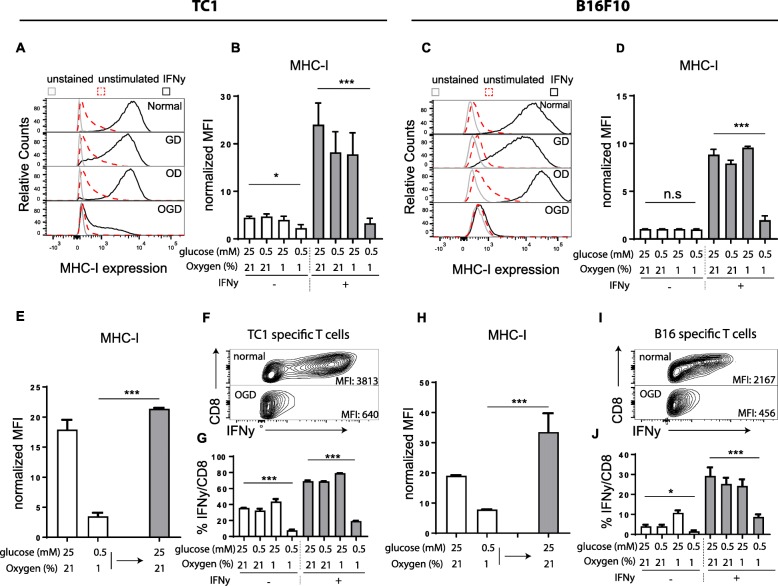
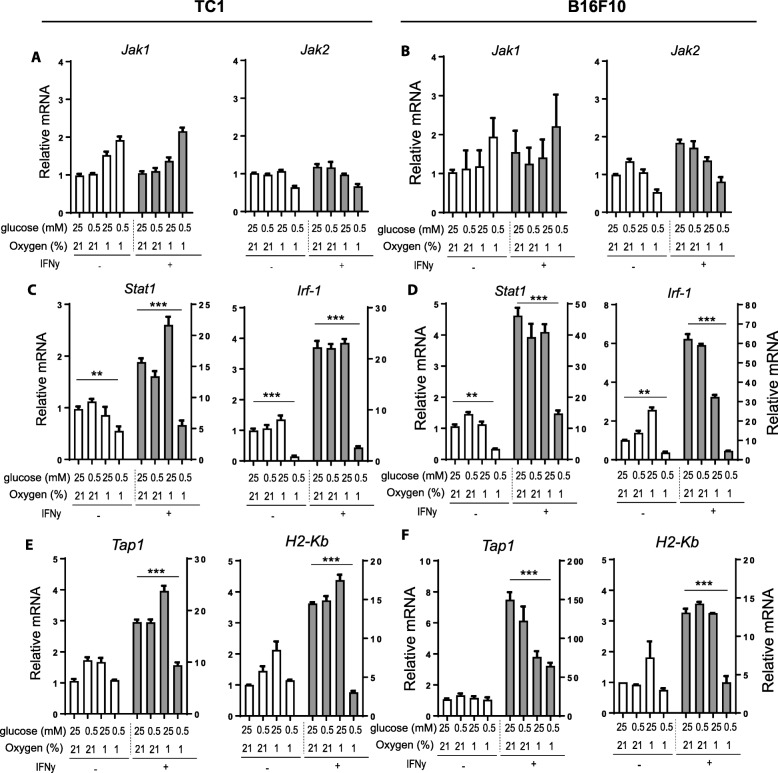
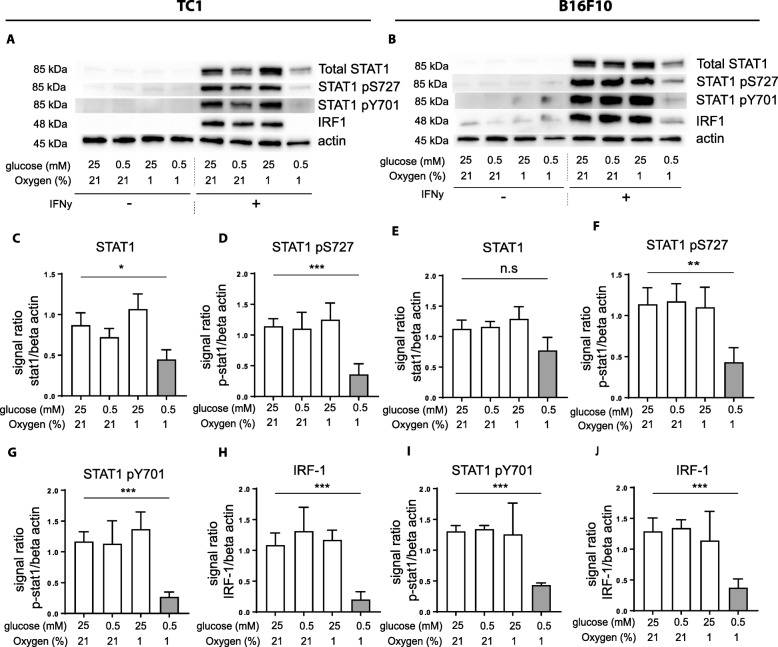
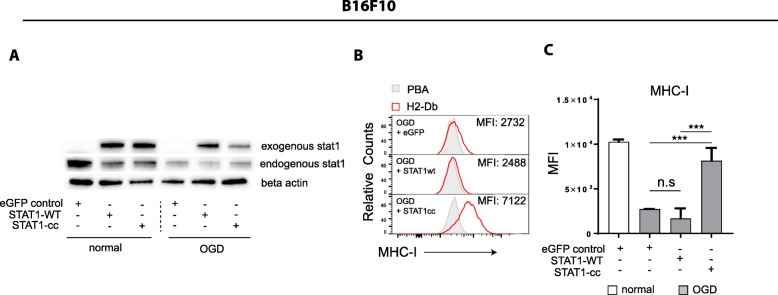
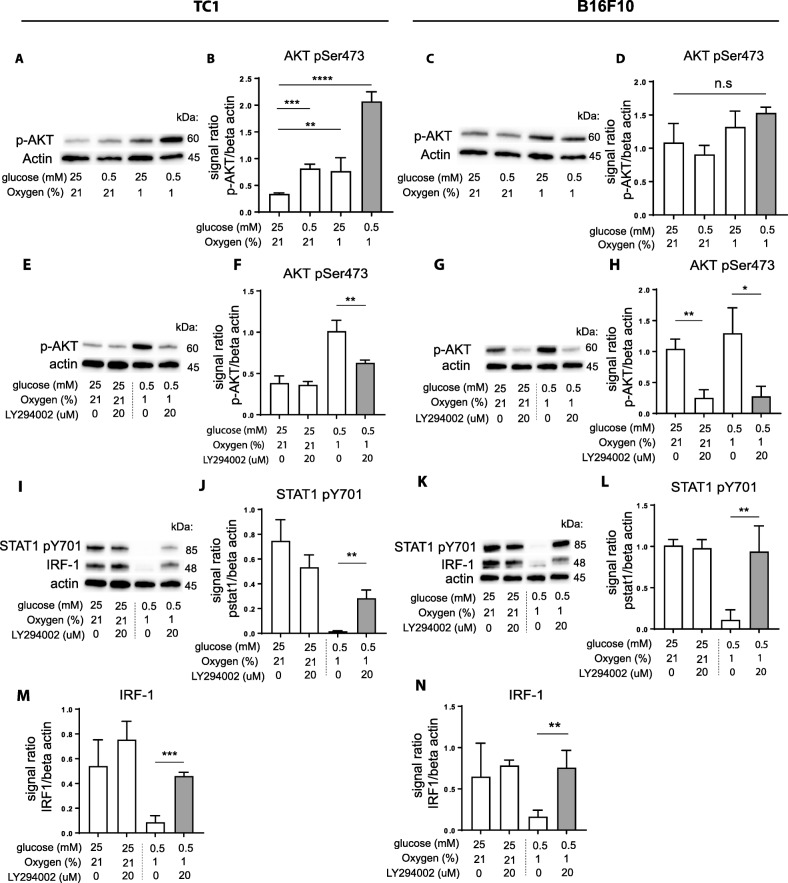
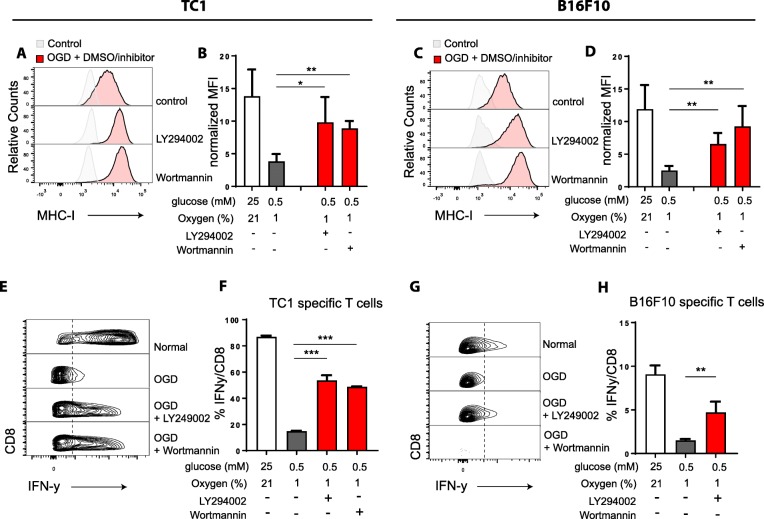
BACKGROUND: T-cell mediated immunotherapy brought clinical success for many cancer patients. Nonetheless, downregulation of MHC class I antigen presentation, frequently occurring in solid cancers, limits the efficacy of these therapies. Unraveling the mechanisms underlying this type of immune escape is therefore of great importance. We here investigated the immunological effects of metabolic stress in cancer cells as a result of nutrient deprivation. METHODS: TC1 and B16F10 tumor cell lines were cultured under oxygen- and glucose-deprivation conditions that mimicked the tumor microenvironment of solid tumors. Presentation of peptide antigens by MHC class I molecules was measured by flow cytometry and via activation of tumor-specific CD8 T cell clones. The proficiency of the IFNy-STAT1 pathway was investigated by Western blots on phosphorylated proteins, transfection of constitutive active STAT1 constructs and qPCR of downstream targets. Kinase inhibitors for PI3K were used to examine its role in IFNy receptor signal transduction. RESULTS: Combination of oxygen- and glucose-deprivation resulted in decreased presentation of MHC class I antigens on cancer cells, even in the presence of the stimulatory cytokine IFNy. This unresponsiveness to IFNy was the result of failure to phosphorylate the signal transducer STAT1. Forced expression of constitutive active STAT1 fully rescued the MHC class I presentation. Furthermore, oxygen- and glucose-deprivation increased PI3K activity in tumor cells. Pharmacological inhibition of this pathway not only restored signal transduction through IFNy-STAT1 but also improved MHC class I presentation. Importantly, PI3K inhibitors also rendered tumor cells sensitive for recognition by CD8 T cells in culture conditions of metabolic stress. CONCLUSIONS: These data revealed a strong impact of metabolic stress on the presentation of tumor antigens by MHC class I and suggest that this type of tumor escape takes place at hypoxic areas even during times of active T cell immunity and IFNy release.
Overview
The claims and statistics of this paper haven’t been checked yet.
Free: it reads the open-access text and checks the first 5 claims that cite a source we can check. Create a free account to check every claim.
Integrity signals
Registry
Cites
Statistics
Figures
Verification
Claims the paper makes
The claims and statistics of this paper haven’t been checked yet.
Free: it reads the open-access text and checks the first 5 claims that cite a source we can check. Create a free account to check every claim.
Claims other papers make about this one
Each is checked against this paper’s own text: does it say what the citing paper says it does?
The source backs part of the claim, not all of it — or backs it for a different population, condition or comparison.
In the citing paper
“PI3K and AKT1 inhibitors have also been shown to boost IFNG-driven class I and class II antigen presentation as a mechanism of cancer-cell-dependent immunostimulation (Chandrasekaran et al., 2019; Marijt et al., 2019; Sivaram et al., 2019)”
From Immunomodulation by targeted anticancer agents (2021) · cites this paper as Marijt et al., 2019
Experimental — accuracy not yet measuredIn the citing paper
“Several other strategies have been tested in preclinical models to reverse signaling defects and metabolic stress in order to enhance response to ICB including PI3K inhibitors (Marijt et al., 2019), and cyclin-dependent kinase 4 and 6 (CDK4/6) (Goel et al., 2017)”
From Hallmarks of response, resistance, and toxicity to immune checkpoint blockade (2021) · cites this paper as Marijt et al., 2019
Self-check
Percentages, sums and reported differences re-computed from the paper’s own numbers.
The self-check needs the paper’s full text.
Citations
Cites
mTOR Signaling in Growth, Metabolism, and Disease
Saxton, R. A., & Sabatini, D. M. (2017) · Cell · doi:10.1016/j.cell.2017.02.004 · Cited by 7,555
Cancer immunotherapy using checkpoint blockade
Ribas, A., & Wolchok, J. D. (2018) · Science · doi:10.1126/science.aar4060 · Cited by 6,791
Primary, Adaptive, and Acquired Resistance to Cancer Immunotherapy
Sharma, P., Hu-Lieskovan, S., Wargo, J. A., & Ribas, A. (2017) · Cell · doi:10.1016/j.cell.2017.01.017 · Cited by 5,588
Normalization of Tumor Vasculature: An Emerging Concept in Antiangiogenic Therapy
Jain, R. K. (2005) · Science · doi:10.1126/science.1104819 · Cited by 5,527
Metabolic Competition in the Tumor Microenvironment Is a Driver of Cancer Progression
Chang, C.-H., Qiu, J., O’Sullivan, D., Buck, M. D., Noguchi, T., Curtis, J. D., Chen, Q., Gindin, M., Gubin, M. M., van der Windt, G. J. W., et al. (2015) · Cell · doi:10.1016/j.cell.2015.08.016 · Cited by 3,331
The evolution of phosphatidylinositol 3-kinases as regulators of growth and metabolism
Engelman, J. A., Luo, J., & Cantley, L. C. (2006) · Nature Reviews Genetics · doi:10.1038/nrg1879 · Cited by 3,330
Mutations Associated with Acquired Resistance to PD-1 Blockade in Melanoma
Zaretsky, J. M., Garcia-Diaz, A., Shin, D. S., Escuin-Ordinas, H., Hugo, W., Hu-Lieskovan, S., Torrejon, D. Y., Abril-Rodriguez, G., Sandoval, S., Barthly, L., et al. (2016) · New England Journal of Medicine · doi:10.1056/nejmoa1604958 · Cited by 3,237
The PI3K Pathway in Human Disease
Fruman, D. A., Chiu, H., Hopkins, B. D., Bagrodia, S., Cantley, L. C., & Abraham, R. T. (2017) · Cell · doi:10.1016/j.cell.2017.07.029 · Cited by 2,749
Phosphoenolpyruvate Is a Metabolic Checkpoint of Anti-tumor T Cell Responses
Ho, P.-C., Bihuniak, J. D., Macintyre, A. N., Staron, M., Liu, X., Amezquita, R., Tsui, Y.-C., Cui, G., Micevic, G., Perales, J. C., et al. (2015) · Cell · doi:10.1016/j.cell.2015.08.012 · Cited by 1,462
Akt Stimulates Aerobic Glycolysis in Cancer Cells
Elstrom, R. L., Bauer, D. E., Buzzai, M., Karnauskas, R., Harris, M. H., Plas, D. R., Zhuang, H., Cinalli, R. M., Alavi, A., Rudin, C. M., et al. (2004) · Cancer Research · doi:10.1158/0008-5472.can-03-2904 · Cited by 1,454
Cited by
Hallmarks of response, resistance, and toxicity to immune checkpoint blockade
Morad, G., Helmink, B. A., Sharma, P., & Wargo, J. A. (2021) · Cell · doi:10.1016/j.cell.2021.09.020 · Cited by 1,648
Cancer Immune Evasion Through Loss of MHC Class I Antigen Presentation
Dhatchinamoorthy, K., Colbert, J. D., & Rock, K. L. (2021) · Frontiers in Immunology · doi:10.3389/fimmu.2021.636568 · Cited by 1,077
Turning Cold into Hot: Firing up the Tumor Microenvironment
Duan, Q., Zhang, H., Zheng, J., & Zhang, L. (2020) · Trends in Cancer · doi:10.1016/j.trecan.2020.02.022 · Cited by 934
Cold and hot tumors: from molecular mechanisms to targeted therapy
Wu, B., Zhang, B., Li, B., Wu, H., & Jiang, M. (2024) · Signal Transduction and Targeted Therapy · doi:10.1038/s41392-024-01979-x · Cited by 682
PI3K inhibitors are finally coming of age
Vanhaesebroeck, B., Perry, M. W. D., Brown, J. R., André, F., & Okkenhaug, K. (2021) · Nature Reviews Drug Discovery · doi:10.1038/s41573-021-00209-1 · Cited by 476
Energy metabolism in health and diseases
Liu, H., Wang, S., Wang, J., Guo, X., Song, Y., Fu, K., Gao, Z., Liu, D., He, W., & Yang, L.-L. (2025) · Signal Transduction and Targeted Therapy · doi:10.1038/s41392-025-02141-x · Cited by 399
Antitumour immunity regulated by aberrant ERBB family signalling
Kumagai, S., Koyama, S., & Nishikawa, H. (2021) · Nature Reviews Cancer · doi:10.1038/s41568-020-00322-0 · Cited by 278
Hypoxia-Driven Immune Escape in the Tumor Microenvironment
Vito, A., El-Sayes, N., & Mossman, K. (2020) · Cells · doi:10.3390/cells9040992 · Cited by 270
Targeting MHC-I molecules for cancer: function, mechanism, and therapeutic prospects
Wu, X., Li, T., Jiang, R., Yang, X., Guo, H., & Yang, R. (2023) · Molecular Cancer · doi:10.1186/s12943-023-01899-4 · Cited by 223
“Besides, the combination of oxygen and glucose deprivation also resulted in decreased expression of the IFN signaling pathway and even failure to induce MHC-I molecules [68].”
BackgroundDeregulation of HLA-I in cancer and its central importance for immunotherapy
Hazini, A., Fisher, K., & Seymour, L. (2021) · Journal for ImmunoTherapy of Cancer · doi:10.1136/jitc-2021-002899 · Cited by 203
Immunomodulation by targeted anticancer agents
Petroni, G., Buqué, A., Zitvogel, L., Kroemer, G., & Galluzzi, L. (2021) · Cancer Cell · doi:10.1016/j.ccell.2020.11.009 · Cited by 212
Targeting oncogene and non-oncogene addiction to inflame the tumour microenvironment
Petroni, G., Buqué, A., Coussens, L. M., & Galluzzi, L. (2022) · Nature Reviews Drug Discovery · doi:10.1038/s41573-022-00415-5 · Cited by 160
The Importance of Being PI3K in the RAS Signaling Network
Cuesta, C., Arévalo-Alameda, C., & Castellano, E. (2021) · Genes · doi:10.3390/genes12071094 · Cited by 138
Immune Therapy Resistance and Immune Escape of Tumors
Seliger, B., & Massa, C. (2021) · Cancers · doi:10.3390/cancers13030551 · Cited by 86
Wang, Z., Wang, X., Xu, Y., Li, J., Zhang, X., Peng, Z., Hu, Y., Zhao, X., Dong, K., Zhang, B., et al. (2022) · BMC Medicine · doi:10.1186/s12916-022-02327-y · Cited by 90
Future Challenges in Cancer Resistance to Immunotherapy
van Elsas, M. J., van Hall, T., & van der Burg, S. H. (2020) · Cancers · doi:10.3390/cancers12040935 · Cited by 74
The Landscape of PIK3CA Mutations in Colorectal Cancer
Voutsadakis, I. A. (2021) · Clinical Colorectal Cancer · doi:10.1016/j.clcc.2021.02.003 · Cited by 81
Targeting cancer metabolic pathways for improving chemotherapy and immunotherapy
Luo, Z., Eichinger, K. M., Zhang, A., & Li, S. (2023) · Cancer Letters · doi:10.1016/j.canlet.2023.216396 · Cited by 73
Hypoxia and Extracellular Acidification as Drivers of Melanoma Progression and Drug Resistance
Dratkiewicz, E., Simiczyjew, A., Mazurkiewicz, J., Ziętek, M., Matkowski, R., & Nowak, D. (2021) · Cells · doi:10.3390/cells10040862 · Cited by 76
Bashash, D., Zandi, Z., Kashani, B., Pourbagheri‐Sigaroodi, A., Salari, S., & Ghaffari, S. H. (2021) · Journal of Cellular Physiology · doi:10.1002/jcp.30575 · Cited by 65
Phosphoinositide 3-kinase signaling can modulate MHC class I and II expression
Chandrasekaran, S., Sasaki, M., Scharer, C. D., Kissick, H. T., Patterson, D. G., Magliocca, K. R., Seykora, J. T., Sapkota, B., Gutman, D. A., Cooper, L. A., et al. (2019) · Molecular Cancer Research · doi:10.1158/1541-7786.mcr-19-0545 · Cited by 61
“In these studies, murine model systems were used demonstrating that: (i) PI3K activation (through low oxygen and/or glucose) can repress STAT1 signaling and MHCI induction/expression and (ii) PI3K-mediated changes in MHCI levels can functionally impact T-cell infiltration into tumors and antitumor immunity (49, 50).”
MethodCell metabolism-based optimization strategy of CAR-T cell function in cancer therapy
Li, W., Pan, X., Chen, L., Cui, H., Mo, S., Pan, Y., Shen, Y., Shi, M., Wu, J., Luo, F., et al. (2023) · Frontiers in Immunology · doi:10.3389/fimmu.2023.1186383 · Cited by 60
“Additionally, the glucose-deficient environment downregulates MHC-I expression on tumor cells, resulting in diminished T cell function because of the insensitivity to IFN-g and the IFN-g-STAT1 pathway, which can be rescued by a PIK3 inhibitor (52).”
BackgroundLuby, A., & Alves‐Guerra, M. (2021) · Cancers · doi:10.3390/cancers13235912 · Cited by 54
Immunogenomic cancer evolution: A framework to understand cancer immunosuppression
Kumagai, S., Momoi, Y., & Nishikawa, H. (2025) · Science Immunology · doi:10.1126/sciimmunol.abo5570 · Cited by 53
Exhausted T cells hijacking the cancer-immunity cycle: Assets and liabilities
Brunell, A. E., Lahesmaa, R., Autio, A. K., & Thotakura, A. K. (2023) · Frontiers in Immunology · doi:10.3389/fimmu.2023.1151632 · Cited by 52
Hypoxia is linked to acquired resistance to immune checkpoint inhibitors in lung cancer
Robles-Oteíza, C., Hastings, K., Choi, J., Sirois, I., Ravi, A., Expósito, F., de Miguel, F. J., Knight, J., López‐Giráldez, F., Choi, H., et al. (2024) · The Journal of Experimental Medicine · doi:10.1084/jem.20231106 · Cited by 47
“…has been shown to impair IFN γ -stimulated MHC-I expression in B16F10 and other cancer cells, either alone (Murthy et al., 2019) or in combination with glucose deprivation (Marijt et al., 2019), in part by reducing Stat1 phosphorylation levels (Ivanov et al., 2007; Chandrasekaran et al., 2019).”
Bacteria and tumor: Understanding the roles of bacteria in tumor genesis and immunology
Zhao, M., Chen, X., Yang, Z., Yang, X., & Peng, Q. (2022) · Microbiological Research · doi:10.1016/j.micres.2022.127082 · Cited by 39
Ledezma, D. K., Balakrishnan, P. B., Cano‐Mejia, J., Sweeney, E. E., Hadley, M. M., Bollard, C. M., Villagra, A., & Fernandes, R. (2020) · Nanomaterials · doi:10.3390/nano10010161 · Cited by 41
Oncolytic Adenoviruses for Cancer Therapy
Tripodi, L., Vitale, M., Cerullo, V., & Pastore, L. (2021) · International Journal of Molecular Sciences · doi:10.3390/ijms22052517 · Cited by 42
Mane, M. M., Cohen, I., Ackerstaff, E., Shalaby, K., Ijoma, J. N., Ko, M. K., Maeda, M., Albeg, A. S., Vemuri, K., Satagopan, J. M., et al. (2020) · Molecular Therapy — Oncolytics · doi:10.1016/j.omto.2020.07.006 · Cited by 38
“18 September 2020 (MHC class I) presentation by cancer cells.(50) We can also speculate that there are changes not only in the tumor lactate level, but also in the level of circulating lactate.”
BackgroundTargeting cancer stem cells from a metabolic perspective
Shen, Y., Pan, S.-C., Chu, I., Lai, R.-Y., & Wei, Y. (2020) · Experimental Biology and Medicine · doi:10.1177/1535370220909309 · Cited by 38
Cell Intrinsic and Systemic Metabolism in Tumor Immunity and Immunotherapy
Coleman, M. F., Cozzo, A. J., Pfeil, A. J., Etigunta, S. K., & Hursting, S. D. (2020) · Cancers · doi:10.3390/cancers12040852 · Cited by 39
Magalhaes, I., Yogev, O., Mattsson, J., & Schurich, A. (2019) · Frontiers in Immunology · doi:10.3389/fimmu.2019.02309 · Cited by 36
“This finding was accompanied by tumor cells losing their sensitivity to IFN-γ mediated induction of MHC upregulation (44).”
BackgroundImmunometabolism modulation, a new trick of edible and medicinal plants in cancer treatment
Tan, W., Pan, T., Wang, S., Li, P., Men, Y., Tan, R., Zhong, Z., & Wang, Y. (2021) · Food Chemistry · doi:10.1016/j.foodchem.2021.131860 · Cited by 39
Targeting PI3K signaling in Lung Cancer: advances, challenges and therapeutic opportunities
Zhang, B., Leung, P., Cho, W. C. S., Wong, C. K., & Wang, D. (2025) · Journal of Translational Medicine · doi:10.1186/s12967-025-06144-8 · Cited by 35
“This stress can activate autophagy, a catabolic process that recycles cellular components to maintain energy homeostasis [51, 52].”
Immunosurveillance encounters cancer metabolism
Chuang, Y., Tzeng, S., Ho, P., & Tsai, C. (2024) · EMBO Reports · doi:10.1038/s44319-023-00038-w · Cited by 35
“Oxygen-and glucose deprivation decrease MHC class I antigens in cancer cells, causing them to become unresponsive to IFN-mediated cytotoxic effects due to a malfunctioning STAT1 (Marijt et al, 2019).”
BackgroundMaas, R. J. A., Evert, J. S. H., Hagemans, I. M., Brummelman, J., van Ens, D., de Jonge, P. K. J. D., Hooijmaijers, L., Mahajan, S., van der Waart, A. B., Hermans, C. K. J. C., et al. (2024) · Frontiers in Immunology · doi:10.3389/fimmu.2024.1448041 · Cited by 32
Stresses in the metastatic cascade: molecular mechanisms and therapeutic opportunities
Shen, M., & Kang, Y. (2020) · Genes & Development · doi:10.1101/gad.343251.120 · Cited by 34
“Finally, tumor cells under metabolic stress can also escape from immunosurveillance via decreased surface expression of the major histocompatibility complex (MHC) class I (Marijt et al. 2019; Nunes and Everts 2019).”
BackgroundMetabolic Syndrome and Autophagy: Focus on HMGB1 Protein
Frisardi, V., Matrone, C., & Street, M. E. (2021) · Frontiers in Cell and Developmental Biology · doi:10.3389/fcell.2021.654913 · Cited by 28
Tumor Cell-Intrinsic Immunometabolism and Precision Nutrition in Cancer Immunotherapy
Cuyàs, E., Verdura, S., Martín-Castillo, B., Alarcón, T., Lupu, R., Bosch‐Barrera, J., & Menéndez, J. A. (2020) · Cancers · doi:10.3390/cancers12071757 · Cited by 30
Armitage, J. D., Newnes, H. V., McDonnell, A. M., Bosco, A., & Waithman, J. C. (2021) · Cells · doi:10.3390/cells10010056 · Cited by 28
Immune checkpoint blockade for cancer therapy: current progress and perspectives
Ye, H., Liao, W., Pan, J., Shi, Y. P., & Wang, Q. (2025) · Journal of Zhejiang University SCIENCE B · doi:10.1631/jzus.b2300492 · Cited by 27
“PI3K inhibitors and cyclin-dependent kinase 4/6 (CDK4/6) can reverse signal defects (Goel et al., 2017; Marijt et al., 2019).”
Lin, X., Xie, M., Yao, J., Ma, X., Lin, Q., Zhang, X., Song, J., Bao, X., Zhang, X., Zhang, Y., et al. (2024) · Clinical and Translational Medicine · doi:10.1002/ctm2.1613 · Cited by 26
“189 Beyond JAK–STAT inhibition, several other pathway inhibitors, including phosphoinositide 3-kinase inhibitors (PI3K), 195 MAP kinase-interacting serine/threonine-protein kinase 1/2 (MNK1/2)inhibitors 196 and Bruton’s tyrosine kinase (BTK) inhibitors, 197,198 have been implicated in autoimmune…”
BackgroundPromotion on NLRC5 upregulating MHC-I expression by IFN-γ in MHC-I–deficient breast cancer cells
Zhao, M., Sun, Y., Jiang, X., Liu, L., Liu, L., & Sun, L. (2019) · Immunologic Research · doi:10.1007/s12026-019-09111-w · Cited by 26
Lin, H., Xia, L., Lian, J., Chen, Y., Zhang, Y., Zhuang, Z., Cai, H., You, J., & Guan, G. (2021) · Journal of Translational Medicine · doi:10.1186/s12967-021-03162-0 · Cited by 30
Targeting PI3Kα increases the efficacy of anti‐PD ‐1 antibody in cervical cancer
Jiang, W., Ouyang, X., Li, C., Long, Y., Chen, W., Ji, Z., Shen, X., Xiang, L., & Yang, H. (2023) · Immunology · doi:10.1111/imm.13682 · Cited by 24
Lin, G., Cheng, Y., Li, L.-J., Qiu, X., Zhao, Y.-X., Lin, J.-L., Chen, Y.-J., Feng, C. L., Chen, S.-Q., Xie, J., et al. (2025) · Cancer Research · doi:10.1158/0008-5472.can-24-2697 · Cited by 21
“Recently, many therapeutic measures have been proposed to fire the immunosuppressive TME, such as activating the innate immune sensing machinery (36, 37), blocking oncogenic signaling in cancer cells (38, 39), developing cancer vaccines (40, 41), and metabolic or epigenetic reprogramming (42, 43).”
The Role of Metabolism in Tumor Immune Evasion: Novel Approaches to Improve Immunotherapy
Cruz‐Bermúdez, A., Briviesca, R. L., Casarrubios, M., Sierra‐Rodero, B., & Provencio, M. (2021) · Biomedicines · doi:10.3390/biomedicines9040361 · Cited by 22
Enhancing the Efficacy of Tumor Vaccines Based on Immune Evasion Mechanisms
Chen, J., Zhang, H., Zhou, L., Hu, Y., Li, M., He, Y., & Li, Y. (2021) · Frontiers in Oncology · doi:10.3389/fonc.2020.584367 · Cited by 21
“Such alteration is accompanied by the loss of sensitivity of tumor cells to the upregulation of MHC molecules mediated by interferon (IFN)-g (23).”
BackgroundHargadon, K. M., Győrffy, B., Strong, E. W., TARNAI, B. D., Thompson, J., Bushhouse, D. Z., Johnson, C. E., & Williams, C. J. (2019) · Cancer Genomics & Proteomics · doi:10.21873/cgp.20152 · Cited by 18
Metabolic reprogramming and immune regulation in viral diseases
Ganesh, G. V., & Ramkumar, K. M. (2021) · Reviews in Medical Virology · doi:10.1002/rmv.2268 · Cited by 20
“But the major consequence to lactate accumulation diminished the ability of tumour cell lines to express MHC Class I due to deficient STAT1 signalling, even when stimulated with IFN‐γ, on their cell surface under conditions of reduced supply of glucose and oxygen.(100)”
BackgroundPerales-Linares, R. F., Leli, N. M., Mohei, H., Beghi, S., Rivera, O. D., Κωστόπουλος, Ν., Giglio, A., George, S. S., Uribe‐Herranz, M., Costabile, F., et al. (2023) · Cancer Research · doi:10.1158/0008-5472.can-22-2499 · Cited by 16
“…of the PI3K/Akt signaling cascade because it is among the most frequently dysregulated pathways in human cancers, and its molecular components have been involved in MHC-I expression and antigen presentation, key factors that affect the susceptibility of tumors to immunosurveil-lance (8, 9, 19, 20).”
BackgroundZhang, K., Qian, Y., Quan, X., Zhu, T., & Qian, B. (2022) · Frontiers in Cell and Developmental Biology · doi:10.3389/fcell.2022.730132 · Cited by 15
“T-cell failure has been identified as an important mechanism for cancer cells to escape host immunity (Marijt et al., 2019).”
BackgroundOesophageal adenocarcinoma, obesity, and cancer: the role of nutrition in prevention and management
Reytor-González, C., Simancas‐Racines, D., Jiménez-Flores, E., Campuzano-Donoso, M., Am, C., Coppola, L., Marchetti, M., Zambrano-Villacres, R., & Sarno, G. (2025) · Food and Agricultural Immunology · doi:10.1080/09540105.2025.2510951 · Cited by 14
“Marijt et al. (Marijt et al., 2019) found that glucose and oxygen deprivation caused a decrease in major histocompatibility complex class I antigens-Figure 2.”
Emerging Landscapes of Tumor Immunity and Metabolism
Wu, F., Cheng, Y., Wu, L., Zhang, W., Zheng, W., Wang, Q., Cao, H., Pan, X., & Tang, W. (2020) · Frontiers in Oncology · doi:10.3389/fonc.2020.575037 · Cited by 14
Panaampon, J., Kariya, R., & Okada, S. (2022) · Cancer Immunology Immunotherapy · doi:10.1007/s00262-022-03177-6 · Cited by 14
A comprehensive review of mechanisms underlying resistance to immune checkpoint inhibitors
Bertucci, A., -, T. K., Billon, E., Fernez, T., & Rochigneux, P. (2026) · Frontiers in Immunology · doi:10.3389/fimmu.2026.1735741 · Cited by 13
Hope and Challenges: Immunotherapy in EGFR-Mutant NSCLC Patients
Yan, D. (2023) · Biomedicines · doi:10.3390/biomedicines11112916 · Cited by 12
Immunometabolism Modulation in Therapy
Monferrer, E., Sanegre, S., Vieco-Martí, I., López-Carrasco, A., Fariñas, F., Villatoro, A. J., Abanades, S., Mañes, S., de la Cruz‐Merino, L., Noguera, R., et al. (2021) · Biomedicines · doi:10.3390/biomedicines9070798 · Cited by 13
“Furthermore, tumor cells lose their sensitivity to IFN-γ induction, mediated by increased MHC [76].”
BackgroundPersist or resist: Immune checkpoint inhibitors in EGFR ‐mutated NSCLC
Zhu, P., Li, Z., Sun, Y., Liu, T., & Yin, R. H. (2024) · Cancer Science · doi:10.1111/cas.16428 · Cited by 11
Wondergem, N. E., Nijenhuis, D. N. L. M., Poell, J. B., Leemans, C. R., Brakenhoff, R. H., & van de Ven, R. (2021) · Frontiers in Oral Health · doi:10.3389/froh.2021.647980 · Cited by 10
“infiltration [65], expression of immune checkpoints [66–68], and expression of MHC classes I and II (Figure 2) [69, 70].”
BackgroundMetabolic Stress Triggers Immune Escape by Tumors
Nunes, J. B., & Everts, B. (2019) · Trends in cancer · doi:10.1016/j.trecan.2019.09.001 · Cited by 8
PD-L1 expression-related PI3K pathway correlates with immunotherapy efficacy in gastric cancer
Liu, L., Niu, L., Zheng, X., Xiao, F., Sun, H., Deng, W., & Cai, J. (2023) · Therapeutic Advances in Medical Oncology · doi:10.1177/17588359231205853 · Cited by 7
From PIK3CA Mutations to Rational PI3K Inhibition for the Treatment of Colorectal Cancer
Voutsadakis, I. A. (2025) · Molecular Diagnosis & Therapy · doi:10.1007/s40291-025-00815-4 · Cited by 6
“In addition, murine cancer cells grown in glucose deprivation and hypoxic conditions failed to up-regulate MHC I in the presence of interferon γ (IFNγ) [76].”
de Armas, L. R., George, V., Filali-Mouhim, A., Steel, C., Parmigiani, A., Cunningham, C. K., Weinberg, A., Trautmann, L., Sékaly, R., Cameron, M. J., et al. (2021) · Frontiers in Immunology · doi:10.3389/fimmu.2021.639358 · Cited by 6
Mathiassen, T. B. W., Hansen, M. R., Karlsson, M. G., Hadrup, S. R., Ormhøj, M., & Jensen, P. R. (2025) · Scientific Reports · doi:10.1038/s41598-025-24712-2 · Cited by 3
“These effects have previously been documented, and glucose deprivation was shown to impair T cell activation and reduce cytokine production, thereby limiting T cell effector function 47,54,56 .”
EZH2 loss during metabolic stress drives restoration of MHC class I machinery in melanoma
Edmondson, J. L., Reed, M. R., Fil, D., Heflin, B., McKinnon, A. T., Bauer, M., Morehead, L. C., Avaritt, N. L., Phillips, M., Taverna, S. D., et al. (2025) · iScience · doi:10.1016/j.isci.2025.112750 · Cited by 3
Perspective Chapter: The Role of Interferon Gamma in Clinical Medicine
Rakityanskaya, I. A., Ts, R., Андреевна, К. А., Balasaniants, G. S., Каприн, А. Д., Fi, E., Kir’janova, V. V., Korzhenevskaja, T. B., Barbinov, D. V., Ignatovskij, A. V., et al. (2022) · IntechOpen eBooks · doi:10.5772/intechopen.105476 · Cited by 3
Lu, Z., Bi, J., Zheng, C., Cui, L., Xia, H., Wan, X., & Chen, Y. H. (2026) · Molecular Therapy · doi:10.1016/j.ymthe.2026.01.032 · Cited by 2
Putting into Perspective the Future of Cancer Vaccines: Targeted Immunotherapy
Makhoul, I., & Kieber‐Emmons, T. (2020) · European Medical Journal · doi:10.33590/emj/19-00191 · Cited by 2
Isaeva, V. G., Grivtsova, L. Y., Zhovtun, L. P., Samborsky, S. M., & Falaleeva, N. A. (2022) · Advances in molecular oncology · doi:10.17650/2313-805x-2022-9-2-111-119 · Cited by 2
Immunogenicity of neoantigens: From CAR-T cell to various vaccines
Davodabadi, F., Arabpour, J., Goleij, P., Mohammadi, E., Taheri, M., Sethi, G., Dua, K., & Sarhadi, M. (2025) · International Journal of Pharmaceutics · doi:10.1016/j.ijpharm.2025.125924 · Cited by 1
Hyperglycemia promotes tumor immune evasion via B7-H4 upregulation in ovarian cancer
Yang, J., Zhang, J., Wang, Z., Fu, L., Liu, M., & Niu, Z. (2025) · Experimental Cell Research · doi:10.1016/j.yexcr.2025.114752 · Cited by 1
Wang, R., Zhang, N., Xu, R., Xu, Z., & Li, H. (2026) · Frontiers in Immunology · doi:10.3389/fimmu.2026.1867162 · Cited by 1
Pan, J., Li, B., Lin, R., Fang, C., Lau, L., Hong, Z., & Chen, Y. (2026) · International Journal of Oncology · doi:10.3892/ijo.2026.5932 · Cited by 3
“The second layer of the tumor visibility architecture is IFN γ ‑STAT1 reinforcement, whose compe‑ tence is determined by signal amplitude and persistence rather than cytokine availability alone (114,115).”
Park, J. C., Basak, N. P., Useche, M., Park, J. S., Ganesh, M. S., Prabha, A. G., JayaPrakash, C. R., Varvares, M. A., Wirth, L. J., Faquin, W. C., et al. (2024) · bioRxiv (Cold Spring Harbor Laboratory) · doi:10.1101/2024.07.02.601738 · Cited by 1
McAusland, T. M. (2020) · The Atrium (University of Guelph)
Cancer Cell Metabolism in Pancreatic Ductal Adenocarcinoma
Hagland, H. R. (2021) · Springer eBooks · doi:10.1007/978-3-030-53786-9_16
Muhammad, S., Fan, T. T., Zhang, L., Shao, F., Kaur, K., Khan, A., Bilal, M., Mashwani, A. A., Gao, Y., & He, J. (2023) · Research Square · doi:10.21203/rs.3.rs-2713469/v1
Kupriyanov, S. V., Kirilenko, K. M., & Starkov, D. (2025) · Acta Naturae · doi:10.32607/actanaturae.27549
Saladi, S. V., Park, J. C., Basak, N. P., Useche, M., Park, J. S., Ganesh, M., Prabha, A. G., JayaPrakash, C. R., Varvares, M. A., Wirth, L. J., et al. (2025) · SSRN Electronic Journal · doi:10.2139/ssrn.5237193
Eyeoğlu, Ö., & Kayaçetin, S. (2025) · Asian Biomedicine · doi:10.2478/abm-2025-0011
“Phosphatidylinositol 3´ -kinase (PI3K) pathway activity was also found to be associated with antitumor immunity in gastric cancer patients [13, 14].”
Wang, Z., Wang, X., Xu, Y., Li, J., Zhang, X., Peng, Z., Hu, Y., Zhao, X., Dong, K., Zhang, B., et al. (2022) · Figshare · doi:10.6084/m9.figshare.19625616
Chirality‐Encoded Biomaterials Regulate Local and Systemic Immune Responses in Transplantation
Lewis, H. C., Jeffs, S., Espinoza, A., Goud, R., Suarez‐Arnedo, A., Owusu-Antwi, S., Alvarado, P. C., & Segura, T. (2026) · Advanced Materials · doi:10.1002/adma.74185
Liu, Z., He, L., Tian, Y., Feng, S., Yang, X., Wu, H., Pu, Q., Wang, Y., & Yuan, X. (2026) · Frontiers in Immunology · doi:10.3389/fimmu.2026.1871598
Integrated bioinformatics and machine learning identify key hub genes in early-onset gastric cancer
Yi, S., Chen, Q., Wu, J., Hou, H., Chen, H., Zhang, W., Zhu, K., Liu, B., Liang, P., Zhang, S., et al. (2026) · Frontiers in Oncology · doi:10.3389/fonc.2026.1951255
Metadata
- Authors
- Marijt, K. A., Sluijter, M., Blijleven, L., Tolmeijer, S. H., Scheeren, F. A., van der Burg, S. H., & van Hall, T.
- Affiliations
- Leiden University Medical Center (NL)
- Corresponding author
- Marijt, Koen A.
- Venue
- Journal for ImmunoTherapy of Cancer
- Publisher
- BMJ
- Published
- 2019-06-13
- Volume
- 7
- Issue
- 1
- Pages
- 152-152
- ISSN
- 2051-1426 (ISSN-L)
- PMC
- PMC6567539
- OpenAlex
- W2949952797
- Cited by
- 85
- References
- 55
- Citations by year
- 2026: 6 · 2025: 13 · 2024: 8 · 2023: 9 · 2022: 8 · 2021: 23 · 2020: 13 · 2019: 5
- FWCI
- 5.12
- Type
- journal article
- Language
- en
- Open access
- gold
- doi.org
- Licence
- cc-by
- creativecommons.org/licenses/by/4.0/ (tdm)
- Locations
- Journal for ImmunoTherapy of Cancer (publishedVersion, cc-by)
- Europe PMC (PubMed Central) (publishedVersion, cc-by)
- PubMed Central (publishedVersion, cc-by)
- PubMed (publishedVersion)
- Data Archiving and Networked Services (DANS) (submittedVersion)
- Leiden Repository (Leiden University) (submittedVersion)
- DOAJ (DOAJ: Directory of Open Access Journals) (submittedVersion, cc-by-sa)
- Funders
- KWF Kankerbestrijding (2013-6142)
- Topics
- Health Sciences › Medicine › Oncology › Cancer Immunotherapy and Biomarkers
- Life Sciences › Immunology and Microbiology › Immunology › Immunotherapy and Immune Responses
- Life Sciences › Biochemistry, Genetics and Molecular Biology › Cancer Research › Cancer, Hypoxia, and Metabolism
- Keywords
- tumor immune evasion, metabolic stress, nutrient deprivation, hypoxia, glucose deprivation, MHC class I antigen presentation, STAT1 phosphorylation, PI3K signaling, PI3K inhibitors, CD8+ T cell recognition, tumor microenvironment, T cell therapy
- MeSH terms
- Interferon gamma Receptor, Animals, Glucose, Humans, Interferon-gamma, Melanoma, Experimental, Mice, Inbred C57BL, Phosphorylation, Stress, Physiological, Histocompatibility Antigens Class I, Signal Transduction, Cell Hypoxia, Receptors, Interferon, Antigen Presentation, Tumor Escape, Phosphatidylinositol 3-Kinases, Cell Line, Tumor, STAT1 Transcription Factor, Mice
About these checks
Registry, retraction, Cites and statistics results are computed, not judged, with one exception: a printed reference that no index lists is read once by a model before it counts as a citation error. Claims are extracted by a model and kept only when their quote appears verbatim in the text; each cited source is then checked, with a model’s help, for whether it says what the claim relies on. Those verdicts can be wrong — read the claim’s quote and the cited source before relying on one.
Statistics and arithmetic are recomputed, not judged.
Confidence bands are shown only for fields calibrated on our annotated test set. None is calibrated yet, so no band is shown.
What counts as a claim ›How we measure confidence ›How we check this ›
Are you an author, or do you see a problem with this page? Request a review
Data sources
Bibliographic data: Semantic Scholar, OpenAlex, Crossref.
Contains information from the Semantic Scholar Academic Graph Datasets, made available under the ODC Attribution License (ODC-BY 1.0).
Semantic Scholar’s data is described in: Kinney, R., et al. (2023). The Semantic Scholar Open Data Platform. arXiv:2301.10140.
