

Metabolic stress in cancer cells induces immune escape through a PI3K-dependent blockade of IFNγ receptor signaling
Open accessThe DOI matches its Crossref record; 55 of the 55 references it cites were found in a registry or an index.
Abstract
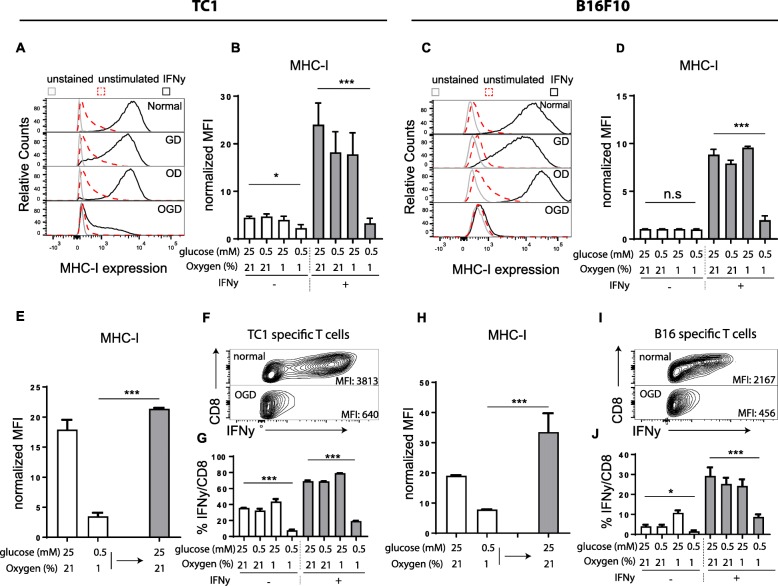
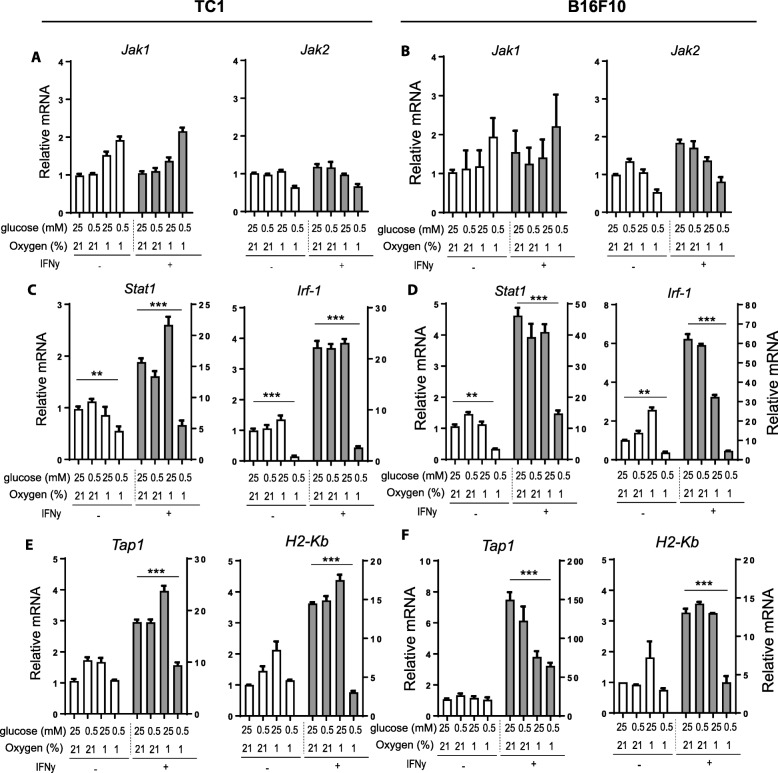
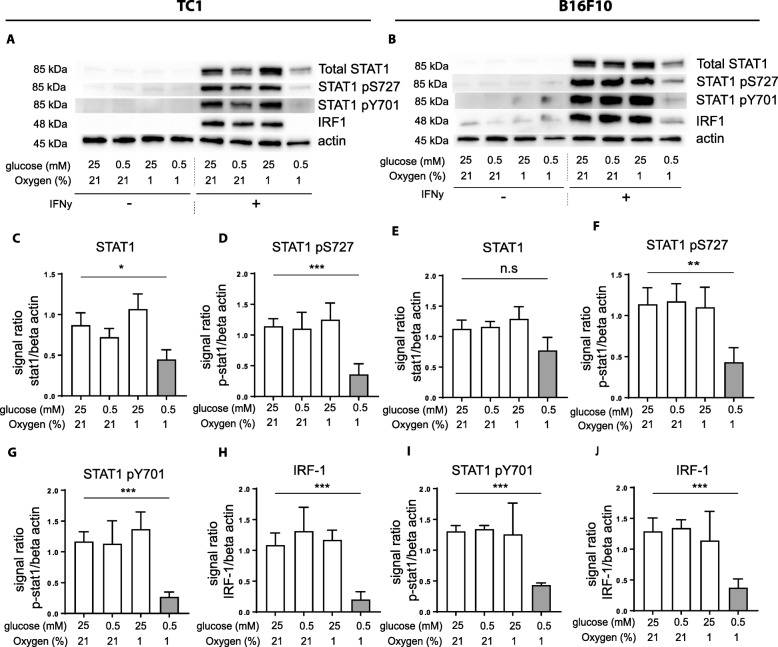
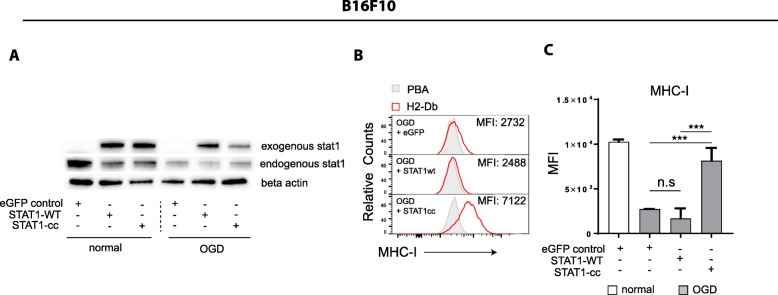
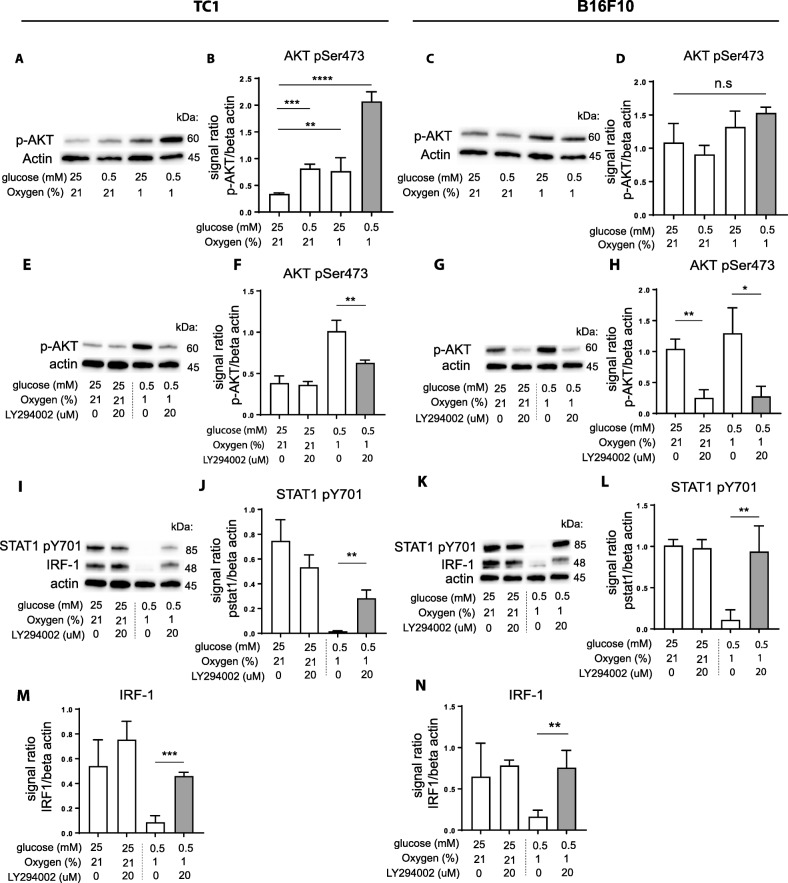
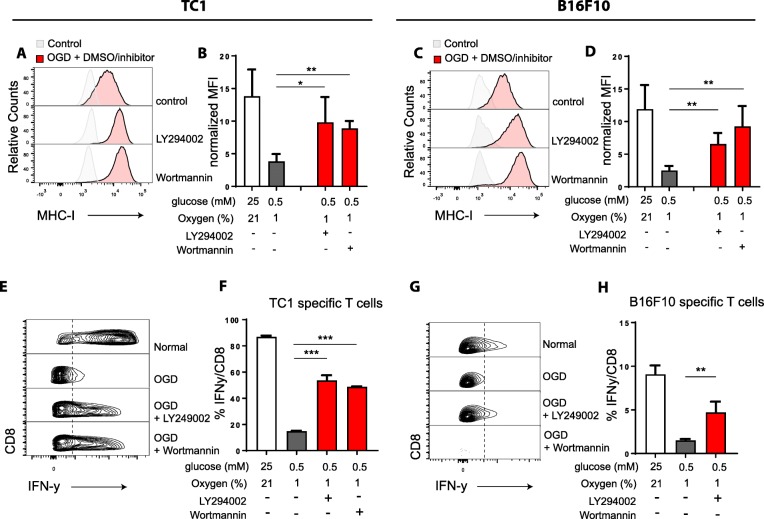
BACKGROUND: T-cell mediated immunotherapy brought clinical success for many cancer patients. Nonetheless, downregulation of MHC class I antigen presentation, frequently occurring in solid cancers, limits the efficacy of these therapies. Unraveling the mechanisms underlying this type of immune escape is therefore of great importance. We here investigated the immunological effects of metabolic stress in cancer cells as a result of nutrient deprivation. METHODS: TC1 and B16F10 tumor cell lines were cultured under oxygen- and glucose-deprivation conditions that mimicked the tumor microenvironment of solid tumors. Presentation of peptide antigens by MHC class I molecules was measured by flow cytometry and via activation of tumor-specific CD8 T cell clones. The proficiency of the IFNy-STAT1 pathway was investigated by Western blots on phosphorylated proteins, transfection of constitutive active STAT1 constructs and qPCR of downstream targets. Kinase inhibitors for PI3K were used to examine its role in IFNy receptor signal transduction. RESULTS: Combination of oxygen- and glucose-deprivation resulted in decreased presentation of MHC class I antigens on cancer cells, even in the presence of the stimulatory cytokine IFNy. This unresponsiveness to IFNy was the result of failure to phosphorylate the signal transducer STAT1. Forced expression of constitutive active STAT1 fully rescued the MHC class I presentation. Furthermore, oxygen- and glucose-deprivation increased PI3K activity in tumor cells. Pharmacological inhibition of this pathway not only restored signal transduction through IFNy-STAT1 but also improved MHC class I presentation. Importantly, PI3K inhibitors also rendered tumor cells sensitive for recognition by CD8 T cells in culture conditions of metabolic stress. CONCLUSIONS: These data revealed a strong impact of metabolic stress on the presentation of tumor antigens by MHC class I and suggest that this type of tumor escape takes place at hypoxic areas even during times of active T cell immunity and IFNy release.
Overview
The claims and statistics of this paper haven’t been checked yet.
Free: it reads the open-access text and checks the first 5 claims that cite a source we can check. Create a free account to check every claim.
Integrity signals
Registry
Cites
Statistics
Figures
Verification
Claims the paper makes
The claims and statistics of this paper haven’t been checked yet.
Free: it reads the open-access text and checks the first 5 claims that cite a source we can check. Create a free account to check every claim.
Claims other papers make about this one
Each is checked against this paper’s own text: does it say what the citing paper says it does?
The source backs part of the claim, not all of it — or backs it for a different population, condition or comparison.
In the citing paper
“PI3K and AKT1 inhibitors have also been shown to boost IFNG-driven class I and class II antigen presentation as a mechanism of cancer-cell-dependent immunostimulation (Chandrasekaran et al., 2019; Marijt et al., 2019; Sivaram et al., 2019)”
From Immunomodulation by targeted anticancer agents (2021) · cites this paper as Marijt et al., 2019
Experimental — accuracy not yet measuredIn the citing paper
“Several other strategies have been tested in preclinical models to reverse signaling defects and metabolic stress in order to enhance response to ICB including PI3K inhibitors (Marijt et al., 2019), and cyclin-dependent kinase 4 and 6 (CDK4/6) (Goel et al., 2017)”
From Hallmarks of response, resistance, and toxicity to immune checkpoint blockade (2021) · cites this paper as Marijt et al., 2019
Self-check
Percentages, sums and reported differences re-computed from the paper’s own numbers.
The self-check needs the paper’s full text.
Citations
Cites
mTOR Signaling in Growth, Metabolism, and Disease
Saxton, R. A., & Sabatini, D. M. (2017) · Cell · doi:10.1016/j.cell.2017.02.004 · Cited by 7,555
Cancer immunotherapy using checkpoint blockade
Ribas, A., & Wolchok, J. D. (2018) · Science · doi:10.1126/science.aar4060 · Cited by 6,791
Primary, Adaptive, and Acquired Resistance to Cancer Immunotherapy
Sharma, P., Hu-Lieskovan, S., Wargo, J. A., & Ribas, A. (2017) · Cell · doi:10.1016/j.cell.2017.01.017 · Cited by 5,588
Normalization of Tumor Vasculature: An Emerging Concept in Antiangiogenic Therapy
Jain, R. K. (2005) · Science · doi:10.1126/science.1104819 · Cited by 5,527
Metabolic Competition in the Tumor Microenvironment Is a Driver of Cancer Progression
Chang, C.-H., Qiu, J., O’Sullivan, D., Buck, M. D., Noguchi, T., Curtis, J. D., Chen, Q., Gindin, M., Gubin, M. M., van der Windt, G. J. W., et al. (2015) · Cell · doi:10.1016/j.cell.2015.08.016 · Cited by 3,331
The evolution of phosphatidylinositol 3-kinases as regulators of growth and metabolism
Engelman, J. A., Luo, J., & Cantley, L. C. (2006) · Nature Reviews Genetics · doi:10.1038/nrg1879 · Cited by 3,330
Mutations Associated with Acquired Resistance to PD-1 Blockade in Melanoma
Zaretsky, J. M., Garcia-Diaz, A., Shin, D. S., Escuin-Ordinas, H., Hugo, W., Hu-Lieskovan, S., Torrejon, D. Y., Abril-Rodriguez, G., Sandoval, S., Barthly, L., et al. (2016) · New England Journal of Medicine · doi:10.1056/nejmoa1604958 · Cited by 3,237
The PI3K Pathway in Human Disease
Fruman, D. A., Chiu, H., Hopkins, B. D., Bagrodia, S., Cantley, L. C., & Abraham, R. T. (2017) · Cell · doi:10.1016/j.cell.2017.07.029 · Cited by 2,749
Phosphoenolpyruvate Is a Metabolic Checkpoint of Anti-tumor T Cell Responses
Ho, P.-C., Bihuniak, J. D., Macintyre, A. N., Staron, M., Liu, X., Amezquita, R., Tsui, Y.-C., Cui, G., Micevic, G., Perales, J. C., et al. (2015) · Cell · doi:10.1016/j.cell.2015.08.012 · Cited by 1,462
Akt Stimulates Aerobic Glycolysis in Cancer Cells
Elstrom, R. L., Bauer, D. E., Buzzai, M., Karnauskas, R., Harris, M. H., Plas, D. R., Zhuang, H., Cinalli, R. M., Alavi, A., Rudin, C. M., et al. (2004) · Cancer Research · doi:10.1158/0008-5472.can-03-2904 · Cited by 1,454
Acetyl coenzyme A: a central metabolite and second messenger
Pietrocola, F., Galluzzi, L., Bravo-San Pedro, J. M., Madeo, F., & Kroemer, G. (2015) · Cell Metabolism · doi:10.1016/j.cmet.2015.05.014 · Cited by 1,378
The impact of O2 availability on human cancer
Bertout, J. A., Patel, S. A., & Simon, M. C. (2008) · Nature Reviews Cancer · doi:10.1038/nrc2540 · Cited by 1,365
Primary Resistance to PD-1 Blockade Mediated by JAK1/2 Mutations
Shin, D. S., Zaretsky, J. M., Escuin-Ordinas, H., Garcia-Diaz, A., Hu-Lieskovan, S., Kalbasi, A., Grasso, C. S., Hugo, W., Sandoval, S., Torrejon, D. Y., et al. (2017) · Cancer Discovery · doi:10.1158/2159-8290.cd-16-1223 · Cited by 1,337
Loss of IFN-γ pathway genes in tumor cells as a mechanism of resistance to anti-CTLA-4 therapy
Gao, J., Shi, L. Z., Zhao, H., Chen, J., Xiong, L., He, Q., Chen, T., Roszik, J., Bernatchez, C., Woodman, S. E., et al. (2016) · Cell · doi:10.1016/j.cell.2016.08.069 · Cited by 1,300
In vivo CRISPR screening identifies Ptpn2 as a cancer immunotherapy target
Manguso, R. T., Pope, H. W., Zimmer, M. D., Brown, F. D., Yates, K. B., Miller, B. C., Collins, N. B., Bi, K., LaFleur, M. W., Juneja, V. R., et al. (2017) · Nature · doi:10.1038/nature23270 · Cited by 1,147
Towards personalized, tumour-specific, therapeutic vaccines for cancer
Hu, Z., Ott, P. A., & Wu, C. J. (2018) · Nature Reviews Immunology · doi:10.1038/nri.2017.131 · Cited by 1,067
Defining normoxia, physoxia and hypoxia in tumours—implications for treatment response
McKeown, S. R. (2014) · The British Journal of Radiology · doi:10.1259/bjr.20130676 · Cited by 1,050
THE IFNγ RECEPTOR:A Paradigm for Cytokine Receptor Signaling
Bach, E. A., Aguet, M., & Schreiber, R. D. (1997) · Annual Review of Immunology · doi:10.1146/annurev.immunol.15.1.563 · Cited by 1,034
Hirayama, A., Kami, K., Sugimoto, M., Sugawara, M., Toki, N., Onozuka, H., Kinoshita, T., Saito, N., Ochiai, A., Tomita, M., et al. (2009) · Cancer Research · doi:10.1158/0008-5472.can-08-4806 · Cited by 956
Identification of essential genes for cancer immunotherapy
Patel, S. J., Sanjana, N. E., Kishton, R. J., Eidizadeh, A., Vodnala, S. K., Cam, M., Gartner, J. J., Jia, L., Steinberg, S. M., Yamamoto, T. N., et al. (2017) · Nature · doi:10.1038/nature23477 · Cited by 870
Feltkamp, M. C. W., Smits, H. L., Vierboom, M. P. M., Minnaar, R. P., De Jongh, B. M., Drijfhout, J. W., Schegget, J. T., Melief, C. J. M., & Kast, W. M. (1993) · European Journal of Immunology · doi:10.1002/eji.1830230929 · Cited by 825
Siemann, D. W. (2011) · Cancer Treatment Reviews · doi:10.1016/j.ctrv.2010.05.001 · Cited by 611
Akt Maintains Cell Size and Survival by Increasing mTOR-dependent Nutrient Uptake
Edinger, A. L., & Thompson, C. B. (2002) · Molecular Biology of the Cell · doi:10.1091/mbc.01-12-0584 · Cited by 589
Ebert, B. L., Firth, J. D., & Ratcliffe, P. J. (1995) · Journal of Biological Chemistry · doi:10.1074/jbc.270.49.29083 · Cited by 575
Rathmell, J. C., Fox, C. J., Plas, D. R., Hammerman, P. S., Cinalli, R. M., & Thompson, C. B. (2003) · Molecular and Cellular Biology · doi:10.1128/mcb.23.20.7315-7328.2003 · Cited by 572
Molecular Mechanisms of IFN-γ to Up-Regulate MHC Class I Antigen Processing and Presentation
Zhou, F. (2009) · International Reviews of Immunology · doi:10.1080/08830180902978120 · Cited by 456
Laderoute, K. R., Amin, K., Calaoagan, J. M., Knapp, M., Le, T., Orduna, J., Foretz, M., & Viollet, B. (2006) · Molecular and Cellular Biology · doi:10.1128/mcb.00166-06 · Cited by 442
Mandai, M., Hamanishi, J., Abiko, K., Matsumura, N., Baba, T., & Konishi, I. (2016) · Clinical Cancer Research · doi:10.1158/1078-0432.ccr-16-0224 · Cited by 395
Buzzai, M., Bauer, D. E., Jones, R. G., DeBerardinis, R. J., Hatzivassiliou, G., Elstrom, R. L., & Thompson, C. B. (2005) · Oncogene · doi:10.1038/sj.onc.1208622 · Cited by 357
Sun, R. C., & Denko, N. C. (2014) · Cell Metabolism · doi:10.1016/j.cmet.2013.11.022 · Cited by 344
Le, Q.-T., Chen, E., Salim, A., Cao, H., Kong, C. S., Whyte, R., Donington, J., Cannon, W., Wakelee, H., Tibshirani, R., et al. (2006) · Clinical Cancer Research · doi:10.1158/1078-0432.ccr-05-2049 · Cited by 290
Karachaliou, N., Gonzalez-Cao, M., Crespo, G., Drozdowskyj, A., Aldeguer, E., Gimenez-Capitan, A., Teixido, C., Molina-Vila, M. A., Viteri, S., De Los Llanos Gil, M., et al. (2018) · Therapeutic Advances in Medical Oncology · doi:10.1177/1758834017749748 · Cited by 285
A phosphorylation-acetylation switch regulates STAT1 signaling
Krämer, O. H., Knauer, S. K., Greiner, G., Jandt, E., Reichardt, S., Gührs, K.-H., Stauber, R. H., Böhmer, F. D., & Heinzel, T. (2009) · Genes & Development · doi:10.1101/gad.479209 · Cited by 281
Rios Garcia, M., Steinbauer, B., Srivastava, K., Singhal, M., Mattijssen, F., Maida, A., Christian, S., Hess-Stumpp, H., Augustin, H. G., Müller-Decker, K., et al. (2017) · Cell Metabolism · doi:10.1016/j.cmet.2017.09.018 · Cited by 274
THE INTERSTITIAL FLUID OF SOLID TUMORS.
Gullino, P. M., Clark, S. H., & Grantham, F. H. (1964) · PubMed · Cited by 272
Nguyen, H., Ramana, C. V., Bayes, J., & Stark, G. R. (2001) · Journal of Biological Chemistry · doi:10.1074/jbc.m105070200 · Cited by 247
Nordsmark, M., Bentzen, S. M., & Overgaard, J. (1994) · Acta Oncologica · doi:10.3109/02841869409098433 · Cited by 180
Novel mechanism of enhancing IRE1α-XBP1 signalling via the PERK-ATF4 pathway
Tsuru, A., Imai, Y., Saito, M., & Kohno, K. (2016) · Scientific Reports · doi:10.1038/srep24217 · Cited by 170
ER stress affects processing of MHC class I-associated peptides
Granados, D. P., Tanguay, P.-L., Hardy, M.-P., Caron, É., de Verteuil, D., Meloche, S., & Perreault, C. (2009) · BMC Immunology · doi:10.1186/1471-2172-10-10 · Cited by 146
Schreurs, M. W. J., Eggert, A. A. O., de Boer, A. J., Vissers, J. L. M., van Hall, T., Offringa, R., Figdor, C. G., & Adema, G. J. (2000) · PubMed · Cited by 141
Becker, A., Hänsgen, G., Bloching, M. B., Weigel, C., Lautenschläger, C., & Dunst, J. (1998) · International Journal of Radiation Oncology*Biology*Physics · doi:10.1016/s0360-3016(98)00182-5 · Cited by 132
Lawrentschuk, N., Poon, A. M. T., Foo, S. S., Putra, L. G. J., Murone, C., Davis, I. D., Bolton, D. M., & Scott, A. M. (2005) · BJU International · doi:10.1111/j.1464-410x.2005.05681.x · Cited by 119
Qian, S., Reits, E. A., Neefjes, J., Deslich, J. M., Bennink, J. R., & Yewdell, J. W. (2006) · The Journal of Immunology · doi:10.4049/jimmunol.177.1.227 · Cited by 97
Stimulation of an Unfolded Protein Response Impairs MHC Class I Expression
de Almeida, S. F., Fleming, J. V., Azevedo, J. E., Carmo-Fonseca, M., & de Sousa, M. (2007) · The Journal of Immunology · doi:10.4049/jimmunol.178.6.3612 · Cited by 94
Galdieri, L., Gatla, H., Vancurova, I., & Vancura, A. (2016) · Journal of Biological Chemistry · doi:10.1074/jbc.m116.742247 · Cited by 94
Intratumoral oxygen tension in metastatic melanoma
Lartigau, E., Randrianarivelo, H., Avril, M.-F., Margulis, A., Spatz, A., Eschw??ge, F., & Guichard, M. (1997) · Melanoma Research · doi:10.1097/00008390-199710000-00006 · Cited by 91
Carbonic Anhydrase IX (CAIX) as a Mediator of Hypoxia-Induced Stress Response in Cancer Cells
McDonald, P. C., & Dedhar, S. (2013) · Sub-cellular biochemistry/Subcellular biochemistry · doi:10.1007/978-94-007-7359-2_13 · Cited by 85
Catalán, E., Charni, S., Jaime‐Sánchez, P., Aguiló, J. I., Enríquez, J. A., Naval, J., Pardo, J., Villalba, M., & Anel, A. (2015) · OncoImmunology · doi:10.4161/2162402x.2014.985924 · Cited by 75
PI3kα and STAT1 Interplay Regulates Human Mesenchymal Stem Cell Immune Polarization
Mounayar, M., Kefaloyianni, E., Smith, B., Solhjou, Z., Maarouf, O. H., Azzi, J. R., Chabtini, L., Fiorina, P., Kraus, M., Briddell, R. A., et al. (2015) · Stem Cells · doi:10.1002/stem.1986 · Cited by 73
Charni, S., de Bettignies, G., Rathore, M. G., Aguiló, J. I., van den Elsen, P. J., Haouzi, D., Hipskind, R. A., Enriquez, J. A., Sanchez-Beato, M., Pardo, J., et al. (2010) · The Journal of Immunology · doi:10.4049/jimmunol.1001250 · Cited by 69
Site-specific activation of AKT protects cells from death induced by glucose deprivation
Gao, M., Liang, J., Lu, Y., Guo, H., German, P., Bai, S., Jonasch, E., Yang, X., Mills, G. B., & Ding, Z. (2013) · Oncogene · doi:10.1038/onc.2013.2 · Cited by 67
Zhang, Y., Takami, K., Lo, M. S., Huang, G., Yu, Q., Roswit, W. T., & Holtzman, M. J. (2005) · Journal of Biological Chemistry · doi:10.1074/jbc.m503263200 · Cited by 36
Stegeman, H., Span, P. N., Peeters, W. J. M., Verheijen, M. M., Grenman, R. A., Meijer, T. W. H., Kaanders, J. H. A. M., & Bussink, J. (2016) · Future Science OA · doi:10.4155/fso.15.84 · Cited by 33
Acetyl-CoA-directed gene transcription in cancer cells
Martínez‐Reyes, I., & Chandel, N. S. (2018) · Genes & Development · doi:10.1101/gad.315168.118 · Cited by 29
Vavilis, T., Delivanoglou, N., Aggelidou, E., Stamoula, Ε., Mellidis, K., Kaidoglou, A., Cheva, A., Pourzitaki, C., Chatzimeletiou, K., Lazou, A., et al. (2015) · Cellular and Molecular Neurobiology · doi:10.1007/s10571-015-0250-2 · Cited by 27
Cited by
Hallmarks of response, resistance, and toxicity to immune checkpoint blockade
Morad, G., Helmink, B. A., Sharma, P., & Wargo, J. A. (2021) · Cell · doi:10.1016/j.cell.2021.09.020 · Cited by 1,648
Cancer Immune Evasion Through Loss of MHC Class I Antigen Presentation
Dhatchinamoorthy, K., Colbert, J. D., & Rock, K. L. (2021) · Frontiers in Immunology · doi:10.3389/fimmu.2021.636568 · Cited by 1,077
Turning Cold into Hot: Firing up the Tumor Microenvironment
Duan, Q., Zhang, H., Zheng, J., & Zhang, L. (2020) · Trends in Cancer · doi:10.1016/j.trecan.2020.02.022 · Cited by 934
Cold and hot tumors: from molecular mechanisms to targeted therapy
Wu, B., Zhang, B., Li, B., Wu, H., & Jiang, M. (2024) · Signal Transduction and Targeted Therapy · doi:10.1038/s41392-024-01979-x · Cited by 682
PI3K inhibitors are finally coming of age
Vanhaesebroeck, B., Perry, M. W. D., Brown, J. R., André, F., & Okkenhaug, K. (2021) · Nature Reviews Drug Discovery · doi:10.1038/s41573-021-00209-1 · Cited by 476
Metadata
- Authors
- Marijt, K. A., Sluijter, M., Blijleven, L., Tolmeijer, S. H., Scheeren, F. A., van der Burg, S. H., & van Hall, T.
- Affiliations
- Leiden University Medical Center (NL)
- Corresponding author
- Marijt, Koen A.
- Venue
- Journal for ImmunoTherapy of Cancer
- Publisher
- BMJ
- Published
- 2019-06-13
- Volume
- 7
- Issue
- 1
- Pages
- 152-152
- ISSN
- 2051-1426 (ISSN-L)
- PMC
- PMC6567539
- OpenAlex
- W2949952797
- Cited by
- 85
- References
- 55
- Citations by year
- 2026: 6 · 2025: 13 · 2024: 8 · 2023: 9 · 2022: 8 · 2021: 23 · 2020: 13 · 2019: 5
- FWCI
- 5.12
- Type
- journal article
- Language
- en
- Open access
- gold
- doi.org
- Licence
- cc-by
- creativecommons.org/licenses/by/4.0/ (tdm)
- Locations
- Journal for ImmunoTherapy of Cancer (publishedVersion, cc-by)
- Europe PMC (PubMed Central) (publishedVersion, cc-by)
- PubMed Central (publishedVersion, cc-by)
- PubMed (publishedVersion)
- Data Archiving and Networked Services (DANS) (submittedVersion)
- Leiden Repository (Leiden University) (submittedVersion)
- DOAJ (DOAJ: Directory of Open Access Journals) (submittedVersion, cc-by-sa)
- Funders
- KWF Kankerbestrijding (2013-6142)
- Topics
- Health Sciences › Medicine › Oncology › Cancer Immunotherapy and Biomarkers
- Life Sciences › Immunology and Microbiology › Immunology › Immunotherapy and Immune Responses
- Life Sciences › Biochemistry, Genetics and Molecular Biology › Cancer Research › Cancer, Hypoxia, and Metabolism
- Keywords
- tumor immune evasion, metabolic stress, nutrient deprivation, hypoxia, glucose deprivation, MHC class I antigen presentation, STAT1 phosphorylation, PI3K signaling, PI3K inhibitors, CD8+ T cell recognition, tumor microenvironment, T cell therapy
- MeSH terms
- Interferon gamma Receptor, Animals, Glucose, Humans, Interferon-gamma, Melanoma, Experimental, Mice, Inbred C57BL, Phosphorylation, Stress, Physiological, Histocompatibility Antigens Class I, Signal Transduction, Cell Hypoxia, Receptors, Interferon, Antigen Presentation, Tumor Escape, Phosphatidylinositol 3-Kinases, Cell Line, Tumor, STAT1 Transcription Factor, Mice
About these checks
Registry, retraction, Cites and statistics results are computed, not judged, with one exception: a printed reference that no index lists is read once by a model before it counts as a citation error. Claims are extracted by a model and kept only when their quote appears verbatim in the text; each cited source is then checked, with a model’s help, for whether it says what the claim relies on. Those verdicts can be wrong — read the claim’s quote and the cited source before relying on one.
Statistics and arithmetic are recomputed, not judged.
Confidence bands are shown only for fields calibrated on our annotated test set. None is calibrated yet, so no band is shown.
What counts as a claim ›How we measure confidence ›How we check this ›
Are you an author, or do you see a problem with this page? Request a review
Data sources
Bibliographic data: Semantic Scholar, OpenAlex, Crossref.
Contains information from the Semantic Scholar Academic Graph Datasets, made available under the ODC Attribution License (ODC-BY 1.0).
Semantic Scholar’s data is described in: Kinney, R., et al. (2023). The Semantic Scholar Open Data Platform. arXiv:2301.10140.
