

Natural killer T cell activation increases iNOS+CD206- M1 macrophage and controls the growth of solid tumor
Open accessThe DOI matches its Crossref record; 63 of the 64 references it cites were found in a registry or an index.
Abstract
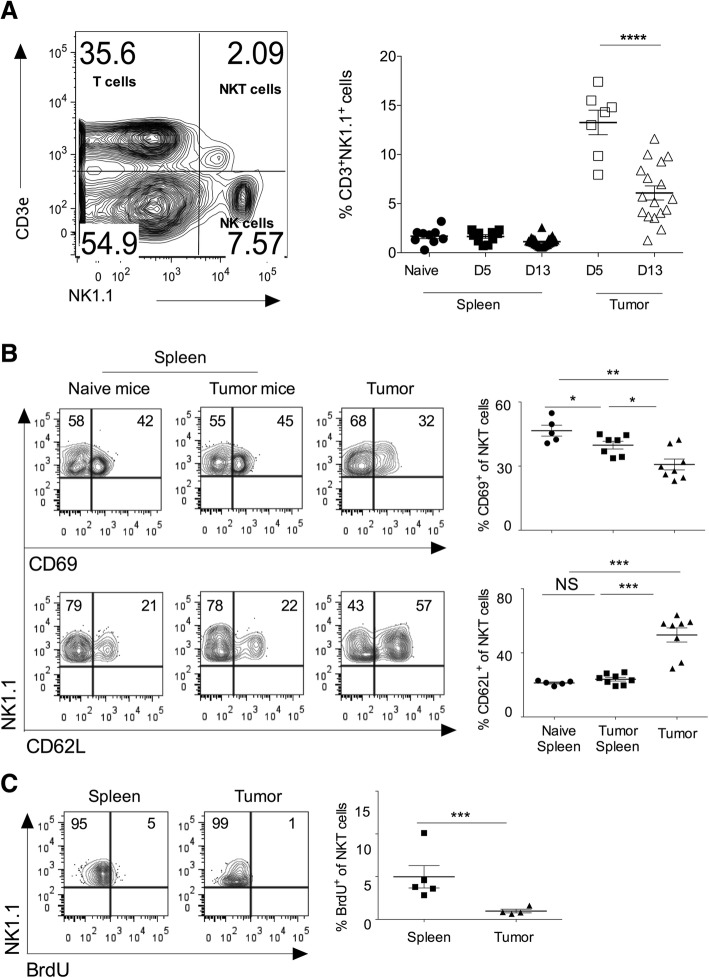
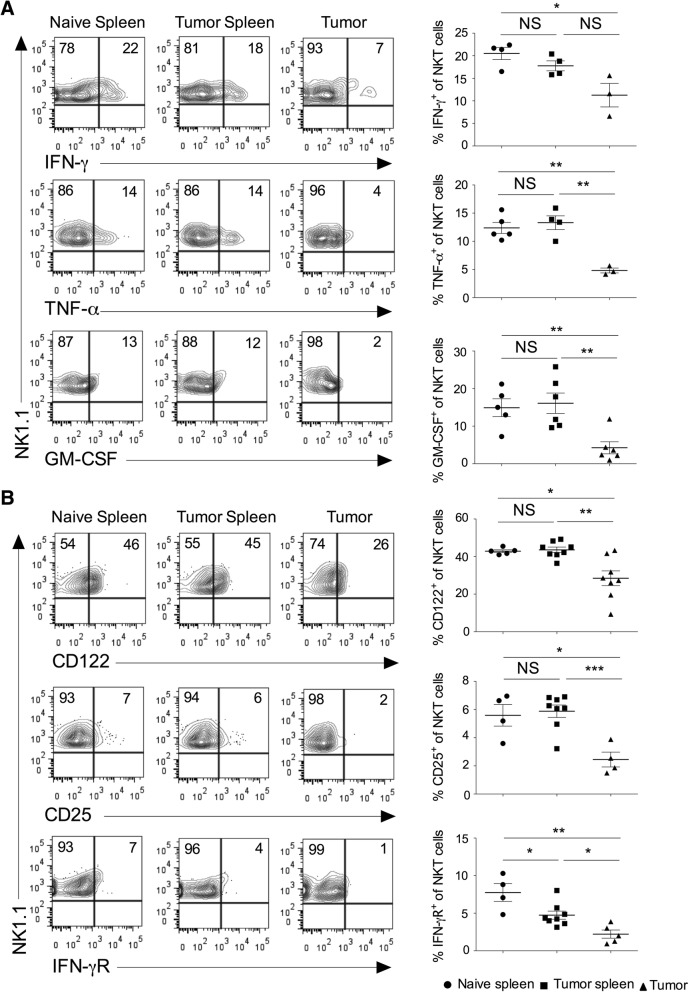
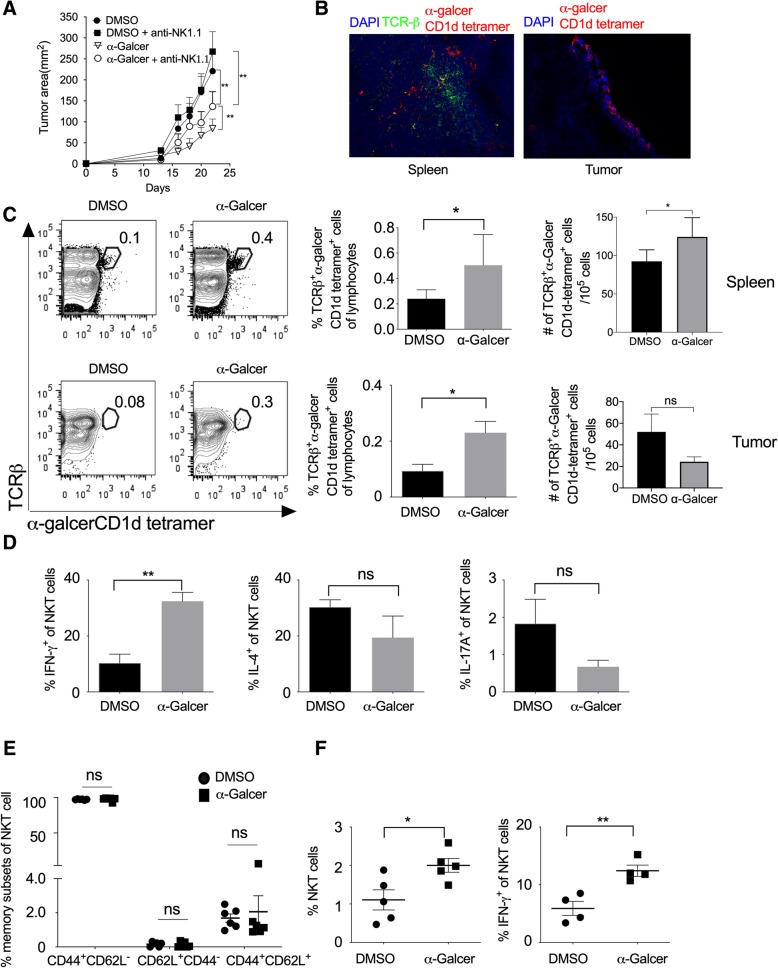
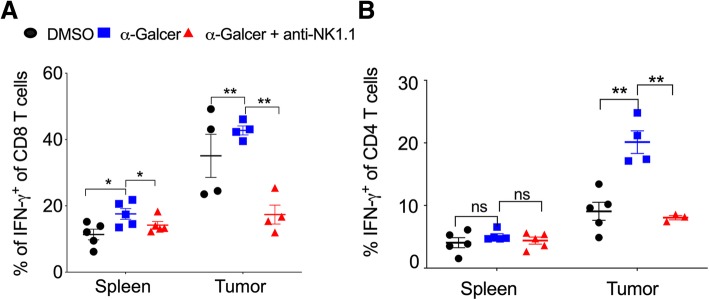
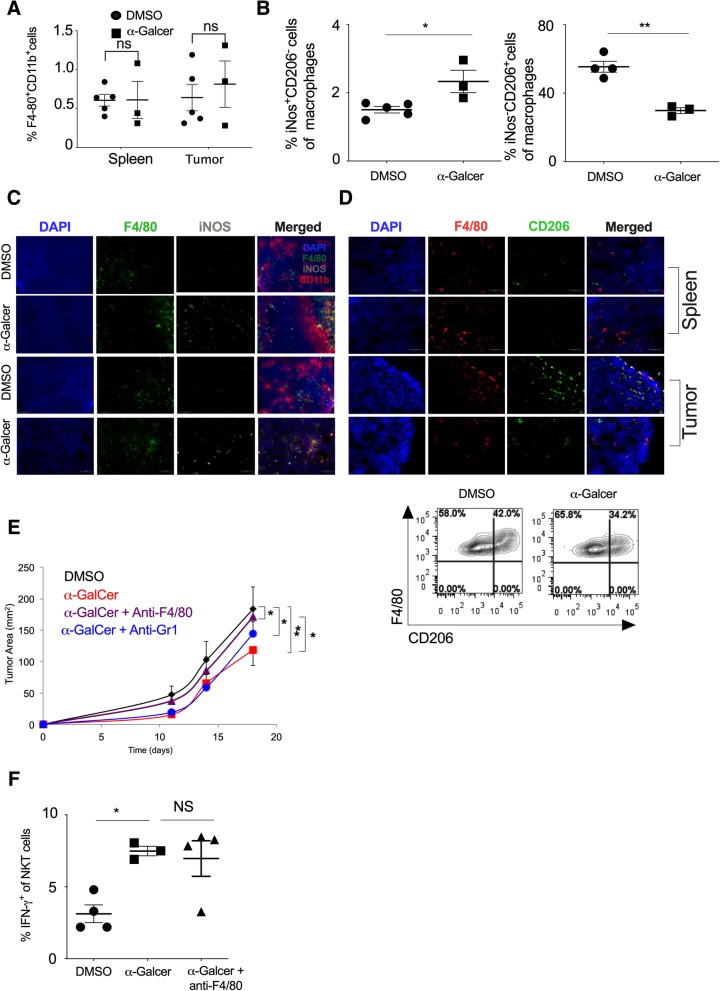
Background NKT cells play an important role in anti-tumor immunity. Alpha-galactosylceramide (α-GalCer), a synthetic glycolipid is presented to natural killer T (NKT) cells by most antigen-presenting cells through CD1d molecules leading to activation of NKT cells. However, the precise mechanisms of how α-GalCer-activated NKT regulate the polarization of the macrophages and effector T cells in the solid tumor are not studied adequately. Methods We induced solid tumor in C57BL/6 mice by subcutaneous injection of B16F10 cell line (1 X 10⁶ cells) and monitored the tumor growth. Animals were given an intraperitoneal injection of α-GalCer (2 μg/injection) in 200 μl PBS on day + 1, + 5, + 10, + 15, and + 20 (with respect to tumor cell injection). Immune cells were characterized using flow cytometry and immunofluorescence staining. NK cells, Gr1+ cells, and F4/80+ macrophages in the mice were depleted by intravenous injection of cell-specific antibodies. Statistical analysis was performed using Student’s t-test or one-way ANOVA. Results Our results showed that intratumoral NKT cells have a lower frequency of CD69, CD25, CD122, and IFN-γR expression; produced less inflammatory cytokines such as IFN-γ, TNF-α, and GM-CSF; higher frequency CD62L+ NKT cells; and also showed reduced proliferation as compared to the splenic NKT cells. Mice treated with α-GalCer showed a significantly increased frequency of IFN-γ-producing NKT cells, CD8+ T cells, and effector Th1 cells. Depletion of NK cells in α-GalCer-treated mice showed a lower frequency of IFN-γ-producing CD4+ and CD8+ T cells in the tumor and prevented the α-GalCer-induced tumor growth. NKT cell activation with α-GalCer treatment significantly increased the iNOS+CD206− M1-macrophages and reduced the iNOS−CD206+ M2-macrophages in the spleen and tumor, and depletion of F4/80+ macrophages prevented the α-GalCer-induced reduction in the tumor growth. Conclusions We showed that activation of NKT cell with α-GalCer modulates the frequency of M1-macrophages and effector Th1 cells in the secondary lymphoid tissues and tumor microenvironment and inhibit tumor growth. The finding suggests that activation of NKT cells with α-GalCer may provide an effective anti-cancer outcome.
Overview
The claims and statistics of this paper haven’t been checked yet.
Free: it reads the open-access text and checks the first 5 claims that cite a source we can check. Create a free account to check every claim.
Integrity signals
Registry
Cites
Statistics
Figures
Verification
Claims the paper makes
The claims and statistics of this paper haven’t been checked yet.
Free: it reads the open-access text and checks the first 5 claims that cite a source we can check. Create a free account to check every claim.
Claims other papers make about this one
Each is checked against this paper’s own text: does it say what the citing paper says it does?
The source backs part of the claim, not all of it — or backs it for a different population, condition or comparison.
In the citing paper
“iNOS is an intermediate metabolite of activated M1 macrophages involved in antibacterial-related biological processes (Orecchioni et al., 2019;Paul et al., 2019).”
From Nanosilver alleviates foreign body reaction and facilitates wound repair by regulating macrophage polarization (2023) · cites this paper as Paul et al., 2019
Experimental — accuracy not yet measured
Self-check
Percentages, sums and reported differences re-computed from the paper’s own numbers.
The self-check needs the paper’s full text.
Citations
Cites
From Monocytes to M1/M2 Macrophages: Phenotypical vs. Functional Differentiation
Italiani, P., & Boraschi, D. (2014) · Frontiers in Immunology · doi:10.3389/fimmu.2014.00514 · Cited by 2,067 · cited 2×
“In contrast, M2 macrophages secrete Th2-type cytokines such as IL4, IL-10, IL-13, and TGF-β, and show a pro-tumorigenic phenotype [21].”
BackgroundCD1 Recognition by Mouse NK1 + T Lymphocytes
Bendelac, A., Lantz, O., Quimby, M. E., Yewdell, J. W., Bennink, J. R., & Brutkiewicz, R. R. (1995) · Science · doi:10.1126/science.7538697 · Cited by 914
Going both ways: Immune regulation via CD1d-dependent NKT cells
Godfrey, D. I., & Kronenberg, M. (2004) · Journal of Clinical Investigation · doi:10.1172/jci200423594 · Cited by 877 · cited 1×
“tokines and modulates the function of several effectors and regulatory immune cells both in mice and humans [1, 2].”
BackgroundThe Molecular Mechanism of Natural Killer Cells Function and Its Importance in Cancer Immunotherapy
Paul, S., & Lal, G. (2017) · Frontiers in Immunology · doi:10.3389/fimmu.2017.01124 · Cited by 825
Self-citationIdentification of an IL-17–producing NK1.1neg iNKT cell population involved in airway neutrophilia
Michel, M.-L., Keller, A. C., Paget, C., Fujio, M., Trottein, F., Savage, P. B., Wong, C.-H., Schneider, E., Dy, M., & Leite-de-Moraes, M. C. (2007) · The Journal of Experimental Medicine · doi:10.1084/jem.20061551 · Cited by 617
Giaccone, G., Punt, C. J. A., Ando, Y., Ruijter, R., Nishi, N., Peters, M. E. W. J., Blomberg, B. M. E. V., Scheper, R. J., van der Vliet, H. J., van den Eertwegh, A. J. M., et al. (2002) · PubMed · Cited by 596
Kawano, T., Cui, J., Koezuka, Y., Toura, I., Kaneko, Y., Sato, H., Kondo, E., Harada, M., Koseki, H., Nakayama, T., et al. (1998) · Proceedings of the National Academy of Sciences · doi:10.1073/pnas.95.10.5690 · Cited by 476 · cited 2×
“Activation of NKT cells by α-GalCer is reported to inhibit the metastasis in B16F10-induced melanoma, colon carcinoma, and spontaneous sarcomas in p53 mice [16, 54, 55].”
BackgroundCoquet, J. M., Chakravarti, S., Kyparissoudis, K., McNab, F. W., Pitt, L. A., McKenzie, B. S., Berzins, S. P., Smyth, M. J., & Godfrey, D. I. (2008) · Proceedings of the National Academy of Sciences · doi:10.1073/pnas.0801631105 · Cited by 463
Glycolipid antigen induces long-term natural killer T cell anergy in mice
Parekh, V. V. (2005) · Journal of Clinical Investigation · doi:10.1172/jci24762 · Cited by 458
Dhodapkar, M. V., Geller, M. D., Chang, D. H., Shimizu, K., Fujii, S.-I., Dhodapkar, K. M., & Krasovsky, J. (2003) · The Journal of Experimental Medicine · doi:10.1084/jem.20021650 · Cited by 425
Differential antitumor immunity mediated by NKT cell subsets in vivo
Crowe, N. Y., Coquet, J. M., Berzins, S. P., Kyparissoudis, K., Keating, R., Pellicci, D. G., Hayakawa, Y., Godfrey, D. I., & Smyth, M. J. (2005) · The Journal of Experimental Medicine · doi:10.1084/jem.20050953 · Cited by 392
Smyth, M. J., Crowe, N. Y., Pellicci, D. G., Kyparissoudis, K., Kelly, J. M., Takeda, K., Yagita, H., & Godfrey, D. I. (2002) · Blood · doi:10.1182/blood.v99.4.1259 · Cited by 392 · cited 3×
“α-GalCer is known to stimulate the type-I NKT cells, which in turn activates and induce the proliferation of other leukocytes [19, 35, 36].”
BackgroundLoss of IFN-γ Production by Invariant NK T Cells in Advanced Cancer
Muhammad Ali Tahir, S., Cheng, O., Shaulov, A., Koezuka, Y., Bubley, G. J., Wilson, S. B., Balk, S. P., & Exley, M. A. (2001) · The Journal of Immunology · doi:10.4049/jimmunol.167.7.4046 · Cited by 386
NK cells and NKT cells collaborate in host protection from methylcholanthrene-induced fibrosarcoma
Smyth, M. J., Crowe, N. Y., & Godfrey, D. I. (2001) · International Immunology · doi:10.1093/intimm/13.4.459 · Cited by 379
NK cells and NKT cells collaborate in host protection from methylcholanthrene-induced fibrosarcoma
Smyth, M. J. (2008) · International Immunology · doi:10.1093/intimm/dxn028 · Cited by 377 · cited 1×
“α-GalCer is known to stimulate the type-I NKT cells, which in turn activates and induce the proliferation of other leukocytes [19, 35, 36].”
BackgroundIL-21 Is Produced by NKT Cells and Modulates NKT Cell Activation and Cytokine Production
Coquet, J. M., Kyparissoudis, K., Pellicci, D. G., Besra, G., Berzins, S. P., Smyth, M. J., & Godfrey, D. I. (2007) · The Journal of Immunology · doi:10.4049/jimmunol.178.5.2827 · Cited by 364
Vα24-invariant NKT cells mediate antitumor activity via killing of tumor-associated macrophages
Song, L., Asgharzadeh, S., Salo, J., Engell, K., Wu, H.-W., Sposto, R., Ara, T., Silverman, A. M., DeClerck, Y. A., Seeger, R. C., et al. (2009) · Journal of Clinical Investigation · doi:10.1172/jci37869 · Cited by 342
Tissue-Specific Distribution of iNKT Cells Impacts Their Cytokine Response
Lee, Y. J., Wang, H., Starrett, G. J., Phuong, V., Jameson, S. C., & Hogquist, K. A. (2015) · Immunity · doi:10.1016/j.immuni.2015.06.025 · Cited by 299
Tachibana, T., Onodera, H., Tsuruyama, T., Mori, A., Nagayama, S., Hiai, H., & Imamura, M. (2005) · Clinical Cancer Research · doi:10.1158/1078-0432.ccr-05-0877 · Cited by 295
Toura, I., Kawano, T., Akutsu, Y., et al. (1999) · PubMed · Cited by 260
Bellora, F., Castriconi, R., Dondero, A., Reggiardo, G., Moretta, L., Mantovani, A., Moretta, A., & Bottino, C. (2010) · Proceedings of the National Academy of Sciences · doi:10.1073/pnas.1007654108 · Cited by 246
Molling, J. W., Kölgen, W., van der Vliet, H. J. J., Boomsma, M. F., Kruizenga, H., Smorenburg, C. H., Molenkamp, B. G., Langendijk, J. A., Leemans, C. R., von Blomberg, B. M. E., et al. (2005) · International Journal of Cancer · doi:10.1002/ijc.20998 · Cited by 235
Trial watch: Prognostic and predictive value of the immune infiltrate in cancer
Senovilla, L., Vacchelli, E., Galon, J., Adjemian, S., Eggermont, A., Fridman, W. H., Sautès-Fridman, C., Ma, Y., Tartour, E., Zitvogel, L., et al. (2012) · OncoImmunology · doi:10.4161/onci.22009 · Cited by 235
Toura, I., Kawano, T., Akutsu, Y., Nakayama, T., Ochiai, T., & Taniguchi, M. (1999) · The Journal of Immunology · doi:10.4049/jimmunol.163.5.2387 · Cited by 235
Natural Killer T Cells in Cancer Immunotherapy
Nair, S., & Dhodapkar, M. V. (2017) · Frontiers in Immunology · doi:10.3389/fimmu.2017.01178 · Cited by 234
Development and Function of Invariant Natural Killer T Cells Producing TH2- and TH17-Cytokines
Watarai, H., Sekine-Kondo, E., Shigeura, T., Motomura, Y., Yasuda, T., Satoh, R., Yoshida, H., Kubo, M., Kawamoto, H., Koseki, H., et al. (2012) · PLoS Biology · doi:10.1371/journal.pbio.1001255 · Cited by 213
Ambrosino, E., Terabe, M., Halder, R. C., Peng, J., Takaku, S., Miyake, S., Yamamura, T., Kumar, V., & Berzofsky, J. A. (2007) · The Journal of Immunology · doi:10.4049/jimmunol.179.8.5126 · Cited by 207
Molling, J. W., Langius, J. A. E., Langendijk, J. A., Leemans, C. R., Bontkes, H. J., van der Vliet, H. J. J., von Blomberg, B. M. E., Scheper, R. J., & van den Eertwegh, A. J. M. (2007) · Journal of Clinical Oncology · doi:10.1200/jco.2006.08.5787 · Cited by 205
Parekh, V. V., Lalani, S., Kim, S., Halder, R., Azuma, M., Yagita, H., Kumar, V., Wu, L., & Van Kaer, L. (2009) · The Journal of Immunology · doi:10.4049/jimmunol.0803648 · Cited by 197
CD1d Ligands: The Good, the Bad, and the Ugly
Brutkiewicz, R. R. (2006) · The Journal of Immunology · doi:10.4049/jimmunol.177.2.769 · Cited by 184
Leite-de-Moraes, M. C., Hameg, A., Arnould, A., Machavoine, F., Koezuka, Y., Schneider, E., Herbelin, A., & Dy, M. (1999) · The Journal of Immunology · doi:10.4049/jimmunol.163.11.5871 · Cited by 177 · cited 1×
“in the absence of TCR engagement enhances the production of IFN-γ in NKT cells [34].”
BackgroundShimizu, K., Kurosawa, Y., Taniguchi, M., Steinman, R. M., & Fujii, S. (2007) · The Journal of Experimental Medicine · doi:10.1084/jem.20070458 · Cited by 177 · cited 1×
“response and provide long-lived immunity [56].”
CD62L+ NKT cells have prolonged persistence and antitumor activity in vivo
Tian, G., Courtney, A. N., Jena, B., Heczey, A., Liu, D., Marinova, E., Guo, L., Xu, X., Torikai, H., Mo, Q., et al. (2016) · Journal of Clinical Investigation · doi:10.1172/jci83476 · Cited by 173
Sequential activation of NKT cells and NK cells provides effective innate immunotherapy of cancer
Smyth, M. J., Wallace, M. E., Nutt, S. L., Yagita, H., Godfrey, D. I., & Hayakawa, Y. (2005) · The Journal of Experimental Medicine · doi:10.1084/jem.20042280 · Cited by 172
IL-15 Regulates Homeostasis and Terminal Maturation of NKT Cells
Gordy, L. E., Bezbradica, J. S., Flyak, A. I., Spencer, C. T., Dunkle, A., Sun, J., Stanic, A. K., Boothby, M. R., He, Y.-W., Zhao, Z., et al. (2011) · The Journal of Immunology · doi:10.4049/jimmunol.1003965 · Cited by 170
Type II NKT Cells and Their Emerging Role in Health and Disease
Dhodapkar, M. V., & Kumar, V. (2017) · The Journal of Immunology · doi:10.4049/jimmunol.1601399 · Cited by 165
Liu, D., Song, L., Wei, J., Courtney, A. N., Gao, X., Marinova, E., Guo, L., Heczey, A., Asgharzadeh, S., Kim, E., et al. (2012) · Journal of Clinical Investigation · doi:10.1172/jci59535 · Cited by 164
Novel Approaches to Exploiting Invariant NKT Cells in Cancer Immunotherapy
Wolf, B. J., Choi, J. E., & Exley, M. A. (2018) · Frontiers in Immunology · doi:10.3389/fimmu.2018.00384 · Cited by 152
α-Galactosylceramide (KRN7000) suppression of chemical- and oncogene-dependent carcinogenesis
Hayakawa, Y., Rovero, S., Forni, G., & Smyth, M. J. (2003) · Proceedings of the National Academy of Sciences · doi:10.1073/pnas.1630663100 · Cited by 150 · cited 1×
“Activation of NKT cells by α-GalCer is reported to inhibit the metastasis in B16F10-induced melanoma, colon carcinoma, and spontaneous sarcomas in p53 mice [16, 54, 55].”
BackgroundBaev, D. V., Peng, X.-H., Song, L., Barnhart, J. R., Crooks, G. M., Weinberg, K. I., & Metelitsa, L. S. (2004) · Blood · doi:10.1182/blood-2004-04-1629 · Cited by 136
Preserved IFN‐α production of circulating Vα24 NKT cells in primary lung cancer patients
Motohashi, S., Kobayashi, S., Ito, T., Magara, K. K., Mikuni, O., Kamada, N., Iizasa, T., Nakayama, T., Fujisawa, T., & Taniguchi, M. (2002) · International Journal of Cancer · doi:10.1002/ijc.10678 · Cited by 114
Human natural killer T cells acquire a memory-activated phenotype before birth
van der Vliet, H. J., Nishi, N., de Gruijl, T. D., Blomberg, B. M. E. V., van den Eertwegh, A. J. M., Pinedo, H. M., Giaccone, G., & Scheper, R. J. (2000) · Blood · doi:10.1182/blood.v95.7.2440 · Cited by 113
Enrichment of Human CD4+ Vα24/Vβ11 Invariant NKT Cells in Intrahepatic Malignant Tumors
Bricard, G., Cesson, V., Devevre, E., Bouzourene, H., Barbey, C., Rufer, N., Im, J. S., Alves, P. M., Martinet, O., Halkic, N., et al. (2009) · The Journal of Immunology · doi:10.4049/jimmunol.0711086 · Cited by 113
Arrenberg, P., Halder, R., Dai, Y., Maricic, I., & Kumar, V. (2010) · Proceedings of the National Academy of Sciences · doi:10.1073/pnas.1000576107 · Cited by 112
CD1d-dependent immune suppression mediated by regulatory B cells through modulations of iNKT cells
Oļeiņika, K., Rosser, E. C., Matei, D. E., Nistala, K., Bosma, A., Drozdov, I. A., & Mauri, C. (2018) · Nature Communications · doi:10.1038/s41467-018-02911-y · Cited by 103
Cortesi, F., Delfanti, G., Grilli, A., Calcinotto, A., Gorini, F., Pucci, F., Lucianò, R., Grioni, M., Recchia, A., Benigni, F., et al. (2018) · Cell Reports · doi:10.1016/j.celrep.2018.02.058 · Cited by 100
Paul, S., Kulkarni, N., Shilpi, & Lal, G. (2016) · OncoImmunology · doi:10.1080/2162402x.2016.1235106 · Cited by 85
Self-citationMechanisms of NKT cell anergy induction involve Cbl-b-promoted monoubiquitination of CARMA1
Kojo, S., Elly, C., Harada, Y., Langdon, W. Y., Kronenberg, M., & Liu, Y.-C. (2009) · Proceedings of the National Academy of Sciences · doi:10.1073/pnas.0904078106 · Cited by 75
Gebremeskel, S., Lobert, L. M., Tanner, K., Walker, B., Oliphant, T., Clarke, L. E., Dellaire, G., & Johnston, B. (2017) · Cancer Immunology Research · doi:10.1158/2326-6066.cir-17-0229 · Cited by 73
Modulation of human Vα24+Vβ11+ NKT cells by age, malignancy and conventional anticancer therapies
Crough, T., Purdie, D. M., Okai, M., Maksoud, A. E., Nieda, M., & Nicol, A. J. (2004) · British Journal of Cancer · doi:10.1038/sj.bjc.6602218 · Cited by 66
Loss of natural killer T cells promotes pancreatic cancer in LSL ‐KrasG12D/+ mice
Janakiram, N. B., Mohammed, A., Bryant, T., Ritchie, R. L., Stratton, N. C., Jackson, L. A., Lightfoot, S. A., Benbrook, D. M., Asch, A. S., Lang, M. L., et al. (2017) · Immunology · doi:10.1111/imm.12746 · Cited by 61 · cited 1×
“showed that Vα24NKT cells mediate the anti-tumor function by killing the tumor-associated macrophages [51], and loss of NKT cells promote pancreatic cancer in LSL mice through increase M2 macrophages phenotype [61].”
BackgroundMoreno, M., Molling, J. W., von Mensdorff‐Pouilly, S., Verheijen, R. H. M., Hooijberg, E., Kramer, D., Reurs, A. W., van den Eertwegh, A. J. M., Blomberg, B. M. E. V., Scheper, R. J., et al. (2008) · The Journal of Immunology · doi:10.4049/jimmunol.181.4.2446 · Cited by 60
Eger, K. A., Sundrud, M. S., Motsinger‐Reif, A. A., Tseng, M., Kaer, L. V., & Unutmaz, D. (2006) · PLoS ONE · doi:10.1371/journal.pone.0000050 · Cited by 58
Gasser, O., SHARPLES, K. J., Barrow, C., Williams, G. M., Bauer, E., Wood, C. E., Mester, B., Dzhelali, M., Caygill, G., Jones, J., et al. (2017) · Cancer Immunology Immunotherapy · doi:10.1007/s00262-017-2085-9 · Cited by 58 · cited 1×
“NKT cell-derived IFNγ has been reported to promote antigen-specific CD8 T cell response in melanoma patients [23, 53].”
BackgroundGhinnagow, R., Meester, J. D., Cruz, L. J., Aspord, C., Corgnac, S., Fernandez, É. M., Soulard, D., Fontaine, J., Chaperot, L., Charles, J., et al. (2017) · OncoImmunology · doi:10.1080/2162402x.2017.1339855 · Cited by 51
Control of NKT Cell Differentiation by Tissue-Specific Microenvironments
Yang, Y., Ueno, A., Bao, M., Wang, Z., Im, J. S., Porcelli, S. A., & Yoon, J.-W. (2003) · The Journal of Immunology · doi:10.4049/jimmunol.171.11.5913 · Cited by 48
Chennamadhavuni, D., Saavedra-Ávila, N. A., Carreño, L. J., Guberman‐Pfeffer, M. J., Arora, P., Yongqing, T., Pryce, R., Koay, H., Godfrey, D. I., Keshipeddy, S. K., et al. (2018) · Cell chemical biology · doi:10.1016/j.chembiol.2018.02.009 · Cited by 45
Invariant NKT Cells as Novel Targets for Immunotherapy in Solid Tumors
Pilones, K. A., Aryankalayil, J., & Demaria, S. (2012) · Clinical and Developmental Immunology · doi:10.1155/2012/720803 · Cited by 39
Lin, H., Nieda, M., & Nicol, A. J. (2004) · European Journal of Immunology · doi:10.1002/eji.200324834 · Cited by 38
Dashtsoodol, N., Shigeura, T., Tashiro, T., Aihara, M., Chikanishi, T., Okada, H., Hanada, K., Sano, H., Kurogi, A., & Taniguchi, M. (2017) · Frontiers in Immunology · doi:10.3389/fimmu.2017.01206 · Cited by 22
Melo, A. M., Zhang, L., Dockry, É., Petrasca, A., Ghnewa, Y. G., Breen, E. P., Morrissey, M. E., O’Reilly, C., Bruen, R., O’Meara, A., et al. (2018) · Glycobiology · doi:10.1093/glycob/cwy035 · Cited by 16
Zhang, L., & Donda, A. (2017) · Frontiers in Immunology · doi:10.3389/fimmu.2017.01417 · Cited by 14
Molling, J. W., Moreno, M., de Groot, J., van der Vliet, H. J., Blomberg, B. M. E. V., van den Eertwegh, A. J. M., Scheper, R. J., & Bontkes, H. J. (2008) · Immunology Letters · doi:10.1016/j.imlet.2008.02.007 · Cited by 13
Cited by
Roles of IFN-γ in tumor progression and regression: A review
Jorgovanovic, D., Song, M., Wang, L., & Zhang, Y. (2020) · Biomarker Research · doi:10.1186/s40364-020-00228-x · Cited by 1,234
“Additionally, in the TME, IFN-γ produced by cytotoxic immune cells increased the number of iNOSCD206M1macrophages that led to reduced tumor growth [49].”
BackgroundDual roles and therapeutic targeting of tumor-associated macrophages in tumor microenvironments
Xu, J., Ding, L., Mei, J., Hu, Y., Kong, X., Dai, S., Bu, T., Xiao, Q., & Ding, K. (2025) · Signal Transduction and Targeted Therapy · doi:10.1038/s41392-025-02325-5 · Cited by 389
“138 iNOS(+)CD206(-) M1-type macrophages have been shown to be correlated with a favorable prognosis in a variety of tumors, such as breast, lung, ovarian, and gastric cancers.”
Crosstalk of Inflammatory Cytokines within the Breast Tumor Microenvironment
Habanjar, O., Bingula, R., Decombat, C., Diab-Assaf, M., Caldefie-Chezet, F., & Delort, L. (2023) · International Journal of Molecular Sciences · doi:10.3390/ijms24044002 · Cited by 263
Macrophage polarization in the tumor microenvironment: Emerging roles and therapeutic potentials
Zhang, W., Wang, M., Ji, C., Liu, X., Gu, B., & Dong, T. (2024) · Biomedicine & Pharmacotherapy · doi:10.1016/j.biopha.2024.116930 · Cited by 178
Role of serotonin receptor signaling in cancer cells and anti-tumor immunity
Karmakar, S., & Lal, G. (2021) · Theranostics · doi:10.7150/thno.55986 · Cited by 196
“While inducible nitric oxdide synthase (iNOS)+ M1 macrophages show pro-inflammatory properties [25, 26], M2 macrophages play a substantial role in the suppression of inflammation.”
BackgroundSelf-citation
Metadata
- Authors
- Paul, S., Chhatar, S., Mishra, A., & Lal, G.
- Affiliations
- National Centre for Cell Science (IN)
- Corresponding author
- Lal, Girdhari
- Venue
- Journal for ImmunoTherapy of Cancer
- Publisher
- BMJ
- Published
- 2019-08-06
- Volume
- 7
- Issue
- 1
- Pages
- 208-208
- ISSN
- 2051-1426 (ISSN-L)
- PMC
- PMC6685184
- OpenAlex
- W2964572246
- Cited by
- 150
- References
- 64
- Citations by year
- 2026: 15 · 2025: 32 · 2024: 27 · 2023: 27 · 2022: 22 · 2021: 21 · 2020: 5 · 2019: 1
- FWCI
- 4.89
- Type
- journal article
- Language
- en
- Open access
- gold
- doi.org
- Licence
- cc-by
- creativecommons.org/licenses/by/4.0/ (tdm)
- Locations
- Journal for ImmunoTherapy of Cancer (publishedVersion, cc-by)
- Europe PMC (PubMed Central) (publishedVersion, cc-by)
- PubMed Central (publishedVersion, cc-by)
- PubMed (publishedVersion)
- DOAJ (DOAJ: Directory of Open Access Journals) (submittedVersion, cc-by-sa)
- Funders
- Science and Engineering Research Board (EMR/2016/007108)
- Topics
- Life Sciences › Immunology and Microbiology › Immunology › Immunotherapy and Immune Responses
- Life Sciences › Immunology and Microbiology › Immunology › Immune cells in cancer
- Health Sciences › Medicine › Oncology › Cancer Immunotherapy and Biomarkers
- Keywords
- NKT cells, alpha-galactosylceramide, CD1d, macrophage polarization, M1 macrophages, M2 macrophages, inducible nitric oxide synthase, CD206, tumor growth, antitumor immunity, NK cell depletion, CD8+ T cells, Th1 cells, interferon-gamma, B16F10 melanoma
- MeSH terms
- Mannose Receptor, Animals, Lymphocyte Activation, Macrophages, Male, Melanoma, Experimental, Mice, Inbred C57BL, Receptors, Cell Surface, Lectins, C-Type, Mannose-Binding Lectins, Mice, Nitric Oxide Synthase Type II, Natural Killer T-Cells, Tumor Microenvironment
About these checks
Registry, retraction, Cites and statistics results are computed, not judged, with one exception: a printed reference that no index lists is read once by a model before it counts as a citation error. Claims are extracted by a model and kept only when their quote appears verbatim in the text; each cited source is then checked, with a model’s help, for whether it says what the claim relies on. Those verdicts can be wrong — read the claim’s quote and the cited source before relying on one.
Statistics and arithmetic are recomputed, not judged.
Confidence bands are shown only for fields calibrated on our annotated test set. None is calibrated yet, so no band is shown.
What counts as a claim ›How we measure confidence ›How we check this ›
Are you an author, or do you see a problem with this page? Request a review
Data sources
Bibliographic data: Semantic Scholar, OpenAlex, Crossref.
Contains information from the Semantic Scholar Academic Graph Datasets, made available under the ODC Attribution License (ODC-BY 1.0).
Semantic Scholar’s data is described in: Kinney, R., et al. (2023). The Semantic Scholar Open Data Platform. arXiv:2301.10140.
