

Natural killer T cell activation increases iNOS+CD206- M1 macrophage and controls the growth of solid tumor
Open accessThe DOI matches its Crossref record; 63 of the 64 references it cites were found in a registry or an index.
Abstract
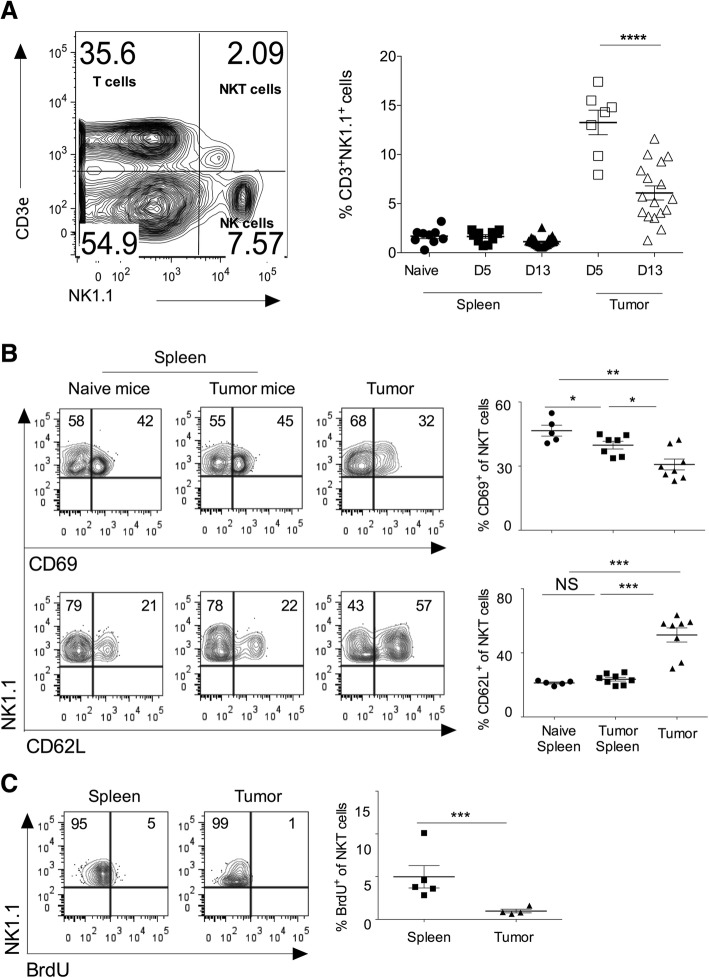
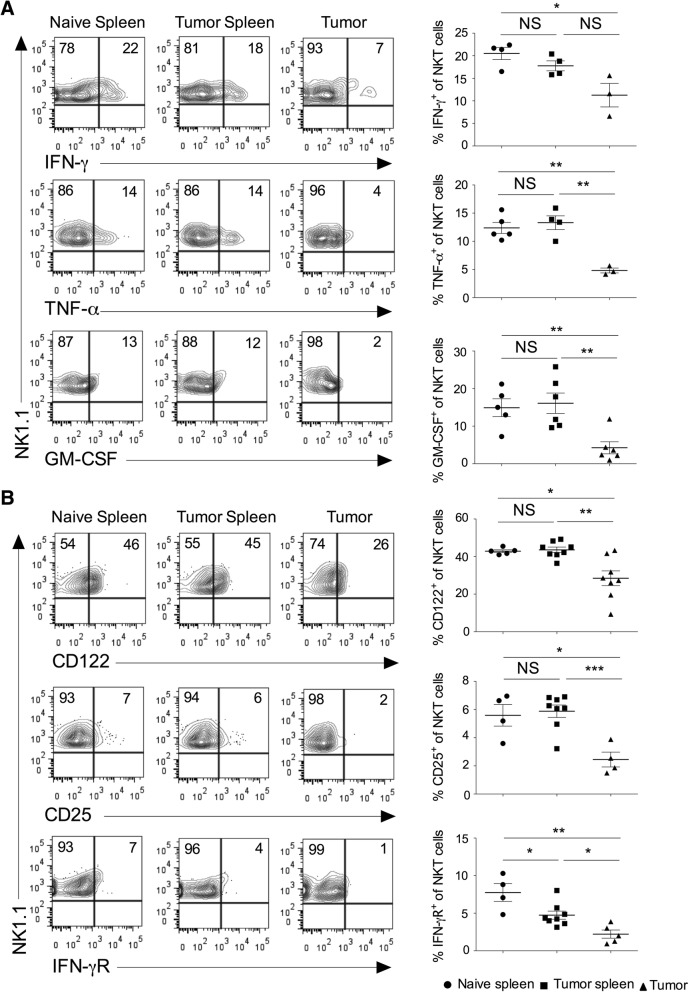
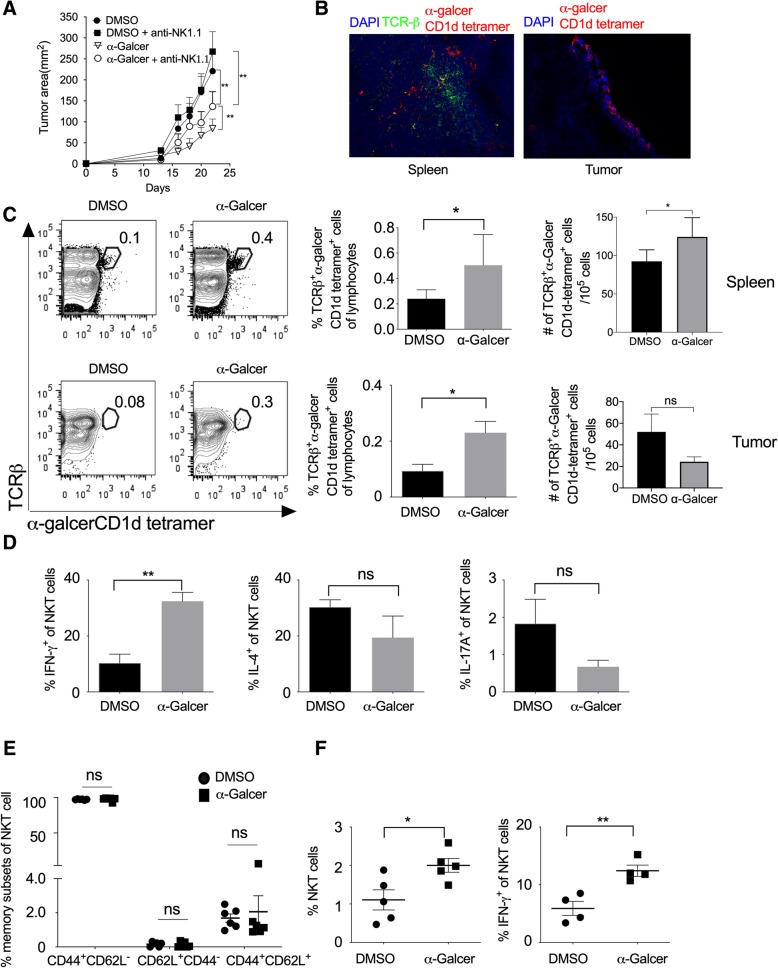
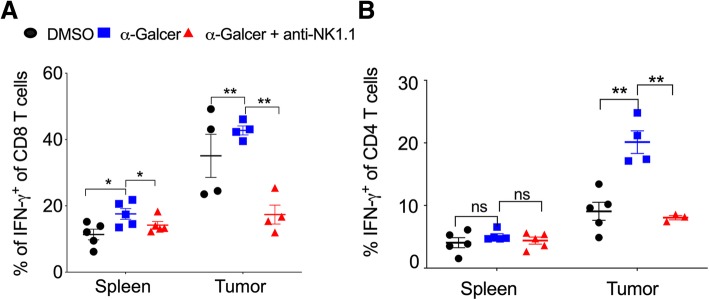
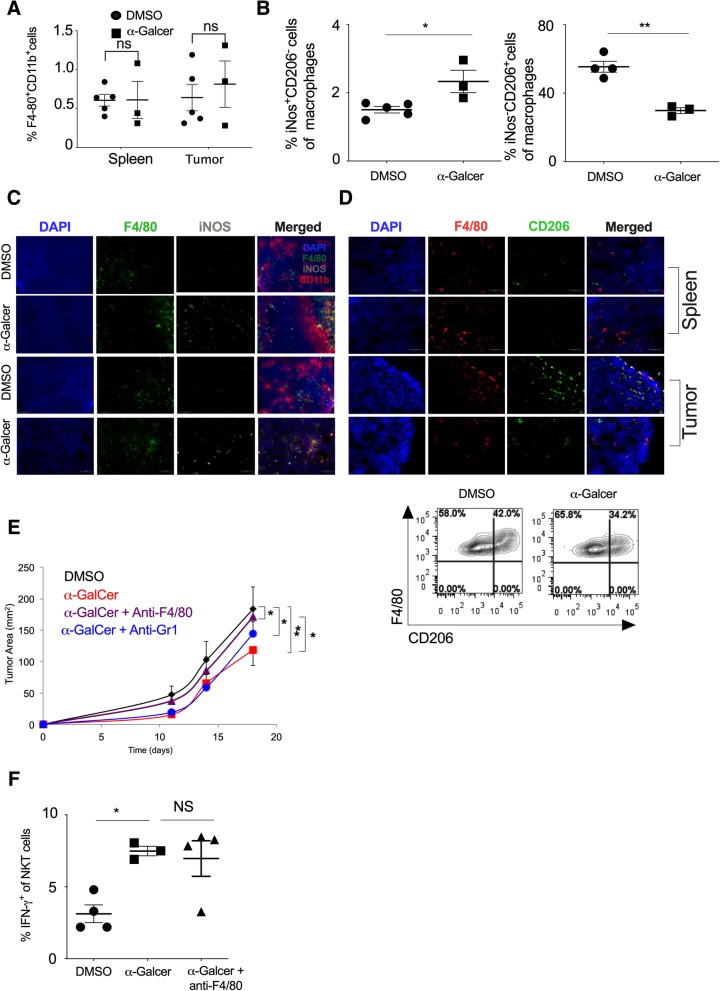
Background NKT cells play an important role in anti-tumor immunity. Alpha-galactosylceramide (α-GalCer), a synthetic glycolipid is presented to natural killer T (NKT) cells by most antigen-presenting cells through CD1d molecules leading to activation of NKT cells. However, the precise mechanisms of how α-GalCer-activated NKT regulate the polarization of the macrophages and effector T cells in the solid tumor are not studied adequately. Methods We induced solid tumor in C57BL/6 mice by subcutaneous injection of B16F10 cell line (1 X 10⁶ cells) and monitored the tumor growth. Animals were given an intraperitoneal injection of α-GalCer (2 μg/injection) in 200 μl PBS on day + 1, + 5, + 10, + 15, and + 20 (with respect to tumor cell injection). Immune cells were characterized using flow cytometry and immunofluorescence staining. NK cells, Gr1+ cells, and F4/80+ macrophages in the mice were depleted by intravenous injection of cell-specific antibodies. Statistical analysis was performed using Student’s t-test or one-way ANOVA. Results Our results showed that intratumoral NKT cells have a lower frequency of CD69, CD25, CD122, and IFN-γR expression; produced less inflammatory cytokines such as IFN-γ, TNF-α, and GM-CSF; higher frequency CD62L+ NKT cells; and also showed reduced proliferation as compared to the splenic NKT cells. Mice treated with α-GalCer showed a significantly increased frequency of IFN-γ-producing NKT cells, CD8+ T cells, and effector Th1 cells. Depletion of NK cells in α-GalCer-treated mice showed a lower frequency of IFN-γ-producing CD4+ and CD8+ T cells in the tumor and prevented the α-GalCer-induced tumor growth. NKT cell activation with α-GalCer treatment significantly increased the iNOS+CD206− M1-macrophages and reduced the iNOS−CD206+ M2-macrophages in the spleen and tumor, and depletion of F4/80+ macrophages prevented the α-GalCer-induced reduction in the tumor growth. Conclusions We showed that activation of NKT cell with α-GalCer modulates the frequency of M1-macrophages and effector Th1 cells in the secondary lymphoid tissues and tumor microenvironment and inhibit tumor growth. The finding suggests that activation of NKT cells with α-GalCer may provide an effective anti-cancer outcome.
Overview
The claims and statistics of this paper haven’t been checked yet.
Free: it reads the open-access text and checks the first 5 claims that cite a source we can check. Create a free account to check every claim.
Integrity signals
Registry
Cites
Statistics
Figures
Verification
Claims the paper makes
The claims and statistics of this paper haven’t been checked yet.
Free: it reads the open-access text and checks the first 5 claims that cite a source we can check. Create a free account to check every claim.
Claims other papers make about this one
Each is checked against this paper’s own text: does it say what the citing paper says it does?
The source backs part of the claim, not all of it — or backs it for a different population, condition or comparison.
In the citing paper
“iNOS is an intermediate metabolite of activated M1 macrophages involved in antibacterial-related biological processes (Orecchioni et al., 2019;Paul et al., 2019).”
From Nanosilver alleviates foreign body reaction and facilitates wound repair by regulating macrophage polarization (2023) · cites this paper as Paul et al., 2019
Experimental — accuracy not yet measured
Self-check
Percentages, sums and reported differences re-computed from the paper’s own numbers.
The self-check needs the paper’s full text.
Citations
Cites
From Monocytes to M1/M2 Macrophages: Phenotypical vs. Functional Differentiation
Italiani, P., & Boraschi, D. (2014) · Frontiers in Immunology · doi:10.3389/fimmu.2014.00514 · Cited by 2,067 · cited 2×
“In contrast, M2 macrophages secrete Th2-type cytokines such as IL4, IL-10, IL-13, and TGF-β, and show a pro-tumorigenic phenotype [21].”
BackgroundCD1 Recognition by Mouse NK1 + T Lymphocytes
Bendelac, A., Lantz, O., Quimby, M. E., Yewdell, J. W., Bennink, J. R., & Brutkiewicz, R. R. (1995) · Science · doi:10.1126/science.7538697 · Cited by 914
Going both ways: Immune regulation via CD1d-dependent NKT cells
Godfrey, D. I., & Kronenberg, M. (2004) · Journal of Clinical Investigation · doi:10.1172/jci200423594 · Cited by 877 · cited 1×
“tokines and modulates the function of several effectors and regulatory immune cells both in mice and humans [1, 2].”
BackgroundThe Molecular Mechanism of Natural Killer Cells Function and Its Importance in Cancer Immunotherapy
Paul, S., & Lal, G. (2017) · Frontiers in Immunology · doi:10.3389/fimmu.2017.01124 · Cited by 825
Self-citationIdentification of an IL-17–producing NK1.1neg iNKT cell population involved in airway neutrophilia
Michel, M.-L., Keller, A. C., Paget, C., Fujio, M., Trottein, F., Savage, P. B., Wong, C.-H., Schneider, E., Dy, M., & Leite-de-Moraes, M. C. (2007) · The Journal of Experimental Medicine · doi:10.1084/jem.20061551 · Cited by 617
Giaccone, G., Punt, C. J. A., Ando, Y., Ruijter, R., Nishi, N., Peters, M. E. W. J., Blomberg, B. M. E. V., Scheper, R. J., van der Vliet, H. J., van den Eertwegh, A. J. M., et al. (2002) · PubMed · Cited by 596
Kawano, T., Cui, J., Koezuka, Y., Toura, I., Kaneko, Y., Sato, H., Kondo, E., Harada, M., Koseki, H., Nakayama, T., et al. (1998) · Proceedings of the National Academy of Sciences · doi:10.1073/pnas.95.10.5690 · Cited by 476 · cited 2×
“Activation of NKT cells by α-GalCer is reported to inhibit the metastasis in B16F10-induced melanoma, colon carcinoma, and spontaneous sarcomas in p53 mice [16, 54, 55].”
BackgroundCoquet, J. M., Chakravarti, S., Kyparissoudis, K., McNab, F. W., Pitt, L. A., McKenzie, B. S., Berzins, S. P., Smyth, M. J., & Godfrey, D. I. (2008) · Proceedings of the National Academy of Sciences · doi:10.1073/pnas.0801631105 · Cited by 463
Glycolipid antigen induces long-term natural killer T cell anergy in mice
Parekh, V. V. (2005) · Journal of Clinical Investigation · doi:10.1172/jci24762 · Cited by 458
Dhodapkar, M. V., Geller, M. D., Chang, D. H., Shimizu, K., Fujii, S.-I., Dhodapkar, K. M., & Krasovsky, J. (2003) · The Journal of Experimental Medicine · doi:10.1084/jem.20021650 · Cited by 425
Cited by
Roles of IFN-γ in tumor progression and regression: A review
Jorgovanovic, D., Song, M., Wang, L., & Zhang, Y. (2020) · Biomarker Research · doi:10.1186/s40364-020-00228-x · Cited by 1,234
“Additionally, in the TME, IFN-γ produced by cytotoxic immune cells increased the number of iNOSCD206M1macrophages that led to reduced tumor growth [49].”
BackgroundDual roles and therapeutic targeting of tumor-associated macrophages in tumor microenvironments
Xu, J., Ding, L., Mei, J., Hu, Y., Kong, X., Dai, S., Bu, T., Xiao, Q., & Ding, K. (2025) · Signal Transduction and Targeted Therapy · doi:10.1038/s41392-025-02325-5 · Cited by 389
“138 iNOS(+)CD206(-) M1-type macrophages have been shown to be correlated with a favorable prognosis in a variety of tumors, such as breast, lung, ovarian, and gastric cancers.”
Crosstalk of Inflammatory Cytokines within the Breast Tumor Microenvironment
Habanjar, O., Bingula, R., Decombat, C., Diab-Assaf, M., Caldefie-Chezet, F., & Delort, L. (2023) · International Journal of Molecular Sciences · doi:10.3390/ijms24044002 · Cited by 263
Macrophage polarization in the tumor microenvironment: Emerging roles and therapeutic potentials
Zhang, W., Wang, M., Ji, C., Liu, X., Gu, B., & Dong, T. (2024) · Biomedicine & Pharmacotherapy · doi:10.1016/j.biopha.2024.116930 · Cited by 178
Role of serotonin receptor signaling in cancer cells and anti-tumor immunity
Karmakar, S., & Lal, G. (2021) · Theranostics · doi:10.7150/thno.55986 · Cited by 196
“While inducible nitric oxdide synthase (iNOS)+ M1 macrophages show pro-inflammatory properties [25, 26], M2 macrophages play a substantial role in the suppression of inflammation.”
BackgroundSelf-citationCD8+ T cell exhaustion and cancer immunotherapy
Wang, Q., Qin, Y., & Li, B. (2023) · Cancer Letters · doi:10.1016/j.canlet.2022.216043 · Cited by 155
The Current Landscape of NKT Cell Immunotherapy and the Hills Ahead
Nelson, A., Lukacs, J., & Johnston, B. (2021) · Cancers · doi:10.3390/cancers13205174 · Cited by 133
Ou, Z., Wei, J., Lei, J., Wu, D., Tong, B., Liang, H., Zhu, D., Wang, H., Zhou, X., Xu, H., et al. (2024) · Nature Communications · doi:10.1038/s41467-024-54894-8 · Cited by 96
Ultra-high dose-rate proton FLASH improves tumor control
Shukla, S., Saha, T., Rama, N., Acharya, A., Le, T. T., Bian, F., Donovan, J., Tan, L. A., Vatner, R. E., Kalinichenko, V. V., et al. (2023) · Radiotherapy and Oncology · doi:10.1016/j.radonc.2023.109741 · Cited by 86
Xu, T., Yu, S., Zhang, J., & Wu, S. (2021) · Journal of Hematology & Oncology · doi:10.1186/s13045-021-01198-9 · Cited by 77
Zhang, C., Hu, Y., Xiao, W., & Tian, Z. (2021) · Cellular and Molecular Immunology · doi:10.1038/s41423-021-00732-6 · Cited by 84
Crosstalk between macrophages and natural killer cells in the tumor microenvironment
Zhou, J., Zhang, S., & Guo, C. (2021) · International Immunopharmacology · doi:10.1016/j.intimp.2021.108374 · Cited by 81
Xie, J., Hong, E., Ding, B., Jiang, W., Zheng, S., Xie, Z., Tian, D., & Chen, Y. (2020) · Frontiers in Cellular Neuroscience · doi:10.3389/fncel.2020.578060 · Cited by 76
“Immunofluorescence staining was performed as previously described (Paul et al., 2019).”
MethodLeishmaniasis: Immune Cells Crosstalk in Macrophage Polarization
Almeida, F. S., Vanderley, S. E. R., Comberlang, F. C., de Andrade, A. G., Silva, L. H. A. C., Silva, E. D. S., Palmeira, P. H. D. S., do Amaral, I. P. G., & Keesen, T. S. L. (2023) · Tropical Medicine and Infectious Disease · doi:10.3390/tropicalmed8050276 · Cited by 76
Matrix stiffness regulates macrophage polarization in atherosclerosis
Wang, Y., Shi, R., Zhai, R., Yang, S., Peng, T., Zheng, F., Shen, Y., Li, M., & Li, L. (2022) · Pharmacological Research · doi:10.1016/j.phrs.2022.106236 · Cited by 74
Targeting macrophages in cancer immunotherapy: Frontiers and challenges
Liu, Y., Tan, H., Dai, J., Lin, J., Zhao, K., Hu, H., & Zhong, C. (2025) · Journal of Advanced Research · doi:10.1016/j.jare.2024.12.043 · Cited by 67
“For example, the activation of Natural Killer T cells increases M1 macrophages and effector Th1 cells in tumor microenvironment and inhibits tumor growth [38].”
Chen, S., Wang, Y., Dang, J., Song, N., Chen, X., Wang, J., Huang, G. N., Brown, C. E., Yu, J., Weissman, I. L., et al. (2025) · Nature Communications · doi:10.1038/s41467-025-59326-9 · Cited by 66
Li, M., Jiang, P., Wei, S., Wang, J., & Li, C. (2023) · Frontiers in Immunology · doi:10.3389/fimmu.2023.1113312 · Cited by 60
Cancer cell-derived type I interferons instruct tumor monocyte polarization
Kwart, D., He, J., Srivatsan, S., Lett, C., Golubov, J., Oswald, E. M., Poon, P., Ye, X., Waite, J. C., Zaretsky, A. G., et al. (2022) · Cell Reports · doi:10.1016/j.celrep.2022.111769 · Cited by 55
Liu, J., Nie, S., Wu, Z., Jiang, Y., Wan, Y., Li, S., Meng, H., Zhou, S., & Cheng, W. (2020) · Genomics · doi:10.1016/j.ygeno.2020.05.022 · Cited by 55
An Aggrephagy-Related LncRNA Signature for the Prognosis of Pancreatic Adenocarcinoma
Huang, X., Chi, H., Gou, S., Guo, X., Li, L., Peng, G., Zhang, J., Xu, J., Nian, S., & Yuan, Q. (2023) · Genes · doi:10.3390/genes14010124 · Cited by 54
Hammond, T., Purbhoo, M. A., Kadel, S., Ritz, J., Nikiforow, S., Daley, H., Shaw, K. L., van Besien, K., Gomez-Arteaga, A., Stevens, D. A., et al. (2024) · Nature Communications · doi:10.1038/s41467-024-44905-z · Cited by 49
Li, T., Xu, H., Xu, Y., Yu, T., Tang, J., Li, K., Wang, C., Peng, X., Li, Q., Sang, X., et al. (2021) · Molecular Pharmaceutics · doi:10.1021/acs.molpharmaceut.1c00510 · Cited by 45
Chen, Z., Wu, J., Wang, L., Zhao, H., & He, J. (2022) · Medical Oncology · doi:10.1007/s12032-022-01670-7 · Cited by 47
“In brief, M1-TAMs express a large amount of inducible nitric oxide synthase (iNOS) and tumor necrosis factor (TNF)-α, and exert anti-tumor activity by promoting pro-inflammatory effect and immune response [7].”
BackgroundDa, J., Li, Y., Zhang, K., Ren, J., Wang, J., Liu, X., Liu, X., Zhang, J., Liu, L., Zhang, W., et al. (2022) · International Journal of Nanomedicine · doi:10.2147/ijn.s385899 · Cited by 45
“These two phenotypes have different roles in the immune system.(15,16) M2 activation is accompanied by reduced ROS production compared with M1 macrophages.”
BackgroundVackova, J., Poláková, I., Johari, S. D., & Šmahel, M. (2021) · Cancers · doi:10.3390/cancers13081935 · Cited by 39
Feng, Z., Chen, Y., Cai, C., Tan, J., Liu, P., Chen, Y., Shen, H., Zeng, S., & Han, Y. (2022) · Frontiers in Immunology · doi:10.3389/fimmu.2022.916594 · Cited by 62
Macrophages in melanoma: A double‑edged sword and targeted therapy strategies (Review)
Zhou, Q., Fang, T., Wei, S., Chai, S., Yang, H., Tao, M., & Cao, Y. (2022) · Experimental and Therapeutic Medicine · doi:10.3892/etm.2022.11577 · Cited by 39
“However, the activation of natural killer T cells promotes the polarization of M1‐TAMs, inhibiting the growth of melanoma (52).”
BackgroundDing, B., Xie, C.-N., Xie, J., Gao, Z., Fei, X., Hong, E., Chen, W., & Chen, Y. (2022) · Neural Regeneration Research · doi:10.4103/1673-5374.360249 · Cited by 37
“Immunofluorescence staining Immunofluorescence staining was performed as previously (Paul et al., 2019).”
MethodZou, C., Liu, X., Wang, W., He, L., Yin, A., Cao, Z., Zhu, M., Wu, Y., Liu, X., Ma, J., et al. (2025) · Journal of Nanobiotechnology · doi:10.1186/s12951-025-03182-8 · Cited by 33
Lv, Q., Pan, X., Wang, D., Rong, Q., Ma, B., Xie, X., Zhang, Y., Wang, J., & Hu, L. (2021) · Journal of Medicinal Chemistry · doi:10.1021/acs.jmedchem.1c01184 · Cited by 32
Liu, C., Zhou, C., Xia, W., Zhou, Y., Qiu, Y., Weng, J., Zhou, Q., Chen, W., Wang, Y., Lee, H., et al. (2024) · Nature Communications · doi:10.1038/s41467-024-45215-0 · Cited by 38
MicroRNA Let-7 Induces M2 Macrophage Polarization in COPD Emphysema Through the IL-6/STAT3 Pathway
Liu, T., Zhang, Z., Shen, W., Wu, Y., & Bian, T. (2023) · International Journal of COPD · doi:10.2147/copd.s404850 · Cited by 29
“The fluorescent staining of CD68+ cells (total macrophages), iNOS+CD68+ cells (M1 macrophages) 27,28 and CD206+CD68+ cells (M2 macrophages) 29 was observed by a fluorescence microscope.”
Comprehensive Landscape of RRM2 with Immune Infiltration in Pan-Cancer
Zhou, Z., Song, Q., Yang, Y., Wang, L., & Wu, Z. (2022) · Cancers · doi:10.3390/cancers14122938 · Cited by 30
Jing, Z.-L., Liu, G., Zhou, N., Xu, D.-Y., Feng, N., Lei, Y., Ma, L., Tang, M., Tong, G., Tang, N., et al. (2024) · Scientific Reports · doi:10.1038/s41598-024-56681-3 · Cited by 28
The Role of NKT Cells in Glioblastoma
Brettschneider, E. E. S., & Terabe, M. (2021) · Cells · doi:10.3390/cells10071641 · Cited by 28
Proctor, M. A., Cruz, J. L. G., Daignault, S. M., Veitch, M., Zeng, B., Ehmann, A., Sabdia, M. B., Snell, C. E., Keane, C., Dolcetti, R., et al. (2021) · Cancers · doi:10.3390/cancers13153733 · Cited by 27
Tumor immunotherapy: Mechanisms and clinical applications
Nong, C., Guan, P., Li, L., Zhang, H., & Hu, H. (2022) · MedComm – Oncology · doi:10.1002/mog2.8 · Cited by 30
Zhu, J., Fan, J., Xia, Y., Wang, H., Li, Y., Feng, Z., & Fu, C. (2023) · Frontiers in Immunology · doi:10.3389/fimmu.2023.1219487 · Cited by 32
“The aberrant accumulation of M1 macrophages can regulate immune responses and tissue damage by affecting the activation and function of T cells (45, 46).”
BackgroundZhang, Y., Dai, J., Hang, R., Yao, X., Bai, L., Wang, H., Huang, D., & Hang, R. (2024) · Biomaterials Advances · doi:10.1016/j.bioadv.2024.214010 · Cited by 26
Yi, Q., Wang, J., Liu, T., Yao, Y., Loveless, I. M., Subedi, K., Toor, J. S., Adrianto, I., Xiao, H. F., Chen, B., et al. (2023) · Cancer Letters · doi:10.1016/j.canlet.2023.216149 · Cited by 25
A Strong Adhesive Biological Hydrogel for Colon Leakage Repair and Abdominal Adhesion Prevention
Mao, Q., Huang, Z., Zhang, Y., Chen, Q., Jiang, K., Hong, Y., Ouyang, H., & Liang, Y. (2023) · Advanced Healthcare Materials · doi:10.1002/adhm.202301379 · Cited by 24
Guo, M., Chen, Z., Li, Y., Li, S., Shen, F., Gan, X., Feng, J., Cai, W.-S., Liu, Q., & Xu, B. (2021) · Frontiers in Endocrinology · doi:10.3389/fendo.2021.674616 · Cited by 23
Lundgren, S., Micke, P., Elebro, J., Heby, M., Hrynchyk, I., Nodin, B., Leandersson, K., Mezheyeuski, A., & Jirström, K. (2020) · Frontiers in Immunology · doi:10.3389/fimmu.2020.558169 · Cited by 24
The iNKT Cell–Macrophage Axis in Homeostasis and Disease
Cruz, M. S., Loureiro, J. P., Oliveira, M. J., & Macedo, M. F. (2022) · International Journal of Molecular Sciences · doi:10.3390/ijms23031640 · Cited by 23
Reprogramming the immune microenvironment in lung cancer
Chen, K., Luo, L., Li, Y., & Ge, Y. (2025) · Frontiers in Immunology · doi:10.3389/fimmu.2025.1684889 · Cited by 25
Immune modulatory roles of radioimmunotherapy: biological principles and clinical prospects
Wang, X., Wang, Y., Zhang, Y., Shi, H., Liu, K., Wang, F., Wang, Y., Chen, H., Shi, Y., & Wang, R. (2024) · Frontiers in Immunology · doi:10.3389/fimmu.2024.1357101 · Cited by 25
Jia, R., Guo, H., Lu, A., Zhang, C., Qi, Y., Wang, D., He, W., Wang, Q., Cheng, Z., Gao, Y., et al. (2025) · Respiratory Research · doi:10.1186/s12931-025-03189-7 · Cited by 21
“Third, Paul et al. demonstrated that α-galactosylceramide (α-GalCer)-driven activation of natural killer T (NKT) cells, predominantly the invariant NKT (iNKT) subset, suppresses melanoma tumor progression through enhanced Th1 recruitment [17].”
Beyond CAR T cells: exploring alternative cell sources for CAR-like cellular therapies
Tsiverioti, C. A., Gottschlich, A., Trefny, M. P., Theurich, S., Anders, H., Kroiß, M., & Kobold, S. (2024) · Biological Chemistry · doi:10.1515/hsz-2023-0317 · Cited by 23
You, C., Zhu, Z., Wang, S., Wang, X., Han, C., & Shao, H. (2023) · Journal of Zhejiang University SCIENCE B · doi:10.1631/jzus.b2200447 · Cited by 20
“iNOS is an intermediate metabolite of activated M1 macrophages involved in antibacterial-related bio‐ logical processes (Orecchioni et al., 2019; Paul et al., 2019).”
BackgroundThe role of NKT cells in gastrointestinal cancers
Burks, J., Olkhanud, P. B., & Berzofsky, J. A. (2021) · OncoImmunology · doi:10.1080/2162402x.2021.2009666 · Cited by 20
“Type I NKT cells also play a role in the reprogramming of pro-tumor M2 macrophages into antitumor M1 macrophages.(41) Thus, type I NKT cells can regulate the function of myeloid cells by multiple mechanisms and thus”
BackgroundInnovative gene engineering strategies to address tumor antigen escape in cell therapy
Chen, Y., Niu, S., Li, Y.-R., & Yang, L. (2025) · Journal of Translational Medicine · doi:10.1186/s12967-025-07259-8 · Cited by 20
Yang, Z., Liu, Z., Xu, J., Zhu, J., Pu, Y., & Bao, Y. (2022) · Food & Function · doi:10.1039/d1fo03628a · Cited by 19
CAR products from novel sources: a new avenue for the breakthrough in cancer immunotherapy
Huang, J., Yang, Q., Wang, W., & Huang, J. (2024) · Frontiers in Immunology · doi:10.3389/fimmu.2024.1378739 · Cited by 21
“For instance, since Th1 cells can convert TAMs to an M1 phenotype (17), and M1 macrophages can promote Th1 polarization (230), co-administering CAR macrophages with CAR NKT cells could be effective.”
BackgroundAntitumoral and Immunomodulatory Effect of Mahonia aquifolium Extracts
Andreicuț, A. D., Fischer‐Fodor, E., Pârvu, A. E., Țigu, A. B., Cenariu, M., Pârvu, M., Cătoi, A. F., & Irimie, A. (2019) · Oxidative Medicine and Cellular Longevity · doi:10.1155/2019/6439021 · Cited by 21
Tumor cell-derived asymmetric dimethylarginine regulates macrophage functions and polarization
Chen, Y., Lowery, A. T., Lin, S., Walker, A. M., & Chen, K. E. (2022) · Cancer Cell International · doi:10.1186/s12935-022-02769-7 · Cited by 20
“At one extreme, the M1 subtype macrophages kill pathogens, engulf tumor cells, and present antigens to activate T cells [13].”
BackgroundMacrophage polarization and allergic rhinitis: A review
Niu, M., Wu, H., Wang, Y., Li, R., Zhang, Y., Xu, Z., Qin, Y., Liu, H., Han, J., Dong, S., et al. (2025) · International Immunopharmacology · doi:10.1016/j.intimp.2025.115334 · Cited by 17
Liu, Q., Li, J., Zong, Q., Duan, Z., Liu, F., Duan, W., Ruan, M., Zhang, H., Liu, Y., Zhou, Q., et al. (2024) · International Immunopharmacology · doi:10.1016/j.intimp.2024.112219 · Cited by 18
Koula, G., Yakati, V., Rachamalla, H. K., Bhamidipati, K., Kathirvel, M., Banerjee, R., & Puvvada, N. (2024) · Nanomedicine · doi:10.1080/17435889.2024.2350357 · Cited by 18
Ye, Z., Cheng, P., Huang, Q., Hu, J., Huang, L., & Hu, G. (2024) · Frontiers in Immunology · doi:10.3389/fimmu.2024.1388176 · Cited by 15
Pan-cancer landscape of CENPO and its underlying mechanism in LUAD
Shi, T., Hu, Z., Tian, L., & Yang, Y. (2023) · Respiratory Research · doi:10.1186/s12931-023-02408-3 · Cited by 15
Zhu, Z. G., Li, G., Li, Z., Wu, Y., Yang, Y., Wang, M., Zhang, H., Qu, H., Song, Z., & He, Y. (2022) · Frontiers in Immunology · doi:10.2139/ssrn.4070413 · Cited by 14
A Nomogram Combining a Four-Gene Biomarker and Clinical Factors for Predicting Survival of Melanoma
Zhang, C., Dang, D., Wang, Y., & Cong, X. (2021) · Frontiers in Oncology · doi:10.3389/fonc.2021.593587 · Cited by 13
“NK cells were confirmed to induce macrophage polarization toward the M1 phenotype and suppress tumor growth (58).”
BackgroundGlucose to lymphocyte ratio predicts prognoses in patients with colorectal cancer
Yang, M., Zhang, Q., Ge, Y., Tang, M., Zhang, X., Song, M., Ruan, G., Zhang, X., Zhang, K., & Shi, H. (2022) · Asia-Pacific Journal of Clinical Oncology · doi:10.1111/ajco.13904 · Cited by 14
Sommer, K., Heidbreder, K., Kreiss, L. A., Dedden, M., Paap, E., Wiendl, M., Becker, E. M., Atreya, R. N., Müller, T. M., Atreya, I., et al. (2023) · Clinical and Translational Medicine · doi:10.1002/ctm2.1233 · Cited by 13
Wang, M. M., Koskela, S. A., Mehmood, A., Langguth, M., Maranou, E., & Figueiredo, C. R. (2023) · Frontiers in Immunology · doi:10.3389/fimmu.2023.1152228 · Cited by 13
“PMA/ionomycin stimulated NKT cells (as the ones profiled using human signatures in the anti-PD1 cohort of this study) previously presented to aGalCer antigen through DCs-expressing CD1d, have been described to enhance the expression of IFN-g, which ultimately impacts cancer immune microenvironment by increasing iNOS+C…”
MethodJi, T., Shi, Q., Mei, S., Xu, J., Liang, H., Xie, L., Ren, T., Sun, K., Li, D., Tang, X., et al. (2023) · Oncogenesis · doi:10.1038/s41389-023-00474-2 · Cited by 12
Uyangaa, E., Choi, J., Park, S. O., Byeon, H. W., Cho, H. W., Kim, K., & Eo, S. K. (2023) · Immunology · doi:10.1111/imm.13664 · Cited by 12
Li, Y., Song, X., Huang, Y., Zhou, S., & Zhong, L. (2025) · Scientific Reports · doi:10.1038/s41598-025-85664-1 · Cited by 11
Hao, Z., An, F., Zhang, W., Zhu, X., Meng, S., & Zhao, B. (2025) · International Journal of Molecular Sciences · doi:10.3390/ijms26052061 · Cited by 12
Mohammad, S. I., Theab, E. Y., Vasudevan, A., Bishoyi, A. K., Ballal, S., Al‐Hetty, H. R. A. K., Shankhyan, A., Anupria, A., Panigrahi, R., & Yasin, H. A. (2025) · Seminars in Oncology · doi:10.1016/j.seminoncol.2025.152365 · Cited by 11
Human iNKT Cells Modulate Macrophage Survival and Phenotype
Loureiro, J. P., Cruz, M. S., Cardoso, A. P., Oliveira, M. J., & Macedo, M. F. (2022) · Biomedicines · doi:10.3390/biomedicines10071723 · Cited by 11
Kong, L., Sun, P., Pan, X., Xiao, C., Song, B., & Song, Z. (2024) · Poultry Science · doi:10.1016/j.psj.2024.103870 · Cited by 11
Leng, S., Nie, G., Yi, C., Xu, Y., Zhang, L., & Zhu, L. (2023) · Cancer Cell International · doi:10.1186/s12935-023-03048-9 · Cited by 11
“M1 macrophages in melanoma are associated with improved prognosis of melanoma [37], and NK cells induce M1 polarization and inhibit tumor growth [38].”
BackgroundFeng, Z., Cui, G., Tan, J., Liu, P., Chen, Y., Jiang, Z., Han, Y., Zeng, S., Shen, H., & Cai, C. (2024) · Biochimica et Biophysica Acta (BBA) - Molecular Basis of Disease · doi:10.1016/j.bbadis.2024.167017 · Cited by 10
Tail, M., Zhang, H., Zheng, G., Harms, A.-K., Hatami, M., Skutella, T., Kiening, K. L., Unterberg, A. W., Zweckberger, K., & Younsi, A. (2024) · Journal of Inflammation · doi:10.1186/s12950-024-00404-y · Cited by 10
“Although in vivo markers of M(IFN-γ)/M(IL-4) phenotypes are fluid and the separation effect is often difficult to determine, iNOS (M(IFN-γ)) and CD206 (M(IL-4)) are consistent, valid, widespread, and commonly recognized to differentiate M(IFN-γ) and M(IL-4) phenotypes [51, 55–57].”
BackgroundPD‐L1 in squamous cell carcinoma of the oral tongue shows gender‐specific association with prognosis
Wilms, T., Gu, X., Boldrup, L., Coates, P. J., Fåhræus, R., Wang, L., Sgaramella, N., Nielsen, N. H., Norberg‐Spaak, L., & Nylander, K. (2020) · Oral Diseases · doi:10.1111/odi.13414 · Cited by 10
Zhang, G., Wang, Q., Yuan, R., Zhang, Y., Chen, K., Yu, J., Ye, T., Jia, X., Zhou, Y., Li, G., et al. (2024) · Biochemical and Biophysical Research Communications · doi:10.1016/j.bbrc.2024.150355 · Cited by 9
Liposome-encapsulated zoledronate increases inflammatory macrophage population in TNBC tumours
Petruk, N., Sousa, S., Croset, M., Polari, L., Zlatev, H., Selander, K. S., Mönkkönen, J., Clézardin, P., & Määttä, J. A. (2023) · European Journal of Pharmaceutical Sciences · doi:10.1016/j.ejps.2023.106571 · Cited by 9
Current Developments in the Preclinical and Clinical use of Natural Killer T cells
Kratzmeier, C., Singh, S. A., Asiedu, E. B., & Webb, T. J. (2022) · BioDrugs · doi:10.1007/s40259-022-00572-4 · Cited by 9
Heidbreder, K., Sommer, K., Wiendl, M., Müller, T. M., Atreya, I., Hildner, K., Neurath, M. F., & Zundler, S. (2023) · Frontiers in Immunology · doi:10.3389/fimmu.2022.1040775 · Cited by 9
“To the contrary, no differences were noted for F4/80iNos cells (Figure 4D) with an M1-like pro-inflammatory phenotype (31, 32).”
BackgroundYang, J., Li, J., Li, S., Yang, Y., Su, H., Guo, H., Lei, J., Wang, Y., Wen, K. X., Li, X., et al. (2024) · Molecular Biomedicine · doi:10.1186/s43556-024-00196-w · Cited by 9
“For instance, the activation of natural killer T (NKT) cells by α-galactosylceramide was shown to alter the composition of M1 macrophages and effector Th1 cells in secondary lymphoid organs and the TME, effectively curbing tumor growth [32].”
BackgroundLe, P. M., Mattapallil, M. J., Caspi, R. R., Stepp, M. A., & Menko, A. S. (2024) · American Journal Of Pathology · doi:10.1016/j.ajpath.2024.07.021 · Cited by 9
Gajić, D., Stojanović, I., Koprivica, I., Pejnovic, N. N., Šavikin, K., Nikolić, N. Ć., & Saksida, T. (2022) · Journal of Functional Foods · doi:10.1016/j.jff.2022.105185 · Cited by 8
Role of macrophage polarization in periodontitis promoting atherosclerosis
Shi, M., Guo, K., Liu, Y., Cao, F., Fan, T., Deng, Z., Meng, Y., Bu, M., & Ma, Z. (2024) · Odontology · doi:10.1007/s10266-024-00935-z · Cited by 7
“To further investigate the effect of periodontitis on the phenotype of macrophages in plaques of AS mice, we selected iNOS as the marker for M1 macrophages, CD206 as the marker for M2 macrophages [33], and performed immunofluorescence staining on aortic plaque.”
Li, Z., Liu, X., Cai, N., Zhou, Z., Huang, H., Wu, Q., Xu, L., Zhu, W., Zhang, C., Wei, Z., et al. (2024) · Cancer Letters · doi:10.1016/j.canlet.2024.217152 · Cited by 7
Pan-Cancer Analysis of ART1 and its Potential Value in Gastric Cancer
Wu, Z., Song, S., Zhou, J., Zhang, Q., & Yu, J. (2024) · Journal of Cancer · doi:10.7150/jca.96033 · Cited by 7
“Recognizing the critical importance of immune cell infiltration in the TME, encompassing pivotal players such as CD4+ T cells, CD8+ T cells [41, 42], and macrophages, our results shed light on the potential mechanism by which ART1 modulates immune responses within the TME.”
BackgroundNLRP4 unlocks an NK/macrophages-centered ecosystem to suppress non-small cell lung cancer
Meng, Z., Li, J., Wang, H., Cao, Z., Lü, W., Niu, X., Yang, Y., Li, Z., Wang, Y., & Lü, S. (2025) · Biomarker Research · doi:10.1186/s40364-025-00756-4 · Cited by 7
“Lal et al. demonstrated that iNOS + CD206 − M were essential for α-GalCer-mediated NKT cells infiltration [104], corroborating our findings.”
Pan, Y.-B., Wang, W., Cai, H.-K., Zhang, J., Teng, Y., Xue, J.-J., Zhu, M., & Luo, W. (2022) · Frontiers in Genetics · doi:10.3389/fgene.2022.911443 · Cited by 6
“also found that activation of NKT cells regulated the frequency of M1 macrophages and Th1 cells effector in secondary lymphoid tissues, further stunting tumor growth (Paul et al., 2019); reduced antigen presentation”
BackgroundIshizu, T., Eichin, D., Padzik, A., Tuominen, S., Grenman, R. A., Salmi, M., Grönroos, T. J., & Tuomela, J. M. (2021) · BMC Cancer · doi:10.1186/s12885-021-08357-8 · Cited by 6
NKT cells—a generalist in disease treatment and a new key to unlock immunotherapy
Lyu, G., Wang, X., Li, X., Li, P., Chen, Y., Zhang, X., Ren, Y., Sun, X., Wang, X., Wang, X., et al. (2025) · Immunotherapy · doi:10.1080/1750743x.2025.2525739 · Cited by 5
Chen, Y., Jia, B., Tong, X., Yin, S., Ni, W., Zhao, Q., Shi, J., & Li, J. (2025) · Hepatology Communications · doi:10.1097/hc9.0000000000000864 · Cited by 6
“While Th1 cells are a significant source, CD8 + T cells accumulating in the liver during obesity also produce substantial IFN-γ ; [17] furthermore, NKT cells [18] and NK cells [19] are equally capable of secreting this cytokine.”
Xiao, R., Feng, L., He, X., Hao, Y., Cao, Z. Y., Astrowski, A. A., Zhang, Y., & Guo, R. (2024) · ACS Applied Nano Materials · doi:10.1021/acsanm.4c05069 · Cited by 5
Silencing PCCA Suppresses CRC Growth and Spread by Modulating EMT and M1 Macrophage Polarization
Zhang, C., Zheng, Z., Wang, H., Qi, Z., Wang, Y., Gao, Z., Huang, Y., & Jin, S. (2024) · International Journal of Medical Sciences · doi:10.7150/ijms.102046 · Cited by 4
“While our study using nude mice to investigate the tumor immune microenvironment has inherent limitations, these mice could be used to examine changes in tumor-associated myeloid cells, including TAMs[60-62].”
Multiple cell-type interactions drive invariant NKT cell hepatitis
Tan, J., Ji, L., Li, Q., Guo, R., Hao, Y., Xiao, P., Zai, Q., Zhang, X., Gao, Y., Zhang, X., et al. (2025) · Hepatology Communications · doi:10.1097/hc9.0000000000000592 · Cited by 4
“[5] Administration of α - Galcer induces hepatic injury, which has emerged as a robust model to investigate the fundamental pathophysiology of immune-mediated liver injury.”
Yang, G., Li, Q., Meng, J., Dong, H., Qin, Z., & Mou, Y. (2025) · Nanoscale · doi:10.1039/d5nr00667h · Cited by 4
The role of non‐coding RNAs derived from macrophage exosomes in cardiovascular diseases
Ding, W., Chen, X., Tian, Y., Wang, Y., & Zhang, C. (2025) · The Journal of Physiology · doi:10.1113/jp288459 · Cited by 6
Kim, S.-H., Go, E. M., Shin, D. H., Choi, B. K., & Han, C. (2022) · Cells · doi:10.3390/cells11233894 · Cited by 4
Long Non-coding RNAs Regulating Macrophage Polarization in Liver Cancer
Jia, D., He, Y., & Zhang, Y. (2024) · Current Pharmaceutical Design · doi:10.2174/0113816128311861240523075218 · Cited by 4
Metadata
- Authors
- Paul, S., Chhatar, S., Mishra, A., & Lal, G.
- Affiliations
- National Centre for Cell Science (IN)
- Corresponding author
- Lal, Girdhari
- Venue
- Journal for ImmunoTherapy of Cancer
- Publisher
- BMJ
- Published
- 2019-08-06
- Volume
- 7
- Issue
- 1
- Pages
- 208-208
- ISSN
- 2051-1426 (ISSN-L)
- PMC
- PMC6685184
- OpenAlex
- W2964572246
- Cited by
- 150
- References
- 64
- Citations by year
- 2026: 15 · 2025: 32 · 2024: 27 · 2023: 27 · 2022: 22 · 2021: 21 · 2020: 5 · 2019: 1
- FWCI
- 4.89
- Type
- journal article
- Language
- en
- Open access
- gold
- doi.org
- Licence
- cc-by
- creativecommons.org/licenses/by/4.0/ (tdm)
- Locations
- Journal for ImmunoTherapy of Cancer (publishedVersion, cc-by)
- Europe PMC (PubMed Central) (publishedVersion, cc-by)
- PubMed Central (publishedVersion, cc-by)
- PubMed (publishedVersion)
- DOAJ (DOAJ: Directory of Open Access Journals) (submittedVersion, cc-by-sa)
- Funders
- Science and Engineering Research Board (EMR/2016/007108)
- Topics
- Life Sciences › Immunology and Microbiology › Immunology › Immunotherapy and Immune Responses
- Life Sciences › Immunology and Microbiology › Immunology › Immune cells in cancer
- Health Sciences › Medicine › Oncology › Cancer Immunotherapy and Biomarkers
- Keywords
- NKT cells, alpha-galactosylceramide, CD1d, macrophage polarization, M1 macrophages, M2 macrophages, inducible nitric oxide synthase, CD206, tumor growth, antitumor immunity, NK cell depletion, CD8+ T cells, Th1 cells, interferon-gamma, B16F10 melanoma
- MeSH terms
- Mannose Receptor, Animals, Lymphocyte Activation, Macrophages, Male, Melanoma, Experimental, Mice, Inbred C57BL, Receptors, Cell Surface, Lectins, C-Type, Mannose-Binding Lectins, Mice, Nitric Oxide Synthase Type II, Natural Killer T-Cells, Tumor Microenvironment
About these checks
Registry, retraction, Cites and statistics results are computed, not judged, with one exception: a printed reference that no index lists is read once by a model before it counts as a citation error. Claims are extracted by a model and kept only when their quote appears verbatim in the text; each cited source is then checked, with a model’s help, for whether it says what the claim relies on. Those verdicts can be wrong — read the claim’s quote and the cited source before relying on one.
Statistics and arithmetic are recomputed, not judged.
Confidence bands are shown only for fields calibrated on our annotated test set. None is calibrated yet, so no band is shown.
What counts as a claim ›How we measure confidence ›How we check this ›
Are you an author, or do you see a problem with this page? Request a review
Data sources
Bibliographic data: Semantic Scholar, OpenAlex, Crossref.
Contains information from the Semantic Scholar Academic Graph Datasets, made available under the ODC Attribution License (ODC-BY 1.0).
Semantic Scholar’s data is described in: Kinney, R., et al. (2023). The Semantic Scholar Open Data Platform. arXiv:2301.10140.
