

The DOI matches its Crossref record; 129 of the 129 references it cites were found in a registry or an index.
Locus coeruleus cellular and molecular pathology during the progression of Alzheimer’s disease
Open accessAbstract
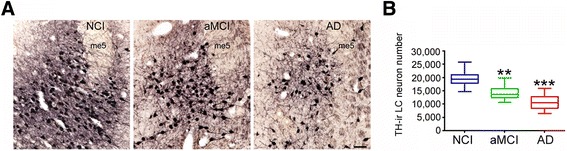
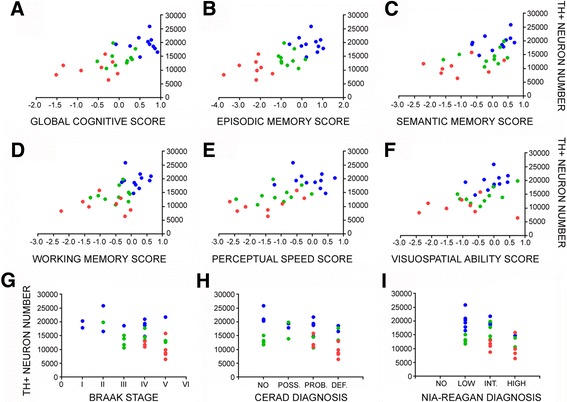
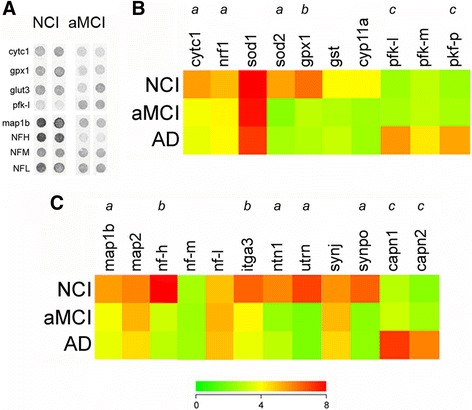
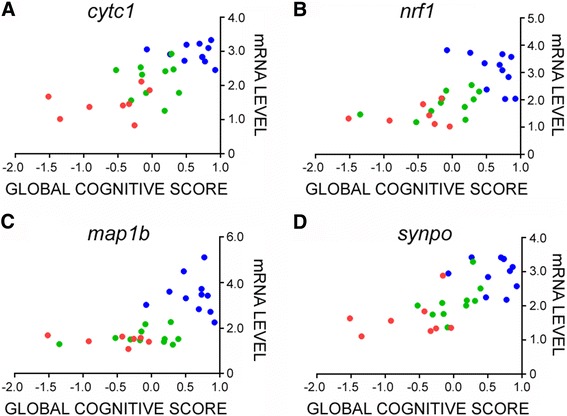
A major feature of Alzheimer's disease (AD) is the loss of noradrenergic locus coeruleus (LC) projection neurons that mediate attention, memory, and arousal. However, the extent to which the LC projection system degenerates during the initial stages of AD is still under investigation. To address this question, we performed tyrosine hydroxylase (TH) immunohistochemistry and unbiased stereology of noradrenergic LC neurons in tissue harvested postmortem from subjects who died with a clinical diagnosis of no cognitive impairment (NCI), amnestic mild cognitive impairment (aMCI, a putative prodromal AD stage), or mild/moderate AD. Stereologic estimates of total LC neuron number revealed a 30% loss during the transition from NCI to aMCI, with an additional 25% loss of LC neurons in AD. Decreases in noradrenergic LC neuron number were significantly associated with worsening antemortem global cognitive function as well as poorer performance on neuropsychological tests of episodic memory, semantic memory, working memory, perceptual speed, and visuospatial ability. Reduced LC neuron numbers were also associated with increased postmortem neuropathology. To examine the cellular and molecular pathogenic processes underlying LC neurodegeneration in aMCI, we performed single population microarray analysis. These studies revealed significant reductions in select functional classes of mRNAs regulating mitochondrial respiration, redox homeostasis, and neuritic structural plasticity in neurons accessed from both aMCI and AD subjects compared to NCI. Specific gene expression levels within these functional classes were also associated with global cognitive deterioration and neuropathological burden. Taken together, these observations suggest that noradrenergic LC cellular and molecular pathology is a prominent feature of prodromal disease that contributes to cognitive dysfunction. Moreover, they lend support to a rational basis for targeting LC neuroprotection as a disease modifying strategy.
Overview
The claims and statistics of this paper haven’t been checked yet.
Run the check — free, no account needed. It reads the open-access text and checks the sources it cites.
Integrity signals
Registry
Cites
Statistics
Figures
Verification
Claims the paper makes
The claims and statistics of this paper haven’t been checked yet.
Run the check — free, no account needed. It reads the open-access text and checks the sources it cites.
Claims other papers make about this one
Each is checked against this paper’s own text: does it say what the citing paper says it does?
In the citing paper
“Subsequent studies identified the locus coeruleus as the first site of pathology in AD subjects, with NFTs preceding cortical tau or Aβ deposits [41–43].”
From Systems-based proteomics to resolve the biology of Alzheimer’s disease beyond amyloid and tau (2021) · cites this paper as [41]
Self-check
Percentages, sums and reported differences re-computed from the paper’s own numbers.
The self-check needs the paper’s full text.
Citations
Cites
McKhann, G., Drachman, D., Folstein, M., Katzman, R., Price, D., & Stadlan, E. M. (1984) · Neurology · doi:10.1212/wnl.34.7.939 · Cited by 27,915
McKhann, G. M., Knopman, D. S., Chertkow, H., Hyman, B. T., Jack, C. R., Kawas, C. H., Klunk, W. E., Koroshetz, W. J., Manly, J. J., Mayeux, R., et al. (2011) · Alzheimer's & Dementia · doi:10.1016/j.jalz.2011.03.005 · Cited by 18,657
Neuropathological stageing of Alzheimer-related changes.
Braak, H., & Braak, E. (1991) · Acta Neuropathologica · doi:10.1007/bf00308809 · Cited by 16,123
Albert, M. S., DeKosky, S. T., Dickson, D., Dubois, B., Feldman, H. H., Fox, N. C., Gamst, A., Holtzman, D. M., Jagust, W. J., Petersen, R. C., et al. (2011) · Alzheimer's & Dementia · doi:10.1016/j.jalz.2011.03.008 · Cited by 10,152 · cited 1×
“Sporadic Alzheimer’s disease (AD) is believed to have an extensive preclinical stage since neuropathological examinations of older people with a clinical diagnosis of no or mild cognitive impairment (MCI; a putative prodromal stage of AD) consistently reveal similar pathological signatures to those with frank AD [2, 7…”
Mild cognitive impairment as a diagnostic entity
Petersen, R. C. (2004) · Journal of Internal Medicine · doi:10.1111/j.1365-2796.2004.01388.x · Cited by 7,864
Highly parallel genome-wide expression profiling of individual cells using nanoliter droplets.
Macosko, E. Z., Basu, A., Satija, R., Nemesh, J., Shekhar, K., Goldman, M., Tirosh, I., Bialas, A. R., Kamitaki, N., Martersteck, E. M., et al. (2015) · Cell · doi:10.1016/j.cell.2015.05.002 · Cited by 7,110
Dahlstroem, A., & Fuxé, K. (1964) · PubMed · Cited by 5,133
Mirra, S. S., Heyman, A., McKeel, D., Sumi, S. M., Crain, B. J., Brownlee, L. M., Vogel, F. S., Hughes, J. P., Belle, G. V., Berg, L., et al. (1991) · Neurology · doi:10.1212/wnl.41.4.479 · Cited by 4,961
Winblad, B., Palmer, K., Kivipelto, M., Jelic, V., Fratiglioni, L., Wahlund, L. ‐., Nordberg, A., Bäckman, L., Albert, M., Almkvist, O., et al. (2004) · Journal of Internal Medicine · doi:10.1111/j.1365-2796.2004.01380.x · Cited by 4,946
Current concepts in mild cognitive impairment
Petersen, R. C., Doody, R., Kurz, A., Mohs, R. C., Morris, J. C., Rabins, P. V., Ritchie, K., Rossor, M., Thal, L., & Winblad, B. (2001) · Archives of Neurology · doi:10.1001/archneur.58.12.1985 · Cited by 4,781
Cited by
Sorted by citations
Locus coeruleus imaging as a biomarker for noradrenergic dysfunction in neurodegenerative diseases
Betts, M. J., Kirilina, E. P., Otaduy, M. C. G., Ivanov, D., Acosta‐Cabronero, J., Callaghan, M. F., Lambert, C., Cárdenas‐Blanco, A., Pine, K., Passamonti, L., et al. (2019) · Brain · doi:10.1093/brain/awz193 · Cited by 367
Tau and neuroinflammation: what impact for Alzheimer's disease and tauopathies?
Laurent, C., Buée, L., & Blum, D. (2018) · Biomedical Journal · doi:10.1016/j.bj.2018.01.003 · Cited by 348
Long Road to Ruin: Noradrenergic Dysfunction in Neurodegenerative Disease
Weinshenker, D. (2018) · Trends in Neurosciences · doi:10.1016/j.tins.2018.01.010 · Cited by 339
Jeremic, D., Jiménez-Díaz, L., & Navarro-López, J. D. (2021) · Ageing Research Reviews · doi:10.1016/j.arr.2021.101496 · Cited by 306
The role of the locus coeruleus in the generation of pathological anxiety
Morris, L. S., McCall, J. G., Charney, D. S., & Murrough, J. W. (2020) · Brain and Neuroscience Advances · doi:10.1177/2398212820930321 · Cited by 244
Metadata
- Authors
- Kelly, S. C., He, B., Perez, S. E., Ginsberg, S. D., Mufson, E. J., & Counts, S. E.
- Affiliations
- Michigan State University (US)
- Barrow Neurological Institute (US)
- Nathan Kline Institute for Psychiatric Research (US)
- Trinity Health Grand Rapids (US)
- Corresponding author
- Counts, Scott E.
- Venue
- Acta Neuropathologica Communications
- Published
- 2017-01-21
- Volume
- 5
- Issue
- 1
- Pages
- 8-8
- ISSN
- 2051-5960 (ISSN-L)
- PMC
- PMC5251221
- OpenAlex
- W2579788133
- Cited by
- 286
- References
- 129
- Citations by year
- 2026: 22 · 2025: 28 · 2024: 41 · 2023: 35 · 2022: 34 · 2021: 48 · 2020: 27 · 2019: 26 · 2018: 12 · 2017: 12
- FWCI
- 15.57
- Type
- journal article
- Language
- en
- Open access
- gold
- doi.org
- Locations
- Acta Neuropathologica Communications (publishedVersion, cc-by)
- PubMed Central (publishedVersion, cc-by)
- PubMed (publishedVersion)
- Funders
- National Institute on Aging (AG043375, AG042146)
- Saint Mary's Foundation
- Barrow and Beyond
- Topics
- Life Sciences › Neuroscience › Cellular and Molecular Neuroscience › Alzheimer's disease research and treatments
- Health Sciences › Medicine › Psychiatry and Mental health › Dementia and Cognitive Impairment Research
- Life Sciences › Neuroscience › Neurology › Neuroinflammation and Neurodegeneration Mechanisms
- Keywords
- Alzheimer's disease, locus coeruleus, noradrenergic neurons, neuronal loss, amnestic mild cognitive impairment, prodromal Alzheimer's disease, tyrosine hydroxylase, stereology, gene expression, mitochondrial respiration, redox homeostasis, cognitive decline, postmortem neuropathology, neuroprotection
- MeSH terms
- Aged, Aged, 80 and over, Alzheimer Disease, Cell Count, Female, Humans, Immunohistochemistry, Locus Coeruleus, Longitudinal Studies, Male, Neurons, Neuropsychological Tests, RNA, Messenger, Tyrosine 3-Monooxygenase, Gene Expression, Disease Progression, Microarray Analysis, Cognitive Dysfunction
About these checks
Registry, retraction, Cites and statistics results are computed, not judged, with one exception: a printed reference that no index lists is read once by a model before it counts as a citation error. Claims are extracted by a model and kept only when their quote appears verbatim in the text; each cited source is then checked, with a model’s help, for whether it says what the claim relies on. Those verdicts can be wrong — read the claim’s quote and the cited source before relying on one.
Statistics and arithmetic are recomputed, not judged.
Confidence bands are shown only for fields calibrated on our annotated test set. None is calibrated yet, so no band is shown.
What counts as a claim ›How we measure confidence ›How we check this ›
Are you an author, or do you see a problem with this page? Request a review
